There’s something almost Nordic about a half barrel planter done right — the raw, honest grain of weathered oak, the weight of the wood, the way it anchors a corner of your patio like a full stop at the end of a sentence. And yet. Fill it with a cascade of deep plum petunias or a blaze of persimmon geraniums, and suddenly that restraint becomes the frame, not the painting. Half barrel planters are the ultimate single-statement object — the one bold thing in a pared-back space that earns its place every single season.
I’ve been obsessed with these planters for years, partly because they do something very few containers manage: they look as good empty as they do full. The staves, the iron bands, the slight imperfection of a barrel that once held wine or whiskey — that texture alone is worth the price of admission. What you plant inside? That’s where things get genuinely exciting.
The Standouts
These are the looks that stopped me mid-scroll, mid-sip, mid-sentence. The ones where the plant choice and the barrel finish and the setting all click into something that feels — and I use this word carefully — composed. Like a room that a very good designer thought about for a long time.
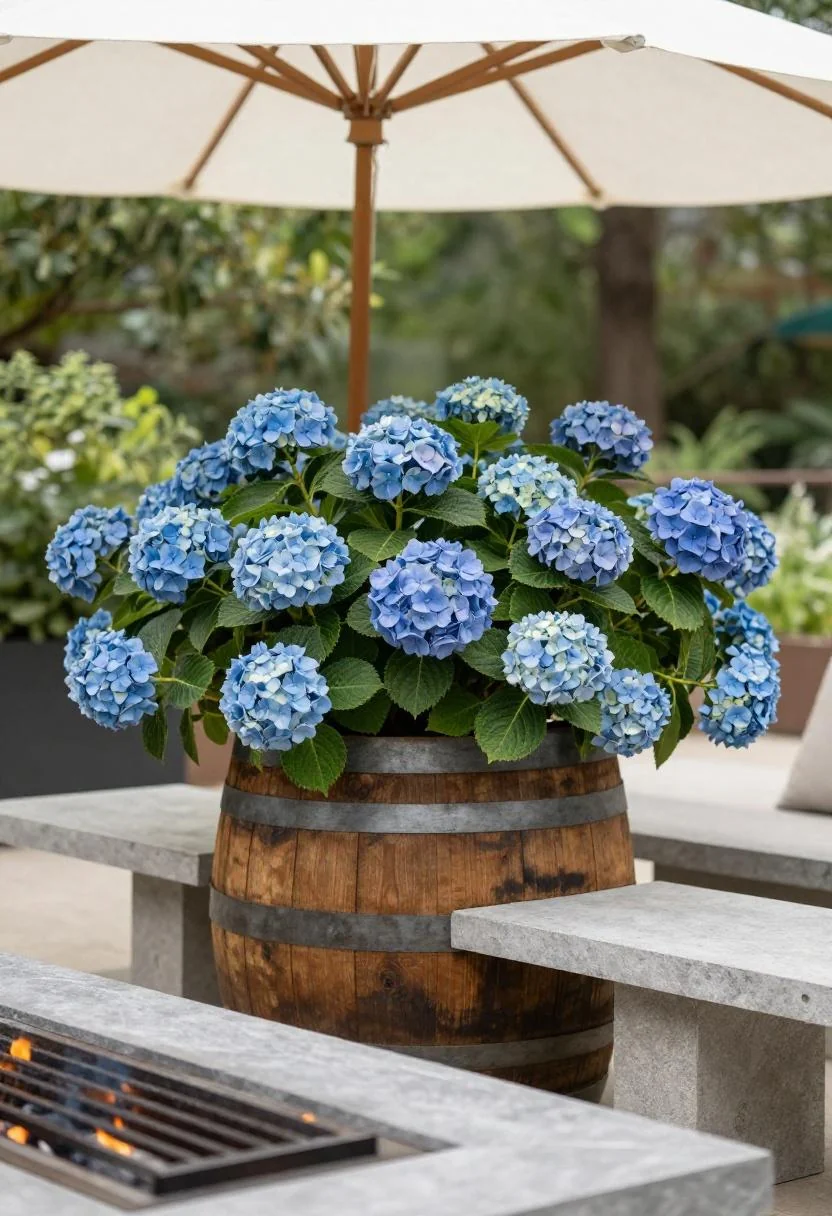
#1 — Cool Blue Hydrangeas by the Fire Pit
Run your hand across a weathered oak barrel and tell me you don’t feel something. That silvered grain, rough and honest, set against hydrangea blooms the color of a January sky — this is the pairing. Cool blue hydrangeas have a quality I can only describe as atmospheric. In morning light they’re almost grey. By afternoon, they’re saturated, vivid, unmistakably blue. Position one of these beside a fire pit seating area and the contrast between the cool blooms and the warm amber glow of a fire at dusk is genuinely arresting.
This is the look I’d build an entire patio scheme around. Everything else: pale teak, linen cushions in oat or ecru, one lantern. Let the hydrangeas carry the color entirely. Shop weathered oak half barrel planters to get the finish right — the silvering on cheaper alternatives never quite convinces.
Editor’s Note: Hydrangeas in containers need consistent moisture. A drip insert or moisture-retaining liner inside your barrel saves the weekly drama of wilting blooms.
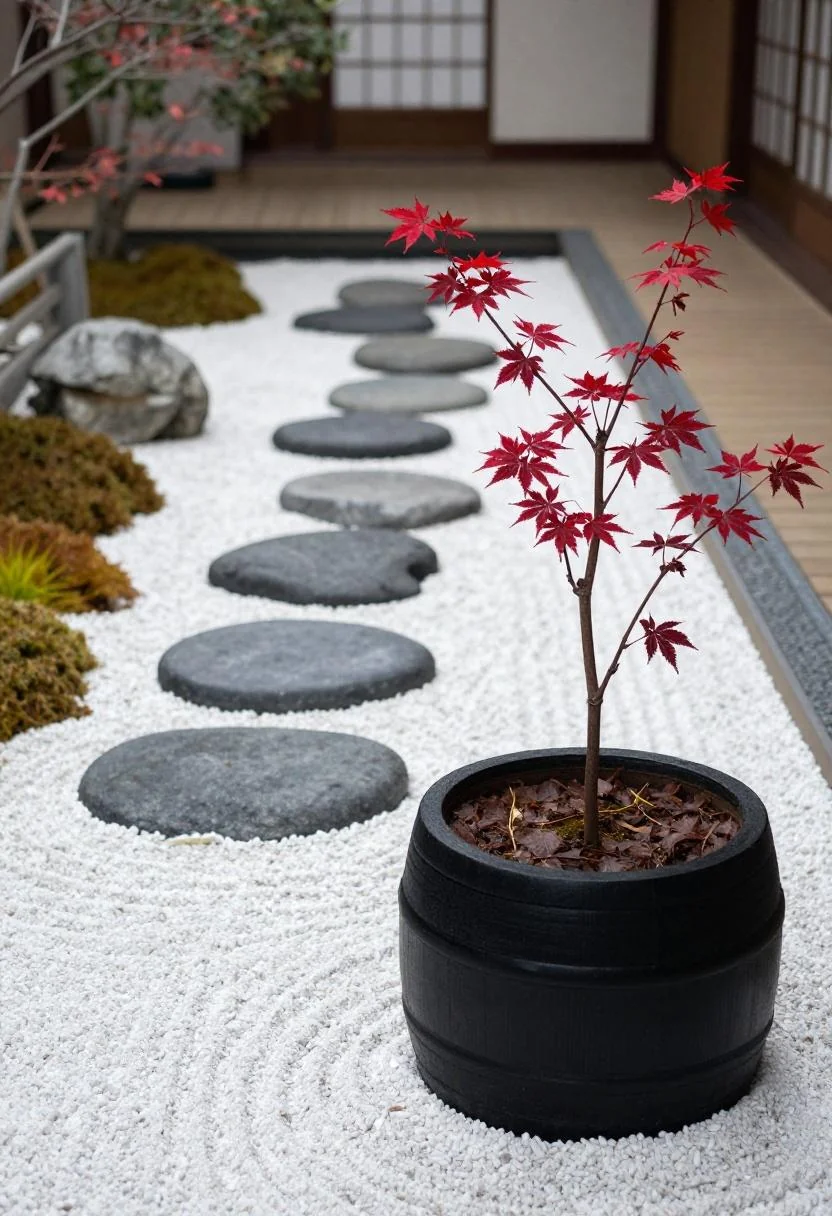
#2 — The Japanese Maple in Blackened Cedar
This is not a planter. This is a piece of sculpture.
A plum noir Japanese maple — all lacquered burgundy and whisper-fine leaves — anchored in a blackened cedar barrel against raked gravel. It’s pure Nordic discipline meeting Japanese wabi-sabi, and the tension between those two aesthetics is exactly what makes it extraordinary. The barrel’s dark finish echoes the depth of the foliage without competing. The gravel breathes. Nothing is accidental here. As Vogue Living has long championed, the most compelling outdoor spaces treat plants as architectural elements rather than afterthoughts — and this maple proves that point definitively.
If you have one spot on your patio that needs a single, unwavering statement — this is it. Don’t surround it with anything. Just let it exist.
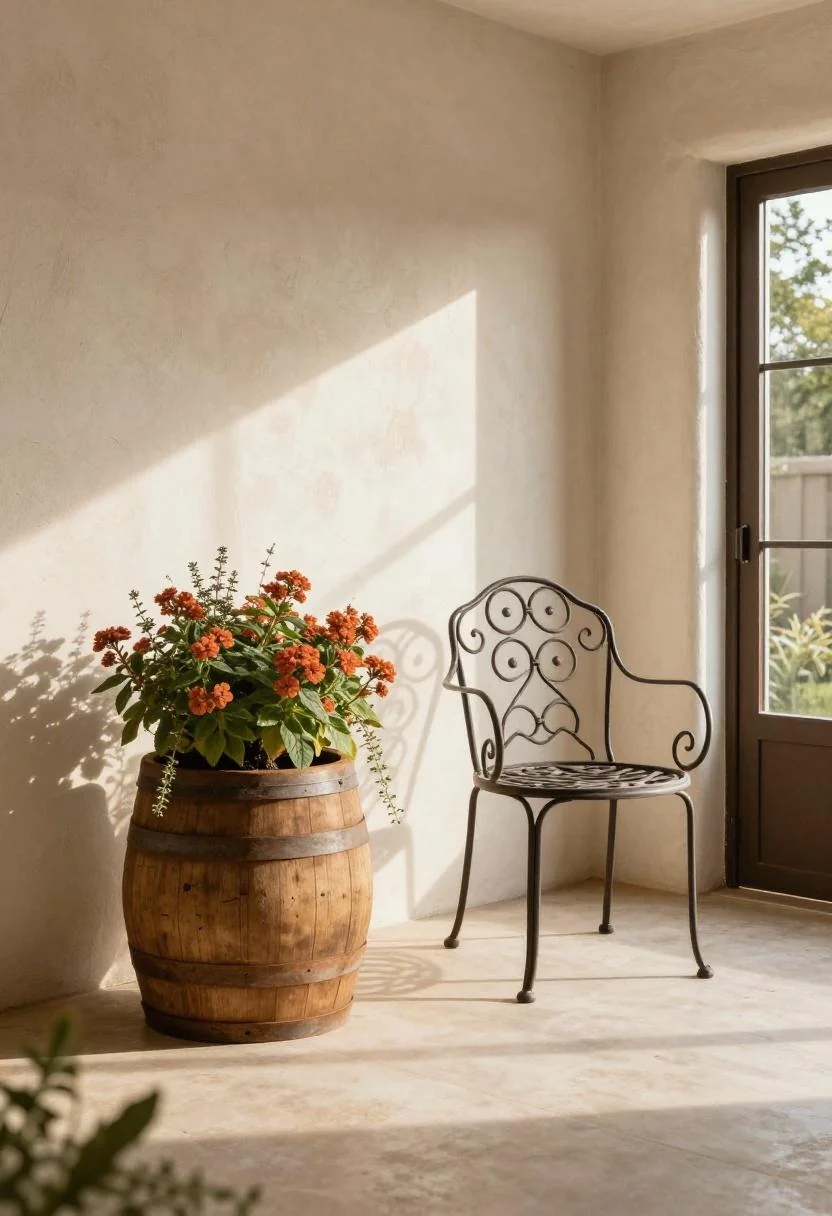
#3 — Warm Terracotta Lantana on Adobe
Warm terracotta lantana tumbling over a rough-hewn oak barrel on an adobe patio. Close your eyes and picture this in late-afternoon light — the golden hour hitting those orange-pink blooms, the thyme releasing scent in the heat, the adobe walls glowing. It smells like Provence. It feels like somewhere you’ve been before in a dream.
Lantana is a gift: drought-tolerant, pollinator-friendly, and it blooms for months. The rough-hewn oak texture here matters — smooth or painted barrels would flatten this look. You want that raw, tactile grain to carry the earthiness of the whole composition. Pair with terracotta pots in varying heights nearby (just two or three — restraint!) and you have something genuinely Mediterranean without tipping into kitsch.
- Cool Blue Hydrangeas by the Fire Pit — atmospheric, season-long drama
- Plum Noir Japanese Maple in Blackened Cedar — sculptural, architectural, unforgettable
- Warm Terracotta Lantana on Adobe — heat-loving, sensory, deeply evocative
The Dark Horses
These are the looks that don’t announce themselves immediately. You have to sit with them. And then, somewhere around the third glance, you realize they’re the ones you actually can’t stop thinking about.
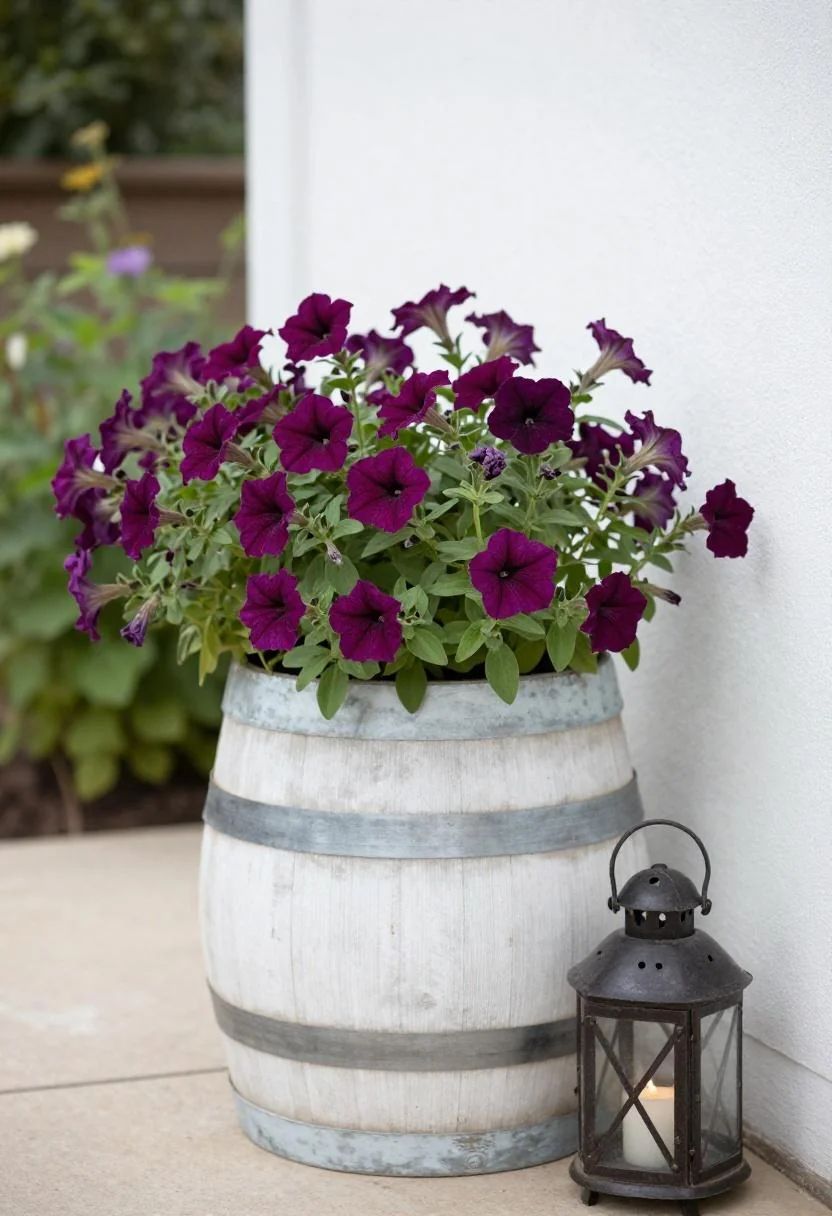
Deep Plum Against White — the Wall Trick
Against a whitewashed garden wall, a cascade of deep plum petunias from a cedar barrel is — there’s no other word — dramatic. The white throws the color forward so aggressively it almost vibrates. Matte against the soft sheen of the petals, rough stucco against silky blooms. That tension is everything.
Petunias are underrated. They’re prolific, they trail beautifully, and in deep plum they read as genuinely sophisticated rather than cottage-garden sweet. Deadhead weekly and they’ll reward you all summer long. Trailing petunia seeds in deep purple are easy to find and even easier to grow.
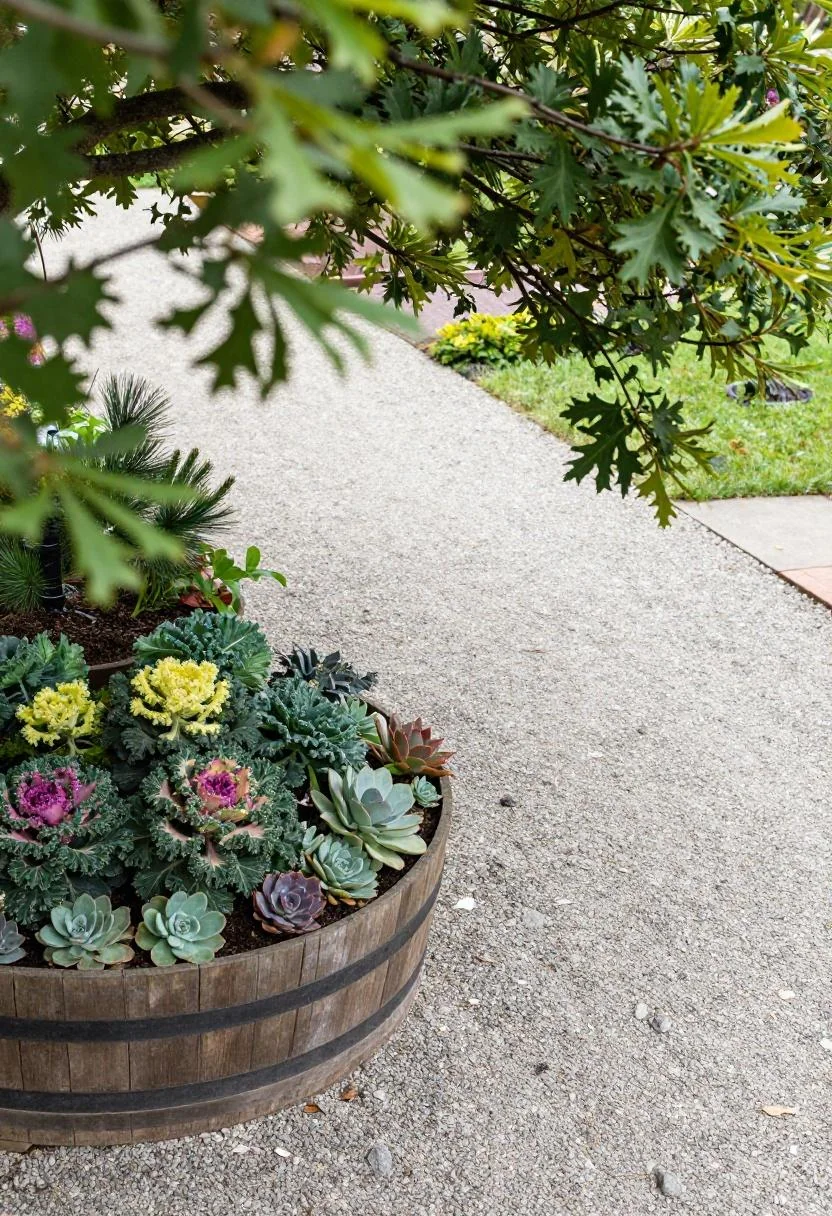
Wasabi + Succulents: the Unexpected Cool-Tone Barrel
Can we talk about wasabi green for a moment? Not sage, not olive — wasabi. That sharp, almost acidic yellow-green that makes everything around it hum. Ornamental kale and succulents in this palette, packed into a pine barrel beside gravel, is a dopamine hit for the eyes. It’s simultaneously restrained (no flowers, no fuss) and completely electric.
This works beautifully along a gravel garden path because the cool grey-white of the stone lets the wasabi tones read at full intensity. The pine barrel’s warmer undertone softens what could otherwise feel clinical. And the succulents? Practically zero maintenance. Pairing with full-sun border plants along the same path creates a cohesive, considered flow from ground level to container height.
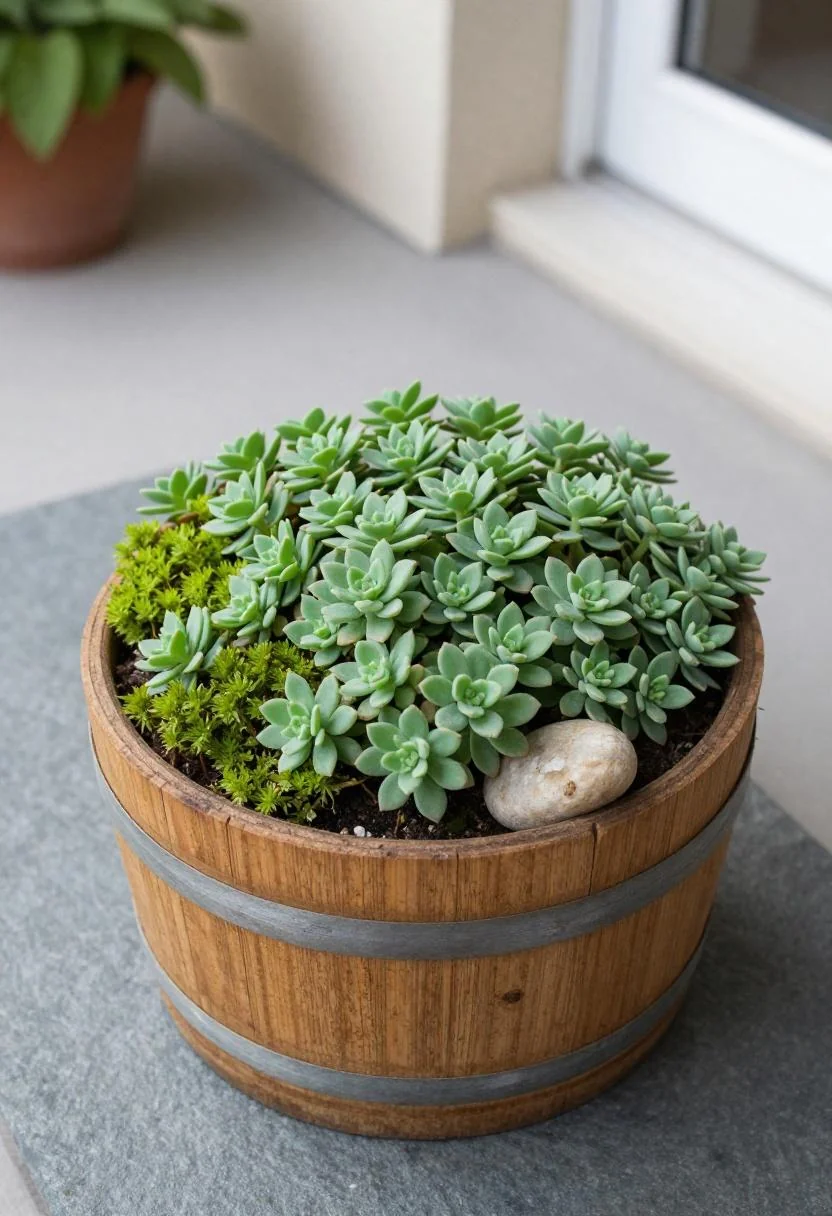
The Overhead View — Sedum as Living Mosaic
Wasabi sedum and chartreuse moss packed so densely into an oak barrel that it reads — from above, on a slate balcony — like a living textile. Like something woven rather than grown. The different textures of sedum rosettes and loose moss create depth even in a completely flat palette.
This is the balcony barrel. Small footprint, enormous visual payoff when viewed from indoors or from above. If you have a first-floor balcony that overlooks the barrel from an upstairs window, this overhead composition is genuinely worth designing for that specific vantage point. Think of it as art you look down into.
Editor’s Note: Sedum is virtually indestructible and handles the drought-and-deluge cycle of most balconies without complaint. Start here if you’re a nervous plant parent.
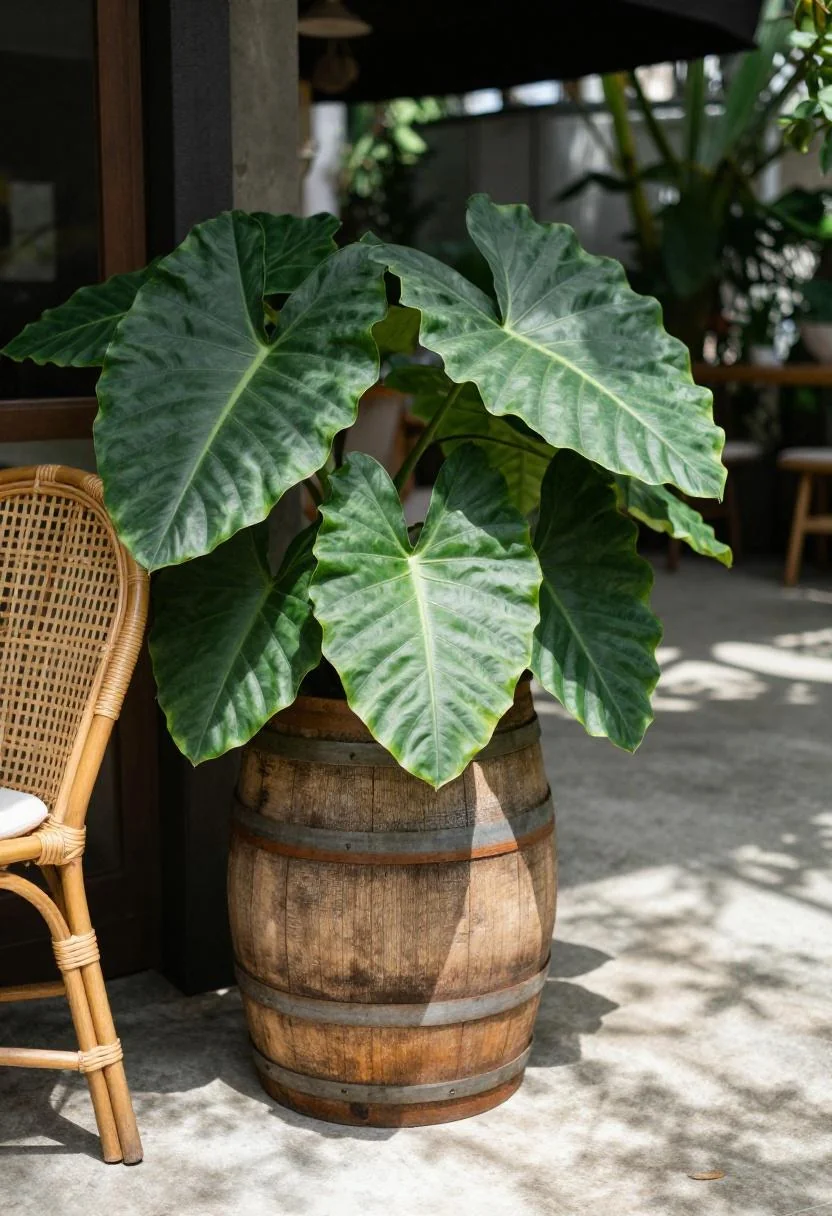
Jade Elephant Ears on Concrete — Tropical Maximalism in One Barrel
Here’s where the Nordic restraint starts to flex. Jade green elephant ear leaves — I mean the genuinely enormous kind, leaves you could shelter under — spilling from a bleached pine barrel on a tropical concrete patio. The bleached barrel is key: it reads almost Scandinavian in its paleness, which makes the lush tropical excess of the plant feel intentional rather than chaotic. One restrained container. One outrageously generous plant.
This is the barrel for people who want maximum drama with minimum effort. Elephant ears grow fast, look architectural from the moment they emerge, and the jade tone — that deep, saturated green — holds its color even in harsh afternoon sun. Colocasia bulbs are inexpensive and the payoff is disproportionately spectacular.
The Classics — Reinvented
These are the combinations that have been working for decades. And the reason they keep appearing — in garden magazines, on cottage fences, on sun-baked Mediterranean patios — is simple: they’re correct. The question is just how you update them.
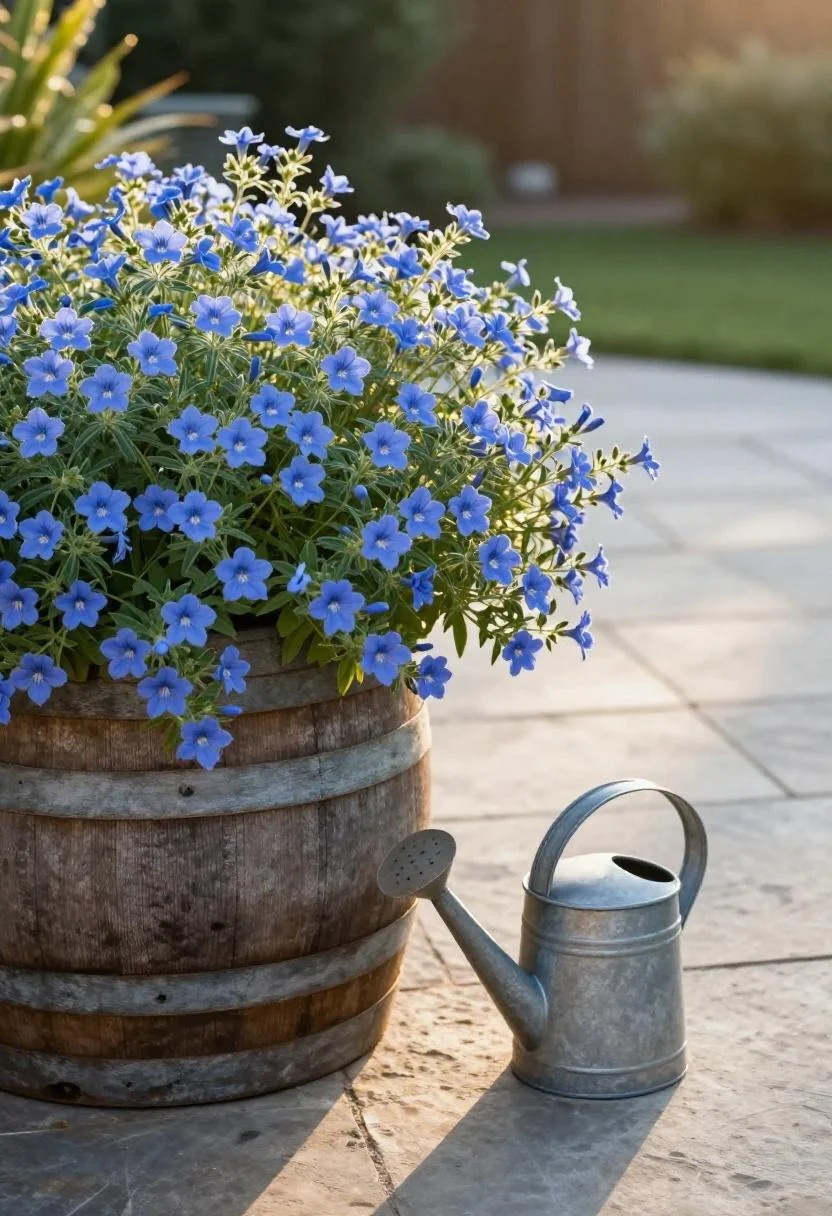
Cool Blue Lobelia on Stone — the Original Combination
A sun-drenched stone patio corner, a weathered oak barrel overflowing with cool blue lobelia. This combination has been in every grandmother’s garden and every garden center catalogue since 1987, and it persists because it is, objectively, beautiful. The fine-textured lobelia softens the barrel’s weight. The cool blue reads almost purple in shadow and brightens to sky in direct sun. Classic. But here’s how you update it: plant densely. Pack that barrel so full that by midsummer it’s a cloud of blue. No gaps, no single stems — volume.
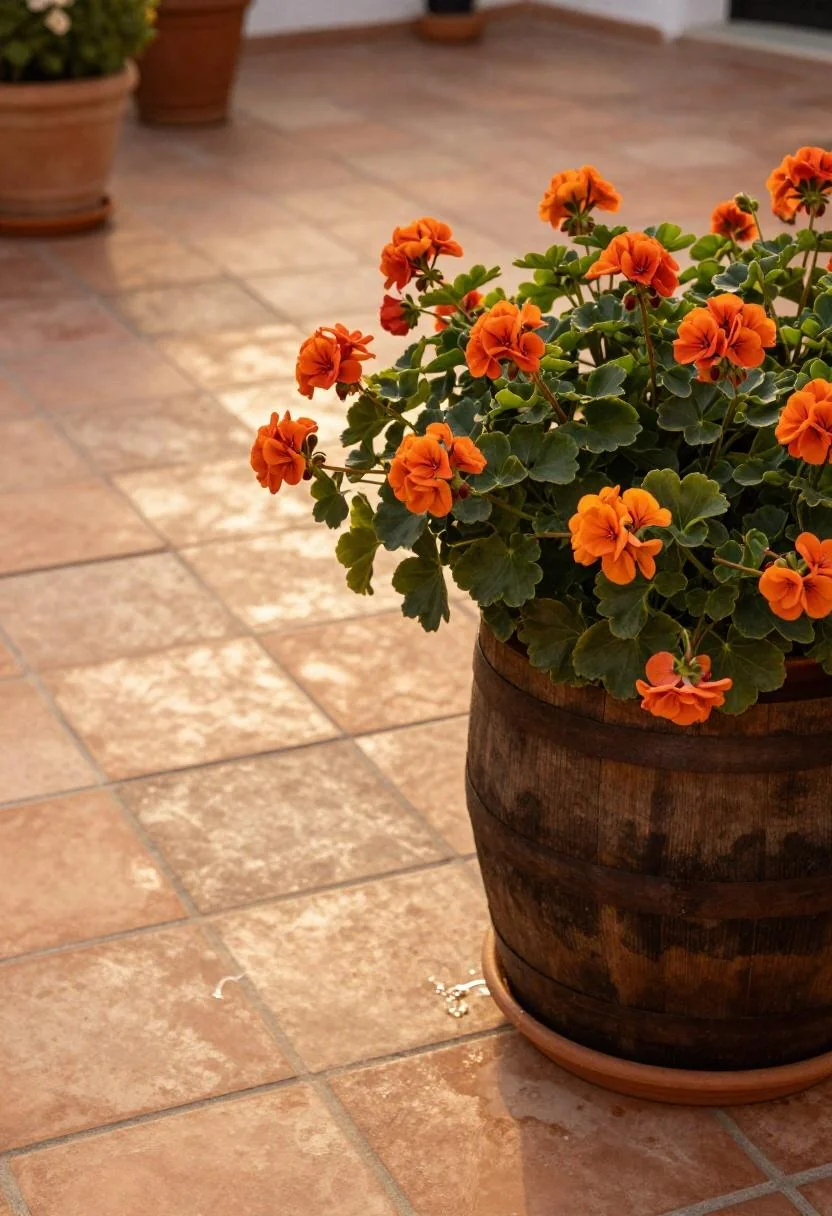
Persimmon Geraniums on Mediterranean Tile
Persimmon — that warm, reddish-orange — is having its moment everywhere right now, and geraniums in this color overflowing a dark stained oak barrel on Mediterranean tile is the outdoor equivalent of a terracotta linen shirt you’ll wear every summer for ten years. Deeply familiar. Completely satisfying. The dark stain on the oak anchors the warmth of the blooms, and the handmade irregularity of terracotta or encaustic tile beneath gives the whole thing a tactile richness that a photograph can barely contain.
What would Harper’s Bazaar’s garden editors call this? Quietly maximal. That’s the move — a color that announces itself without being loud, a plant that’s been loved for centuries without feeling dated.
Dark stained barrel planters are worth the premium over natural wood here — the contrast does real visual work.
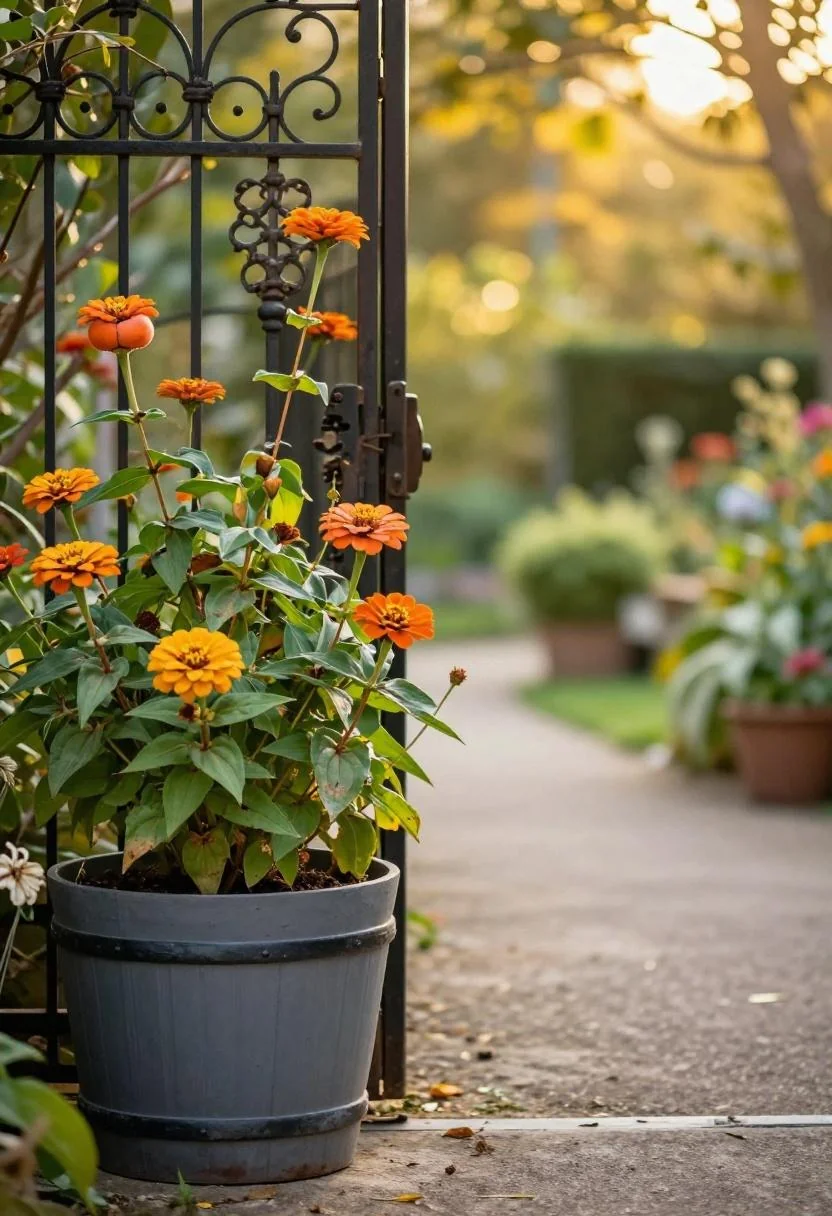
Persimmon Zinnias at the Gate — the Arrival Moment
A pine barrel at a wrought-iron gate entrance, crowned with persimmon zinnias. This is about creating an arrival experience — the moment someone pushes open the gate and the first thing they see is that burst of warm color at eye level. Zinnias are more informal than geraniums, slightly wilder in their growth habit, and that looseness suits an entrance. It says: something good is on the other side of this. For more ideas on creating a welcoming outdoor entry, our guide to flower planter ideas for outdoor spaces has an entire section on entry focal points.
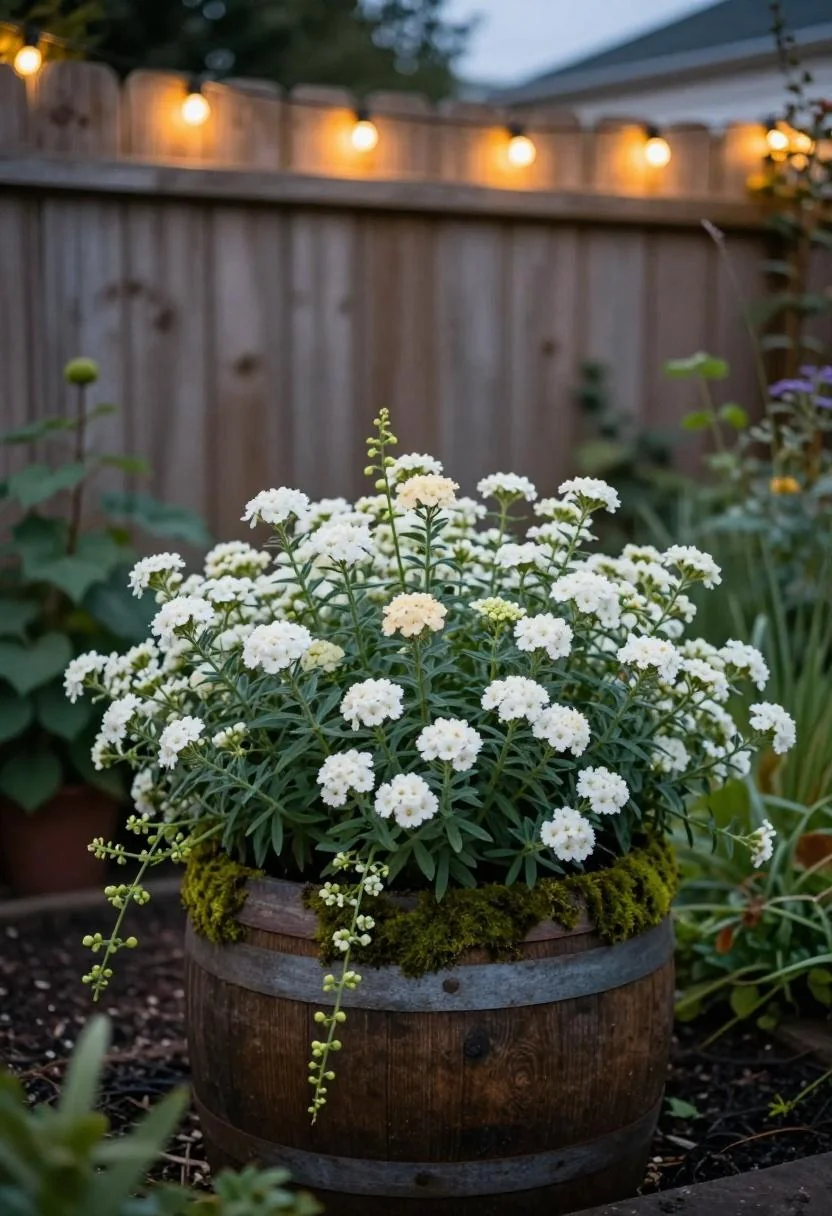
Cream White Alyssum at Dusk — the Quiet One
At dusk, cream white sweet alyssum glows. Something about the failing light catches the blooms and holds them luminous while everything else fades. Against a moss-covered oak barrel (and that moss — soft, almost velvet, a texture you want to press your palm against) beside a cottage fence, this arrangement is genuinely moving at the right time of evening. It also smells of honey. Don’t overlook that. Fragrance is a layer of sensory experience that most planter guides completely ignore, and alyssum’s honey-vanilla scent in warm evening air is — well. Sit near it once at sunset and see.
The moss on the barrel is either cultivated (you can encourage it with yogurt and shade) or bought pre-grown on a liner. Either way, the effect of weathered green moss against cream bloom is as Nordic-cottage as anything I’ve seen in actual Danish gardens.
The Understated Specialists
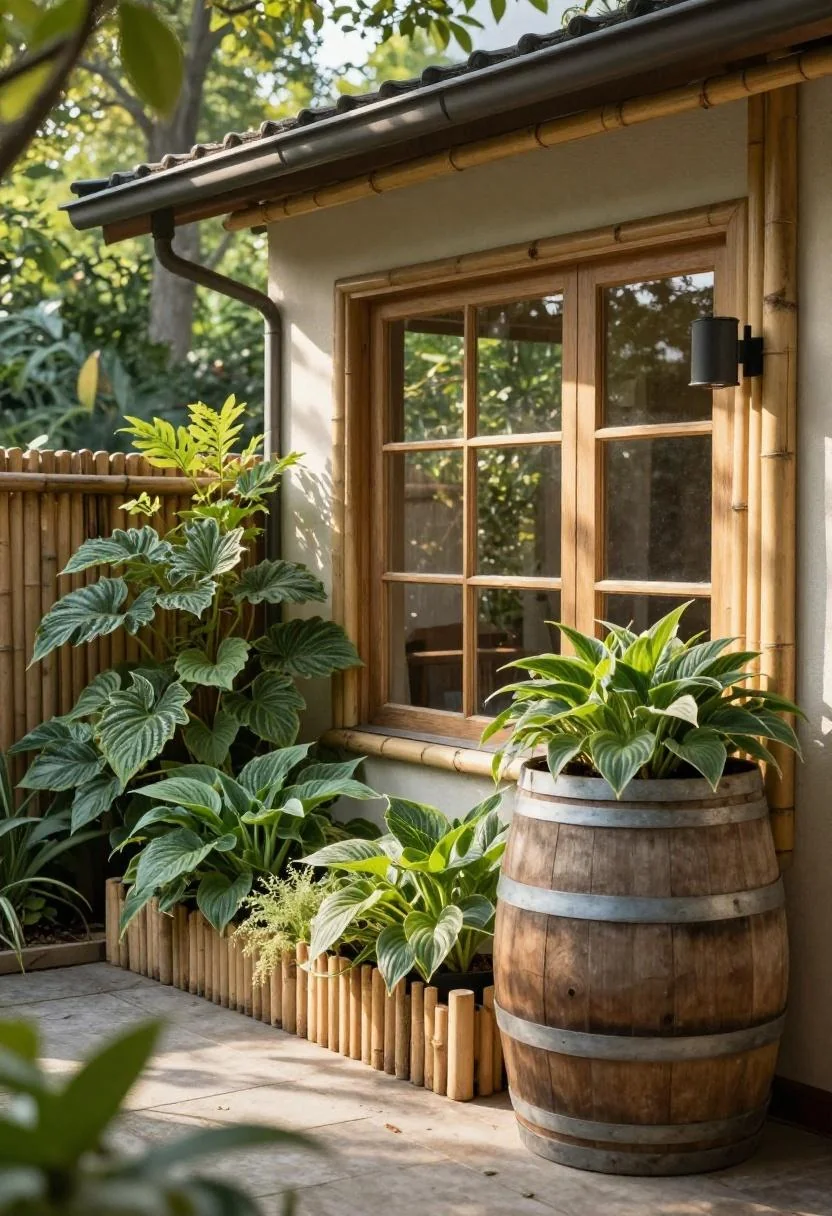
Jade Hostas on the Balcony — Foliage as the Point
Who decided we need flowers? Lush jade green hostas filling a reclaimed oak barrel on a bamboo-fenced balcony is a masterclass in foliage as the entire composition. The ribbed, overlapping leaves — cool green, almost waxy — and the warm reclaimed oak, and the warm-tone bamboo fence: three different textures, one palette. It’s so considered it barely looks designed.
Hostas thrive in shade, which makes them the answer for that north-facing balcony corner where nothing else will cooperate. Pair with a single white ceramic pot and — nothing else. That’s the Nordic principle at work: one barrel, one plant, one complementary object. Done. If you’re building out a lush container garden more broadly, our piece on Kimberly Queen fern planter ideas explores a similarly shade-loving, foliage-forward approach.
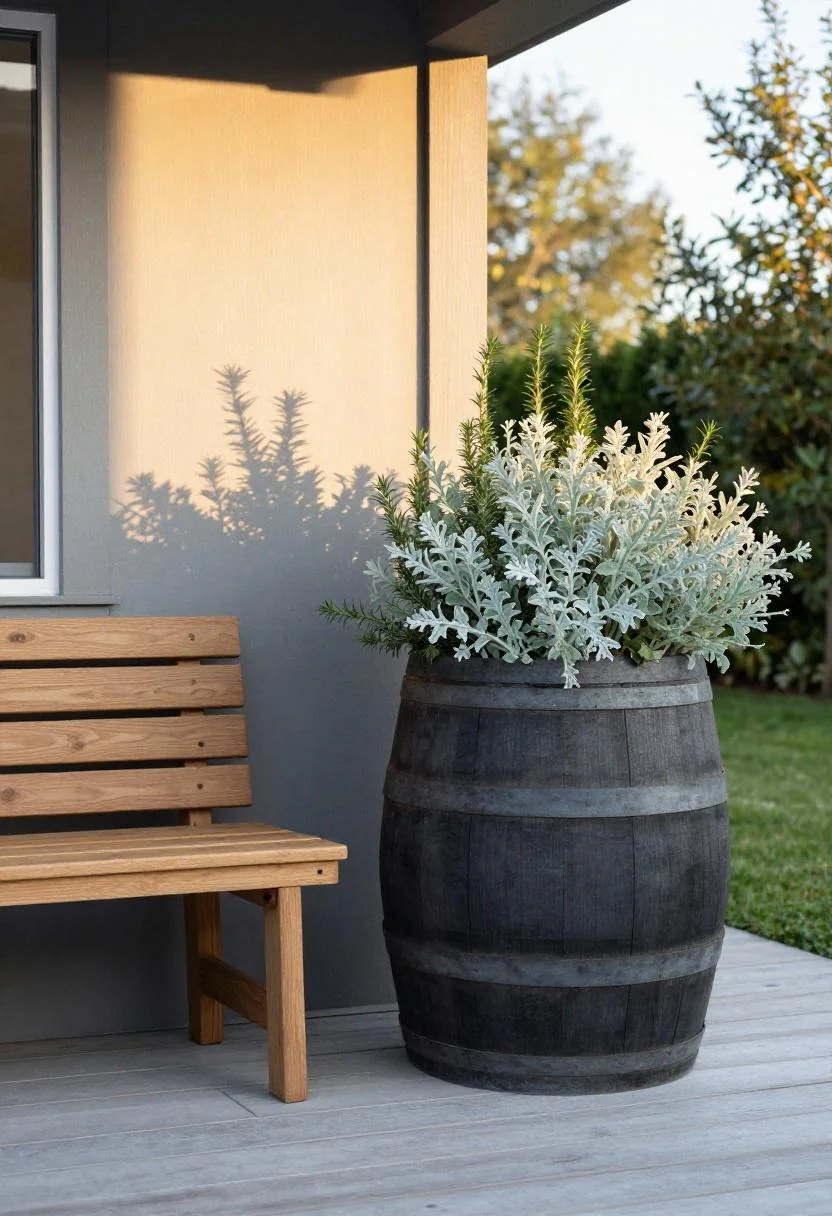
Sage and Charcoal on Teak — the Modernist’s Barrel
A charcoal-stained pine barrel — not the warm oak tones that dominate most barrel planting, but something darker, more architectural — planted with sage green dusty miller and rosemary on a modern teak deck. This is the barrel for the person who loves clean lines, who chose their outdoor furniture from a Scandinavian catalogue, who wouldn’t be caught dead with a terracotta pot. The matte grey of dusty miller against charcoal stain is barely a contrast at all, which is precisely why it works: it’s monochromatic, textural, and the rosemary adds the olfactory dimension that no photograph can capture.
Charcoal-stained barrel planters are worth hunting for specifically — the finish reads completely differently from natural wood and suits contemporary outdoor spaces far better.
As Elle Decor’s outdoor living editors consistently demonstrate, the restraint of a monochrome planting palette is never minimalism — it’s confidence.
What the Colors Are Telling Us This Season
Step back and look at all thirteen of these combinations, and a clear story emerges. Cool blues are doing something specific this year — they’re pairing with warm, aged materials (that weathered oak again) to create a tension that feels modern without trying. Plum and deep burgundy have moved decisively away from “grandmother’s garden” into something closer to Scandi-moody: dark-stained containers, raked gravel, zero fuss. And the wasabi-to-sage green range is where the real action is for anyone who wants longevity — these tones hold through changing light, changing seasons, and changing trends.
Persimmon, meanwhile, is the color that keeps delivering. It’s generous and warm without being aggressive — it plays beautifully with terracotta, with wood, with iron, with tile. If you can only invest in one barrel this season and want maximum return across different settings, plant it with something in the persimmon family and trust the result.
And the barrel itself? Never paint it. Never smooth it. The texture — the grain, the iron bands, the slight swell of the staves — is half the conversation. It’s the frame that makes everything planted inside feel curated without any effort on your part. The barrel does the design work. You just have to choose the plant. And now you have thirteen very good ideas for where to start. For even more ways to make your outdoor containers sing together, explore our full guide to using pots in flower beds for a polished yard.
This post contains affiliate links. We may earn a commission at no extra cost to you.
Images in this article were created with AI assistance.