A clean edge is the garden equivalent of a well-pressed collar. It doesn’t shout. It simply holds everything in place, and the whole composition reads better for it. Edging a flower bed isn’t glamorous work — but it’s the kind of detail that separates a garden that looks tended from one that looks loved.
This guide is organized by situation: what tools to reach for, which materials earn their keep over decades, and how to handle the awkward corners that no one talks about. The approach here is traditional, methodical, and unapologetically permanent. Strip away the novelty and ask: would this edge still look right in ten years? That’s the only question worth answering.
The Right Tool — And Why It Matters More Than You Think
Most edging problems are tool problems. A dull half-moon edger dragged through compacted clay isn’t edging — it’s archaeology. Start with a steel spade designed for the job, and the soil cooperates.
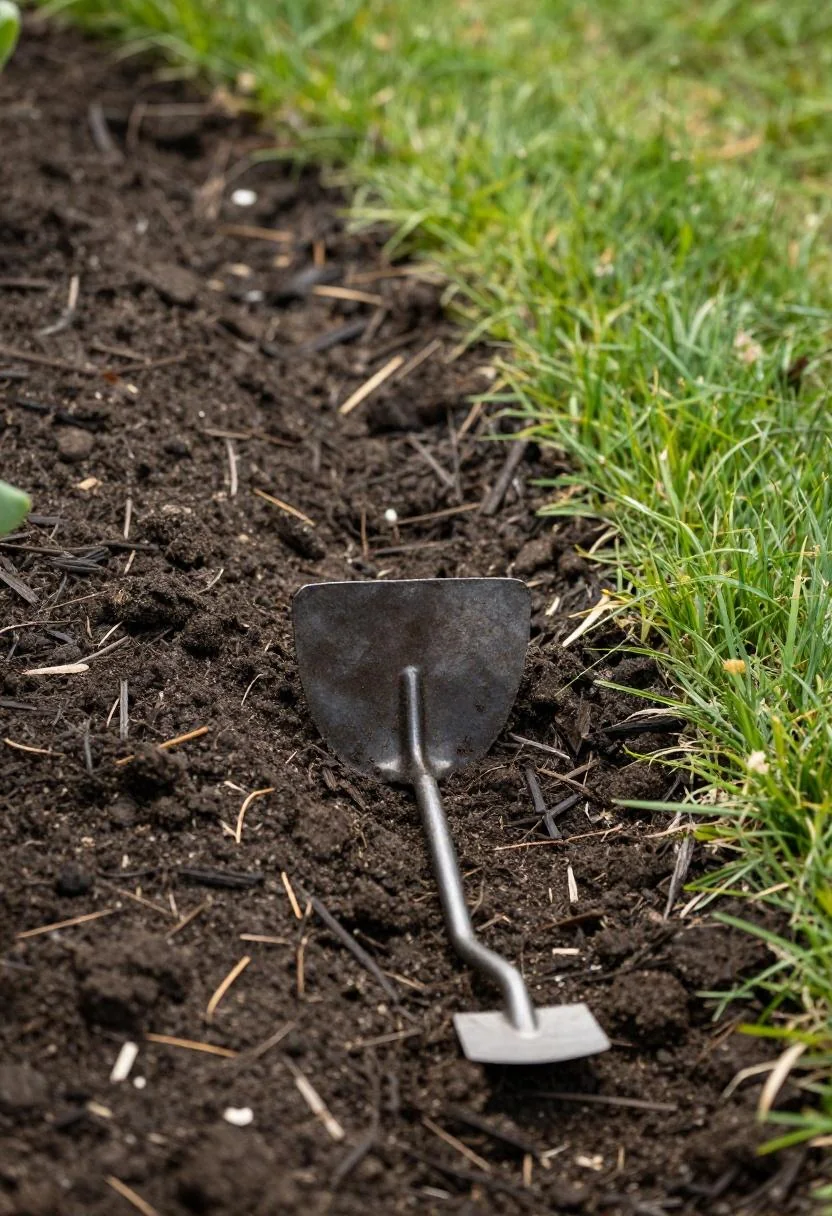
This is the image every serious gardener knows instinctively — a steel edging spade pressed clean through the soil at first light, the border between mulch and lawn razor-sharp. The morning light isn’t incidental. Edging in cool, slightly damp conditions means the blade glides rather than skips. A quality steel edging spade holds an edge longer and transfers force without bending — the difference is immediate.
Don’t underestimate technique. The blade goes straight down, not angled. One clean plunge, a slight rock back to open the trench, and move on. Repeat. The goal is a consistent vertical wall of soil, not a slope.
For the Cottage Garden Path
Cottage gardens live and die by controlled chaos. The blooms can spill and lean — but the path edge should hold firm. That tension is the whole point.
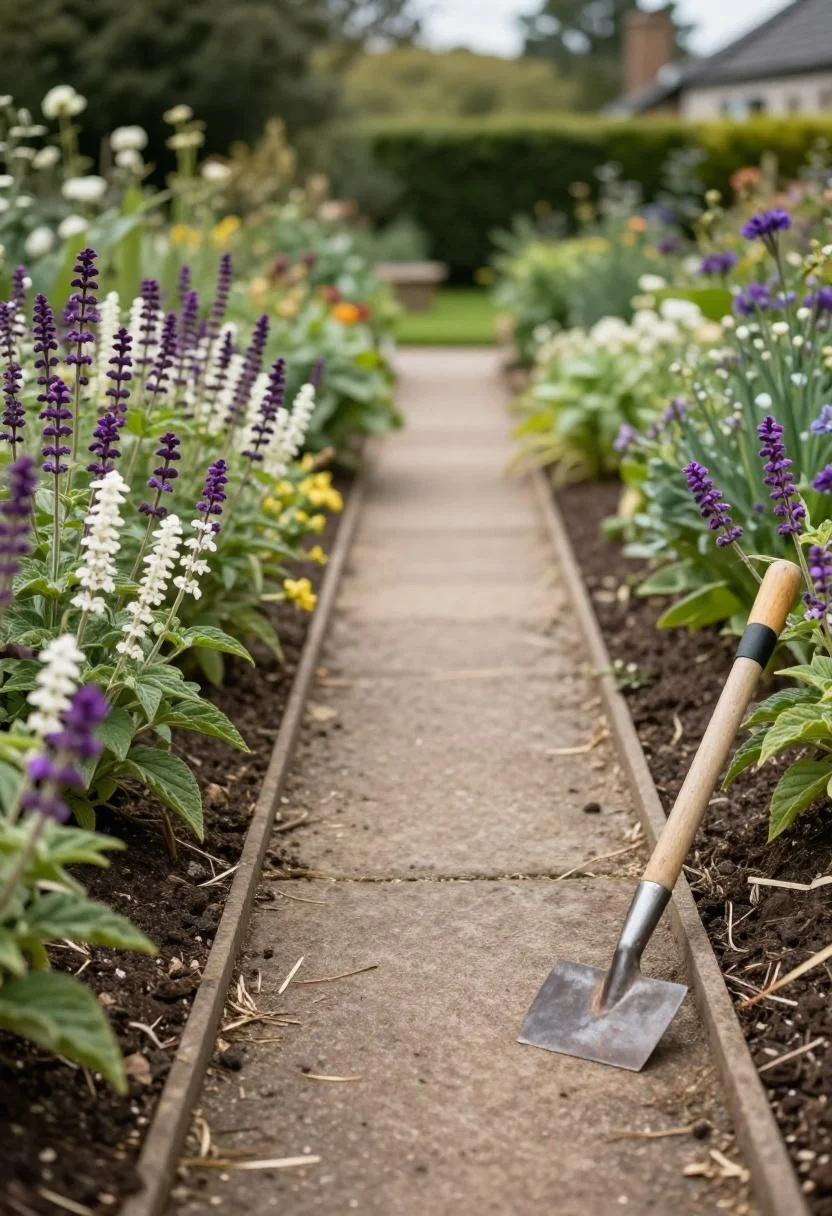
Plum salvia against a clean-cut border. The contrast here — wild color, disciplined line — is precisely what makes a cottage path feel curated rather than neglected. Edge the path first. Plant second. The order matters because you’re setting a boundary the plants will grow toward, not one you’ll have to defend around established roots later. If you’re building a cottage-style garden from scratch, our guide to border plants for full sun gardens is worth reading alongside this one.
The Zen Corner — Small Spaces & Awkward Angles
What do you do with the corner behind the gate, the narrow strip beside the fence, the bed that’s technically in three different microclimates? You simplify the material and let the line do the work.
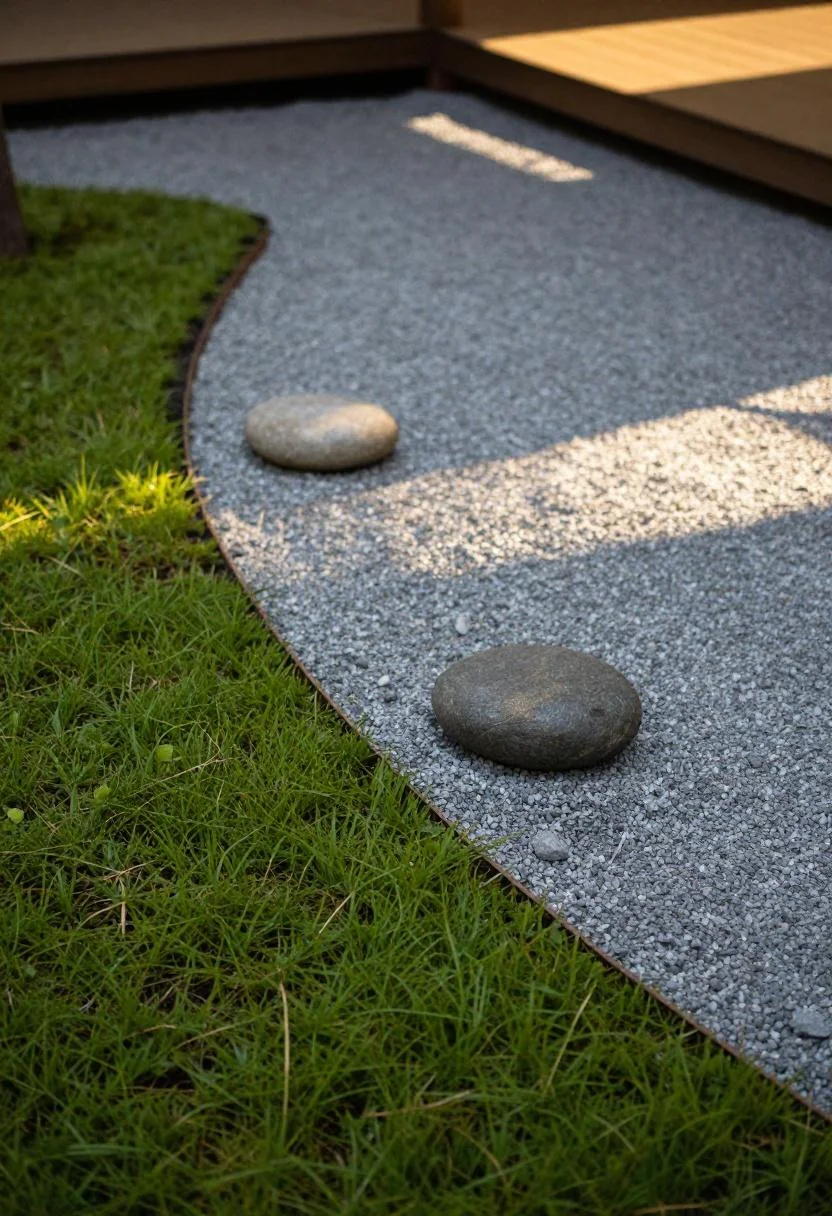
Bamboo edging in a zen corner — mondo grass on one side, raked gravel on the other. The restraint here is the whole point. Bamboo is a natural material that weathers gracefully, develops a silver patina, and doesn’t fight the plants around it. In tight spaces, it curves without cracking, which is more than you can say for most rigid alternatives. Bamboo garden edging strips come in varying heights — choose taller for deeper beds.
Installing Plastic Edging Without It Looking Cheap
Plastic edging has a reputation problem. Most of it is earned. But installed correctly — flush with the soil, anchored properly, hidden beneath mulch — it performs reliably for years.
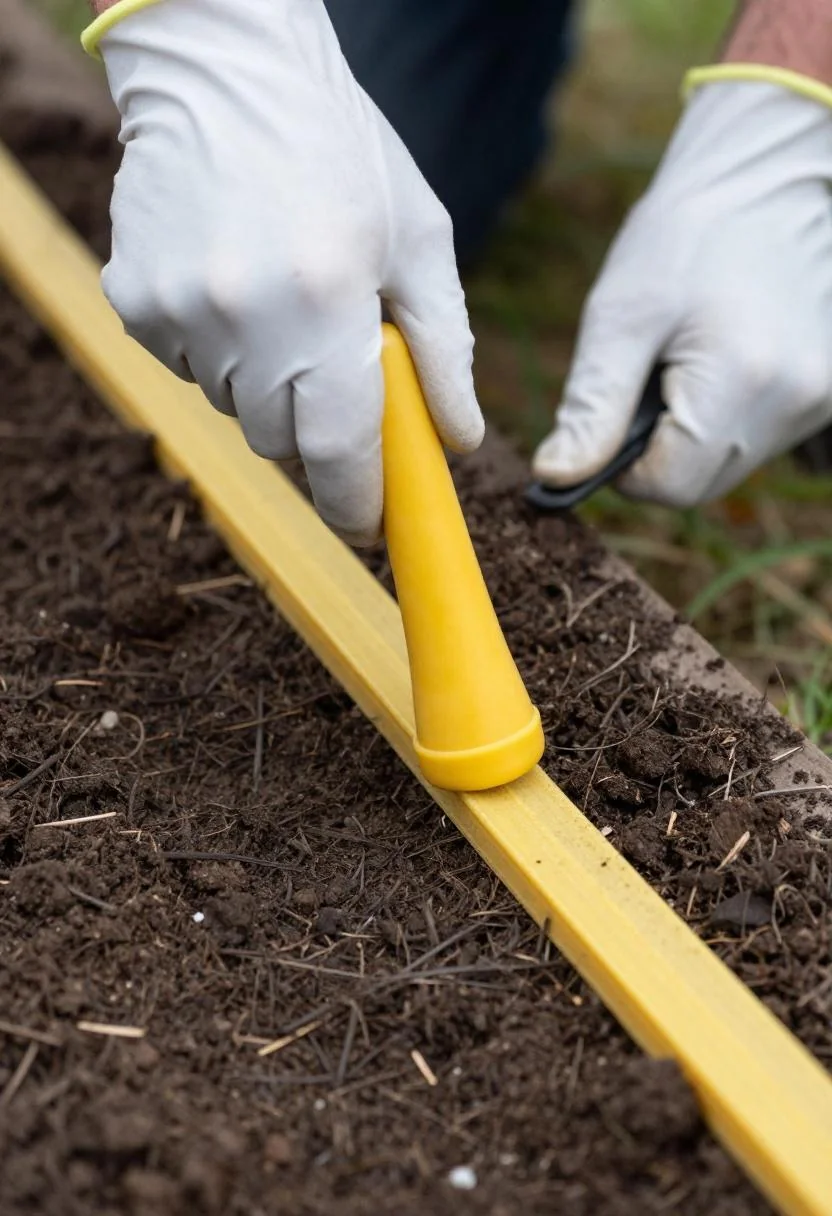
Use a rubber mallet. Not a hammer, not your boot heel. A rubber mallet distributes force evenly and keeps the top edge level — the single most common failure point in DIY plastic edging installs. Tap in sections, check level, move on. It takes longer. It looks entirely different from the version where you just pushed it in with your hands and hoped for the best.
The argument for plastic: it’s invisible. When the job is to keep lawn from creeping into a flower bed without adding visual weight, invisibility is the right answer. Not every border needs to announce itself.
The Mediterranean Patio — Where Terracotta Earns Its Place
Period homes — the kind with thick plaster walls and terracotta roof tiles — have a logic to them. Materials relate to each other. The edging and the paving share lineage. That coherence is worth pursuing even in a contemporary yard.
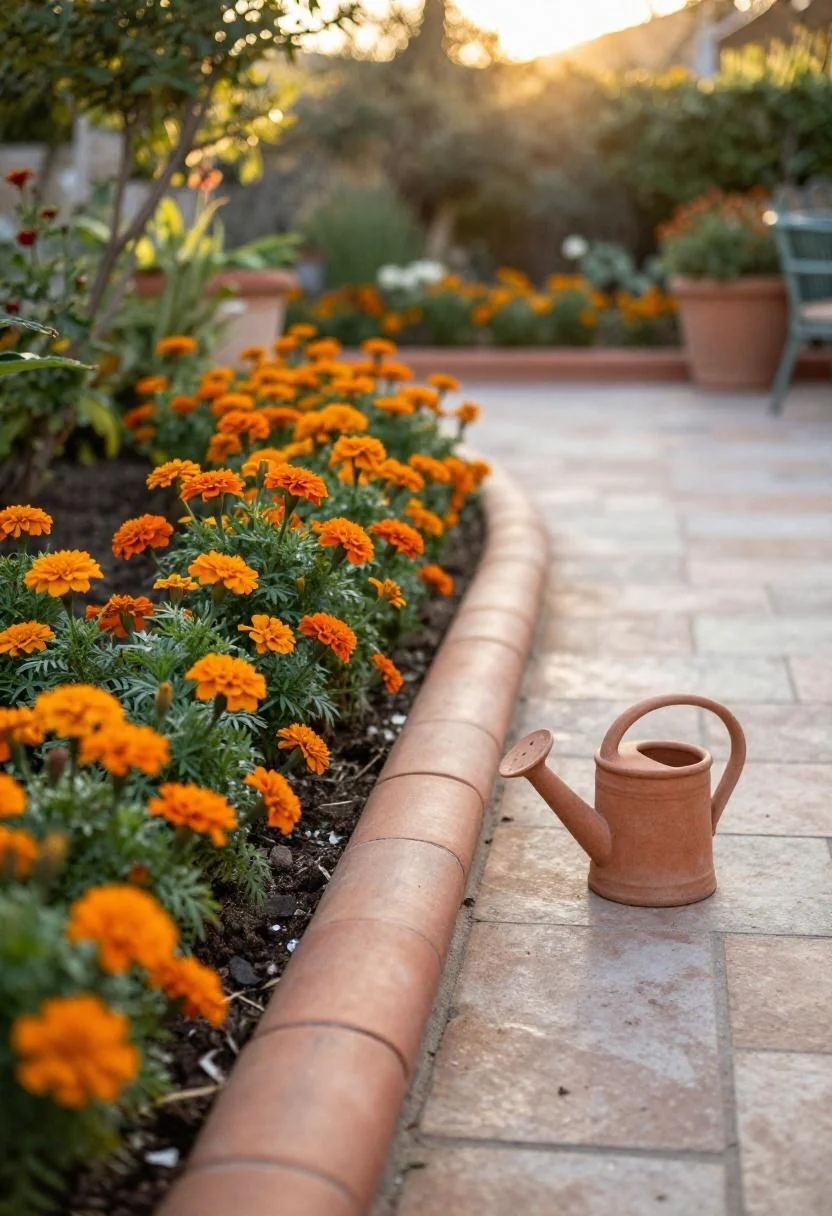
Curved terracotta tile edging along a Mediterranean patio, persimmon marigolds massed behind it. The curve is important — straight lines would fight the organic quality of the planting. Terracotta tiles set on edge (rather than flat) create a neat lip that doubles as a mowing guide. They age well, and they belong here in a way that black plastic never would. Terracotta edging tiles vary significantly in quality — look for frost-resistant if you’re in a cold climate.
Brick at Lawn Level — The Classic That Refuses to Date
Ask any garden designer with thirty years of practice what edging material they reach for by default. Nine times out of ten: brick.
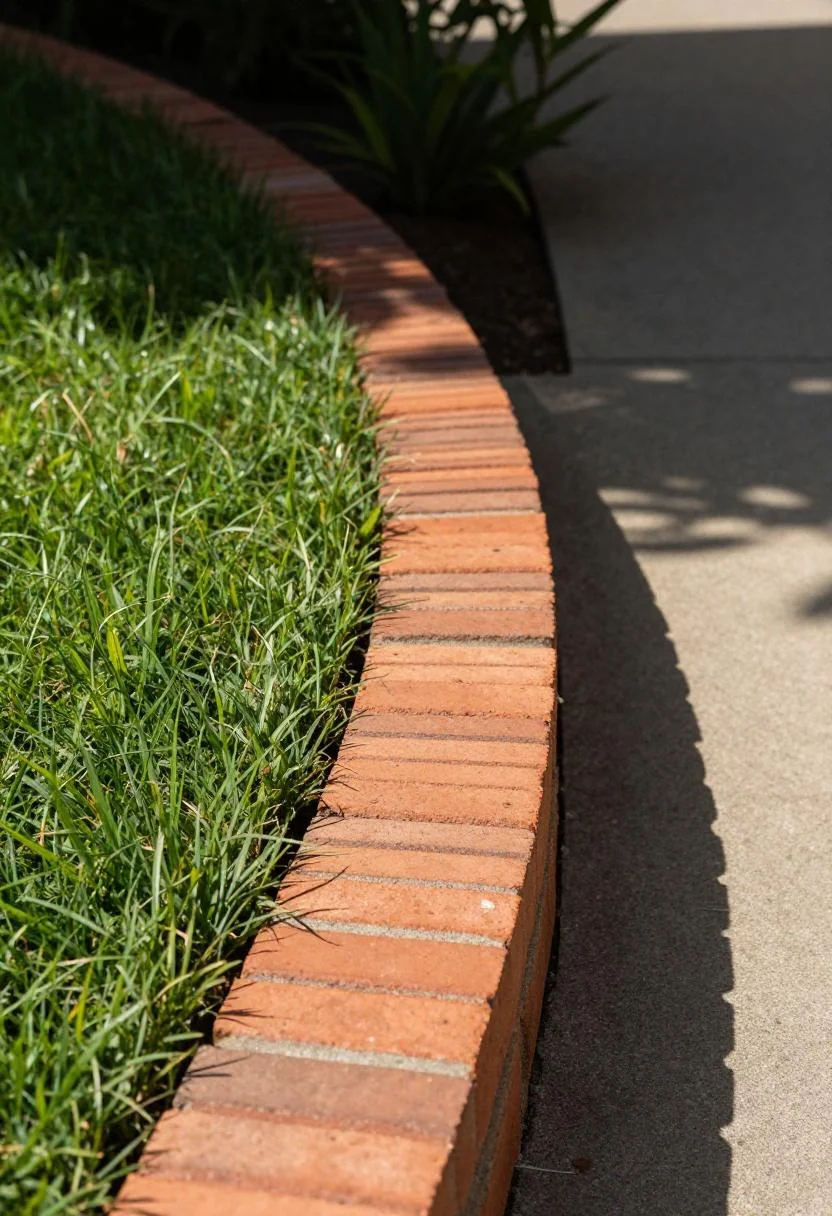
Set flush at lawn level, a single row of terracotta brick creates a mowing ledge — the lawnmower wheel rolls along it, the blade trims to the edge, and you never have to hand-trim that strip again. (This small operational detail is why brick edging persists across centuries of garden design.) The morning shadows here define the geometry without any additional landscaping. Symmetry, restraint, craft. As Harper’s Bazaar has noted in coverage of estate gardening, it’s the recurring elements — the repeated material, the consistent line — that give heritage gardens their authority.
Modern Rectangular Beds — When Clean Lines Are the Statement
Not every garden wants warmth. Some gardens want precision.
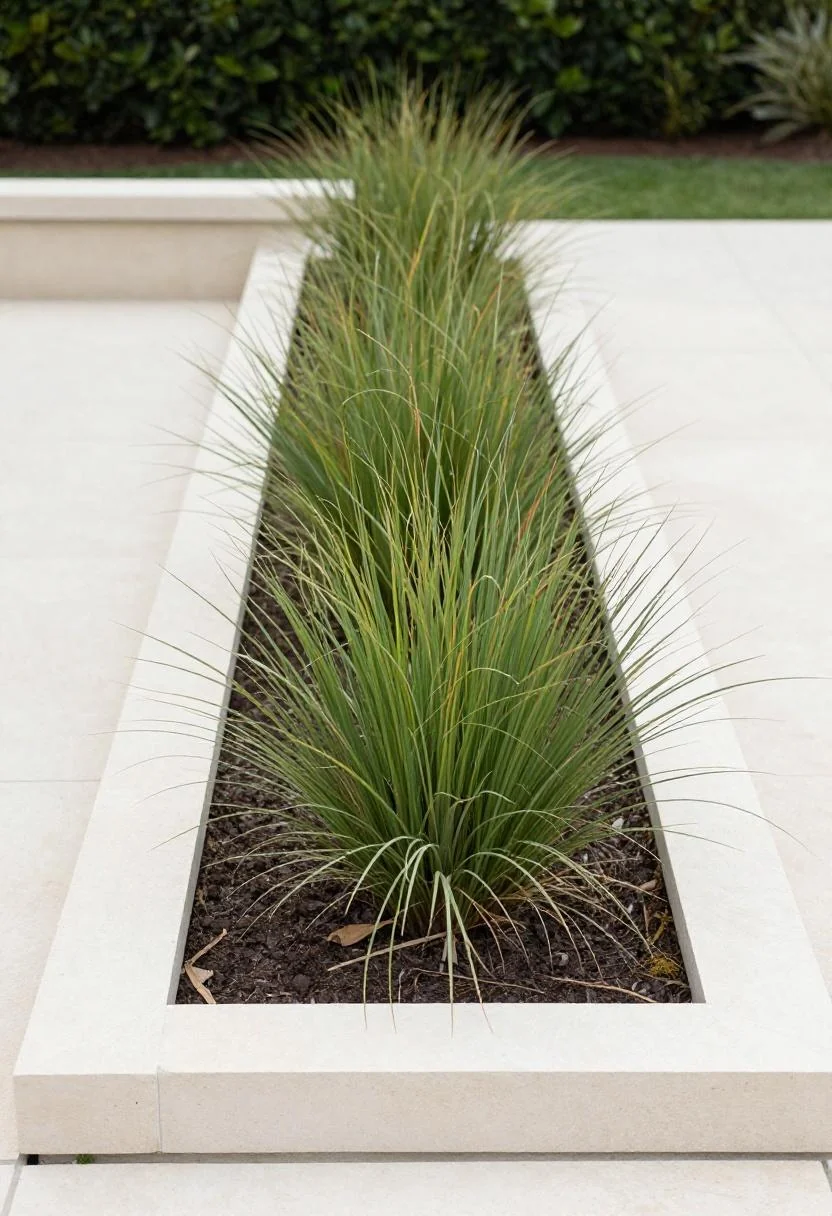
Limestone block edging on a rectangular bed, shot at midday when the shadows are shortest and the geometry reads clearest. Limestone has a muted, almost bleached quality in direct sun — it recedes rather than competes. For beds with strong architectural plants (ornamental grasses, agapanthus, clipped box), this kind of neutral framing lets the planting speak. Limestone edging blocks are heavier to install but essentially permanent once set.
Worth noting if you’re considering this approach alongside container planting: our guide on how to use pots in flower beds works beautifully in concert with structured edging like this.
The Rotary Edger — An Honest Tool
There’s something satisfying about a manual rotary edger. No power required. No cord to untangle. Just a rolling blade, your body weight, and a clean trench at the end of it.
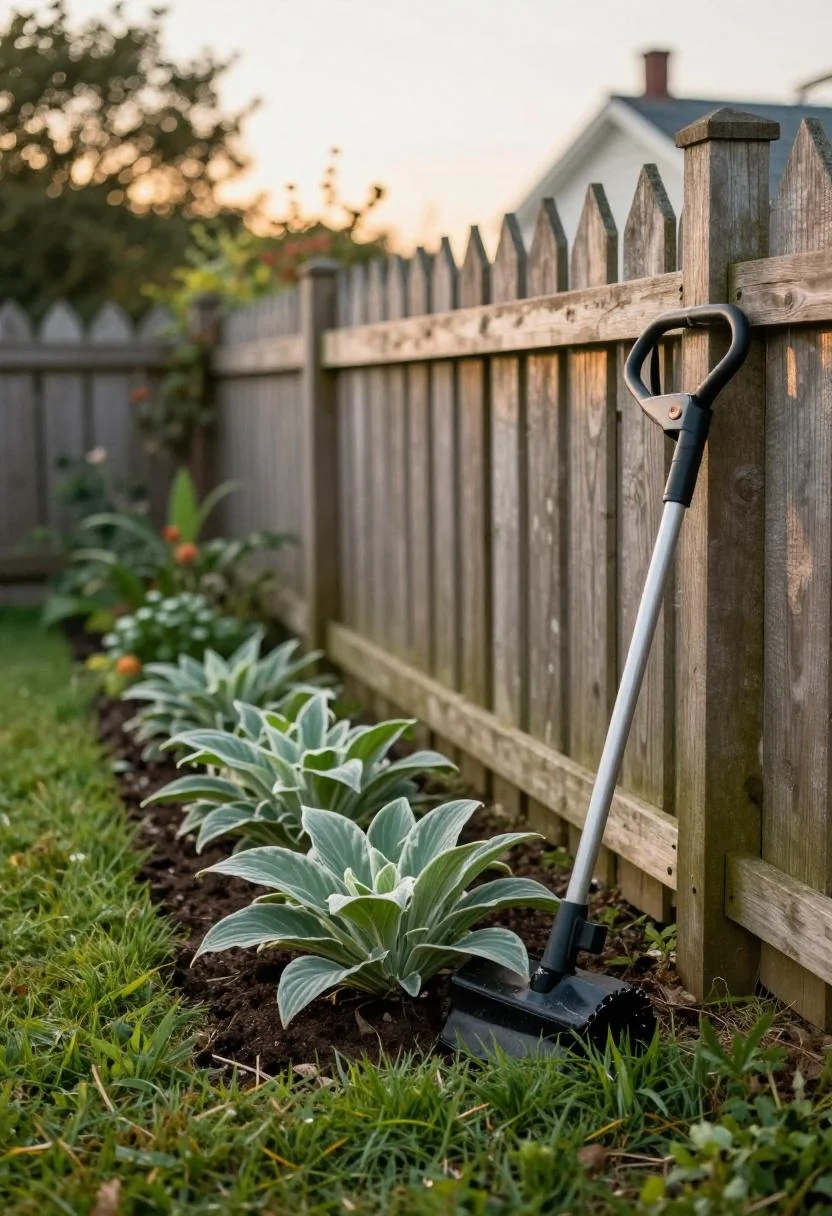
At dusk, the trench shadows deepen and the cut reads sharp. This is maintenance edging — re-defining a border that already exists, keeping lawn from reclaiming ground it lost last season. Do it every four to six weeks during the growing season and the bed holds its shape without drama. The rotary edger is honest in its scope: it doesn’t create a border from scratch, but it maintains one beautifully. A quality manual rotary edger with a sharpened steel wheel lasts decades.
Raised Deck Beds — Working With the Architecture
When a flower bed sits against a raised deck, the edging has to negotiate two planes: the deck structure and the garden below. Most people ignore this and wonder why the result looks unresolved.
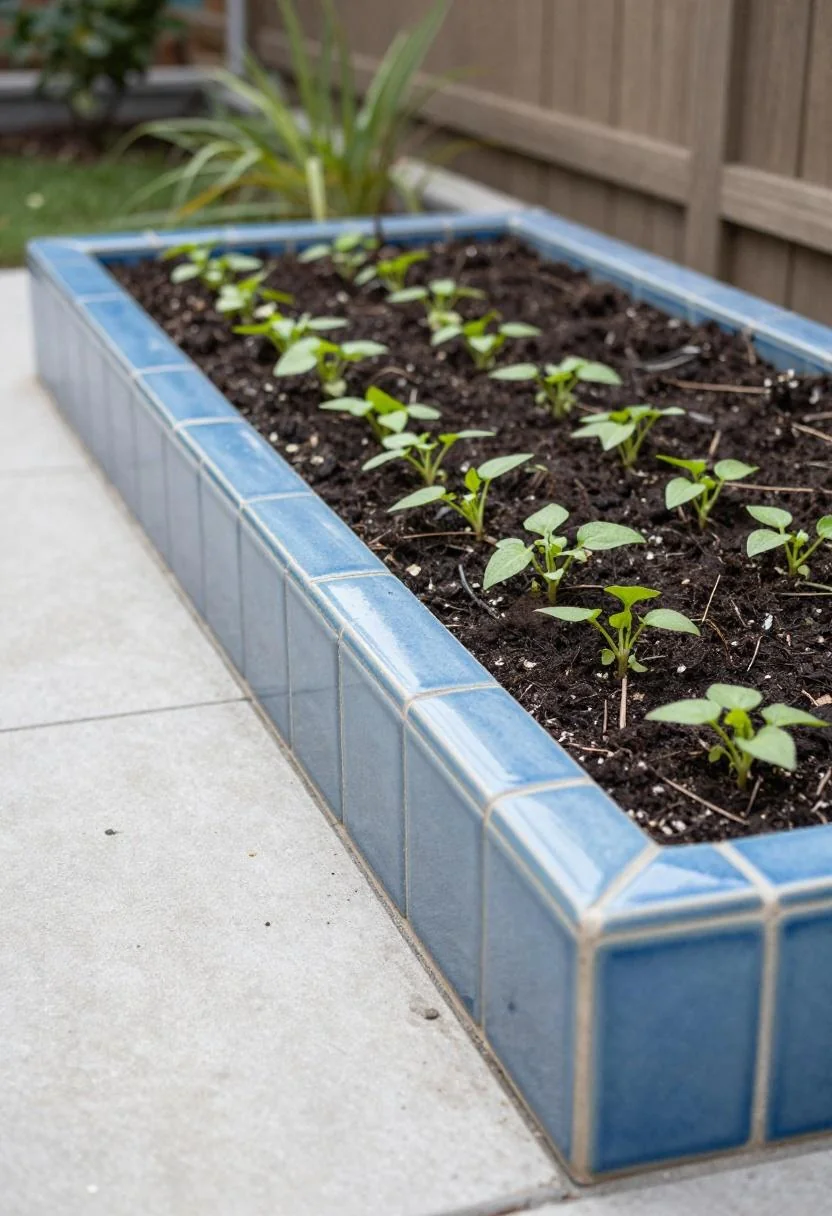
Cool-blue ceramic tiles curving along the bed’s edge from above — the aerial view reveals how the curve mediates between the straight deck boards and the organic planting. Ceramic holds color without fading, and in blue-toned glazes, it reads as a design choice rather than a practical afterthought. The curve, crucially, echoes the deck’s edge radius. When materials talk to each other like this, the garden feels composed.
Corten Steel — For the Garden That Means Business
Corten is not humble. It announces itself — warm rust tones, hard industrial edge, zero maintenance after year one. It’s the edging equivalent of a vintage leather jacket: it improves with time and doesn’t ask for your approval.
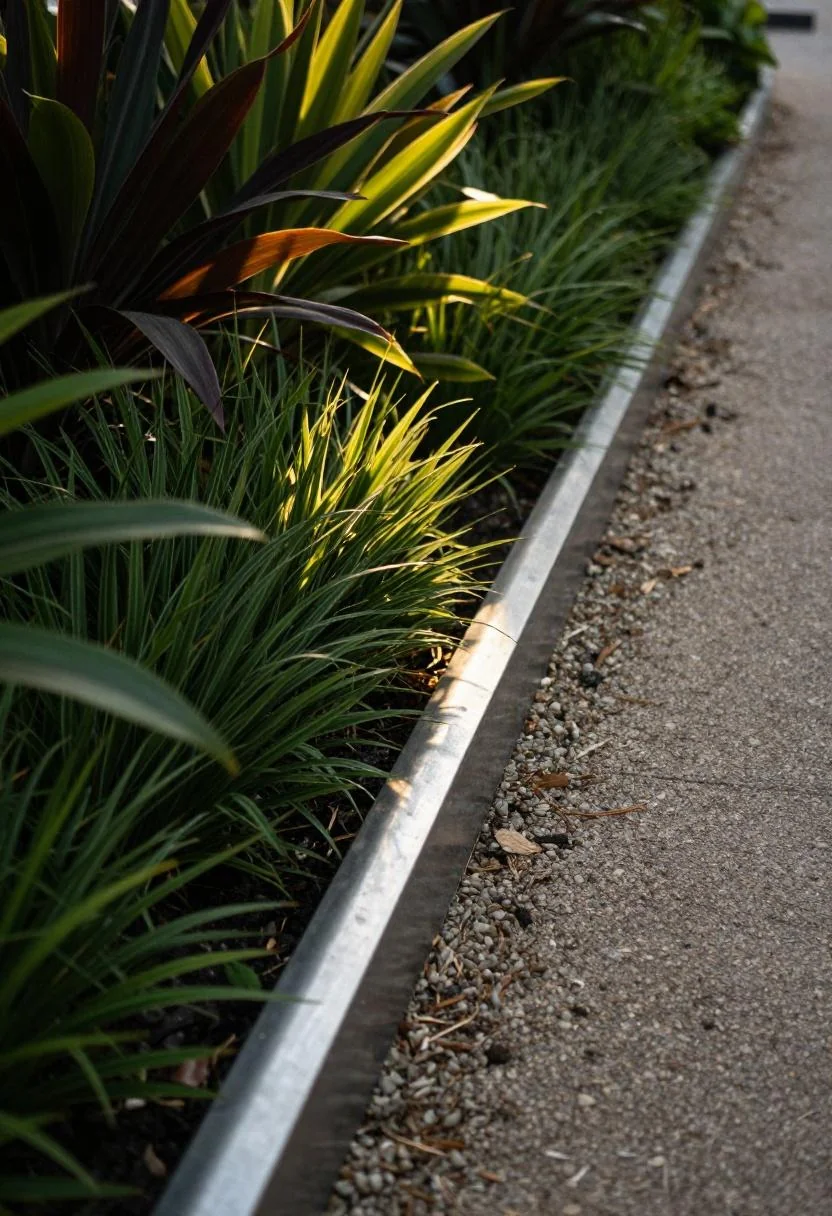
Tropical ground cover on one side, gravel path on the other, divided by a thin corten steel strip. The contrast is intentional and electric — lush green against warm rust, organic against industrial. This material suits bold planting schemes like those in our canna lily landscaping ideas guide, where the edging needs to hold its own against dramatic foliage. Corten steel edging is sold in flexible strips that can be curved or set straight — installation requires stakes and a mallet, nothing more.
How to Draw a Curve — The Garden Hose Method
How do you edge a curve you can’t see yet? You make it visible first.
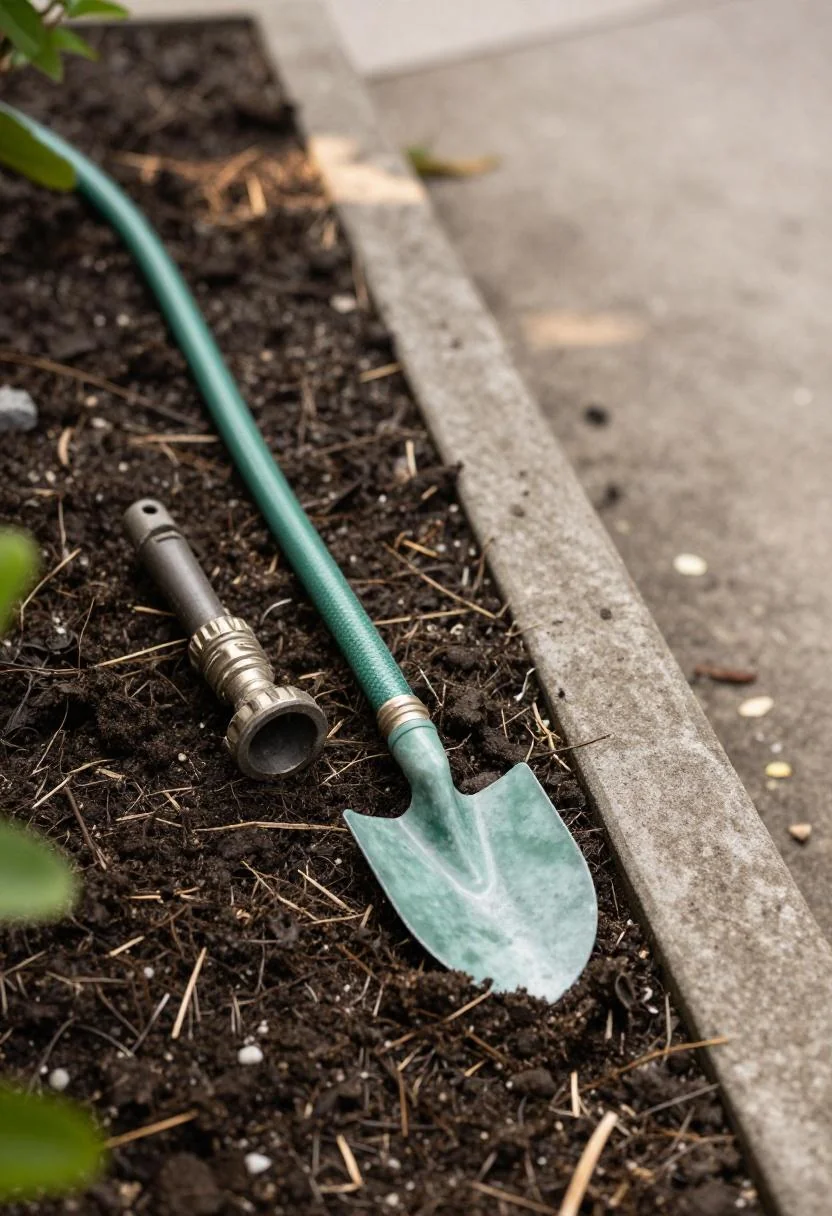
Lay a garden hose in the curve you want. Stand back. Adjust until it looks right — from the house window, from the path, from wherever you’ll actually be viewing the bed. Then edge along it with a flat spade. The hose gives you a physical guide to follow rather than an imaginary line to improvise. This is one of those techniques that seems too simple to work until you try it — and then you wonder why you ever did it any other way. As Elle has pointed out in their garden design coverage, the difference between a good curve and an awkward one is usually just planning time.
Around the Fire Pit — Slate Flagstone for Structural Weight
A fire pit garden bed is a high-drama situation. The material surrounding it needs presence — something that reads from across the yard, that doesn’t disappear into the planting.
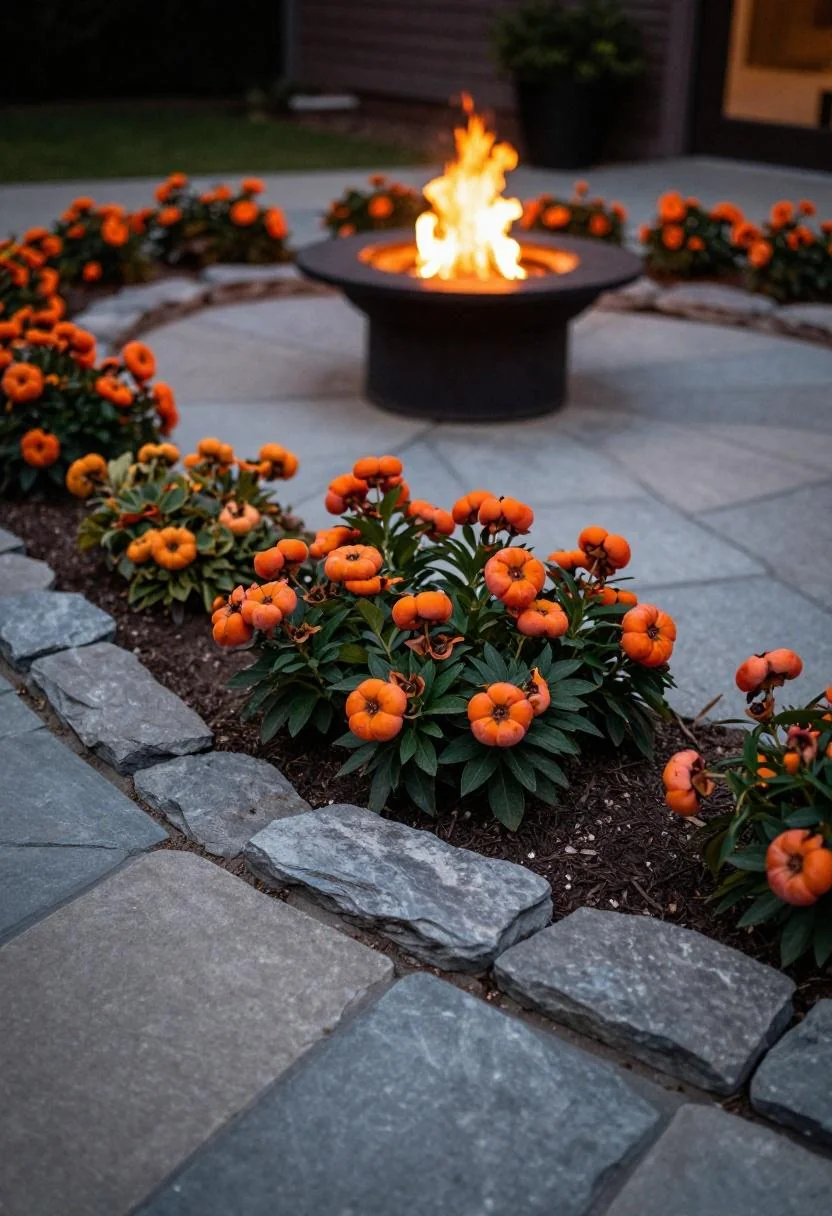
Slate flagstone set vertically, circling a fire pit bed dense with persimmon geum. The dark slate grounds the warm orange blooms. Slate is a traditional material — used in estate gardens for centuries precisely because it has mass and permanence. Set stones vertically (soldier-course style) for maximum height and visual weight. Laid flat, the same slate would disappear. Vertical, it defines the space.
Foundation Beds — The Detail Closest to the House
Foundation plantings are where the garden meets the architecture. The edging here matters more than anywhere else, because it’s the first thing visible from the street and the last thing cleaned up before guests arrive.
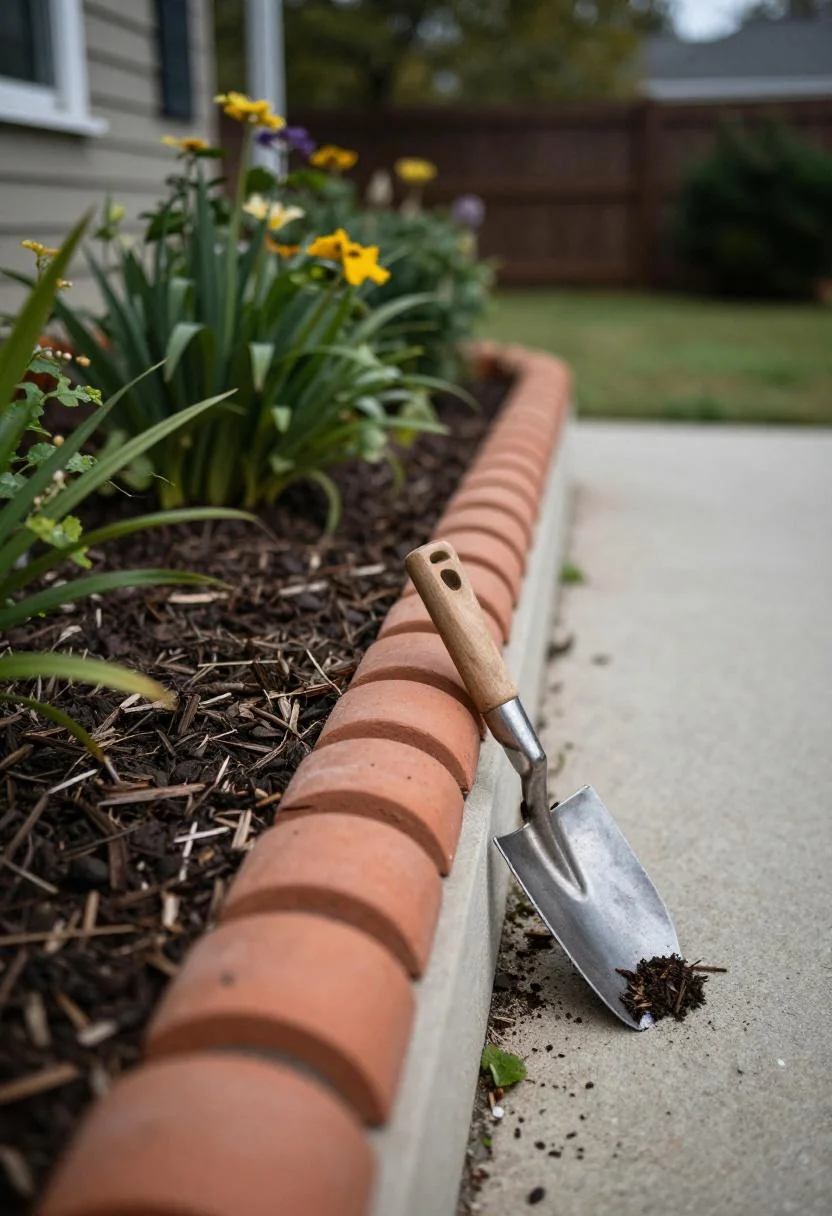
Terracotta half-round edging tiles — the classic Victorian pattern — lining a foundation bed, a trowel resting at the far end. Half-rounds have a decorative upper edge that adds rhythm without fuss. They suit period homes with confident architecture: Craftsman bungalows, in particular, look exactly right with this kind of considered detail at their foundations. Terracotta half-round edging is still made to Victorian specifications by several UK manufacturers — worth seeking out.
The Corner — Where Precision Is Either Won or Lost
Every edge has a corner. This is where most amateur attempts quietly fall apart.
Seen from above: cream gravel mulch meeting a clean-cut soil edge at a 90-degree corner. The geometry is stark. What makes it work isn’t the materials — gravel is simple, the cut is a straight line — it’s the precision of the meeting point. The gravel sits right to the edge. No soil drift. No grass creep. No ragged line. This corner was cut with a straight-edge board laid flat, the spade pressed against it. Old technique. Permanent result.
Cream gravel as mulch (rather than bark) keeps the palette cool and reads crisply against dark soil. Consider it especially in beds near paving — the color relationship between gravel mulch and stone paving is often more harmonious than bark mulch against the same surface. Vogue’s garden coverage has consistently noted that gravel mulch is having a serious moment in considered landscape design — and unlike many garden trends, this one has the heritage to back it up.
What This All Comes Back To
The color story across these fourteen approaches isn’t accidental. Cool blue tools against damp morning soil. Terracotta and persimmon — warm earth tones that tie the edging to the planting. Jade greens and sage that recede into the garden rather than interrupting it. Cream gravel and limestone for the beds where the architecture does the talking. Plum noir and corten rust for the gardens with something to say.
What these palettes share: they’re all borrowed from the materials themselves. Stone looks like stone. Terra cotta looks like fired clay. The edging doesn’t pretend to be anything other than what it is.
Does your flower bed have a defined edge, or does it just have a general vicinity? That question cuts to the heart of it. An edge is a decision — about where the garden ends, where the lawn begins, how much control you want to exert over the space you’re tending. Make the decision deliberately, choose materials with some consideration for permanence, and execute with care. The garden will hold the shape you give it.
Less noise. More intention. That’s the whole brief.
This post contains affiliate links. We may earn a commission at no extra cost to you.
Images in this article were created with AI assistance.