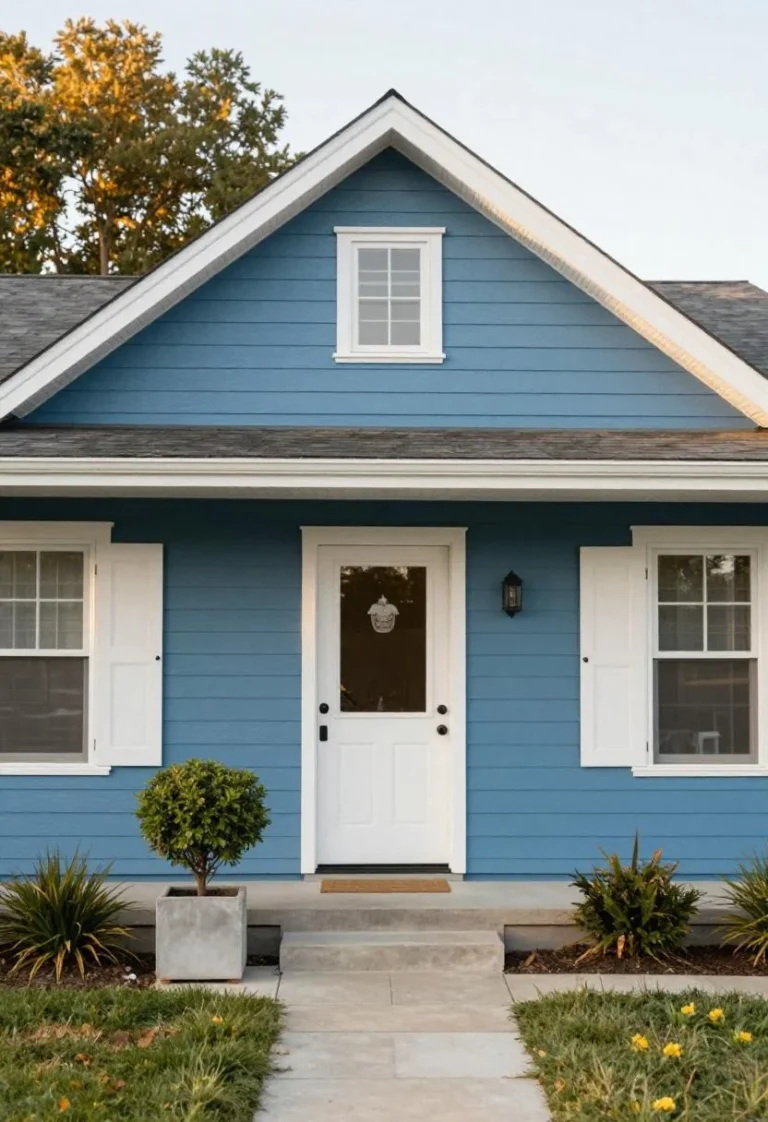
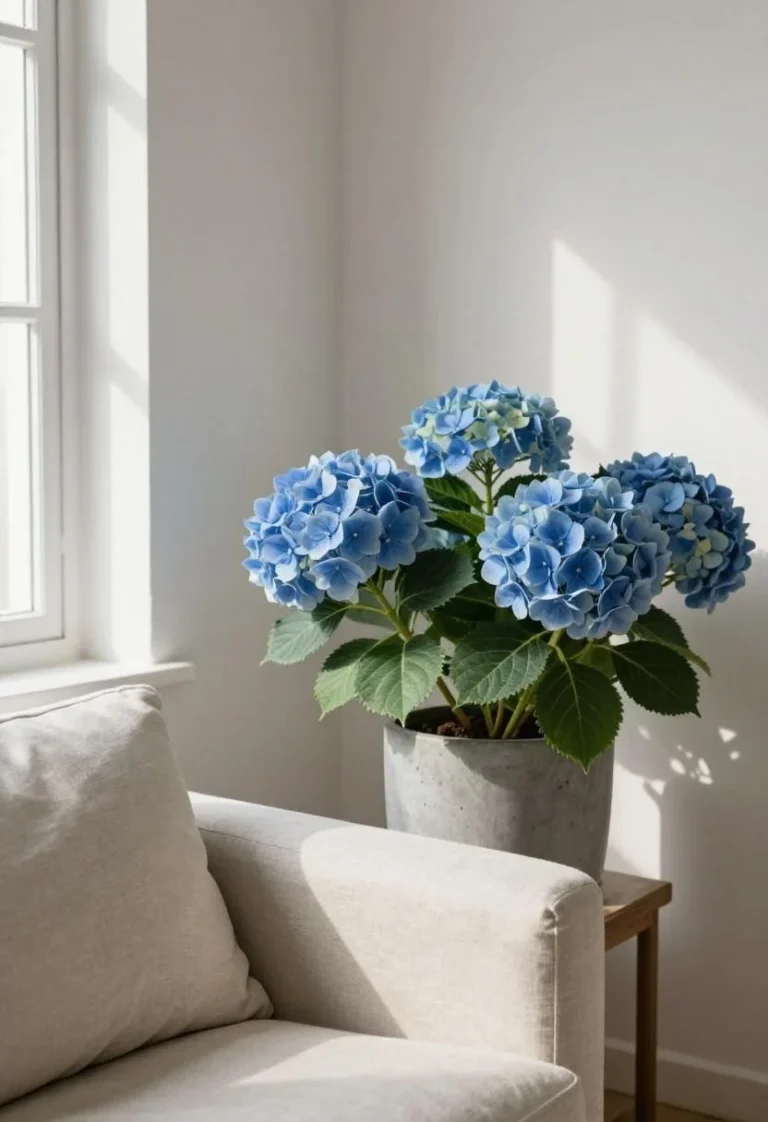
The Craftsman bungalow is one of the most emotionally loaded architectural forms in American history — and I say that with full affection and zero apology. Born from the Arts and Crafts movement’s rejection of Victorian excess, it became the middle-class dream house of the early 20th century. And then, somewhere between 1970 and 2010, a lot of people painted them beige and called it a day. That era is over. What’s happening now on porches from Pasadena to Portland is something far more interesting: maximalist color thinking applied to a form that was always, at its bones, about handcraft and intentionality. The tension between the bungalow’s honest restraint and a maximalist eye for color? That’s not a contradiction. That’s the whole point.
The Standouts
These are the ideas that stopped me mid-scroll. The ones where someone made a genuinely brave color decision and it paid off in a way that makes you feel slightly envious and slightly inspired at the same time.
Look 1: The Cool Blue Porch Swing
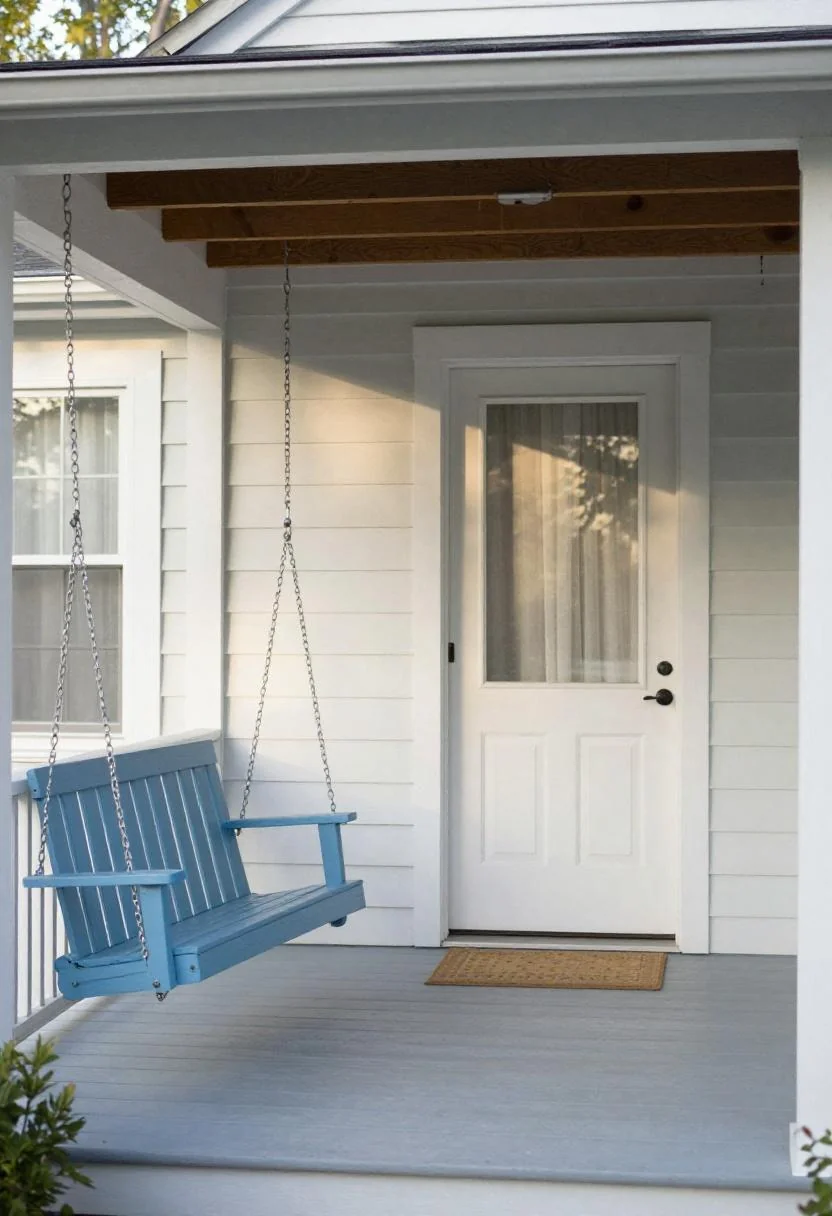
Here’s my honest read on porch swings: most of them are an afterthought, tacked on in natural wood or worse, painted the same color as the siding. This cool blue swing — positioned deliberately at the far left of the entry, not centered, not symmetrical — is a statement. Morning light does something extraordinary to blue, pulling out the gray undertones and making the whole porch feel like something out of an early-century postcard, but sharper. Anchored, not floating. Shop similar porch swings here.
Look 2: Plum Noir Glazed Pot with Boxwood
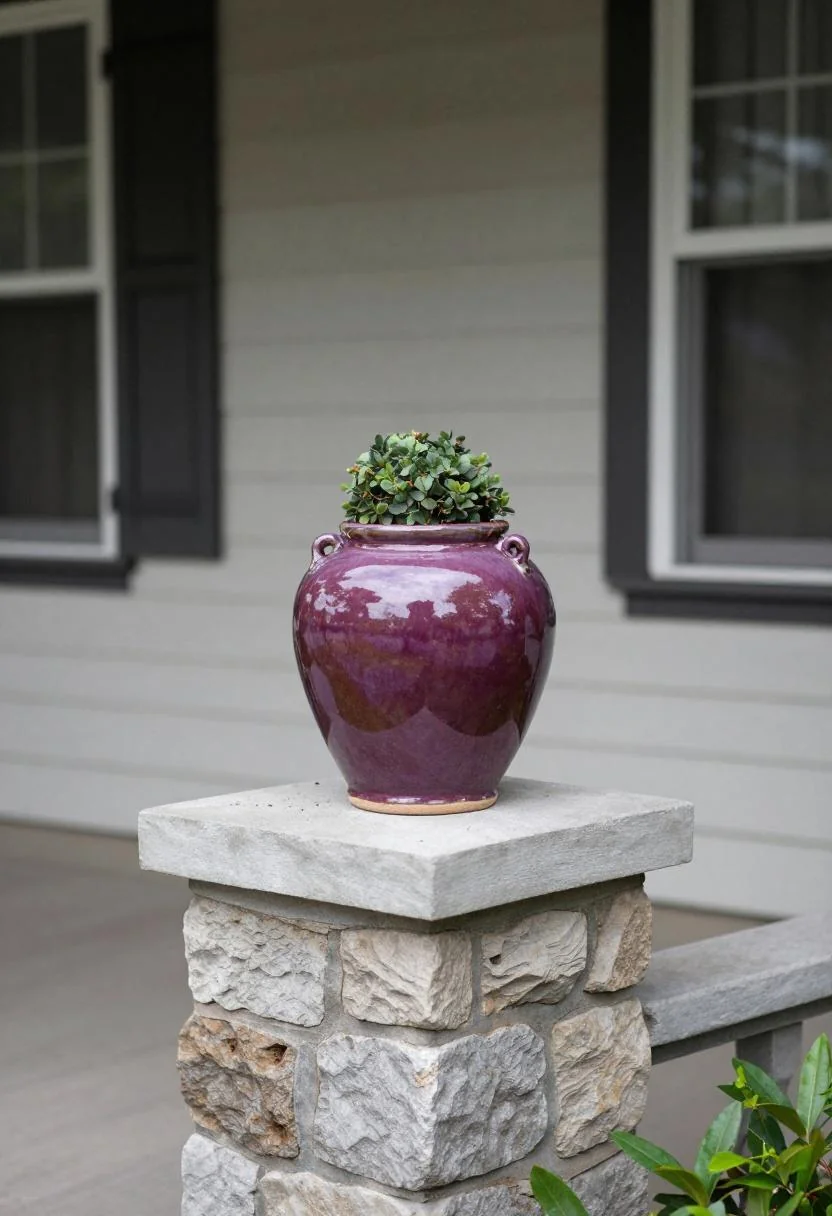
Controversial take: boxwood is boring when it lives in a terracotta pot. Put it in plum noir glaze beside a rough stone column and suddenly the whole composition has drama. The contrast between the Craftsman’s natural stone — textured, handmade, irreproducible — and this deeply lacquered vessel is exactly the kind of tension Architectural Digest keeps circling back to in its coverage of historic home restoration. Dark against stone. Organic against gloss. Simple plant, extraordinary container.
Top 3 Picks: The cool blue porch swing (Look 1), the plum noir lantern post at dusk (Look 10), and the jade green window boxes at golden hour (Look 3). These three set the entire chromatic argument for a maximalist bungalow exterior.
Look 3: Jade Green Window Boxes at Golden Hour
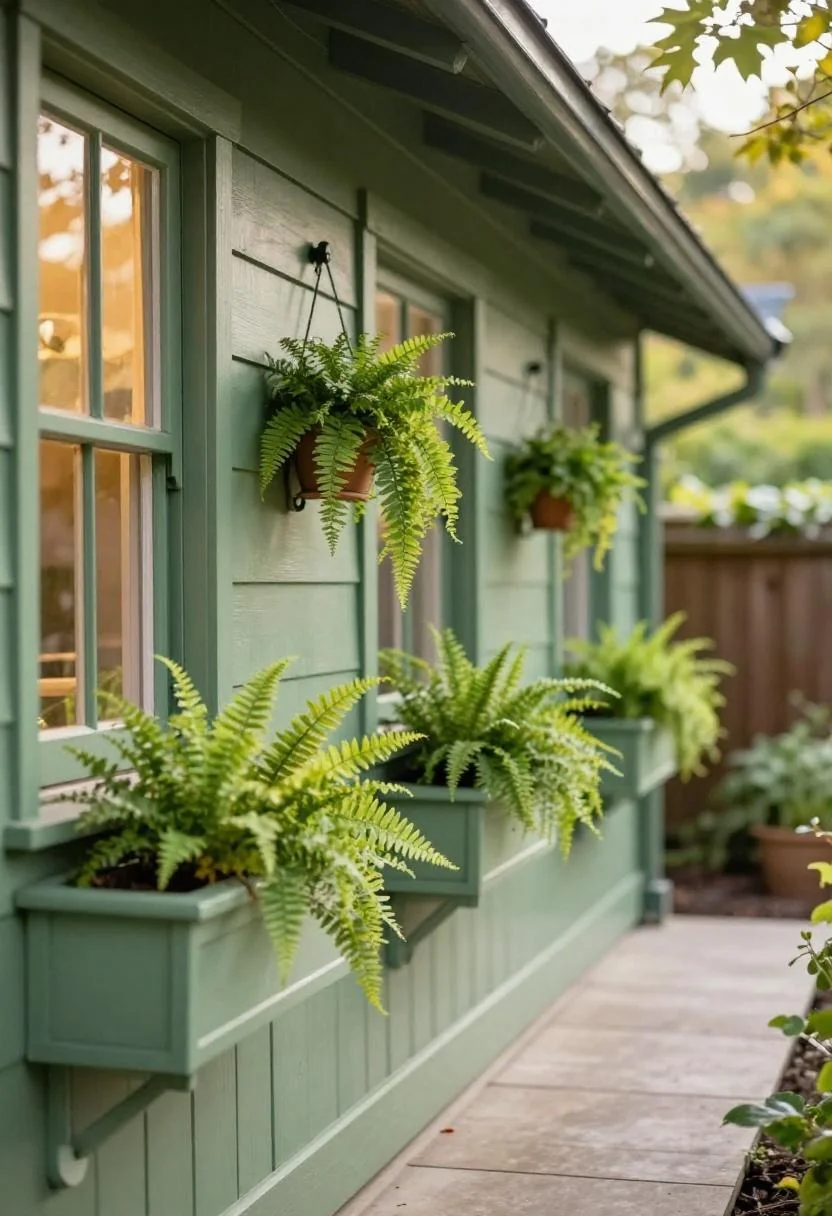
Window boxes are the jewelry of a bungalow facade. Get them right and the whole street changes. These jade green boxes — not hunter, not forest, but that specific saturated middle-jade — trail with ferns along a garden path that catches golden hour light in a way that feels choreographed. The color reads almost as turquoise at dusk. Plant them with trailing ferns (not petunias, please) and you’re working with something that has genuine botanical intelligence. If you want to keep the fern situation going year-round, our guide to Kimberly Queen fern planter ideas has strong opinions. Find jade window boxes here.
The Classics (Done Right This Time)
Not every great exterior idea needs to reinvent the wheel. Some things are classics because they work — but only when executed with actual intention. Here’s where the Craftsman bungalow tradition earns its reputation.
Look 7: Cream White Beadboard Porch Ceiling
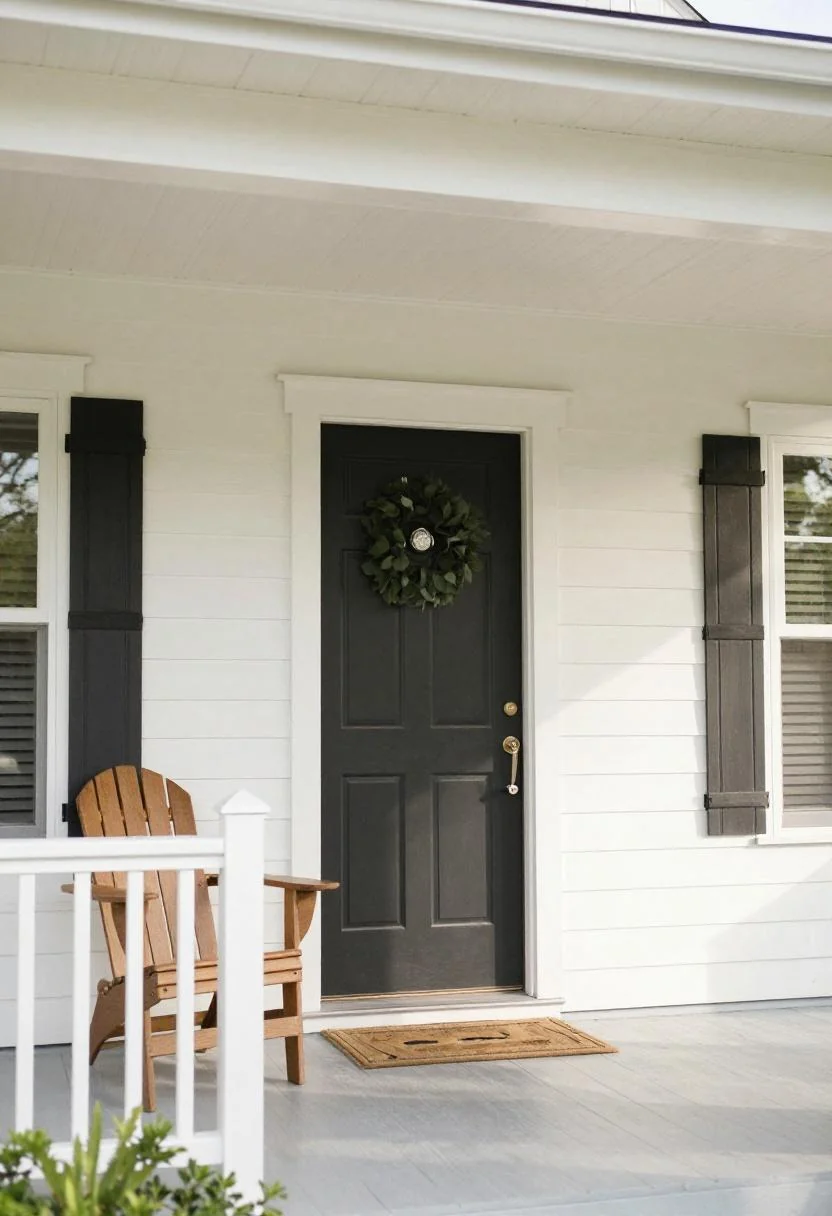
This is the hill I’ll die on: the porch ceiling is the most underrated surface of the entire exterior. A cream white beadboard ceiling — not white-white, not paint-by-numbers, but the warm, slightly aged cream of old linen — frames everything below it like a gallery would. The walnut Adirondack chair beside the entry isn’t incidental. It’s doing heavy compositional work, providing the dark anchor that keeps the light ceiling from floating away visually. Historically, porch ceilings were painted “haint blue” in the American South to ward off spirits. Cream is a quieter, more Northern choice — but no less considered.
Look 14: Cream White Fascia and Exposed Rafter Tails
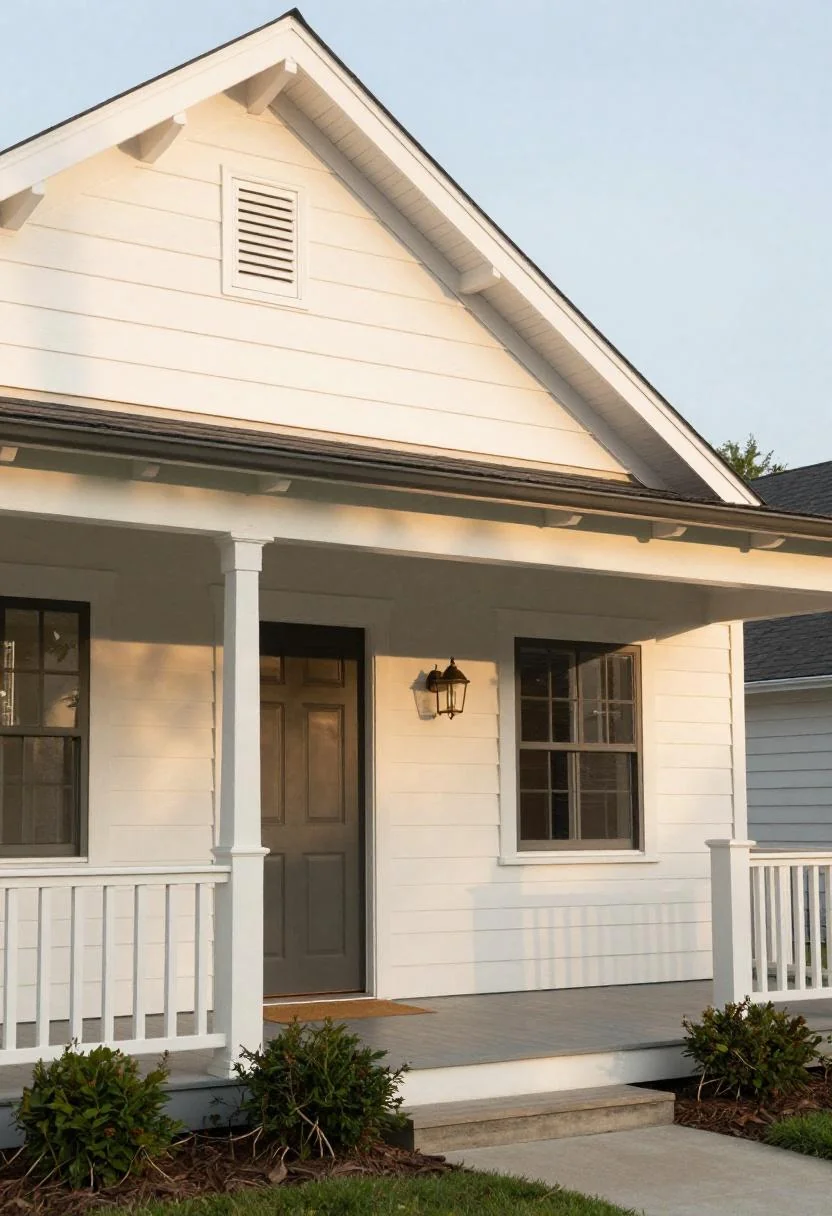
The roofline is the signature of Craftsman architecture — those exposed rafter tails and wide overhanging eaves are what tell you immediately what you’re looking at. Cream white fascia at golden hour does something almost cinematic: the horizontal lines of the rafter tails throw small shadows that change by the hour. As Elle Decor has noted in its coverage of historic American residential styles, the Craftsman roofline is one of those architectural details that rewards you for actually looking at it.
Editor’s Note: Both cream-white moments in this article (Looks 7 and 14) work because they’re not bright white. If you’re choosing paint, pull from Benjamin Moore’s White Dove or Sherwin-Williams Antique White family. Brilliant white will make the whole house look like a dentist’s office.
Look 8: Sage Green Trellis with Climbing Roses
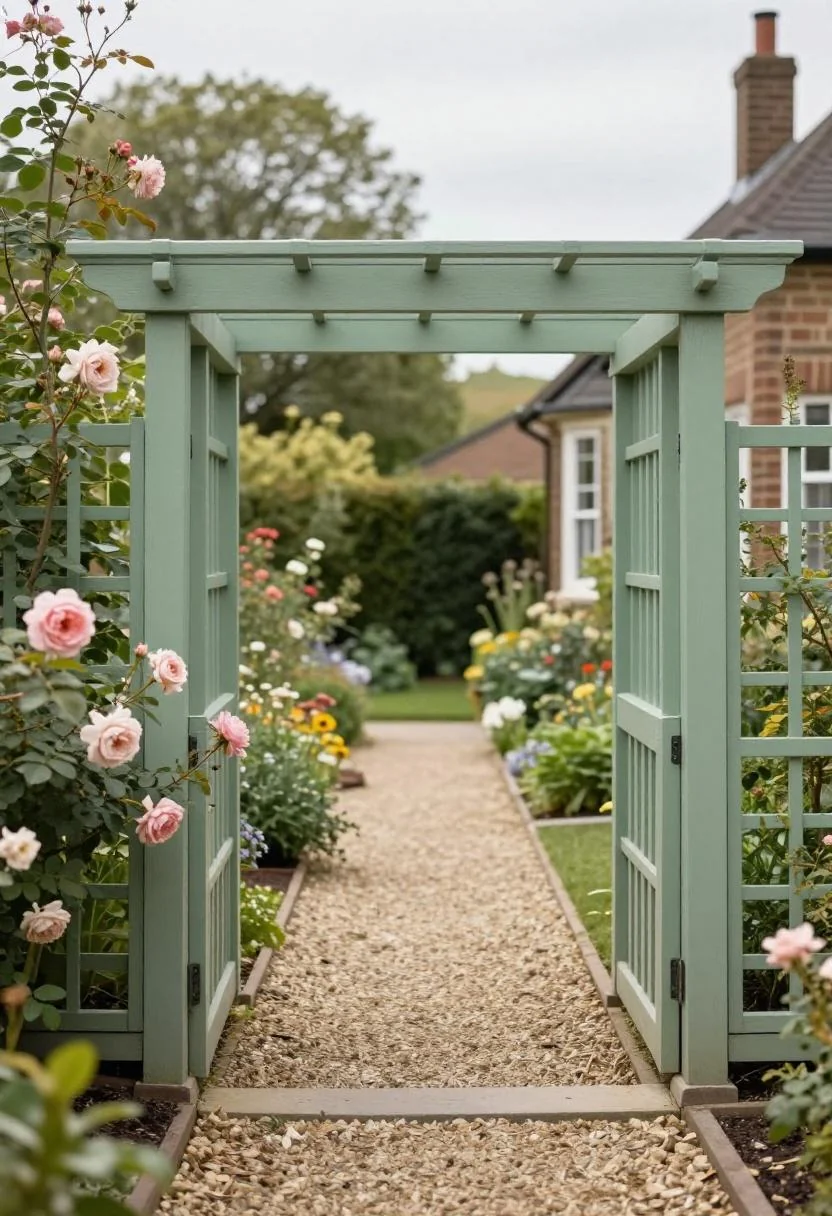
Sage green and climbing roses is not a new idea. I know that. But trellis panels — structured, geometric, designed rather than improvised — give the climbing rose something to argue with. The clear gravel path keeps the whole scene from collapsing into cottage-core. There’s a tautness to this combination that reads less like a country garden and more like a considered exterior room. For anyone thinking about expanding the planting beyond roses, our roundup of border plants for full sun gardens is the logical next stop. Shop sage trellis panels.
The Dark Horses
These are the ideas that aren’t getting the Pinterest traffic they deserve. Quieter choices. The ones where someone made a decision that doesn’t photograph as dramatically but works harder in person.
Look 4: Wasabi Linen Pillow on Cedar Bench
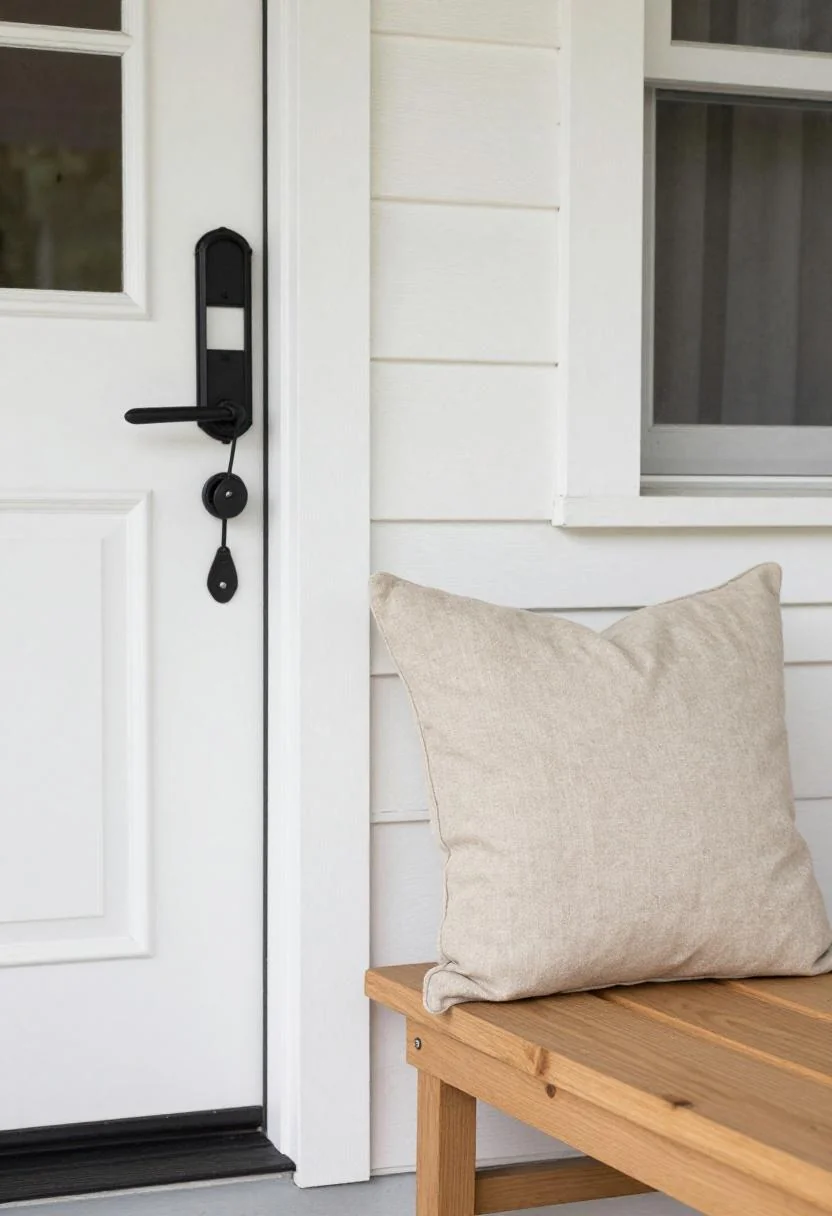
Wasabi. Not olive. Not chartreuse. The specific yellow-green of fresh wasabi paste — and it’s doing extraordinary work against cedar. The porch bench is the functional heart of a bungalow entry and most people either leave it bare or throw a red buffalo check cushion on it (don’t). One well-chosen linen pillow in a color that surprises you is the move. Find outdoor linen pillows in green here.
Look 5: Persimmon Terracotta Urn on Stone Steps
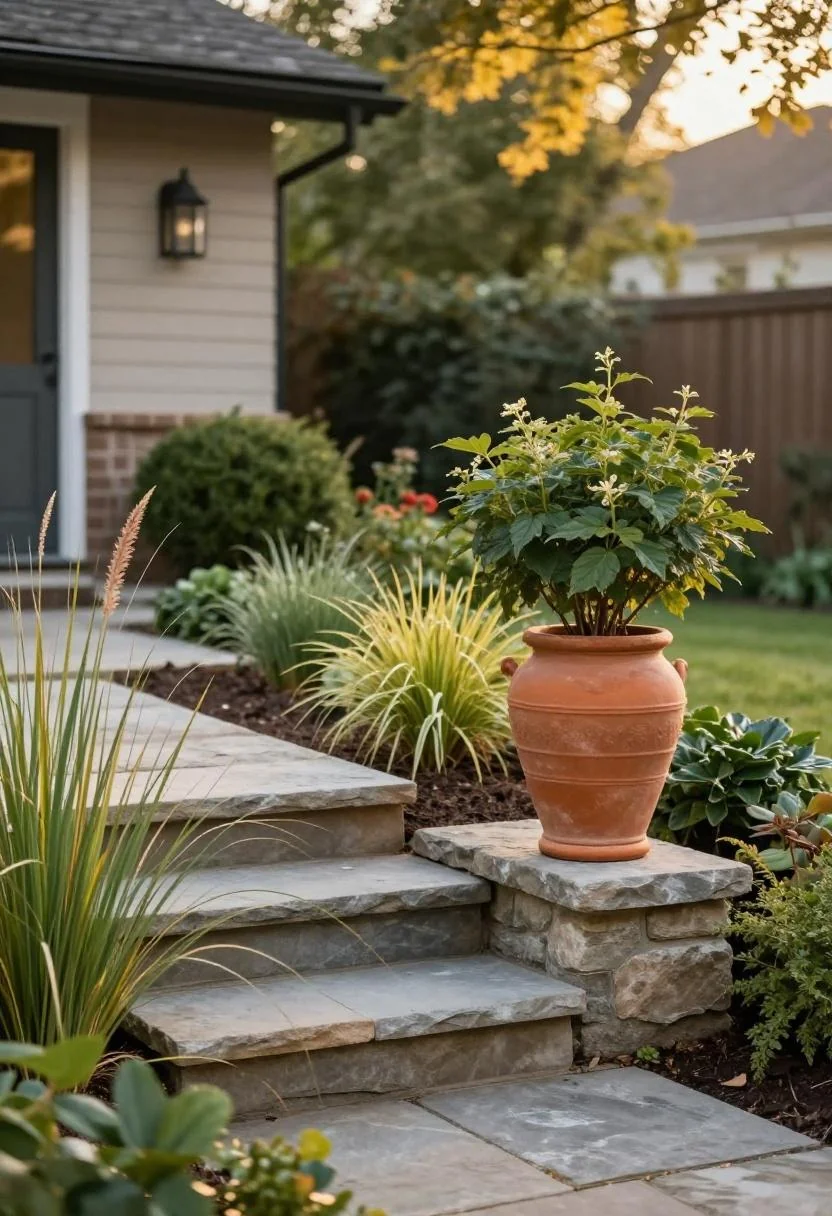
The persimmon terracotta urn is the quiet showstopper of the stone steps — not shouting, but you can’t ignore it once you’ve seen it. Persimmon as a color exists at that exact tipping point between orange and red where it reads warm without being aggressive. On stone steps, which tend toward cool gray or buff, the thermal tension is real. What makes this work beyond the color choice is scale: the urn is large enough to earn its place. Small pots on wide steps are a design failure. Go big or leave the steps alone.
Editor’s Note: If you want more ideas for working with pots in outdoor spaces, our piece on how to use pots in flower beds covers the size and placement rules that most people get wrong.
Look 6: Warm Terracotta Brick Paver Side Porch
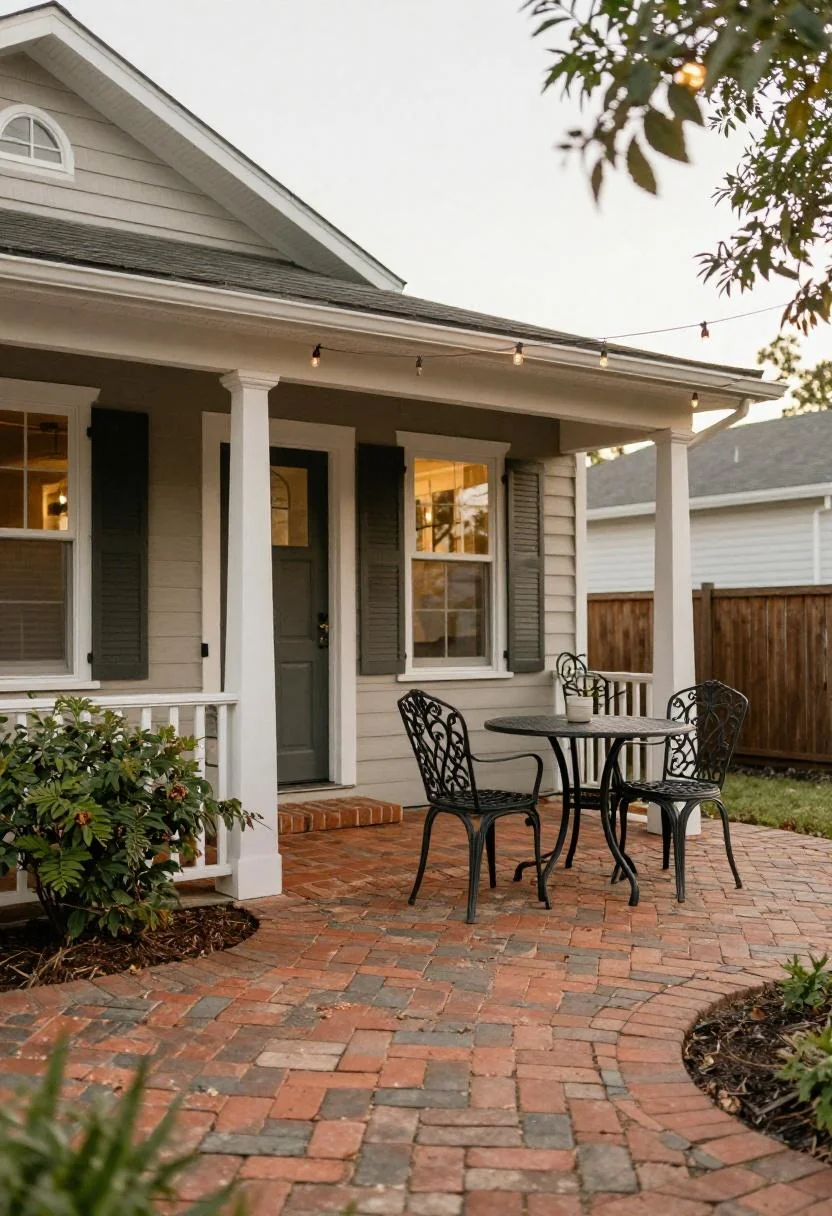
The side porch gets almost no attention in exterior design conversations and I find that baffling. Here, warm terracotta brick pavers — the kind that look like they were laid in 1923 because they probably were — host a wrought iron bistro set tucked into the corner at dusk. This is genuinely the most livable corner of the whole exterior. The bistro set at dusk is not a styled moment; it’s an invitation. The warm brick reads almost red in low light, which turns the whole side porch into an outdoor room that feels as thought-through as anything inside.
Look 9: Cool Blue Planter Box with Sweet Potato Vine
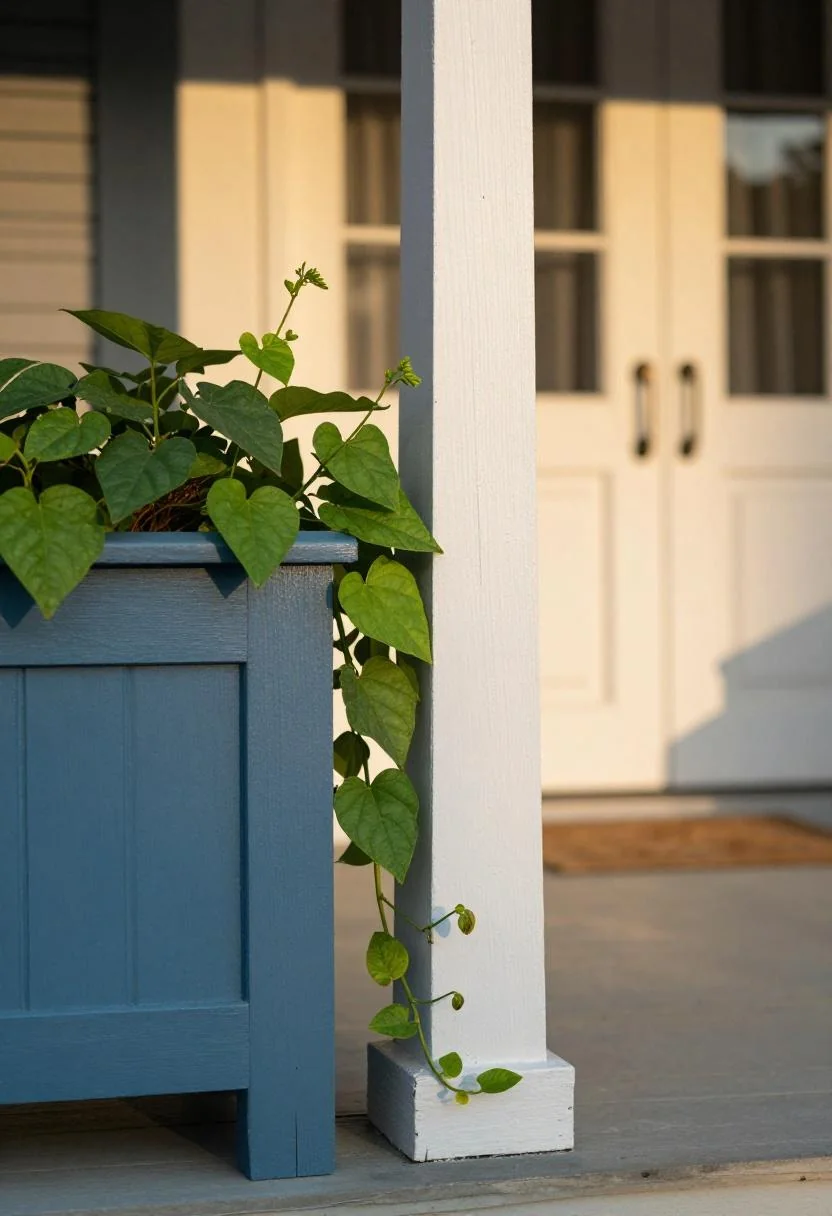
What’s the best plant to trail from a planter box? Sweet potato vine. Every time. The way it spills and drapes has a kind of physical generosity that’s hard to replicate with other trailing plants — and against cool blue wood, the chartreuse-to-bronze range of sweet potato varieties does something chromatic that’s almost too good. This planter hugs the porch column the way a good accessory hugs a silhouette.
More Saturated, More Structured
Let’s be honest about what separates a great Craftsman exterior from a nice one: it’s the willingness to commit. Half-measures read as indecision. The ideas here go all the way.
Look 10: Plum Noir Cast Iron Lantern Post at Dusk
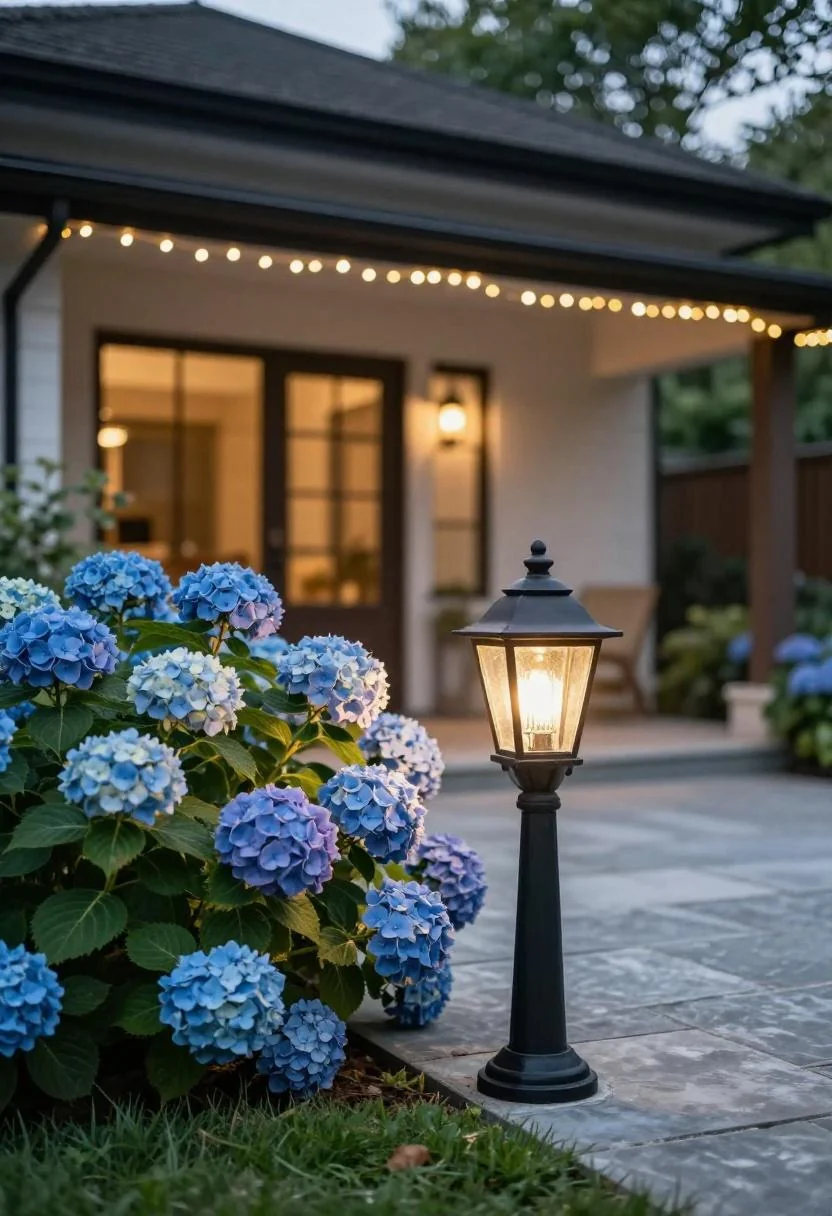
Cast iron lantern posts flanking a stone walkway is the most Craftsman thing I can describe. But plum noir — that dark, almost-black purple with depth — is what makes this particular example worth stopping at. At dusk the lantern glows amber against the dark post and the whole garden walkway takes on a quality that is genuinely cinematic. Have you noticed how much lighting hardware people cheap out on? A lantern post in this finish, at this scale, is not a small expense. It’s also not the place to economize. Shop cast iron lantern posts here.
Look 11: Jade Green Cedar Side Table
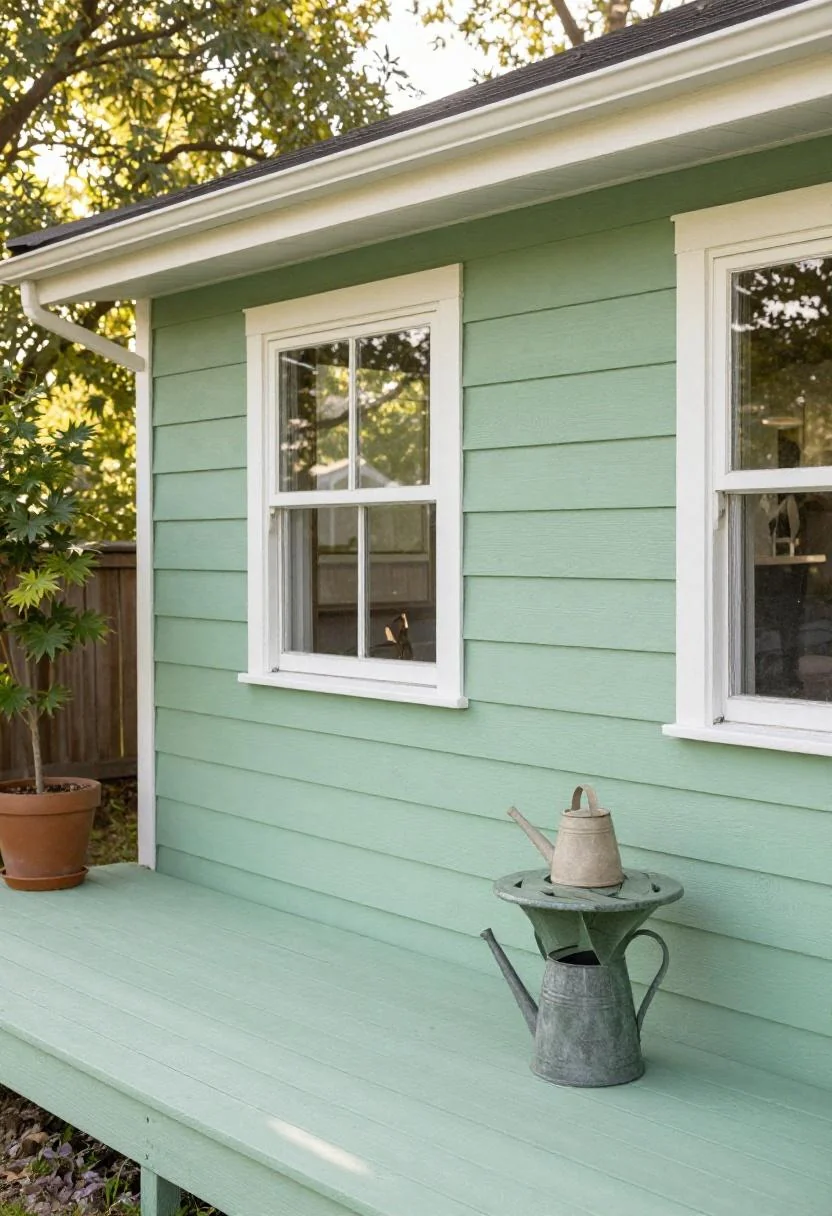
A cedar side table painted jade green on a morning-light deck, with a clay watering can beside it. That’s the whole image — and it’s enough. The watering can is not decorative; it’s functional, but it looks right there because the clay and the cedar are in the same material family as the bungalow itself. This is what design writers mean when they talk about material coherence, but rarely explain clearly: the objects belong to each other through their origin, not just their color.
Look 12: Wasabi Cushion at the Fire Pit
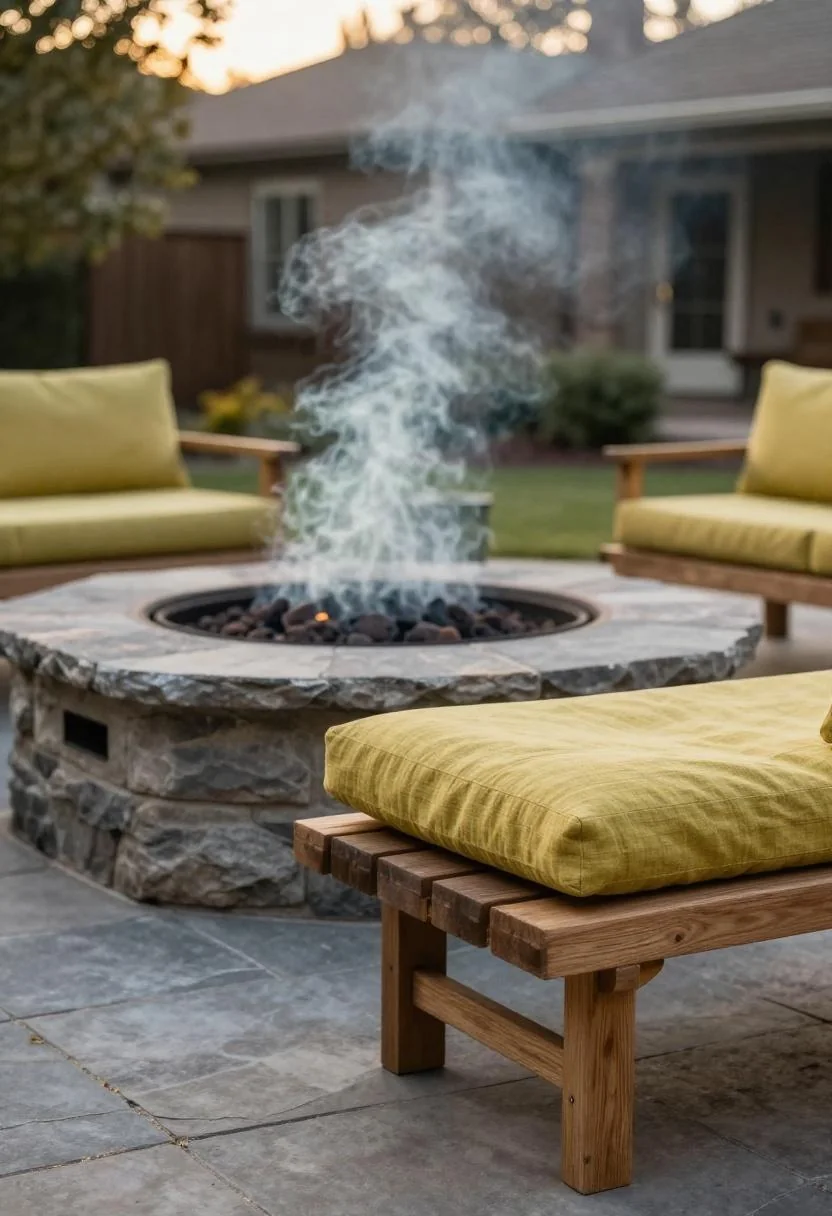
The stacked stone fire pit is doing a lot of visual heavy lifting — textured, earthy, structural — and the wasabi cushion on the teak bench beside it is the color counterpoint that keeps the whole vignette from reading as a camping setup. Teak against stone against that acid-tinged green. Three natural materials, one surprising color. The Craftsman tradition was always about honest materials honestly displayed; the wasabi just adds the wit. As Harper’s Bazaar has observed, the new wave of Craftsman revivalism is less about period-accuracy and more about color confidence applied to a grammar that already works.
Look 13: Persimmon Wrought Iron Balcony Railing
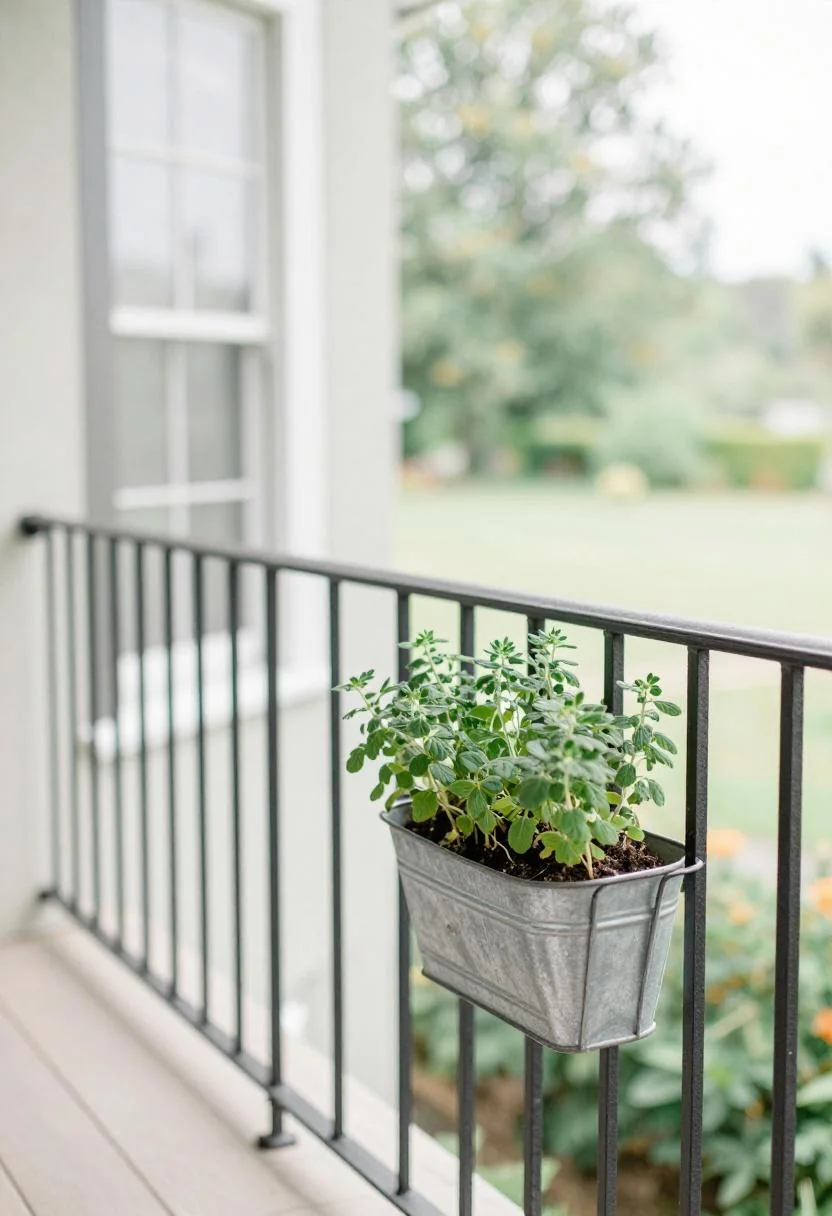
This one divides people. Painting your wrought iron railing persimmon is a commitment that not everyone will endorse — and I think that’s exactly why you should do it. The galvanized herb planter sitting on that railing is the kind of detail that makes you think someone actually lives here and cooks. The contrast between the warm railing and the industrial gray of galvanized metal is unexpected in the best possible sense. Shop galvanized herb planters here.
The Full Color Case
Step back and look at the whole palette this editorial presents: cool blue, plum noir, jade green, wasabi, persimmon, warm terracotta, cream white, sage green. That is not an accident. These eight colors are a coherent exterior palette if you’re willing to be brave about deployment — not all at once on one house, but distributed across surfaces, planters, furniture, and hardware in a way that builds up like a painting rather than a single decision.
The Craftsman bungalow was always a democratic form — built for people who wanted beauty without grandiosity. What maximalism adds is the permission to accumulate. Every object chosen, every color considered, every planter positioned. More is more, but only when every “more” is deliberate. That’s the discipline that separates maximalism from clutter, and it’s the discipline this architecture demands.
If you’re looking to extend the thinking into your garden beyond the immediate porch area, our coverage of flower planter ideas for outdoor spaces covers the container vocabulary that works alongside exactly these kinds of color-forward bungalow exteriors.
This post contains affiliate links. We may earn a commission at no extra cost to you.
Images in this article were created with AI assistance.