There’s a particular kind of magic that happens at the edges. Not the center of the garden — that’s easy, that’s obvious — but the border. That narrow, sun-drenched ribbon where the path meets the planting, where stone meets root, where your garden stops being a lawn and starts telling a story. Full sun borders are where the drama lives, where color gets loud and textures clash in the most beautiful way. Think sun-bleached gravel and jewel-toned blooms, terracotta warming in the afternoon heat, silvery foliage catching the light like something alive. This is the collected-over-time garden — nothing perfectly matched, everything deliberately chosen, and every plant holding its own against the full force of the sun.
The Blues That Belong in a Dream
Cool blue in a full-sun border sounds counterintuitive — cool against all that blazing heat — but that’s exactly why it works. The tension is the point.
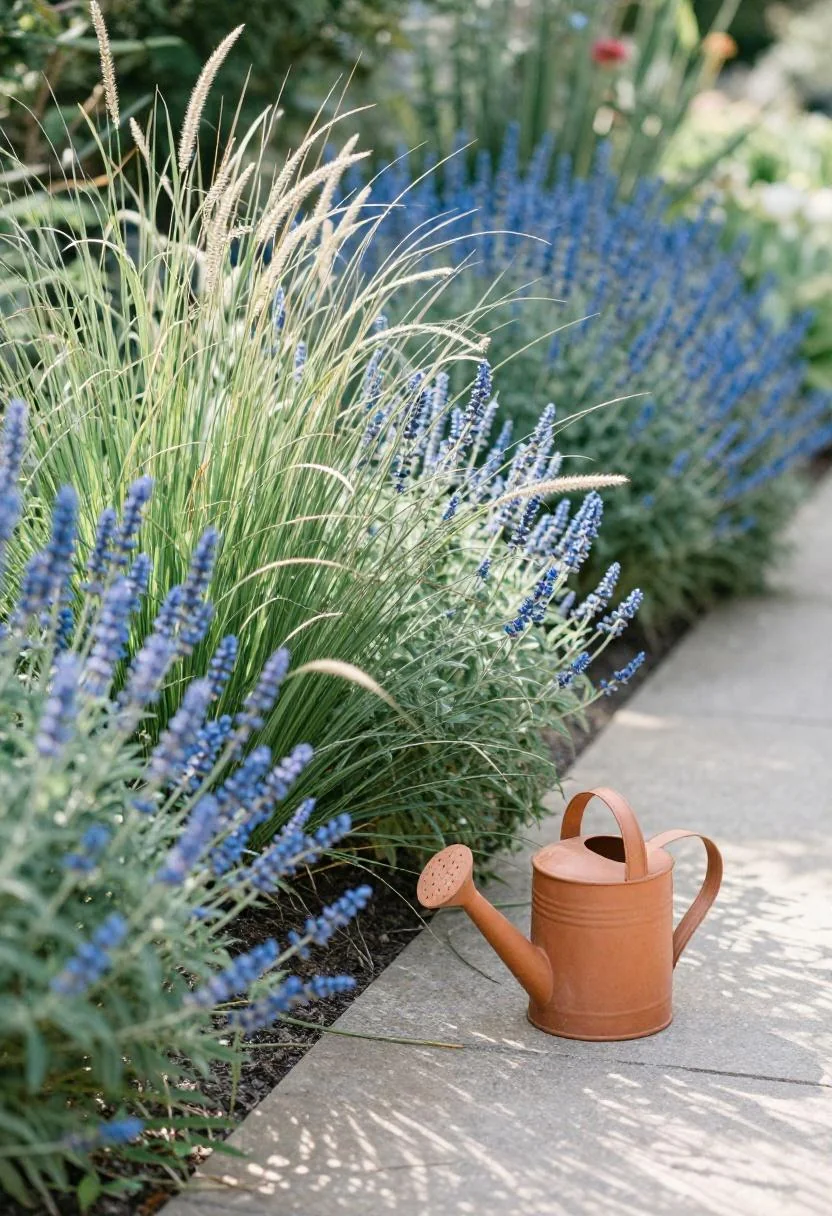
Blue salvia paired with ornamental grasses along a limestone path is the kind of combination that makes you stop mid-stride. The salvia spires are electric — that particular shade of violet-blue that shifts between periwinkle and indigo depending on whether you’re catching it in morning light or late afternoon. And the grasses? They move. That’s what I love about grasses in a border: they bring kinetic energy to the whole composition, whispering against the salvia like they’re sharing a secret. Find blue salvia starts and let them loose along any sunny path you’ve got.
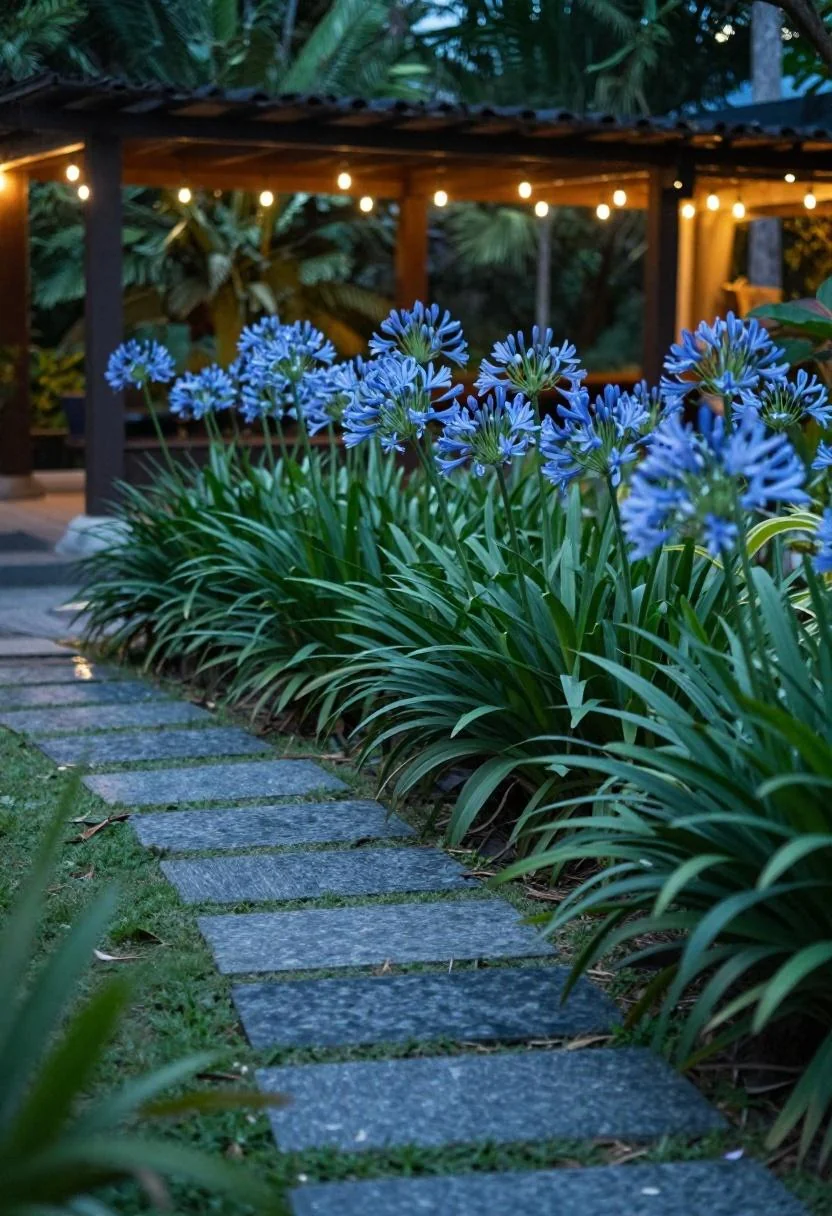
Then there’s agapanthus — and oh, agapanthus at dusk is something else entirely. Those globes of blue rising above liriope groundcover along a tropical path, catching the last warm light of the day? Pure theater. The liriope does the quiet work underneath: dark, strappy, disciplined — while the agapanthus goes fully dramatic above it. This is layering at its most satisfying. As Vogue has long championed in editorial garden features, the most visually compelling outdoor spaces treat planting the way a stylist treats dressing — it’s all about what goes on top and what creates the foundation beneath.
Going Dark: The Plum Noir Moments
Some colors don’t announce themselves. They pull you in.
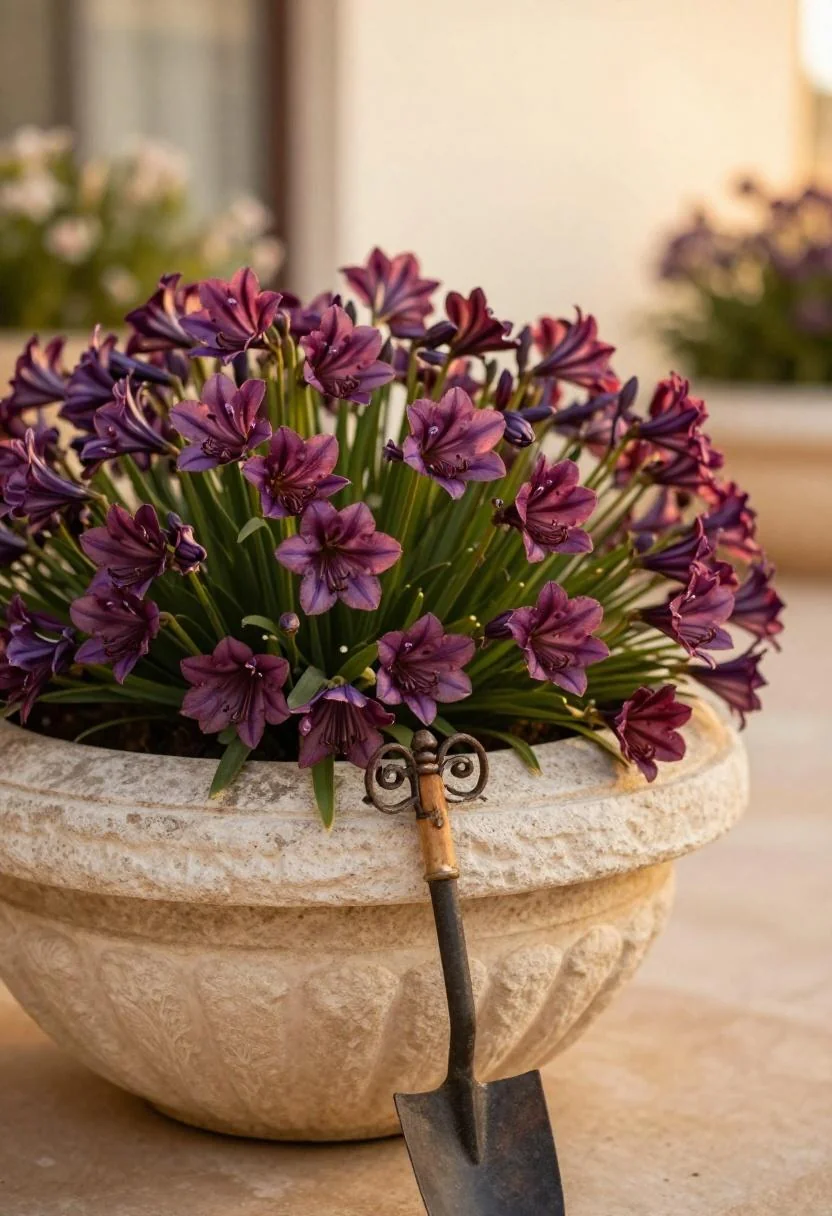
Deep plum agapanthus in a stone planter, bathed in Mediterranean warmth — run your hand across that stone and tell me you don’t feel something ancient and sun-warmed and deeply right. The plum reads almost black in the shade of the planter, then opens to the richest eggplant-purple in full light. It’s absolute dopamine hit territory. Stone as a container material is doing serious work here too: the rough, pocked texture against those smooth, architectural flower heads creates that matte-against-gloss tension that stops people in their tracks.
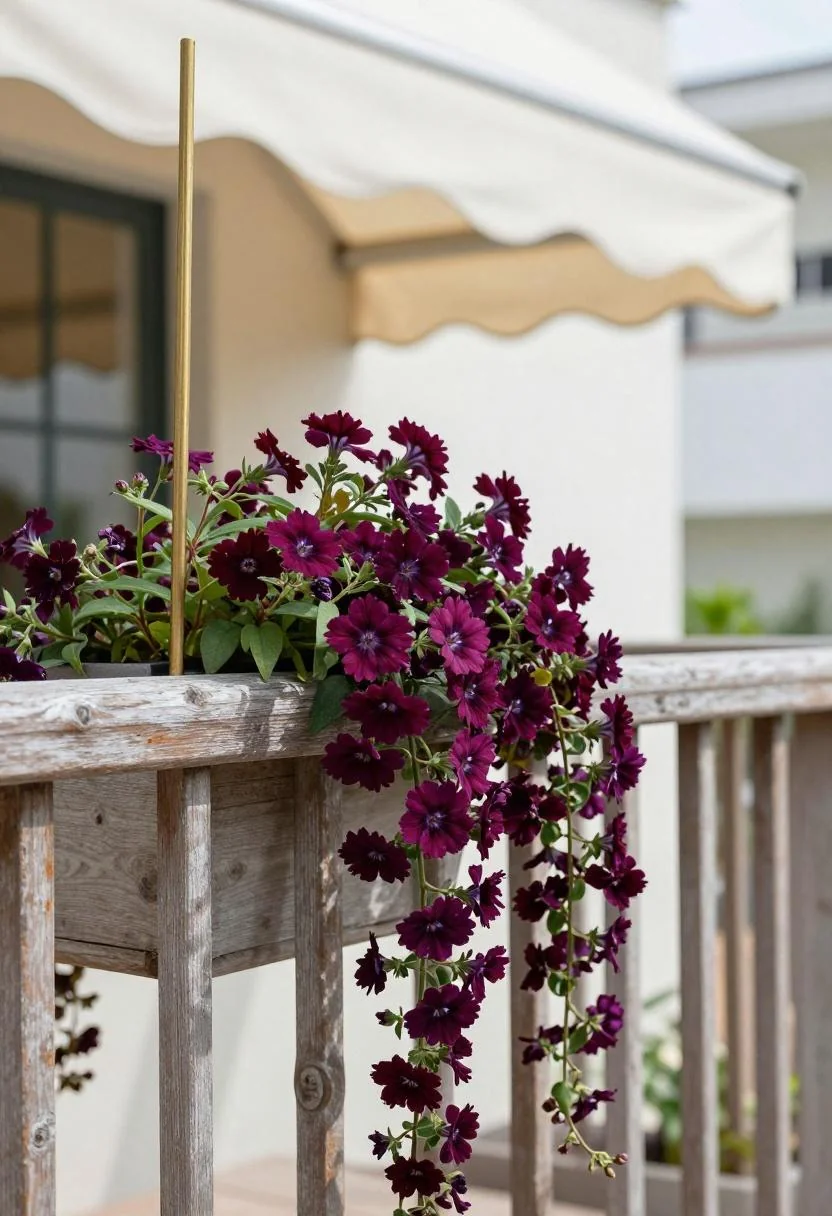
Verbena trailing from weathered teak is a completely different interpretation of this same deep plum story. Where the agapanthus is upright and proud, verbena spills and wanders — cascading over a balcony railing like it’s got nowhere better to be (and honestly, neither do we). The teak, silvered with age and weather, gives the whole scene that collected-over-time quality. Nothing is new here. Everything has earned its place. Shop trailing verbena varieties for railings and elevated planters.
Jade and Sage: The Greens That Aren’t Just Fillers
Can we talk about how underrated green is as a color choice? Not background green, not filler green — intentional green, the kind you actually design around.
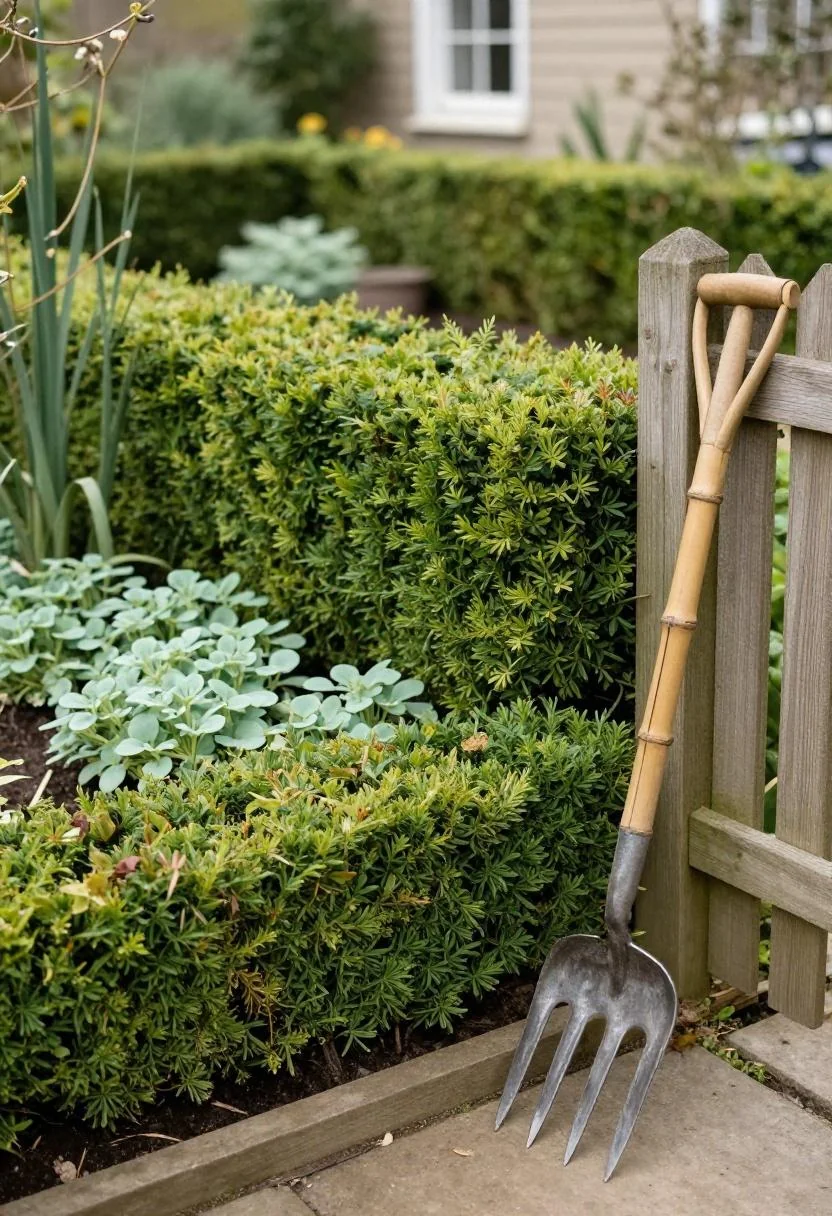
Lady’s mantle alongside boxwood hedging against a cedar fence — this combination is like a morning in the countryside, all dew and coolness and that particular jade green that feels more alive than any other color in the garden. Lady’s mantle does this extraordinary thing: it catches water droplets and holds them like tiny mercury balls on its scalloped leaves. You’ve never seen anything more satisfying. The boxwood provides the structure, the architecture — think of it as the clean line of a well-tailored coat against the ruffled linen of the lady’s mantle flowing around it.
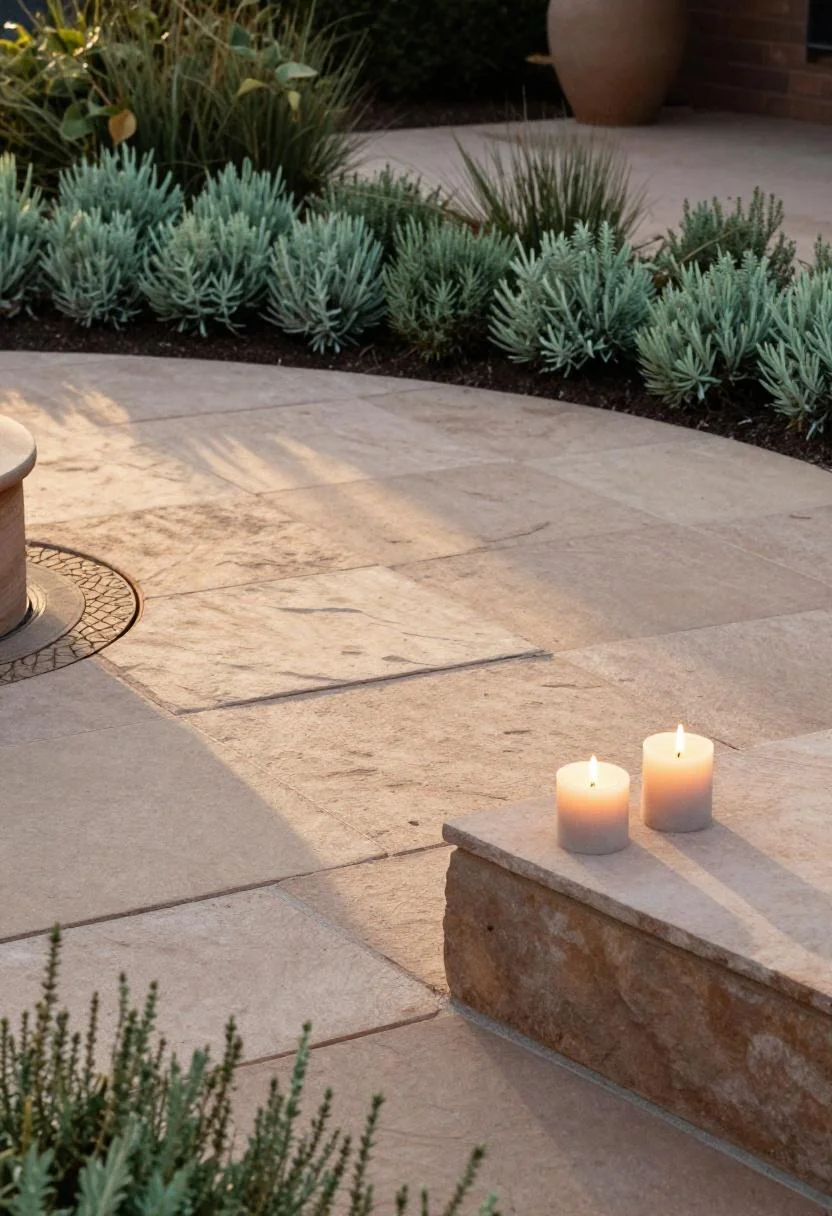
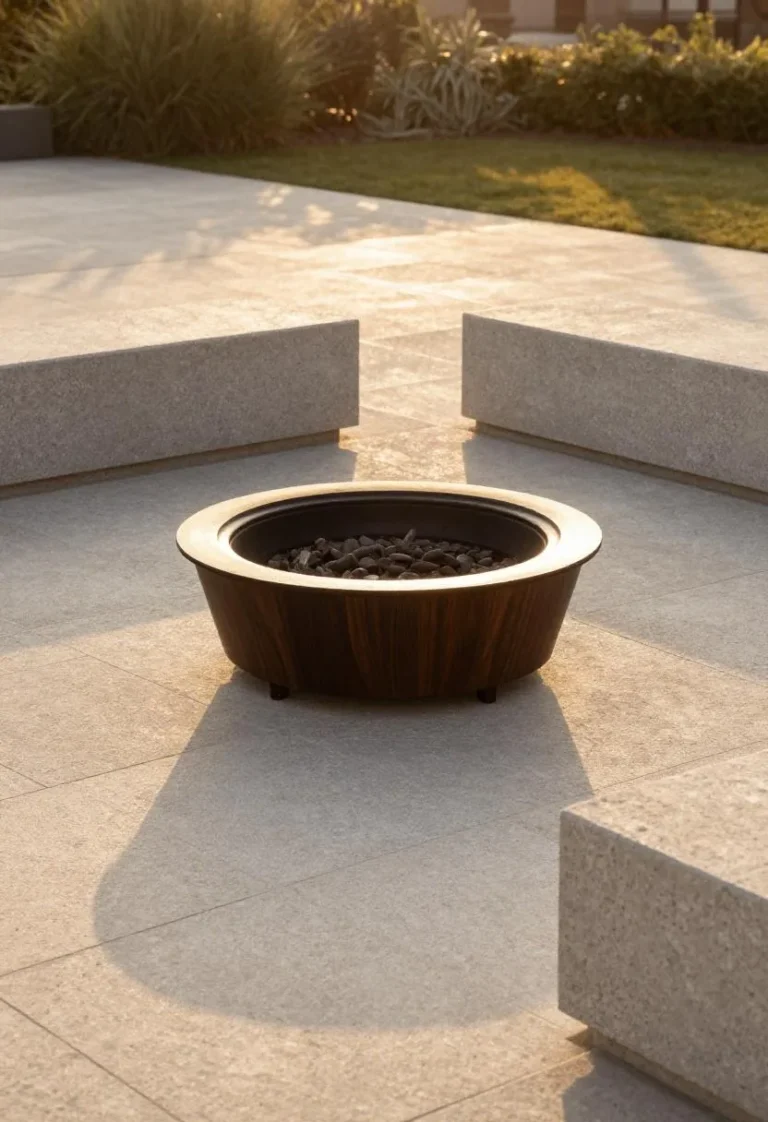
Jade ornamental sage and thyme around a sandstone fire pit at golden hour — now we’re talking about a border with a purpose. This isn’t decorative-only planting; thyme actually releases its fragrance when brushed against or warmed by fire, so the border becomes a sensory experience the moment you light the pit. The sage and thyme together read as a soft jade-grey in most light, but at golden hour? They go almost luminous. If you’re thinking about how to anchor a fire pit area in your garden, our guide to outdoor fire pit area ideas has beautiful inspiration for exactly this kind of integrated planting.
Wasabi Shock: When Chartreuse Is the Answer
This is where the boho eclectic garden really earns its name — because nothing says “I don’t follow rules” quite like planting wasabi-bright foliage in a full sun border and making it work completely.
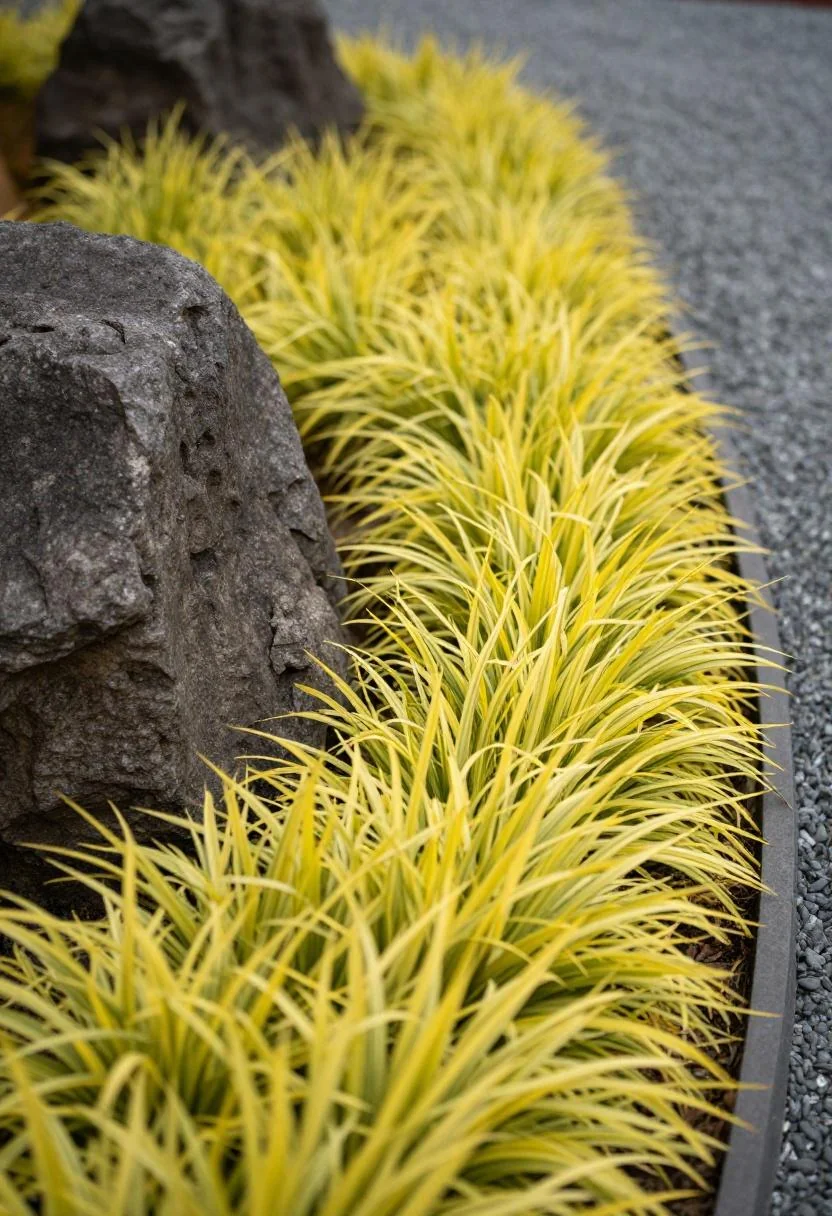
Dwarf mondo grass in wasabi tones next to a granite boulder and gravel creates this extraordinary East-meets-boho tension. The mondo grass is almost impossibly neat — it grows in tidy mounds — but the color is anarchic. It vibrates against grey gravel. It argues beautifully with the neutral bulk of the granite boulder. It’s the garden equivalent of pairing a vintage kimono with ripped denim. Shop golden mondo grass if you want this exact energy.
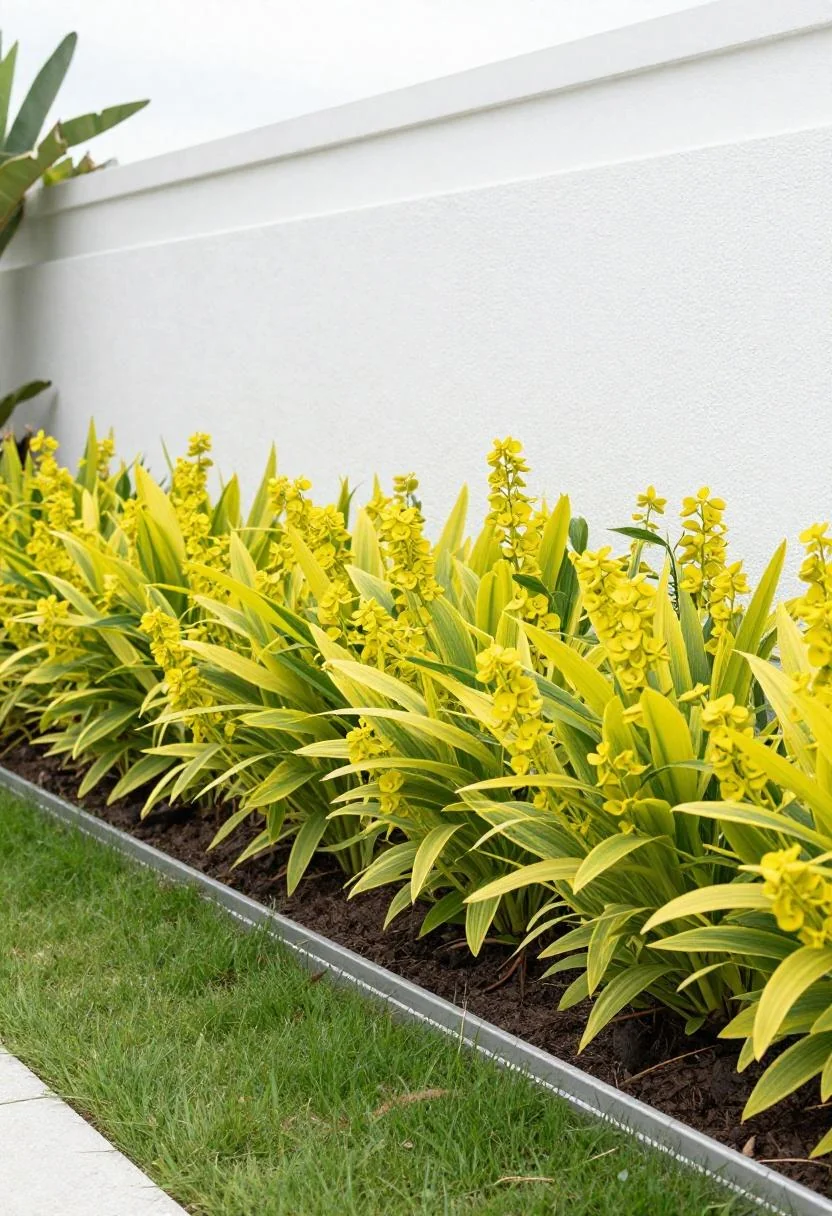
Chartreuse euphorbia massed against a white rendered wall is one of those combinations that looks almost too simple on paper and absolutely electric in practice. The white wall acts as a lightbox — it amplifies that acid-yellow-green to the point where the border almost glows. Steel lawn edging keeps it crisp and modern, and that contrast — the wild color, the clean line — is exactly the rough-against-smooth dynamic that makes a garden feel designed rather than accidental. As Elle Decor has noted in recent garden features, chartreuse foliage is having a serious moment in contemporary planting design — and honestly, it’s long overdue.
Persimmon and Fire: The Warm Ones That Burn Good
Close your eyes and picture this palette in late-afternoon light. Now open them — because it looks even better.
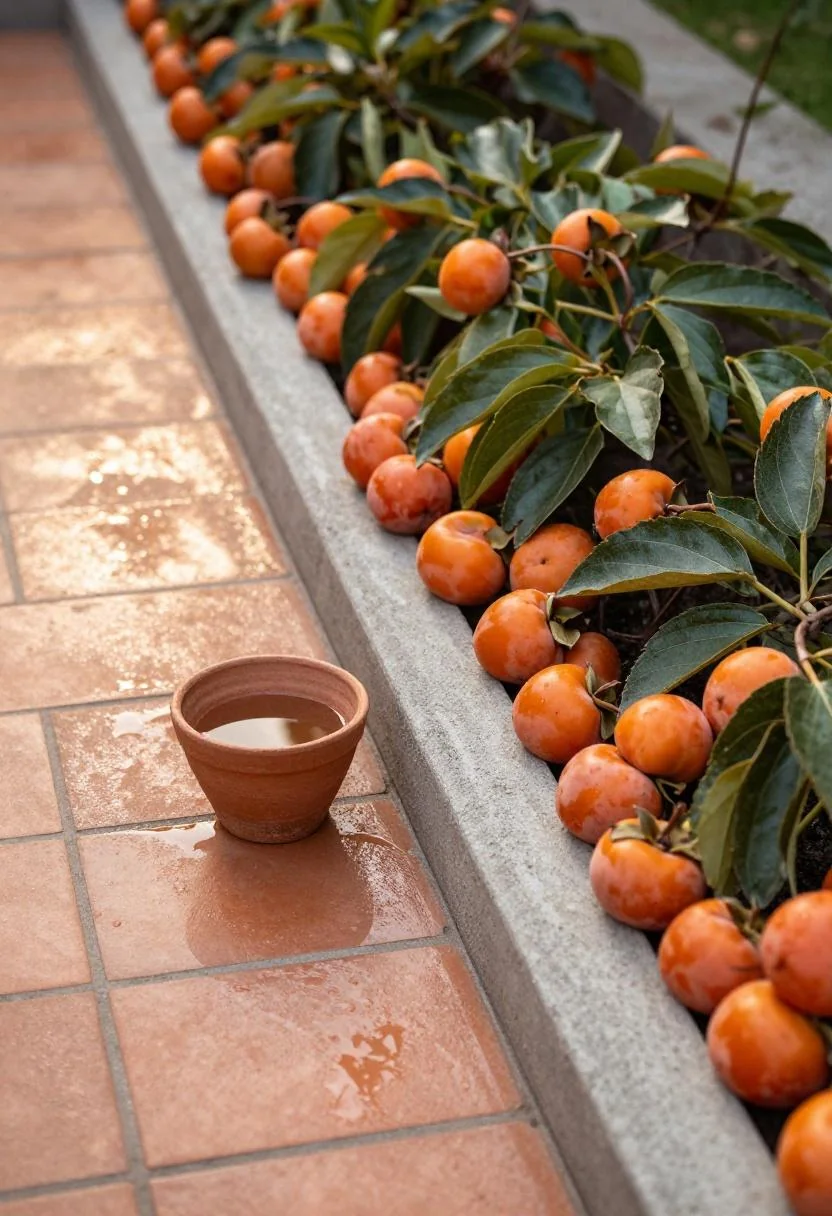
Geum in persimmon is one of those plants that shouldn’t be as good as it is. It’s a relatively modest little perennial — wiry stems, simple flowers — but the color is outrageous. That specific orange-red that sits right between tangerine and rust? It pops against concrete edging and terracotta tile in a way that feels both ancient and completely modern. It’s the vintage rug in the otherwise minimal room: technically it shouldn’t go, but it absolutely does.
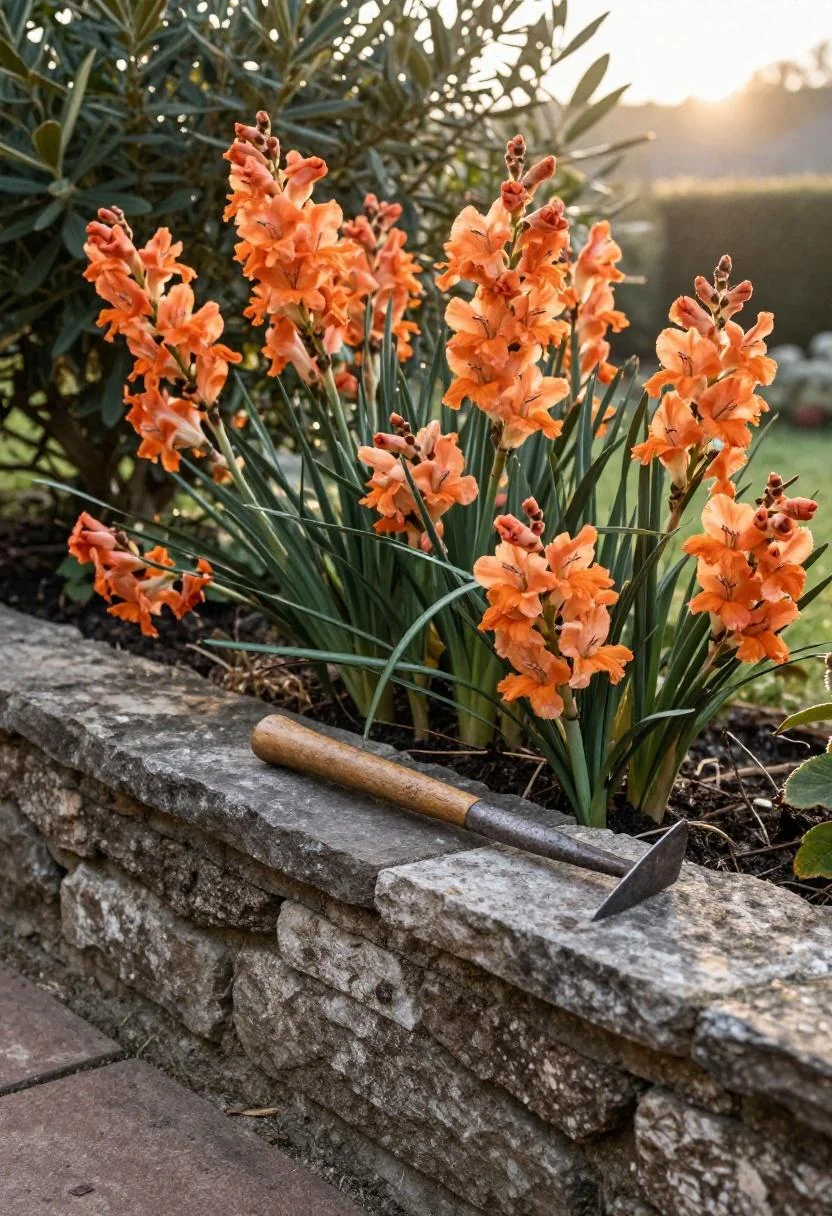
Crocosmia arching over a low stone wall is pure cottage-garden drama. The stems curve and bend in this genuinely beautiful way — almost like they’re reaching toward something — and the persimmon flowers open along that arc like tiny flames. Beside a cottage front border, this is the plant that stops people on the pavement. It’s also reliably sun-hungry and rewards full exposure with its best performance. If you want to carry this warm color energy into containers, our roundup of sun-loving plants for containers and pots has some brilliant companion ideas. Get crocosmia bulbs here — plant in spring and watch them go.
Terracotta Earth: The Warmth That Holds Everything Together
If persimmon is the exclamation point, terracotta is the whole sentence. It’s the color of handmade pottery, of sun-baked Mediterranean walls, of the garden that’s been loved for decades.
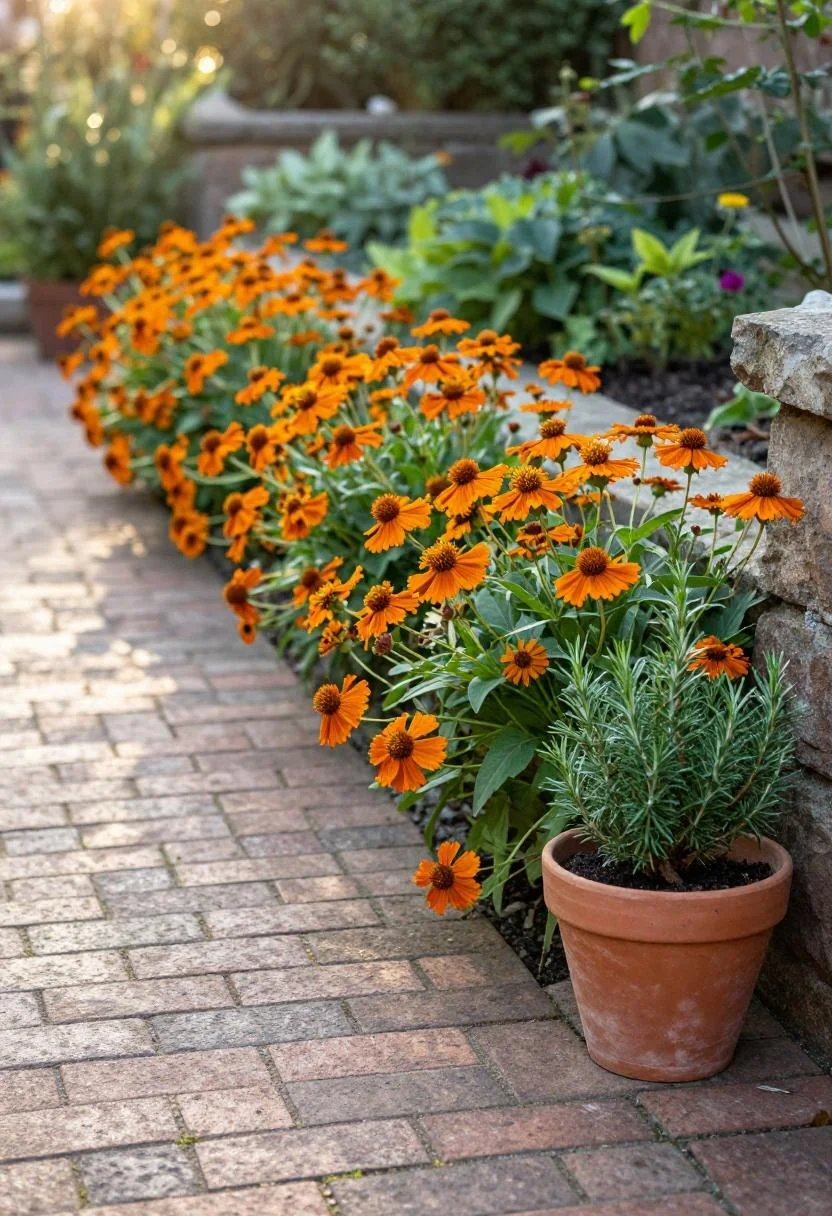
Burnt-orange helenium flanking a brick path with a terracotta rosemary pot — this is the combination that smells as good as it looks. Helenium is underrated. Seriously. It flowers from late summer into autumn when a lot of borders are losing momentum, and the color deepens as the season goes — starting bright and warming toward something almost mahogany by October. The rosemary pot brings fragrance and structure, and together against brick they create this layered warmth that’s practically Mediterranean in feeling.
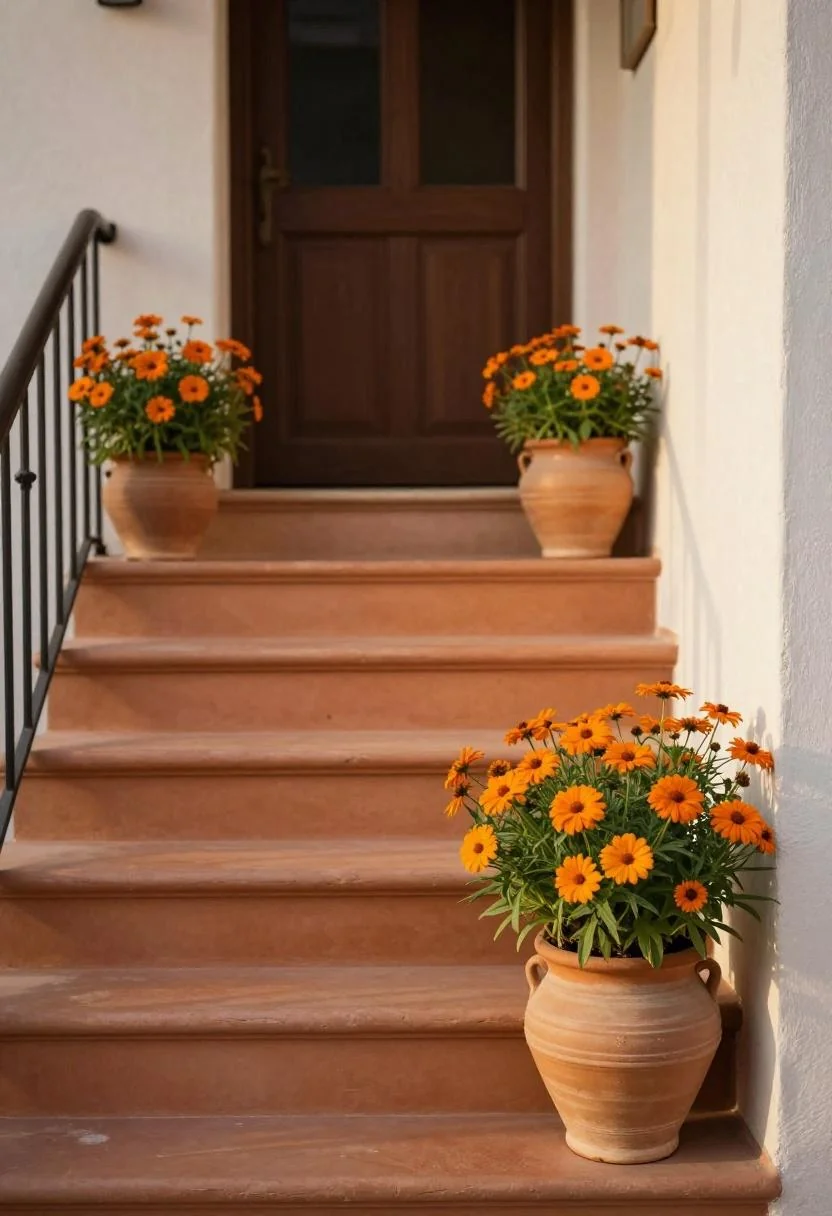
A ceramic pot of rudbeckia on a Mediterranean porch step — this is how you anchor a corner without overcomplicating it. One great pot, one great plant, the right color. The rudbeckia’s warm terracotta tones connect to the stone of the steps in a way that feels completely organic, as if it grew there by choice. If you love this idea of using ceramic and stone together in outdoor planting, our guide to flower planter ideas is full of exactly this kind of thoughtfully placed container magic. Find rudbeckia plants — they’re one of the most sun-tolerant border plants you’ll ever grow.
The Creams and Silvers: Quiet Beauty That Isn’t Boring
Here’s a thing the boho eclectic garden understands that a lot of more formal gardens don’t: neutrals aren’t neutral. Cream shimmers. Silver moves. These aren’t restful choices — they’re active ones.
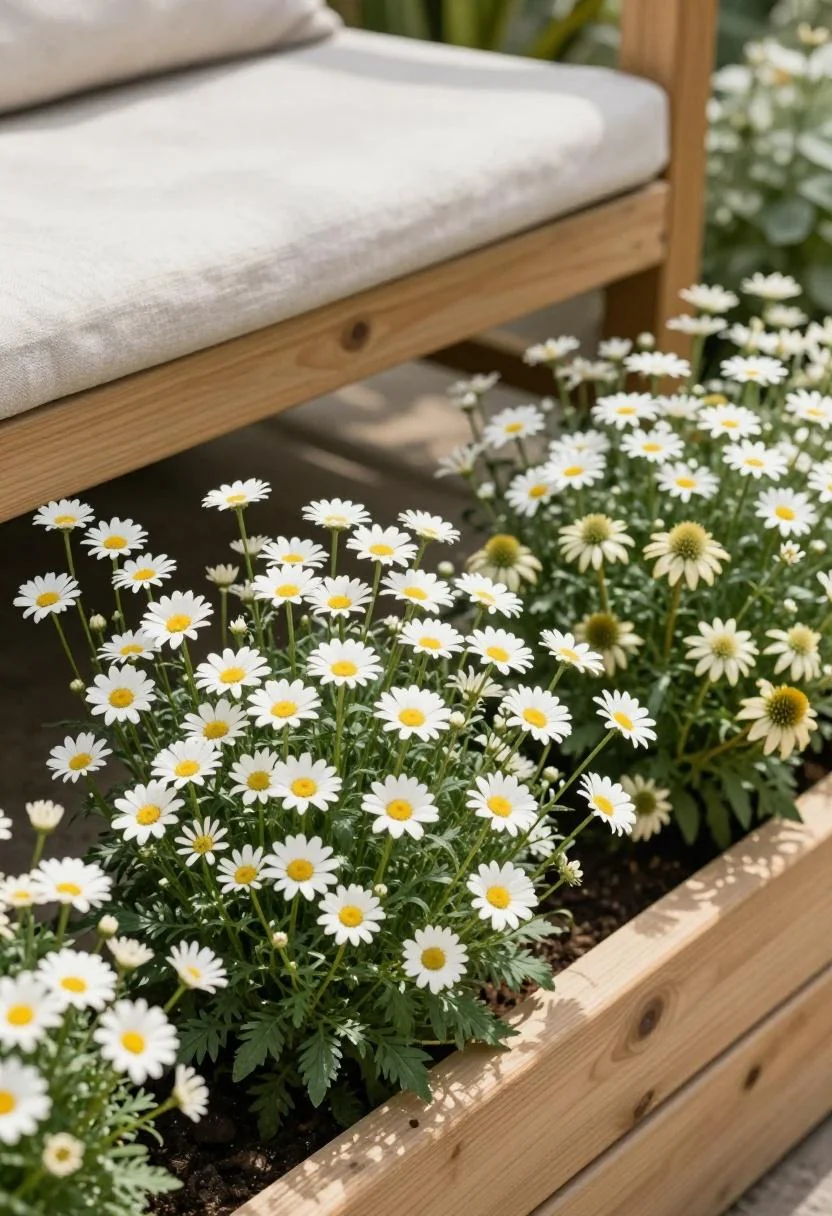
Shasta daisies and echinacea in a raised cedar bed in full midday sun is one of those combinations that looks almost too good to be true. The daisies are cream with that warm yellow eye — not stark white, nothing cold about them — and echinacea rises between them with its rusty-pink cones and spiky petals. In midday sun, the whole bed seems to vibrate with light. Cedar brings that aromatic, warm-wood quality that makes a raised bed feel like furniture rather than infrastructure. As Harper’s Bazaar recently noted in a garden design feature, raised beds with warm timber surround have become one of the most searched planting formats in contemporary garden design — and honestly, once you see shasta daisies in one, you’ll understand why. Shop shasta daisy plants for your next raised bed project.
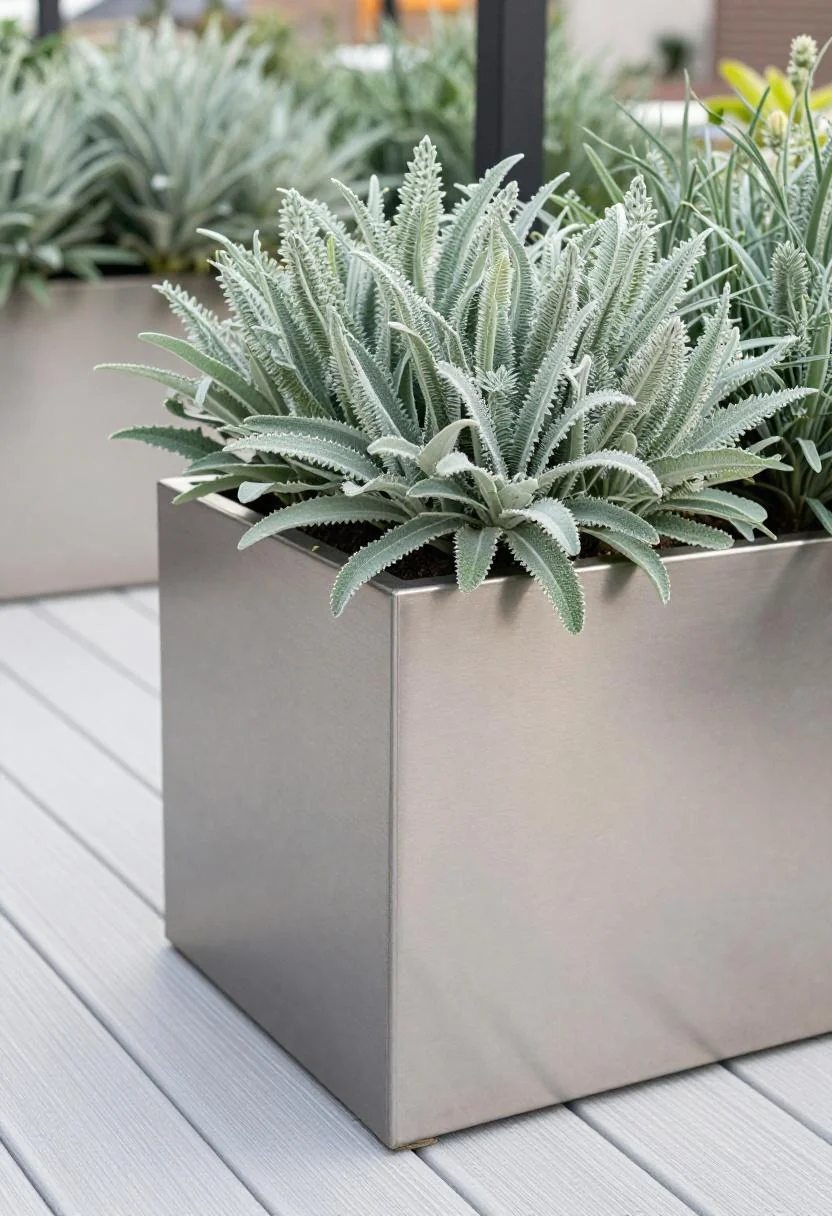
Lamb’s ear and artemisia in a brushed steel planter at morning light. Stop. This one deserves a moment.
The lamb’s ear is — and I can’t say this enough — the most touchable plant in any garden. It’s silver-sage and impossibly soft, like velvet but alive, and it overflows the brushed steel edge in this generous, unselfconscious way that makes the whole deck planting feel lush rather than curated. Artemisia runs silver alongside it, slightly more architectural, slightly more cool-toned. Together in that specific morning light? Absolute magic. If you want to extend this silver-and-sage palette into ground-level borders, our piece on sedum ground cover alternatives pairs beautifully with this planting approach. Find lamb’s ear plants here — they spread generously and ask for almost nothing in return.
What These Borders Are Really Saying
When you look back across all fourteen of these full-sun border combinations, a few things become clear. First: the most memorable borders aren’t the ones that play it safe with color — they’re the ones that commit. The wasabi euphorbia against the white wall. The plum verbena on weathered teak. The persimmon crocosmia arcing over stone. These plants don’t hedge (so to speak). They show up with their whole personality.
Second — and this is the thing the boho eclectic garden understands in its bones — it’s all in the layering. Not just height layering, though that matters. Texture layering. The rough granite against smooth mondo grass. The matte lamb’s ear against brushed steel. The ancient stone planter holding the thoroughly modern agapanthus. The tension between materials is what makes these borders feel alive rather than arranged.
What would I pull out as the hero palette? The blues and plums for drama, the jades and sages for groundwork, the persimmons and terracottas for heat and warmth, and one sharp shot of chartreuse or wasabi to keep the whole composition honest. That’s a garden that tells a story — and one where every plant has genuinely earned its place in the sun.
This post contains affiliate links. We may earn a commission at no extra cost to you.
Images in this article were created with AI assistance.