A planter is not decoration. It’s a decision — about material, scale, negative space, and what you’re willing to commit to. The best ones don’t announce themselves. They hold a single plant with enough confidence that the plant has room to be itself. This guide is about that kind of intention: sixteen different ways to think about outdoor planters, organized not by trend but by what actually works and why.
The Entrance: First Impressions Without the Fuss
Your entrance sets a tempo. Not a mood board — a tempo. Walk-in fast or slow? Pause or pass through? Planters at a gate or porch door do more than frame the opening; they tell you how to arrive.
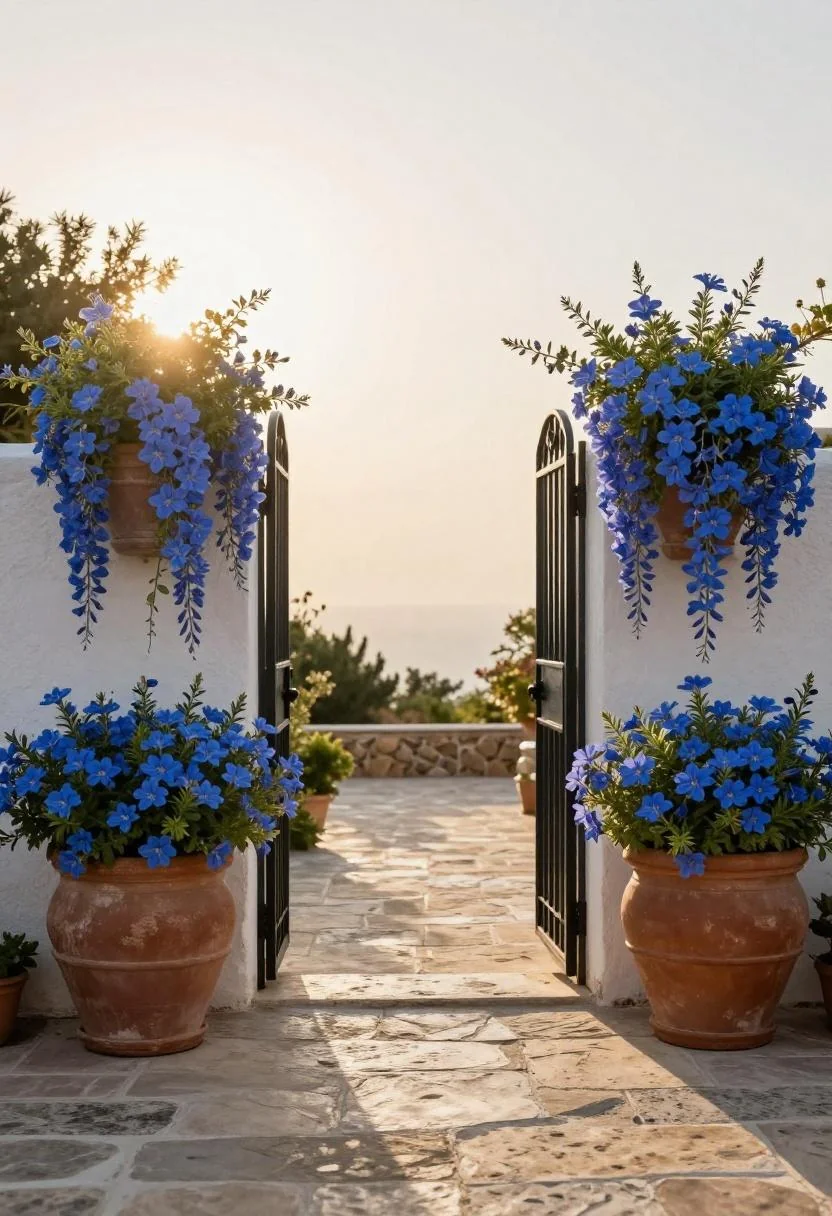
These terracotta planters with cool blue lobelia against a Mediterranean gate work because the contrast is quiet — not aggressive. Warm clay, cool bloom. Morning light does the heavy lifting. The lobelia doesn’t compete with the gate; it frames it. You don’t notice either one without the other. Shop terracotta planters
If you’re working with a cottage porch door, a jade ceramic urn with bamboo beside it asks for nothing from you. It just stands.
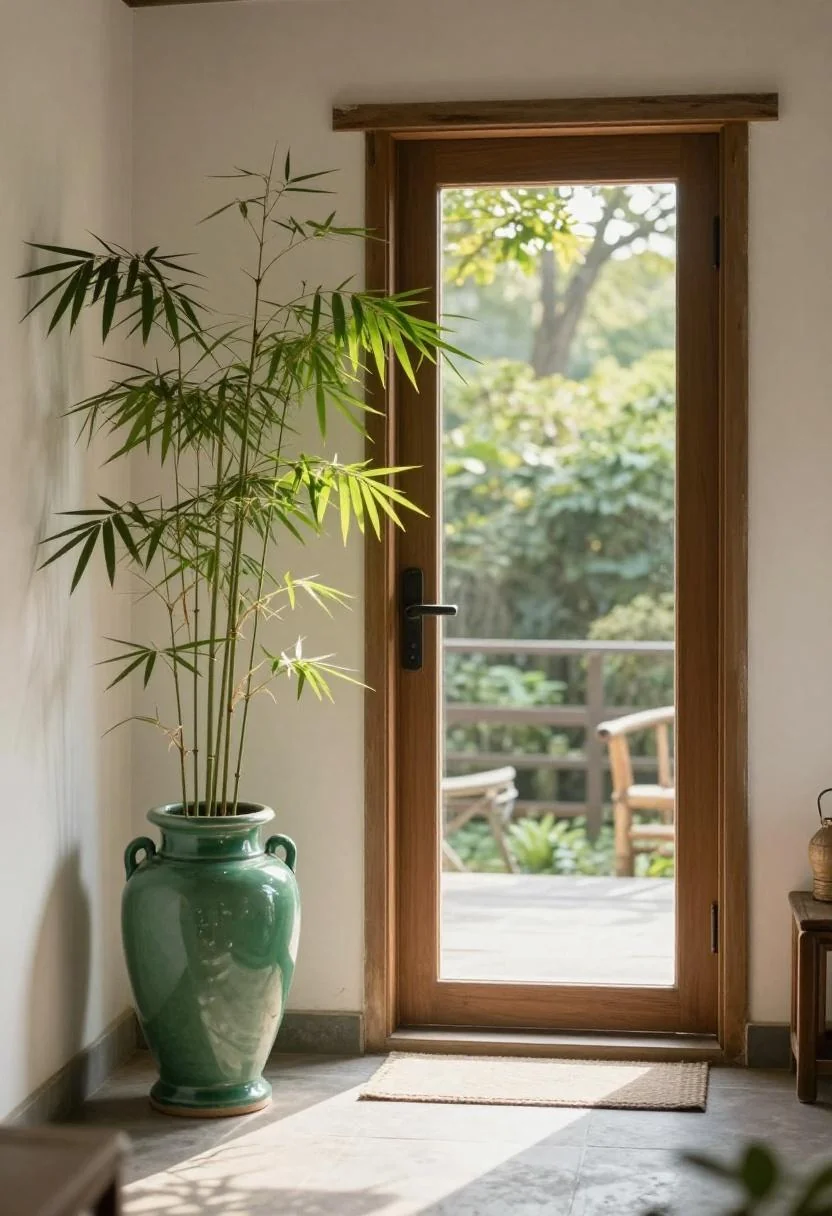
Jade green and weathered wood — the palette writes itself. The bamboo adds height without fuss, and the urn’s color picks up the moss and shadow already present in most cottage gardens. Strip away the Instagram styling and this still feels right. That’s the test. As Vogue has long argued, outdoor spaces work best when they extend the home’s personality rather than performing something separate from it.
The Garden Path: Rhythm Over Drama
A garden path without punctuation is just a walkway. Planters along a path create rhythm — something to move toward, pause at, pass by.
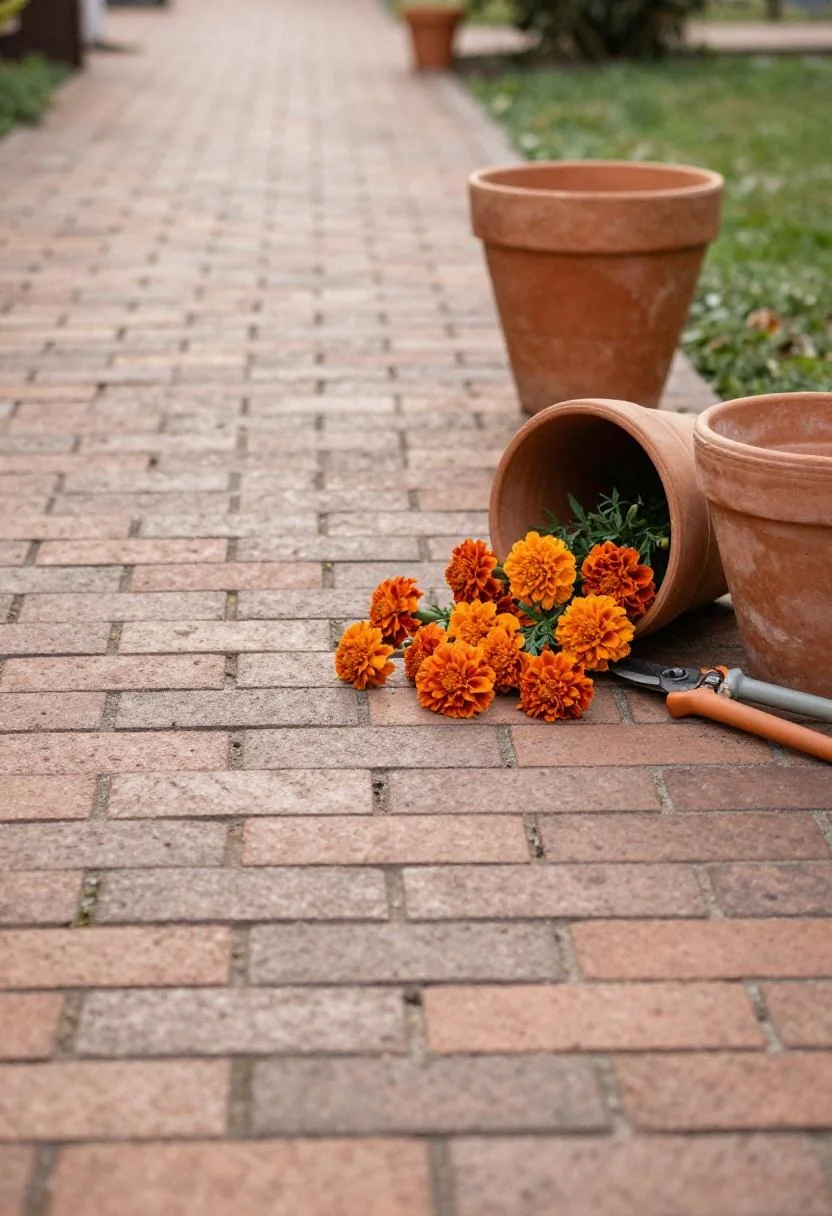
Terracotta cylinders with marigolds, lined along a brick path in afternoon sun. It’s almost too honest — no tricks, no layering, just warm orange against warm brick, repeated. The repetition is the point. One marigold planter is fussy. Six of them become a system. Find cylinder planter sets
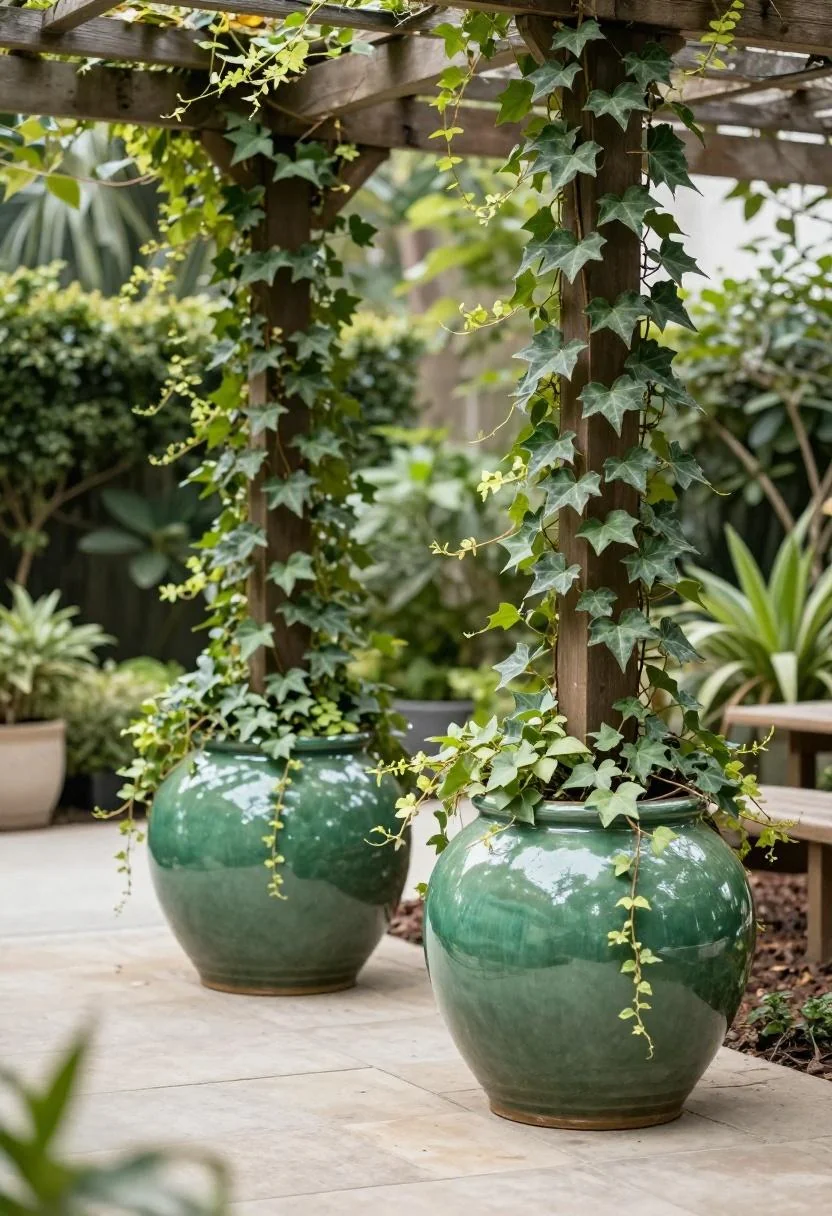
For shaded entries, jade green spherical planters with trailing ivy slow everything down. The ivy softens the ceramic; the ceramic holds the ivy accountable. Under low light, this is moody in the best sense — like the garden is keeping a secret.
(I’ll admit: the spherical planter is the one I keep returning to. There’s something about a form with no corners that feels inherently considered.)
The Zen Garden: Restraint as Intention
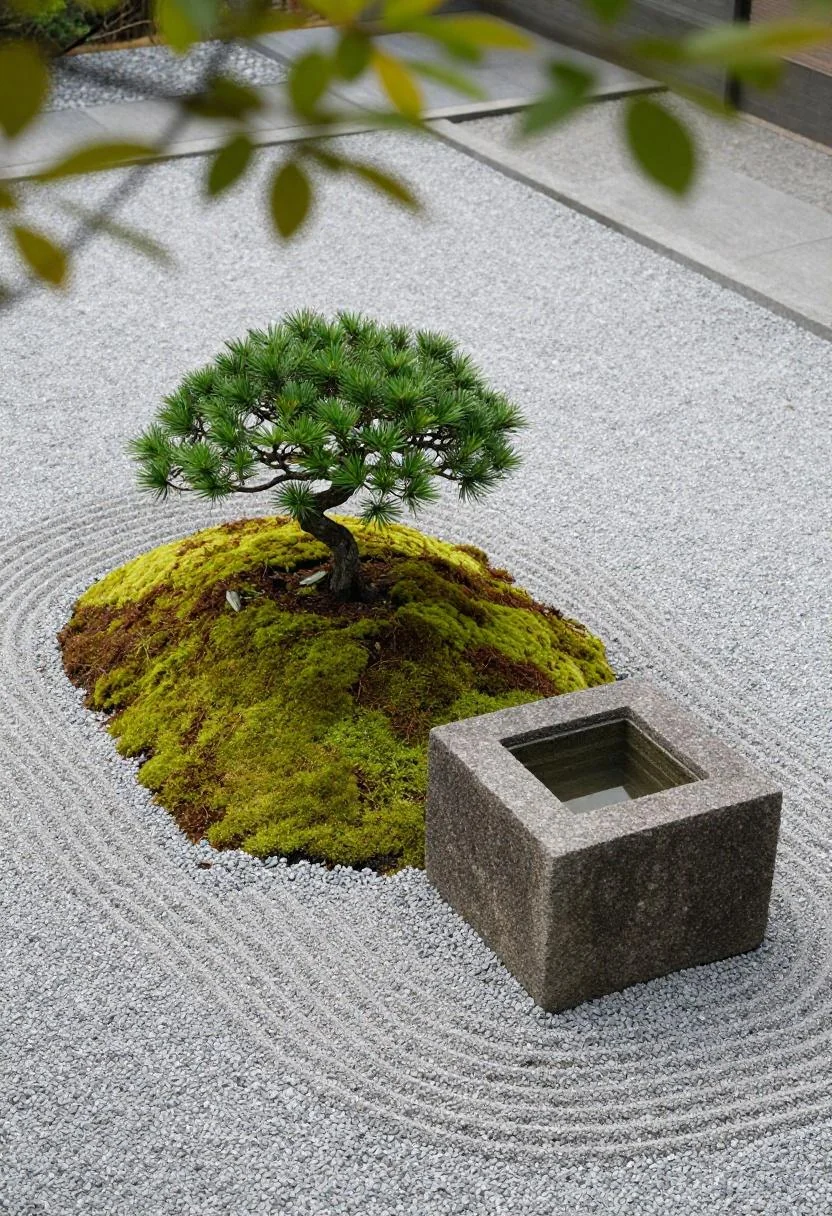
A basalt stone planter with moss and dwarf pine beside raked gravel. That’s it. No color. No bloom. Just texture and silence — which is exactly what a zen garden asks of its planters. This works because it doesn’t try to contribute. The restraint here is the whole point. If you’re designing a contemplative corner, read our guide to naturalistic garden design for the principles behind this kind of intentional emptiness.
The Deck: Material Conversations
A concrete deck is a neutral — it doesn’t insist on anything. Which means the planter has to carry more of the conversation.
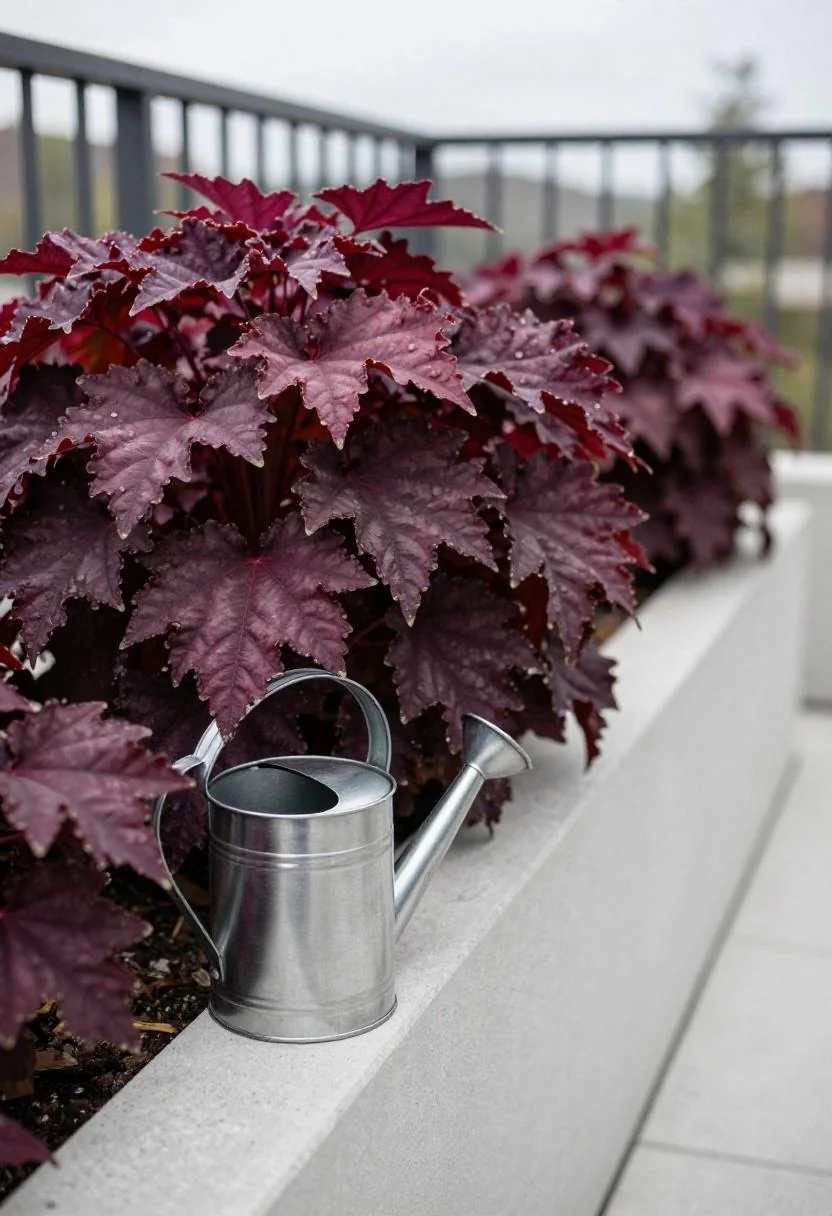
Plum heuchera in a concrete planter beside a steel watering can on an overcast day. Three materials: clay-fired concrete, steel, living leaf. The heuchera’s color — deep, almost bruised — does what purple always does: it deepens everything around it. The overcast light removes all drama. What’s left is just form and texture. Shop concrete deck planters
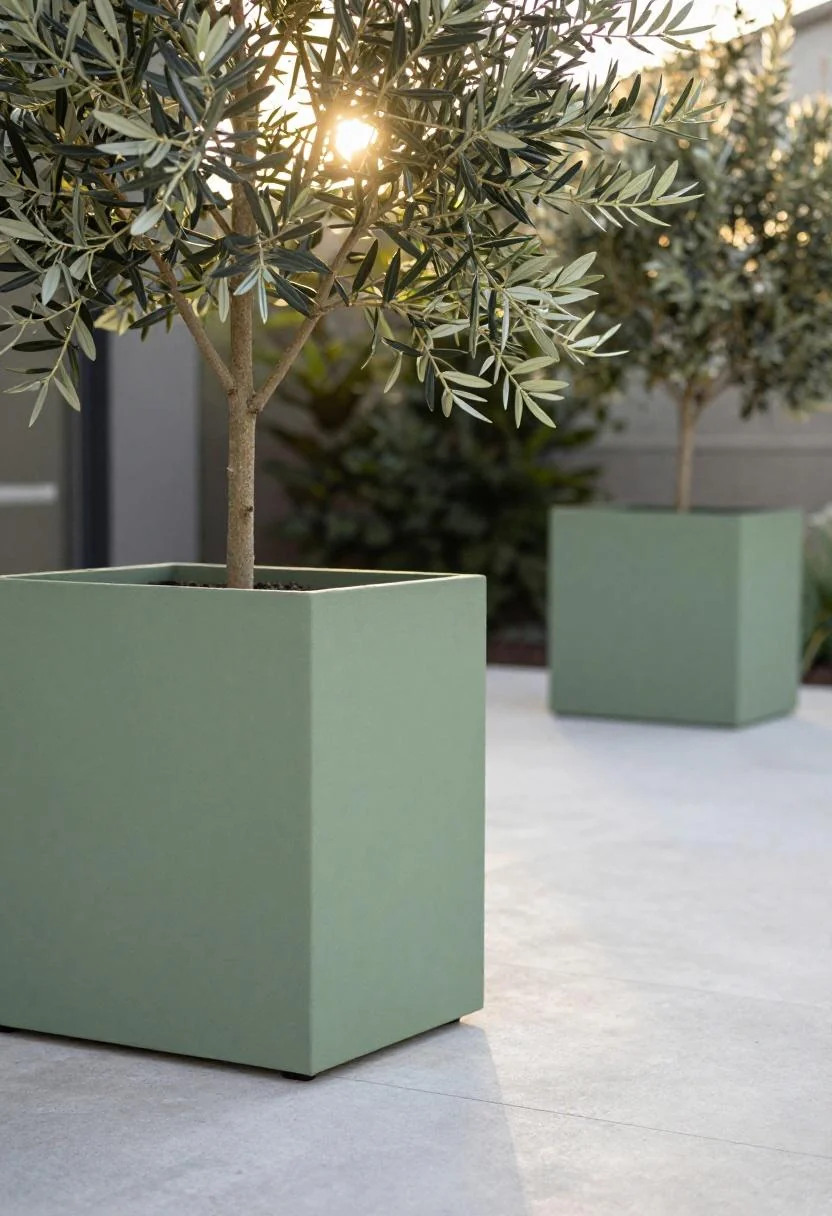
Then there’s the sage green fiberglass planter with an olive tree at golden hour. Backlit. The olive’s silver-green leaves become almost luminous when the light hits from behind. Fiberglass is practical — lighter than ceramic, frost-resistant — but this combination earns the material. What do you want your deck to look like at 6pm in July? Start there.
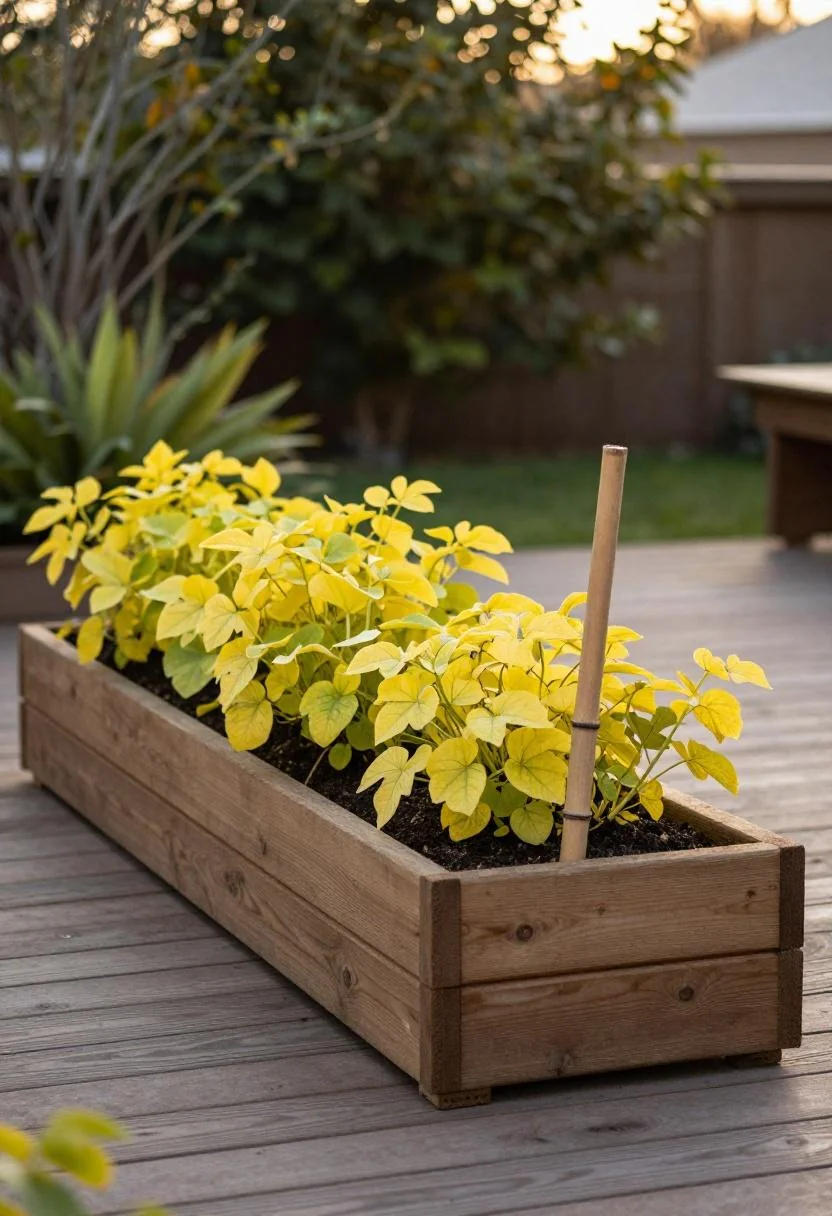
Cedar and chartreuse sweet potato vine at golden hour. The vine’s wasabi color is almost aggressive — and yet it works, because cedar is warm and the light is warm and the vine just amplifies what’s already there. Don’t be afraid of color. Be afraid of color without context.
The Balcony: Small Space, Full Presence
A balcony asks you to be decisive. There’s no room for hedging — every object has to justify its footprint.
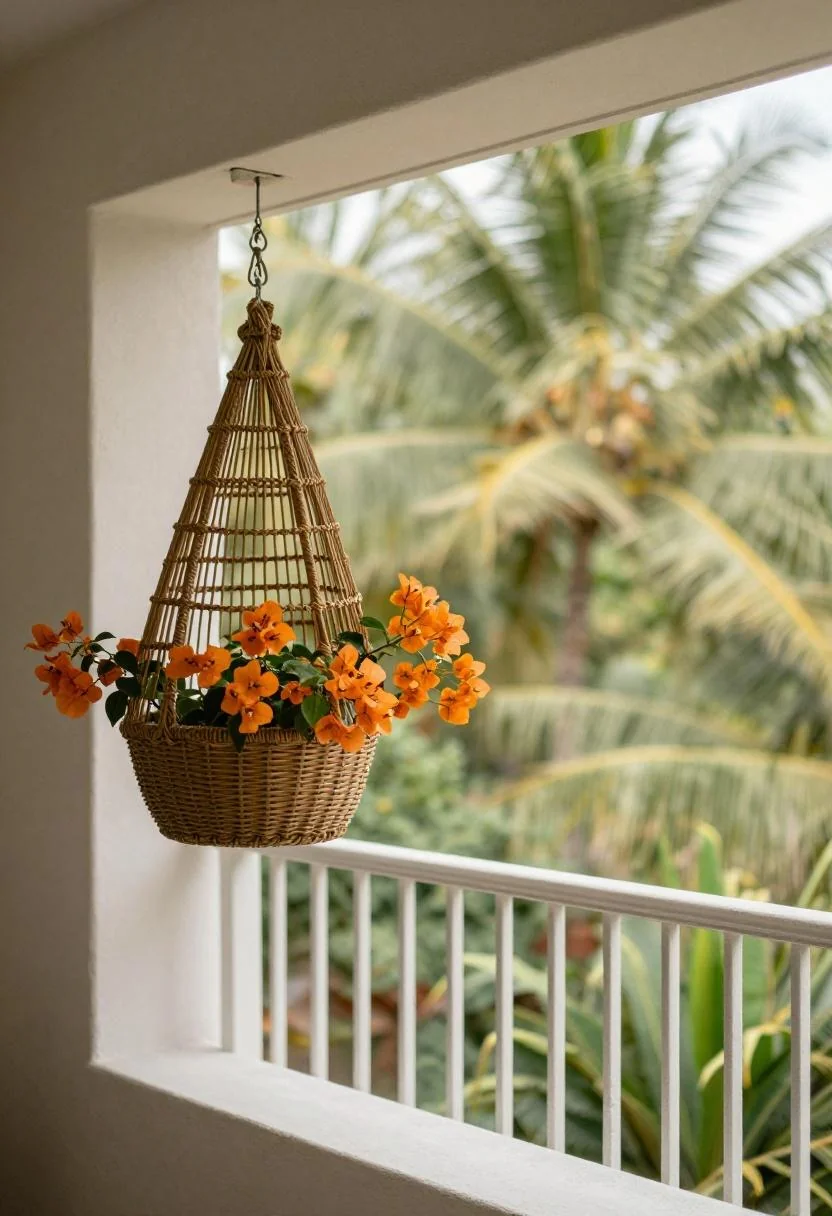
A rattan hanging planter with persimmon bougainvillea solves the footprint problem entirely. Nothing on the floor. The color — that deep orange-red — is maximalist, and it earns that. Bougainvillea at golden hour is almost embarrassingly beautiful. The rattan keeps it honest. Shop hanging rattan planters
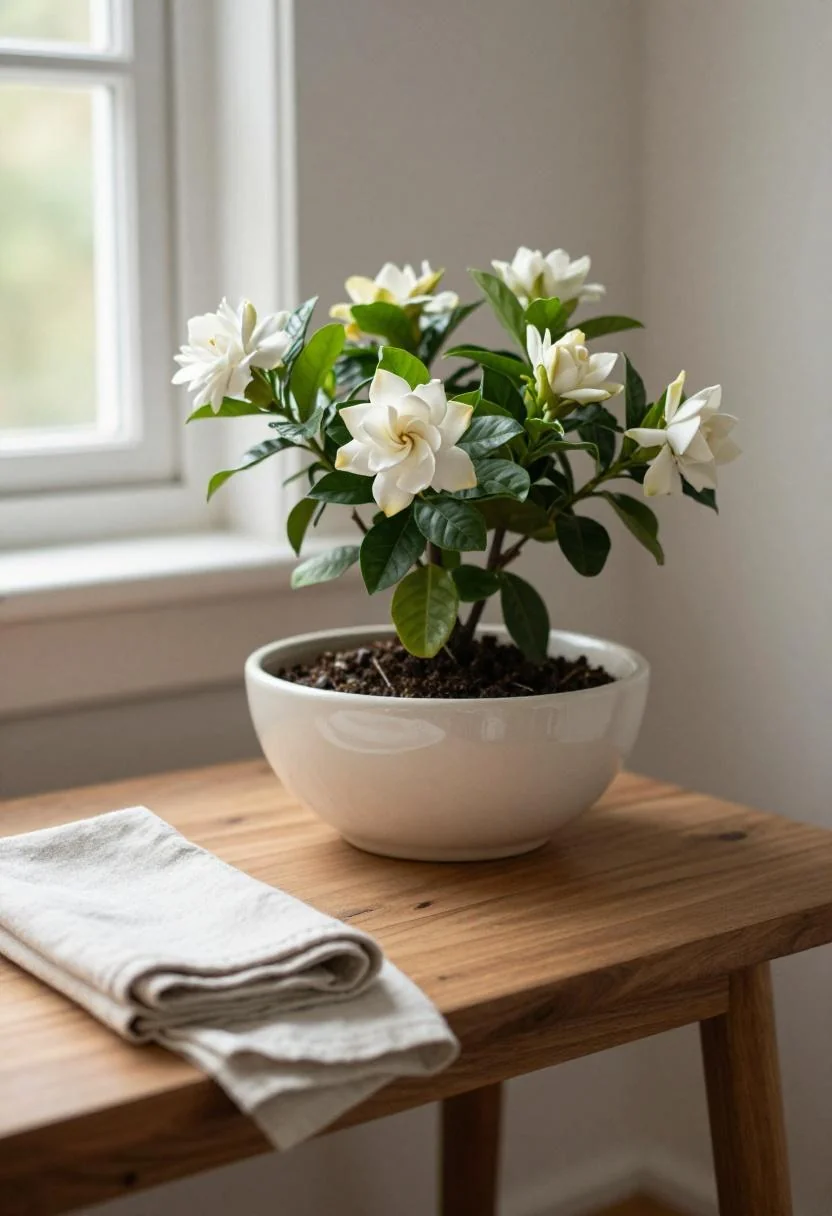
For something quieter: a cream white ceramic bowl with gardenias on a teak table in morning light. No hang. No drama. Just a bowl that holds something that smells extraordinary and looks like it belongs there. The teak warms the white; the white cools the teak. Morning light is gentle on both. This is the kind of corner that makes you want to sit with coffee and stay a while — that particular hygge tension between warmth and stillness.
Window Boxes: The Outside-In Move
Window boxes are the one planter type that works for the person inside as much as the person walking by. That dual audience changes everything about how you plant them.
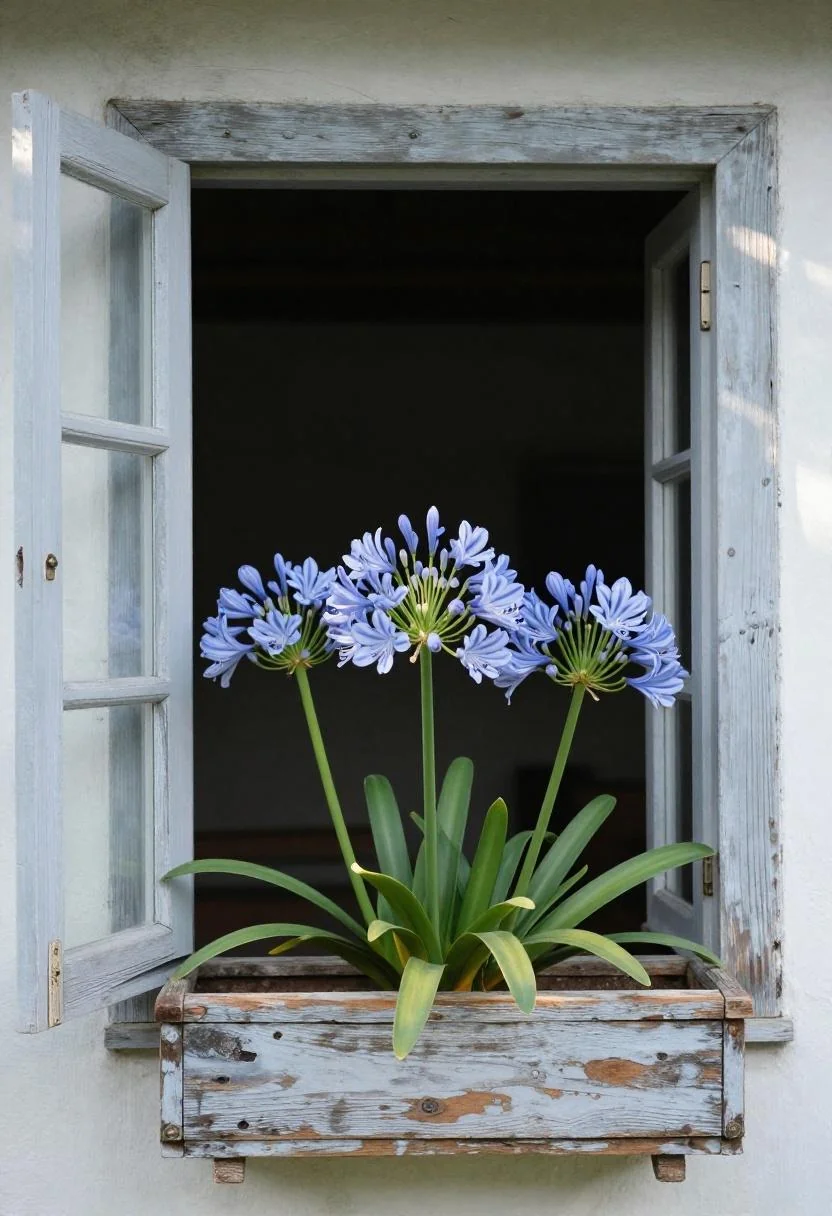
An oak window box with cool blue agapanthus in morning sun. From inside, the agapanthus blooms float at eye level against the light. From outside, the oak box reads warm against the cottage stone. Two experiences, one object. That’s good design. Find wood window box planters
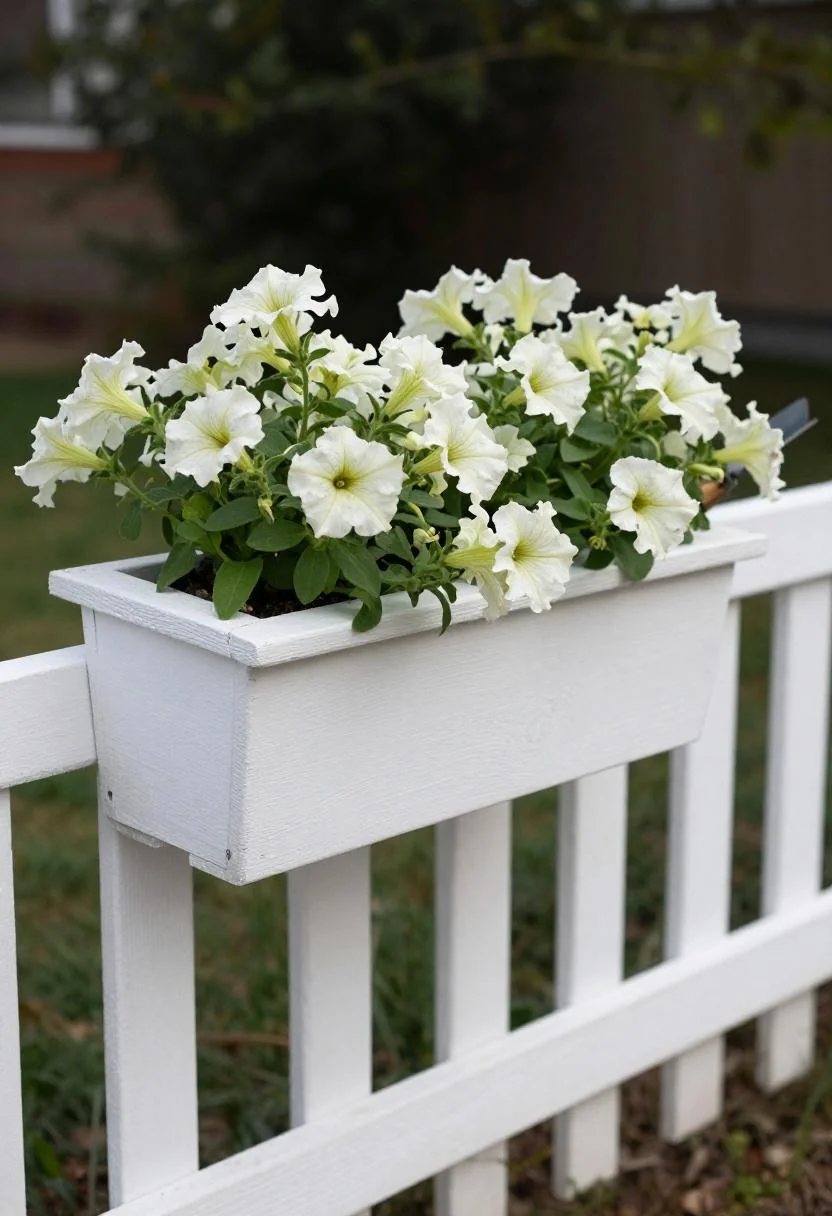
White wood fence planter with cream petunias and a trowel at the edge. The trowel is doing a lot of work here — it makes the whole image feel inhabited rather than staged. As Harper’s Bazaar Interiors has noted, the difference between a beautiful outdoor space and one that feels truly lived-in is almost always in the small, unguarded details. A resting trowel counts.
Evening Light: The Patio After Sunset
Most outdoor spaces are designed for daylight. But what happens at dusk matters — and planters can hold their own under string lights and fire.
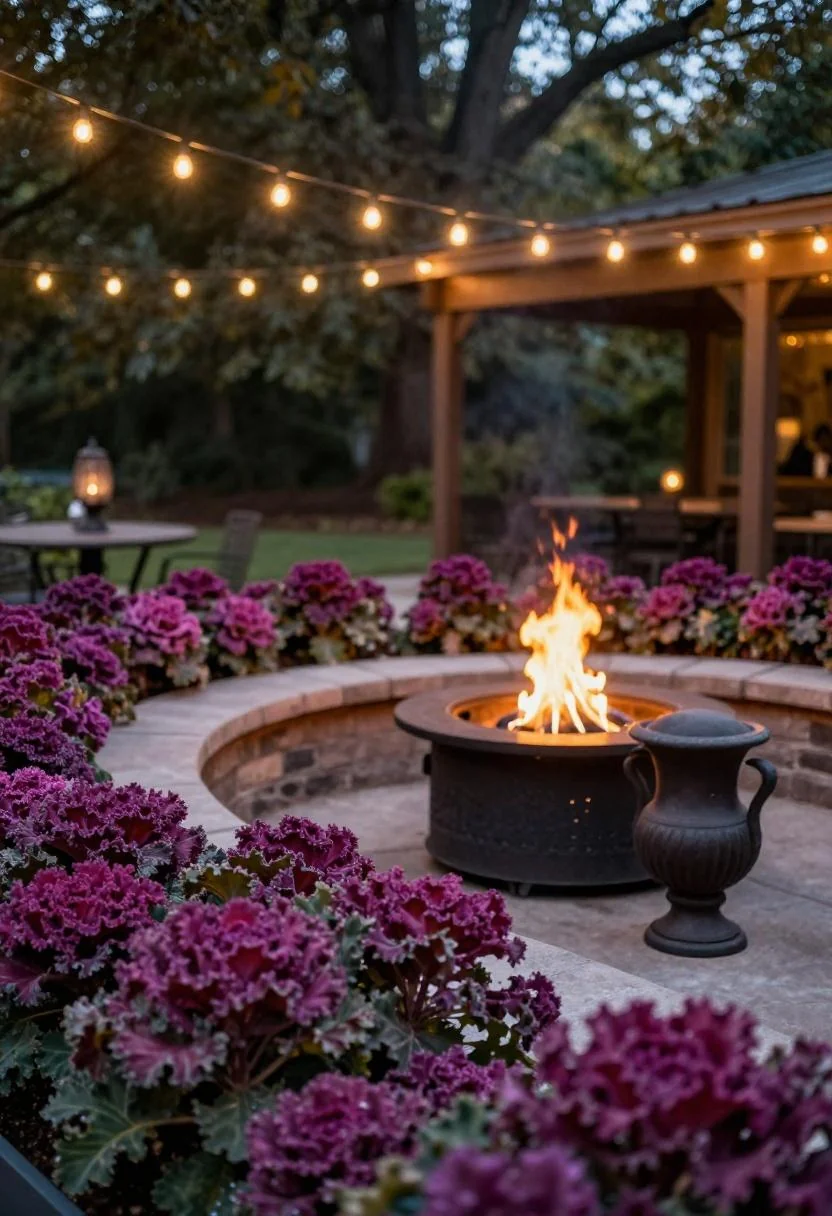
A cast-iron urn with plum ornamental kale beside a fire pit at dusk, string lights overhead. The kale’s color — matte, almost velvety — absorbs the warm light instead of reflecting it. That absorption is what makes it work. Shiny surfaces at night look cheap; matte surfaces look considered. For more ideas on how to build around a fire pit, see our outdoor fire pit area guide. Shop cast-iron garden urns
The Front Step: Unpretentious and Grounded
Some planters don’t need to be poetic. They just need to be right.
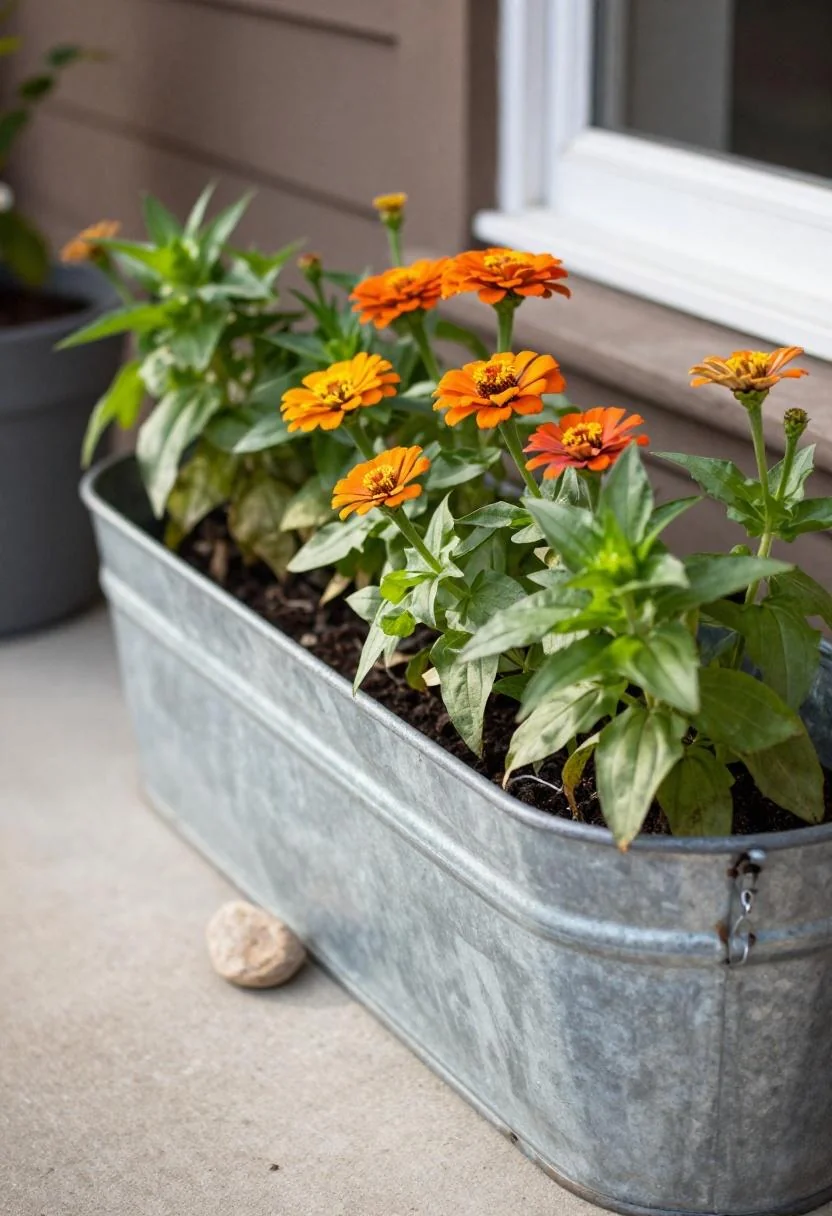
Galvanized steel trough. Persimmon zinnias. Farmhouse front step. Morning sun. There’s no theory here — this is just a plant and a container that understand each other. The steel is utilitarian; the zinnias are exuberant. The contrast is unplanned-looking, which is why it doesn’t feel try-hard. Find galvanized trough planters
The Mediterranean Courtyard: When Architecture Does the Work
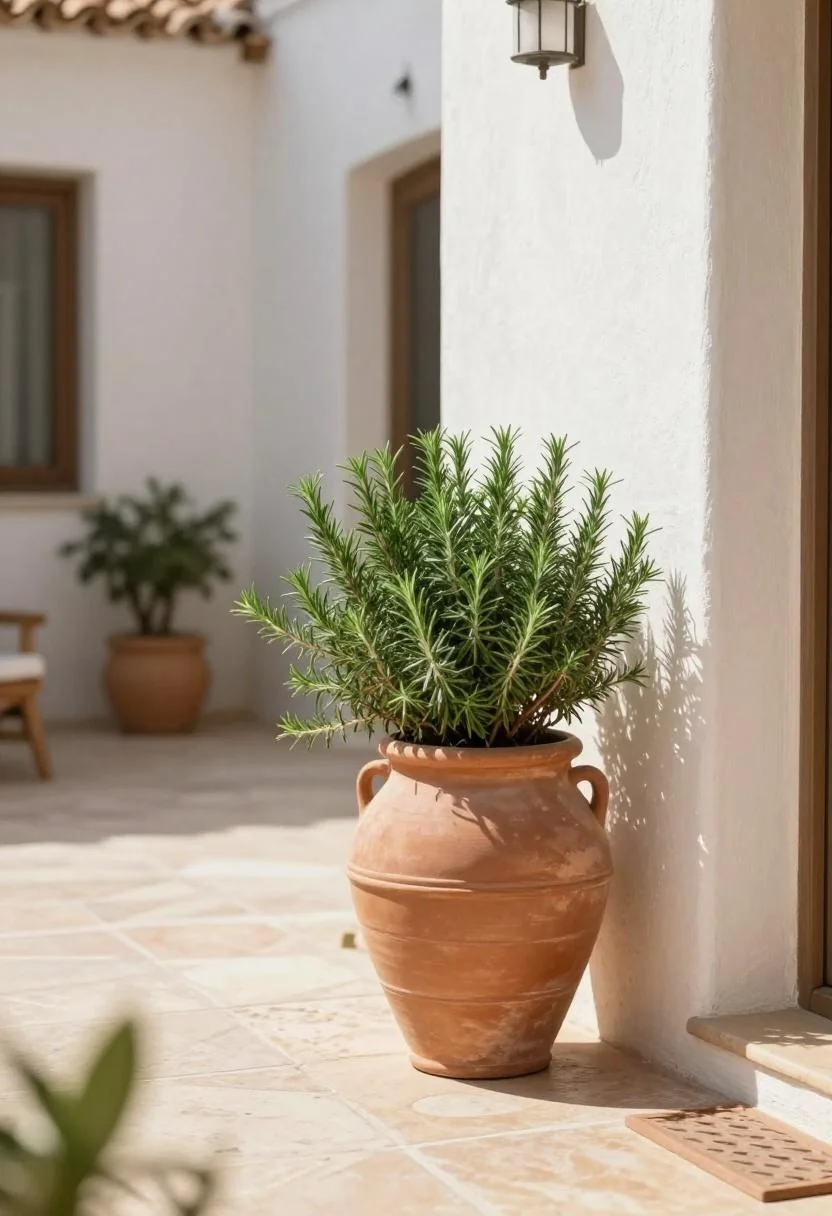
A terracotta amphora with trailing rosemary leaning against a stucco wall. The lean — not straight, not placed, but resting — is everything. It suggests something lived-in, something that’s been there a while. The rosemary trails down like it has somewhere to be but isn’t in a rush. This is the mood. The whole Mediterranean courtyard idea is just this, repeated: things that look like they arrived and decided to stay. If you’re exploring how architectural elements and plants can work in dialogue, our garden arbor and gate guide covers that intersection with care.
As Elle has observed across fashion and interiors alike, the most compelling spaces borrow from cultures where living outdoors isn’t weather-dependent — it’s philosophical.
The Color Year: What These Palettes Tell You
Across all fifteen looks, the same instinct repeats: color that earns its place. Not color for spectacle.
- Cool Blue — agapanthus, lobelia — calms warm materials without cooling them entirely. Use it when your containers are already doing a lot.
- Plum Noir — heuchera, ornamental kale — absorbs light, adds depth. Works hardest in overcast and evening conditions.
- Jade Green — ceramic, ivy — grounds a space without anchoring it. Feels old in the best sense.
- Wasabi/Chartreuse — sweet potato vine — amplifies warmth. Use near cedar or at golden hour. Nowhere else.
- Persimmon — bougainvillea, zinnias — the loudest palette here, and the most forgiving. Hard to get wrong when the light cooperates.
- Warm Terracotta — marigolds, rosemary — the most honest of the group. No tricks, no theory. Just clay and sun.
- Cream White — petunias, gardenias — the quietest. Works in morning light. Gets lost in the afternoon. Know when to use it.
The throughline? None of these palettes are asking you to do more. They’re asking you to do less, and do it right. A single planter, chosen well, placed with intention, is enough. More than enough.
For companion ideas on what grows between the planters, our sedum ground cover guide is worth a read — it takes the same approach: low intervention, high return.
This post contains affiliate links. We may earn a commission at no extra cost to you.
Images in this article were created with AI assistance.