Forget the weekly mowing ritual, the fertilizer schedules, the brown patches that appear every August like an uninvited guest. Sedum — that jewel-toned, drought-laughing, texture-rich succulent — is rewriting the rules of what a garden floor can be. Run your hand across a mat of Angelina sedum and tell me you don’t feel something. It’s springy, almost alive under your palm, shifting from chartreuse to burnt copper depending on the season. This is ground cover as editorial statement. More is more. Color is everything. And sedum, in all its wild variety, is ready to deliver.
The Front Yard Reimagined: Bold Color From the Street
First impressions are everything — and a slope of sedum rolling toward the sidewalk hits differently than a flat lawn ever could. The texture! The depth! The fact that it requires approximately zero effort once established.
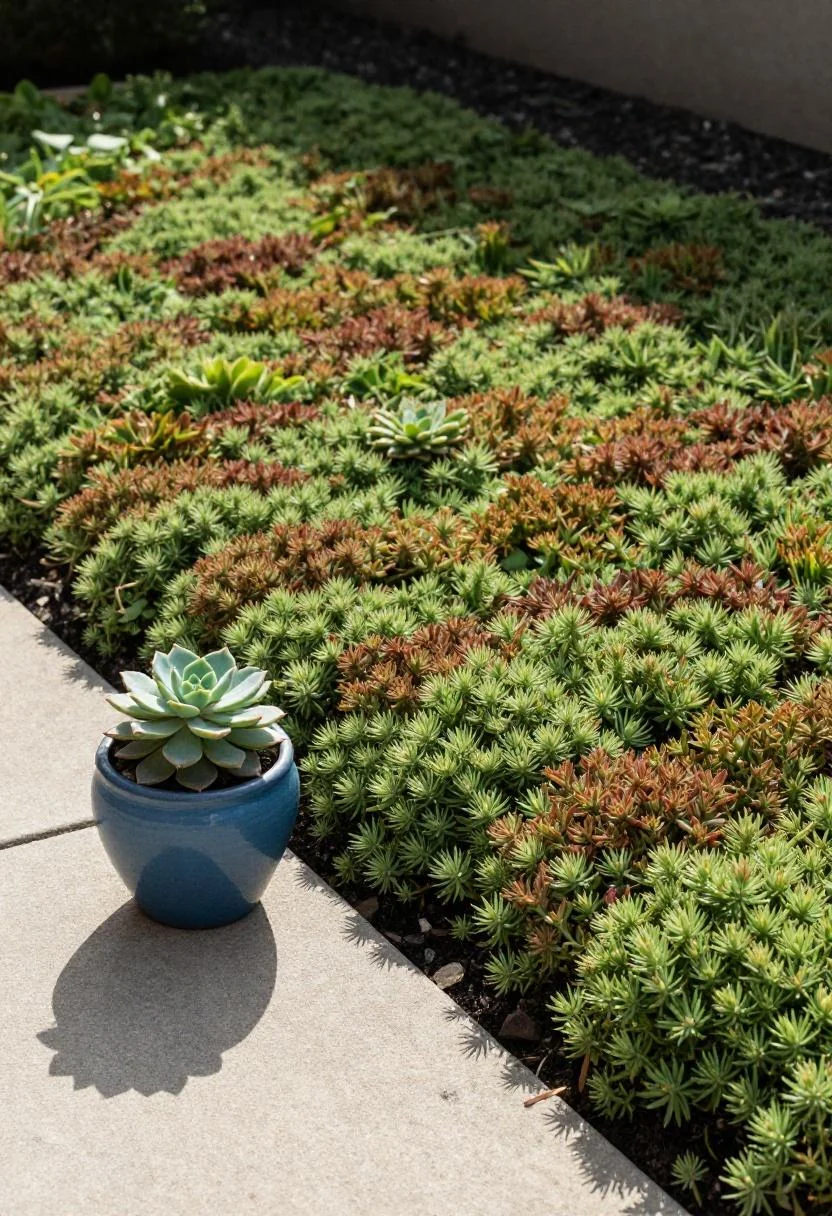
This cool blue ceramic pot at the path’s edge is doing serious heavy lifting. Against the varied greens and reds of the sedum carpet, that glaze reads like a piece of sky that landed in your garden. Sedum kamtschaticum and Dragon’s Blood varieties together create a mosaic that shifts from lime to burgundy as the season progresses — and that pot anchors the whole scene with an unexpected, almost Mediterranean cool. Consider pairing the look with a statement ceramic garden pot in cool blue to anchor the scene.
Sloped yards are notoriously difficult to maintain with traditional grass — erosion, uneven mowing, that constant battle. Sedum roots hold soil beautifully. The slope becomes an asset, a cascading tapestry you’d frame if you could. For more ways to transform a challenging front yard, our guide to DIY flower beds in front of house for curb appeal is full of ideas that layer beautifully alongside sedum.
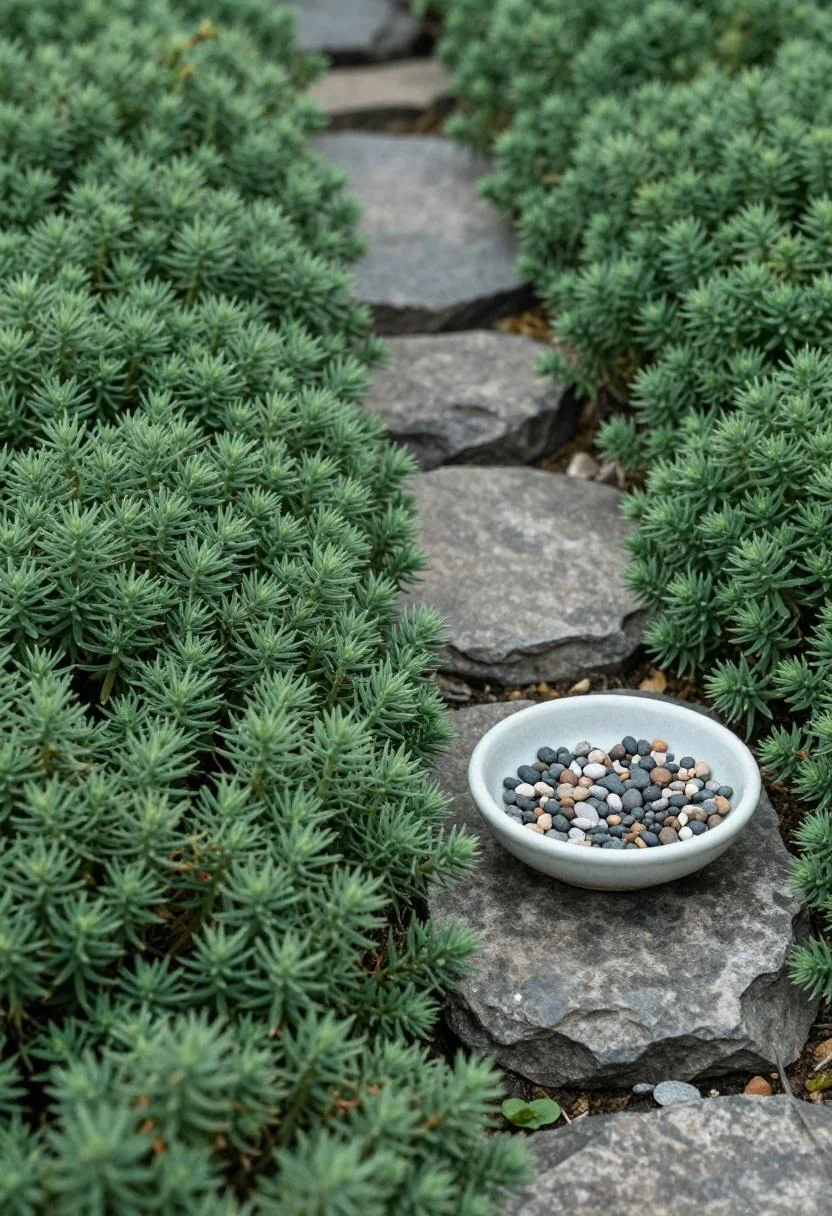
Now this — this is a color story. Limestone stepping stones, pale and almost chalky, pressing into a dense sedum mat that’s already lush with color. And then the plum noir ceramic dish drops in like a plot twist. That dark, almost eggplant glaze against the bright greens and reds of the sedum? Absolute dopamine hit. The contrast between the cool stone, the living texture, and that one bold ceramic accent is the kind of maximalist restraint that takes real confidence to pull off. One object, the right object, changes everything.
Zen Meets Maximalism: The Rock Garden Explosion
Here’s the tension that makes sedum gardens so endlessly interesting: they can look serene and chaotic at the same time. A rake line through gravel beside a sedum mat reads as meditative. But pile on three different sedum colors, some boulders, a copper watering can, and suddenly you’re in full maximalist territory. Both are right. Both are gorgeous.
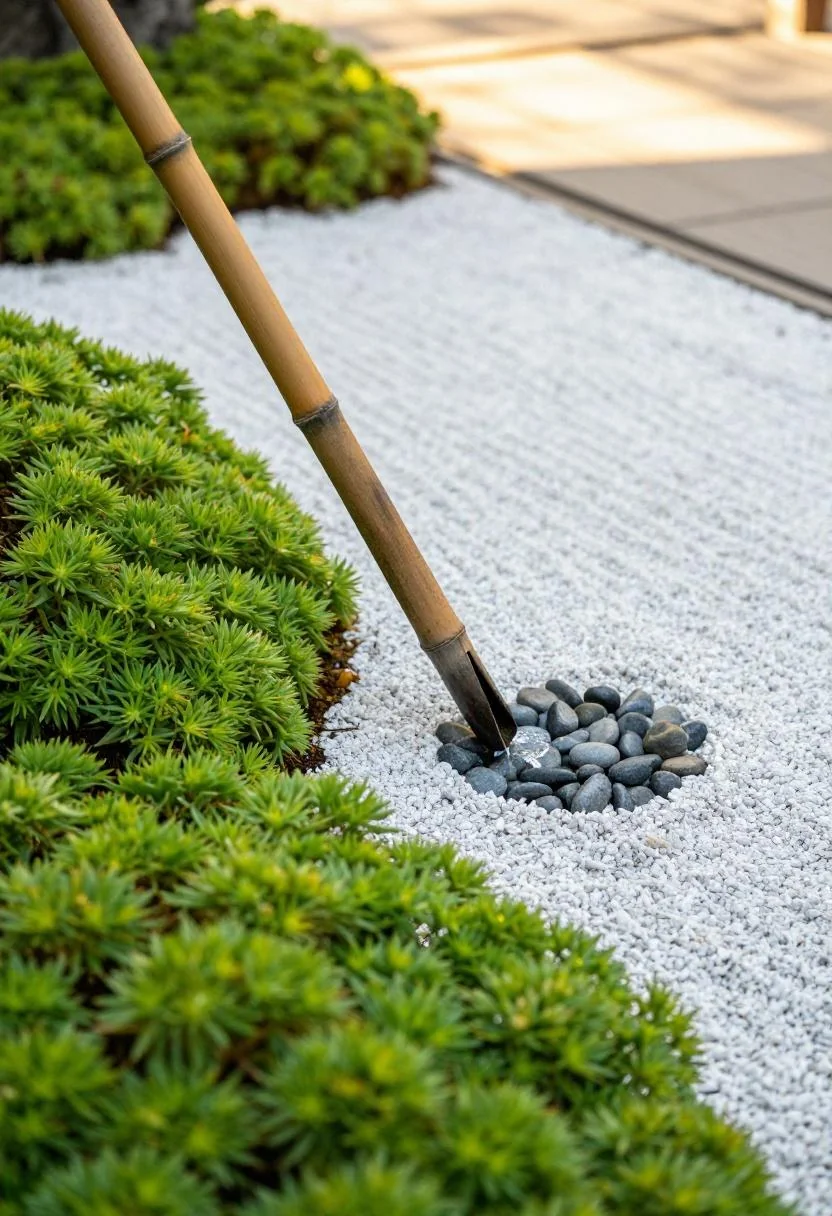
Jade. Not quite green, not quite grey — somewhere in between, like a morning fog over still water. This jade-toned sedum in a zen garden corner feels like it arrived there by geological accident, which is exactly the point. The raked gravel lines meet the sedum edge without apology, and the bamboo water spout introduces that sound element — the soft drip that makes a garden feel alive even when you’re standing perfectly still. It’s all in the layering: texture, sound, color, the contrast between something so deliberate (those raked lines) and something so wildly organic (the sedum just doing its thing).
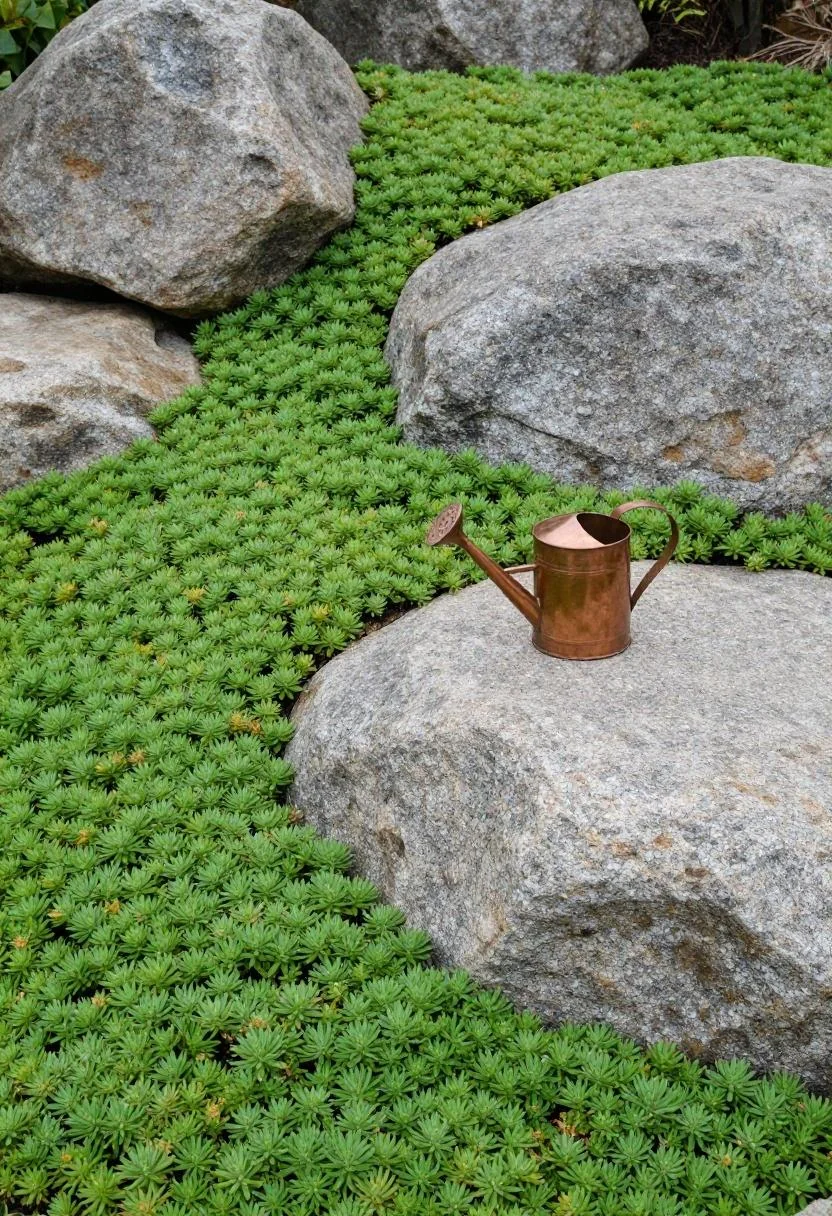
The copper watering can might be my favorite detail in this entire collection. It’s not decorative in a precious way — it’s just been set down, mid-task, like someone walked away for a moment. That lived-in quality, set against jade green sedum threading between granite boulders, creates a scene that feels discovered rather than designed. Matte stone against the patinated copper against the gloss of healthy succulent leaves. That tension is everything. A copper watering can earns its place as both tool and sculpture.
Rooftop and Balcony: Sedum Goes Vertical (And Wasabi)
Who said ground cover stays on the ground?
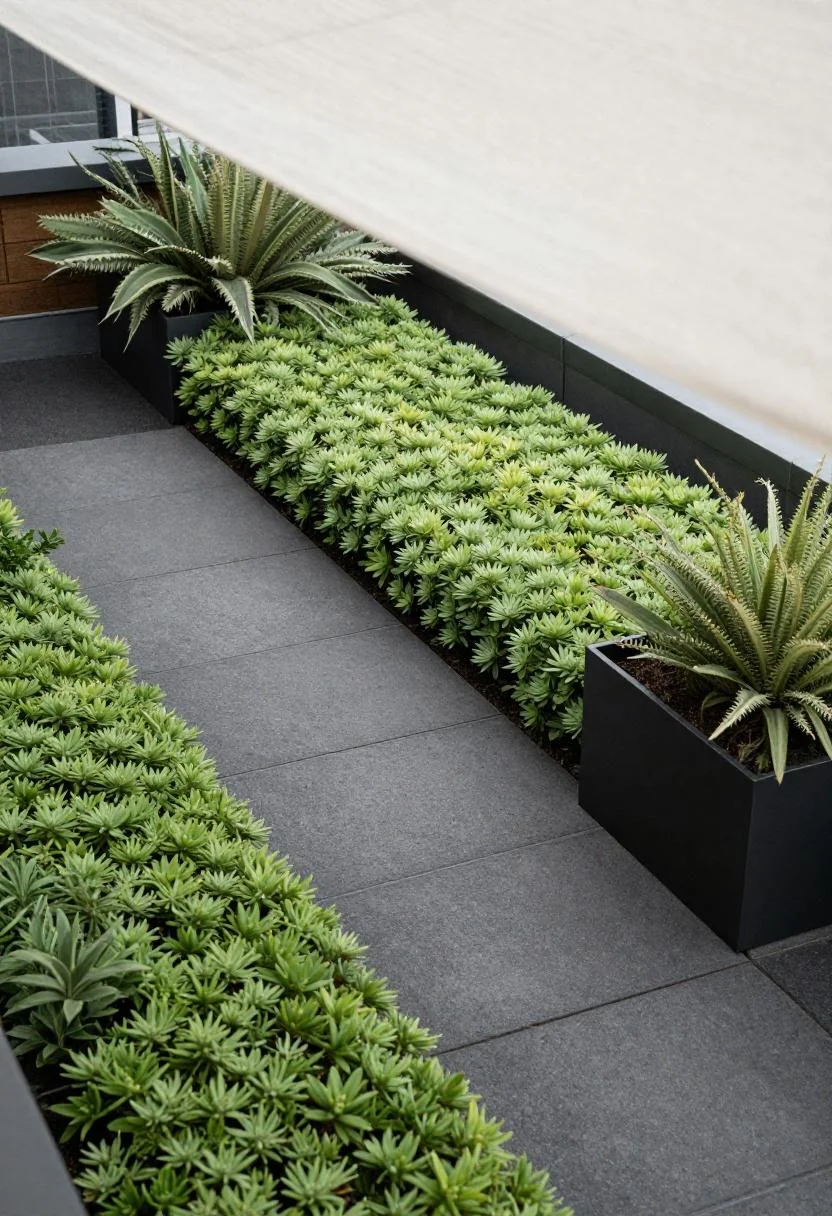
Wasabi. Not the pale imitation at your sushi restaurant — real wasabi green, electric and slightly aggressive, the kind of color that makes charcoal pavers look like they were custom-poured to match. On a rooftop terrace, sedum panels set between those dark pavers under a billowing linen canopy create an interior-exterior blur that feels genuinely sophisticated. The linen overhead softens the sky, the charcoal grounds the palette, and the wasabi sedum provides that singular, can’t-look-away focal pop. As Vogue has tracked, biophilic rooftop design is one of the defining residential aesthetics of the moment — and sedum panels are the most textural, low-maintenance way into it.
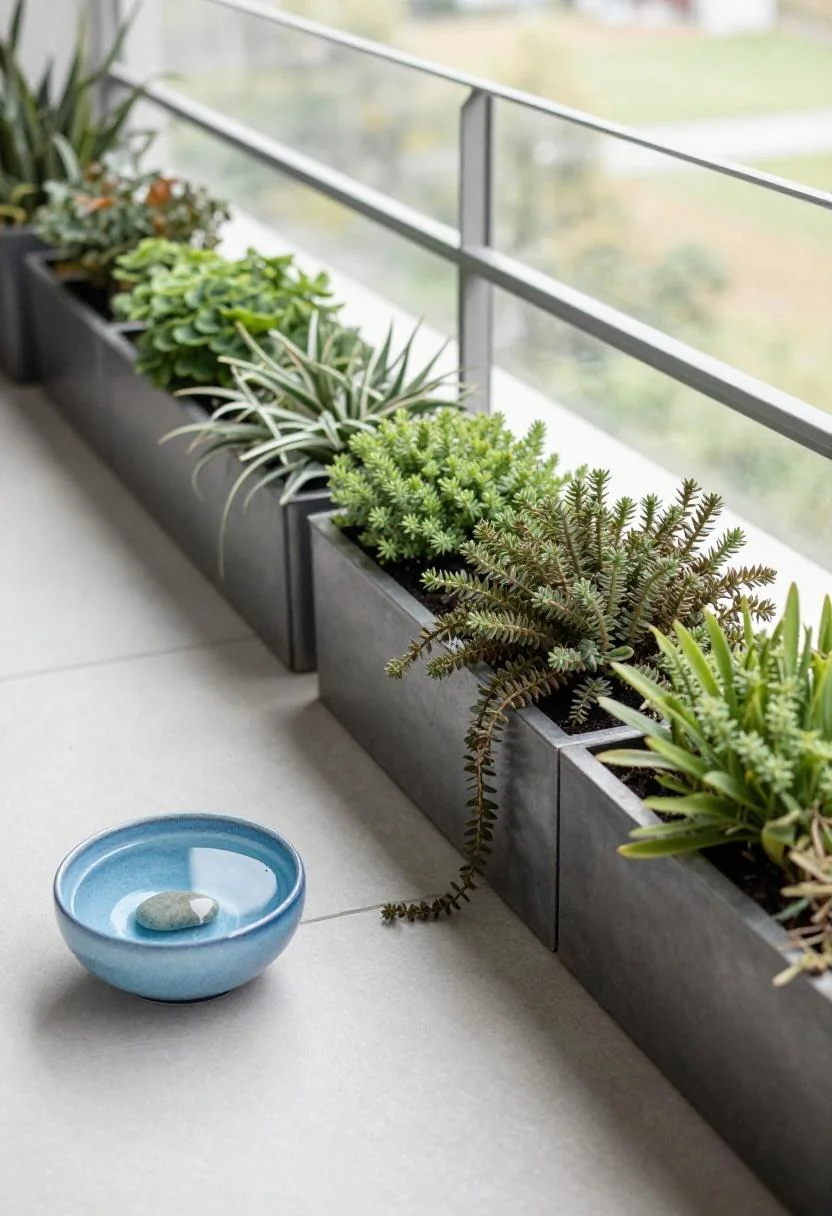
Trailing sedum in steel railing planters, cascading down toward the street in long, reaching tendrils. The cool blue water bowl in the corner — that deliberate, knowing repetition of the cool tones from our front yard pot — ties it all together. Even on a small balcony, the combination of trailing texture and a single bold ceramic object creates a scene. This is sedum as jewelry. For balcony and patio ideas that layer this kind of organic texture with structural elements, our collection of budget patio ideas that look high-end offers some genuinely clever pairings.
The Mediterranean Mood: Warm Glazes, Hot Colors, Living Texture
Close your eyes and picture this palette in late-afternoon light. Sandstone, persimmon, the soft grey-green of sedum in summer heat, the warm amber of terracotta that’s been sitting in the sun for a decade. This is the section for those of us who want our gardens to feel like they belong in the south of France — or a Santorini courtyard — without actually booking the flight.
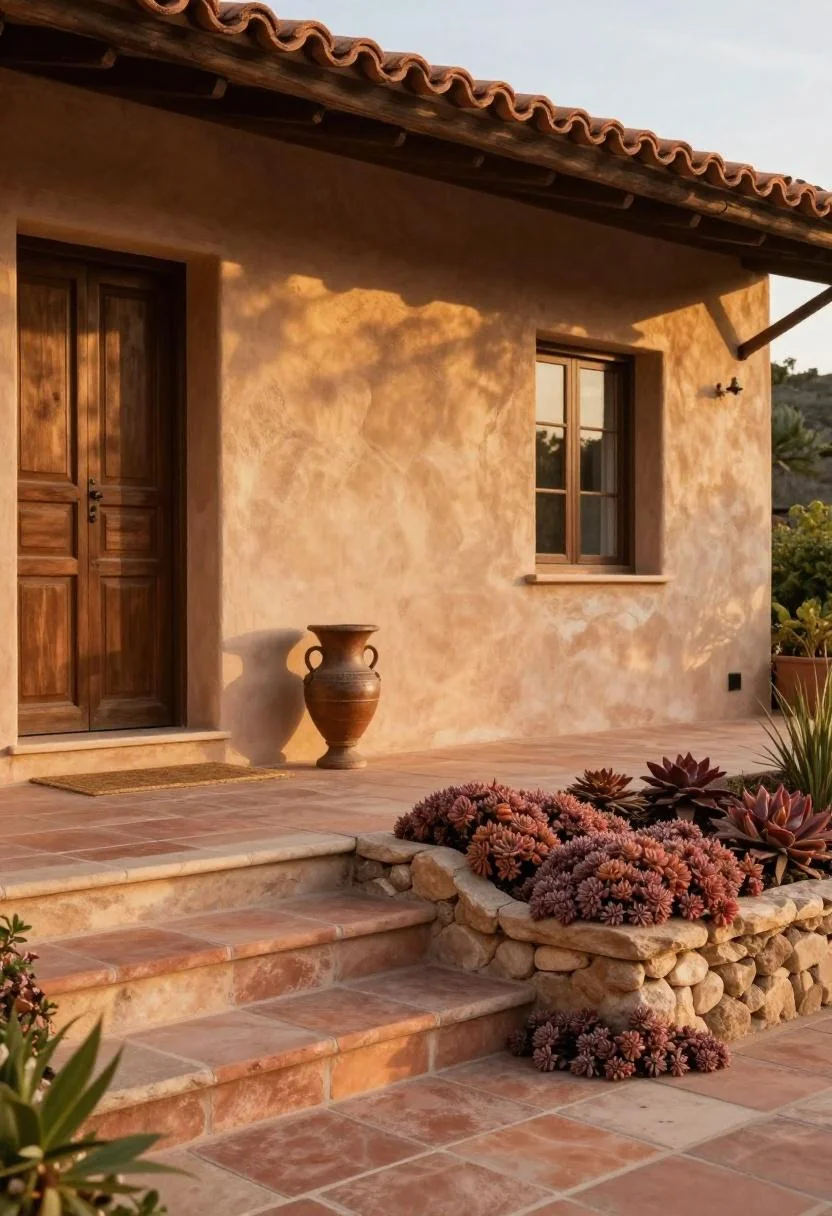
The persimmon-glazed urn is the undisputed star here. That warm orange-red glaze — somewhere between ripe fruit and autumn ember — against sedum cascading from a sandstone bed is a maximalist’s dream in the most restrained form. You don’t need ten objects. You need one perfect, slightly audacious urn. The sedum does the rest, softening the edges, filling the negative space, bringing the whole composition down to earth in the most literal sense possible.
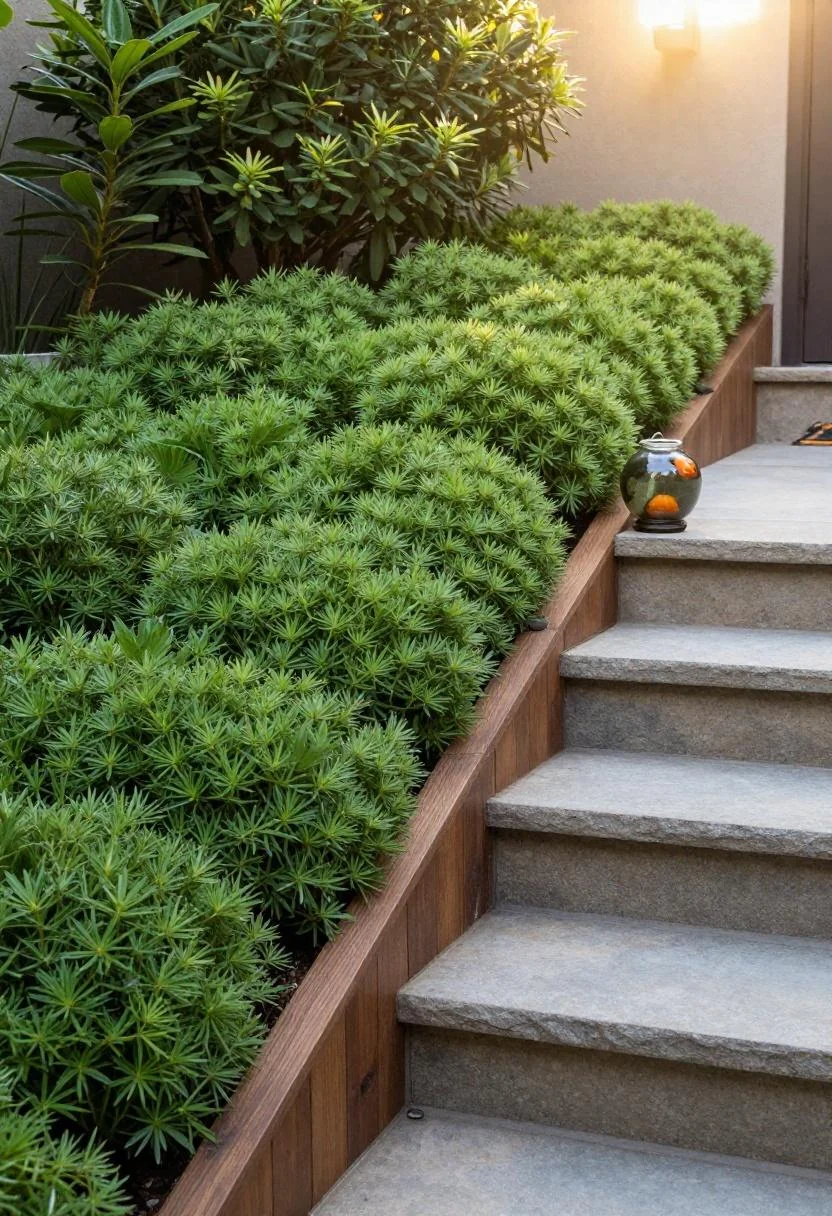
Here comes that persimmon again, this time as a lantern beside stone entry steps — and it sings. The walnut-edged planter of sedum frames the steps with just enough formality, while the lantern’s warm glow (imagine it at dusk, just imagine) turns the entry into something genuinely cinematic. Entry sequences matter more than we admit. They set the tone for everything that follows. A persimmon ceramic outdoor lantern beside your own sedum-flanked steps would do exactly this much work.
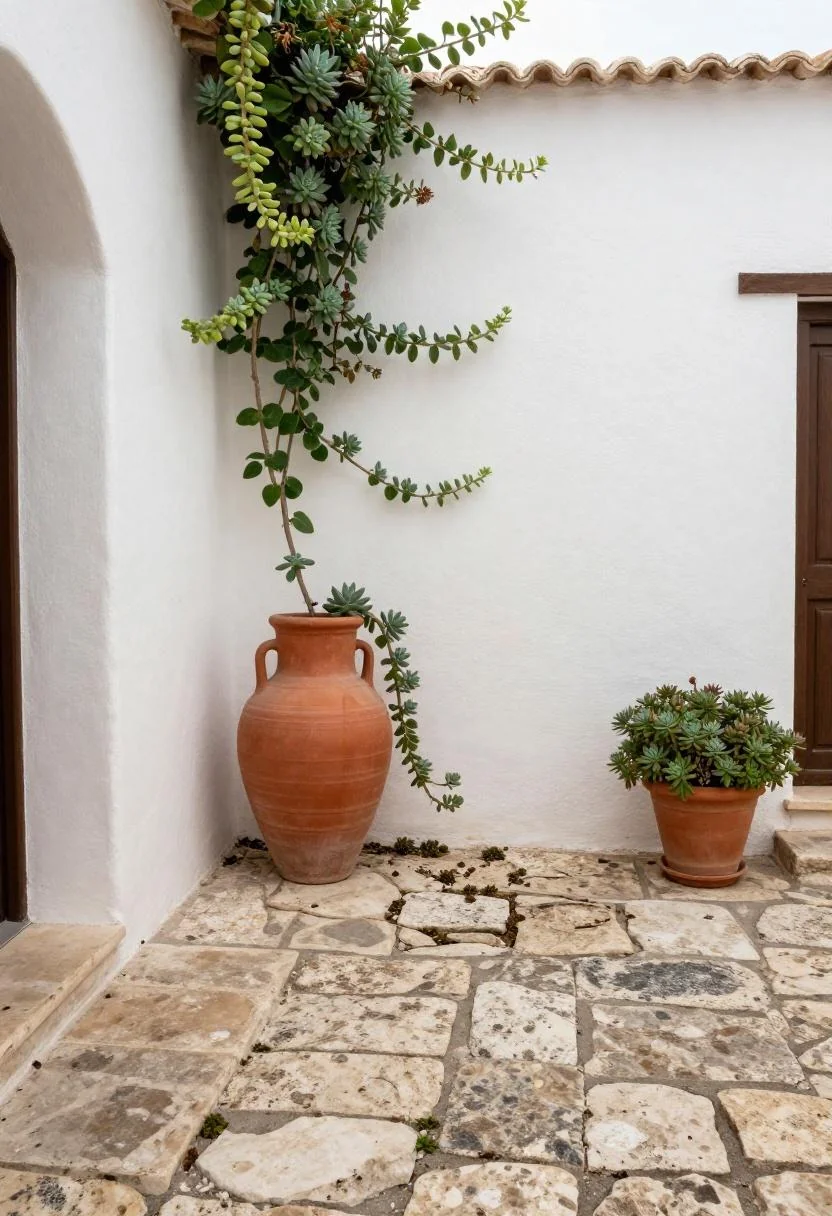
Sedum in the joints of a limestone cobblestone courtyard — this is the secret move that turns a flat hardscape into something alive. The terracotta amphora leaning against the wall completes the scene with that particular warm terracotta color that can only come from clay that’s been fired and aged and left in the weather. This isn’t décor. This is geology and time, with sedum threading through every gap like it belongs there. (Because it does.)
Around the Fire Pit: Sedum Plays With Heat
Here’s something you might not expect: sedum absolutely loves life around a fire pit. The warm, slightly sandy soil, the good drainage, the reflected heat — sedum thrives in exactly the conditions that would stress a lawn into submission.
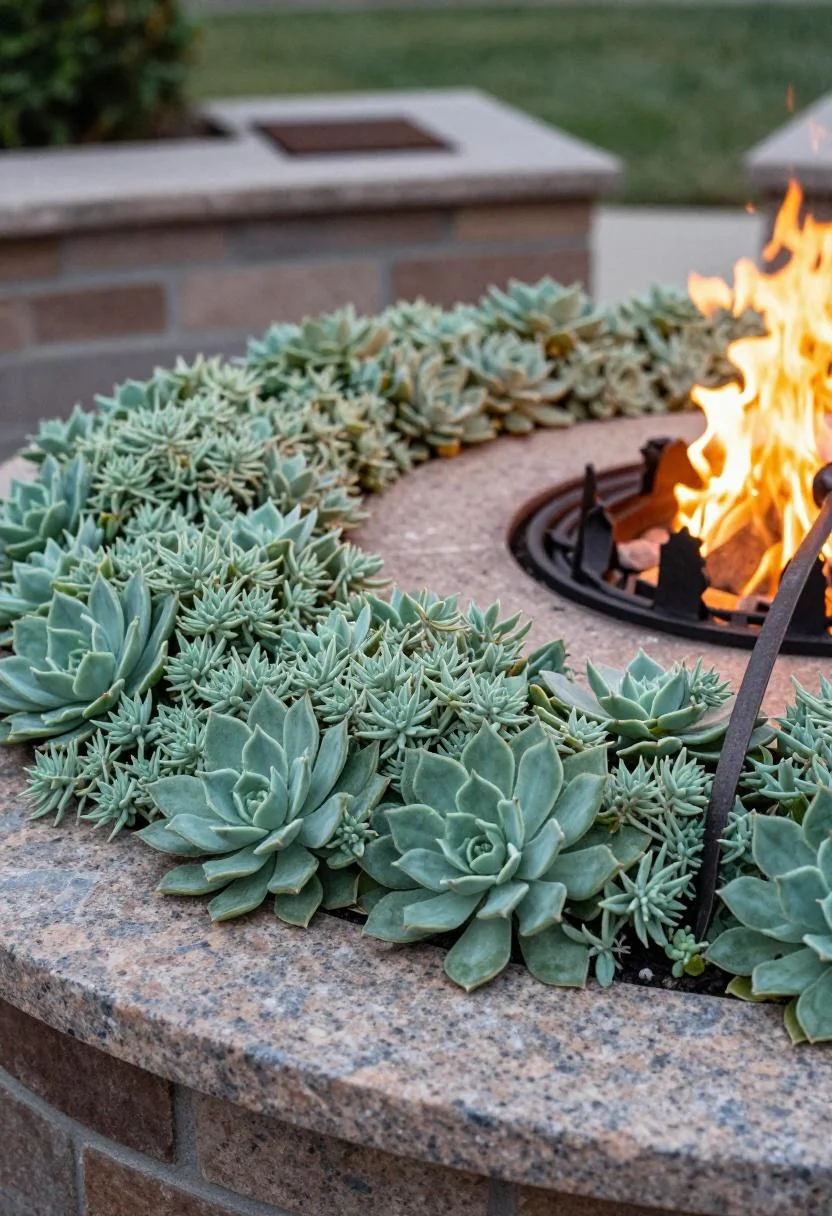
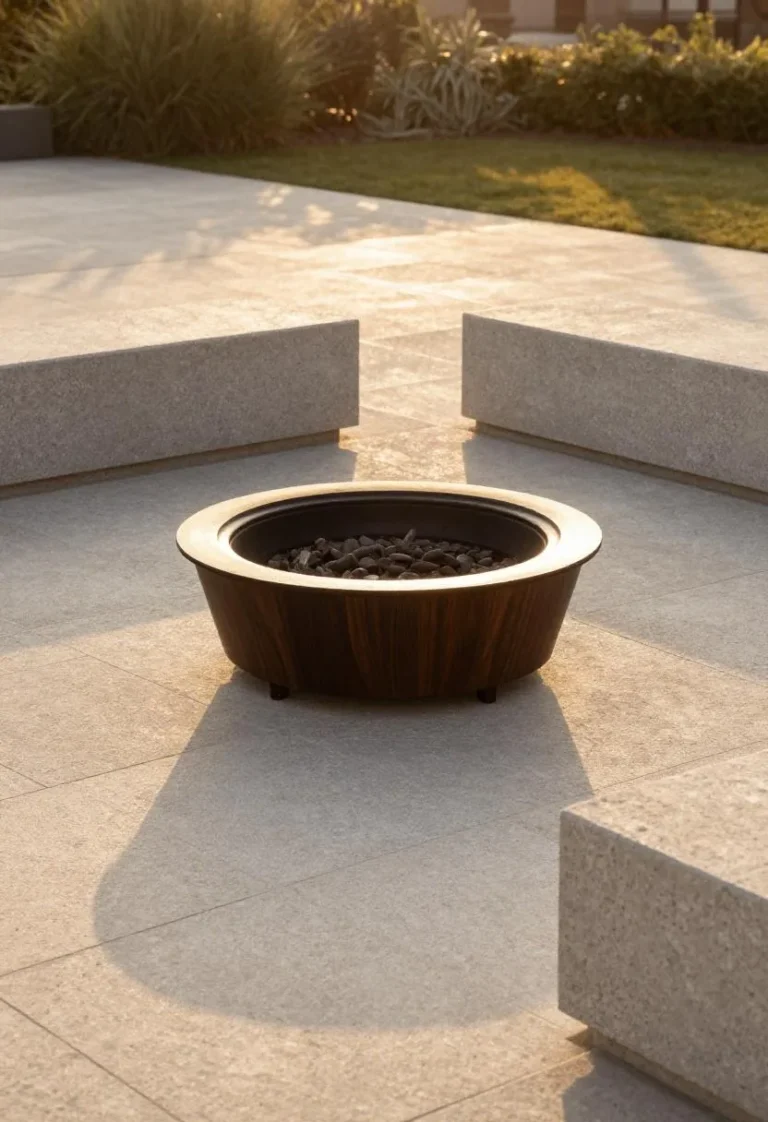
Sage green sedum hugging the granite edge of a fire pit. The iron poker resting to the side, casual and functional and somehow completely compositionally right. Sage green — that color that reads like a morning in the countryside, like lavender fields and damp stone and something good cooking somewhere — softens the hard geometry of the granite ring. This is a garden that’s actually used, not just photographed. Our guide to outdoor fire pit area ideas for the ultimate backyard explores exactly these kinds of plant-and-hardscape combinations. A wrought iron fire pit tool set pulls double duty as a functional and sculptural garden element.
The Tropical and the Shadowed: Plum and Deep Drama
Not every garden is sun-drenched. Some are dappled, shadowed, filtered through palms or overhead canopies. Sedum handles this with more grace than you’d think — and in these moody, layered spaces, the dark accent colors come into their own.
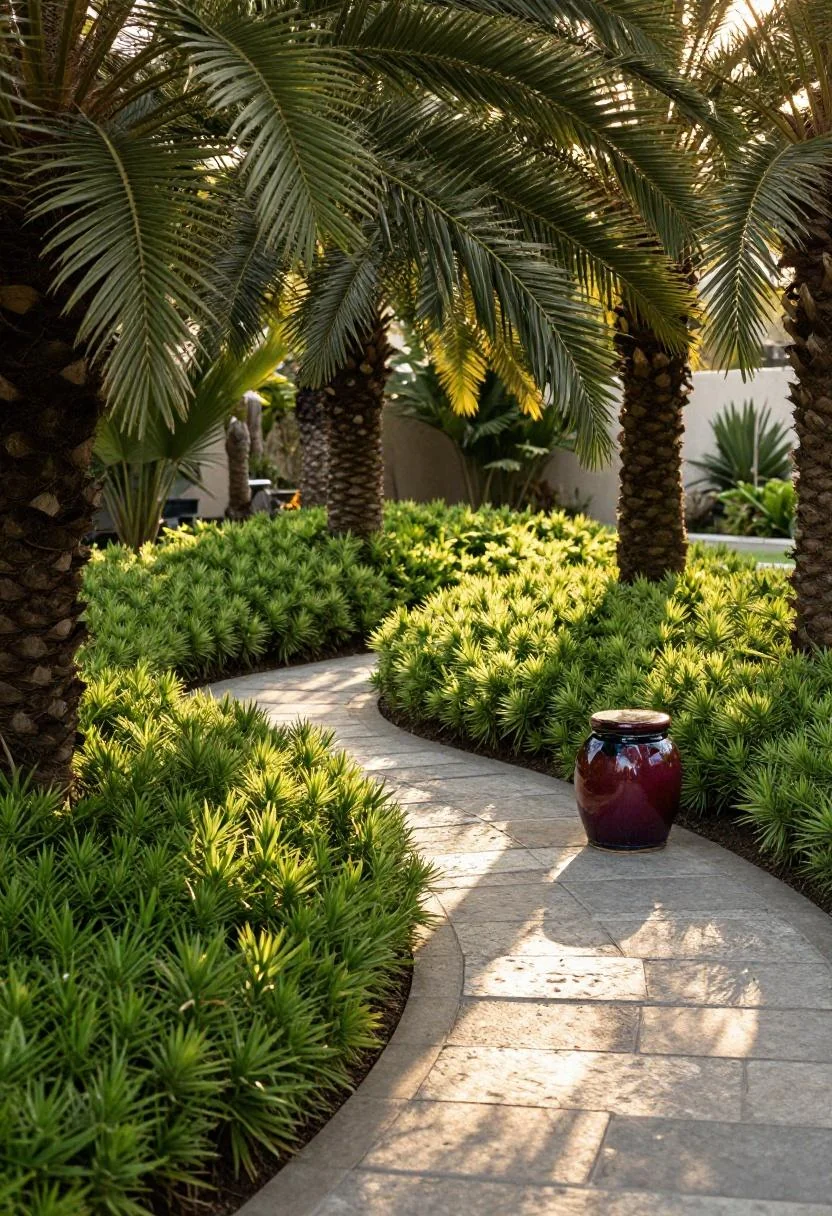
Sedum replacing the lawn beneath palms — this is genuinely revolutionary if you’ve ever tried to maintain real grass in a shaded tropical garden. The plum noir ceramic stool is worth lingering over: that almost-black purple, the kind of color that looks different in morning light versus the blue hour, sitting in the middle of all that green like a full stop at the end of a very good sentence. As Elle has noted in its coverage of contemporary garden design, the move toward lush, layered ground cover beneath feature trees is one of the most compelling shifts in residential landscaping right now.
Pattern Clashing: The Geometric Sedum Garden
What happens when you treat sedum varieties the way a bold interior designer treats fabrics — mixing colors, textures, and forms in deliberate, unabashed abundance?
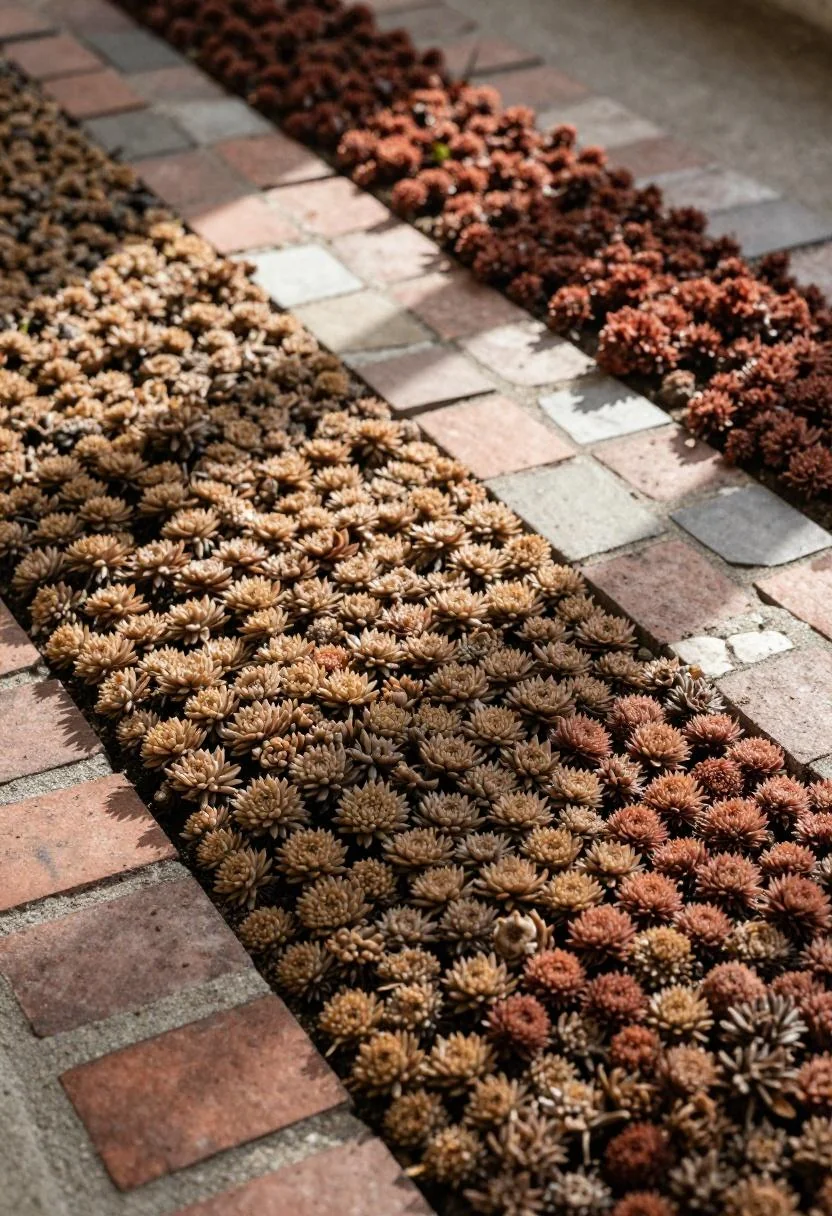
This. This is what happens. A geometric patchwork of wasabi, bronze, and rust sedum divided by reclaimed brick borders — it’s a garden that pattern-clashes with complete confidence. Each section is a different texture, a different green-to-copper-to-rust hue, and the brick borders give just enough structure to keep the whole thing from tipping into chaos. (Though honestly, a little chaos is fine.) The wasabi patches practically vibrate against the rust sections. It’s a palette borrowed from an ambitious textile designer, executed entirely in living plant matter. Reclaimed brick garden edging is the structural secret that makes pattern-clashing sedum work at scale.
For those who want to go further into the wonderfully unruly territory of intentionally mixed plantings, our piece on how to plant a chaos garden that looks wildly beautiful is essential reading.
The Dusk Scene: Cream, Cedar, and the Quiet Hour
Some garden moments only reveal themselves at a specific time of day. That window between golden hour and true dark, when colors shift and soften and everything gets a little more cinematic.
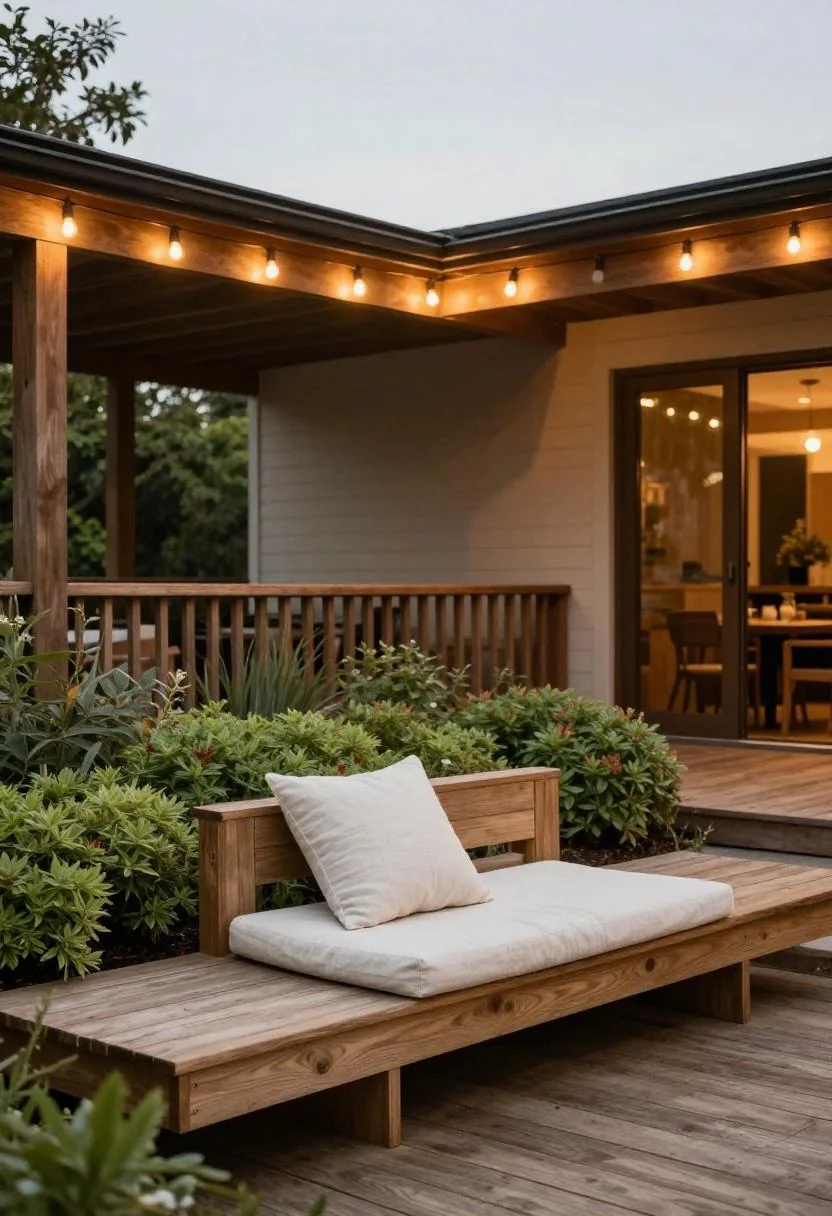
A teak bench, a cream linen cushion, a sedum garden bed catching the last of the light. Cream is doing something interesting here — it’s not white, not beige, but that warm, almost ivory tone that absorbs the golden hour and gives it back slightly warmer. The linen cushion against the dark teak has that exact satisfying contrast of rough against smooth that you want in an outdoor sitting moment. This is a place to actually sit. To watch the sedum shift colors as the light drops. To not check your phone for twenty minutes. A teak bench with a cream outdoor cushion turns a sedum garden view into a full sensory experience.
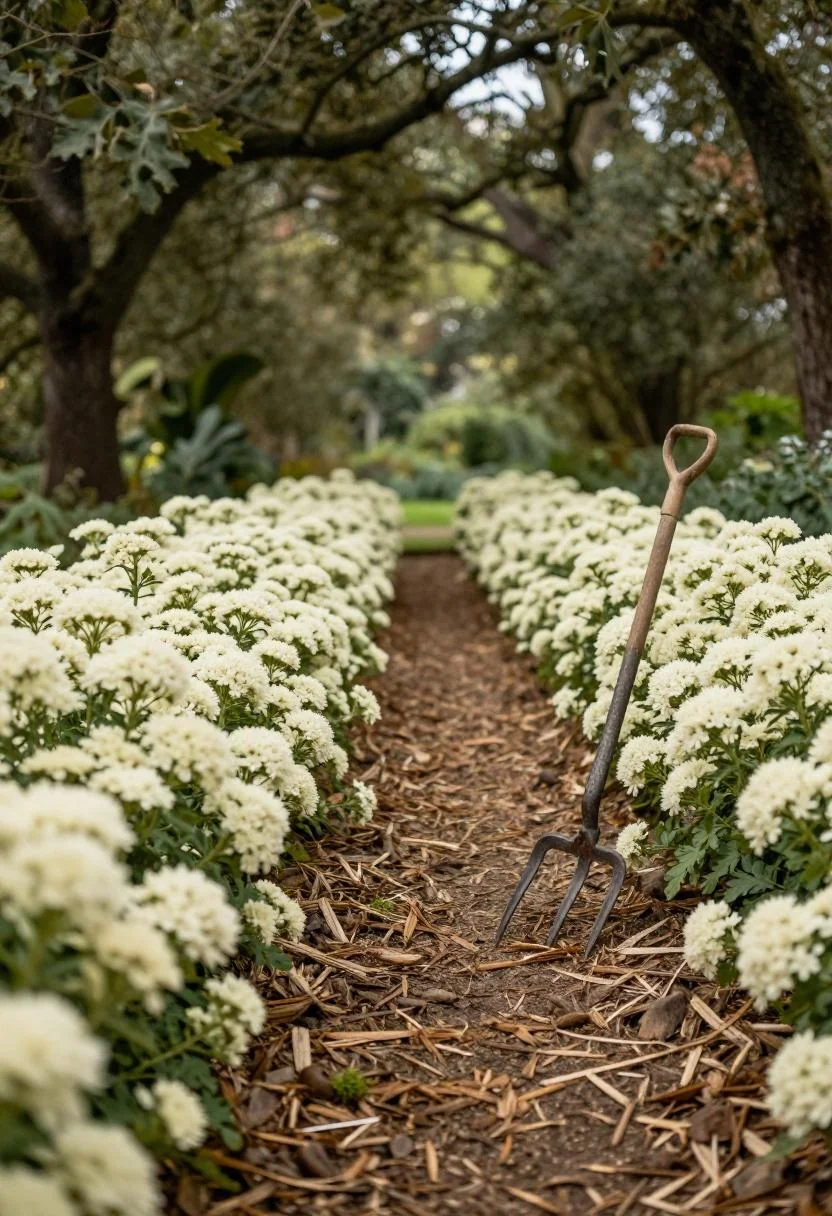
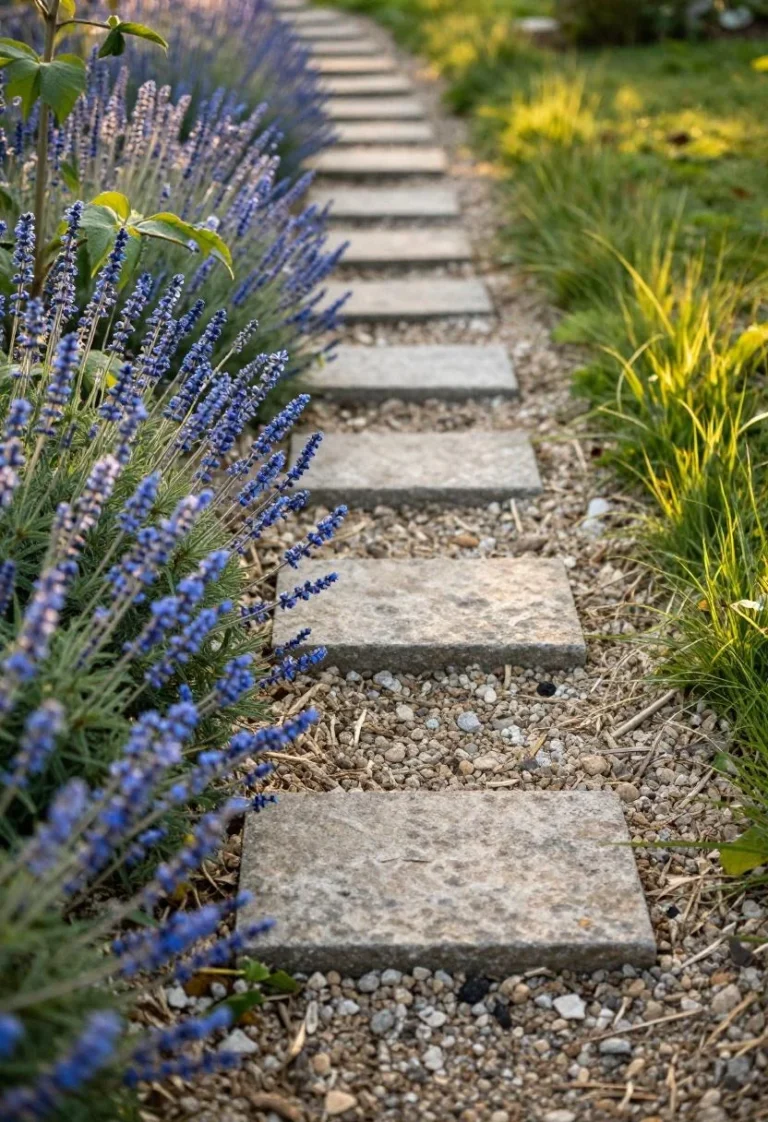
Cream white flowering sedum along a cedar chip path — the scent of that cedar, the texture of the chips underfoot, the delicate clustered flowers of the sedum catching whatever light filters through. The wrought iron garden fork tucked to the side is another one of those tools-as-sculpture moments that the best gardens understand intuitively. This is a woodland path that invites exploration. A vintage-style wrought iron garden fork left casually in the scene makes the whole path feel inhabited and loved.
Why Sedum Wins: The Color Story That Keeps Changing
Here’s what nobody tells you about sedum as a lawn alternative: it changes color with the seasons. Spring brings fresh lime greens, summer deepens to jade and sage, autumn tips into bronze and rust and sometimes a deep, almost plum burgundy depending on the variety. You plant it once and get a garden that redresses itself four times a year. That’s not low-maintenance — that’s a gift.
The palette we’ve explored across these fourteen looks — cool blues that echo sky and ceramics, jade and wasabi greens that pulse with life, the warm persimmon and terracotta that feel Mediterranean at their bones, the moody depth of plum noir, and the quiet sophistication of cream and sage — is really just the beginning. Sedum carries all of these tones within its many varieties. Mix them. Layer them. Let them clash. That’s the maximalist promise of this most quietly dramatic plant.
What makes this approach feel genuinely current is the commitment to treating ground cover as a design decision — not an afterthought. Every ceramic pot, every reclaimed brick border, every copper watering can in these images is there because someone thought about the relationship between the living texture and the object beside it. That’s the editorial approach applied to gardening, and it makes all the difference.
Ready to push further into your outdoor space? Our roundup of vintage garden decor ideas layers beautifully with a sedum-forward garden aesthetic — the iron, the ceramic, the worn terracotta all feel at home alongside these ground cover carpets.
This post contains affiliate links. We may earn a commission at no extra cost to you.
Images in this article were created with AI assistance.