There’s a particular kind of garden that stops you mid-step. Not because it’s manicured or symmetrical or obviously expensive — but because it looks like it simply happened. Grasses leaning into each other. A path that curves without apology. Flowers you couldn’t have planted in quite that arrangement if you’d tried. This is the naturalistic garden, and it’s been quietly earning its place as the most considered thing you can do with outdoor space right now. Not wild for wildness’s sake. Intentional disorder — which, if you think about it, is the hardest thing to pull off.
As Vogue has observed, the shift away from clipped hedges and matching planters isn’t a rejection of beauty — it’s a redefinition of it. The boho eclectic sensibility that’s been reshaping interiors for years has finally, fully, moved outside. Vintage terracotta. Mismatched containers. A textile thrown over a teak bench. Things that look gathered rather than bought. This guide is about how to build that — deliberately, slowly, with the patience it deserves.
The Path That Doesn’t Go Straight
Start with how people move through the space. A straight path says: get there quickly. A curved one says: look around. Gravel works better than pavers here — it settles into the landscape rather than imposing on it, and the crunch underfoot adds something that feels almost ceremonial.
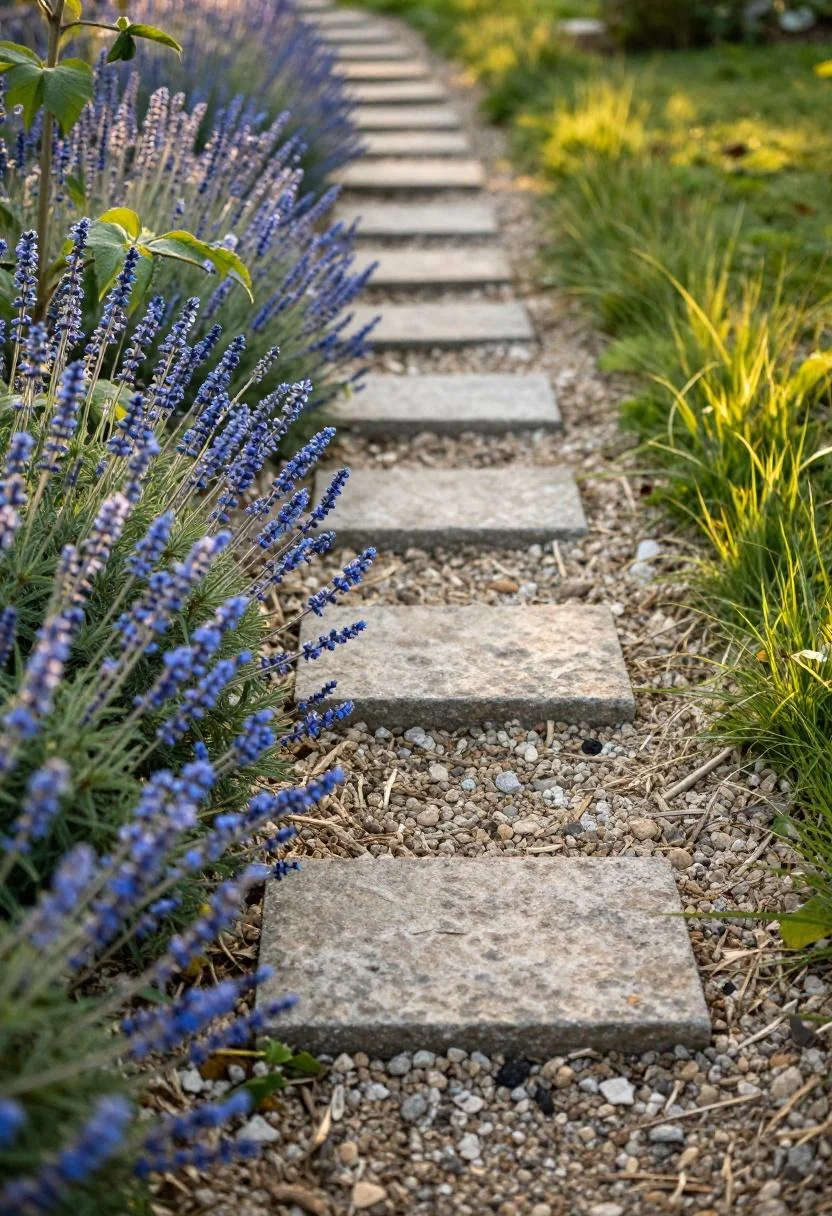
Blue salvia edging a gravel path — backlit, slightly wind-moved — is one of those combinations that works because it doesn’t try too hard. The cool blue reads almost silver in evening light, and the wild grasses behind it do nothing but be exactly what they are. You’re not designing a path so much as a reason to slow down. Blue salvia seeds are an easy starting point if you’re building this from scratch.
The edges matter. Not in the clipped-border sense — in the sense that where your path meets the planting is where the whole thing either reads as wild or reads as neglected. There’s a difference, and it lives in the detail. For more on this, our guide to creative landscape edging ideas goes deep on materials and approaches that hold their shape over time.
Cottage Border Logic: Let Things Lean on Each Other
The cottage border is the original eclectic mix. Nothing matches. Everything belongs. The secret — and it’s barely a secret — is textural contrast. Something soft and furry next to something structural and tall. Lamb’s ear and sage next to a towering allium. The eye moves between them and never quite settles, which is exactly the point.
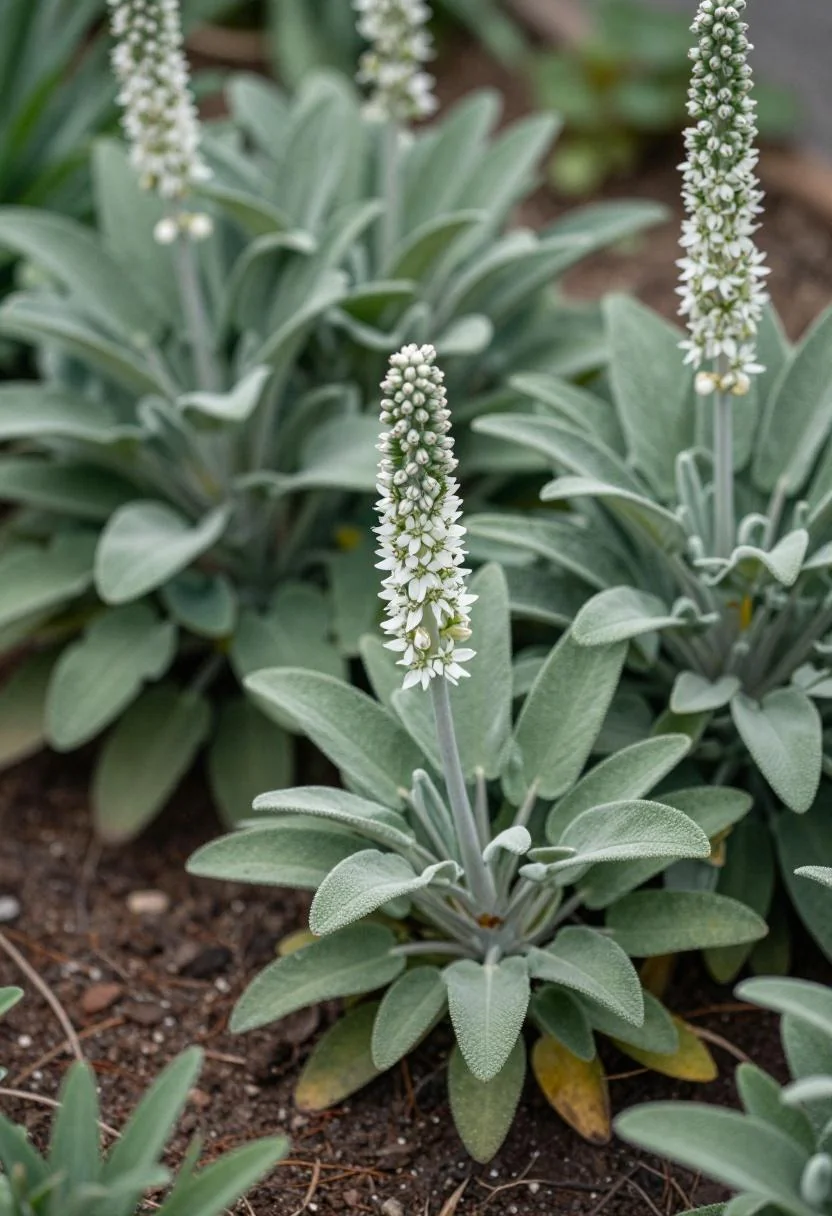
That plum allium rising above a sea of silver-green — it earns its place by being genuinely surprising. The globe shape against the low mounding softness of the border creates tension that resolves into something beautiful. This is what Harper’s Bazaar calls “considered wildness”: the appearance of chance, underpinned by real understanding of how plants grow and interact.
Plant in odd numbers. Drift rather than dot. And resist the urge to deadhead everything the moment it fades — the spent allium head in autumn has its own quiet dignity. Giant allium bulbs are worth planting in autumn for this exact moment in late spring.
Terracotta and Stone: The Right Kind of Warm
There’s a reason terracotta keeps coming back. It ages. It stains. It picks up the color of the soil inside it and the wall behind it. New terracotta is fine — aged terracotta is something else entirely.
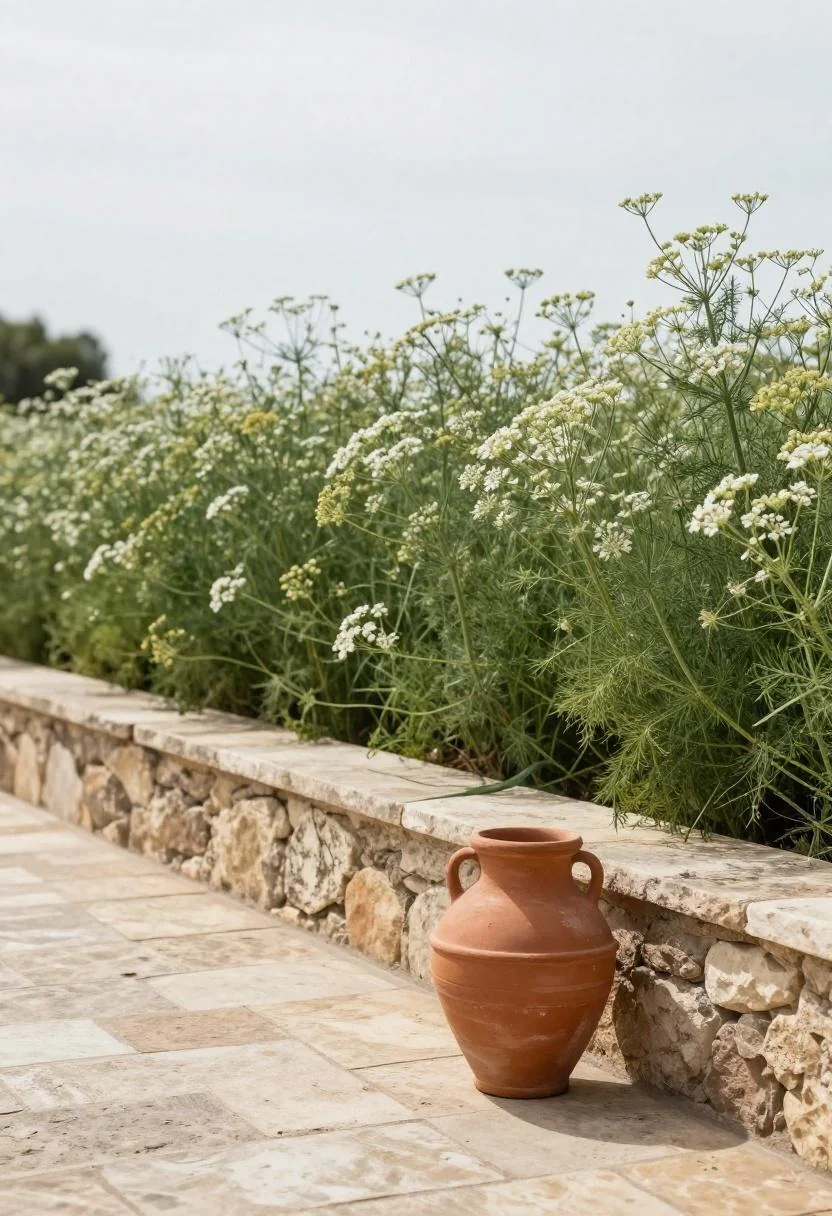
Chartreuse euphorbia in a terracotta urn against stone. The colors are almost aggressive together — that wasabi-green against the warm burnt orange — and yet it works because the materials are ancient and the scale is right. The urn needs to be large. A small pot with euphorbia in it just looks like a houseplant that wandered outside.
The stone wall is doing the real work here, though. It provides heat, context, and age. If you don’t have one, a single course of reclaimed sandstone as edging can give you the same warmth at a fraction of the cost. Large terracotta urns are worth sourcing from garden antique dealers if you can — the weight alone tells you they’re real.
How to Sit in It
A garden you can’t comfortably inhabit is a garden you’ll stop caring about. The seating question — where, what kind, how casual — is more important than most planting decisions because it determines how you actually use the space.
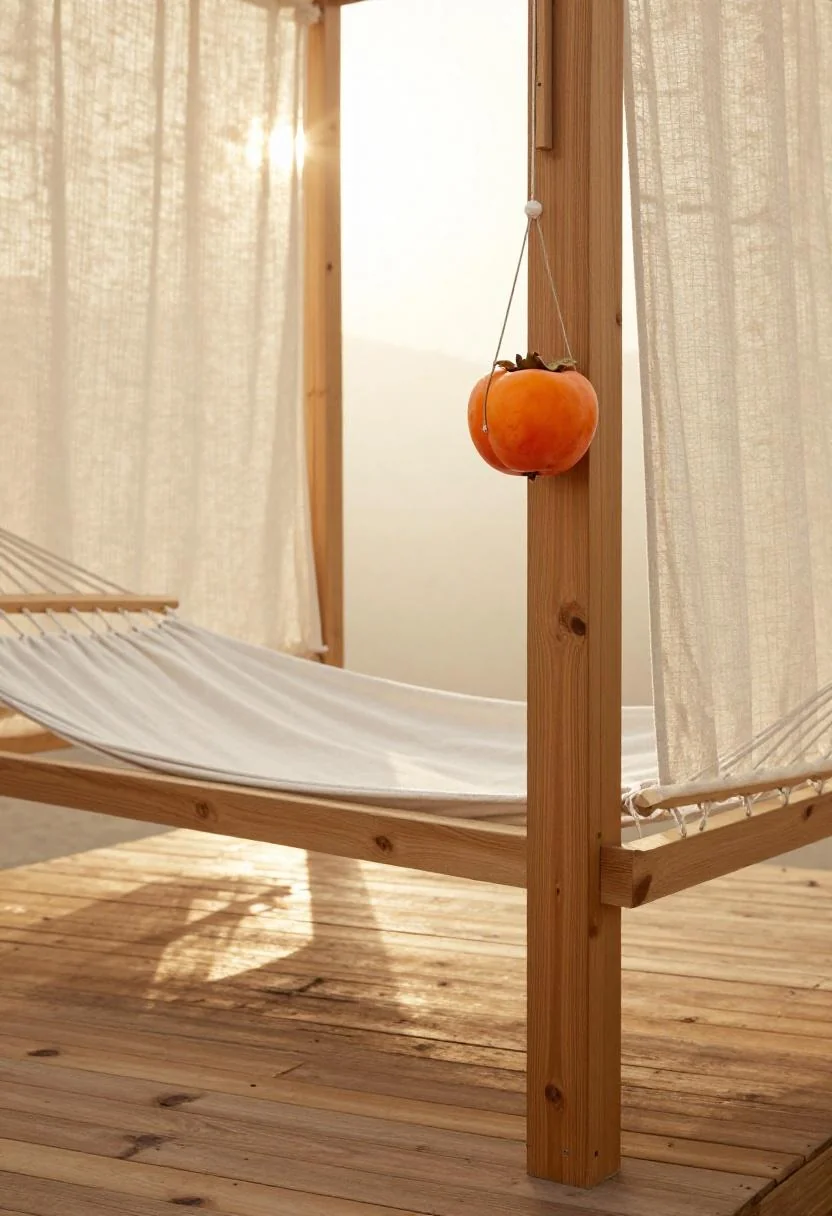
The hammock on a cedar deck at golden hour is almost an archetype at this point — but it’s an archetype because it’s correct. Linen. A persimmon lantern burning low. The deck not stained or painted, just weathered to silver-grey. Nothing here matches, and everything here belongs together.
This is the boho eclectic logic applied to outdoor living: the lantern came from somewhere, the hammock came from somewhere else, the cedar deck was always there. The eye reads it as collected rather than decorated. That’s the goal.
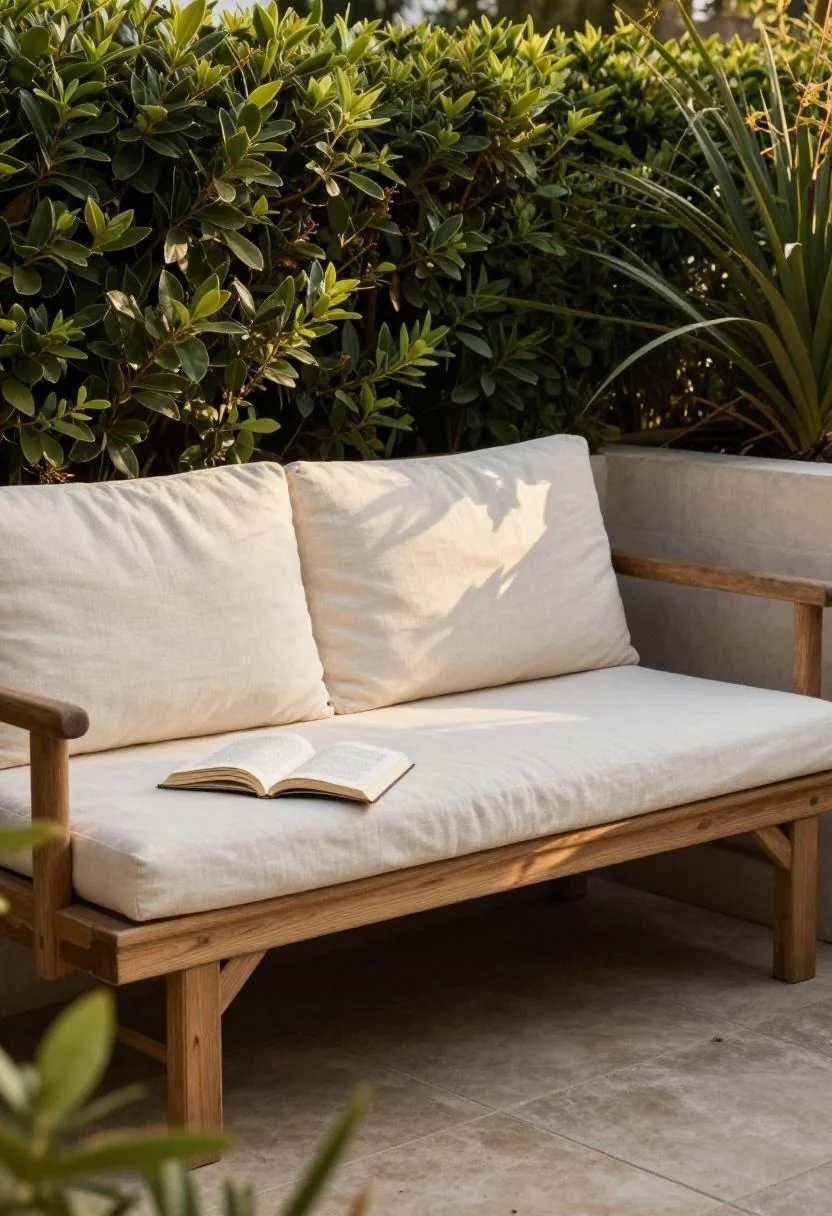
Or there’s this: a teak bench pressed into a hedge, a cream linen cushion, a book left open like you only just stepped away. The restraint here is the whole point. No throw pillows. No side table. No string of lights fighting for attention. The hedge does the enclosing, the bench does the sitting, the cushion does the softening. Done.
Paths Made of History
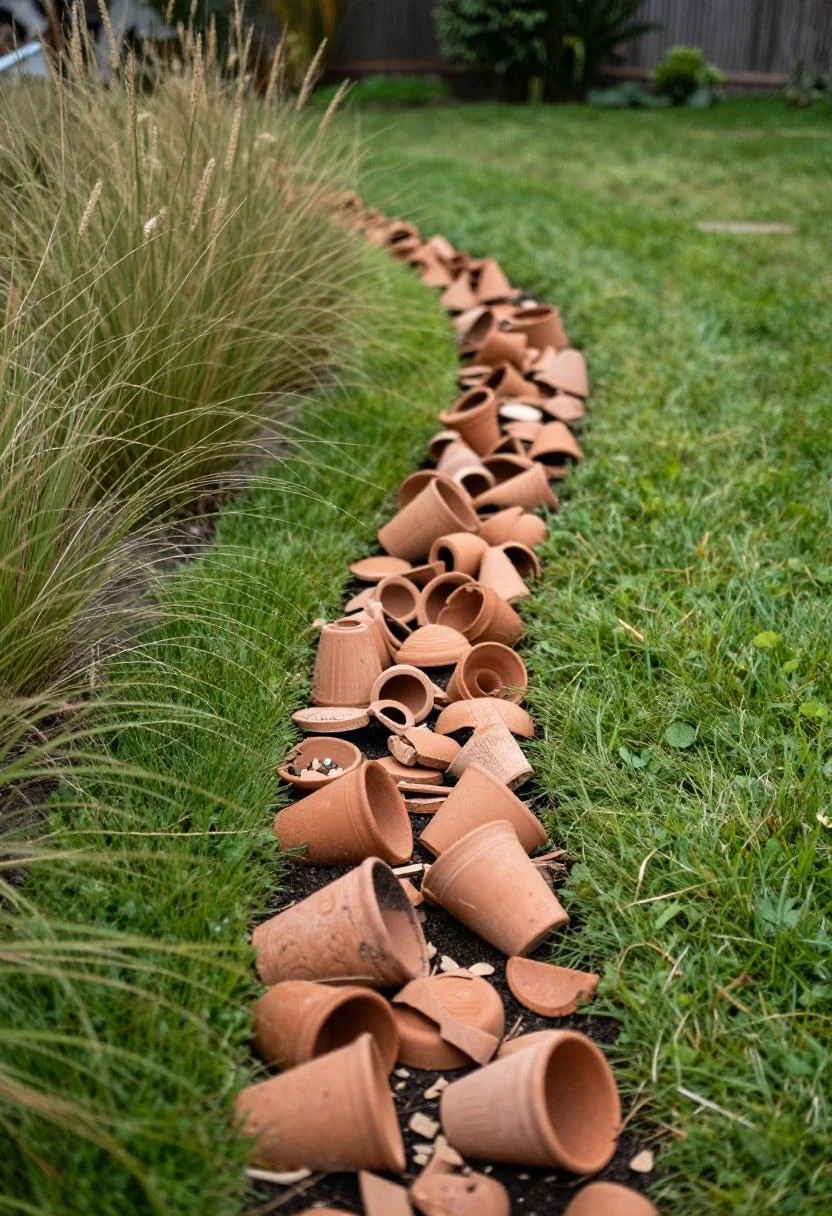
Terracotta shard edging — broken pots reused as path borders — is one of those solutions that looks like an aesthetic choice and is also genuinely practical. It holds the grass edge in place, it references the warm palette of the planting, and it has the unmistakable quality of something that happened over time rather than on a Saturday afternoon. The winding path it borders doesn’t go anywhere particularly important. That’s fine. The walking is the point. Our guide to cheap lawn edging ideas that look expensive covers more approaches like this — materials that work harder than they cost.
The Meadow Patch: Small, Specific, Deliberate
You don’t need a meadow. You need a patch. A corner where the mowing stops, where verbena and fennel and ox-eye daisies are allowed to figure it out among themselves. The key is committing to it — not half-committing, where it looks like you forgot to mow. Clearly defined edges around an intentionally wild interior read as a design decision. Vague edges around vague planting reads as neglect.
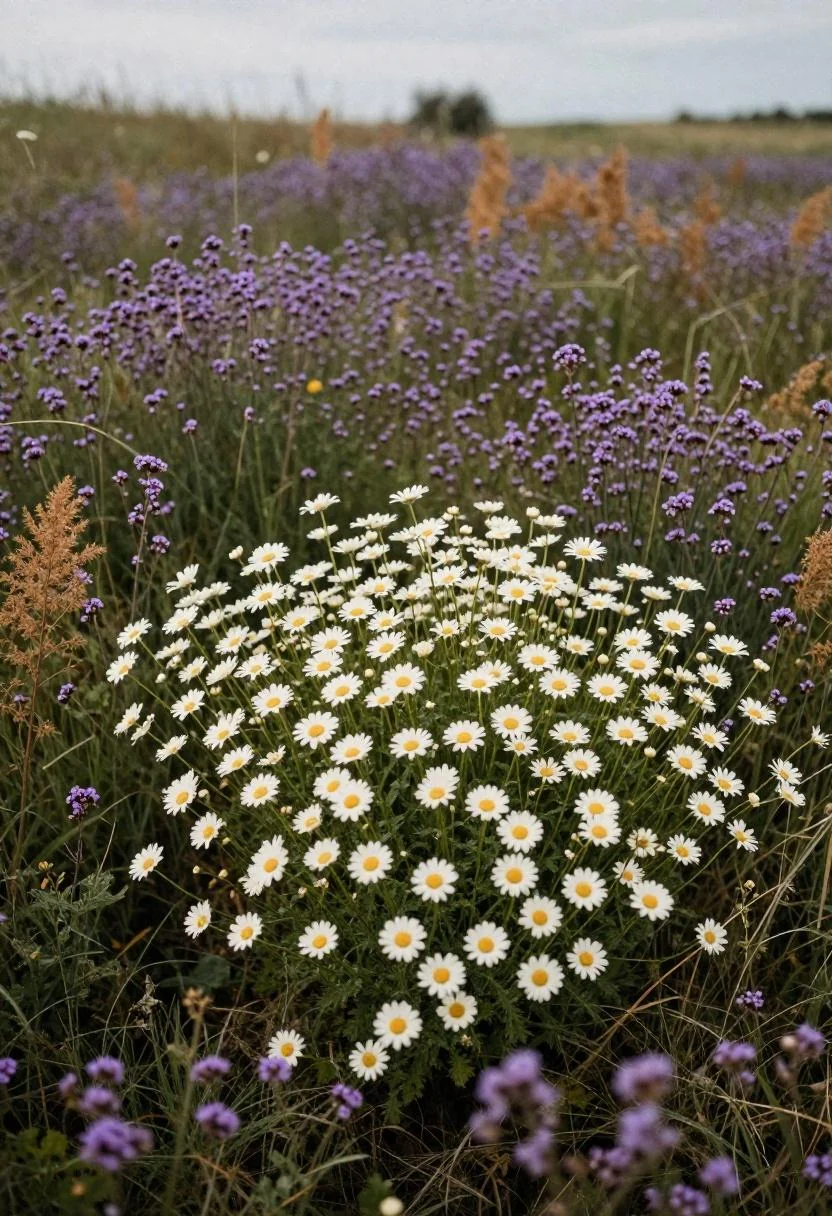
Cream daisies through verbena and fennel — that frothy, layered, slightly chaotic look that takes three seasons to establish and then runs itself. The fennel is the structure, the verbena is the color, the daisies are the punctuation. If this sounds like something you’d like to attempt from scratch, our guide to how to plant a chaos garden that looks wildly beautiful covers exactly this process. Native wildflower seed mixes are the most cost-effective way to start — sow in autumn, thin in spring, be patient.
The Balcony That Thinks It’s a Garden
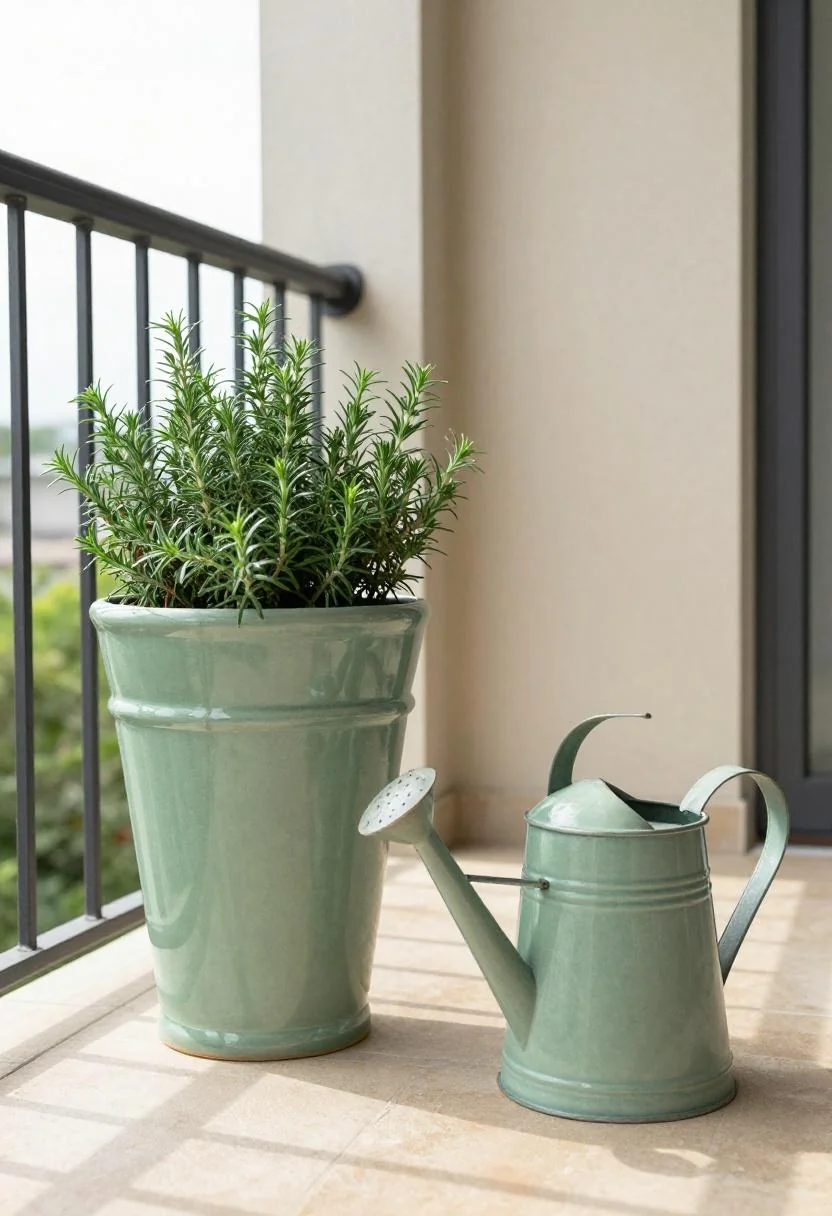
Can you do this with ten square feet? Yes. Absolutely yes. A sage-green ceramic planter of rosemary on a balcony rail, an iron watering can left there because that’s where it lives now — this is the same logic at small scale. The ceramic and the iron are doing the same textural work that terracotta and stone do in a larger space. The rosemary spills slightly over the edge. The watering can has a dent in it. Nothing is new.
What would break this? A plastic planter. Matching everything. Buying the watering can because it photographs well rather than because you use it. The objects in this kind of space need to have actual jobs.
Rain Gardens: Where Function Becomes Form
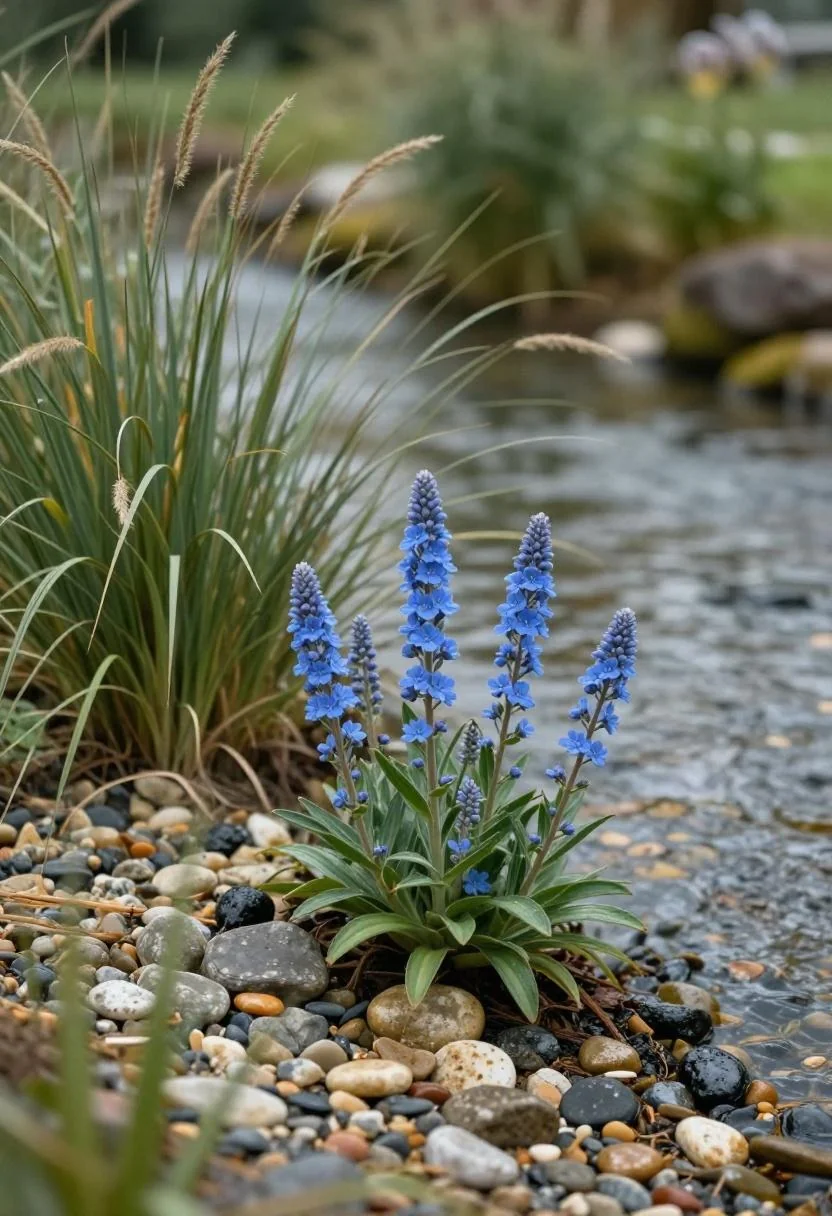
The rain garden is — genuinely, practically — one of the smartest things you can put in a residential outdoor space. A shallow depression planted with moisture-tolerant species that slows and filters runoff. Cool-blue veronica spikes rising from river pebbles under grey-diffused light. It looks like it was placed there by someone with taste. It was placed there by someone with a drainage problem, which is arguably better. If your yard has wet corners or compaction issues, our guide to smart drainage ideas to fix a soggy yard pairs well with this planting approach.
The river pebbles are key — they move the aesthetic from “muddy low spot” to “considered water feature.” As Elle has noted, the most interesting garden design happening right now takes ecological problems seriously and solves them beautifully.
Evening. Fire. Slate.
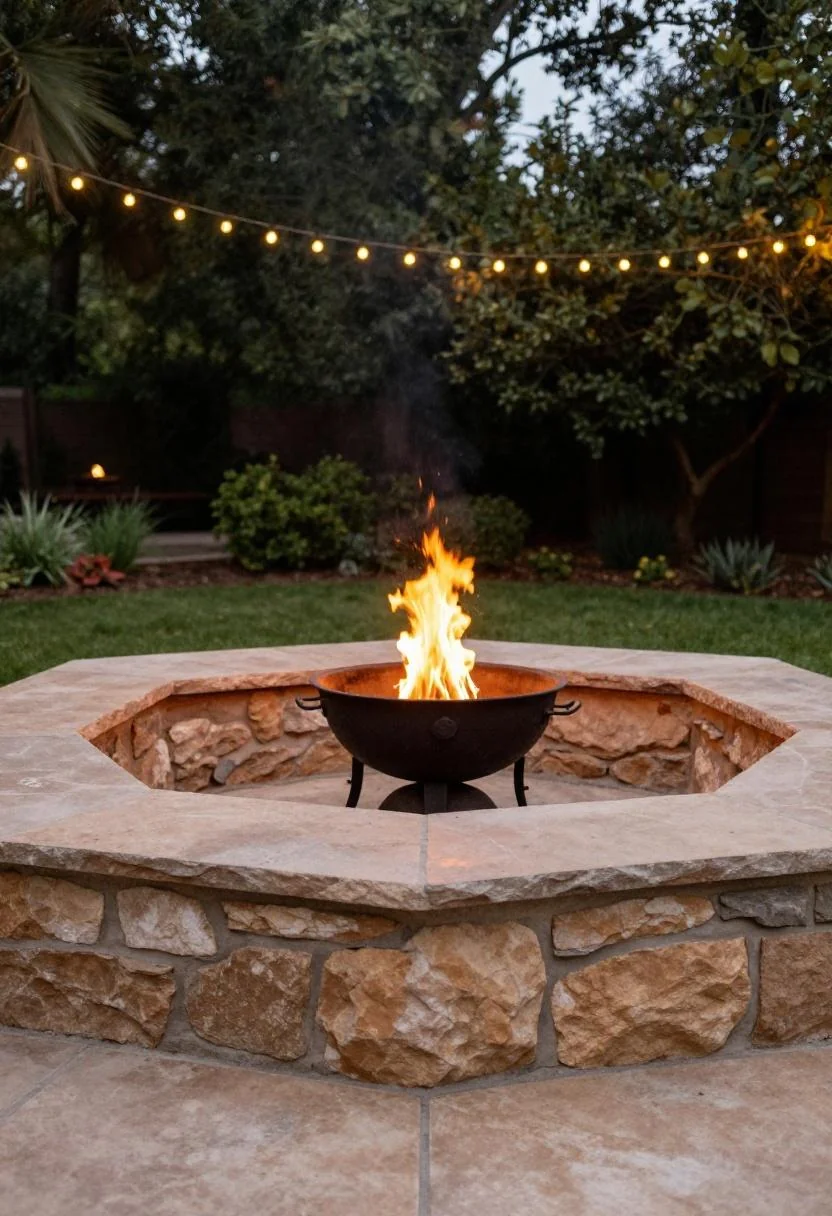
The garden at dusk is a different room entirely. A slate ledge. A cast-iron fire basket. String lights that are doing their job without overpowering everything else. This combination — the plum-dark palette, the warm glow, the weight of the iron against the cold slate — is the outdoor equivalent of a well-edited sitting room. Nothing fights for attention. The fire wins, as it should.
The fire basket is worth the investment. It anchors the space, it gives an excuse to stay outside past the point when you’d otherwise go in, and it looks right in a way that fire pits with lids and grates and accessories often don’t. Cast-iron fire baskets aged well before you owned them and will continue after. For more on this kind of evening setup, see our guide to outdoor fire pit area ideas.
What Moss Knows
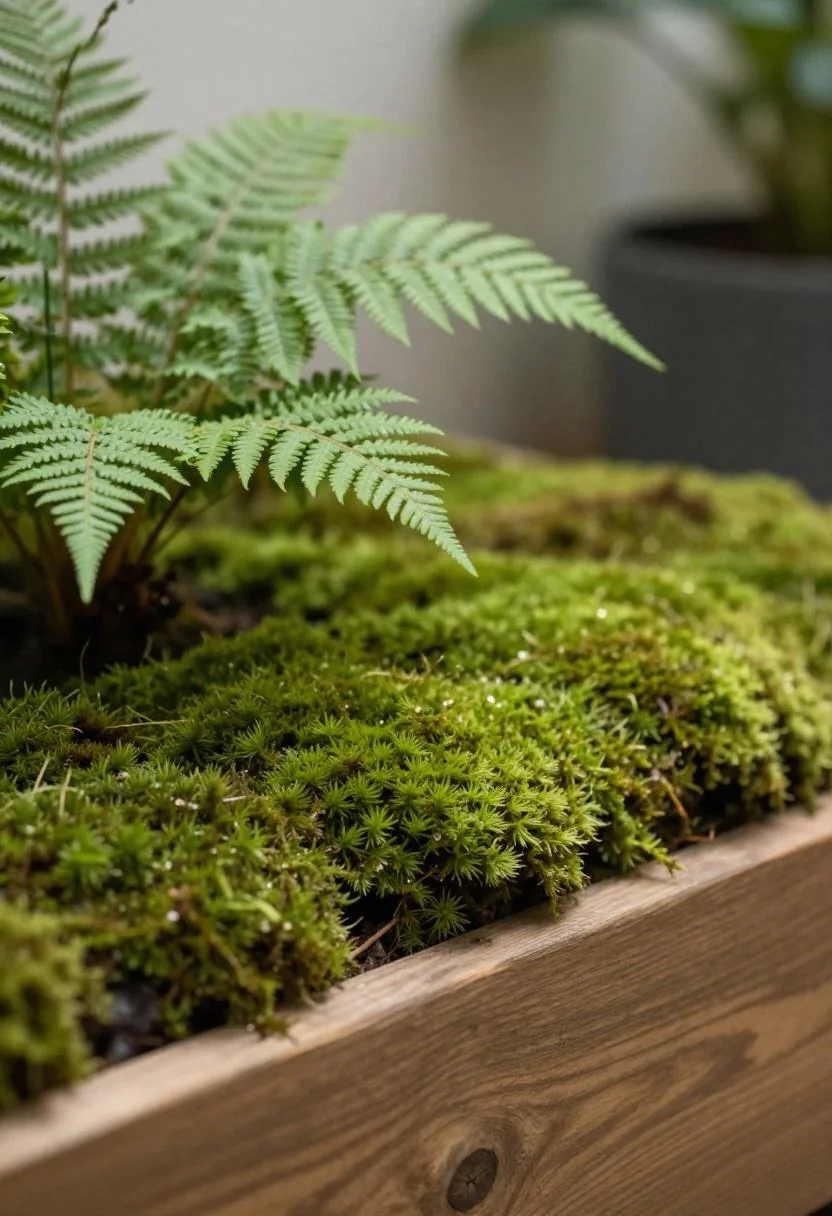
Moss takes time to arrive. That’s why you can’t buy it and have it look right — or rather, you can buy it, but the convincing part happens over the following seasons when it settles into the timber and the stone and starts to blur the edges between built and grown. Jade moss draping the corner of a raised bed, an unfurling fern choosing to root in the same spot: this is the garden making its own decisions. Let it.
Tropical Scale, Naturalistic Logic
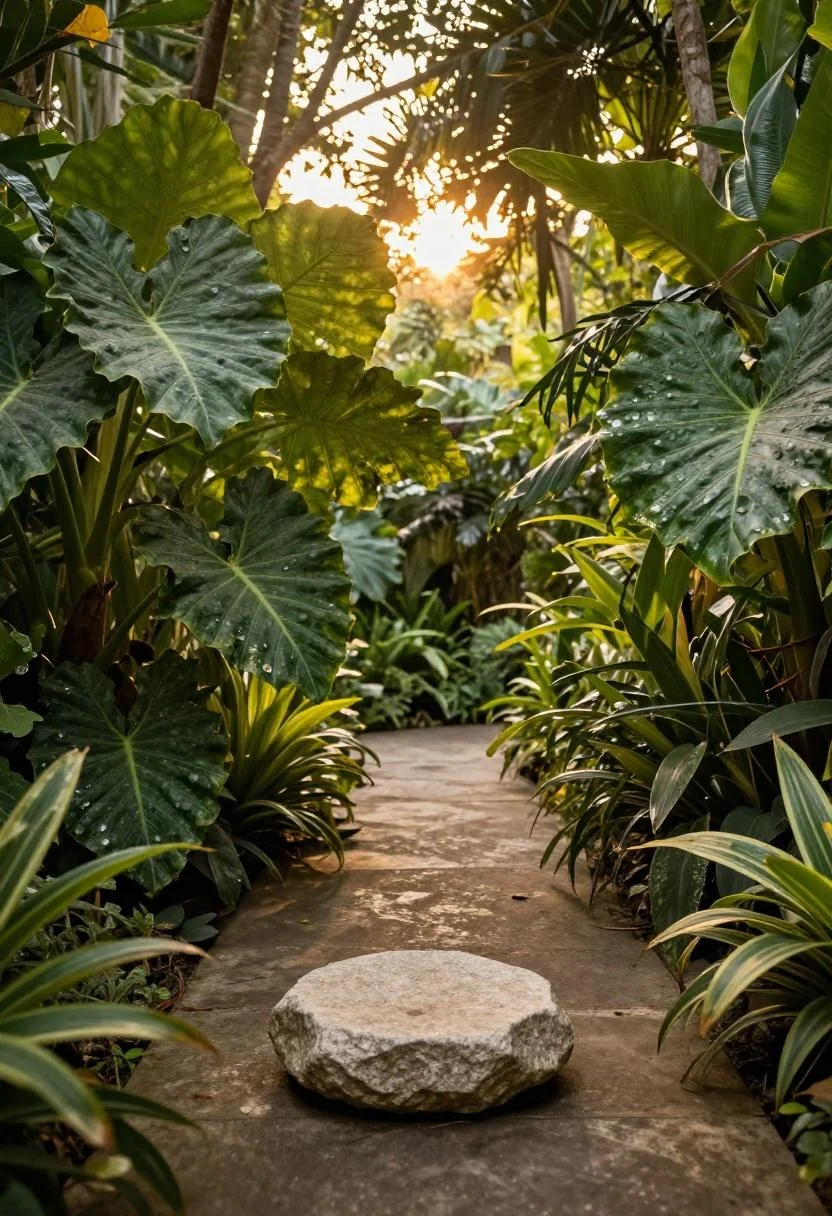
Scale disruption — that’s what elephant ears do. Giant chartreuse leaves framing a basalt stepping stone in filtered tropical light. The wasabi-green is almost aggressive, and that’s entirely the point. In a naturalistic garden, you need moments of genuine visual surprise. Not every plant should be at the same height, in the same palette, making the same quiet statement. Some things should be loud.
The basalt stone grounds it. Without that cool, dark anchor, the oversized leaves would float. With it, the whole composition settles. Giant colocasia bulbs are reliably dramatic and — depending on your climate — will come back year after year with minimal encouragement.
Gravel, Concrete, and the Beauty of the Unexpected
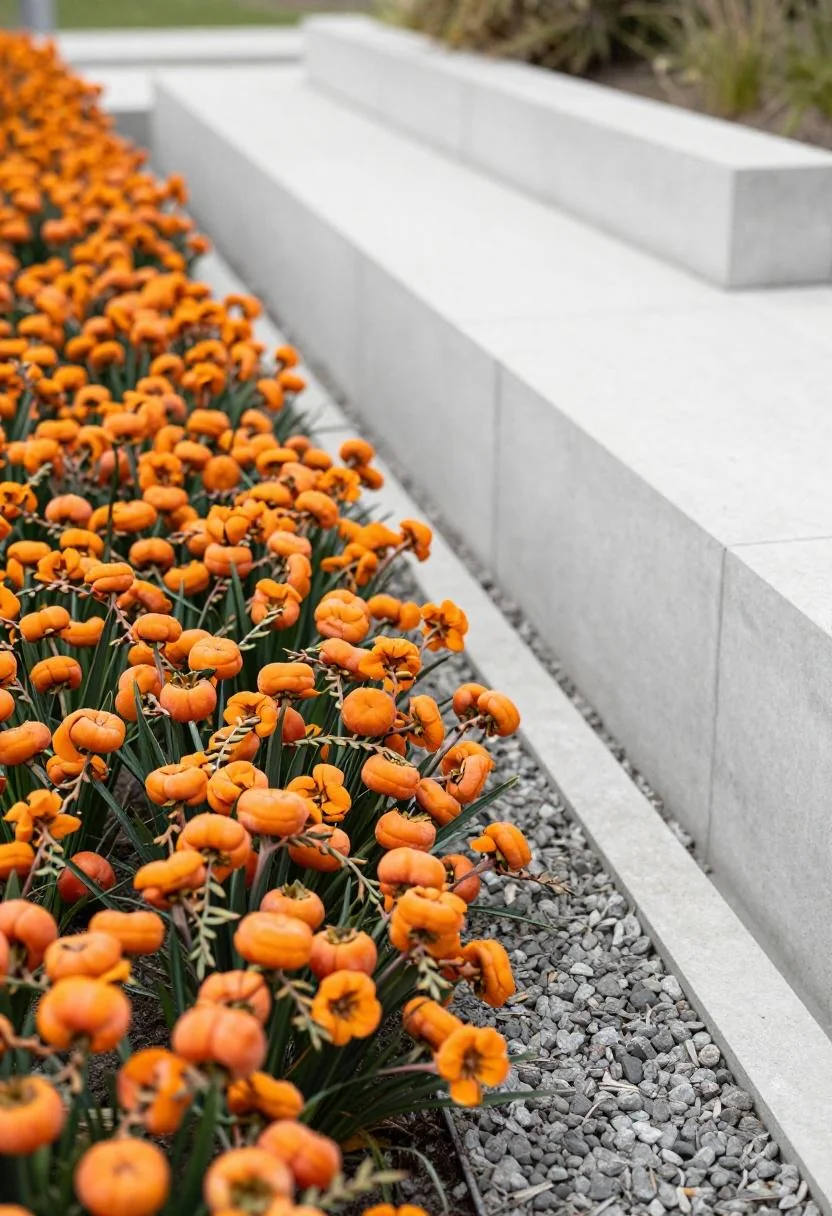
What happens when you put persimmon crocosmia against raw concrete? Something that looks like it should be in a gallery, not a garden. The orange-red spikes against grey is a combination that breaks all the warm-palette rules and works because of it. The gravel at the base keeps the focus upward — no competing groundcover, no softening of the edges. The contrast is the statement.
Crocosmia is one of those plants that does everything without asking anything of you — it spreads, it self-supports, it blooms reliably in late summer when most other things have given up. Crocosmia ‘Lucifer’ corms are the classic choice and the correct one.
How to Get the Look: Building the Naturalistic Garden
Start with the hardscape. Path, edging, seating zone. Get these right first, because they don’t change. The planting is forgiving — it can be edited season by season. The bones aren’t.
Choose materials that age. Terracotta, timber, slate, iron, gravel. Nothing that looks the same in five years as it did the day you bought it. The patina is part of the design, not a failure of maintenance.
Plant in layers. Ground cover, mid-height drifts, tall structural plants, the occasional giant that disrupts the scale. Each layer should have something going on in every season — not necessarily flowering, but structurally present.
Let things self-seed. The plants that choose their own location are almost always better placed than the ones you put there deliberately. This is not a metaphor. It’s just how it works.
Resist the urge to fill every gap. Negative space in a garden — a sweep of gravel, a clear path, a bench with nothing around it — is what gives the planted areas room to read as intentional rather than chaotic.
Making It Your Own
Ask yourself what your garden currently says when you walk into it. Busy? Trying too hard? Nothing in particular? The naturalistic garden has a very specific voice — calm, layered, patient, slightly eccentric — and the question is how much of your existing space can be edited toward that, rather than rebuilt from scratch.
The boho eclectic sensibility, applied here, means: don’t source everything at once. The vintage rug that came into the house and turned out to work better outside. The mismatched pots collected over years. The timber bench from the skip that you sanded back. None of it matching. All of it yours.
This kind of garden doesn’t announce itself. It reveals itself — slowly, season by season, as plants fill in and materials age and the decisions you made at the start start to look like they were always inevitable. That’s the goal. The restraint here is the whole point.
The Palette That Holds It Together
The colors running through all of this — cool blues, plum darks, wasabi greens, warm persimmons, cream whites, sage, jade, deep terracotta — aren’t a mood board. They’re the natural palette of a garden that leans into its season rather than fighting it. The blue salvia and veronica carry the cool weight. The crocosmia and lanterns bring the fire. The creams and sages keep it from tipping into something louder than it wants to be.
Strip away the trend and ask: would this feel right in five years? Yes. Because none of it is trend-dependent. These are the colors of stone and earth and plant and evening light. They were here before garden design existed as a concept, and they’ll outlast whatever comes next.
This post contains affiliate links. We may earn a commission at no extra cost to you.
Images in this article were created with AI assistance.