There’s something quietly radical about choosing a butterfly for your walls. Not the mass-produced, shrink-wrapped version you’d find at a big-box store — but a piece that carries intention. A framed specimen with a story. A hand-thrown clay sculpture. A macramé hanging made from natural fibers by someone who thought about where the cord came from. Butterfly wall art sits at this interesting intersection of nature-worship and home design, and right now it’s being done in ways that are genuinely worth paying attention to. If you’re drawn to the farmhouse-meets-real-life aesthetic — reclaimed wood, linen, honest materials — then this particular corner of decor has a lot to offer.
For the Living Room: Art That Earns Its Place
The living room is where you make choices that have to hold up over years, not seasons. Buy thoughtfully here — or don’t buy at all.
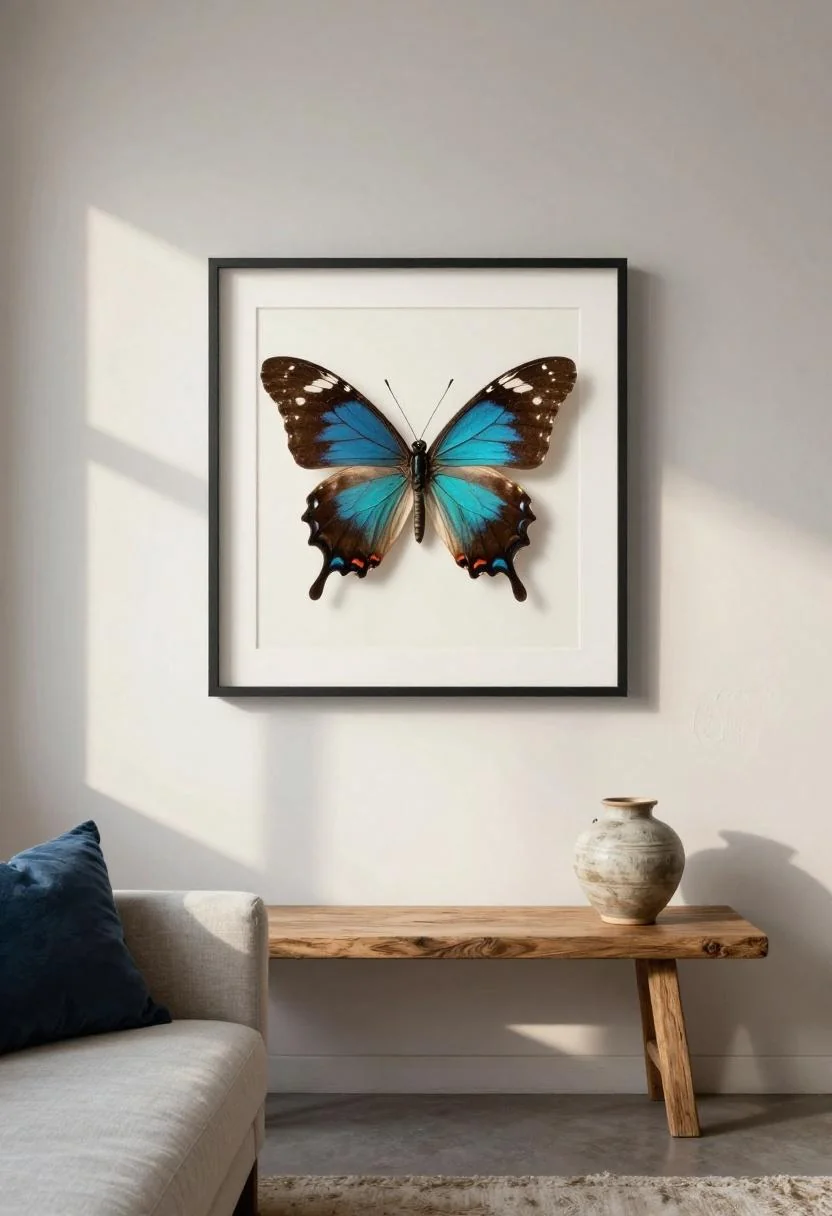
Framed butterfly specimens have a long history in natural history collections — which is exactly why they feel so at home above an oak bench rather than a gallery wall in a contemporary loft. This cool blue linen arrangement keeps things airy without tipping into precious. Before you buy new, consider this: natural history fairs and estate sales regularly surface antique entomology frames at a fraction of boutique prices. The provenance adds something no new piece can fake. Browse framed butterfly specimens
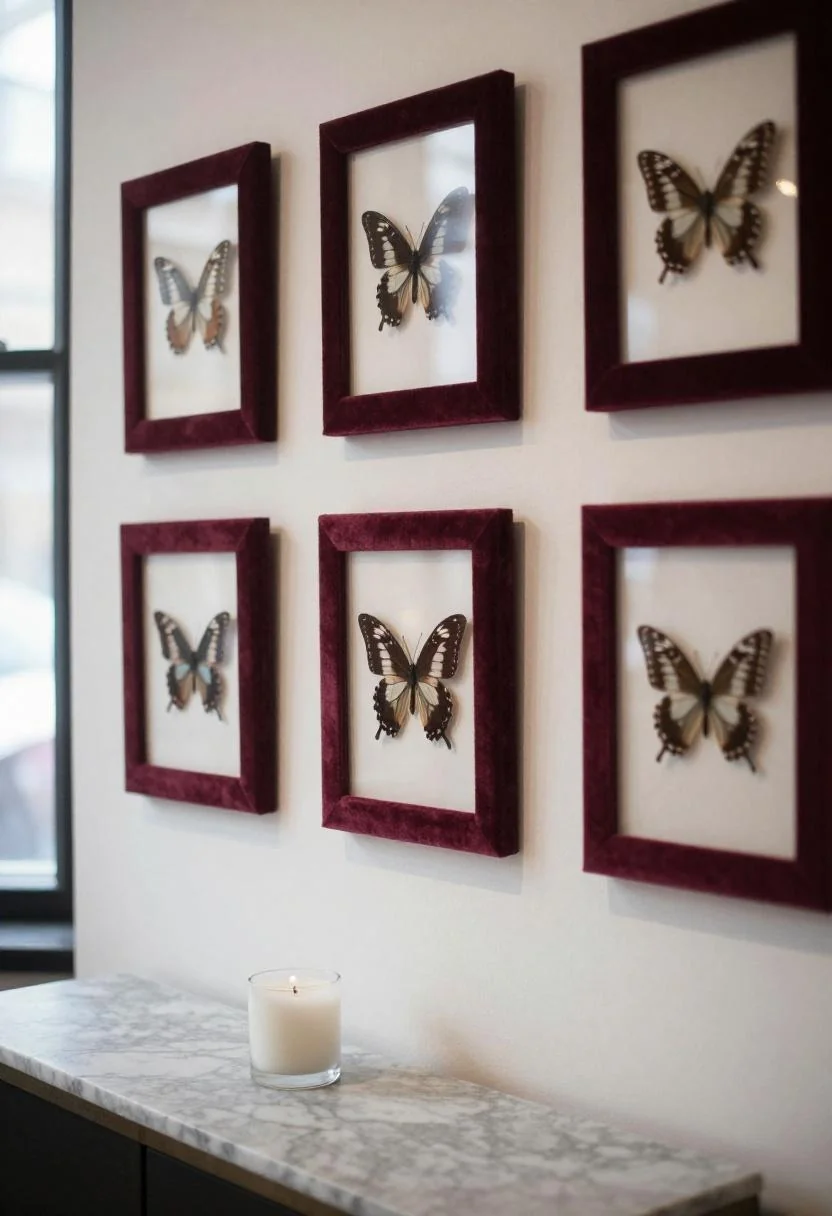
Plum noir velvet-lined shadow boxes. Stop there for a second. Velvet lining is one of those material choices that costs almost nothing extra but reads as deeply considered — and when it’s the color of a late-evening sky, the effect is genuinely moody in the best way. Clustered above a marble side table, this grouping works because it commits. No timid single frame here. The marble itself, incidentally, is worth sourcing secondhand — reclaimed marble slabs show up in salvage yards surprisingly often, and a small side table topped with a rescued piece has more character than anything you’d order flat-packed.
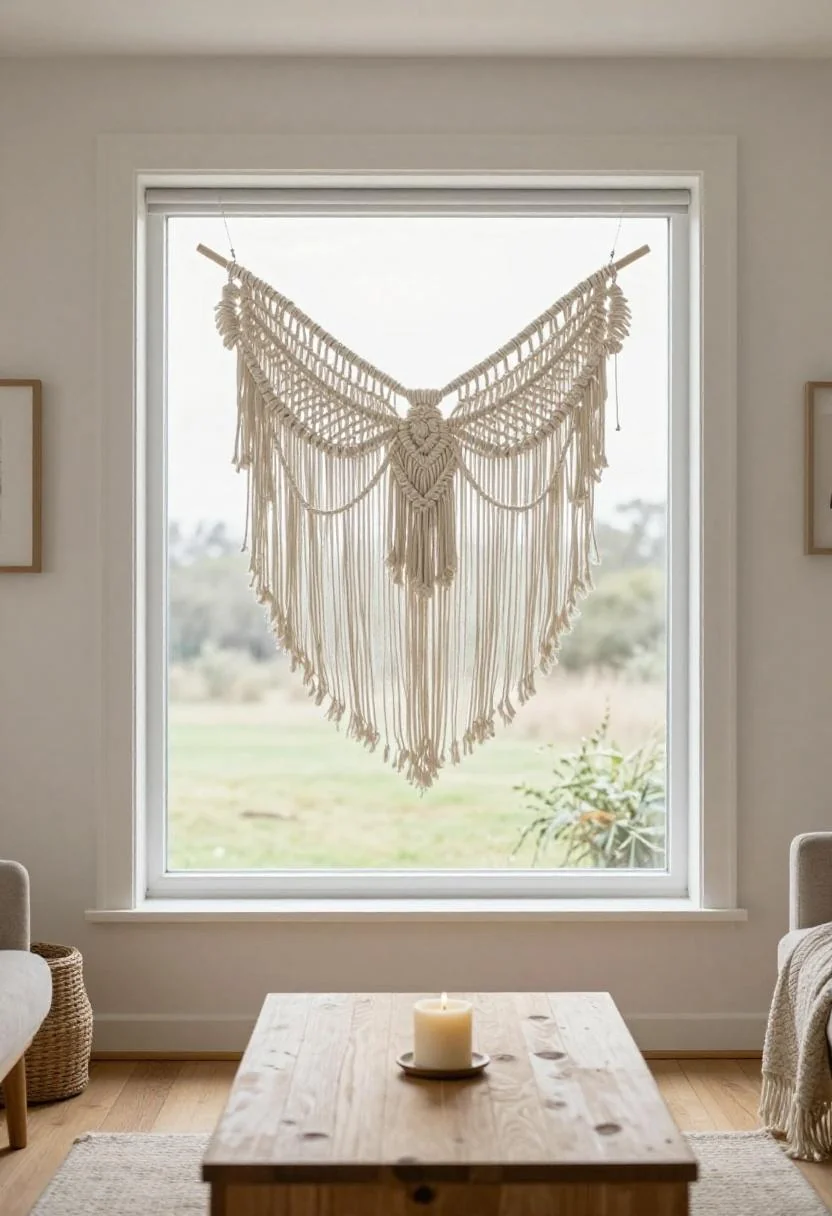
Macramé gets dismissed sometimes as a ’70s relic. That’s a mistake. Natural cotton or hemp cord, knotted by hand into a butterfly silhouette, is about as low-impact as textile art gets — no dyes, no synthetic fibers, no packaging. Above a birch coffee table with a beeswax candle burning nearby, this cream white hanging creates warmth without clutter. Birch is a fast-growing wood, which matters if you’re thinking about sourcing. The beeswax candle is non-negotiable — paraffin fumes in an enclosed room aren’t something we need to be romanticizing. Shop macramé butterfly hangings
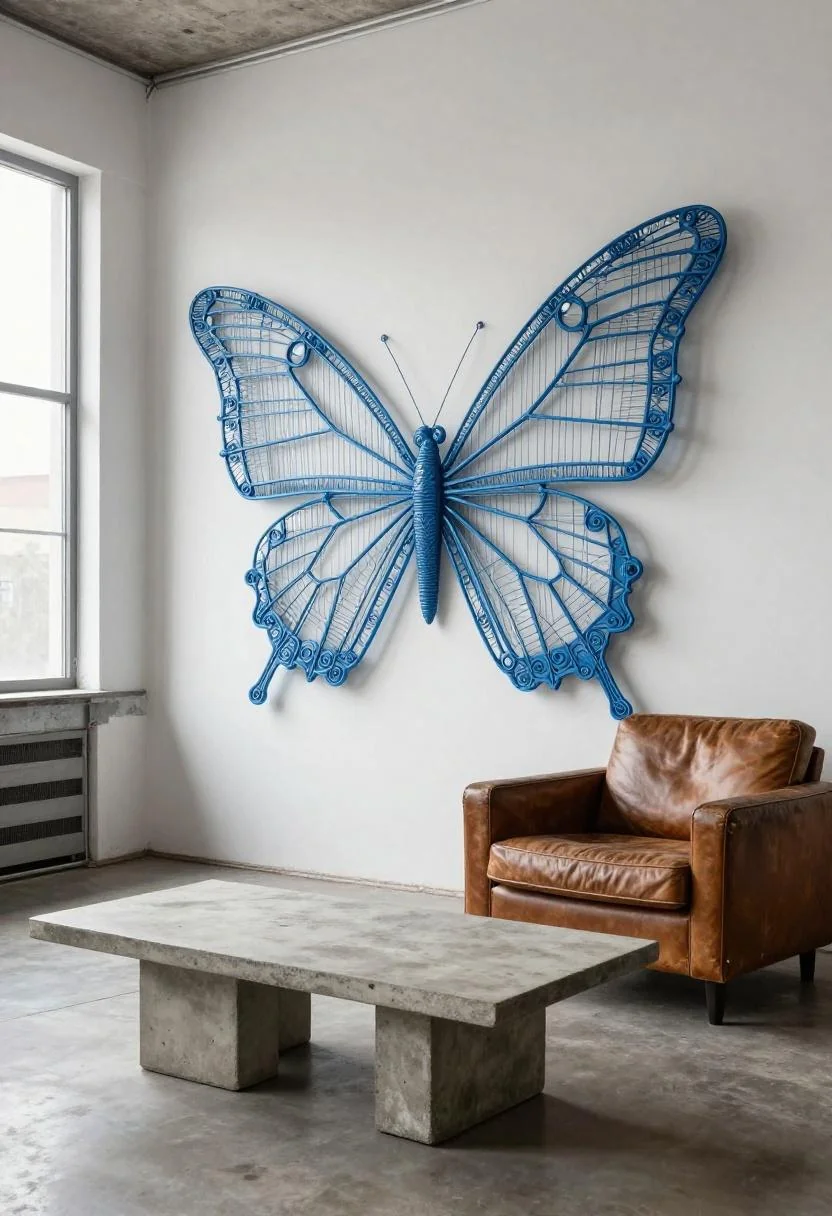
This one surprised me — in a good way. A cool blue metal wire butterfly sculpture above a concrete coffee table shouldn’t work in the farmhouse-adjacent world, but it does, because wire sculpture is inherently honest. You can see exactly what it’s made of and how. No hidden material surprises. Concrete coffee tables, when cast locally by small artisans rather than imported in bulk, have a remarkably low transport footprint. As Elle Decor has pointed out, mixing industrial and organic materials is one of the more enduring ideas in interior design — and this combination makes that case quietly.
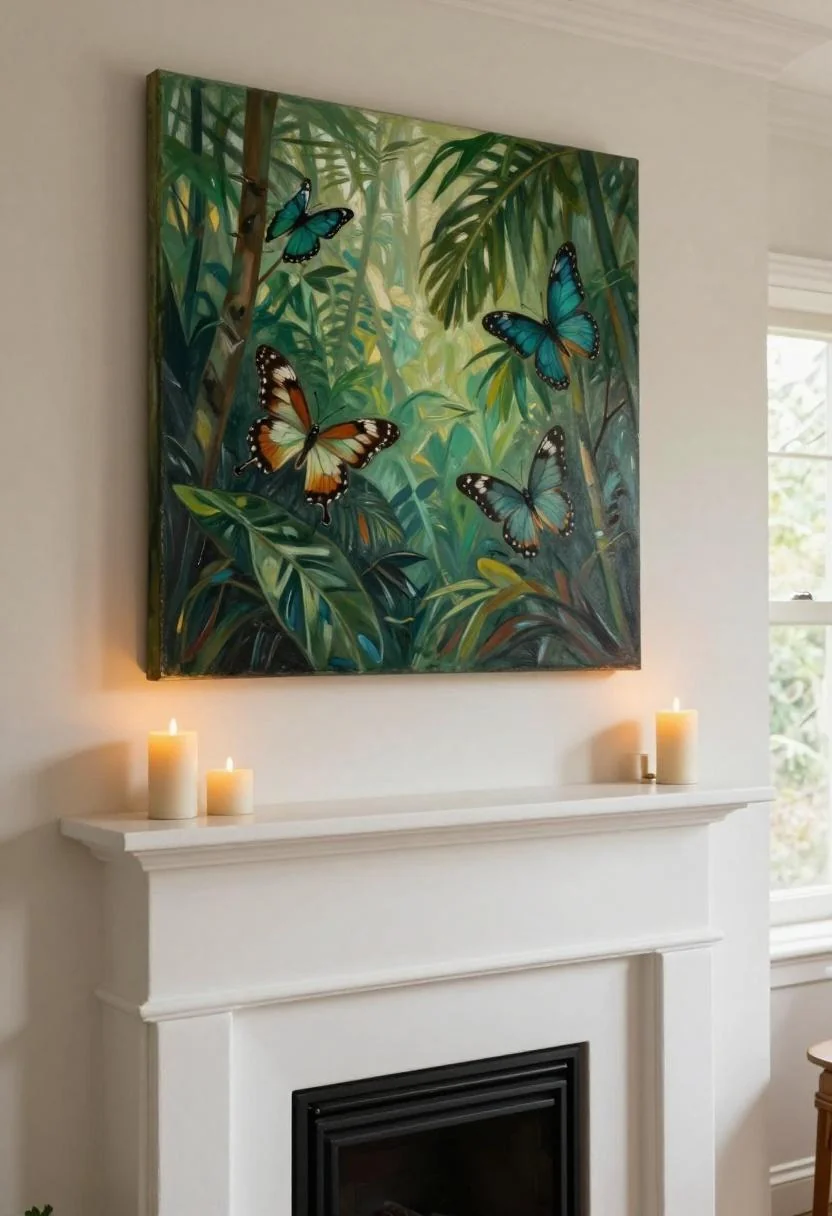
Jade green tropical butterfly oil painting above a white plaster fireplace mantel. The scale has to be right — and here it is. A large oil painting, especially one sourced from an emerging or local artist rather than a print-on-demand service, carries a different kind of energy. This piece has a past, and that’s the point. The white plaster mantel grounds it without competing. If you’re thinking about commissioning something similar, look at artists’ open studios before you look at online marketplaces. You’ll usually find better prices and you know exactly who made it. For more inspiration on bringing natural tones indoors, this spring color palette home decor guide covers the full spectrum beautifully.
Bedroom Retreats: Quieter Choices, Deeper Impact
The bedroom is where sustainability arguments tend to land hardest. You spend a third of your life there. What’s on the walls — and what it’s made of — actually matters in a way it might not in a hallway.
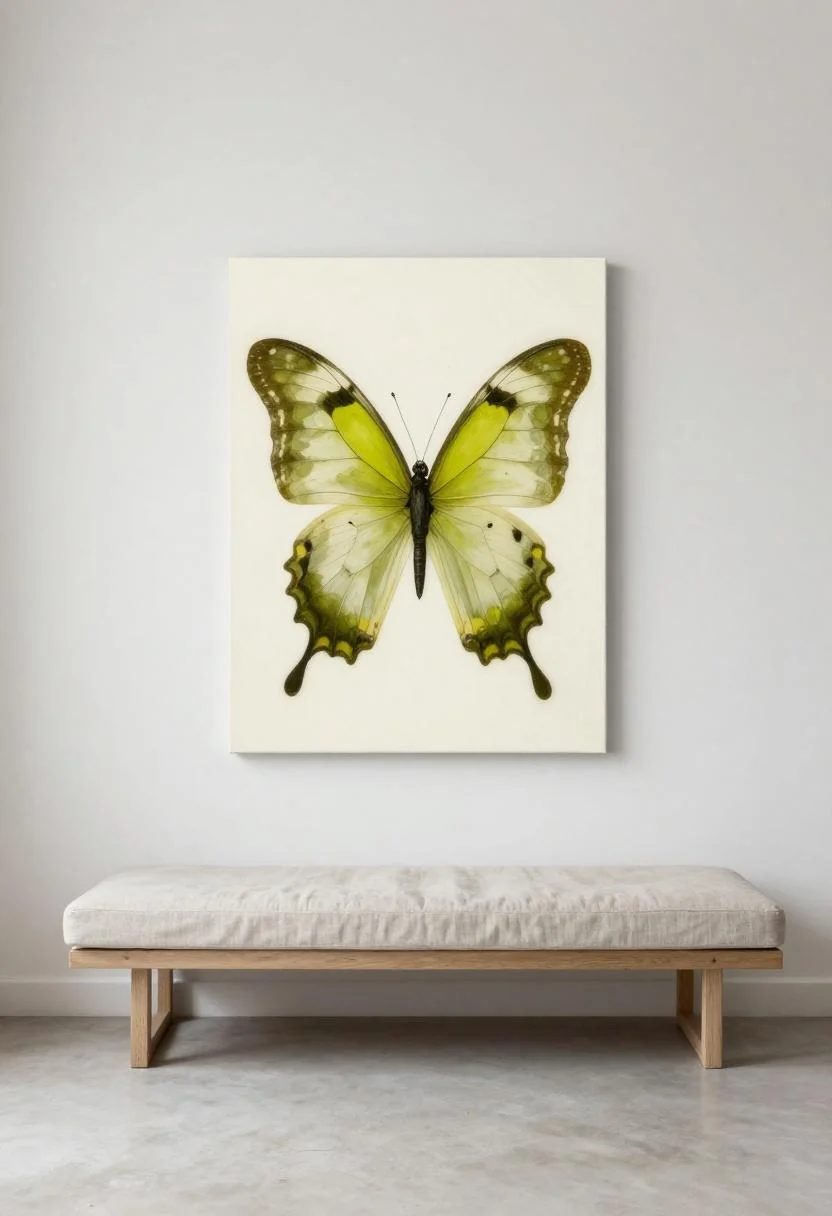
Wasabi. Not a color you see often described in home decor, and that’s part of the appeal. This abstract butterfly canvas in a sharp, green-yellow tone above a linen cushion reading nook bench is the kind of piece that requires confidence. Linen, as a material, is one of the most sustainably produced natural textiles available — it needs minimal water and no pesticides when grown well. The reading nook framing here does something smart: it gives the art a purpose beyond decoration. You sit beneath it. You live with it daily. That’s the relationship worth building with a piece of art. Find abstract butterfly canvas prints
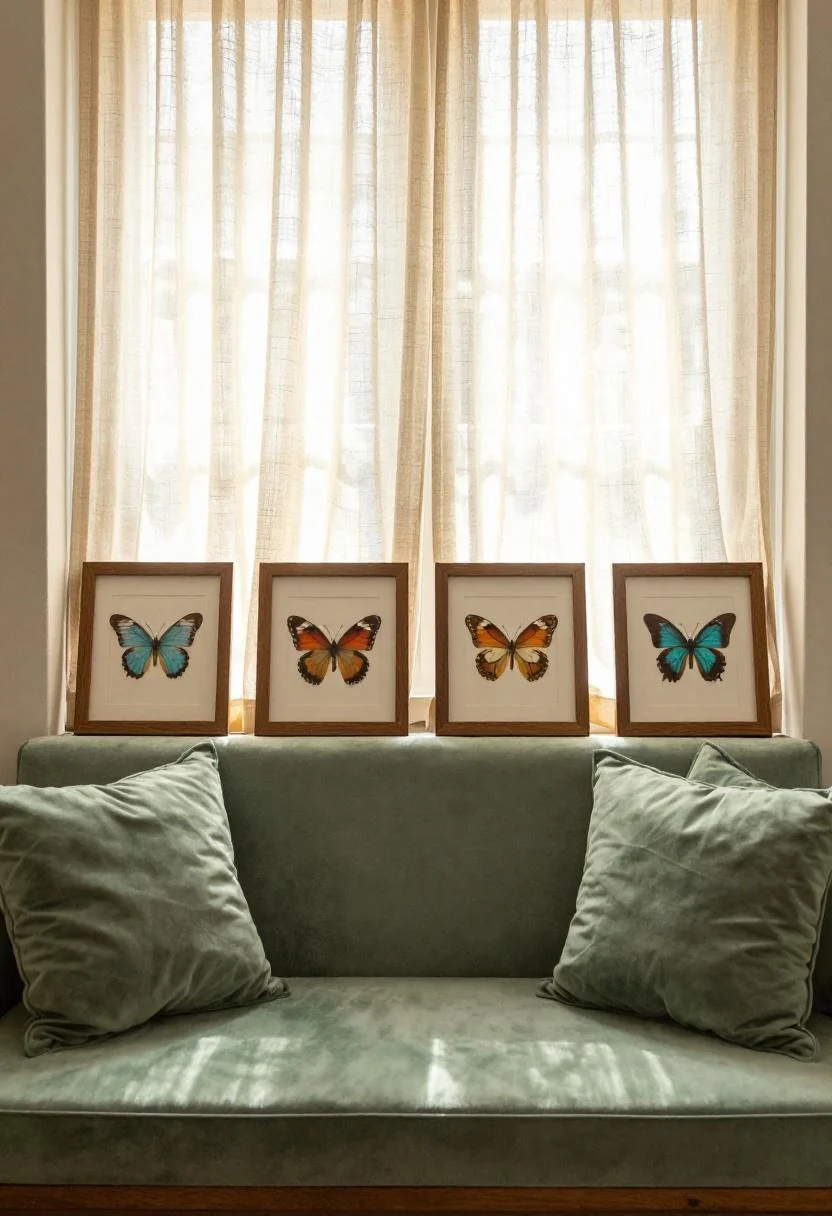
A row of butterfly watercolor frames above sage green window seat cushions is the bedroom idea I keep coming back to. Watercolors printed on cotton rag paper — not synthetic coated stock — age gracefully and the paper itself is compostable at end of life. Sage green is having its cultural moment right now, and I understand why: it’s the color of lichen on old stone, of kitchen herbs, of something that doesn’t need to announce itself. Shop butterfly watercolor frame sets
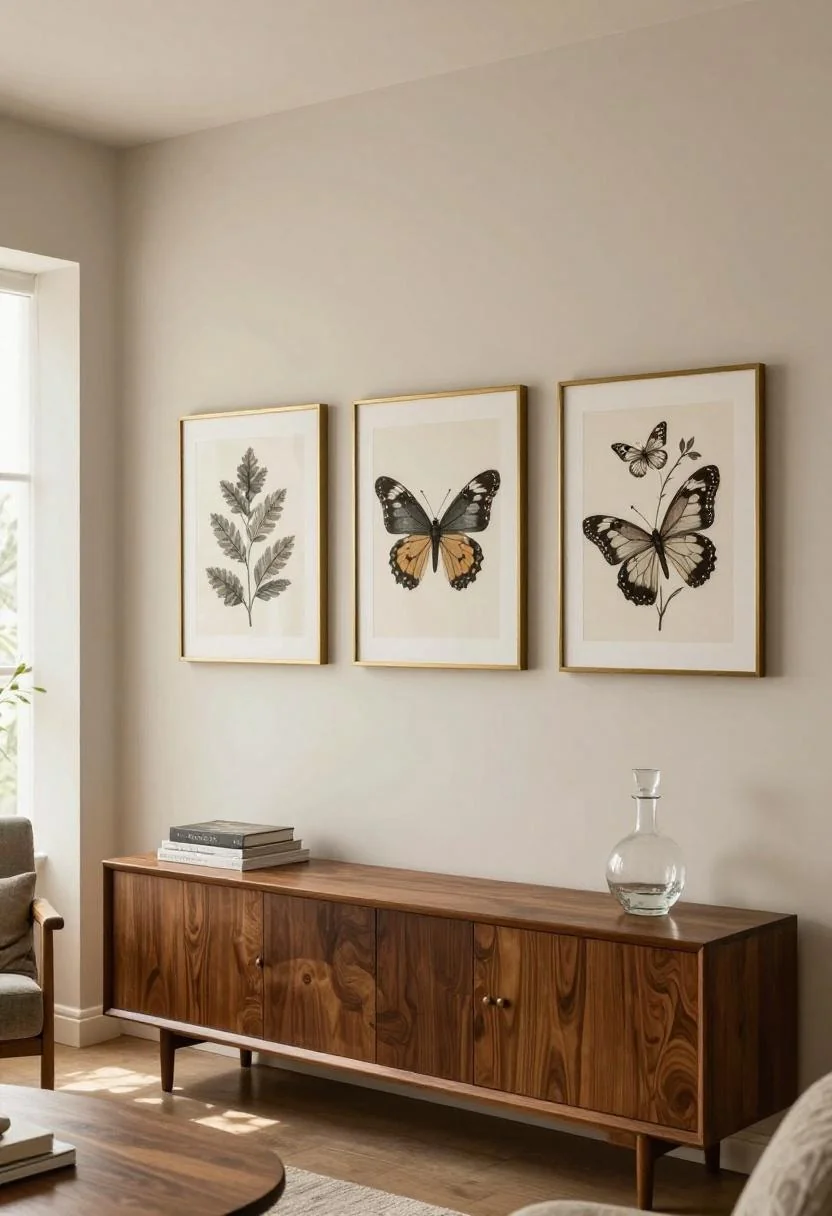
Persimmon. Warm, spiced, slightly daring for a bedroom but absolutely worth trying. Brass-framed butterfly botanicals on a persimmon accent wall above a walnut credenza — this is a room that has made decisions. Walnut is a denser, slower-growing hardwood than most, which means reclaimed walnut pieces are genuinely worth hunting for. Estate sales, local auctions, Facebook Marketplace. The greenest furniture is the kind you already own, or the kind someone else no longer wants. Brass frames patina over time rather than deteriorating — that’s a lifecycle win. Browse brass-framed butterfly botanicals
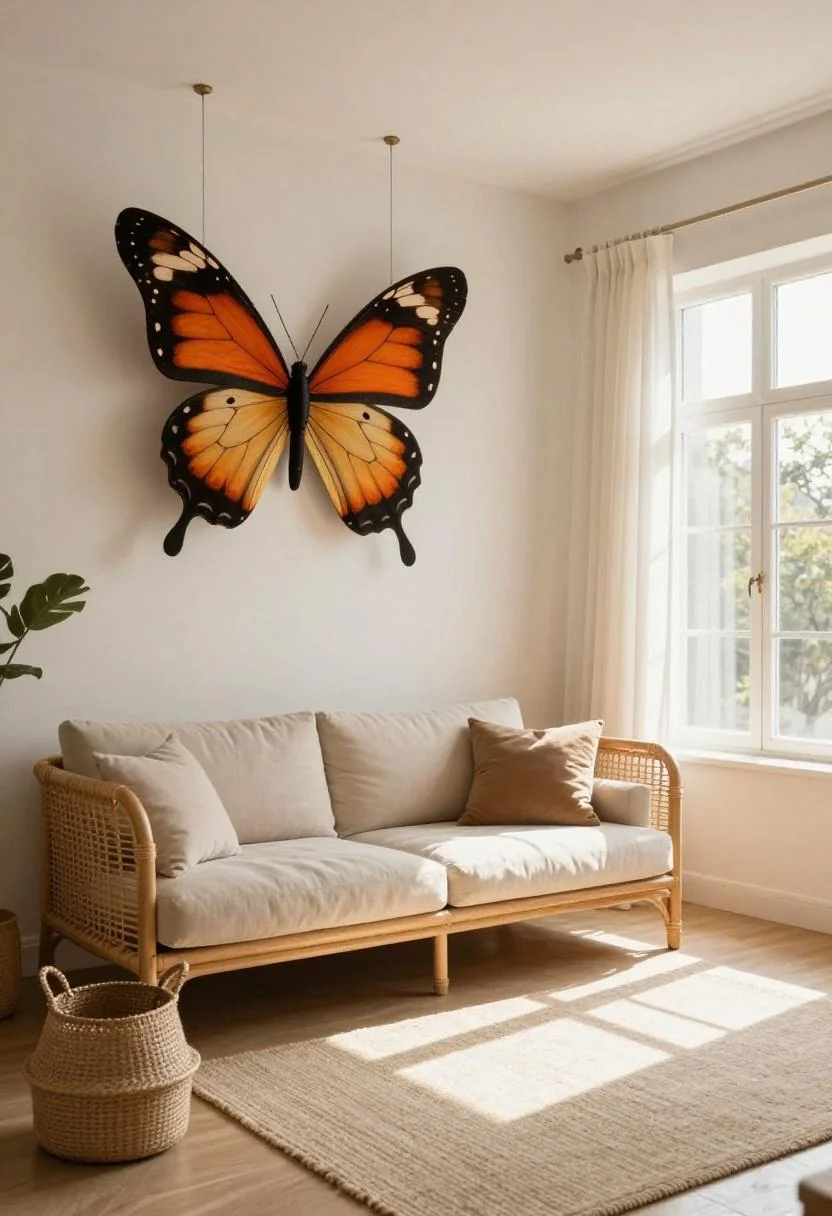
A persimmon silk butterfly mobile hanging from a ceiling beam above a rattan sofa. No drilling required on the walls — just a single ceiling hook, which most landlords will allow or can be patched on move-out for almost nothing. This works in rentals. Rattan is a climbing palm that grows fast and doesn’t require replanting after harvest, which puts it in genuinely good company from an environmental standpoint. The silk mobile catches light differently throughout the day, which makes it feel alive in a way a flat print never quite manages.
Kitchen & Dining: Unexpected, Intentional
Who said butterfly art belongs only in the living room or bedroom? Some of the most interesting placements happen in the kitchen — where the art has to hold its own against the chaos of daily life.
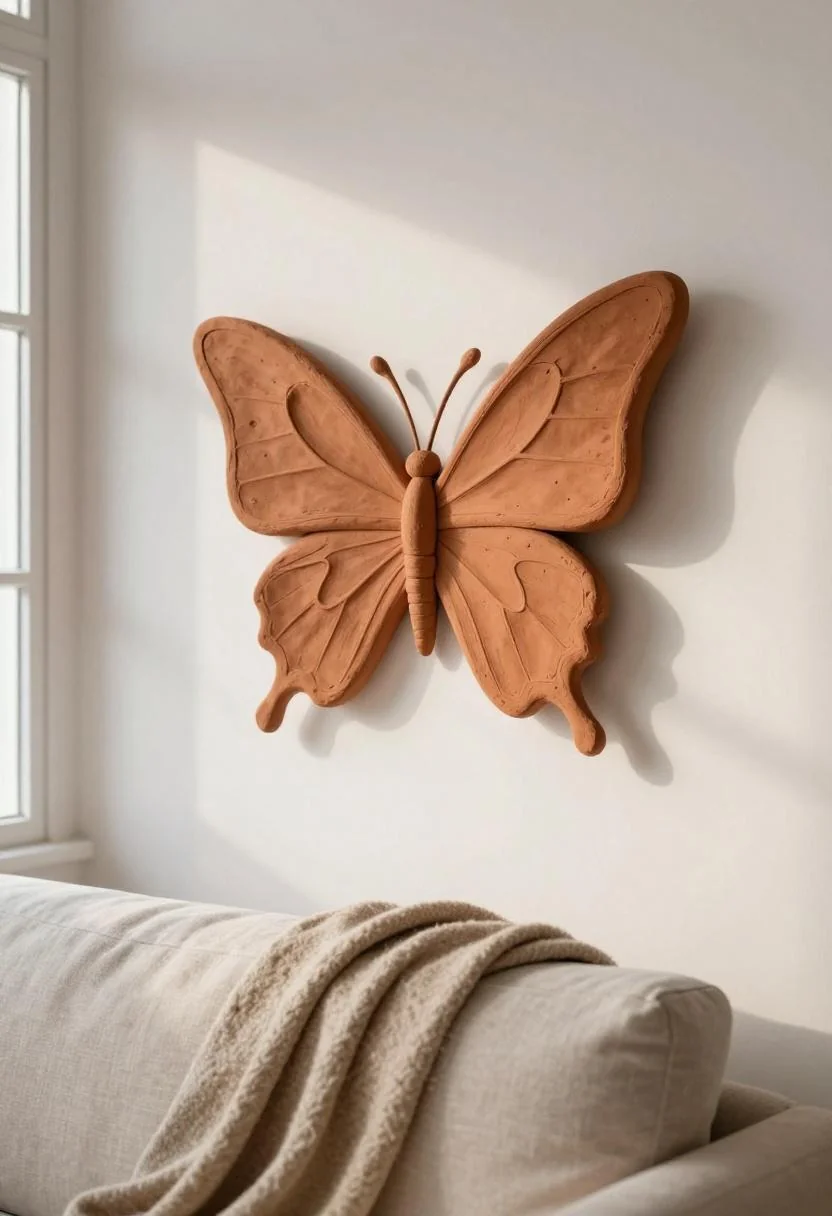
Terracotta clay butterfly wall sculpture above a linen sofa with a wool throw. The material story here is nearly perfect: clay is fired earth, linen is plant fiber, wool is a renewable animal fiber that biodegrades. These aren’t marketing claims — they’re actual material properties that matter when you’re thinking about what happens to things after you’re done with them. The warm terracotta tone reads differently in morning light than in lamplight, which is exactly what you want from a sculptural piece. Find terracotta butterfly wall sculptures
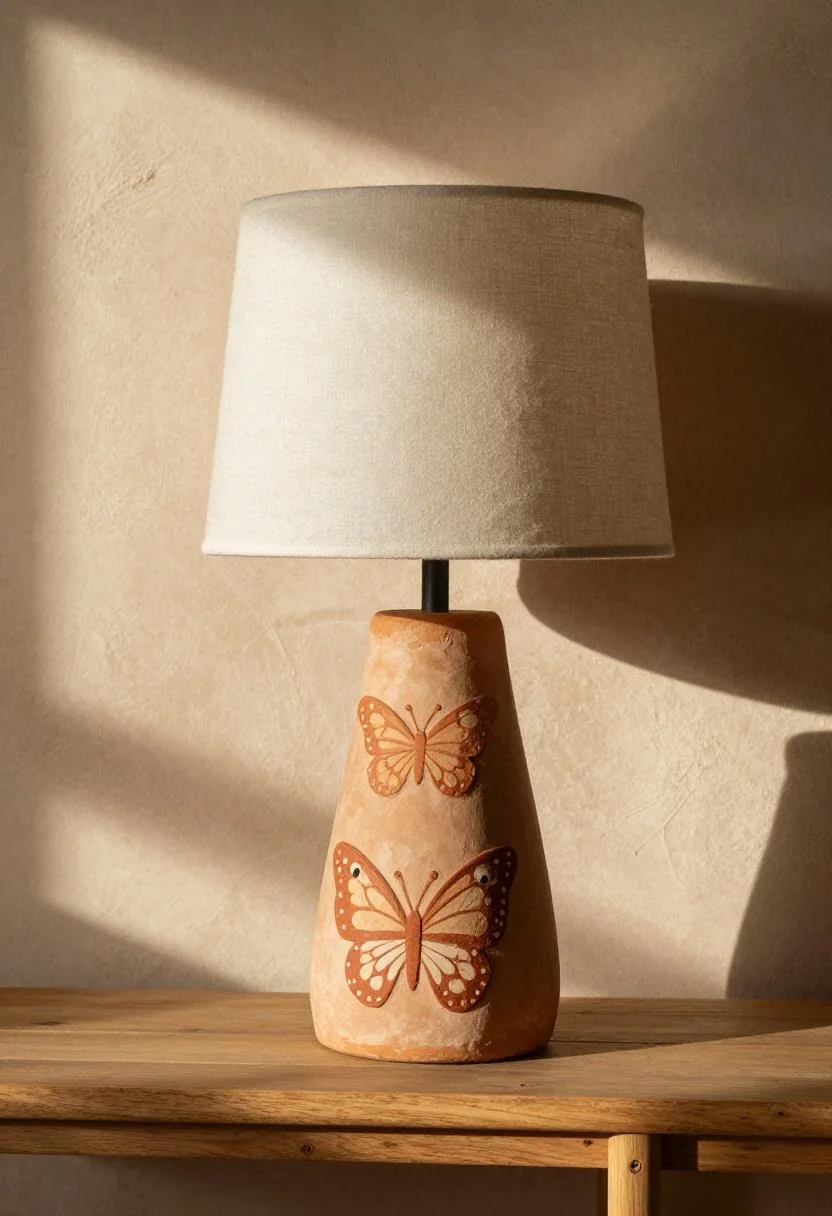
Hand-painted. On limewash plaster. Above an oak console table. This is the one that requires the most commitment — you’re essentially treating the wall itself as the artwork. Limewash plaster is a traditional, natural finish made from limestone that’s been used for centuries; it breathes, it develops patina, and it contains no VOCs. The butterfly motif painted directly into the plaster becomes permanent in the best sense. As Vogue has noted in recent home coverage, painted plaster walls are among the most enduring design choices you can make — they age with the house rather than against it. This isn’t a weekend project, but it’s a forever one.
Small Spaces & Awkward Corners: Work With What You Have
Does your apartment have that one weird corner? The wall above the radiator that’s too small for a sofa but too big to ignore? Butterfly art, particularly three-dimensional pieces and floating shelf arrangements, are made for these spaces.
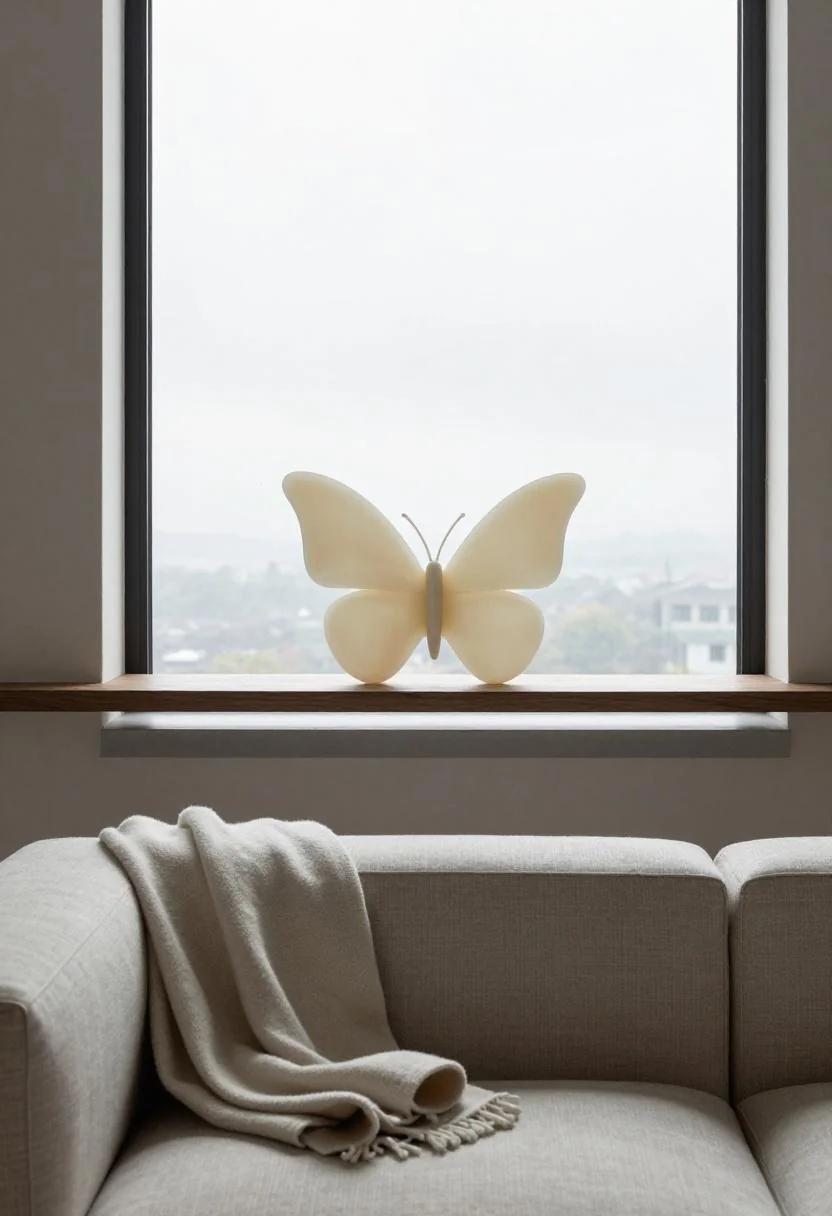
A cream white glass butterfly sculpture on a floating walnut shelf above a linen sofa. Floating shelves do double duty in small spaces — they display without consuming floor space, and a reclaimed walnut shelf bracket is both structural and beautiful. Glass art, when locally blown rather than mass-imported, supports craft communities and has essentially zero packaging waste. This piece earns its corner. And if you’re interested in how natural materials translate across different room types, the trending home decor styles for summer 2026 roundup has excellent context on where the naturalist aesthetic is heading.
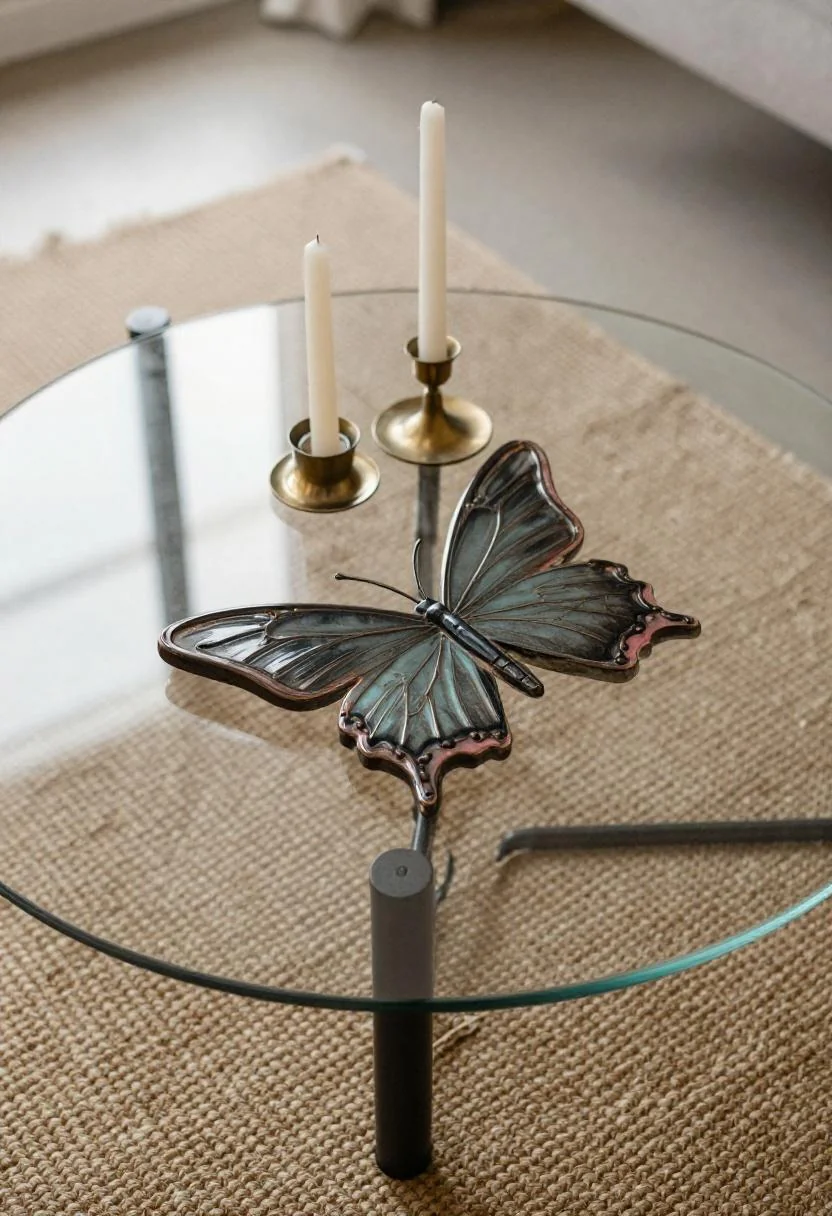
Not everything needs to hang on a wall. A plum noir lacquered butterfly tray with brass taper candles on a glass coffee table is art that functions — you use it, rearrange it, move it between rooms. That kind of flexibility matters in small spaces where the furniture layout changes when your life does. Look for lacquerware made with plant-based lacquers rather than synthetic resins. They exist, they’re beautiful, and they don’t off-gas. Brass taper candles in beeswax, again — it’s worth repeating. Shop decorative butterfly trays
If butterflies as a motif connect you to the broader idea of bringing nature indoors — and they should — it’s worth exploring how that extends to your outdoor spaces too. The butterfly bush landscaping guide makes a compelling case for creating an ecosystem that supports actual butterflies, not just the art version. The two ideas reinforce each other in a way that feels genuinely cohesive rather than decoratively convenient.
And speaking of cohesion: Harper’s Bazaar has written thoughtfully about the shift toward objects with provenance and intention in interior design — the move away from fast decor and toward pieces that tell a specific story. Butterfly art, done this way, fits squarely in that conversation.
Color & Material Takeaways
The color story running through these 13 looks tells you something useful. Cool blue and cream white are the quietest choices — they work in almost any room without demanding attention. Persimmon and plum noir are the committed ones — they transform a wall rather than simply occupying it. Wasabi, jade green, and sage offer the middle path: nature-derived tones that read as contemporary without trying too hard.
On materials: the pieces that hold up best over time — both aesthetically and environmentally — are the ones made from honest stuff. Clay. Cotton cord. Reclaimed wood. Brass. Glass blown by hand. These aren’t premium choices for the sake of it. They’re durable, repairable, and at end of life, they don’t end up as microplastic.
Sustainability isn’t sacrifice — it’s strategy. Buy fewer pieces, buy them better, and let the butterfly on your wall mean something beyond aesthetics.
This post contains affiliate links. We may earn a commission at no extra cost to you.
Images in this article were created with AI assistance.