There’s a particular kind of discipline required to garden in containers. You’re not working with earth — you’re working with intention. Every pot is a decision: what plant, what vessel, what light. Strip away the impulse to fill every surface and ask what actually belongs there, and suddenly the whole project becomes clarifying. Sun-loving plants in containers are, at their best, a study in edited living. The right plant in the right pot, placed where the light is strongest — that’s the whole philosophy.
This isn’t about maximalism dressed up as cottage charm. It’s about knowing that a single glazed pot of marigolds can do more visual work than a crowded bed of mixed annuals. As garden design editors have noted for years, container gardening rewards restraint more than abundance. The pots you choose, the plants you plant, the surfaces they rest on — all of it is curated space. Treat it that way.
Where the Light Actually Lands
Start with the sun. Not where you want plants to go, but where the light genuinely falls for six or more hours a day. That south-facing balcony ledge, the front step that catches full afternoon glare, the patio corner that bakes from noon onward — these are the places container sun plants want to live.
The Nordic design instinct is useful here: assess before you arrange. Swedes and Danes have a particular fluency with limited outdoor space — a single potted plant on a windowsill, placed with care, rather than a cluttered balcony trying to compensate for something. Start with one strong choice. Build from there.
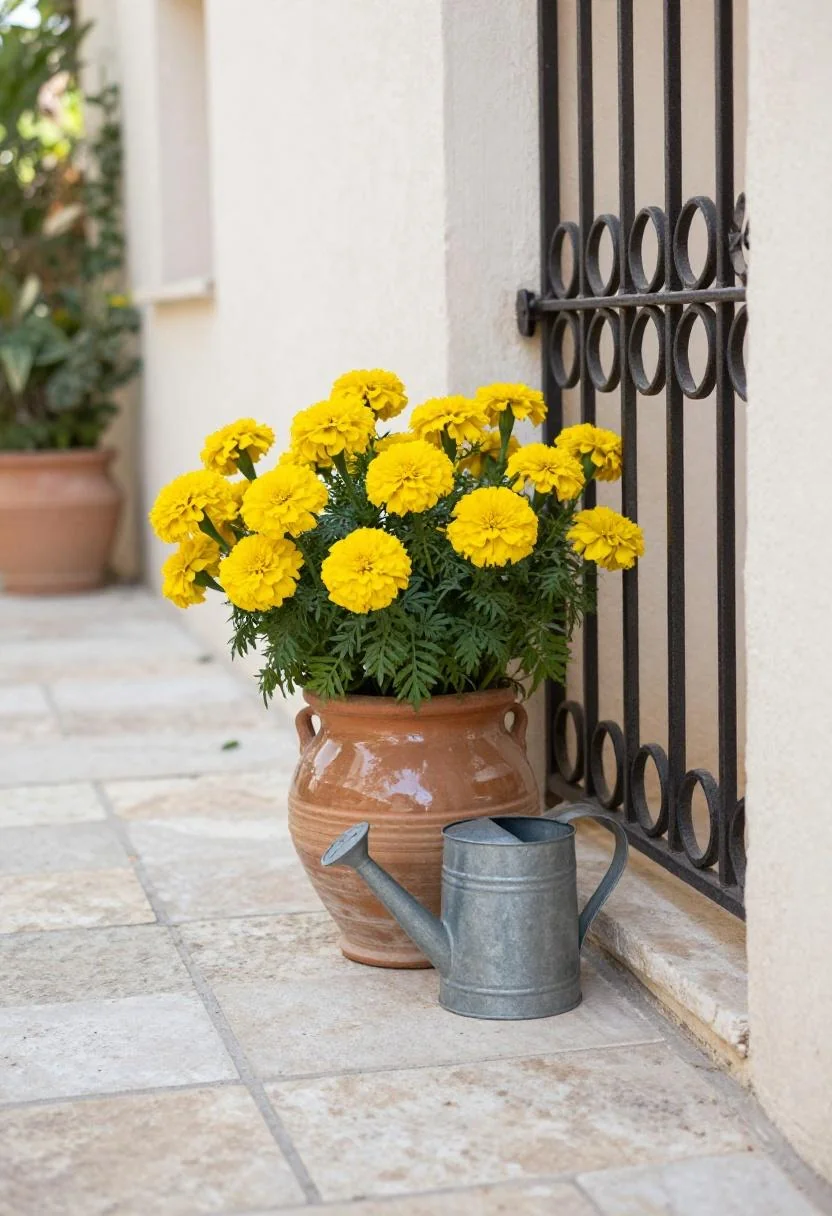
Marigolds in a glazed ceramic pot, cool blue against whitewashed stone — this works because the vessel is doing half the work. The wrought-iron gate, the Mediterranean heat, the midday light bleaching everything flat: the pot holds its own. Marigolds are often underestimated. They’re tough, long-blooming, and deeply unbothered by full sun. Don’t overthink them. Shop glazed ceramic pots
The Case for Moody Color
Plum, violet, deep purple — colors that could feel heavy indoors read as anchors outdoors. They give weight to a space that might otherwise feel scattered.
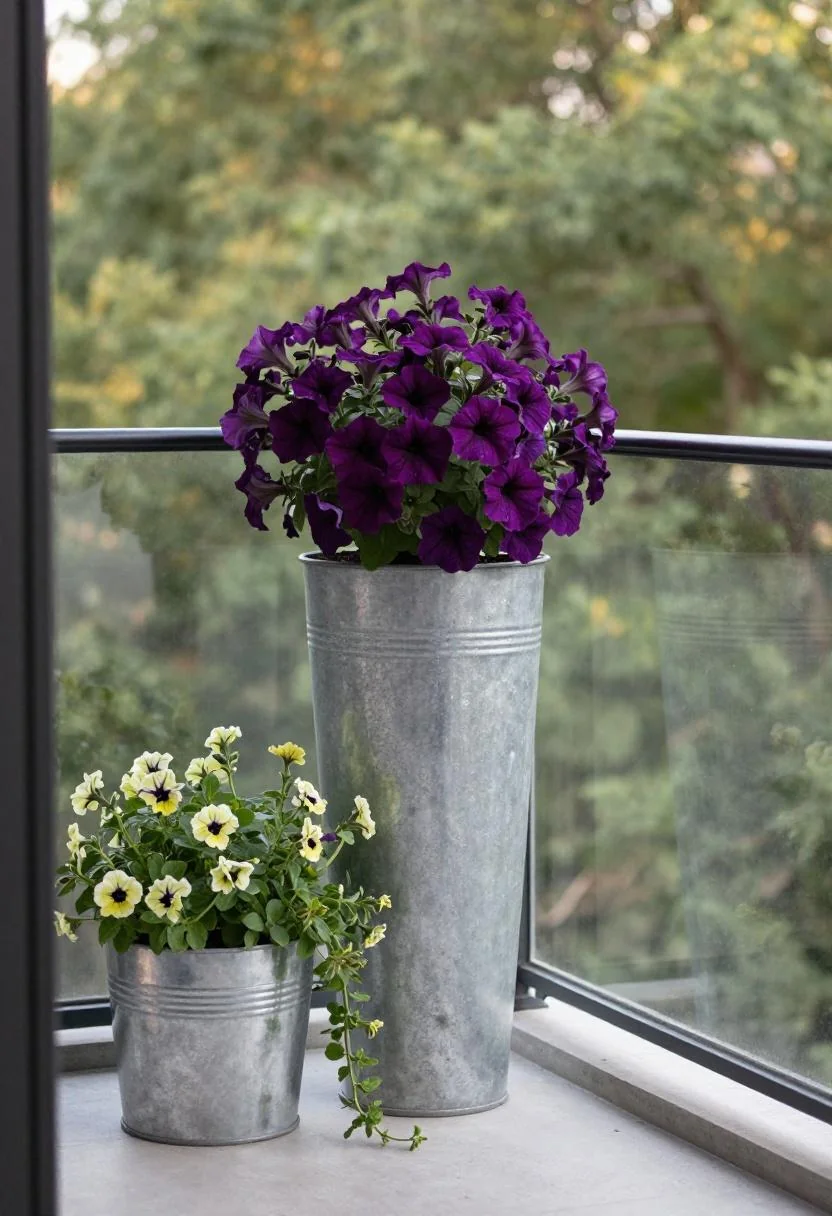
Zinc planters of purple petunias and trailing verbena catch golden hour light in a way that feels almost theatrical — but the concrete balcony keeps everything grounded. This is the tension that makes it work. The flowers are generous; the surface is severe. Neither softens too much. Petunias in full sun will bloom for months with minimal fuss, and trailing verbena adds movement without chaos. Shop zinc planters
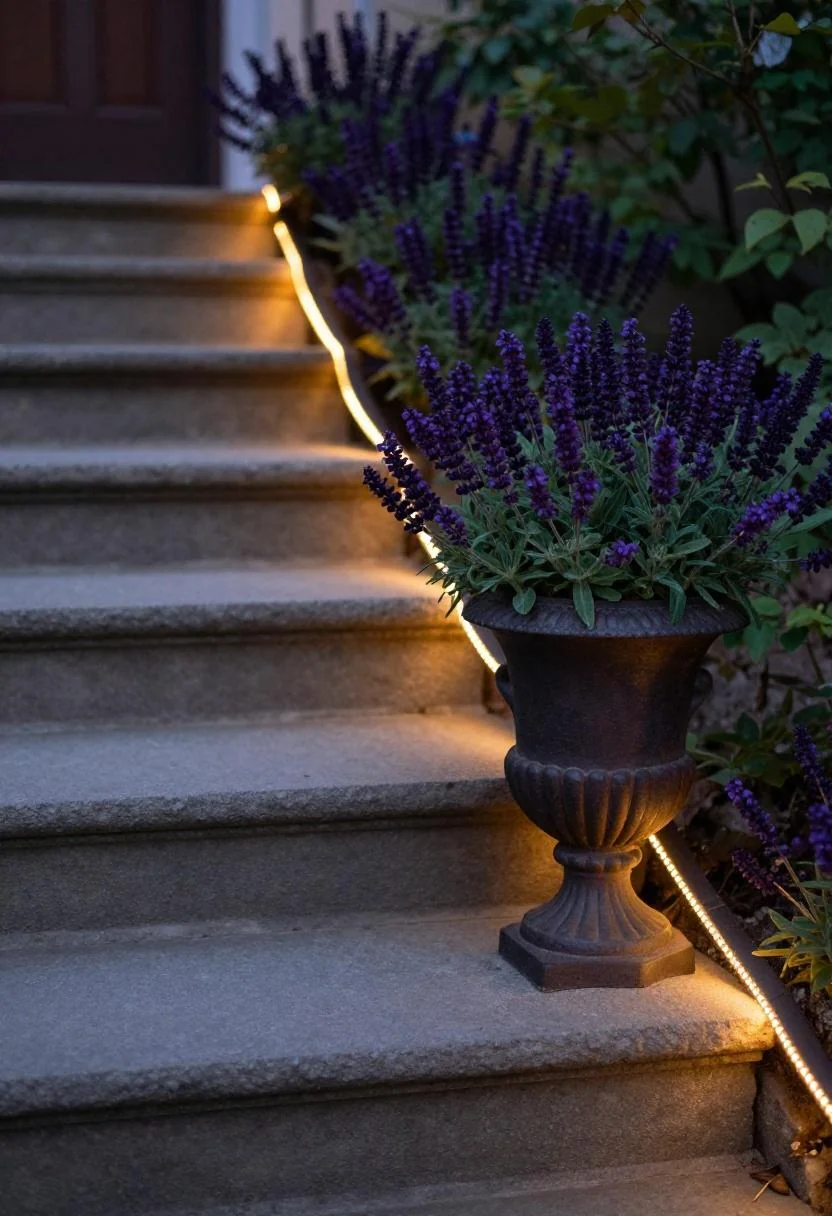
A cast-iron urn of violet salvia, string lights warming the stone at dusk. Heavy material, delicate bloom. The salvia’s vertical habit suits the formality of the urn — this isn’t a plant that sprawls or apologizes. It stands. Salvia is also a magnet for pollinators, which matters if your container garden exists in any kind of ecological context.
Geraniums and the Cottage Front Door — Still Relevant
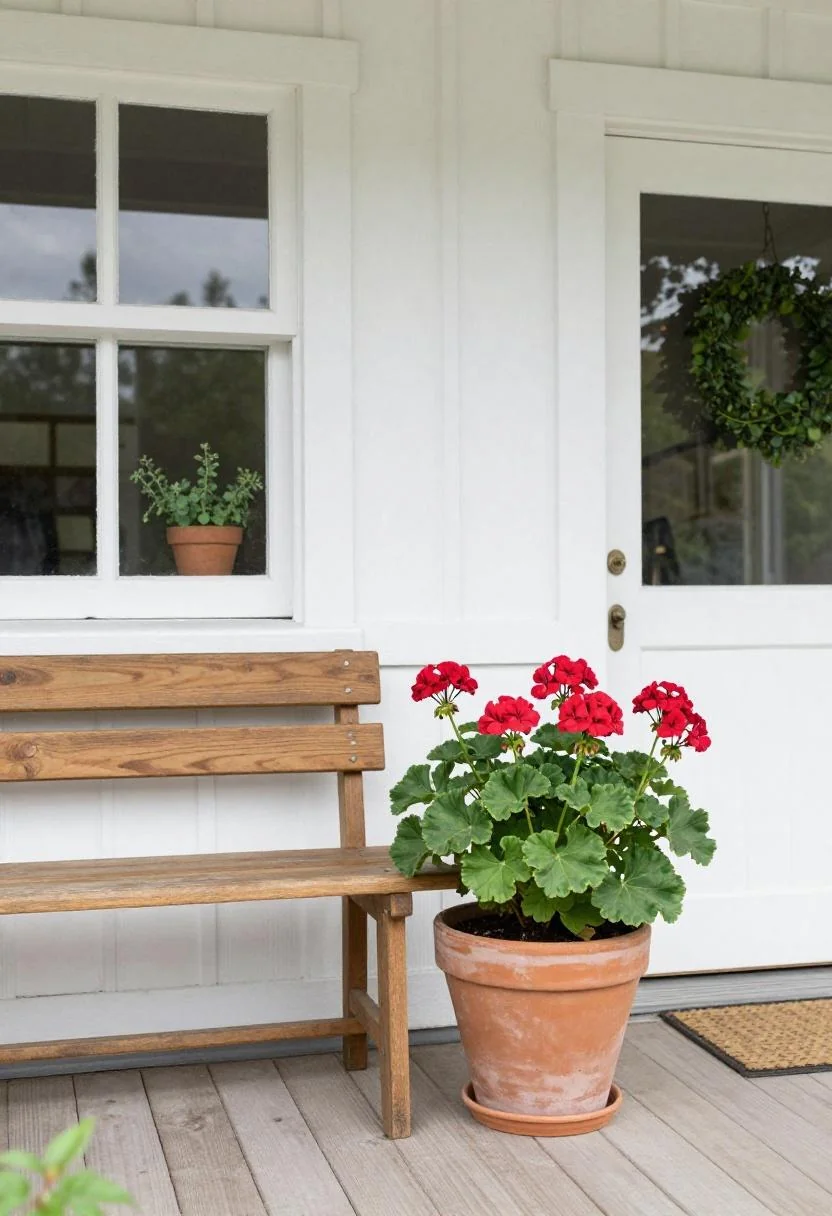
Some plants earn their ubiquity. Geraniums flanking a cottage door in terracotta pots, midday sun, an herb bench beside them — this is not a trend. It’s an arrangement that has worked for a very long time because the logic is sound. Terracotta breathes. Geraniums thrive in heat. The color against an old wooden door creates a warmth that no amount of trend-chasing can manufacture.
The herb bench is the quiet detail here. Thyme, rosemary, a pot of basil — functional, fragrant, and beautiful in the specific way that useful things often are. If you’re building a front-door arrangement, don’t skip the herbs. They do more than the flowers, on some level.
The Minimalist Deck: Less Plant, More Presence
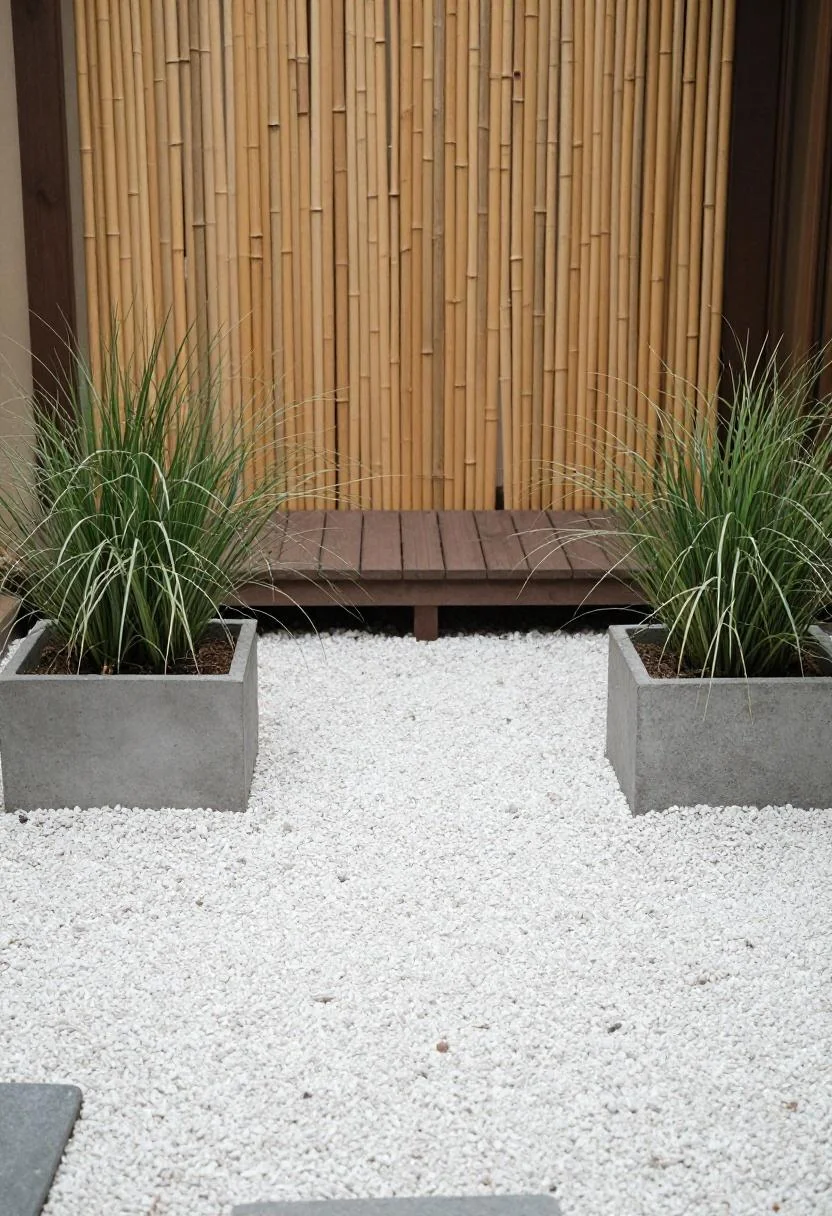
Here’s where the Scandinavian principle gets literal. Concrete planters of ornamental grass flanking a bamboo screen — no flowers, no color beyond the wasabi-green of the grass itself. The restraint is the whole point. This deck doesn’t explain itself. It simply is.
Ornamental grasses are genuinely good container plants for hot sun — drought-tolerant once established, architectural in every season, and honest in a way that annuals aren’t. They don’t perform. They just grow. Browse ornamental grasses for pots
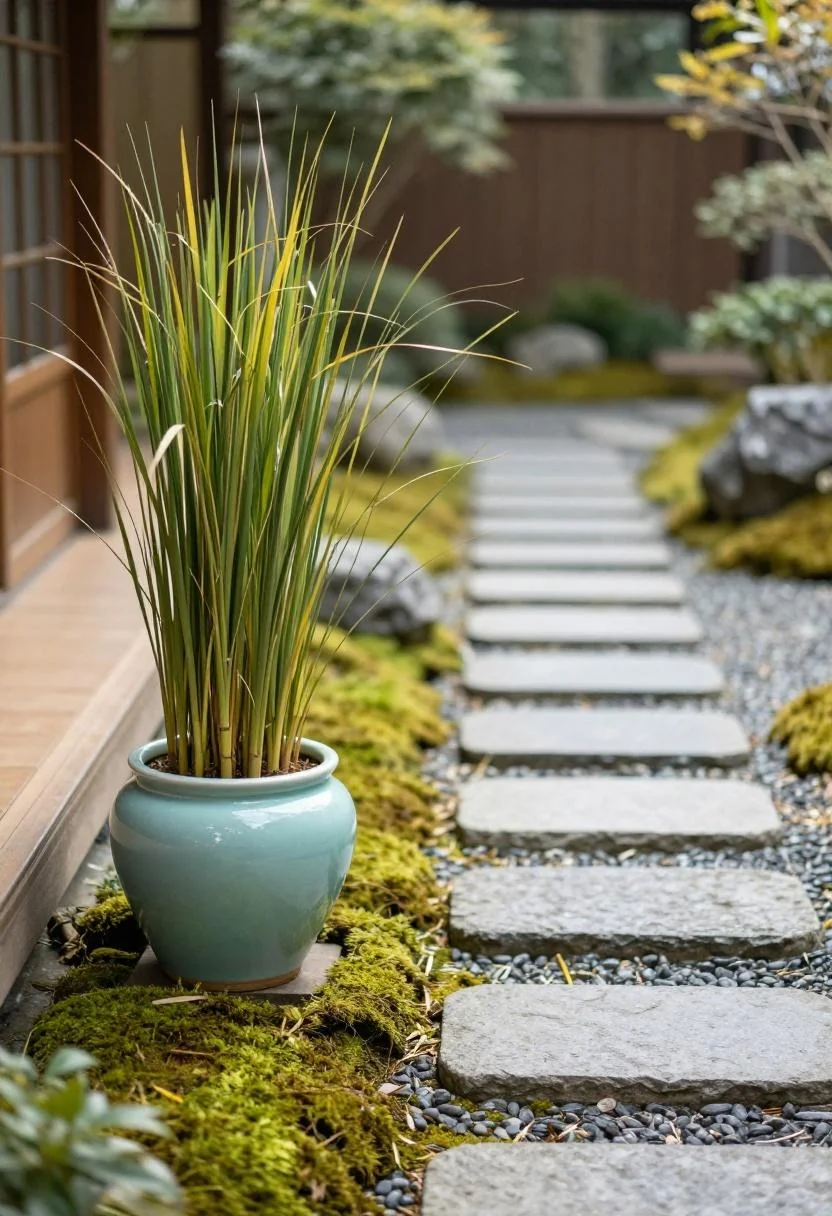
The celadon ceramic planter carrying chartreuse bamboo grass at the edge of a moss-lined path — softer, more considered. The colors exist in dialogue: the grey-green of the glaze, the sharp yellow-green of the grass, the darker ground beneath. One planter. One plant. A whole conversation.
Dawn Light and the Quiet Drama of Portulaca
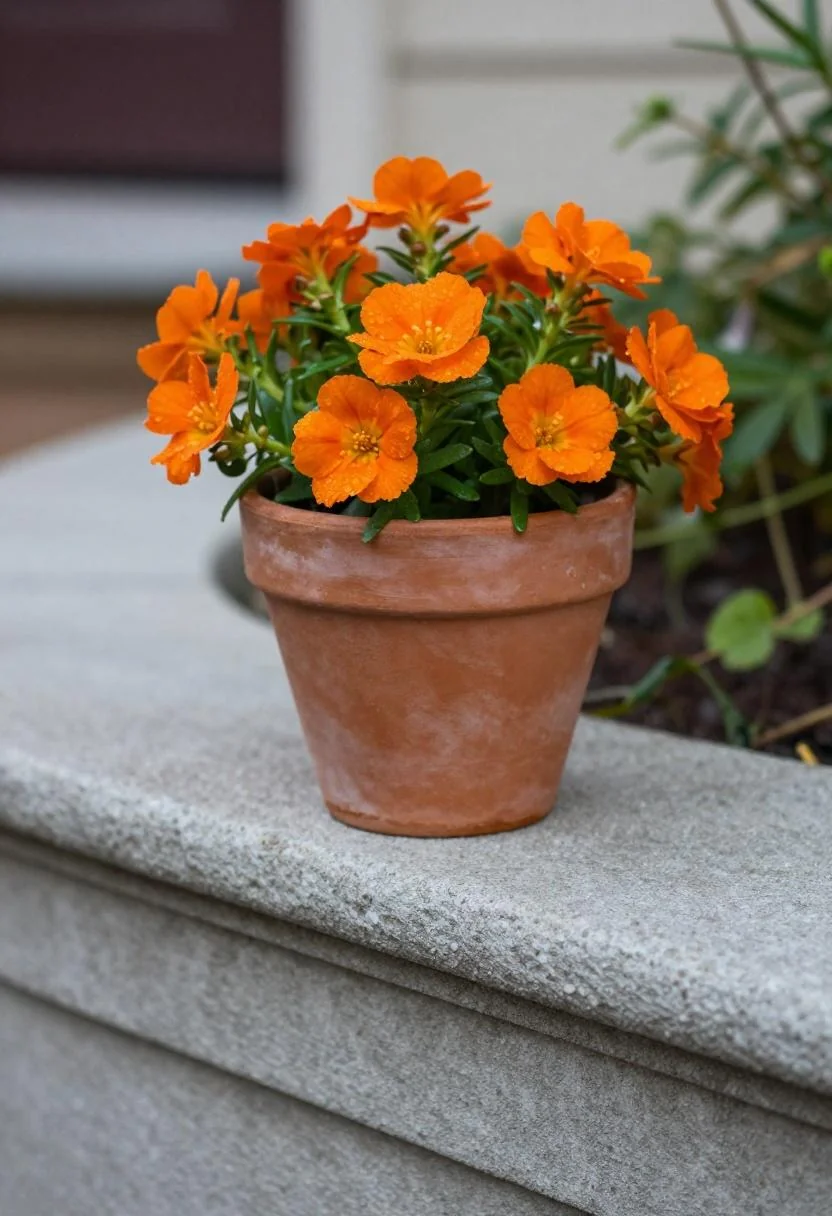
Portulaca — also called moss rose — is one of the most sun-honest plants in existence. It closes on cloudy days and opens fully only in direct light. That’s not a flaw. It’s a quality. A handmade terracotta pot of persimmon-orange portulaca at the edge of garden steps at dawn, dew still clinging to the petals — this is the kind of image that stays with you.
As Elle Decor has pointed out in recent outdoor plant features, the most compelling container gardens are often built around a single, well-chosen specimen rather than a mix of everything. Portulaca proves the point every morning.
The Statement Plant: Bird of Paradise
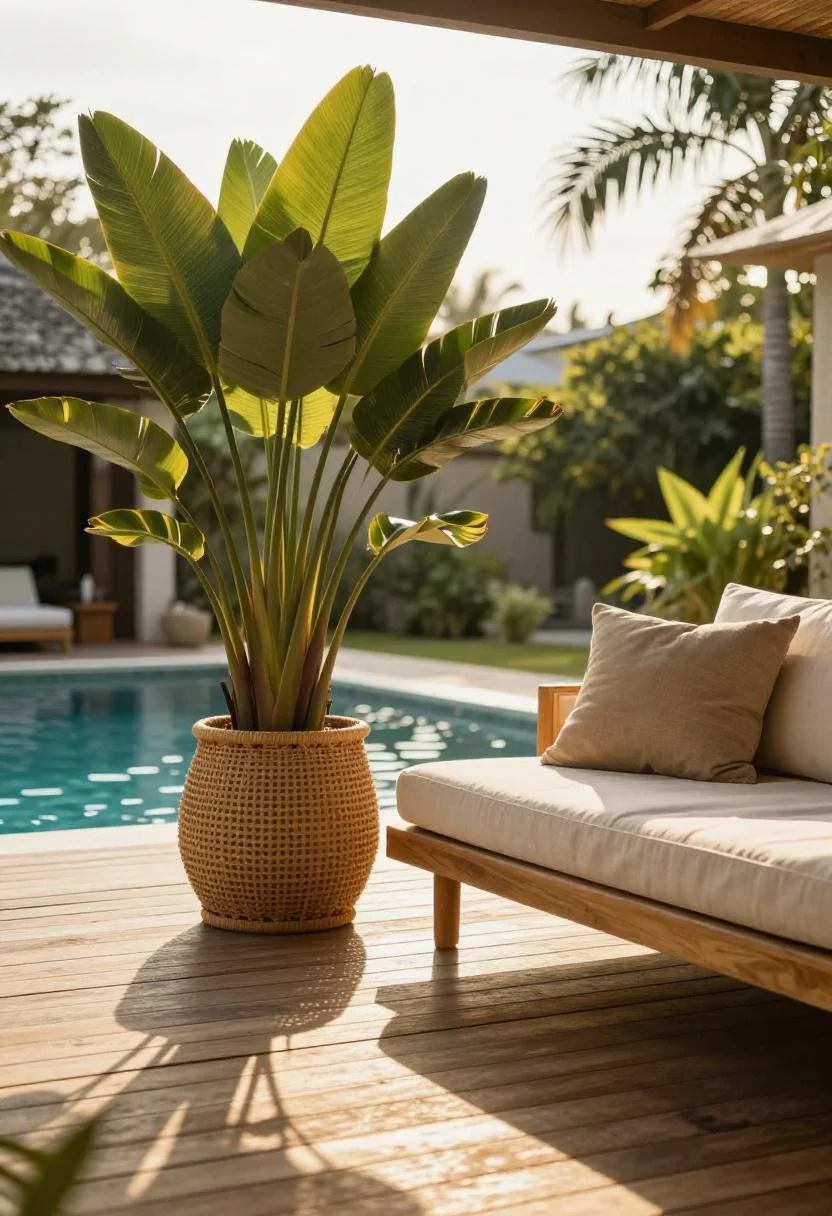
Some plants are objects as much as plants. A Bird of Paradise in a rattan planter anchors a teak lounger at golden hour with the authority of a piece of furniture. You don’t arrange around it — you arrange because of it.
Bird of Paradise in a container wants heat, bright light, and infrequent deep watering. Give it those conditions and it will reward you with leaves that have a particular graphic quality — dark, architectural, unbothered by wind. It’s one of the few large tropical plants that genuinely works in a container long-term. Shop large tropical planters
White: The Color That Holds Everything Together
Not every container arrangement needs drama. Some of the most successful ones work by doing almost nothing — and white flowers in pale pots are particularly good at this.
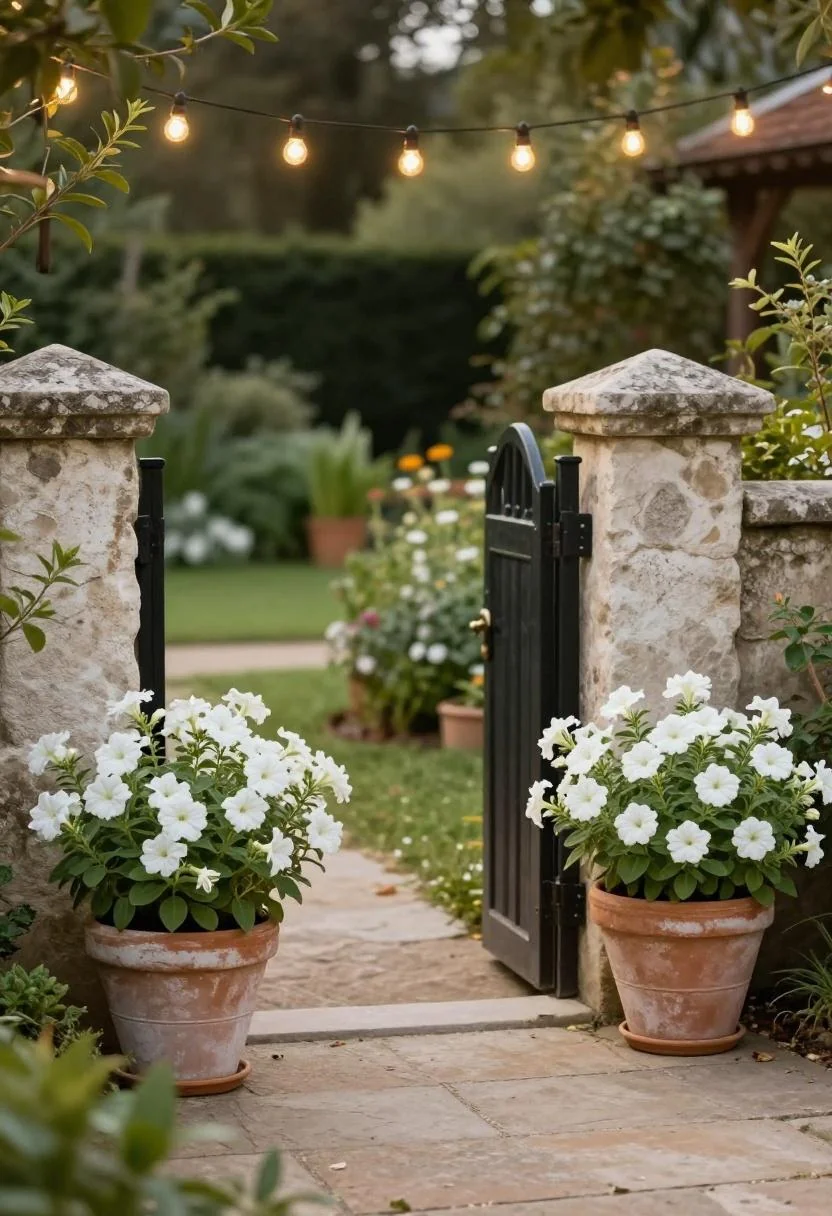
Whitewashed terracotta, white calibrachoa, limestone gate at dusk. The light at that hour softens everything, and the white just glows — not shouts. Calibrachoa is a workhorse: small flowers, continuous bloom, sun-loving, slightly drought-tolerant once it’s established. It doesn’t need much from you. That’s worth something.
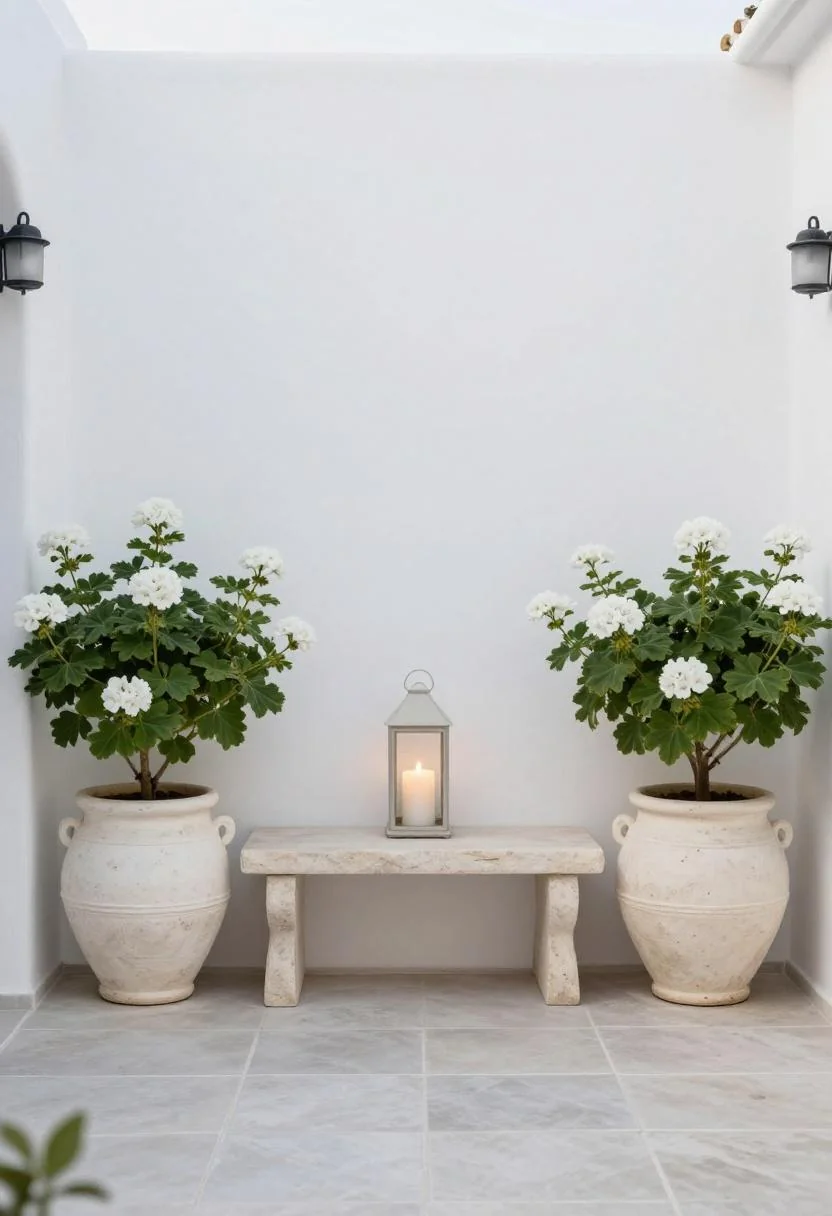
The alabaster ceramic pots of white geraniums at dusk, framing a bench with a candle lantern — quieter still. This is hygge without the kitsch. The warmth comes from the candle, not from over-decorated surfaces. White geraniums are criminally underused. Most people reach for red or coral; the white ones carry a kind of clarity the others don’t. Shop white ceramic planters
Green as a Complete Palette
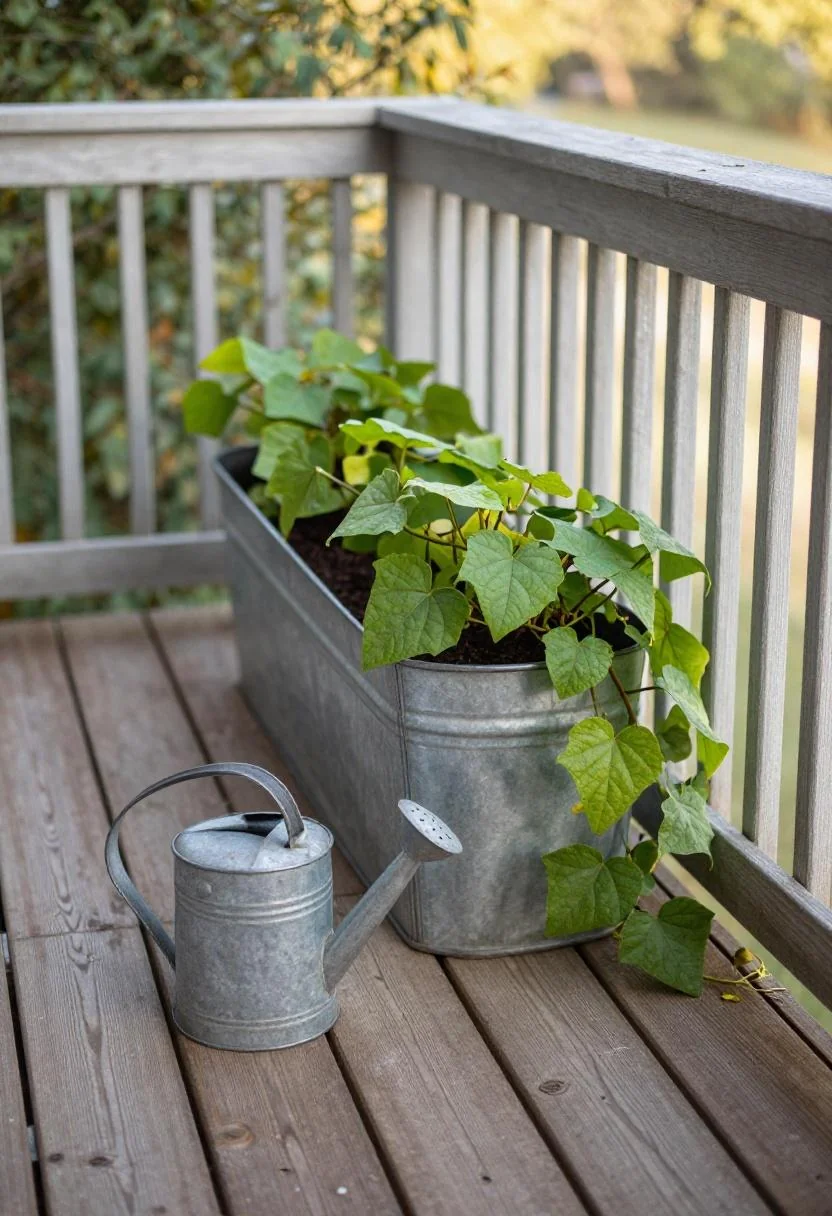
A galvanized trough of trailing sweet potato vine running along a deck railing in morning light — all green, all texture, no bloom. This is a choice. Sweet potato vine in full sun turns a color somewhere between sage and jade, and the trailing habit does something long and horizontal that very few flowering plants can match. It fills space without filling it up, if that makes sense.
For container gardening ideas that extend beyond pots into full outdoor room design, the DIY flower pot fountain ideas for your patio guide is worth a look — it reframes the container as an element of a larger composition rather than a standalone object.
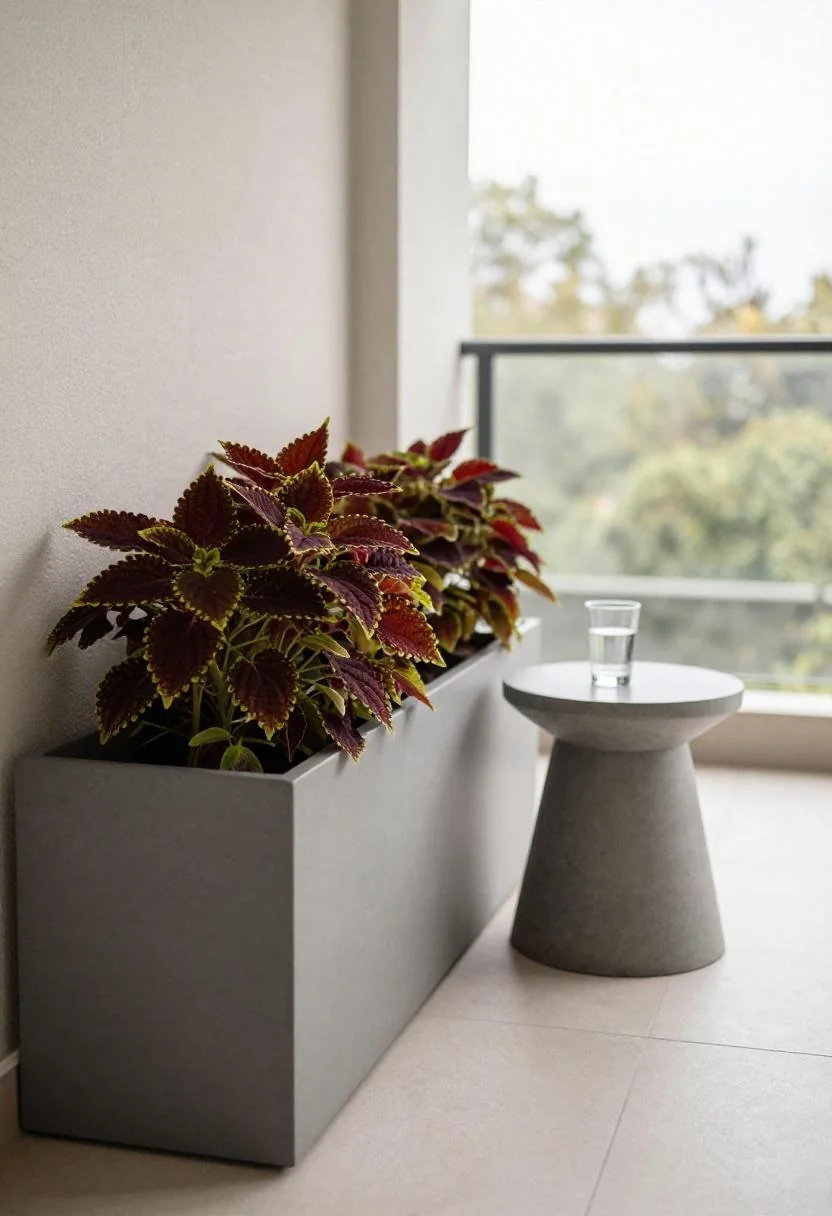
Coleus in a fiberglass planter, wall-hugging on a modern balcony — the emerald leaves are almost too good. Coleus is technically a shade plant, but many modern varieties handle several hours of direct sun without flinching, especially when watered consistently. The concrete side table in this scene is doing real compositional work: it tells you the scale, the aesthetic, the whole register of the space. Shop fiberglass planters
Lantana and the Front Door Moment
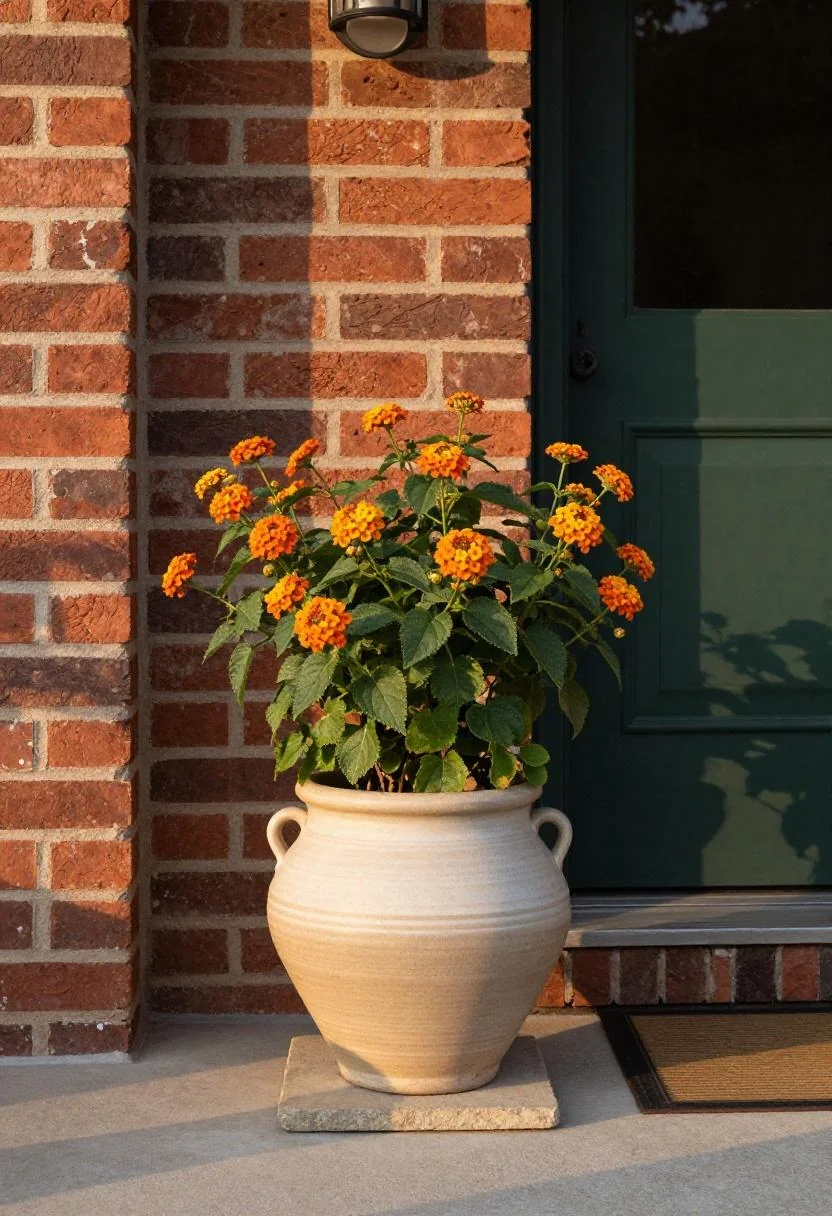
Lantana earns its reputation. It blooms in heat that would shut down lesser plants, it changes color as the flowers age — orange shifting to yellow, yellow to pink — and it attracts more butterflies than almost anything else you can grow in a pot. A hand-thrown ceramic pot of orange lantana on sandstone beside a dark-green door at golden hour: this is a front entrance that needs no other decoration. None.
If you’re drawn to pollinator-friendly planting, there’s a whole approach outlined in our butterfly bush landscaping guide — the principles translate directly to container gardens.
Nasturtiums: The Edible Option
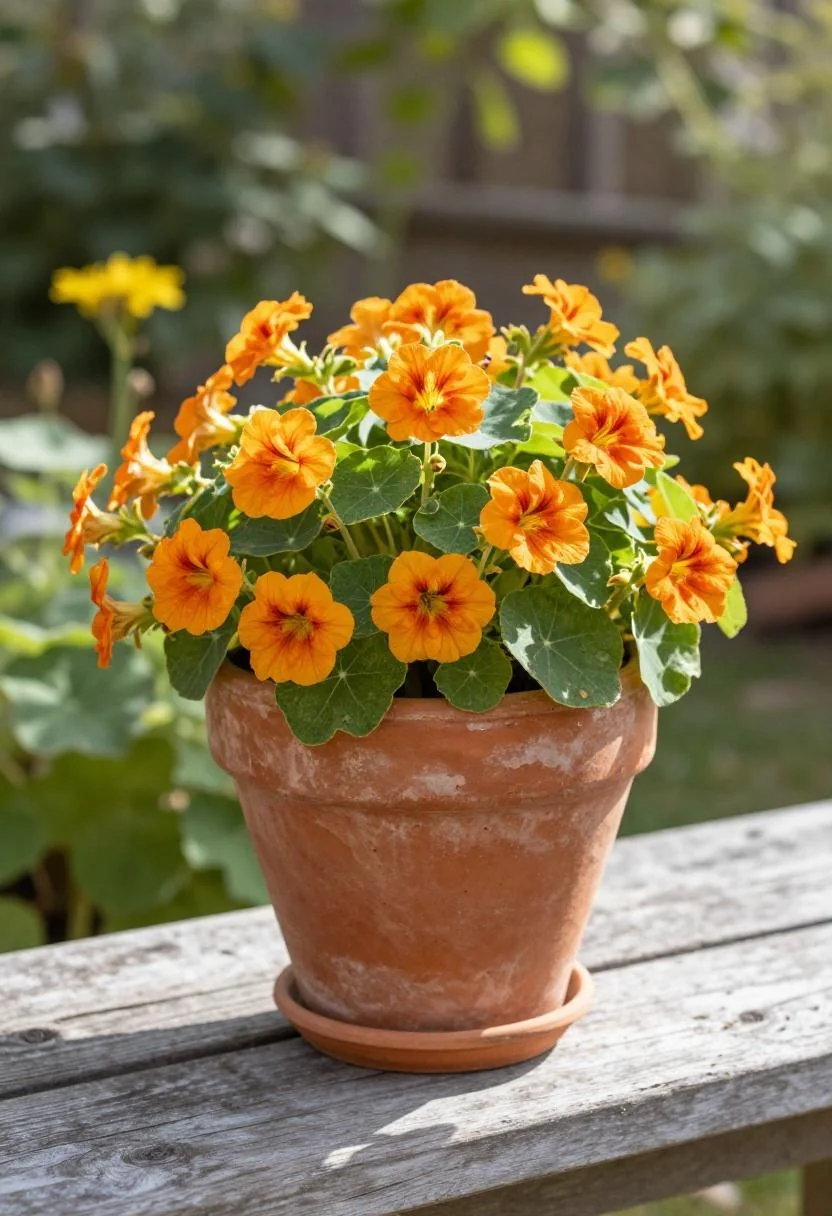
Nasturtiums in a rust-glazed stoneware pot, saucer beneath, cedar bench beside — functional, edible, beautiful in the least precious way. The flowers are peppery and good in salads. The leaves are too. The whole plant costs almost nothing to grow from seed, and it blooms with the kind of reliability that makes you wonder why you ever plant anything else. The warm terracotta palette of the glaze against the cedar grain is not accidental. Some combinations just work.
Cobalt and the Mediterranean Rooftop
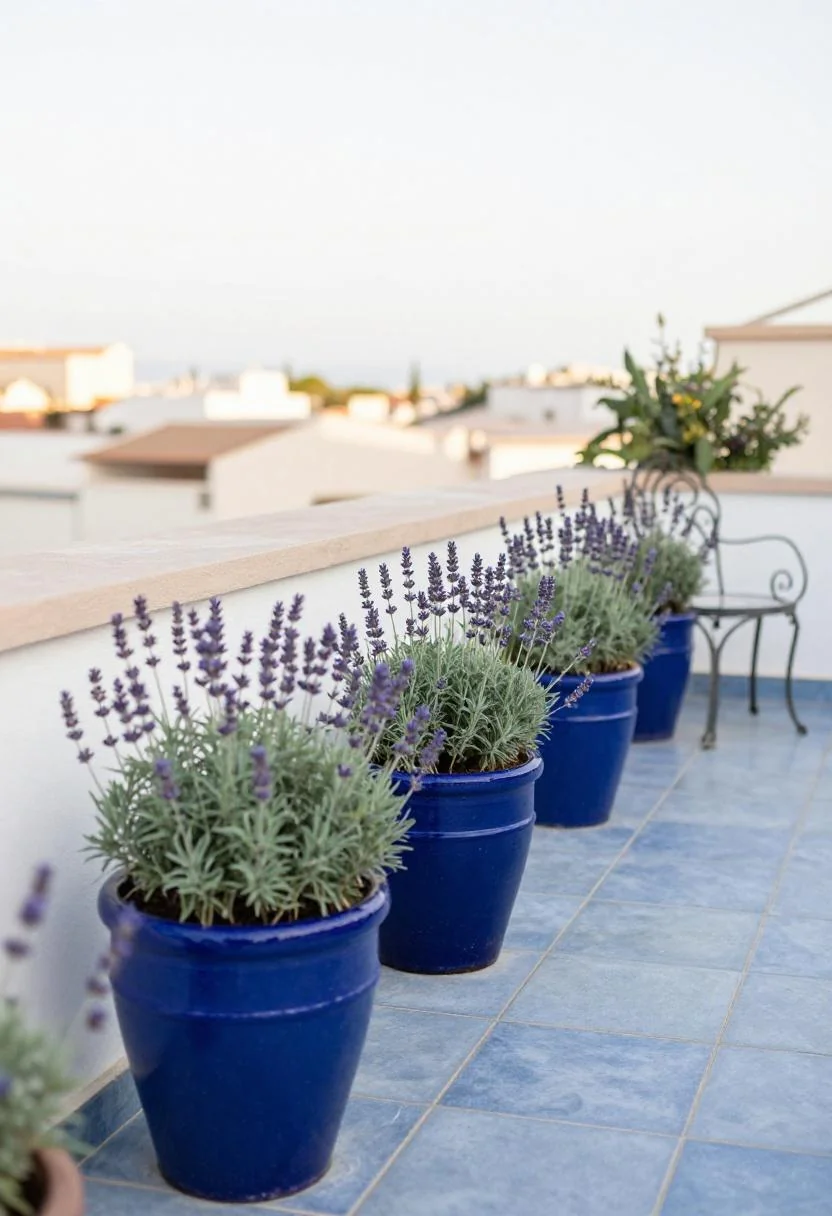
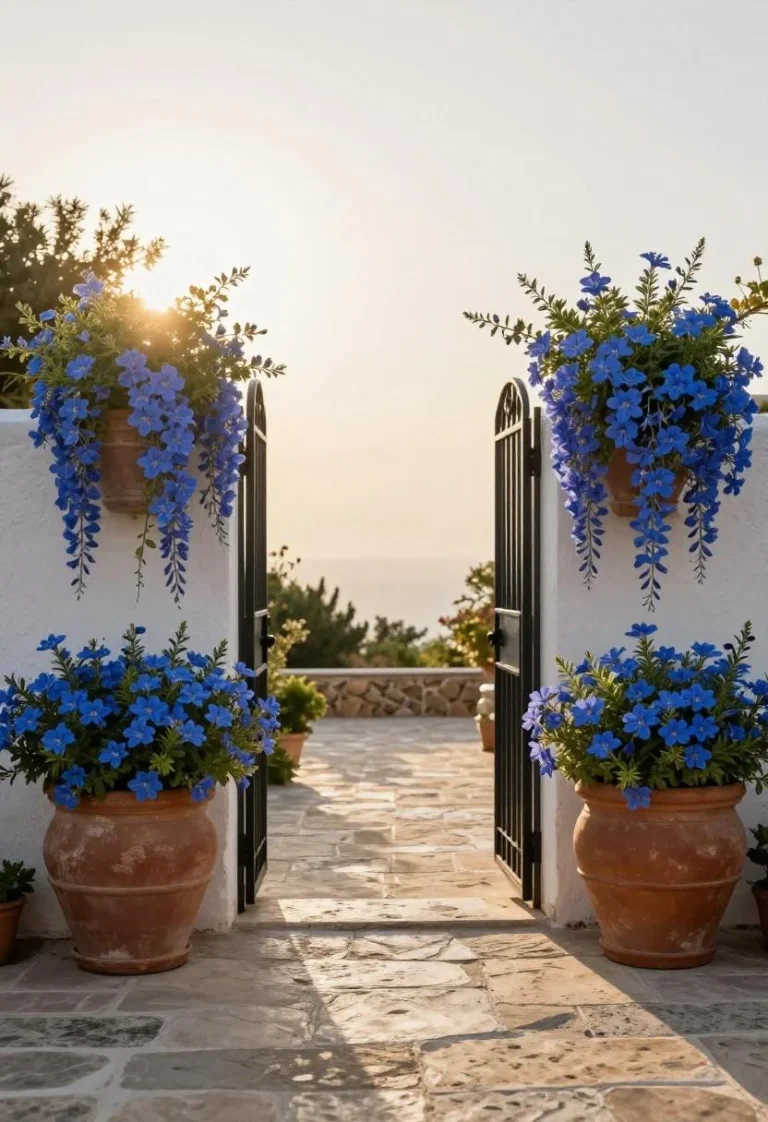
Cobalt lavender pots on a blue-tiled rooftop parapet — this is maximalism by restraint. The color is bold, yes, but the arrangement is linear. No clustering, no chaos. Just repetition, which is a different thing entirely. As Harper’s Bazaar has explored in their outdoor living coverage, the Mediterranean container tradition is one of the strongest visual references available to anyone working with pots on hard surfaces. Lavender loves this kind of situation — hot, bright, slightly baked.
How to Get the Look
Choose your vessel first. The pot is not secondary to the plant — it’s half the image. Terracotta for warmth and breathability. Zinc or galvanized for industrial restraint. Glazed ceramic when you want color to do work. Fiberglass when weight matters.
Then match soil to plant, not pot size. Sun-loving annuals need fast-draining medium. Grasses and tropicals want more weight and moisture retention. Water consistently — containers dry out faster than beds, especially in full sun — but never let them sit waterlogged.
Placement is everything. One strong pot in the right spot reads better than five pots awkwardly placed. Ask yourself where the light lands, where the eye travels, and what the container will be seen against. A pale pot disappears against a pale wall. A dark glaze disappears in shadow. These aren’t mistakes to avoid — they’re decisions to make.
For more ideas on building an outdoor space with intention rather than impulse, the guide to growing hostas in pots covers container fundamentals that apply across species — worth reading even if hostas aren’t your plant.
Making It Your Own
The palette that runs through all fifteen of these scenes — cool blue, plum, jade green, warm terracotta, cream white — isn’t a prescription. It’s a demonstration that strong container gardens often commit to a limited range rather than trying to contain everything.
What would a single-color container garden look like in your specific outdoor space? What if you planted only white? Only terra tones? Only the sharpest greens? Strip away the instinct to vary everything and see what happens. You might find, as the Nordic design tradition has long suggested, that less noise creates more presence. That the restraint is, in the end, the whole point.
Pick the plants that want your light. Choose containers that earn their place. Then step back and let the arrangement breathe.
This post contains affiliate links. We may earn a commission at no extra cost to you.
Images in this article were created with AI assistance.