There’s something quietly persuasive about the sound of moving water. Not the roar of it — the trickle. The kind that makes you put down your book and just sit for a moment. A DIY flower pot fountain doesn’t announce itself. It earns its place by doing one thing well: making the patio feel like somewhere you’d actually choose to be. No contractor, no major budget, no grand gesture. Just a submersible pump, a few pots you already love, and the patience to let the water find its level.
The Quiet Ones: Neutral and Natural Finishes
Neutrals aren’t a compromise. They’re a decision — one that says the water, the sound, and the surrounding garden are the thing. These are the fountains that age without apology.
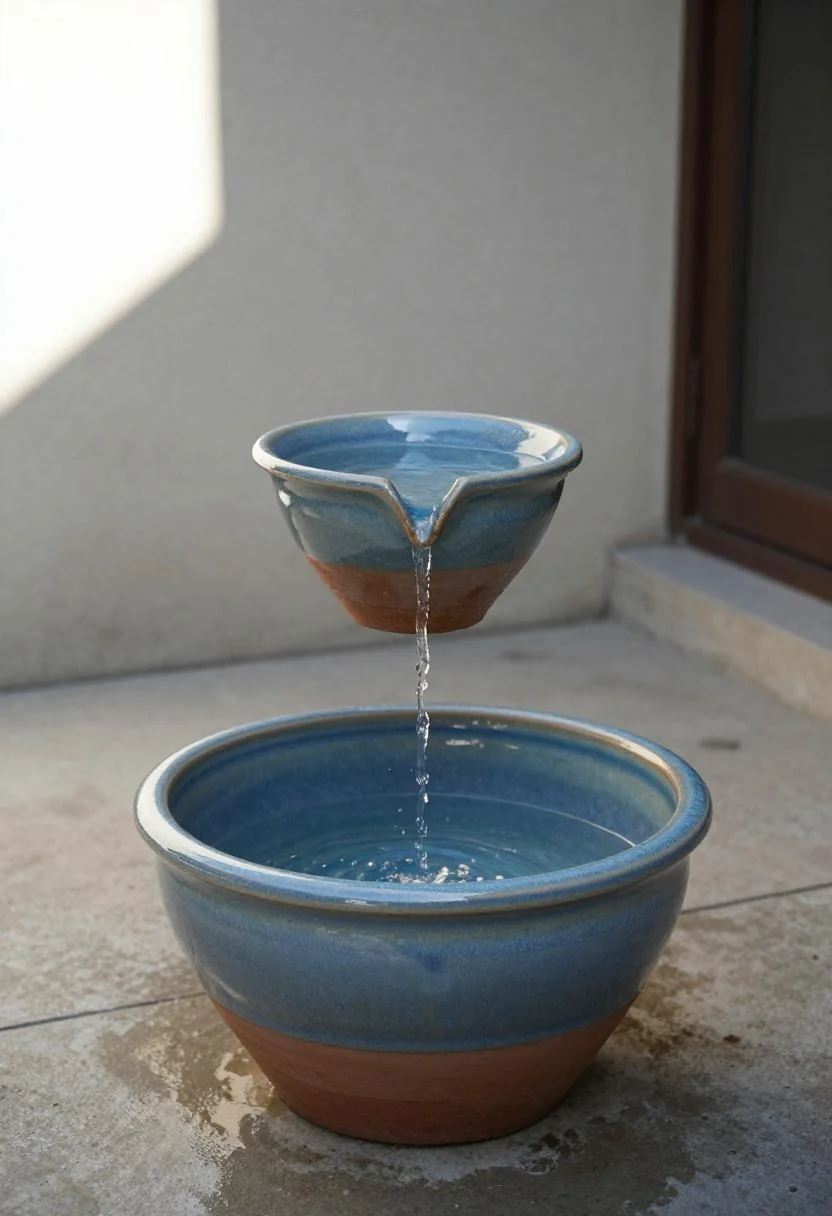
Stack three or four terracotta pots — graduated sizes — and let a cool blue glaze accent on the uppermost pot do the quiet editorial work. The contrast here is almost accidental-looking, which is why it works. Terracotta reads warm and handmade; that slip of cool glaze is the tension that keeps it interesting. Drill the drainage holes wider, thread your pump tubing through, and let the water spill naturally from lip to lip. A compact submersible pump is all the hardware you need.
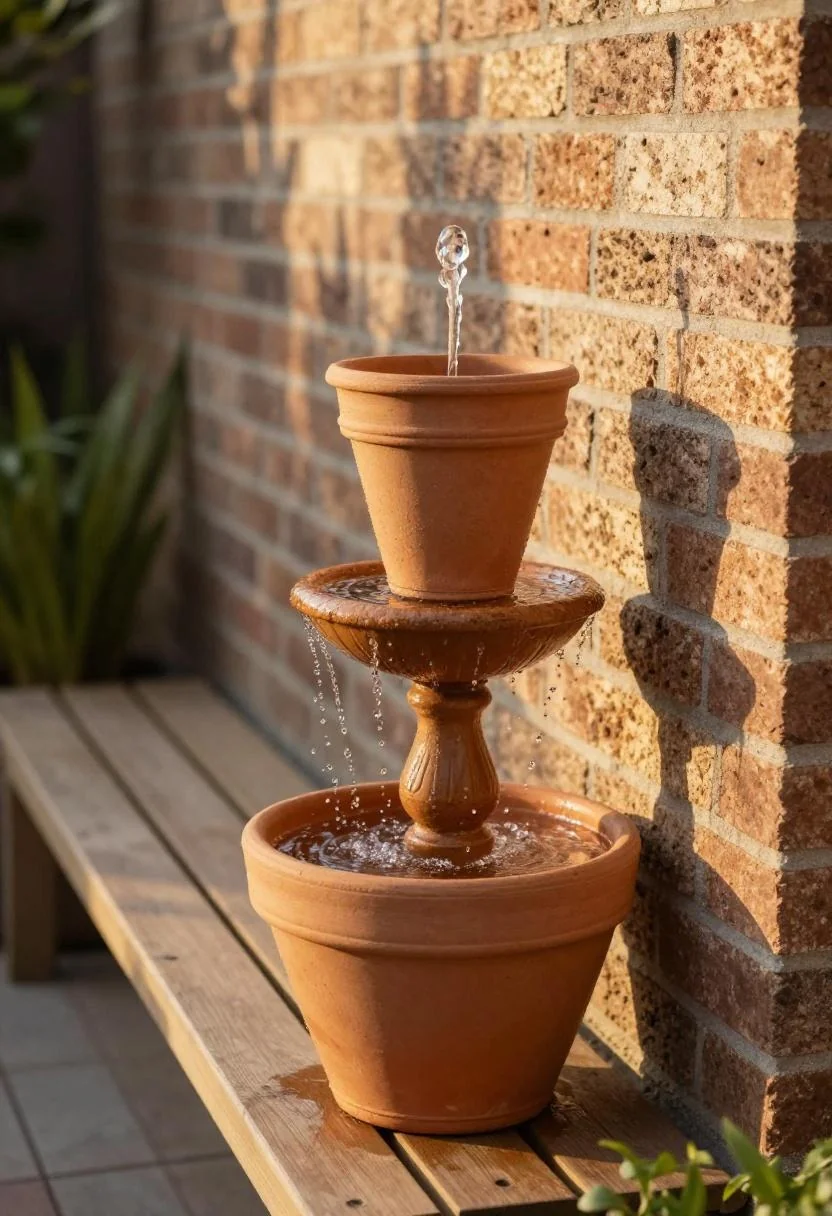
Two tiers. A garden bench. Brick behind it all catching the last warm light of the afternoon. This is the version you sit next to with something warm in your hands — it’s hygge in pot form, if you’ll allow the description. The terracotta here is unglazed, left to weather and mottle and eventually grow a faint bloom of moss at the base. That’s not a flaw. That’s the point. Let it go a little feral around the edges.
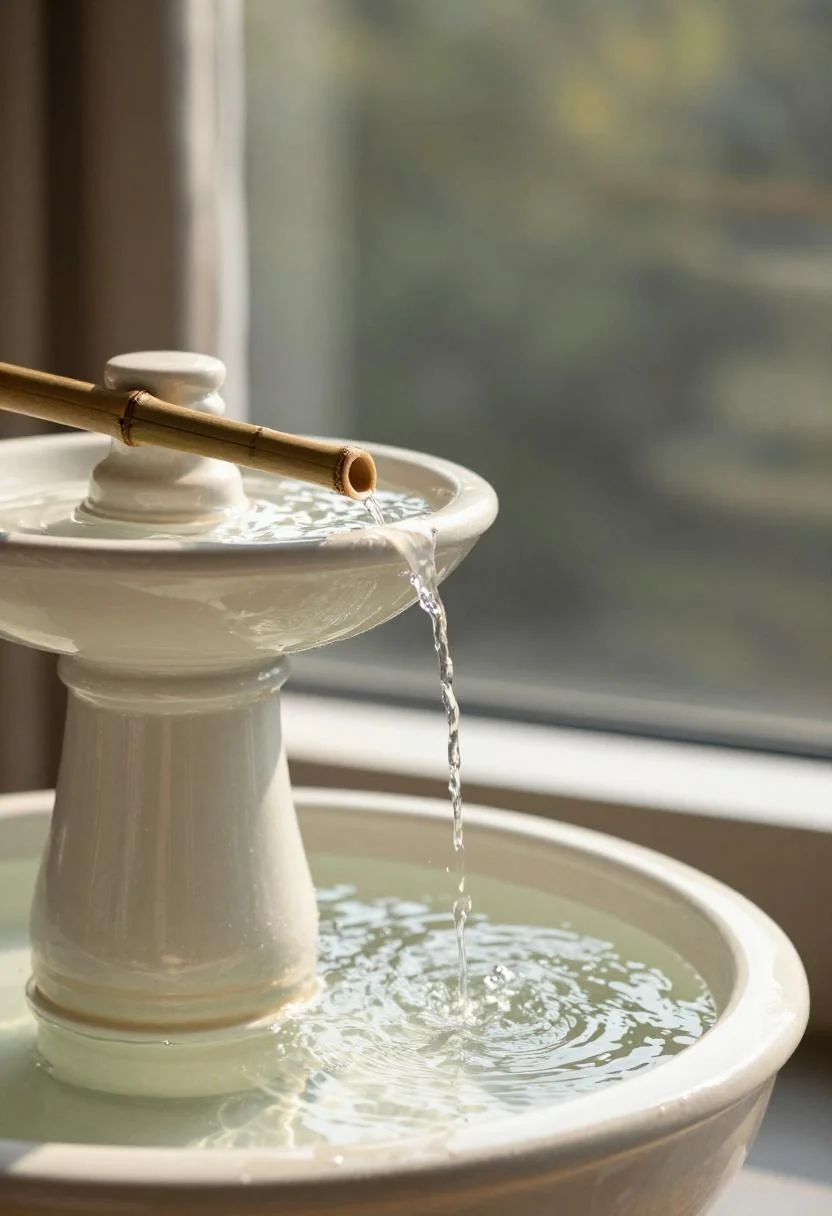
Cream white ceramic with a bamboo spout on a teak balcony corner at dawn. The restraint here is the whole point — no color, no drama, just the sound of water hitting the basin and the grain of the wood doing the rest. Bamboo spouts are easy to source and even easier to install; a length of copper tubing inside the bamboo carries the pump line invisibly. As Vogue Living has long argued, the best outdoor spaces are extensions of the interior — not performances for guests, but environments for yourself.
If you’re building in a smaller outdoor footprint, our guide to budget patio ideas that look high-end has useful framing on how to prioritize what earns its space.
Going Green: Sage, Jade, and the Honest Earthy Palette
Green glazes on ceramic do something that painted surfaces rarely manage: they look like they grew there. Against a garden backdrop or a mossy path, a green-glazed pot fountain doesn’t interrupt the landscape. It continues it.
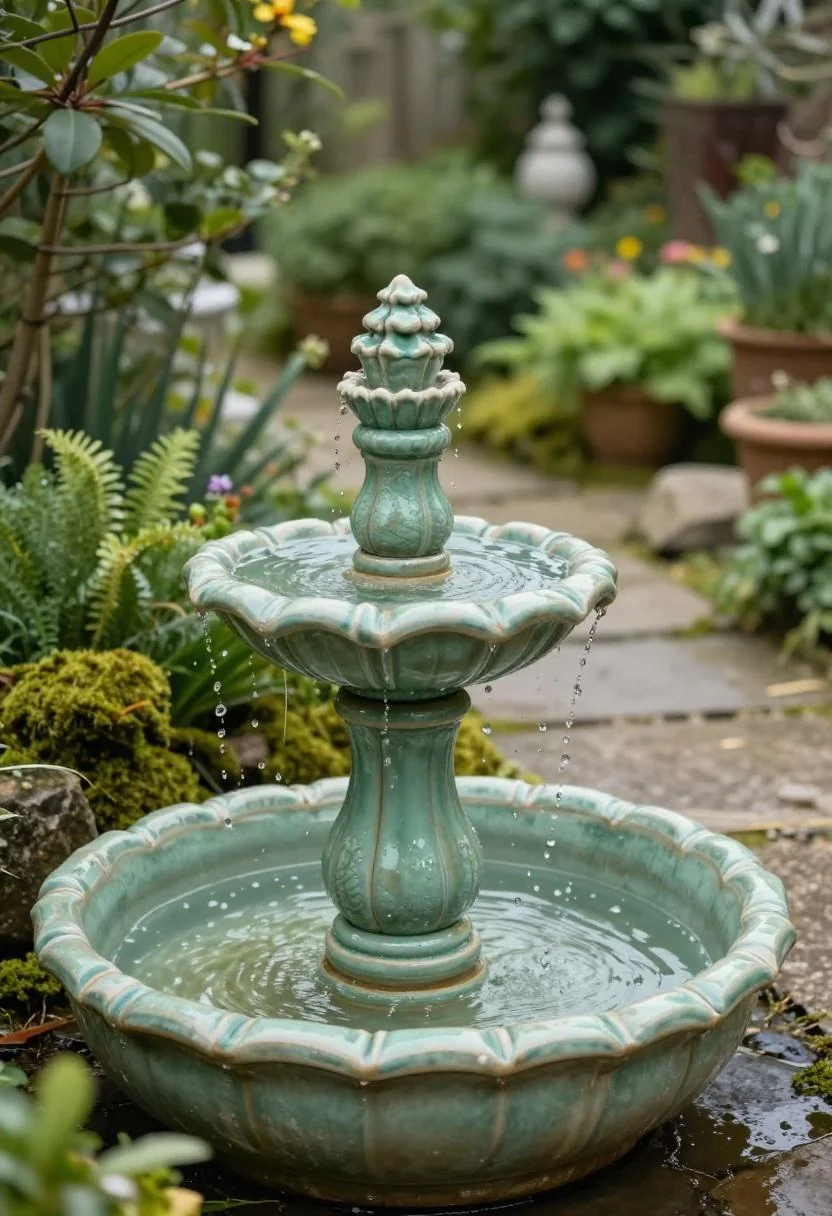
Sage green stoneware beside a cottage garden path, water trickling over mossy stones — this is the fountain that disappears into the scene. Not because it’s trying to hide, but because it belongs. Stoneware holds up beautifully outdoors; the dense clay body resists frost and absorbs less moisture than standard terracotta. Worth the slightly higher cost. Stoneware planters large enough to house a pump run around $30-50 and last decades.
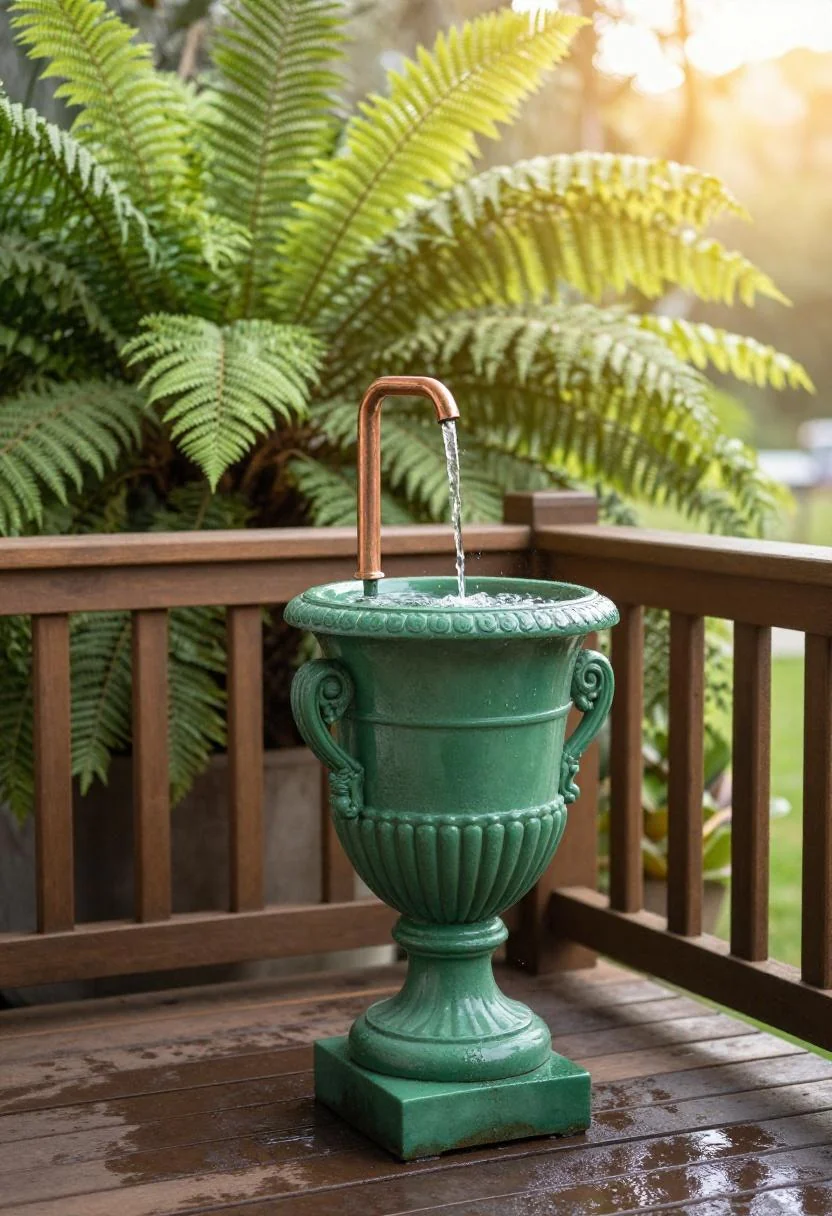
The copper spout is what makes this one sing. Jade green glaze against oxidized copper — two materials that age in parallel, developing patina and depth over seasons. Position it beside a deck railing where the late afternoon light can catch the water arc. The golden hour does half the decorating work; you just have to show up with the right pot.
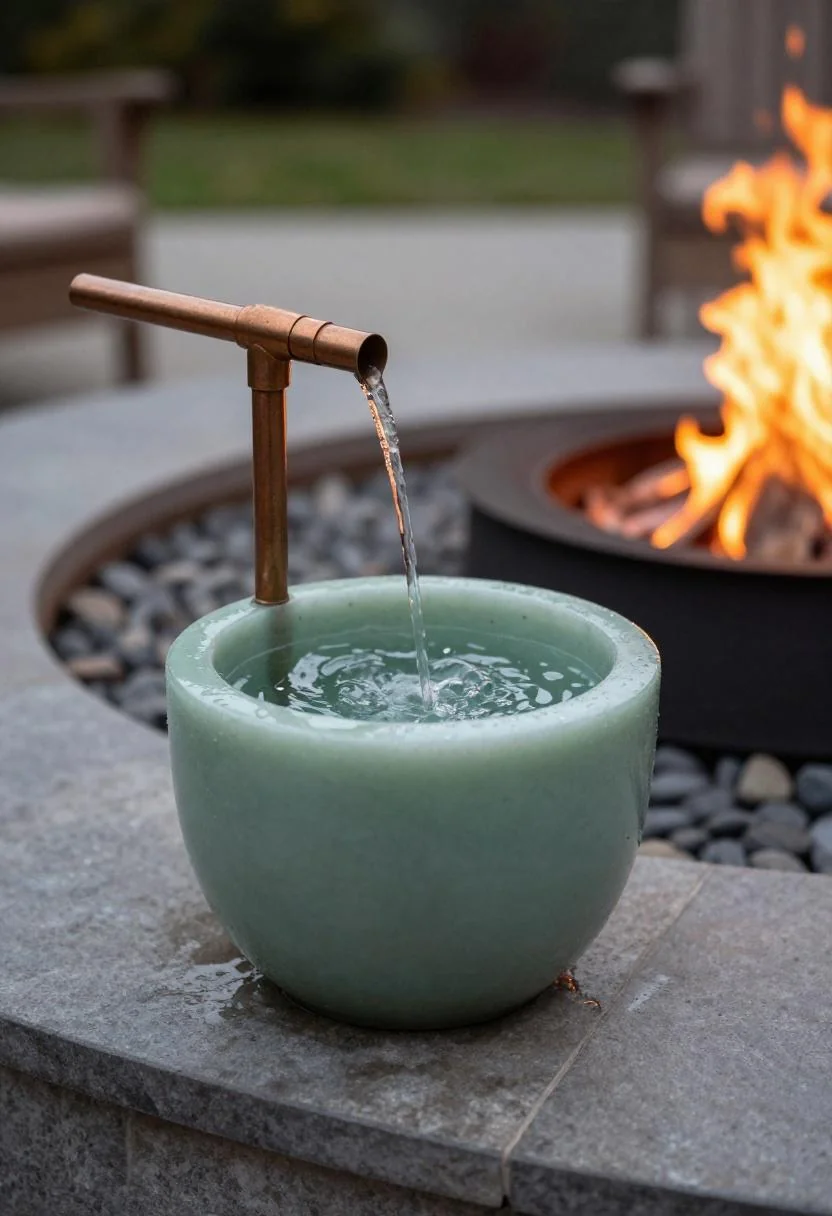
Concrete and jade glaze beside a fire pit at dusk. The copper tube bubbler here is almost architectural — a clean vertical line in an otherwise organic composition. This pairing of water and fire in the same outdoor space is worth considering deliberately. The sound of the fountain softens the crackle and gives the whole setup an alchemical quality. If you’re already thinking about fire pit placement, our outdoor fire pit ideas cover siting and materials in useful detail.
The Quiet Rebellion: Deep Colors That Hold the Room
Plum. Persimmon. Wasabi. These aren’t colors that announce themselves politely — but in the right context, against the right backdrop, they do something that neutrals can’t: they anchor a space. A deep-colored pot fountain becomes the punctuation mark the patio needed.
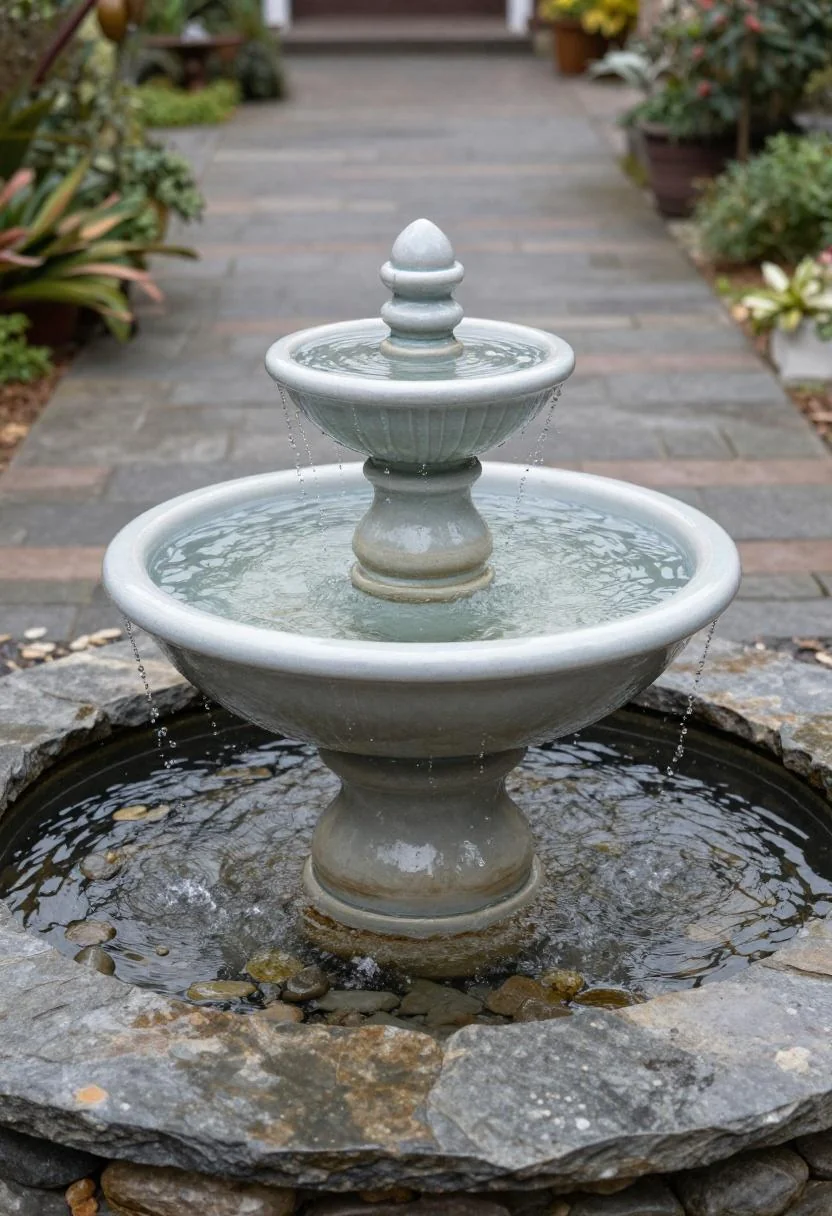
Deep plum ceramic, river stones, a slate path. The palette here is almost monochromatic — cool darks against each other — and it works precisely because nothing is competing. The water disappears into the stones below and recirculates quietly. Strip away the trend and ask: would this feel right in five years? Plum on slate? Absolutely yes.
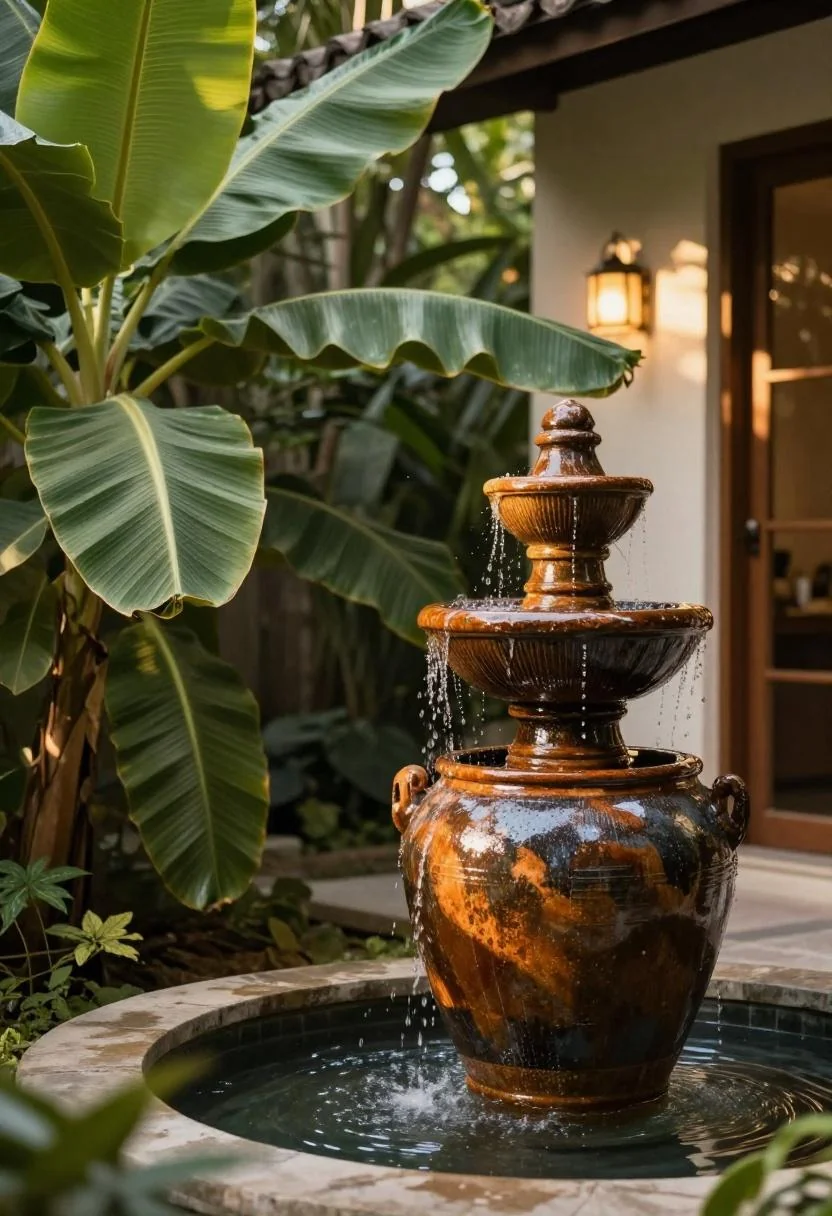
The same plum-noir color family, now framed by banana leaves on a tropical deck at golden hour. The drama here is entirely earned. Tropical foliage does what curtains do indoors — it frames, it contains, it gives the fountain a stage. If you have any large-leafed plants nearby, lean into this. The oversized greenery and the deep glaze create a composition that Elle Decor would describe as considered maximalism. I’d call it just knowing what works.
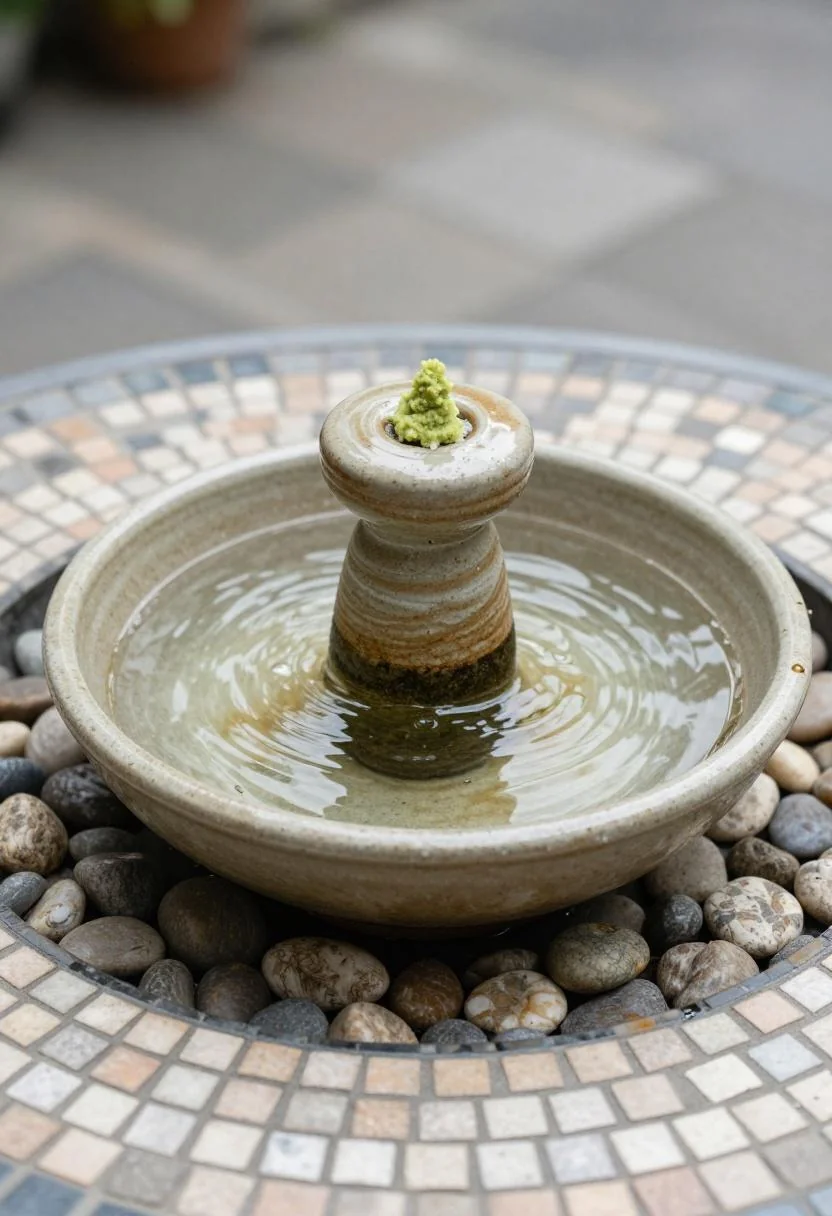
A wasabi-glazed ceramic bowl on a mosaic tile patio table — this is the tabletop fountain. Small, immediate, personal. The pebbles at the base keep the pump hidden and the water movement gentle. Midday shade is the right context: the color reads brighter in diffused light than in full sun, and the sound carries better when you’re sitting close to it. Tabletop ceramic bowl fountains in this style are also available pre-made if you’d rather skip the assembly.
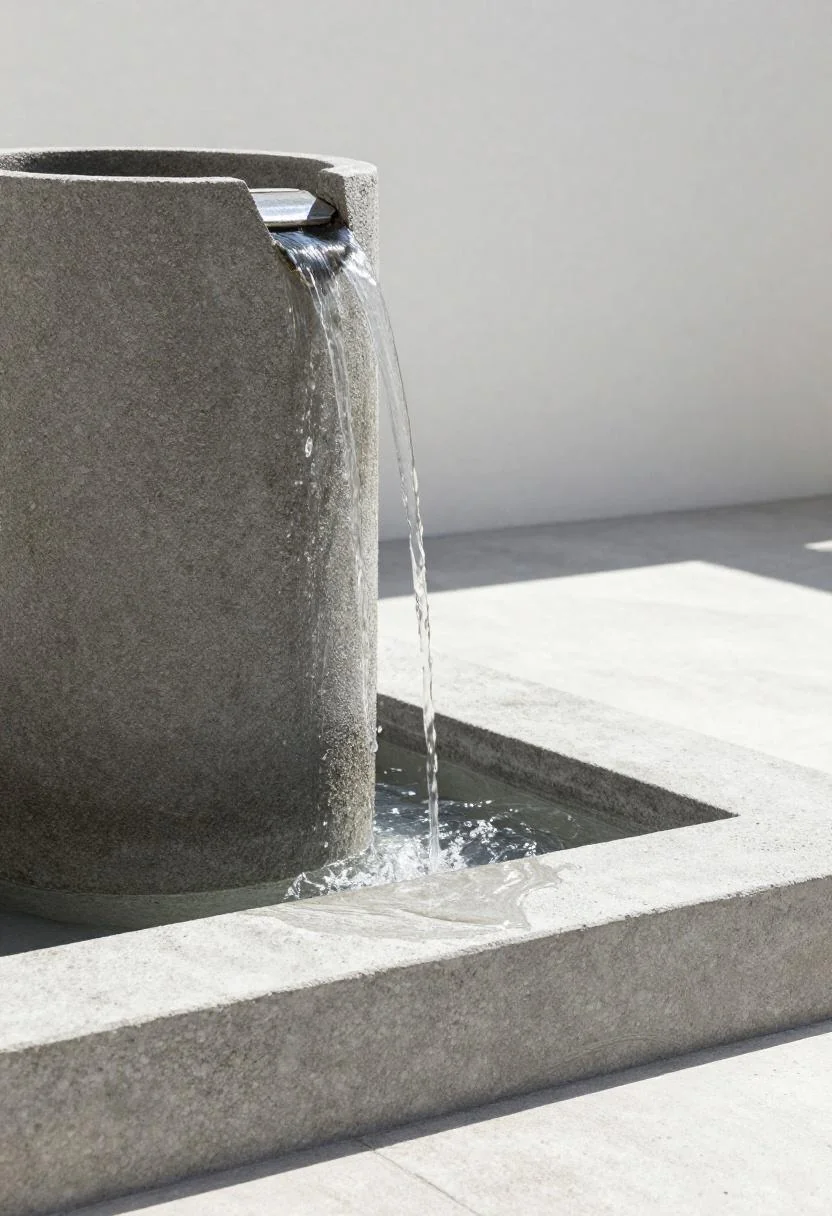
Scale the same wasabi glaze up — a tall pot, water sheeting down the outside rather than spilling from the lip, collecting in a basalt basin below. The sheeting effect requires drilling a small hole near the base of the pot and running the return line along the outside; a bead of clear silicone keeps the flow controlled. Modern, quiet, almost meditative. The basalt basin grounds it so the whole thing doesn’t read as too clever.
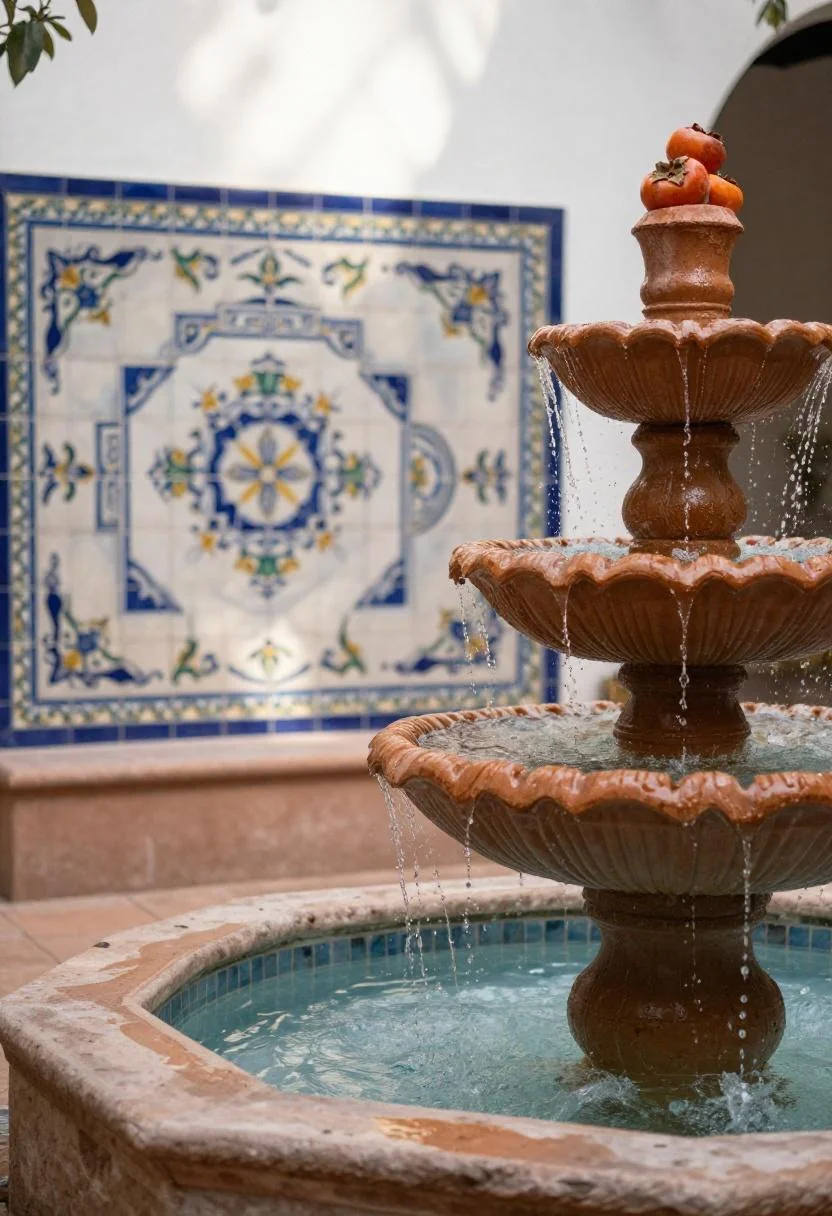
Persimmon against painted Spanish tile. This is perhaps the most location-specific fountain in this collection — it needs the backdrop to justify the color, and here the backdrop delivers completely. The warm orange-red of the persimmon glaze and the blues and whites of traditional tile create a contrast that’s been working in Mediterranean courtyards for centuries. Some combinations don’t need reinventing. As Harper’s Bazaar notes of enduring design, the best spaces borrow from what has always worked rather than chasing what’s new.
The Zen Edit: Overhead, Gravel, and the Geometry of Still Water
Some fountain designs are less about the object and more about the effect. Move the camera overhead. Change the setting from patio corner to gravel garden. The whole logic shifts.
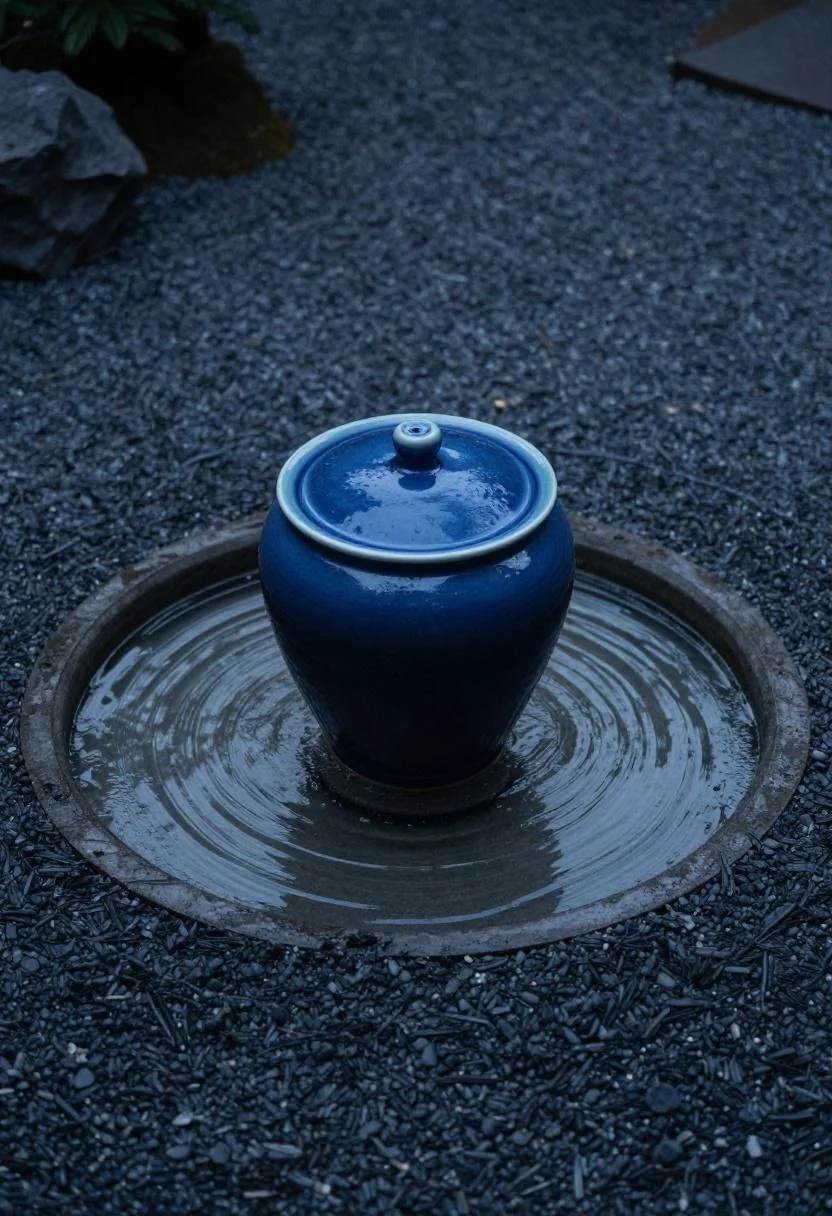
Seen from above at dusk, a cool blue ceramic pot becomes something almost abstract — concentric rings spreading outward into raked gravel, the light dropping to near-dark around the edges. This is what happens when you think about fountain placement as composition rather than decoration. The gravel is doing as much work as the pot. White or pale grey pea gravel enhances the contrast here considerably — the rings read more clearly against a light ground.
For anyone interested in taking this further — solar-powered versions that remove the need for outdoor outlets entirely — our piece on DIY solar water fountains is worth reading alongside this one.
The Evening Ones: String Lights, Dusk, and the Warm Close
The best fountain is the one you’re still sitting next to after sunset. Lighting changes everything — and these designs were made for the transition from golden hour to lamplight.
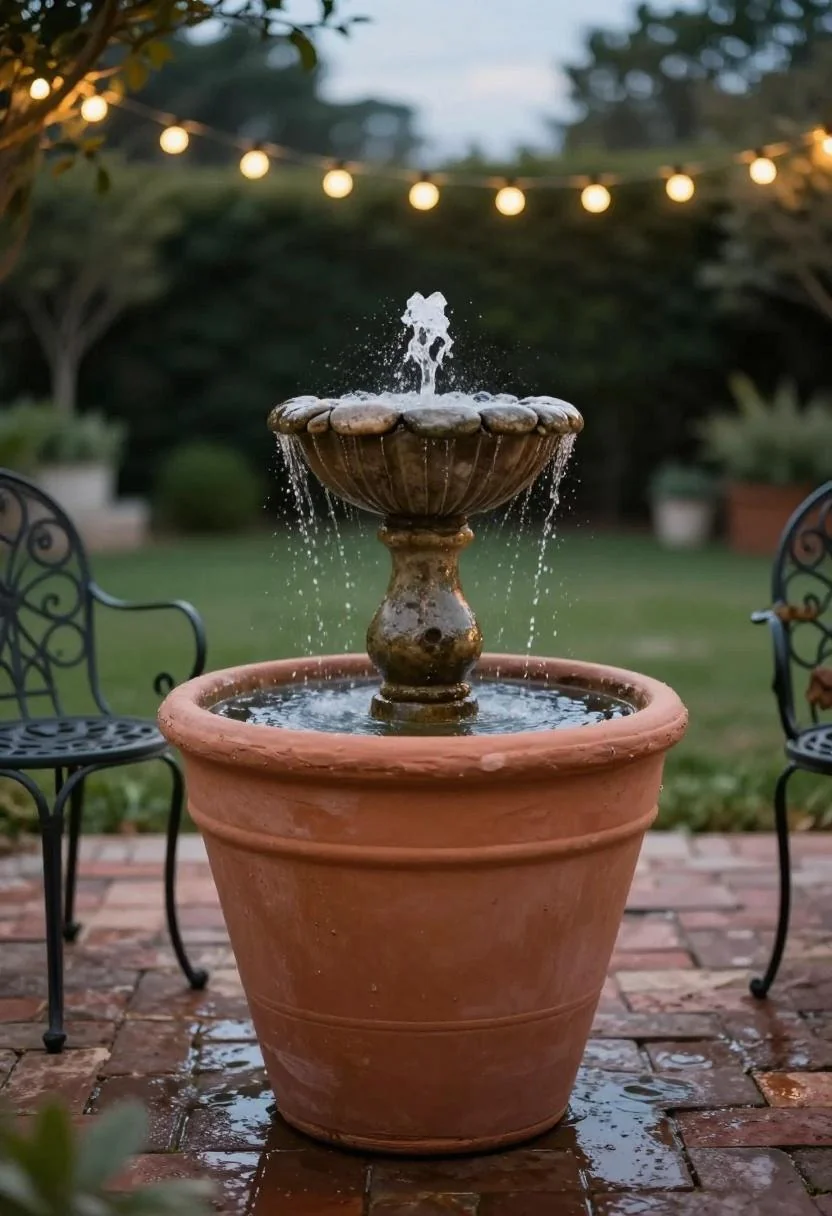
Warm terracotta, wrought iron, brick, and string lights at dusk — this is the patio that makes people stay longer than they planned. The terracotta pot fountain is secondary here; what you’re really designing is the atmosphere around it. The string lights blur into warm soft points behind the water, and the chair positioned just beside the fountain means someone is always sitting there, half-listening, entirely present. That’s the hygge argument for outdoor fountains: the sound keeps you company when you’re alone and softens conversation when you’re not.
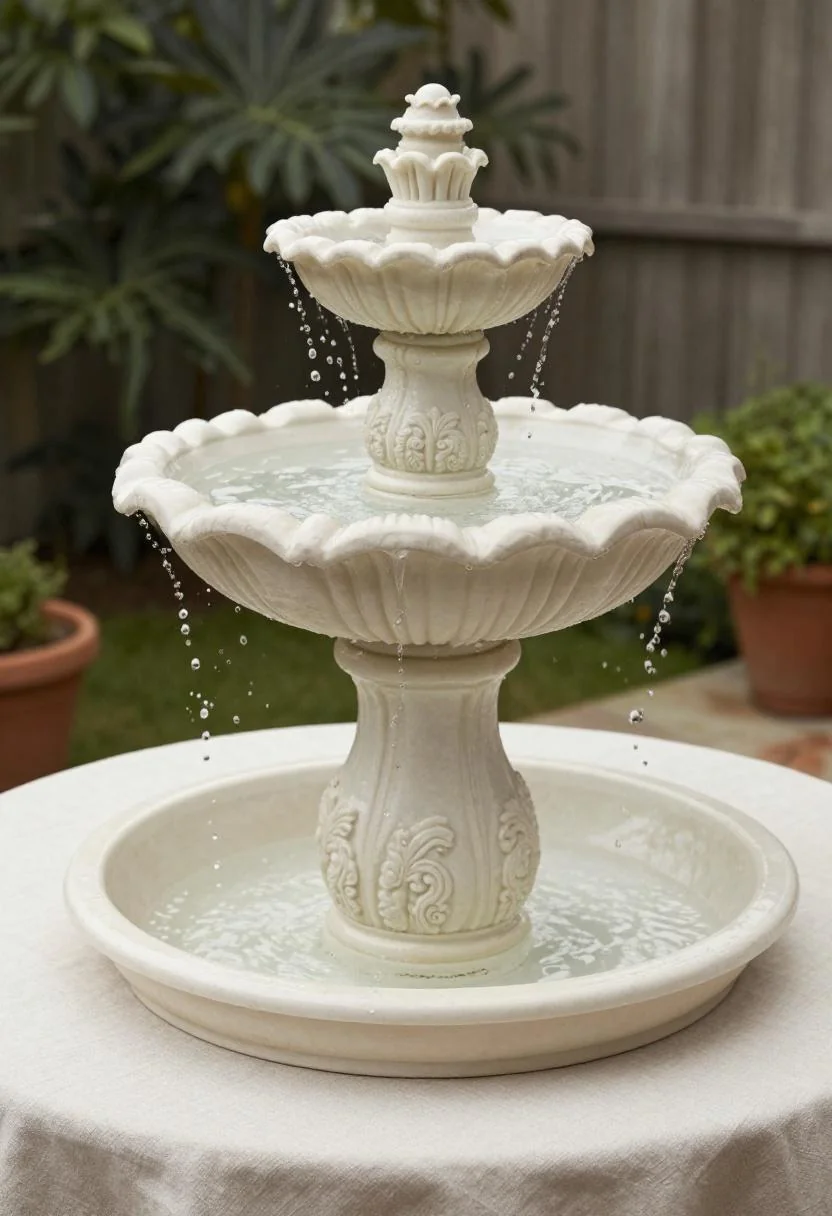
Cream white stoneware overflowing into a marble dish on a shaded balcony side table. This is the urban apartment version — compact, quiet, completely refined. The marble dish is the detail that lifts it; it’s heavier and colder than ceramic, which means the water sound on contact is slightly crisper. Worth sourcing a shallow marble tray rather than settling for a plastic basin. Quality whispers. A shallow marble tray used as a fountain basin is one of those small decisions that changes everything about how the finished piece reads.
What This Tells You: The Color and Material Takeaways
Fourteen fountains, and a clear pattern emerges. The colors that work across seasons — terracotta, cream, sage, jade — work because they reference materials already in the garden. The bolder choices — plum, persimmon, wasabi — earn their place only when they have a backdrop that can hold them. Give a bold-glazed pot nothing to work against and it just looks restless.
Material matters more than most people expect. Stoneware outlasts terracotta in freeze-thaw climates. Concrete reads more architectural. Ceramic takes glaze most beautifully. And copper — whether as a spout or a tube or just aging hardware — never looks wrong next to water.
The pump is infrastructure, not a choice. Buy a reliable one — a submersible fountain pump with adjustable flow costs under $25 and runs for years. Everything else is editing.
And don’t underestimate placement. The fountain beside a pergola becomes architecture. The fountain on a side table becomes intimacy. The sound is the same; the experience isn’t.
Start with one pot. One pump. One material you genuinely like. The rest resolves itself.
This post contains affiliate links. We may earn a commission at no extra cost to you.
Images in this article were created with AI assistance.