There’s a particular kind of object that decorators keep rediscovering — not because it’s novel, but because it has the quiet authority of something that was never really trying. The vintage milk can is that object. Heavy, imperfect, bearing the dents of actual use — it carries a wabi-sabi honesty that a $400 ceramic vessel from a concept store simply cannot fake. And right now, styled with the restrained intention of Japandi sensibility, it might be the most interesting thing you can bring into a home.
Let’s be honest, though: most people get this wrong. They cluster three milk cans together on a farmhouse porch and call it “rustic chic.” That’s not a design decision — that’s a Pinterest reflex. Real Japandi styling with these pieces demands the opposite impulse: restraint, considered placement, and an almost aggressive commitment to negative space. One can, placed with intention, says more than five arranged carelessly.
The Gate Moment — Where It All Begins
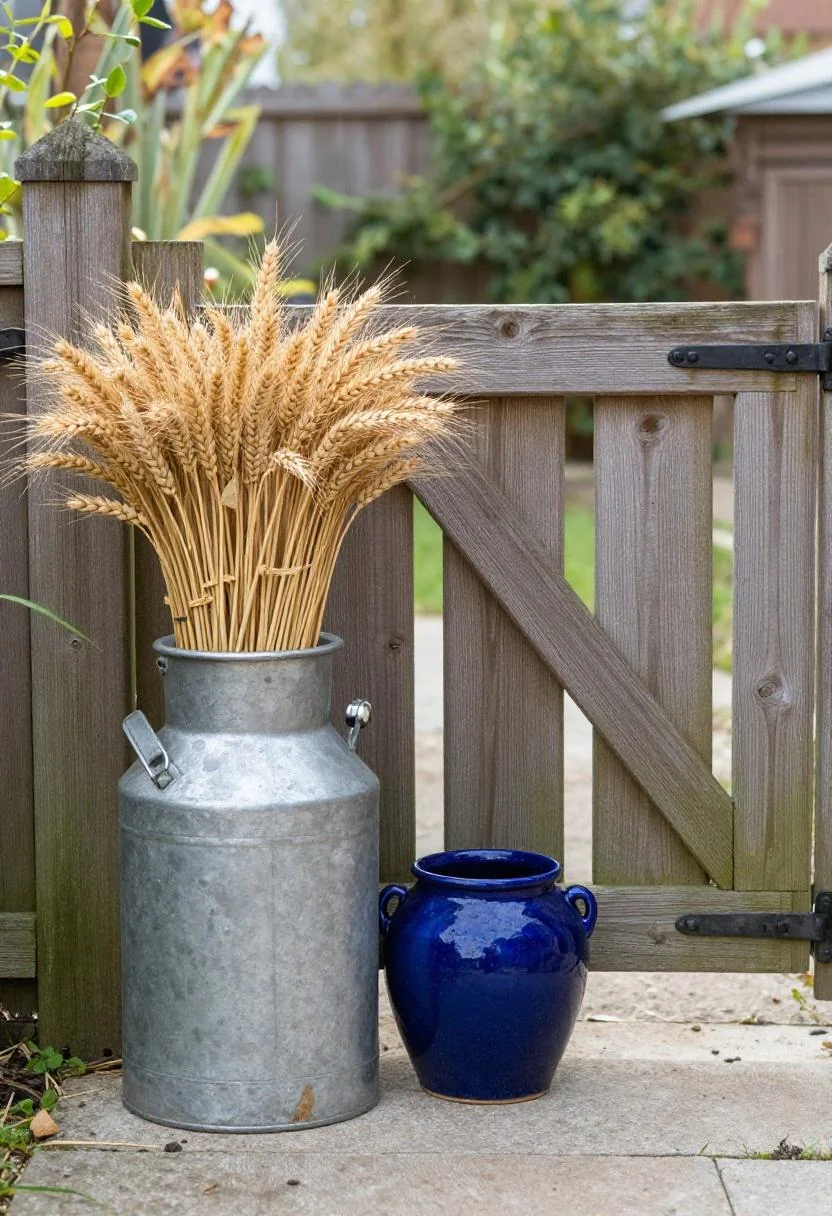
A weathered milk can standing at the threshold of a garden gate, holding dried wheat stalks in cool morning light — this is the image I keep returning to. The blue-grey patina of aged steel against the warmth of the wheat reads like a Japanese woodblock print: minimal geometry, maximum feeling. This is the hill I’ll die on regarding entryway styling: the approach to a garden should prepare you emotionally for what’s inside. Not announce it loudly. Prepare it. A single worn can with a few wheat stalks achieves this far more successfully than any elaborate garden arbor with gate arrangement stuffed with seasonal blooms. The restraint is the whole point.
Shop vintage galvanized milk cans in aged steel finishes — the pre-dented ones are almost always better than the artificially distressed versions sold as “farmhouse décor.”
Dramatic Corners: The Brick Patio Treatment
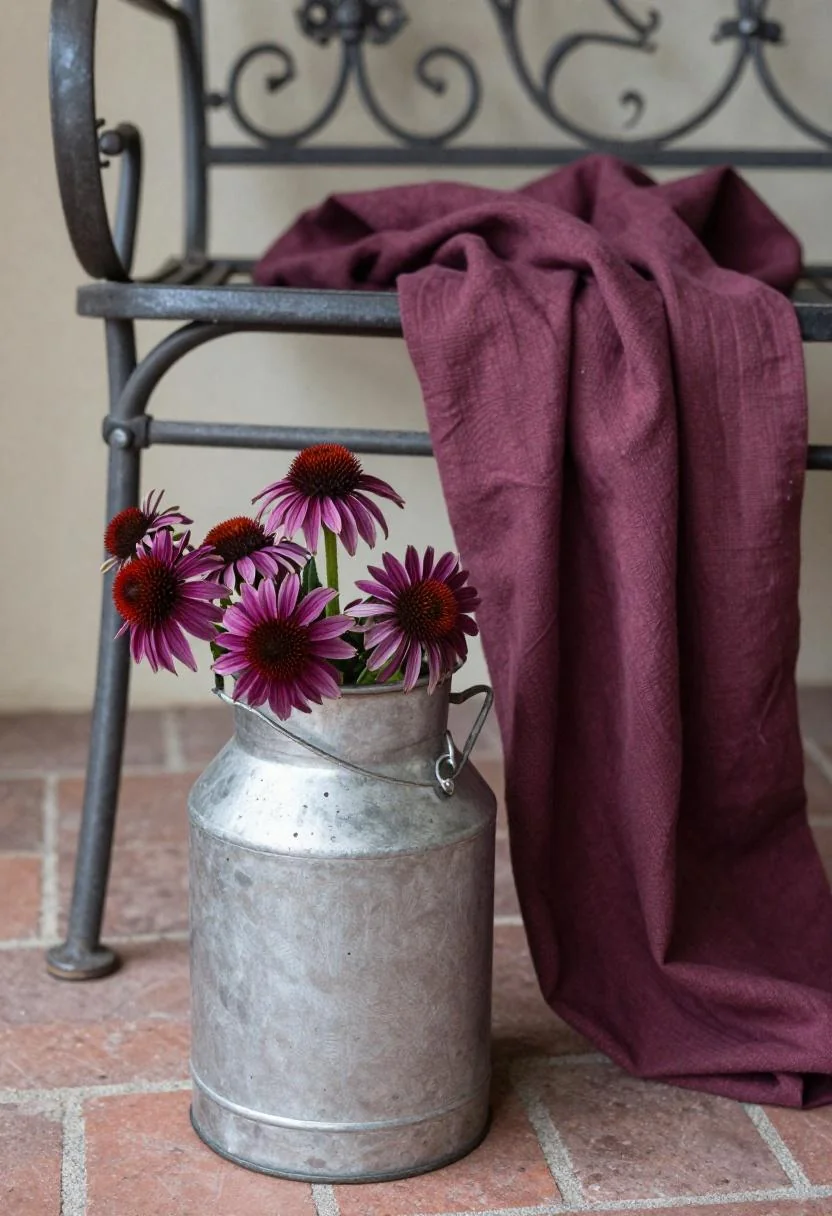
Plum echinacea spilling from a cast iron milk can at a brick patio corner — and here’s where Japandi gets complicated, and interesting. The deep plum-noir palette of the echinacea is anything but minimal. But the iron vessel grounds it. The brick gives texture without color. What you get is controlled drama, which is a different animal entirely from mere ornamentation. Architectural Digest has long championed this kind of tonal play in outdoor spaces — the idea that a single chromatic punch, contained within a disciplined material palette, creates impact without chaos.
Cast iron is heavier and more permanent-feeling than galvanized steel. Place it in a corner and it stays there — not because it’s heavy, but because it looks like it belongs. Don’t move it seasonally. Let the planting change; let the can develop its own relationship with weather and time.
Overhead and Unexpected: The Cedar Deck Composition
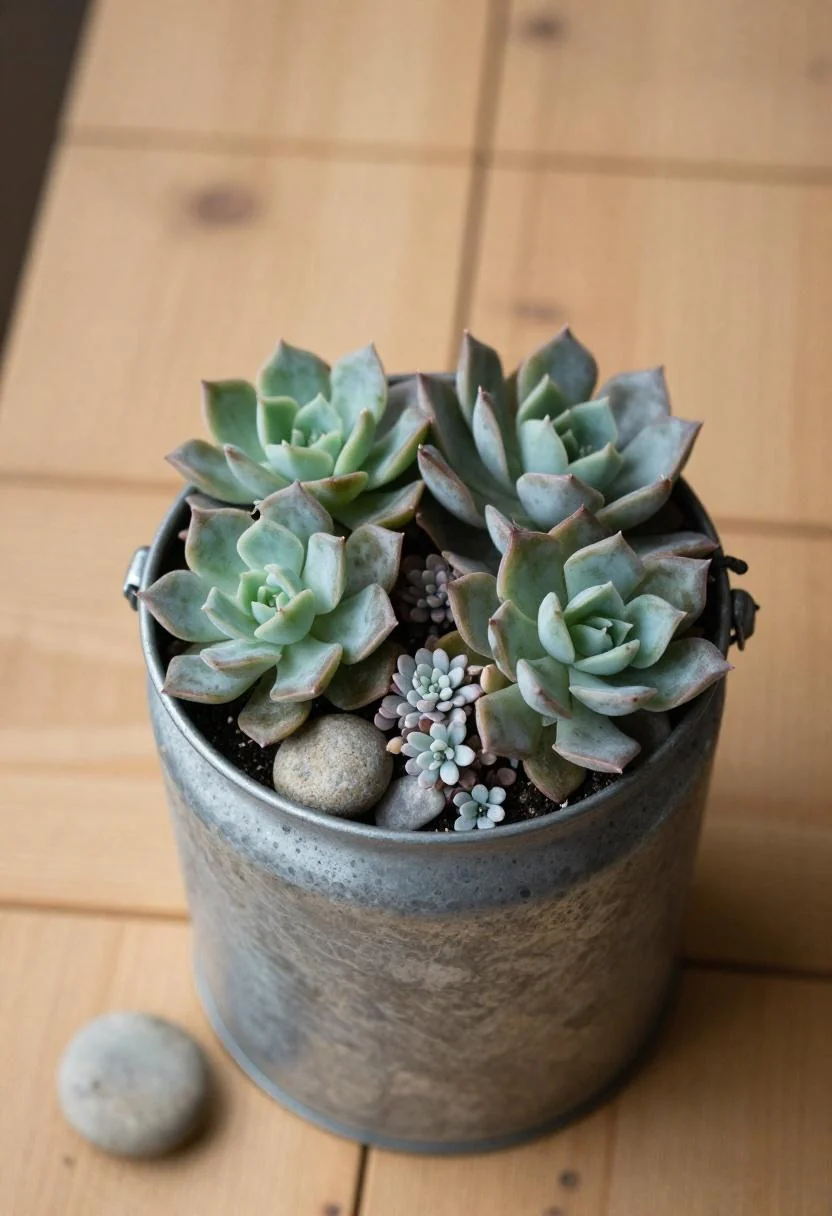
Seen from above, a steel milk can planted with wasabi-green succulents on cedar decking becomes something else entirely — a graphic, almost abstract composition. The warm grey of the steel, the honeyed brown of weathered cedar, and that particular yellow-green that sits just outside conventional “sage” all resolve into something that looks more Scandinavian design archive than country garden.
Succulents in milk cans are practical, too — drainage is forgiving, the metal heats up in sun to replicate the dry conditions these plants prefer. But don’t plant an entire collection. One can, three varieties of succulent at most, in a wasabi-to-grey tonal range. The overhead angle is worth engineering: if you have a deck, lay a blanket down sometime and look at your arrangements from below. You’ll be shocked how many things need editing.
Shop succulent assortment packs — look for tone-on-tone green varieties rather than the multicolored mixes, which tend toward the chaotic.
Golden Hour and Galvanized: The Farmhouse Porch
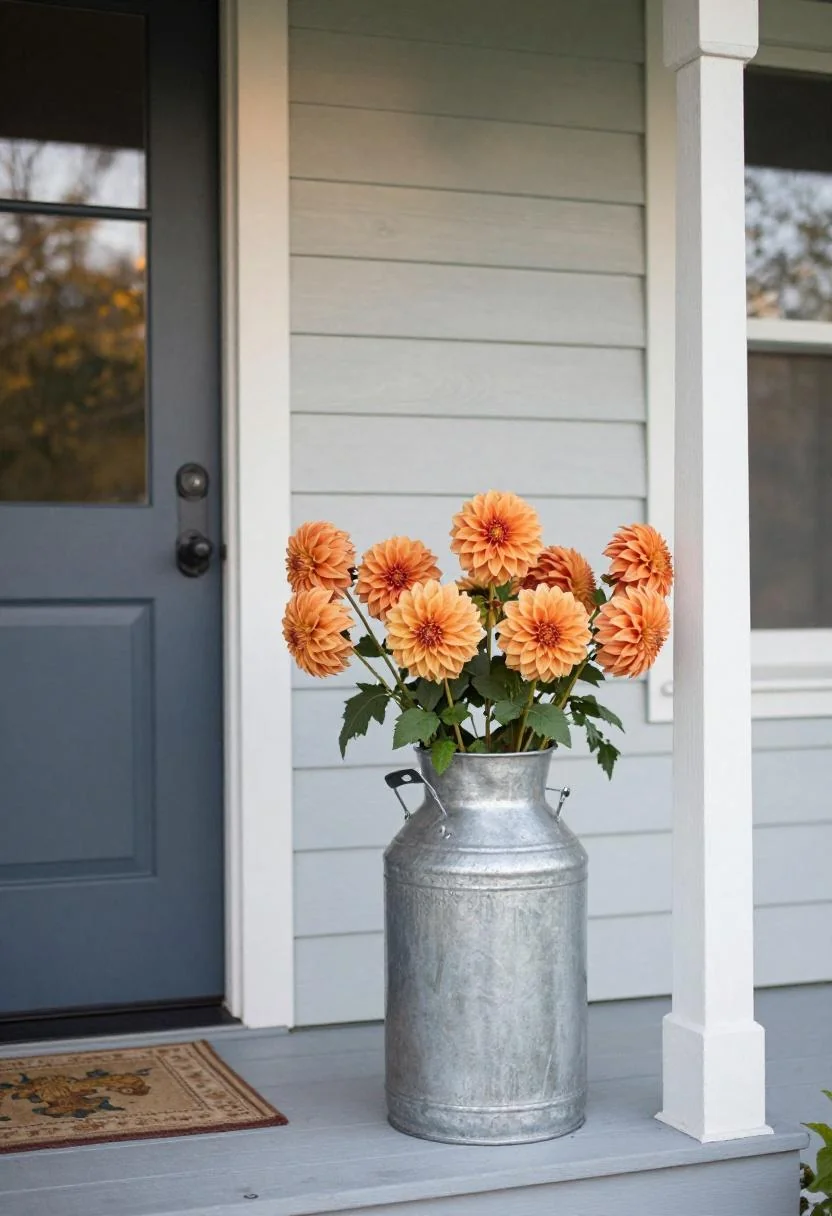
This one stops me cold every time. A galvanized can dense with persimmon dahlias beside a porch step at golden hour — the orange-amber of both the flowers and the light becoming briefly indistinguishable. It’s the kind of image that makes you understand why the Japanese concept of ma (the beauty of the interval, the pause between things) extends to time of day as much as to space. If you style this arrangement, plan to see it at 6pm in late summer. That’s when it’s actually happening.
For a warm harvest palette that extends through autumn, this pairs beautifully with the ideas in our golden sunlight aesthetic décor guide — the persimmon-to-amber spectrum has more decorating range than most people give it credit for.
Mediterranean Tile and the White Can Paradox
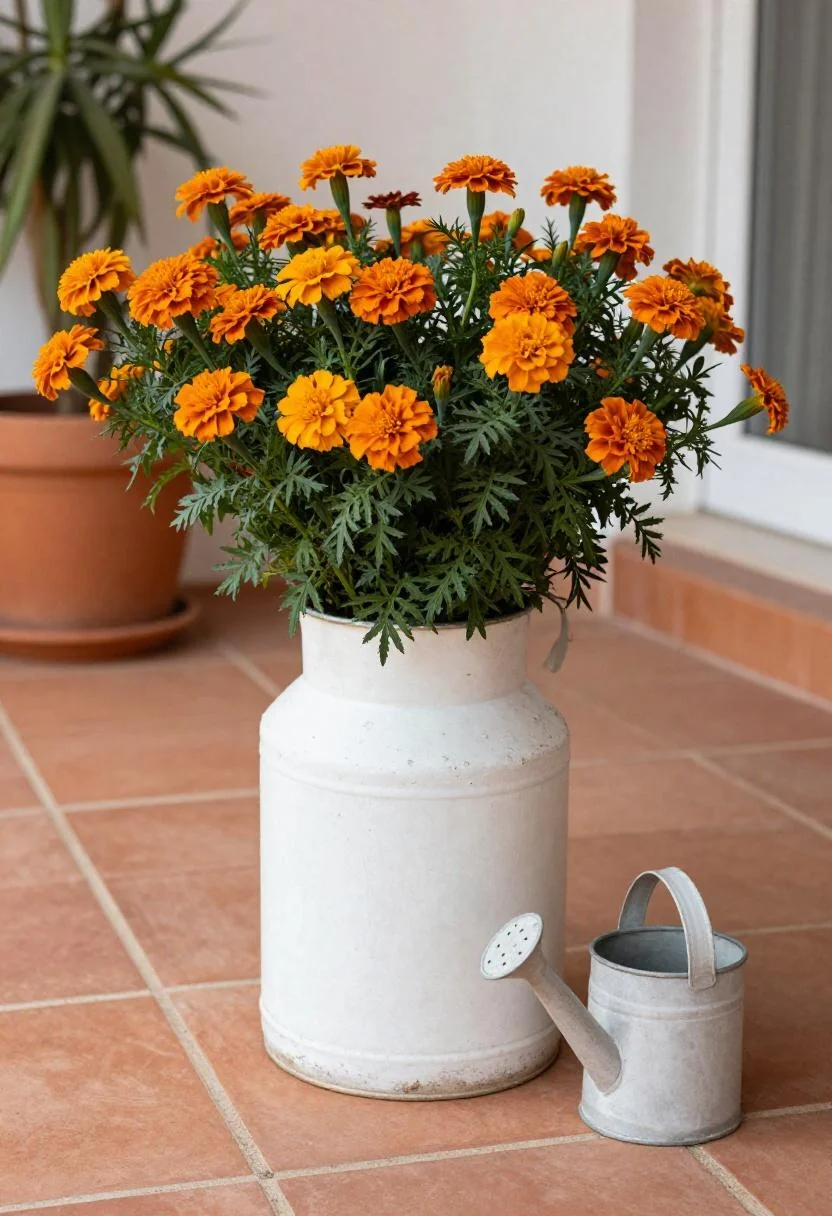
Controversial take: white milk cans are harder to use well than their rusted, aged counterparts. The whitewashed or painted can reads as decorative intention immediately — it announces itself. Which means the surrounding context has to carry the weight. Here, terracotta marigolds against Mediterranean encaustic tile do exactly that. The warm terracotta of the marigolds picks up the earthy undertone in the tile; the white can acts as a pause between the two. It works because nothing is fighting for dominance. Use a white can only when the surrounding palette has this kind of inherent structure — not as the feature, but as the breath between features.
The Dusk Balcony: Stillness as a Design Principle
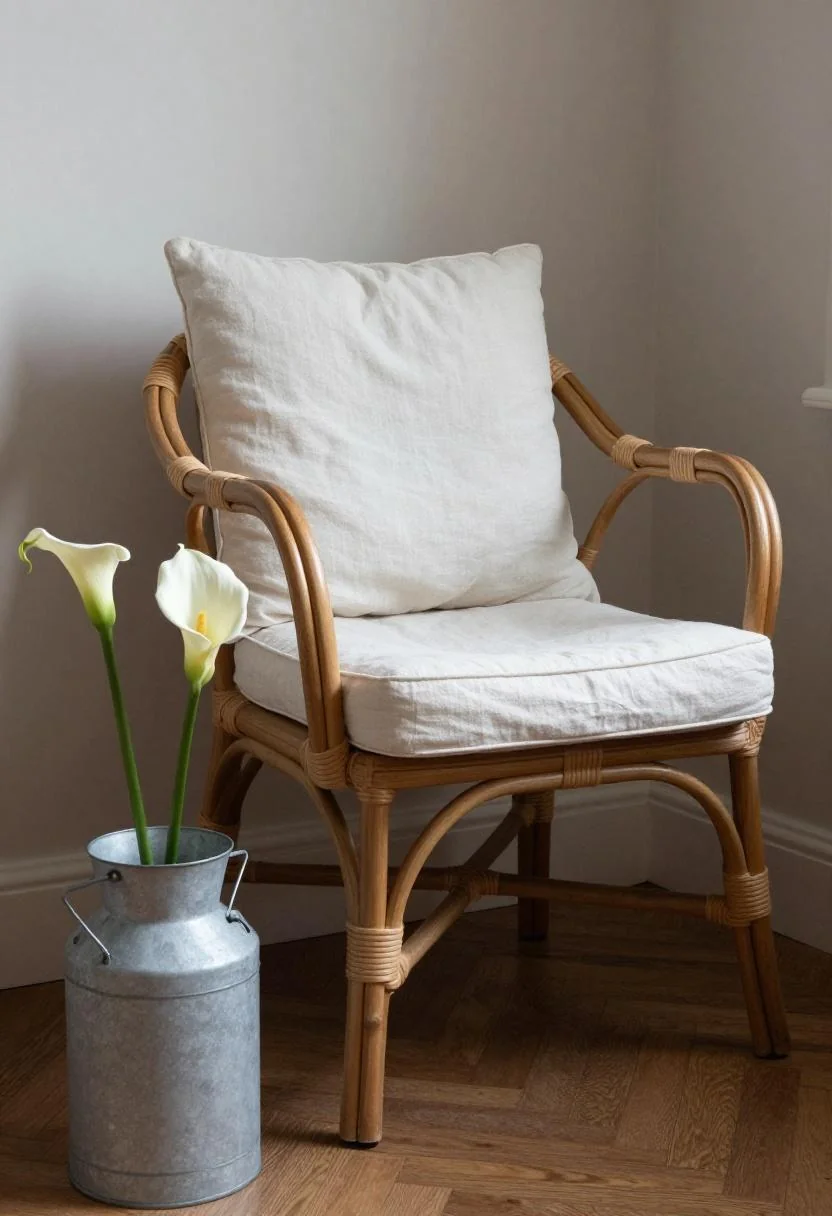
A single cream calla lily in a milk can beside a rattan chair at dusk. That’s the entire composition. And that is enough — more than enough. This is wabi-sabi operating at full strength: the acceptance that one thing, beautifully placed, in the right light, at the right hour, is a complete statement. The rattan chair introduces warmth and texture; the cream of the lily is almost the same temperature as the evening sky. You’re not decorating a balcony. You’re creating a condition for a particular kind of stillness.
Shop white calla lily bulbs — plant in spring for late summer blooms that carry exactly this cream-ivory tone.
The Working Garden: Sage, Rosemary, and the Beauty of Function
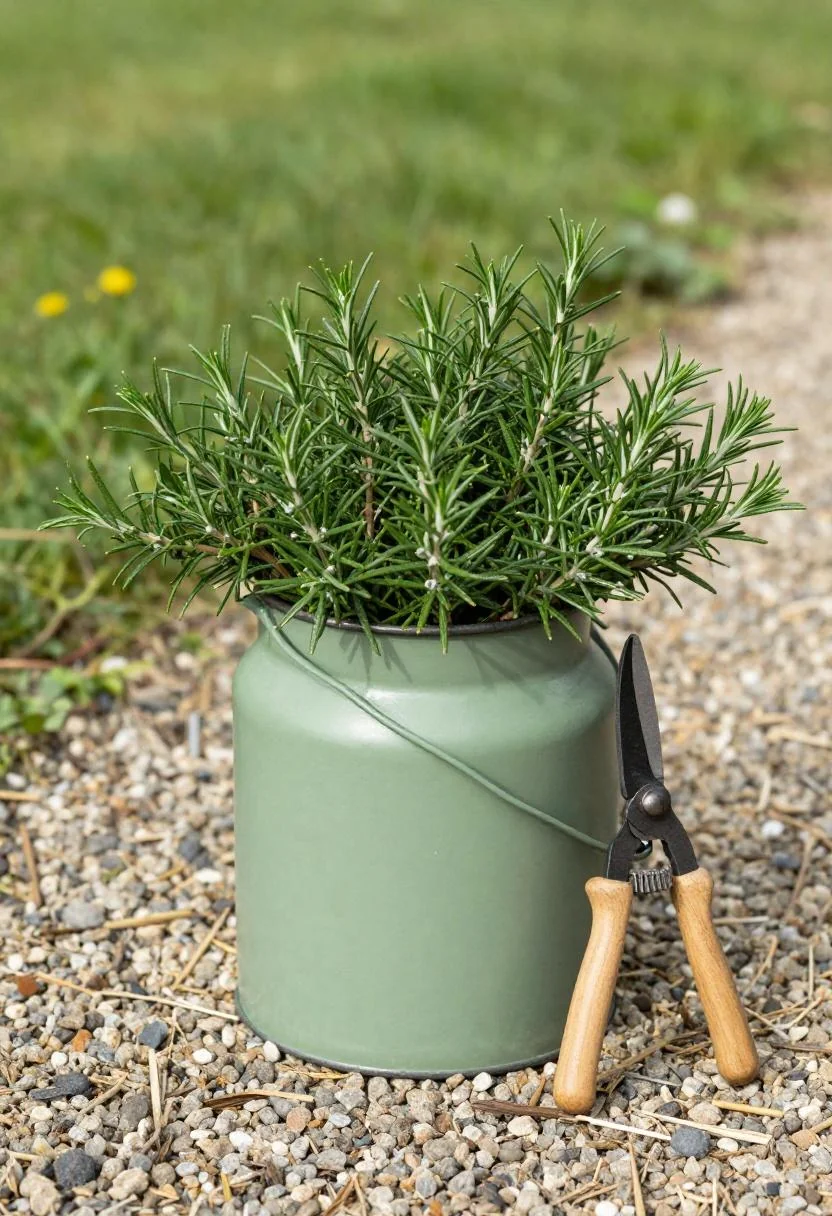
Here’s what nobody’s telling you about Japandi garden styling: the most compelling arrangements are the ones that look like they’re actually being used. A sage-green painted milk can holding rosemary along a garden path, pruning shears resting against it in the morning light — this is a working tool positioned with aesthetic awareness. The Shaker design tradition understood this instinctively: objects made beautiful by fitness to purpose. The sage of the can echoes the grey-green of the rosemary without matching it exactly. That slight dissonance is intentional. It looks alive.
If your garden path needs more visual structure, our guide to creative landscape edging ideas addresses exactly how to give a working garden the kind of quiet geometry that makes these moments pop.
Shop sage green chalk paint for metal — purpose-made for exterior metal surfaces, no primer required.
Cottage Porches Done Right — and Very Easily Done Wrong
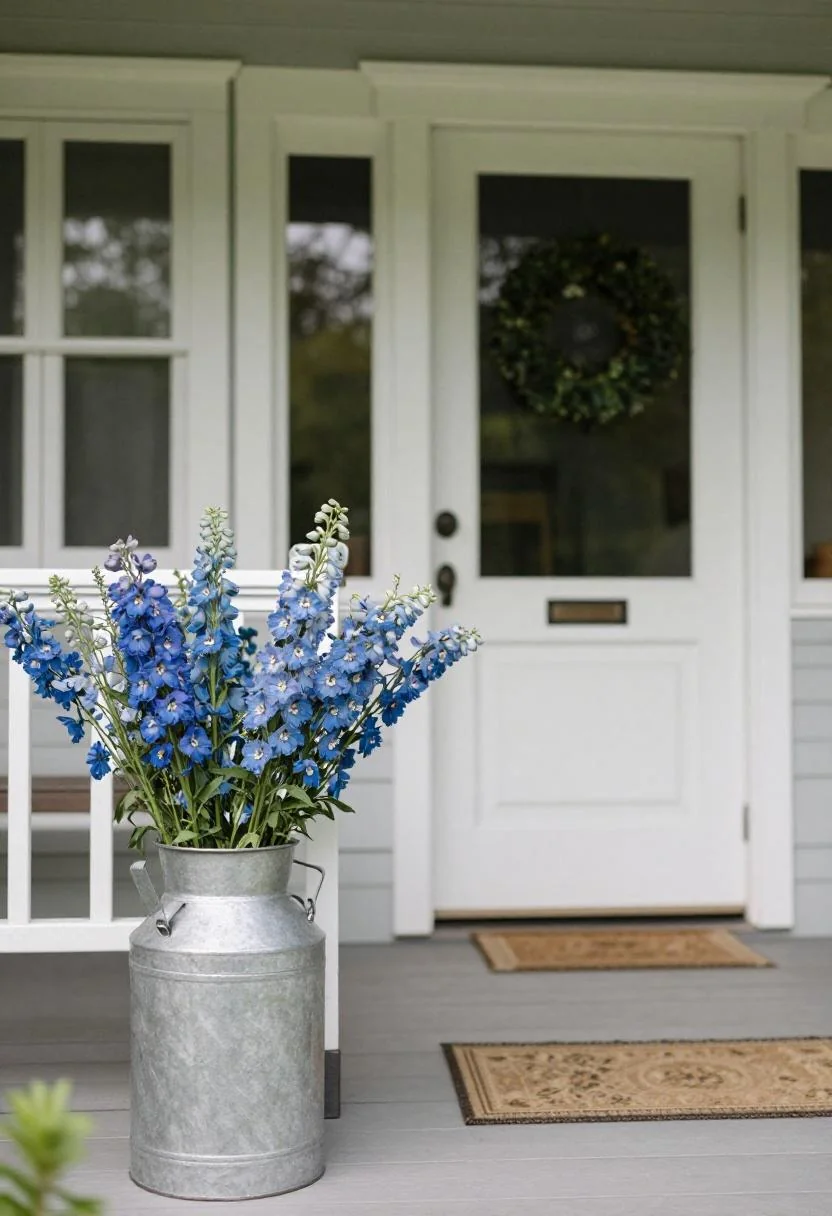
Blue delphinium in a milk can, tucked into the corner of a cottage porch railing. The cool blue reads almost lavender in certain light — and against the white-painted wood of the railing, it has the quality of a watercolor wash rather than a hard decorative statement. Cottage porches invite excess. Resist. Tuck the can into a corner, let the railing do the structural work, and allow the delphinium to be the only thing you’re actually looking at. Everything else is architecture.
Fire Pit Drama — The Lantern Move
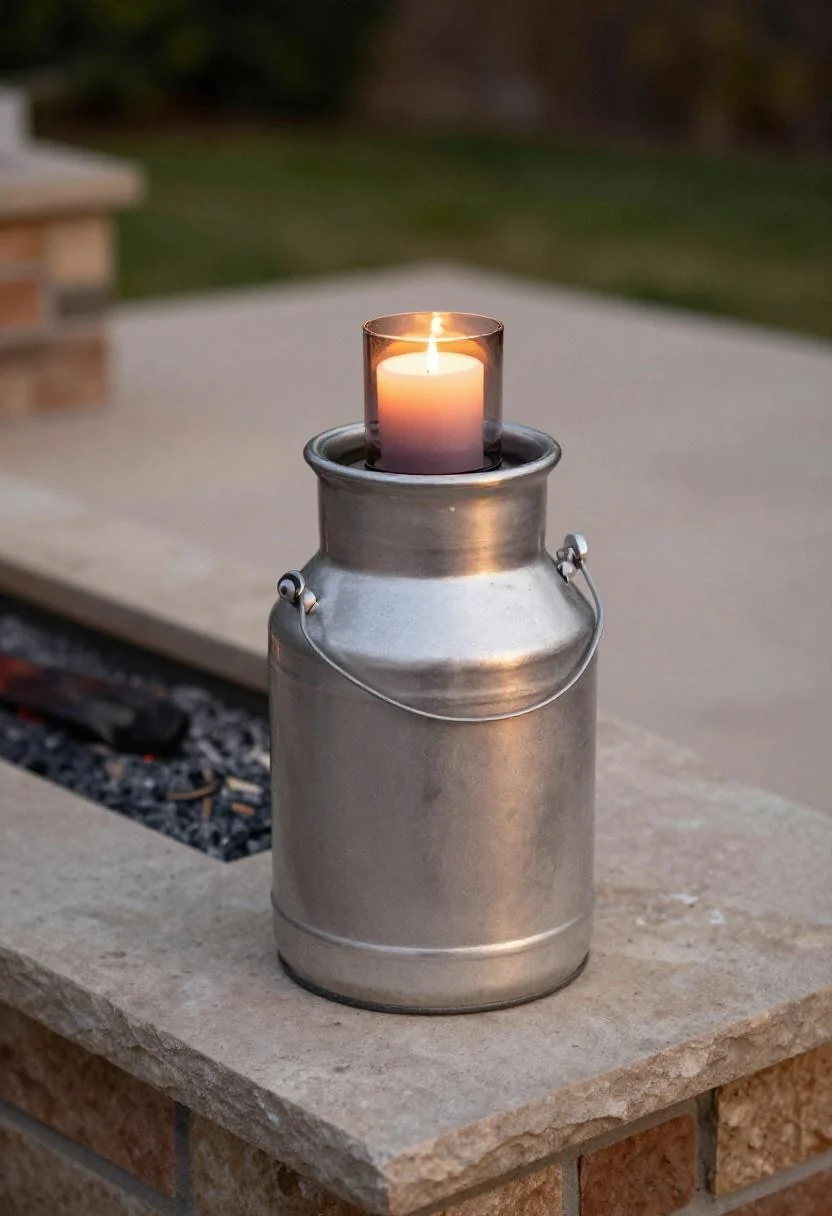
Not every milk can needs to hold a plant. This is worth saying plainly. A cast iron can holding a plum-toned lantern on a fire pit stone ledge at golden hour — this is layered light, and it works precisely because the milk can is being used as a weight-bearing stand rather than a vase. The lantern’s plum glass deepens as the fire below it brightens. The iron absorbs the warmth of the stone. This is the kind of outdoor vignette that Elle Decor consistently highlights as the shift from “backyard” to “outdoor room” — it’s the introduction of interior-grade deliberateness into exterior space.
For the broader fire pit setting, our roundup of outdoor fire pit area ideas covers everything from stone placement to seating arrangements — worth reading alongside this.
Shop plum outdoor lanterns — look for metal-framed styles with colored glass panels for this particular effect.
Tropical Minimalism — Is That Even Possible?
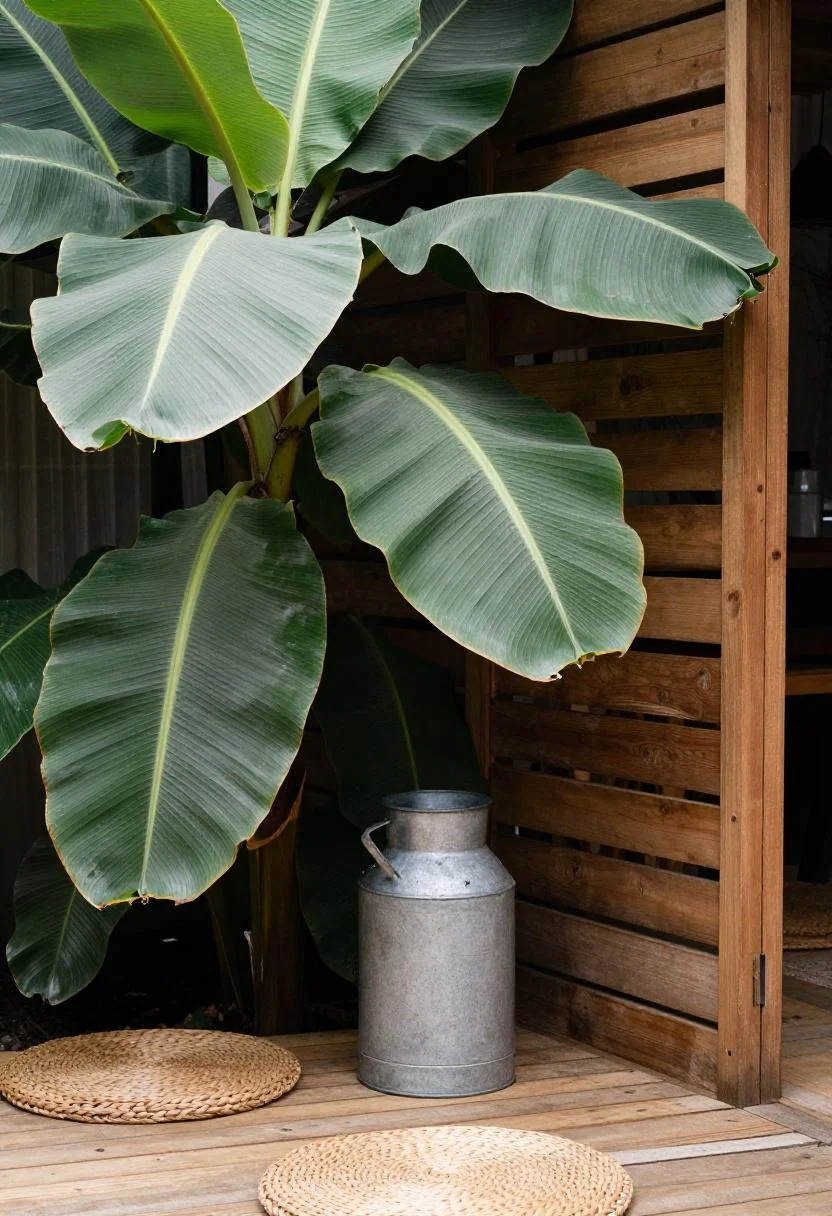
Apparently yes. A milk can overflowing with wasabi-toned banana leaves against a teak privacy screen — the lushness of the foliage is contained by the hardness of both the metal and the wood. The yellow-green of the leaves has a clarity that reads almost neon against the warm brown of the teak, but because everything else is stripped back, it holds. This is the Japandi answer to tropical maximalism: one explosive botanical gesture, surrounded by absolute material discipline. As Harper’s Bazaar observed in their deep dive on Japandi interiors, the style’s genius is in knowing precisely when to allow one element to be extravagant.
The Single Stem: Architectural Restraint
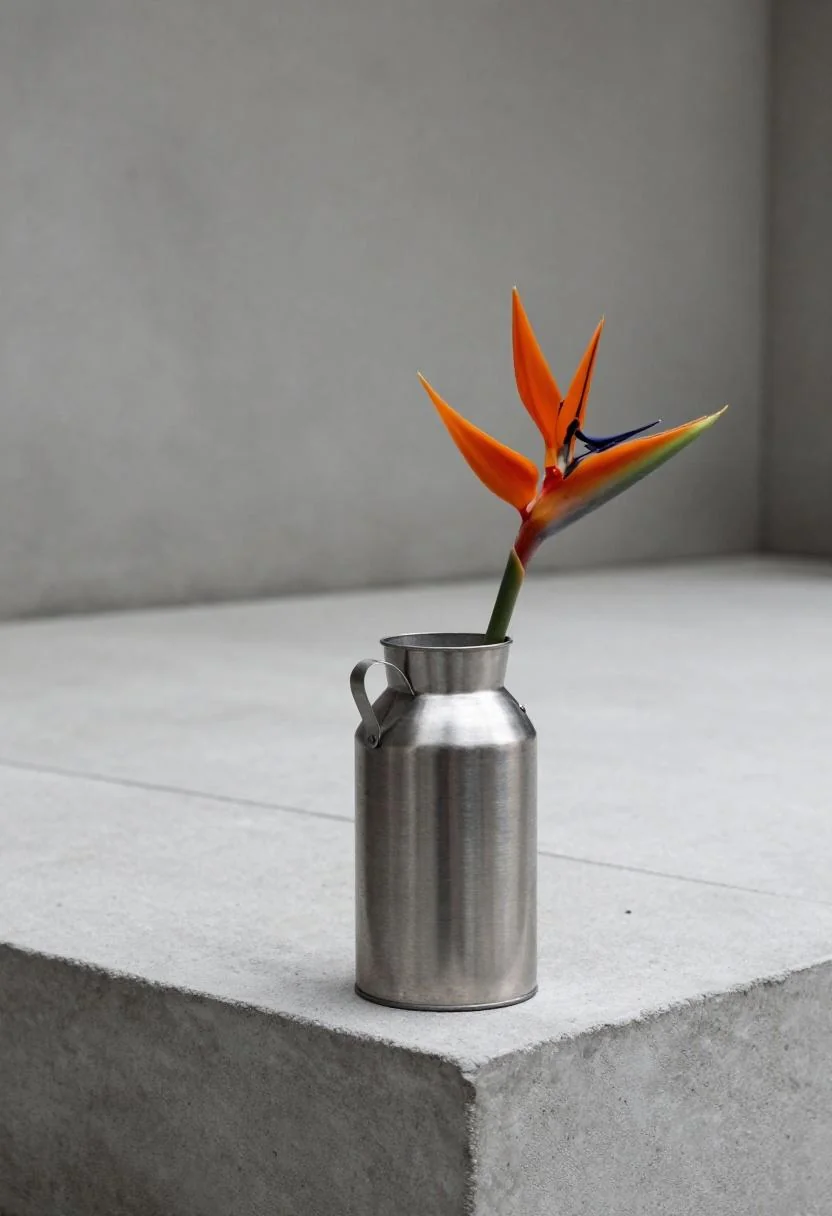
One stem. That’s all. A brushed steel milk can holding a single persimmon Bird of Paradise on a concrete patio — and the concrete is doing essential work here. Against the flat grey of the slab, the orange of the Bird of Paradise burns. The brushed steel of the can is the mediating element, simultaneously warm and cool. This is the arrangement that requires the most confidence to execute, because the instinct is always to add more. Don’t. The single stem in the right vessel is the most decisive statement in the Japandi toolkit. It says: I know exactly what I’m doing. (Even if it took three attempts to get there.)
Shop Bird of Paradise stems — available as cut flowers from most specialty florists, and worth the cost for the duration they hold.
Dried Lavender at Dusk: The Long Game
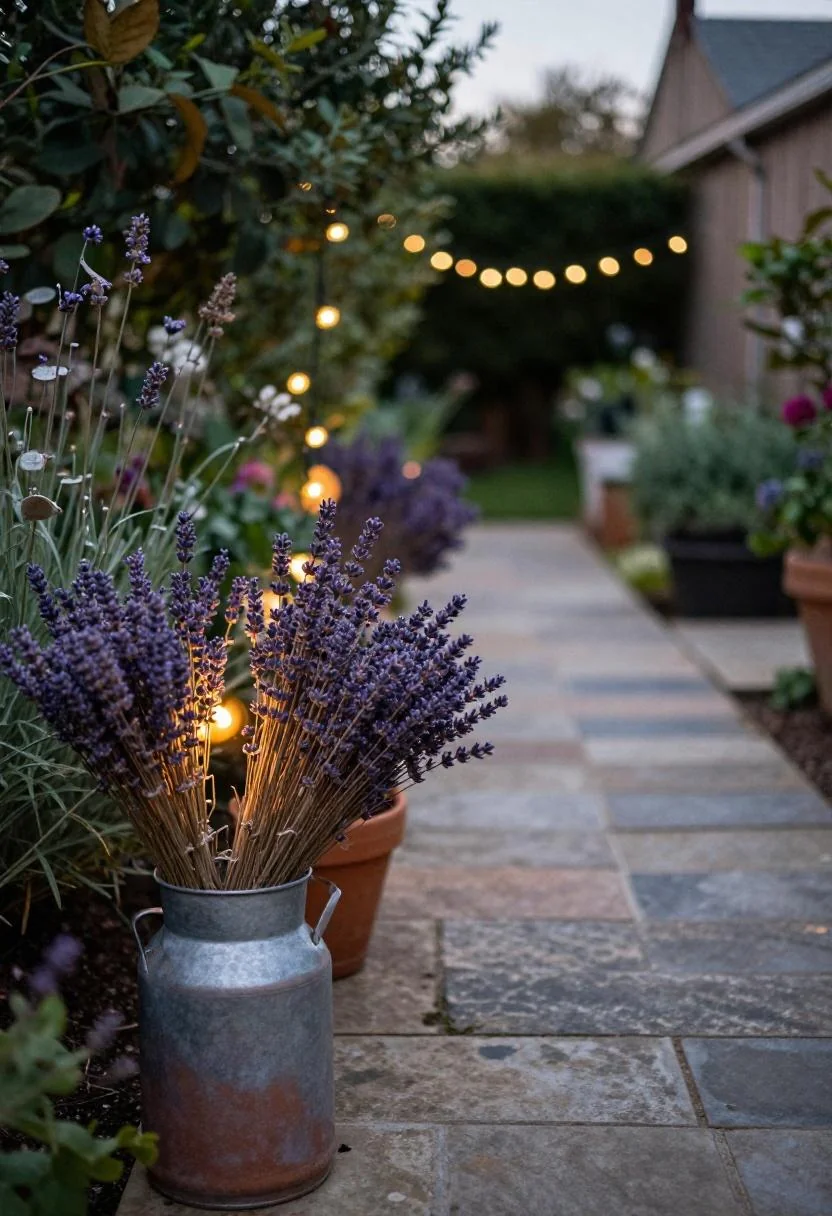
A terracotta-painted milk can holding dried lavender beside a stone path at dusk. This arrangement improves over time — the lavender dries deeper into grey-purple, the terracotta patinas slightly, the stone path accumulates moss at its edges. Six months from now, this will be better than it is today. That is not something you can say about fresh flower arrangements or seasonal decorations. The Japandi sensibility prizes exactly this: objects that participate in time rather than resist it. Place this at the edge of a garden path and leave it alone.
The Table Centerpiece That Actually Works
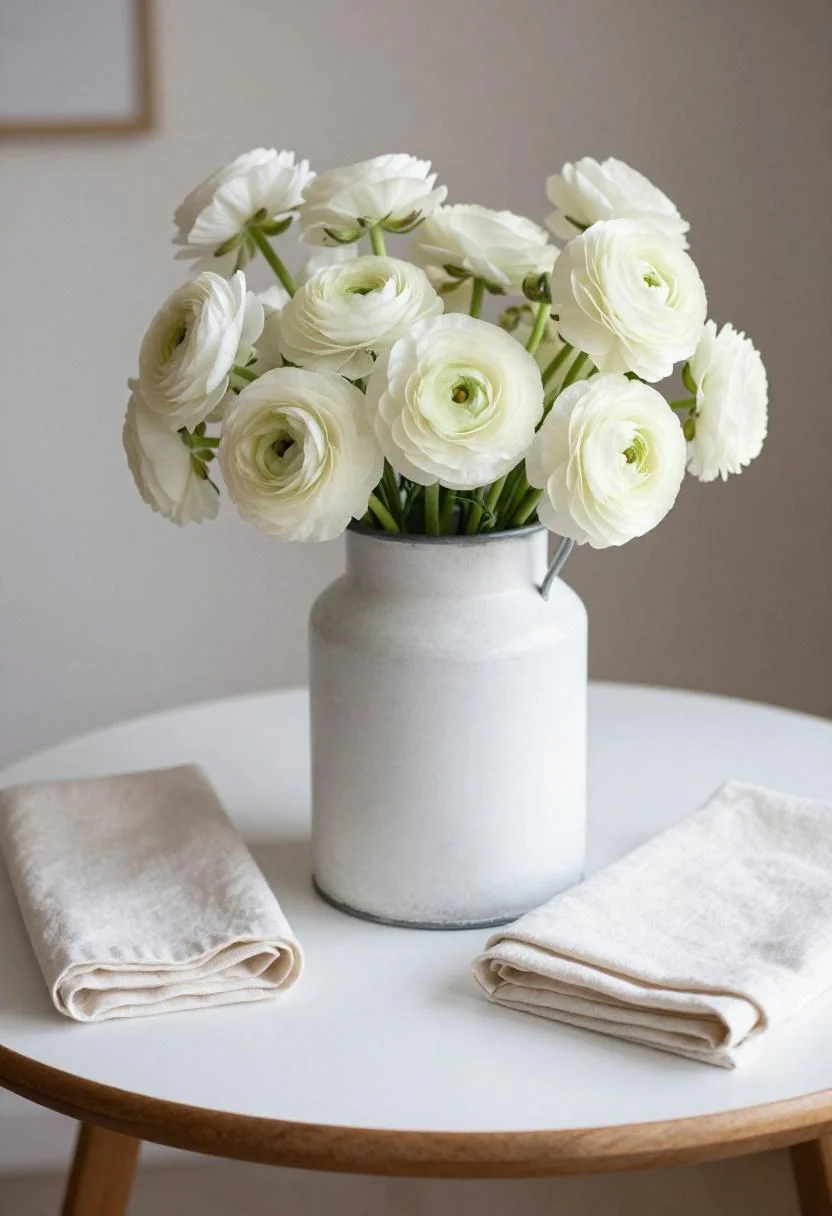
Whitewashed milk can, cream ranunculus, teak garden table. The ranunculus has the layered density of a peony but with a more architectural quality — each bloom is almost geometrically perfect. Against the warm grain of teak and the chalky white of the can, the cream reads as near-white-near-yellow, shifting in outdoor light. This is the centrepiece arrangement for a garden dinner that doesn’t require you to think about it all evening — it’s visually complete from every angle, it reads well in candlelight, and it doesn’t block sight lines across the table. Three things most centrepieces fail on at least one of.
Shop cream ranunculus bulbs — plant in autumn for spring blooms, or source cut stems from florists mid-spring through early summer.
How to Get the Look: Practical Notes
The vessel matters more than the plant. Start with the can — its finish, its scale, its relationship to the surface it sits on — before you think about what goes in it.
Aged and genuinely worn cans outperform artificially distressed ones almost always. Flea markets, estate sales, and agricultural auctions are the right sources. Online, filter specifically for “used” or “vintage” condition — the machine-aged reproductions have a too-perfect regularity that reads immediately as decoration rather than object.
For painting, chalk paint formulated for exterior metal is the correct product. It requires no primer on smooth metal, dries to a matte finish, and develops a convincing patina with outdoor exposure. Sage green, terracotta, and warm white are the three colours that play most reliably with Japandi outdoor palettes.
Drainage: drill three holes in the base for planted arrangements. For cut flowers, use a waterproof liner — a repurposed tall jar works well — inserted invisibly inside the can.
Scale your milk can to your space. A small 2-gallon can on a large patio looks tentative. A full 10-gallon can on a compact balcony looks aggressive. The standard 5-gallon dairy can is the most versatile size for most residential outdoor spaces.
Making It Your Own
The colour story running through these thirteen arrangements — cool blue, plum noir, wasabi, persimmon, warm terracotta, cream white, sage green — isn’t accidental. These are the tones that sit comfortably within the Japandi palette: organic, slightly muted, connected to natural materials rather than synthetic ones. If you’re choosing one can and one plant for a first attempt, start with sage green and rosemary, or aged steel and a single persimmon dahlia. Both are low-commitment and high-reward.
What this trend is really asking you to do — underneath the styling and the colour theory — is slow down your decorating impulse. Buy fewer things. Place them with attention. Let them age in place. That’s a Japandi value, but honestly? It’s also just good design. It was always good design. The milk can just happens to be the most honest vessel available for practicing it.
This post contains affiliate links. We may earn a commission at no extra cost to you.
Images in this article were created with AI assistance.