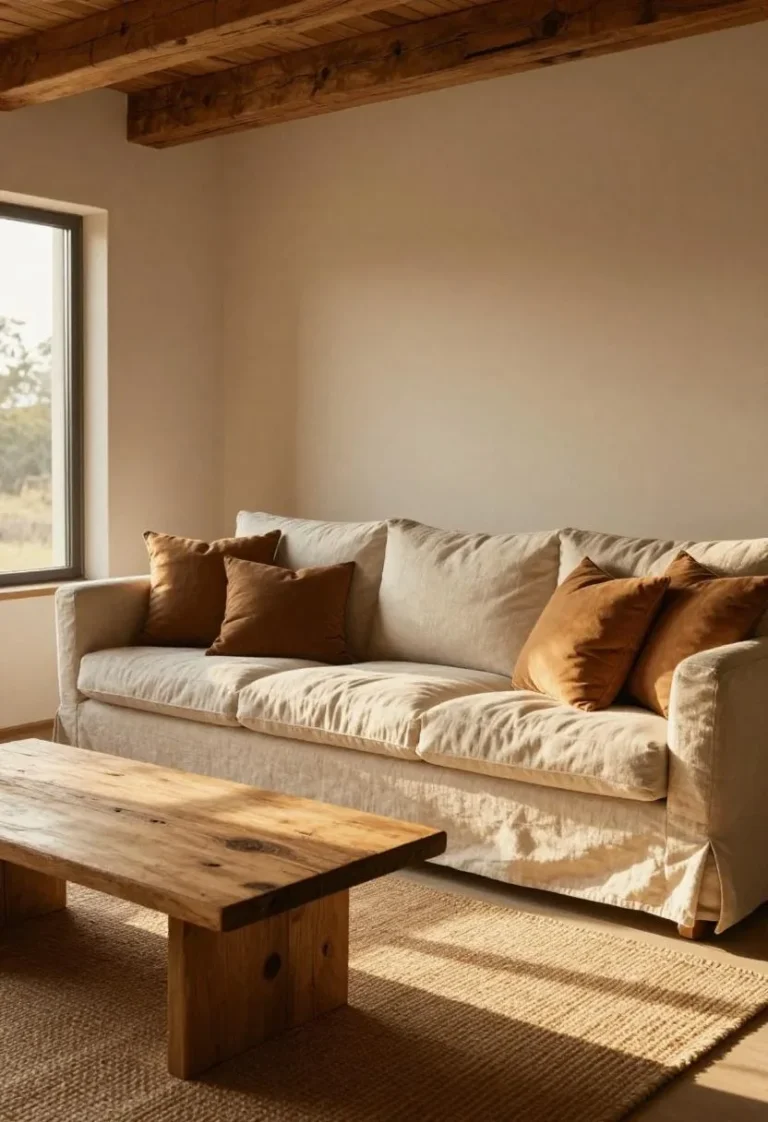
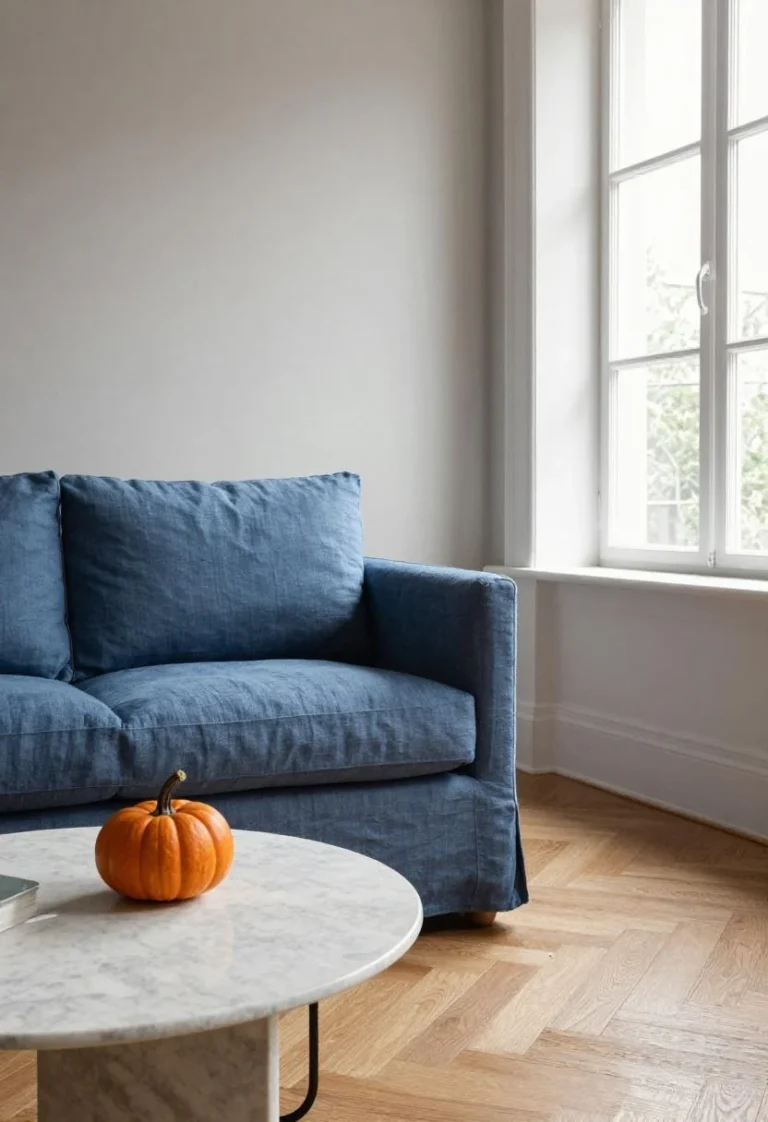
The Hamptons interior isn’t really about the ocean. It’s about what the ocean teaches you: that restraint is its own kind of luxury. White walls. Worn wood. Textiles that feel like they’ve been washed a hundred times and are better for it. This is the aesthetic that American coastal living inherited from its oldest shingled estates — and the reason it refuses to age. Strip away the lifestyle marketing and what remains is simply good bones, honest materials, and a color palette pulled from salt air and bleached sand. That’s worth paying attention to.
1. The White Linen Sofa — And Why It Works
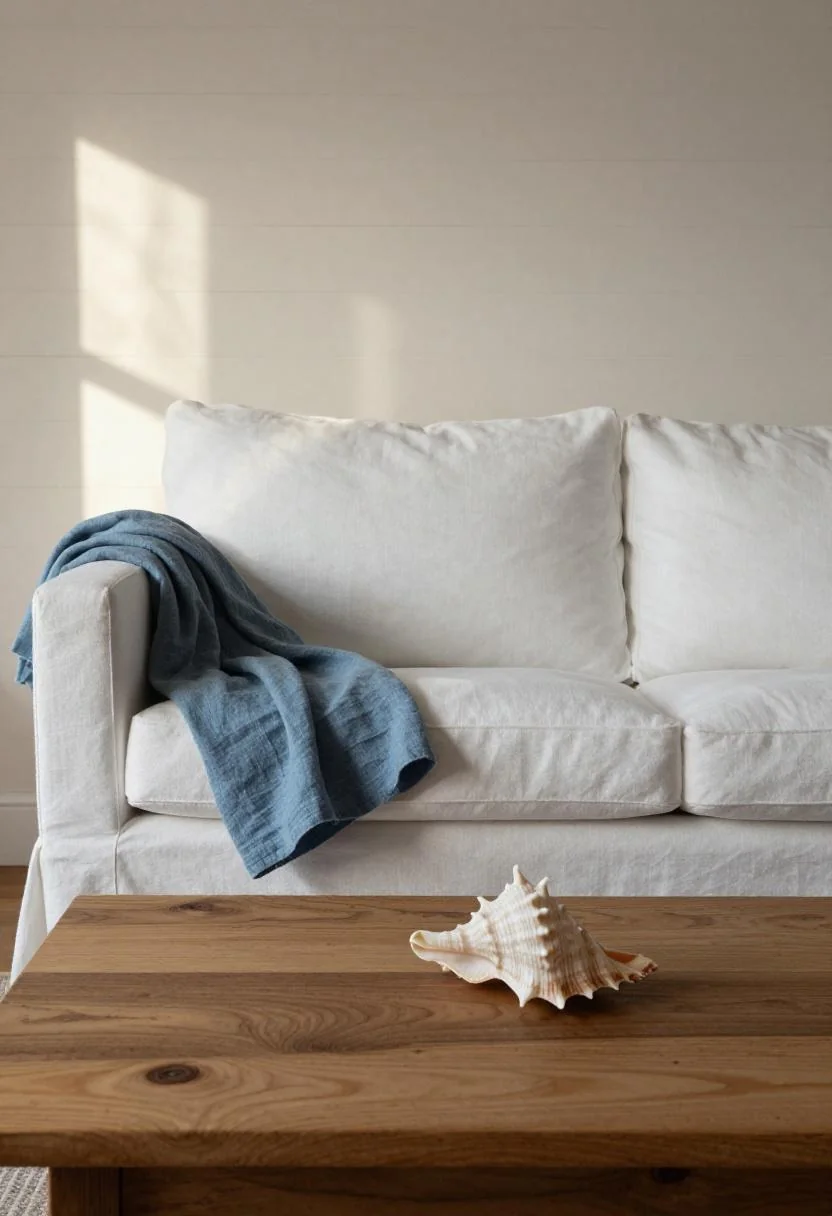
White linen on a sofa sounds impractical. It is. That’s almost the point — it signals a willingness to actually live in the space, to launder slipcovers, to treat the room as something used rather than preserved. The cool blue throw here does something specific: it keeps the palette from reading as sterile. It’s the color of water seen through glass. The bleached oak table beside it doesn’t compete. Less noise. More intention.
Browse white linen sofa slipcovers
2. Slipcovered Classics and the Case for Jade
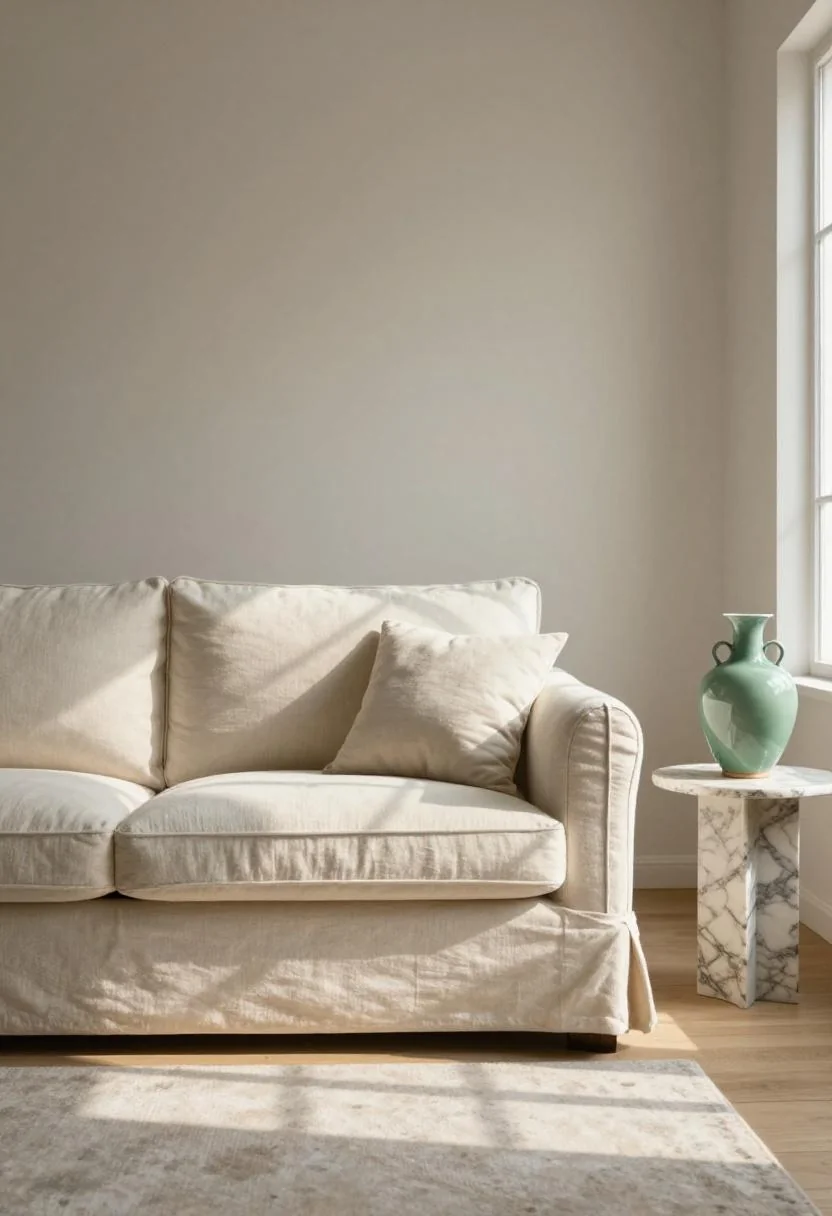
The slipcovered sofa is the most democratic piece of furniture the Hamptons tradition ever produced. It democratized comfort without apologizing for it. Here, a single jade green ceramic vase does the entire decorative job — one object, correctly placed, against all that white. No gallery wall. No styled bookshelf. The restraint here is the whole point.
3. Rattan, Linen, and the Wasabi Moment
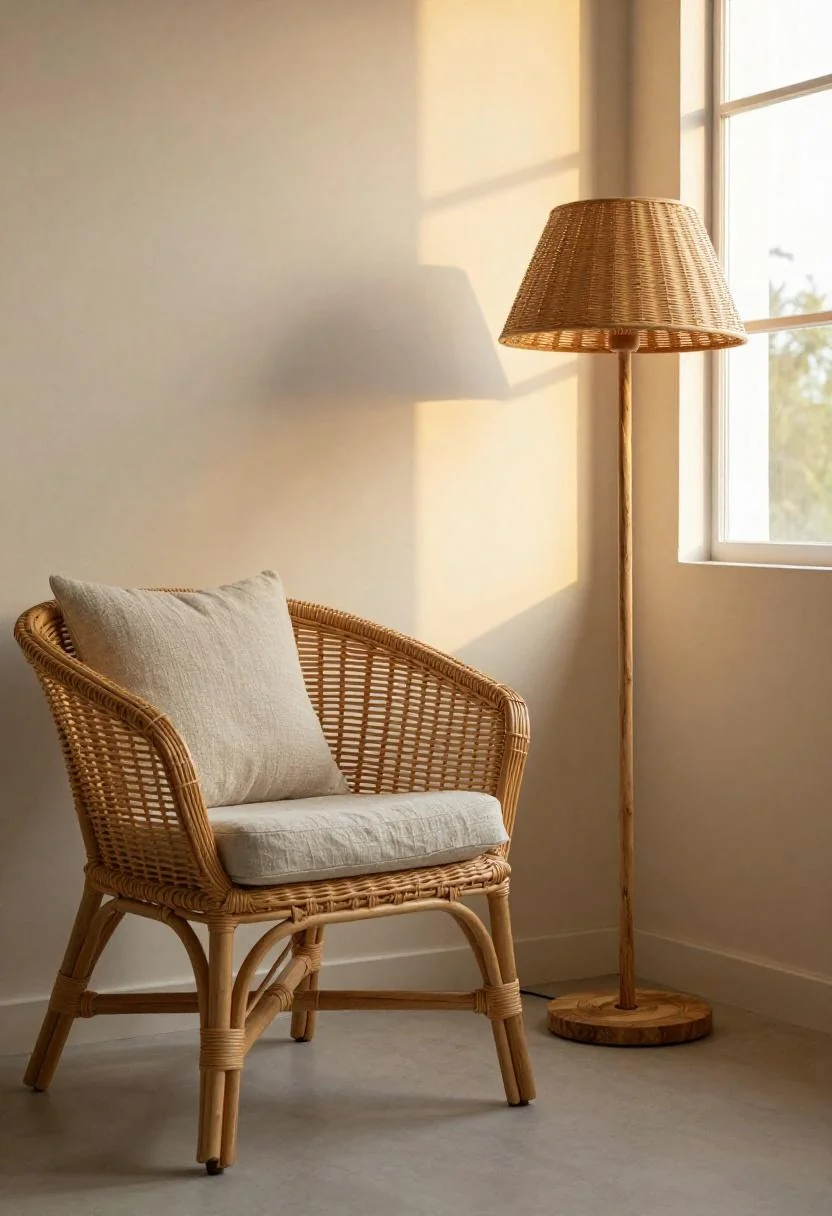
Rattan reading chairs have appeared in Hamptons interiors since before anyone called it a “trend.” They come from the estate-sale tradition — pieces bought for function, kept for character. The wasabi linen cushion is the surprise here, and it earns its place. Not lime, not sage — something in between, alive without being loud. Evening light makes it glow like weathered sea glass. This is the kind of choice you don’t second-guess five years from now.
4. The Coffee Table as Still Life
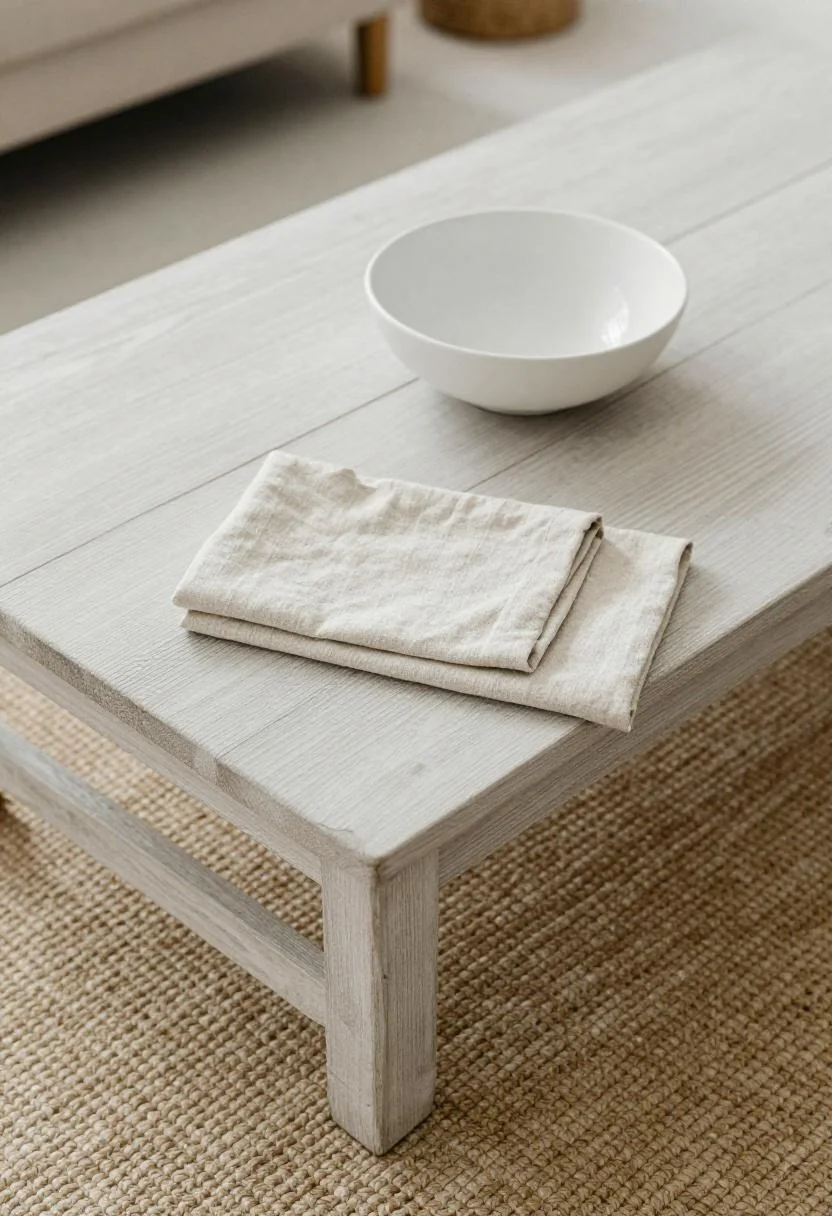
A whitewashed oak coffee table on a sisal rug: this is the Hamptons in miniature. The persimmon linen napkin folded beneath the ceramic bowl is the kind of detail that separates a room from a showroom — it suggests someone actually sat down here. Warm without being tropical. Grounded without being heavy.
5. Bay Window Morning Light and the Logic of Terracotta
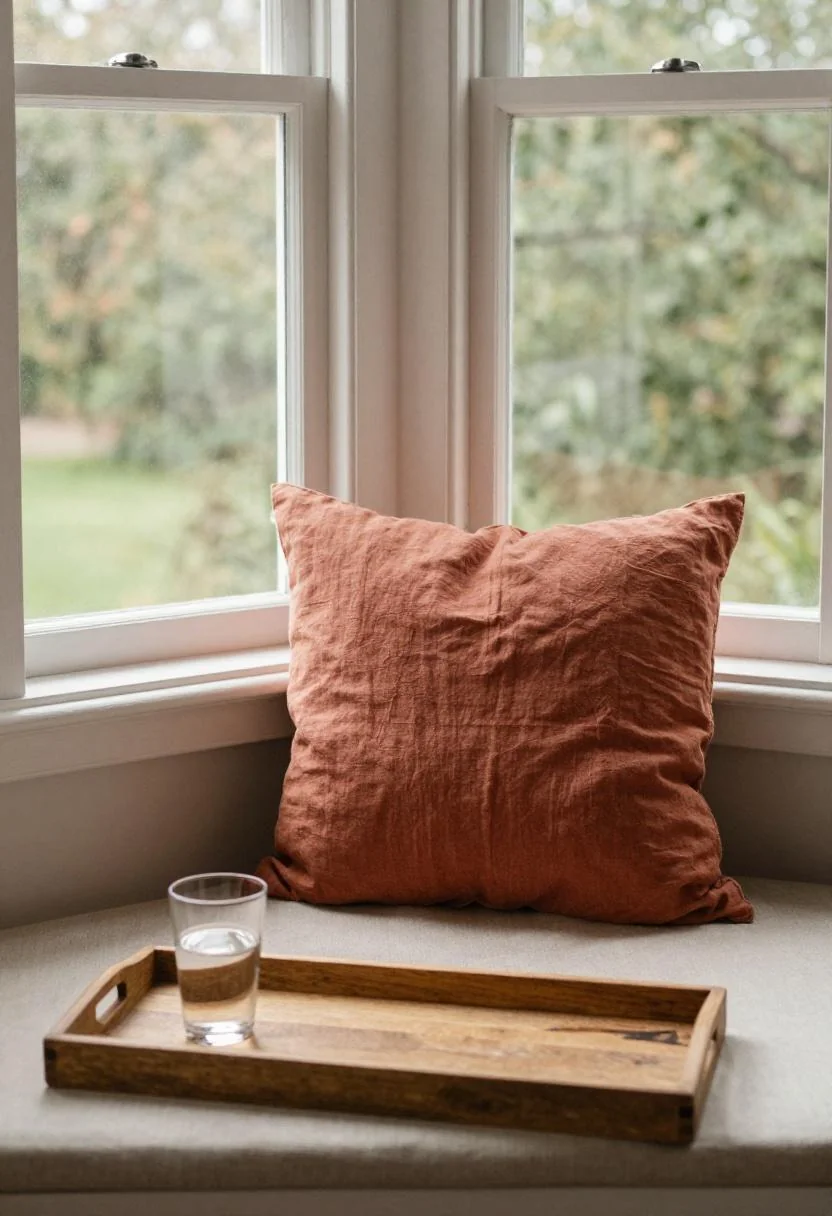
Built-in window seats belong to a specific grammar of American domestic architecture — the same language as updating older homes with period-sensitive choices. When you set one in a bay window and dress the cushion in warm terracotta, you’re doing something the Victorians understood and we keep rediscovering: color belongs near light. The oak tray holds a cup, a book, nothing more. That’s the whole composition.
As Architectural Digest has long noted, built-in seating is one of the defining marks of considered coastal architecture — it removes the guesswork of furniture placement and gives a room its structure.
Find terracotta linen cushions
6. The Shiplap Fireplace — A Study in Cream
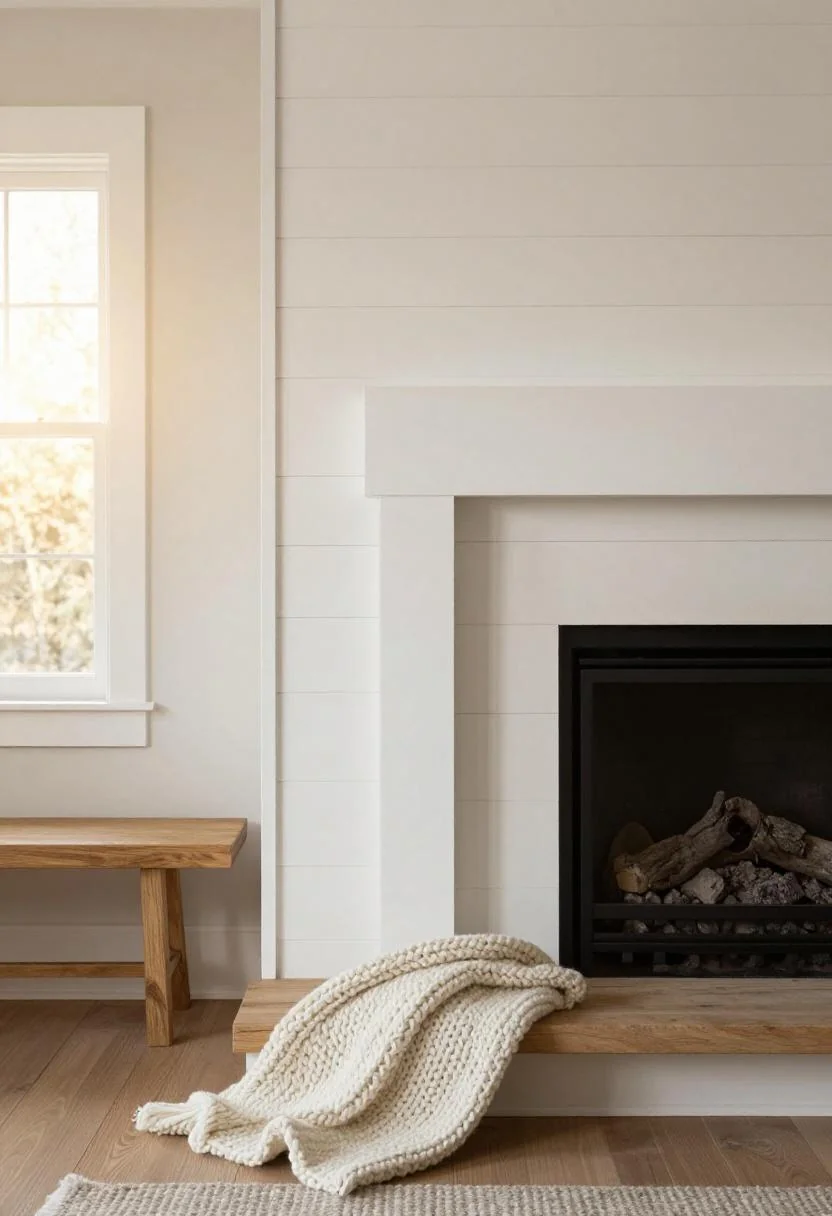
Shiplap became a television cliché. Unfortunate, because in its original context — the shingled cottages and clapboard houses of the Northeast coast — it was structural logic made visible. A white shiplap fireplace wall under golden evening light reads entirely differently from its HGTV impersonators. The cream wool throw draped over the oak bench is the kind of casual formality old houses do naturally. Quality whispers.
(I’ll admit: a wool throw draped over a bench is the single easiest way to make a room look like it has a history. Even if the bench came from a warehouse sale last month.)
7. The Trailing Pothos Problem — Solved
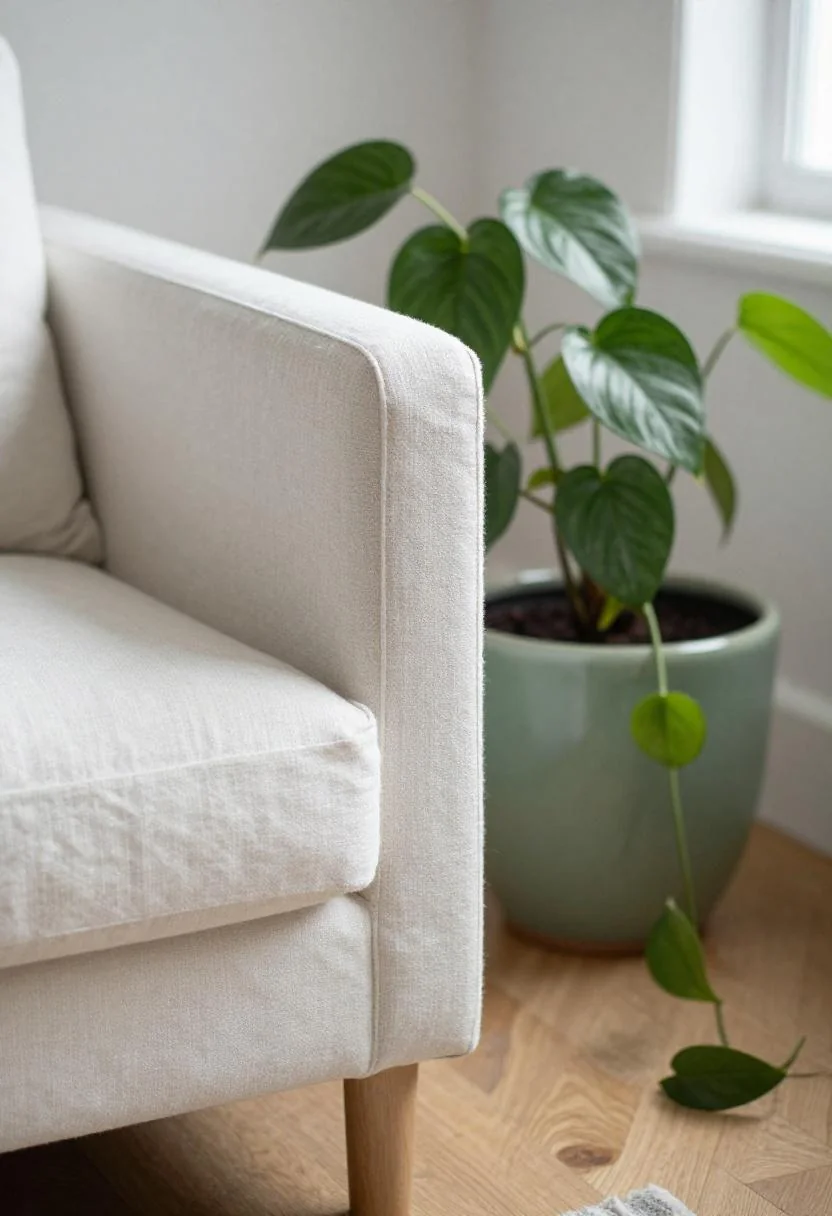
Can you have a trailing pothos and still be taken seriously? Here, yes. The sage green ceramic planter does the heavy lifting — it’s the right material (ceramic, not plastic, not macramé) in exactly the right tone. Beside a white linen sofa arm in soft daylight, this reads as considered rather than casual. The pothos earns its keep.
Shop sage green ceramic planters
8. Minimalist Hamptons: The Canvas Sofa Read
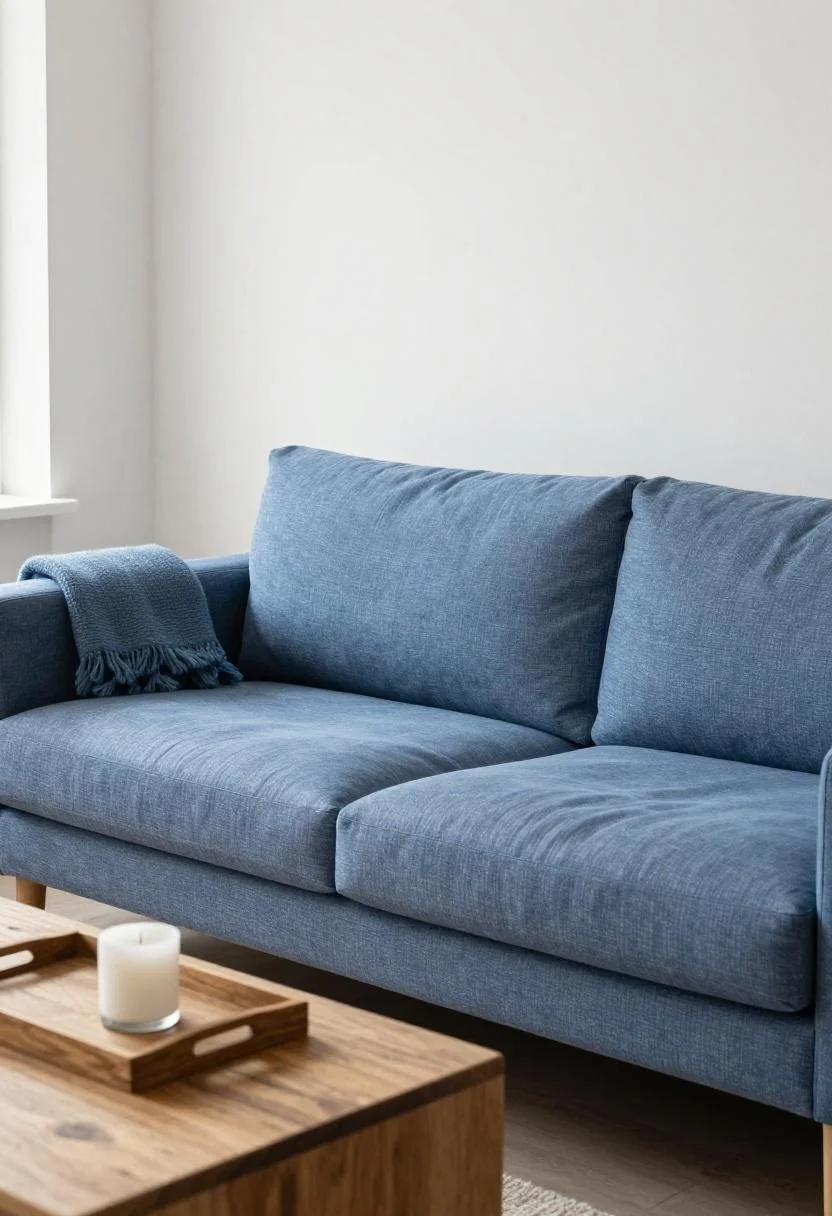
Low-slung. Canvas. Oak tray with nothing precious on it. The cool blue wool throw is this room’s only editorial statement, and it makes it once, quietly. What’s notable here is what’s absent: no throw pillows in three different patterns, no cluster of objects performing “coastal.” This works because it doesn’t try too hard.
— A Note on Heirloom Thinking —
The Hamptons interior tradition is fundamentally an estate-sale tradition. The rooms we respond to most aren’t decorated — they’re accumulated. Pieces from different eras that have been edited down to only the ones worth keeping. Buy one good thing instead of five mediocre things. That’s the only rule that survives every trend cycle.
9. The Bookshelf as Object — With One Dark Note
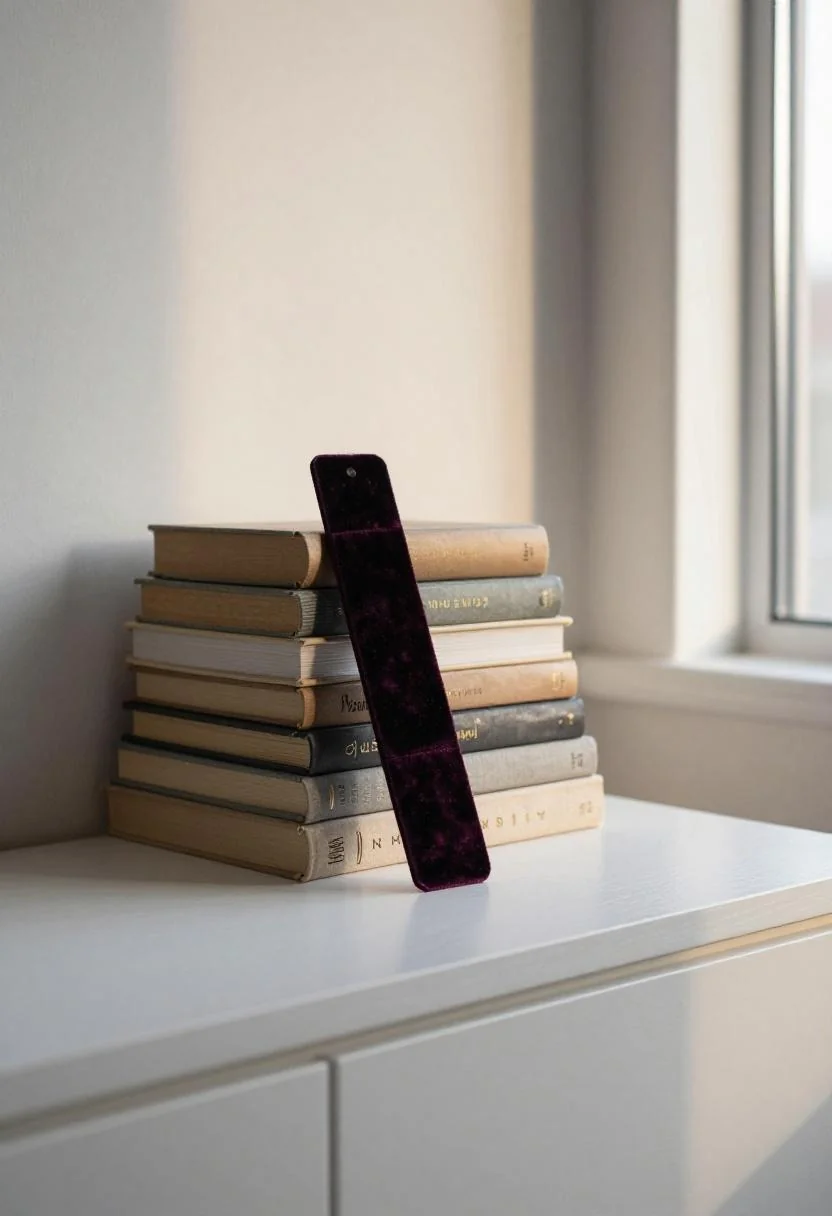
What is that plum noir velvet bookmark doing in a whitewashed, linen-covered bookshelf? Exactly what it should. One dark note in a pale room keeps it from floating away. The kind of detail you find in old houses that were actually read in — not staged.
10. The Coastal Corner That Doesn’t Overexplain Itself
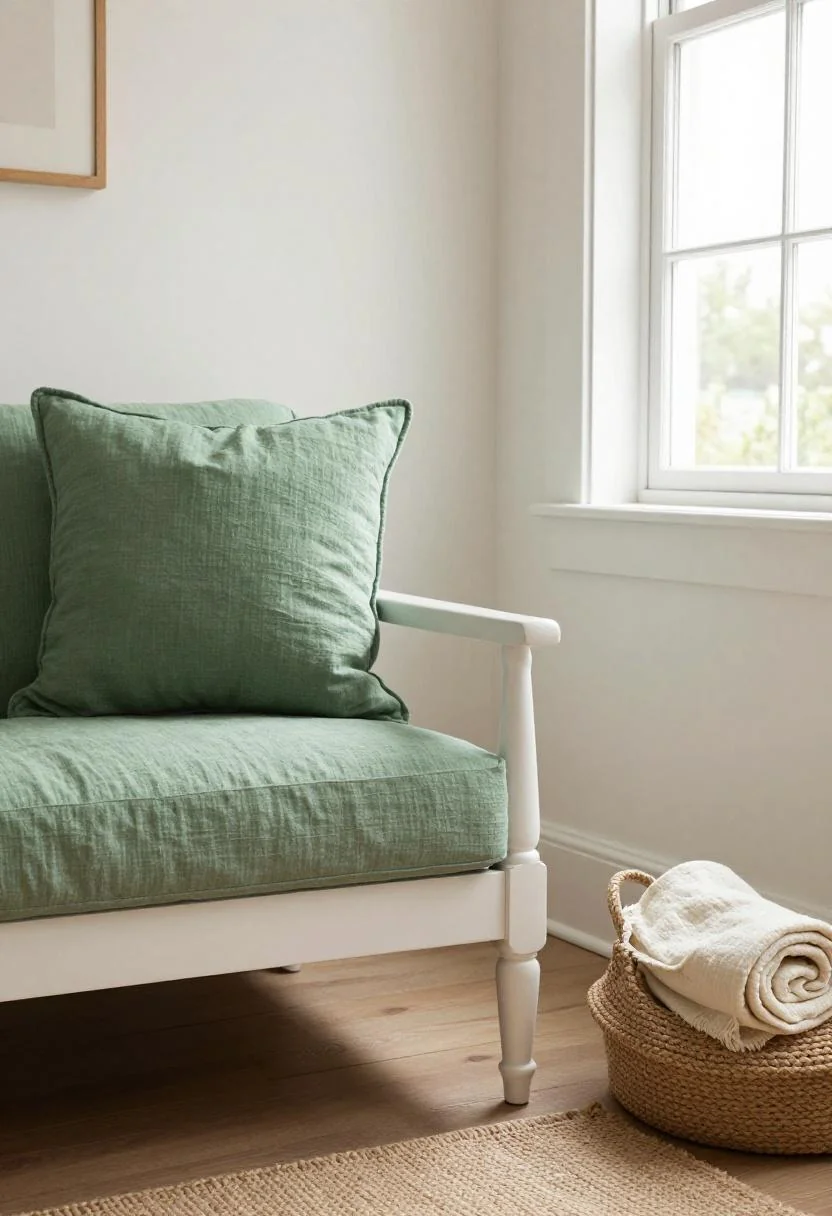
A white oak armchair. A jade green cushion. A sisal basket on the floor beside it.
That’s the whole sentence. And it’s enough.
11. Wasabi Green, Pampas, and the Case Against Over-Styling
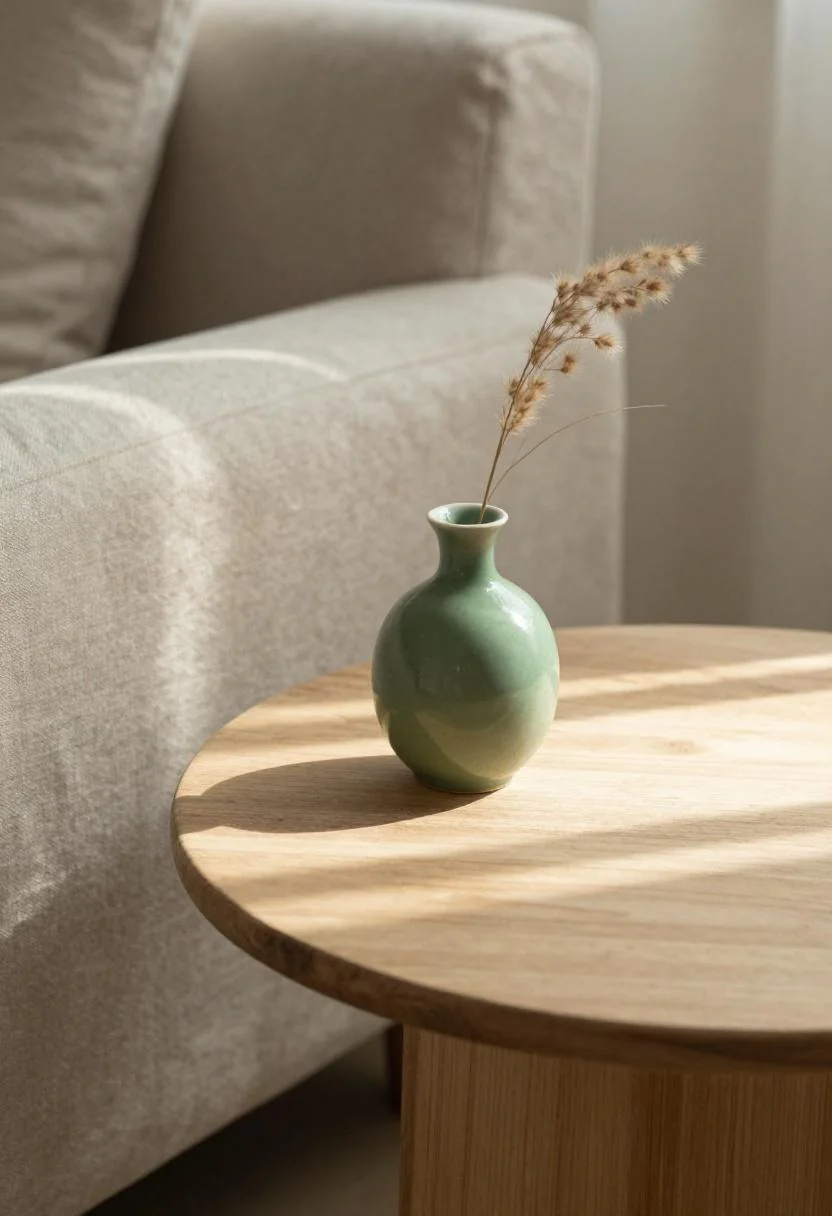
Pampas grass landed in every staged home from 2019 to 2023 and became hard to look at honestly. But a single stem in a wasabi green ceramic vase on a driftwood side table — in morning light, not ring-light — reminds you why it worked in the first place. The color of the vase saves it. Strip away the trend and ask: would this feel right in five years? Here, yes.
Find wasabi green ceramic vases
12. Persimmon on the Bench — An Underused Argument
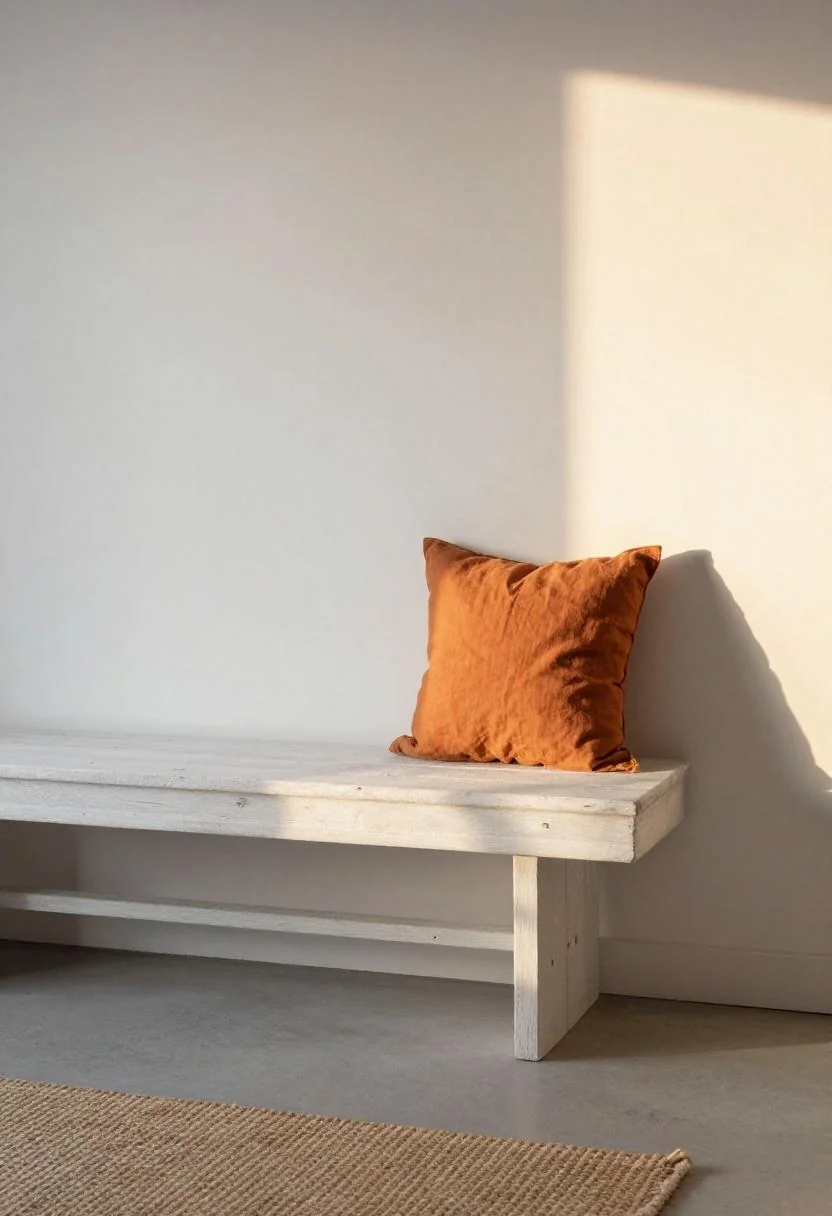
Why don’t more people use persimmon? It has the warmth of terracotta with more sophistication, and it reads as completely at home against natural wood and jute. This oak bench with its persimmon linen bolster is the kind of piece you’d find in a restored Shingle Style home on Further Lane — not purchased as a set, but chosen. For rooms that want warmth without the obvious, this is the answer. Warm-toned interiors often overcorrect into yellow or rust — persimmon threads the needle.
13. Shiplap Shelf, Terracotta Vase, Stacked Linen
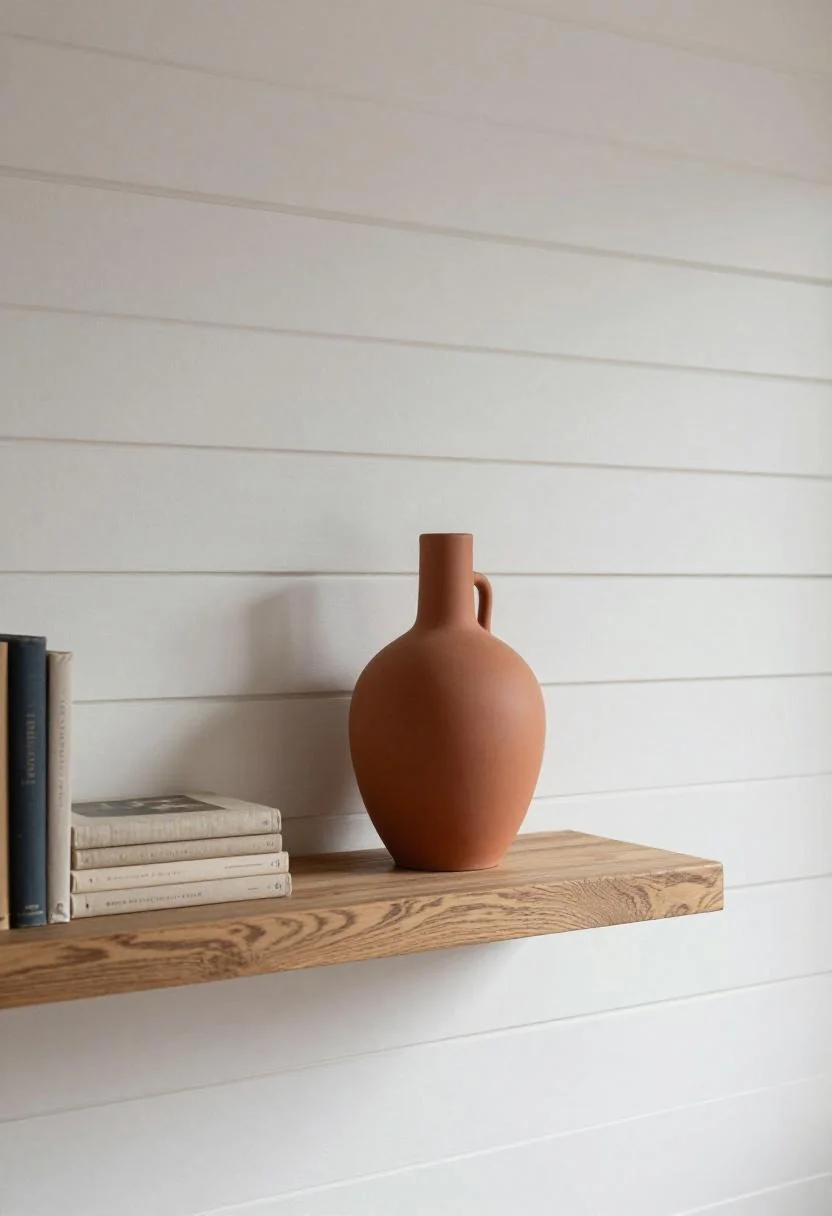
Three objects. One shelf. That’s the editorial discipline this kind of room demands — and rewards. The terracotta ceramic vase against whitewashed shiplap is a pairing with genuine period precedent: earth tones against pale plank walls go back centuries in American domestic interiors. The stacked linen books aren’t decoration. They’re evidence of a room that gets used. As Elle Decor has observed, the most enduring coastal interiors treat objects as residents, not props.
14. The Skylight Reading Nook — Linen Wingback, Cashmere, Marble
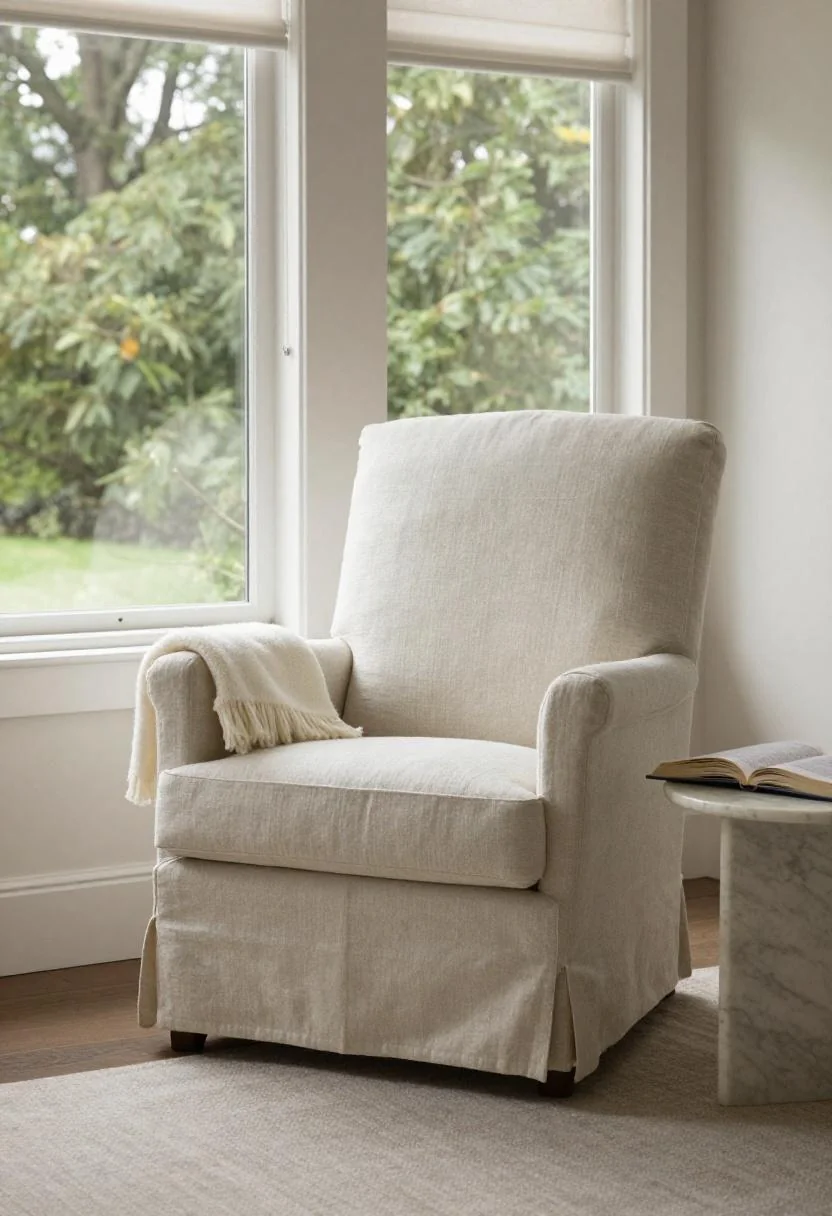
The wingback chair is the most traditional piece in this entire survey — and the most quietly authoritative. In linen, under a skylight, with a cream cashmere throw and a marble side table, it belongs to the long lineage of American library furniture. Period homes had these corners because they understood something we keep relearning: a good chair in good light is the highest form of domestic luxury. The marble table doesn’t announce itself. It simply holds the lamp, the glass of water, the book you’re actually reading. That’s what antiques and heirloom-thinking objects do best — they become background, then become indispensable.
For those building out similar considered interiors, Harper’s Bazaar’s interiors coverage regularly returns to this principle: the rooms that age best are the ones that were never fully “finished” to begin with.
The Colors That Define This Moment
Taken together, the palette here tells a coherent story. Cool blue and cream hold the foundation — they’re the Hamptons defaults for a reason, and that reason is light. They read differently at 7am than at 7pm, and a room that works in both has earned its keep.
Jade green and sage enter as the plant tones — ceramic and cushion, not wallpaper and upholstery. They’re present without dominating. Wasabi sharpens them, adds a slight contemporary edge that keeps the whole from reading as a period recreation rather than a living space.
Terracotta and persimmon are the warmth pair. They counter the coastal cool without breaking from it — earth tones that belong to the same sandy, sun-bleached register. And plum noir, used once and exactly once, does what a single dark note always does in a pale room: it makes everything else settle.
What connects all of them is restraint in application. One or two per room. Never a collection of every color at once. The Hamptons palette has always understood that the ocean is one color — and it never feels like too little.
This post contains affiliate links. We may earn a commission at no extra cost to you.
Images in this article were created with AI assistance.