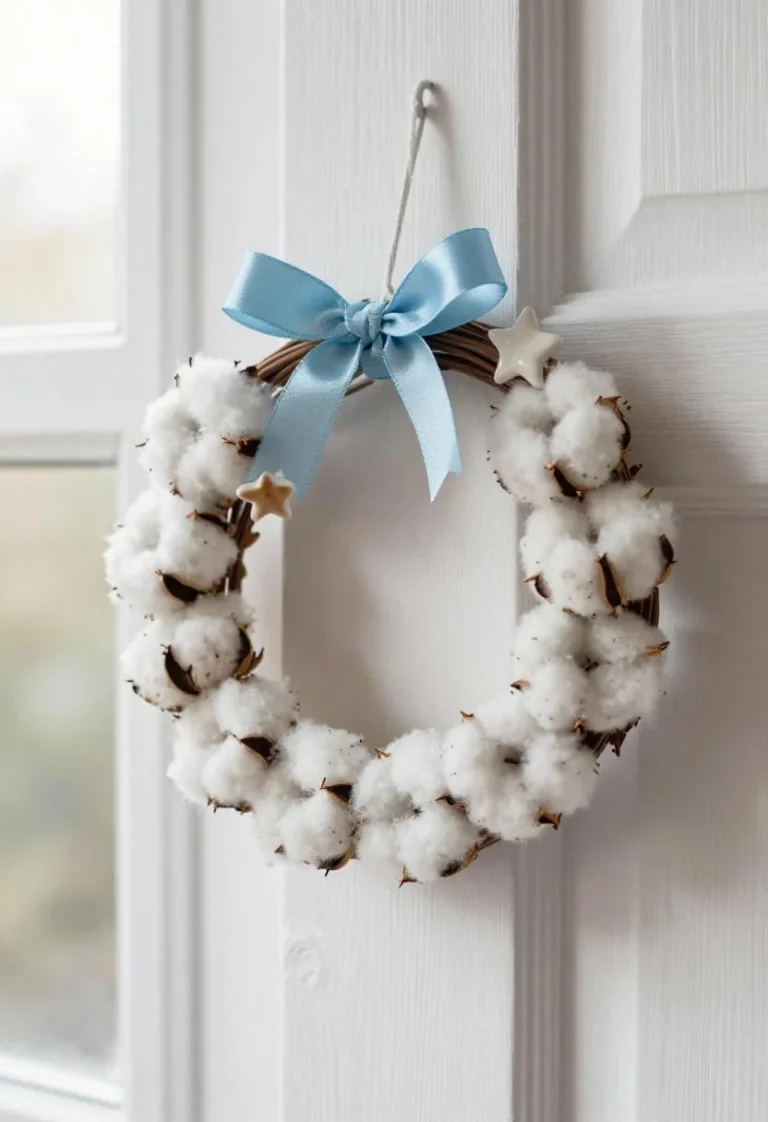
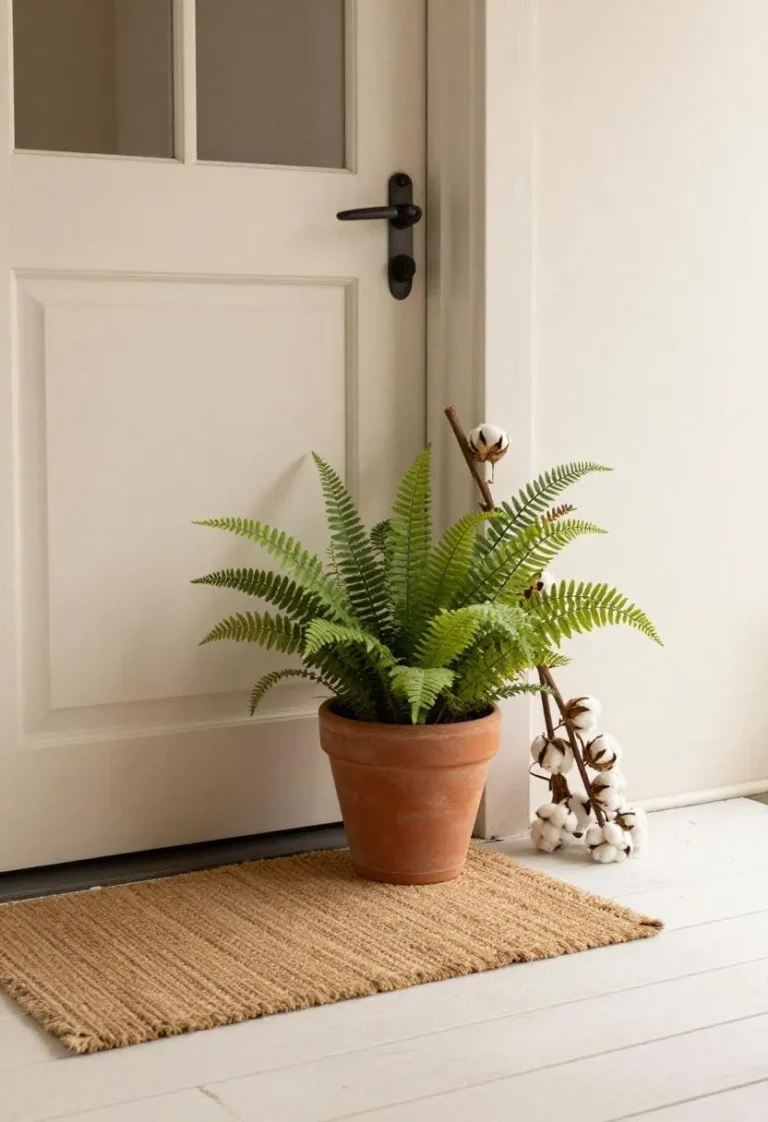
There’s something quietly radical about making your own patriotic wreath from salvaged materials — burlap you saved from a coffee delivery, ribbon rescued from last year’s gift pile, dried florals that came from your actual backyard. The holiday wreath industrial complex wants you to buy plastic. You don’t have to. And honestly? The handmade version, with its slightly imperfect loops and repurposed findings, carries more character than anything shrink-wrapped at a big-box store ever could. As Elle Decor has long championed, handcrafted seasonal décor is having a genuine cultural moment — not as a nostalgia trip, but as a real pushback against disposable aesthetics.
This guide walks through 12 wreath interpretations — from cottagecore kitchen windows to industrial loft mantels — each rooted in the idea that sustainability isn’t about sacrifice, it’s about making smarter, more beautiful choices.
What You Actually Need (and What You Can Skip)
Before you buy new, consider this: most patriotic wreaths need a grapevine or wire base, some combination of red, white, and blue elements, and a way to hang them. That’s it. The rest — the specific ribbon, the florals, the accent textures — is where your personal aesthetic lives. A grapevine base from a craft store is compostable at end of life. Wire forms can be reused for years. Neither costs much.
Gather what you have first. Old ribbon in patriotic colors. Dried flowers from last summer. Fabric scraps in navy or cream. Then decide what you’re missing. That’s your actual shopping list — not a full kit someone else decided for you.

This flat-lay setup — wasabi velvet ribbon coiled alongside vintage brass scissors on a worn wood surface — is exactly the kind of workspace that makes the process feel intentional rather than rushed. Wasabi as an accent color sounds unexpected until you see it grounding the red-white-blue palette like a curator’s choice. Velvet ribbon in earthy tones works beautifully here and stores flat between seasons.
The Industrial Loft Take on Patriotic
Exposed brick and raw concrete don’t beg for prim bows and plastic stars. They ask for materials with grit — burlap, leather cord, oxidized metals, dried botanicals that look like they came from an urban rooftop garden. The tension between “patriotic wreath” and “industrial loft” is exactly the point. Lean into it.
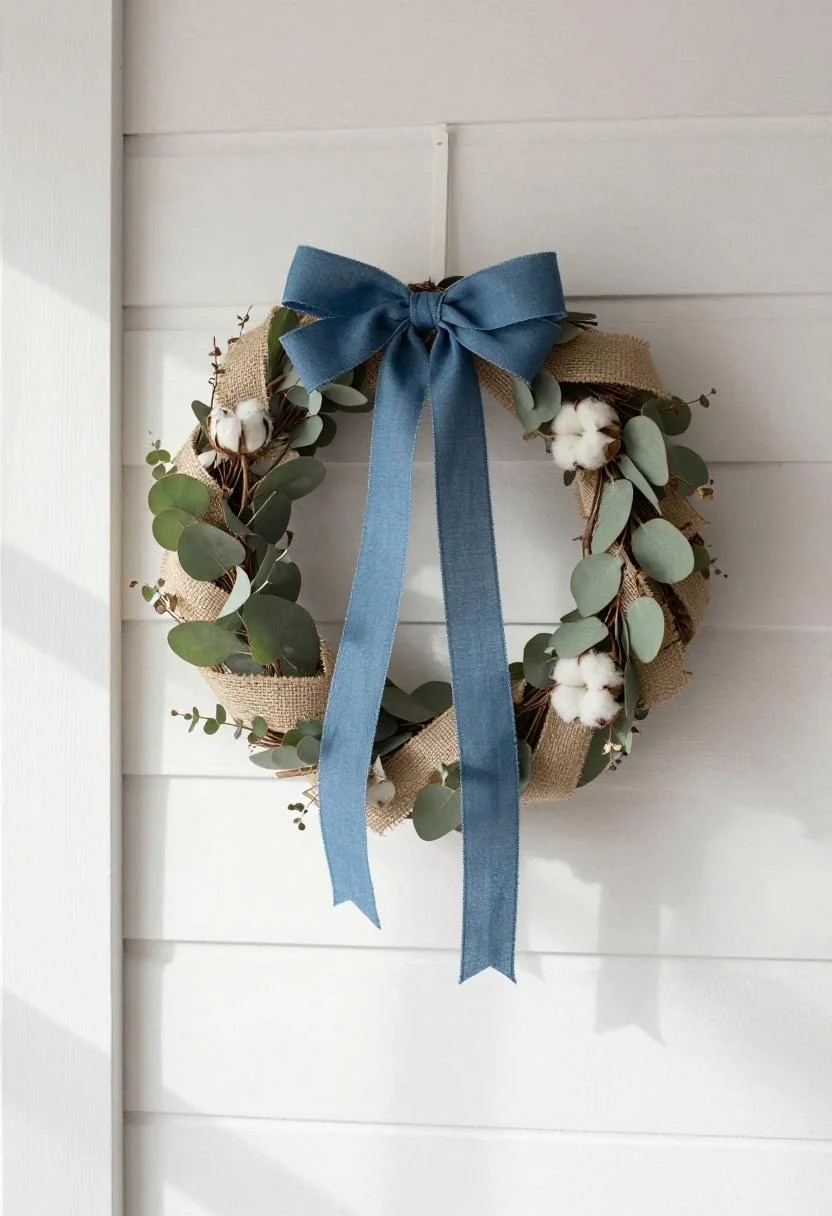
Burlap is the perfect industrial-patriotic material — it’s a natural fiber, biodegradable, and has the rough-hewn texture that looks right against shiplap or exposed drywall. This cool blue ribbon reads almost archival against the neutral base. Hang it on a reclaimed wood plank door, and the whole thing looks like something salvaged from a coastal warehouse. This piece has a past, and that’s the point.
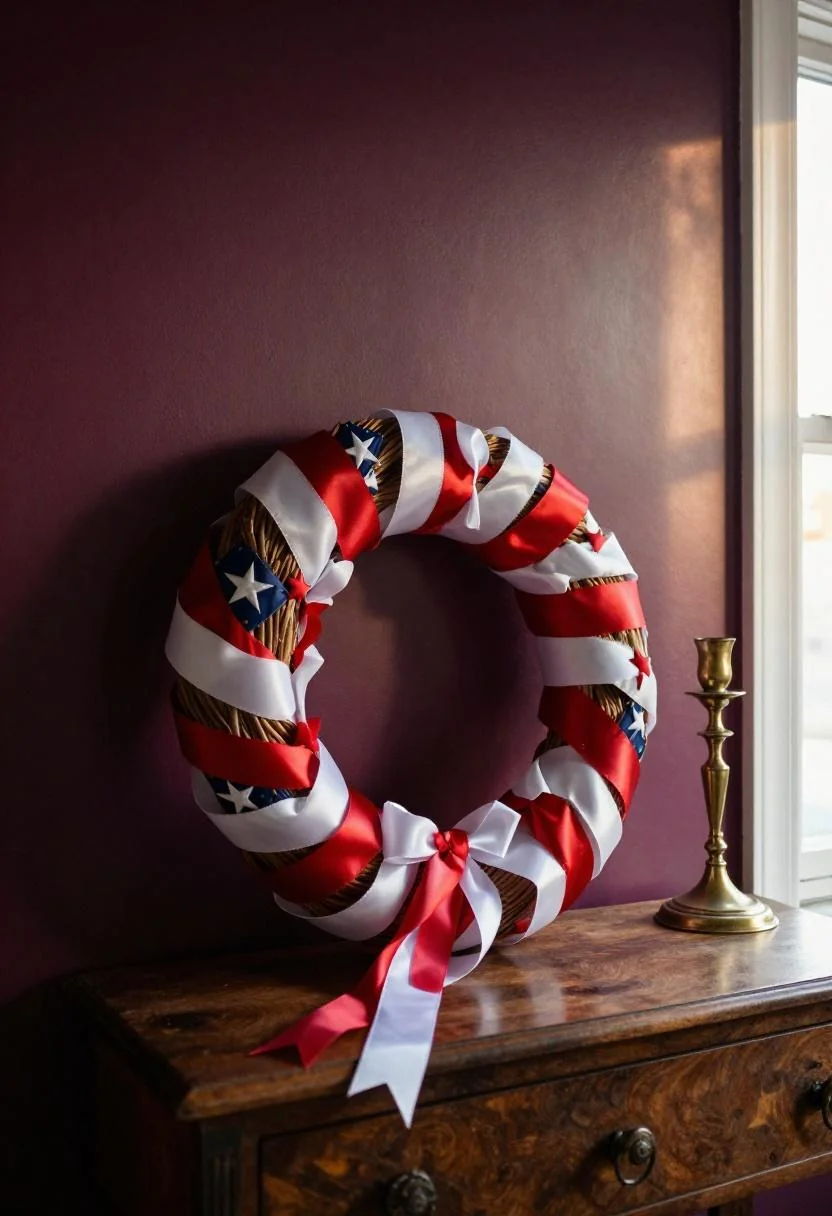
Plum noir walls are having a serious moment in interior design circles — dark, saturated, they make everything in front of them look intentional. Against a vintage walnut console (the kind you find at an estate sale for $40 and refinish yourself), a patriotic wreath stops being decorative and starts being a statement. The contrast between the red-white-blue materials and that deep plum ground is genuinely striking. A grapevine base in the 18-22 inch range gives you enough visual weight for a dark-wall display like this.
How to Get the Look: The Industrial Patriotic Build
Start with a wire or grapevine base. Wire if you want clean geometry; grapevine if you want organic texture — and in an industrial loft context, grapevine actually reads more “raw material” than “craft store.” Wrap sections of the base in burlap strips torn (not cut) from an old feedbag or grain sack. Layer in dried botanicals: wheat, cotton stems, dried lavender if you have it. Then the ribbon: use it sparingly, in longer trailing loops rather than tight bows. Brass wire to secure everything. Done.
Cottagecore Versions (Which Work Better Than You Think)
The cottagecore aesthetic and sustainable wreath-making are practically the same ethos in different fonts. Both value the handmade, the imperfect, the foraged. Both resist mass production on principle.
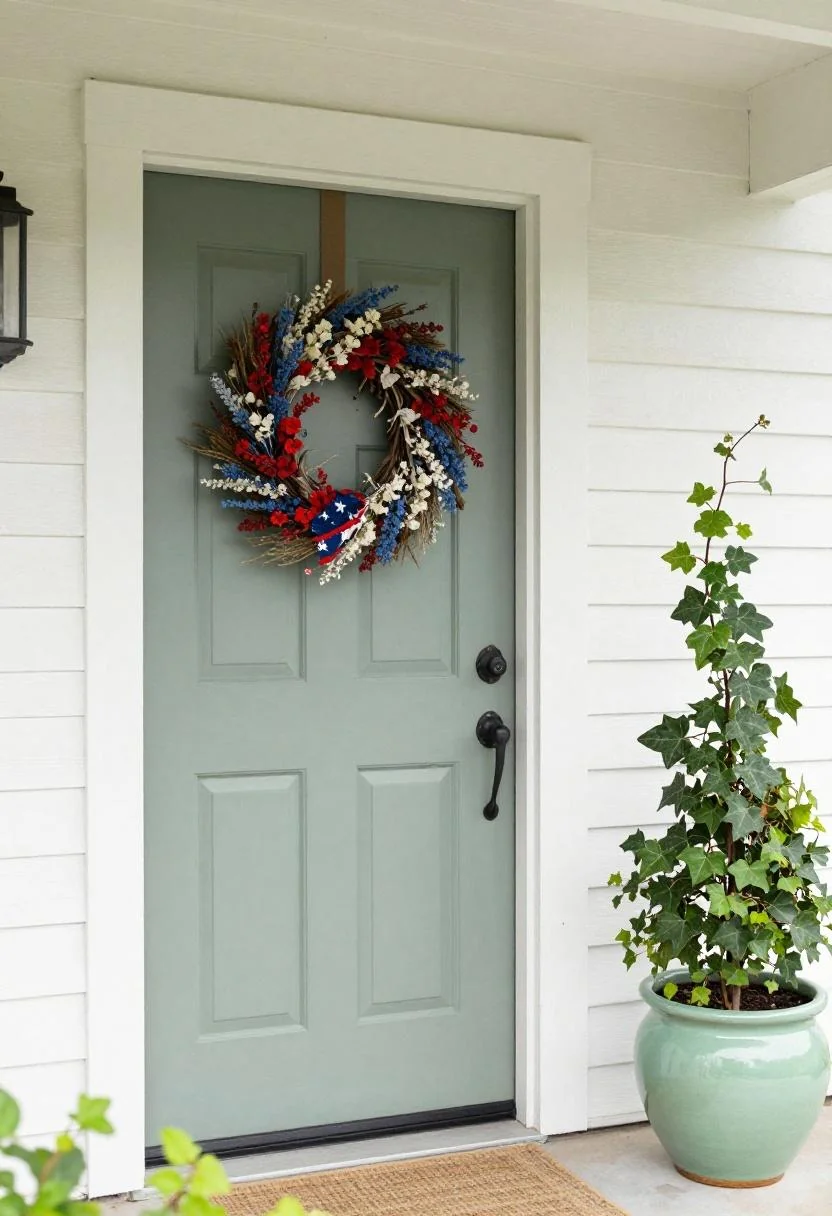
Sage doors. Ceramic pots with trailing ivy. A wreath that looks like it was assembled in a garden shed on a slow afternoon. This jade-and-sage combination softens the red-white-blue palette into something that feels less flag-adjacent and more garden-wall art. If you’re working with a painted door, this is the version to try — the cool greens carry the summer heat better than stark white trim. For similar wreath and seasonal decor ideas, the vintage 4th of July decor guide has more in this direction.
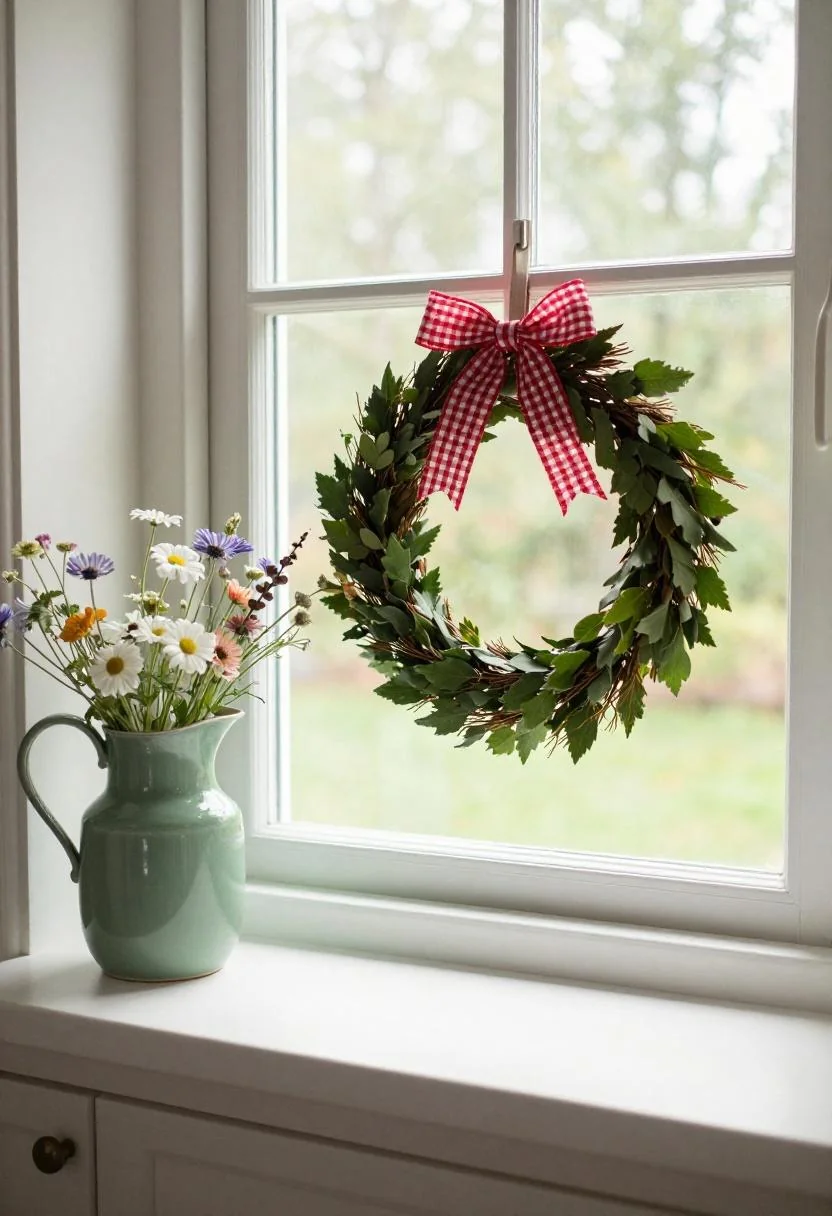
Kitchen windows are underrated wreath real estate. Natural light comes through, backlit florals glow, and it’s visible from both inside and out. The sage ceramic pitcher grounds this one — a single, quality object that anchors the whole scene without competing with the wreath. Keep the kitchen version lighter and airier than your front-door version. Cotton flowers, thin ribbon, nothing too heavy. It lives at eye level in the most-used room in your house; it should feel like a small daily pleasure, not a production.
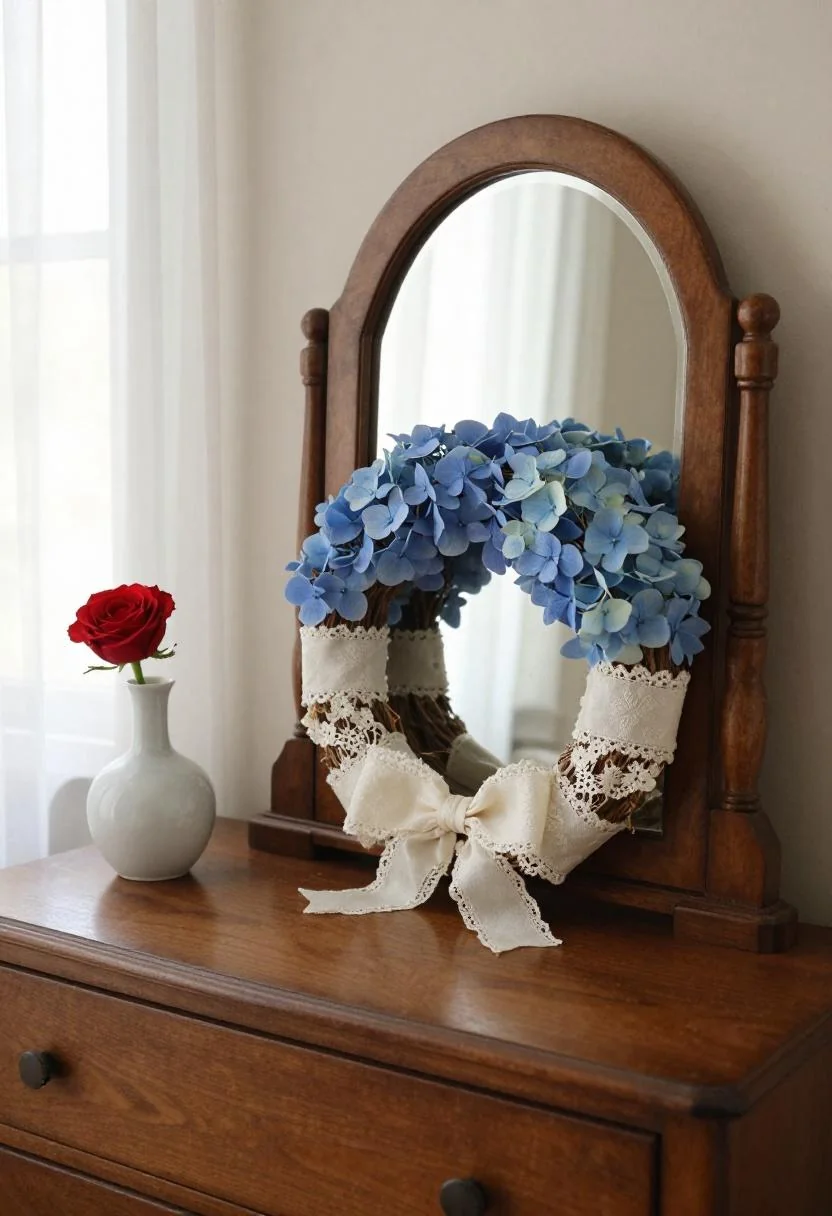
Cream lace and dried blue hydrangeas against a vintage mirror — this one barely reads as “patriotic” in the conventional sense, and that’s entirely the appeal. The red comes from a few small dried rosebuds tucked into the lace; the blue from the hydrangeas; the cream does the work of white without being clinical. Vintage mirrors from thrift stores or estate sales make the perfect backing for this kind of wreath display. Dried hydrangeas hold their color well for months and are completely compostable when you’re done.
Texture as the Whole Point
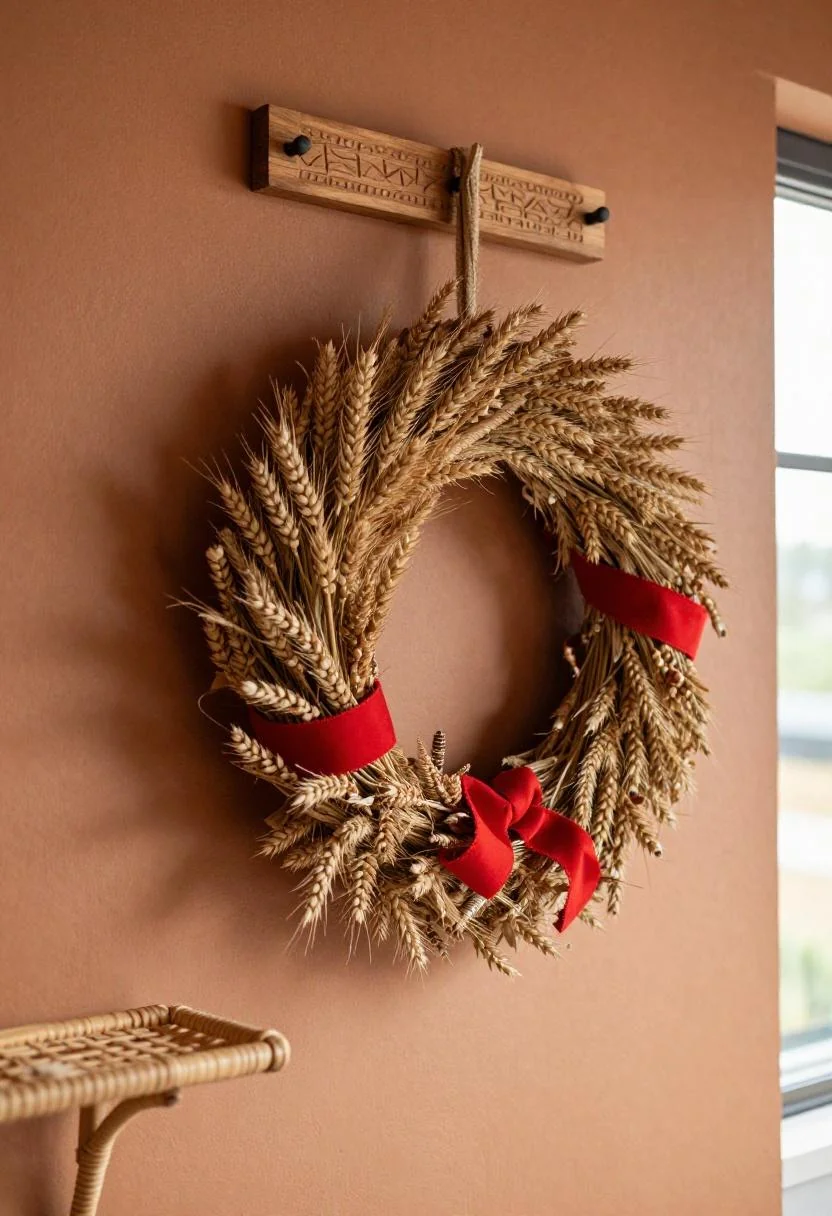
Warm terracotta plaster. Rattan shelving. Dried wheat. This is the Afrohemian version of the patriotic wreath — globally textured, layered, rooted in craft traditions that predate the Pinterest aesthetic by centuries. Dried wheat is one of the most sustainable wreath materials you can use: it grows fast, requires minimal processing, and looks extraordinary. Don’t flatten it. Let the stems move. Natural dried wheat bunches are widely available and genuinely cheap.
The rattan shelf matters here — it’s doing textural layering work without adding visual noise. Vintage always wins in a setup like this. A mid-century rattan shelf from a thrift store costs almost nothing and pulls it together with almost no effort on your part.
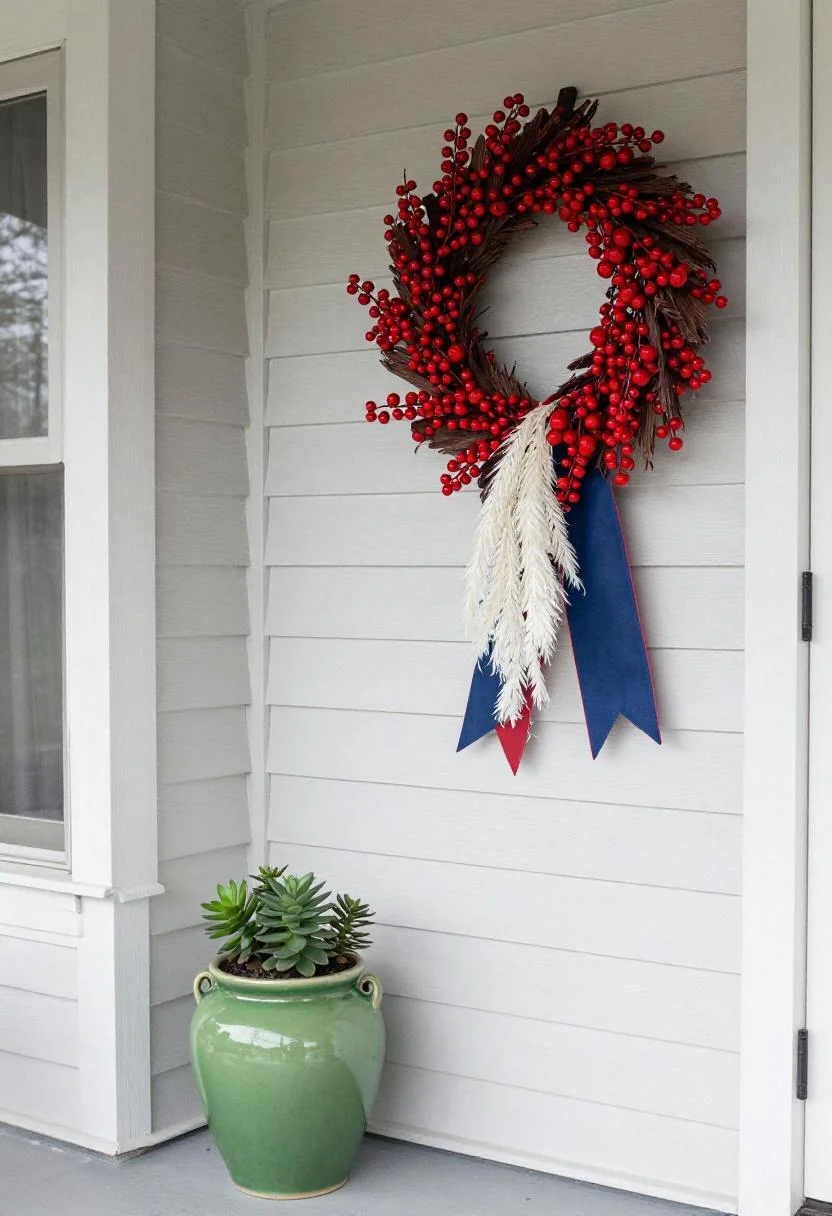
Pampas grass in a patriotic wreath is the kind of choice that sounds wrong until you see it. The feathery plumes soften the whole composition, and on a porch — especially beside that wasabi ceramic pot — it reads as confident rather than confused. Pampas is perennial, drought-tolerant, and the dried plumes you harvest yourself from a garden plant are completely free. If you’re building out your porch plant collection alongside your seasonal décor, the Kimberly Queen fern planter guide has excellent companion ideas for exactly this kind of textured porch setup.
When Minimalism Is the Statement
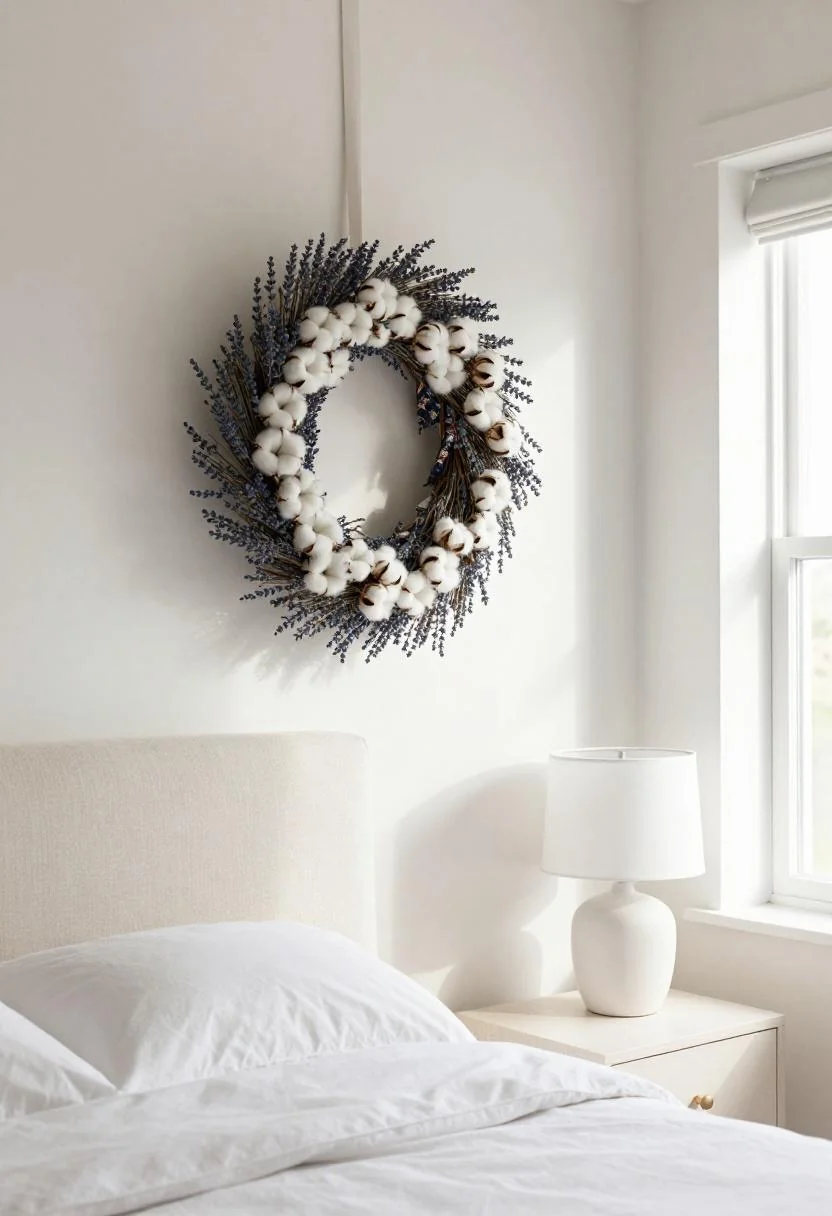
A bedroom wreath. Above a linen headboard. In cream, white, and barely-there blue. This is restraint as philosophy — the patriotic element is present but quiet, woven into the material choices rather than announced. Cotton flowers (real or dried) have a softness that works in sleeping spaces. This is the version you make for yourself rather than for the front door performance. It stays up longer, too. Nobody’s judging a bedroom wreath in August.
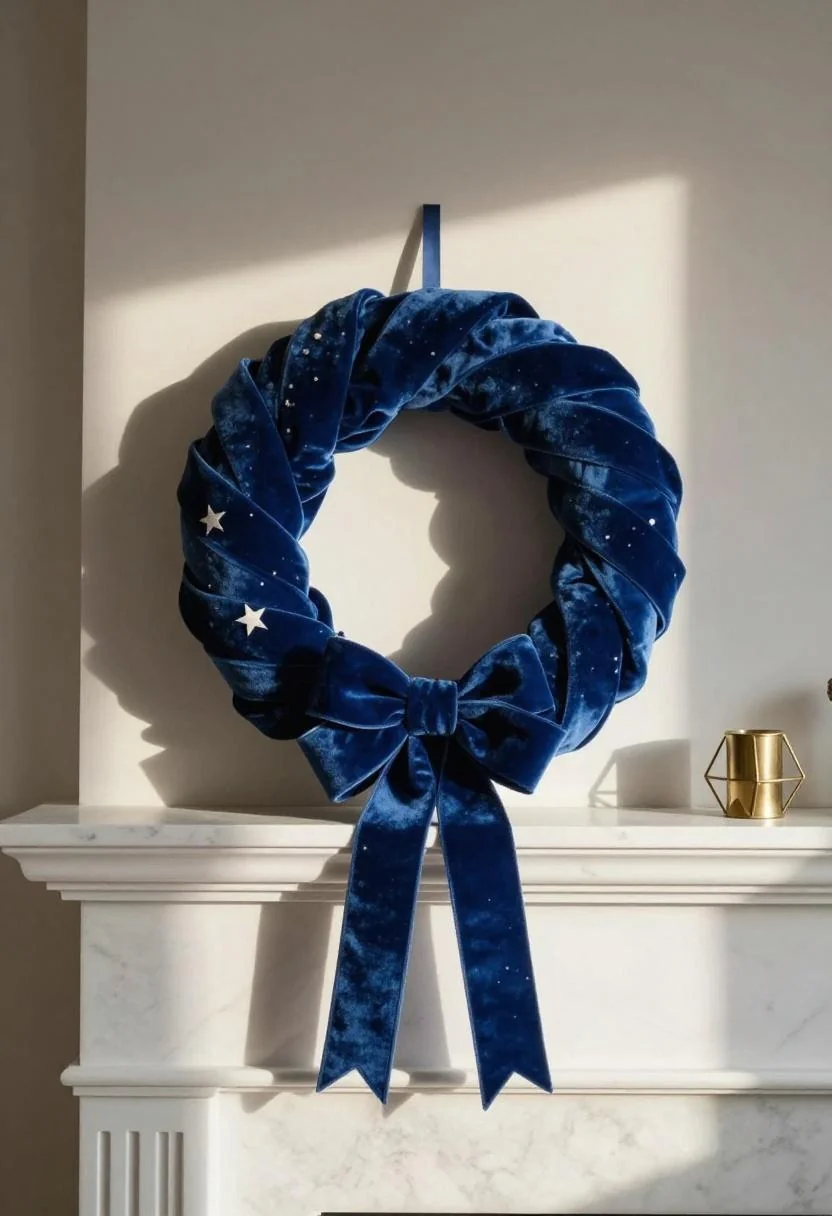
White marble mantel. Cool blue velvet ribbon. Clean lines with zero visual clutter around it. This is Neo Deco applied to seasonal décor — formal geometry, luxurious texture, complete confidence in negative space. As Harper’s Bazaar has covered extensively in their home interiors coverage, the move away from maximalist holiday decorating toward curated, material-rich single objects is defining interior design right now. One exceptional wreath above a marble mantel is more powerful than fifteen mismatched items across a mantel shelf. Wide velvet ribbon in navy or cool blue is the single material upgrade that makes the biggest difference here.
The Making Space
The workspace is part of the process. A walnut table, plum noir ribbon in loose coils, the tools laid out before you start — this overhead view is almost as satisfying as the finished wreath. Set up intentionally. Use a surface you don’t mind getting wire scratches on. Have your ribbon pre-cut. Know your base size before you start layering. The actual assembly, once you’re organized, takes under an hour for most wreath styles.
Hot glue is the standard adhesive — it’s not ideal from a lifecycle perspective, but for wreath-making it’s genuinely hard to replace. The good news: most of your materials are attached by wrapping wire, not glue, so the end-of-life separation is cleaner than you’d think. Compost the botanicals. Reuse the base. Recycle the wire.
Maximalist, and Proud of It
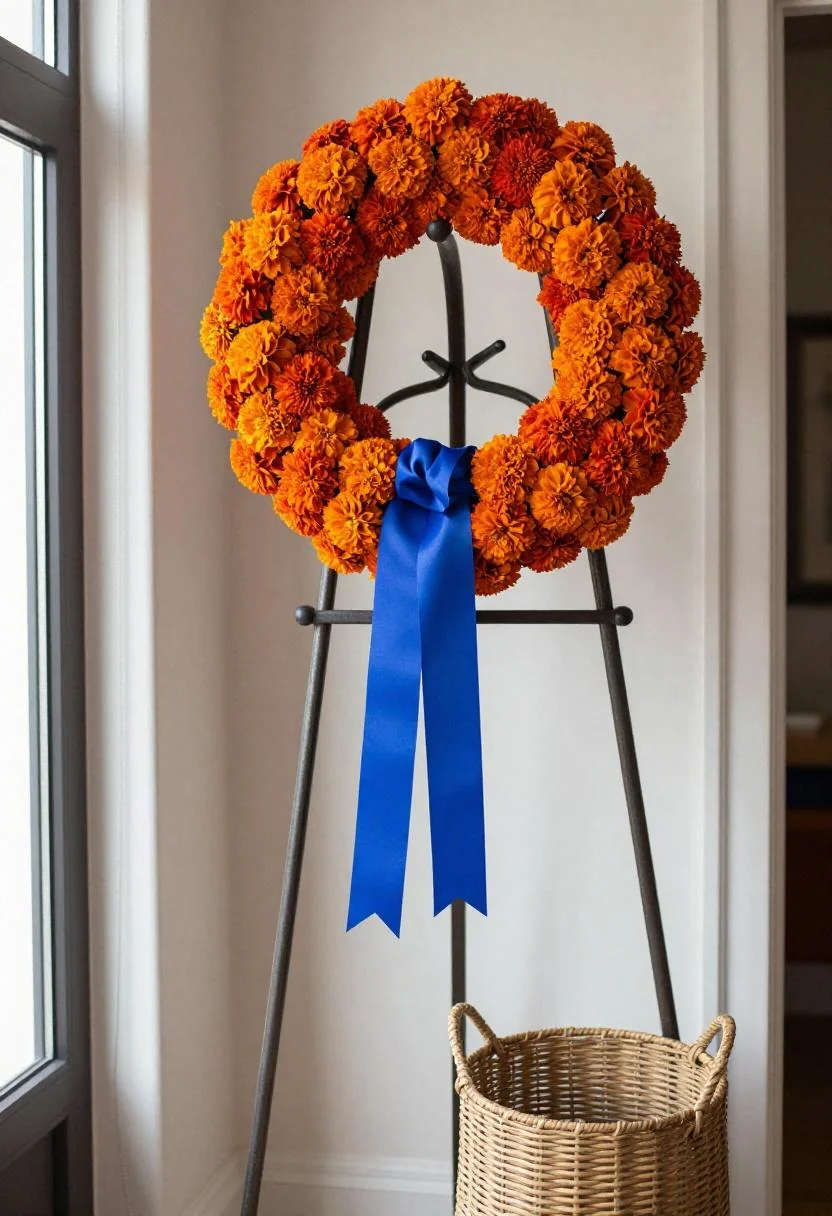
Persimmon marigolds. An iron coat rack. Complete, unapologetic abundance. This version rejects restraint entirely and it’s spectacular for it. Marigolds are one of the most sustainable flowers you can use — they grow easily from seed, attract pollinators, and dry beautifully. The persimmon-orange against red, white, and blue is the kind of color theory choice that Vogue keeps returning to: warm tertiaries that stop patriotic palettes from going cold or clinical.
For a maximalist wreath like this, layer in stages. Base materials first. Then your main florals. Then accents. Step back after each stage. It’s easy to over-fill; harder to take things out once they’re wired in. If you love bold floral design beyond seasonal wreaths, the flower arrangement ideas guide has techniques that translate directly to wreath composition.
Making It Your Own
Here’s what the 12 interpretations in this guide have in common: none of them required buying a patriotic wreath kit. Every one of them is built from materials with real provenance — burlap that has texture because it worked for a living, ribbon in colors that exist in the natural world, flowers that grew somewhere actual.
The color story across these wreaths is worth noting: cool blues and cream whites work for formal and minimalist contexts. Wasabi and jade move the palette into something more editorial. Persimmon and terracotta make it warm and abundant. Plum noir elevates whatever it touches into something that belongs in a room with intention. You don’t have to match your wreath to your décor — but knowing which color family your space lives in makes the choice easier.
For related seasonal and low-impact home ideas, the low toxic living guide is worth a read alongside this one — many of the same principles (choosing natural materials, thinking about what happens to something when you’re done with it) apply across the home.
Start with what you have. Buy one thing if you need to. Make something that looks like it belongs to you — because it does.
This post contains affiliate links. We may earn a commission at no extra cost to you.
Images in this article were created with AI assistance.