There’s a particular kind of magic that happens when you pull a faded linen flag banner from an antique chest, hold it up to the light, and feel the whole room shift. Vintage 4th of July decor isn’t about matching sets from a big-box store — it’s about that heirloom instinct, the one that says this belonged somewhere beautiful once, and it can again. We’re talking layered textures, unexpected color pairings, rooms that feel lived-in and loved and absolutely, unapologetically patriotic. The kind of home that makes guests put down their drinks and say, “Wait — where did you find that?”
Think estate-sale ceramics, hand-stitched quilts with star motifs, brass lanterns glowing amber in the afternoon heat. Think symmetry with soul — not stiff, never precious, but arranged with the quiet confidence of someone who truly sees a room. As Vogue has long championed, the most compelling interiors carry a sense of personal history. And what’s more personal than celebrating your country’s birthday through objects that have already lived a little?
The Cool Linen Layer — Where Calm Meets Patriotic
Start here. Before the bunting, before the candles, before anything — start with linen. It’s the foundation fabric of every great vintage 4th of July room, and it has a particular quality in summer heat that no other textile matches: it breathes, it wrinkles beautifully, it looks somehow both effortless and intentional.
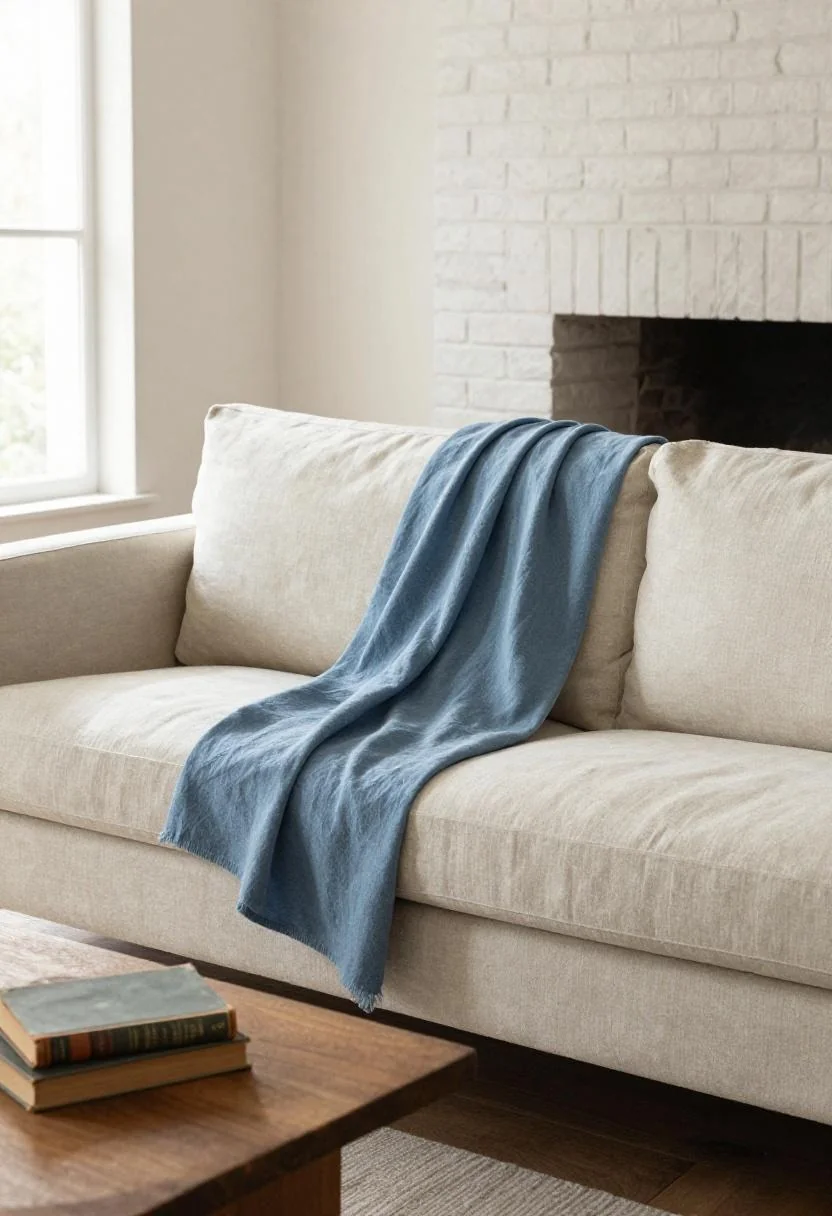
A cool blue linen throw draped over the arm of a sofa — not folded, just placed, as if someone just stood up — beside a whitewashed fireplace stacked with vintage books: this is the quiet beginning of a patriotic room. The blue here isn’t navy, isn’t flag-blue. It’s softer. Morning-lake blue. The kind of color that catches golden-hour light and holds it differently than you’d expect. Stack those oak coffee table books with spines facing out, choose ones with faded cloth covers, and you’ve got the literary anchor the whole vignette needs. Shop blue linen throws on Amazon
Cream white wool throw on a linen sofa? That’s your contrast note — the exhale between bursts of color. But we’ll get there.
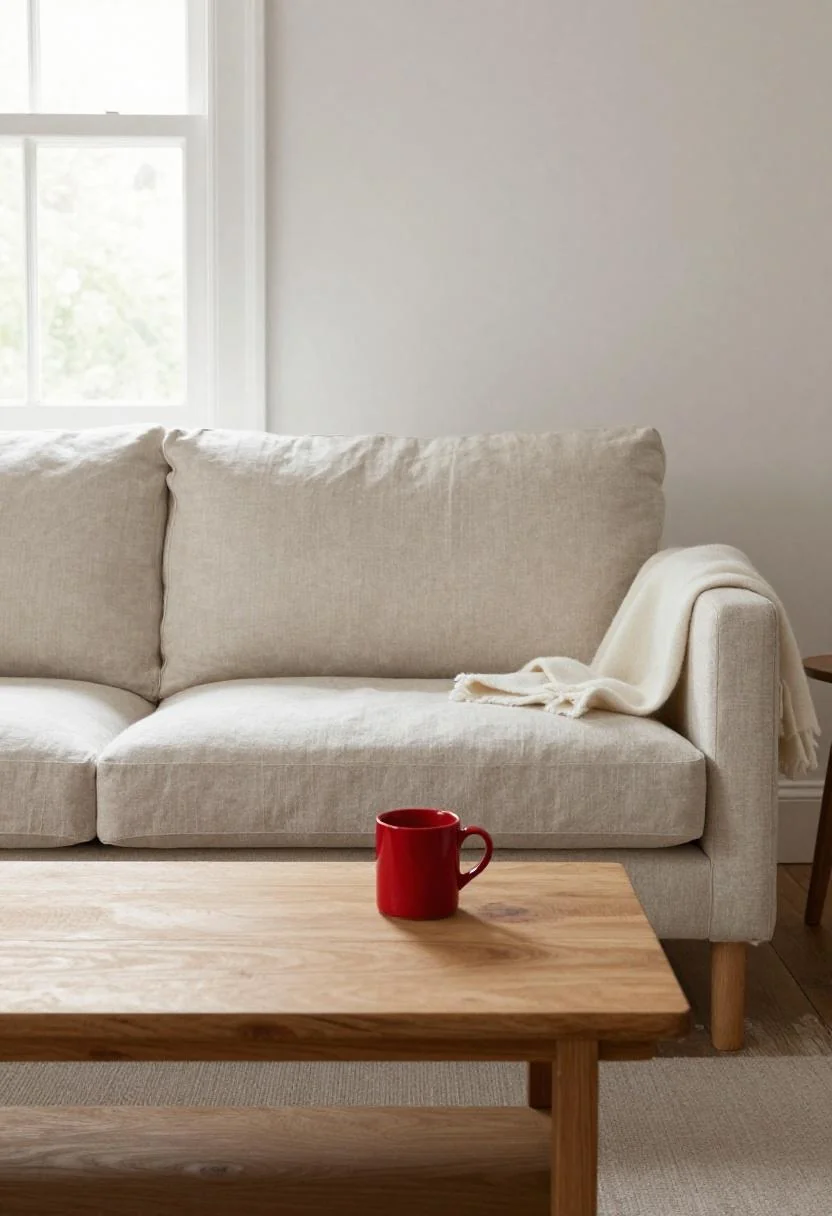
Cream white wool on linen — matte against matte, but with different weights, different fibers — that subtle tension is everything. Add a single red ceramic mug on the pine coffee table and suddenly you have a patriotic palette without a single piece of bunting in sight. Morning light makes this scene feel like a page from an old novel. And isn’t that exactly the feeling we’re after?
Deep Tones, Quiet Drama — The Velvet Moment
Here’s where it gets interesting. Most people think vintage 4th of July means red-white-blue-and-done. But the homes that stop you cold are the ones willing to go deeper.
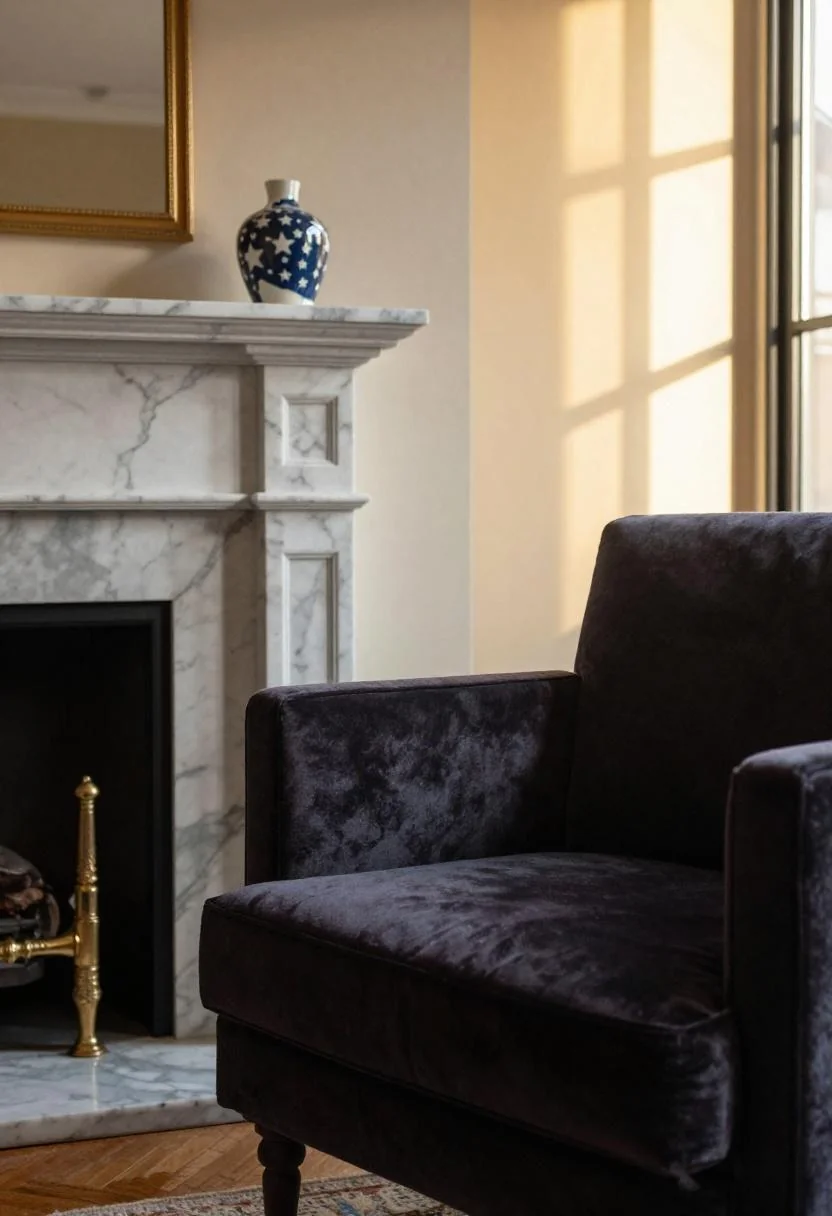
Plum velvet armchair. Marble fireplace. Ceramic patriotic vase catching the last slant of golden hour. Run your hand across velvet in that light and tell me you don’t feel something. This is the color that anchors the whole room — plum noir, rich and almost wine-dark, the kind of shade that Harper’s Bazaar would call “unexpected” in a profile of a storied Connecticut farmhouse. It reads as patriotic because red lives in its DNA, but it’s so much more complex than primary red. Pair it with marble and you’ve got old money. Add the ceramic vase with flag motifs and you’ve got character.
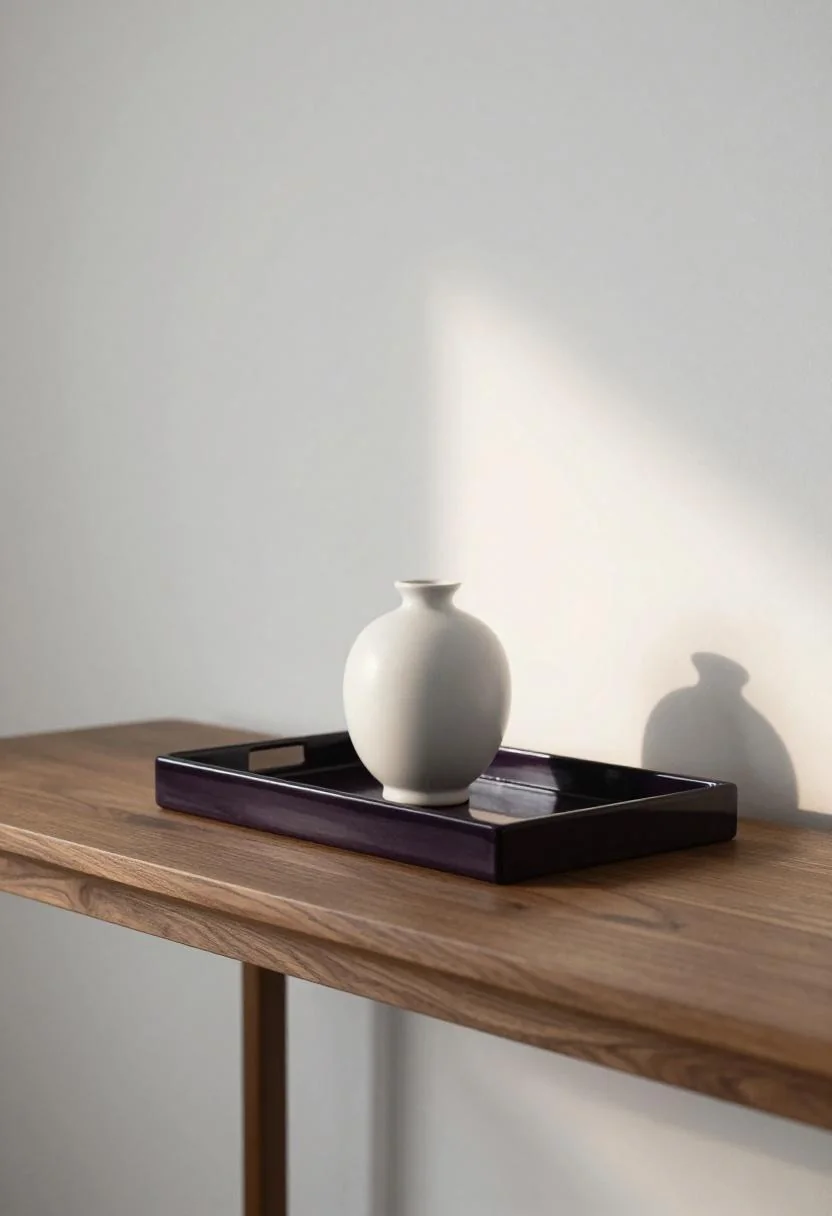
And then — this. A plum noir lacquered tray on a japandi oak console table, holding a single white ceramic bud vase. The lacquer has a gloss that bounces light; the oak underneath is matte and warm-grained. Matte against gloss, rough against smooth. That tension is everything. The bud vase needs only one stem — a dried red berry branch, a cotton stem, a sprig of something from the yard. Keep it sparse. The tray does the work. Find lacquered trays on Amazon
Glass, Ceramics, and the Art of the Sideboard
A well-dressed sideboard is a portrait. It tells you who lives here, what they’ve collected, where they’ve been. For a vintage 4th of July home, the sideboard is prime real estate.
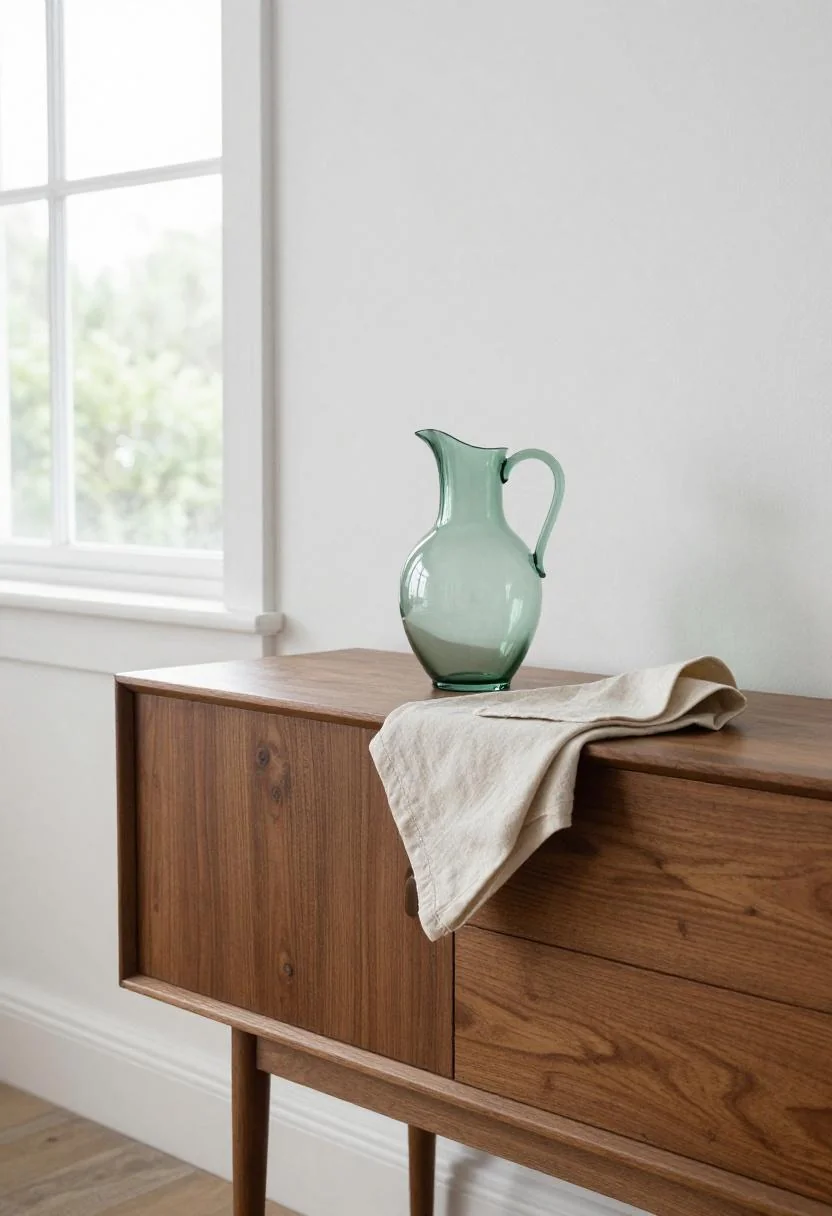
A jade green glass pitcher — the kind you find at estate sales for four dollars and never let go of — sitting on a walnut sideboard with a folded linen flag banner tucked just behind it. Overcast summer light makes the jade glow from within, green and cool like sea glass or a greenhouse on a cloudy afternoon. The walnut is dark and serious; the jade is translucent and playful. They shouldn’t work together on paper. They absolutely do in person.
The linen flag banner doesn’t need to be unfurled. Folded, with just an edge of stars showing, it implies history. It implies someone who cares enough to store it properly, year after year.
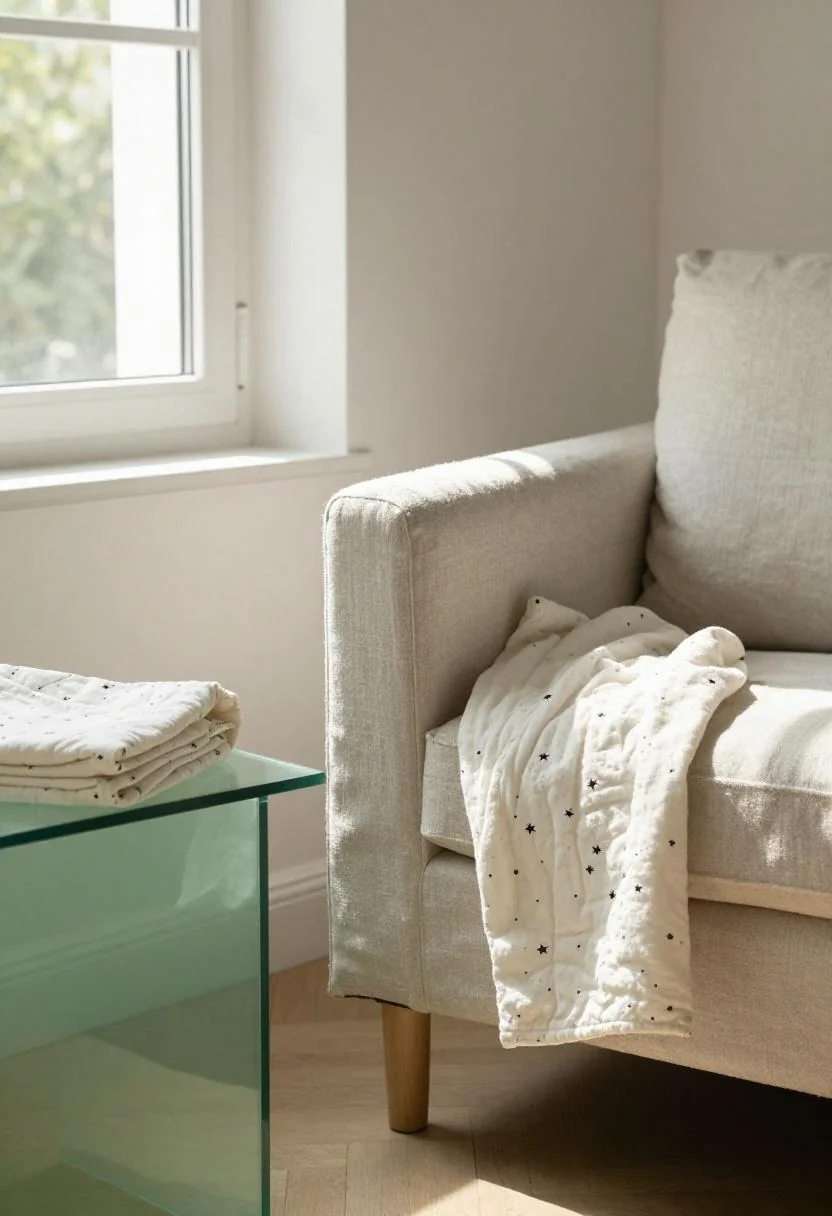
Take jade green further. A glass side table in this color, holding the weight of a star-print cotton quilt — the quilt draped over the armchair beside it, spilling slightly onto the floor in morning light. Cotton quilts with star motifs are the quintessential American heirloom textile. Find one with visible hand-stitching, some slight fading at the edges, the gentle warp of something that’s been washed a hundred times. That imperfection? That’s the whole point. Shop vintage-style star quilts
If you love layering textiles throughout the house, our roundup of 14 trending home decor styles for summer 2026 has more inspiration for mixing periods and textures with confidence.
Earth Tones and the Unexpected Palette
Can we talk about what happens when you pull earth tones into a patriotic room? Because this is where the traditionalist meets the colorist, and the result is — honestly — the most interesting version of 4th of July decor I’ve seen.
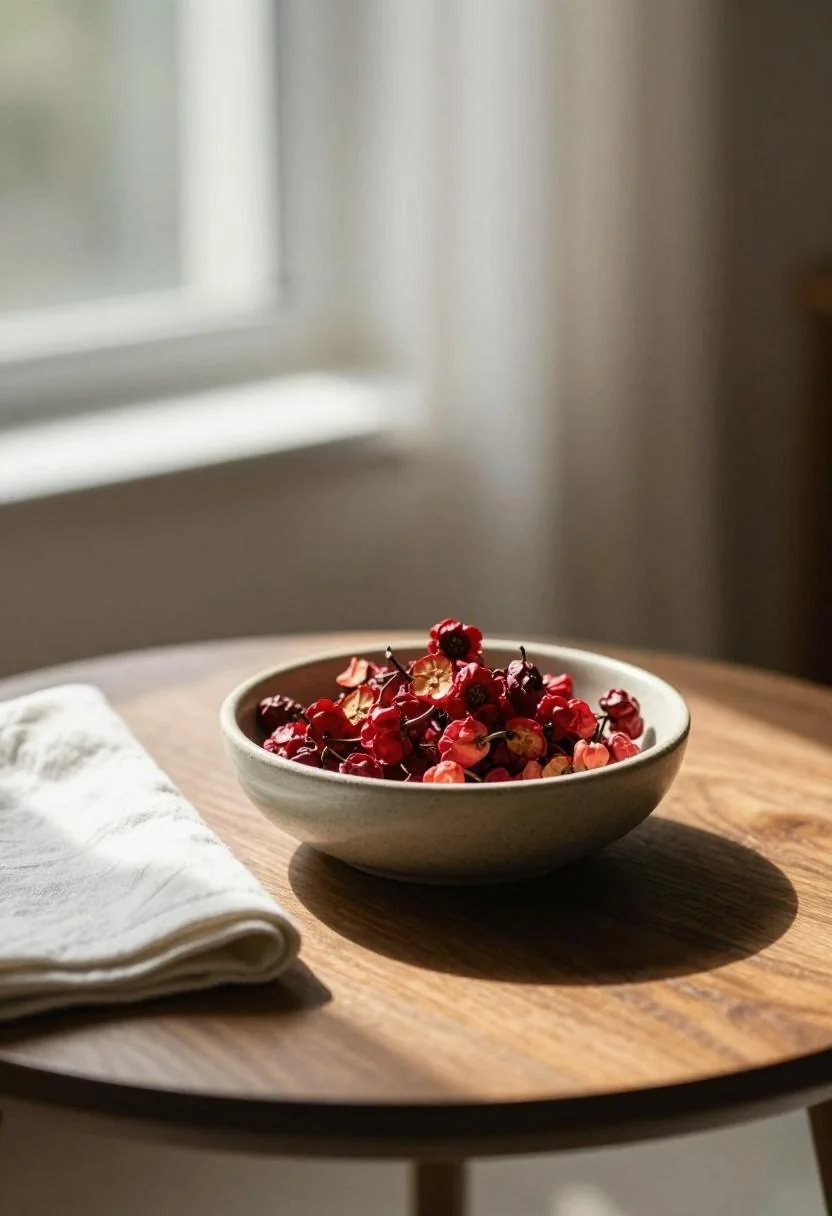
Wasabi. Yes — wasabi ceramic bowl, round and low, filled with dried red berries. On a round oak coffee table in morning light. This color lands somewhere between yellow-green and chartreuse, and it is an absolute dopamine hit in a room full of navy and cream. It’s not a color you’d expect here, which is exactly why it works. The dried red berries give you your patriotic red in the most organic way imaginable — gathered, not purchased. Or purchased to look gathered.
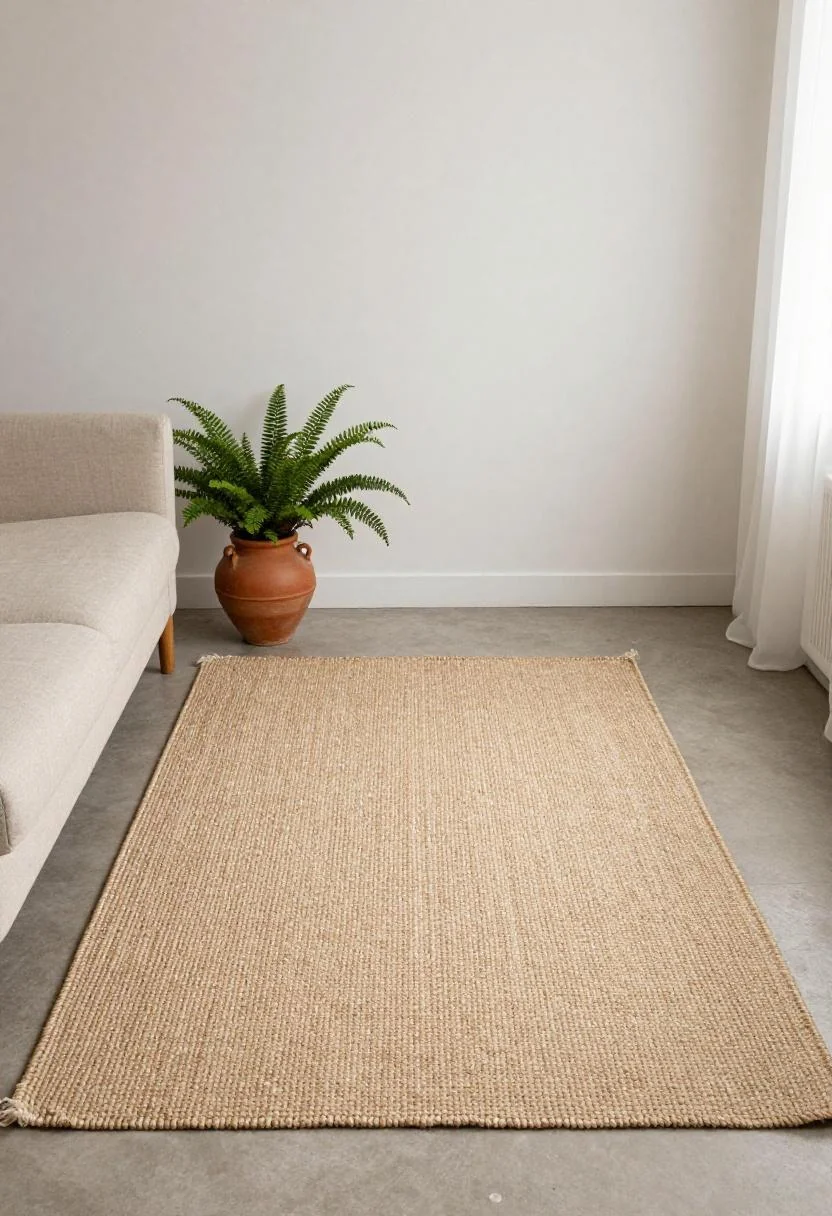
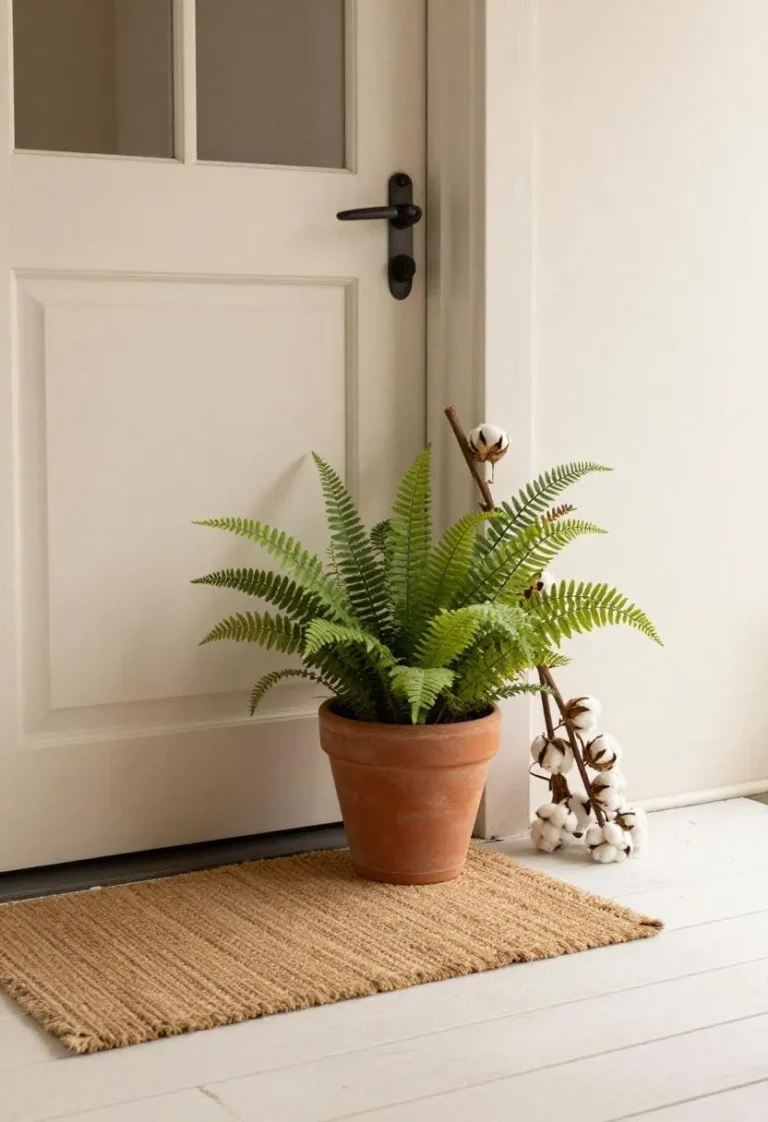
Warm terracotta earthenware pot beside the linen sofa — a living fern in it, the pot sitting directly on a jute rug in diffused afternoon light. Terracotta is practically archaeological. It’s the color of Roman amphora, of Southwestern pottery, of something that has been fired in a kiln and belongs to the earth. In a 4th of July room, it grounds the red-white-blue without competing with it. The jute rug underneath has a texture like rough woven bread — coarse, honest, tactile. Shop terracotta indoor pots
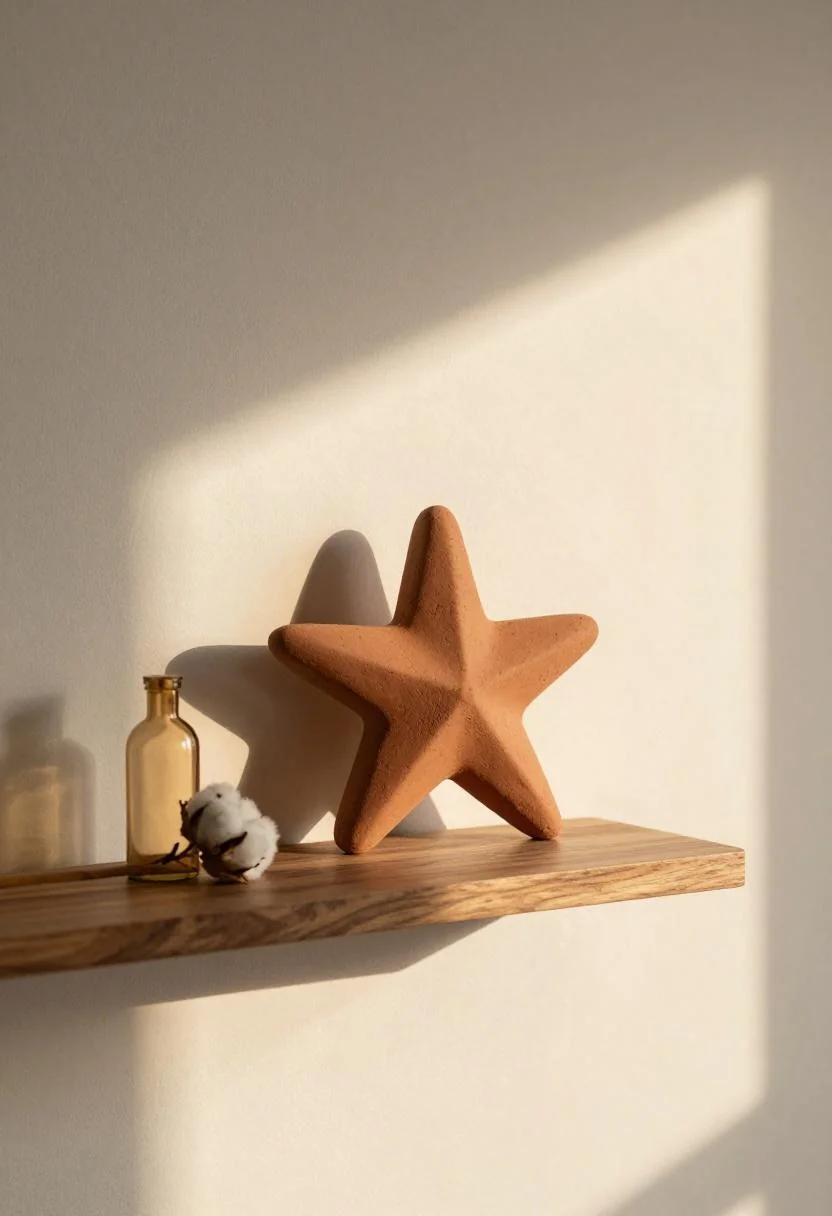
And then — a clay star sculpture in warm terracotta on a walnut floating shelf, beside a single dried cotton stem. This is the kind of object you make in a ceramics class or find at a local craft market, and it carries that handmade quality that no mass-produced piece can replicate. The star reads patriotic without screaming it. The cotton stem is ghostly pale, almost white, its dried pod soft and papery. Together on walnut: grounded, earthy, quietly American.
Brass Lanterns, Pine Seats, and the Afternoon Window
The window seat is one of the great underused canvases in the American home. Period homes — Colonial, Federal, Cape Cod — often had them built in as a matter of course, deep enough to sit in with your knees drawn up, facing the yard. If you’re lucky enough to have one, this is your moment.
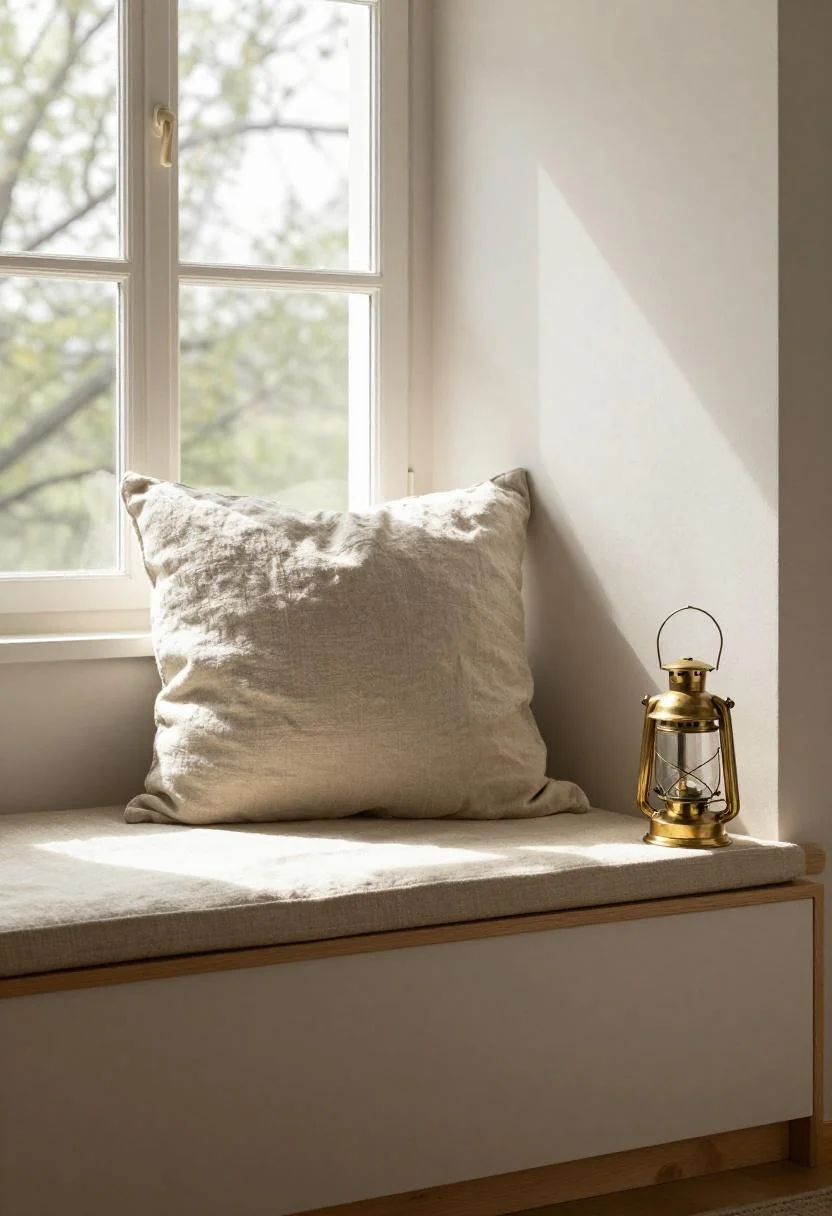
A persimmon linen cushion on a pine window seat, brass lantern beside it catching the afternoon sun. Persimmon is the color of a ripe fruit split open — warm orange with a red heart, vibrant but not garish. In afternoon light, it almost glows. The brass lantern picks up that warmth and amplifies it, casting everything nearby in gold. (I always think of brass as the metal that remembers the sun. It holds light differently than chrome, differently than steel — it has a memory.) Place a small American flag or a bundle of dried lavender in the lantern for that final editorial note.
This look connects beautifully to outdoor entertaining — and if you’re thinking about extending the patriotic vibe to the porch or backyard, our guide to outdoor fire pit area ideas has gorgeous ways to carry the vintage Americana feeling outside.
Candles, Trays, and the Quiet Ceremony of Light
What is the 4th of July without fire? Not the fireworks kind — or not only that — but the older, quieter kind. The candle on the mantel. The lantern on the porch rail. The pillar candle that burns down slowly over a long holiday weekend until there’s a perfect ring of wax at the base.
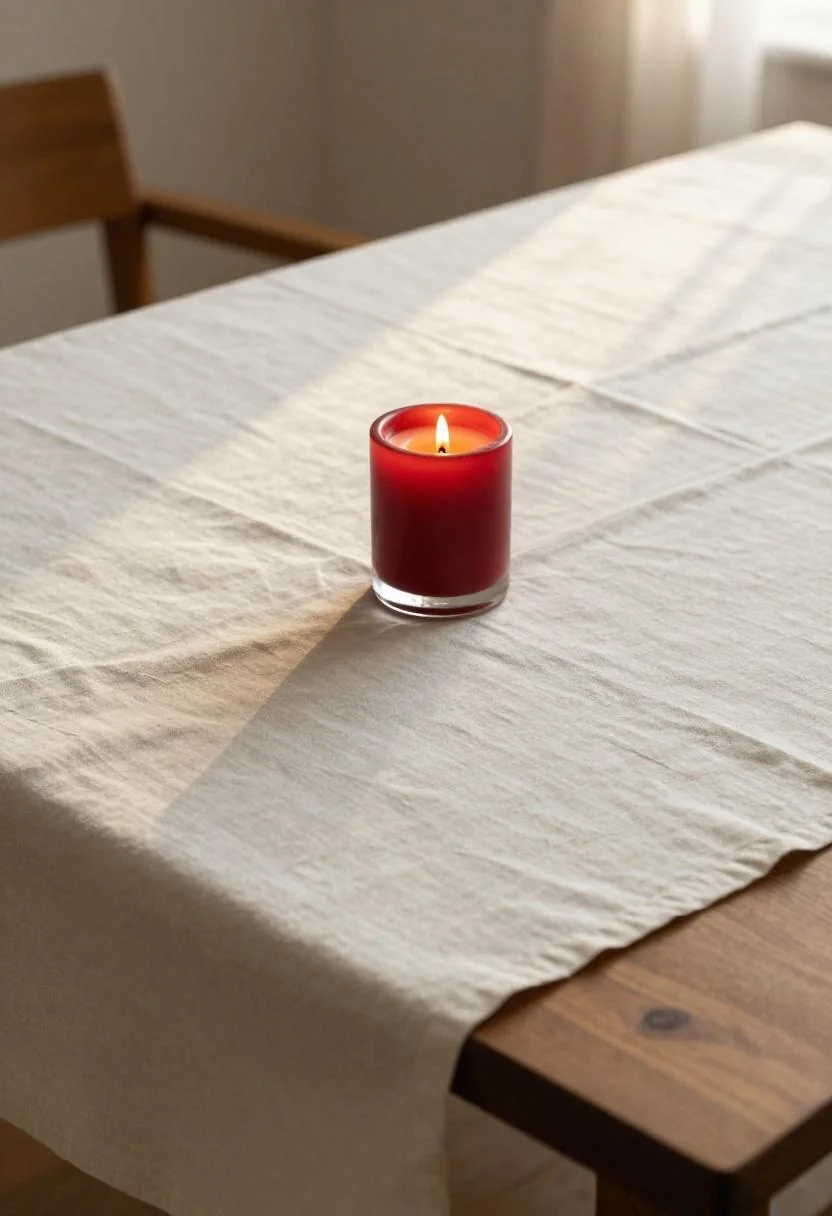
Cream white linen runner on a walnut coffee table. A single red pillar candle. Golden hour. This is perhaps the most restrained look in this whole article, and it’s the one I keep coming back to. The simplicity is almost Japanese in its precision — one surface, one textile, one object — but the red candle gives it a patriotic charge that you feel rather than see. As Elle Decor has noted, the most sophisticated holiday decorating is often subtractive, not additive. Shop red pillar candles
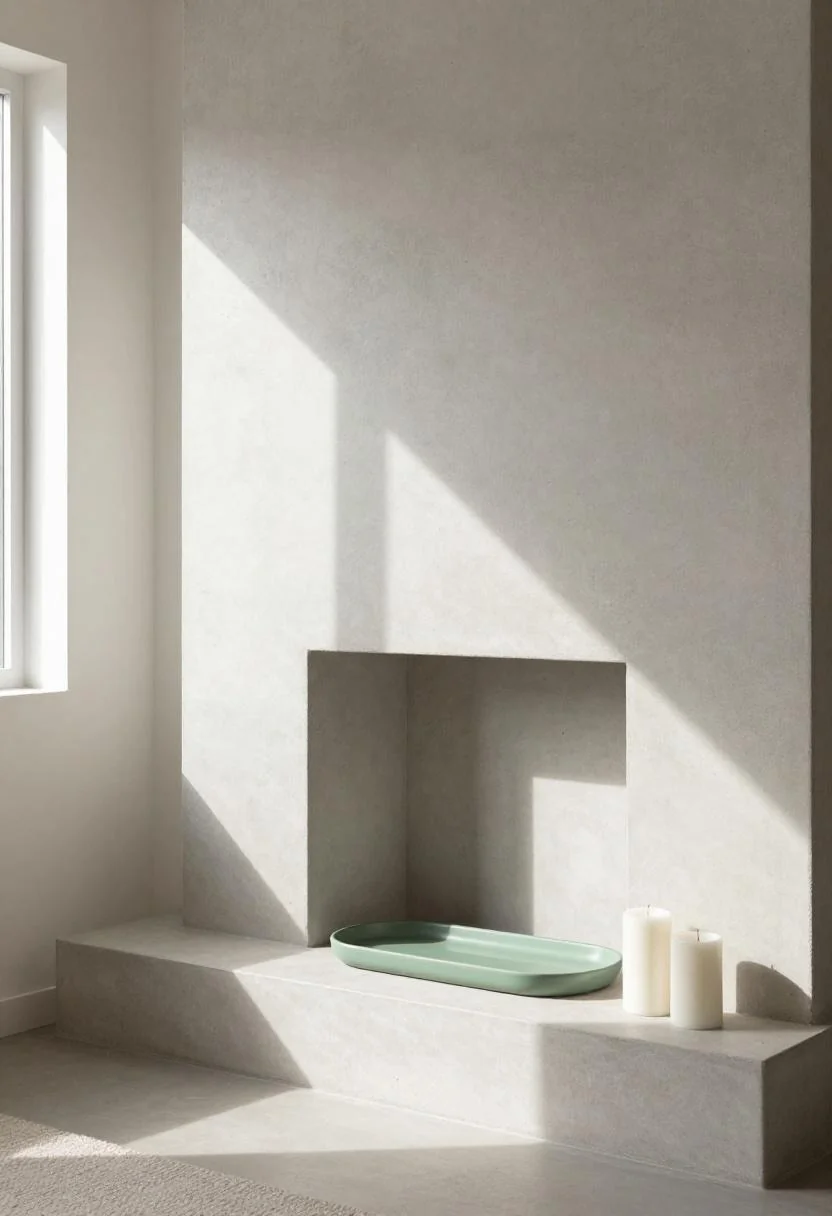
Sage green ceramic tray holding white pillar candles on a minimalist concrete fireplace hearth. Close your eyes and picture this palette in late-afternoon light. The sage green is like a morning in the countryside — not forest, not lime, but that specific grey-green of herb gardens and old painted shutters. Against concrete, it feels modern. Against the white candles, it feels calm and ceremonial. Arrange the candles in odd numbers: three or five, different heights, all unlit until dusk when the whole hearth becomes a glow.
The fireplace hearth as a summer styling surface is an idea worth exploring further — take a look at our spring color palette home decor ideas for more on building seasonal vignettes around architectural features.
Bringing It All Together — The Vintage Patriotic Home
So what does it all add up to? What’s the through-line connecting the plum velvet armchair to the wasabi ceramic bowl to the persimmon window seat cushion?
Restraint with conviction. That’s the whole secret.
Vintage 4th of July decor doesn’t wave a flag in every corner and call it done. It finds the patriotic spirit in the quality of materials — a linen banner folded with care, a hand-thrown ceramic star, a pillar candle burning through a long summer evening. It references the red, white, and blue of the holiday while expanding the palette with unexpected partners: plum, jade, terracotta, sage, persimmon. It layers textures — velvet against marble, linen against walnut, wool against pine — the way a period home accumulates objects over decades, nothing matching perfectly, everything belonging.
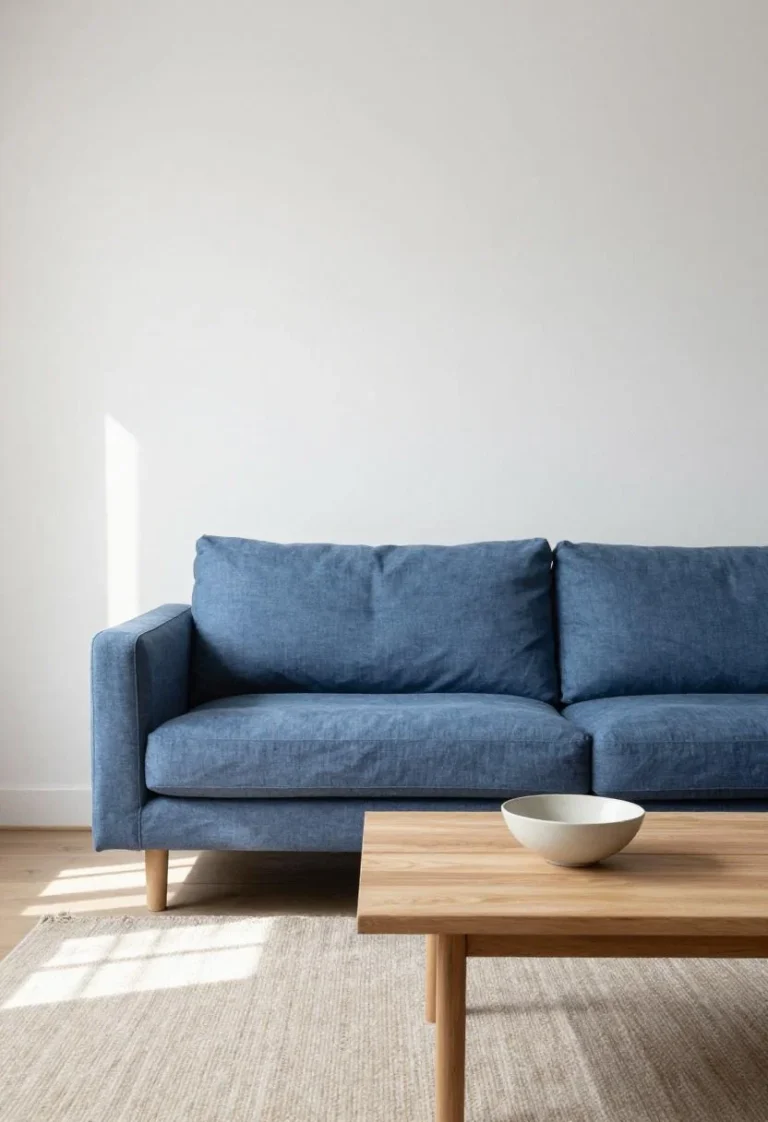
The key tones to carry forward into your own home: cool blue linen as your foundational textile, plum noir for depth and drama, jade green glass for translucent life, warm terracotta to ground it all in earth, and cream white as the breathing room every patriotic palette needs. Dot through with brass, red ceramics, and the occasional star motif — and you’ll have a home that feels like it’s been celebrating the 4th since long before you moved in.
Which is, of course, exactly the point.
This post contains affiliate links. We may earn a commission at no extra cost to you.
Images in this article were created with AI assistance.