A graduation bouquet is not a decoration. It's a statement about how you see the person holding it — and, quietly, how you see yourself as a giver. The market wants you to reach for the obvious: a dozen red roses in cellophane, tied with a foil balloon, handed over in a parking lot. Resist that. The flowers you choose can carry the same considered restraint as a well-chosen gift, a room that doesn't shout, a sentence that lands without explanation. This guide works through fifteen arrangements worth actually giving — organized by where and how they'll live longest — with an eye on craft over volume, and intention over gesture.
For the Ceremony Table: Arrivals That Don't Apologize
The ceremony setting is bright, crowded, and photographed to death. Your bouquet will compete with balloons, sashes, and novelty sunglasses. The answer isn't to go louder. It's to go cleaner.
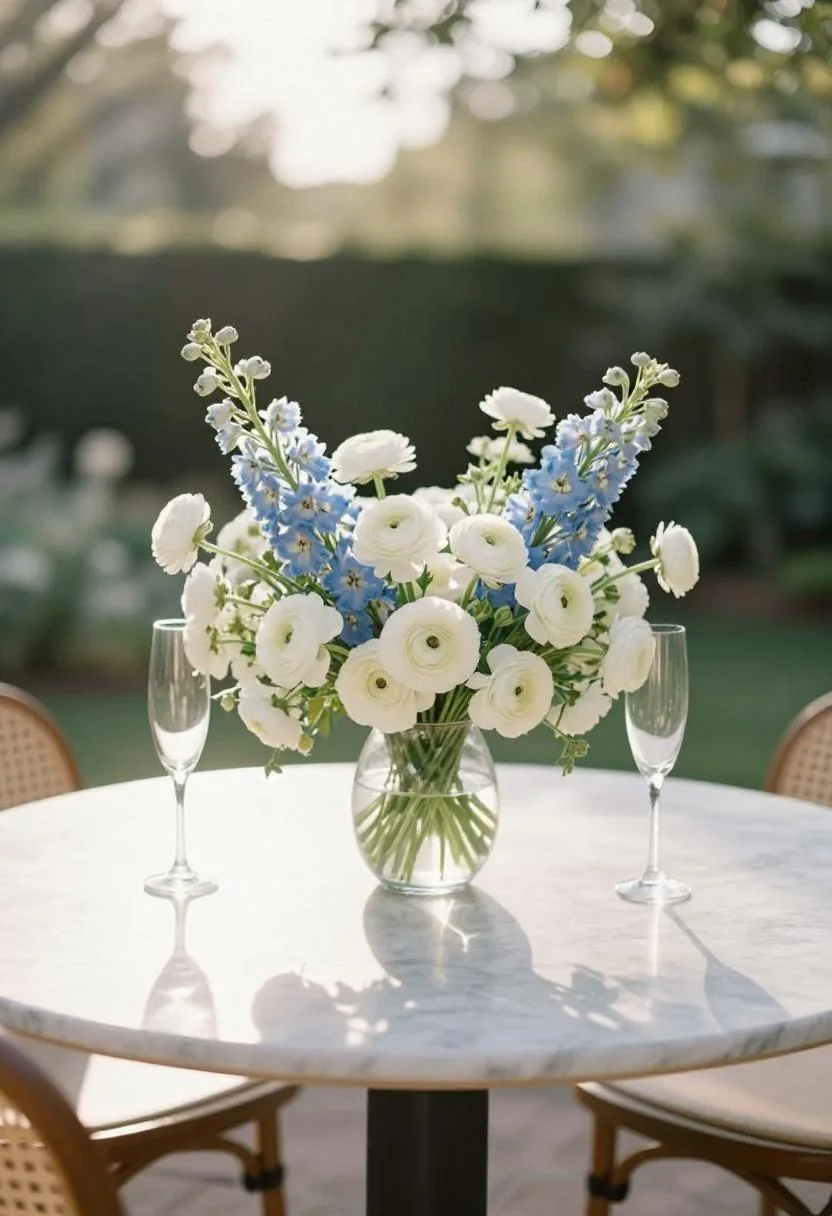
Cool Blue — White Ranunculus & Blue Delphiniums
White ranunculus and blue delphiniums in a clear glass vase. At golden hour, the blue deepens without any help. This combination works because it doesn't perform — the restraint does the talking. The glass vase matters: opacity would collapse the whole logic of the arrangement. A simple cylinder vase keeps the stems visible and the composition honest.
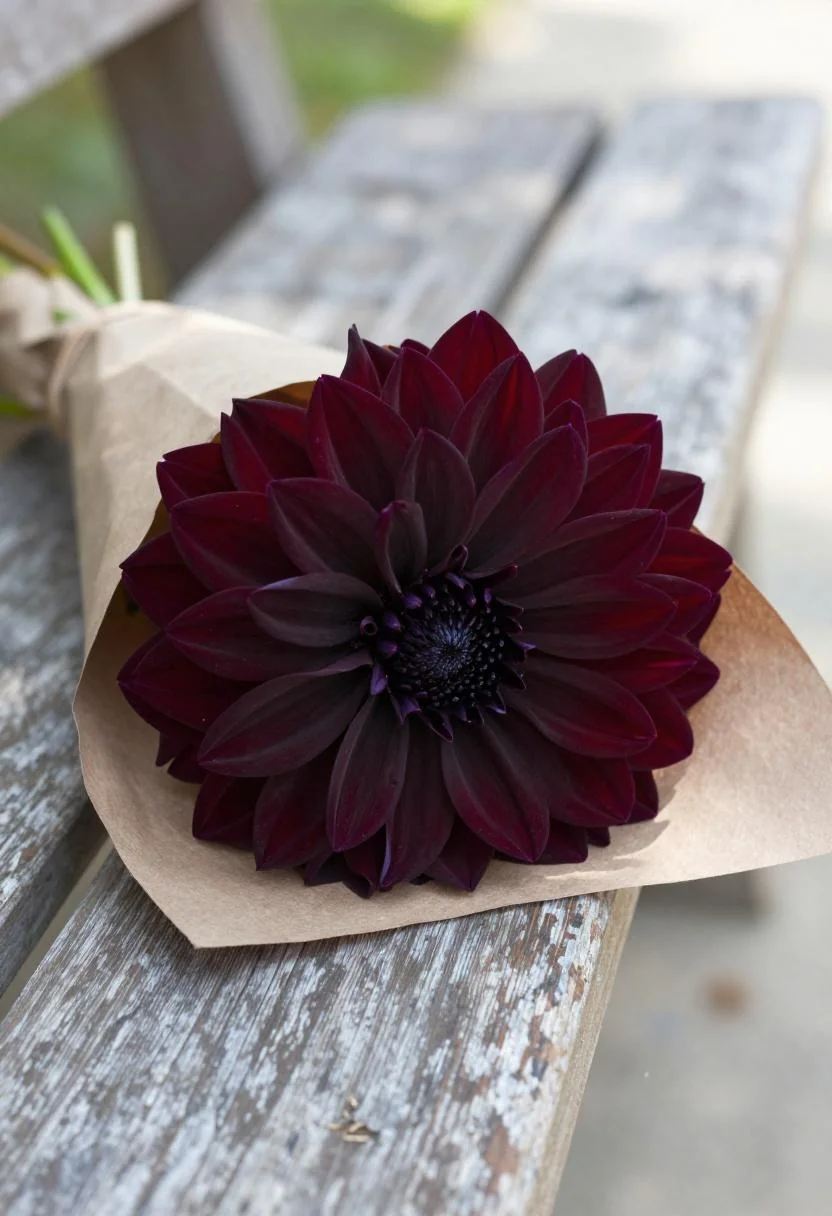
Plum Noir — Plum Dahlias & Kraft Paper
Dark plum dahlias wrapped in unbleached kraft paper. Morning light hits the petals like velvet on a studio floor. The kraft wrapping is not a budget compromise — it's a choice. Ribbon would undermine the whole thing. As Vogue has observed, the move away from overwrapped florals toward raw, material-honest presentation is shaping how flowers are given in 2026. Here, the teak bench in the photograph grounds the color palette in something warm and worn — which is exactly the tension you want between the dark dahlia and its wrapping.
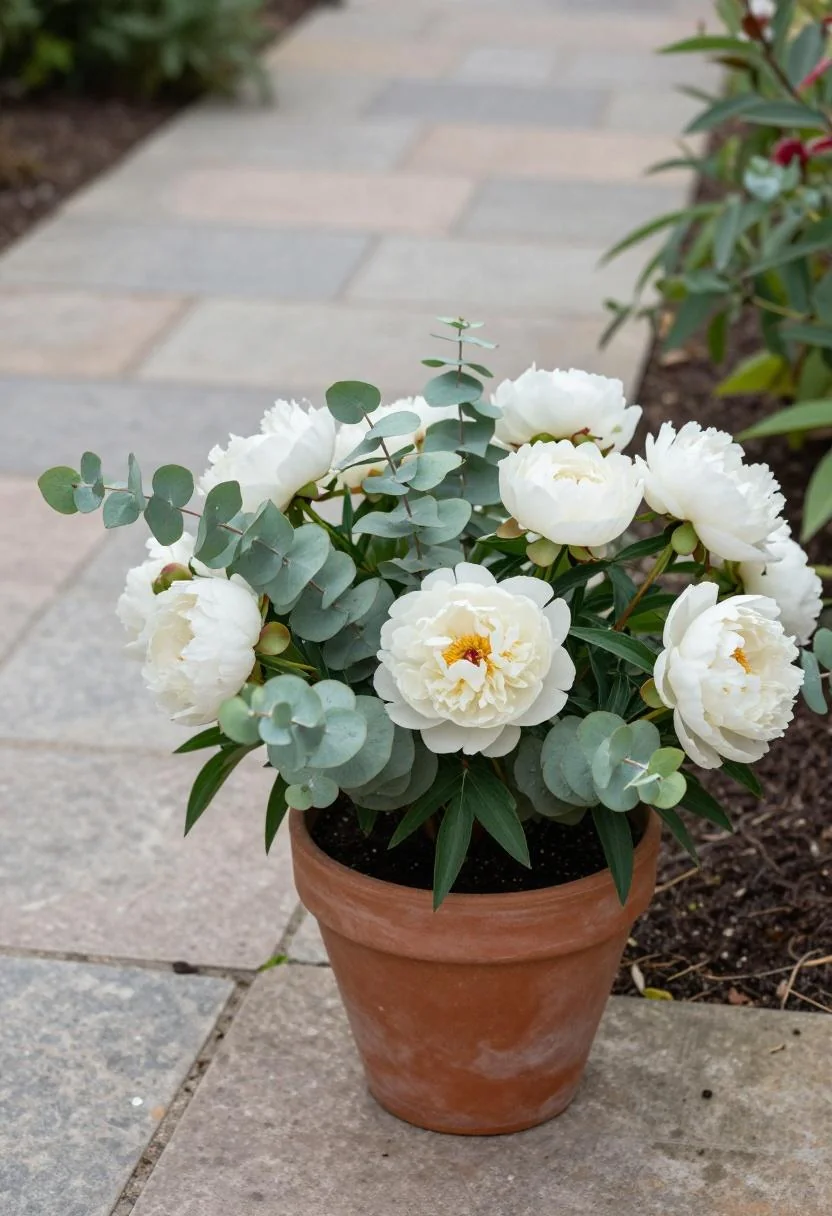
Jade Green — Eucalyptus & Peonies
Eucalyptus and peonies in terracotta. Overcast light flatters both — no harsh shadows, no overblown highlights. The stone path in the image suggests permanence, and that's not accidental: this is the kind of arrangement you place and trust. A terracotta pot as the vessel doubles as the gift — something the graduate keeps long after the peonies are gone.
If you're styling an outdoor ceremony or garden party, the ideas in our summer front door decor guide overlap more than you'd expect — the principles of scale and negative space apply to flowers the same way they apply to an entryway.
For the Reception Space: What Lives on a Table
After the handshake and the photograph, the bouquet moves indoors. Now it has to hold up in a kitchen, a dining room, a corner shelf. Different light. Different scale. The arrangement should survive the translation.
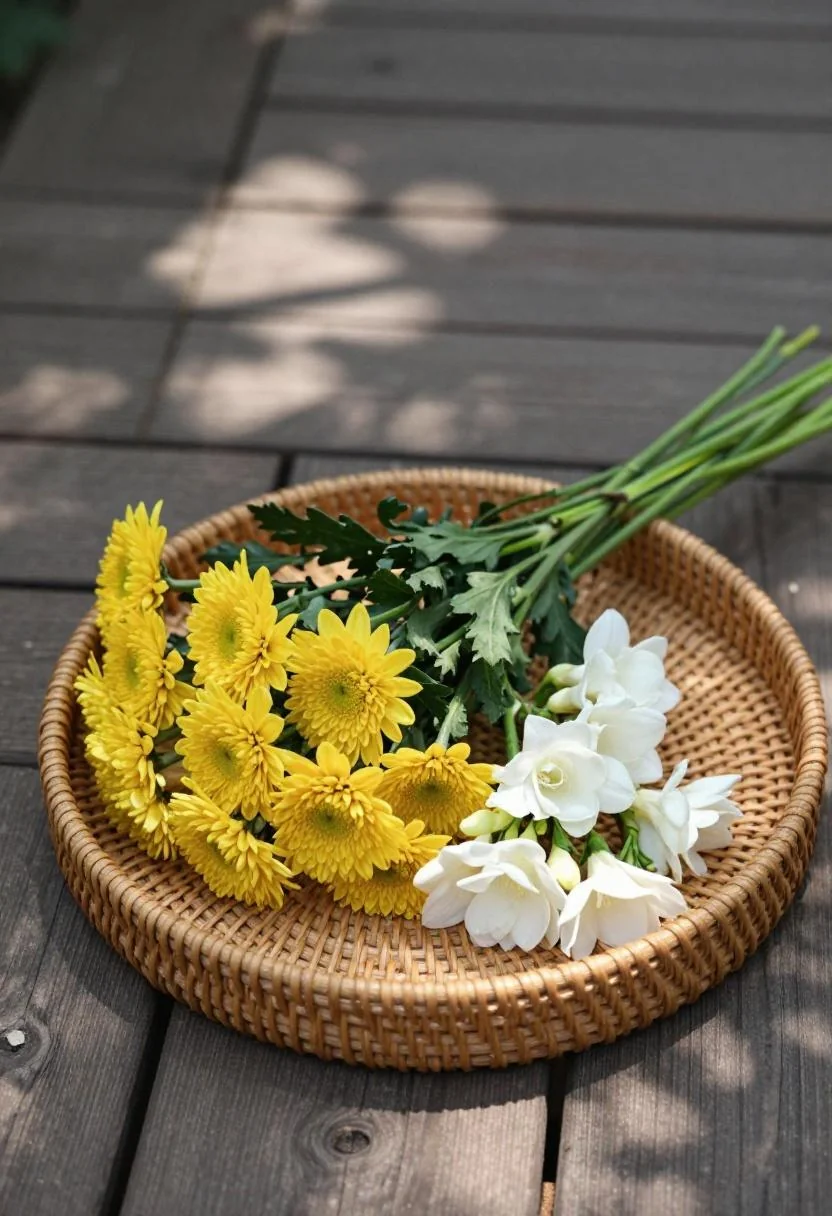
Wasabi — Chartreuse Chrysanthemums & Freesia
Chartreuse is a difficult color to trust. Most people hedge it — pair it with white, pull back the saturation, apologize for it. Don't. Chartreuse chrysanthemums and freesia laid flat on cedar, shot in dappled shade, prove the color has architectural confidence when you commit to it.
One sentence: this arrangement asks the room to keep up with it, not the other way around.
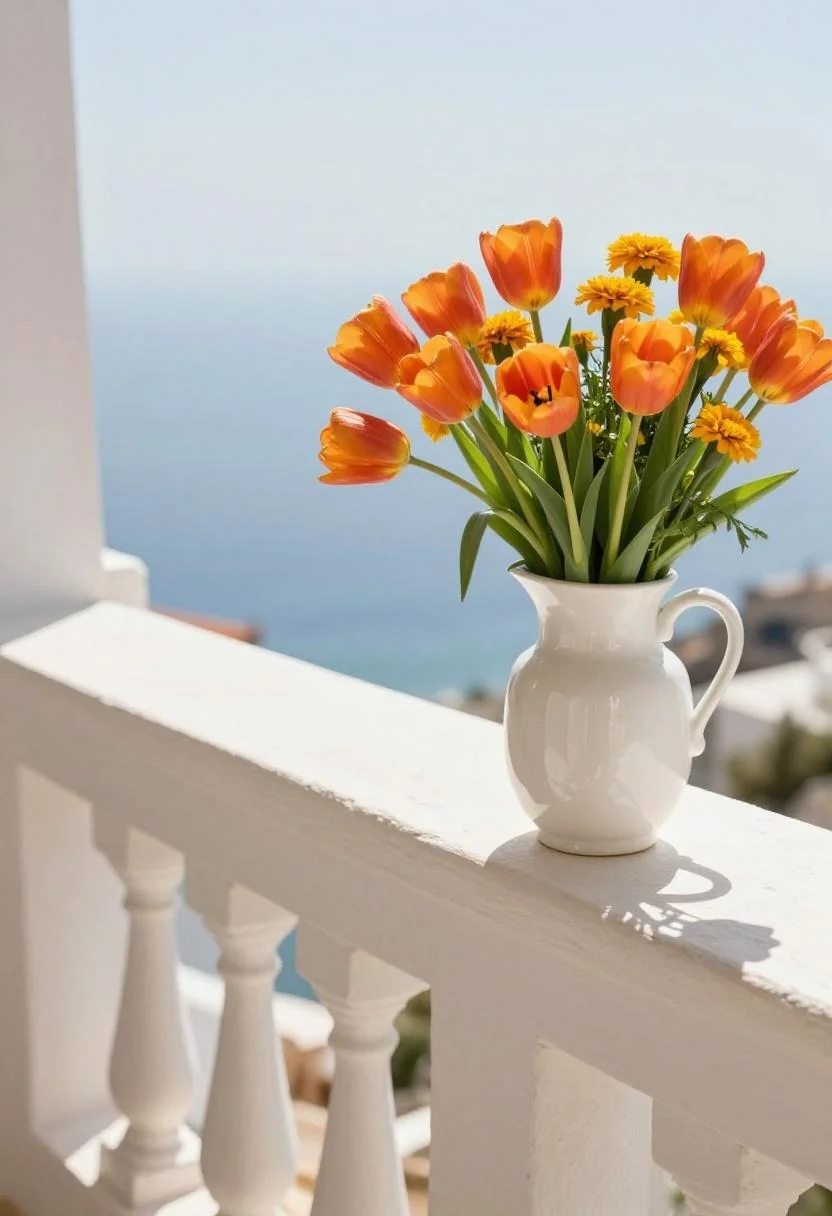
Persimmon — Tulips & Marigolds
Persimmon tulips and marigolds in a white ceramic jug. Midday Mediterranean light, which sounds harsh but actually bleaches the surroundings into a kind of minimalism — the orange reads clean, not garish. The white jug is doing structural work: it stops the warmth from overwhelming. A simple ceramic jug is worth owning for exactly this reason — it works with almost any warm-toned flower. The Mediterranean villa design principles this image channels — high contrast, simple vessels, saturated color in moderation — translate directly into how you dress a dining table for a graduation lunch.
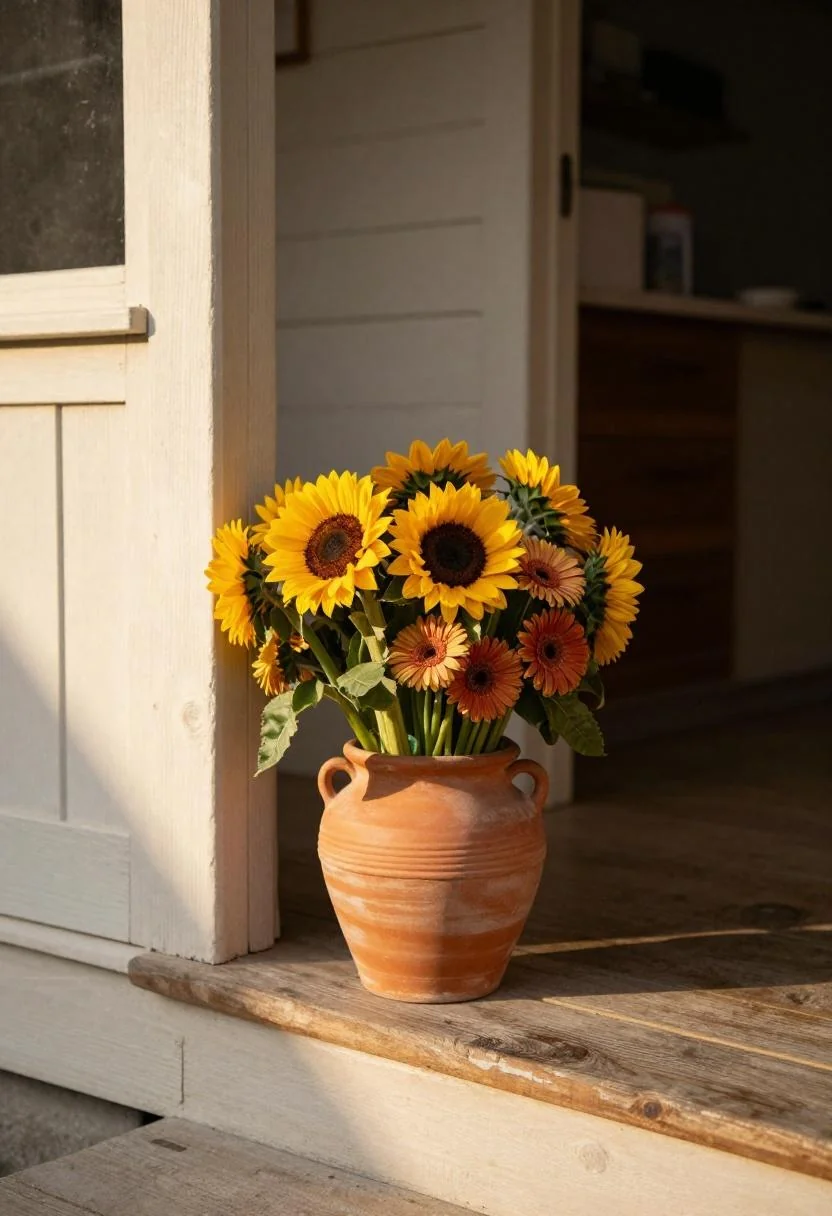
Warm Terracotta — Sunflowers & Gerbera Daisies
Sunflowers are obvious. They're also right. Gerbera daisies beside them at golden hour on a cottage porch step — the terracotta pot unifying both — makes the obvious feel considered. Strip away the nostalgia and ask: would this feel right in five years? Yes. Absolutely yes.
Quiet Arrangements: For Small Spaces & Intimate Celebrations
Not every graduation is a party for forty. Sometimes it's a dinner for four, a rooftop at sunset, a kitchen table. The bouquet should match that scale — not shrink apologetically, but simply not overclaim the room.
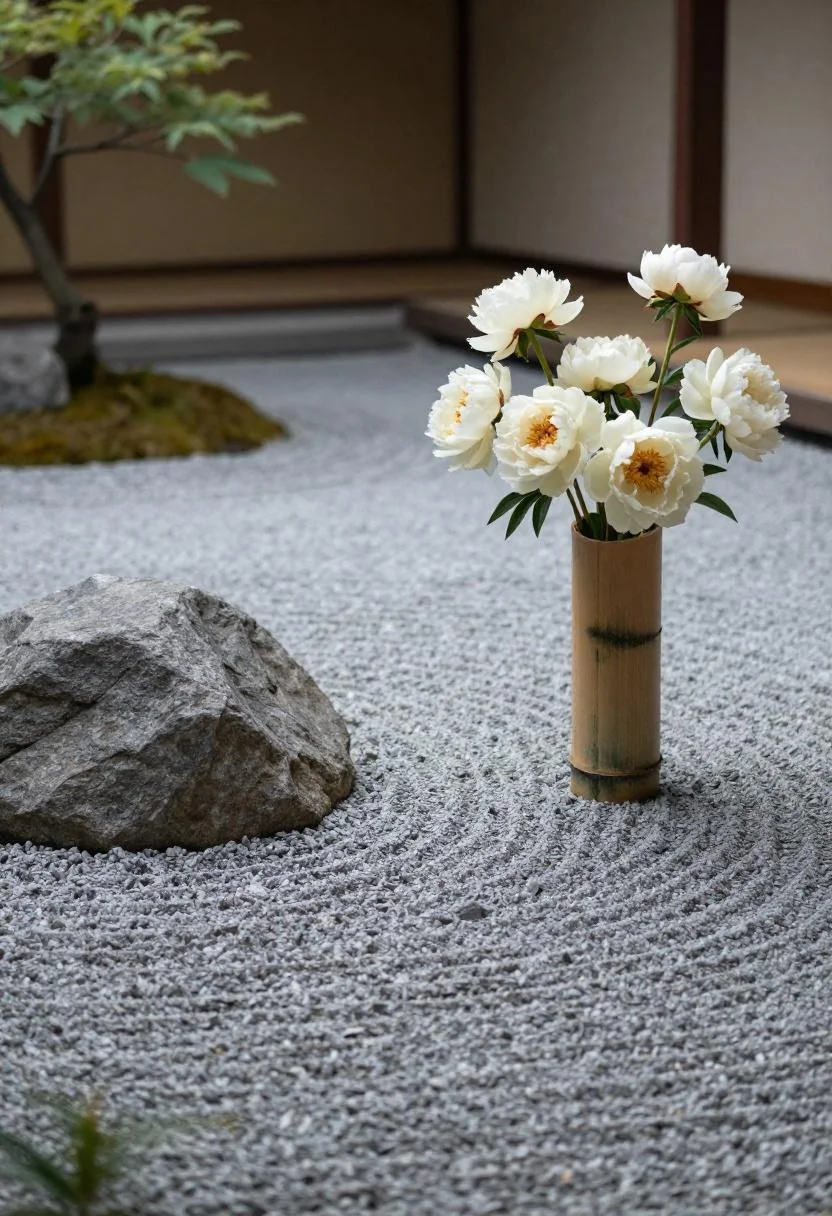
Cream White — Cream Peonies in a Bamboo Vase
Cream peonies, bamboo vase, a granite stepping stone in raked gravel. The negative space in this composition is load-bearing — remove the gravel and the whole image collapses into something ordinary. This is a bouquet for someone who lives in a studio and values what's not there as much as what is. Bamboo vases are underused and deserve a second look.
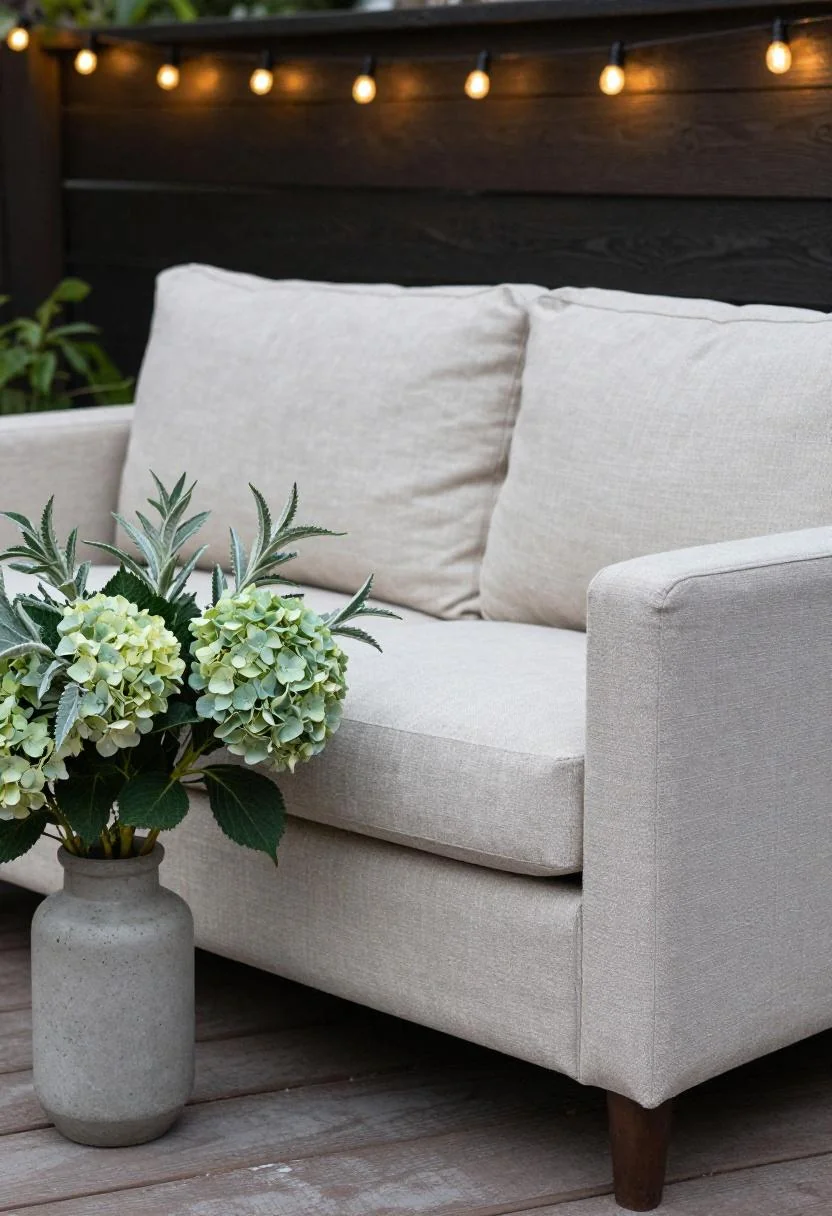
Sage Green — Hydrangeas & Lamb's Ear
Sage hydrangeas and lamb's ear — the texture contrast between those two is half the point. Dusk light on linen, a concrete vase at the armrest. The concrete vessel is doing something interesting here: it's heavier than the mood of the flowers, and that friction makes both feel more specific. Concrete vases are worth adding to a permanent rotation.
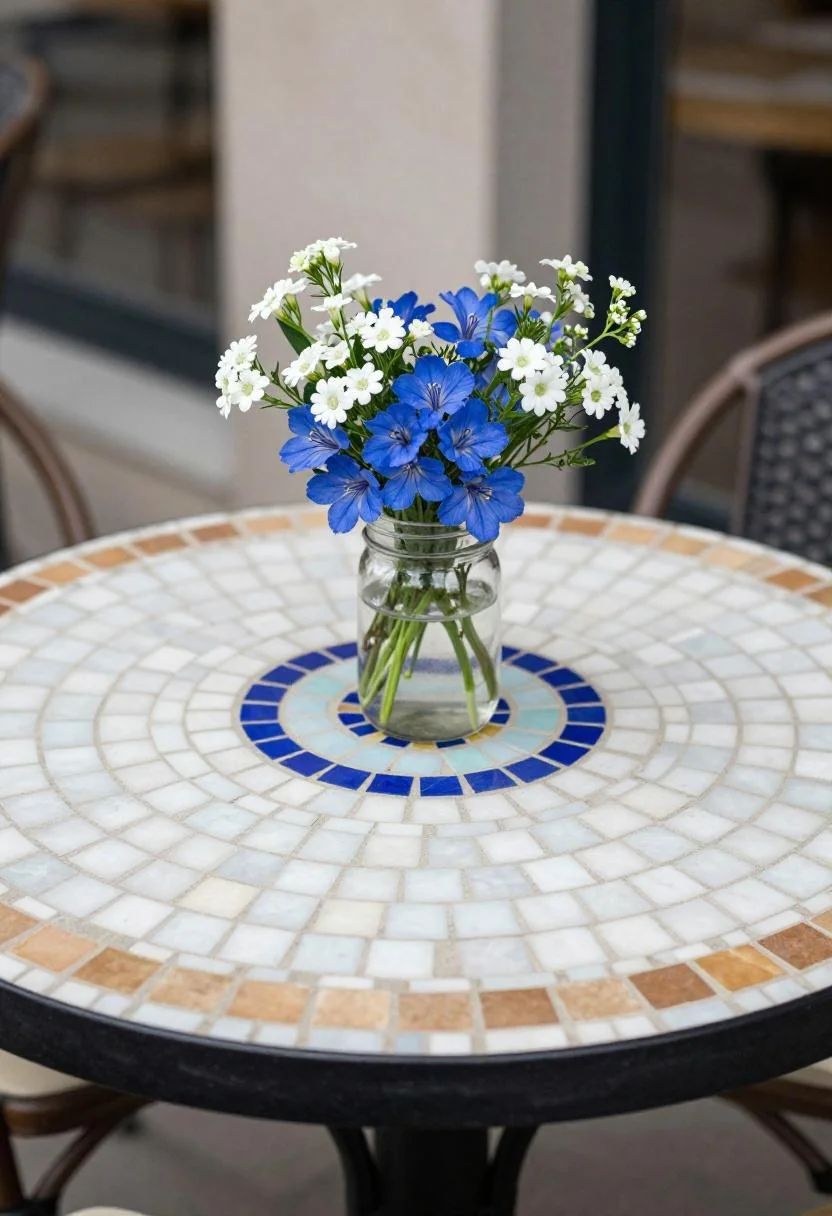
Cool Blue — Blue Lobelia & Sweet Alyssum
A mason jar. Morning shade. Mosaic bistro table. Blue lobelia and sweet alyssum, which is not a flower most people think to request — and that's precisely what makes this work. It signals fluency. Anyone can order roses. Knowing lobelia and alyssum even exist together is a different kind of taste. Harper's Bazaar has long argued that the vessel matters as much as the bloom — a mason jar is as deliberate as a Murano glass vase if you're deliberate about choosing it.
For the Graduate Who Lives Boldly: Drama Without Noise
Some graduates don't want something delicate. They want something that reads across a room — that photographs with intention — but still doesn't collapse into pageantry. The arrangements in this section are for them.
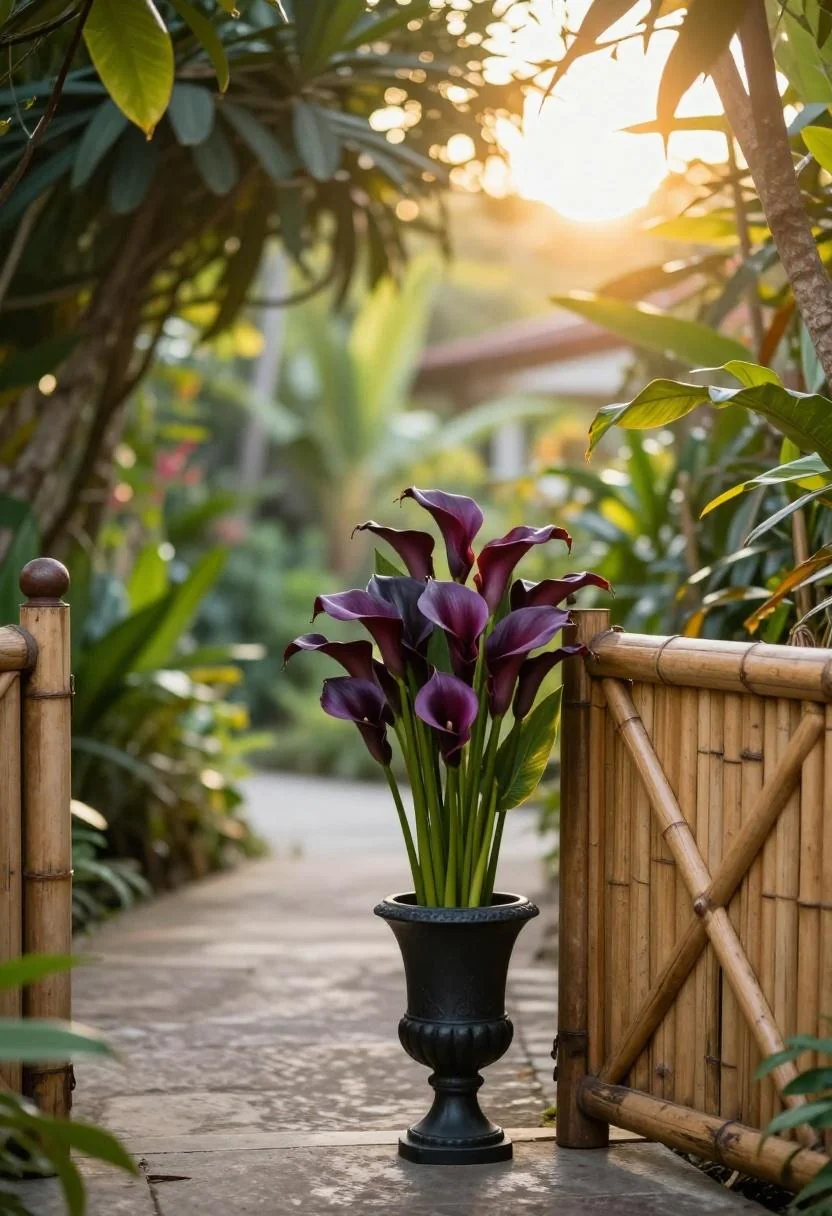
Plum Noir — Dark Calla Lilies & Bird of Paradise
Dark calla lilies and bird of paradise in a black iron urn. Golden hour. A tropical bamboo gate as backdrop. This is the most compositionally ambitious arrangement in this guide — and it earns it. The iron urn grounds what could otherwise be theatrical. The bird of paradise extends the silhouette vertically without adding visual weight. What would ruin this: any kind of filler flower, any ribbon, anything soft. Don't compromise the line.
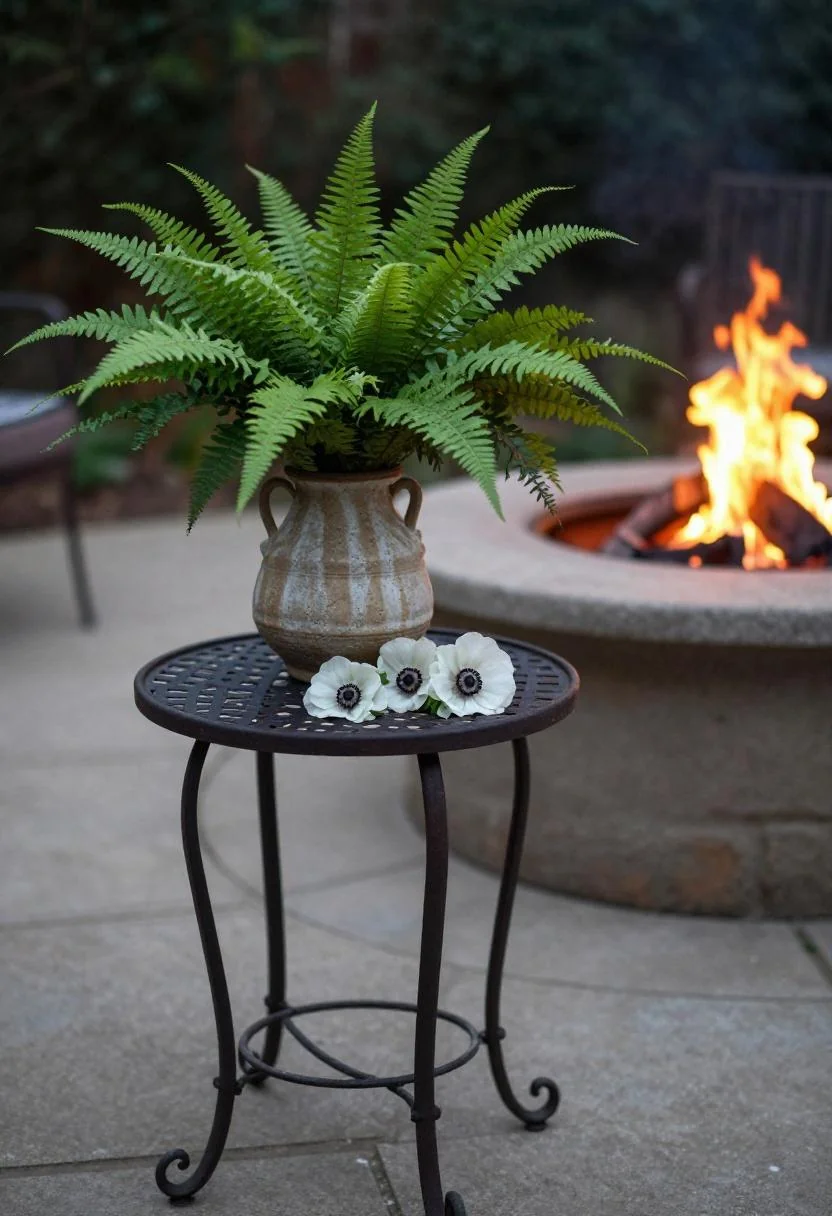
Jade Green — Jade Fern & White Anemones
Jade fern and white anemones in stoneware, beside a glowing fire pit. The warmth of the fire against the cool green of the fern creates a tension that a purely daytime photograph can't replicate. This is an arrangement for an evening celebration — a rooftop dinner, a fire pit gathering. The anemones hold their own in low light in a way that roses simply don't. Handmade stoneware vases carry this kind of rustic-modern weight without trying.
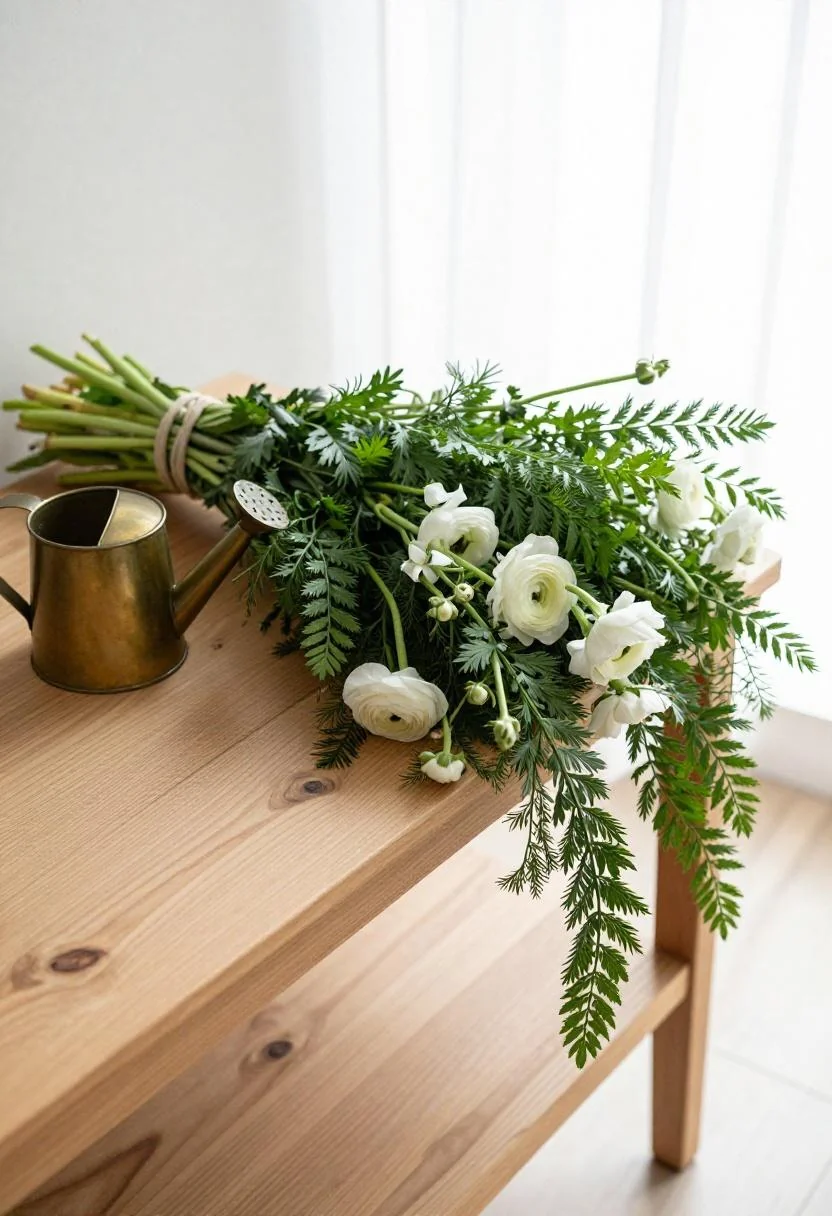
Wasabi — Lady's Mantle & Ranunculus
Lady's mantle and ranunculus leaning against a bronze watering can on a cedar potting bench. The casualness here is studied — nothing about this composition happened without thought, even though it looks entirely unconstructed. That's the harder thing to achieve: the arrangement that looks like it didn't try. Ask any florist and they'll tell you effortless takes the longest.
(— and for the outdoor-minded graduate who's going to put this arrangement on a porch or deck, our concrete patio makeover guide covers exactly the kind of surfaces that frame cedar-and-bronze compositions like this one.)
Rooftops, Terraces & Open Air: Arrangements for Exposure
Wind is a design constraint. Sunlight bleaches color. An arrangement that works indoors may look washed out or unstable outside. These three handle exposure without apology.
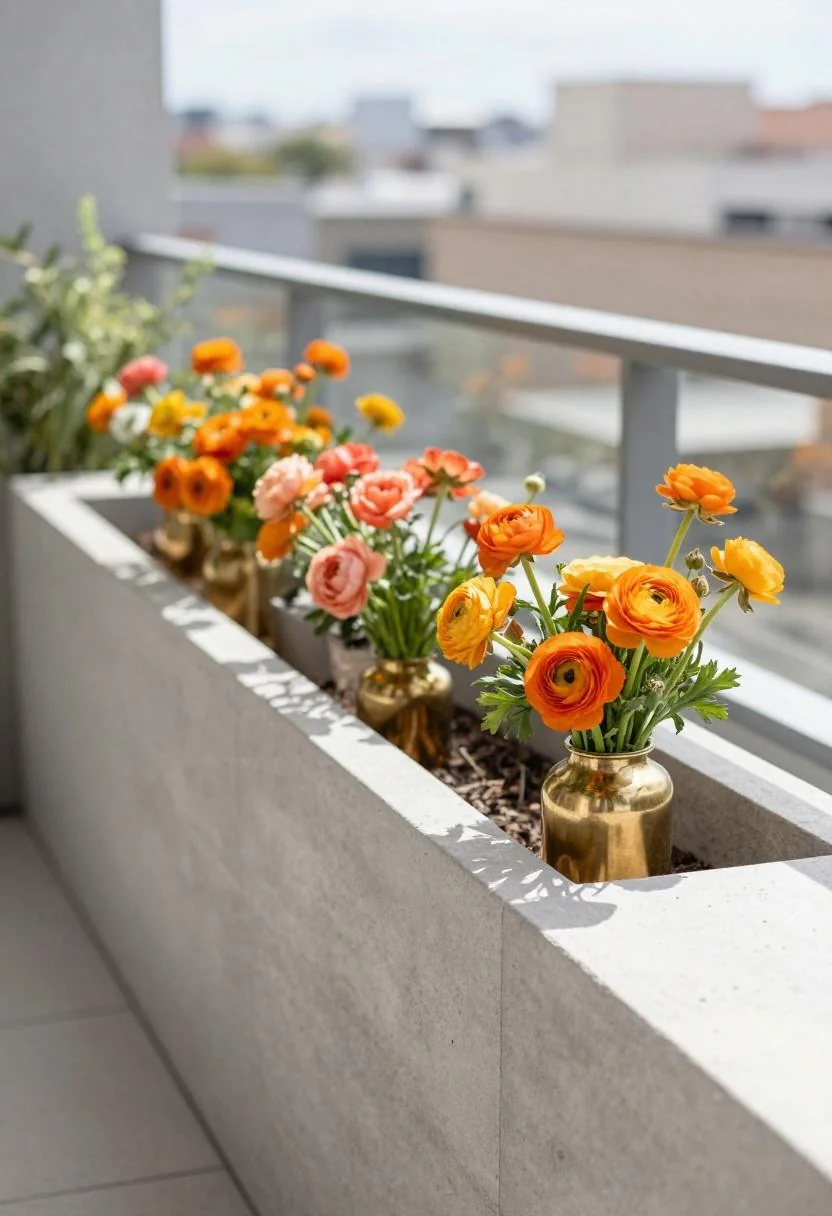
Persimmon — Coral Peonies & Ranunculus
Coral peonies and ranunculus in a brass vase, set on the edge of a concrete rooftop planter at midday. The brass reads warm against the concrete, which reads industrial — and that's not a contradiction, it's the whole composition. The midday light is unforgiving to most colors. Coral survives it. A brass vase is one of those objects that ages into itself rather than away from it.
What does a rooftop graduation setup actually need? Concrete surfaces, good afternoon light, vessels with weight. As Elle has covered, the shift toward architectural, outdoor floral arrangements for milestone celebrations tracks with a broader appetite for events that feel personal rather than generic.
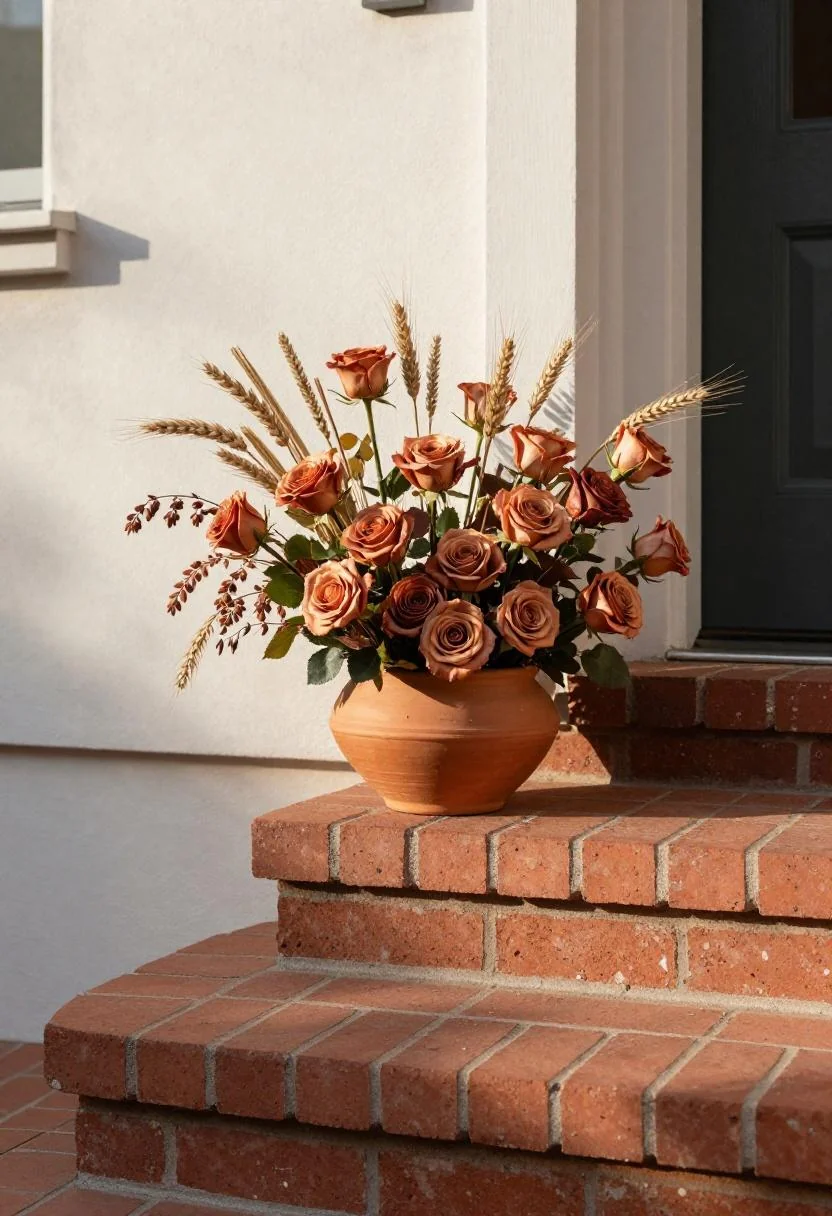
Warm Terracotta — Copper Roses & Wheat Stems
Copper roses and wheat stems in a terracotta bowl. Afternoon sun on brick. This is harvest-adjacent — which is unusual for a June graduation — but the warmth of it is exactly right for someone who finished a long, difficult thing and wants their flowers to say so without sentimentality. The wheat stems extend the arrangement's height with no additional visual complexity. Less noise. The terracotta bowl and brick background share a color family that makes the whole thing feel inevitable, like it couldn't have been arranged any other way.
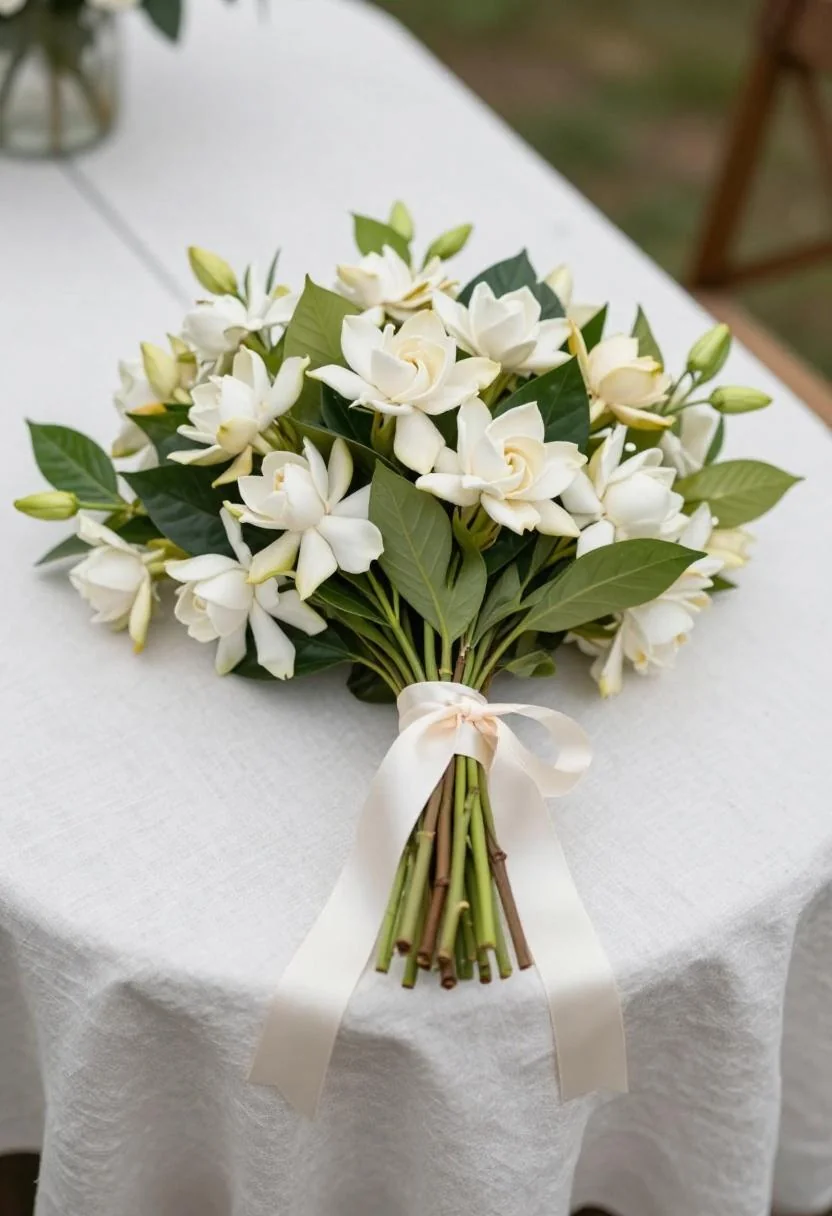
Cream White — Gardenias & Stephanotis
Gardenias and stephanotis, satin ribbon, a linen garden table under overcast light. This is the one arrangement here that earns the word "bridal" — and it earns it by not trying to escape the association. Overcast light is the most flattering thing that can happen to white flowers. The satin ribbon is thin, not theatrical. The restraint here is the whole point. Give this to someone who just finished law school or a surgical residency. It says: what you did was serious, and serious things deserve quiet ceremony. Gardenia arrangements are among the most enduring floral gifts for exactly this reason.
If the celebration extends to the garden itself — the table, the setting — our half barrel planter guide covers outdoor staging that complements arrangements like this one without competing with them.
The Color Logic: What This Season Is Saying
Across these fifteen arrangements, a palette emerges that's worth naming. Cream white and sage green anchor the quiet end — arrangements for people who want flowers to settle into a space, not announce themselves. Cool blues and jade greens introduce precision without coldness. Persimmon and warm terracotta carry warmth that earns its place rather than borrowing from nostalgia. And the plum noirs — the dahlias, the calla lilies — are for graduates who want their flowers to hold a certain gravity.
What's absent is significant too. No bubblegum pinks. No lavender-and-baby's-breath. No arrangements that mistake volume for generosity.
The consistent vessels — terracotta, concrete, stoneware, brass, glass — point toward a material sensibility that's absorbed industrial and artisanal influences simultaneously. These aren't florist-shop vessels. They're objects that survive the arrangement.
Is the flower always the gift? Or is the way you see the person — the care you took in selecting something specific — what they actually receive?
The arrangements above answer that question quietly. Give one. See what happens.
This post contains affiliate links. We may earn a commission at no extra cost to you.
Images in this article were created with AI assistance.


