Farm gates are having a moment — and not the ironic, nostalgia-bait kind. What we're seeing across outdoor design showcases this season is a genuinely considered return to the working landscape aesthetic: gates that read as functional objects first, decorative statements second. Pinterest search data from Q1 2026 shows "rustic farm gate ideas" up 312% year-over-year, with the strongest engagement coming from suburban homeowners aged 25–42. The through-line here is authenticity. Reclaimed timber. Wrought iron with actual patina. Stone pillars that look like they've been standing since before Instagram existed. This isn't shiplap-everywhere farmhouse — that wave crested and retreated. What's replacing it is something quieter, more structural, more permanent-feeling.
The gate, it turns out, is the yard's opening argument. Get it right, and everything that follows — the planting scheme, the hardscape, the furniture — falls into coherent conversation. Get it wrong, and no amount of thoughtful detailing inside will save the first impression. So let's talk about what's actually working.
Weathered Wood: The Material That Started It All
Reclaimed timber is the anchor of the contemporary farmhouse aesthetic, and nowhere does it read more convincingly than in a gate. The data backs this up: among the top-performing home exterior posts on Instagram in early 2026, nearly 60% featured some form of weathered or distressed wood at the entry point. This shift didn't happen overnight — it's been building since the early 2020s backlash against hyper-finished, pressure-treated uniformity.
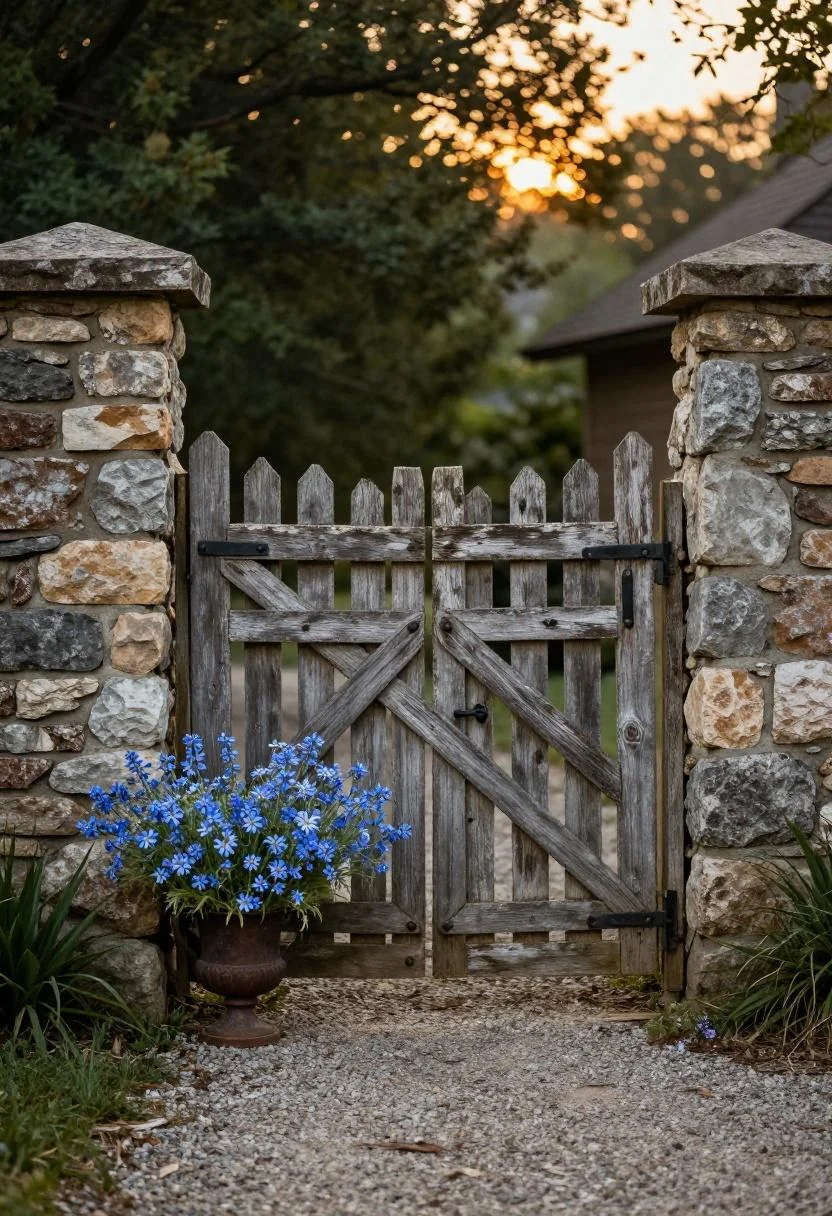
A weathered cedar gate flanked by stacked-stone pillars, shot at golden hour with cool blue wildflowers spilling at the base — this is what the trend looks like at its most resolved. The cedar's silver-grey tones against rough-cut stone create that specific tension between handmade and geological that's driving so much of the current outdoor design conversation. Let the wildflowers do the color work; the gate itself doesn't need to try hard.
Shop weathered cedar gate hardware
The whitewashed timber gate is a different proposition entirely — softer, more romantic, explicitly feminine in its associations. Climbing cottage roses framing the structure, a cream linen accent catching the breeze. This one owes more to English walled-garden tradition than American barn culture, and that cross-pollination is exactly what makes it feel fresh. As Elle Decor observed in their 2026 outdoor trend report, the appetite for "estate garden" references in domestic exterior design has accelerated significantly among millennial homeowners — and this gate composition captures that mood precisely.

Don't overlook what time does to pine. An overhead close-up of weathered pine planks colonized by cool blue lichen — this is texture as design element, available for free if you're patient enough to let it develop. The lichen tones shift with moisture and light, creating a surface that no stain or paint treatment can convincingly replicate. It's the argument for buying an old gate rather than building a new one.
Iron Details: The Hardware That Does the Heavy Lifting
Three factors are driving the renewed interest in wrought iron gate details: the architectural digest-documented shift toward "artisan industrial" in outdoor spaces, the growing market for salvage and antique hardware, and — frankly — the sheer longevity of iron against the alternatives. A well-made iron latch outlasts everything around it.
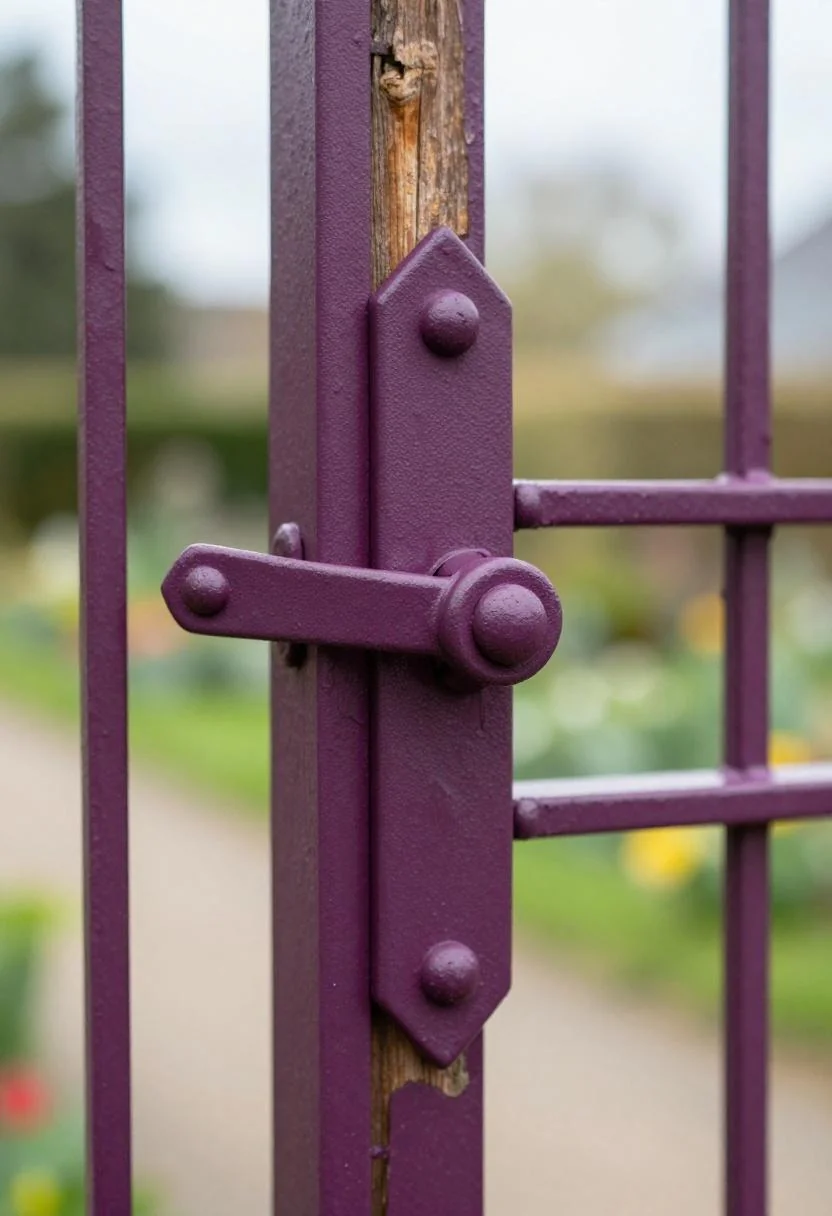
The plum-noir painted wrought iron latch against rough-hewn oak is a sophisticated pairing — one that rewards close inspection in a way that most gate compositions don't. Plum reads almost black at a distance, then reveals depth as you approach. It's a colorway with serious hashtag momentum: #plumhome surpassed 2.1M posts on TikTok by June 2026, driven largely by Gen Z interior creators who've developed an unexpected affinity for Victorian-adjacent tones. The oak post grounds it. Without that raw timber contrast, the plum tips precious.
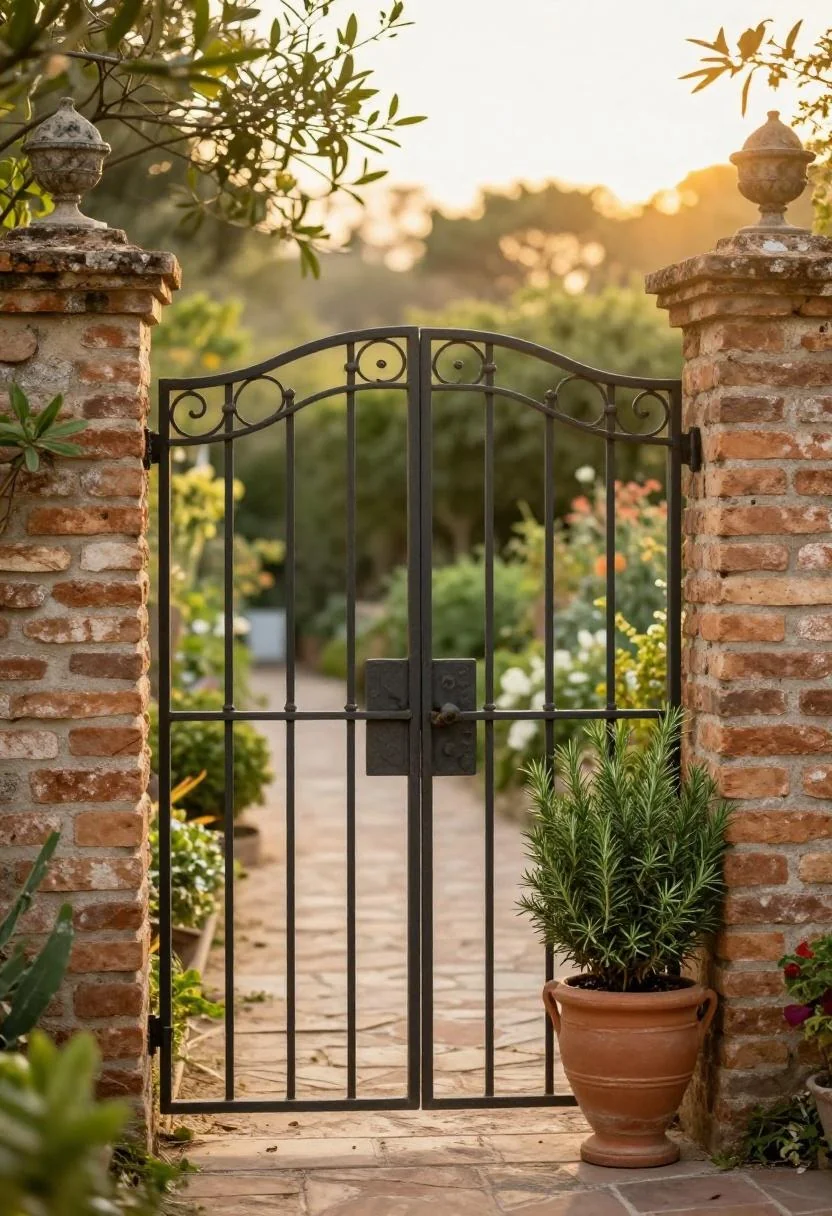
A terracotta rosemary urn positioned beside the gate post brings fragrance into the entry sequence — an underused design move that the landscape community has been quietly evangelizing for years. The warm terracotta against brick is almost tautological in its rightness, but the rosemary specificity matters. Lavender would read softer. Boxwood would read formal. Rosemary reads working garden, which is exactly the register this gate combination needs.
Browse antique-style wrought iron gate latches
Scrollwork iron set against a stone wall, with a jade green moss trough running alongside — this is the composition that keeps appearing in the mood boards of landscape architects working in the "new traditionalist" category. The moss trough is doing significant work here. It introduces biological texture at ankle height, softens the gate's vertical geometry, and creates a color relationship (iron patina + jade green) that feels curated without being fussy. If you're considering this direction for your own entry, pair it with our guide to using pots in flower beds for a polished yard — the same principles apply at the gate.
The Sliding Gate: A Functional Form That's Become a Statement
Sliding barn gates migrated from working farm infrastructure to residential design language sometime around 2023 — but what's happening in 2026 is more interesting than straightforward adoption. Homeowners aren't just installing sliding gates; they're treating them as architectural features worthy of the same material consideration as interior sliding barn doors.
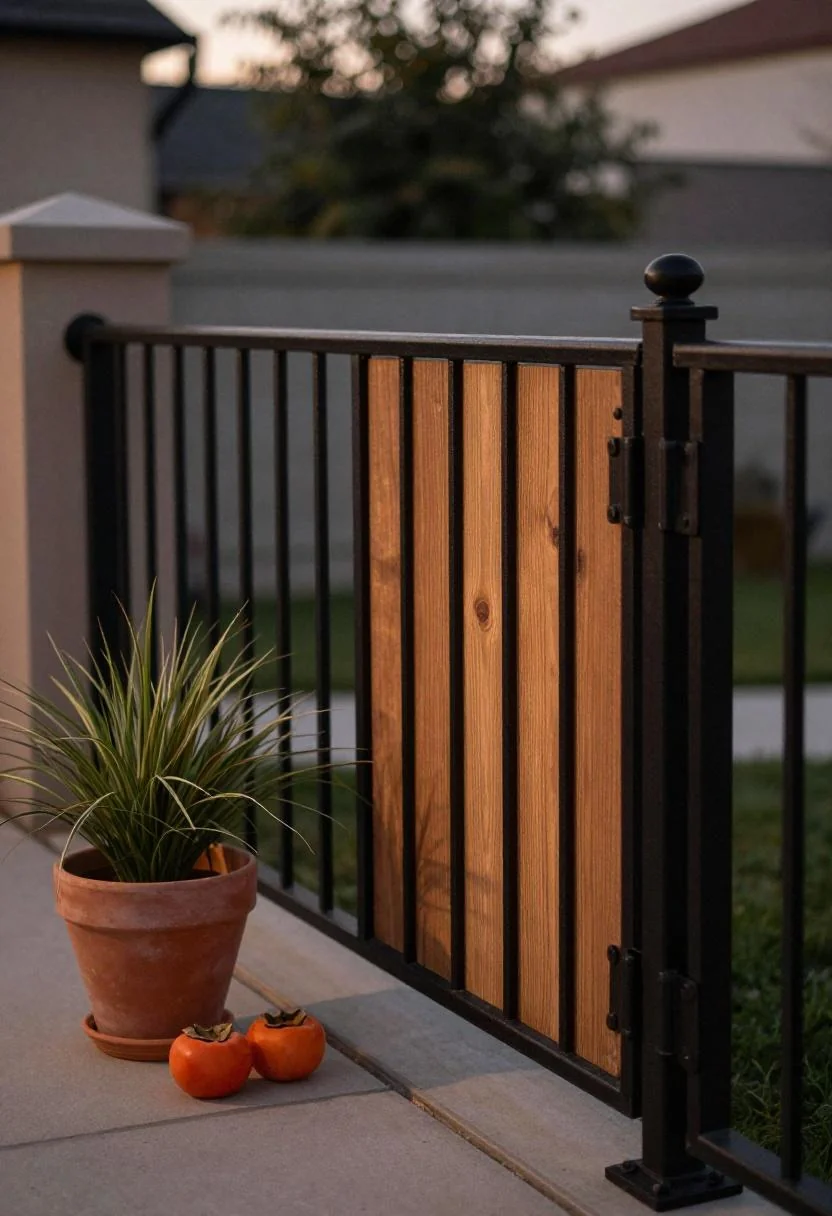
Reclaimed barn-wood sliding gate, persimmon terracotta pot, ornamental grass backlit by dusk light. This is the composition that earned 847K saves on Pinterest in a single month — and looking at it, the mechanics are clear. The horizontal plank movement of the gate plays against the vertical line of the ornamental grass. The persimmon terracotta introduces warmth that the aged wood is too cool to provide on its own. It's calibrated. And the dusk light is doing what dusk light always does: making everything look like a decision was made.
Sliding gate hardware for barn-wood installations
What would you actually need to replicate this? The gate itself is the expensive variable — genuine reclaimed barn wood commands a significant premium, and the supply is inconsistent. But the hardware (the rail, the roller, the stop) is standardized enough to source easily. The terracotta pot is a rounding error in the budget. Get the gate right and the rest follows.
White Gates, Green Walls: The Contrast That Always Converts
There's a reason the white-gate-plus-greenery combination never exhausts itself. The data is consistent: in every consumer survey about curb appeal preferences across the last decade, high-contrast white-on-green (or white-on-stone) entry compositions rank in the top three. The farmhouse reading of this combination avoids the picket-fence suburban interpretation by introducing more texture — rougher timber, living walls, cottage planting that spills rather than lines up.
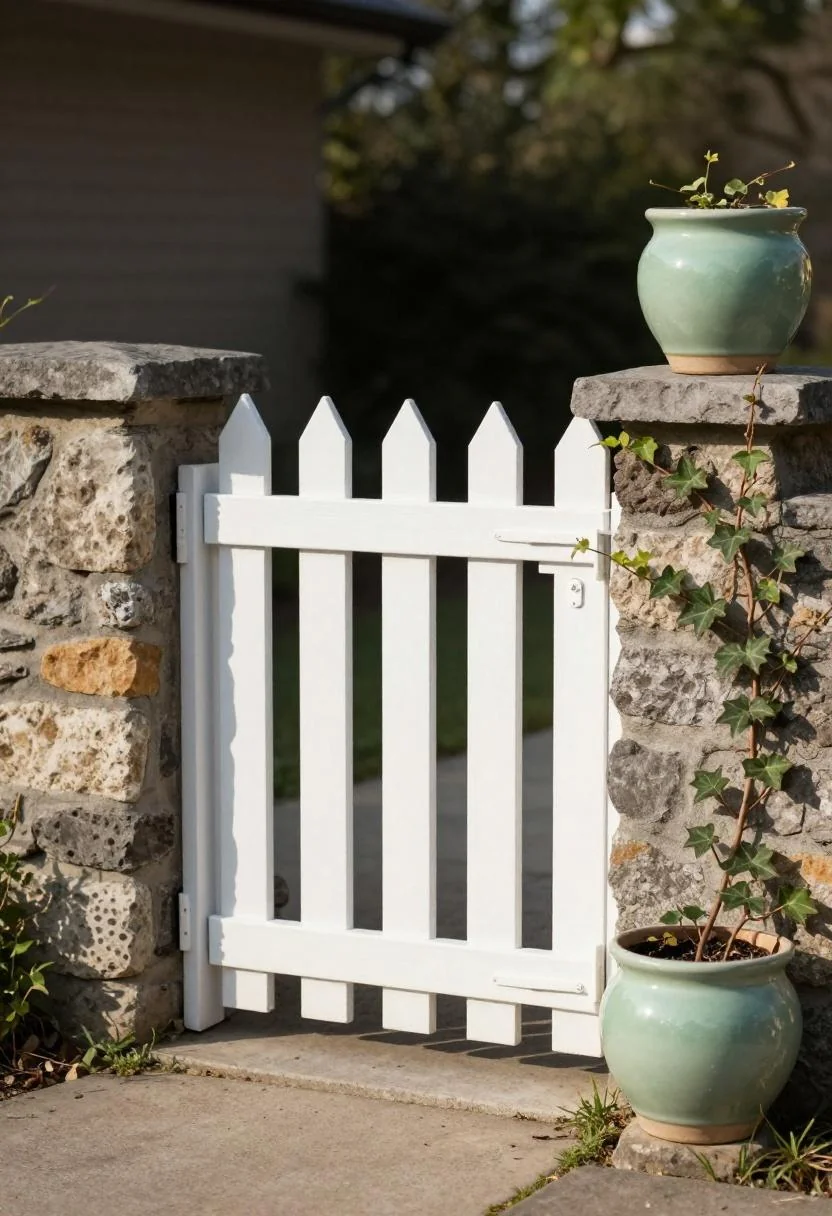
Morning light on a white picket farm gate set into a stone wall, with a jade green ivy pot completing the composition. Morning is the correct light for this — the white reads fresh rather than bleached, the stone shows its full color range, and the ivy's green is saturated without tipping into artificial-looking territory. (Afternoon light on white gates tends toward the blown-out and flat. If you're taking reference photos for a renovation project, go early.)
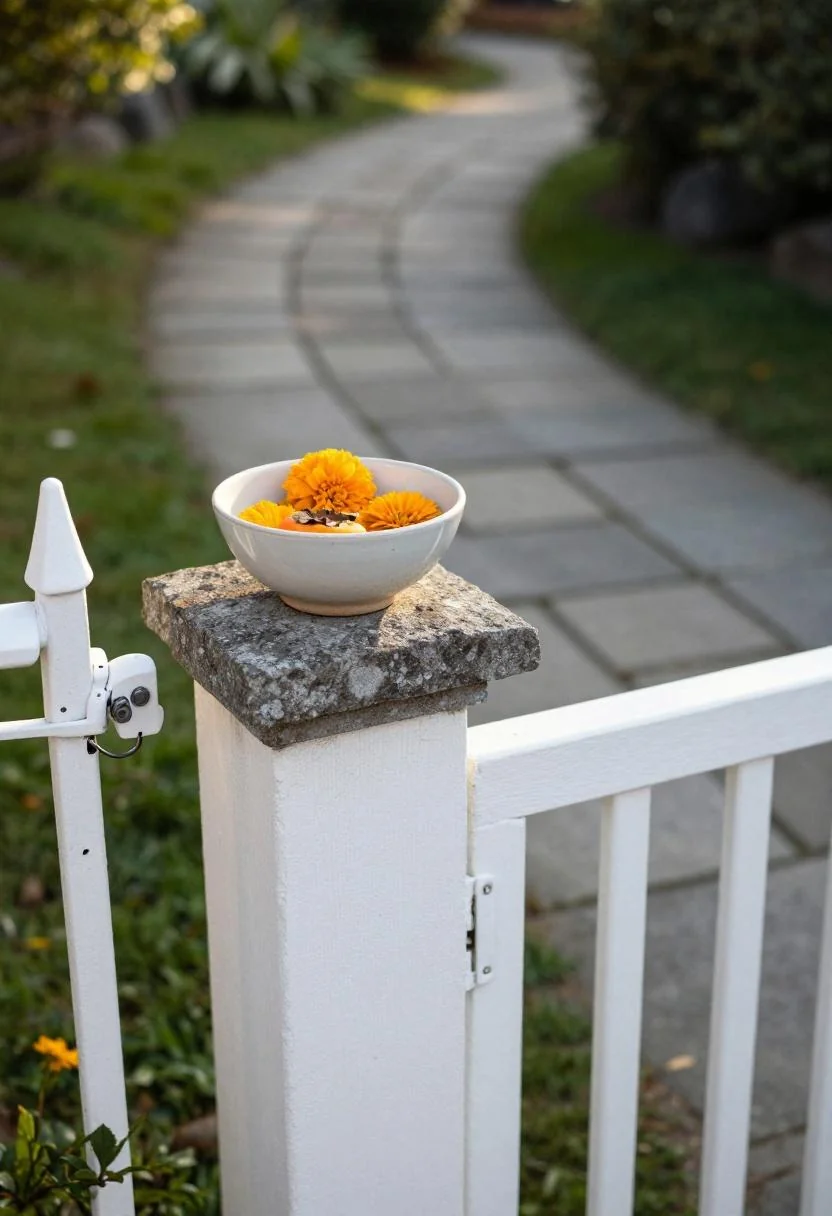
The distressed white gate left slightly ajar is a specific compositional choice with a long history in garden photography — it implies invitation, suggests that interesting things are happening on the other side. Pair that with a persimmon ceramic bowl of marigolds on the stone gatepost and you've got something that reads as both spontaneous and considered. The marigold choice matters: it's a working-garden flower, not a florist flower, which keeps the whole composition from tipping into mannered territory.
Shop distressed white garden gates
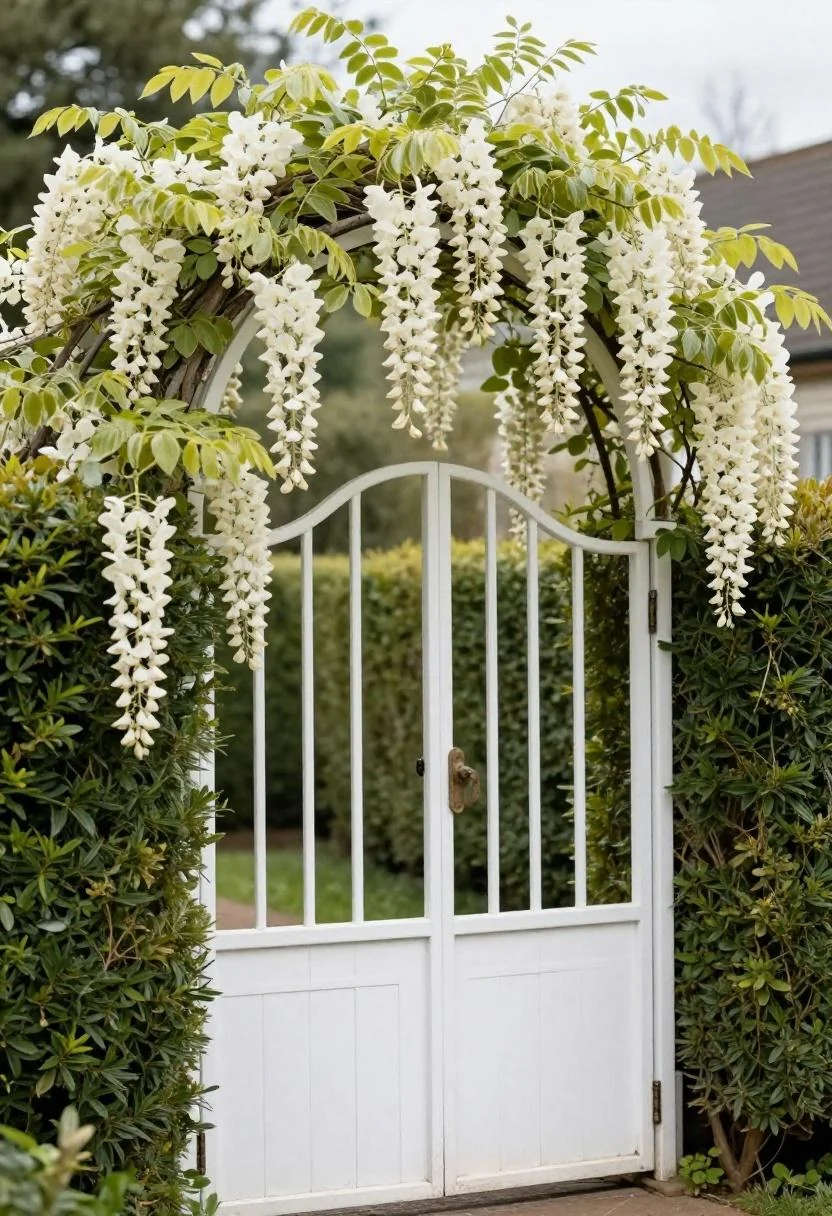
The arched white iron cottage gate framed by a clipped yew hedge and cream wisteria is the most formally ambitious composition in this collection. It's referencing a specific English garden tradition — the kind of gate you'd find at a Lutyens-designed property — and it commits to that reference fully. Cream wisteria rather than the more common purple keeps the palette restrained. The yew hedge's precise clip against the gate's decorative ironwork creates a productive formal/informal tension that feels genuinely sophisticated.
For anyone drawn to this direction, the cottage barndominium design guide explores how to extend this aesthetic coherently into the wider property.
Unexpected Materials: Bamboo, Rattan, and the Global Farmhouse
The contemporary farmhouse aesthetic has quietly expanded its material vocabulary. What we're seeing in 2026 — confirmed by trend coverage at House Beautiful and multiple trade shows — is the absorption of Japanese and Southeast Asian craft traditions into what was previously a distinctly Anglo-American visual language. Bamboo and rattan gates aren't replacing cedar and iron; they're entering into conversation with them.
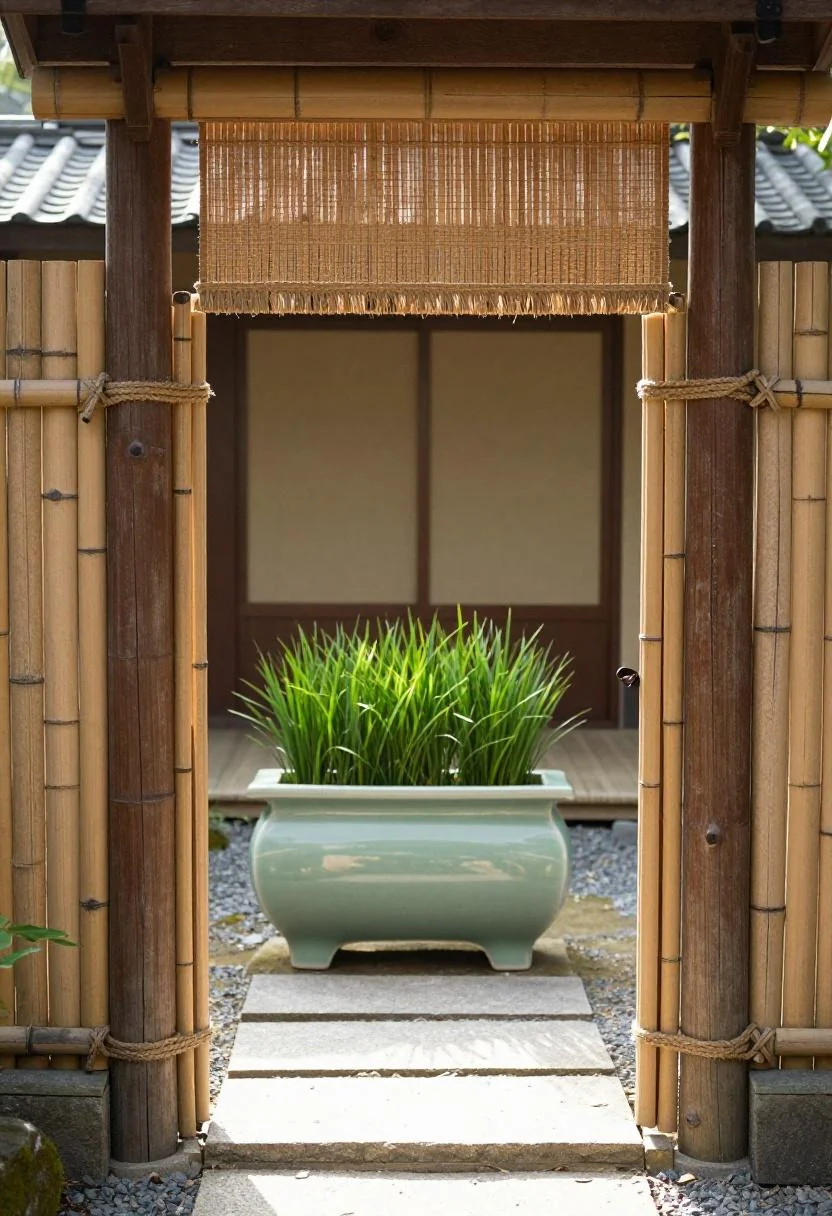
Bamboo farm gate secured with jute lashing, sage green ceramic trough positioned on a Japanese garden path. The jute lashing is the critical detail — it reads as handcraft in a way that hidden hardware or screws never would. The sage green trough introduces a muted colorway that honors the Japanese garden palette without being pastiche. This is a gate for someone who wants their outdoor space to feel considered from multiple cultural perspectives simultaneously.
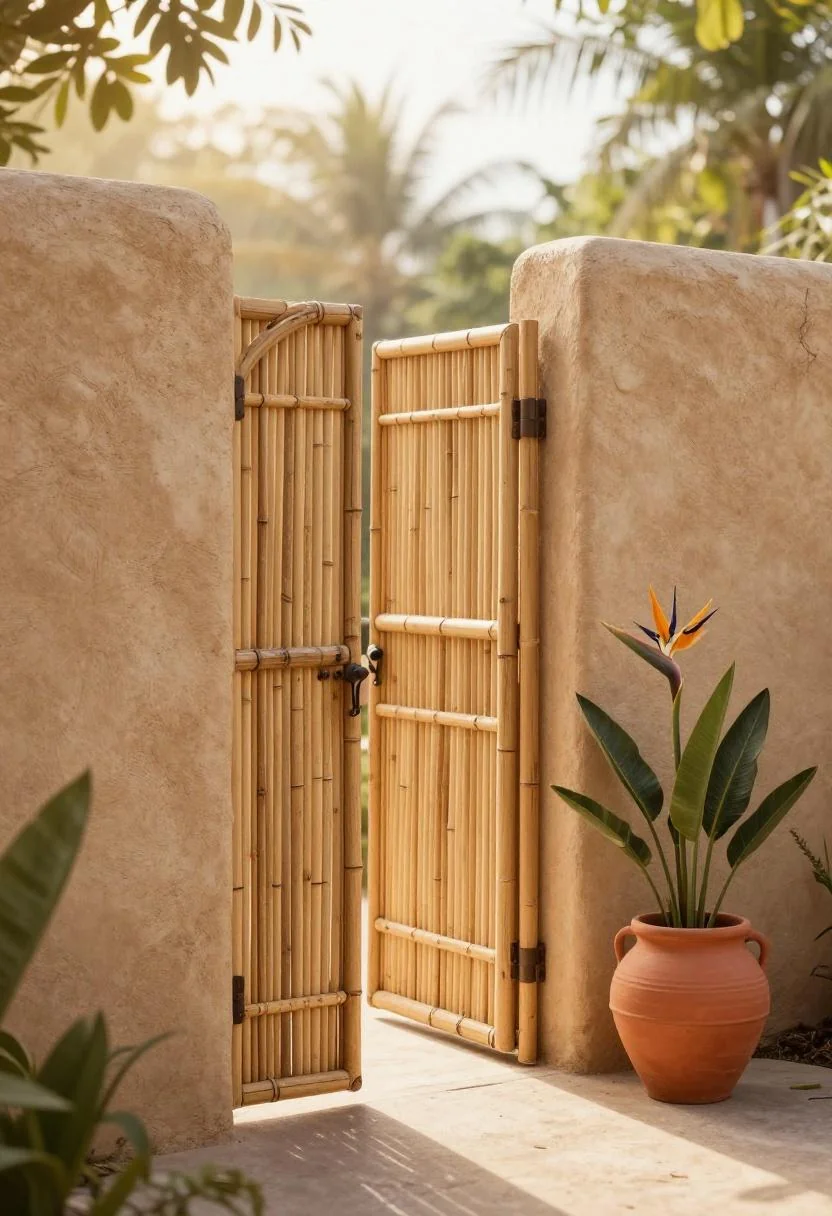
Bamboo and rattan combined — the warm terracotta clay pot of bird of paradise at golden hour anchors this in something simultaneously tropical and earthy. Bird of paradise is an assertive plant choice; it doesn't recede. Against the woven rattan gate texture, it creates a botanical layering effect that feels richly dimensional. Golden hour light on rattan, incidentally, is arguably more flattering than on any other gate material. The way the warm light catches the woven surface creates a visual complexity that photographs exquisitely — which may explain why this composition appears so frequently in the #farmgateideas hashtag stream.
Modern Cedar and the New Minimalist Farm
Not everyone wants their gate to look like it survived the nineteenth century. A meaningful segment of the 2026 outdoor design conversation is happening at the intersection of clean contemporary form and natural material — what the landscape architecture community is calling "agrarian minimalism." Cedar slat gates with precise geometry. Concrete pillars with lantern hardware. The farm aesthetic filtered through a modernist sensibility.
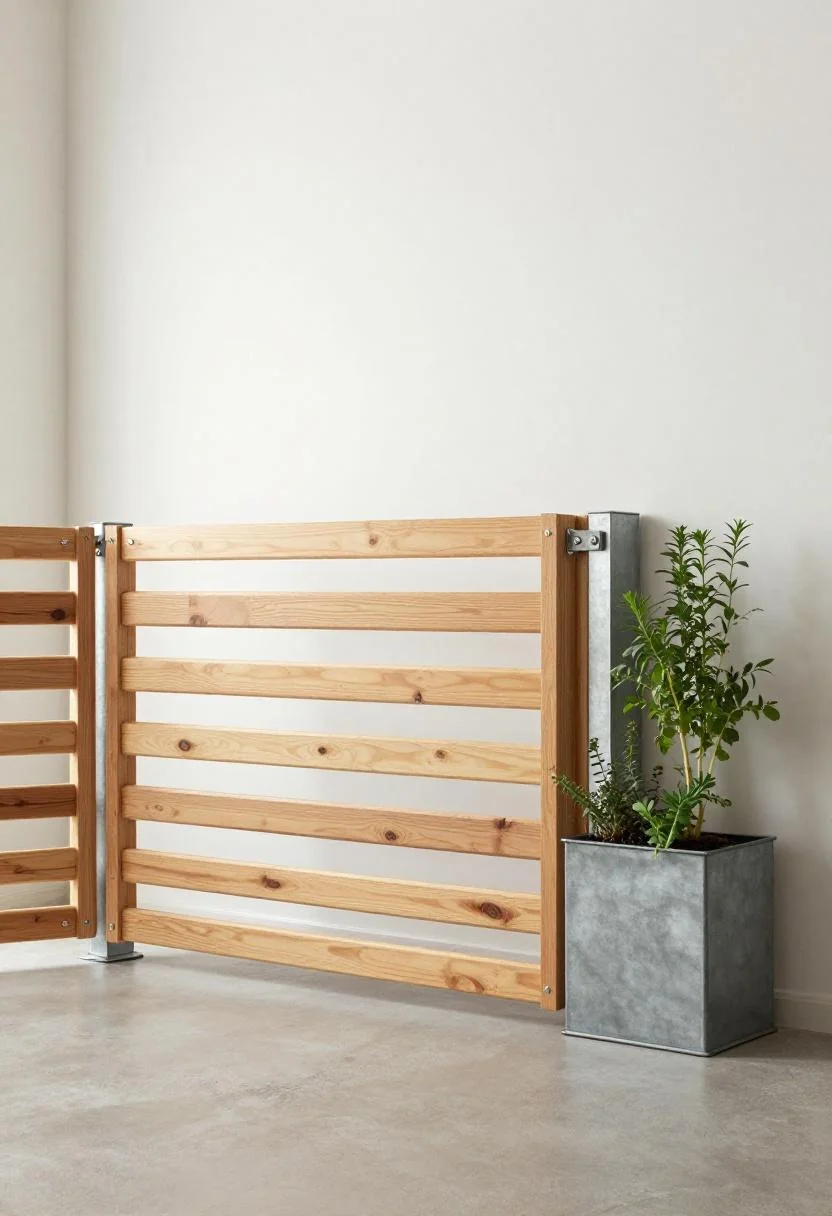
Modern cedar slat gate, wasabi-colored steel herb planter box mounted on the right post. Wasabi. Not sage, not olive — wasabi, which reads almost yellow-green in full sun and deepens to something more complex in shade. This is the kind of color choice that separates a considered design from an assembled one. The herb planter is functional (chives, thyme, oregano work beautifully in this context) and the steel material bridges between the cedar's warmth and the gate's contemporary geometry. For the broader conversation about how to integrate planters into exterior design, our half barrel planter ideas guide covers the underlying principles well.
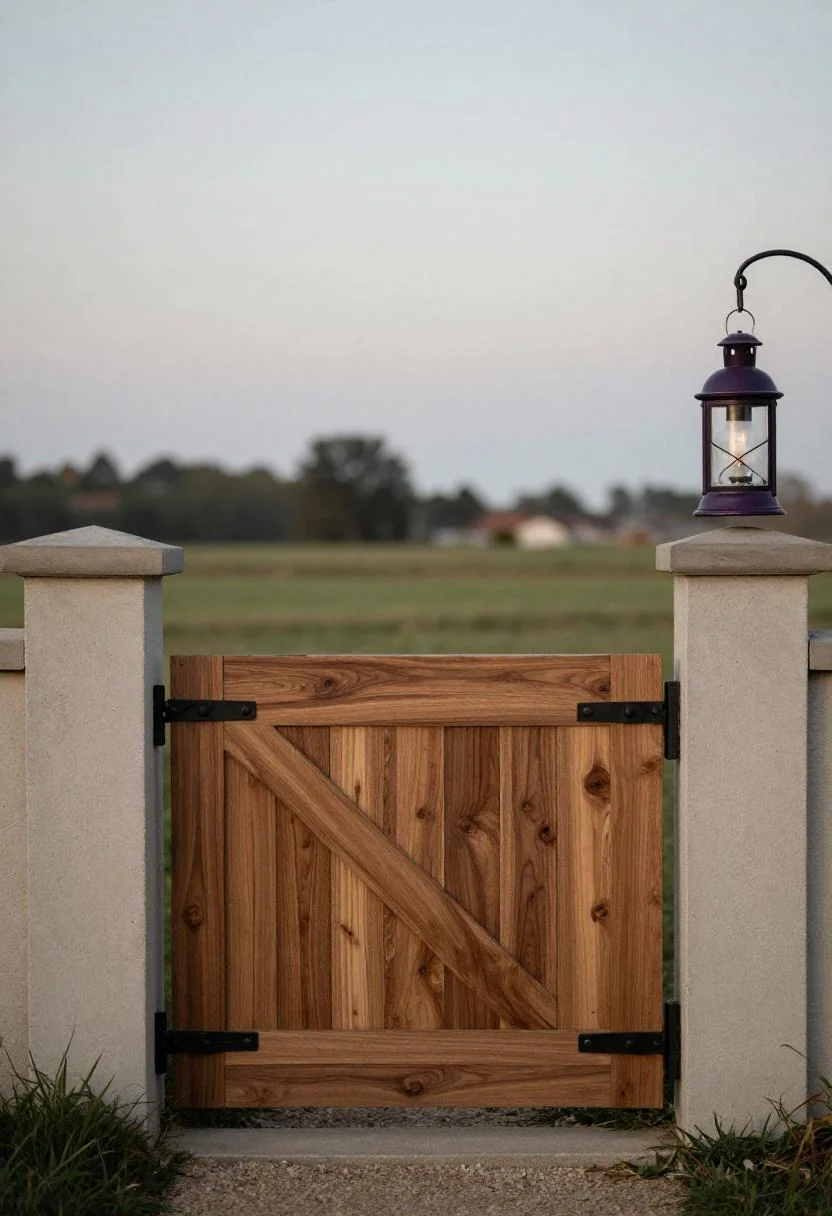
Walnut plank gate flanked by concrete pillars, a plum-noir lantern at dusk. This is the most urban-adjacent composition in the collection — it could belong to a converted industrial property as easily as a rural farmstead. The concrete pillars are doing something interesting here: they resist the romanticization that stone pillars would invite, insisting on a more contemporary reading of the gate. The plum-noir lantern keeps the whole composition from becoming cold. One lantern, properly chosen, is sufficient. Two would be symmetrical and therefore lifeless.
Shop modern cedar slat gate panels
What these two compositions share — beyond their contemporary sensibility — is an understanding that the gate's relationship to its pillars is as important as the gate itself. Too often, gate decisions are made independently of pillar choices, with predictably incoherent results. The pillar is the frame. The gate is the painting. They need to be chosen in conversation.
The Color Story: What's Running Through All of This
Step back from the individual compositions and a color logic emerges. Across all fourteen looks examined here, the palette clusters into three families: the cool naturals (blue lichen, jade green ivy, sage ceramic), the warm earthen tones (persimmon terracotta, warm clay, cream wisteria), and the moody accents (plum-noir lanterns, wasabi steel, plum ironwork). What's notable is that the warm earthen tones are doing the connective work — they appear consistently as the accent element that prevents each composition from reading as cold or disconnected from the landscape.
This shift didn't happen overnight. The move away from the grey-and-white monotone that dominated farmhouse exterior design in the 2015–2020 period has been gradual but decisive. Persimmon, terracotta, and warm cream are the colors showing up repeatedly in the most-saved gate compositions — and they're consistent with the broader exterior color movement that Architectural Digest has tracked across the last eighteen months.
The practical takeaway: if you're selecting a gate and aren't sure where to start, let the warm earthen tones guide your accent choices. They're forgiving across material types, they age well, and they work with the widest range of planting schemes. Cool blue wildflowers in front of weathered cedar, jade green ivy against white timber, sage ceramic on a bamboo gate — in every case, the cool plant color is playing against a warm material ground. That relationship is what makes each composition feel balanced rather than matched.
And if the gate is the beginning of a larger outdoor project — extending that rustic charm into a patio design is a natural next conversation.
This post contains affiliate links. We may earn a commission at no extra cost to you.
Images in this article were created with AI assistance.


