There's a quiet revolution happening at the desk. Not in the open-plan loft offices of tech startups, but in the smaller, more constrained world of the cubicle — that maligned rectangle of corporate real estate that, frankly, most design media still refuses to take seriously. What we're seeing across interior forecasting circles this season is a meaningful recalibration: women in their 20s through 40s are treating the work desk with the same intentional eye they'd bring to a living room refresh. Pinterest data confirms it. Searches for "cubicle aesthetic" climbed 61% year-over-year through Q1 2026, with the fastest-growing subcategory being — and this is the interesting part — traditional and classical desk styling. Symmetry. Warm woods. Heirloom accessories. The antique inkwell repurposed as a pen cup. This isn't nostalgia for its own sake. It's a deliberate counter-signal against the ergonomic-grey sameness of corporate furniture culture, and it's arriving in full force.
The Fold-Away and the Ingeniously Small
Not everyone has a dedicated office. Many of the most compelling setups we're tracking right now live inside bedrooms, studio corners, and narrow hallways — spaces claimed rather than designed. The constraint, interestingly, is producing some of the most considered work.
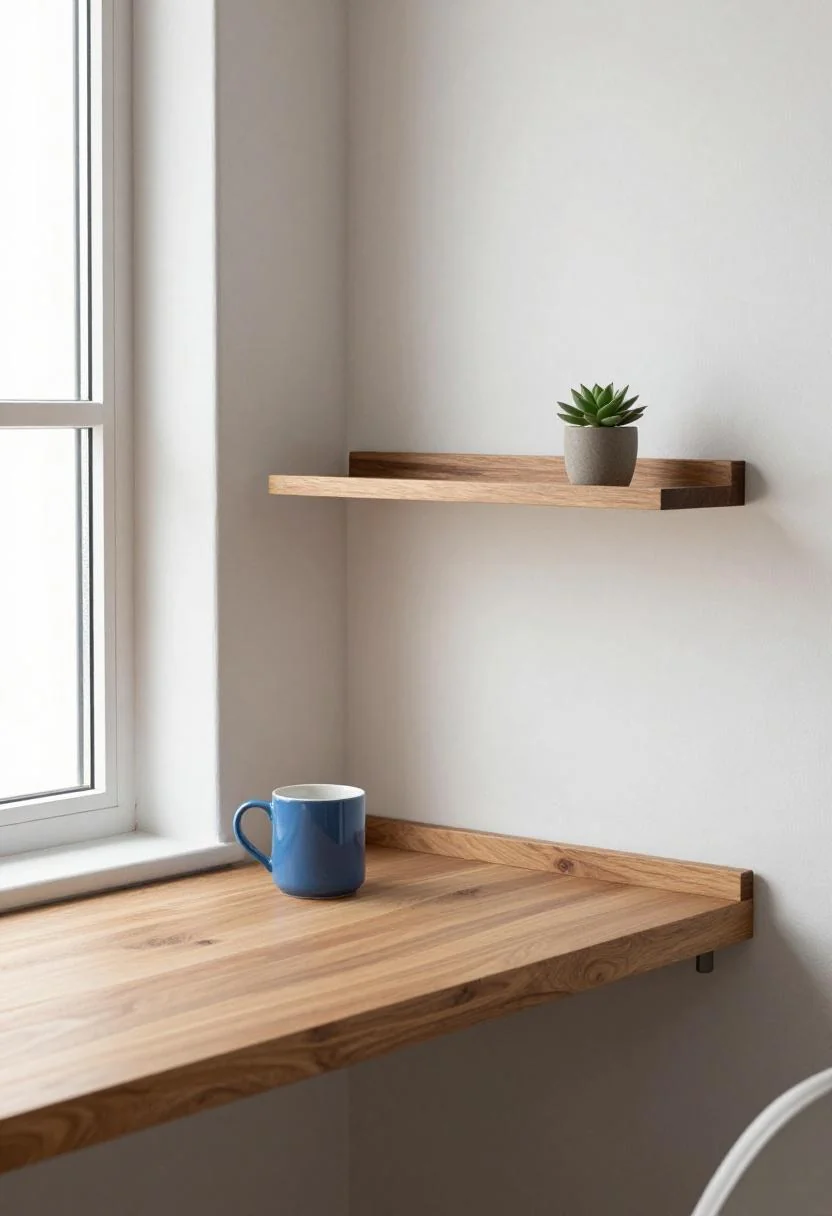
A wall-mounted fold-down birch desk pressed into a studio corner, with a cool blue accent anchoring the wall behind it — this is the setup that converts skeptics. The cool blue isn't decorative filler; it demarcates. It says: this square metre is mine. Birch is the right wood for this application because it reads light without reading cheap, and paired with a saturated wall treatment it holds its own visually. Wall-mounted fold-down desks in birch have seen strong retailer sell-through since late 2025 — the supply chain caught up with what Pinterest was predicting two years earlier.
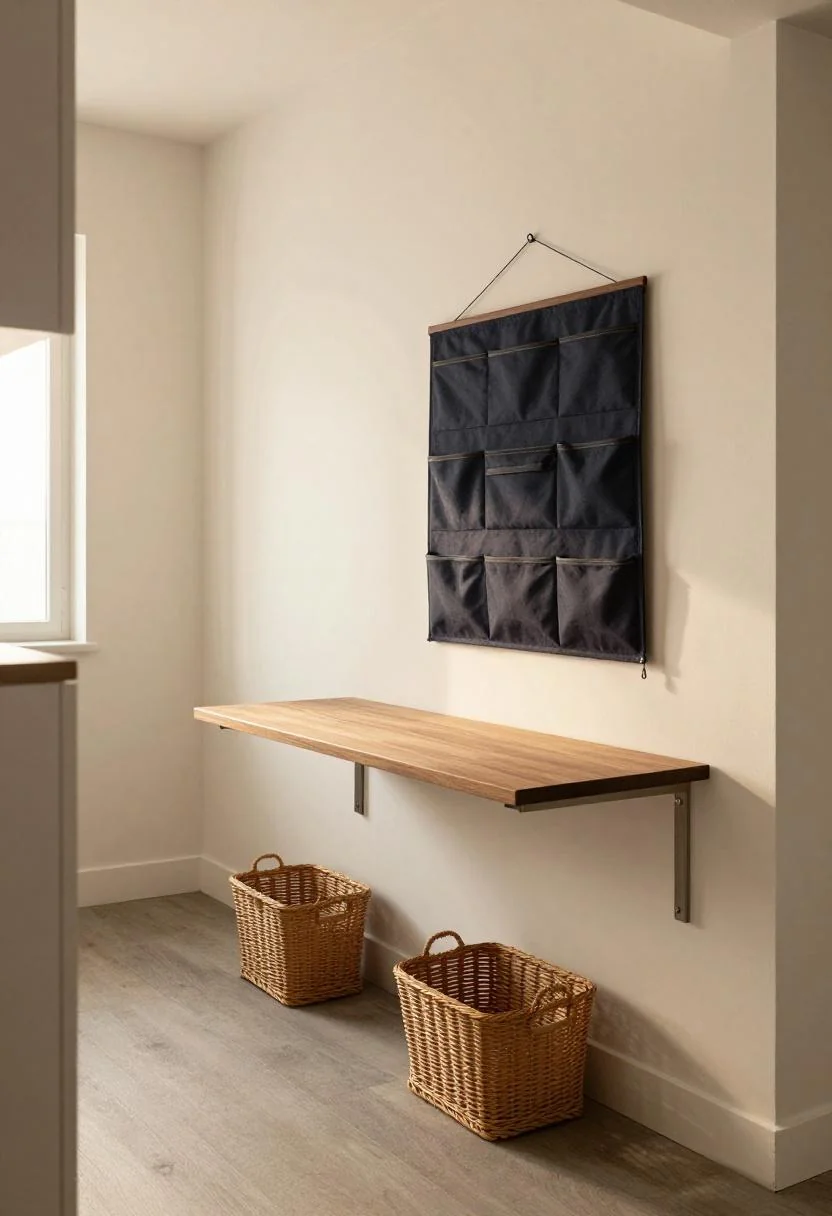
The hallway micro office — once considered an act of desperation — has been thoroughly rehabilitated. A walnut standing desk with a plum noir fabric organizer mounted above it transforms a transitional corridor into a proper, dignified workspace. Walnut's warm brown tones keep the space from reading cold; the plum noir organizer introduces depth without consuming visual space. Three factors are driving the hallway desk moment: hybrid schedules that require a dedicated "off" switch between work and home zones, the rise of standing desk awareness among women under 40, and the simple fact that many urban apartments genuinely have more hallway wall space than bedroom square footage.
The Nook as Heirloom Space
The built-in desk nook has a long history — think of the writing alcoves in Georgian manor houses, the lady's writing table tucked into a bay window in Victorian homes. That lineage matters here, because the designers and home enthusiasts reclaiming the nook today are explicitly invoking it. As Elle Decor has documented across several 2025-2026 house tours, the fitted desk alcove is experiencing a serious resurgence, driven in part by the desire for permanence in an era of rented apartments and transient work arrangements.
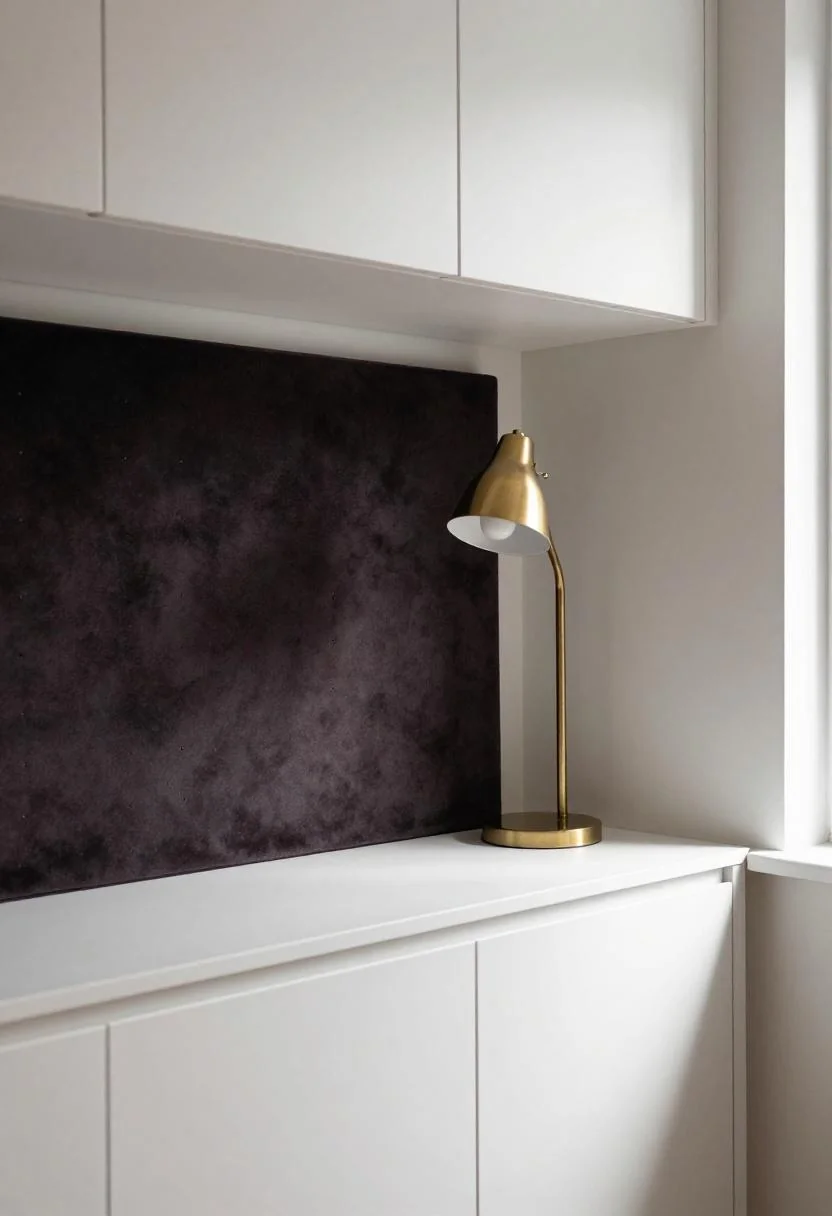
Plum noir velvet on a pin board inside a built-in desk nook, with a brass lamp — this is the combination that's been circulating on design accounts all spring, and it earns the attention. The velvet pin board does double duty: it's functional (actually holds things without damaging them) and it introduces a textile richness that cheap cork simply cannot. Brass lamps in this context read less "mid-century modern" and more Georgian writing room. The through-line here is material seriousness: every element chosen because it will look better in ten years, not six months.
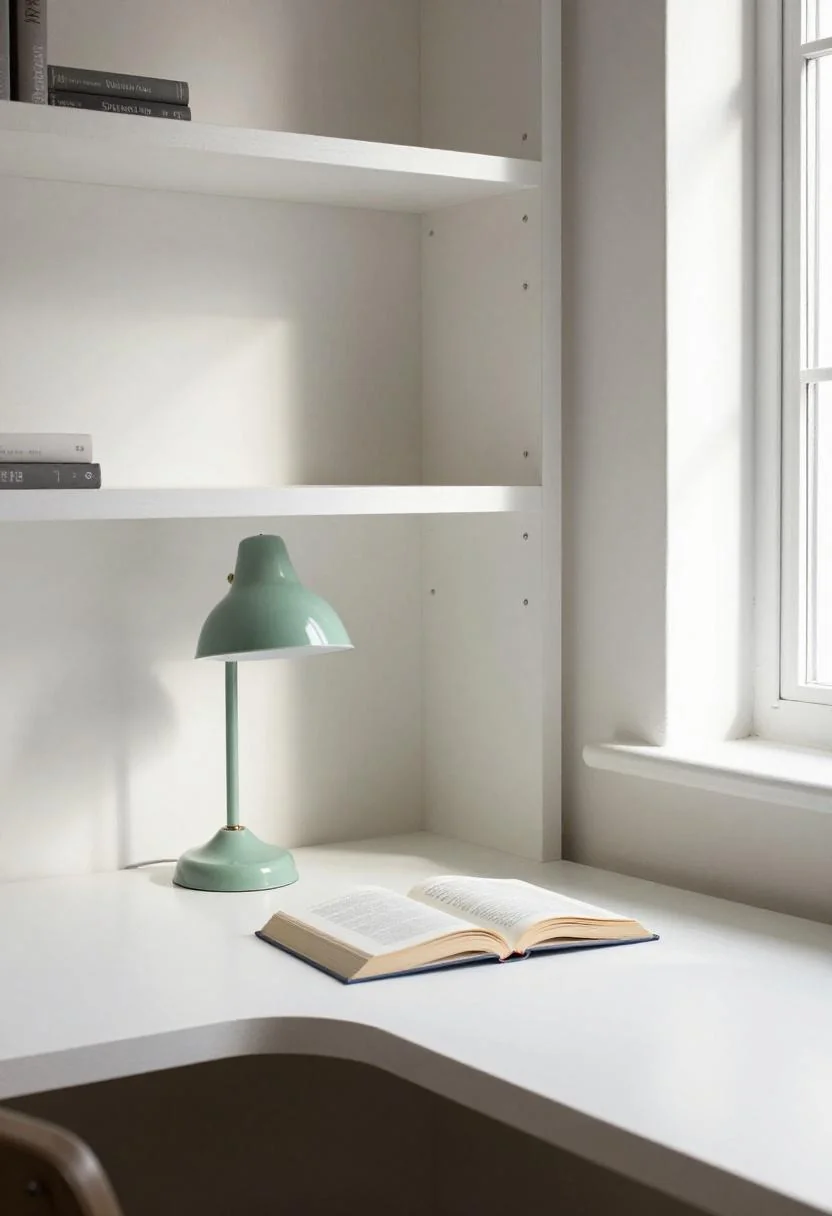
A desk nook carved into white oak shelving, lit by a jade green enamel lamp. The lamp is everything in this setup — it's the single chromatic decision that prevents the white oak from reading as a flat Scandinavian cliché. Enamel lamps have been a consistent signal at London and Paris trade shows for the past 18 months, appearing in both residential and hospitality contexts as a replacement for the ubiquitous matte black. Jade green enamel desk lamps are worth the investment — the colour holds across years of fading in ways that painted alternatives don't.
If you're building a more expansive home workspace beyond the desk, the principles here extend naturally — as we explore in our guide to designing a fashion-inspired bedroom, the same material intelligence that makes a nook feel considered can anchor an entire room.
Natural Materials and the Case for Warmth
The data backs this up: natural material desks — oak, ash, rattan, teak — now account for the majority of "aesthetic desk setup" saves on Pinterest in the 25–40 female demographic. This shift didn't happen overnight. It's the culmination of several years of fatigue with high-gloss white furniture, paired with a growing interest in longevity and craft that cross-pollinates with the broader slow-home movement.
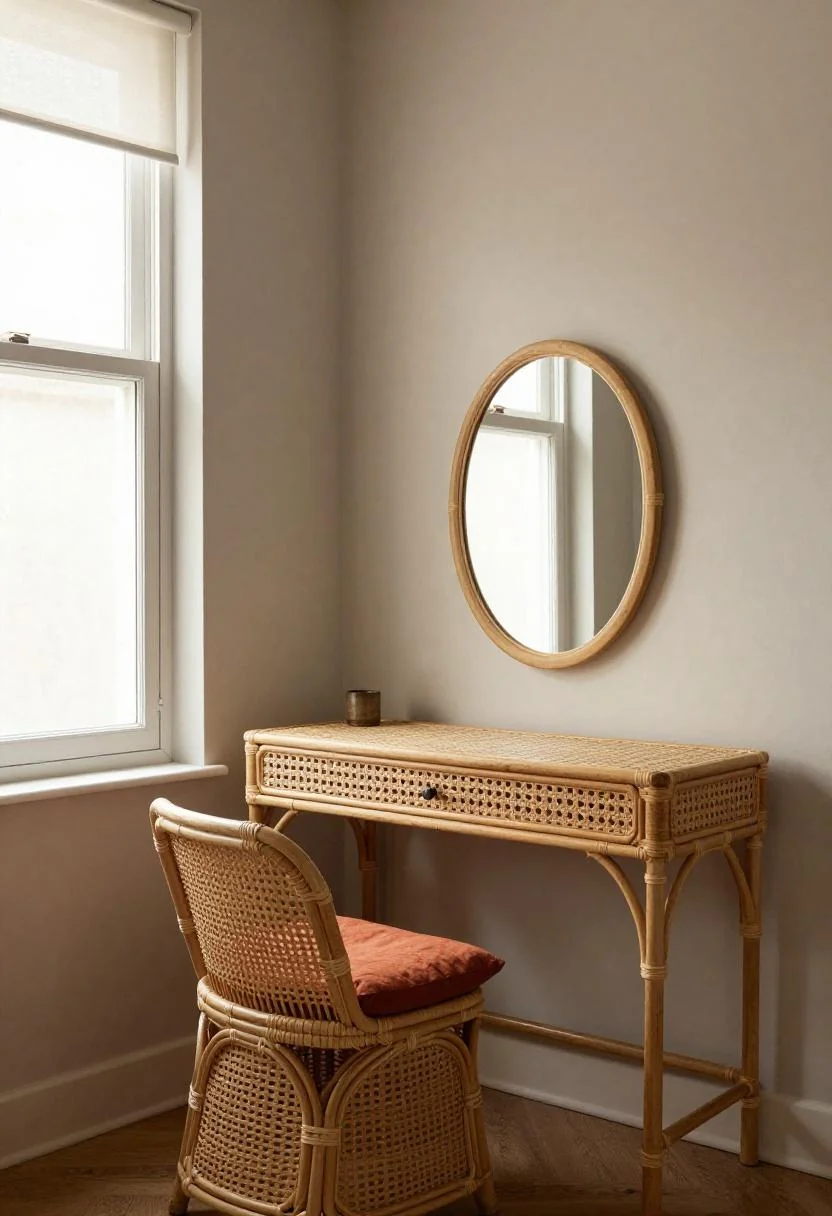
Rattan and terracotta linen together — this is the combination that sends the hashtag #naturaldesk into orbit. The oval mirror above the rattan desk completes a visual argument about softness and curve. This is, explicitly, the antithesis of the cubicle grid: organic shapes, hand-woven texture, a cushion you'd genuinely want to sit on for six hours. Rattan desk and stool sets in this warm, biscuit-and-terracotta palette have been consistently backordered since February.
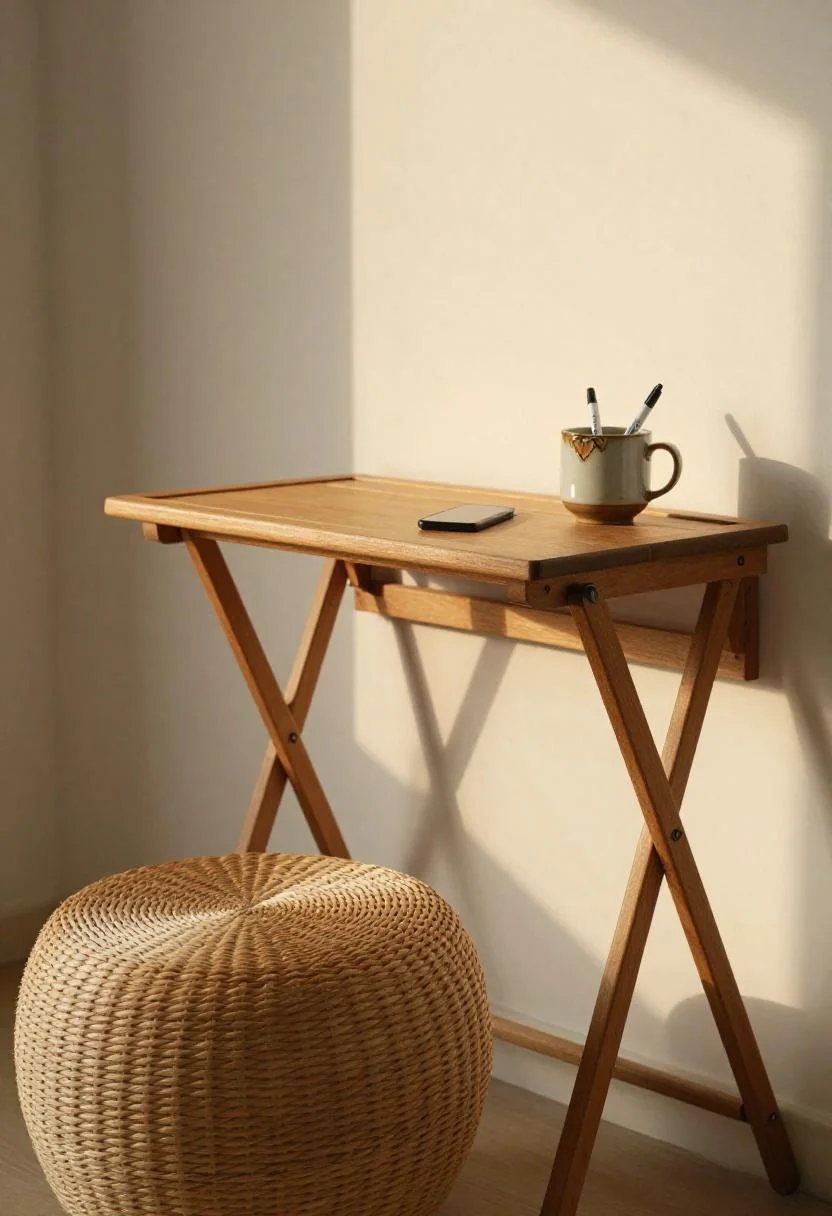
Who says the workspace has to be indoors? A fold-down teak desk on a balcony, with a persimmon stoneware cup holding pens and a rattan stool — this is aspirational in the truest sense. Teak weathers; it gets better with outdoor exposure in a way that no other furniture wood does. The persimmon cup is a small detail with outsized effect: a single warm-signal accent that makes the whole setup feel considered rather than improvised. On mild mornings, this beats any interior office arrangement going.
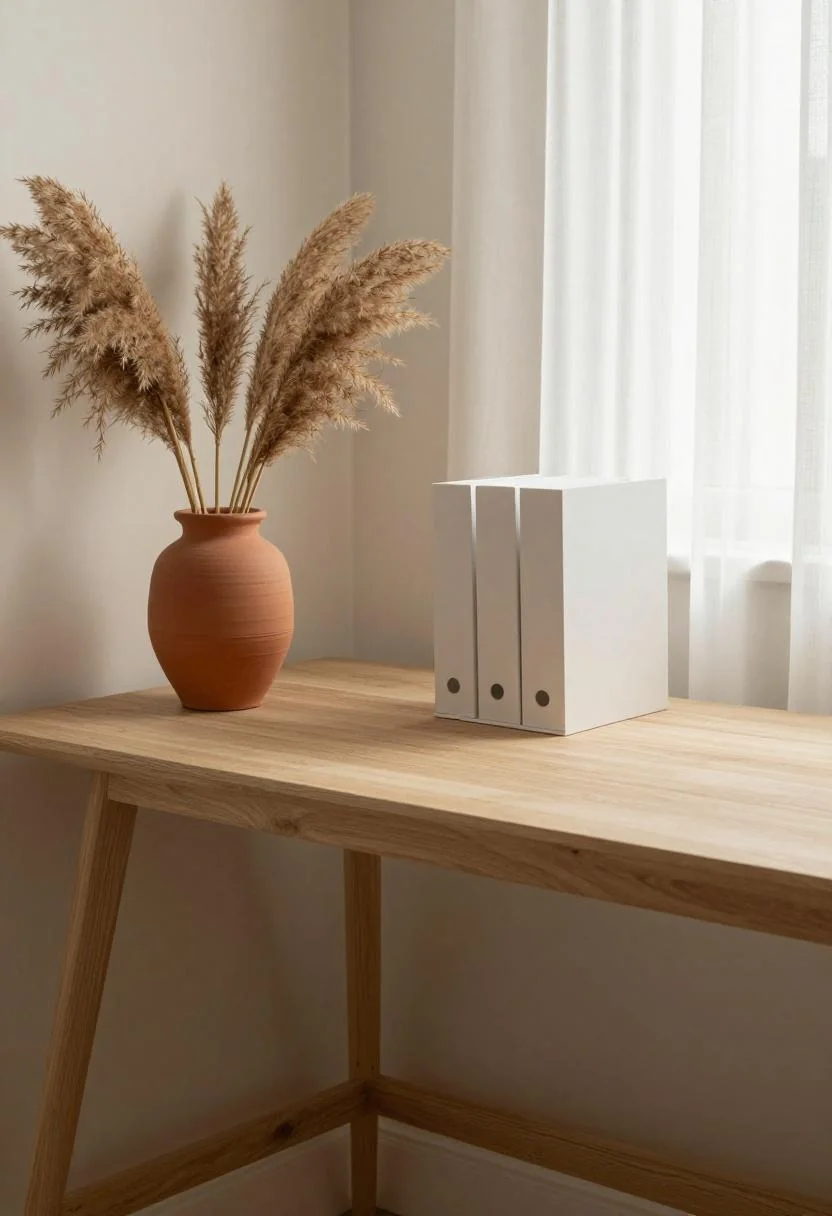
Bleached pine carries a particular quality — it's light without being sterile. Here, a terracotta clay pot anchors the desk surface alongside a steel file rack: warm earth tone against industrial metal, and they shouldn't work together but they absolutely do. The contrast is the same logic that makes estate-sale finds look extraordinary in modern rooms. One or two carefully chosen organic objects change the entire register of a utilitarian workspace. This is heirloom thinking applied at small scale.
Colour as Commitment: The Accent Desk Moment
Can a single colour choice transform a desk setup from functional to genuinely beautiful? Increasingly, the answer appears to be yes — provided the colour is the right one and deployed with restraint.
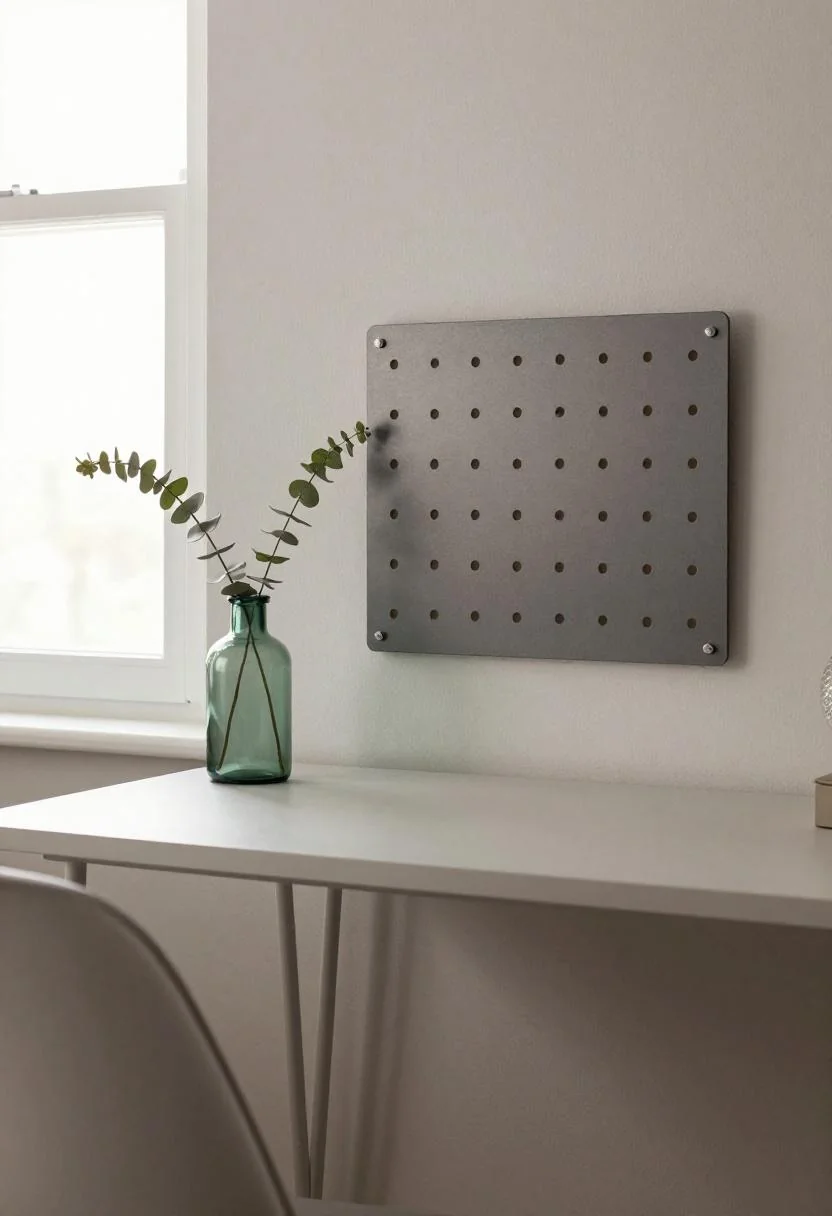
Pale ash as a desk surface is almost a neutral — it reads beige in some lights, pale blonde in others. Against that, a jade green glass accent lands with real force. The pegboard storage above keeps organisation visible without creating visual noise; the perforations give it a kind of industrial grid quality that, oddly, reinforces rather than undermines the classical mood. Jade green glass desk accessories are the quiet recommendation here.
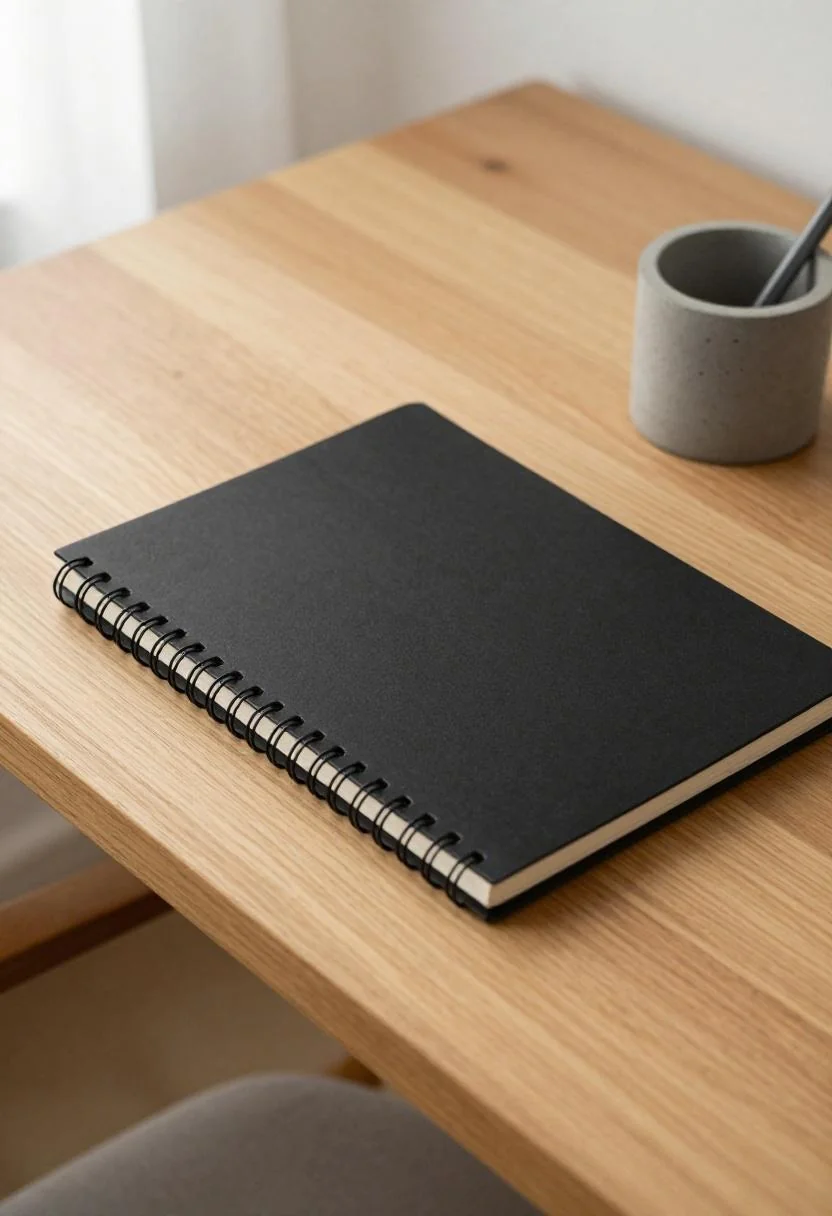
Wasabi. Not olive, not sage — wasabi. There's a specificity to this yellow-green that separates it from every softer botanical tone in the 2026 palette conversations, and it's been particularly well-documented in Harper's Bazaar's home trend coverage as an emerging accent for work and study spaces. On an oak desk, a wasabi linen mat with a concrete pen cup alongside it — the linen introduces warmth and slight texture, the concrete grounds it. Don't overthink this one.
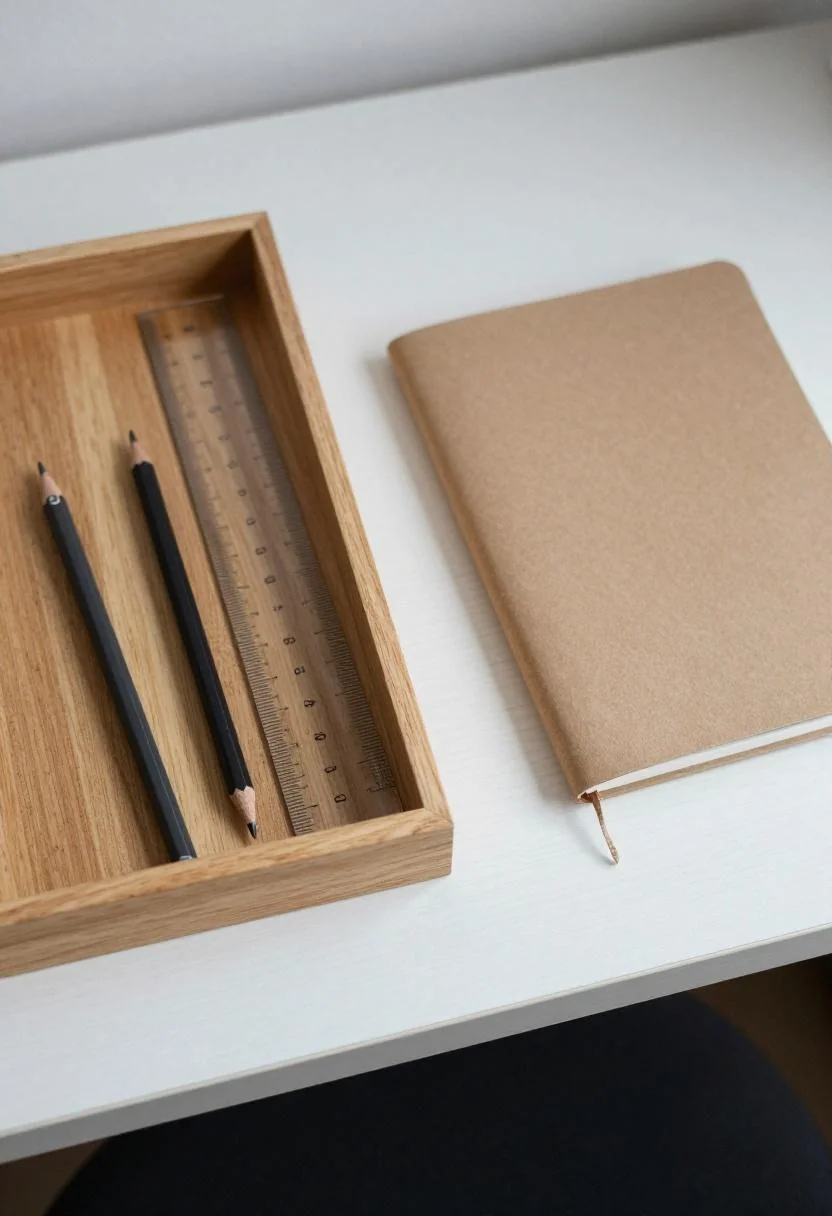
The overhead desk flatlay as documentation format has its own aesthetic now — this one shows a birch tray with a wasabi acrylic ruler inside it, surrounded by minimal Scandinavian accessories. It reads almost like a still life. The ruler as decorative object is a small, slightly subversive choice: a tool elevated by colour and placement into something you'd actually want to photograph. This is the Instagram-signal that communicates "I take this workspace seriously" without saying a word about productivity culture. Coloured acrylic desk rulers are one of those accessories that cost almost nothing and read far more expensive than they are.
The Quiet Palette: Cream, Linen, and Bone
What's the colour that never fails? The one that works in a north-facing room, a south-facing room, a room with no natural light at all? Cream. Not white — cream. The distinction matters enormously here, as Vogue's interior trend desk has noted in multiple features over the past year: the move away from stark white in home office contexts reflects a deeper shift toward warmth and human-scale comfort in spaces designed for cognitive work.
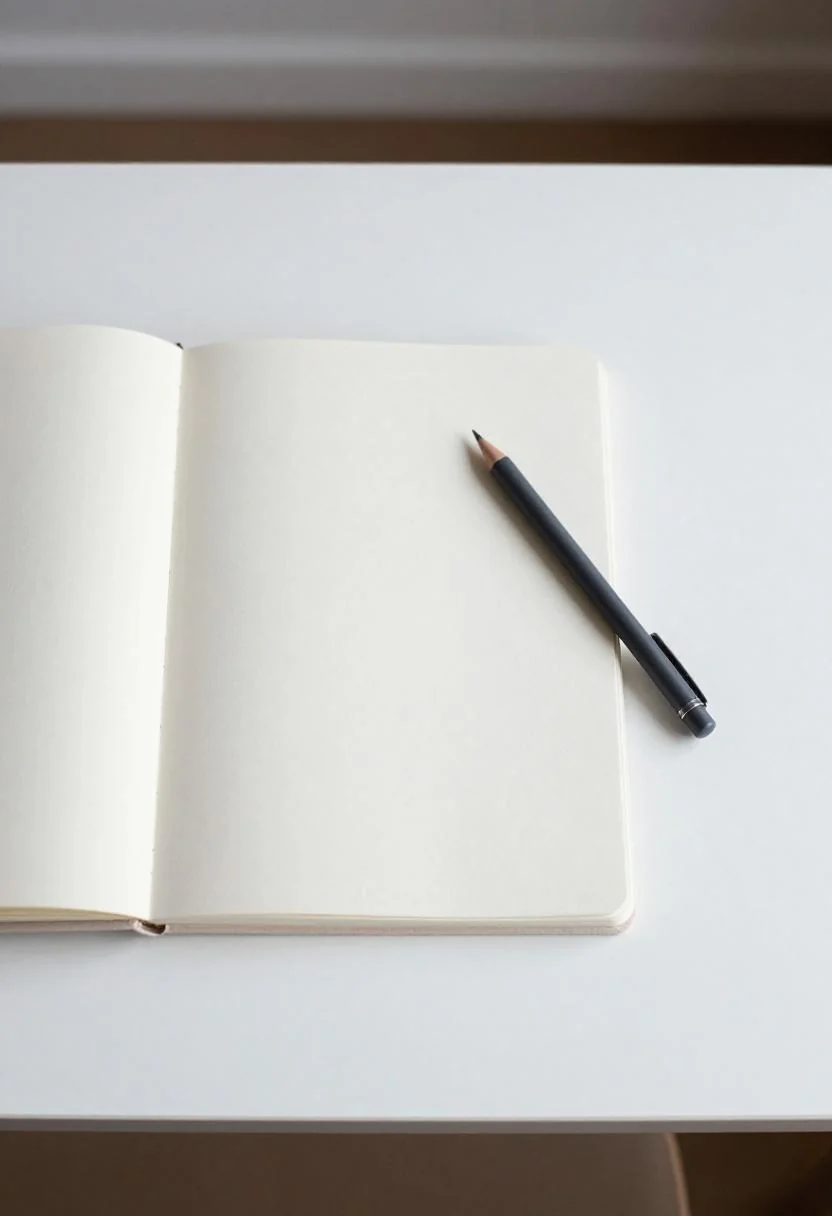
An overhead flatlay: cream white wool pad, an open sketchbook, a few carefully placed tools. The wool pad is the hero. It transforms the tactile experience of the desk entirely — and touch matters more than most desk-setup discourse acknowledges. Sitting down to work on a surface that feels considered is meaningfully different from sitting down on bare laminate. This is what interior forecasters mean when they talk about sensory design: it's not just visual, it's the warm give of the pad under your wrist for eight hours.
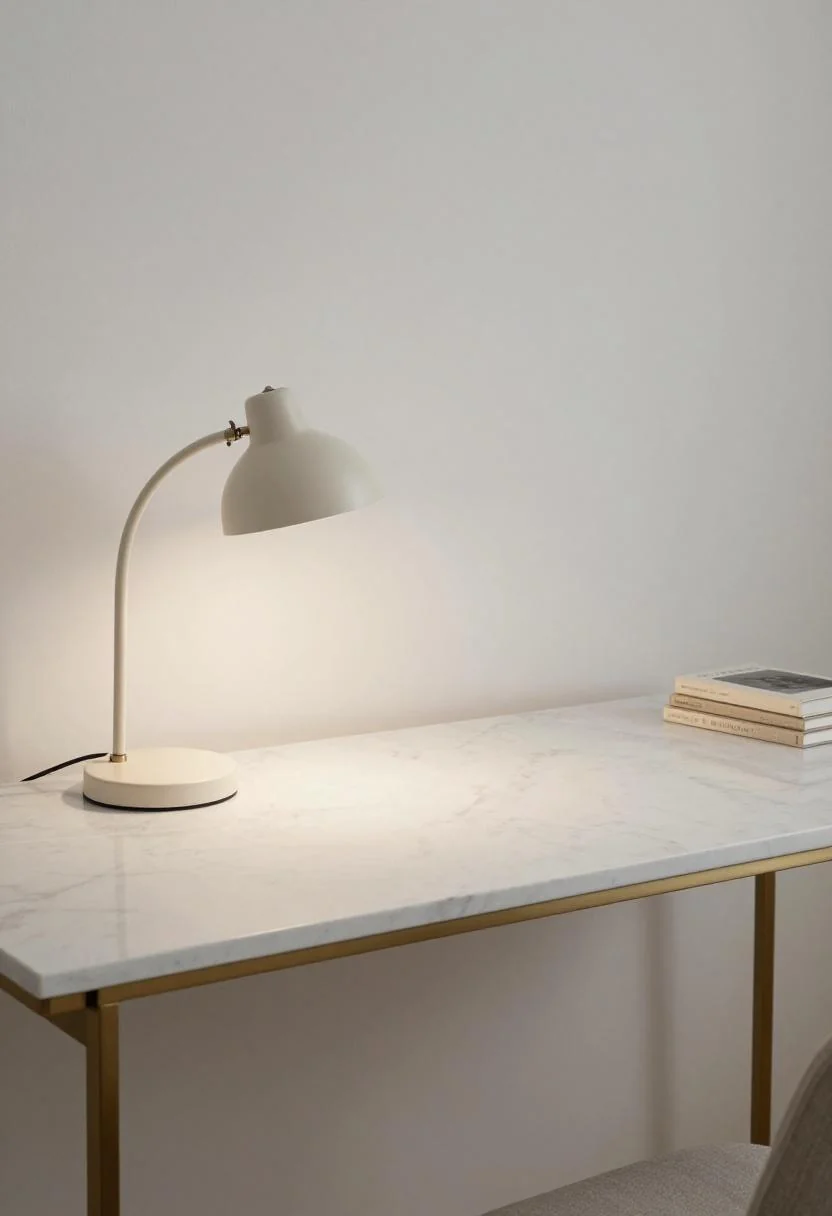
The Neo Deco marble-top desk with a cream white boucle lamp and linen-wrapped books is, frankly, the most aspirational setup in this roundup — and it knows it. Marble surfaces in desk contexts have the same cultural weight they carry in kitchen design: they signal a certain permanence, a resistance to the disposable. Boucle continues its remarkable run as the textile of the decade (the trend has been declared "over" approximately six times since 2022 and continues to appear in every showroom we visit). The linen books function as visual ballast, pulling the eye down from the lamp and distributing warmth across the surface. For layered textile inspiration that extends beyond the desk, our article on transitional interior design covers similar ground in whole-room context.
There's something quietly radical about prioritising softness and beauty in a workspace. The corporate desk has been defined for decades by ergonomics manuals and facilities procurement logic — which is to say, by the elimination of the personal. Reclaiming it through cream wool, boucle lamps, and marble is, in its own domestic way, an act of design autonomy. And if your taste runs toward the maximally cosy and layered, the grandmacore home decor aesthetic offers a close cousin of this sensibility applied to every surface.
The Colour Story, Distilled
Step back across all twelve setups and a palette argument emerges clearly: 2026 desk colour is about conviction in small doses. You don't paint your whole cubicle persimmon. You find one persimmon stoneware cup and you place it deliberately. The accent colours doing the most work this cycle — jade green, plum noir, wasabi, warm terracotta, persimmon — share a common quality: they read as considered rather than safe, but they're each grounded by a neutral wood or textile that prevents the whole arrangement from tipping into visual noise.
Cream white and linen hold their position as the deep foundation tones — the ones that absorb any accent without complaint. Natural wood (birch, oak, ash, teak, walnut, rattan) remains the structural logic underneath everything. This is, when you trace it back, a fundamentally classical design grammar: a neutral ground, a dominant material, and two or three saturated accents distributed with deliberate restraint. The estate-sale antique on the modern desk. The velvet pin board in the built-in alcove. Heirloom thinking, applied to the contemporary workspace.
Key takeaways for your own setup: Choose one accent colour and commit to it across two to three accessories. Prioritise material quality at the touch points — the desk pad, the chair, the lamp. If space is the constraint, go vertical: pegboards, built-in shelving, wall-mounted surfaces. And if the colour palette here is speaking to you, trust it — this isn't a micro-trend with a six-month shelf life. It's the slower, more considered vocabulary of spaces designed to last.
This post contains affiliate links. We may earn a commission at no extra cost to you.
Images in this article were created with AI assistance.


