There’s a particular kind of satisfaction that comes from standing barefoot on a deck you transformed yourself — one that looks like it belongs in an Architectural Digest spread but cost you a long weekend and a few hundred dollars. Pool decks are one of those spaces where the gap between expensive and budget-friendly is almost entirely closed by good material choices, intentional restraint, and a little Japandi philosophy: less, but better. Strip away the clutter, choose natural tones, let the water do the talking. Here’s how to pull it off without the contractor invoice.
1. Painted Concrete: The Coolest Cheap Upgrade You’re Ignoring
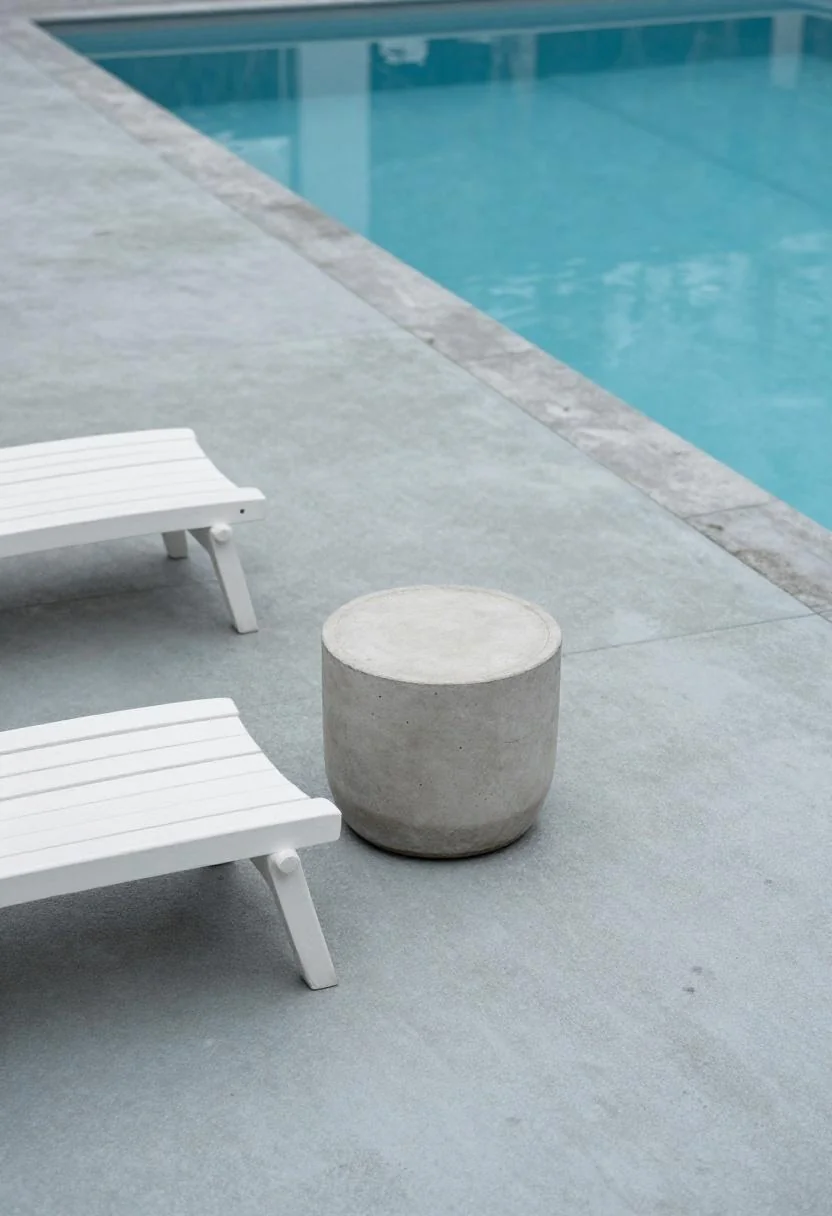
Bare concrete is just unfinished potential. A solid-color concrete deck paint in a muted cool blue — think something close to Swedish morning fog — costs around $40–60 a gallon, covers roughly 300 square feet, and completely changes the visual temperature of your whole pool area. The trick: use a concrete etcher first ($12 at any hardware store), or the paint will peel within a season. Two coats, a roller with a long handle, and you can do this in a single Saturday. Pair with cedar loungers and a poured concrete side table for that spare, wabi-sabi quality — where even the roughness of the material feels like it was chosen on purpose.
Pro tip — seal it with a UV-resistant concrete sealer or you’ll be repainting next summer.
Shop concrete deck paint on Amazon
2. Ceramic Planters + Ornamental Grasses: Drama for $30
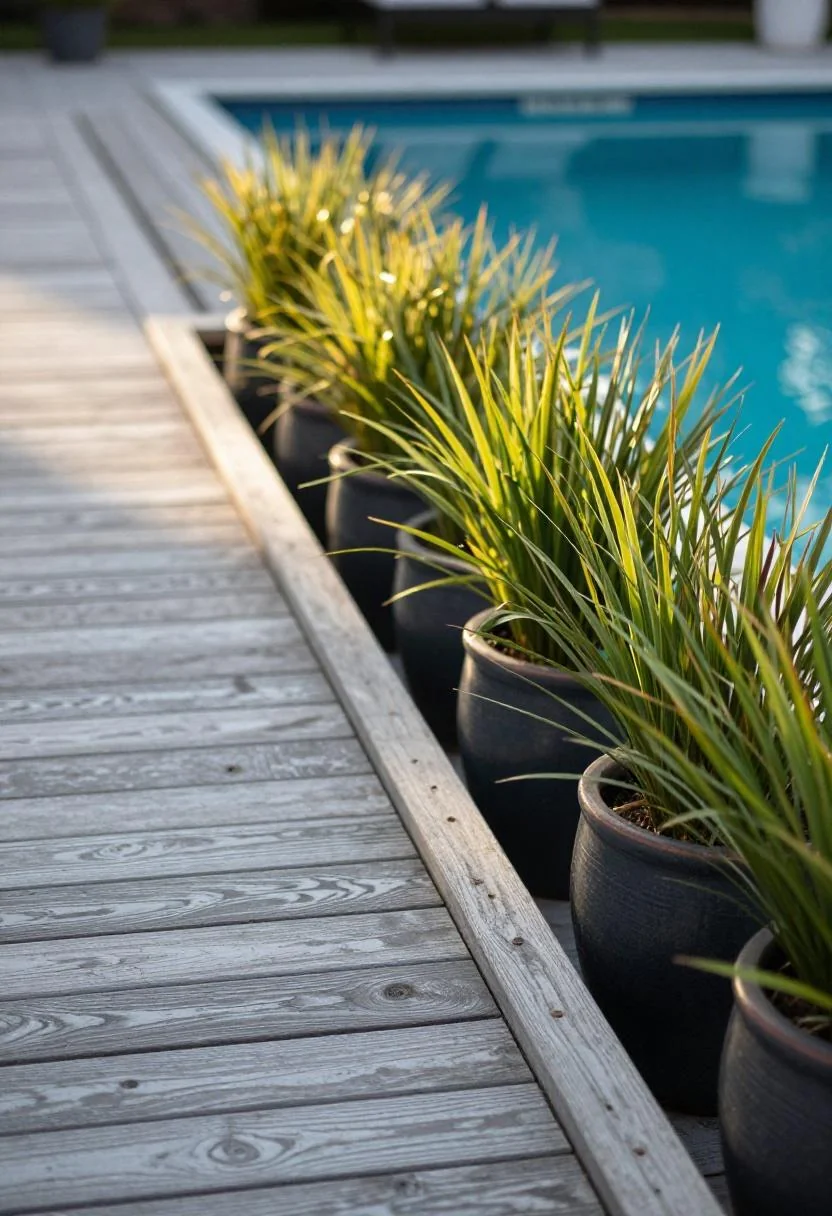
This one image tells you everything about the power of a single well-placed planter. Deep plum ceramic pots — the kind with a visible glaze inconsistency that screams handmade — lined along a grey composite deck at golden hour. Ornamental grasses like feather reed or Karl Foerster move in the breeze, add a vertical line that breaks the horizontal flatness of any deck, and cost almost nothing to maintain.
The mistake most beginners make is buying too many planters and crowding them. Two or three oversized pots beat twelve small ones every time. Negative space is the point. If you want more ideas for working planters into your outdoor design, our guide on the best flower planter ideas has some genuinely clever arrangements.
3. Linen Cushions on a Pine Bench: Softness That Costs Almost Nothing
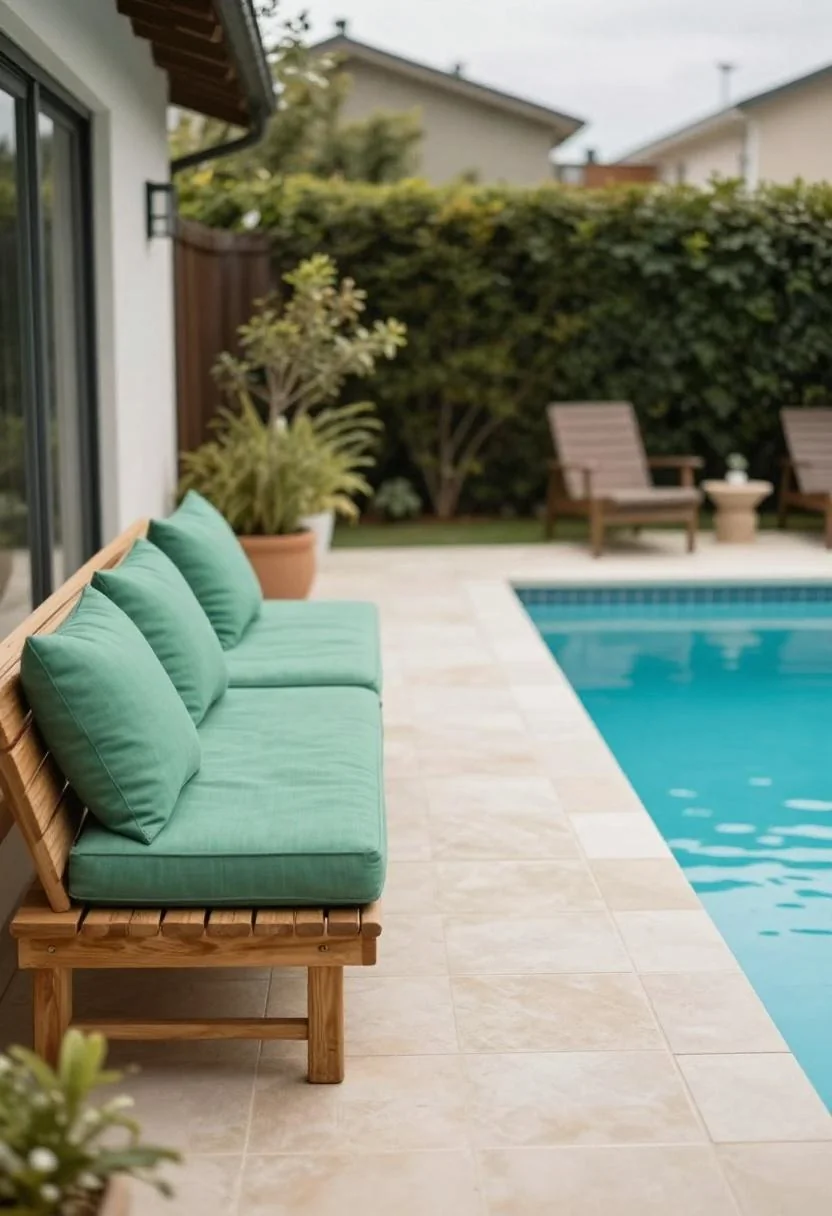
Jade. Not green, not teal — jade. That specific grey-green that Scandinavian designers obsess over because it reads as both nature and restraint at the same time. A pine bench (build one from 2×6 boards for under $40, or grab a basic outdoor bench from any discount retailer) gets transformed the moment you add outdoor linen cushions in this tone. Overcast light, an open walkway beside the pool, nothing extra on the bench — that’s the whole look.
Outdoor linen fades beautifully, by the way. The weathered version looks better than the new version. Let it happen.
Find jade outdoor cushions on Amazon
4. Terracotta Tile Border + Iron Lantern: Mediterranean on a Budget
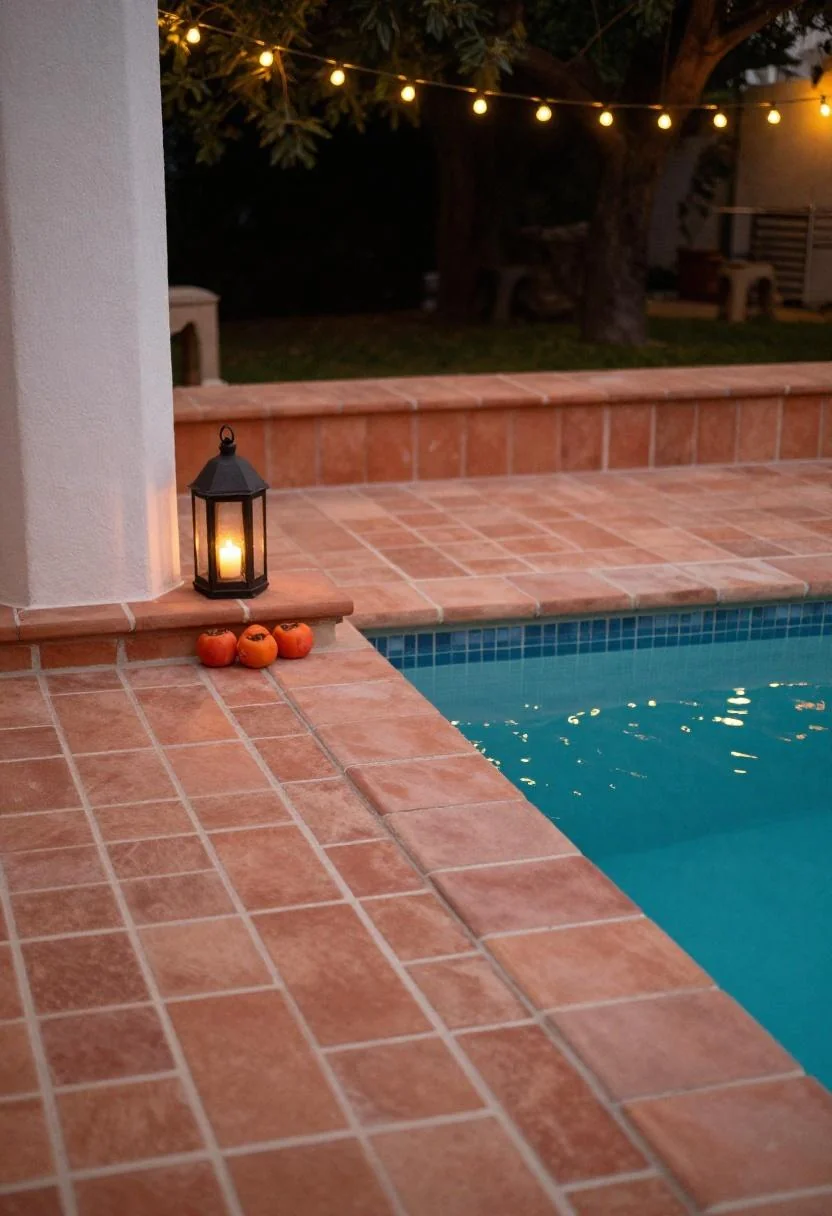
You don’t need to retile the whole deck. A single border row of persimmon terracotta tiles around the pool edge — maybe 12 inches wide — reads as intentional architectural detail rather than budget compromise. Terracotta tile runs $1–3 per square foot at tile liquidators and Habitat for Humanity ReStores. Grout it yourself in a weekend. Then add one iron lantern on a low pedestal at dusk and the whole space shifts into something that belongs alongside the Mediterranean villa aesthetic we’re all chasing right now.
As Elle Decor has pointed out repeatedly, earthy tile tones are dominating outdoor design this decade — and the DIY version is indistinguishable from the designer install if your grout lines are clean.
5. Herringbone Terracotta Pavers: The Pattern Does All the Work
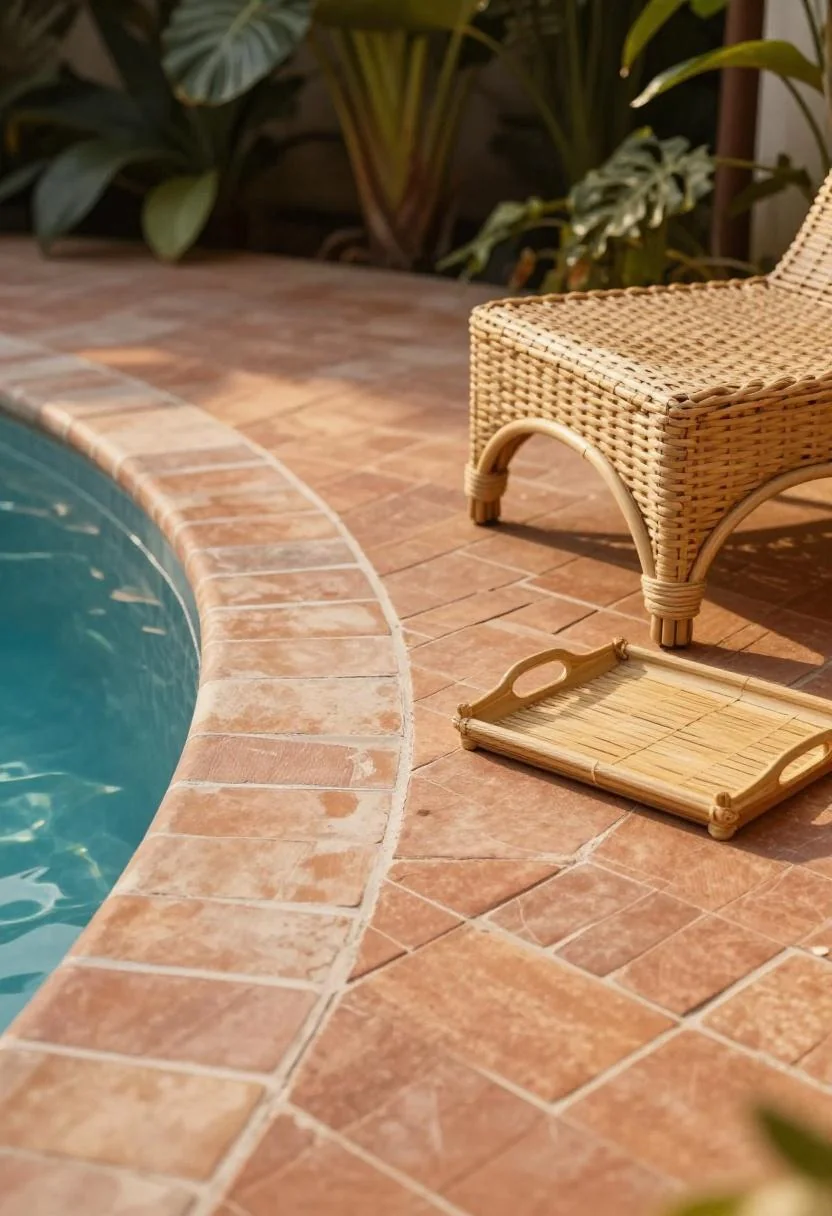
Lay the same terracotta paver in a straight grid and it looks like a 1990s patio. Lay it in herringbone and it looks like you hired someone. Same material, same cost — maybe $1.50 a square foot — completely different result.
The technique isn’t hard, but it requires a wet saw rental ($40/day at Home Depot) and more patience than straight laying. Mark your center line first, work outward symmetrically, and don’t rush the cuts at the edges. A rattan side table in a warm natural tone beside it — you can pull this off in a weekend for under $200 including tool rental.
Shop rattan outdoor side tables
A quick aside: I spent three years convinced that my concrete pool deck was beyond help — too cracked, too beige, too 1987. What actually changed everything wasn’t a renovation. It was two cans of paint, one bag of sand, and a decision to stop trying to cover the imperfections and start treating them as texture. Wabi-sabi in practice.
6. Cream Rubber Pavers Under a Pergola: Soft, Modern, Zero Maintenance
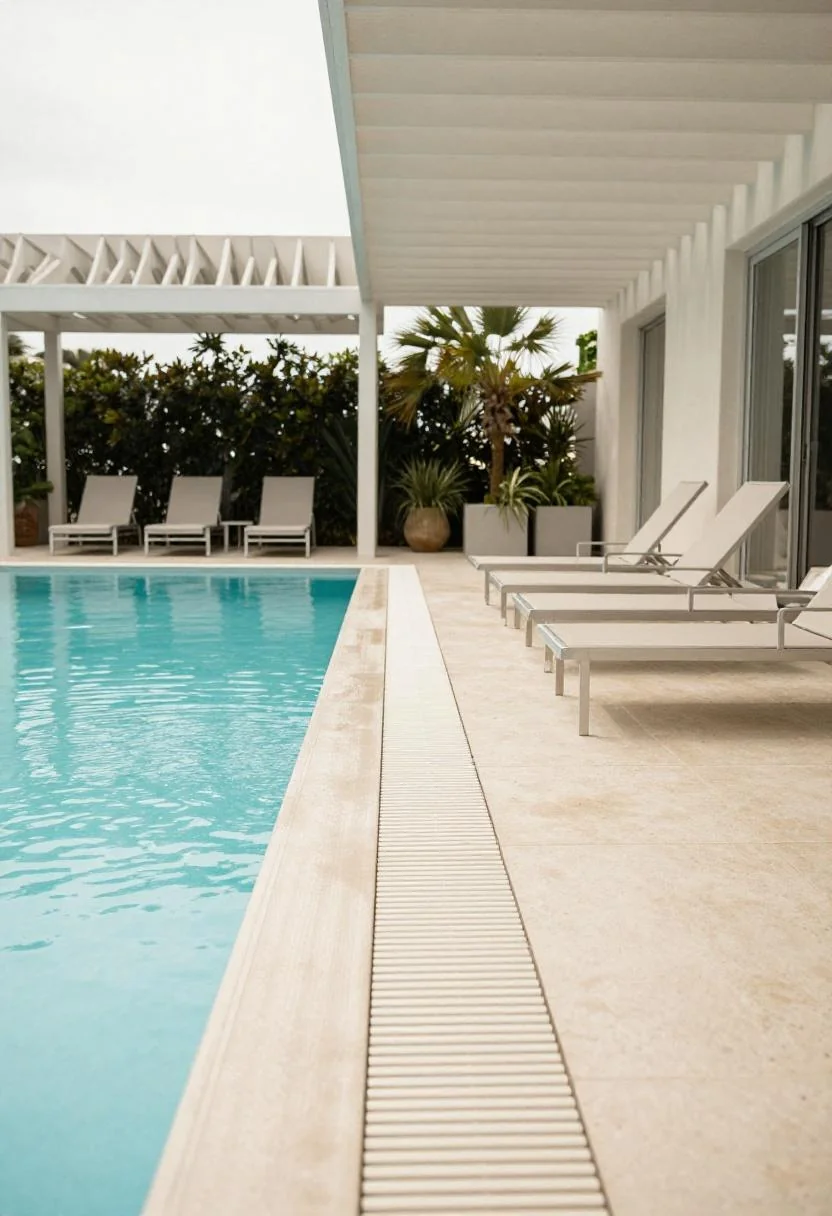
Rubber pavers get overlooked because people assume they look cheap. In cream or warm ivory tones, installed under a pergola structure, they look genuinely sophisticated — and they’re slip-resistant, UV-stable, and you can install them yourself with zero adhesive, just interlocking edges. Aluminium loungers in brushed silver complete the spare, modern tone. The pergola can be a basic 10×10 DIY kit from a big-box store; paint it the same cream as the pavers for visual continuity.
7. Sage-Painted Pine Deck Boards: The Cottage Meets Japandi
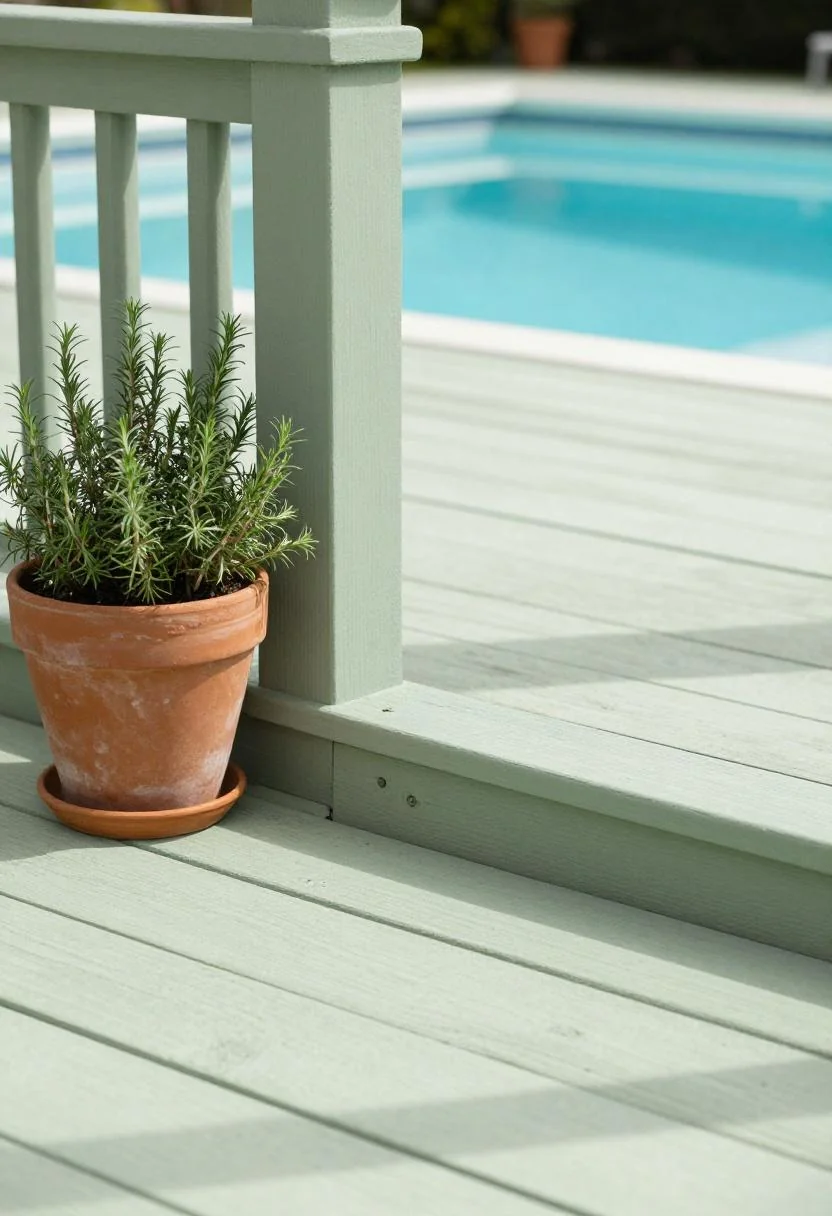
Here’s where the tension between “DIY Enthusiast” and “Japandi minimalism” gets interesting — because cottage morning light on sage-painted pine boards is somehow both. The color is doing a lot here: sage sits at that exact midpoint between grey and green where it reads as neutral without being boring. Use an exterior porch paint in a low-sheen finish (flat shows every scuff, high-gloss looks plastic). One terracotta pot filled with rosemary — functional, fragrant, free to harvest — and you’re done. Don’t add more. That’s the whole point.
Pine deck boards cost roughly $1–2 per linear foot. Paint runs $35–50 per gallon. This is legitimately one of the cheapest high-impact upgrades on this entire list, and it works beautifully on an existing deck that just needs a refresh.
Shop sage exterior porch paint
8. Mosaic Tile Border: Where the Detail Lives
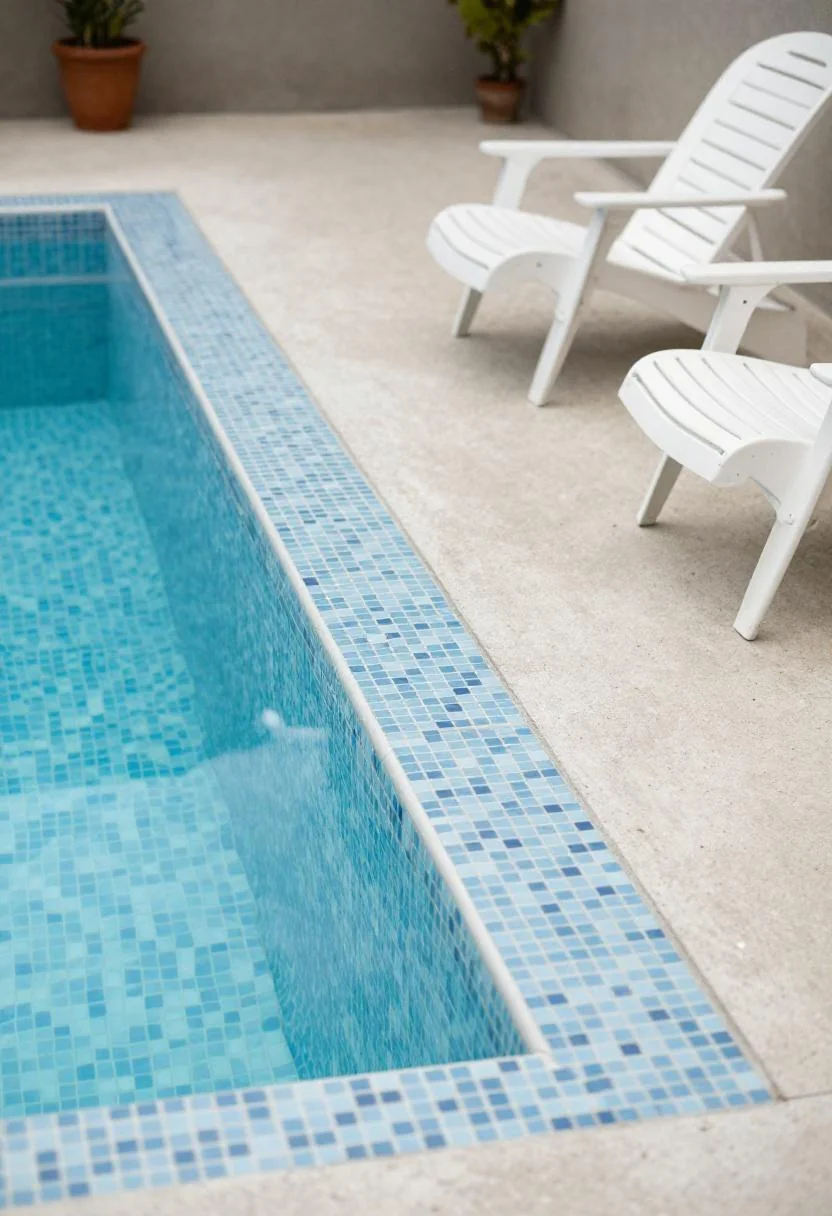
A mosaic tile border directly at the pool’s edge — the waterline strip — costs far less than you’d expect because you’re covering maybe 50–80 linear feet of surface. Cool blue glass mosaic tiles run $8–15 per square foot, but you need so little that the total material cost stays under $100 for most pools. The installation is accessible DIY territory: waterproof thinset, a notched trowel, and pool-safe grout. White resin chairs overhead keep the eye moving upward rather than fixating on the contrast.
This is the kind of specific architectural detail that makes guests assume you spent thousands when you spent an afternoon.
9. Zen Water Feature + Granite Gravel
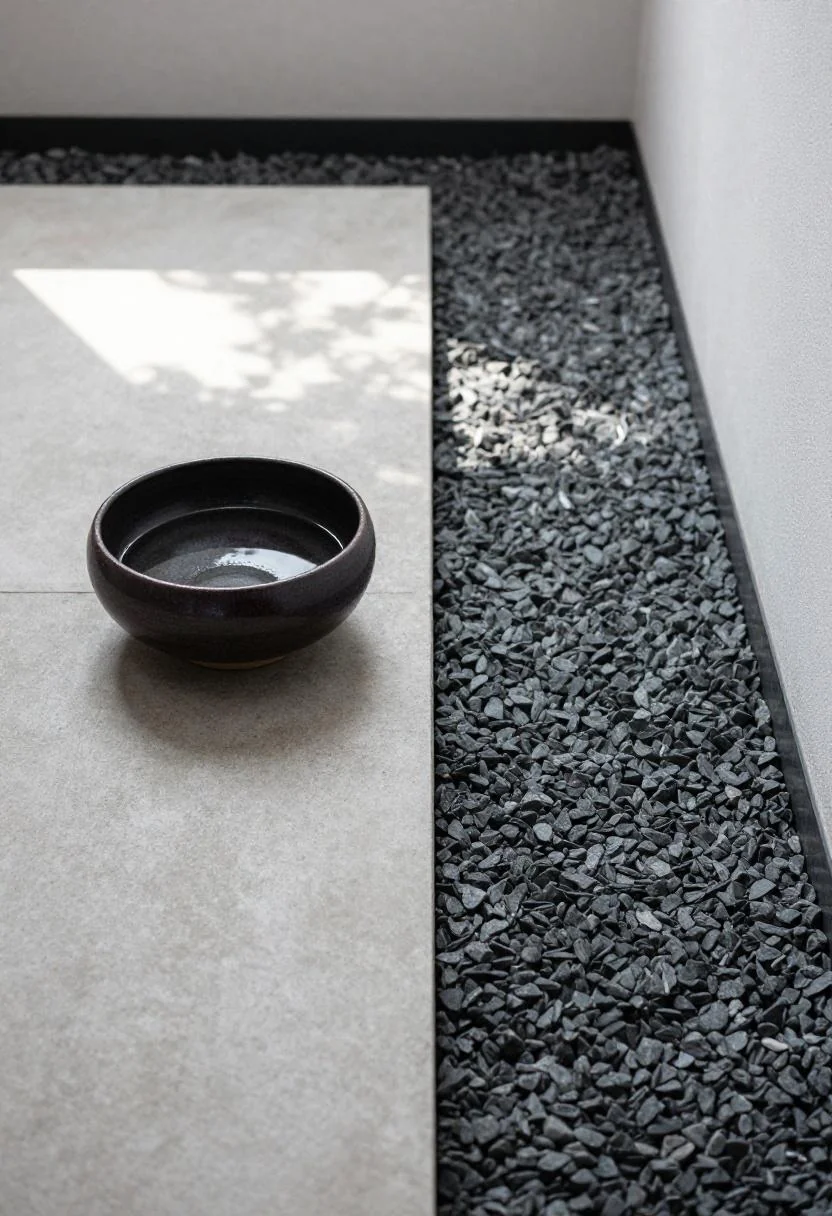
A plum ceramic bowl with a small submersible pump becomes a water feature for roughly $60 total. Set it beside the pool on a bed of grey granite gravel — which also solves the problem of bare dirt or ugly concrete edges — and you’ve created an unmistakable zen focal point. Morning light hits the water surface and the reflections move across the surrounding deck. The sound alone is worth it.
If you want to go deeper on DIY water features, our roundup of easy DIY water fountain ideas covers pump sizing, bowl options, and common leakage mistakes in detail.
Find submersible fountain pumps
10. A Canvas Umbrella Moment
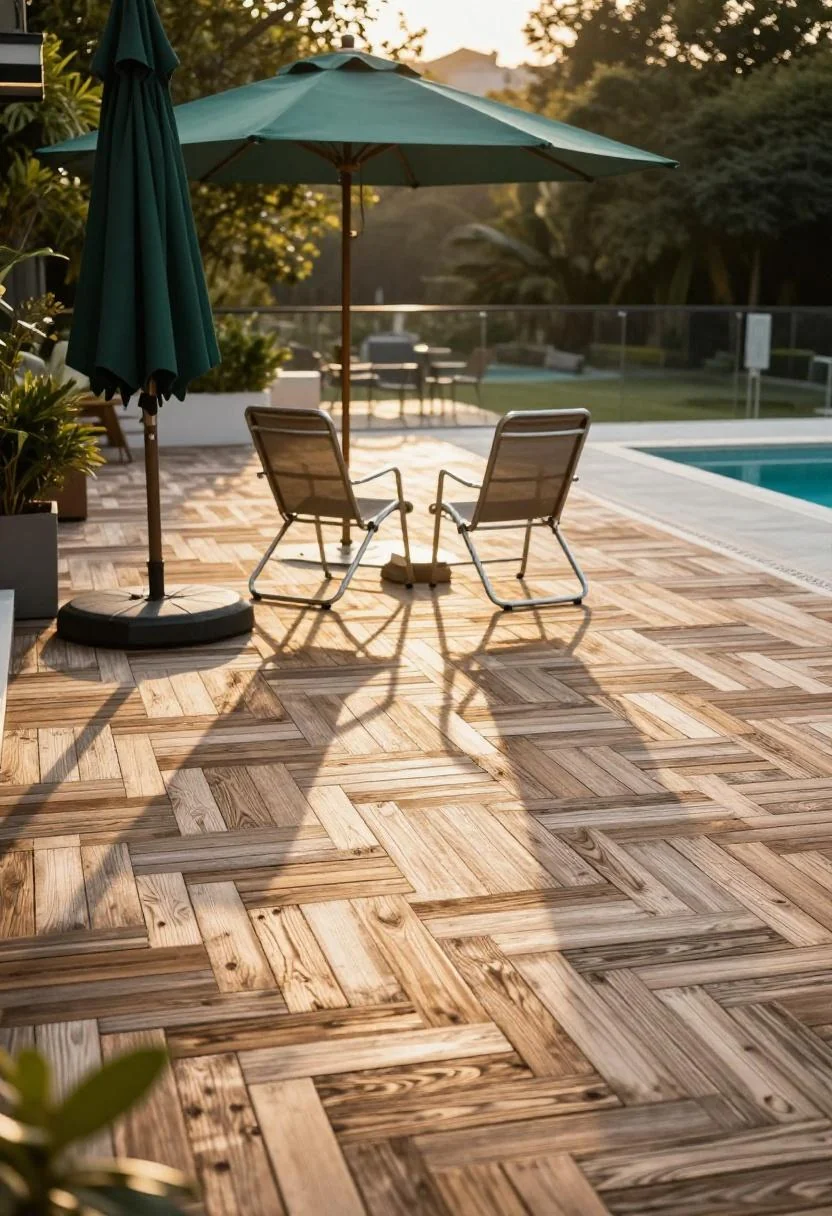
Sometimes the answer isn’t what’s on the ground — it’s what’s above it. A jade canvas market umbrella ($80–120 at IKEA or Target) over folding steel chairs on a eucalyptus-toned tile balcony deck: that golden-hour light filters through the canvas and everything underneath takes on a warm, editorial quality. The umbrella becomes architecture. The chairs don’t need to be expensive; they need to be simple and low-profile so the umbrella stays the statement.
11. Concrete Bench + Wasabi Cushions: When Softness Is Structural
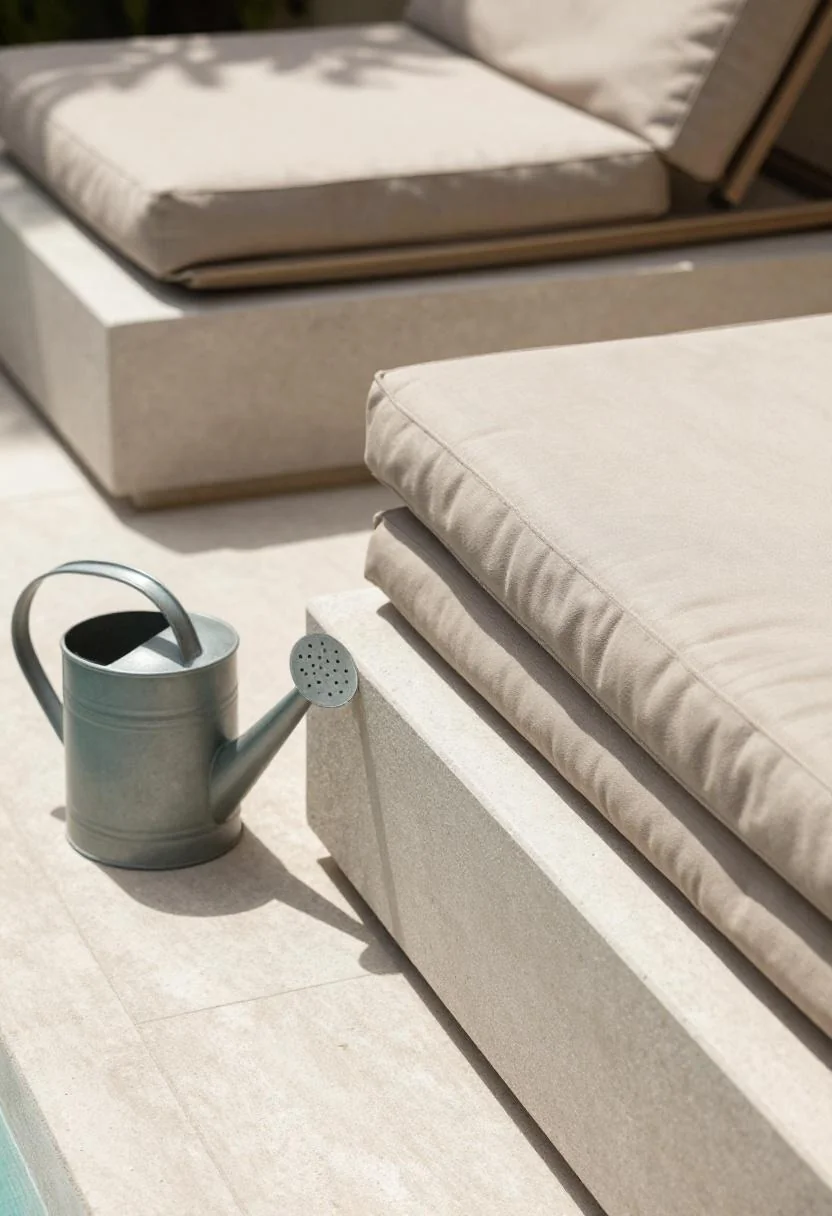
Cast concrete benches — either poured yourself with Quikrete in a form ($25–40 in materials) or bought as precast landscape pieces — are about as Japandi as outdoor furniture gets. Heavy, permanent, slightly imperfect. Stack wasabi-yellow outdoor cushions on top: that near-neon muted yellow is the unexpected color in an otherwise grey and natural palette. A vintage watering can beside it in the midday shade. Nothing else needed.
If you’re interested in more cement and concrete DIY projects for outdoor spaces, the ideas in our cement crafts guide translate beautifully to pool deck applications.
12. The Woven Rug Around a Fire Pit: An Outdoor Room Trick
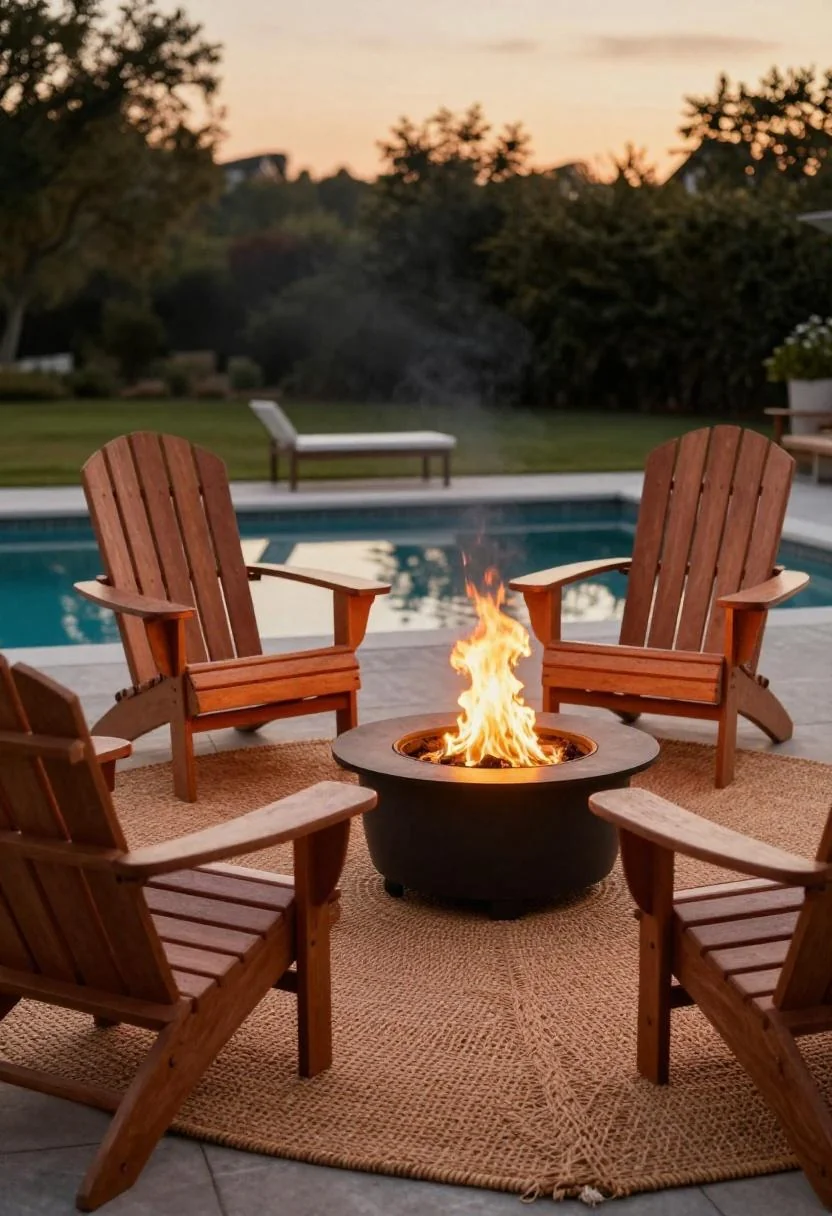
What separates an outdoor furniture arrangement from an outdoor room? A rug. Full stop.
A persimmon-toned woven outdoor rug (polypropylene, around $60–100 for a 5×7) anchors teak chairs around a simple steel fire pit and suddenly you’ve defined a space within the space. The pool is in the background. The fire pit becomes the gathering point. At dusk, with the fire going and that warm rust-orange color on the ground, this is the kind of deck moment that makes people linger for hours. Harper’s Bazaar Home has covered the indoor-rug-goes-outside trend extensively — and they’re right that it’s one of the highest-ROI swaps in outdoor design.
13. Stamped Concrete: One-Time Cost, Permanent Payoff
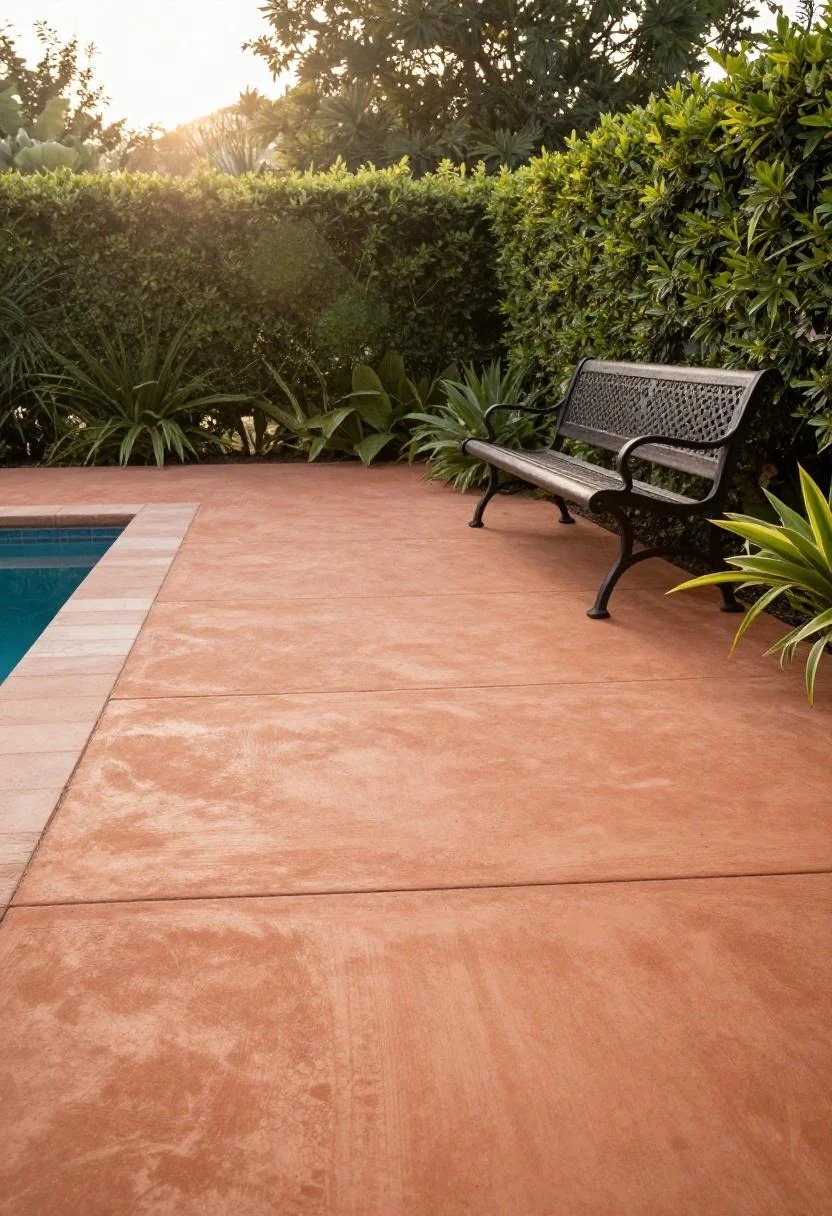
Stamped concrete is the one on this list that usually requires a professional pour — but it costs a fraction of actual stone or tile, and the result lasts decades. A terracotta-colored stamped concrete deck with a flagstone or cobble pattern runs $8–18 per square foot installed, compared to $25–50 for real stone. Pair it with a simple iron bench beside a clipped hedge for that precise morning-light editorial quality. The mistake most beginners make with stamped concrete is choosing a pattern that’s too busy — simple cobblestone or large-format flagstone ages better.
Is the upfront cost more than paint or pavers? Yes. But it’s also the last deck surface decision you’ll ever make.
14. Cream Painted Pine Slats + a Linen Daybed
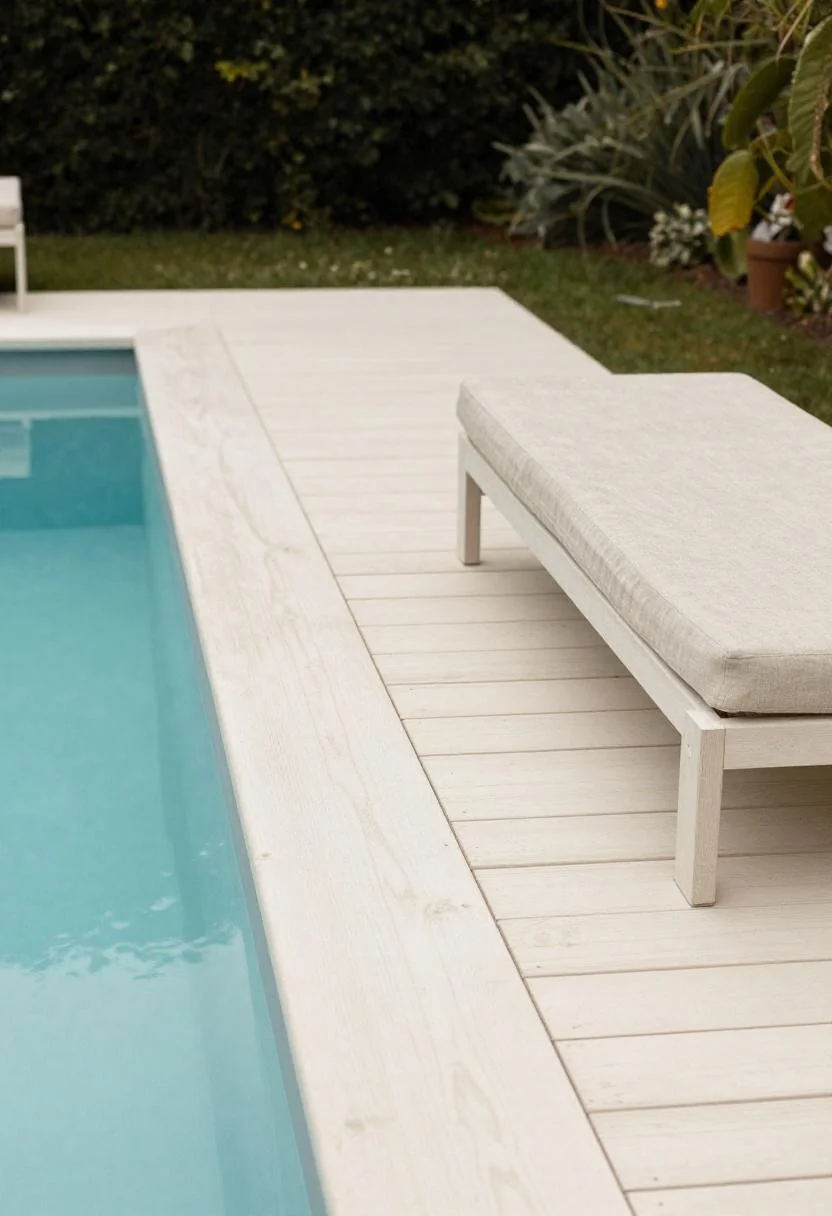
This is the one I’d build tomorrow if I were starting from scratch. Cream-painted pine deck boards — slatted for drainage, painted in a warm off-white rather than stark white, which always looks cold against concrete — with a linen daybed along one edge. Overcast light is actually ideal here: no harsh shadows, the fabric texture reads clearly, and the water beside it goes that particular flat grey-green that looks almost painted itself.
A linen daybed doesn’t need to be expensive. A basic platform from IKEA with outdoor-rated foam and linen-look fabric (not actual linen — it mildews outdoors) runs well under $200. Vogue Living has documented the Japanese outdoor daybed moment thoroughly, and the DIY version captures the same quality of stillness. This is less about building a “deck” and more about creating a place to stop moving.
The Colors That Pull All 14 Ideas Together
Looking back across these ideas, the palette isn’t accidental. Cool blues and cream whites read as calm and modern — they make the water feel intentional rather than just a hole in the ground. Terracotta persimmon and warm rust tones bring the warmth that keeps a minimalist space from feeling clinical. Jade, sage, and wasabi — those muted organic greens — are the connective tissue, the tone that says “nature was consulted during the design process.” Plum is the wild card: use it sparingly (one set of planters, one ceramic bowl) and it reads as editorial. Use it everywhere and it fights with the water.
The broader principle here is restraint. Choose two or three tones from this palette, repeat them in different materials and scales, and leave enough empty space that the pool itself remains the focal point. That’s the Japandi version of a pool deck: not decorated, but composed.
For anyone taking on planting around the deck perimeter, our article on the best border plants for full sun gardens pairs well with several of these ideas — particularly the ornamental grass and hedge looks above.
This post contains affiliate links. We may earn a commission at no extra cost to you.
Images in this article were created with AI assistance.