Cement has a reputation problem. People hear “concrete” and think driveways, parking garages, brutalist office blocks. But spend an afternoon with a bag of Portland cement, a couple of silicone molds, and some intentional restraint, and you’ll start to see it differently — as one of the most honest, low-waste materials you can bring into a home. It doesn’t pretend to be anything other than what it is. It won’t off-gas mystery chemicals once it cures. And when you make something yourself, you’re opting out of the disposable decor cycle entirely. That matters. As Elle Home has pointed out in recent years, the most compelling interiors are built around objects with a story — things made slowly, by hand, from materials that age honestly. Cement crafts fit that story exactly, and they look genuinely beautiful doing it.
1. The Windowsill Planter That Started It All
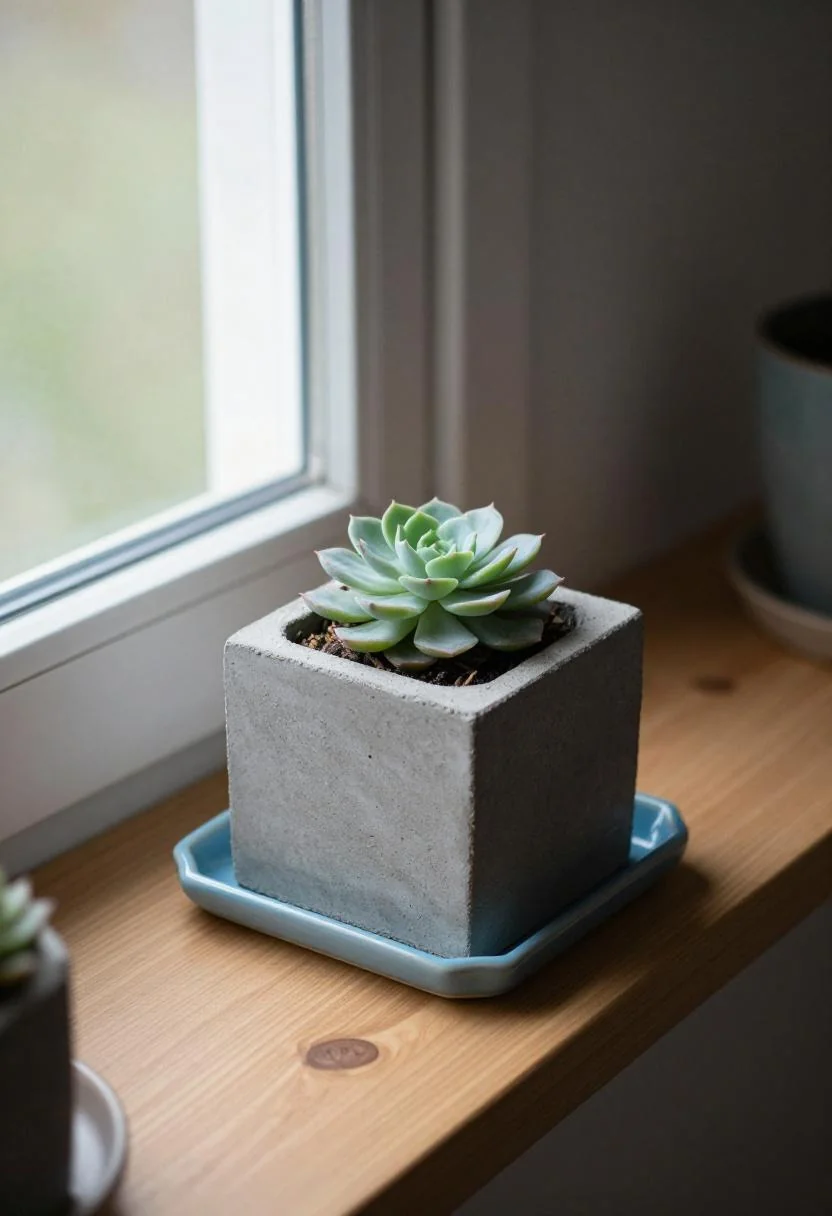
This is probably the most-made cement project on the internet for a reason — it works. A small concrete planter, hand-pressed in a plastic cup mold, costs almost nothing and holds up for years. The cool blue tray underneath does something clever: it softens the industrial weight of the cement with a breath of coastal color, without veering into coastal kitsch. Set it on a south-facing sill with a single echeveria, and you have a composition that looks considered, not crafted.
Before you buy a terracotta nursery pot, consider that a handmade cement planter uses a fraction of the energy to produce — and you made it yourself, so its carbon footprint is essentially a bag of mix and an afternoon. That counts. Shop small succulents for handmade planters
2. Graduated Vases: The Case for Imperfect Sets
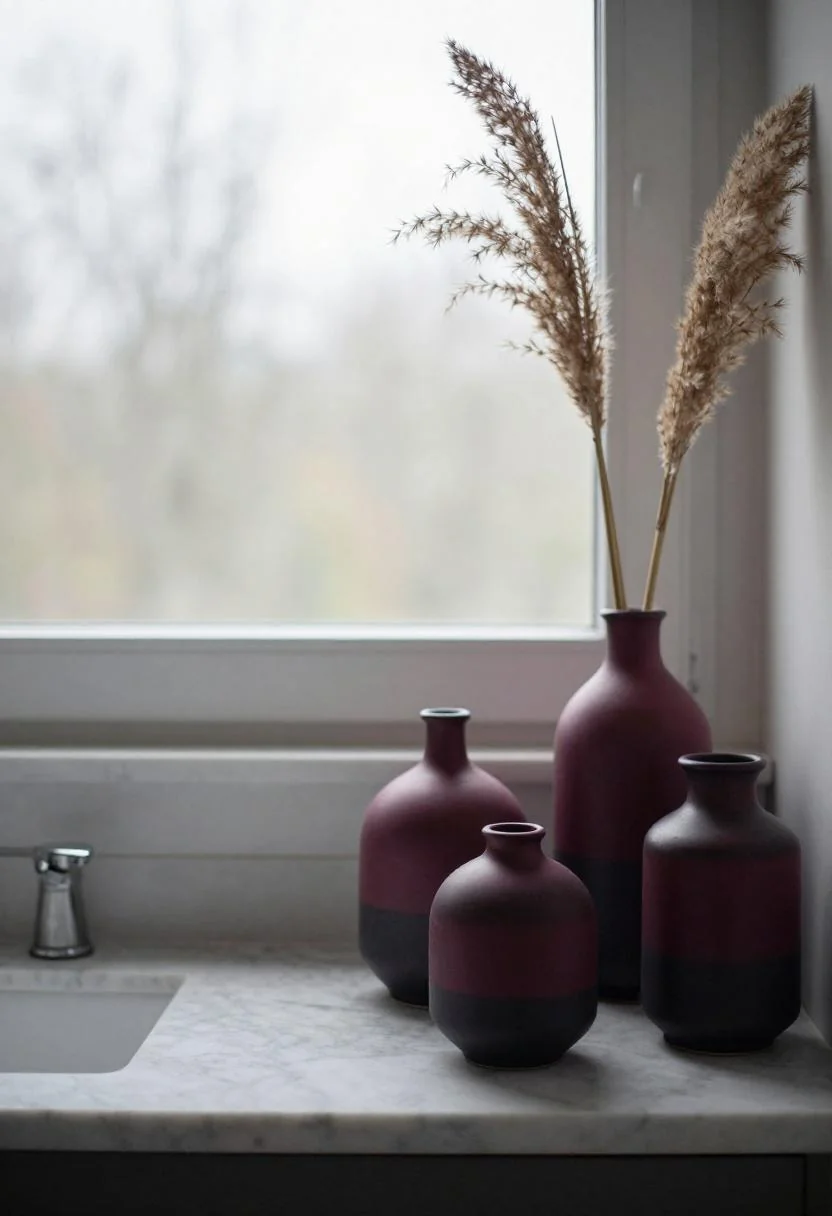
Three vases. Different heights. Made from the same batch of cement — and yet each one came out slightly different, because that’s what cement does.
These plum noir toned vessels on a bathroom shelf are exactly the kind of thing that would cost $80 in a boutique home store and cost you maybe $6 in materials to replicate. The dried stems are the key detail here: no water, no maintenance, no weekly refreshing. Just structure and stillness. If you’re drawn to darker, moodier interiors, this shelf vignette is a quiet masterclass in restraint. The imperfection in the surface finish — the tiny bubbles, the slight texture variation — is the point. That’s not a flaw. That’s evidence that a person made this.
3. The Entryway Catchall That Holds Its Own
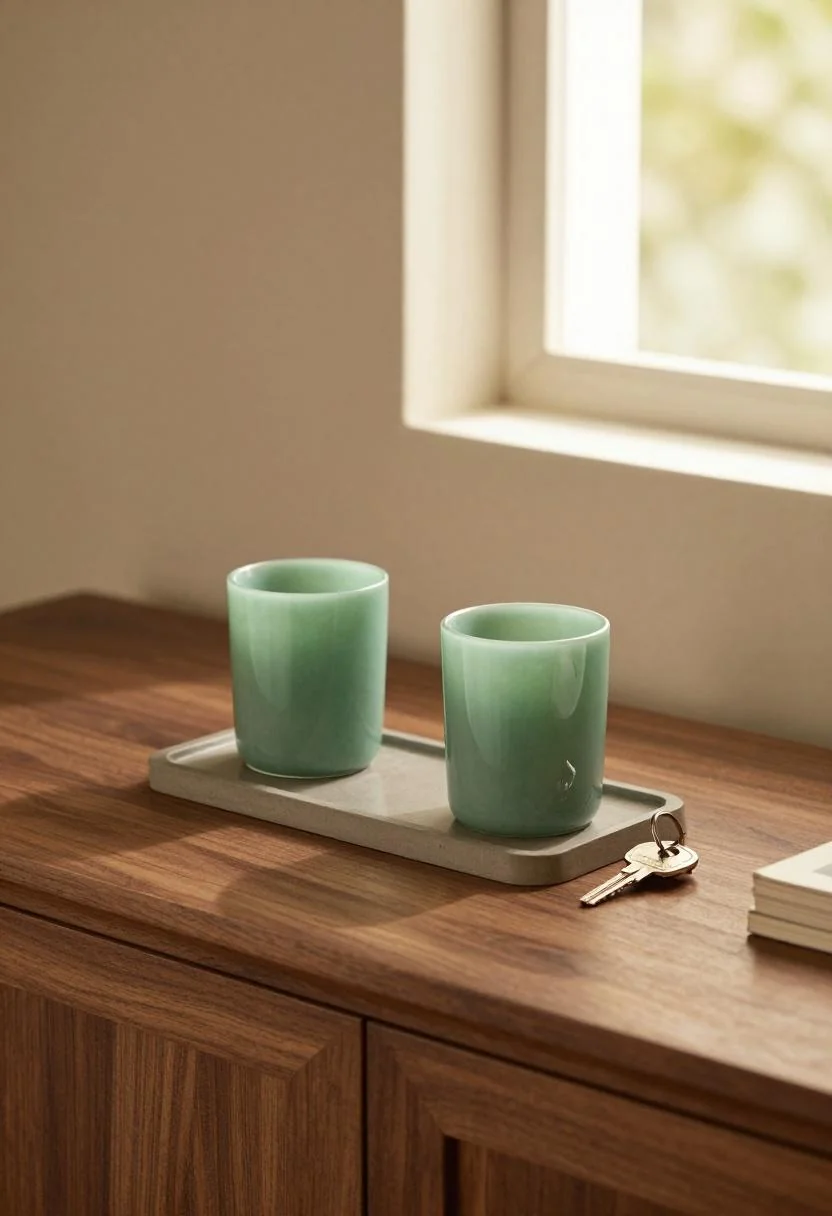
A concrete catchall tray on an entryway console does something functional pieces rarely manage: it looks intentional even when it’s holding last Tuesday’s receipts and a dead pen. The jade green tea lights scattered alongside it bring just enough warmth to keep the whole thing from feeling cold. This is the contemporary farmhouse read of cement — not a barn sink, not shiplap, but honest materials in honest shapes doing actual daily work.
Find jade green tea lights to style your tray
4. Desk Organization Without the Plastic
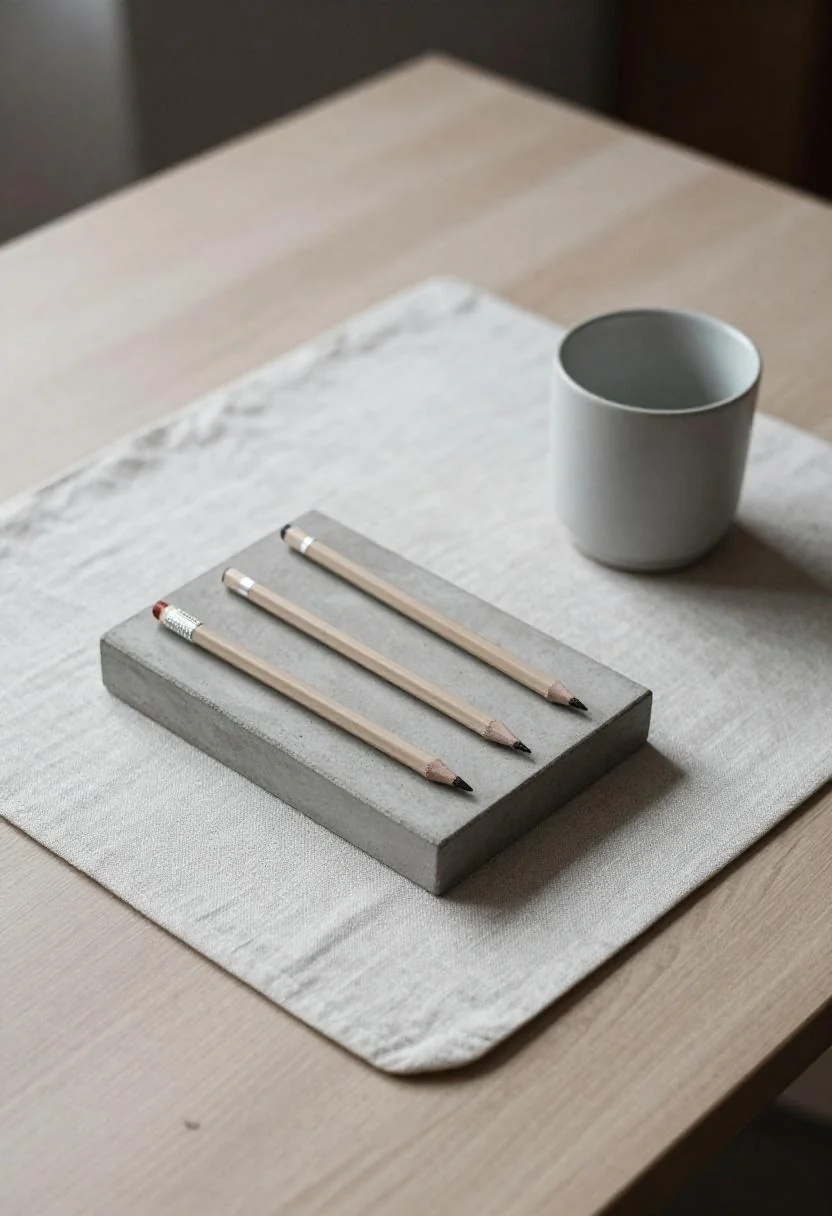
The overhead shot says everything. A cement desk organizer — compartments for pens, paper clips, a small plant — sits beside a wasabi ceramic cup, and together they form the kind of workspace that makes you actually want to sit down and focus. What I love about this pairing is the color restraint: that particular shade of wasabi green is warm enough to keep the cement from reading as cold, cool enough to keep it from reading as maximalist. You’re not decorating. You’re organizing, with better materials than a plastic box from a big-box store.
If you’re rethinking your desk setup alongside this, our piece on low toxic living swaps for a cleaner home covers how to swap out the everyday plastic items a room at a time — same energy, different rooms.
5. The Bathroom Soap Dish, Reconsidered
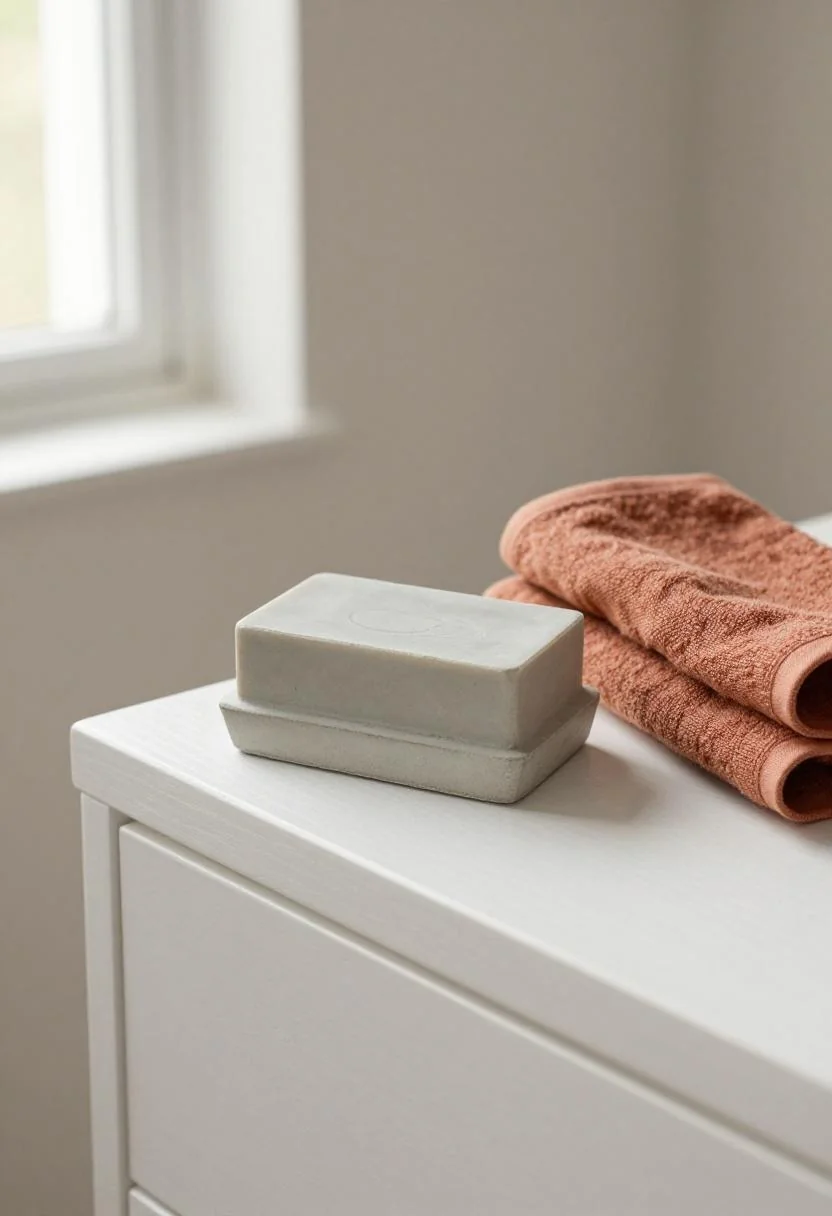
Concrete and water: a combination that sounds counterintuitive until you realize how many of the most durable bathroom surfaces in history have been stone-based. A hand-cast cement soap dish, properly sealed with a food-safe or water-safe coating, will outlast every plastic soap dish you’ve ever owned. Combined with a warm terracotta linen towel — rough-woven, undyed or naturally dyed — and you have a vanity corner that looks like it belongs in a boutique inn.
The terracotta linen detail is worth noting on its own: linen is one of the lowest-impact textiles you can choose. It uses minimal water to grow, biodegrades fully, and gets better — actually better — with every wash. Shop terracotta linen hand towels
6. Mantle Candle Holder: Where Cement Meets the Farmhouse
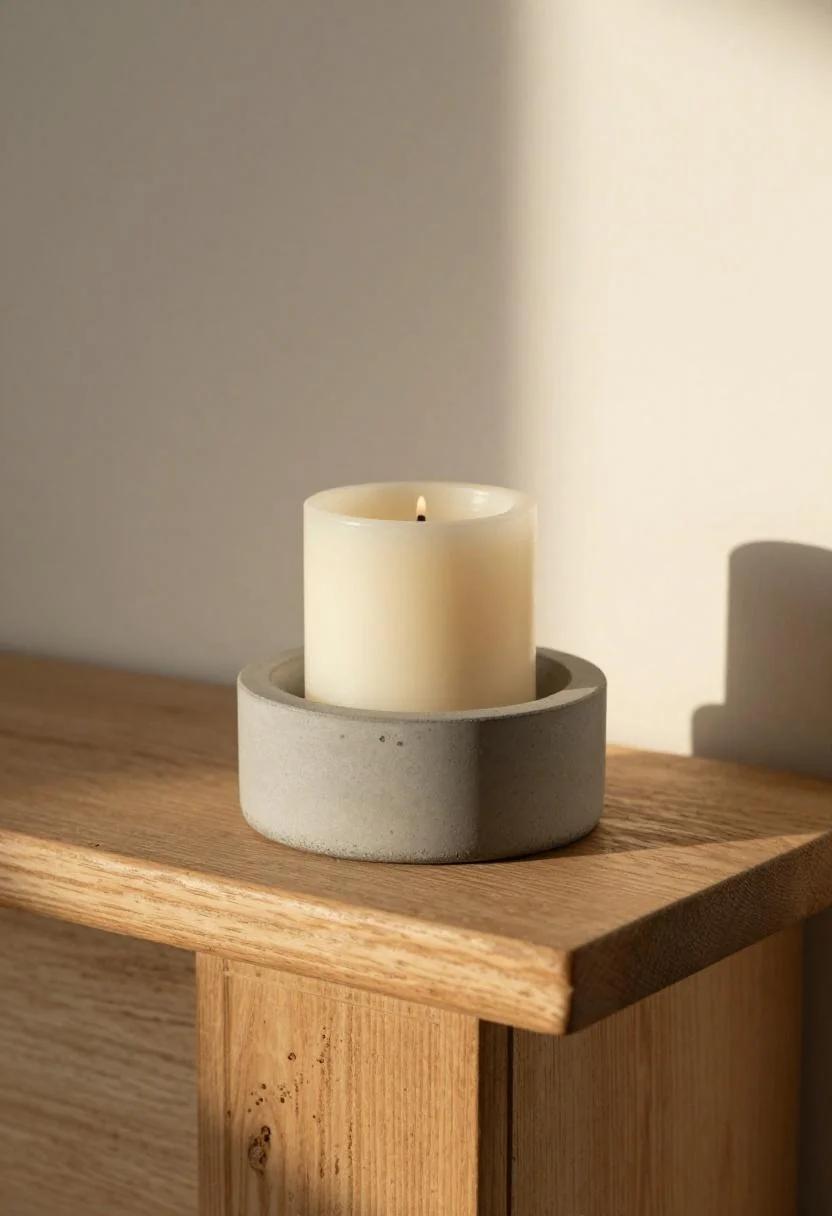
Here’s where the tension between sustainability advocate and farmhouse aesthetic gets interesting — and productive. A reclaimed wood mantle is, by definition, a salvaged piece with a past. The cement candle holder sitting on it is a made-new-from-raw-materials piece. Together, they’re doing something the shiplap-everywhere farmhouse aesthetic never quite managed: they’re honest about what they are.
The cream white pillar candle keeps the composition quiet. No fragrance, no dye, no drama — just a slow burn and a flicker. Beeswax or soy pillar candles are the version worth seeking out here; the lifecycle of a paraffin candle is shorter and less clean than its alternatives. Small choice. Real difference.
7. Herb Trough on the Kitchen Sill
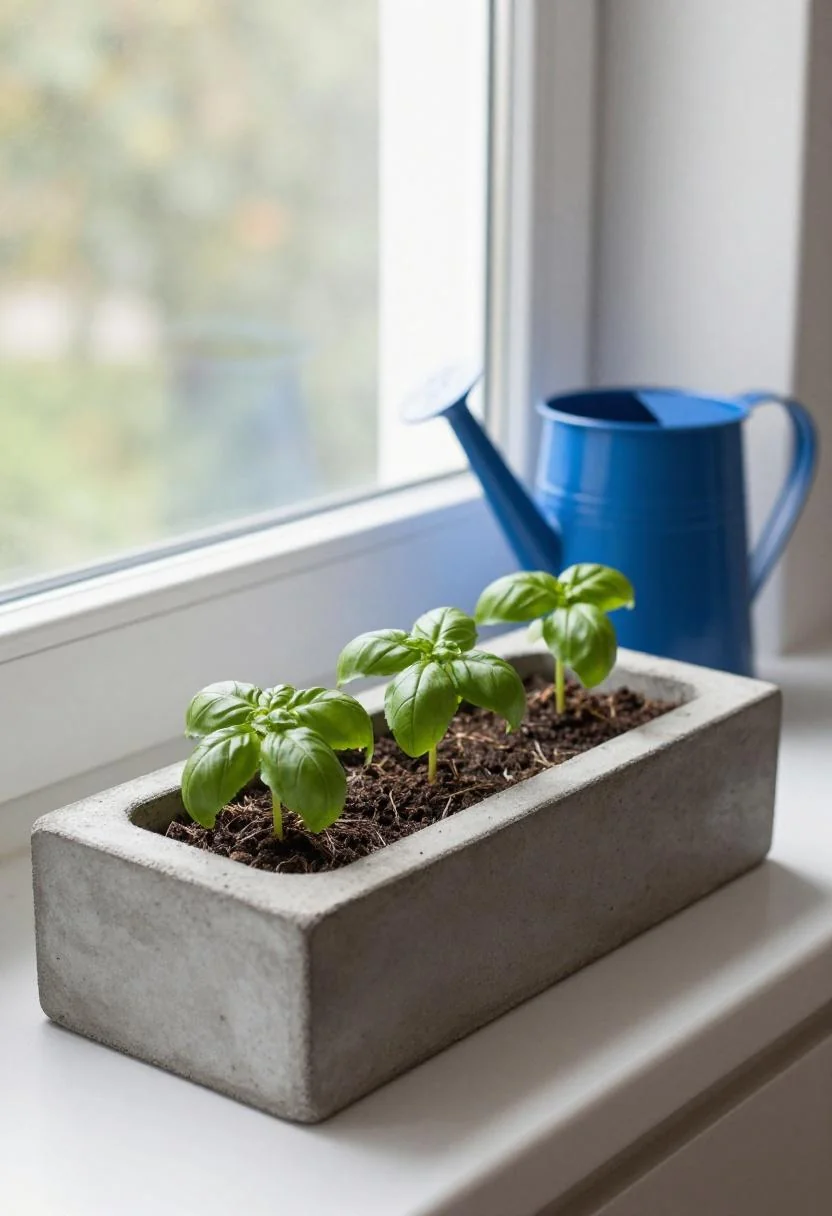
This one is functional in the most satisfying way possible. A DIY cement herb trough — long, low, cast in a rectangular mold — holds three or four basil plants at a kitchen windowsill, with a cool blue watering can parked alongside. You’re growing food. You’re eliminating plastic pots from a grocery store. You made the container yourself. It’s almost aggressively practical, which is exactly what a kitchen deserves.
If you want to expand the herb garden beyond the windowsill, our guide to sun-loving plants for containers and pots covers which varieties actually thrive in confined spaces with good light exposure.
Shop herb starter plants for your trough
8. The Jewelry Tray That Treats Your Things Well
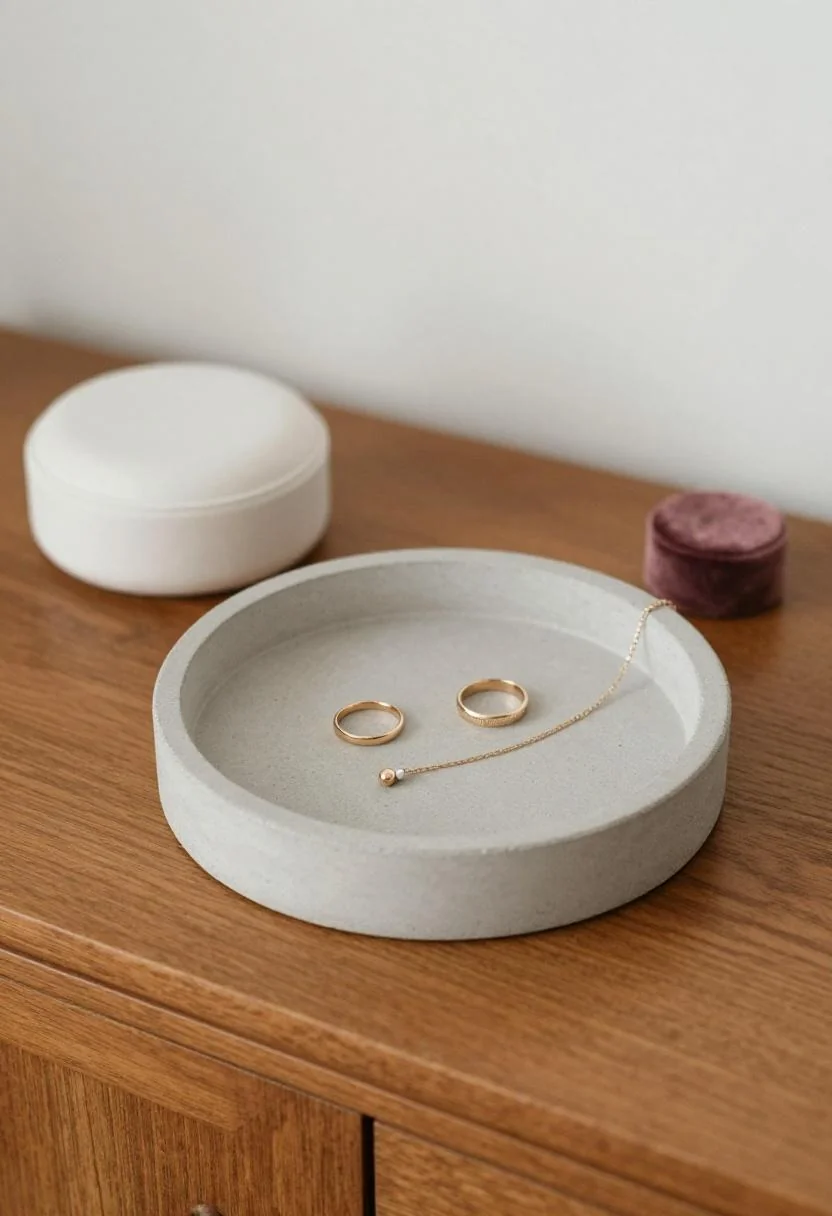
A circular cement jewelry tray with a plum noir velvet cushion insert, sitting on a bedroom dresser. The velvet is the key — it protects delicate pieces, adds a layer of tactile contrast, and brings a richness that bare cement alone can’t provide. This is also a project where the “buy secondhand first” principle applies beautifully: vintage velvet fabric from a thrift store or estate sale, cut to fit, is both more interesting and more sustainable than new yardage from a craft chain.
9. Concrete Pencil Cup — Small Object, Big Impact
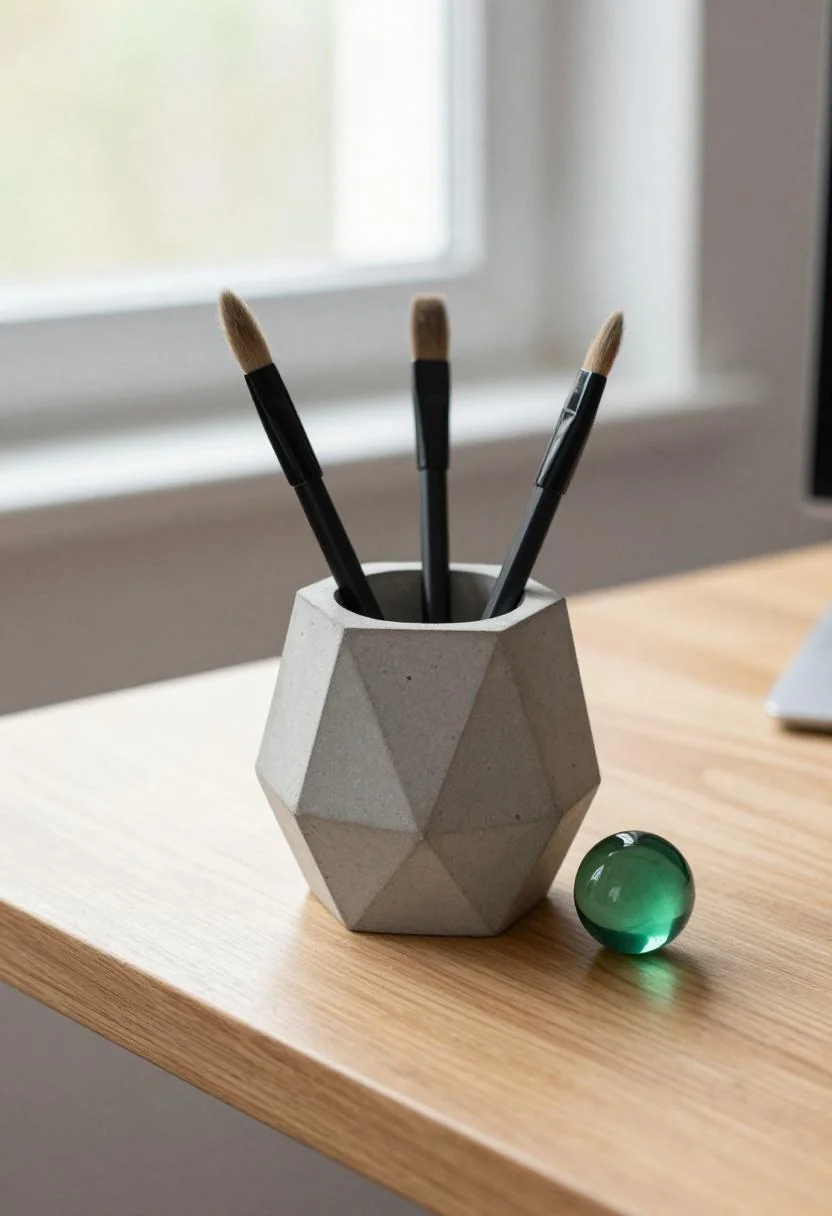
Don’t underestimate small objects.
A concrete pencil cup with a jade green glass paperweight beside it in a minimal desk corner makes a case for intentional material choices at every scale. You don’t have to overhaul a room. You just have to replace the plastic cup that’s been holding pens for six years with something you made, something that will still be there in twenty. As Harper’s Bazaar’s home section often frames it, the most lasting design investments are the ones that don’t follow a cycle — and cement, once cured, is about as cycle-proof as it gets.
10. Bathroom Tray as Still Life
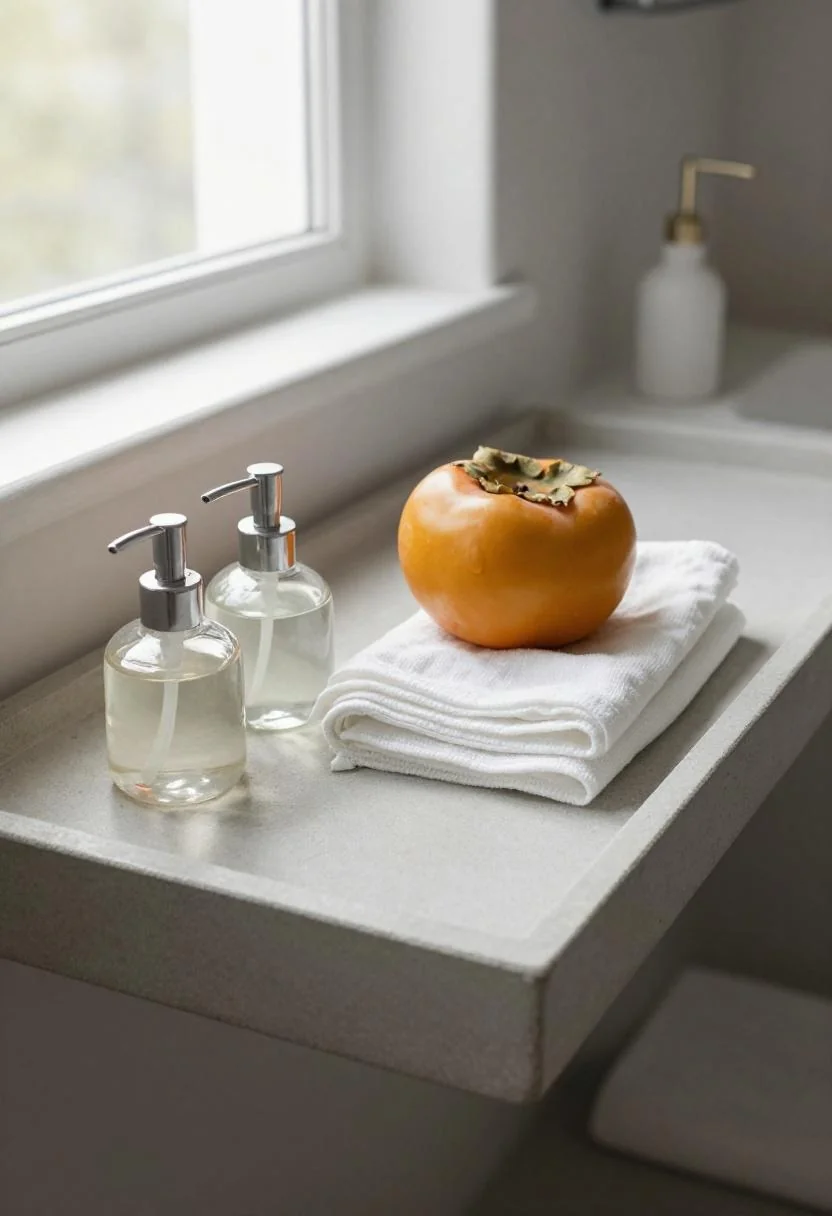
There’s something about a persimmon washcloth folded alongside a concrete tray and a glass soap dispenser that reads more like a still life painting than a bathroom shelf. The color does the heavy lifting: persimmon is warm without being orange, saturated without being aggressive, and it makes the cool grey of the cement look intentional rather than industrial.
A glass soap dispenser is worth mentioning in its own right here — it’s refillable, recyclable, doesn’t leach anything into your soap, and looks far better than a pump bottle from a drugstore. If you’re already thinking about low-toxin swaps room by room, the bathroom is an excellent place to start. Shop glass soap dispensers
11. The Kitchen Shelf Pair: Cement and Ceramic
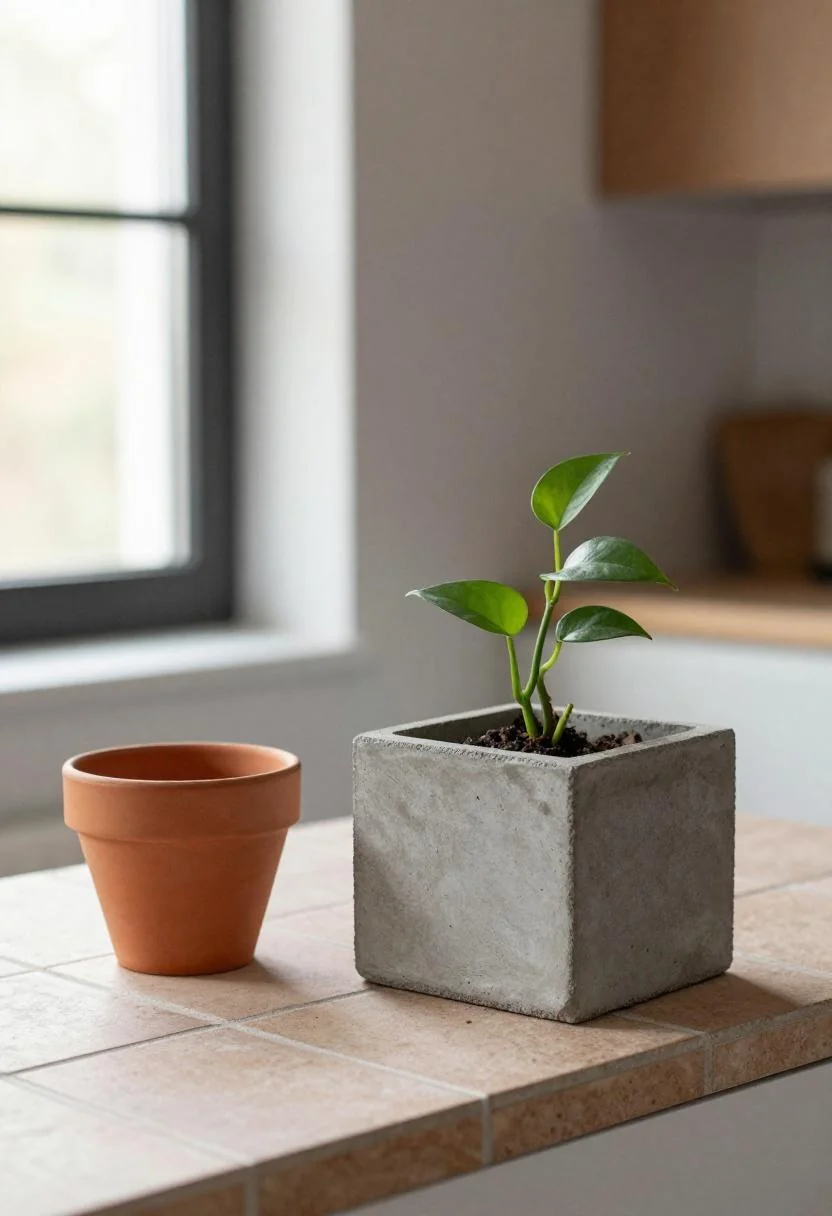
A handmade cement pot holding a pothos beside a warm terracotta ceramic — this is the kitchen shelf combination that gets the balance right. Pothos is the low-maintenance workhorse of indoor plants: it tolerates low light, irregular watering, and the occasional neglect. It’s also a genuinely good plant to propagate endlessly in water and pass along, which is its own small version of circularity. The terracotta ceramic beside it grounds the composition in warmth without competing. Two objects. Neither expensive. Both better than what you’d find in most home goods stores.
For more ideas on pairing planters with companion pots and vessels, our roundup of flower planter ideas to transform your space covers the outdoor version of this same principle.
Find pothos plants for your cement pot
12. The Gallery Wall Frame That Earns Its Spot
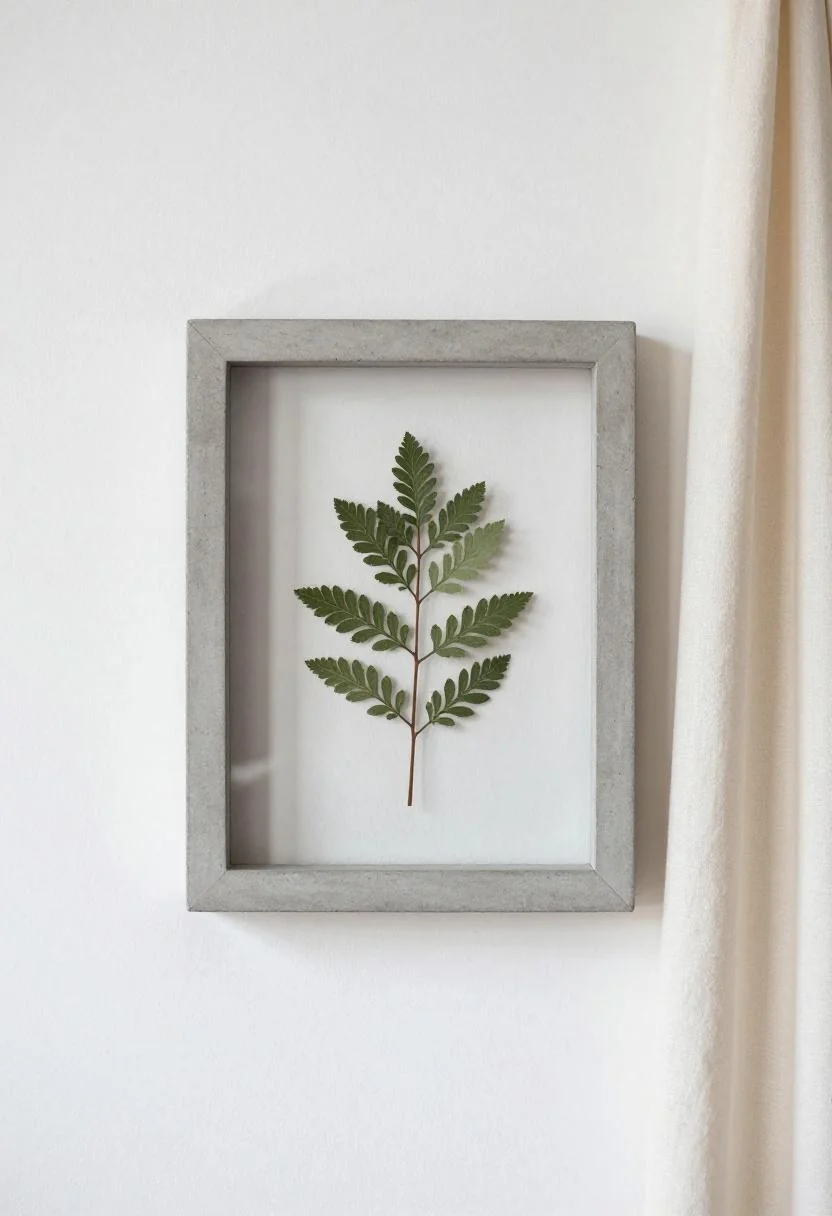
A DIY concrete picture frame holding a botanical print, flanked by a cream white linen panel on a gallery wall — this might be the most unexpectedly refined thing you can make with a bag of cement mix. The frame is cast around a basic mold (two nested cardboard boxes, essentially), and once it’s cured and lightly sanded, it has a quality that reads expensive in person.
The botanical print inside doesn’t need to be purchased. A vintage botanical illustration, printed at home or found at an estate sale, is exactly the kind of “piece with a past” that suits both the material and the ethos. As Vogue’s home coverage has noted, gallery walls that mix handmade and found objects consistently age better than curated-from-a-single-retailer walls. The linen panel beside it — hung simply, no hardware — softens the whole arrangement and keeps it from reading as heavy.
The Color Story: What This Palette Is Actually Saying
Look back through these twelve projects and a color story emerges that isn’t accidental. Cool blue — in trays, watering cans — brings a restrained freshness that keeps grey cement from reading as cold. Plum noir adds depth and moodiness without requiring darkness in the whole room. Jade green is the unexpected versatile note, equally at home beside concrete on a bathroom shelf or a minimalist desk. Warm terracotta and persimmon do the softening work, bringing the heat that cement alone can’t generate. And cream white — in pillar candles, linen panels — keeps everything from closing in.
What the whole palette has in common: none of these colors require the objects around them to perform. They support. They ground. They let the material — the cement itself, the honest grey of something made from powder and water and your own hands — remain the point.
If you’re drawn to the way texture and materiality work together in these setups, the same principle applies outdoors. Our piece on golden sunlight aesthetic warm home decor ideas carries this warm-material sensibility into a completely different context worth exploring.
This post contains affiliate links. We may earn a commission at no extra cost to you.
Images in this article were created with AI assistance.