Corner flower beds are the most overlooked real estate in any yard. That awkward triangle where two fences meet, the dead zone beside the garage door, the forgotten wedge under a downspout — these spots have more potential than almost anywhere else in your garden. Why? Because corners give you structure for free. You already have two walls, a natural anchor point, and a built-in reason for plants to grow tall in the back and low in the front. All you have to do is fill them with intention.
I've been transforming corner beds for about eight years now, and the farmhouse-meets-naturalist approach is what keeps pulling me back. Not the Pinterest-perfect version with matching galvanized pots and coordinated signage — but the real thing. Reclaimed timber edging, weathered ceramic urns, plants that actually want to live in your climate. That tension between rustic material and modern plant palette is exactly what makes these beds interesting.
Here are 14 corner flower bed ideas that actually work, ranked from the ones I'd do first to the ones worth knowing about.
The Standouts
These are the beds I keep recommending to everyone. They're achievable on a weekend, they photograph well in every season, and they hold their structure even when you haven't weeded in three weeks.
1. Cool Blue Delphiniums Against a Cedar Fence
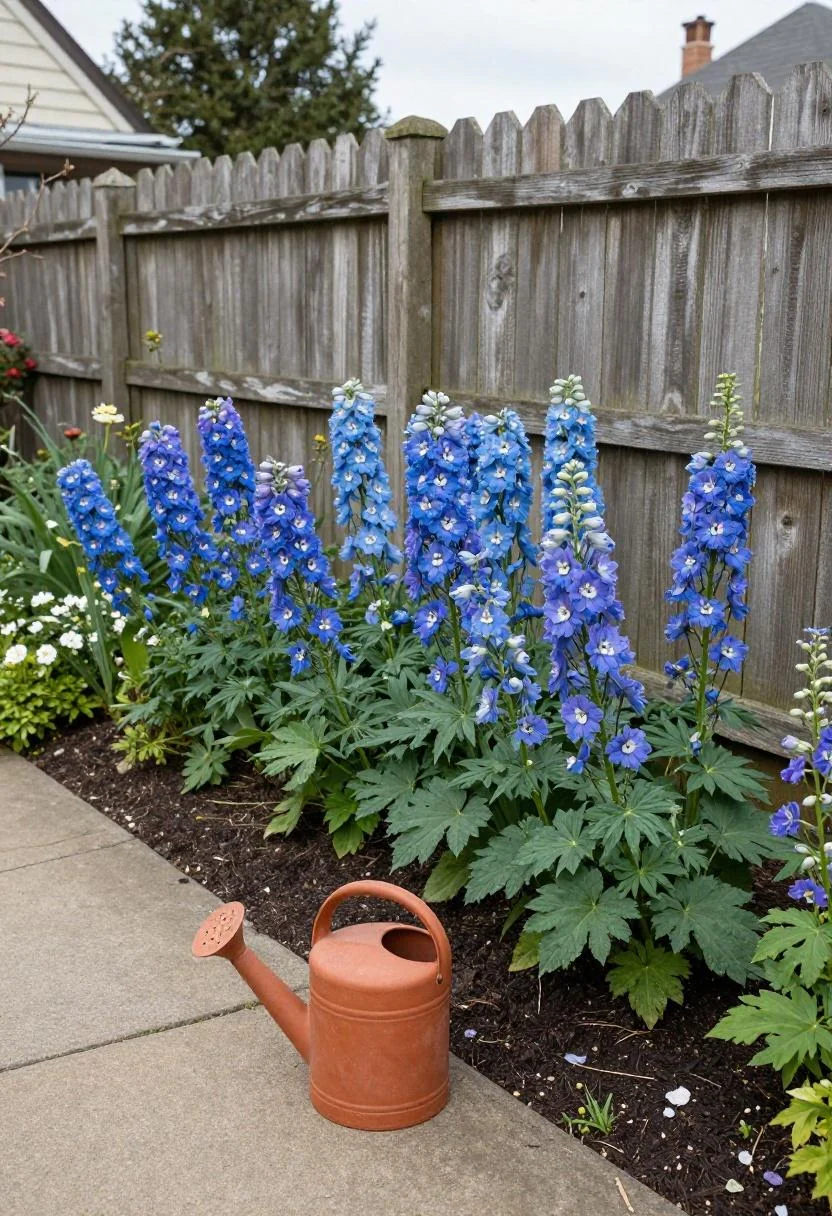
Here's the trick with delphiniums: plant them in fall if you're in a temperate zone, or very early spring, and give them a cedar or wood backdrop. The warm honey tones of cedar fence boards make that cool blue pop in a way that a painted fence never will. The color contrast does half your design work.
The mistake most beginners make is spacing them too close together — delphiniums need air circulation or they'll rot at the crown. Plant 18 inches apart minimum, and stake them early. A simple bamboo teepee or even old branches from winter pruning work beautifully. You're going for a cottage-wild look anyway, not a formal garden. Budget under $80 for a 10-foot corner run if you start from bare root stock in late winter.
Pro tip — natural cedar stakes blend into this palette instead of the green plastic ones that scream "hardware store."
As Elle Decor has noted in their recent garden coverage, cool blue florals are holding strong as the anchor color for naturalist garden design — and delphiniums are the most architectural way to use it.
2. Plum Heuchera in a Concrete-Edged Bed
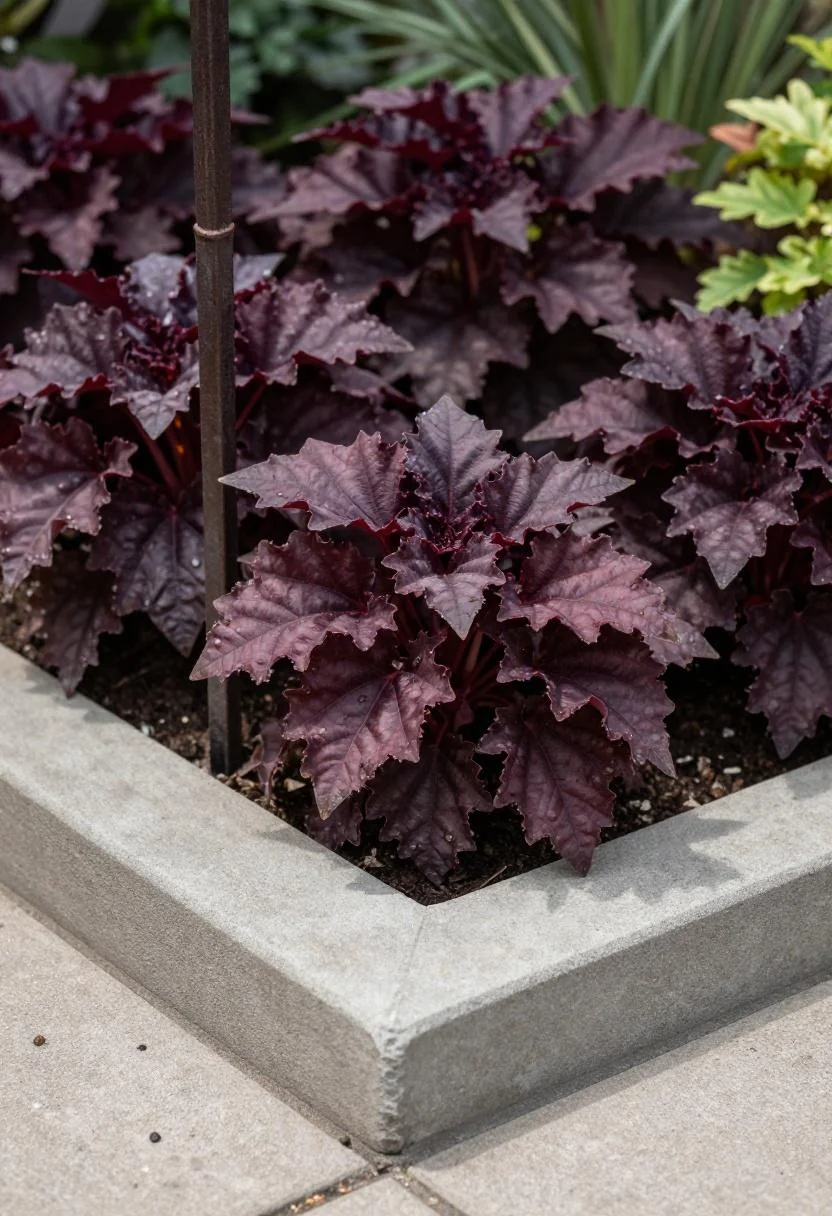
Heuchera — also called coral bells — is the plant that changed how I think about corners. It's foliage-forward, meaning it looks good from March through November even when nothing is blooming. The plum varieties like 'Obsidian' or 'Palace Purple' have a depth that reads almost black in low light and burgundy in full sun.
The concrete edging here is the key detail. You can DIY a poured-concrete border for about $30 in materials — or, if you want the farmhouse feel without the labor, stack reclaimed concrete blocks salvaged from demolition sites (often free on local buy-nothing groups). The rough grey of concrete against plum foliage is sophisticated in a way that plastic edging simply isn't.
This one you can genuinely pull off in a weekend for under $150, including plants.
3. Jade Green Hostas and Ferns with a Teak Bench
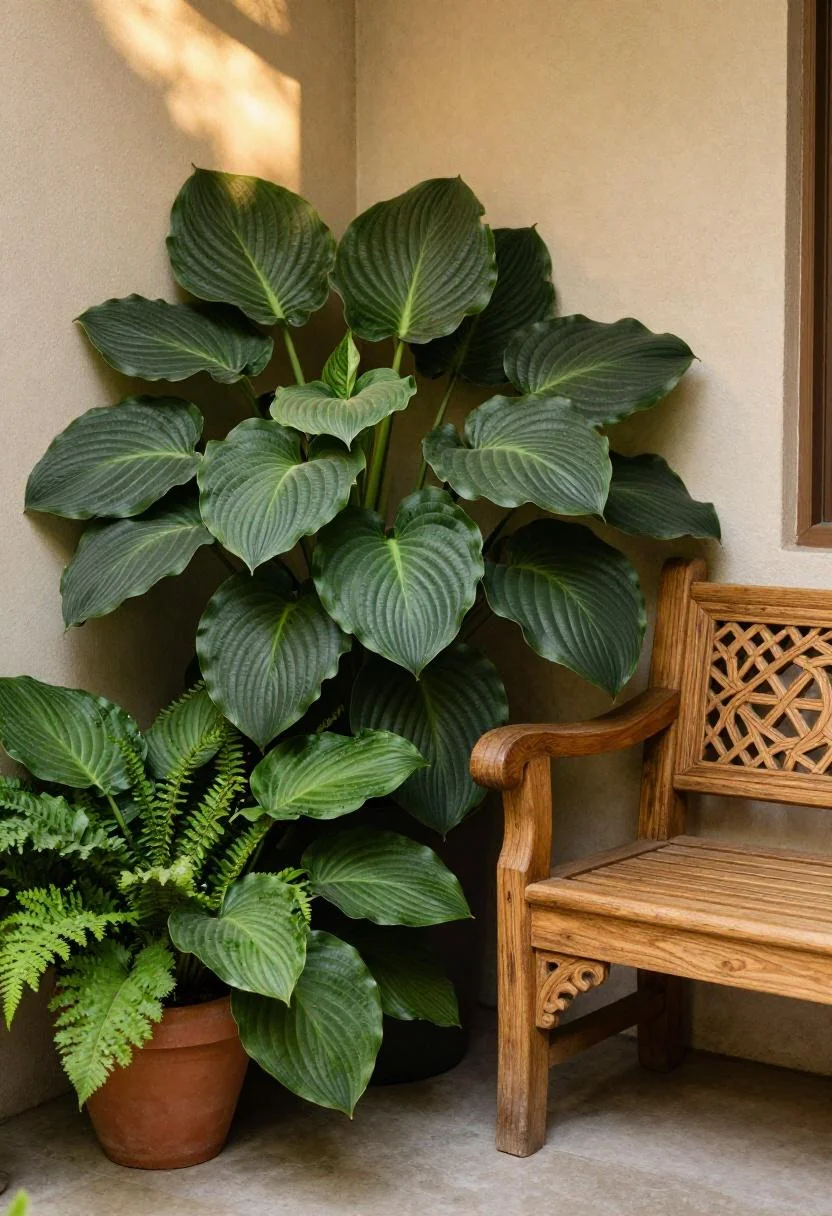
Shaded corners are not a problem. They're an opportunity.
Hostas and ferns in deep jade green create a textural richness that no sunny bed can replicate. The trick is layering leaf sizes — giant hostas like 'Sum and Substance' at the back, medium 'Halcyon' in the middle, and delicate maidenhair ferns at the edges. The result feels like a small forest floor happened to land in your yard, which is exactly the kind of effortless naturalism that takes real planning to achieve.
Adding a teak bench — even a small folding one — transforms this from "plant bed" to "garden moment." You're creating a destination. Weathered teak goes grey over time and reads beautifully against all that green. If you're setting up an outdoor space more broadly, our guide to rustic arbor ideas covers how to frame these green corners with overhead structure.
The Dark Horses
These are the beds people overlook — either because the plants sound unfamiliar or the color palette reads as risky. They're not. They're just more specific, which is what makes them memorable.
4. Wasabi Lady's Mantle Edging a Stone Path
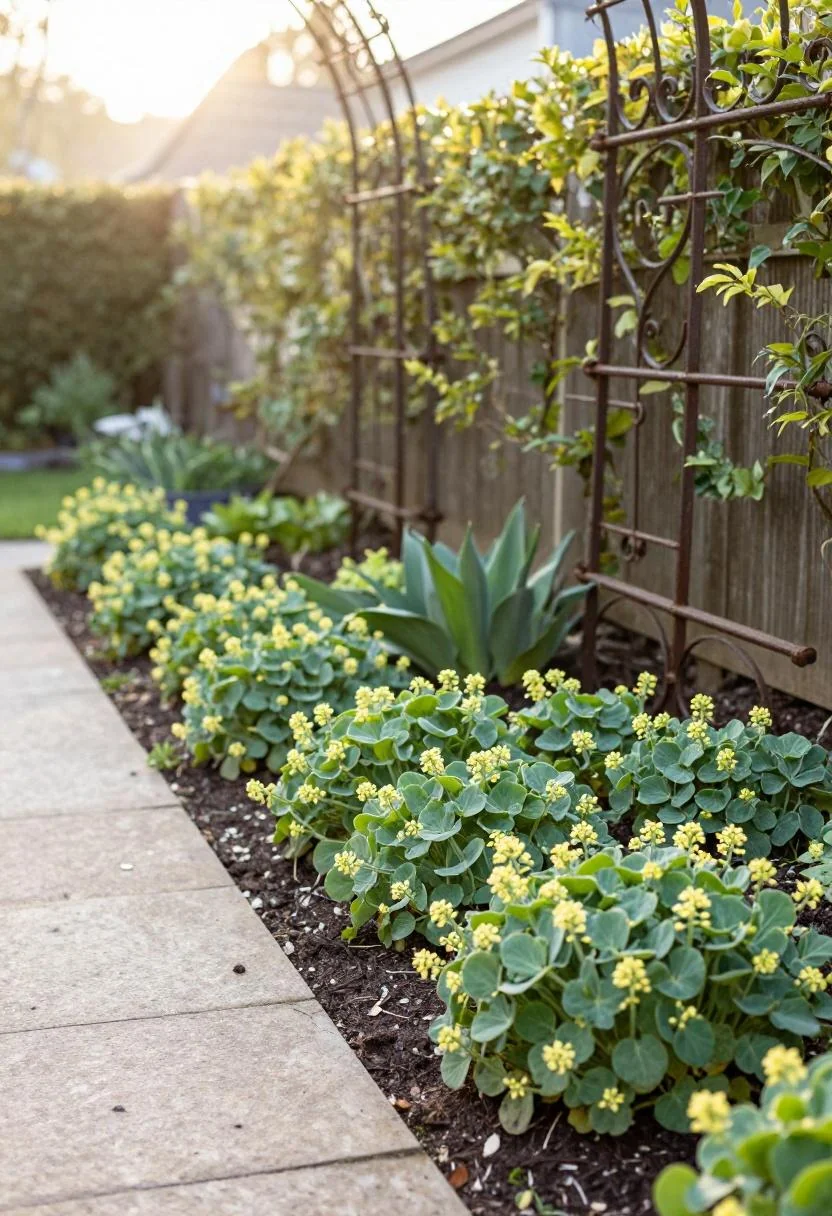
Lady's mantle (Alchemilla mollis) is the unsung hero of farmhouse gardens. Those pleated, velvety leaves that hold dewdrops like mercury balls — there's nothing quite like it. The color sits in this specific green-gold register that I can only describe as wasabi, and it photographs beautifully in morning light.
Use it as edging along a flagstone or irregular stone path and you get that romantic spilling-over-the-edge effect that old English cottage gardens do so well. The self-seeding means you'll have more plants every year without doing anything. That's my kind of low-maintenance strategy.
Lady's mantle bare root starts ship well in spring and establish quickly. One packet planted in a 6-foot corner will fill out completely within two growing seasons.
5. Persimmon Geum with a Glazed Ceramic Urn
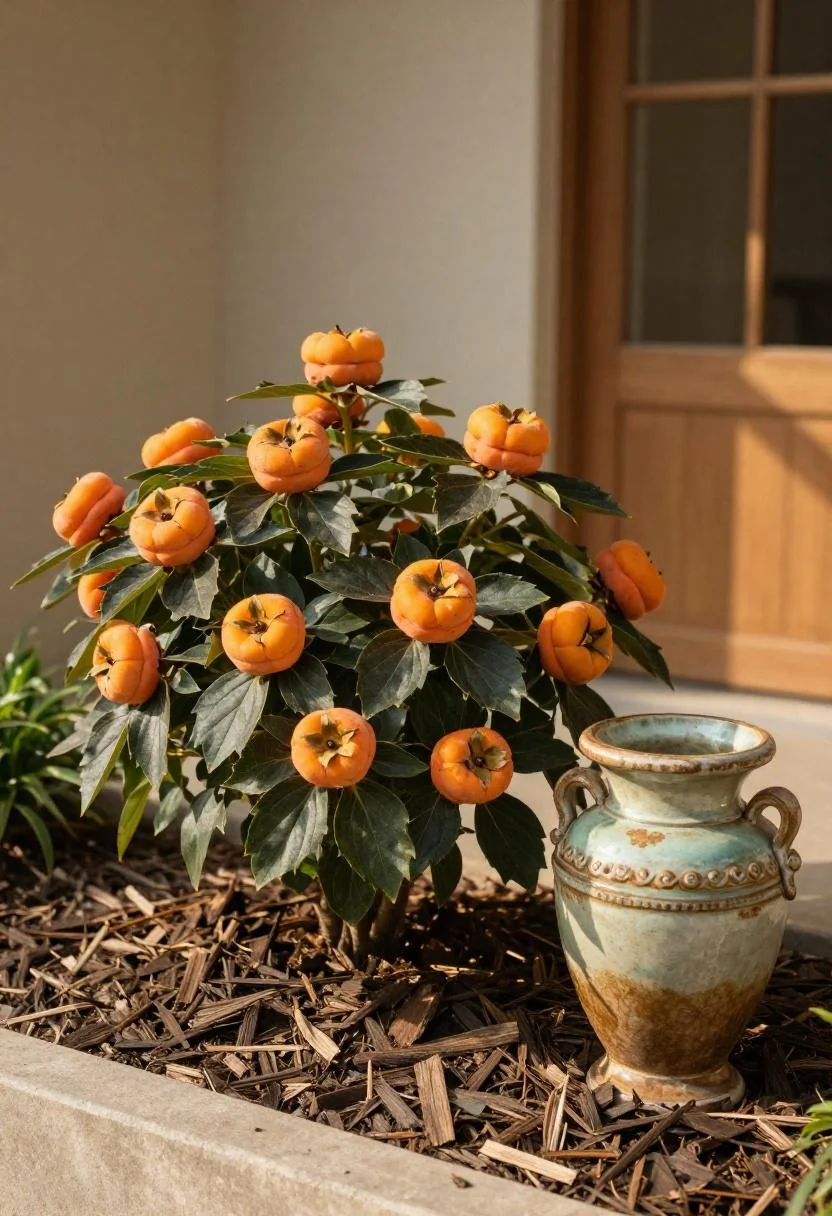
Geum in persimmon — think warm orange with a red undertone, like the inside of a ripe fruit — is the color that photographs badly in artificial light but looks extraordinary in a garden. Trust me on this one. Plant it where afternoon sun hits it and you'll understand immediately.
The glazed ceramic urn in this setting is doing a lot of work. It creates height variation without planting anything tall, and the glaze finish picks up the orange tones in the geum. Look for antique ceramic urns at estate sales or import shops — a hand-thrown piece with irregular glaze lines will always beat a mass-produced pot from a big box store. This is the kind of cottagecore detail that doesn't feel like a trend because it has actual craft behind it.
6. Terracotta African Daisies with a Carved Clay Pot
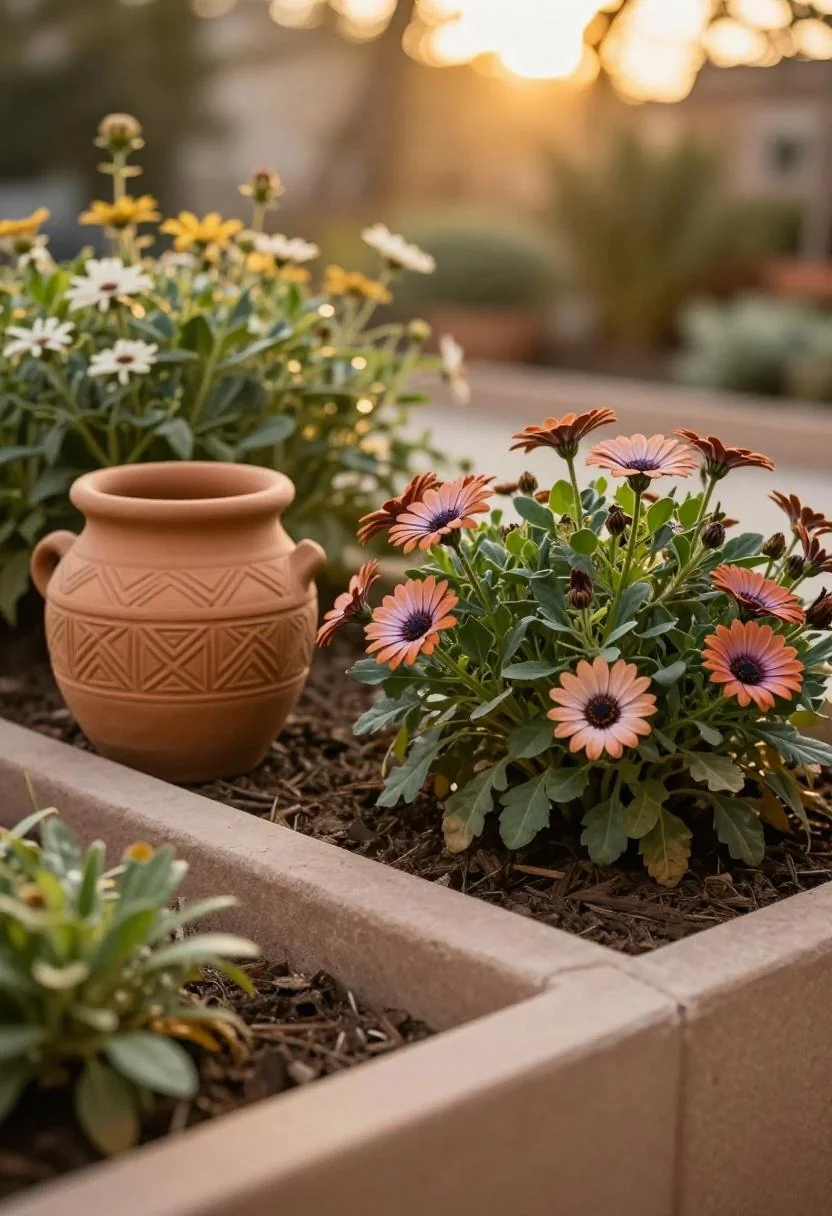
African daisies (Osteospermum) bloom for months and ask for almost nothing. The terracotta-orange varieties like 'Orange Symphony' or 'Zion Terracotta' give you that warm-earth palette that looks incredible against a white or grey fence. They close at night and in overcast weather, which some people find annoying — I find it endearing, like a plant with opinions.
Pair them with a carved clay pot, ideally one with some texture or relief pattern. The rustic farmhouse instinct here is to resist anything too smooth or symmetrical. A pot with thumb marks, an uneven rim, visible tool marks — that's the one you want.
Pro tip — these are annuals in most zones but bloom so prolifically that the cost-per-bloom ratio is genuinely excellent. Replant them every spring as a fresh layer under perennial structure.
7. Cream White Calla Lilies with a Brass Lantern
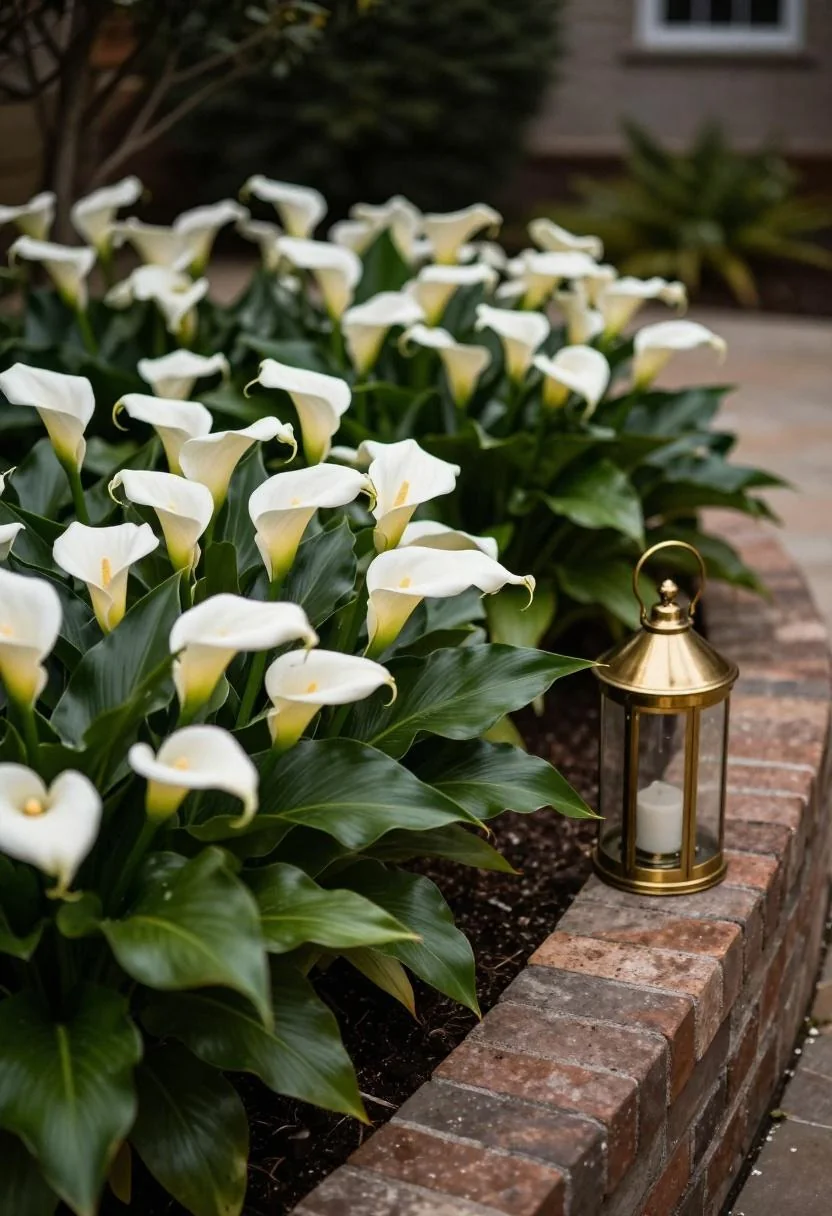
Calla lilies have a sculptural quality that most garden flowers don't. Those smooth, trumpet-shaped spathes aren't just flowers — they're architectural elements. In cream white, they read as pure and modern at the same time, which is why they work so well paired with brass.
A brass lantern — the kind with a pillar candle inside — placed at the corner junction anchors the bed and adds evening interest. This is a bed that earns its keep at dinner parties. The combination of warm brass and cool white creates that slightly-formal, slightly-rustic tension that makes a garden feel designed without feeling stiff.
Plant calla rhizomes in spring after frost danger passes, about 4 inches deep. They'll naturalize in zones 8 and above; elsewhere, dig and store for winter. Worth the effort.
The Classics (That Still Earn Their Place)
Sometimes the obvious choice is obvious because it works. These beds have been done before, but there are specific ways to do them that keep them from reading as generic.
8. Overhead View: Blue Hydrangeas Against Brick
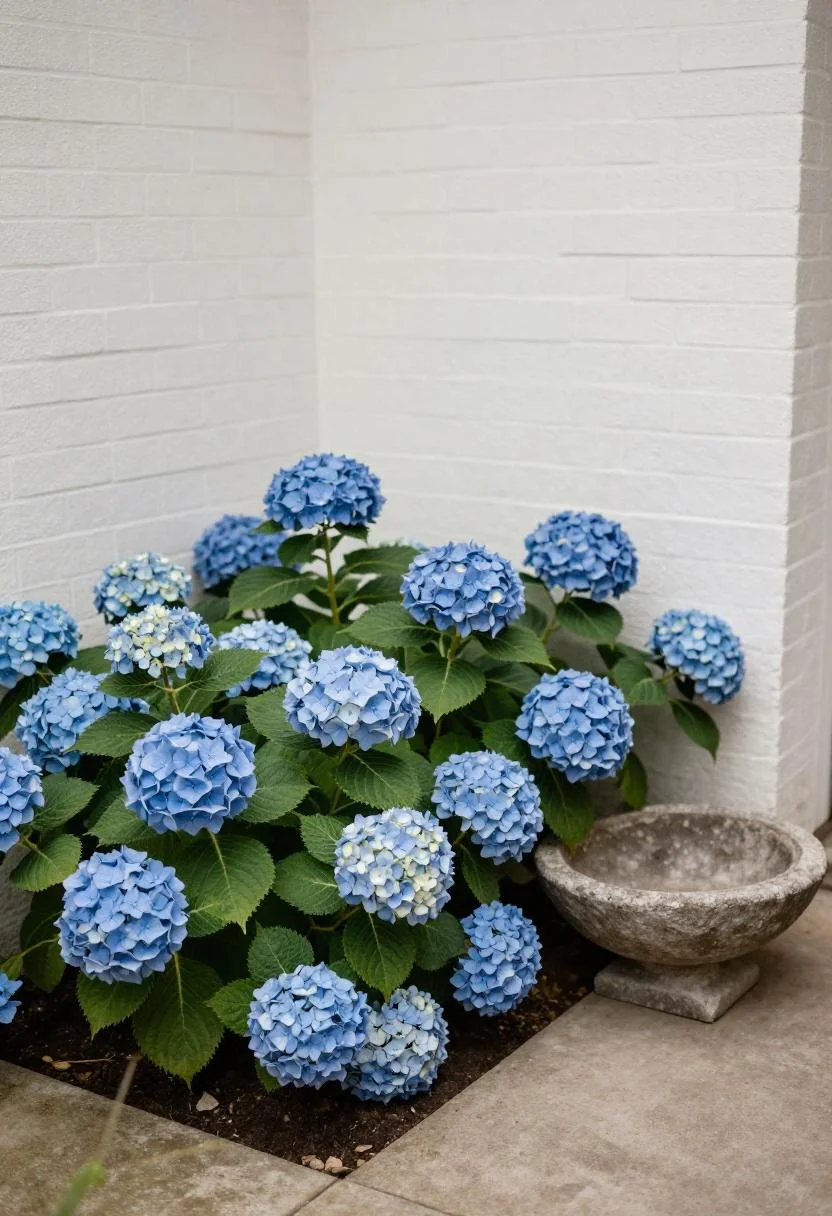
The overhead perspective on this one tells you everything: hydrangeas at their summer peak are basically a ground-level cloud. That mounding habit is exactly what corner beds need — they fill toward the fences naturally without any staking or training.
The brick wall backdrop is a gift. Old brick in its warm red-orange tones does for blue hydrangeas what a cedar fence does for delphiniums — it creates a color contrast that the plants can't do alone. If your corner has new brick, you can age it with a diluted iron sulfate wash (this is a standard masonry technique, not a hack). Give it a season to develop patina and you've got something that looks decades old.
Bigleaf hydrangeas (Hydrangea macrophylla) turn blue in acidic soil — if yours are coming out pink or lavender, add aluminum sulfate in early spring. This is the kind of practical chemistry that changes everything.
Soil acidifier for hydrangeas — one bag will treat a substantial corner bed for a full season.
9. Plum Salvia with a Brass Garden Sphere
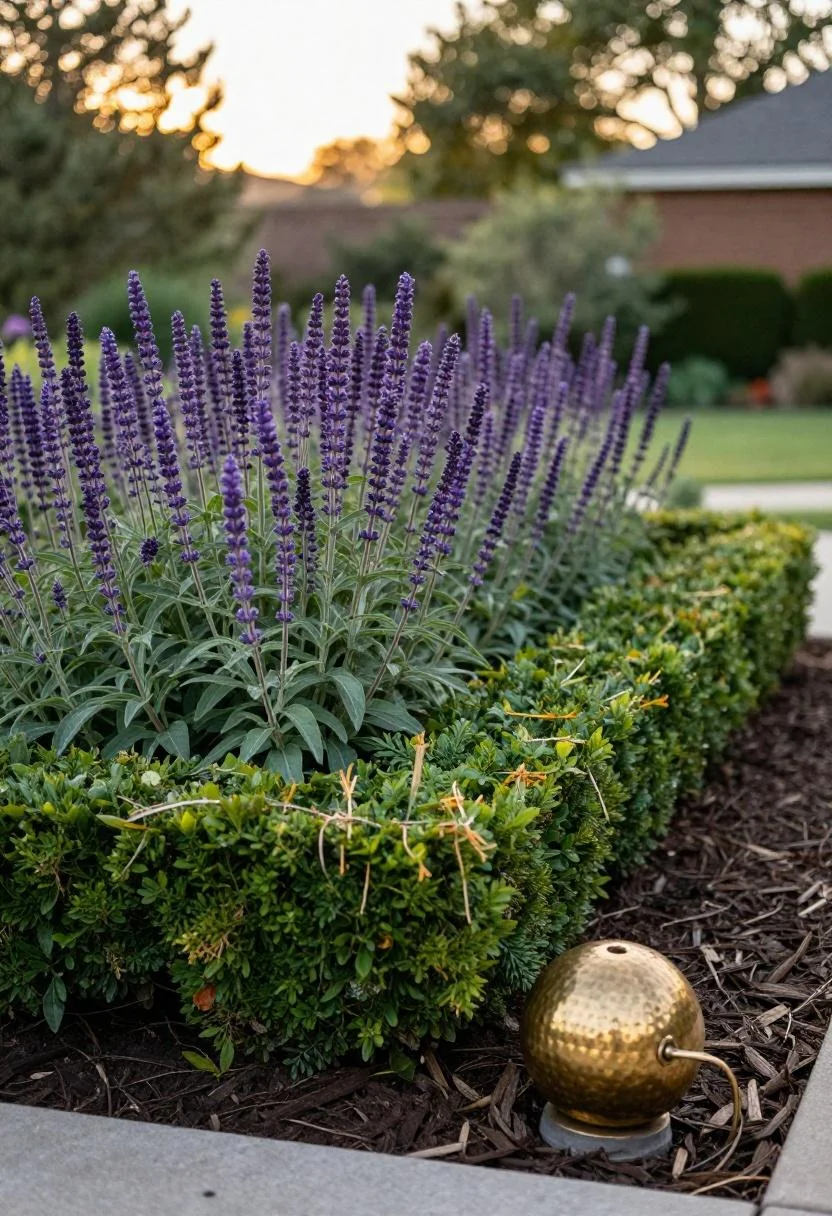
Salvia nemorosa in deep plum purple is one of the hardest-working plants in the garden — it blooms in early summer, and if you shear it back by a third after the first flush, it blooms again in late summer. That's a long season of vertical structure in a corner that needs it.
The brass garden sphere is a maximalist move, and I say that without judgment. A polished or hammered brass sphere set among those vertical spires creates a focal point that reads as deliberately composed rather than random. It's the kind of detail that makes visitors ask what your design source was. The answer is: you made it up.
10. Jade Succulents in a Slate-Edged Bed
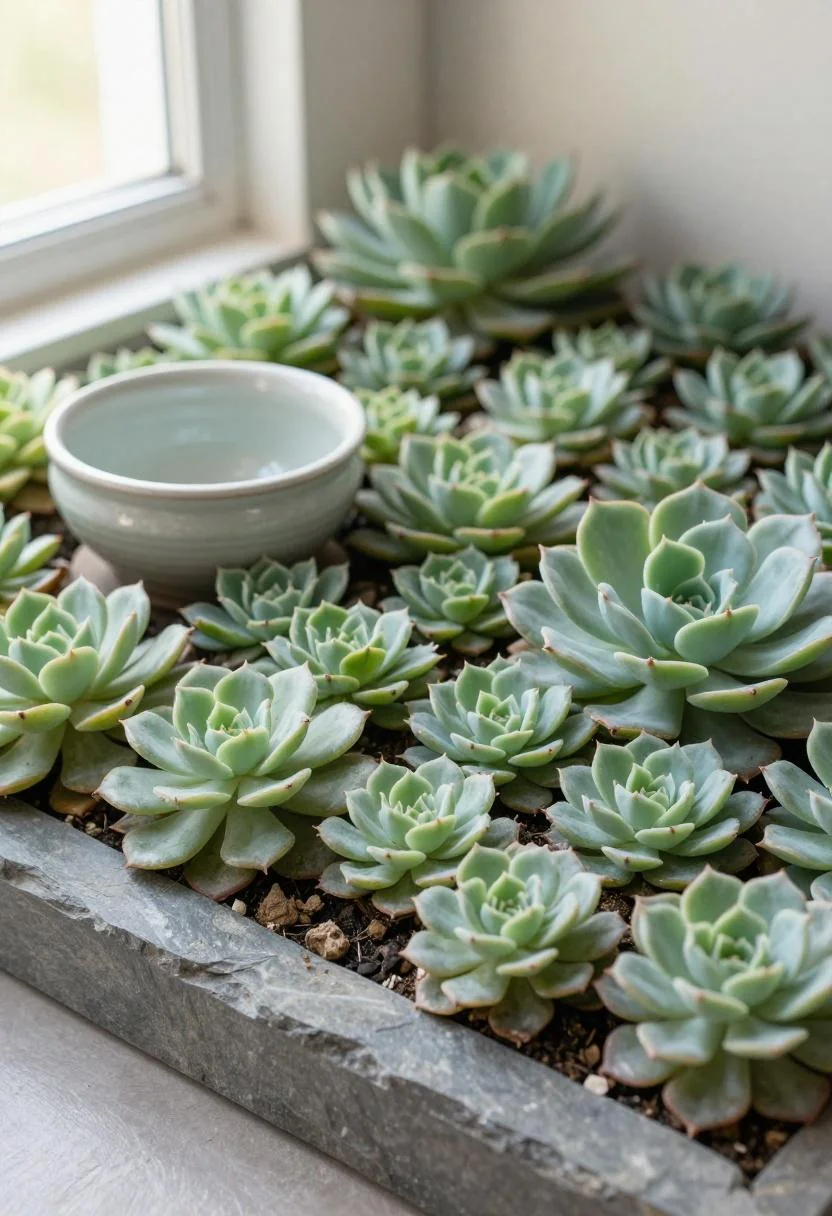
For corners that get punishing afternoon sun and very little rainfall, succulents are not a compromise — they're the right answer. The jade green varieties like Crassula ovata, Echeveria 'Lime Ruffles', or Aeonium 'Greenovia' give you that rich, saturated color without any irrigation drama.
Slate edging is the material choice that makes this bed. Thin slate stacked dry (no mortar) creates a clean, dark border that emphasizes the geometry of the corner without competing with the plants. It's a one-afternoon installation and genuinely durable. The ceramic bowl planter adds height variation — choose something hand-thrown and earthy to offset the precision of the slate.
11. Wasabi Euphorbia Groundcover in Timber-Edged Beds
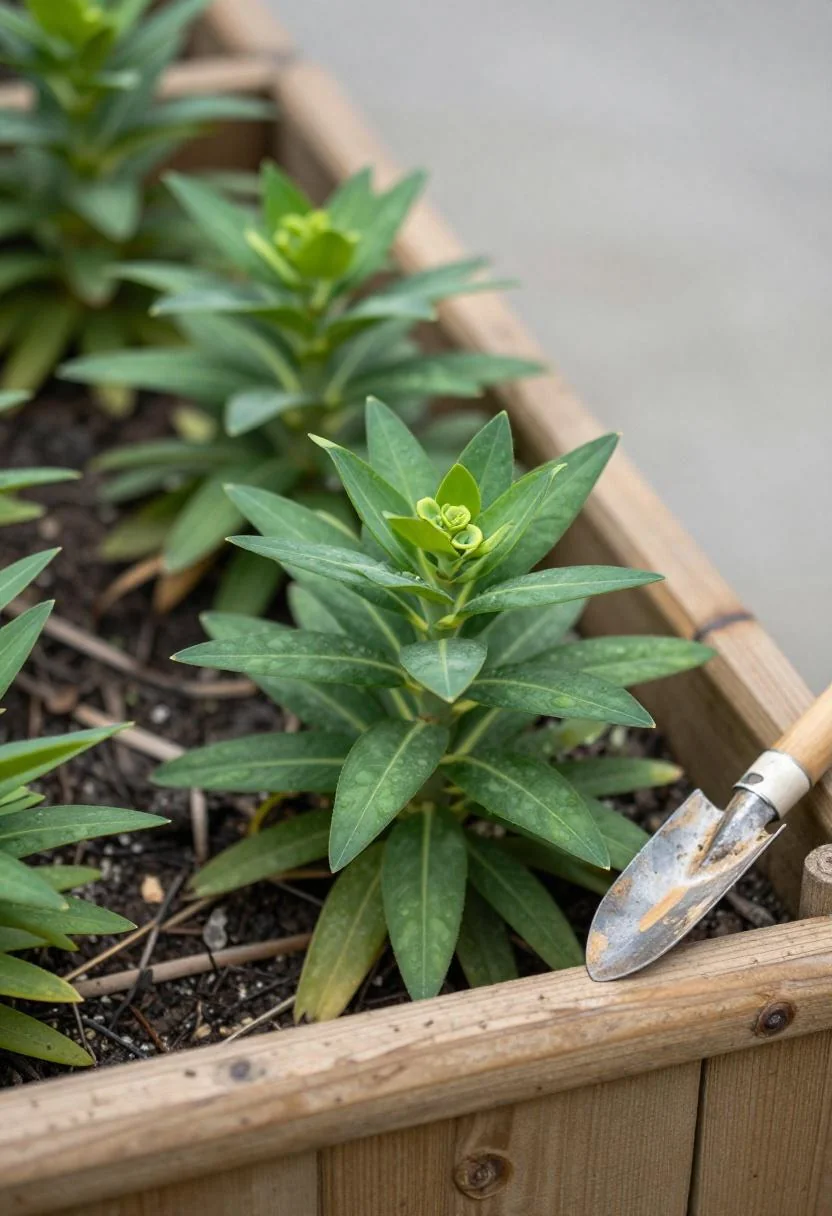
Euphorbia characias wulfenii is a chartreuse-yellow that some people describe as acid green, others as lime, but I keep coming back to wasabi — that specific yellow-green with a bite to it. It's a shrubby perennial that gets about three feet tall and wide, and in spring it produces these bizarre lime-colored flower clusters that look like something from a florist's dream.
Timber edging — actual rough-hewn reclaimed wood, not the brown plastic stuff that pretends to be wood — keeps this looking farmhouse rather than contemporary. Use treated landscape timbers or naturally rot-resistant cedar. Stake them below grade and the installation is straightforward. Do wear gloves with euphorbia; the sap is a skin irritant and it will find your eyes at the worst possible moment.
What Do You Do With the Casual Corners?
(The ones that get afternoon shade, awkward access, or irregular angles — these three handle them well.)
12. Persimmon Marigolds with a Galvanized Watering Can
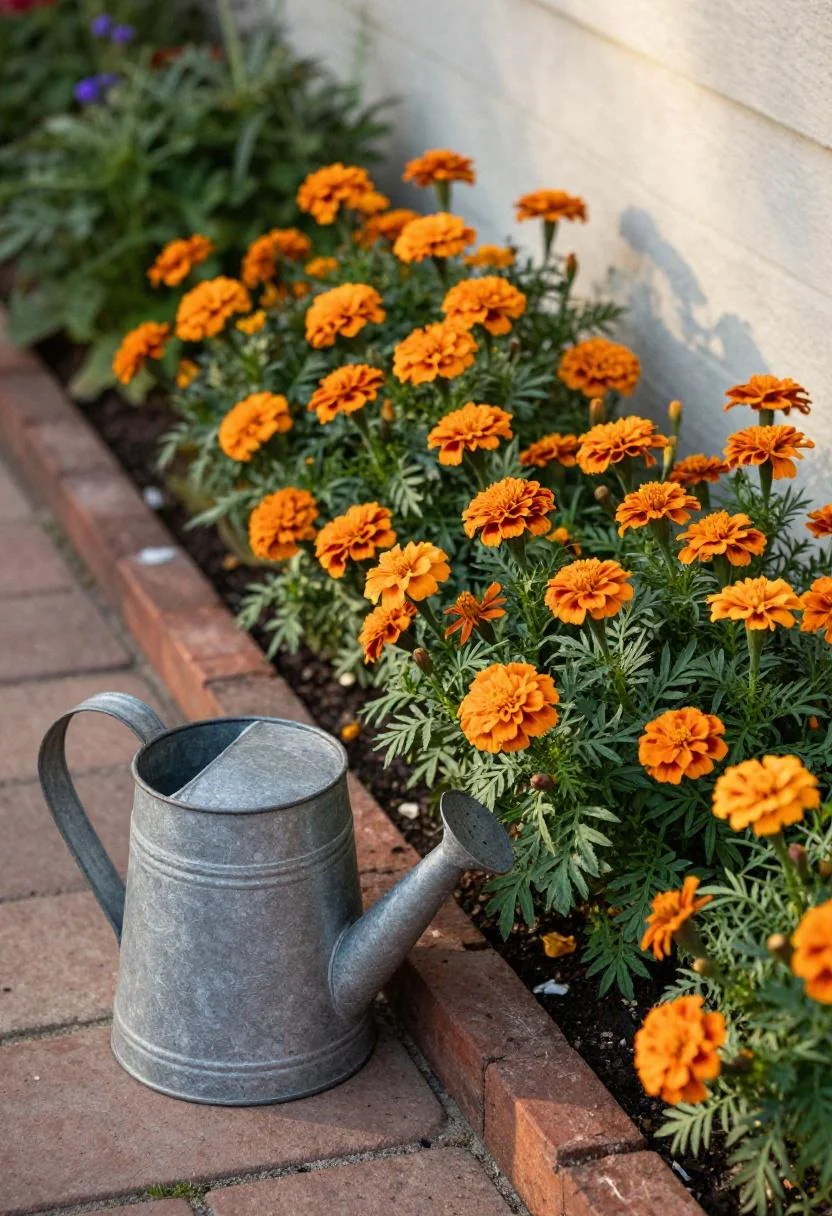
Marigolds are so often done badly — planted in a single row, uniform size, evenly spaced like they're at attention. Do it differently. Mass them in irregular clusters, mix the heights (African marigolds tall at the back, French marigolds low at the front), and let them be a little wild.
The galvanized watering can as a prop is pure cottagecore but it works because it suggests active gardening rather than static decoration. Leave a trowel nearby. The farmhouse-garden aesthetic is about honest utility — things that look like they're actually used. Our hippie garden ideas guide has more on layering found objects into outdoor spaces without it feeling like a theme park.
Galvanized watering cans with long spouts are functional and photogenic — the best combination in garden accessories.
13. Terracotta Celosia in an Afrohemian Corner with Rattan
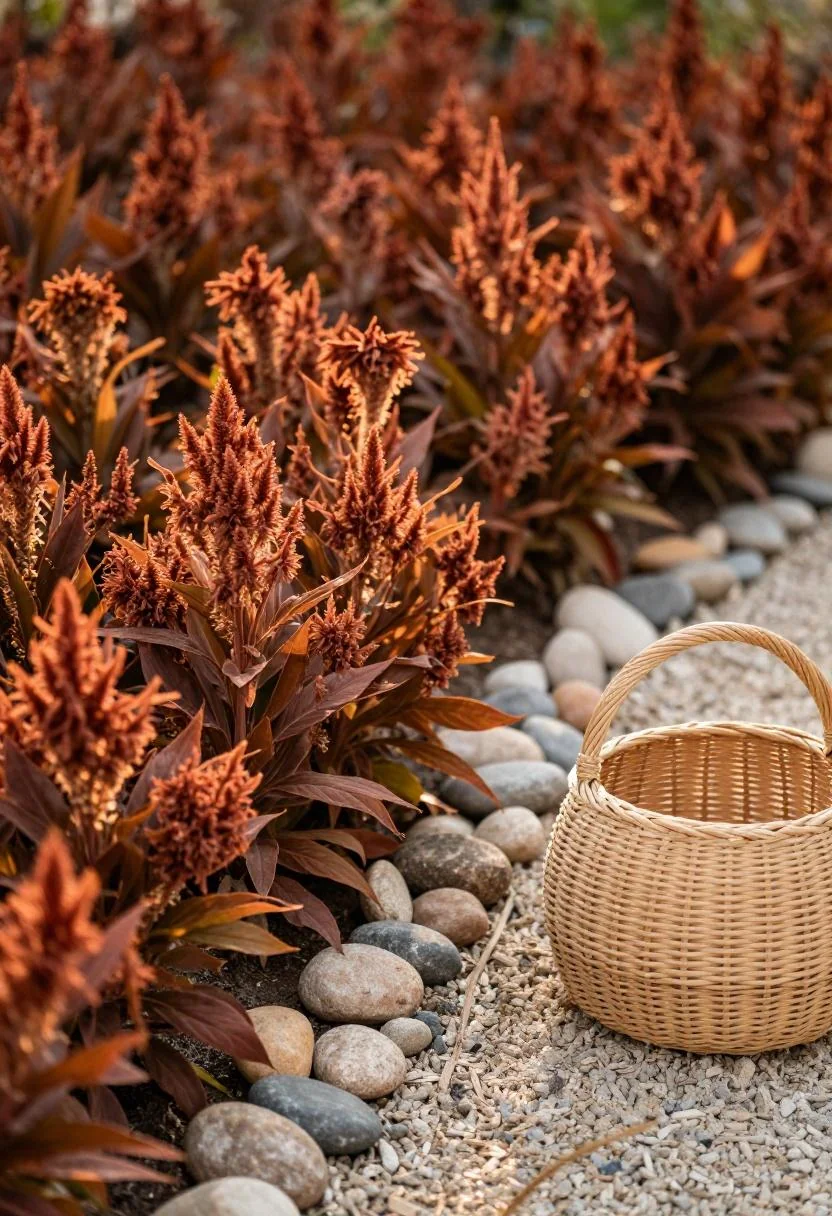
Celosia — specifically the plume varieties in terracotta and rust — has this velvety, almost felted texture that reads as extraordinarily luxurious in person. The Afrohemian styling here (rattan basket, warm earth tones, organic materials) grounds the exuberance of celosia in something that feels considered.
This is a bold corner. It's not background planting. If you've got an entry corner or a bed that gets seen from the street, this is the one that announces you've thought about your yard.
Plant celosia after your last frost date — they hate cold and will sulk if planted too early. In zones 9 and above, they'll self-sow and return. Everywhere else, treat them as generous annuals and replant each summer. Worth every dollar.
14. Cream White Cosmos with Linen Twine and Pruning Shears
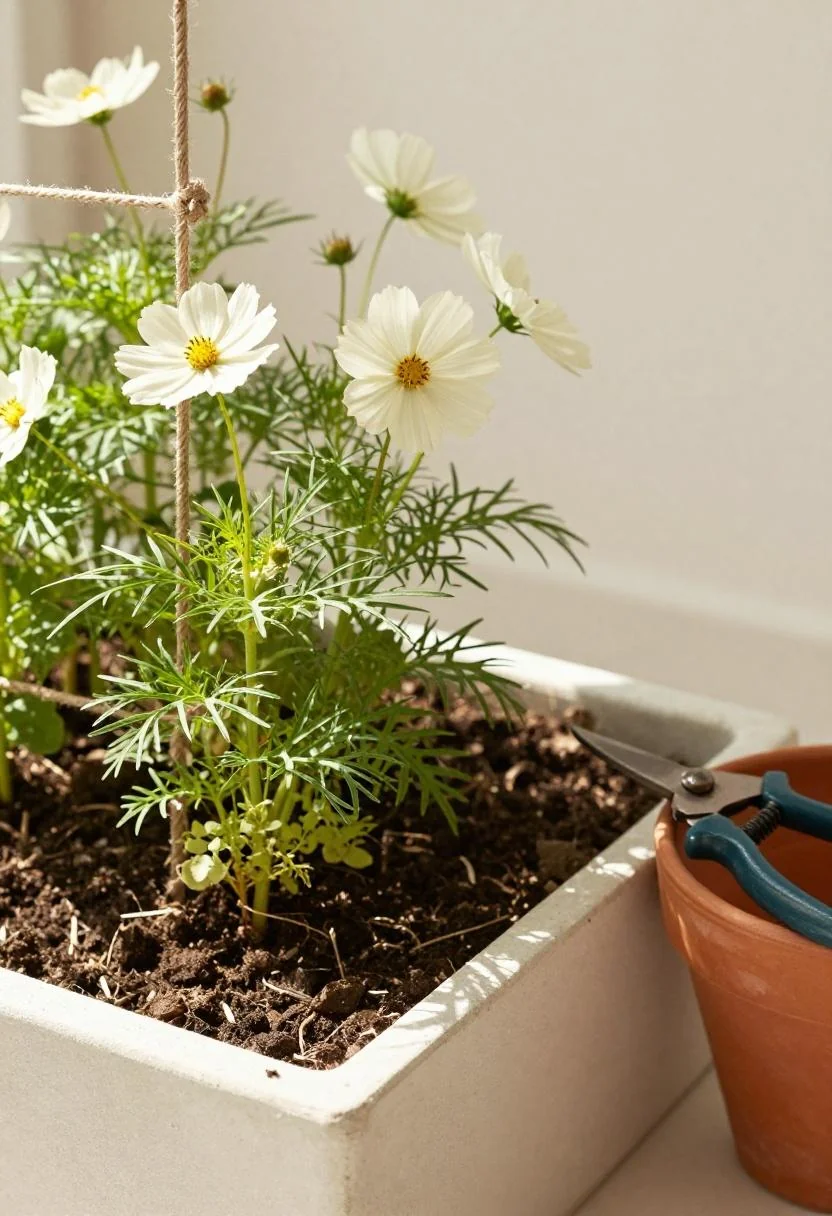
Cosmos bipinnatus in white is the most effortless thing you can grow from seed — and I say that knowing effortless is a word I've been avoiding. It just is. Direct sow after frost, thin to 12 inches apart, and stand back. They'll reach four feet tall with feathery foliage and papery white flowers that move in every breeze.
The styling detail here — linen twine loosely tied to bamboo canes, an old pair of pruning shears resting against the fence — is the farmhouse touch that makes a casual bed feel intentional. It says: someone gardens here and they know what they're doing. The reality is that cosmos require almost no skill and reward neglect.
This is the corner bed I'd start with if you're new to this. Seed packets cost under $4. You can pull this off in a weekend for under $30. And when it works — when those white blooms are catching the late afternoon light against weathered wood — it's the kind of thing that makes you want to garden more.
White cosmos seeds are widely available but look for open-pollinated varieties — you can collect and save seed at season's end.
Top 3 Picks
My top three for 2026:
- Cool Blue Delphiniums + Cedar Fence (#1) — The height, the color, the texture contrast. This is the corner bed that makes the whole yard look designed.
- Cream White Cosmos (#14) — Fastest, cheapest, most rewarding. Grow it from seed and you'll never buy cut flowers again all summer.
- Jade Hostas + Teak Bench (#3) — The best solution for a shaded corner, and it creates an actual place to sit, which is the real goal of any garden.
The Color Story: What These 14 Beds Are Really Telling You
Look at the palette across all fourteen beds: cool blue, plum, jade, wasabi, persimmon, terracotta, cream white. These aren't the colors of a trend cycle — they're the colors of natural materials. River stone. Clay pottery. Weathered wood. Lichen. The farmhouse-meets-naturalist instinct that runs through all of them is about bringing the honest palette of your region's landscape into the contained space of a corner bed.
The cool blues and plums work especially well against warm structural materials — cedar, brick, teak. The warm tones (persimmon, terracotta) read best against grey: slate edging, concrete, weathered stone. The greens and creams are the neutrals that let everything else breathe.
As House Beautiful's garden editors have been pointing out, the shift toward naturalist planting — wilder, texture-forward, less symmetrical — isn't a trend that's going anywhere. It's a response to how people actually want to spend time outdoors: in gardens that feel alive, not maintained.
The corner is where that aliveness starts. Two fence lines, a triangle of soil, and a decision about what to put there. Make it count.
If you're planning a full yard overhaul and need inspiration beyond the beds themselves, our round-up of wooden fence decorating ideas covers how to make the backdrop as intentional as the planting. And if you're working on a corner that's near an outdoor entertaining space, the backyard reception ideas guide has some genuinely useful notes on how to position planting beds relative to seating areas.
One last thought: the mistake most beginners make isn't in the plant selection. It's in leaving the corner as an afterthought. These fourteen beds prove that corners can be the most compelling thing in your yard — if you decide to treat them that way.
This post contains affiliate links. We may earn a commission at no extra cost to you.
Images in this article were created with AI assistance.


