There's something quietly radical about decorating with the cosmos in mind — not the synthetic, mass-produced celestial trend that flooded every big-box store a few years back, but the real thing: hand-thrown moon-phase ceramics, brass star pendants with a patina that took decades to develop, velvet armchairs rescued from estate sales before they ended up in a landfill. Vintage celestial decor sits at this beautiful intersection of sustainability and soul. The stars have been a design motif since antiquity, showing up in Georgian plasterwork, Victorian wallpaper, and Arts and Crafts tile. That's the lineage you're tapping into when you choose a reclaimed piece over a new replica. And that matters — not just philosophically, but aesthetically. Old things feel grounded in a way that new reproductions rarely do.
1. Cool Blue Linen Sofa with a Brass Star Pendant
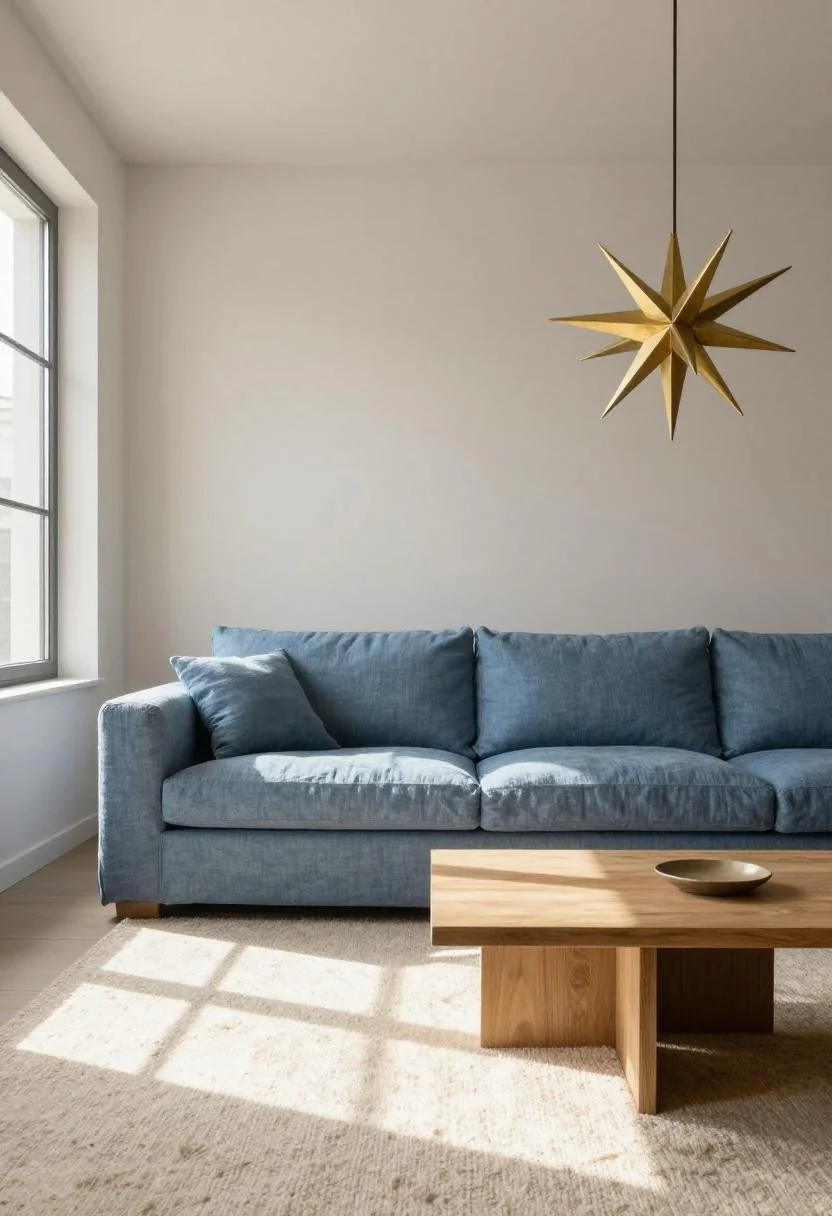
Before you buy new, consider this — a cool blue linen sofa pulled from a secondhand shop carries more character than anything you'll find flat-packed. Linen is one of the lowest-impact textiles on earth: it requires no irrigation beyond rainfall, biodegrades fully, and improves with age rather than degrading like synthetic upholstery. Pair it with a vintage brass star pendant, the kind with that warm, oxidized finish you simply cannot fake with new production hardware. The overhead light transforms the whole room into something celestial and contemplative. If you're hunting for the pendant first, estate auctions and architectural salvage dealers are your best starting points — Harper's Bazaar has noted the surge in collectors going straight to the source for vintage lighting rather than reproductions.
Shop vintage-style brass star pendants
2. Plum Velvet Armchair, Celestial Cushion, Marble Side Table
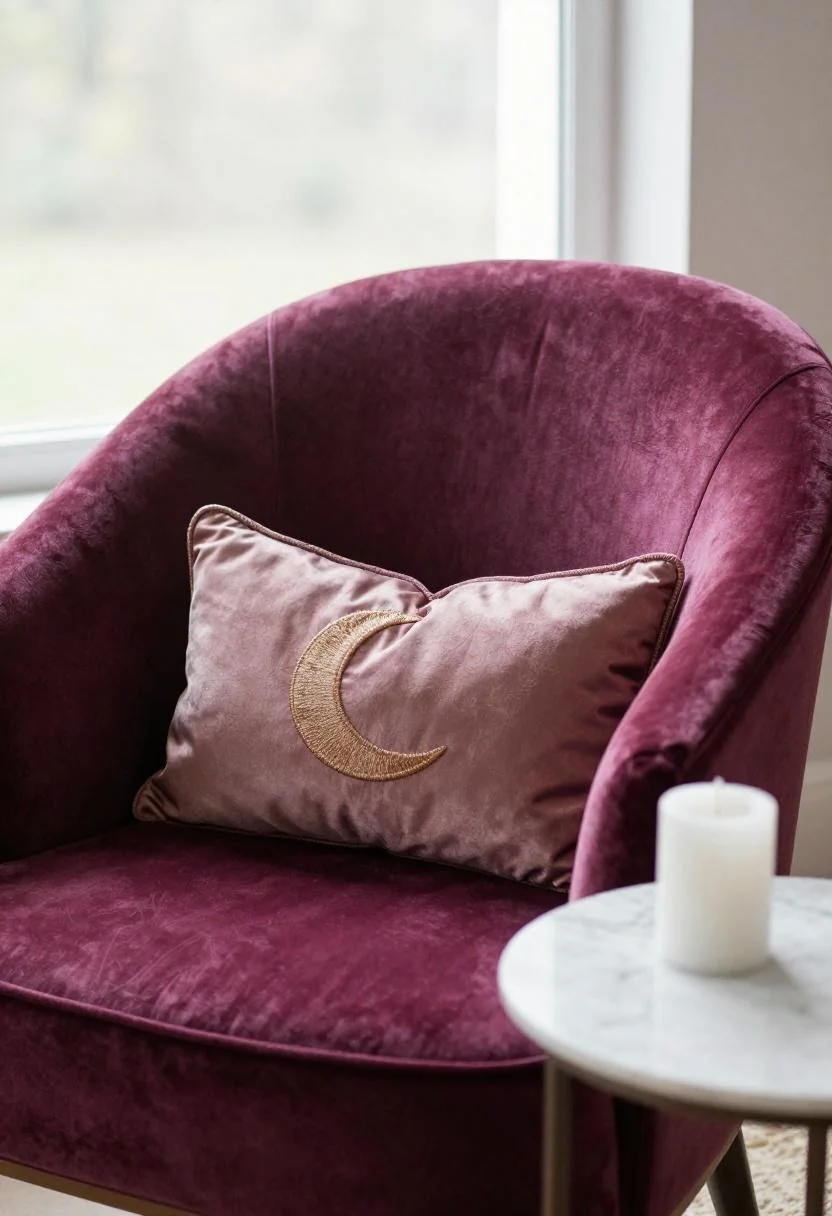
This piece has a past, and that's the point.
A deep plum velvet armchair — ideally found at an estate sale, a charity shop, or passed down through the family — is exactly the kind of anchor a celestial room needs. The color reads rich and planetary, somewhere between deep space and a Victorian parlor. Add a cushion with celestial embroidery (hunt for vintage needlepoint; there's a whole tradition of zodiac and astronomical motifs in 19th-century textile work), and you've layered two historical traditions into one corner. The marble candle table beside it? Marble is one of the most enduring materials in existence. A vintage slab costs the earth nothing additional — it's already been quarried, already been used, already lived a life. That's lifecycle thinking in action.
3. Japandi Living Room — Jade Moon-Phase Ceramics
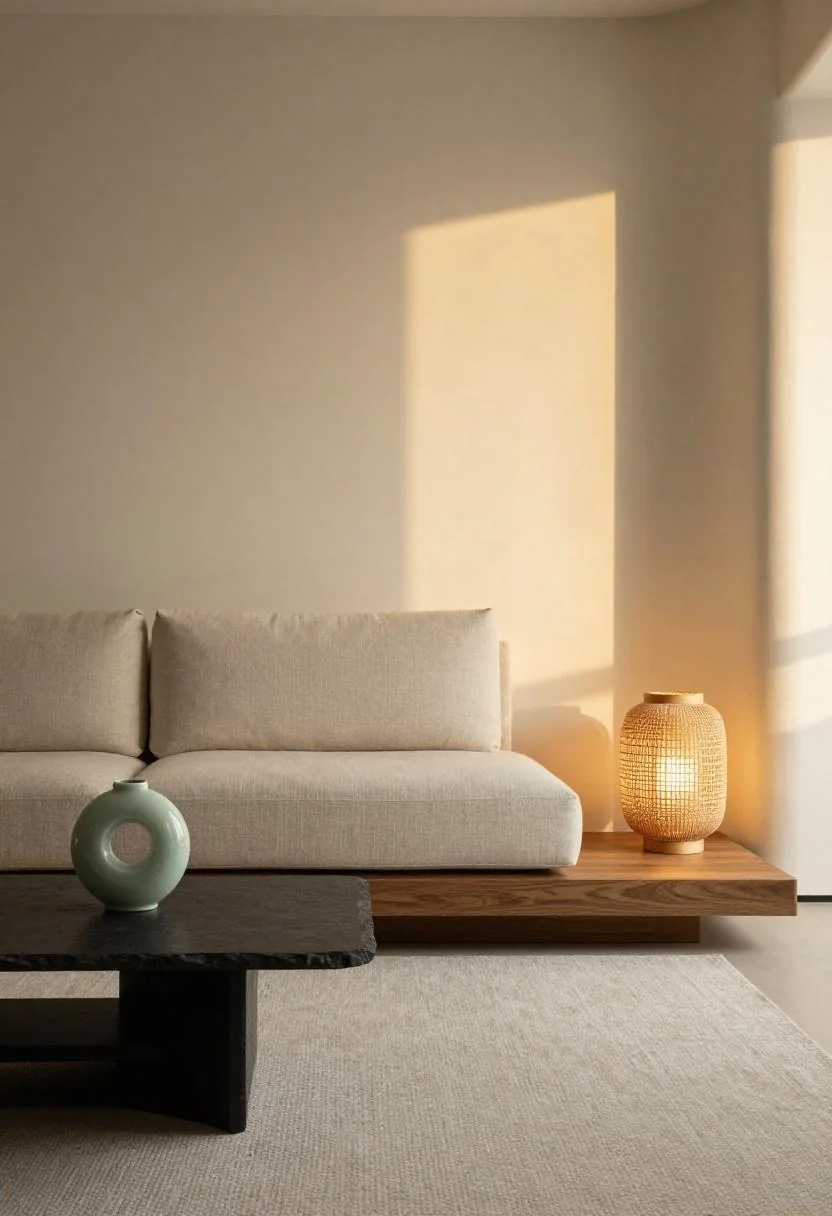
Japandi's restraint is a natural ally for celestial decor, because both are about what you leave out as much as what you include. A jade green moon-phase ceramic vase on a slate coffee table doesn't compete — it inhabits. Look for studio ceramics from small makers who fire with non-toxic glazes and use locally sourced clay. The jade green glaze here has an almost mineral depth to it, like a stone you'd find at low tide. One vase, one coffee table, good light. Sometimes that's genuinely enough.
4. Constellation Tray with Candles — An Overhead Ritual
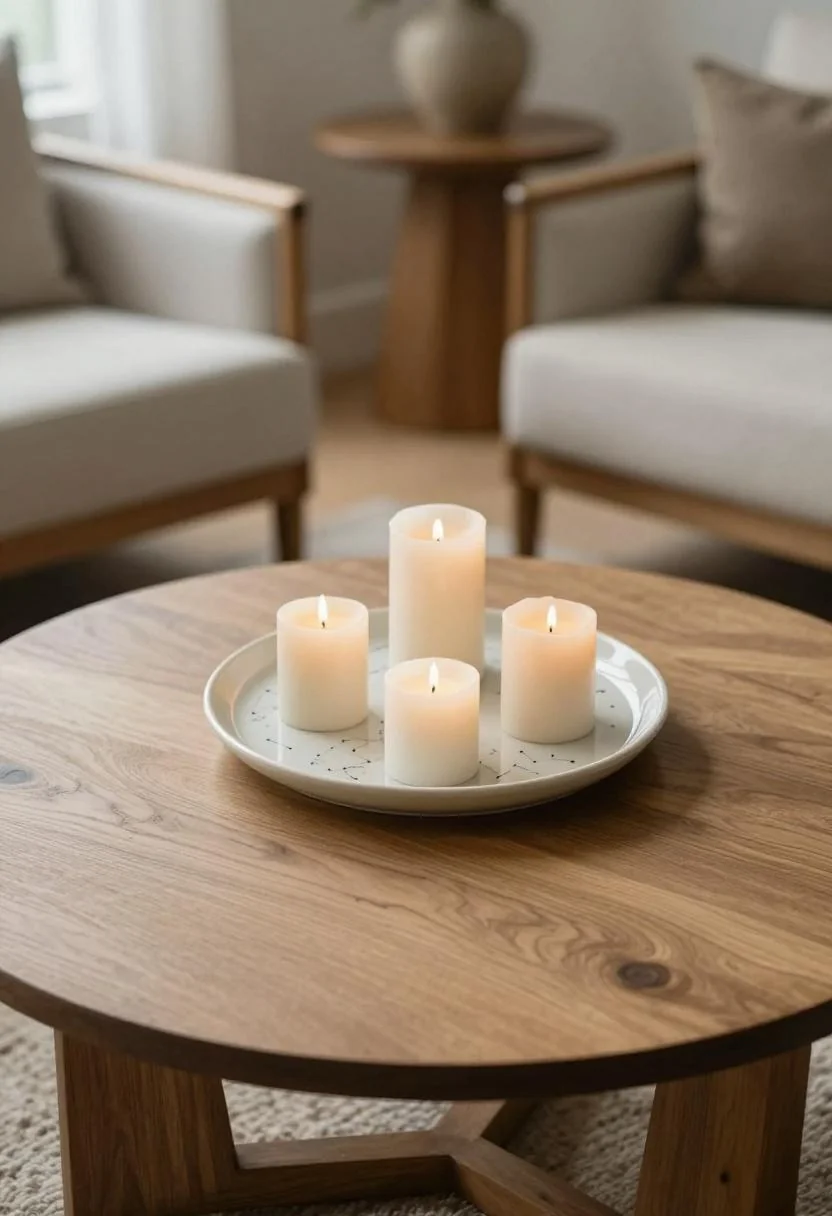
What makes a tray arrangement feel intentional rather than accidental is the repetition — and this wasabi ceramic constellation tray, shot overhead, shows exactly how rhythm works on a round oak surface. The yellow-green of wasabi ceramic is unexpected against warm oak, which is precisely why it works. Arrange beeswax taper candles (non-toxic, renewable, genuinely beautiful) in a loose arc and let the tray become a small altar to the night sky. Round oak coffee tables, incidentally, are among the easiest vintage finds in any country market or online secondhand platform. Oak doesn't die. It just waits.
5. Mid-Century Living Room — Persimmon Wool Chair Under a Moon Lamp
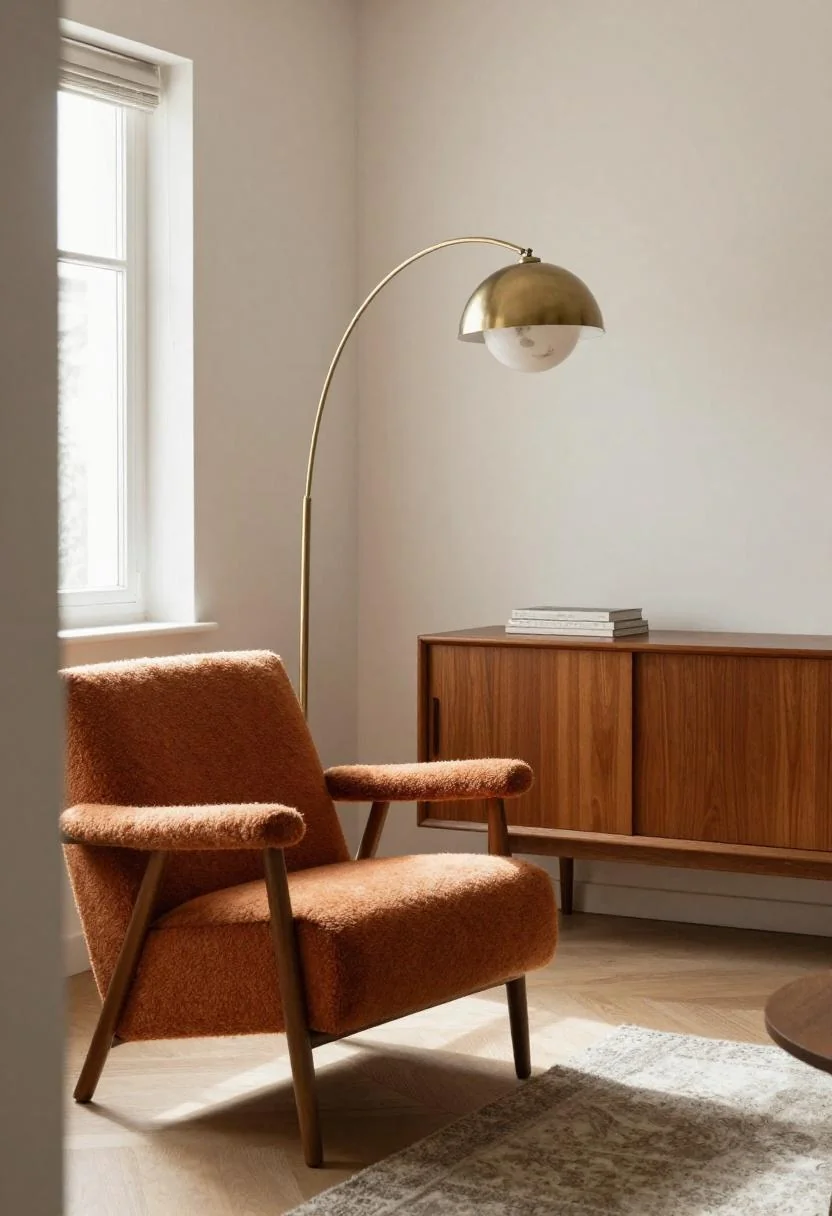
Mid-century modern and celestial design have always been quietly aligned — think of the Space Age furniture of the 1960s, the Sputnik chandeliers, the atomic motifs that borrowed freely from astronomy. A persimmon wool armchair beneath a brass moon-shade floor lamp carries that lineage honestly. Wool is a natural, renewable fiber that regulates temperature and resists dust mites without chemical treatment — far more defensible than the polyester blends dominating new upholstery. The persimmon color pops against any mid-century interior: warm, grounded, slightly Mediterranean. For the floor lamp, look for vintage Laurel Lamp Company pieces or similar American studio-era lighting at antique fairs.
Browse brass moon-shade floor lamps
6. Scandinavian Living Room — Cream Bouclé and a Star Map
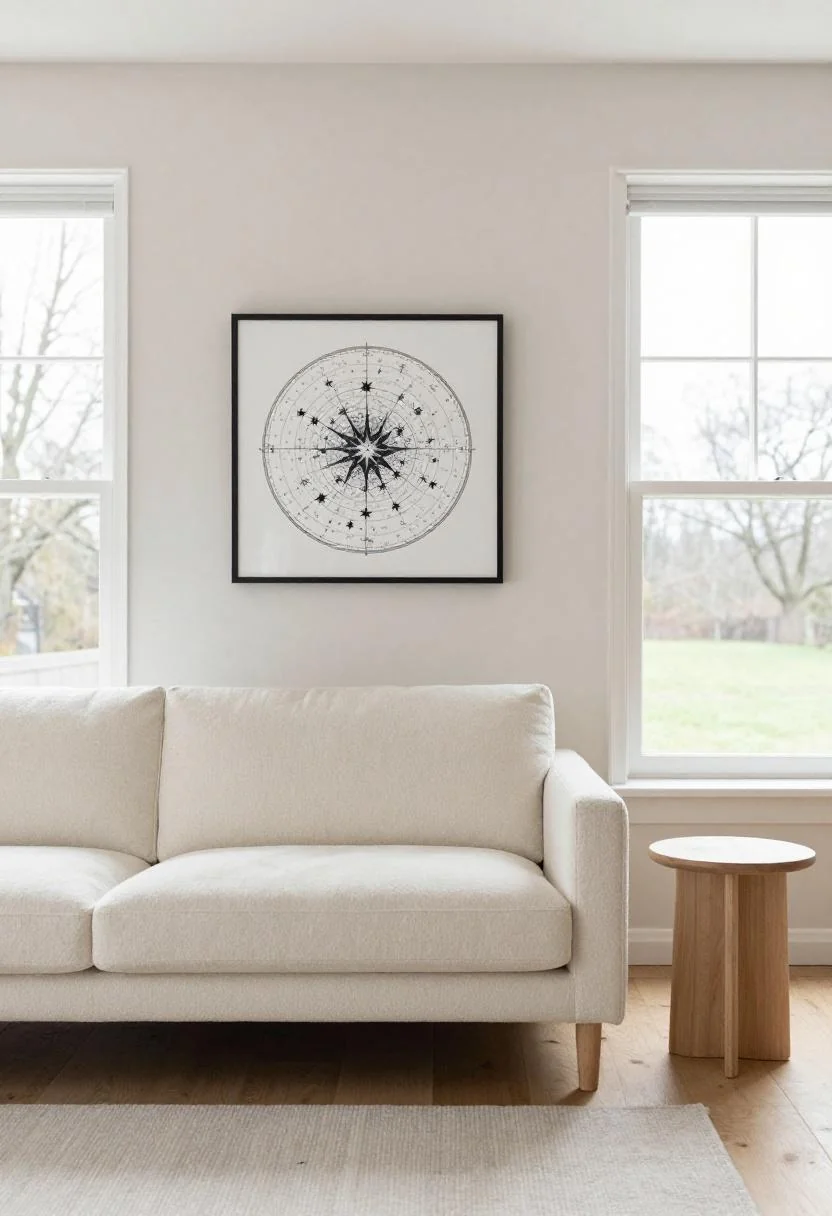
Framed star maps have been around since the 17th century — cartographers and astronomers produced them as art objects as much as scientific tools, and they've turned up in aristocratic homes ever since. A large circular star map above a cream bouclé sofa is less a trend than a continuation of this very long tradition. Bouclé, if sourced vintage or from small natural-fiber producers, is an excellent choice: looped wool or cotton yarn construction means durability, breathability, and a texture that photographs beautifully in northern light. The Scandinavian interior tradition — symmetry, pale materials, a restrained palette — is one of the best containers for celestial motifs, because it doesn't fight them. As Vogue has observed, the convergence of Nordic minimalism with celestial symbolism is one of the quieter stories in contemporary home decor.
7. Industrial Corner — Sage Green Armchair and Moon-Phase Disc Shelf
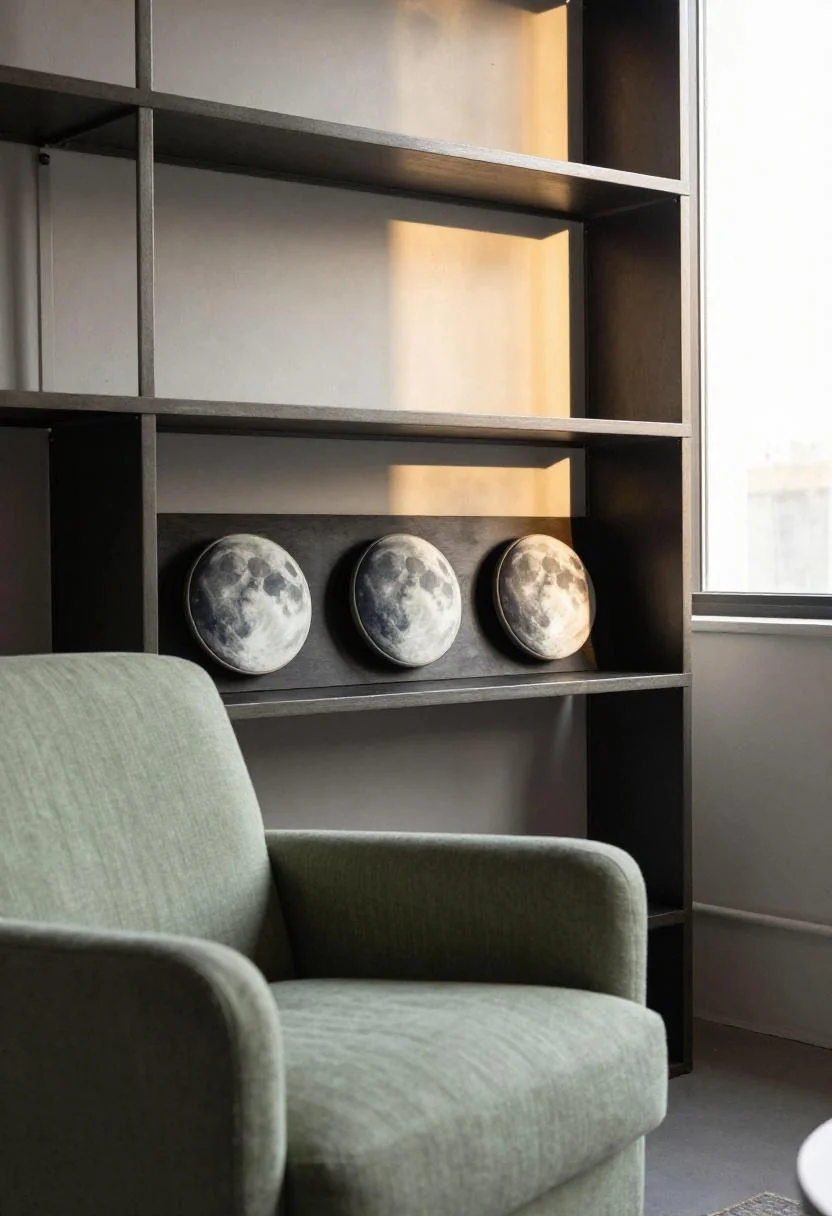
Steel shelving in an industrial interior is practically begging for contrast — and moon-phase ceramic discs in white and grey deliver it without being precious. The sage green armchair grounds the corner with color that reads botanical, almost medicinal, against the cool metal. Sage green is one of those colors that communicates sustainability without announcing it, which is exactly right for a space where the point isn't to perform eco-consciousness but to actually live it. If you're building this corner, source the steel shelving from an architectural reclaim yard — old factory or library shelving is plentiful and built to last generations.
8. Fireplace Mantel — Cool Blue Glass Orbs and Brass Tapers
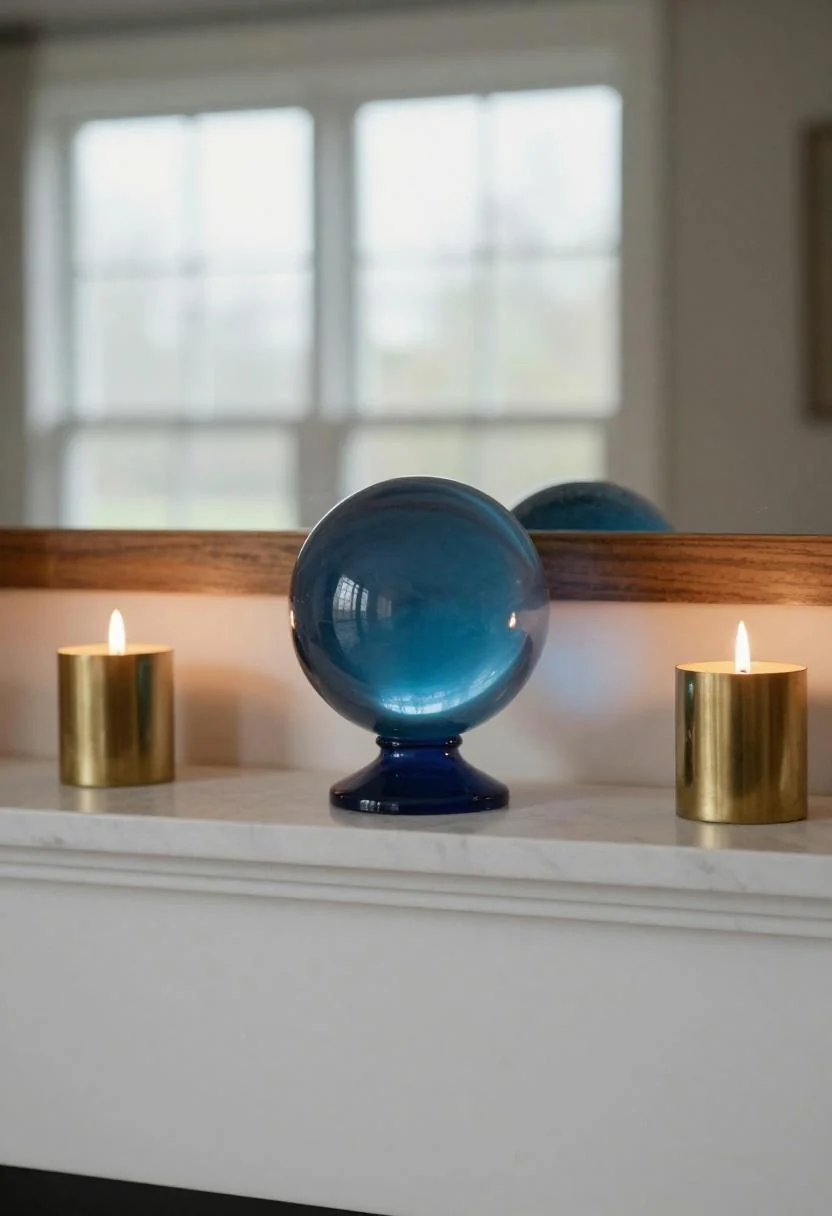
The fireplace mantel is the oldest display surface in the domestic interior. Period homes understood this — Georgian and Victorian mantels were designed for exactly this kind of considered arrangement. A cool blue glass orb (recycled glass, ideally, or antique mercury glass) flanked by brass taper candleholders reads like something from a Victorian astronomer's study. Which, honestly, is the look. The marble mantel itself is likely original to the house if you're lucky enough to have one — and if you're renovating, reclaimed marble mantels are available from salvage companies for a fraction of their historical replacement value. Don't rip them out. They belong there.
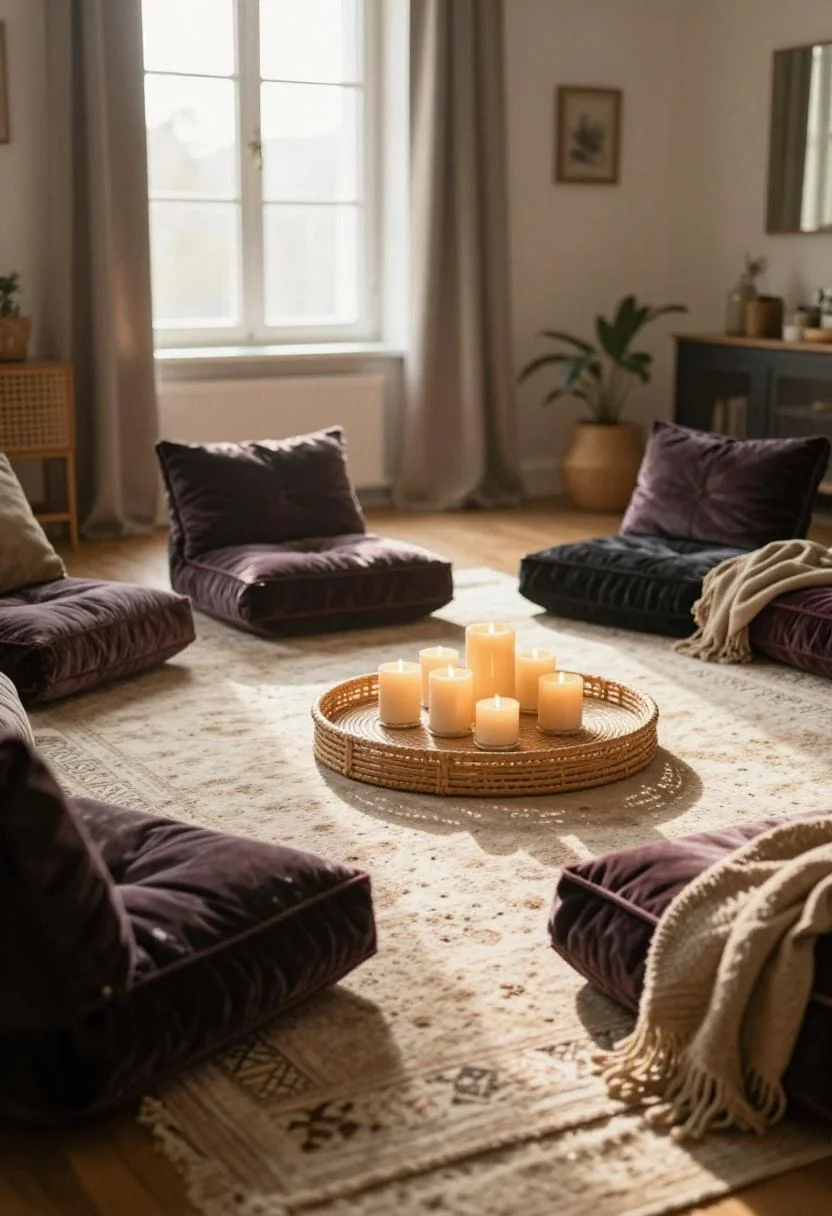
9. Bohemian Floor Seating — Plum Velvet Cushions and Rattan Votives
Floor seating has deep roots in Japanese, Moroccan, and South Asian interior traditions — this isn't a trend, it's a borrowing from cultures that have understood low living for centuries. Plum velvet floor cushions arranged around a rattan votive tray create the kind of gathering space that invites people to stay. The rattan is key: sustainably harvested, naturally lightweight, and visually warm. Vintage velvet is everywhere if you look — old curtains, theater seat fabric, upholstered ottomans. You can have cushion covers made from reclaimed velvet for less than the cost of new ones from a home goods chain. Ask any local upholsterer.
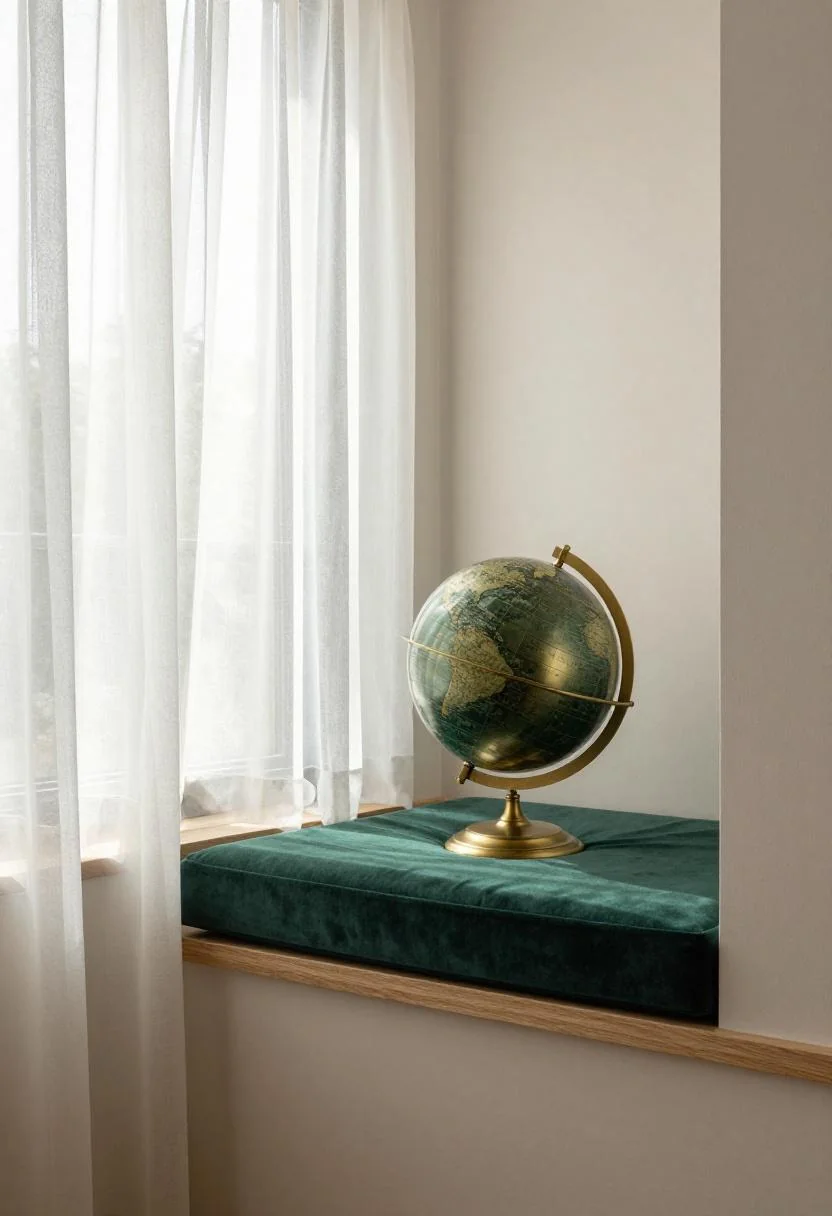
10. Jade Velvet Window Seat with a Brass Celestial Globe
Is there a better morning ritual than sitting in a velvet window seat with the early light coming through the glass? The brass celestial globe on the oak sill turns the view into a conversation between what's outside and what's above. Celestial globes — depicting the star constellations on a sphere, as opposed to the terrestrial globe showing countries — were standard parlor objects in 18th- and 19th-century homes. Finding a vintage one is not as difficult as you'd think: they appear regularly at auction, especially in the UK and continental Europe. The jade velvet here has a depth that changes throughout the day, greener in shadow, almost teal in direct light.
Find vintage-style brass celestial globes
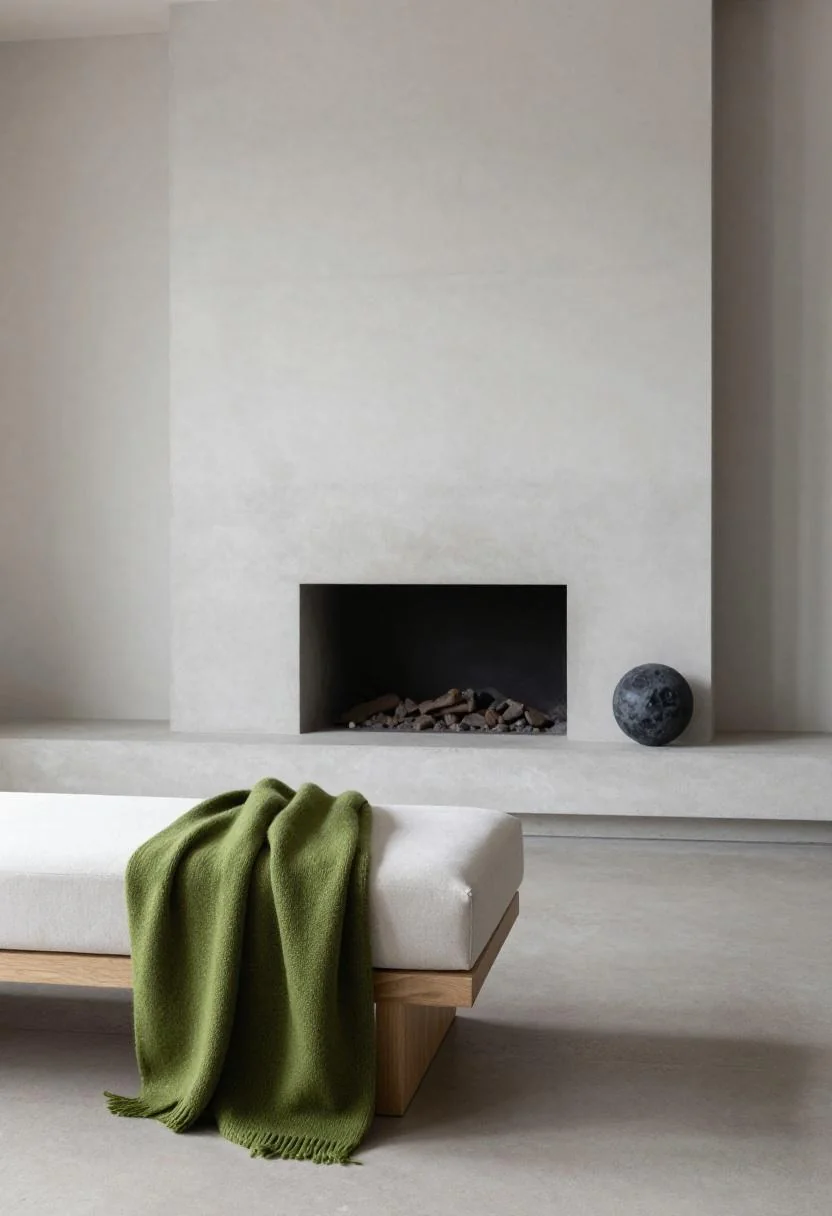
11. Hearth Scene — Wasabi Knitted Throw and an Obsidian Moon Sculpture
Obsidian is volcanic glass — it forms when lava cools rapidly, which means every piece is genuinely one of a kind. An obsidian moon sculpture on a concrete hearth isn't just a decorative object; it's a geological event on a shelf. The wasabi knitted throw on the oak bench beside it introduces texture and warmth without overwhelming the minimal concrete backdrop. Knitted wool throws are the kind of thing you want to find pre-loved — they're only better for having been washed and softened. For more ideas on pairing natural textures and seasonal colors, our guide to May color trends for home decor explores similar material pairings in a different palette.
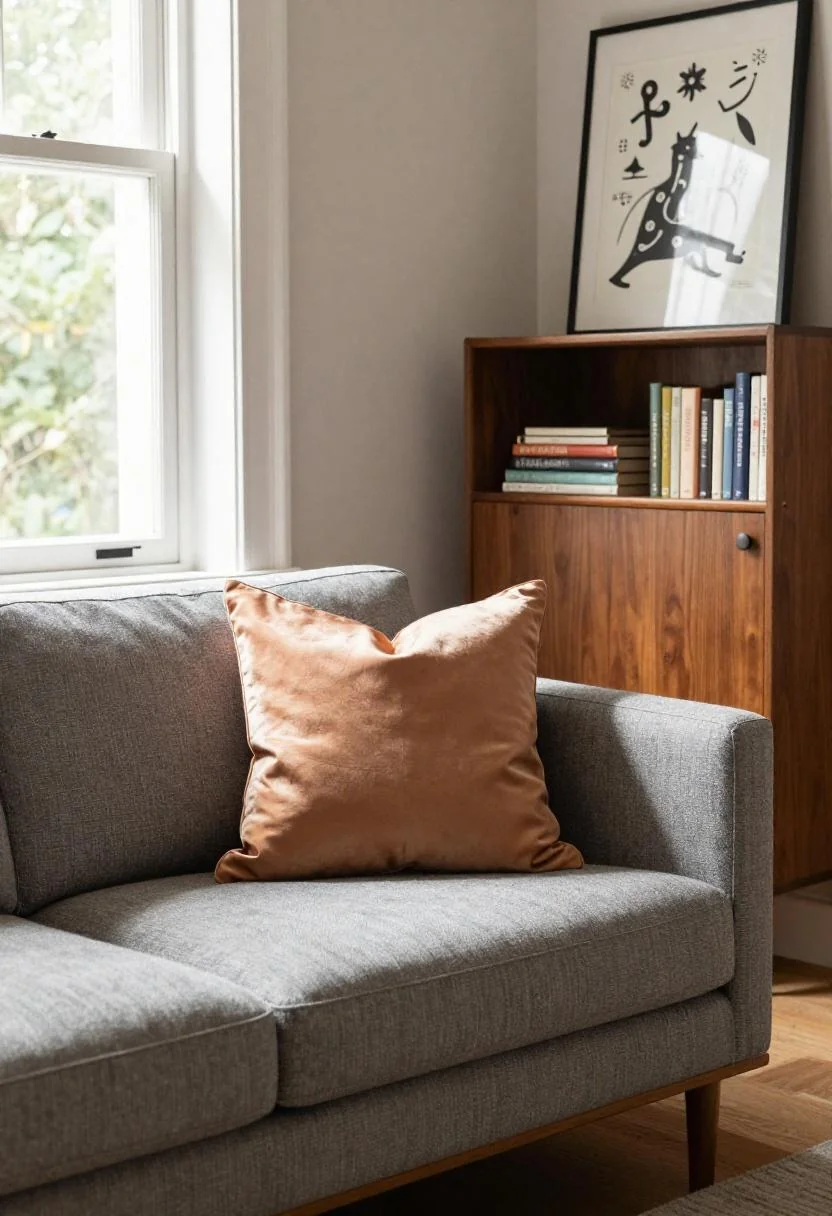
12. Grey Tweed Sofa — Persimmon Silk Pillow and Zodiac Art
A framed zodiac illustration on a walnut bookcase does something interesting — it makes the bookcase part of the display rather than just a functional object. The illustration itself should ideally be an antique print (19th-century astronomical prints are widely available and not especially expensive), or a high-quality reproduction of a historical chart. Against grey tweed, the persimmon silk pillow reads almost like a flame. Tweed and silk shouldn't work together on paper — one is rough and northern, the other delicate and Eastern — and yet the contrast is exactly what gives this combination its character. Traditional interiors have always understood that tension between materials creates interest.
Shop framed zodiac illustration prints
13. Terracotta Bowl, Obsidian Stones, and a Brass Pampas Vase
Terracotta is one of the oldest ceramic traditions on earth — fired clay pots have been found in virtually every ancient civilization, from Mesopotamia to the pre-Columbian Americas. Using terracotta in a celestial interior isn't anachronistic; it's grounding. The warm terracotta bowl filled with polished obsidian stones sits beside a brass pampas vase on a slate coffee table, and the combination reads earthy and cosmic simultaneously. Obsidian stones, pampas grass (dried, not fresh — it preserves beautifully), terracotta, brass. Nothing here needs to be purchased new. Nothing here is synthetic. Elle's interior design coverage has tracked the return to natural, elemental materials as a sustained shift rather than a passing moment, and this vignette is exactly that sensibility in practice.
14. Japandi Serenity — Cream Linen Sofa and a Paper Moon Lantern
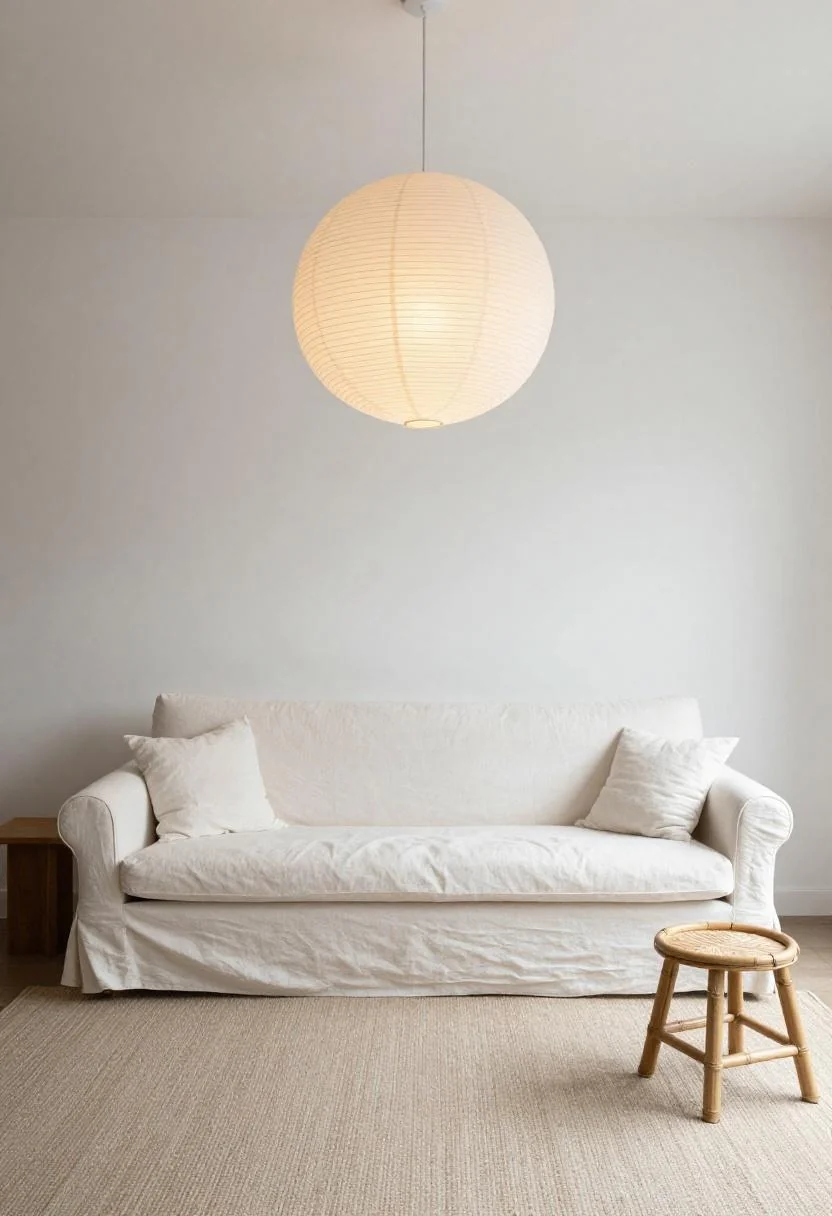
The paper lantern is, arguably, the most sustainable light shade you can buy: rice paper or mulberry paper, a bamboo or wire frame, biodegradable at end of life, lightweight, and extraordinarily beautiful when lit. Hung above a cream linen sofa, it becomes the moon itself — pale, round, softly glowing. This is Japandi at its most distilled: nothing extraneous, everything considered. The linen sofa in cream requires no elaborate justification. Linen always wins here. If you're drawn to this quieter, more contemplative approach to celestial decorating, our piece on transitional interior design where classic meets modern explores how to hold multiple aesthetic traditions at once without losing coherence. And for those who love the layered, collected quality of vintage-forward decorating more broadly, grandmacore home decor covers adjacent territory with warmth and specificity.
Shop round paper moon lanterns
The Bigger Picture: Colors, Materials, and What This Trend Is Really About
Across these fourteen looks, a few things stand out. Cool blues and plum noirs anchor the celestial palette's cosmic side, while persimmon, wasabi, jade, and warm terracotta keep the rooms feeling alive and inhabitable rather than museum-like. Brass is the connective tissue — it appears in star pendants, floor lamps, celestial globes, and candle holders, and its warmth bridges every other material in the room.
More fundamentally: vintage celestial decor works because it draws on a tradition of looking upward that humans have maintained for thousands of years. The stars haven't changed. The impulse to bring them inside, to reference the cosmos in the domestic interior, is as old as shelter itself. What changes is the material ethics of how we do it. Choosing reclaimed wood, antique brass, natural-fiber textiles, and hand-thrown ceramics isn't a compromise — it's an alignment between the timeless quality of the imagery and the timeless durability of the materials. As Who What Wear has tracked in its expanded home coverage, the most resonant interiors of this decade are the ones that feel accumulated rather than assembled.
Start with one piece. The chair from the estate sale. The ceramic vase from the studio market. The brass globe from the antique fair. Let the room grow around it slowly. That patience is also part of the philosophy.
This post contains affiliate links. We may earn a commission at no extra cost to you.
Images in this article were created with AI assistance.


