The curtain drops, your little dancer takes her bow, and suddenly you're holding a grocery-store bouquet you grabbed in a panic — carnations wrapped in cellophane that screams "afterthought." Been there. Here's the thing: recital bouquets don't have to be expensive or complicated, but they do need to feel intentional. If you're DIYing something from scratch or upgrading a florist order with some smart finishing touches, the right bouquet becomes part of the memory. These 13 ideas range from bold and sculptural to soft and garden-fresh — ranked by how well they photograph under stage lighting, hold up in a hot auditorium, and survive a five-year-old's enthusiastic death grip.
The Standouts — Bouquets That Actually Photograph
These are the ones that look great in the auditorium AND in the Instagram photo afterward. Stage lighting is brutal — washed-out pinks turn gray, pale yellows disappear. These colors hold.
#1 — Cool Blue Delphinium
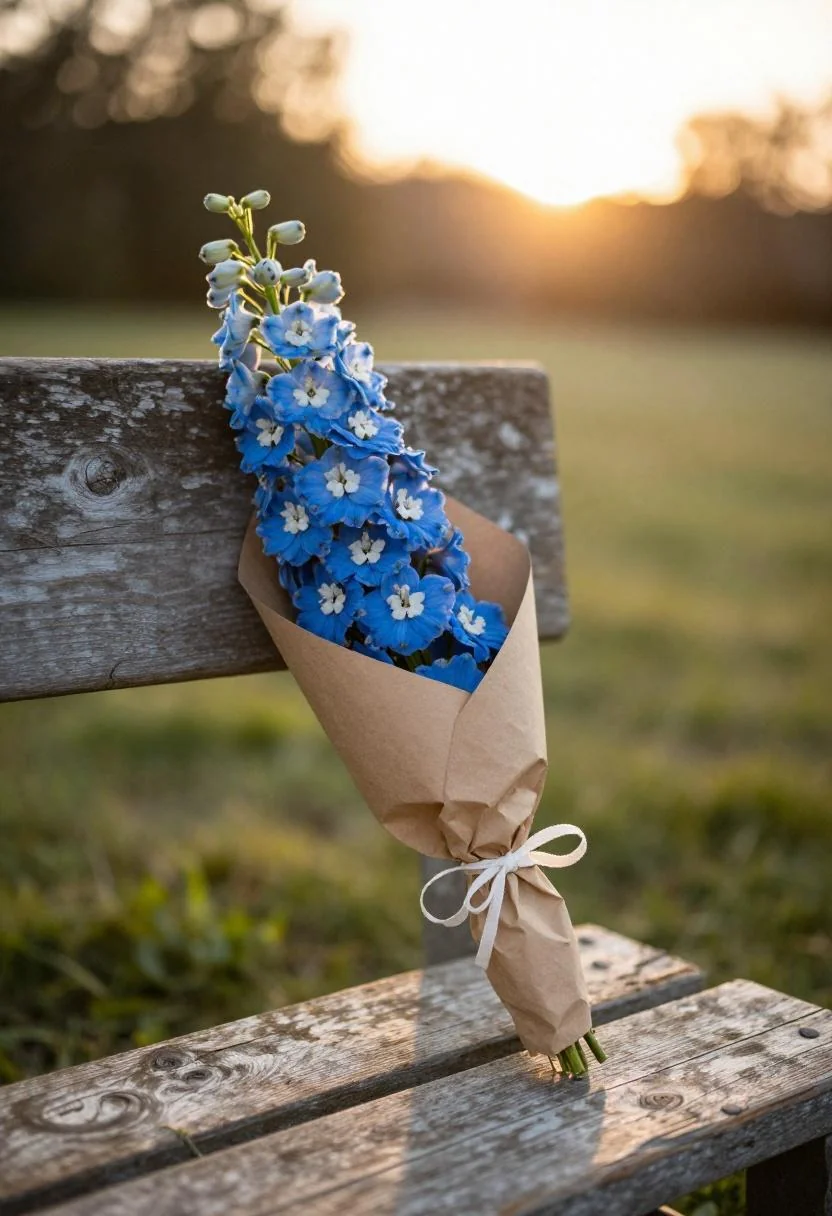
Delphiniums are underrated for recital bouquets. The vertical spires give the arrangement real height and drama — think of it as the sculptural furniture equivalent of flowers, the kind of thing you'd see in a Vogue editorial rather than a grocery-store refrigerator case. Cool blue reads beautifully under warm stage spotlights, producing that slightly electric contrast that makes photos pop.
Pro tip — delphiniums are thirsty. If you're DIYing this, condition them in water for at least 12 hours before the recital. Wrap the stems in a damp paper towel and foil for transport. Buy fresh delphiniums in bulk here and you can assemble three or four bouquets for the price of one florist arrangement.
#2 — Plum Ranunculus in Concrete
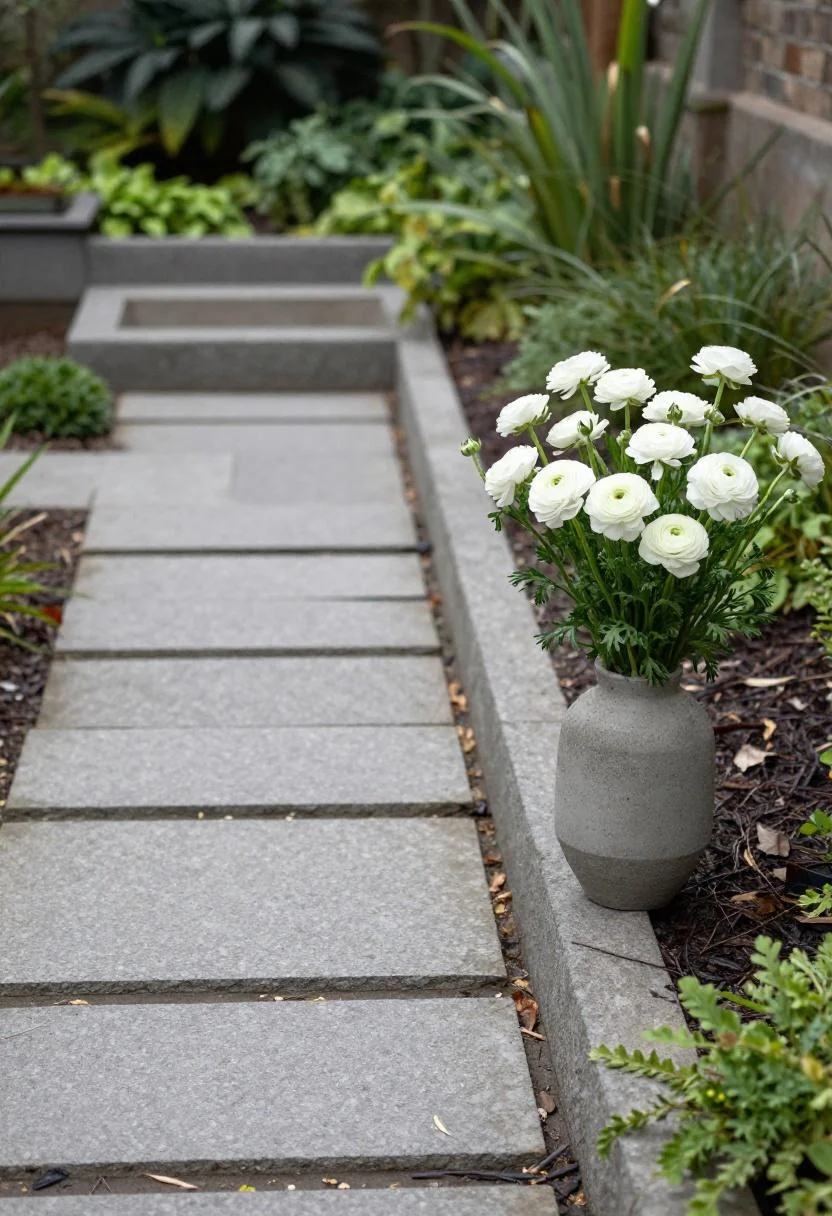
This is the dark horse that older dancers (think 10+) absolutely love. Plum ranunculus has that moody, gallery-wall energy — mid-century floral styling meets a Brutalist sensibility that would feel right at home in an Axel Vervoordt-inspired space. The overcast-light photography in this shot captures exactly what these flowers do under diffused auditorium lighting: they deepen, get richer, refuse to wash out.
The mistake most beginners make with ranunculus is buying them fully open. Get them when the buds are still tight — they'll bloom just in time for recital night, and they'll last a full week after.
#3 — Jade Chrysanthemum on Terra
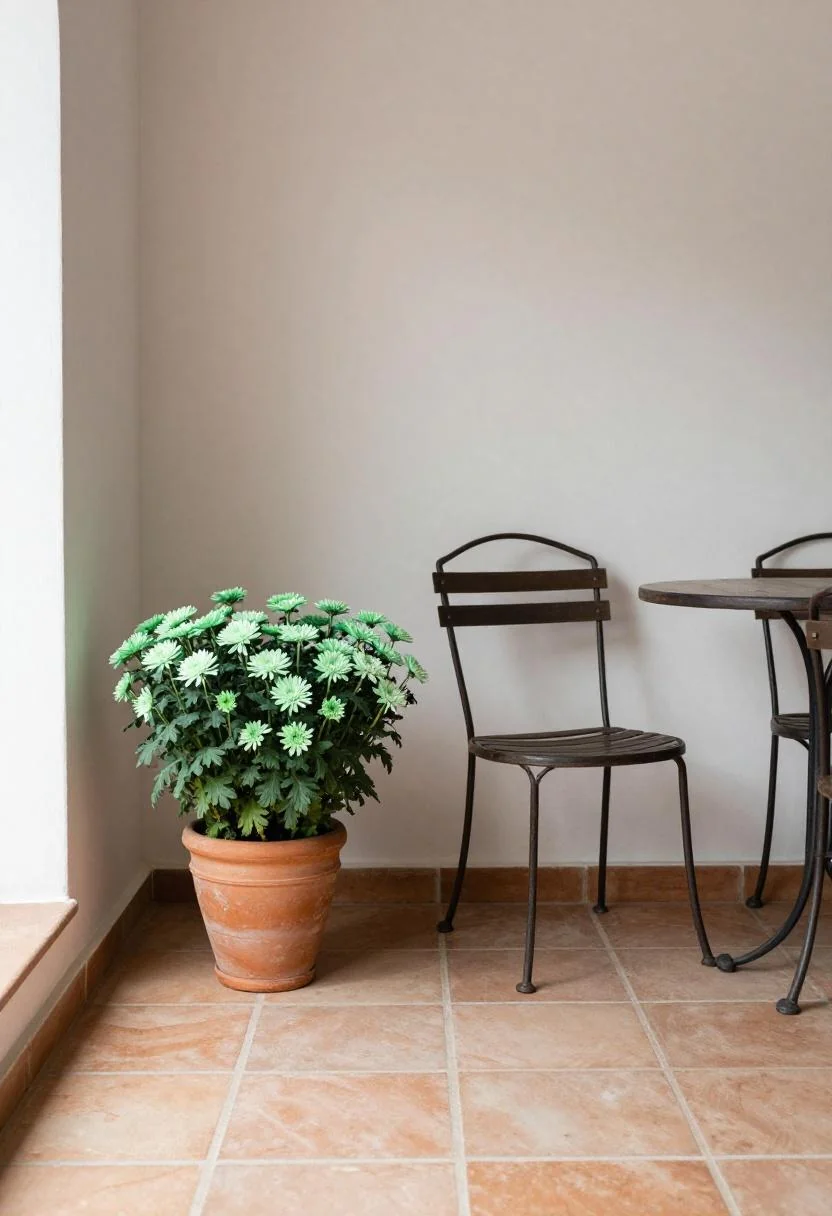
Bold call. Green flowers at a dance recital? Hear me out. Jade chrysanthemums against a recital costume — especially anything in white, blush, or black — create that gallery-wall contrast that makes a photo look styled rather than spontaneous. Harper's Bazaar has been pushing sculptural green florals as the new minimalist statement, and they're not wrong. This is the bouquet that makes other dance moms ask where you got it.
Jade button mums in bulk are one of the most budget-friendly flower options out there. A $15 bunch gives you enough to make two generous bouquets.
Top 3 Picks
- Cool Blue Delphinium — Best for stage photography. Holds color under any lighting.
- Plum Ranunculus — Best for older dancers. Sophisticated, long-lasting, unforgettable.
- Cream Peony — Best all-rounder. Every age, every costume, every stage. (See below.)
The Dark Horses — Unexpected Choices That Win the Room
These are the bouquets nobody else will bring. That's exactly why you should consider them.
#4 — Wasabi Spray Roses
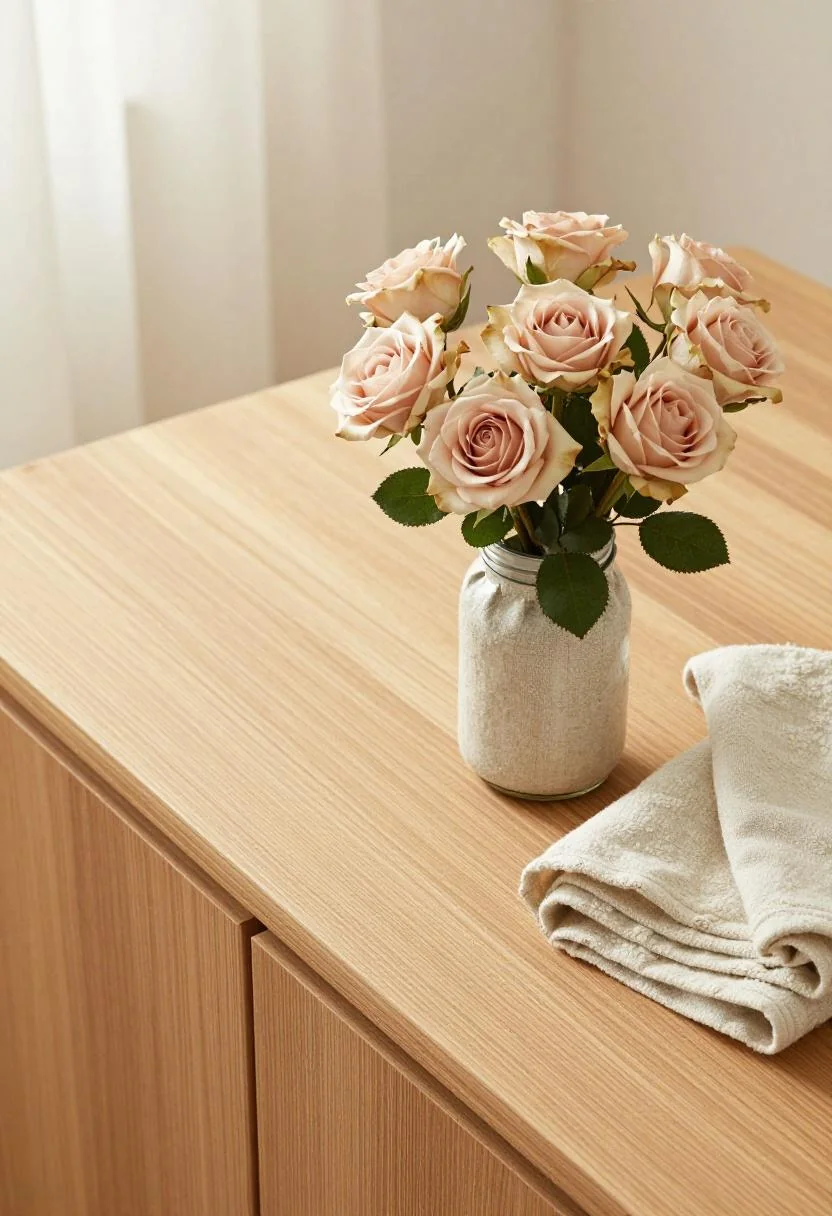
Wasabi-toned spray roses — that yellow-green that sits somewhere between chartreuse and olive — are currently having a serious design moment. The linen-wrapped jar presentation in this shot is the DIY trick I keep coming back to: grab a mason jar, cut a piece of linen or burlap to size, wrap it tight, and secure with twine. Total cost: under $3 in supplies. It transforms a $7 grocery bunch into something that looks boutique-florist.
These work especially well for spring recitals when costumes skew pastel — the wasabi creates just enough tension to feel modern rather than precious. You can pull this off in an afternoon for under $15.
#5 — Persimmon Gerbera Daisies
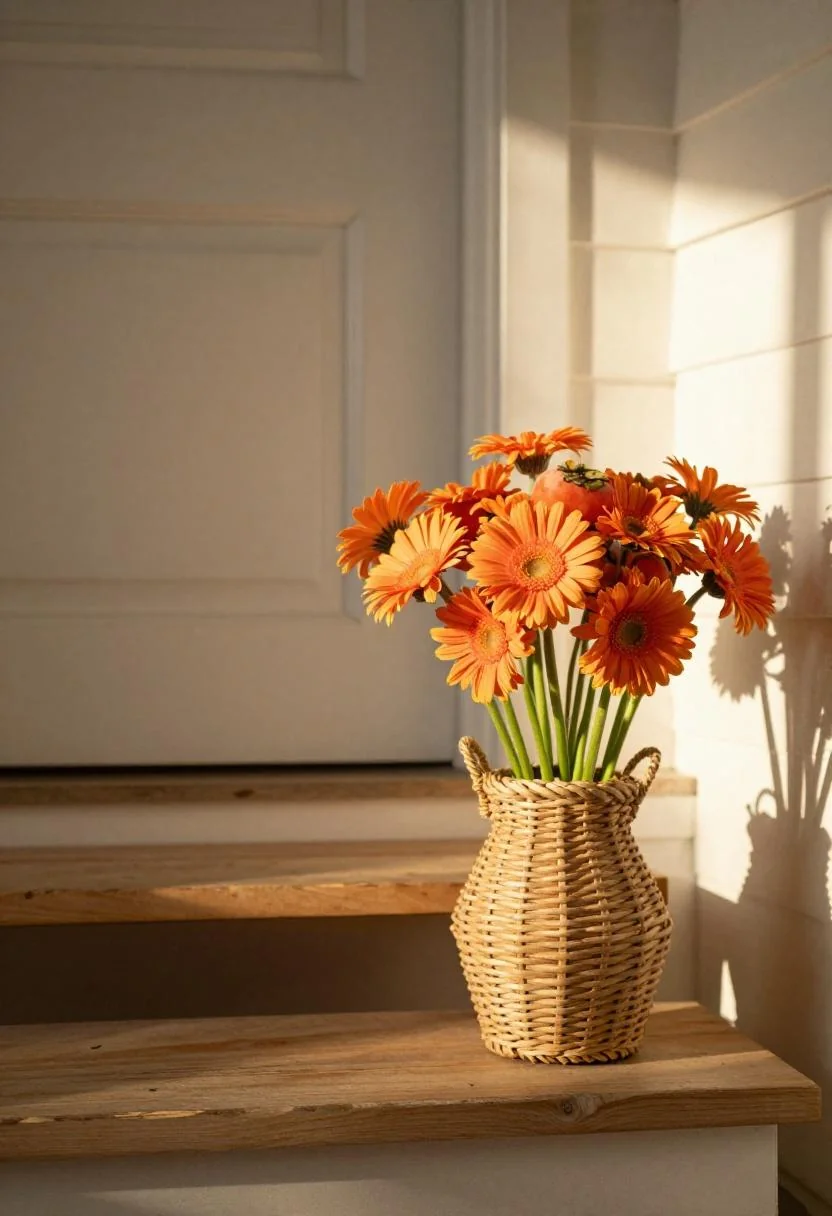
Gerbera daisies get dismissed as basic. They shouldn't be.
In persimmon — that warm orange-red that reads almost coral in photographs — they hit differently. The rattan basket presentation shown here is genuinely practical for recitals: sturdier than a paper wrap, easier for small hands to hold, and it doubles as a keepsake container. Your daughter can use it as a desk organizer, a she-shed accent, or a nightstand catch-all long after the flowers are gone.
Pro tip — gerbera daisies have hollow stems that collapse easily. Always use a thin bamboo skewer inserted gently up the stem to support the head, especially for bouquets that need to survive travel.
#6 — Terracotta Zinnias, Wall-Hung
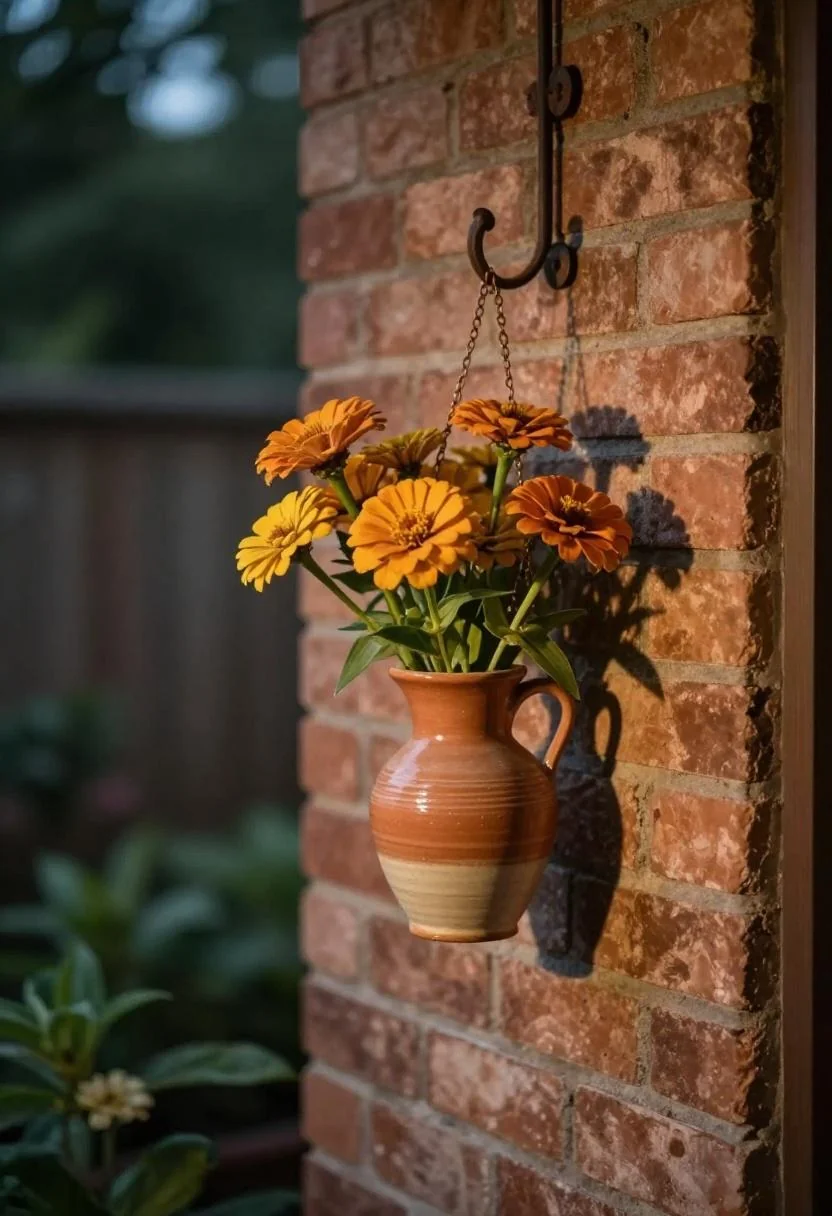
Zinnias are the most underused recital flower. They're cheap (you can grow them from seed in a season for practically nothing), they last for days without water conditioning, and terracotta-toned zinnias have this warm, saturated glow that photographs beautifully in golden-hour light — which, if the recital runs late enough, is exactly what you'll get in the parking lot photos afterward.
Terracotta zinnia seed mixes are widely available and genuinely easy to grow, even for beginners.
The Classics — Reinvented
These are the flowers your grandmother gave at recitals — but styled in ways she absolutely would not recognize. Modern presentation rescues these classics from looking tired.
#7 — Cream Peony, Zen Presentation
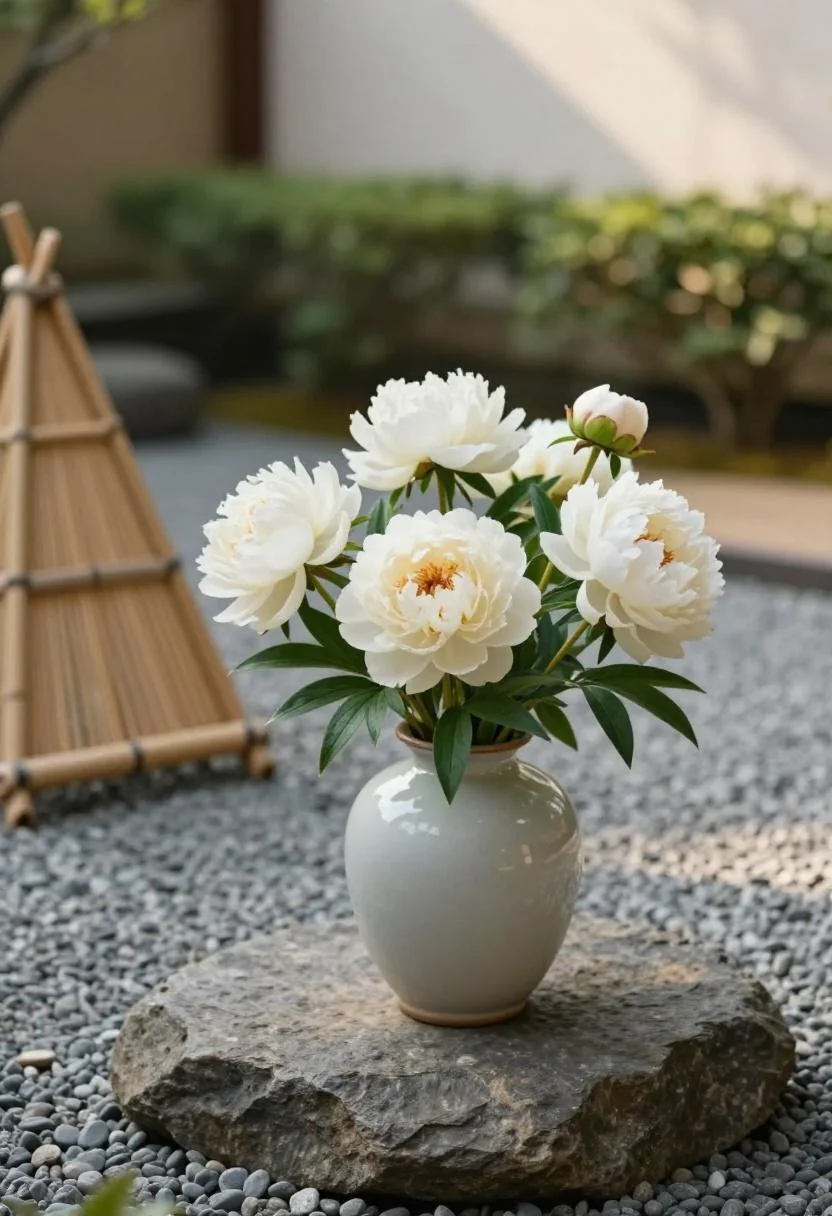
The cream peony is as close to a universal recital bouquet as you can get. Every age, every costume color, every stage aesthetic — it works. What makes this version exceptional is the restraint of the presentation: a single variety, monochromatic, in a clean porcelain vase. No filler, no greenery, no baby's breath. Just peonies. It's the "less is more" principle applied to floristry, and it looks expensive because it is not trying to be anything other than exactly what it is.
The timing trick: buy peonies while they're still in bud (green, slightly soft to the touch). They'll open to full bloom in 2-3 days at room temperature. Plan accordingly. Fresh cream peonies by the bunch are available online and ship quickly enough for most recital timelines.
#8 — Sage Hydrangea, Galvanized Bucket
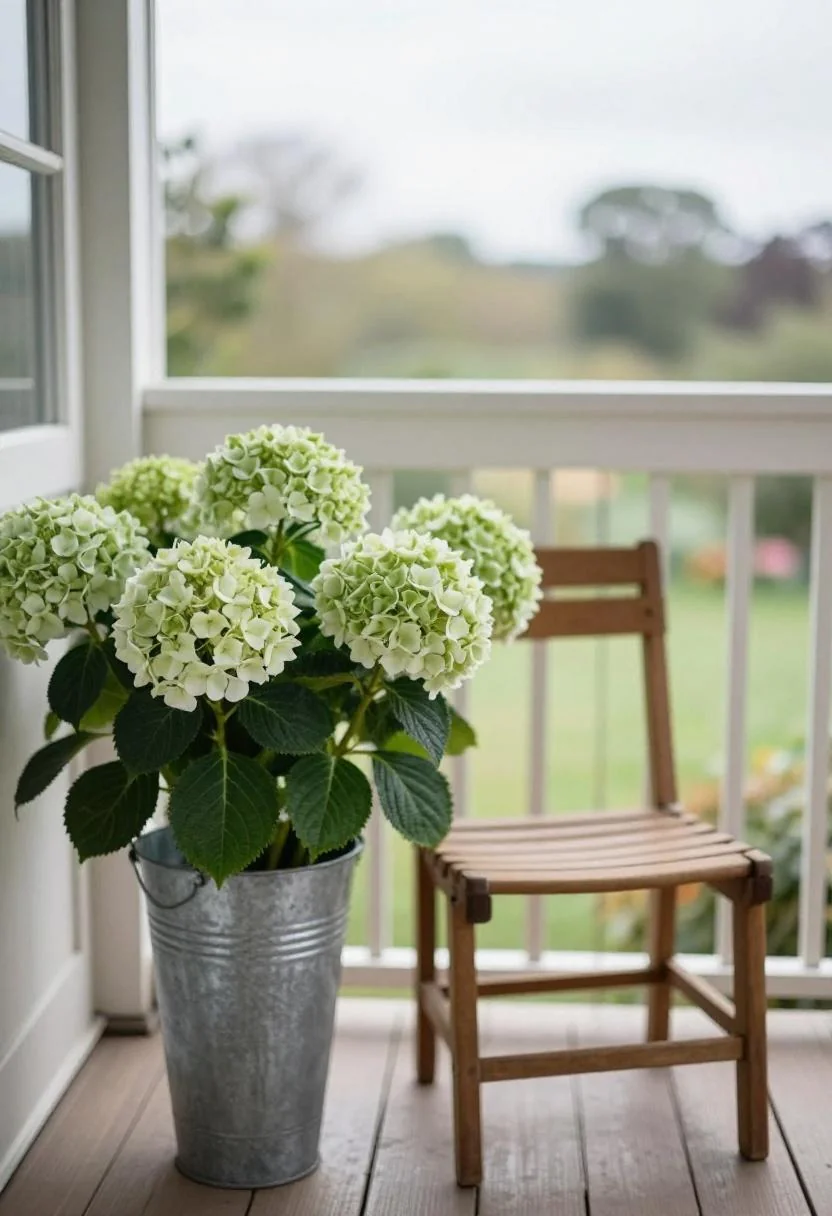
Sage hydrangea is having a serious design moment right now — Elle has been tracking the greige-and-sage palette across both fashion and interiors, and floristry is following suit. The galvanized bucket presentation is the DIY move that makes this look accessible: a $4 hardware store bucket, lightly sanded and wiped with a white wash (one part white paint, two parts water, brushed on and immediately wiped off), gives you that coastal-farmhouse finish that's been all over design accounts this year.
Hydrangeas are volume flowers — one stem can fill a quarter of a bouquet. Budget-friendly when you need to make an impression without spending florist prices.
#9 — Cool Blue Iris with Candle
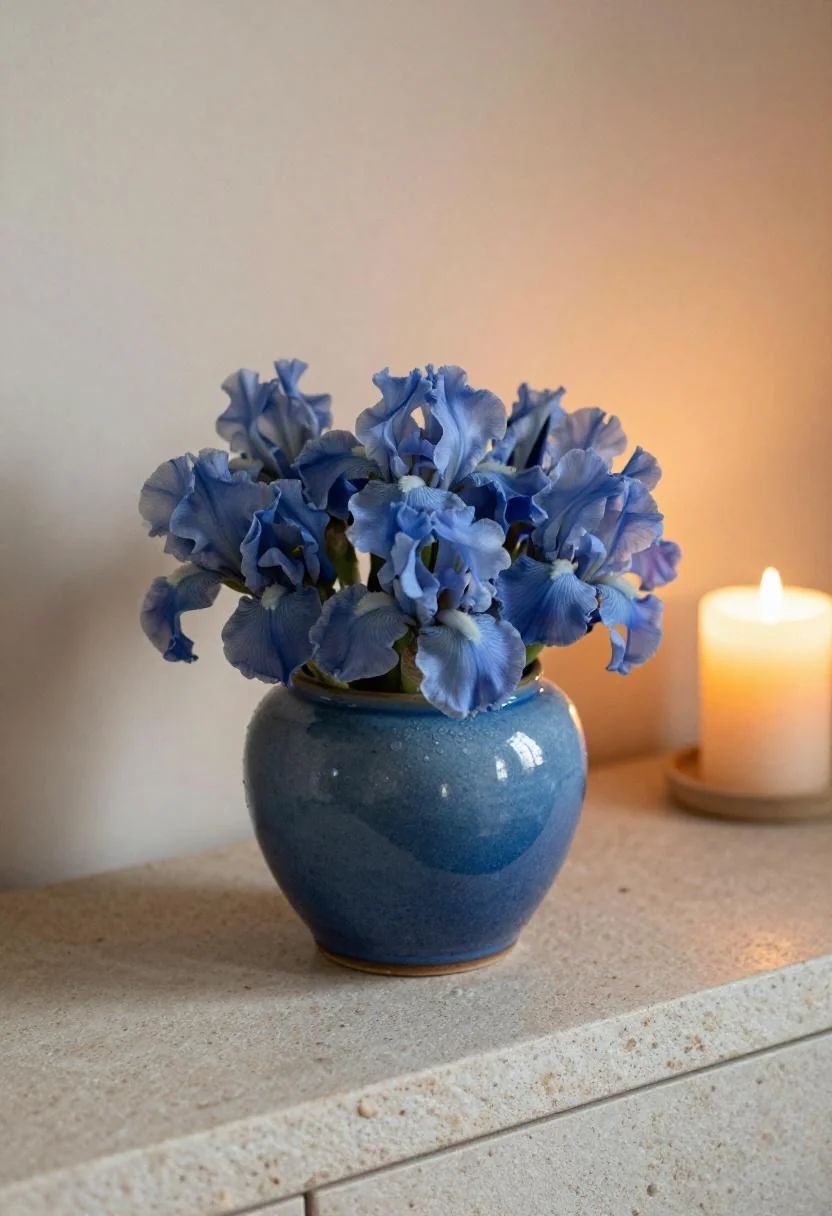
Iris bouquets are a sleeper pick. They're inexpensive, they travel well (closed buds survive a car ride easily), and cool blue iris has a graphic quality — those sword-like petals, the crisp color — that reads as genuinely contemporary. Pair this with a simple pillar candle for the post-recital celebration table and you've got a cohesive styling moment, not just flowers.
The mistake most beginners make with iris: buying them too open. Closed buds look almost architectural and will open beautifully over the 48 hours following the recital. Get them tight.
Fresh iris by the bunch is one of the most affordable cuts available — often under $8 at wholesale markets.
Bold Moves — For Dancers Who Command the Stage
#10 — Plum Orchid, Tropical Drama
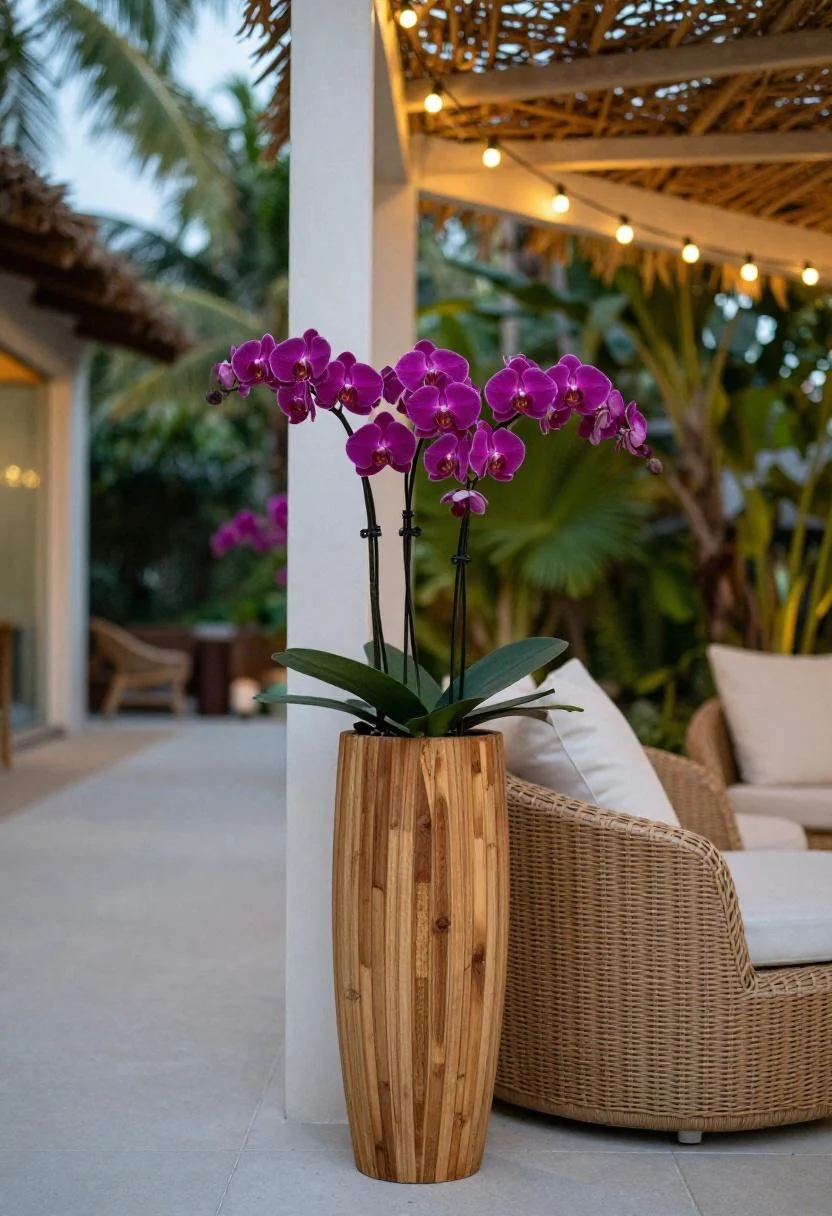
Here's the trick with orchid stems: you don't need a lot of them. Three to five stems of plum phalaenopsis, arranged loosely in a teak or dark wood container, creates more impact than a massive mixed bouquet. The dusk light in this photo captures exactly what orchids do under low, warm lighting — they go almost jewel-toned, deeply saturated, theatrical. Right for a jazz or contemporary dance performance where the whole aesthetic is about intensity.
Orchid stems cut from arrangements last weeks in water. Your dancer will have them on her desk long after every other recital bouquet has been composted.
#11 — Jade Anthurium, Sculptural and Spare
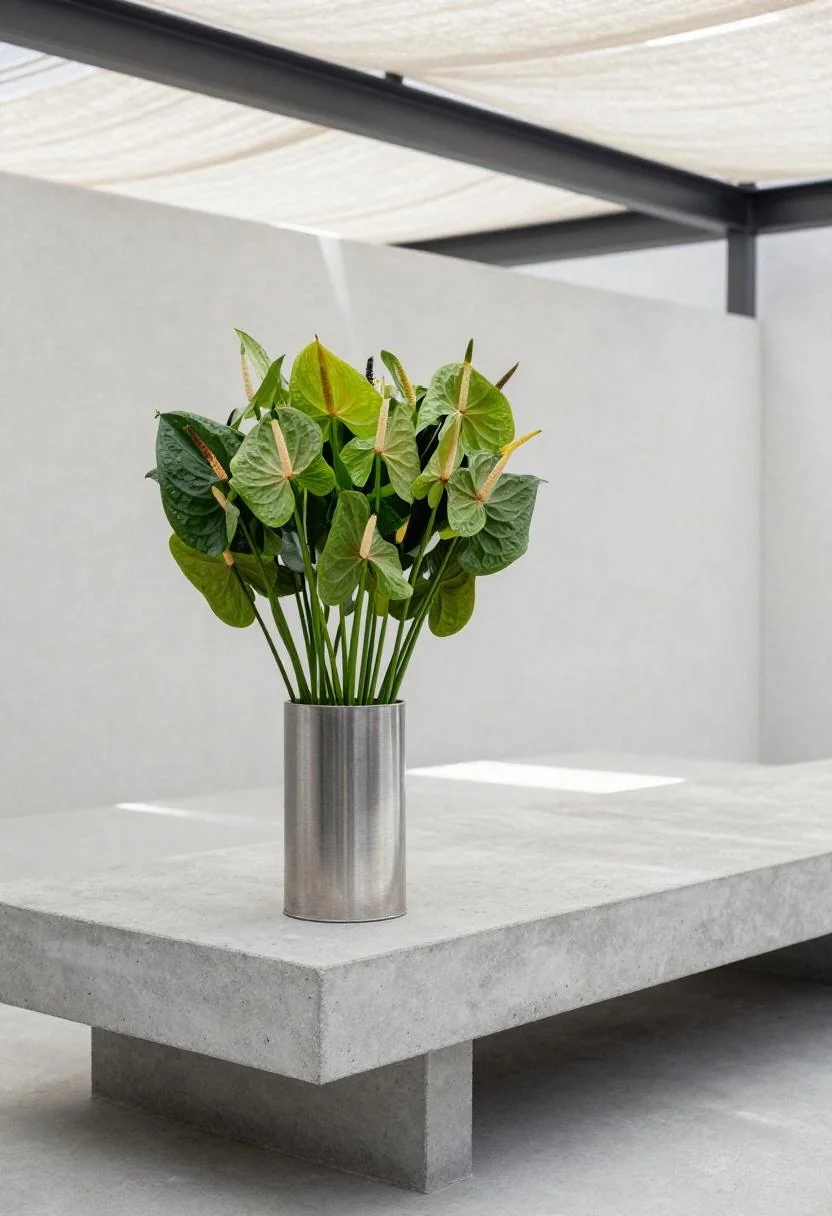
Anthuriums are not a traditional recital flower. That's exactly why they work.
The waxy, glossy surface of jade anthuriums has a sculptural quality that feels more like a piece of contemporary art than a floral arrangement — think Noguchi meets the flower market. They're nearly indestructible (they'll survive a warm auditorium lobby with no water for hours), they travel flat, and they photograph with incredible sharpness because the surface catches light the way nothing else does. If your daughter is performing a contemporary or modern ballet piece, this is the bouquet that matches the aesthetic of the performance itself.
Fresh green anthuriums for delivery are available from specialty flower suppliers and typically arrive in excellent condition.
Two More Worth Your Attention
#12 — Terracotta Marigolds, Tucked and Casual
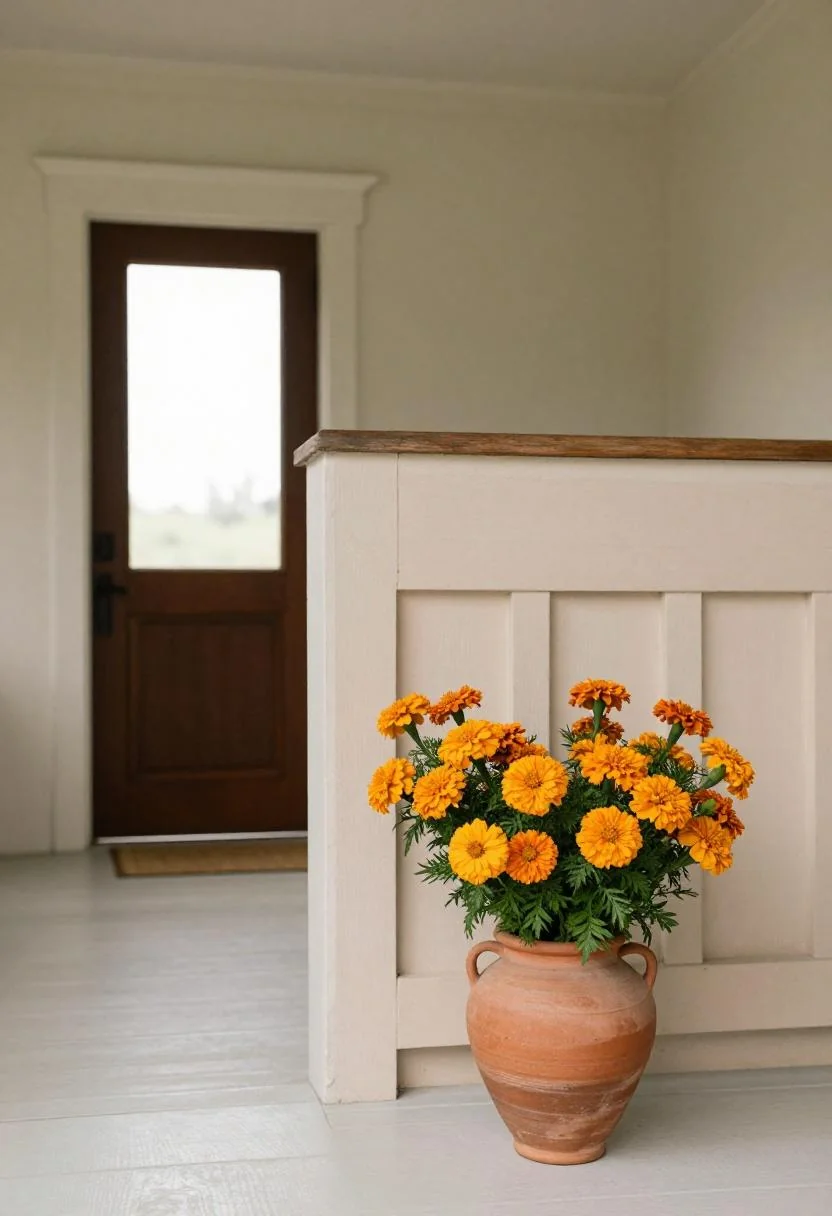
Marigolds at a recital? Absolutely yes — if you're doing a cultural showcase, a Día de los Muertos-inspired performance, or really any program that celebrates heritage and tradition. Terracotta marigolds in a stoneware crock have that earthy, handcrafted quality that feels genuinely meaningful rather than purchased in a hurry. The casual, tucked-against-the-railing presentation in this photo is actually the right move for a bouquet your dancer will carry: it's compact, dense, and sturdy enough that it won't fall apart when a six-year-old waves it around dramatically.
Marigolds are also the single cheapest cut flower you can buy in bulk. A flat of marigolds from a garden center costs less than $20 and makes enough bouquets for the entire dance class. If you're organizing a group gift situation, this is your budget solution. (And for more ideas on organizing outdoor and garden decor projects, our roundup of wooden fence decorating ideas covers the same DIY-first philosophy.)
#13 — Cream Garden Roses at Dusk
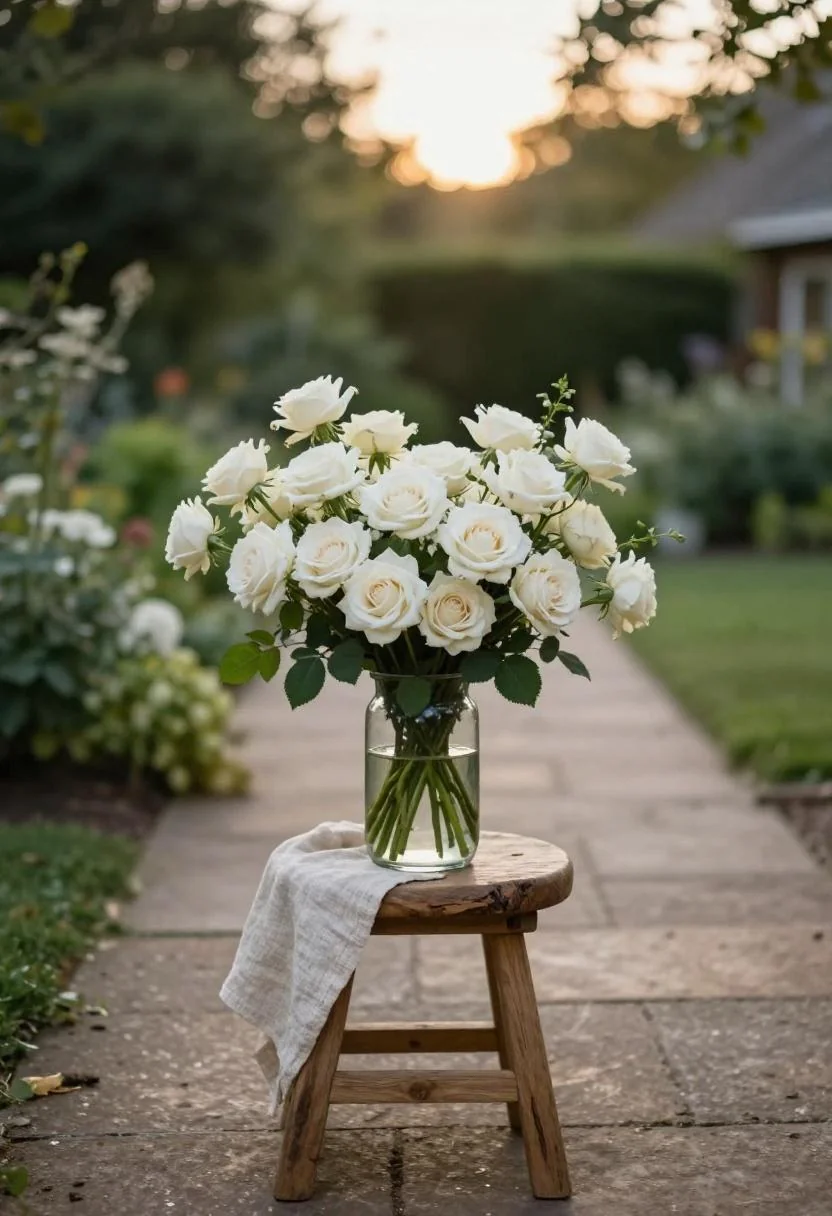
The linen-wrapped vase is a trick I've used more times than I can count. Take any plain glass cylinder — even an old pickle jar — wrap it in a piece of natural linen, secure it with a few wraps of jute twine, and suddenly it looks like something from an artisan flower shop. The dusk light in this photo shows off the warmth that cream garden roses develop as they age: that honeyed, antique quality that makes them look less like grocery-store flowers and more like something from an English cottage garden.
Cream garden roses are the most forgiving flower you can buy. They look beautiful fully open, half-open, even past their prime. Your dancer can keep them in her room for a week and they just get more romantic as they fade. That's a genuinely rare quality in a cut flower.
Bulk cream garden roses for delivery are available from multiple suppliers and arrive ready to arrange within 24 hours of conditioning.
The Color Story — What These 13 Bouquets Are Telling You
Look at these 13 bouquets together and a clear palette emerges: cool blue, plum noir, jade green, warm terracotta, and cream white. These are not soft pastels. They're not the blush-and-white recital aesthetic of ten years ago. They're grounded, saturated, confident colors — and that shift matters.
The trend, as Who What Wear has noted across adjacent categories, is toward colors that hold their own in photographs rather than disappearing under filters and stage lighting. Cream still anchors the list (it always will), but the real action is in the greens and the deep plums. Jade and sage read as sophisticated without being cold. Terracotta has moved firmly out of the trend cycle and into the "classic" category — it works because it's warm without being predictable.
What does this mean practically? If you're buying one bouquet, go cream peony or cool blue delphinium — they work for every dancer, every age, every recital. If you know your dancer's costume color, play against it: blue against a warm gold costume, jade against white, terracotta against black. And if you want to be remembered as the parent with the most interesting bouquet in the auditorium? Plum orchids or jade anthuriums. No contest.
One final note on presentation: the wrapping matters as much as the flowers. Linen, kraft paper, galvanized metal, rattan — these materials all share a texture-forward, artisan quality that feels considered rather than convenient. If you want to take your presentation further, check out our guide to warm, seasonal decor themes for the same texture-and-warmth design philosophy applied to celebrations generally. The principles translate directly.
This post contains affiliate links. We may earn a commission at no extra cost to you.
Images in this article were created with AI assistance.


