There's something quietly rebellious about a hippie garden — the way it refuses to be manicured, the way it leans into wildness without apologizing for it. I've spent the better part of three summers turning a bare concrete patio and a neglected side yard into something that actually feels like a place to live, not just look at. And here's what I've learned: boho outdoor spaces aren't about buying everything at once. They're built layer by layer, thrift store trip by thrift store trip, weekend project by weekend project. The farmhouse bones I already had — reclaimed timber, earthy ceramics, linen textiles — turned out to be exactly the right foundation for a free-spirited overhaul.
What makes the hippie-garden-meets-rustic-farmhouse combo work so well is that both aesthetics are fundamentally honest. They don't pretend. The materials are real, the patina is earned, and nothing is trying to look like something it isn't. If you're starting from scratch or just looking to add soul to what you already have, these ideas will get you there — most of them for well under $150 a section.
The Hammock Corner: Where Boho Living Actually Happens
Every hippie garden needs an anchor point — one spot that pulls you outside on a Tuesday evening just because it exists. For most people, that's going to be a hammock or hanging chair setup, and getting it right is less about the furniture itself and more about everything surrounding it.
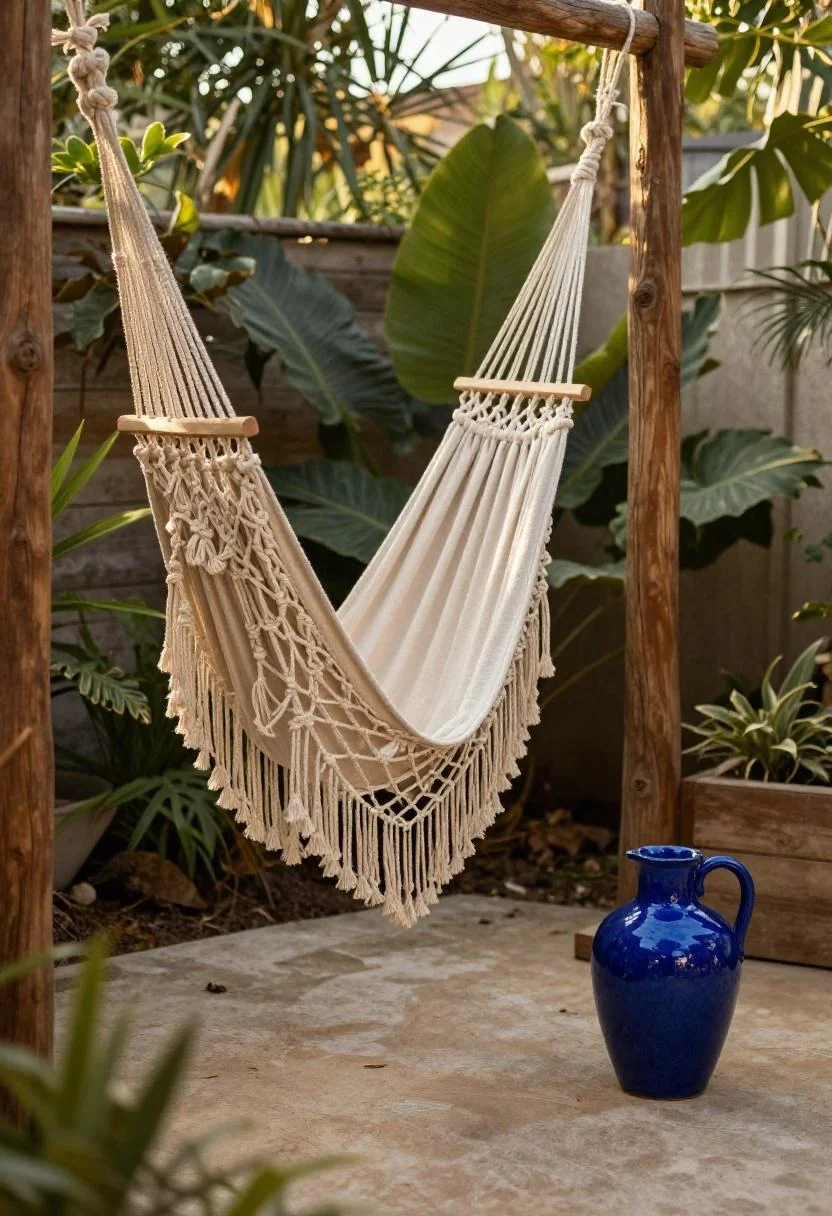
This macrame hammock paired with a cool blue ceramic jug is the kind of vignette that takes maybe two hours to assemble but looks like it evolved organically over years. The trick here: don't hang the hammock and call it done. Add a low side surface — a weathered wood crate, a flat stone, anything that can hold a drink and a book. The ceramic jug acts as a sculptural anchor, pulling the eye down and grounding the whole corner. Blue ceramics against warm wood tones create a quiet contrast that reads as both beachy and earthy at once.
Pro tip — mount your hammock posts in concrete footings rather than relying on tree straps if you want this to be a permanent installation. A pair of 4x4 cedar posts set 18 inches deep will outlast any tree anchor and give you exact control over height and angle. Shop macrame hammocks on Amazon to find the right weight capacity before you commit to a post spacing.
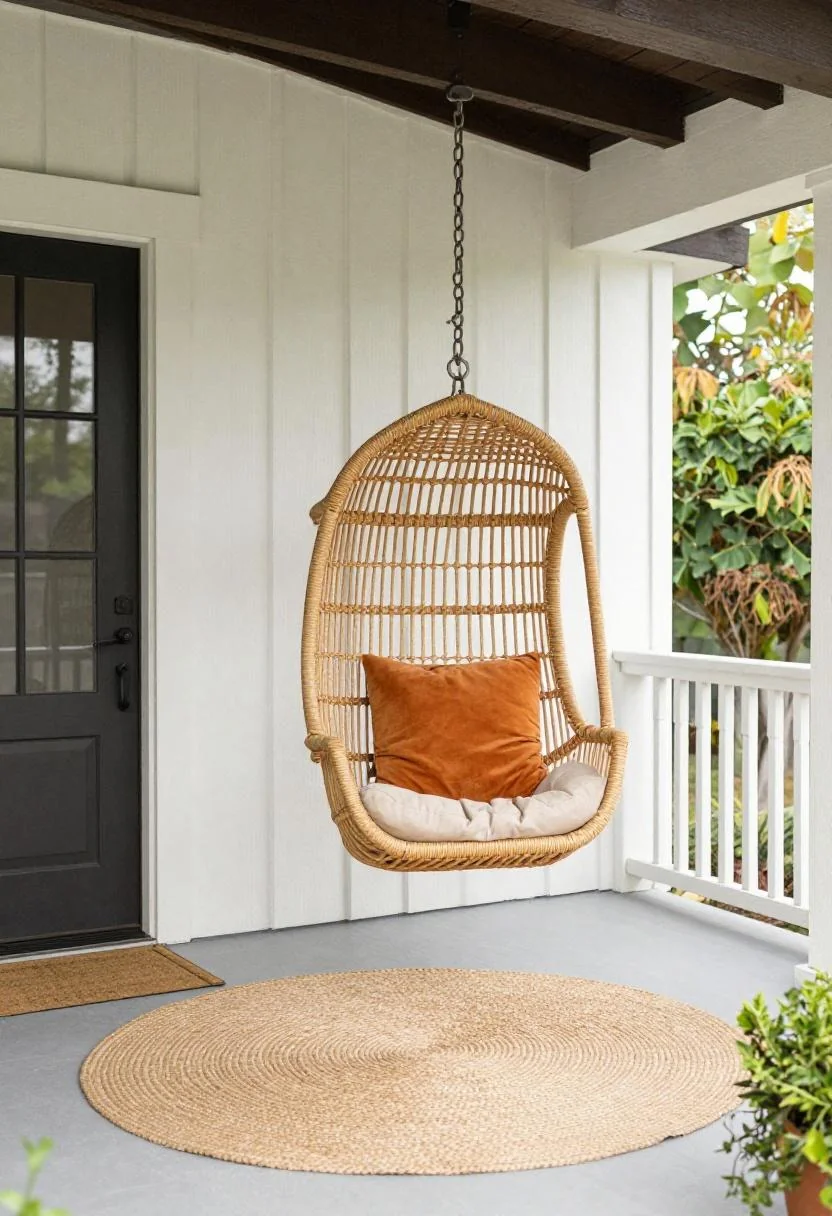
The rattan hanging chair with a persimmon cushion is doing something specific here — it's creating a threshold moment at the porch doorway. Position it to the side rather than dead-center, and suddenly you've turned a functional entrance into a destination. That persimmon tone? It's warm without being aggressive. It reads beautifully against weathered cedar or natural linen, and it holds up to sunlight better than most saturated oranges because it leans slightly toward coral.
Weekend project timeline: hang the chair Saturday morning, add the cushion plus two or three small plants flanking the doorway, and by Sunday afternoon you have a porch that feels completely transformed. One small change transforms the whole entrance — don't underestimate how much a hanging chair shifts the energy of a porch.
Earth Tones and Fire: The Case for Terracotta Everything
Terracotta is having a long-overdue renaissance, and honestly, the hippie garden is its natural habitat. It's a material that belongs outside, that improves with weather and moss and age. As Elle has covered extensively, terracotta's warm red-orange tones have been anchoring Mediterranean and bohemian spaces for centuries — there's a reason it keeps coming back.
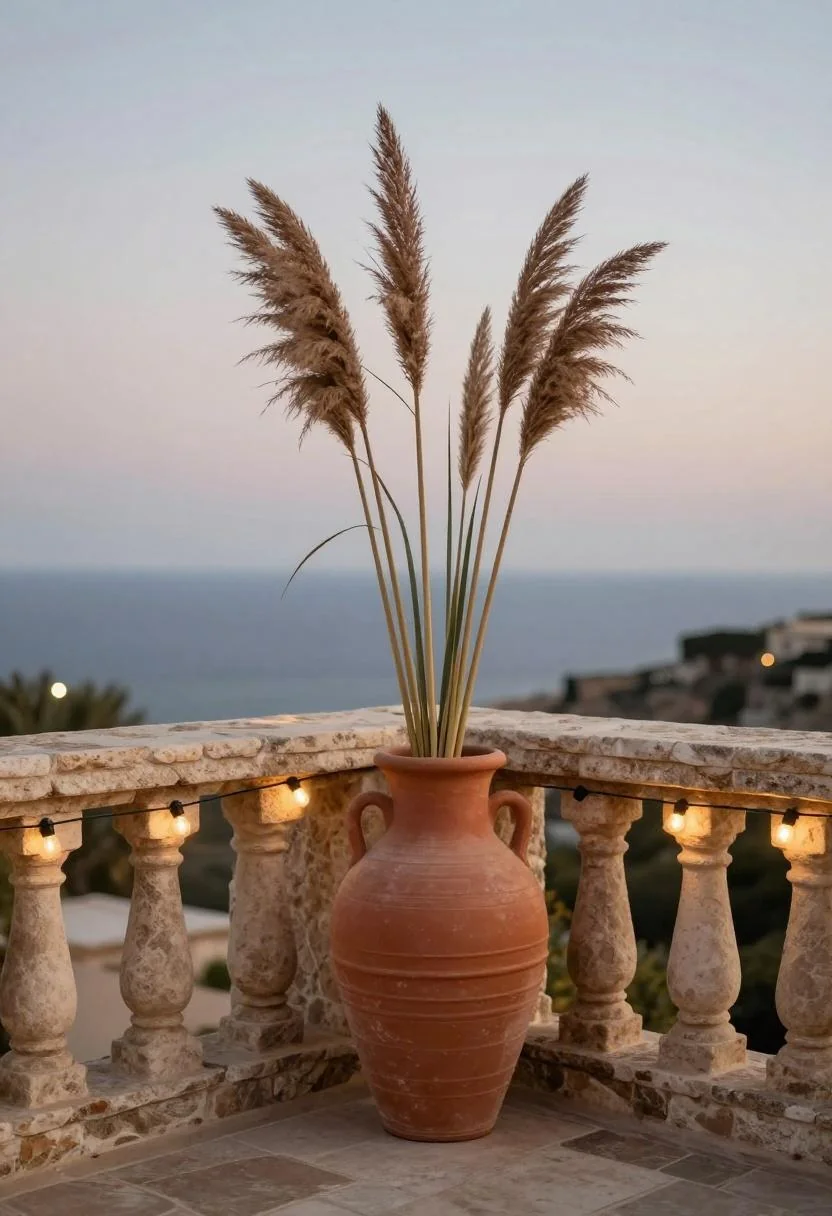
This terracotta amphora filled with pampas grass against a backdrop of string lights at dusk is almost unfairly atmospheric. Pampas grass is a workhorse in boho outdoor design — it adds movement and softness without requiring any water, any pruning, any real attention. Dried, it lasts an entire season outdoors. Buy a large bunch from a florist or a craft store (usually $20–30), stuff it into whatever tall vessel you have, and done. The amphora shape specifically echoes that Mediterranean villa aesthetic that works so well with farmhouse-rustic bones.
Flanking a garden path with terracotta rosemary pots is one of those ideas that's so obvious it somehow feels like a revelation when you actually do it. Rosemary survives neglect, smells incredible when you brush against it, and the terracotta pots develop a gorgeous white mineral bloom over the season that makes them look ancient. A jute mat at the entrance pulls the whole thing together — it's the farmhouse detail that bridges the gap between your hippie garden and your front door without either aesthetic feeling out of place.
The mistake most beginners make is buying tiny 6-inch pots. Go for 10-inch or 12-inch minimum on a path entrance. The scale has to hold its own against the ground plane, or the pots will look like an afterthought.
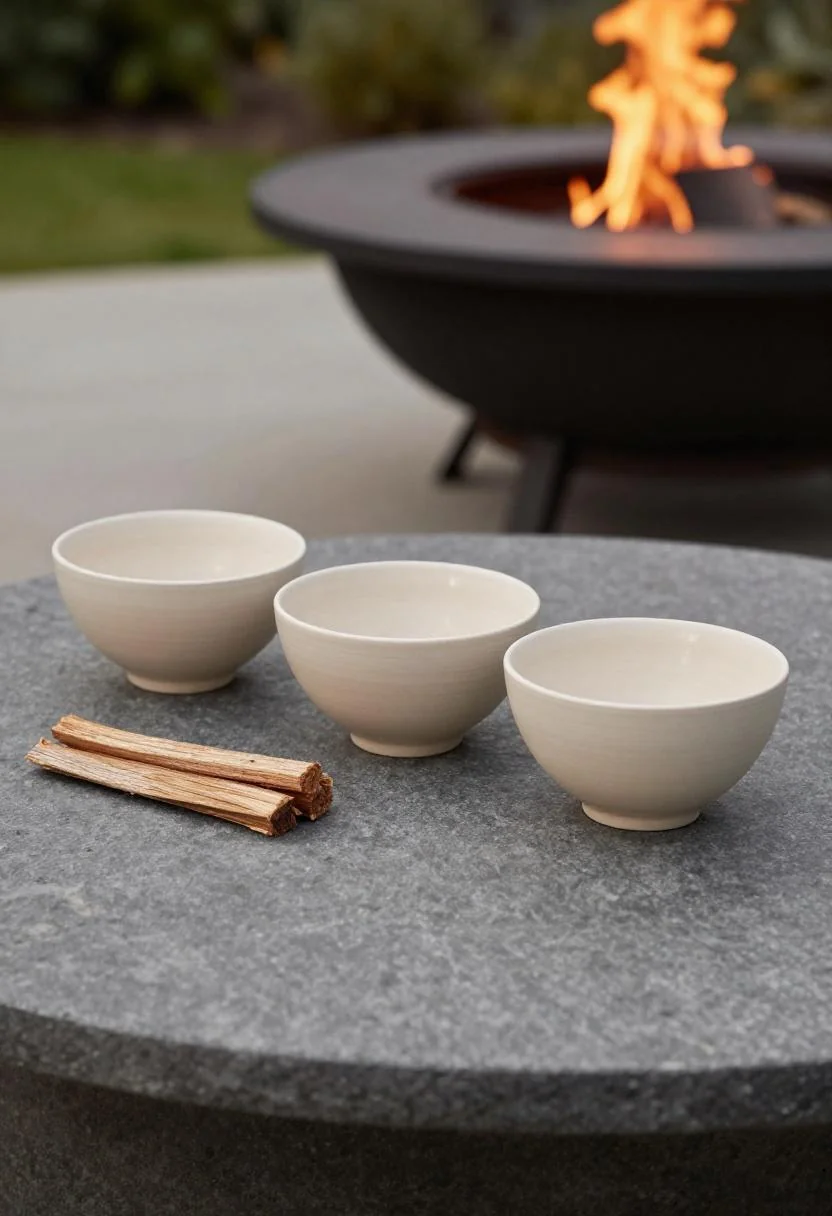
An iron fire pit surrounded by cream ceramic bowls and stacked kindling — this is the farmhouse-boho tension at its most interesting. The iron is utilitarian and rugged; the ceramics are soft and artisan. They shouldn't work together, but they absolutely do. Stack your kindling intentionally, like a composition. It sounds fussy, but it takes thirty seconds and the visual payoff is real. Explore iron fire pits on Amazon — cast iron holds heat longer and looks better as it ages.
Shades of Green: Plants, Planters, and the Living Architecture of a Boho Garden
What separates a truly alive hippie garden from a styled photo shoot is actual plant density. You want layers — something trailing, something upright, something spilling over an edge. The containers matter as much as the plants themselves, and right now the most interesting container work is happening in jade and sage glazes.
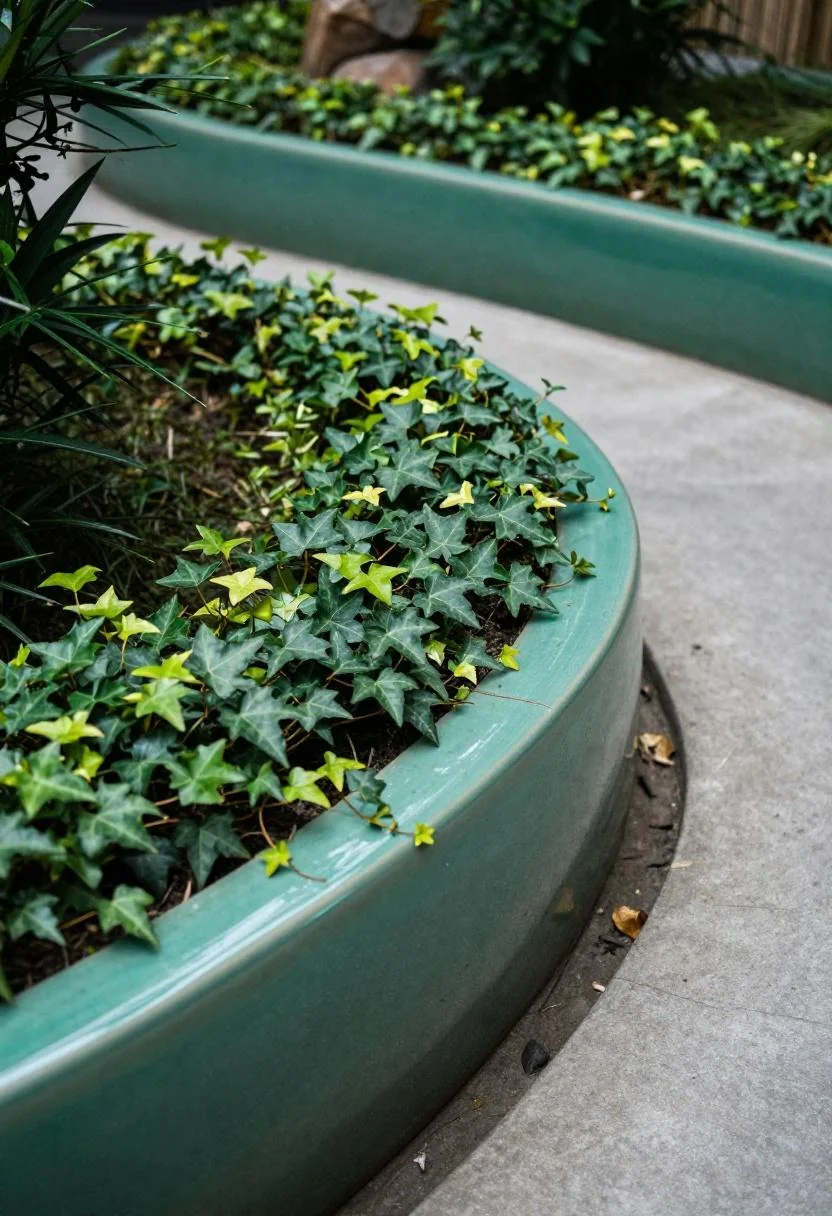
Jade green against ivy green sounds redundant, but it's actually a sophisticated tonal play. This jade ceramic planter on the edge of a garden path works because the glaze has depth — it shifts toward blue in shadow, toward yellow-green in full light. Ivy trails over the rim and softens the hard edge of the path border. If you want to DIY a similar look, ceramic paint formulated for outdoor use applied over a sealed terra cotta base gets you surprisingly close to a studio-quality glaze for about $15 in materials.
The jade bonsai pot with juniper set against a bamboo screen is doing something architecturally interesting — it's creating a room-within-a-room. Bamboo screens are available at most home improvement stores for $30–50 per panel, and they install in an afternoon with basic post hardware. Position a single bonsai or sculptural potted plant in front as a focal point. The zen-garden influence reads as hippie without any effort — it's the natural overlap between the two aesthetics. For more on building defined outdoor zones, the concrete patio guide here covers how to think about garden room structure.
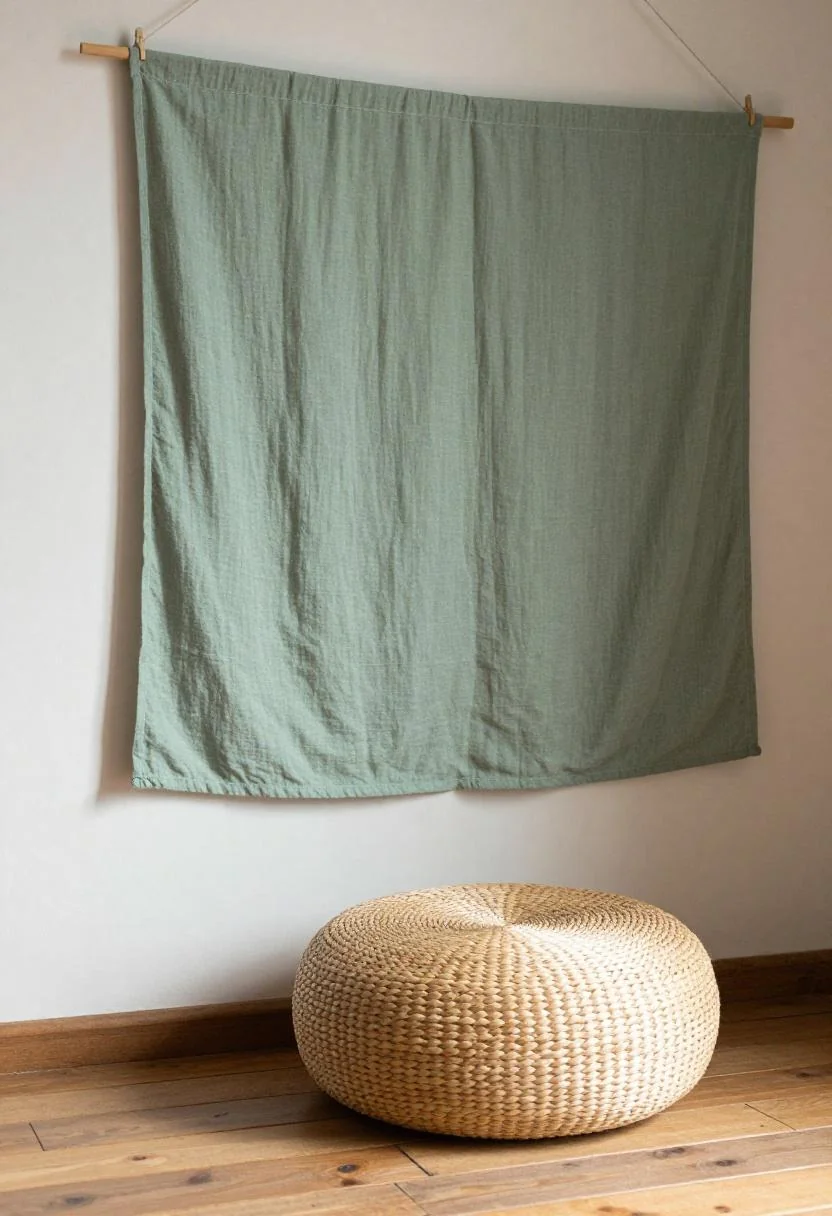
Sage green macrame on cedar fence? This combination is almost too easy. Cedar has those warm honey undertones that make sage pop without competing, and the natural fiber-on-natural-wood texture story is exactly what boho farmhouse is about. The seagrass pouf below grounds it and adds a functional seat. Find sage macrame wall hangings on Amazon — look for ones made with cotton rather than synthetic cord if you want it to weather gracefully.
As Harper's Bazaar's home decor coverage has pointed out, the current wave of natural-material outdoor design is specifically pushing back against the all-weather-resin aesthetic that dominated the 2010s. Natural fiber weathers. It softens. It belongs in a hippie garden in a way that plastic never will.
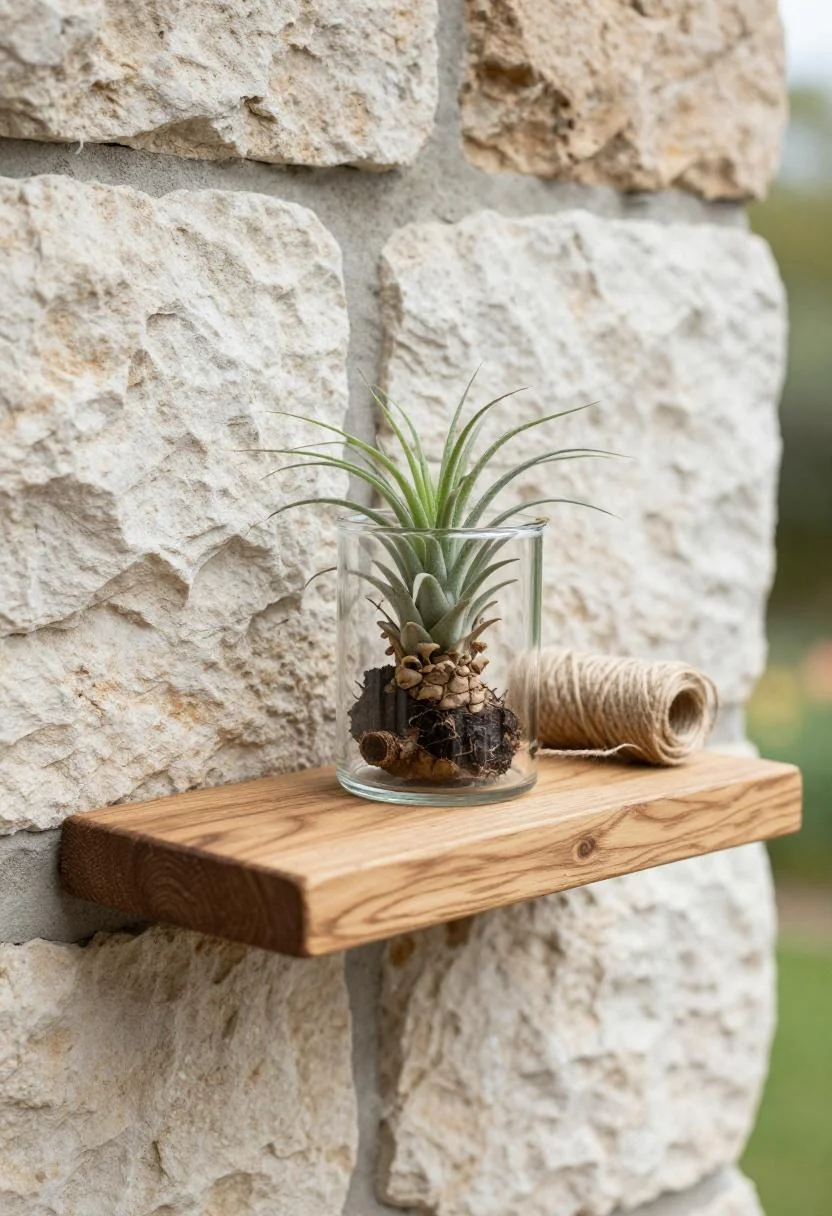
This wasabi-tinted glass terrarium with air plants on an oak garden shelf is the low-maintenance boho solution for people who love plants but travel often. Air plants need a dunk in water once a week. That's it. The wasabi glass color is unusual — it reads green but carries a yellow-chartreuse undertone that picks up beautifully in filtered shade. Mount a simple oak board to your fence or exterior wall with two L-brackets and you've got a display shelf for about $25 in lumber and hardware.
Quiet Mornings: Seating, Textiles, and the Art of Doing Nothing Well
The hippie garden philosophy, at its core, is about slowing down. And the spaces that actually make you slow down are built around comfortable seating and soft textiles — the kind of setup that makes you want to sit outside with coffee instead of eating breakfast standing over the kitchen sink.
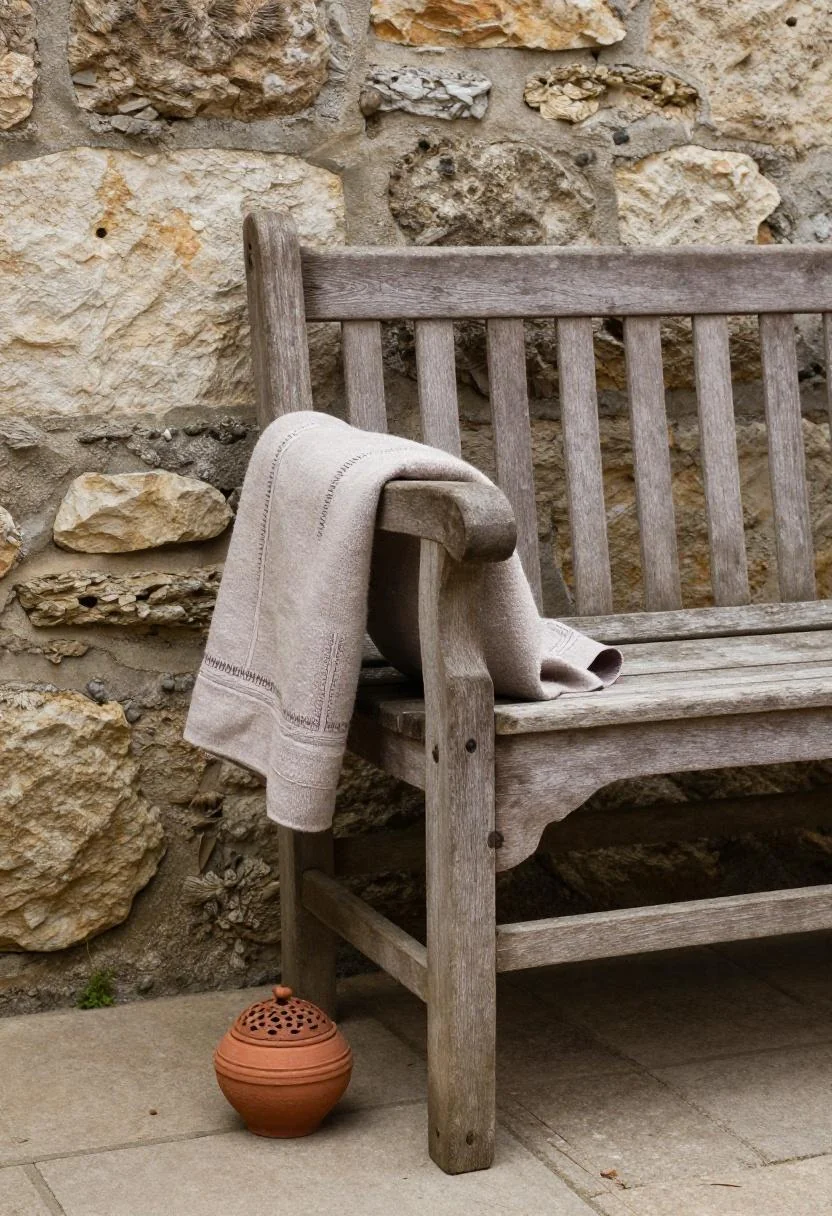
A stone-backed garden bench with a plum linen throw and an incense holder in soft morning light — honestly, this is the mood. The stone backing creates thermal mass that stays cool in summer mornings and warm in early spring. The plum linen throw is exactly the right weight for layering: too warm to use in July noon heat, but absolutely essential at 7am when the dew is still on the grass. Incense outdoors is underrated. The smoke disperses quickly enough that it's not overwhelming, but it changes the sensory experience of being outside completely.
Pro tip — outdoor linen throws do exist but they're expensive. A linen blend (55% linen, 45% cotton) from a home goods store washes well and holds up to outdoor use if you bring it in during rain. Look for weights around 200gsm for year-round versatility.
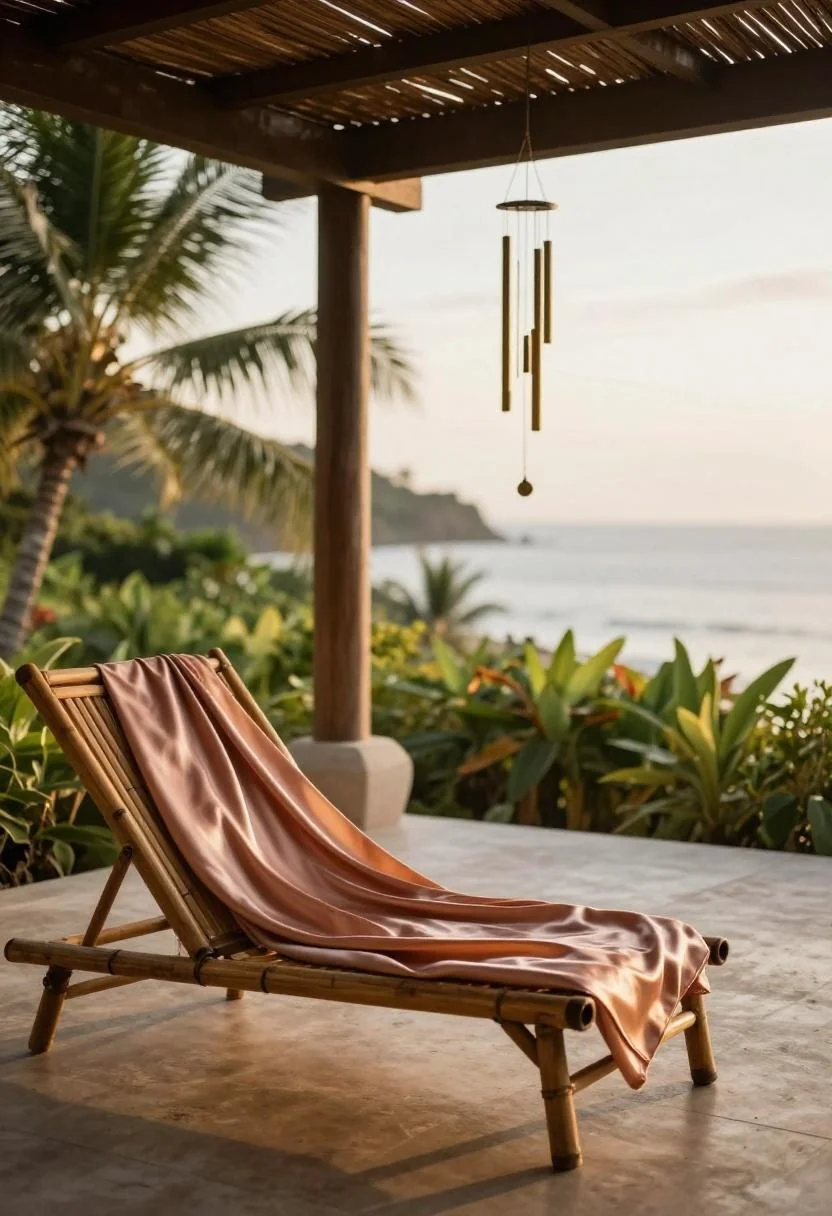
The plum silk sarong draped over a bamboo lounger with a brass wind chime is pure tropical boho. Wind chimes are one of those elements that are deeply polarizing — and yet in a hippie garden, they're basically non-negotiable. The brass ones age into a warm patina that looks incredible against bamboo and dark textiles. Hang it where it'll actually catch a breeze, not decoratively tucked against a wall where it'll be silent all summer. Shop brass wind chimes on Amazon — look for solid brass rather than brass-coated aluminum if you want the sound quality to last.
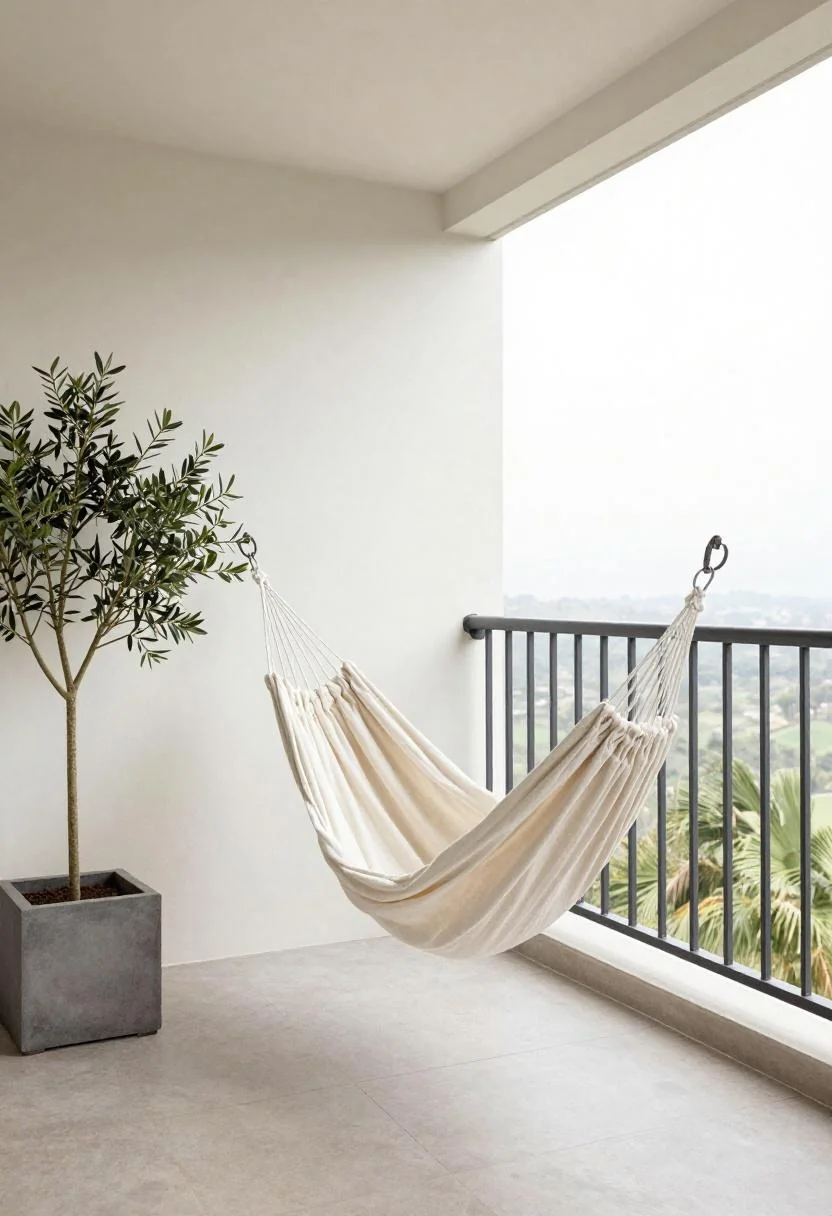
This cream linen hammock chair beside a slate-potted olive tree is minimal boho at its best. The olive tree is key — it's one of the few trees that actually thrives in containers long-term, it tolerates dry conditions, and its silver-green leaves catch light in a way that reads as architectural. The cream linen against slate and silver-green is a palette study in restraint. Nothing competing, everything breathing.
If you're working with a balcony rather than a yard, this is your blueprint. Two elements, intentionally chosen, with space between them. More on building out small outdoor spaces below — but this setup proves you don't need a full garden to get the full effect.
Small Spaces, Maximum Soul: Balconies, Decks, and Tight Corners
Can you do a real hippie garden on a 6x8 balcony? Yes. The answer is always yes. The trick is thinking vertically and resisting the urge to fill every inch of floor space.
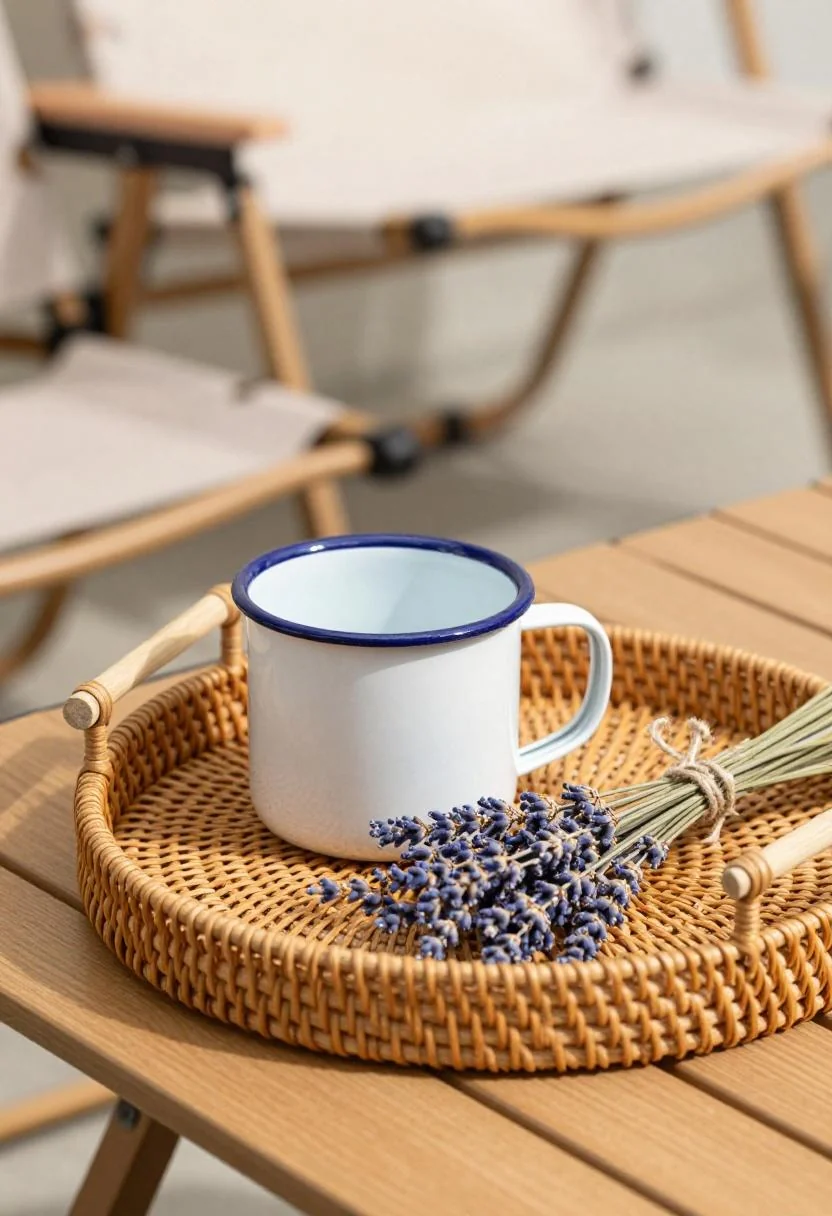
A wasabi enamel mug and a dried lavender bundle on a rattan tray — this is a surface styling move, not a full garden project, and that's exactly the point. Sometimes one composed tray on a small side table does more for the atmosphere than three new pieces of furniture. The wasabi color is surprisingly versatile: it picks up green from nearby plants and warm tones from wood, acting as a bridge between the organic and the decorative. Enamelware is genuinely farmhouse-appropriate, easy to find at thrift stores for under $5 a piece, and looks great aged. Don't buy it new if you can avoid it.
(I've found some of my best enamelware at estate sales — the old pieces have a weight and a glaze quality that modern reproductions rarely match. Worth the Saturday morning.)
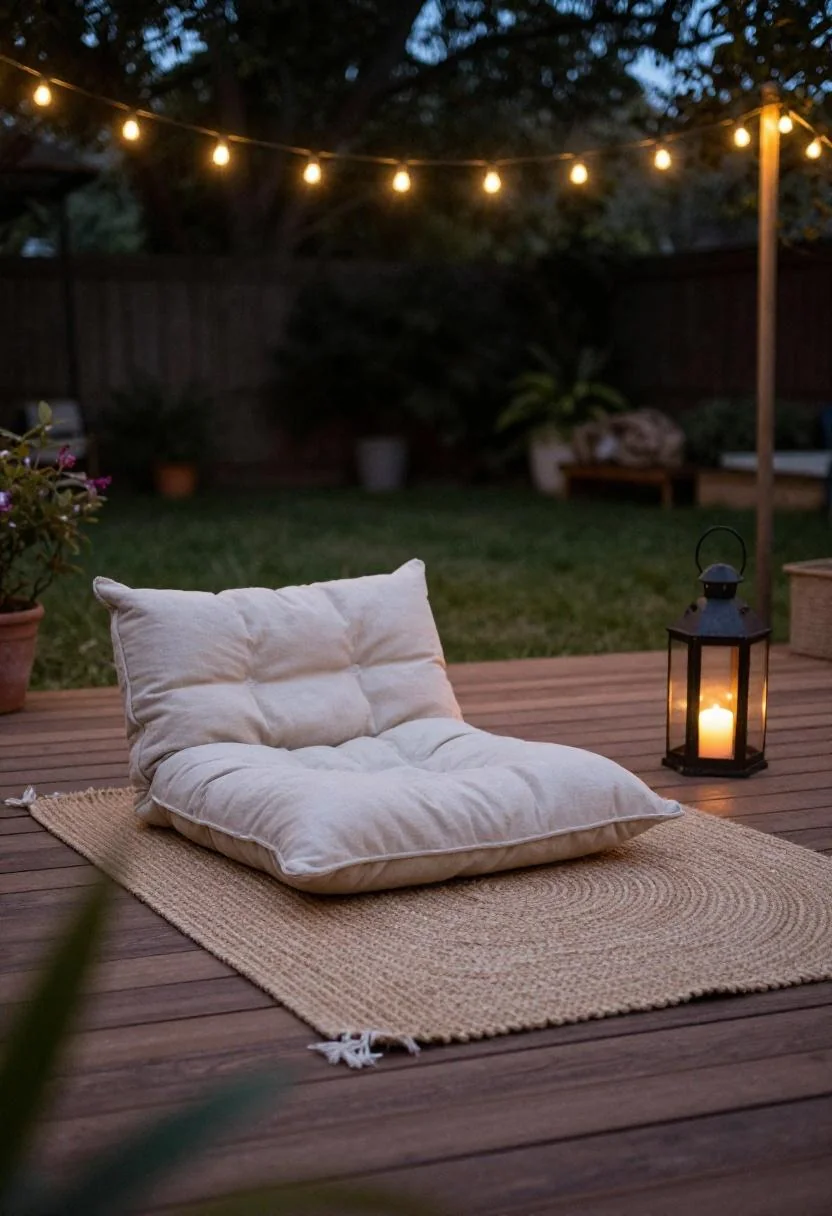
Floor cushions change the entire dynamic of an outdoor space. This persimmon floor cushion with an iron lantern on a sisal rug creates a ground-level seating moment that feels genuinely bohemian — not just decorated. String lights overhead complete it.
Here's the trick with floor cushions outdoors: weatherproof inserts exist, but the covers are where you express yourself. Make your own from outdoor canvas fabric with a grommet closure — about $20 in materials, a couple of hours with a basic sewing machine, and you get exactly the color and texture you want. Persimmon outdoor canvas is available from most fabric retailers. Or shop ready-made outdoor floor cushions on Amazon if sewing isn't your weekend plan.
How do you make string lights feel boho and not generic? The bulb shape matters more than people realize. Go for Edison-style globe bulbs in a warm 2200K color temperature. They cast the kind of light that makes everyone look golden, and they photograph beautifully if you're documenting your garden progress. For more ideas on creating outdoor spaces that feel genuinely special, the budget pool deck guide has some seriously transferable ideas about materials and layering.
What about hiding utility eyesores in your garden space? The same principles that apply to hiding septic tank lids beautifully — using plants, ground covers, and decorative elements — work just as well for utility boxes, hose connections, and anything else that breaks the visual flow of your boho setup.
And if you're choosing a stain or finish for your deck or fence before you start styling, the Sherwin Williams deck stain guide covers the warm cedar and driftwood tones that pair best with this whole earthy-boho palette.
Pulling It Together: The Hippie Garden Color Story
Step back from everything above and you'll notice the palette tells a coherent story. Cool blue ceramics anchor one end of the spectrum, doing the visual work of sky and water. Jade and sage carry the garden greens into decorative territory — they're the bridge between the plants and the made objects. Terracotta and persimmon bring warmth and earthiness, the colors of clay and sunset and spice markets. Plum adds depth and drama without going dark. And cream, linen, and wasabi sit in the middle of everything, softening transitions and making bolder accents readable.
As Vogue's color trend coverage has consistently noted, the shift toward nature-derived palettes in exterior and garden design isn't a fleeting moment — it's a genuine recalibration toward materials and tones that feel rooted rather than manufactured.
You don't need all of these tones at once. Start with one anchor color — terracotta is the most forgiving — and build outward from there. Add a second color (jade or sage) through your planters. Introduce a third through textiles (plum or persimmon cushions). The cool blue and cream notes show up almost accidentally in ceramics, candles, and found objects as the space develops.
The hippie garden is never really finished. That's the point. It's a living project, added to slowly, the way any good thing is built.
This post contains affiliate links. We may earn a commission at no extra cost to you.
Images in this article were created with AI assistance.


