There's a particular kind of frustration that comes with a beautifully landscaped yard interrupted by a plastic green lid staring up at you from the lawn. You've edged the beds, planted the perennials, maybe even laid fresh mulch — and there it sits. The good news: hiding a septic tank lid is one of the most satisfying weekend projects you can tackle, and you don't need to spend a fortune or call anyone to do it. The real trick is treating the lid not as an eyesore to mask, but as a design opportunity waiting to happen.
There are a few hard rules before we get into the pretty part. You can't plant deep-rooted shrubs or trees directly over a septic system — roots will destroy the tank and the drain field. Nothing permanent over the lid itself, because your pumping company needs access every few years. But shallow-rooted groundcovers, removable planters, decorative boulders, stepping stone arrangements — all of that is fair game. And honestly? The constraint makes the design better. Think of it the way Scandinavian designers think about a small apartment: limitation forces clarity.
The Path That Pretends It Was Always There
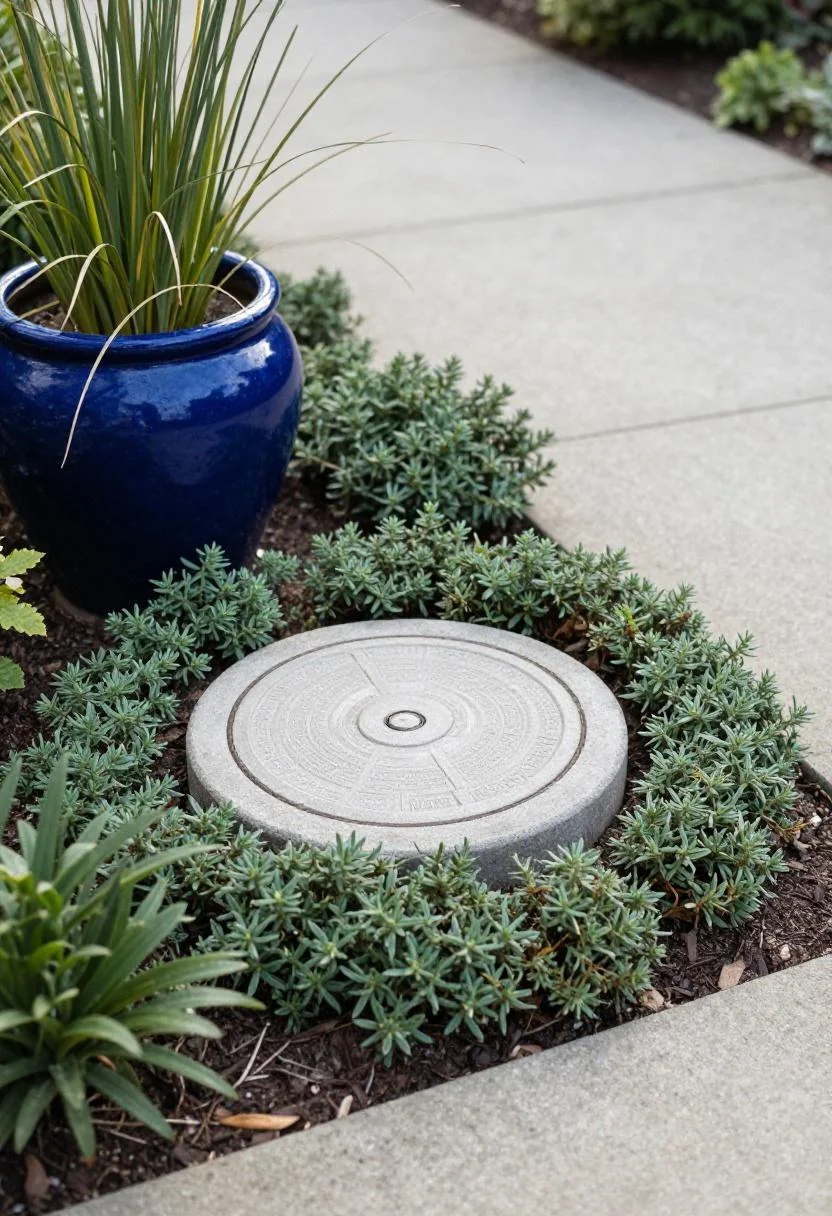
This is the approach I come back to most often. Slate stepping stones laid along a natural garden path, with creeping thyme filling the gaps — and the lid essentially disappears into the design logic of the whole yard. The cool blue-grey of slate reads as intentional, not as "we had to cover something up." Creeping thyme is the hero plant here: it tolerates foot traffic, stays low enough to avoid root problems, releases that gentle herbal scent when you brush past it, and spreads slowly enough that you can pull it back for access without drama.
The mistake most beginners make is buying one bag of stepping stones and calling it done. The path needs to go somewhere — connect it to a seating area, a garden bed, a gate. A path that starts and ends at a septic lid looks like exactly what it is. Extend it six feet in each direction and suddenly it looks like a design decision. Creeping thyme plugs are inexpensive and spread quickly in full sun — plant them 6 inches apart and they'll fill in by late summer.
A Planter That Actually Means Business
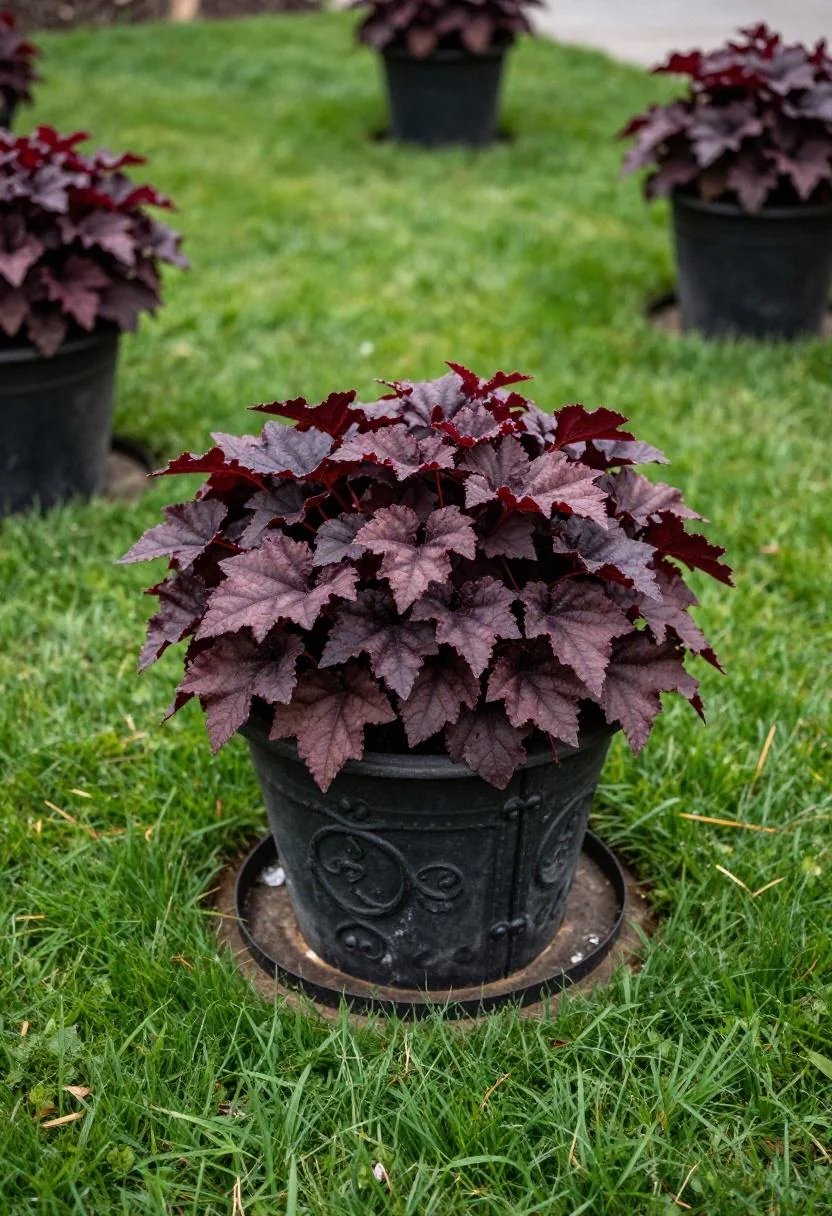
A cast-iron ring planter filled with plum heuchera is almost unfairly good at this job. The ring sits around the lid perimeter — not over it — so access is just a matter of lifting the planter aside. And heuchera in those deep burgundy-plum tones brings a richness to the yard that most people associate with expensive garden design. It's also one of the most forgiving plants you can buy: tolerates partial shade, minimal watering once established, and comes back reliably every spring.
The cast-iron aesthetic pairs beautifully with the Nordic principle of one statement object per space — this becomes the focal point, not an apology. If you're working with a more modern yard, swap the cast iron for a powder-coated steel ring in matte black. Same effect, crisper edge.
The Boulder That Fools Everyone
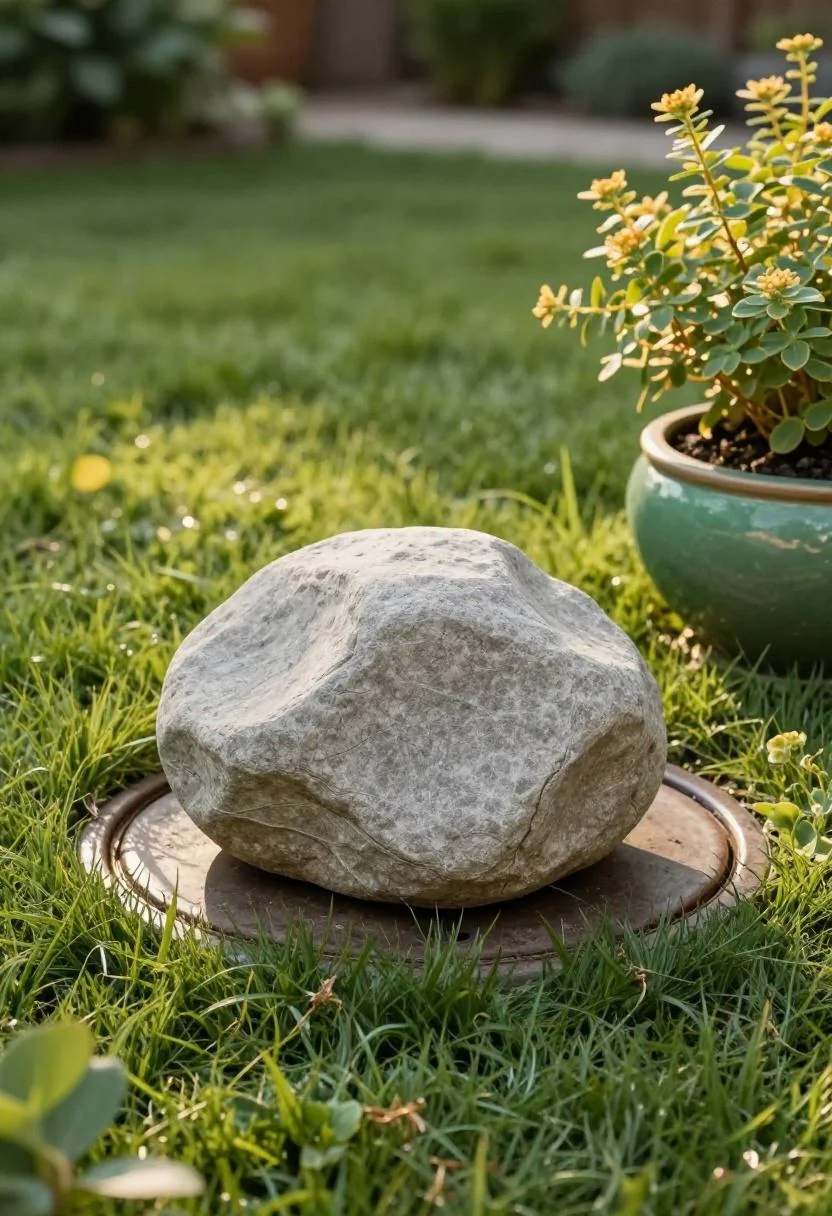
I'll be honest — I was skeptical of faux fiberglass boulders until I saw one in person. The good ones are genuinely convincing, lightweight enough to move solo, and weather surprisingly well. Pair one with a jade-toned sedum bowl placed nearby and you've created a vignette that reads as a deliberate rock garden accent. The jade green of the sedum pulls the whole thing together, adding a layer of organic softness next to the stone's solidity.
Pro tip — size matters more than quality here. A boulder that's too small looks like a prop. Go for something at least 18 inches across. It should look like it took two people to move it, even if you carried it yourself.
Faux landscape boulders range from about $60 to $200 depending on size, and they're one of those purchases that pays off immediately. You can pull this off in a weekend for well under $150 including the sedum.
Let the Ground Cover Do the Work
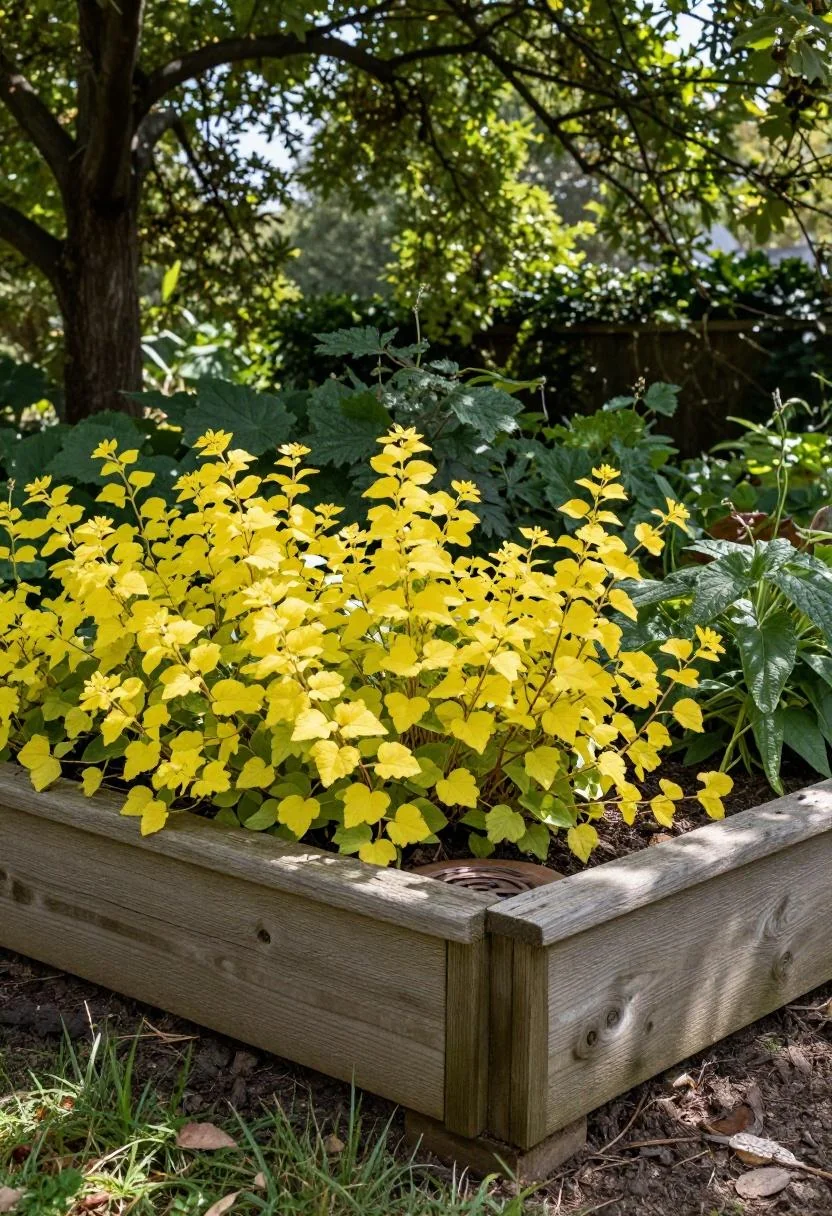
Creeping Jenny in that bright wasabi-yellow-green is one of those plants that looks expensive without being expensive. A simple wooden garden border — rough-cut cedar works well, ages beautifully, costs almost nothing at a lumber yard — defines the space, and then the Jenny just takes over. It spills, cascades, softens every hard edge. By midsummer, the lid is completely invisible under a rippling blanket of chartreuse.
The wooden border keeps the Jenny from spreading into the lawn (it will, aggressively, if you let it). For those who love edging precision, check out our guide on how to edge a flower bed like a pro — those techniques transfer directly to keeping a creeping Jenny bed crisp and contained.
Mediterranean Warmth, Zero Maintenance
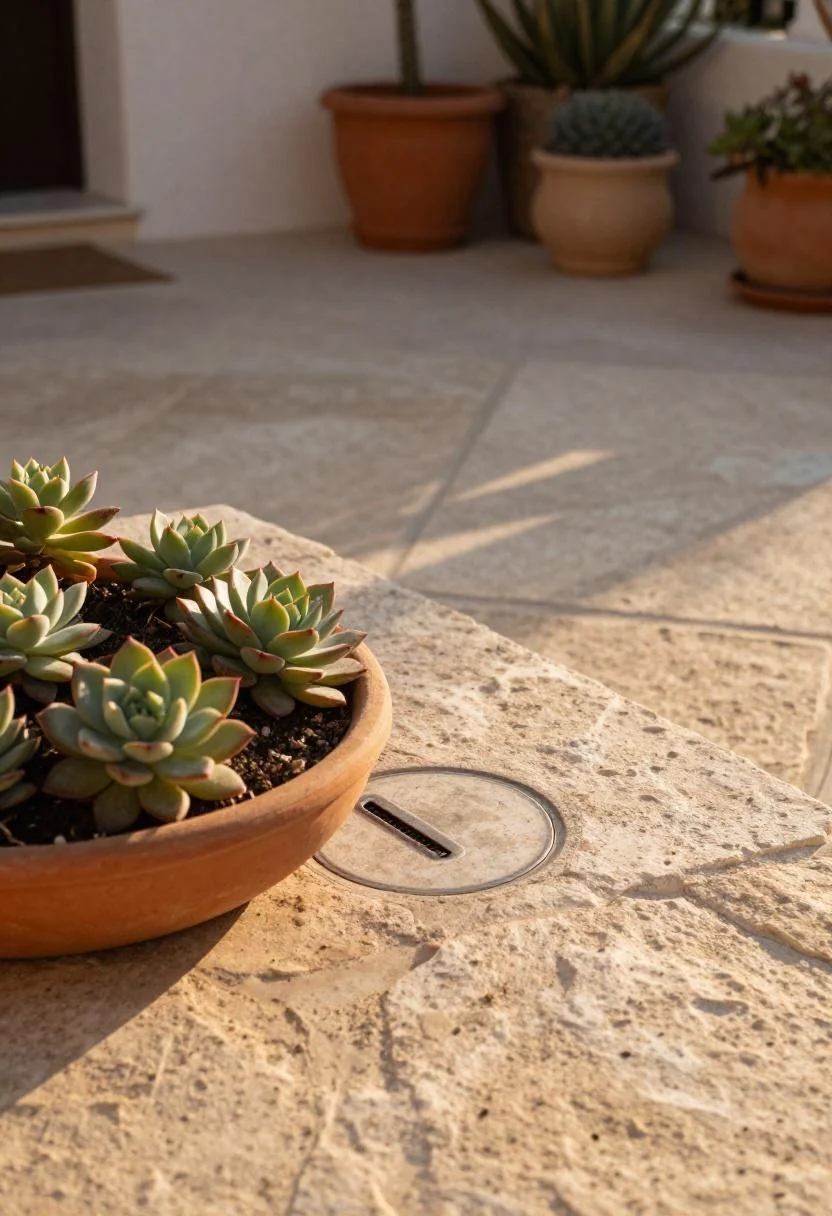
Sandstone pavers and a terracotta succulent dish — this one leans into Mediterranean villa style in the best possible way. The warm, sandy tones of the paver echo the natural landscape, and succulents in a shallow terracotta dish require almost no care: water them twice a month in summer, essentially forget about them in winter. There's something almost Zen about the arrangement. Hot afternoon light catches the warm terracotta glaze and the whole corner of the yard glows.
This works especially well for backyards with a Mediterranean or Spanish Colonial aesthetic — think stucco walls, olive trees, wrought-iron furniture. The septic cover becomes part of the scene rather than an interruption of it. As Elle Decor has consistently shown, the best outdoor spaces treat every element — including the functional ones — as part of a cohesive visual story.
Flush to the Ground, Invisible by Design
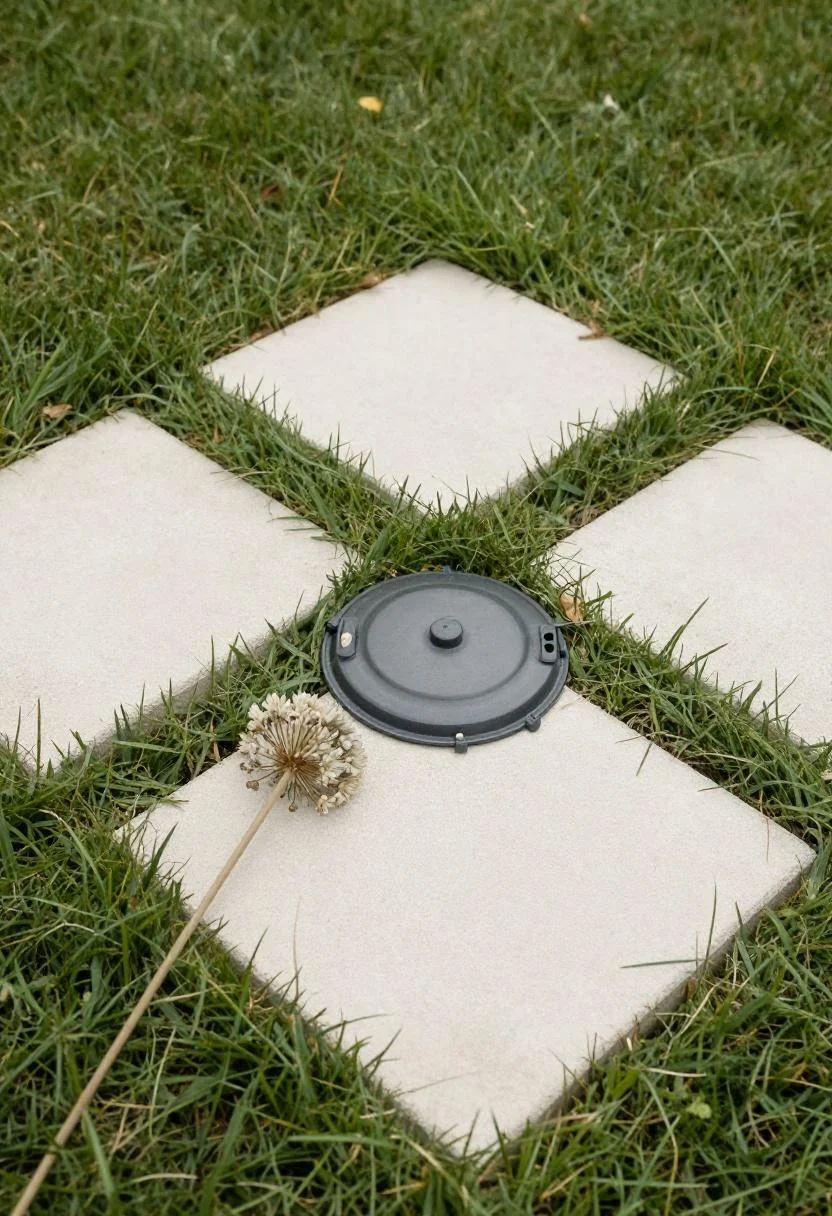
This is the most understated solution on the list, and I mean that as a compliment. Cream-toned concrete pavers laid flush with the lawn surface — no ring, no boulder, no planter — just a clean geometric patch of stone sitting level with the grass. It's architectural in the way that Scandinavian design is architectural: confident in its restraint, asking nothing of the viewer except appreciation.
The key word is flush. If the pavers sit even a centimeter above grade, they become a tripping hazard and look messy. You need to excavate slightly, tamp the base, and set them in sand or fine gravel. Takes maybe four hours on a Saturday morning. If you want more inspiration for working with pavers and concrete outdoors, our guide to simple concrete patio ideas covers the groundwork techniques in detail.
Raked Gravel and a Granite Disc — The Quiet Solution
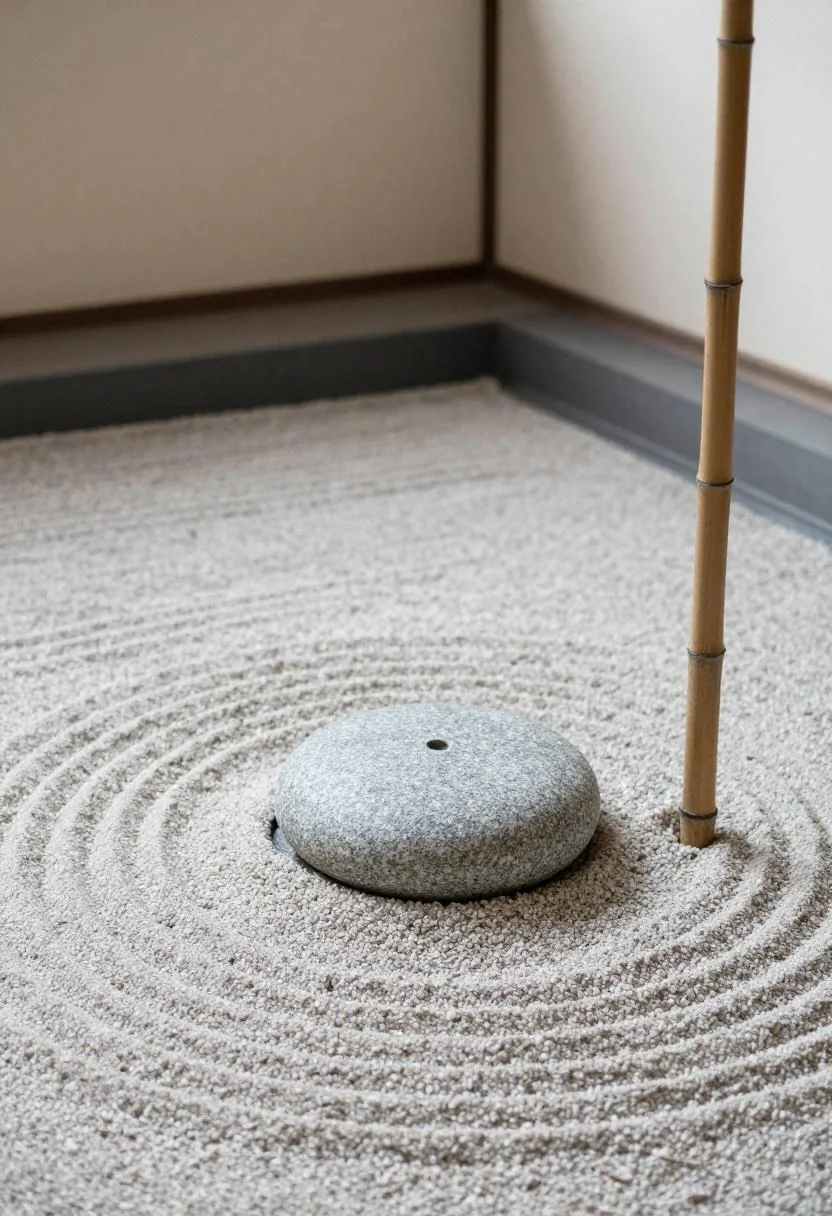
A granite disc set in raked gravel turns a yard problem into a meditation moment. Sage green moss or low sedge around the disc's perimeter softens the edges, and the raked gravel pattern does what raked gravel always does — it makes everything feel intentional, calm, considered. This is pure Nordic restraint applied to the American backyard.
The disc itself is the statement. Everything around it should be quiet. Don't add another pot, another sculpture, another element — resist. One thing. That's the whole principle.
Granite garden discs run $40–$90 at garden centers, heavier than they look, so grab a friend for installation. Worth every bit of the effort.
The Urn That Commands the Corner
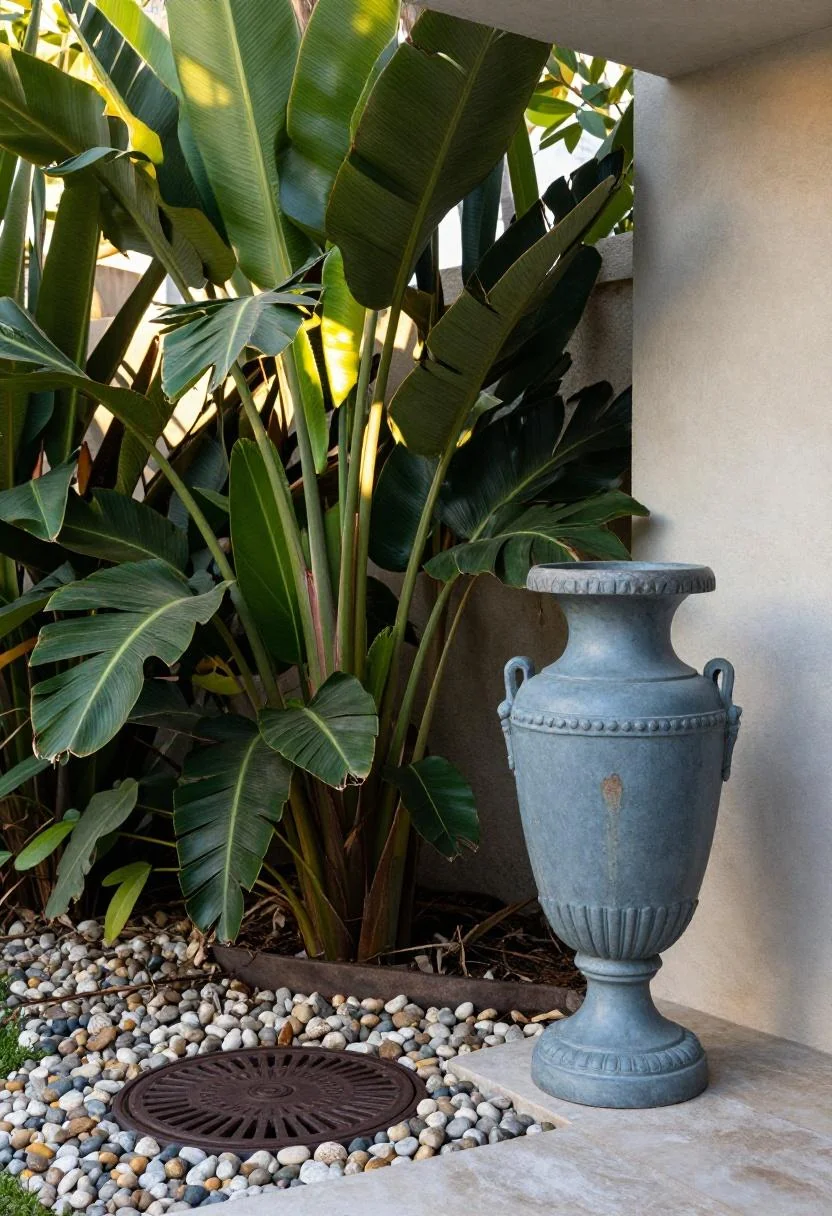
A cool blue resin urn placed beside — not over — a septic lid, surrounded by river pebble mulch. The river pebbles cover the lid entirely and create that smooth, continuous ground texture that reads as a designed area rather than a patched problem. The urn draws the eye up and away. Maybe there's a trailing plant spilling from it, maybe it's planted with a single ornamental grass — either way, the lid ceases to exist visually.
Resin urns have genuinely closed the gap on the real thing in terms of visual quality, and they weigh almost nothing — essential when you need to move everything for pumping access. Cool blue is a surprisingly versatile color outdoors; it reads differently in morning light versus evening, almost like a living glaze.
Wattle, Moss, and Actual Magic
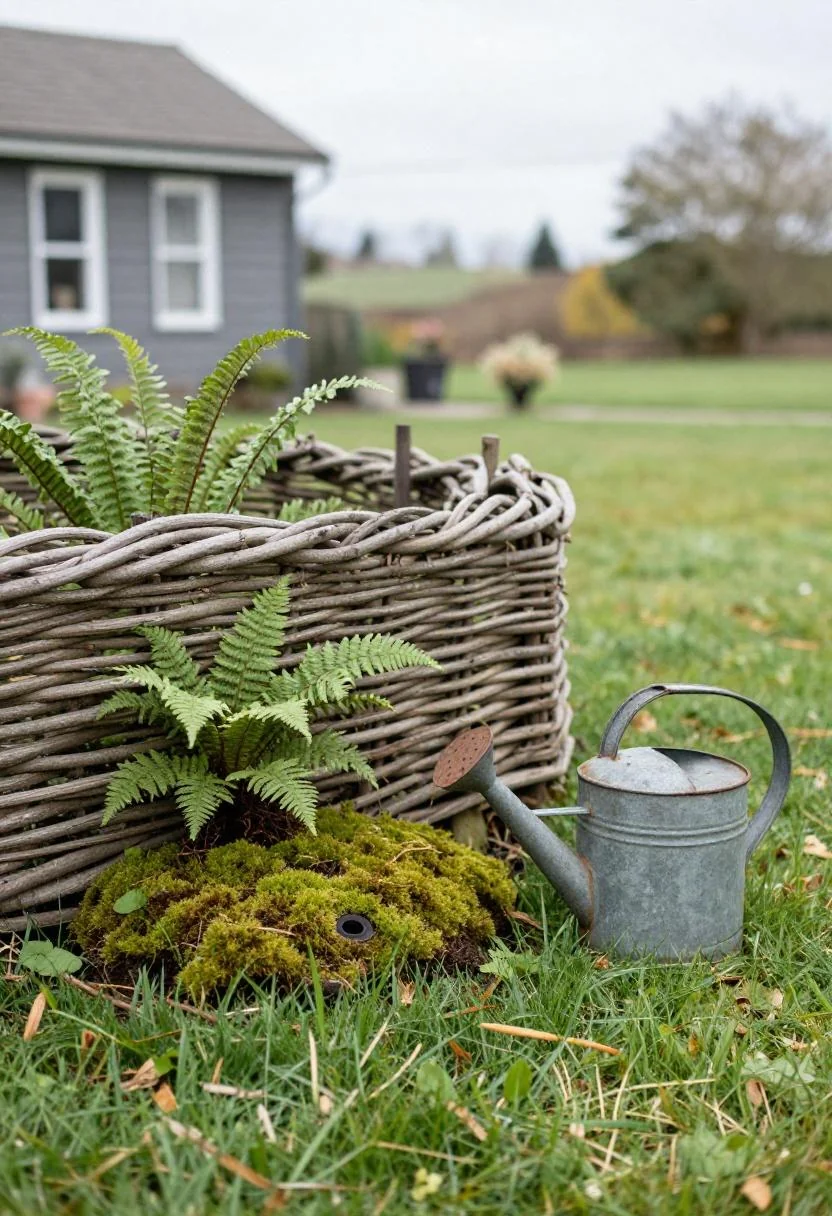
This one is for the people who want their yard to look like it fell out of a fairy tale — in the best, most tasteful way. A wattle fence ring (woven branches bent into a low circular border) encircles the lid area. Inside, a combination of sheet moss and shade-loving ferns transforms what was dead landscaping space into a lush, jewel-box cottage garden feature. The jade green of the ferns against the warm brown of the wattle is genuinely beautiful.
You can buy wattle edging pre-made, or weave your own from flexible branches — willow is the classic choice. This aesthetic overlaps wonderfully with what Harper's Bazaar has been covering in cottage garden trends: tactile, handmade elements that feel personal rather than generic. If you're drawn to that cozy, layered garden style, our piece on grandmacore home decor and cottagecore looks is full of ideas that translate brilliantly outdoors.
The Painted Cedar Disc — Weekend Project, Permanent Impact
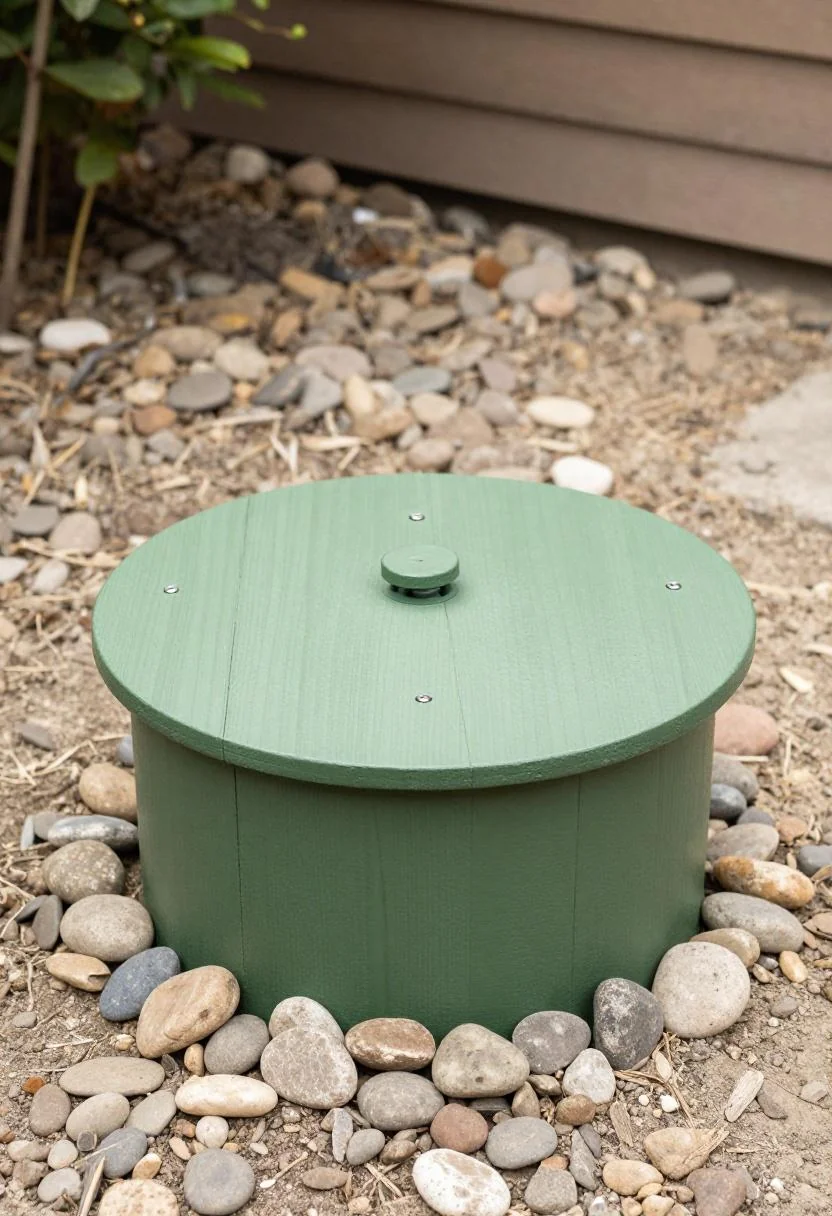
Here's the trick: cedar rounds are cheap (sometimes free from tree services), take exterior paint beautifully, and can be finished to look like anything from a rustic farmhouse accent to a modern garden feature. Painted in wasabi — that vibrant yellow-green that sits between lime and sage — with a ring of river stones around the perimeter, this disguises a septic riser with genuine personality.
Sand the cedar disc smooth, prime with an exterior bonding primer (skip this and the paint peels in six months — I've watched it happen), then apply two coats of an exterior porch paint in your chosen color. Seal with an exterior polyurethane. The river stone border is just gravel raked into a ring; it holds the disc in position and softens the transition to lawn. Total cost: under $30 if you source the cedar round for free. Under $60 if you buy one.
Exterior porch paint in green tones — look for 100% acrylic formulas, they hold color the longest.
Fire Pit Edge Energy
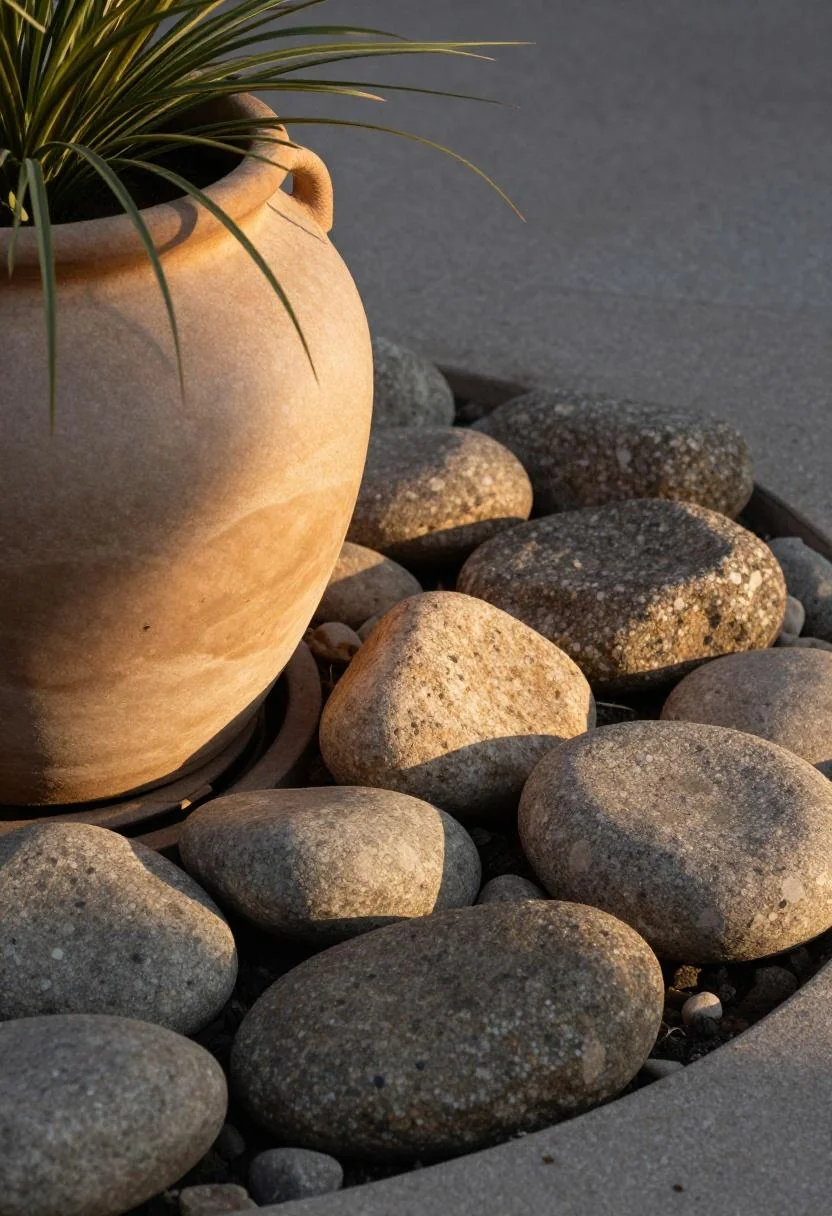
A ring of basalt cobblestones — dark, textural, almost volcanic — with a persimmon stoneware pot placed at one side. The persimmon is the color move: it's warm enough to complement the dark stone without competing with it, and it immediately reads as a deliberate styling choice rather than a camouflage job. This arrangement works beautifully at the edge of a fire pit patio where the cobblestone language already exists. Can you tell where the patio ends and the lid cover begins? That's exactly the point.
For those building out a full patio zone around this area, our round-up of cheap pool deck ideas that look expensive covers material choices and layout tricks that work equally well for fire pit surrounds. Basalt cobblestones show up in several of those looks — they're a smart, repeatable element.
Rosemary, Brick, and the Smell of Provence
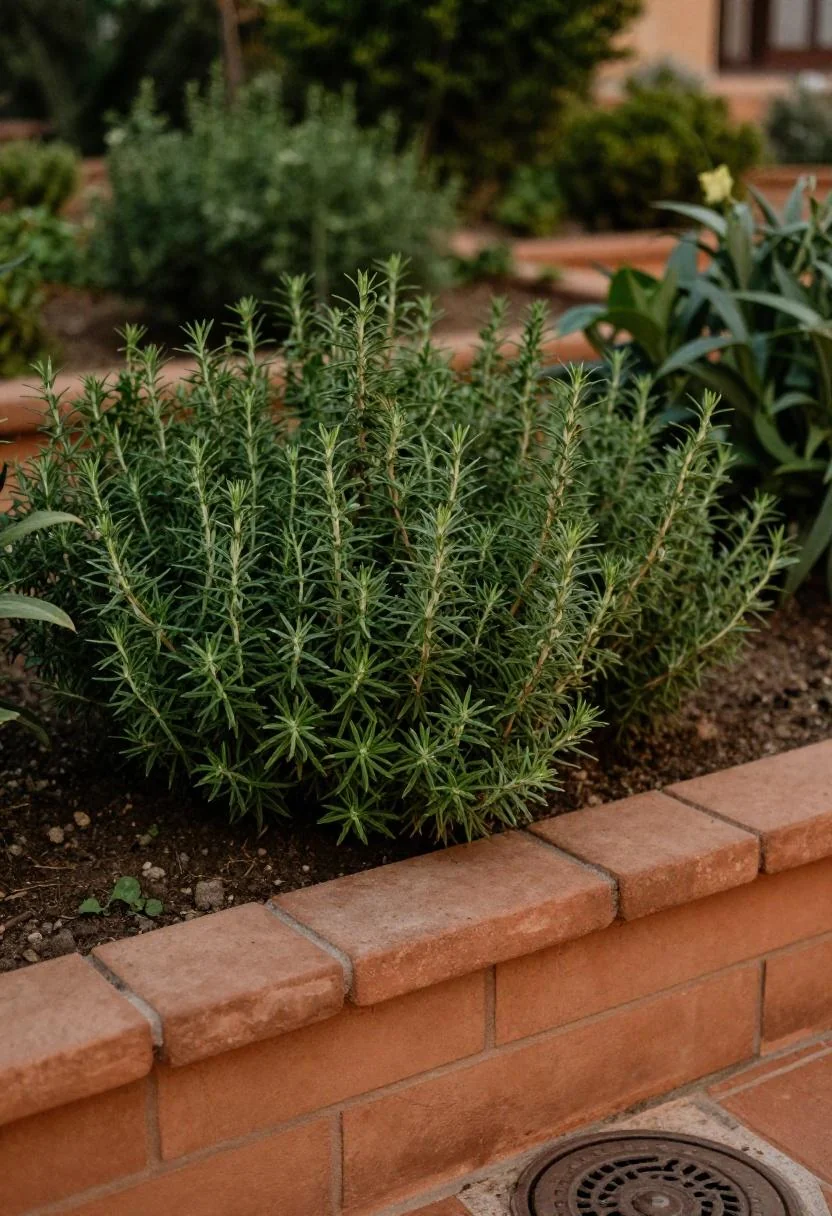
A raised terracotta brick border — just two or three courses high — with cascading rosemary tumbling over the edges. This is one of my favorites because it does everything right: the rosemary is shallow-rooted enough to stay safe over a septic system, it's drought-tolerant, it smells extraordinary, and it looks like you planned this bed from the beginning. The warm terracotta of the brick anchors the palette and echoes any Mediterranean or Spanish Colonial elements in the wider yard.
The mistake here is using standard red brick — it reads too formal, too permanent. Look for used terracotta bricks at salvage yards; they come with that beautiful weathered variation that makes a bed look established rather than just installed. Lay them dry (no mortar) in a simple rectangle or gentle curve, fill with a mix of sandy well-draining soil, and plant rosemary 12 inches apart. By the second season, the border will look like it's been there for a decade. Trailing rosemary varieties cascade more dramatically than upright types — worth seeking out specifically.
The Octagonal Cover That Looks Like It Belongs
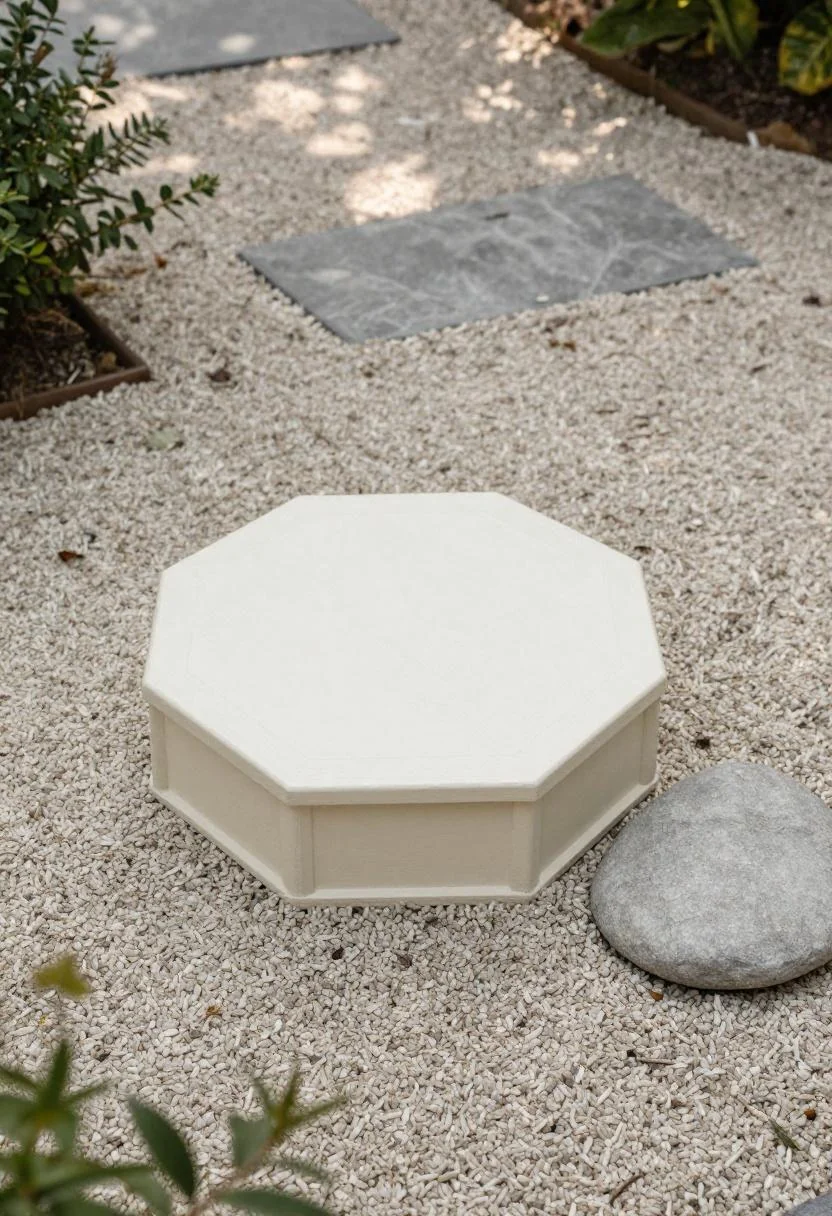
A cream-painted octagonal wooden cover, sitting flat over the lid with a fieldstone marker beside it in a gravel path. This is perhaps the most overtly decorative solution — and also the most honest. You're not pretending the cover is a stepping stone or a rock; you're making the cover itself beautiful. Octagonal shapes carry that satisfying geometry that reads as intentional design (think the classic Shaker stool, the Nordic cutting board, the Japanese bento box). In cream, it's light and airy against gravel, practically disappearing into the pale palette.
Building one is genuinely a weekend project. Cut exterior plywood into your octagon shape (template guides are everywhere online), frame the edges with 1x2 cedar, sand and prime, then paint with exterior porch paint in soft cream — Benjamin Moore's "White Dove" is the go-to. Add a flush-mount handle underneath for easy lifting. Total material cost: around $40. As Vogue's garden coverage often highlights, handcrafted wooden elements in muted tones are having a serious moment in landscape design — and this fits that wave perfectly.
Making It Your Own — Color, Material, and the Right Mindset
What do all thirteen of these approaches have in common? They stop treating the septic lid as a problem and start treating it as a site — a specific spot in your yard that deserves thought. The color palette that runs through the best of these: cool slate blues, jade and wasabi greens, warm terracotta and persimmon, cream whites that reflect light. These aren't arbitrary choices. They map almost exactly to the Scandinavian principle of a restrained palette with one warm accent — cool neutrals holding the space, one saturated element doing the emotional work.
A few things to remember as you plan your own approach. Mark the lid location now, before you plant anything, so you always know where it is. Keep a photo on your phone of the access point — your future self at 6am waiting for the pumping truck will thank you. And don't over-engineer it: the simplest solutions (a good gravel bed, one beautiful pot, creeping thyme over a stepping stone path) are often the ones that age best and require the least maintenance.
What's the one thing you can do this weekend? Pick up a bag of river pebbles and a single plant from the garden center. Cover the lid. See how it feels. You'll want to keep going.
For those who want to go deeper on planter-based approaches, our guide to half barrel planter ideas for your patio or yard has a ton of inspiration that adapts beautifully to the ring-planter style shown here. And if you're thinking about using pots in combination with bed planting — which is exactly the right instinct for most of these looks — don't miss how to use pots in flower beds for a polished yard.
This post contains affiliate links. We may earn a commission at no extra cost to you.
Images in this article were created with AI assistance.


