There’s something about a vintage camper that makes your fingers itch for a paintbrush. Maybe it’s the compact drama of it — every inch intentional, every corner a decision. The tiny-living movement handed us permission to obsess over small spaces, and the vintage camper revival took that obsession somewhere altogether more romantic. We’re talking harvest-gold wall panels, chrome latches catching afternoon light, the smell of cedar and old road maps. And the women doing these makeovers? They’re not chasing showroom polish. They’re chasing soul.
Boho eclectic is the vocabulary here — a Turkish kilim draped over a cane daybed, mismatched ceramics lined up on a narrow shelf, a plum velvet curtain brushing a walnut platform bed. Nothing matches exactly. Everything has a story. And that, honestly, is the whole point.
The Dinette: Where Retro Lives Hardest
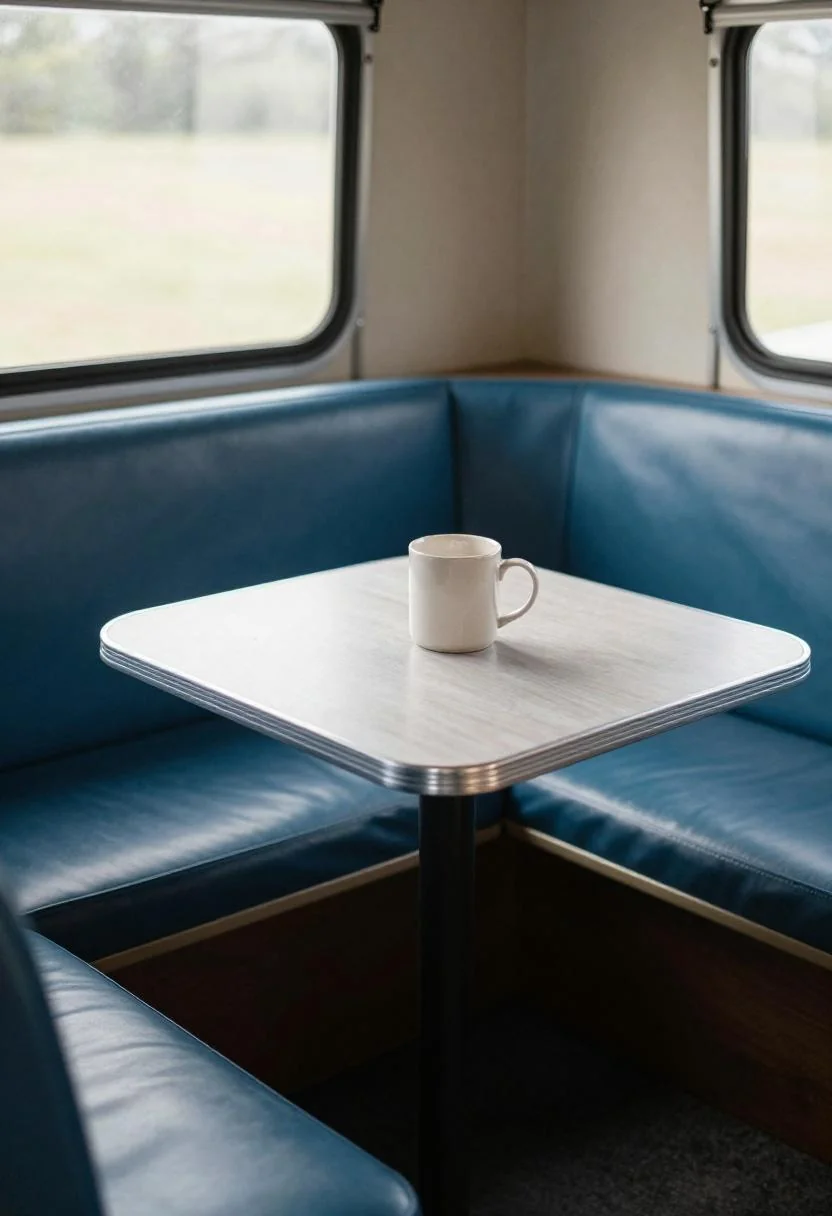
Cool blue vinyl seating — the color of an old diner sign, somewhere between sky and sea glass — wraps a fold-down formica table in this dinette nook that practically hums with nostalgia. Run your hand across that vinyl and tell me you don’t feel something. The formica surface catches light like a still lake at noon. It’s tactile, it’s cheerful, it’s an absolute dopamine hit.
Styling it boho means layering in the imperfection. A woven placemat in rust and cream. A tiny cactus in a terracotta pot wedged against the window. Maybe a folded bandana-print napkin instead of linen. The cool blue reads fresher when everything around it is just slightly sun-faded and loved.
Shop retro vinyl booth cushions
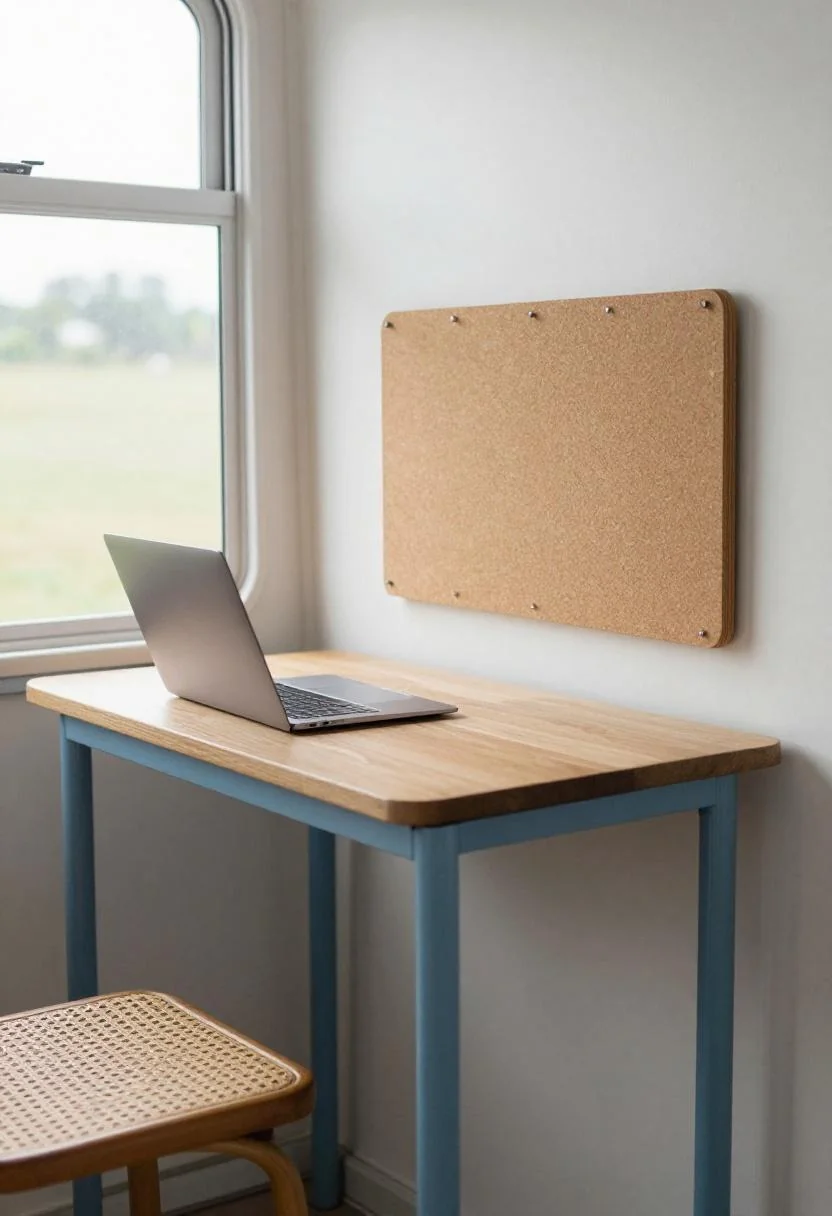
The same dinette logic applies when you convert the space into a fold-down workspace — cool blue legs anchoring the desk, a cork pinboard overhead covered in postcards and torn-out magazine pages. This is the dual-purpose trick every camper needs. By day it’s where you work; by late afternoon, with a glass of something cold and the windows cracked, it’s where you sit and feel like you’re exactly where you’re supposed to be.
Sleep Like You Collected This Bed Over a Lifetime
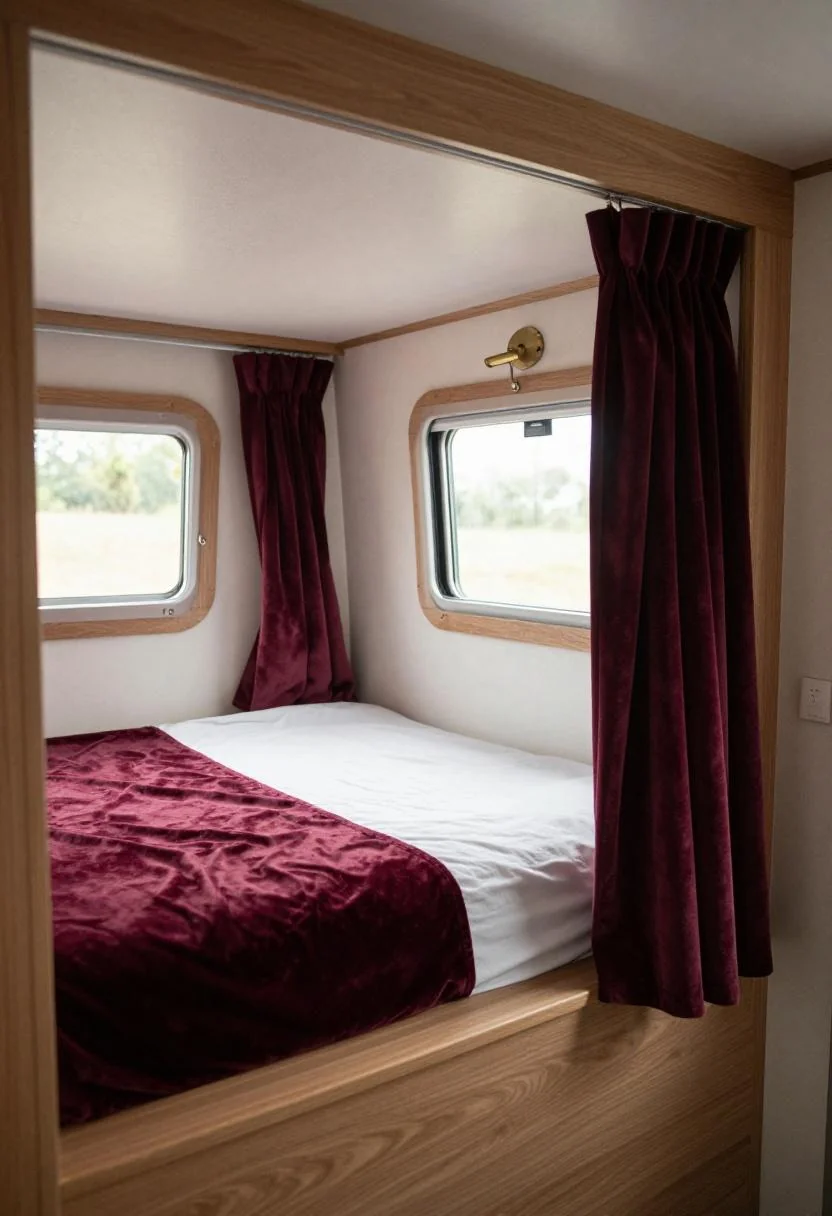
Plum velvet curtains, heavy and theatrical, frame a built-in walnut platform bed in a sleeping alcove that feels less like a camper and more like a literary character’s private chambers. The plum is deep — almost bruised, almost wine-dark — and in evening light it shifts toward something almost black at the folds. Matte against gloss, rough against smooth — that tension is everything. Pair it with undyed linen sheets and a stack of mismatched pillows in dusty rose, rust, and ivory.
The walnut platform bed deserves its own moment. That warm, grain-forward wood against the cool velvet is the whole conversation in one corner. Don’t hide it with too many textiles. Let a little of the bare wood breathe.
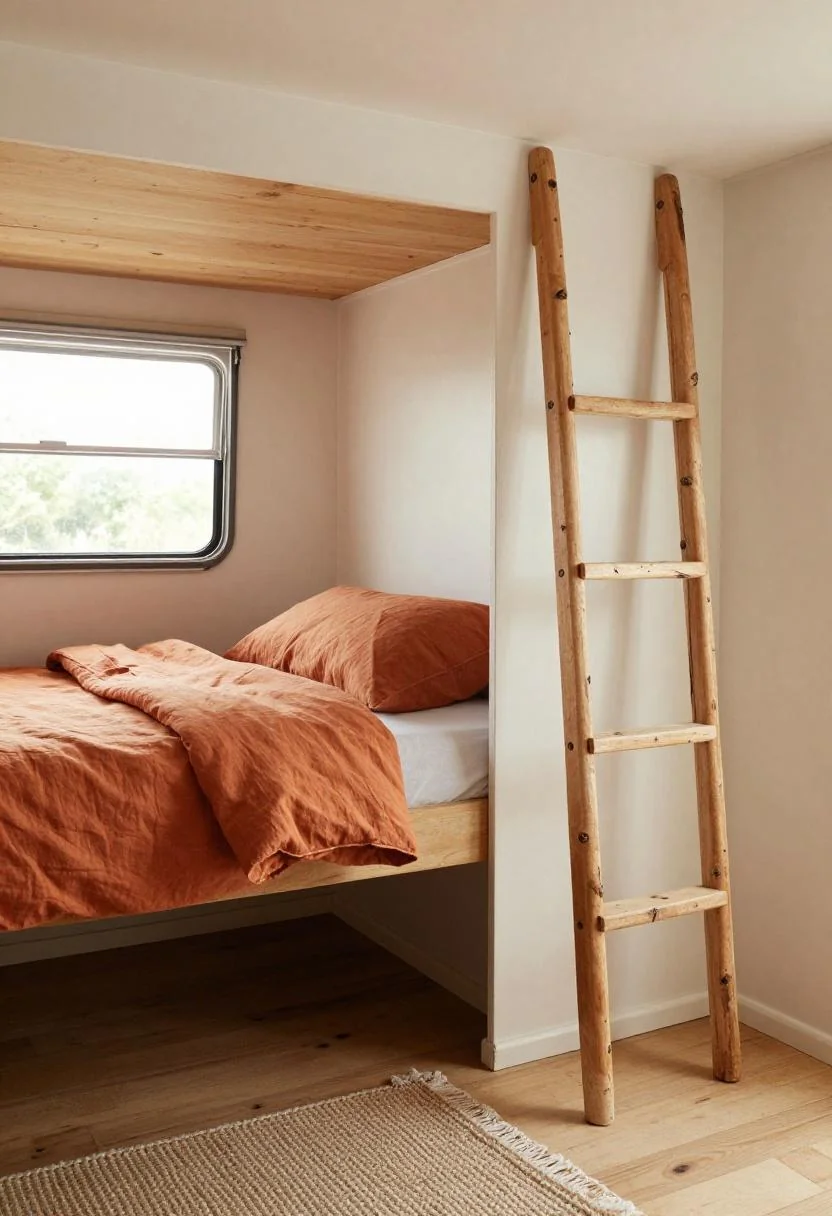
Up in the sleeping loft, persimmon linen does the heavy lifting. Not orange. Not coral. Persimmon — that ripe, warm, almost edible hue that looks totally different at 7am than it does at 7pm. Birch ladder rungs bolted to the wall give the loft a treehouse-meets-Scandi-summer-cabin energy. Throw a hand-knotted macramé wall hanging somewhere nearby. It earns its place.
Find persimmon linen duvet covers
The Kitchen Corner: Jade, Enamel, and Pure Joy
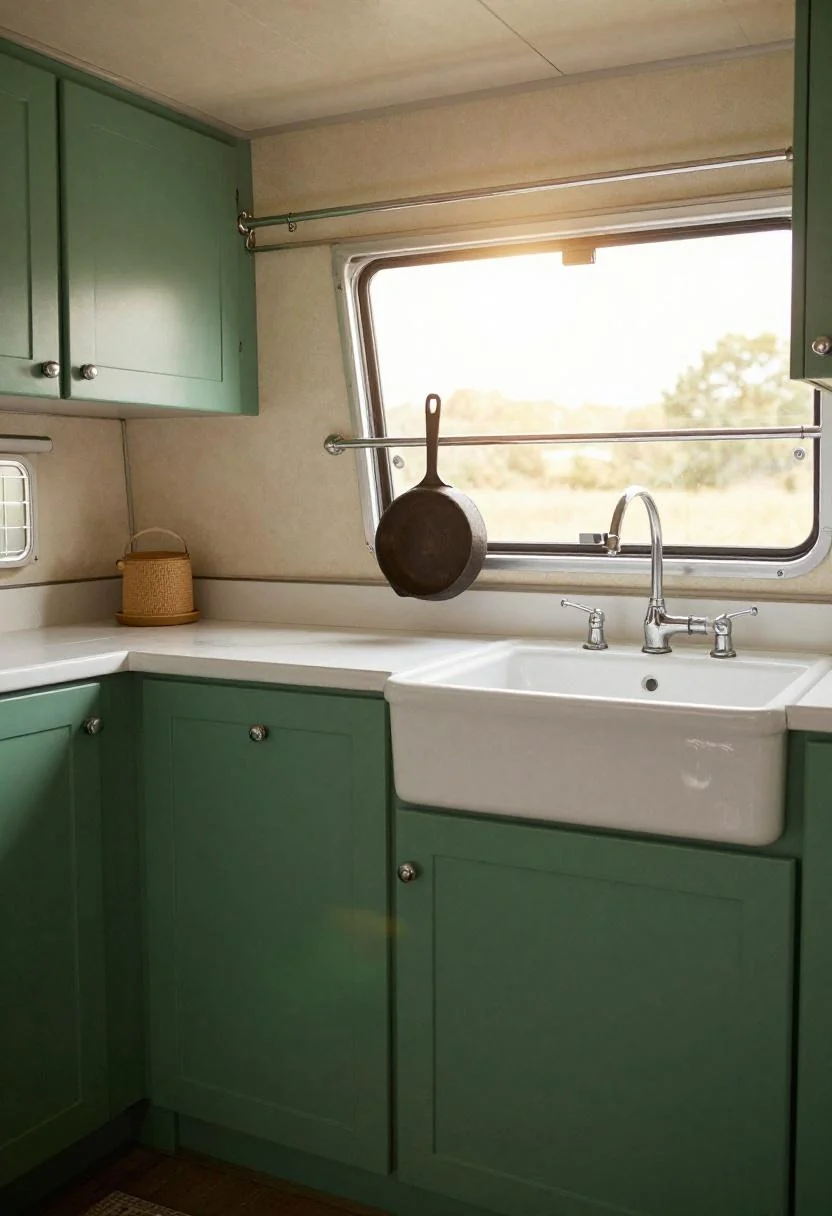
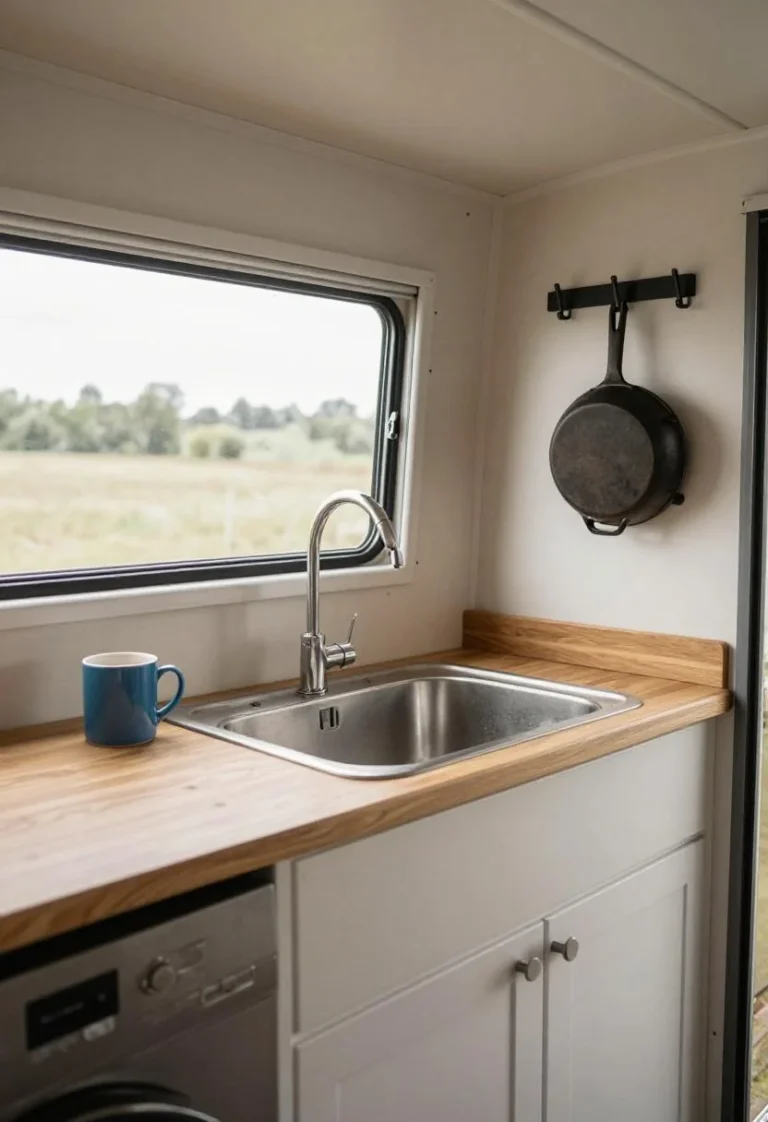
Jade green cabinetry with white enamel sink details. Close your eyes and picture this palette in late-afternoon light. The jade sits somewhere between forest and sea — moody without being dark, saturated without being loud. Against white enamel it’s graphic and clean, but the moment you add a wooden spoon resting across a small cast iron pan, or a bunch of dried herbs hanging from a hook, the whole thing softens into something deeply liveable.
The key with camper kitchens is restraint in one direction and abandon in another. Keep the surfaces clean. Then go absolutely wild with the accessories: a Moroccan oil cruet, a stack of mismatched ceramic bowls, a string of dried chilies. As Elle Decor has long championed, the best small kitchens don’t apologize for their size — they work with it, maximizing personality per square inch.
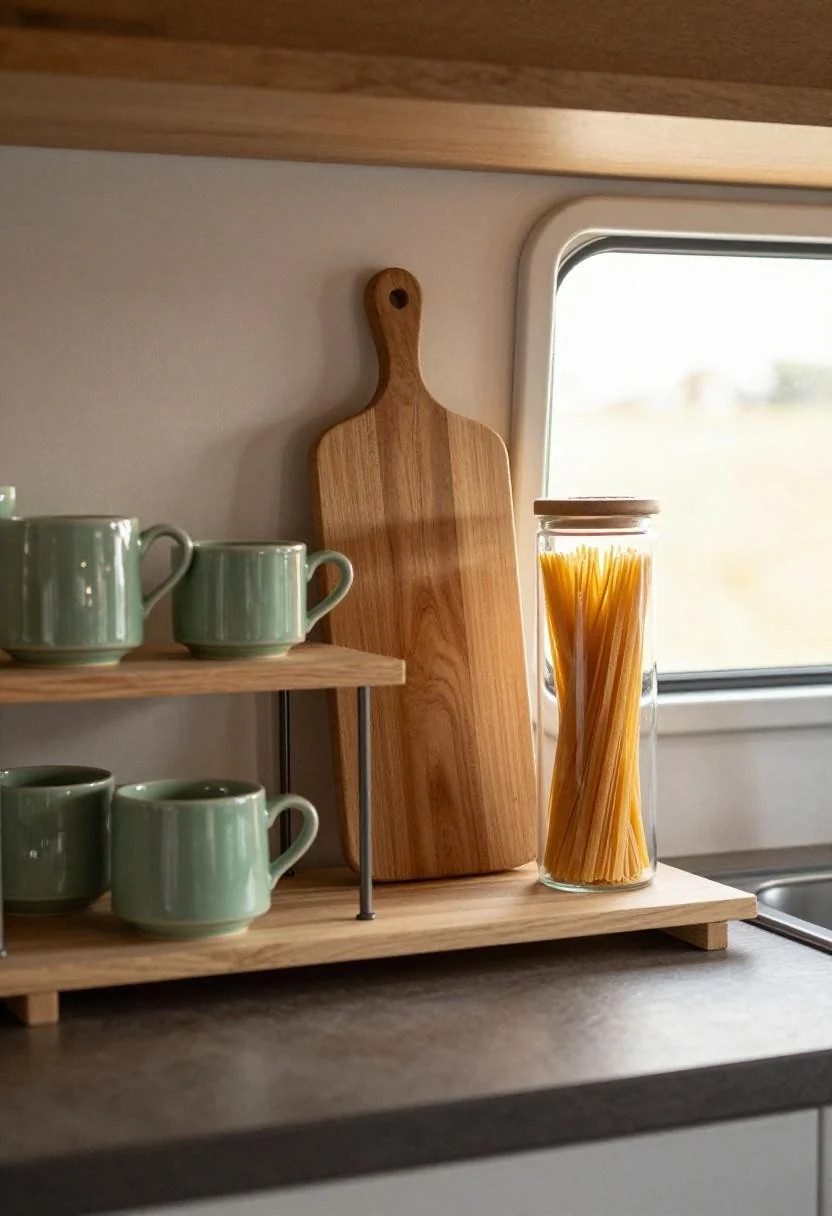
Open shelving in a camper kitchen is a commitment to curating what you keep visible. These jade green ceramics — textured, slightly irregular, the kind you’d find at a weekend market — sit alongside an olive wood board that has clearly been used and loved. The visual contrast between the cool jade and the warm honey of the wood is arresting in the most uncontrived way possible. (Yes, the olive wood will develop its own patina over time. That’s not a problem. That’s the whole point.)
What Wasabi Does to a Narrow Space
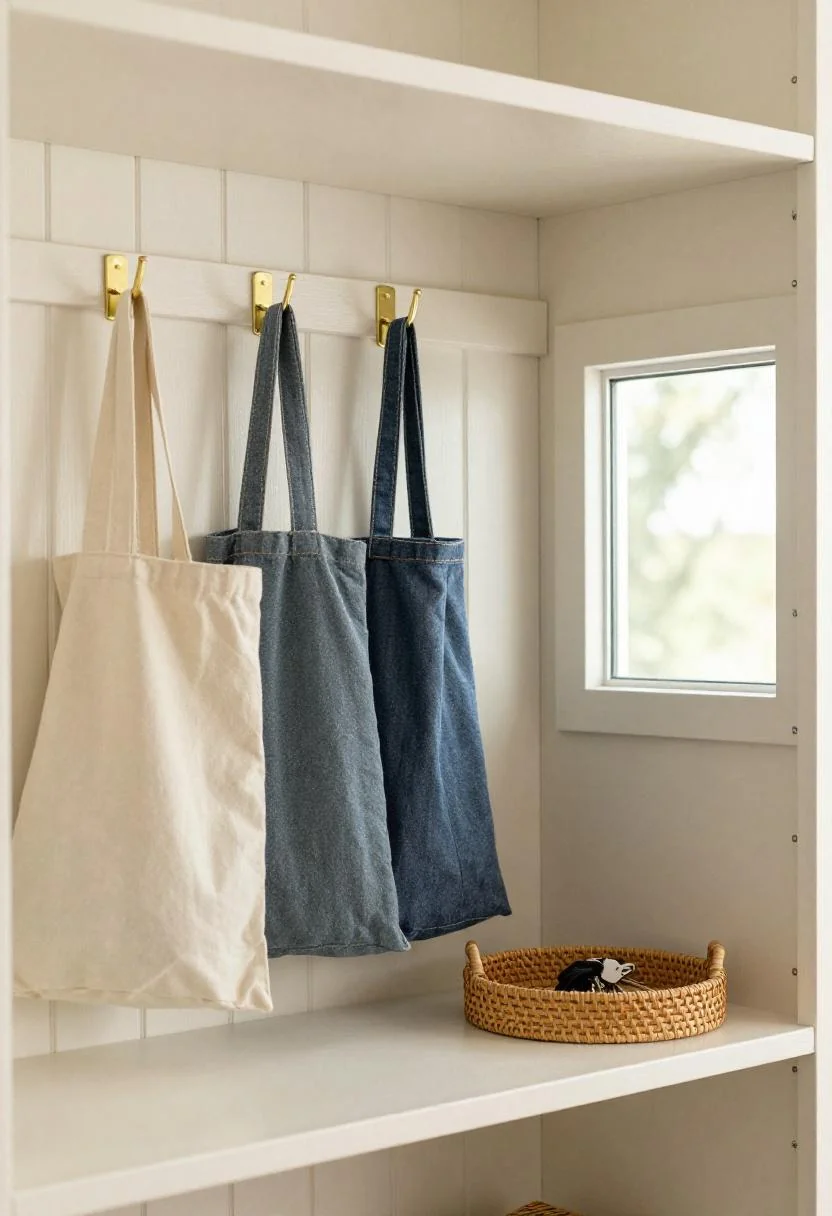
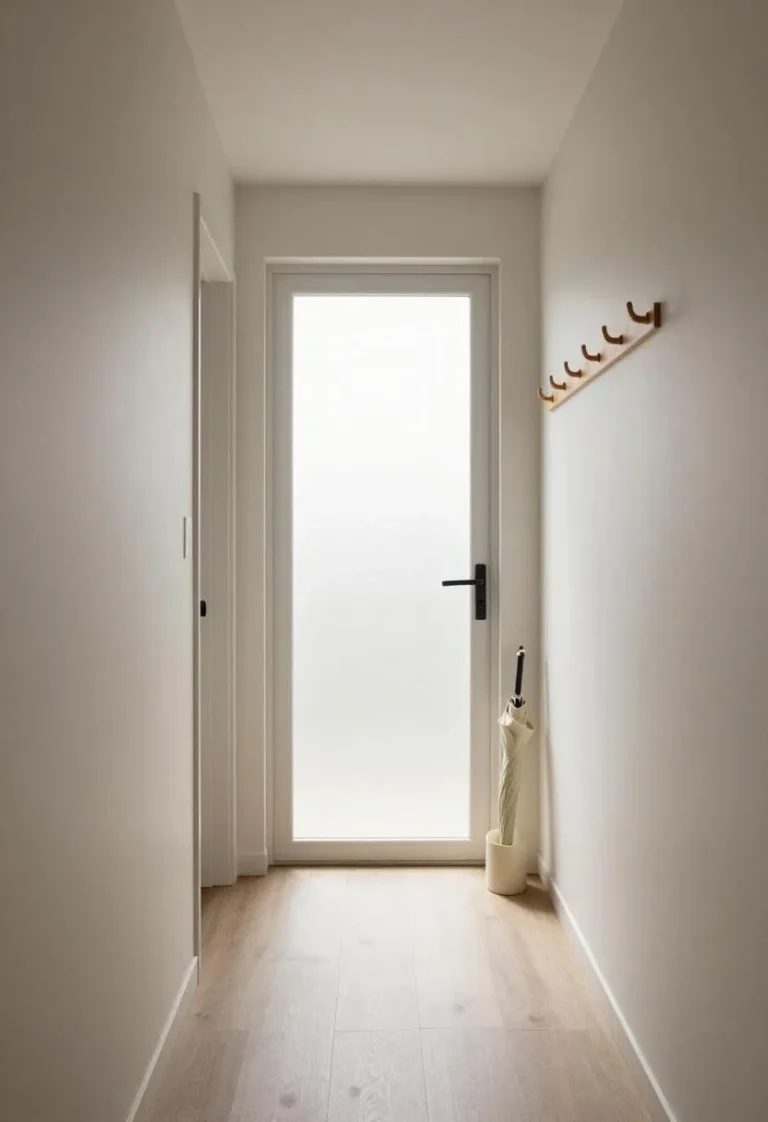
Wasabi. Not sage, not olive, not moss — wasabi. That sharp, irreverent yellow-green that makes everything around it stand at attention. Here it’s used as beadboard backing on an entryway shelf, brass hooks mounted across it for coats and bags and a single sun hat. It’s bold in the best way. The brass against the wasabi reads almost vintage-tropical, like a restored plantation shutter in a house that’s seen a hundred summers.
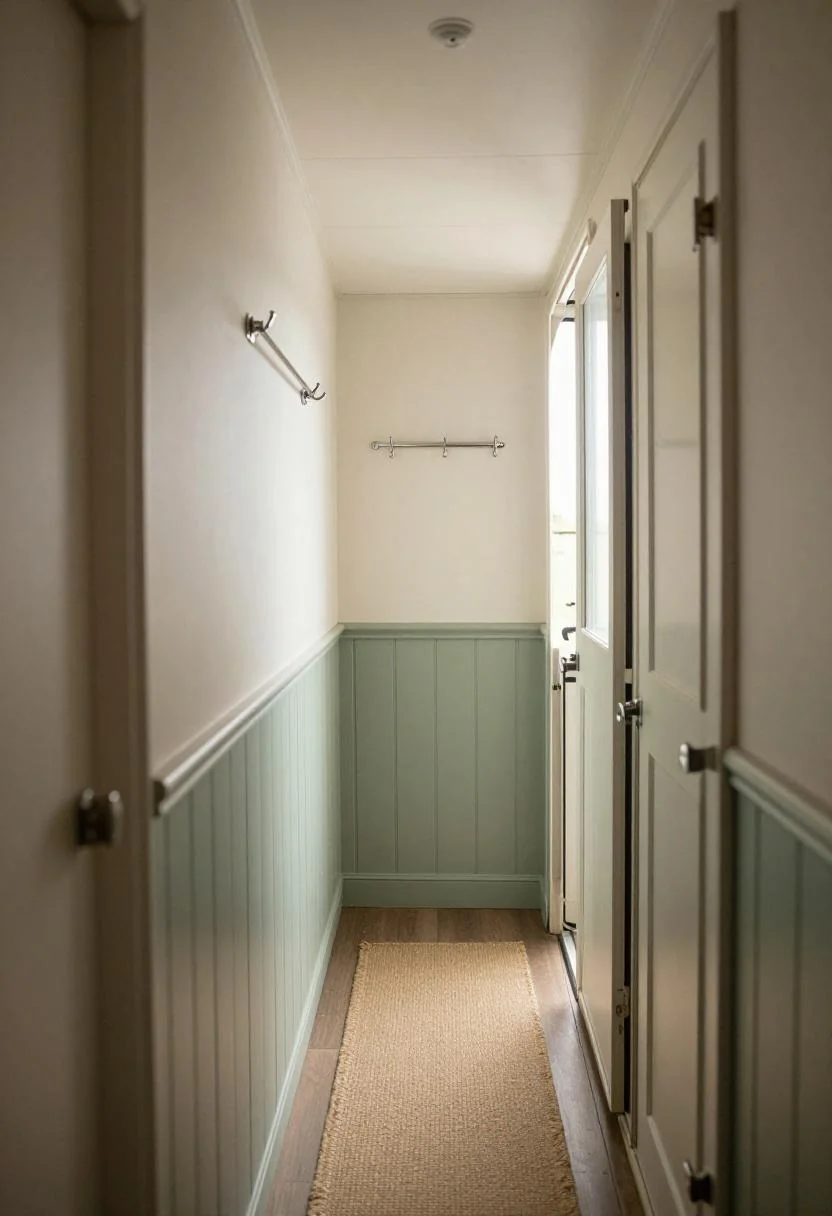
Take that wasabi further down the hall — tongue-and-groove paneling in the same zesty hue, a simple wall-mounted coat rail running its length. A narrow camper hallway becomes a moment. Layer in a small woven basket on the floor, a vintage mirror in a hammered brass frame, maybe a trailing pothos plant draped over the corner. Suddenly the hallway isn’t a passage. It’s a destination.
How to get the look: prime the paneling thoroughly before painting — wasabi tones can look greenish-grey on raw wood. Go full saturation. Commit.
The Living Corner You’ll Never Want to Leave
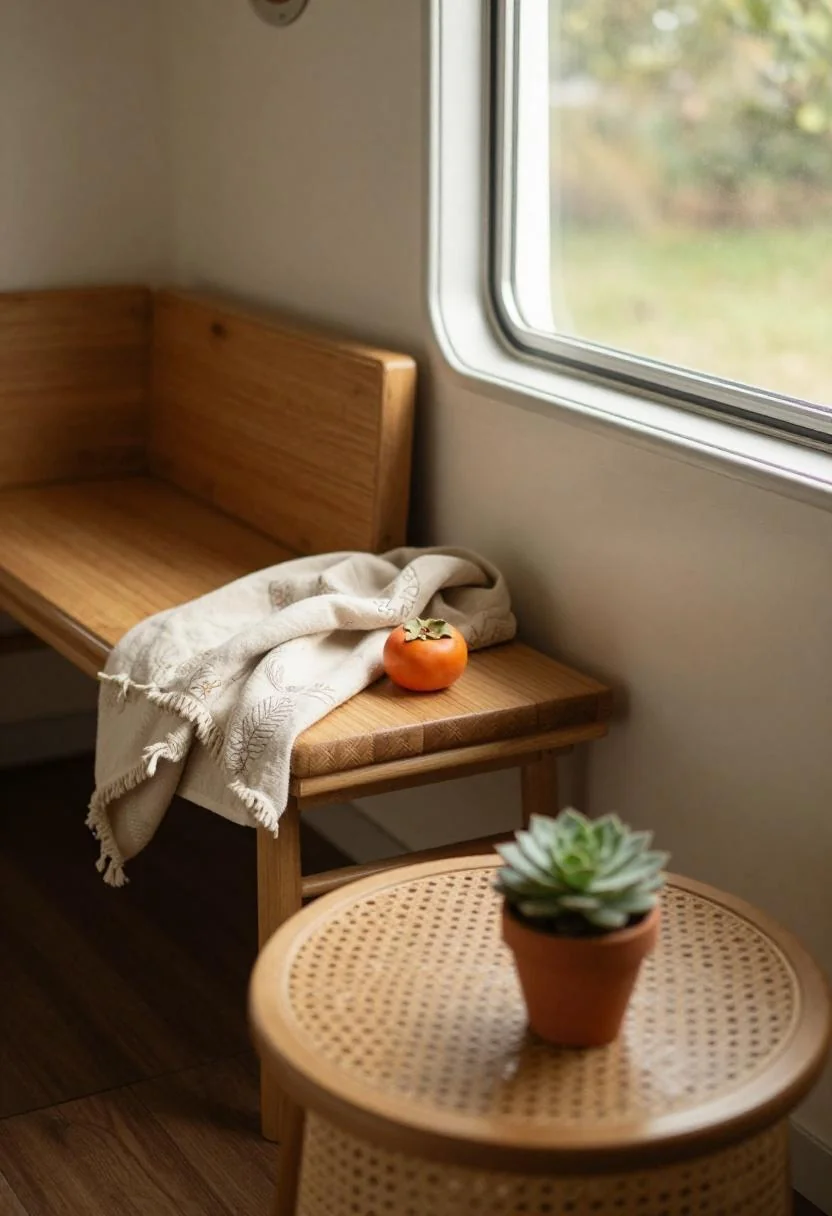
A persimmon cotton throw, loosely folded over the arm of a bench seat. A cane side table with a little wooden tray holding a candle and a spent matchbook. This is the corner you fall into on a rainy afternoon and don’t emerge from until hunger forces the issue. The persimmon — warm, ripe, insistent — bounces off the cooler tones in the rest of the camper and gives the whole space a heartbeat.
Cane is one of those materials that belongs everywhere and nowhere specifically. It’s tropical and mid-century and bohemian all at once. In a camper it adds lightness — visually and physically. As Harper’s Bazaar Home has noted, rattan and cane are perennial favorites in compact spaces precisely because they bring texture without bulk.
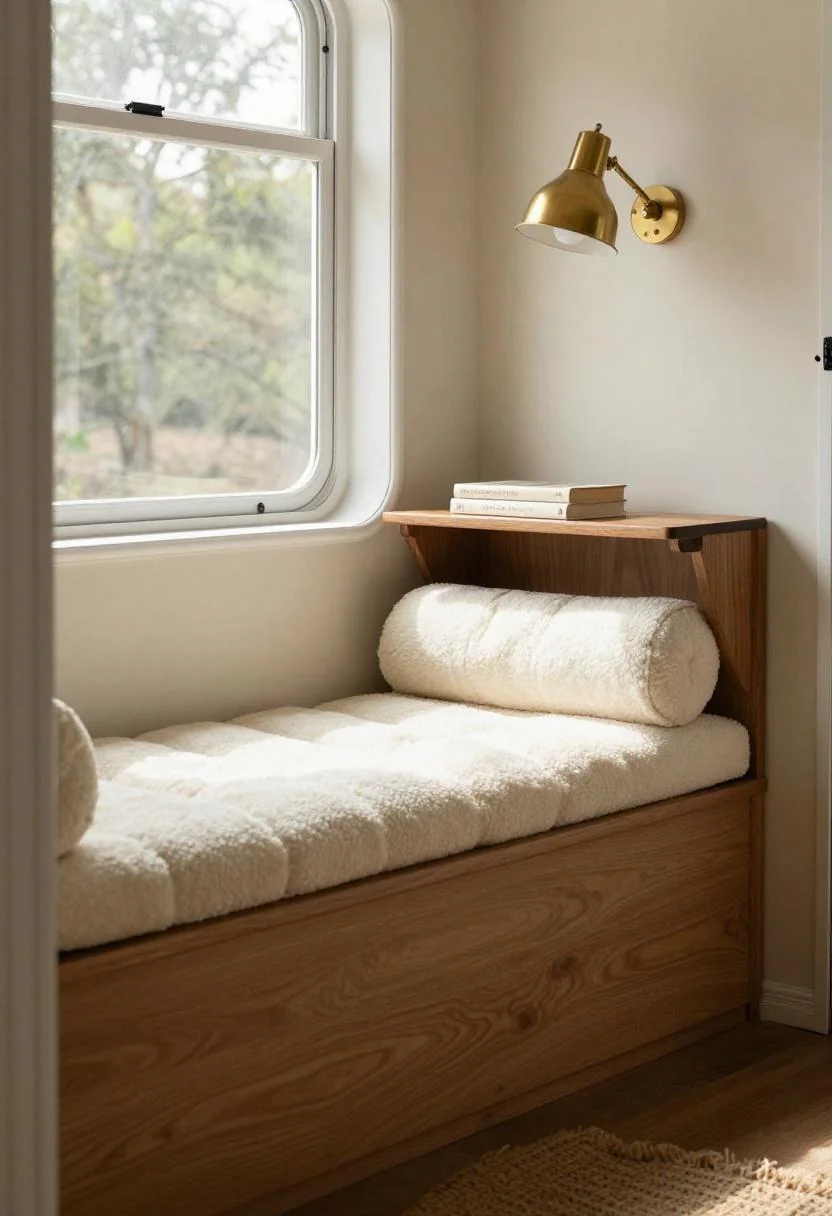
The cream bouclé reading nook cushion is a warm embrace you sink into. Bouclé has that looped, cloud-like texture that looks expensive but feels even better — run a finger across it and you’ll want to stay there for hours. The fold-out walnut shelf beside it is doing quiet, brilliant work: your book, your tea, your phone face-down. Built-in furniture in a camper should always be this considered. Every surface earns its square footage.
Find cream bouclé bench cushions
Storage That Doesn’t Look Like Storage
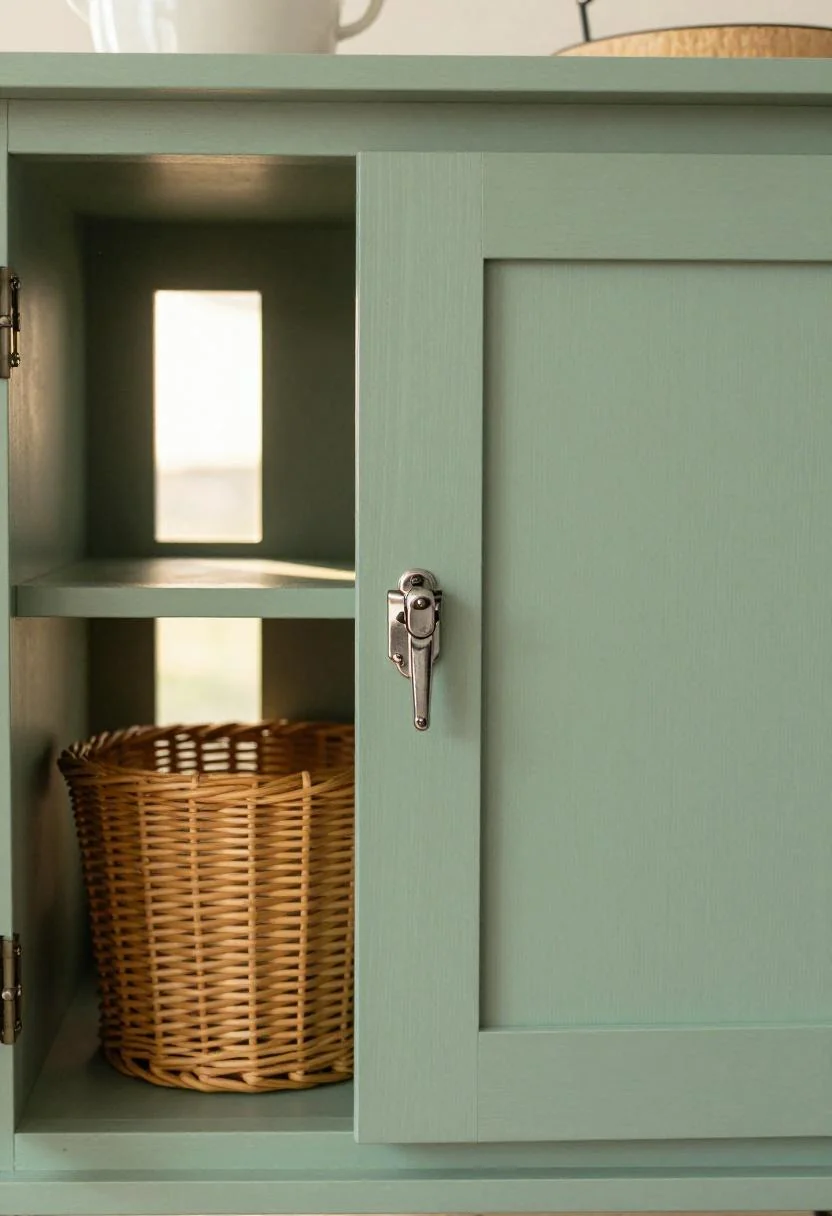
Sage green birch cabinet doors with vintage chrome latches. That’s it. That’s the whole trick. The sage green here is exactly the color it sounds like — a morning in the countryside, slightly grey, slightly blue, the color of a eucalyptus branch in a white vase. Chrome latches catch the light with a satisfying glint. It’s all in the layering: the warm birch grain beneath the painted surface, the cool metal hardware on top, the shadow lines where the doors meet the frame.
These overhead storage cabinets are where camper makeovers often cut corners. Don’t. This is prime visual real estate at eye level — treat the hardware like jewelry.
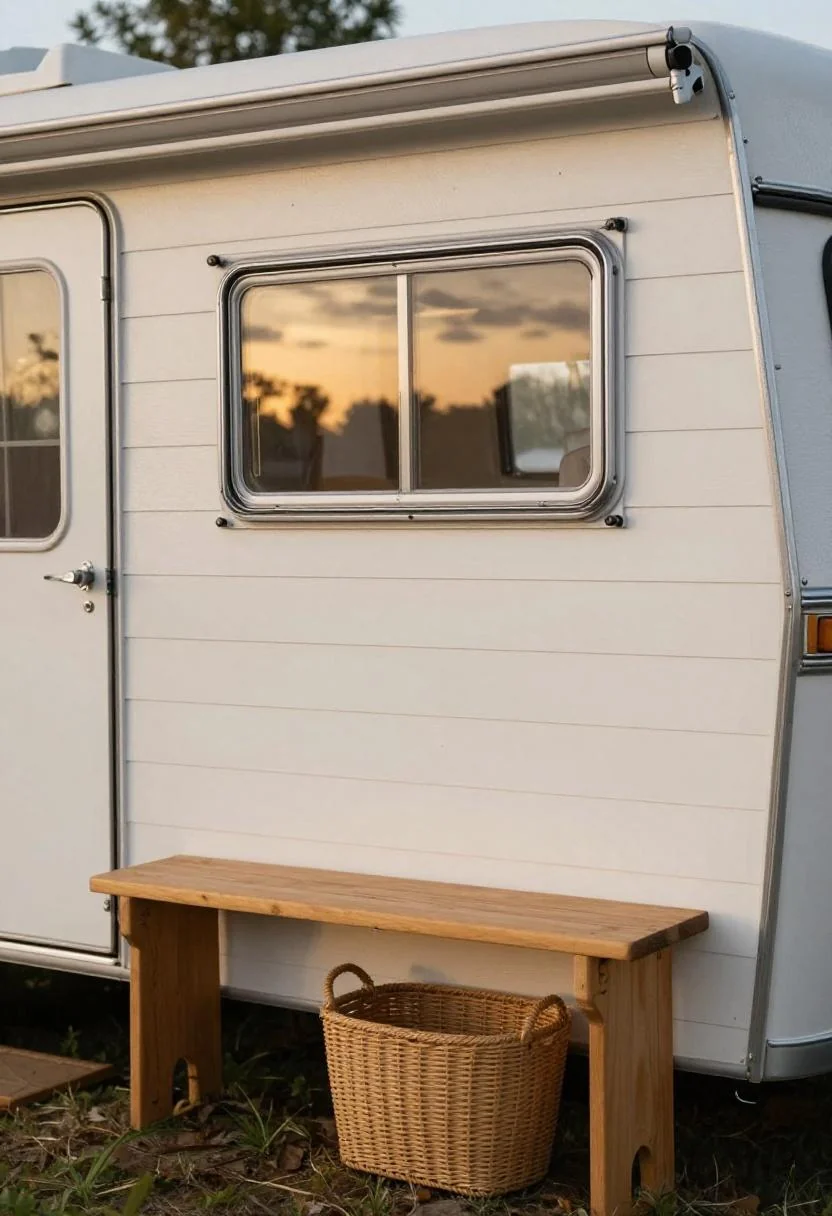
Cream white shiplap walls at the living end give the eye somewhere to rest. Tucked under the bench seat: rattan baskets, slightly mismatched, holding extra throws or books or the particular collection of things you accumulate on a long trip. The shiplap reads clean without reading cold. It’s the backdrop that lets every other eclectic element pop. If you’re ever wondering what color to use as your camper’s dominant neutral, cream white shiplap is the answer you didn’t know you were looking for. For more on this kind of warm, layered approach to home interiors, our guide to golden sunlight aesthetic warm home decor has everything you need.
The Bathroom: Small Space, Big Ritual
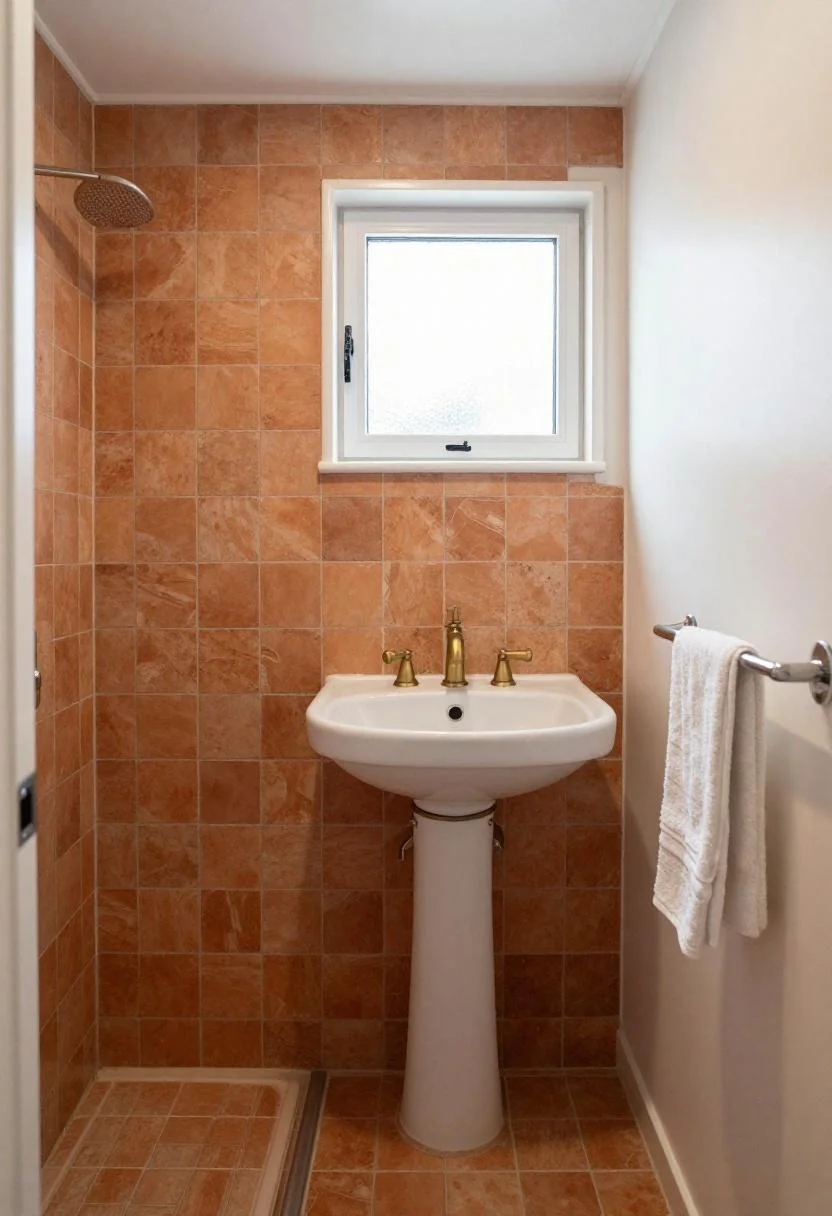
Warm terracotta zellige tiles. Each one slightly different — the handmade irregularity of zellige is its whole personality. The glaze catches light at a dozen angles simultaneously, shifting from burnt sienna to dusty rose to warm amber depending on where you’re standing. Brass fixtures glow against it like something archaeological. This bathroom doesn’t feel compact. It feels jewel-box small, which is an entirely different thing.
The zellige tile phenomenon isn’t accidental — Vogue Living has tracked its rise from Moroccan sourcing to mainstream renovation obsession for good reason. The handcrafted imperfection is the point. In a camper bathroom where every tile is visible, that story reads loud and clear.
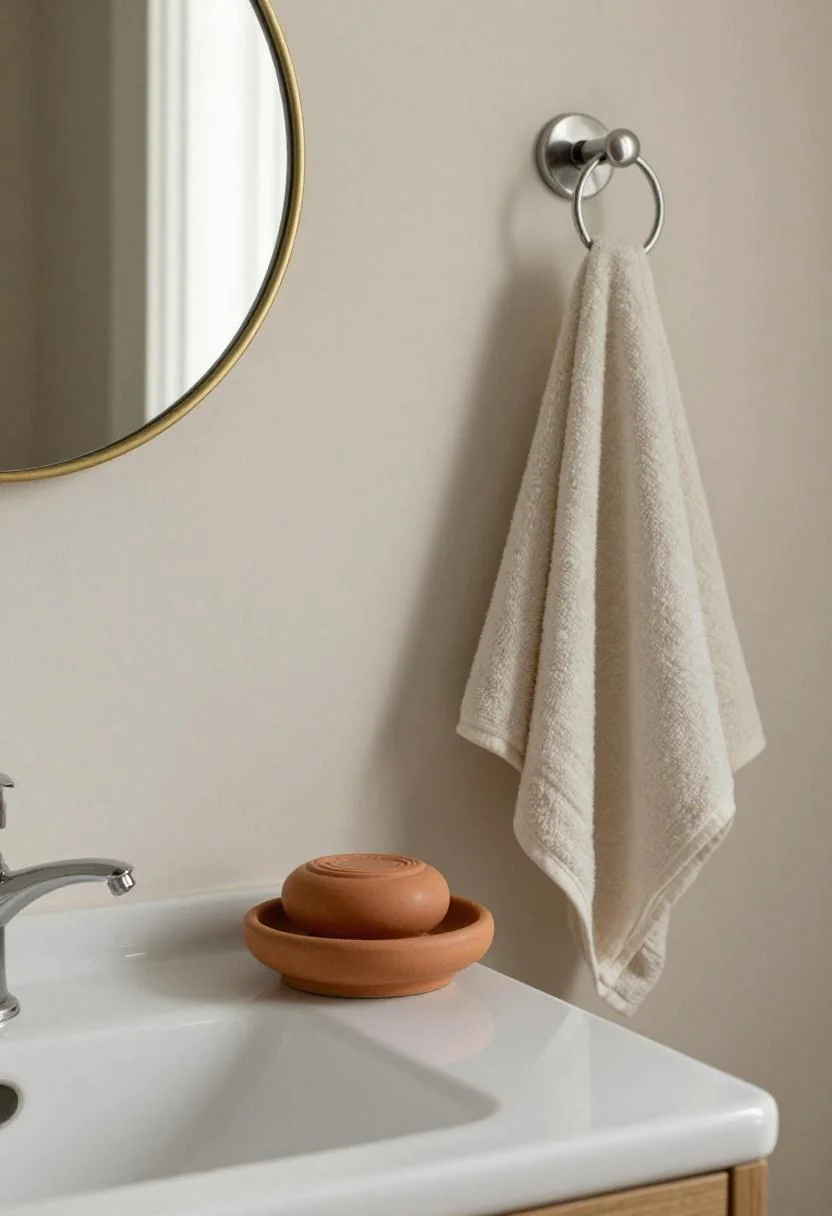
The vanity corner extends the terracotta story with a ceramic dish — the kind with an organic, slightly lopsided rim — and a brass round mirror mounted above. Brass and terracotta is one of those combinations that just shouldn’t work as well as it does. Warm meeting warm. But the textures save it: the matte ceramic, the reflective mirror, the grout lines of the tile catching shadow. Matte against gloss. That tension is everything.
The Detail Moments That Make a Camper Feel Like a Home
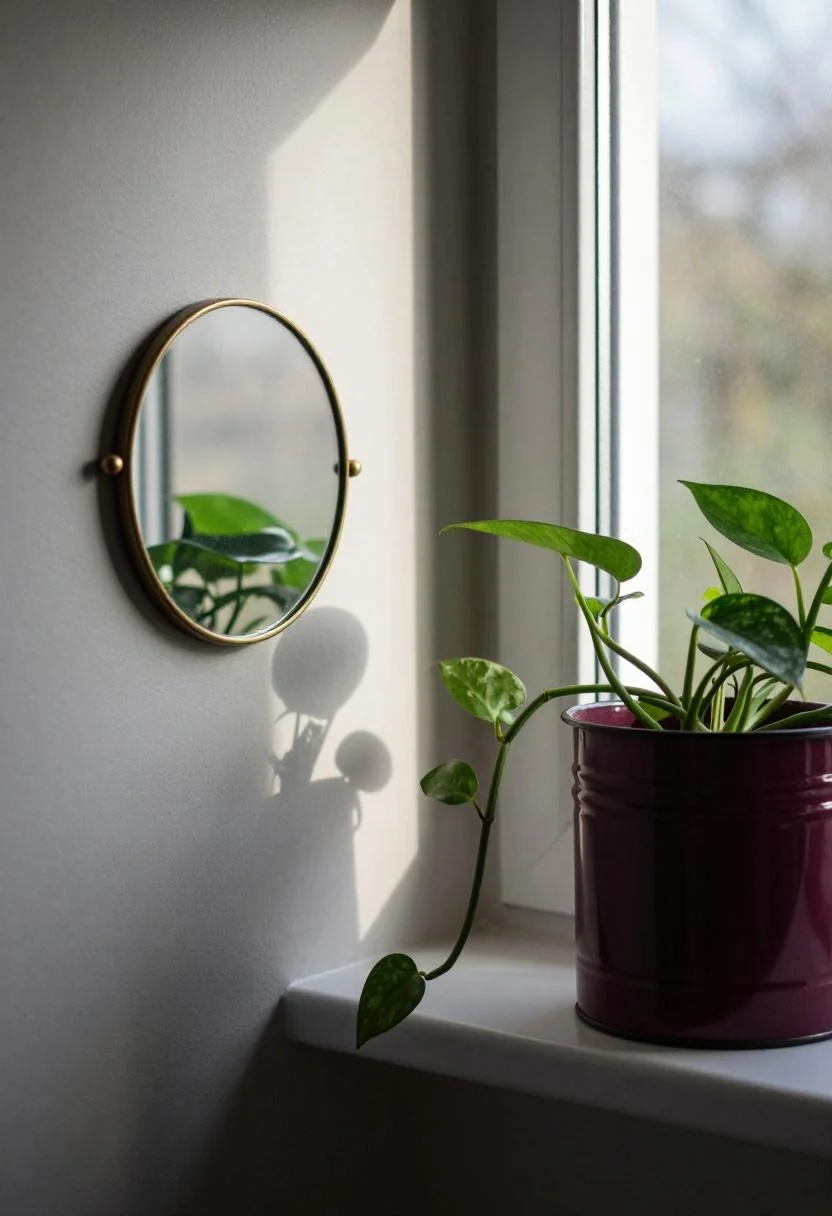
A plum noir planter on the window ledge — that deep, near-black purple that makes every plant inside it look greener, livelier, more intentional. Beside it: a brass convex mirror, convex for a reason. It bounces light back into the space, tricks the eye into sensing more depth than there is. In a camper, these little spatial illusions matter enormously.
Plum noir as an accent color is underused in camper design. Most people reach for the predictable — turquoise, mustard, terracotta. And those are wonderful. But something deep and moody at the periphery — a planter here, a curtain there — gives the whole palette a grown-up edge. It asks something of you. Are you interesting enough for this space? (You are.)
Making It Your Own — The Boho Camper Philosophy
Here’s the thing about vintage camper makeovers done well: they don’t follow a mood board. They follow an instinct. You find a set of jade green ceramics at a thrift store and you build the kitchen shelf around them. You pick up a Turkish kilim that has no business being in a tiny space and you put it in the tiny space anyway and somehow it’s the best decision you’ve ever made.
The color palette we’ve traced through these spaces — cool blue, plum noir, jade green, wasabi, persimmon, warm terracotta, cream white, sage green — isn’t a formula. It’s a conversation. These colors talk to each other across a small space in ways that larger rooms never allow. Sage green overhead storage above cream white shiplap above a persimmon throw. The eye moves. The space breathes. And if you’re approaching your home with the same instinct for layered warmth and character, our piece on low toxic living swaps for a cleaner home pairs naturally with this whole ethos of intentional, considered spaces.
How to get the look, in the most honest terms possible:
- Buy the vintage hardware first. Let the colors respond to it.
- Paint is cheap. Paint something in wasabi. You can always repaint.
- Layer textiles — a kilim, a cotton throw, a bouclé cushion — and don’t match them on purpose.
- One plant minimum. Ideally three. A trailing pothos, a compact succulent, and something dramatic in a plum noir pot.
- Brass is the consistent thread. Chrome latches, brass hooks, brass mirrors — they unify without homogenizing.
The collected-over-time feel can’t be manufactured in a single weekend shopping trip. (Well — it can, but it takes more editing.) The trick is to bring in one piece that genuinely means something to you. A ceramic mug from a market, a postcard pinned above the workspace, the specific throw blanket you’ve been dragging around since your twenties. Everything else arranges itself around that anchor.
And if you’re dreaming about the outdoor setting around your camper too — fire pits, string lights, something beautiful and low-maintenance in the surrounding garden — our guide to outdoor fire pit area ideas for the ultimate backyard is worth a look. A renovated camper deserves an equally considered world around it.
What the best camper interiors share isn’t a specific style. It’s a specific commitment. The commitment to caring about every inch, every latch, every tile. To refusing to let smallness mean settling. These spaces are proof that the most interesting interiors aren’t the largest — they’re the most loved.
This post contains affiliate links. We may earn a commission at no extra cost to you.
Images in this article were created with AI assistance.