Your bathroom doesn't need to be gutted and rebuilt to feel like a retreat. What it needs is intention — and a willingness to look past the quick-fix aisle at big-box stores toward materials with some actual history. Reclaimed wood. Handmade ceramics. Natural fibers that age beautifully instead of yellowing into obsolescence. The spa bathroom you're picturing? You can get there with a fraction of the waste most renovations generate. Here are 15 ideas grounded in real choices, farmhouse sensibility, and the kind of slow-living warmth that feels genuinely earned.
1. Cool Blue Zellige + Freestanding Marble Tub
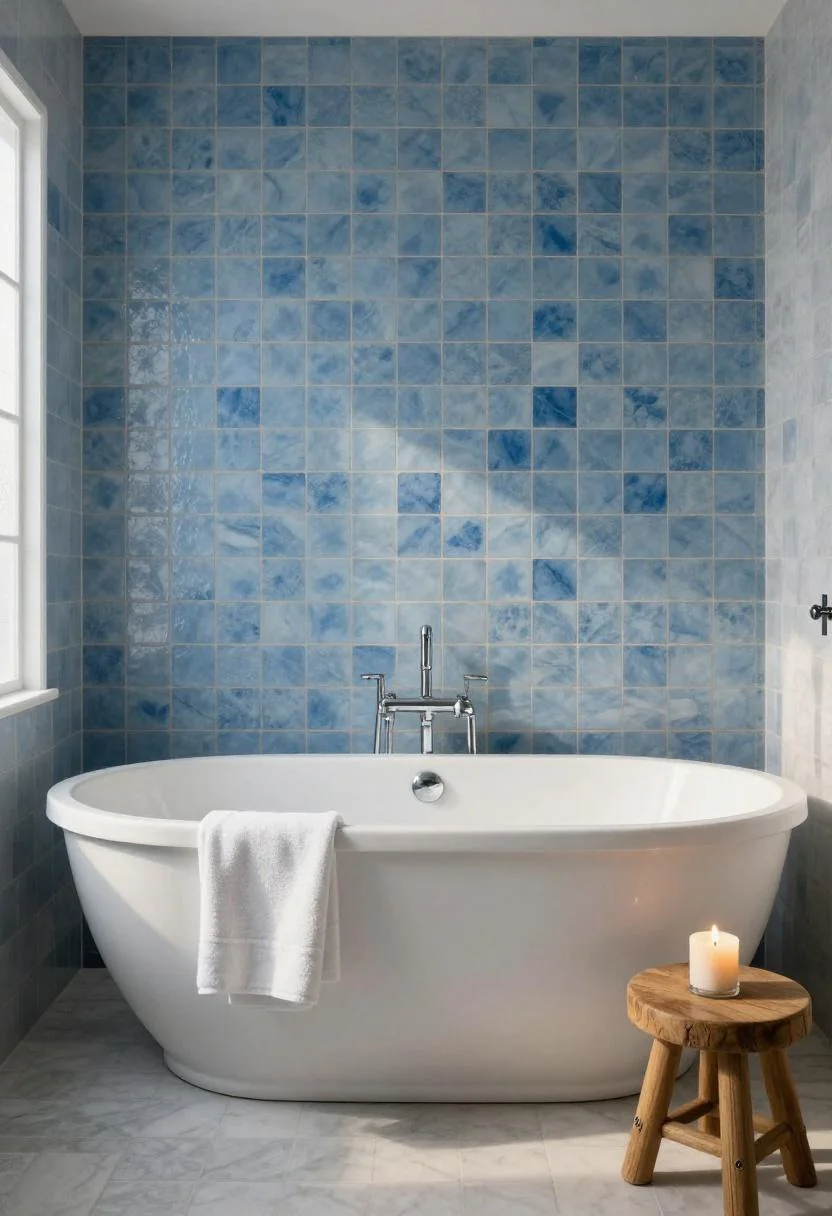
Zellige tile is handmade in Morocco, fired in wood kilns, and imperfect by design. That imperfection is exactly why it works. Each tile catches light differently — no two are exactly the same shade of cool blue — which means your wall has depth that no factory-produced subway tile can replicate. Set a freestanding marble tub in front of it and you've created a focal point that looks expensive because it respects craft, not because it was expensive to produce.
Marble is heavy and durable. A well-maintained piece outlasts three cheap acrylic tubs. Lifecycle thinking matters here: the tub that lasts 40 years is almost always the greener choice, even factoring in extraction. Vogue's design coverage has consistently pointed to handmade tile as the material defining 2026's most thoughtful interiors — and zellige sits squarely at that intersection of artisan process and visual impact.
2. The Plum Vanity That Earns Its Darkness
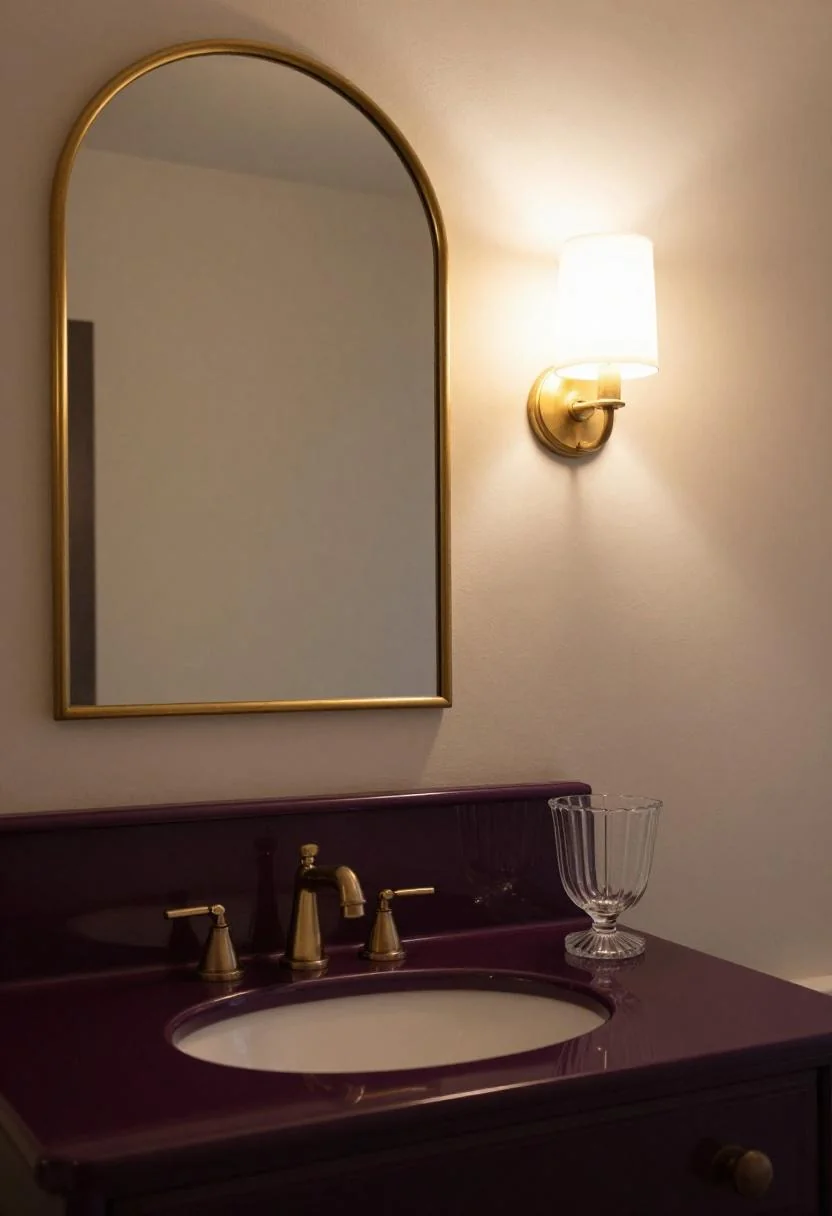
Plum noir lacquer on a vanity cabinet sounds bold — and it is. But here's the thing: a single deep-toned piece anchors the room without requiring you to commit the whole space to drama. Pair it with a brass arched mirror (vintage brass, ideally, with some patina already earned) and a fluted glass sink, and you've built a vignette that feels like it was assembled over years rather than ordered off a single mood board.
Fluted glass has a past. It's the same material your grandmother's cabinet doors were made of. Reclaiming it in a Neo Deco context isn't nostalgia — it's resourcefulness dressed up beautifully.
3. Shower Niches That Actually Earn Their Keep
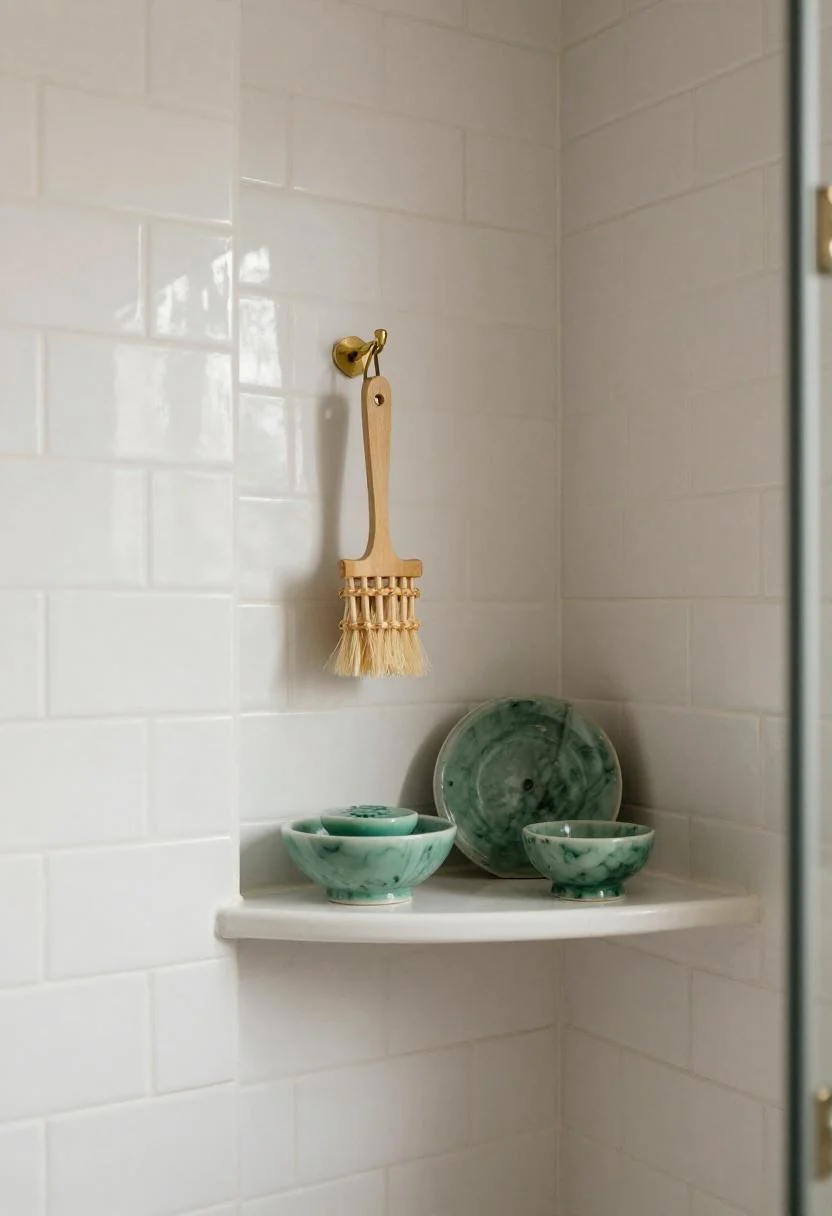
A shower niche lined with jade green ceramic and finished with bamboo accents is such a small intervention. Truly — we're talking about a shelf and a few objects. But the right objects change everything. Handthrown jade green soap dishes have weight and texture that plastic dispensers will never have, and ceramic is infinitely more hygienic and long-lasting anyway.
Bamboo grows fast, sequesters carbon, and requires almost no finishing chemicals. It's not a compromise material. It belongs here. If your shower has an existing niche, this is a zero-construction update: swap the objects, regrout if needed, done.
4. Walnut Tray + Wasabi Glaze: A Study in Restraint
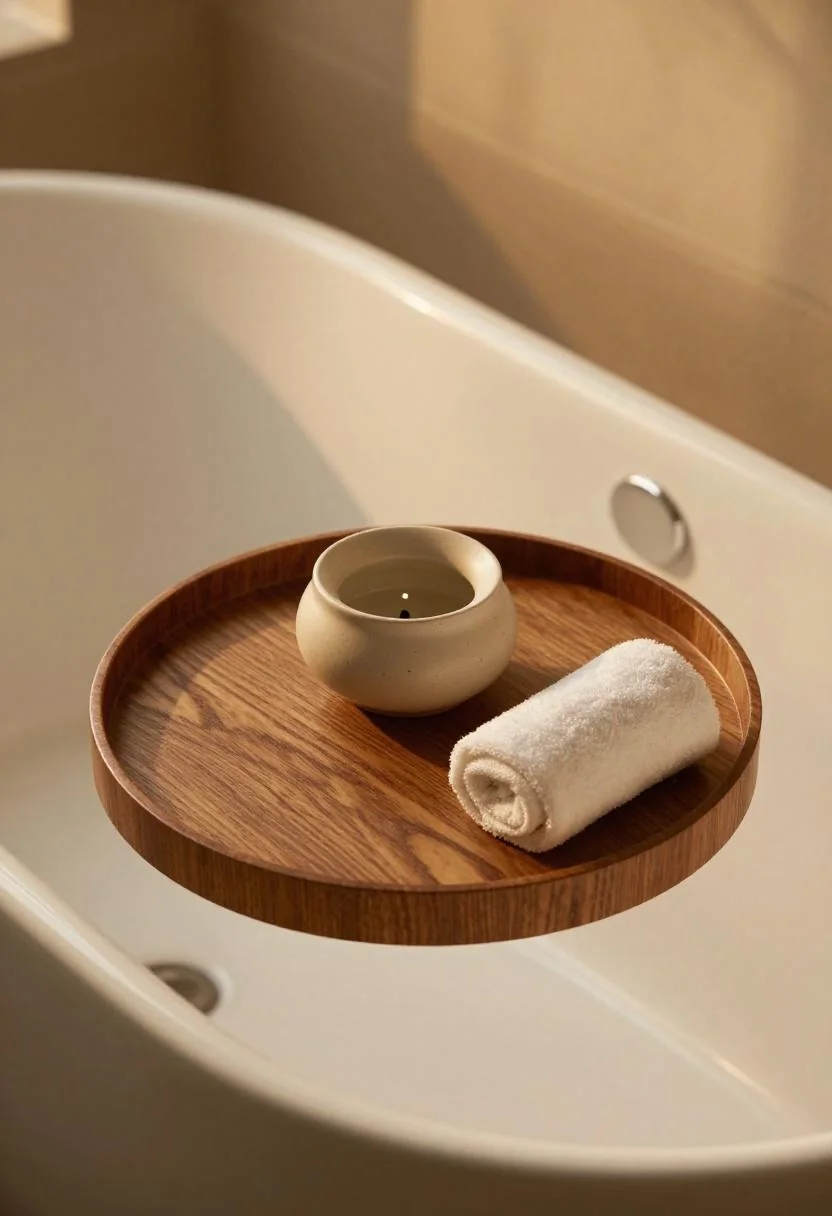
Minimalism done wrong is just emptiness. Done right, it's curation. A walnut bath tray — sustainably harvested, oiled rather than lacquered — grounds everything on the countertop. Set a wasabi-glazed ceramic diffuser on it and you've introduced color in the most controlled possible way: one object, one hue, surrounded by the warmth of natural wood grain.
Wasabi green (slightly muted, slightly yellow-adjacent) has quietly become one of the more interesting accent colors in 2026 bath design. It reads as fresh without being clinical. The ceramic diffuser, if you choose one made by a small studio, carries the added story of someone's hands shaping it — which is worth something when you're trying to create a space that feels genuinely calm rather than just styled to look that way.
5. Afrohemian Warmth: Mahogany Mirror + Persimmon Textiles
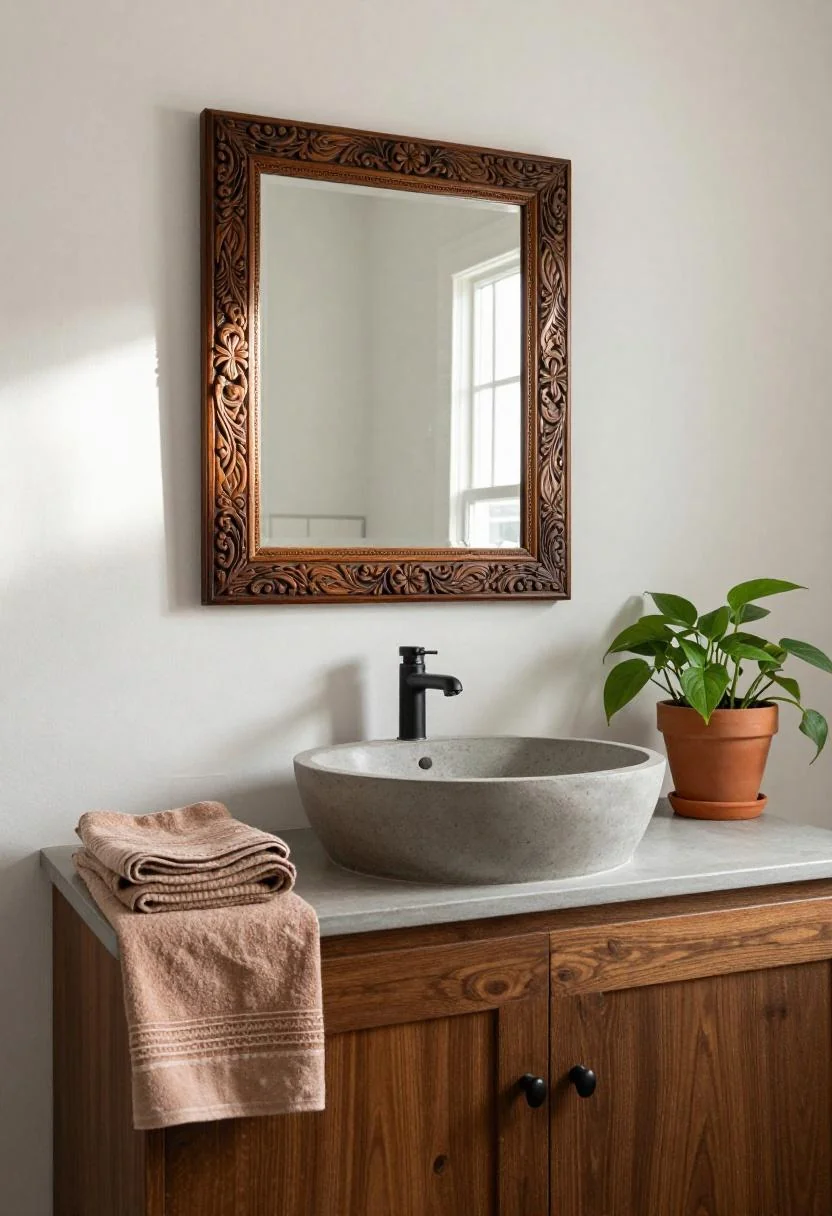
The carved mahogany mirror is the anchor. It doesn't need to be new — antique and secondhand markets in almost every city carry West African carved wood mirrors that have been circulating for decades, each one bearing marks of genuine use and craft. This piece has a past, and that's the point.
Against that dark, warm wood, persimmon mudcloth towel accents create a color story that's deeply considered: the mudcloth pattern connects to a textile tradition that predates mass production by centuries. Mudcloth is made by hand with fermented mud dyes on handwoven cotton. Choosing it isn't just an aesthetic decision — it's a vote for craft economies. Hang a folded length as a hand towel, drape another over a ladder rack, and let the persimmon warmth carry the room.
6. The Cottagecore Windowsill, Done Thoughtfully
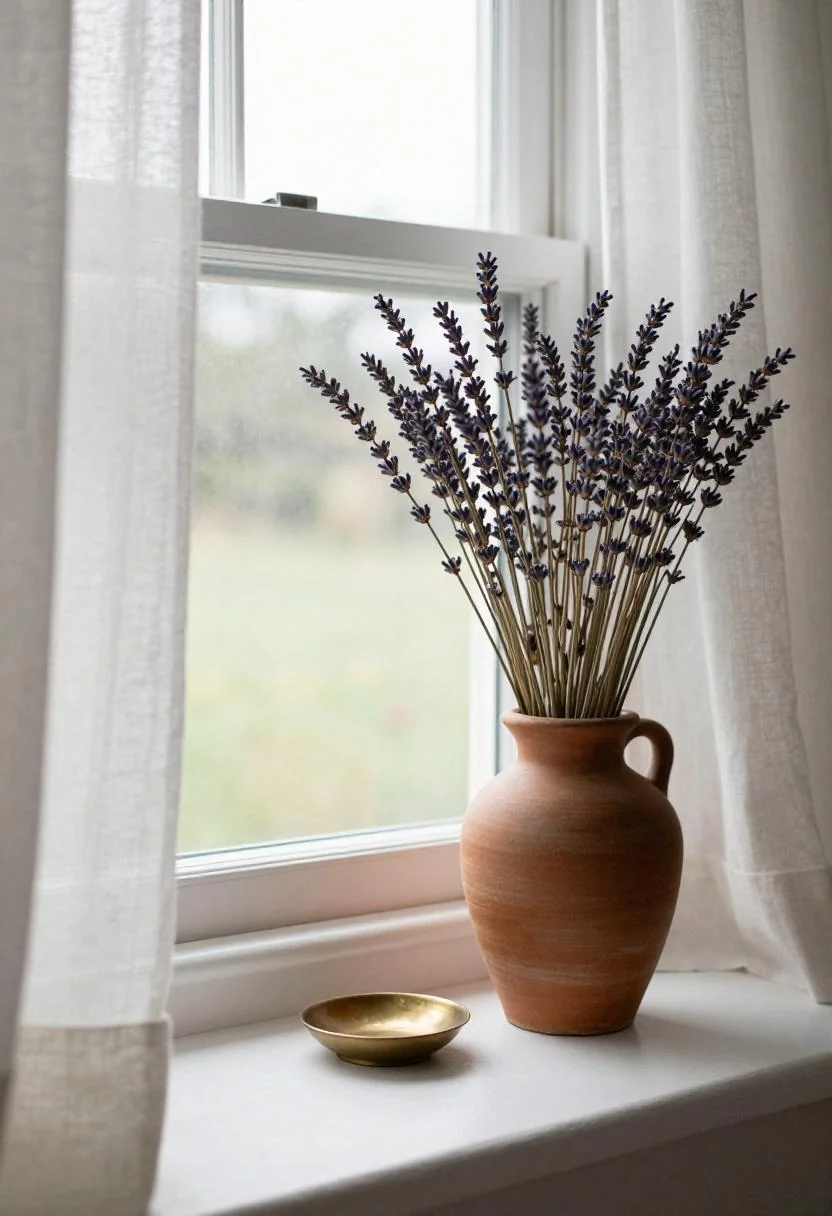
Dried lavender requires no water. No plastic pot. No imported tropical blooms flown in from thousands of miles away. It's genuinely the most sustainable botanical choice for a bathroom windowsill, and it happens to smell extraordinary in steam.
Place it in a warm terracotta vase — unglazed, if you can find one, so the clay breathes — beside a vintage brass soap dispenser or faucet hardware you sourced secondhand. The combination of terracotta, dried botanicals, and aged brass is the contemporary farmhouse interpretation done with actual restraint. No shiplap required. No "farmhouse sign" in sight. Just materials behaving honestly. If you're building a space with this kind of feeling, our guide to vintage-inspired decor for every room has more ideas worth stealing.
7. Limewash Walls + Oak Vanity: The Quiet Flex
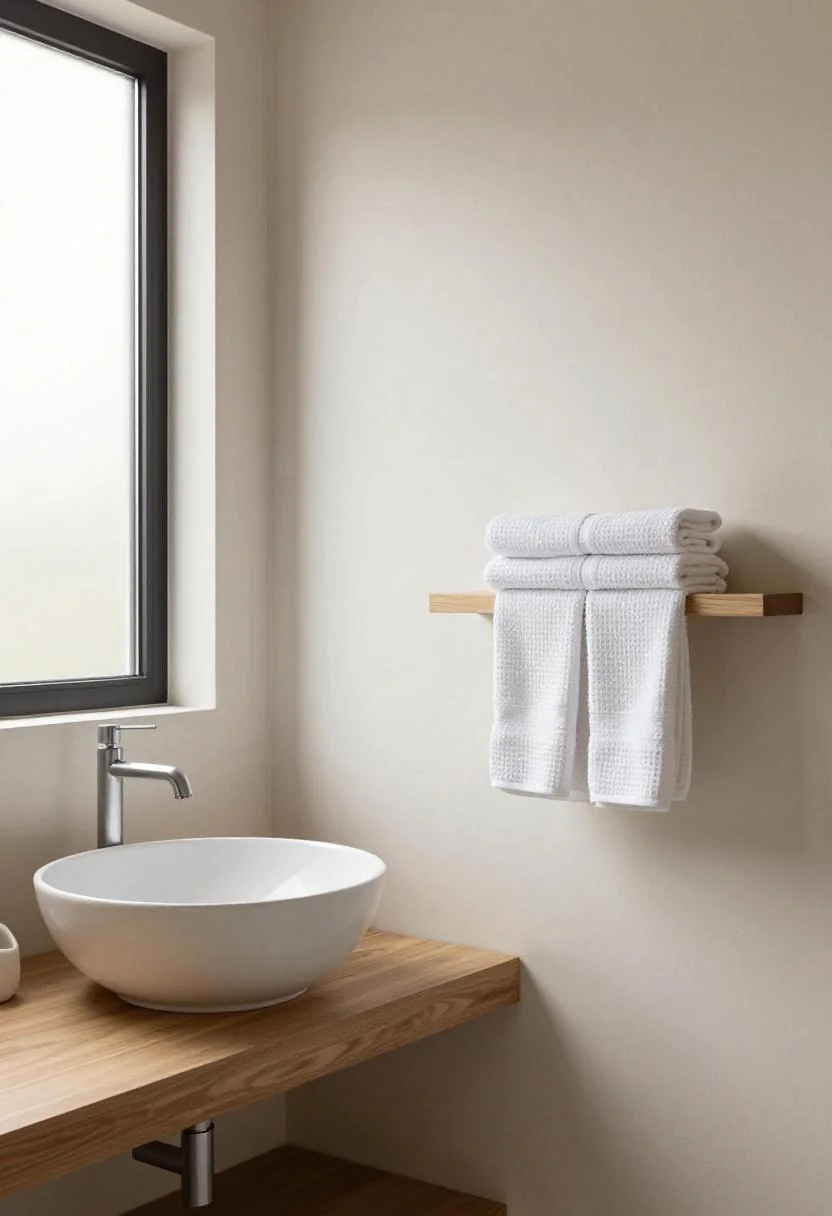
Limewash paint is one of the oldest wall finishes in human architecture. It's also non-toxic, breathable, and naturally antimicrobial — which makes it arguably the ideal bathroom wall treatment. The subtle variation in tone it creates as it dries (no two applications look identical) gives walls a depth that conventional paint simply can't achieve.
Float an oak vanity below it. Stack cream white waffle towels in the open shelf space. Resist the urge to fill every surface. The restraint is the point — and waffle-weave towels, for what it's worth, dry faster and use less cotton per square inch than standard terry. Sustainability as texture. The floating vanity (no legs touching the floor) also makes cleaning easier, which is the kind of practical bonus nobody ever puts on the mood board but everyone appreciates by week two.
8. Rattan, Kente, and Sage Linen — Afrohemian Corner
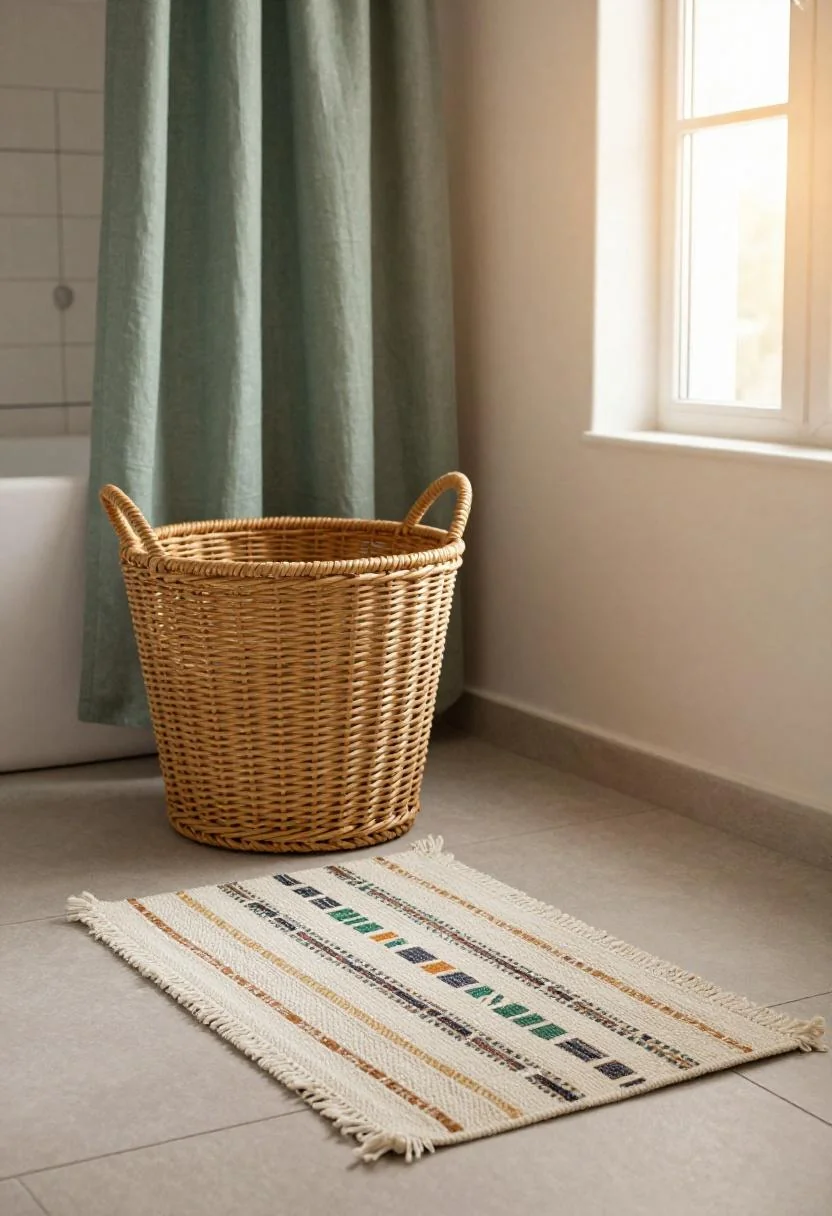
This is a corner update. Just a corner. A kente-patterned bath mat (cotton, hand-woven, sourced directly from a Ghanaian textile co-op if you can manage it), a rattan laundry or storage basket beside it, and a sage green linen curtain on the window. No renovation. No new tiles. No plumber.
What changes is the whole register of the space. Sage linen filters light in a way that polyester or synthetic sheers simply don't — it diffuses rather than blocks, and the color shifts subtly as the light moves through the day. Rattan breathes and doesn't off-gas the way plastic storage does. And the kente mat anchors the floor with a pattern that carries genuine cultural weight. This is the most sustainable kind of room transformation: zero construction, high intention.
9. Neo Deco Shelf: Cool Blue Fluting + Brass Geometry
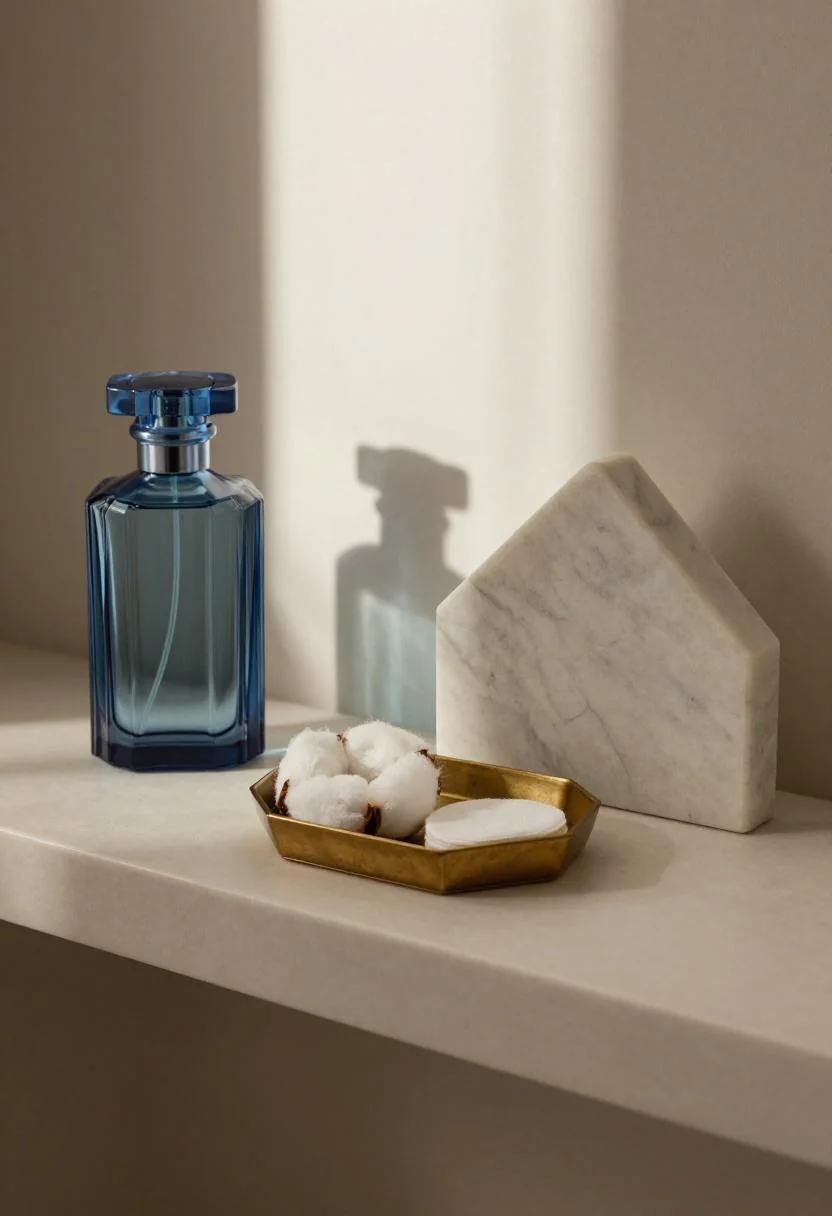
Fluted glass vessels in cool blue, arranged on a brass geometric tray. That's it. That's the whole update.
What makes it work is the contrast: the coolness of the blue glass against the warm yellow of aged brass creates visual tension that reads as intentional and sophisticated. Geometric brass trays are widely available secondhand — estate sales, thrift stores, online marketplaces for vintage homewares. The greenest thing you can do for your bathroom shelf is buy the tray that already exists rather than manufacturing a new one.
10. Maximalist Spa: Plum Noir Ceiling + Copper Clawfoot
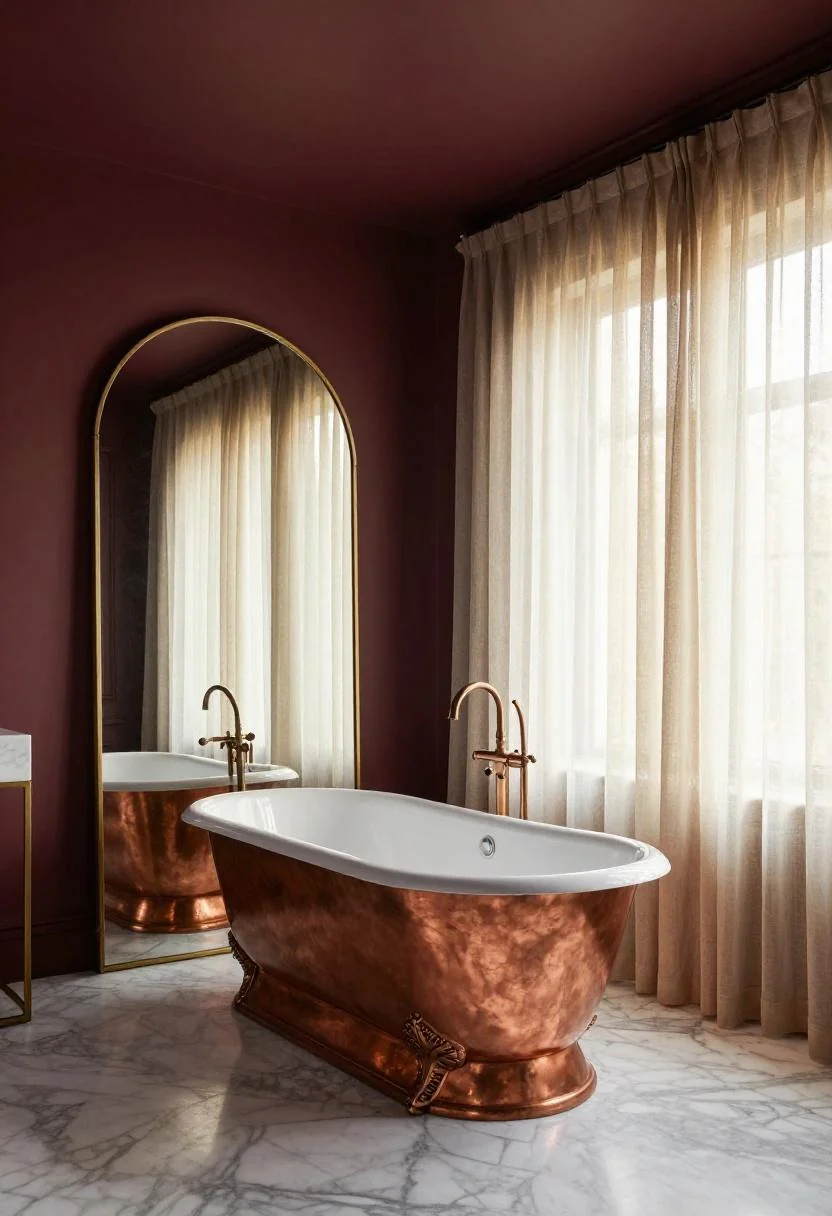
Here's where we acknowledge the tension head-on: maximalism and sustainability don't always sit comfortably together. But there's a version of maximalist bath design that's actually quite low-impact — and it centers on sourcing.
A copper clawfoot tub, purchased from an architectural salvage dealer, is infinitely more sustainable than a brand-new acrylic one. Copper is fully recyclable, naturally antimicrobial, and extraordinarily durable. Paint the ceiling plum noir (a single can of low-VOC paint) and hang an arched brass mirror you found at an estate sale. The drama is real. The waste is minimal. As Elle Decor has shown in recent bathroom roundups, dark ceilings are doing serious atmospheric work in 2026 interiors — and plum noir is one of the season's most compelling iterations.
11. Jade Zellige Walk-In: The Resort Move You Can Actually Make
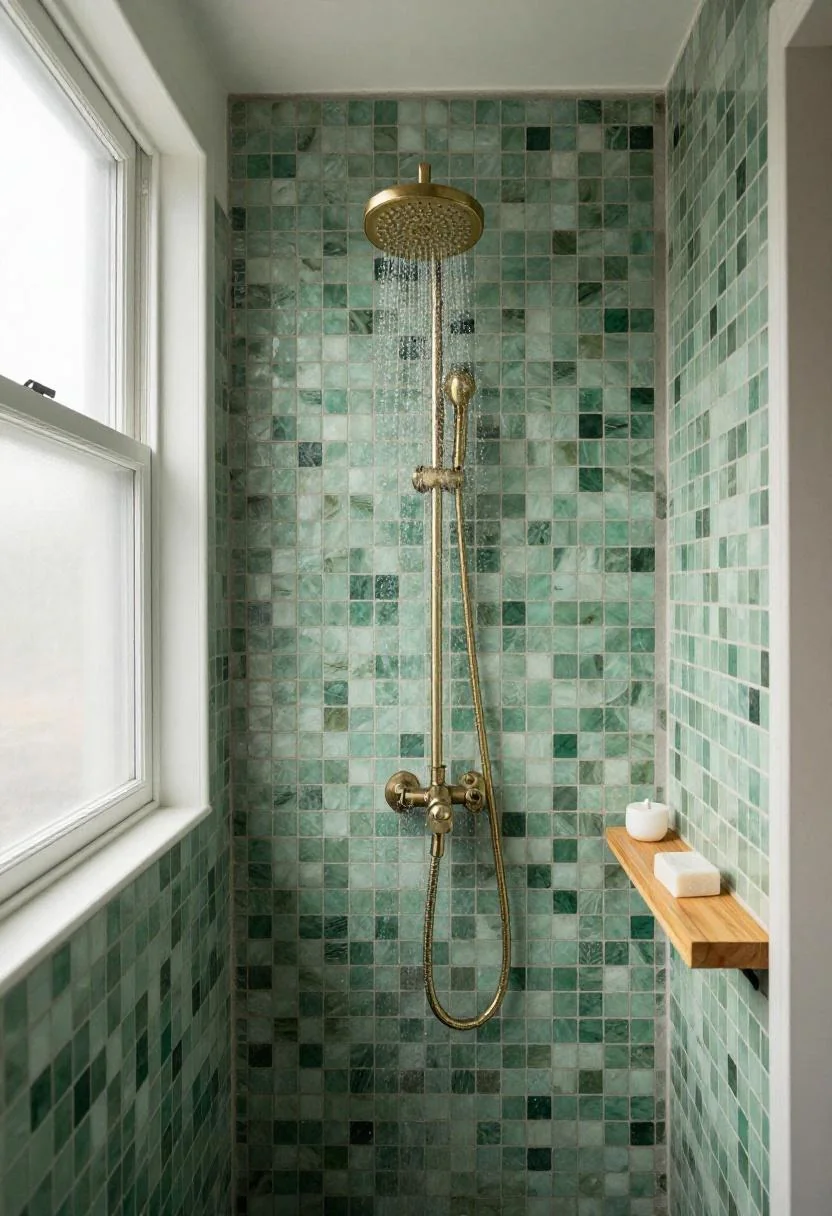
Walk-in showers tiled floor-to-ceiling in jade green zellige with a brass rainfall showerhead — this is aspirational, yes. But it's not as far out of reach as it looks.
Zellige tile prices have normalized significantly as the material has become more widely imported. A small shower (say, 3x3 feet) uses far fewer tiles than you'd imagine, and the handmade variation means even an "imperfect" installation (with slightly uneven grout lines) looks intentional. The brass rainfall head? Buy a quality one from a company that offers replacement parts and lifetime support. The greenest showerhead is the one that doesn't end up in a landfill after eight years because a single O-ring failed and no replacement was available.
12. The Ritual Flat Lay: Wasabi Bowl, River Stones, Beeswax
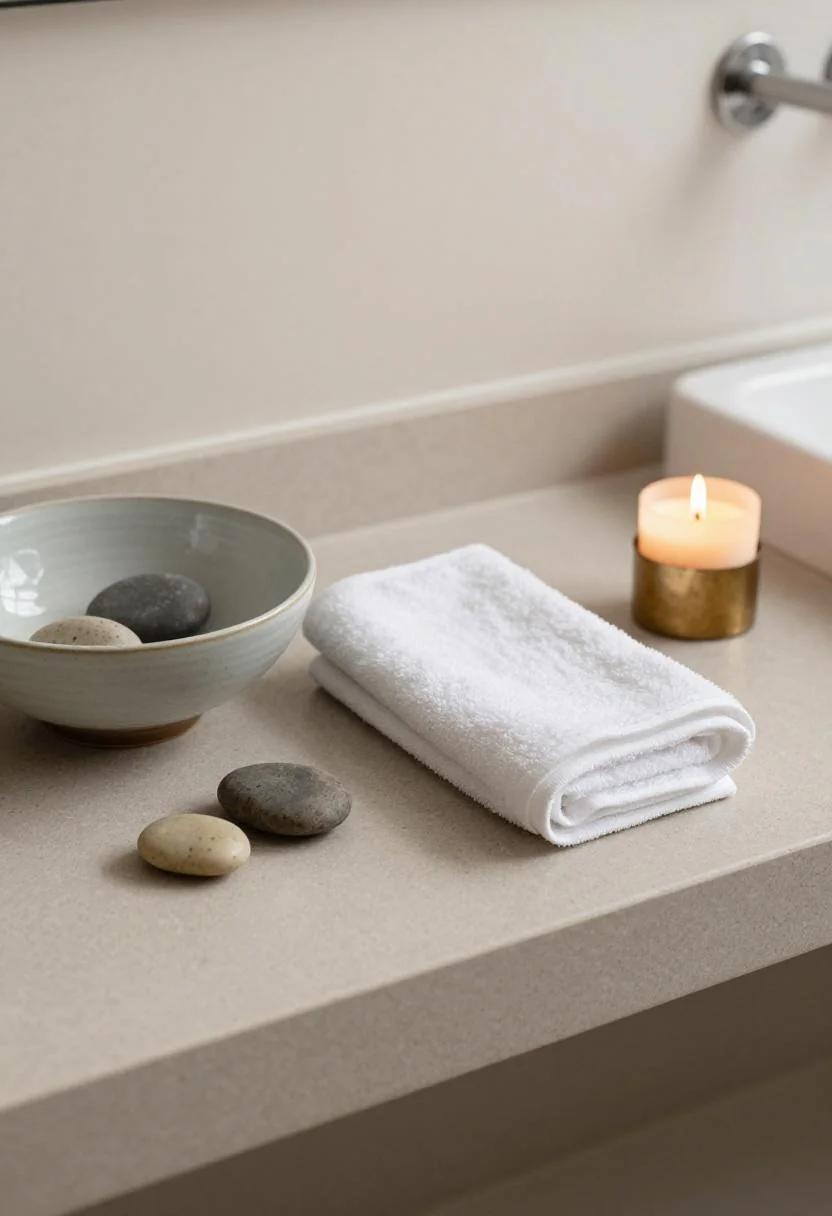
River stones are literally free if you live near a river. Collect them, rinse them, arrange them on a vintage ceramic tray. Add a wasabi-glazed bowl and a beeswax candle — beeswax, not paraffin, which is a petroleum byproduct that off-gasses as it burns.
This is the bathroom equivalent of mise en place. You're setting the stage for your own routine. The ritual of lighting a beeswax candle before a bath, placing your ceramic diffuser, arranging your stones — it sounds small, but it's the kind of daily mindfulness that a beautifully considered bathroom enables. And it costs almost nothing. Sustainability isn't sacrifice, it's strategy — and sometimes strategy looks like a bowl of river stones on a windowsill.
13. Persimmon Tongue-and-Groove + Pedestal Sink
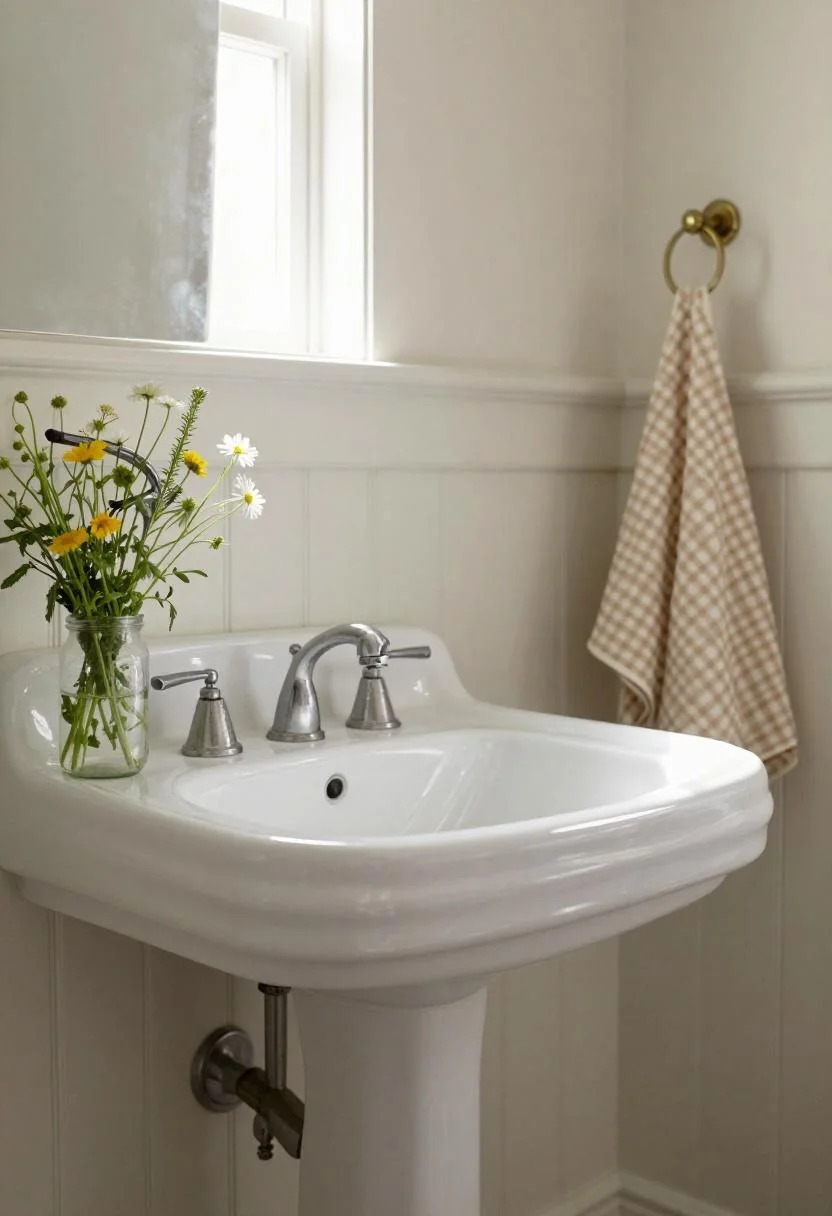
Tongue-and-groove wall paneling is one of the most practical ways to add character to a bathroom that's currently just drywall and regret. Install it yourself with basic tools, paint it persimmon (a burnt orange with red undertones that reads completely differently from terracotta), and set a pedestal sink — preferably a secondhand cast iron one — in front of it.
Then: a glass jar of wildflowers on the windowsill. Wildflowers from your yard, or a neighbor's, or a community garden. Not florist-arranged, not shipped, not wrapped in plastic. Just cut, stems trimmed, set in water. The informality is the point. Cottagecore at its most honest isn't a look — it's an attitude toward the materials already around you. For more ideas on bringing organic touches into unexpected spaces, our article on tiny she shed interiors takes a similar approach to small, intentional spaces.
14. Hammam Warmth: Terracotta Plaster + Copper Basin
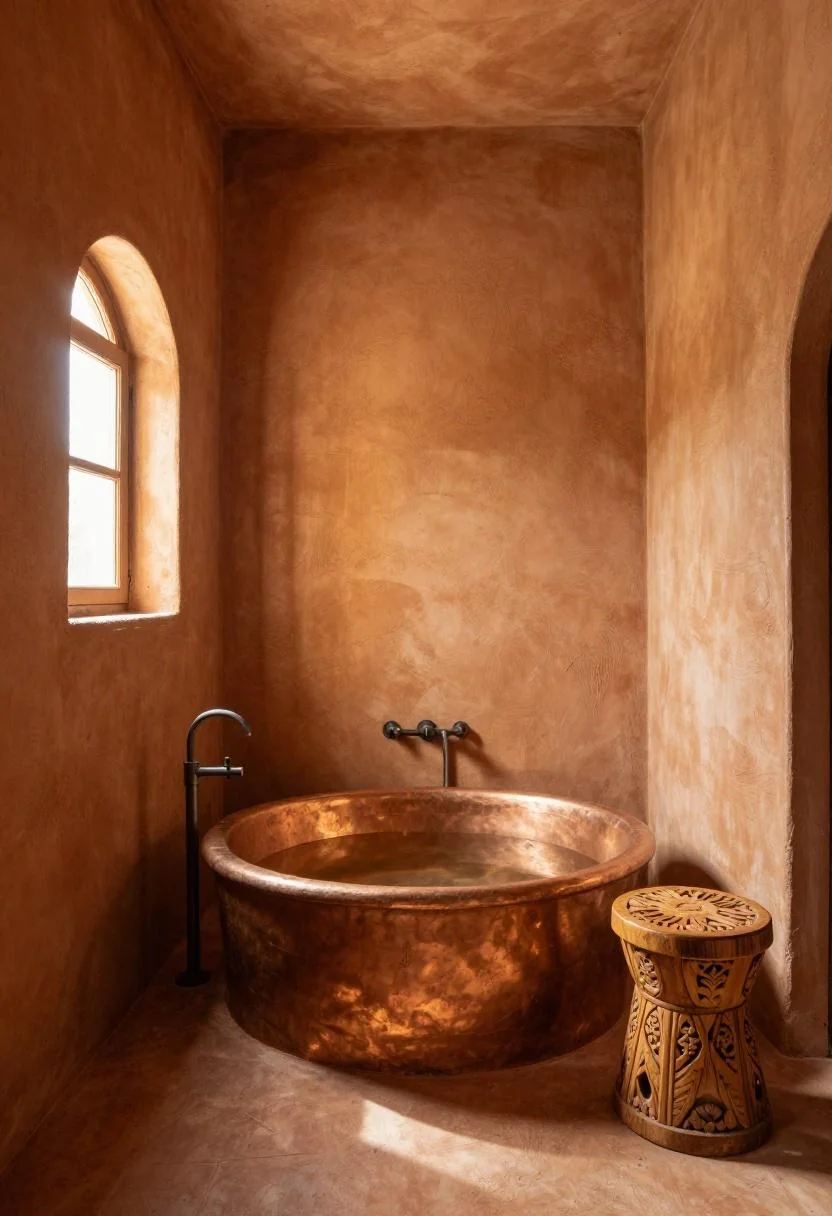
The hammam tradition is one of the oldest spa cultures in the world — and it's built entirely on low-tech, high-sensory materials. Terracotta plaster walls (tadelakt, the Moroccan lime plaster finish, if you want to go deep) are naturally waterproof, breathable, and require zero synthetic sealants. They improve with steam. They develop character over time.
A copper basin soaking tub, sourced from an artisan metalsmith or salvaged from a renovation, completes the picture. Warm terracotta and copper together create a color palette that feels ancient and grounded in a way that tile-and-acrylic combinations simply can't touch. Harper's Bazaar has been tracking the return of artisan plaster finishes as a reaction against the over-polished bathrooms of the previous decade — and hammam-inspired spaces are exactly where that reaction is most coherent.
15. The Linen Niche: Cream White, Waffle-Stacked, Eucalyptus-Anchored
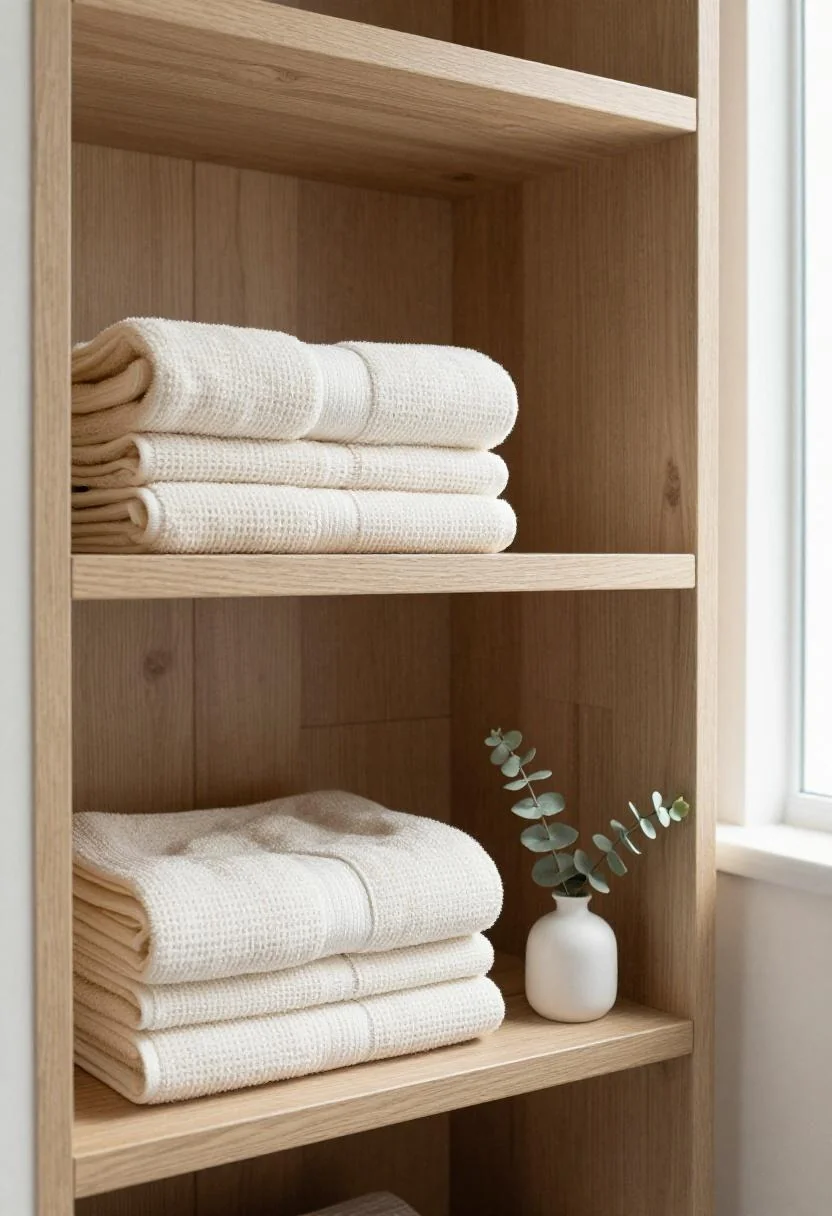
Stack your best waffle towels — cream white, organic cotton if possible — in an open niche or on a shallow reclaimed wood shelf. Place a ceramic eucalyptus holder beside them. That's the whole idea.
What makes it work is the edit. Most of us have too many products, too many mismatched towels, too many things on every surface. The niche idea forces curation by constraint: you only keep what fits, which means you only keep what you actually use. The eucalyptus holder adds fragrance without synthetic air fresheners, and ceramic holds moisture without degrading. It's a small system that rewards restraint. And after 14 ideas that range from copper soaking tubs to jade zellige walk-in showers, the final note being a folded towel and a sprig of eucalyptus feels exactly right — proof that the spa feeling doesn't require the grandest gesture.
The Color Story of 2026 Bath Design
Look back at the 15 ideas above and a palette emerges: cool blue and jade green for the water-adjacent surfaces, where cooler tones amplify the sense of calm. Warm terracotta, persimmon, and plum noir for the architectural elements and textiles, where depth and warmth counterbalance clinical bathroom associations. Wasabi and sage green as the bridge colors — organic, slightly muted, connecting the cool and the warm without drama.
What ties all of it together isn't a single color — it's a material philosophy. Handmade over machine-made. Reclaimed over new. Natural fibers over synthetic. Aged brass over chrome. These aren't restrictions; they're a framework that makes every decision easier and every room more interesting. A bathroom built on this framework doesn't date the way trend-chasing bathrooms do. It only deepens.
If you're thinking about how color moves through the home beyond just the bathroom, our roundup of May color trends for home decor explores some of the same palette thinking across other rooms — worth a look before you commit to a hue.
And finally: sustainability isn't the hard part. The hard part is slowing down enough to make intentional choices. The bathroom — that daily ritual space — is the best room to start.
This post contains affiliate links. We may earn a commission at no extra cost to you.
Images in this article were created with AI assistance.


