There's a particular kind of wedding cake that stops you mid-conversation. Not because it's towering or gilded or engineered within an inch of its structural limits — but because it looks like it was quietly assembled by the garden itself. Wildflower wedding cakes sit at the intersection of intention and imperfection, where a crushed petal pressed into buttercream carries more meaning than a fondant rose that took four hours to sculpt. If you're drawn to this aesthetic, you probably already know that the most beautiful things often come from the least controlled places. This list is for you.
1. Four-Tier Delphiniums on an Oak Slice
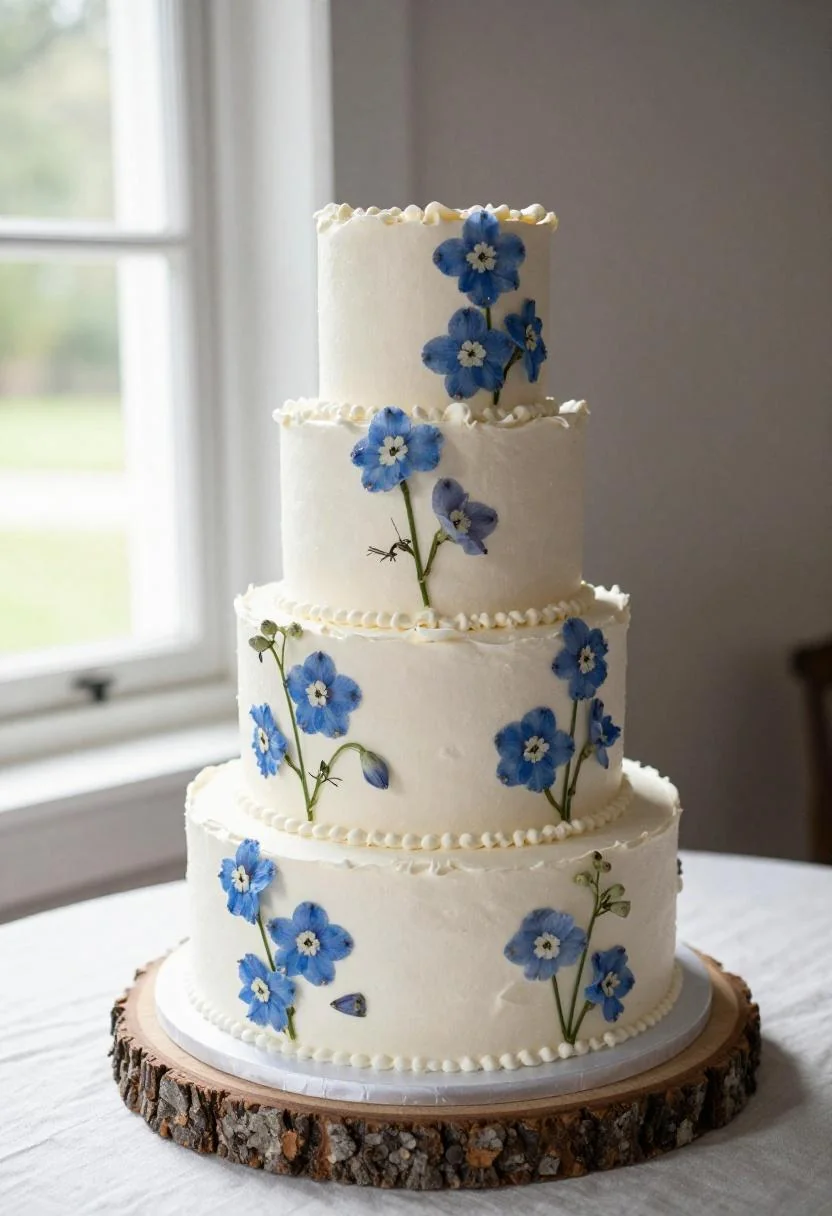
Cool blue delphiniums crowning four tiers of bare buttercream, the whole thing resting on a cross-section of oak that still shows its rings — this is wabi-sabi applied to confectionery. The oak slice base isn't just decorative. It's a material choice, one that says the table matters as much as what sits on it. Source the slab from a local mill or a salvage yard; it will outlast the wedding by decades. Find reclaimed wood cake stands here.
2. Plum Anemones and the Drama of Restraint
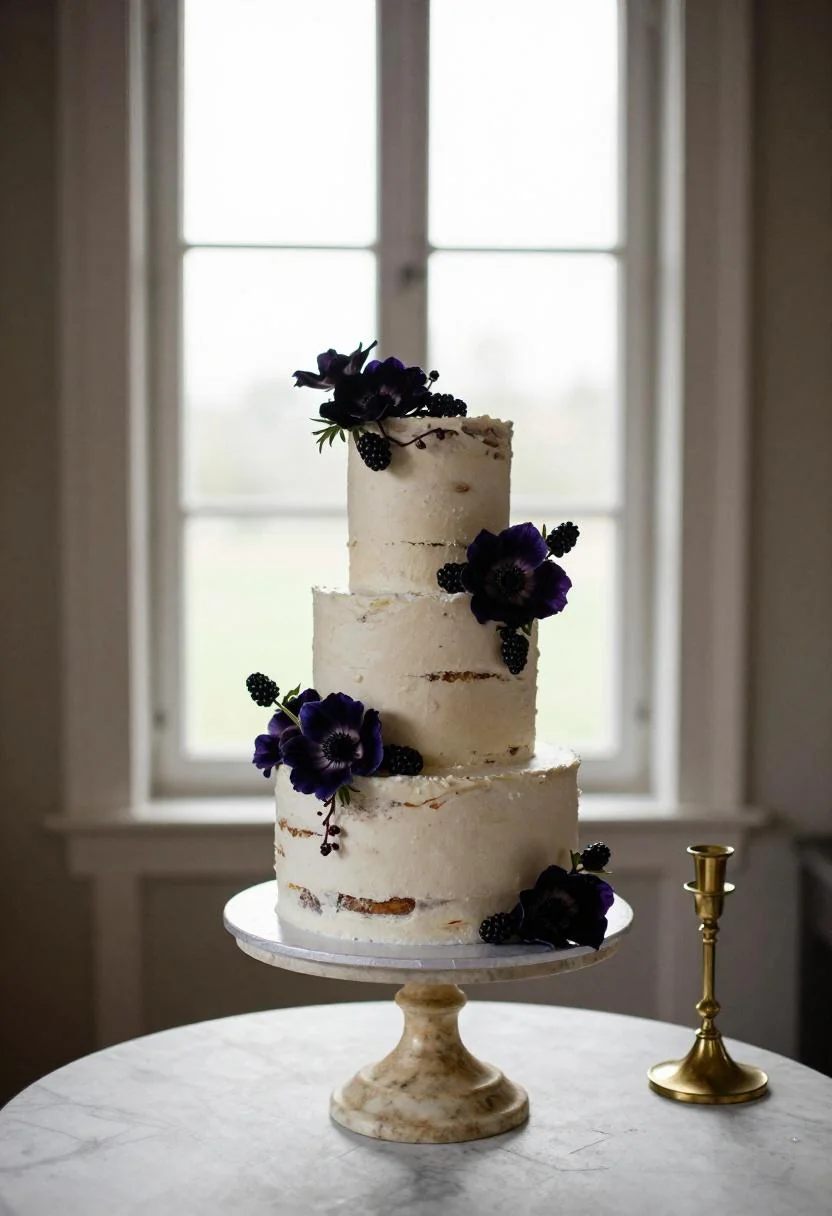
A semi-naked cake is already an act of editing — less frosting, more intention. Add dramatic plum anemones and trailing blackberry vines on a marble pedestal and you have something that reads as both theatrical and austere. The Japandi tension here is real: maximum visual impact from minimum intervention. As Harper's Bazaar has noted, the move toward darker, moodier florals in wedding design reflects a broader appetite for authenticity over confection.
3. Jade Eucalyptus — The Underrated Workhorse
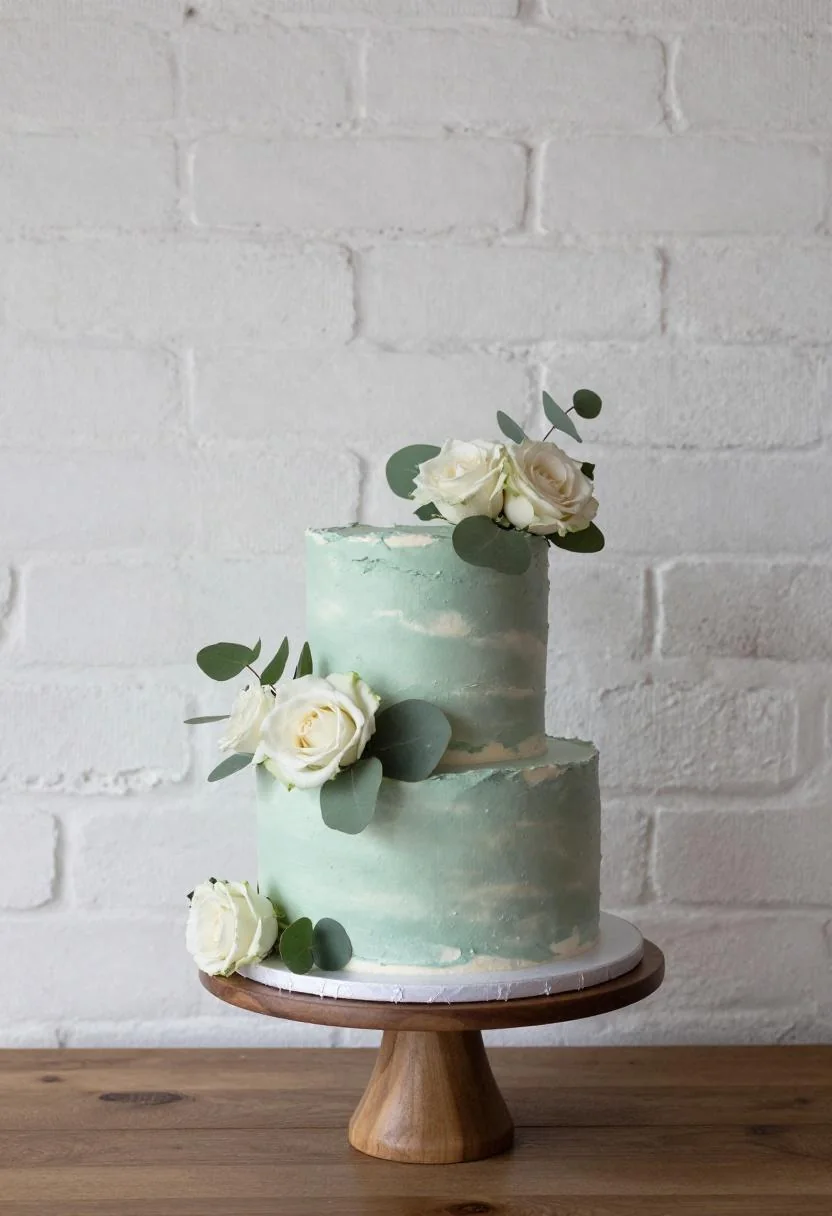
Eucalyptus is the linen of the botanical world. Humble, honest, endlessly adaptable. Draped in jade-toned sprigs across two tiers of cake with ivory roses, then grounded on a walnut stand — it's a study in muted harmony. The walnut matters: it's a naturally durable hardwood that, unlike painted MDF cake boards, can be composted, refinished, or passed on. Before you rent a plastic cake stand from a vendor, consider this — a walnut round from a local woodworker costs roughly the same and you keep it.
(A quick tangent: I've seen brides spend $800 on florals and then rest the whole arrangement on a foam-core base wrapped in satin. The base is part of the design. It always has been.)
4. Wasabi Hellebores in a Cottagecore Setting
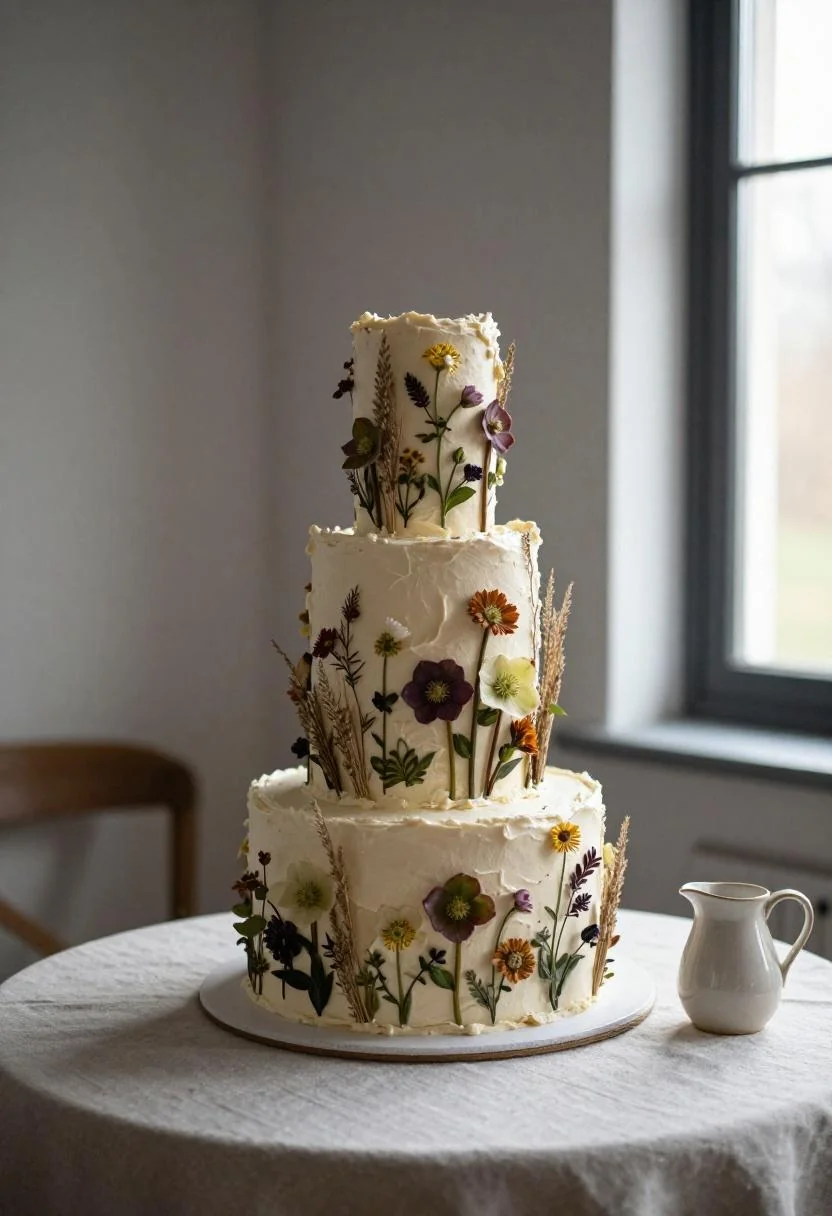
Hellebores are the introvert's wildflower — they nod downward, they don't demand attention, and they come in shades most people don't have names for. Wasabi is one of them. On a rustic three-tier cake surrounded by dried grasses, the effect is almost editorial without trying to be. Dried grasses, by the way, are genuinely low-impact: no water, no conditioning, no refrigerated transport. If you're building a wedding around reduced footprint, start with the florals — and dried botanicals are where that conversation begins. For more creative floral directions, our boutonniere ideas guide covers some equally surprising botanical pairings.
5. Persimmon Ranunculus on Fluted Ceramic
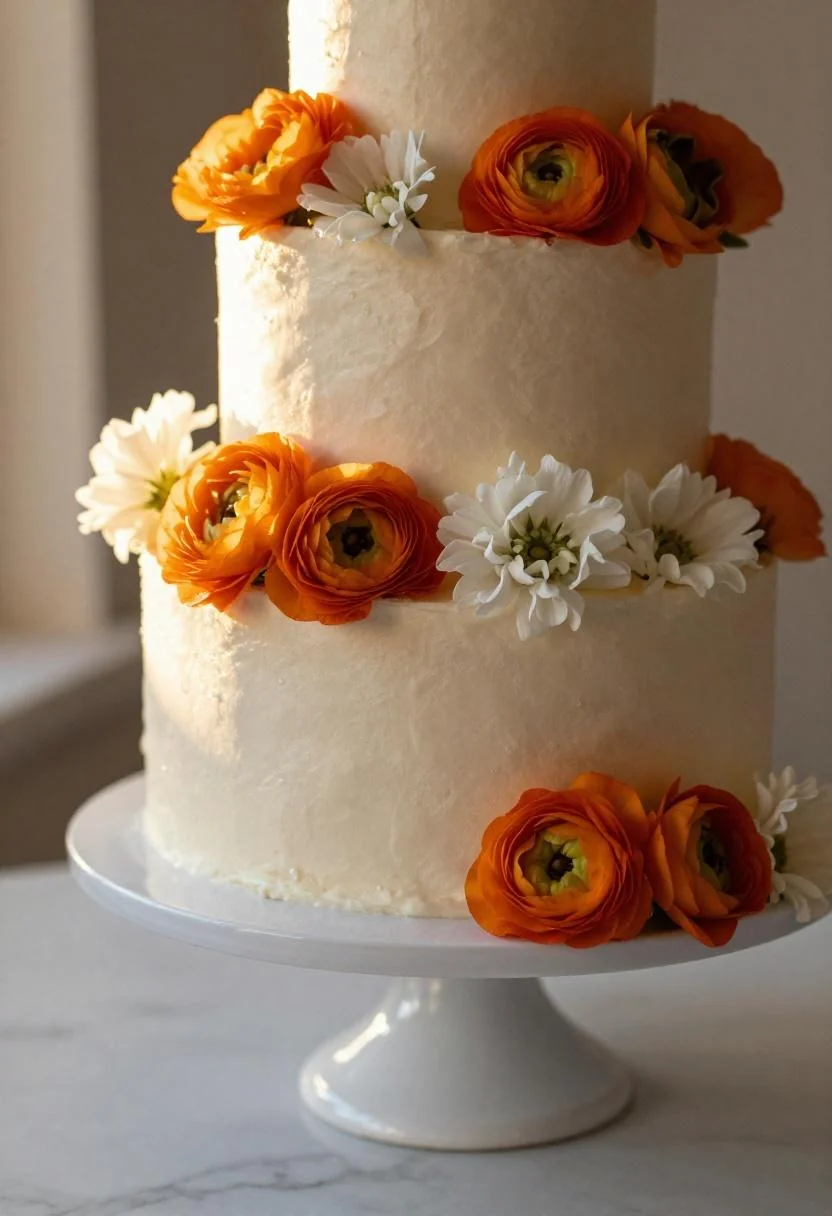
Vivid. That's the word for persimmon ranunculus — they don't apologize for themselves. Against white wildflowers and the clean ridges of a fluted ceramic stand, they create a kind of color punctuation. One pop of warmth, then quiet. The ceramic stand is worth seeking out from an independent potter; handmade ceramics carry variation that mass-produced pieces never will, and that variation is exactly the point here. Browse handmade ceramic cake stands.
6. Warm Terracotta and the Afrohemian Table
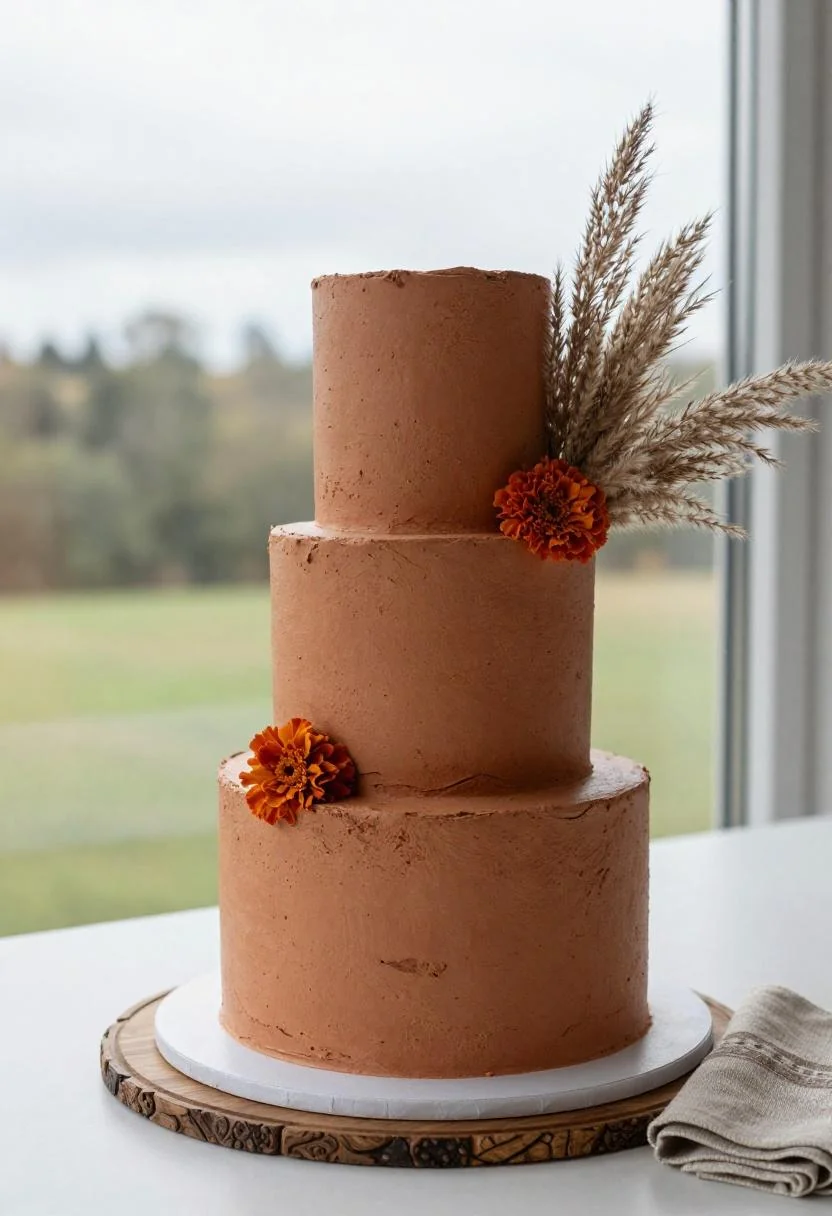
Terracotta fondant with marigolds and pampas grass, set within a tableau that pulls from Afrohemian design principles — layered textiles, organic warmth, joyful abundance. This isn't a cake that tries to disappear into the background. It's the centerpiece of a philosophy. Marigolds, historically used in everything from Día de los Muertos altars to Ayurvedic medicine, bring a depth of cultural meaning that imported hothouse flowers simply can't. Ask your florist where they source their marigolds. That question alone tells you a lot.
A Note on Cake Florals and Safety: Not all wildflowers are food-safe. Work with your baker to identify which blooms will make direct contact with the cake, and confirm they're unsprayed and non-toxic. A small card at the table noting the floral varieties is a lovely touch — and a transparency that guests genuinely appreciate.
7. Five Tiers of Chamomile Quiet
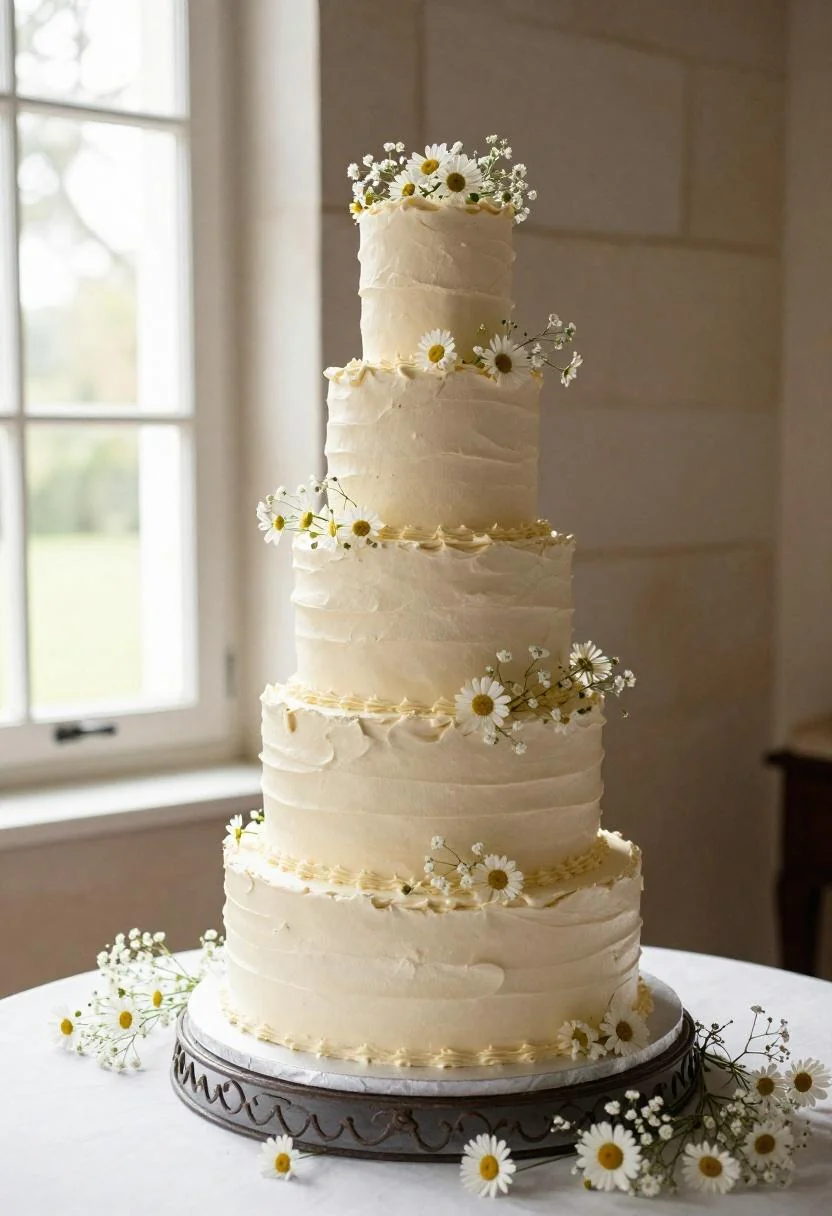
Five tiers should be overwhelming. This one isn't. Cream cake with chamomile and baby's breath, held on a vintage iron stand — the restraint does the work. Chamomile has a softness to it, both visual and olfactory, that makes you slow down. Baby's breath is having a long-overdue rehabilitation; after years of being dismissed as filler, it's now recognized as doing exactly what good design requires: providing negative space that lets everything else breathe. The vintage iron stand is the kind of thing you find at an estate sale and never let go of.
8. Overhead and Intimate: Sage, Sedum, Cosmos
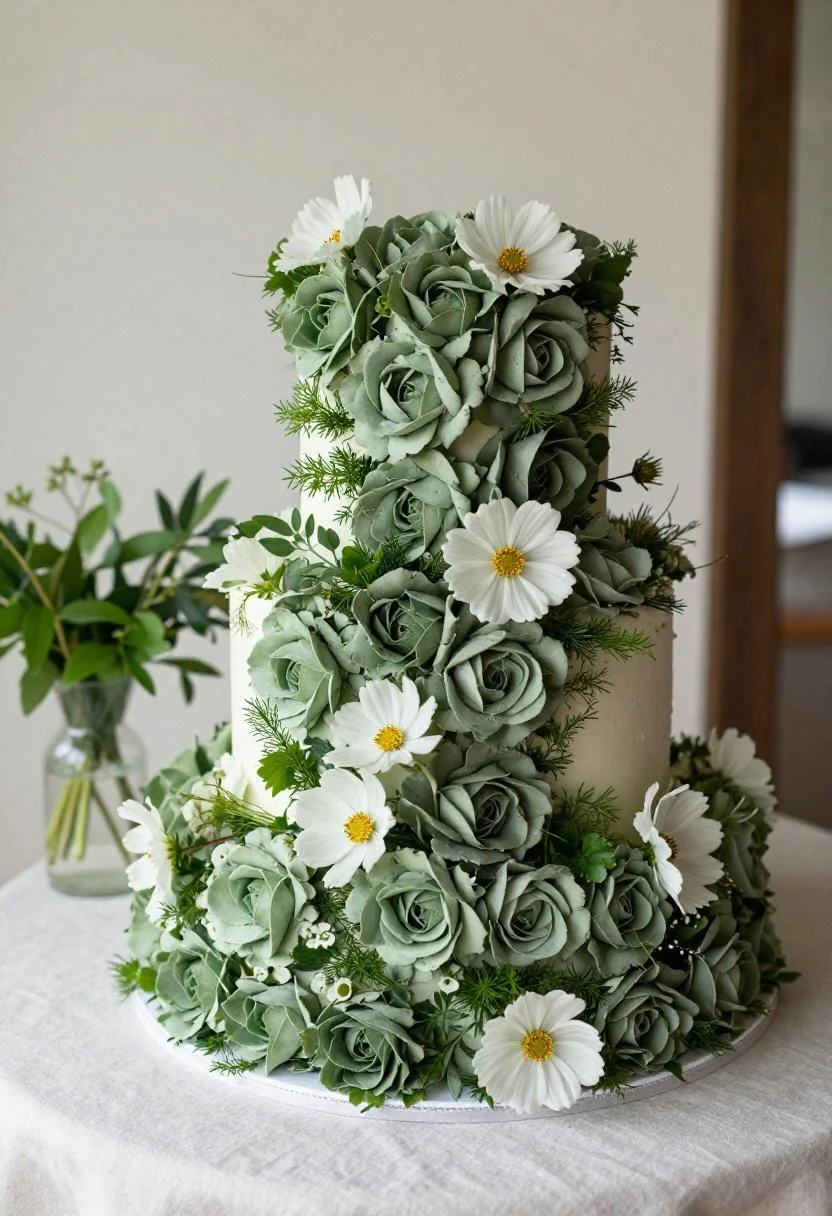
Shot from above, a single-tier cake reveals what multi-tier arrangements can't: the texture of sage leaves, the geometric perfection of sedum rosettes, the loose scatter of cosmos. It's a garden in miniature. Single-tier cakes are also genuinely more sustainable — less structural armature, less buttercream by volume, less of everything that ends up in a bin at the end of the night.
What would you rather have: five tiers of visual spectacle, or one tier of something you actually remember?
9. Mirror-Glaze Plum in a Neo Deco Velvet Setting
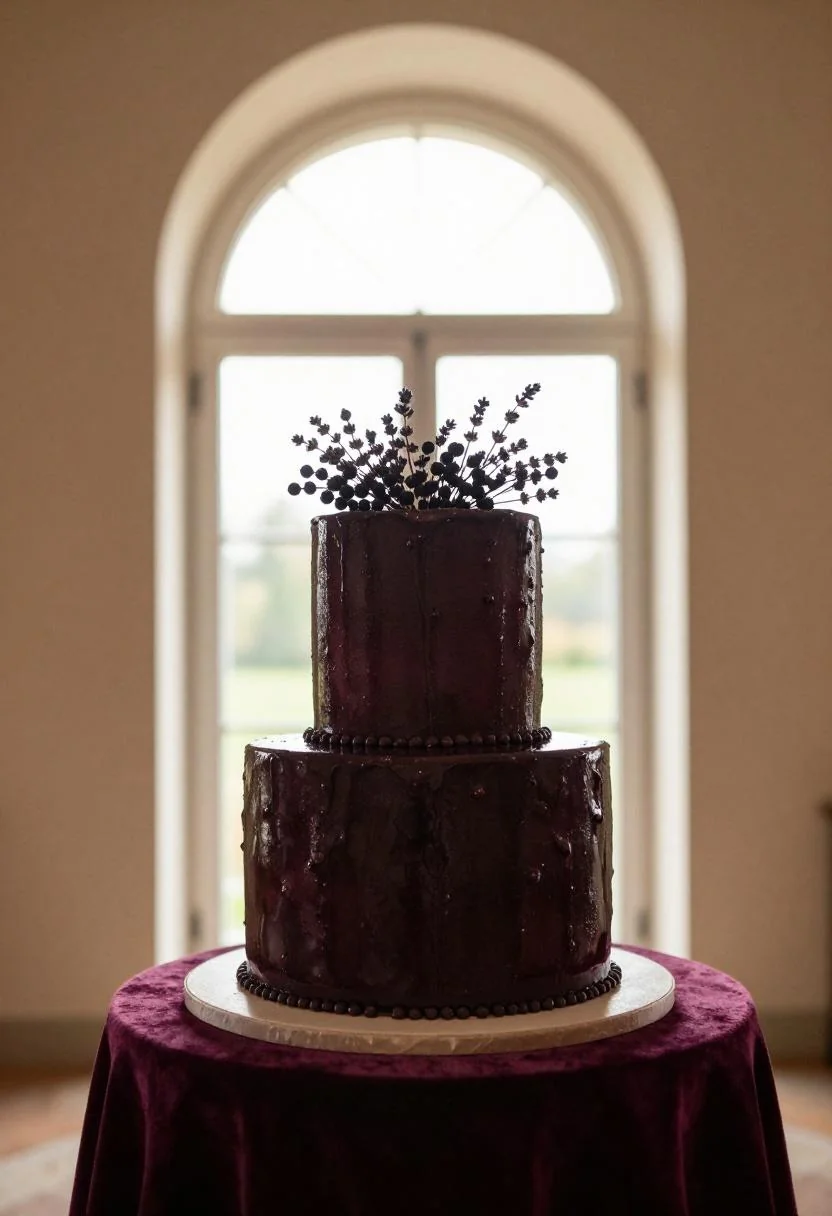
This is where Japandi and maximalism have a civil argument. The mirror glaze is high-impact, almost confrontational in its reflectivity. But the dried lavender crown on top is the quiet correction — something foraged, something impermanent, something that will lose its color by the end of the season. The Neo Deco velvet backdrop amplifies the drama without competing. Vogue's coverage of cake aesthetics has pointed to exactly this tension — the desire for visual opulence tempered by an ecological conscience. Shop dried lavender for DIY cake crowns.
10. Maidenhair Ferns Between the Tiers
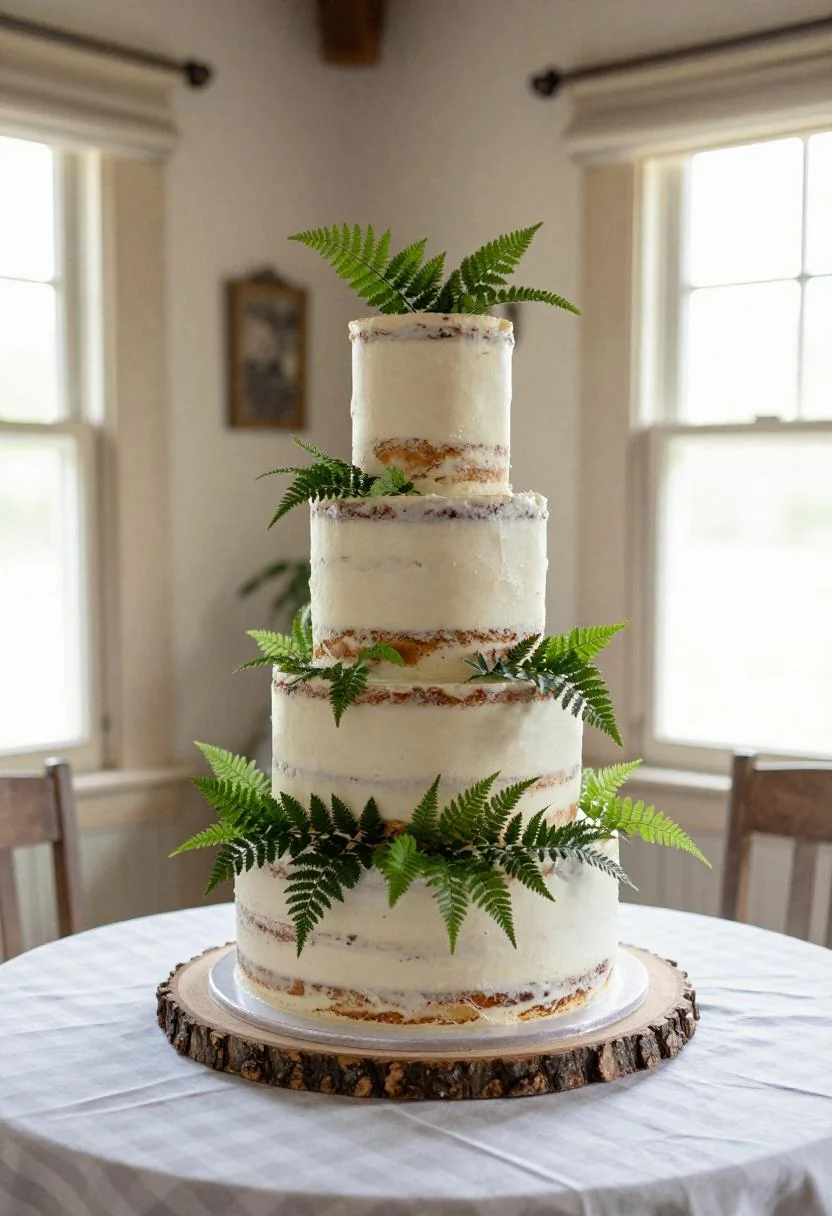
Maidenhair ferns are delicate to the point of being difficult — which is exactly why they work here. Tucked between the tiers of a semi-naked cake on a gingham-covered table, they introduce a fine-lined texture that no flower can replicate. The gingham cloth grounds the whole thing in something domestic and warm, a counterweight to the botanical precision above. This is the cake for the couple who met at a farmers market and has been cooking with seasonal produce ever since.
11. The Macaron Tower Rethink
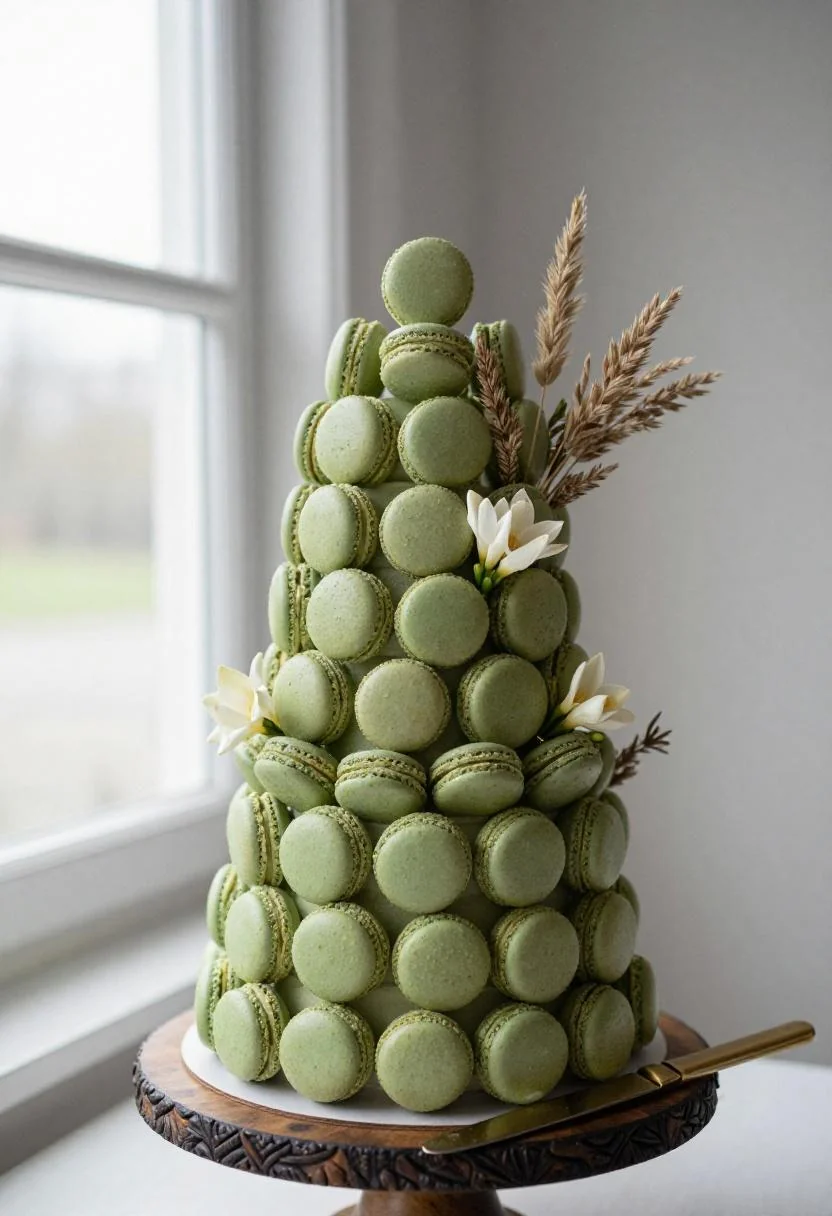
A wasabi macaron tower on a carved ebony board, dressed with dried grasses and freesia. Not a cake in the traditional sense, but an object that serves the same ceremonial purpose — with considerably less structural waste. Macarons are made to order in small batches, freesia are among the more sustainably grown cut flowers, and an ebony board like this one can live in your home for years afterward as a serving piece. Sustainability isn't sacrifice, it's strategy — and this tower is proof. See macaron tower display stands.
12. Ombre to Persimmon, with Dried Orange and Calendula
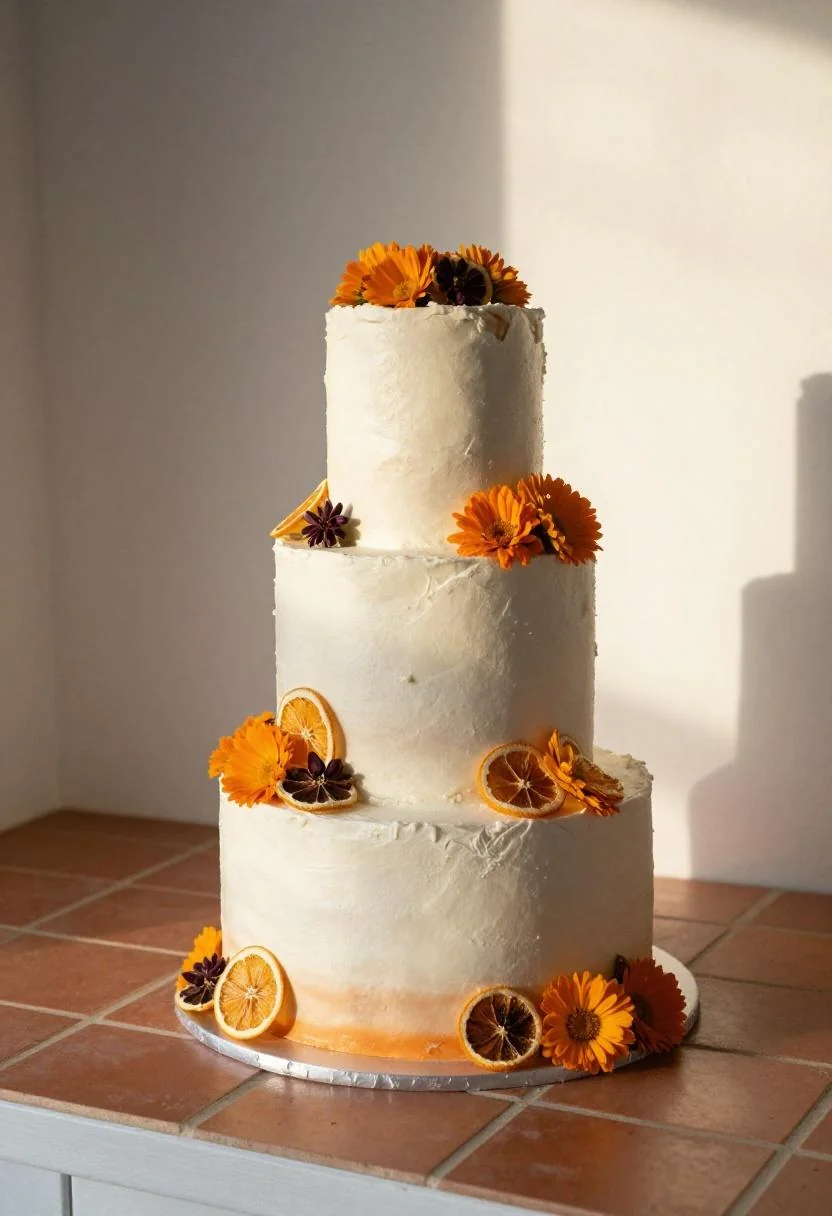
The ombre fade to persimmon is warm enough to feel like late afternoon light. Dried orange slices pressed into the surface — not applied on top, pressed in — and calendula blooms scattered across. Resting on terracotta tile, it looks like it belongs on a Provençal kitchen table rather than a wedding venue. Calendula is edible, anti-inflammatory, and grows easily from seed; it's one of the few flowers where choosing it over an imported orchid is both an aesthetic and an ethical upgrade. If you love this earthy terracotta palette, our guide on backyard wedding reception ideas has more ways to bring it through the whole event.
13. Strawflower Wreath on Kente Cloth
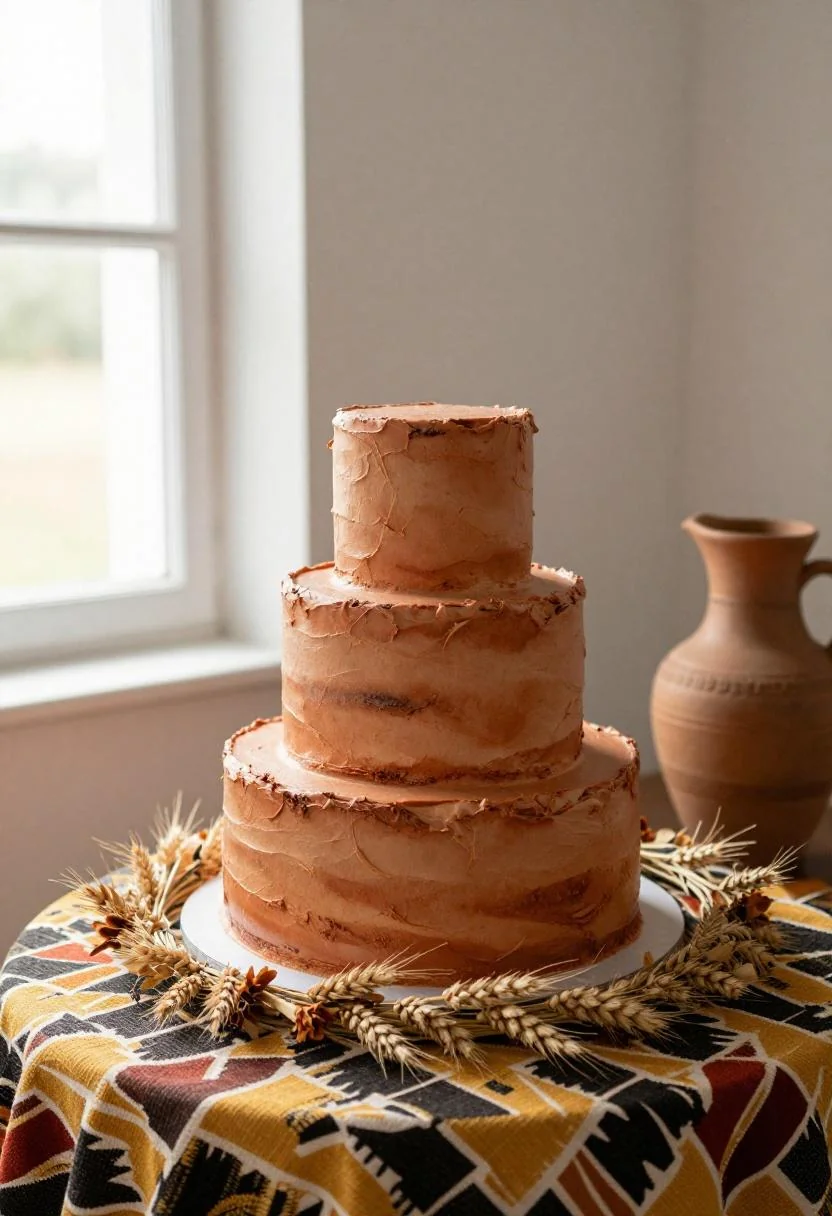
The terracotta-brushed cake with its strawflower wreath is striking on its own. On a kente-cloth table, it becomes a statement about whose aesthetics belong in the wedding design conversation. Strawflowers are among the most naturally long-lasting of all cut flowers — they dry in place, which means the wreath on this cake will look nearly identical a week after the wedding. Keep it. Frame it. Press it into a shadow box. This piece has a past, and that's the point. Find dried strawflower wreaths here.
14. Neo Deco Cream: Gold Leaf and One Perfect Rose
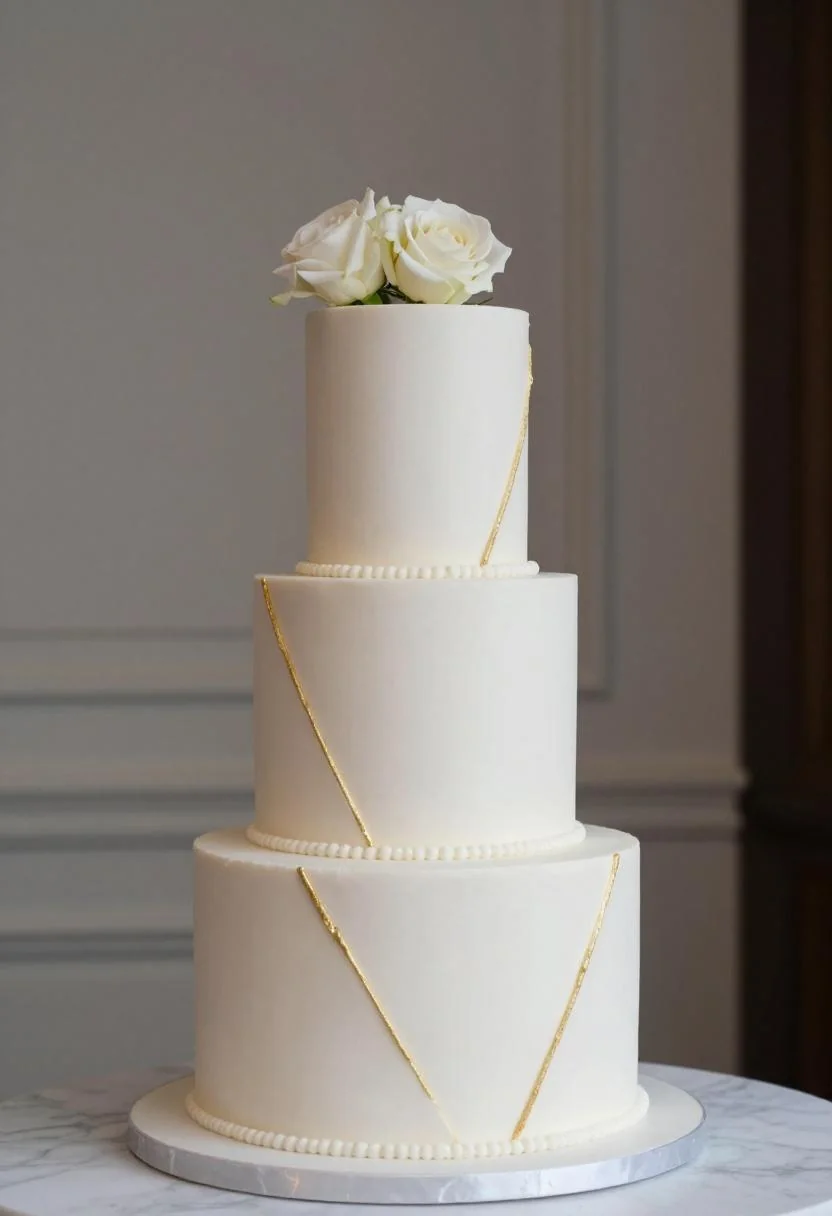
One rose. That's all this needs. A cream fondant cake with gold leaf geometry applied in panels and angles — precise, architectural, deliberate — and then a single white garden rose placed on top like an afterthought that was actually the whole plan. The marble beneath it reflects just enough to double the composition without cluttering it. This is the Japandi argument made in sugar and metal leaf: when you've designed everything else with intention, one natural element is enough. As Elle's trend coverage has increasingly noted, the pivot toward singular statement elements over layered maximalism is one of the defining shifts in contemporary bridal design.
(This is also, for what it's worth, the most technically challenging cake on this list. Gold leaf work requires controlled humidity and a very steady hand. Ask your baker if they've done it before — and look at photos.)
The Colors That Defined 2026 Wildflower Cakes
Run through these 14 designs and a palette emerges that feels less like a trend deck and more like a walk through a late-summer garden: cool blue delphiniums for something borrowed and something wild; plum noir for the couples who want drama without neon; jade green (eucalyptus, maidenhair, moss) as the connective tissue between everything; wasabi for the design-literate crowd who know that yellow-green is doing quiet heavy lifting in 2026; persimmon as the warmth note that anchors an otherwise cool composition; terracotta as the earthy acknowledgment that we're not actually separating ourselves from the soil; and cream white as proof that restraint is still the most radical choice available.
The broader shift here isn't just aesthetic. Wildflower wedding cakes tend to use locally grown, seasonal, and often unsprayed botanicals — which means lower transport emissions, fewer synthetic pesticides near food surfaces, and a connection to place that imported blooms simply can't offer. The greenest cake is the one whose flowers came from twenty miles away. Worth asking your baker and florist where, exactly, they source.
If you're pulling together the full wedding vision around one of these cakes, our guide to rustic garden arbors covers the ceremony backdrop question with the same low-impact material sensibility.
This post contains affiliate links. We may earn a commission at no extra cost to you.
Images in this article were created with AI assistance.


