There’s something about moving water that quiets the mind in a way that furniture never can. A backyard pond with a waterfall isn’t decoration — it’s a decision about how you want to spend time at home. The sound, the light on the surface, the way plants lean toward it. Get the structure right, and everything else follows. These fifteen ideas span a range of materials and moods, but each earns its place by doing less than you’d expect.
Raw Materials, Honest Water
Industrial spaces teach a useful lesson: the beauty is in the material itself, not what you do to it. Concrete, stone, metal — these don’t need finishing. They just need placement. The waterfalls in this first group work because the builder trusted the material and stopped there.
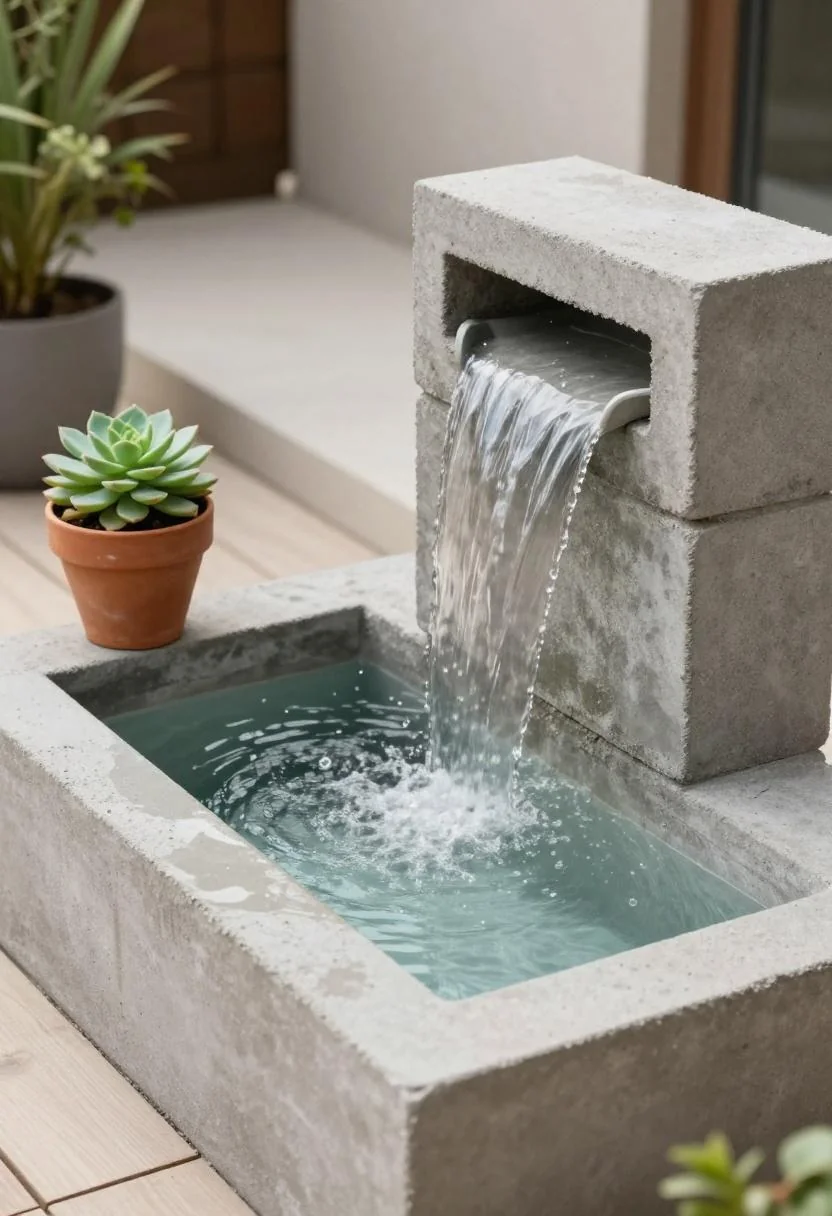
Concrete block stacked into a low weir, water sheeting cleanly into a rectangular pond. The succulent edging isn’t decorative afterthought — it’s structural punctuation. This is the backyard equivalent of a poured-concrete countertop: utilitarian and, because of that, quietly beautiful. The rectangular pond matters. Curves would undercut the whole logic here. Browse concrete waterfall blocks
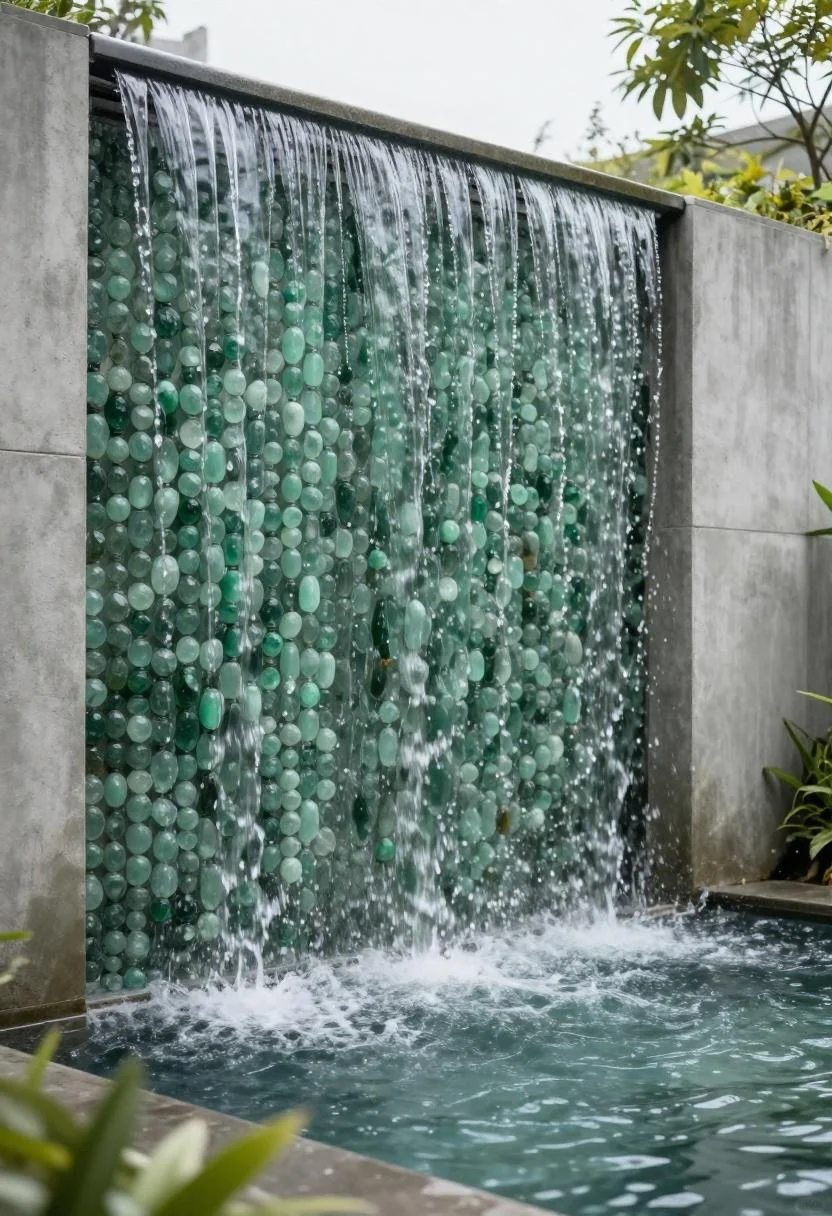
Glass bead panels on a waterfall wall. The idea sounds indulgent, but look at what it does: the water catches and scatters light in a way that plain stone simply can’t. The trough pond is ground-flush, minimal, almost aggressive in its restraint. This is a feature for someone who appreciates the detail — and doesn’t need anyone else to notice it. As Vogue has observed, the most interesting outdoor spaces right now draw from interior design logic rather than traditional landscaping.
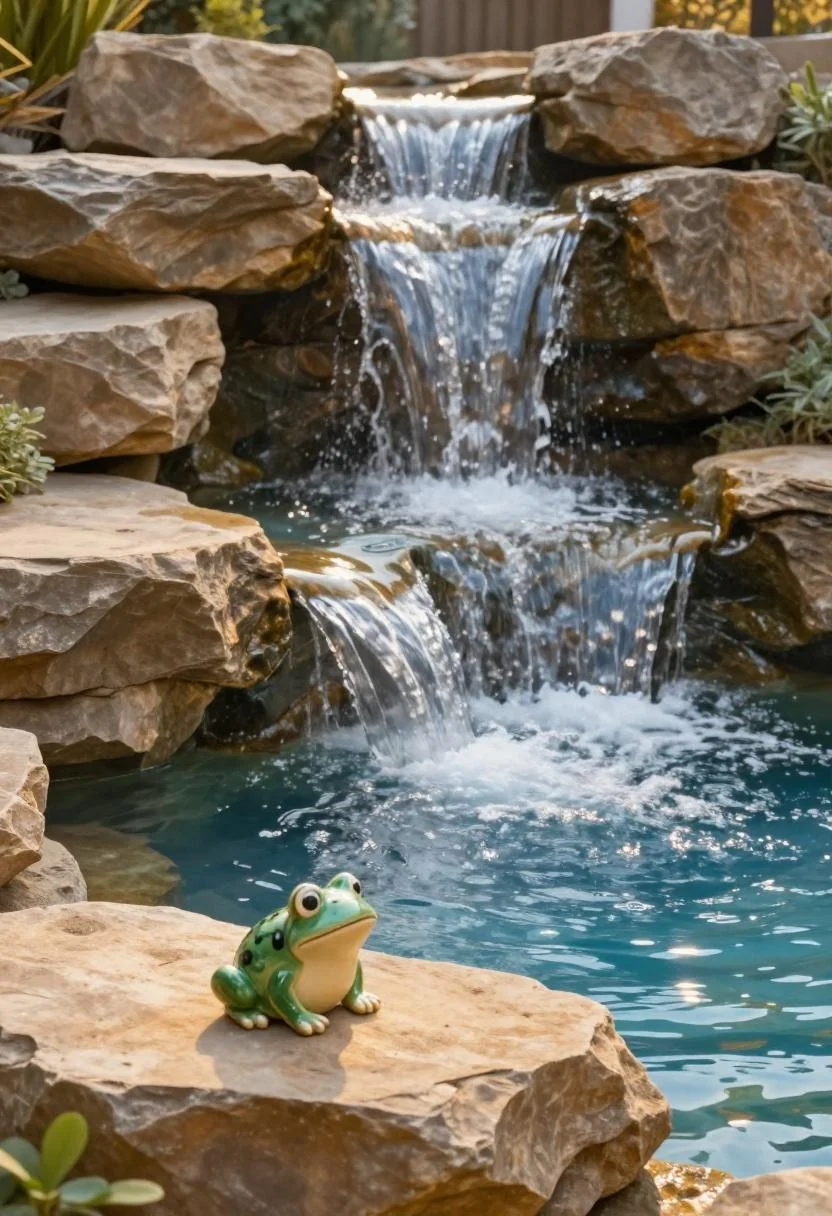
Tiered sandstone. Each ledge is a pause before the next descent. The cool-blue cast of the water at midday is almost atmospheric — like looking at a photograph of a quarry lake rather than a garden. Fish pond below. The movement stays measured, even at full pump flow. That’s the craft: calibrating the pump so the water doesn’t rush, it flows.
Stone That Looks Like It Was Always There
The best fieldstone work looks dug up and restacked, not purchased and installed. There’s a difference, and you feel it immediately. The following ideas lean into that tension — between the deliberate and the accidental.
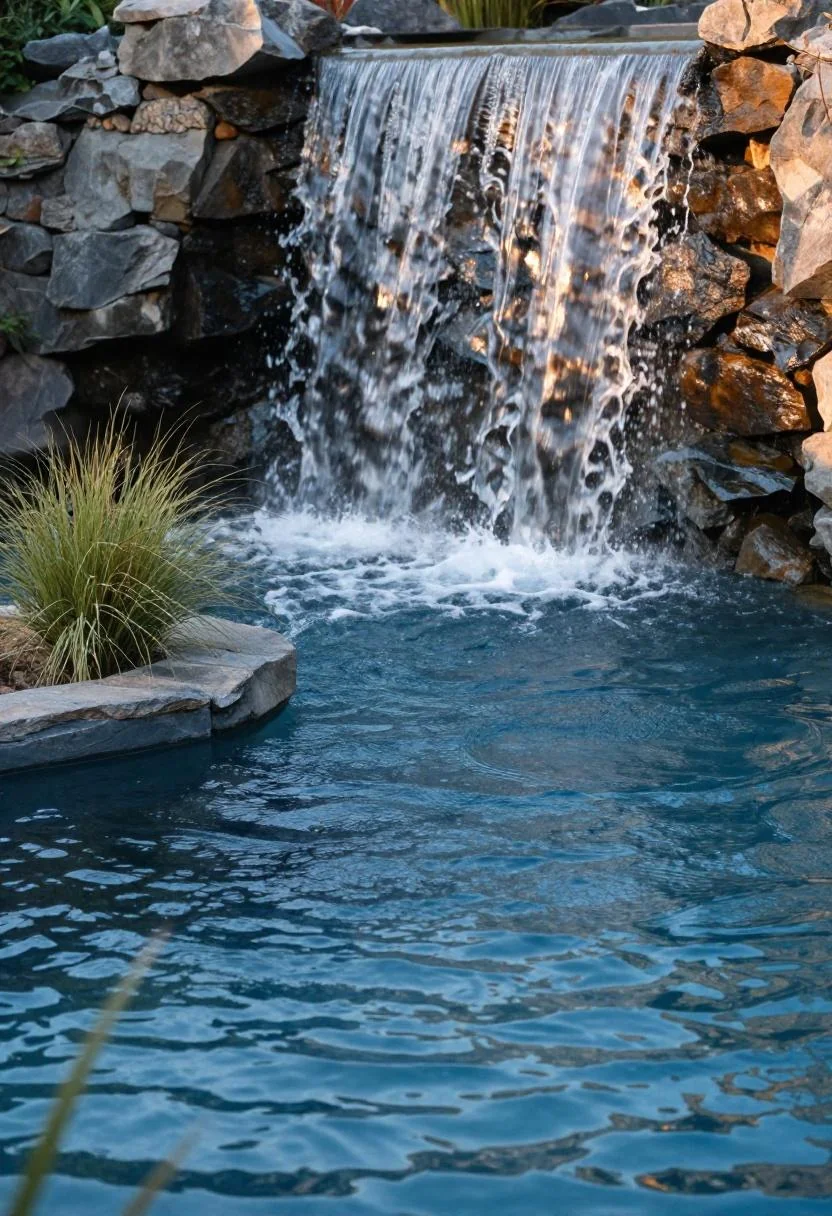
Slate at golden hour is almost unfair. The color shift — blue to copper to grey depending on the light — means this waterfall looks different every hour of the day. Ornamental grass alongside it doesn’t soften the edge so much as mark the boundary between structure and nature. One clump, not three. The restraint here is the whole point. Shop slate pond kits
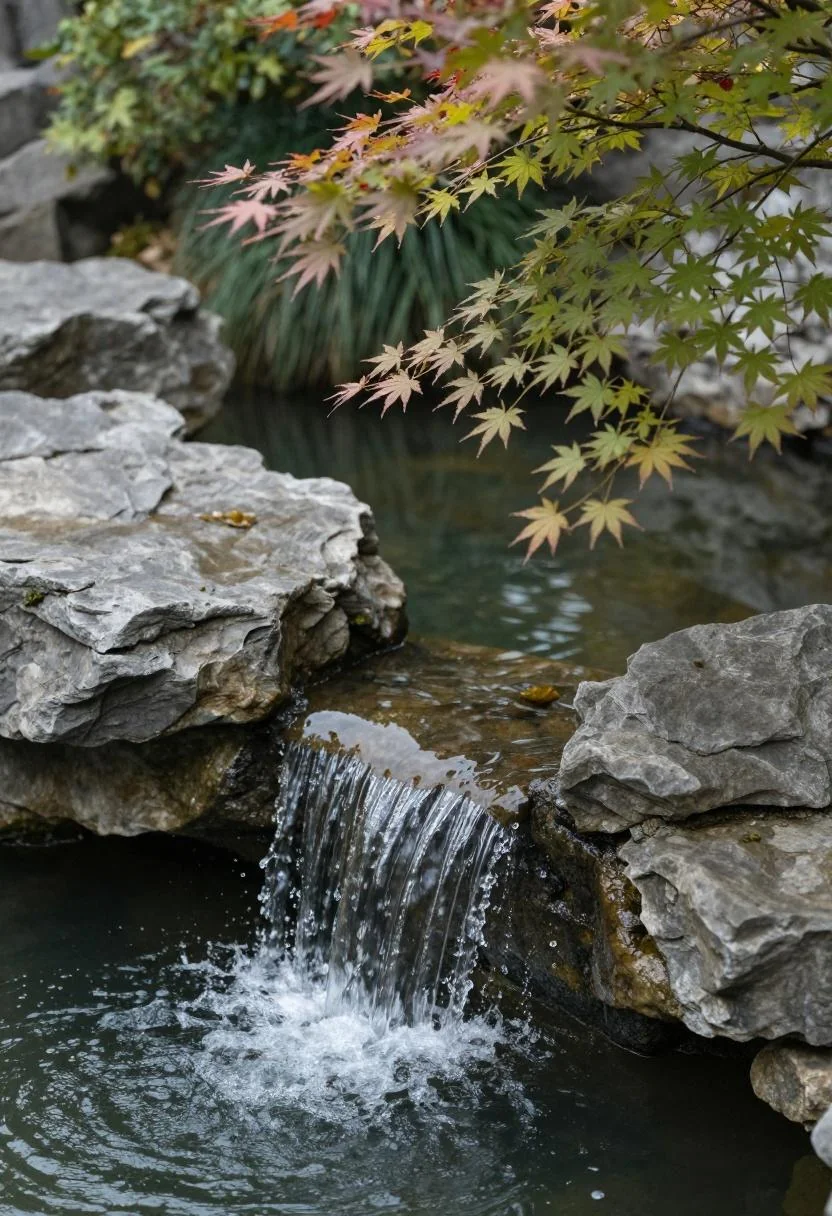
A Japanese maple positioned to cast shadow and color onto the water simultaneously — this is design by observation, not intention. You’d have to watch the light for a season before you knew exactly where to plant that tree. The fieldstone waterfall itself is almost secondary. Almost. The plum tones pooling on the water’s surface in autumn make it feel like a living painting you didn’t plan for but earned.
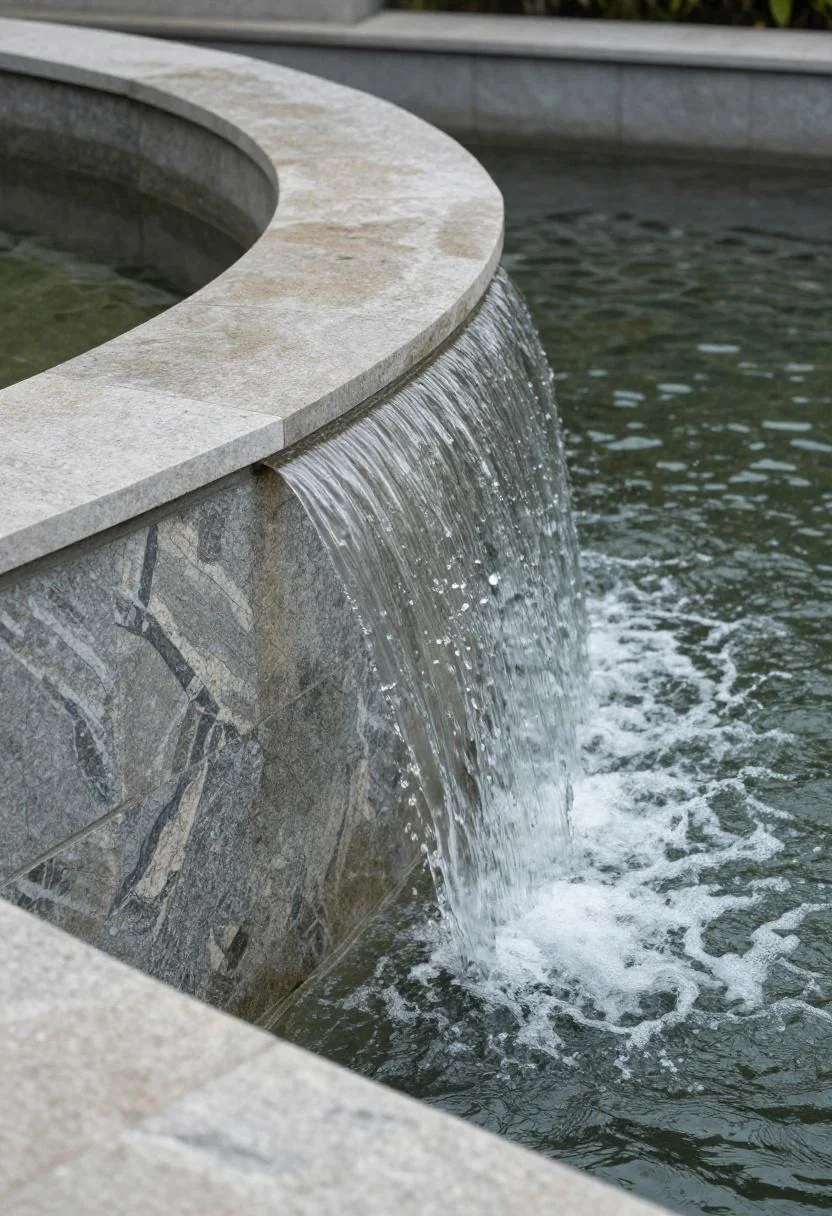
Limestone with plum veining, cut wide and flat so the water sheets off the edge rather than trickling through gaps. The surface below stays eerily still. That contrast — sheeting flow above, mirror surface below — is a compositional choice as deliberate as anything in a gallery. Find limestone waterfall stone
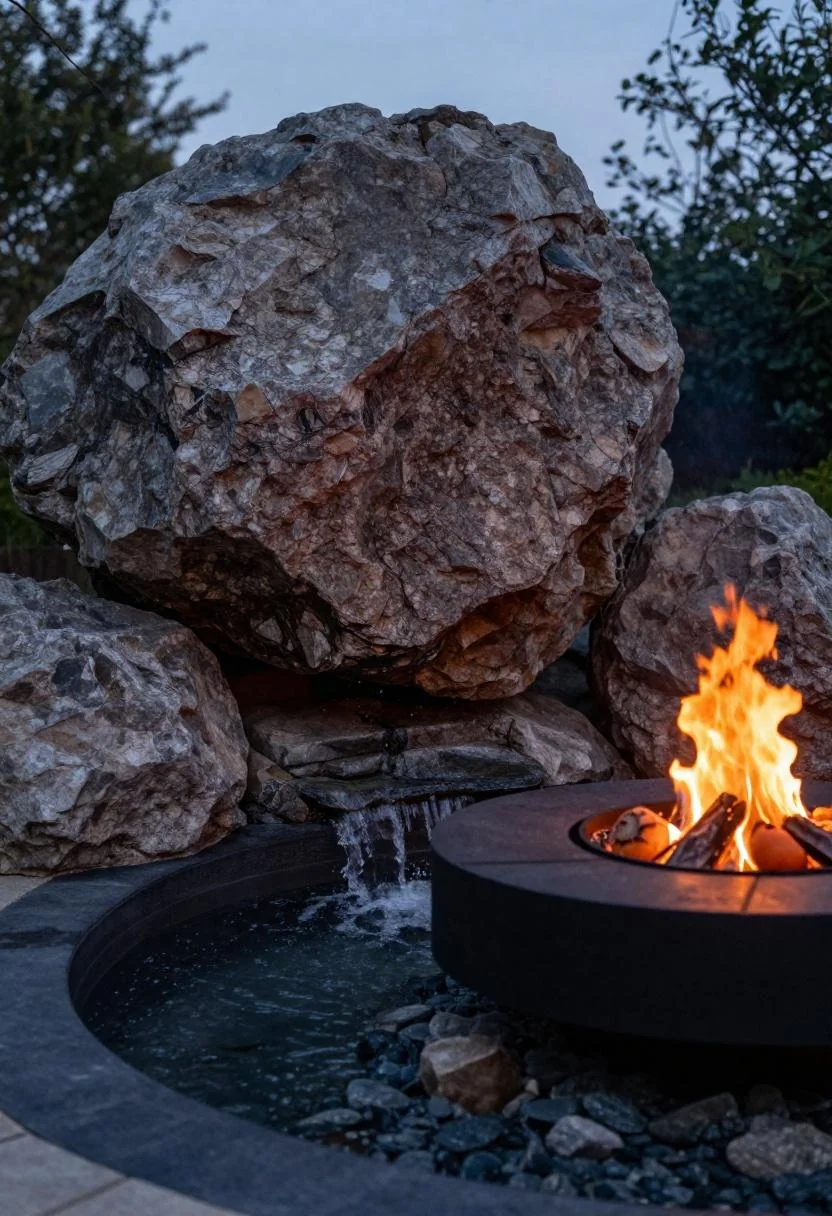
Granite boulders beside a fire pit at dusk. Water and fire, ten feet apart. It shouldn’t work, and yet. The key is that neither element is trying to be decorative — the fire pit is functional, the boulders are structural, and the tension between the two elements creates the atmosphere without any additional effort. If you’re building an outdoor area around evening use, this is the combination worth considering. You can explore more ideas like this in our guide to outdoor fire pit areas.
The Zen Argument
Japanese garden design has been doing minimalism longer than any design movement you can name. The rules are old and they still hold: every element earns its presence, nothing is incidental, and the negative space is load-bearing. These waterfalls apply that logic with varying degrees of strictness.
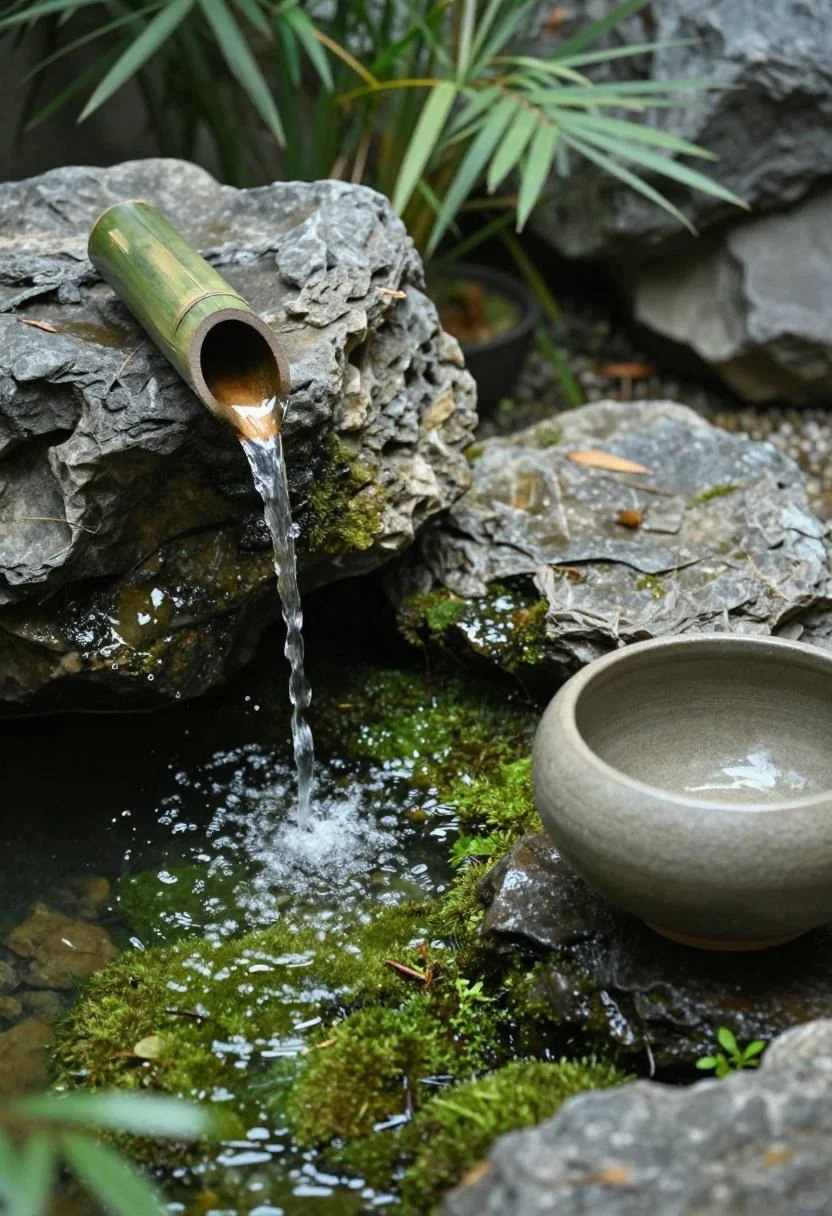
A bamboo spout dripping water over moss-covered granite is the most stripped-down waterfall you can build — and possibly the most effective. No pump housing to hide. No liner visible. Just a hollow cane, gravity, and a stone that has been slowly greening for years. The moss isn’t planted; it arrives when conditions are right. That’s the point. Shop bamboo water spouts
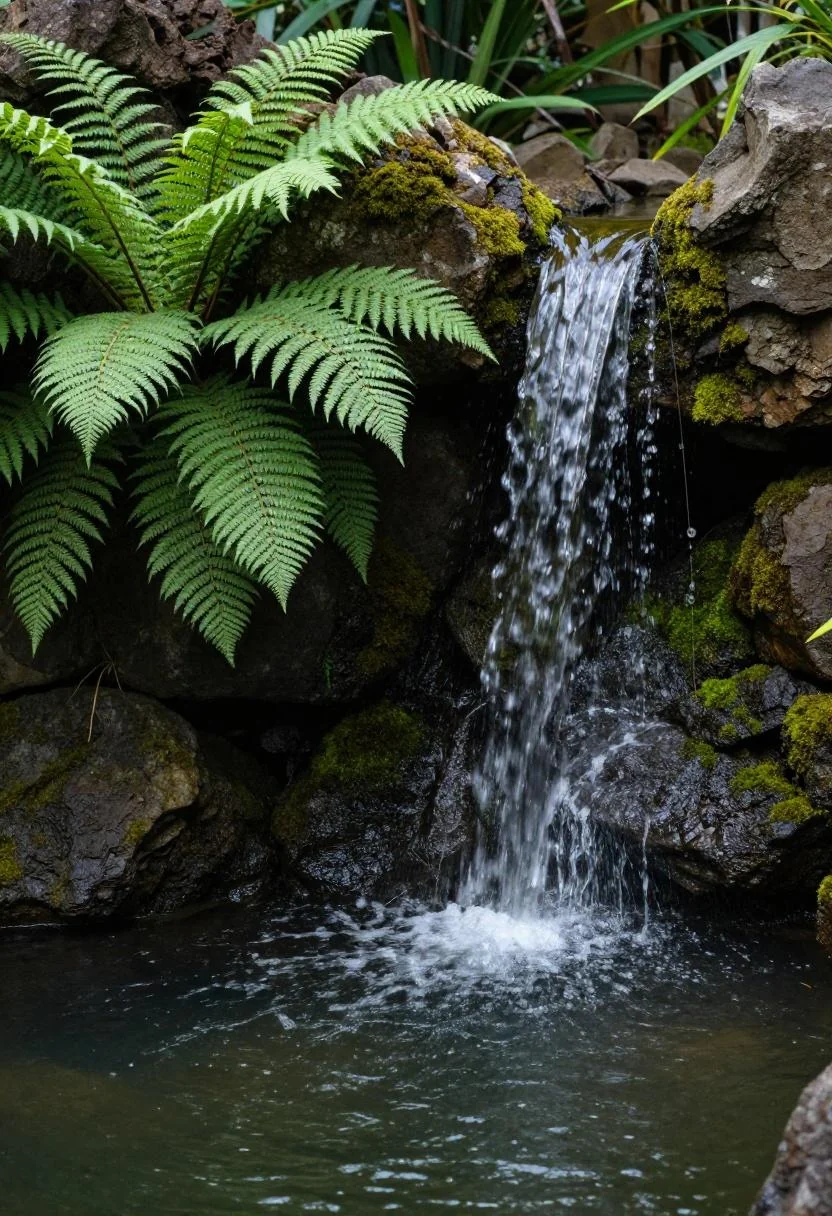
Lava rock is underused. Its porous surface holds moisture and — crucially — supports fern growth directly on the stone over time, so the waterfall becomes more itself as the seasons pass. Sage-green ferns framing it in morning shade. The whole composition has the quality of something discovered rather than built. Worth pairing with shade-tolerant container plantings along the border if you’re working with a north-facing yard.
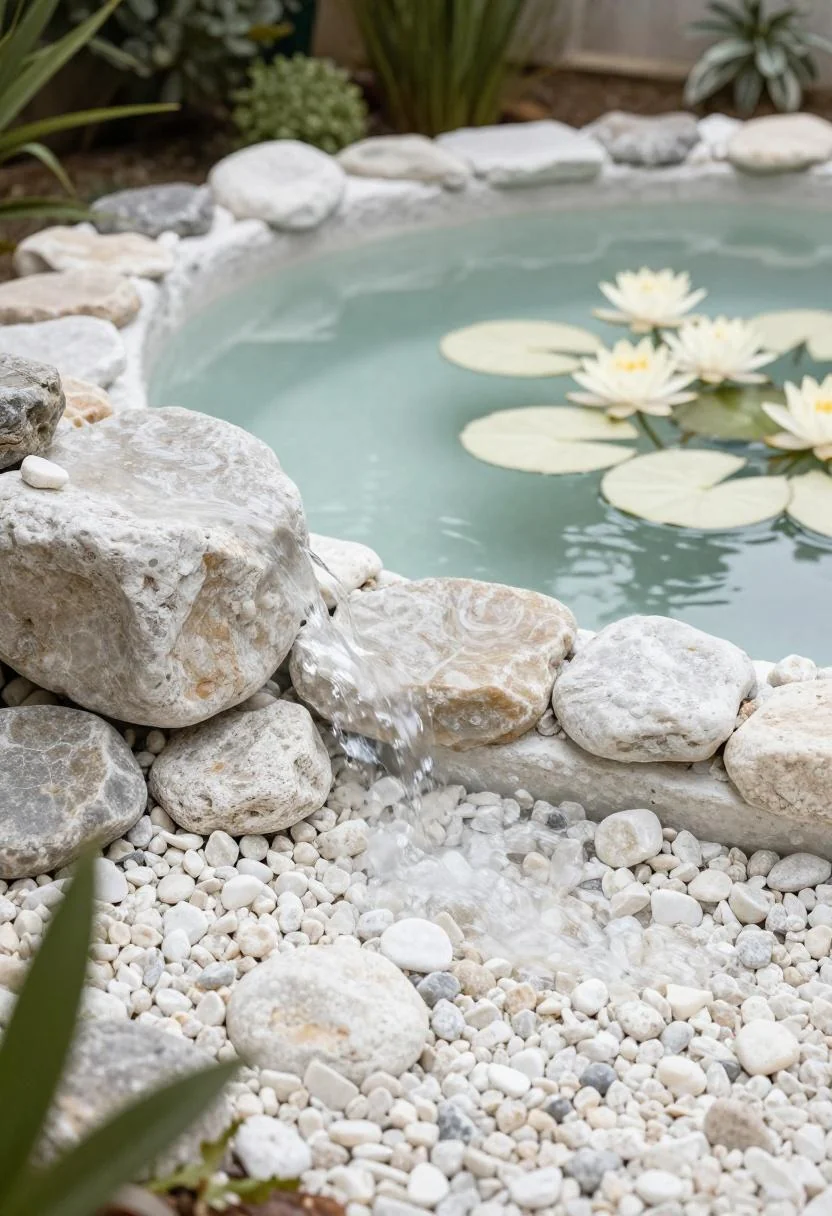
Overcast light is the honest light. No golden-hour glamour, just the waterfall as it actually is most days — quartz gravel catching diffuse white sky, cream water lilies sitting flat on the surface. This is what the space looks like on a Tuesday in October. And it’s still beautiful. That’s the test worth applying to any design decision: does it hold up without the ideal conditions?
Color That Earns Its Loudness
Not everything has to be neutral. The question isn’t whether to introduce color — it’s whether the color is doing something structural, or just decorating. These waterfalls use color because it changes the experience, not because it fills a gap. (There’s a difference, and experienced gardeners know it before they can articulate it.)
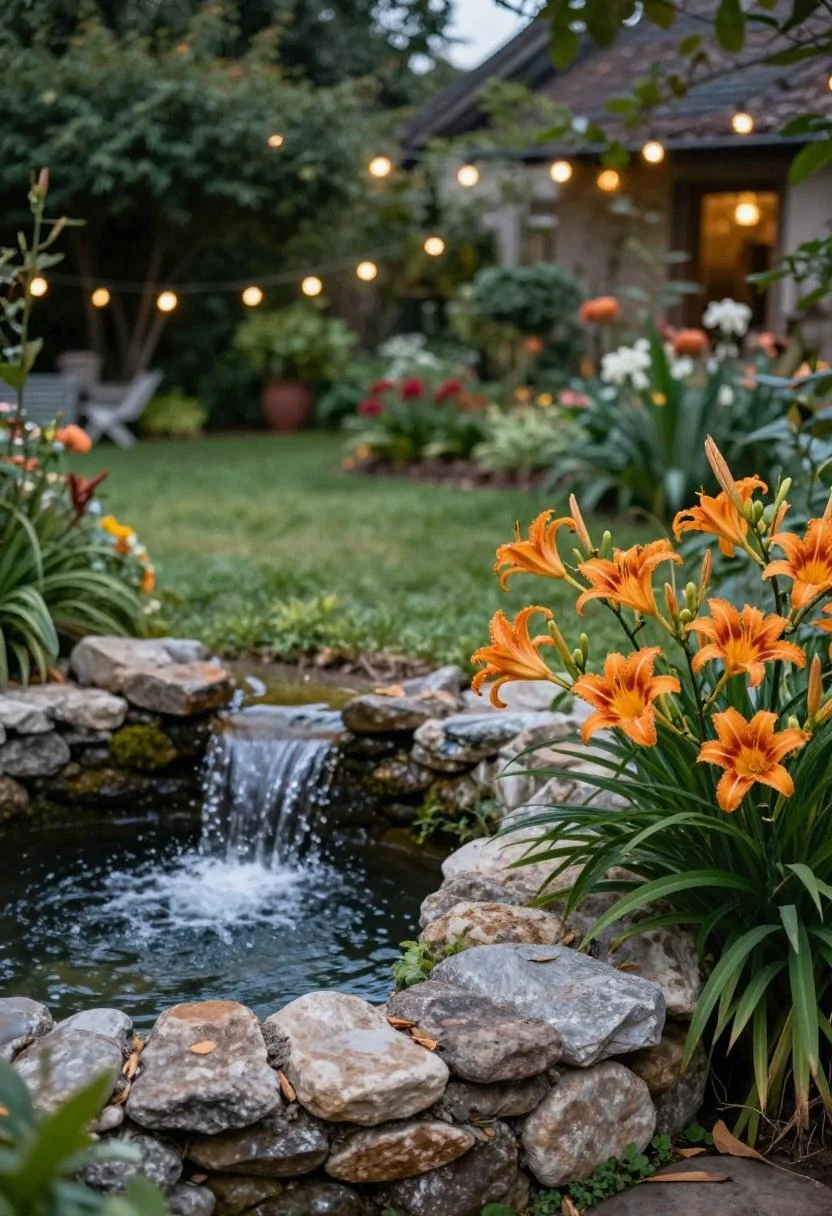
Persimmon daylilies beside a cobblestone waterfall at dusk. The color reads almost burnt at that light — less orange, more ember. Cottage garden logic applies: the planting is slightly unruly on purpose, and the cobblestone waterfall is the only structured element. That contrast holds the whole scene together.
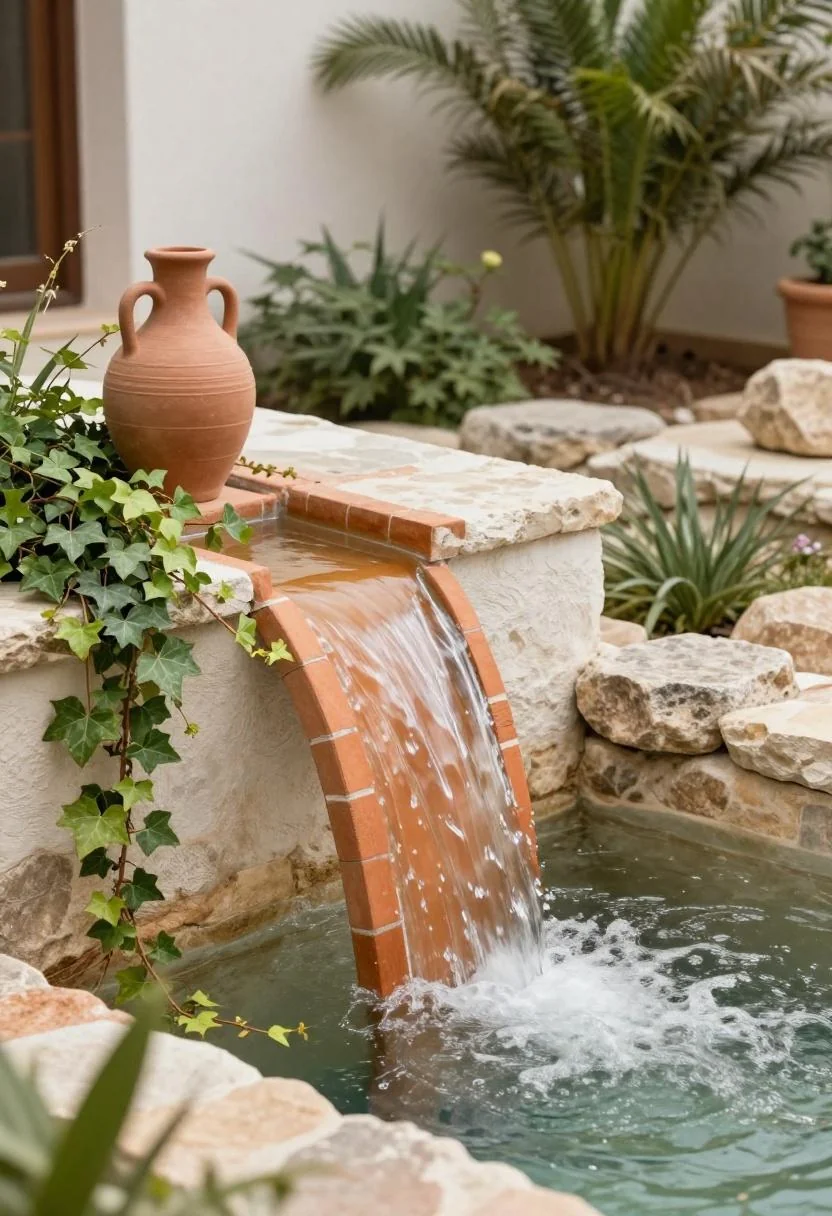
Mediterranean. Sun-baked terracotta spillway, clay amphora as both vessel and ornament, herbs pushing through paving cracks nearby. This is a committed aesthetic — it only works if you lean all the way in. A single terracotta element surrounded by slate and concrete would look like an accident. Here, where everything shares the same warm, fired-earth palette, it reads as coherent and considered. As Harper’s Bazaar has noted, Mediterranean-inspired outdoor spaces are resonating precisely because they feel lived-in rather than styled. Find terracotta spillway fountains
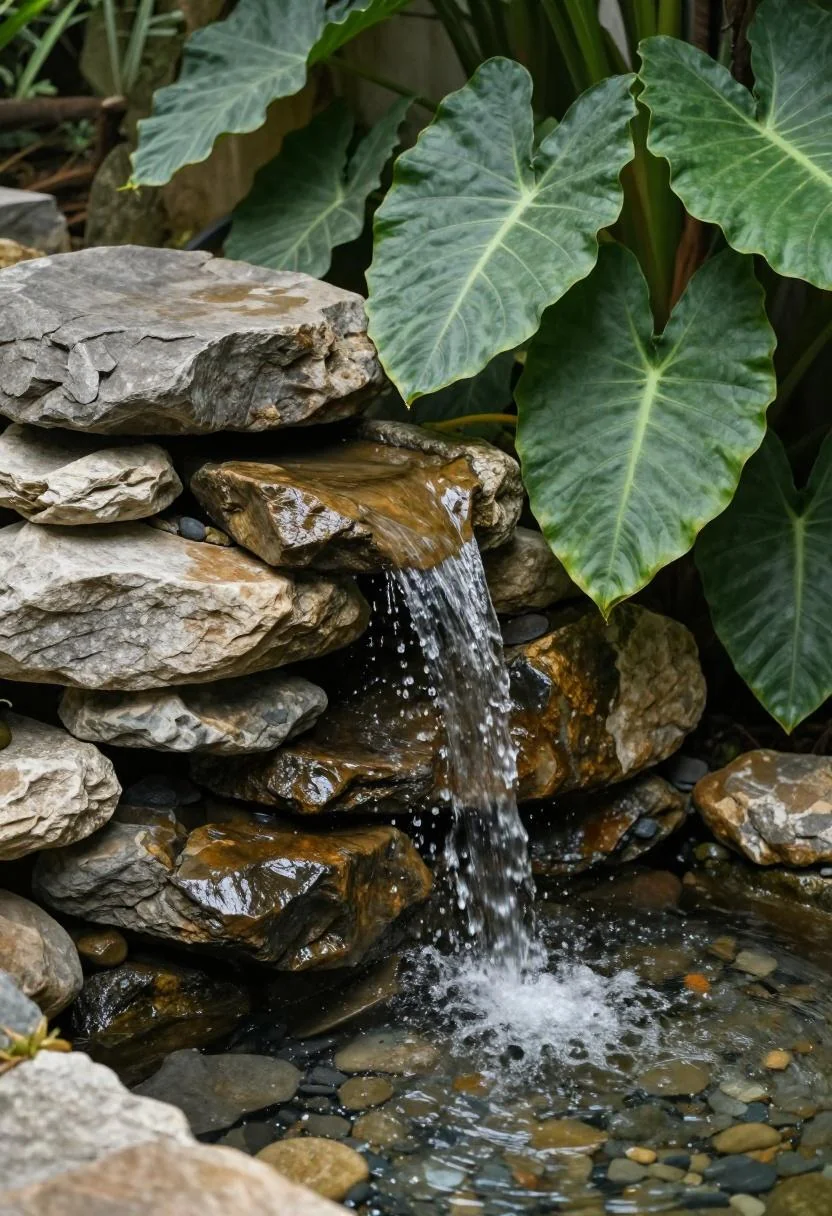
Elephant ear leaves draping over a pebble edge — the wasabi-green of that foliage is almost aggressive. Good. The flagstone waterfall behind it needs that counterweight. Without the tropical planting, it would read as a standard cottage feature. With it, there’s productive tension: the structured stone against the uncontrolled growth of a plant that clearly doesn’t know it’s in a backyard. Shop elephant ear plants
Small Footprint, Full Presence
Does a pond waterfall need to be large? No. Does it need a yard? Also no. Some of the most resolved examples here are compact by necessity — and better for it. Constraint is often the best design brief you can receive.
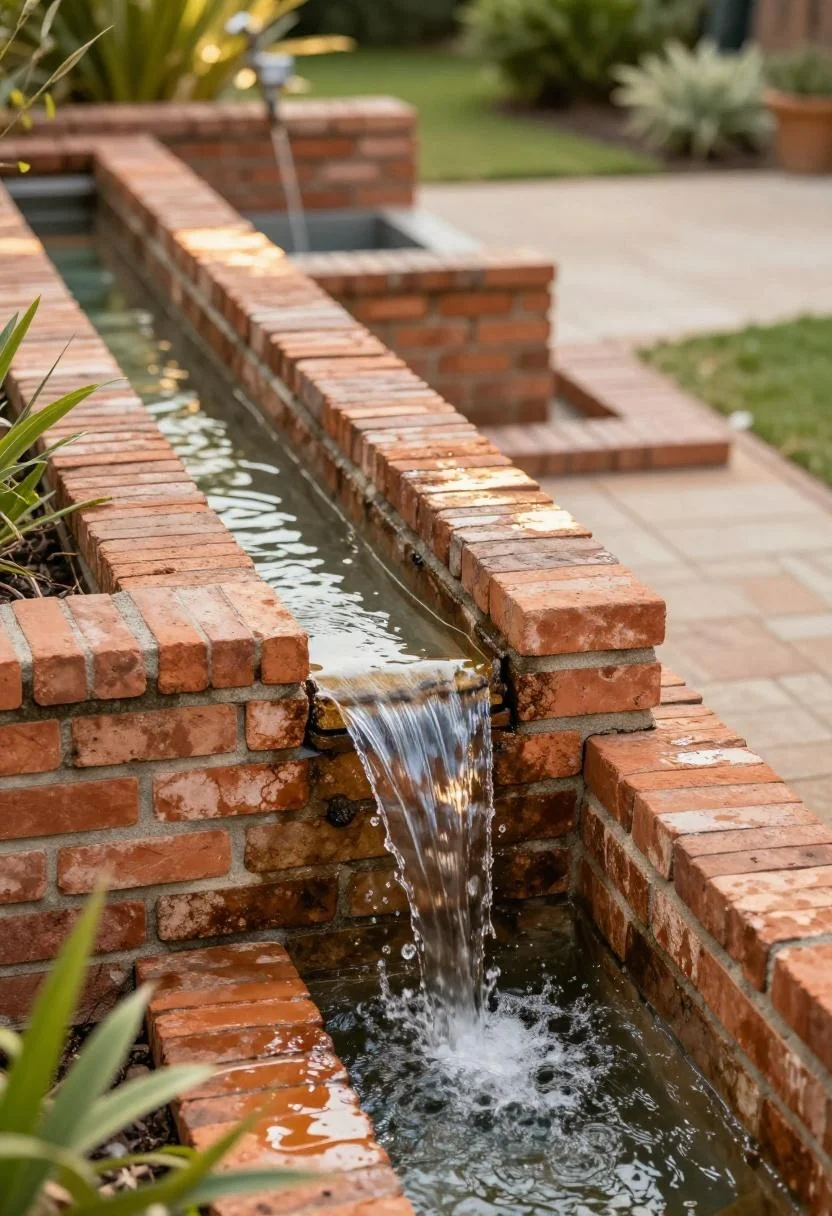
Handmade terracotta brick laid into a narrow channel, water running the length of it into a raised rectangular pond. The raised pond matters — it brings the water surface to waist height, closer to eye level, closer to you. You can reach in. You’re not leaning over a lawn feature; you’re interacting with it. That’s a different experience entirely, and one that smaller gardens can achieve without the acreage. If you’re working with a limited budget, our roundup of budget patio ideas has material sourcing advice that applies directly to raised pond construction.
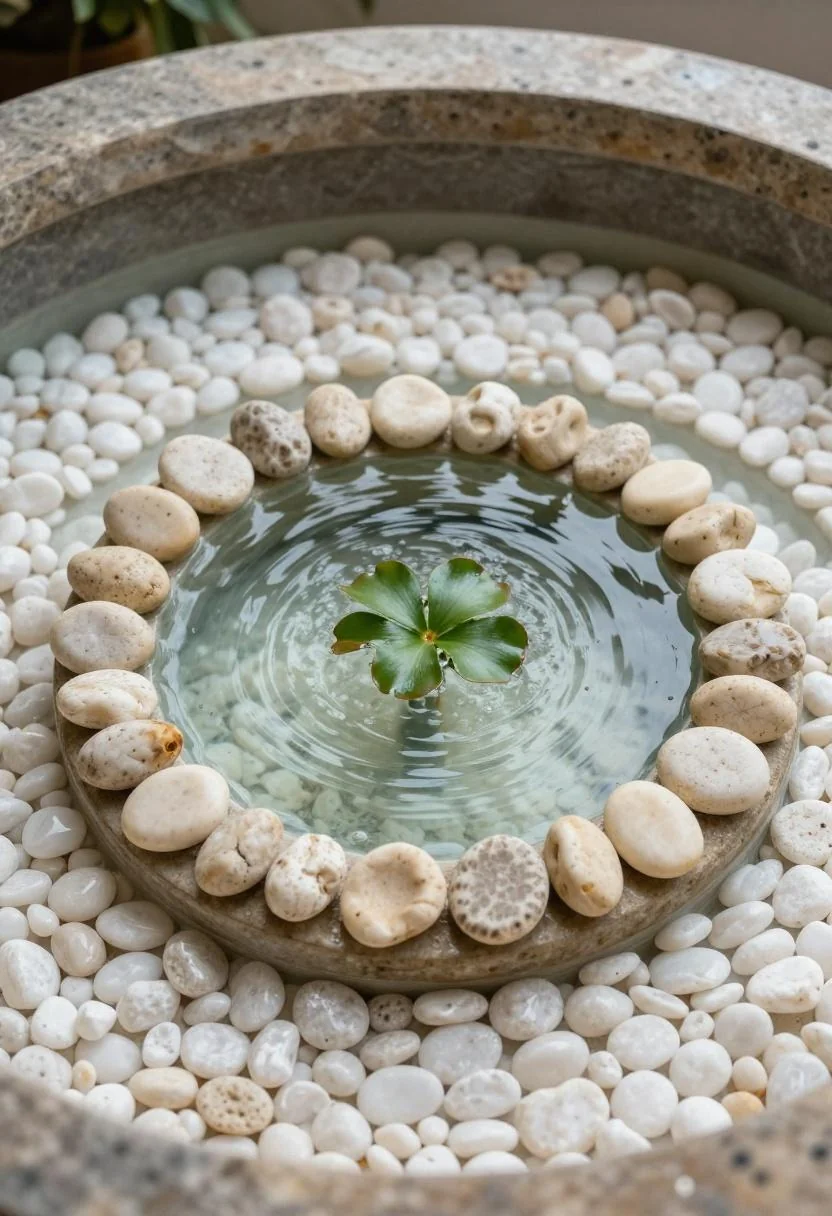
Overhead view of a circular pond on what appears to be a balcony or rooftop terrace. Cream pebble lining. A central waterfall column, water hyacinth floating at the margins. This is a complete water garden in perhaps twelve square feet. The overhead perspective reveals the geometry — concentric rings of pebble, water, plant — that you’d never notice at ground level. Browse small circular pond kits
What’s worth noticing across all five of these compact builds: none of them apologize for their scale. They’re not “small versions of real ponds.” They’re complete things. If you’re also thinking about how solar power might drive a system like this, our feature on DIY solar water fountains covers the pump mechanics clearly.
What the Colors Are Actually Telling You
Across these fifteen waterfalls, the palette isn’t random. Cool blue and cream white appear where the emphasis is on stillness and light — the eye rests on those surfaces. Plum noir and persimmon enter when the design wants seasonal drama, especially in autumn. Jade green and wasabi mark the spaces where plant growth is the point, not the material. Terracotta and warm earth tones signal commitment to place — Mediterranean, cottage, sun-drenched specificity.
Strip away the trend and ask: would any of these still feel right in five years? The slate, the bamboo spout, the limestone sheet — yes. The glass bead wall — probably, if the installation quality is there. The cobblestone with persimmon daylilies — yes, because it’s plant-led, and plants don’t age the way materials do. As Elle has pointed out, the outdoor spaces that hold up over time are the ones where the hardscape and planting have equal weight.
The key takeaway isn’t a specific material or a color. It’s the ratio: how much you build versus how much you let grow. The best pond waterfalls in this collection are roughly fifty-fifty. Structure that allows nature to complete it. That balance is harder to achieve than any single design choice — and it’s exactly what makes the result feel inevitable rather than installed.
This post contains affiliate links. We may earn a commission at no extra cost to you.
Images in this article were created with AI assistance.