Spring tables deserve more than a centerpiece from the clearance bin. This season, the most interesting Easter and spring gathering setups I've seen aren't the ones with matching everything — they're the ones that feel assembled, layered, alive with contradiction. Maximalist color meets heirloom stoneware. Kente-inspired runners sit beside hand-blown glass. Beeswax candles flicker next to marble slabs. Before you reach for a fast-fashion table kit, slow down and look at what you already own — then let these 15 ideas push you somewhere bolder, warmer, and more you.
The Table as a Canvas (Start Here)
Every look below can anchor a dining table, a sideboard, even a folding table dressed up for the occasion. The structure I'm using — material, color, occasion — is less a rulebook and more a starting point. Mix freely. And if you're the kind of person who owns seventeen vintage candlesticks but only two matching plates, congratulations: you're already ahead.
As Elle Decoration has been noting all year, the move away from matchy-matchy Easter tables is real and it's accelerating. Collected, layered, intentional — that's the language now.
For the Dining Table: Anchoring the Room
Look 1 — Cool Blue Linen & Ceramic Easter Calm
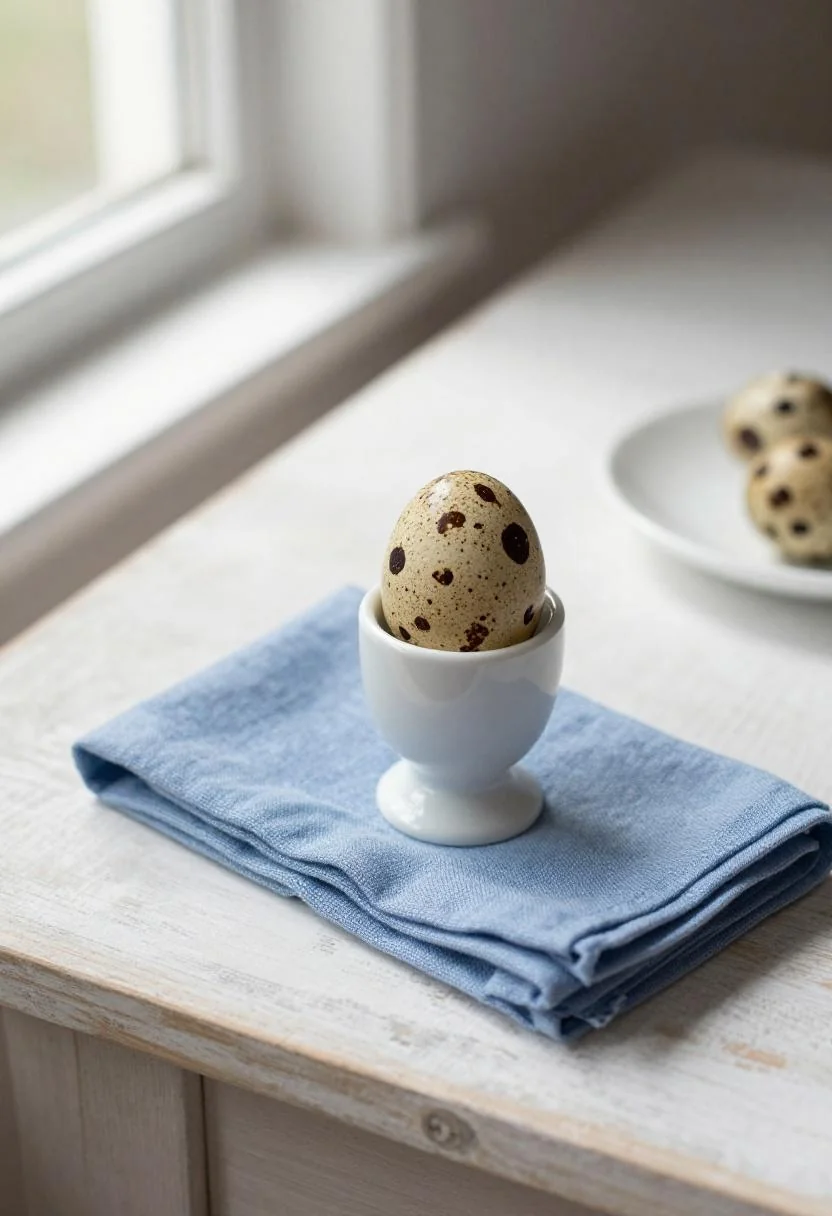
Cool blue linen on bleached oak is the kind of combination that feels borrowed from a Scandinavian grandmother's Easter table — and I mean that as the highest compliment. The ceramic egg cup here does real work: small, handmade-looking, zero-waste if you keep it for next year. Linen napkins in this shade are easy to find secondhand; wash them once and they soften into something that looks like it cost a fortune. Shop blue linen napkin sets if you're starting from scratch, but honestly, check your local estate sales first.
Look 2 — Neo Deco Drama in Plum & Brass
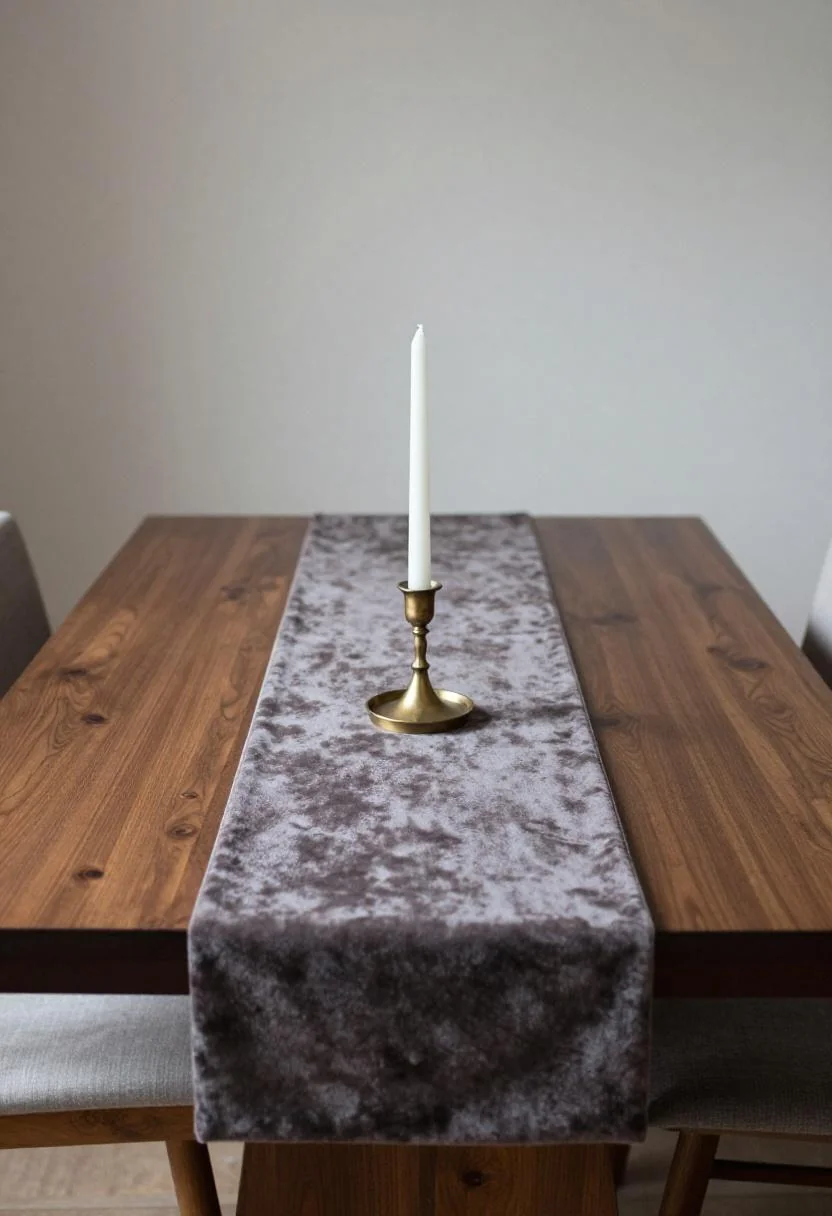
This one stops conversation. A plum velvet runner — the kind you might've found folded in someone's cedar chest — against a fluted brass candlestick hits that specific Art Deco-revival nerve that's been running through spring entertaining this year. Plum is not a shy color. It commits. Layer it with gold or deep teal accents and you've got a table that reads as deliberate maximalism, not accident.
The brass candlestick is the sustainability win here. Vintage brass never tarnishes your conscience — it's already made, it's already beautiful, and it will outlive every trend cycle twice over.
Look 3 — Jade Green Ranunculus on Marble
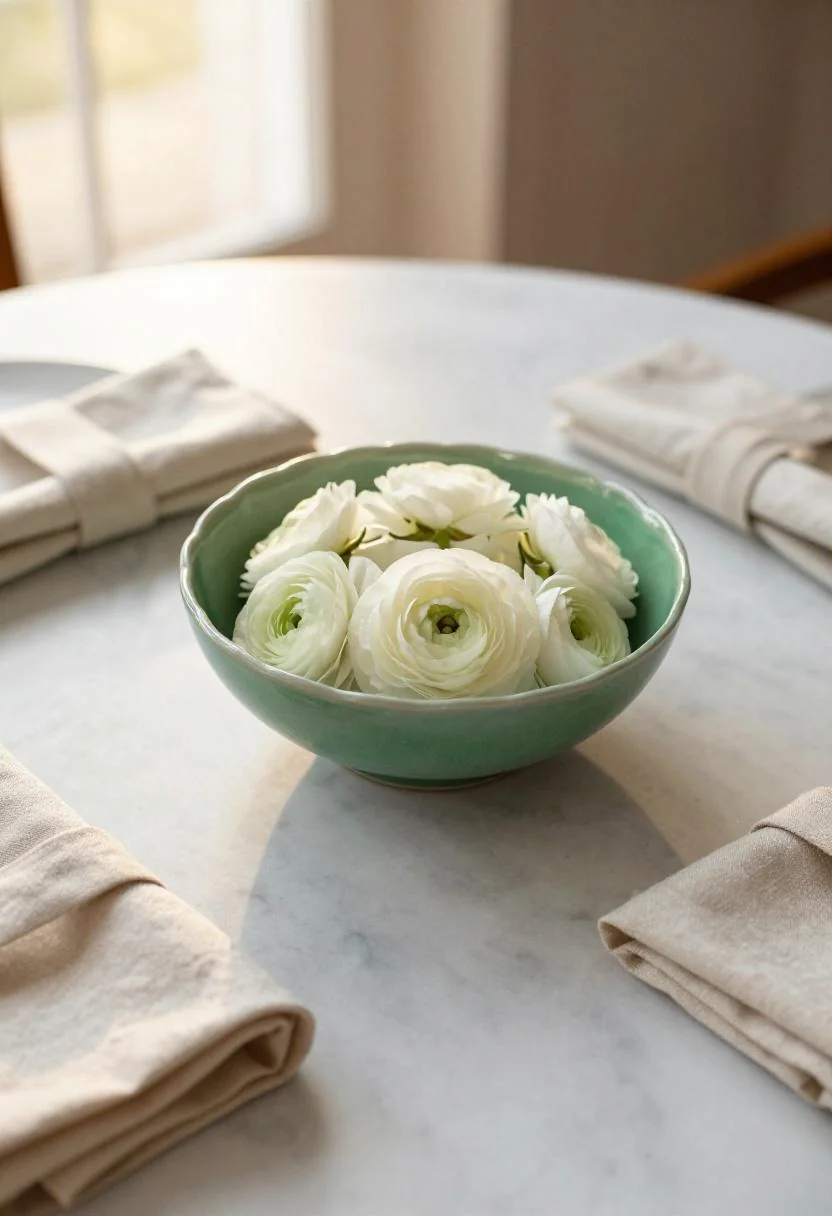
Ranunculus in a jade ceramic bowl, sitting on marble. That's it. That's the whole idea — and it doesn't need anything else. Ranunculus are one of the most sustainably cultivated cut flowers you can find at a farmers' market in spring, and the jade glaze on a handmade ceramic bowl holds color in a way mass-produced vessels simply can't. If you've been collecting handmade ceramics slowly (the way I do, one piece at a time from local potters and vintage markets), this is the moment they earn their shelf space. Find jade ceramic bowls here if you're building your collection.
Afrohemian Spring: Where Pattern Does the Work
This is where more becomes necessary rather than excessive. Pattern clashing isn't a mistake — it's a methodology. The Afrohemian aesthetic that's reshaping table decor (and that Vogue has been tracking through interior design circles) treats the table as a gallery wall turned horizontal. Every object carries a story. Every material has an origin worth knowing.
Look 4 — Wasabi Mudcloth & Carved Acacia
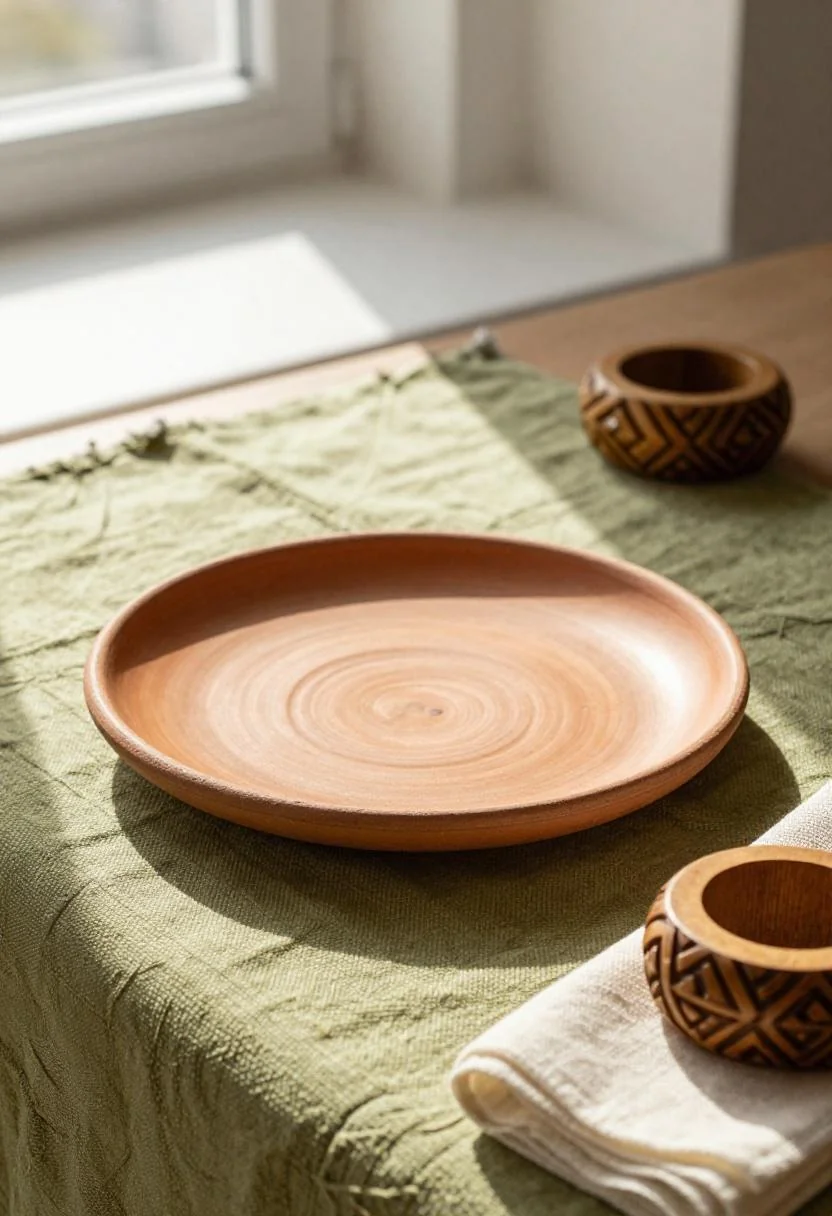
Wasabi — that electric yellow-green sitting somewhere between chartreuse and sage — on a mudcloth placemat with a carved acacia napkin ring. This piece has a past, and that's the point. Mudcloth is a hand-dyed, hand-woven textile tradition; even contemporary versions carry that weight of craft. Acacia wood is dense, durable, sourced from fast-growing trees. Both materials make sense at a spring table that cares about where things come from.
Look 10 — Kente-Inspired Plum & Gold Runner
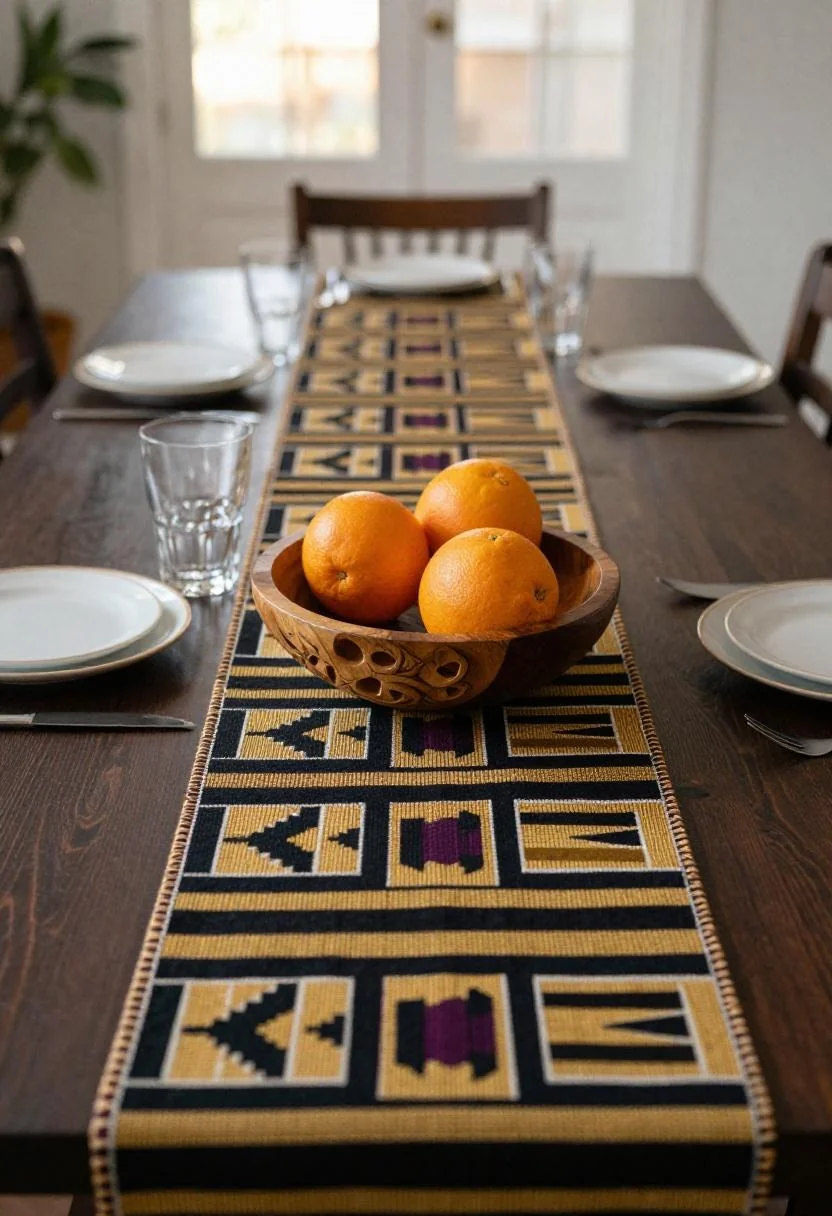
The kente-inspired plum and gold runner paired with a carved mango wood bowl is a look that earns its maximalism through specificity. Every element here means something. Mango wood is a byproduct wood — it comes from trees that have stopped producing fruit and would otherwise go to waste. That's lifecycle thinking made visible on your Easter table. Carved mango wood bowls are widely available and genuinely worth seeking out.
Cottagecore, But Make It Count
Cottagecore at the table is about warmth, imperfection, and food that looks like it came from an actual garden. What it isn't — or shouldn't be — is a plastic picket fence aesthetic ordered in bulk. The best cottagecore tables I've seen use vintage stoneware, real flowers, and textiles that have been washed a hundred times. The imperfection is the beauty.
Look 5 — Persimmon Gingham & Sweet Peas
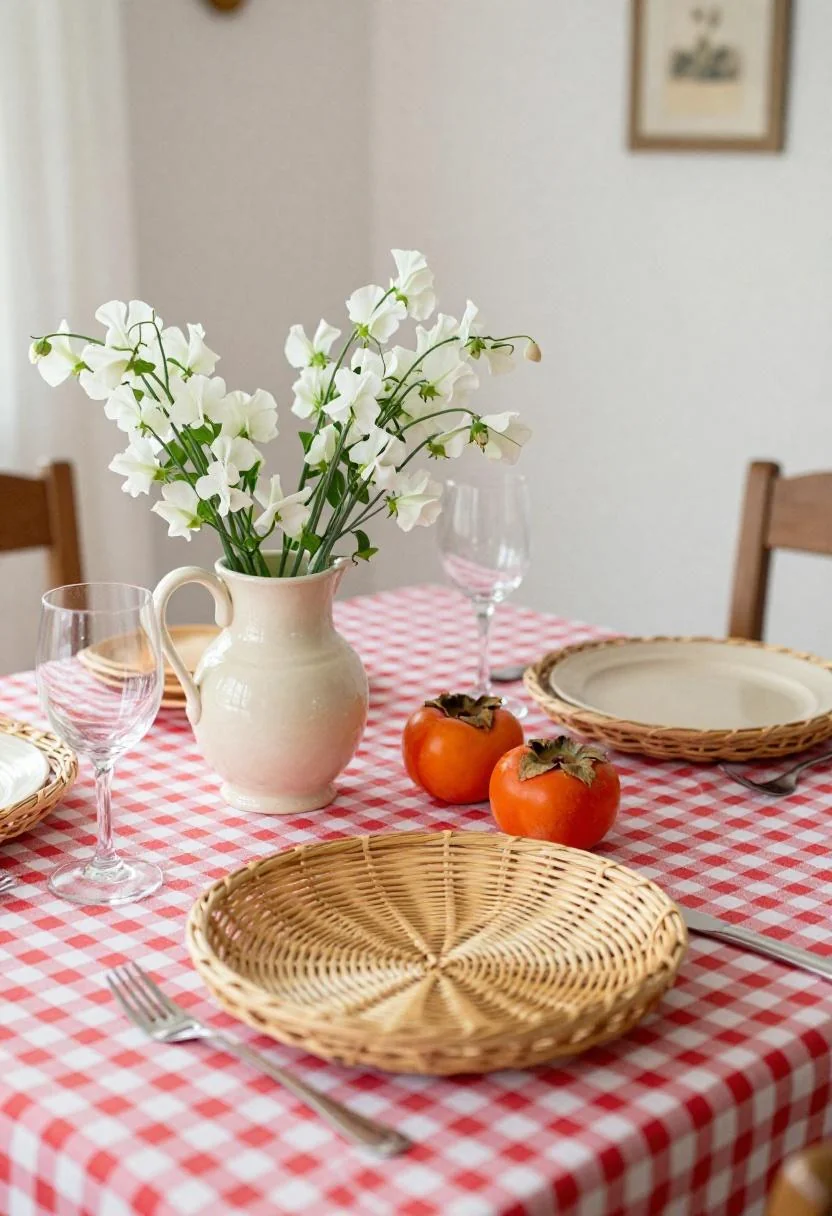
Persimmon gingham. Vintage stoneware pitcher. Sweet peas. If this doesn't make you want to bake something immediately, I don't know what will. Gingham in a warm orange-red like persimmon reads as deeply seasonal without screaming "Easter novelty." The vintage stoneware pitcher is the kind of thing you find at a flea market for three dollars and use forever. That's the greenest furniture principle applied to table objects: the best piece is one you already own, or one somebody else already owned.
Look 8 — Sage Green Stoneware with Fresh Thyme
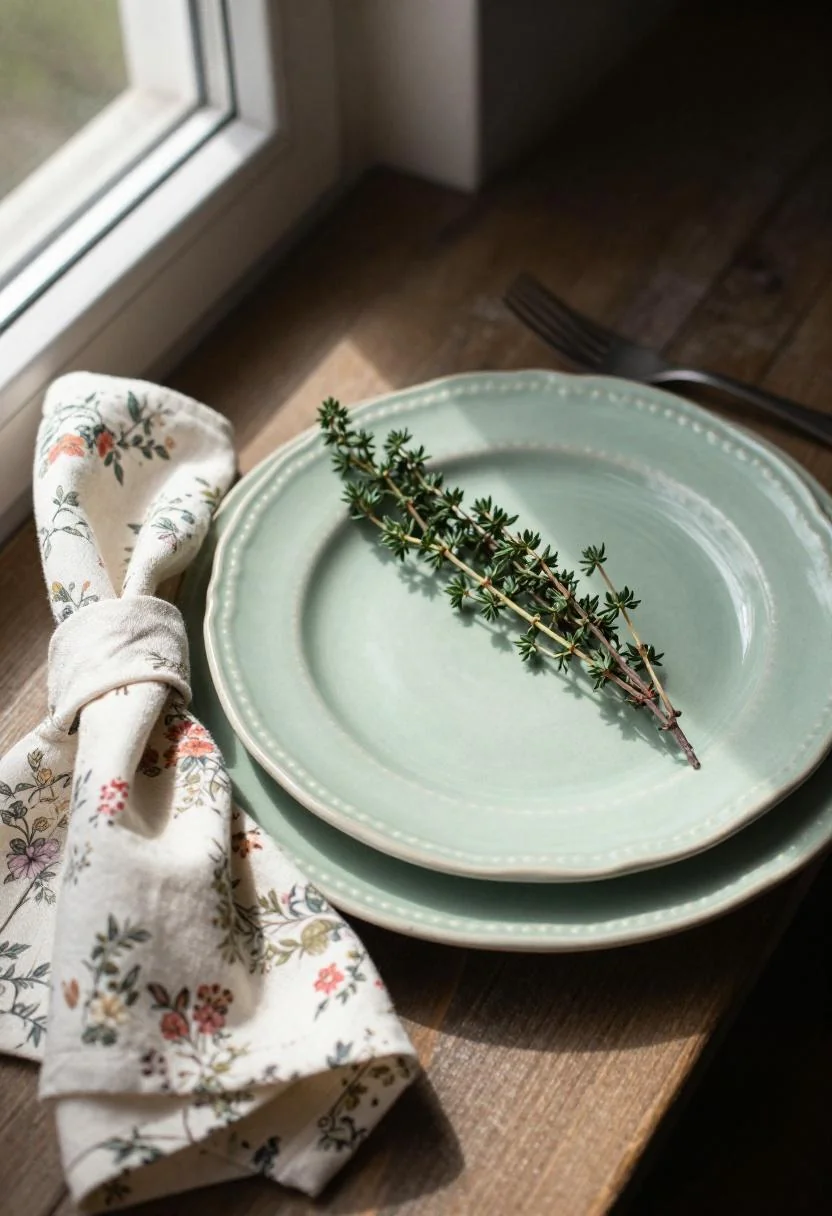
A sage green stoneware plate with a fresh thyme sprig laid across it. One herb sprig as decoration. That's enough. The beauty here is restraint in a maximalist context — this place setting holds its own because the plate has texture and the green has depth. Sage stoneware in particular photographs in that muted, editorial way that's everywhere on Harper's Bazaar's home pages right now. But it also just looks good in real life, which matters more. Sage green stoneware sets are surprisingly affordable — and increasingly available from small ceramics studios.
Look 13 — Persimmon Ceramic Pot of Moss Fern
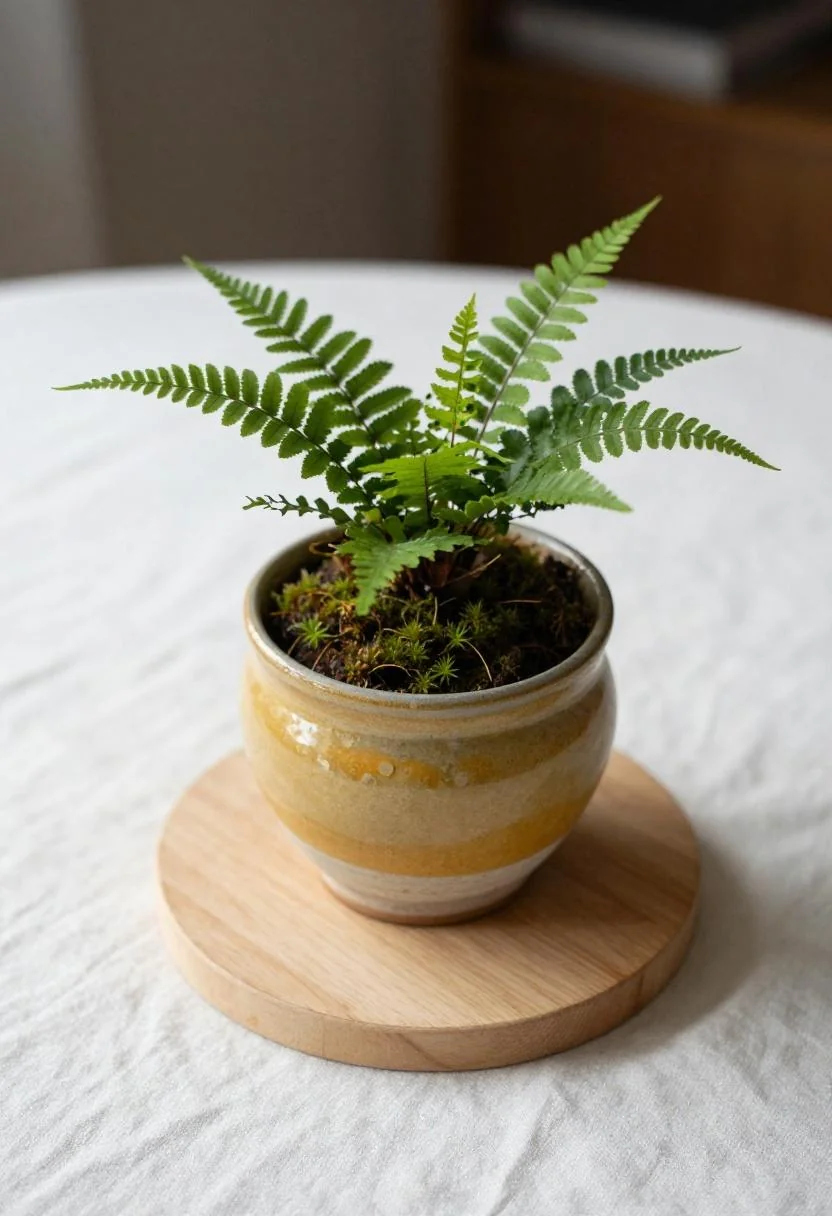
Here's a centerpiece idea worth keeping: a persimmon ceramic pot of moss fern on a pine trivet. No cut flowers dying by Tuesday. No waste. Ferns and mosses are among the most sustainable living decor choices you can make — low water, low light, long life. The persimmon pot ties it back to Look 5's color story. Repeating a color across two or three table objects is how a maximalist table stays coherent rather than chaotic.
Terracotta & Natural Fibers: The Earth-Toned Thread
Look 6 — Terracotta Linen, Seagrass & Beeswax
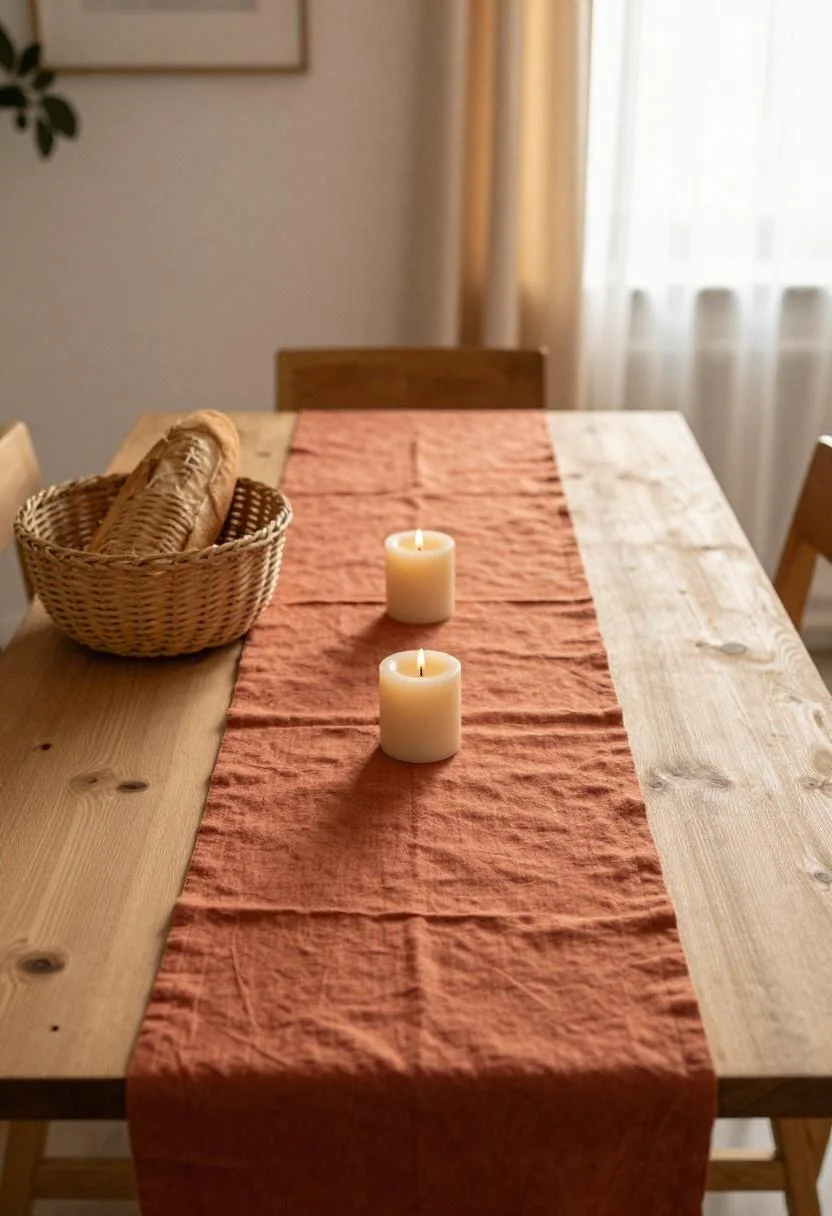
This is a trio worth memorizing. Terracotta linen runner — the kind that feels like it was woven somewhere with actual sun — seagrass bread basket, beeswax candle. All three are biodegradable. All three look expensive. None of them are. Beeswax candles burn clean (no paraffin soot coating your ceilings) and they smell faintly of honey, which is exactly right for a spring table. Beeswax candles are a swap I'd make permanent, not just seasonal.
Look 14 — Terracotta Jute Placemat & Copper Plate
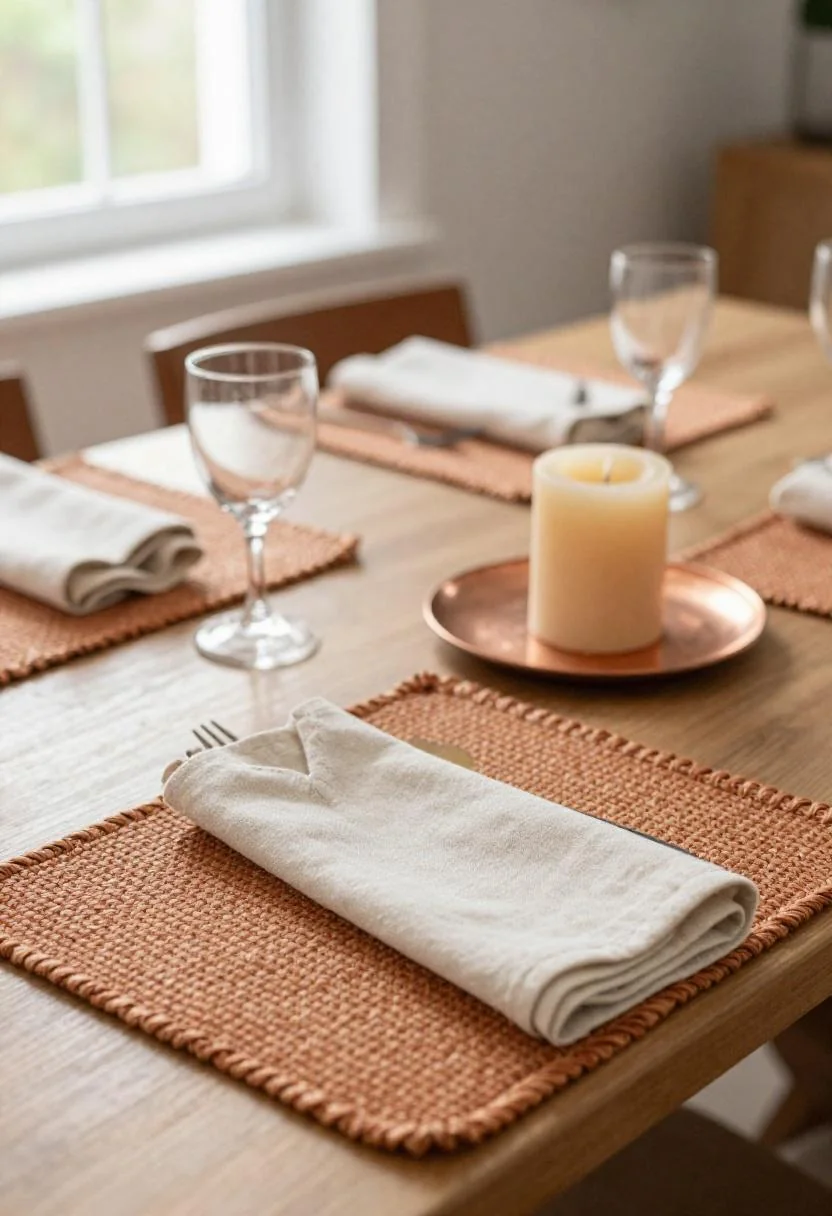
The fan-fold on the linen napkin here is a detail that costs nothing but fifteen seconds of your time. Copper plate underneath the beeswax candle — both a fire-safety measure and an incredibly good-looking one. Jute placemats are among the most durable, low-impact table textile choices: natural, fast-growing, and they age into something even better than new. Layer these under any of the colored stoneware options above and the warmth reads through.
Minimalism as Provocation
Can a single tulip in a hand-blown vase hold its own in a maximalist article? I think it can — especially when the sustainability argument is this clear. No excess. No waste. One considered flower, one honest vessel.
Look 7 — Cream Embroidered Cloth & Hand-Blown Glass
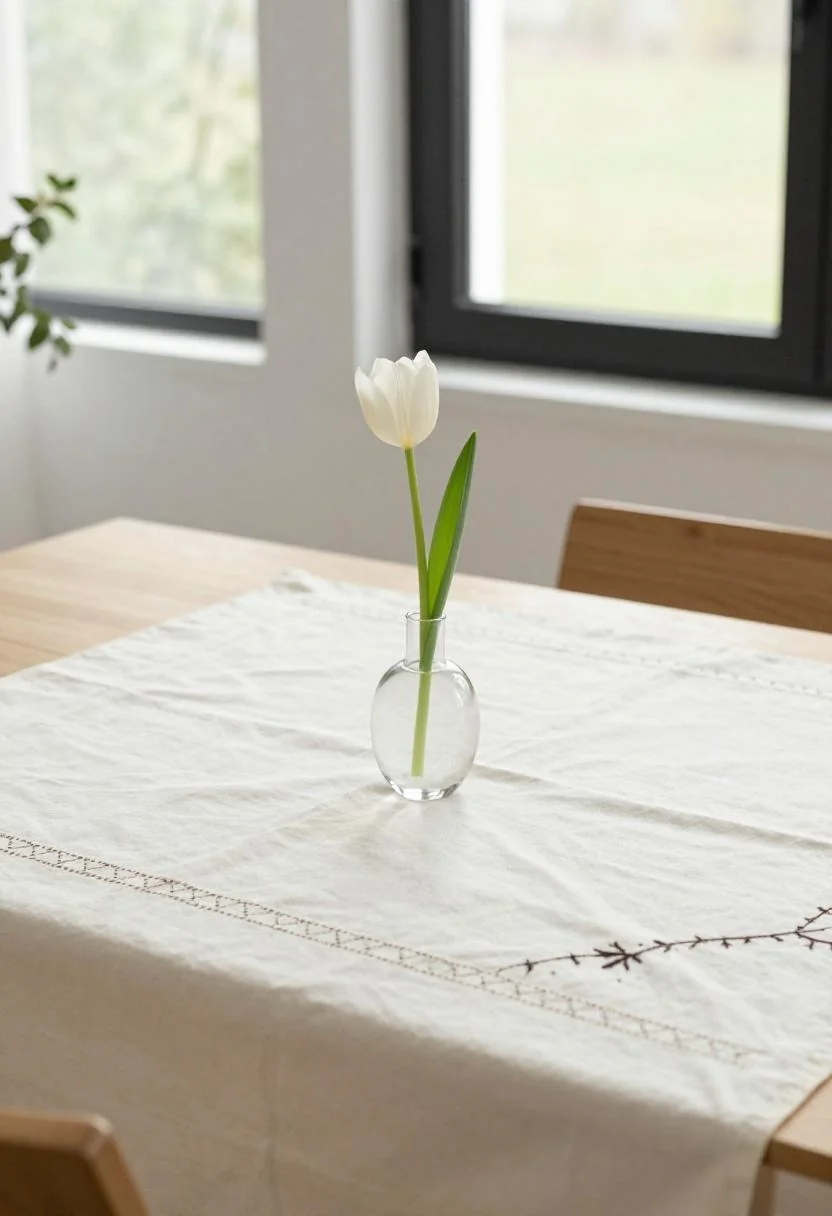
One tulip. That's it. But the cream embroidered cloth under it matters enormously — embroidery is handwork, which means time, which means this textile doesn't get discarded casually. Hand-blown glass vases have that slight irregularity that makes them unmistakably human-made. This look works as a side table accent when your dining table is going full maximalist chaos. It's the exhale in the room. If you're building a layered spring look for your home, check out our dining room decor ideas for more ways to style around a hero piece like this.
Neo Deco Spring: When Geometry Meets Ceremony
Look 9 — Cool Blue Porcelain & Geometric Brass on Marble
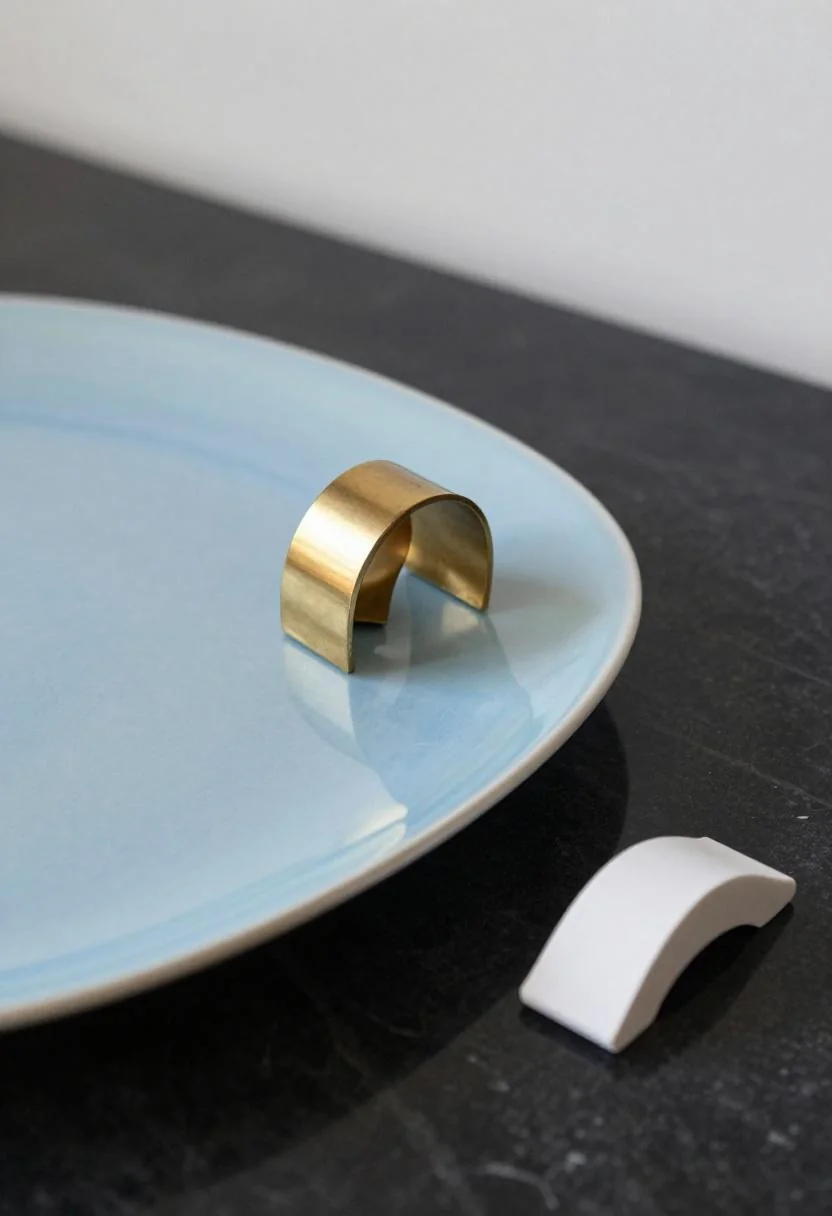
The geometric brass napkin ring is doing something interesting here: it's bridging the cool tone of the porcelain plate with the warmth of the marble surface below. That's color temperature management at the table level. Cool blue porcelain — particularly if it's vintage or artisan-made — has a weight and translucency that mass-produced plates simply lack. Geometric brass napkin rings are one of those table accessories where buying once and buying well makes total sense.
Look 15 — Neo Deco Easter: Cream Fluted Porcelain & Pampas
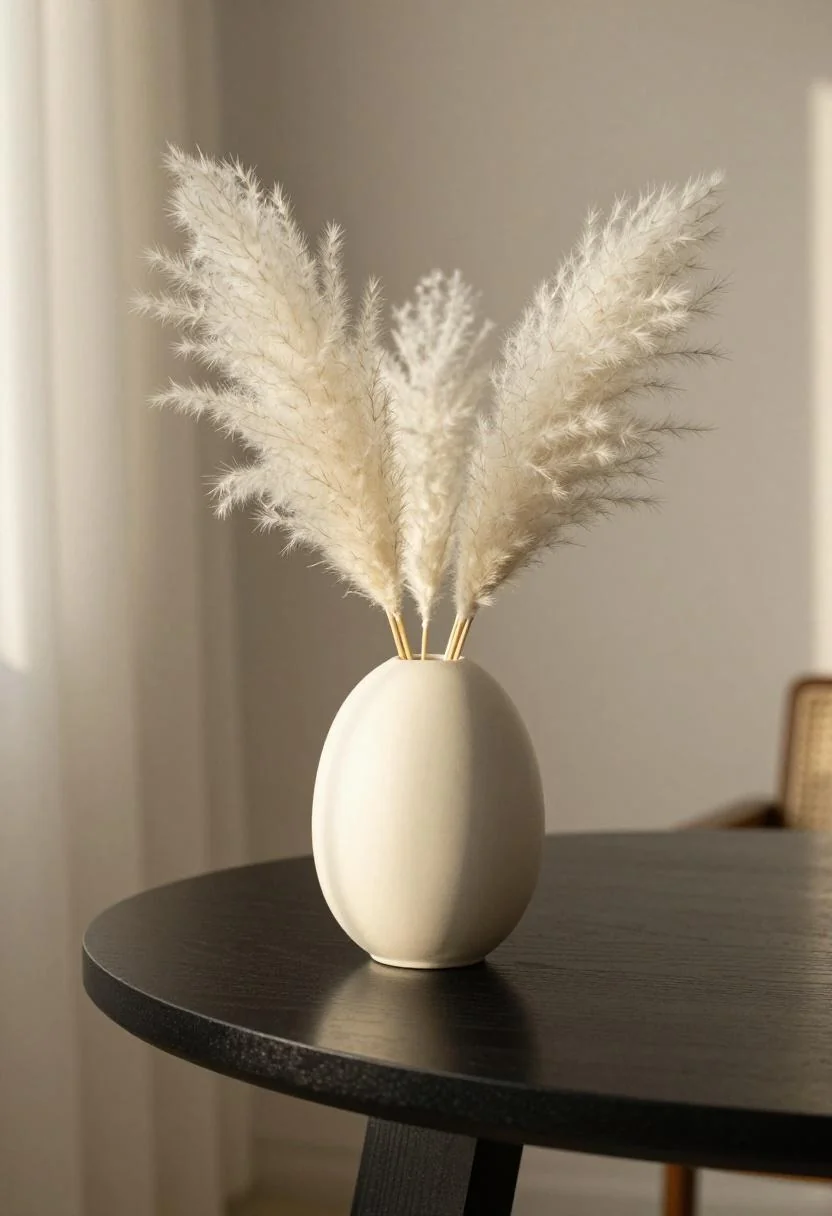
The fluted porcelain egg vase with dried pampas grass is a look that spans Easter specifically and spring generally — which means it earns its place for a longer stretch than the holiday. Dried pampas is the sustainability story here: you buy it once, you keep it for years, and it looks more interesting with time. This is an accent for a mantel, an entryway shelf, or beside a cluster of candles. Small but pointed. Dried pampas grass bundles are widely available and endlessly useful as permanent decor anchors.
The Maximalist Middle Ground: Bold Color Without Regret
Look 11 — Jade Velvet Napkin & White Orchid in Fluted Glass
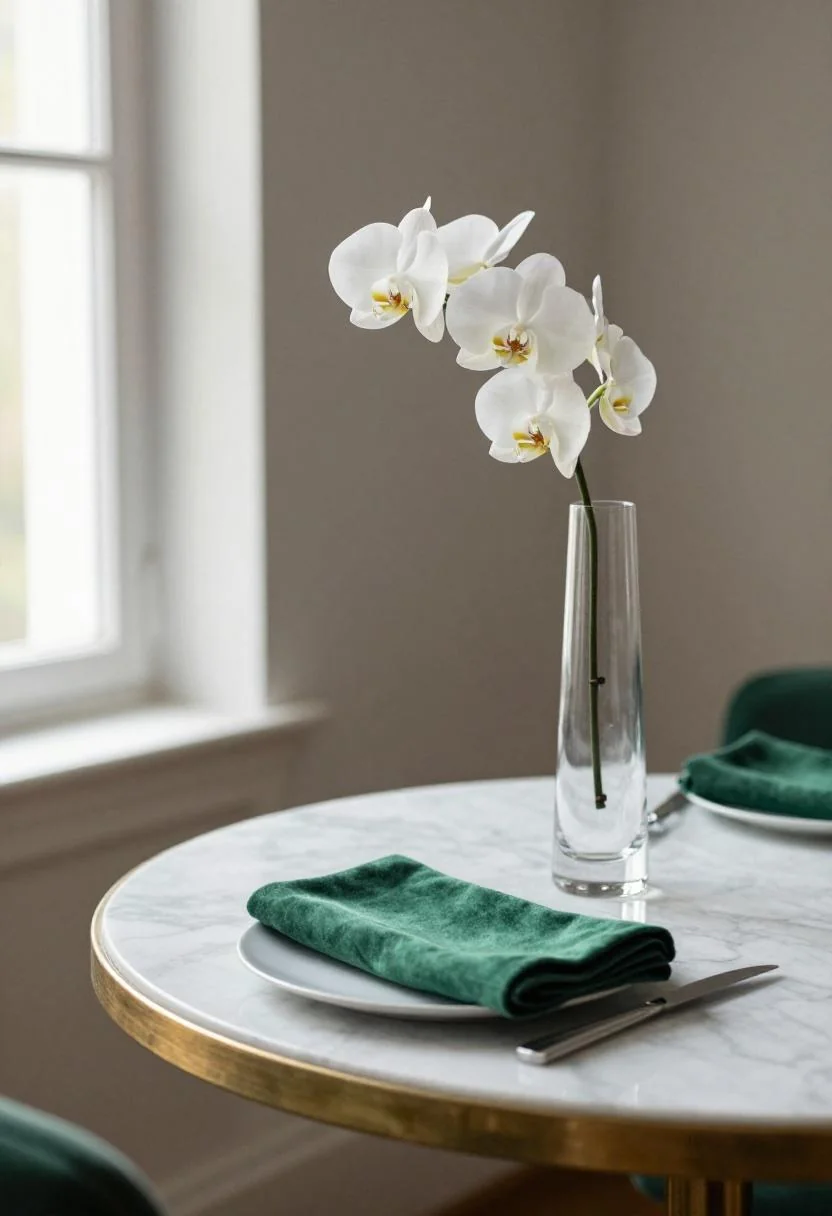
Jade velvet napkin against a white orchid in fluted glass. The tension is the point: velvet is lush, the orchid is spare, the glass is architectural. What do these things have in common? Almost nothing — and yet the color restraint (deep jade, clean white, clear glass) holds them together. This is how maximalism works when it's doing its job: maximum interest, not maximum stuff.
Orchids, by the way, are among the longest-lasting cut flowers and also come as hardy living plants that bloom seasonally for years. The living orchid is the better ecological choice by every measure. Worth considering before you reach for the cut version.
Look 12 — Wasabi Linen Tablecloth & Ribbed Glass
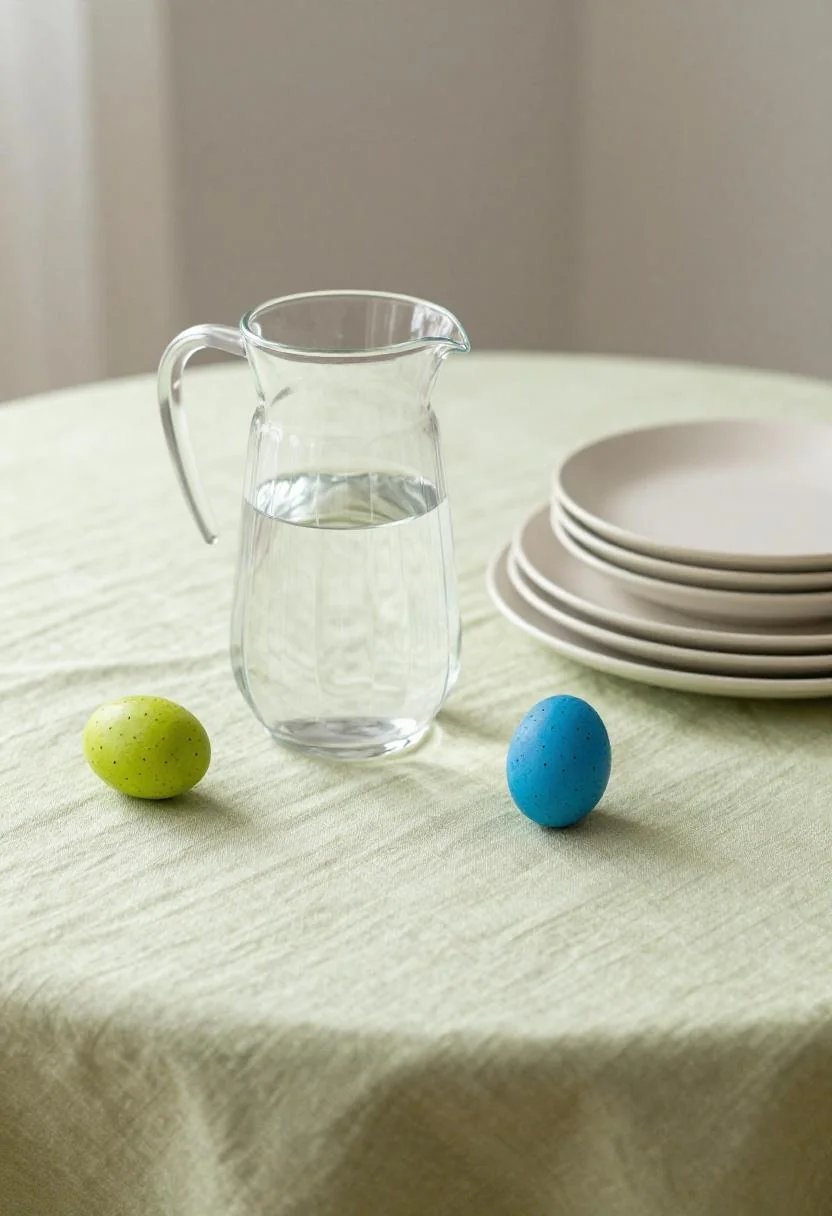
The wasabi linen tablecloth is a commitment — and I respect that. This isn't a neutral base; it's a statement that everything placed on top needs to stand its ground. The ribbed glass pitcher (which can be thrifted in almost any vintage shop in the country) and handmade ceramic plates rise to the moment. The ribbed texture echoes the linen weave. Sustainability isn't sacrifice, it's strategy — and this table proves it. A wasabi tablecloth bought from a linen mill or secondhand shop will outlast any seasonal trend and photograph beautifully all year. For more spring color thinking, our piece on May color trends for home decor goes deeper into how to work these tones through an entire room.
What the Spring Table Colors Are Telling You This Year
Across these 15 looks, five color stories keep surfacing — and they're not random. Cool Blue brings calm to an otherwise maximalist season. Plum Noir pushes formal and theatrical into genuinely festive. Jade Green connects the table to the garden in a way that feels ecological, not just aesthetic. Wasabi challenges you; it doesn't flatter, it energizes. And Persimmon — that warm, orange-forward hue — does the emotional work of making a gathering feel welcoming before a single dish arrives.
Terracotta and Cream White round things out: earth on one end, sky on the other. A spring table that pulls from across this palette — even just two or three of these colors — will feel deliberate rather than decorated. That distinction matters more than any single object you buy.
What do all these looks share? A bias toward materials with provenance. Linen. Stoneware. Brass. Acacia. Jute. Beeswax. None of these are trends — they're materials that have been on tables for hundreds of years, and they'll still look right in 2036. Buy one good piece this season rather than six forgettable ones. Your table (and your storage closet) will thank you.
If you're styling beyond the dining table this spring, our guide to DIY spring wreaths for your front door takes the same collected, intentional approach to your entryway — with many of the same natural materials.
And one last question worth sitting with: when this season's gathering is over, what happens to what you've set up? The best table objects cycle into your everyday rotation, get stored with intention, or find a second life with someone else. That's not a footnote — that's the whole philosophy, applied.
This post contains affiliate links. We may earn a commission at no extra cost to you.
Images in this article were created with AI assistance.


