Spring arrives and everything wants to expand — the light, the energy, the impulse to pile more onto an already crowded desk. Resist. The most productive workspace you'll ever build is the one that asks less of your attention, not more. This isn't about sterile white boxes or furniture that looks like it came with an instruction manual. It's about intention: choosing each object carefully, letting negative space do real work, and refusing to apologize for a desk that contains exactly what it needs and nothing else. The 13 setups below span calm minimalism to quietly bold — all of them built for the woman who thinks before she buys.
The Quiet Foundation: Neutral Workspaces That Actually Breathe
Start here. Before you layer in color or character, the bones have to be right. A workspace built on a neutral foundation isn't giving up — it's giving yourself room to think.
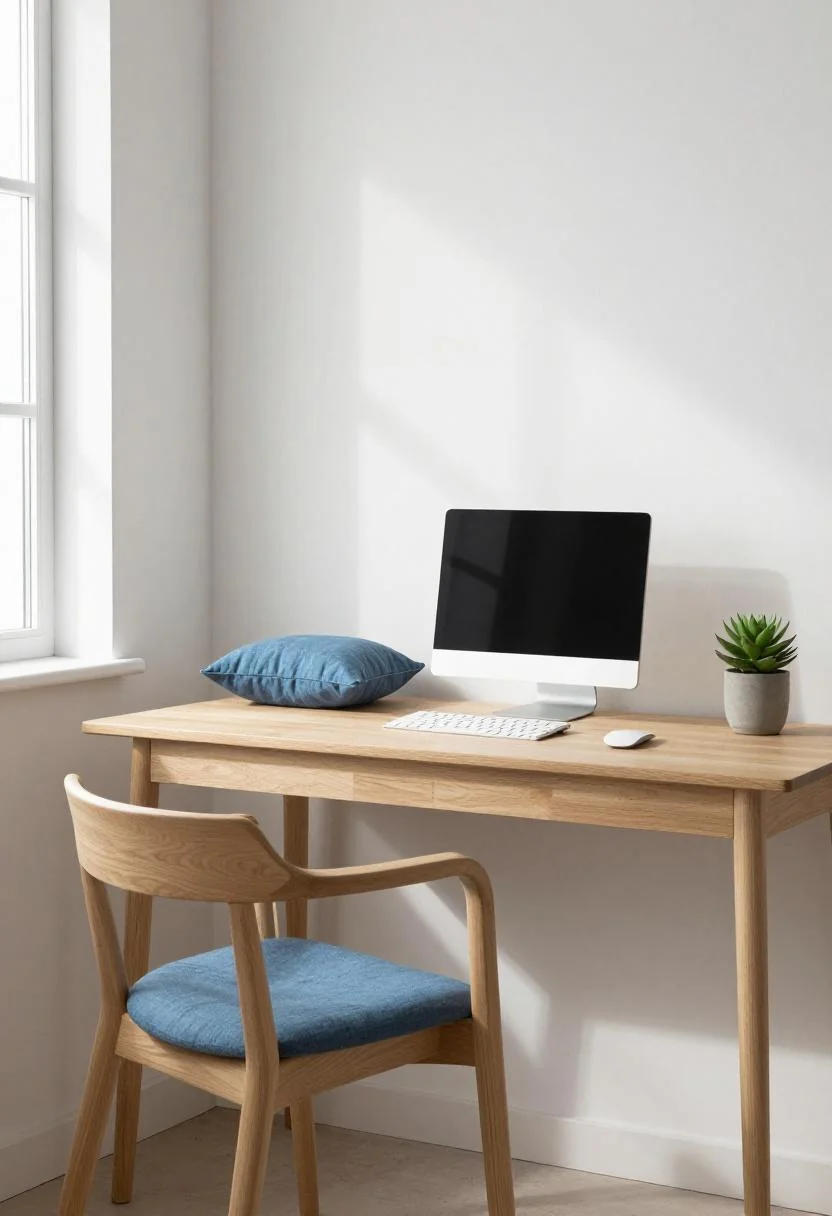
Look 1 — Cool Blue Linen on Oak
Morning light does the heavy lifting here. The oak desk is warm without trying to be cozy; the cool blue linen cushion introduces just enough contrast to keep the eye interested without demanding anything from it. This works because the blue is muted enough to read almost as a neutral — it shifts with the light, cooler at dawn, closer to slate by afternoon. One material, one accent color, done. Shop linen cushions
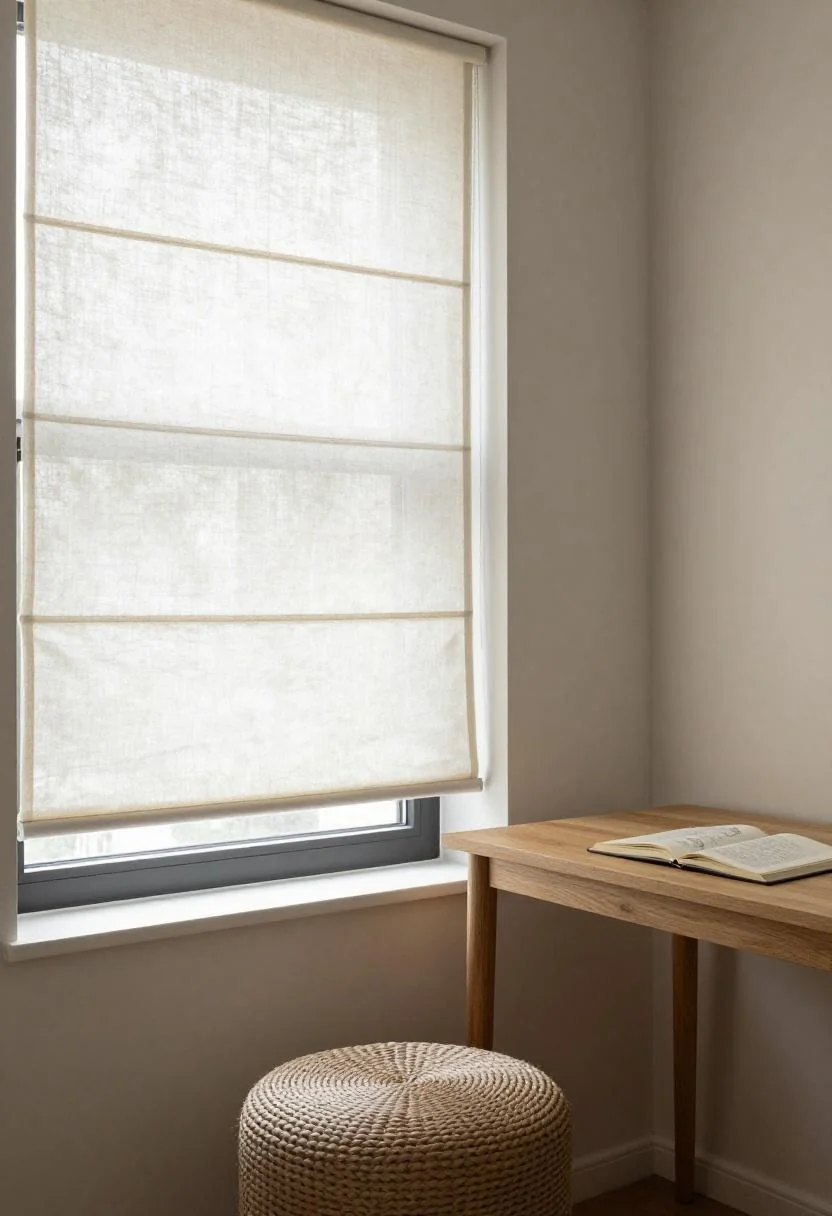
Look 13 — Cream Linen and Ash Wood
The open sketchbook on the ash desk isn't decoration — it's permission to actually use the space. Cream linen Roman shades filter the light into something almost edible. This corner understands restraint as an active choice, not an absence of ideas. As Elle has observed across interior seasons, the quietest rooms often carry the most considered point of view.
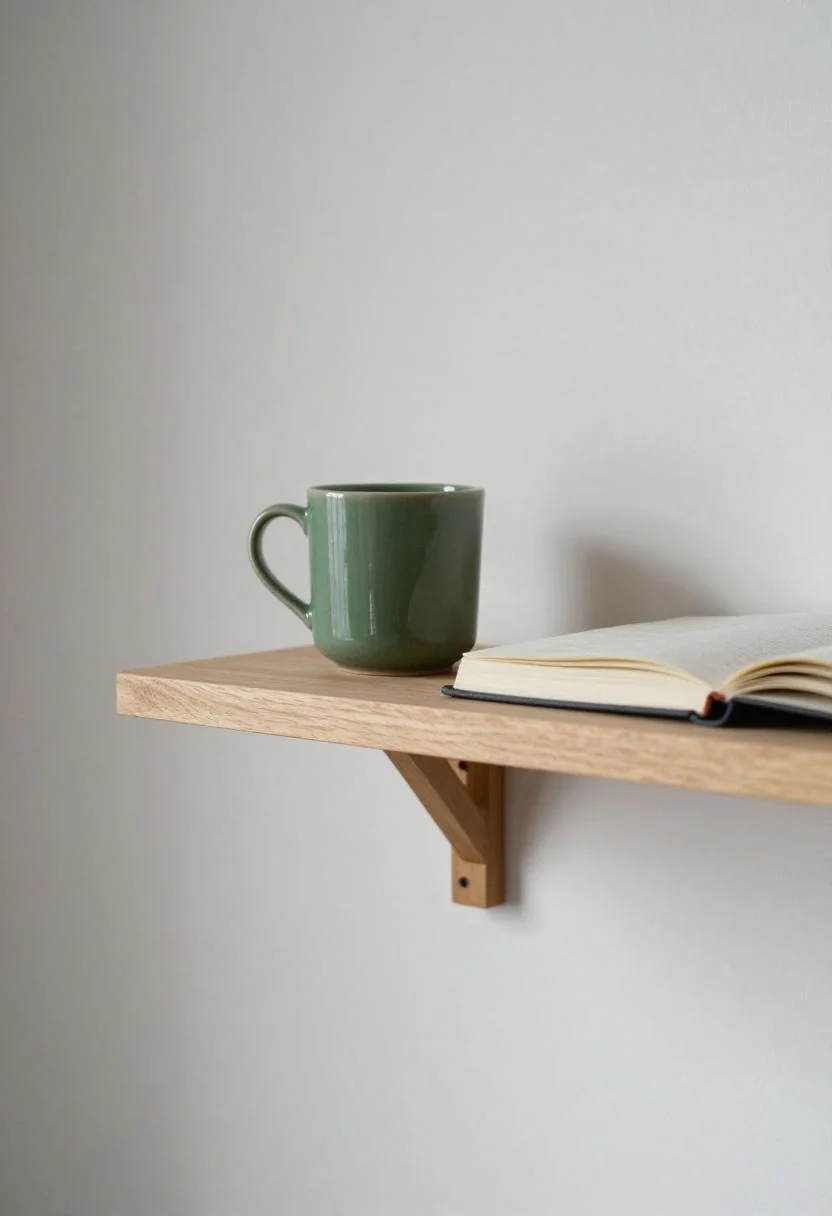
Look 4 — Wasabi on Birch
A single wasabi ceramic mug. That's it. The birch shelf does everything else — its grain warm, its lines clean. The notebook sits open, not staged. Does your workspace pass this test: if you removed one object, would it feel better or worse? This one would feel worse. Every object is load-bearing.
When Restraint Meets Color: The Careful Maximalist
Here is where the tension gets interesting. The voice says: edit ruthlessly. The angle says: more, more, more. The answer — the honest one — is that these aren't opposites. A maximalist who curates is still a curator. The difference between clutter and collection is intention.
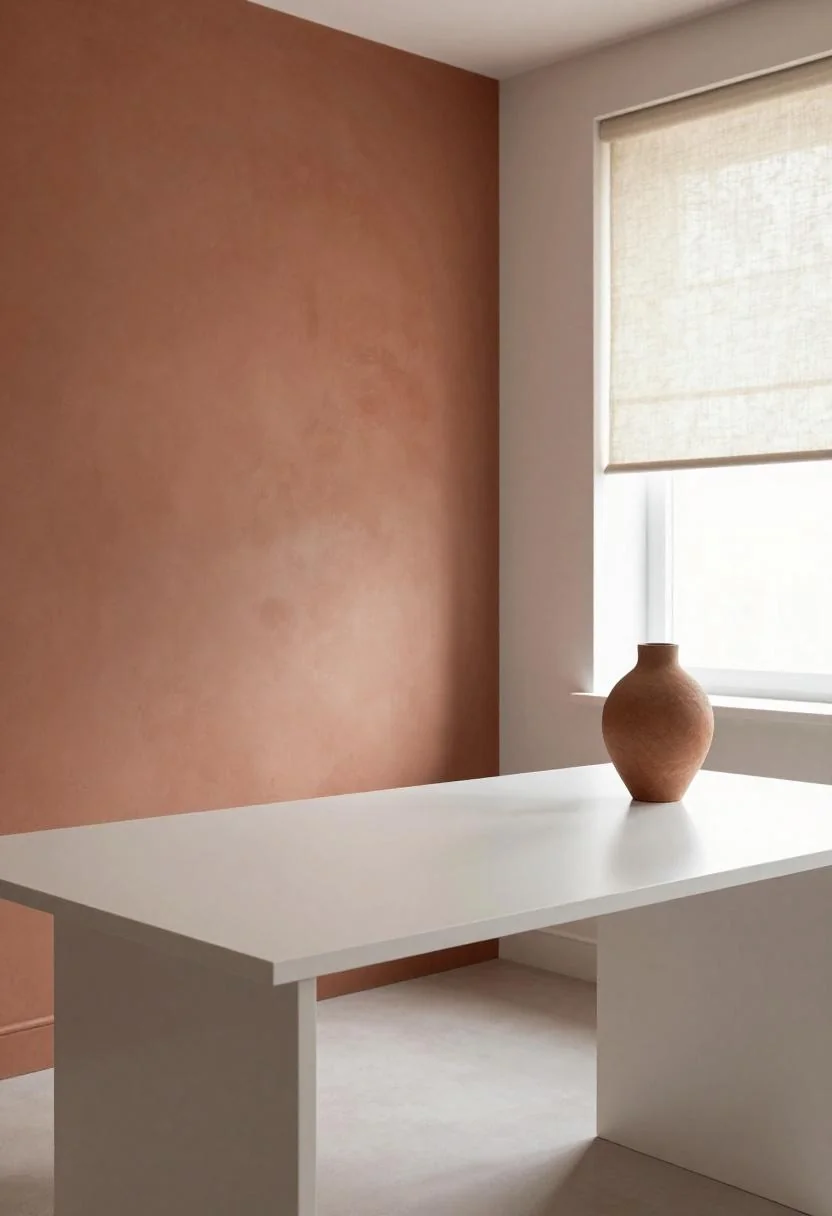
Look 6 — Terracotta Accent Wall
The terracotta wall does something a terracotta accessory never could: it commits. White lacquer desk against it, sculptural clay vase on the surface — the whole thing reads like a Giorgio Morandi painting, which is a compliment of the highest order. The restraint here is in the objects. One wall carries the color so nothing else has to. Explore terracotta paint options
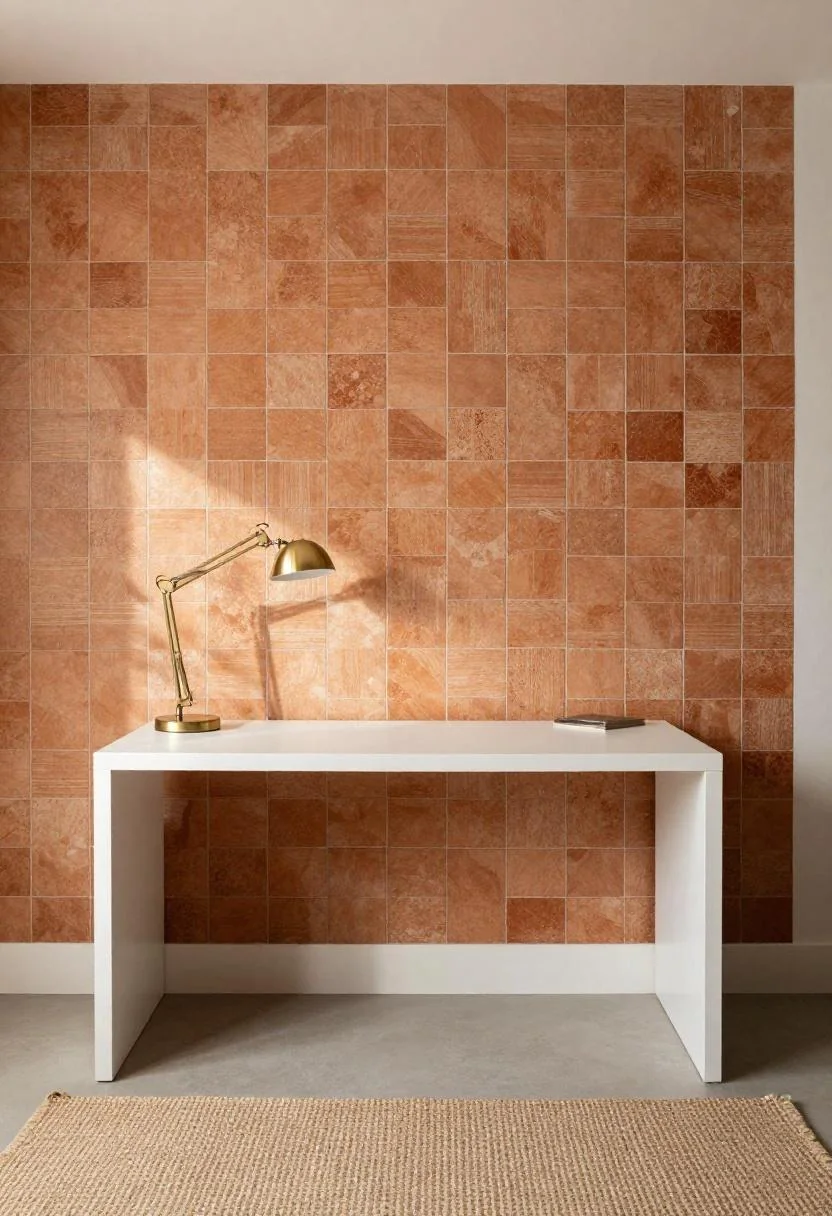
Look 12 — Zellige Wall, Brass, Jute
Zellige tile behind a floating desk is a bold move that somehow lands quietly — because the desk is white, the lamp is brass, the rug is jute. Three materials doing three different things, none competing. The terracotta in the tile isn't just a color; it's a texture, a light-catcher, a conversation. This setup makes you want to sit down and do real work. That's the whole point.
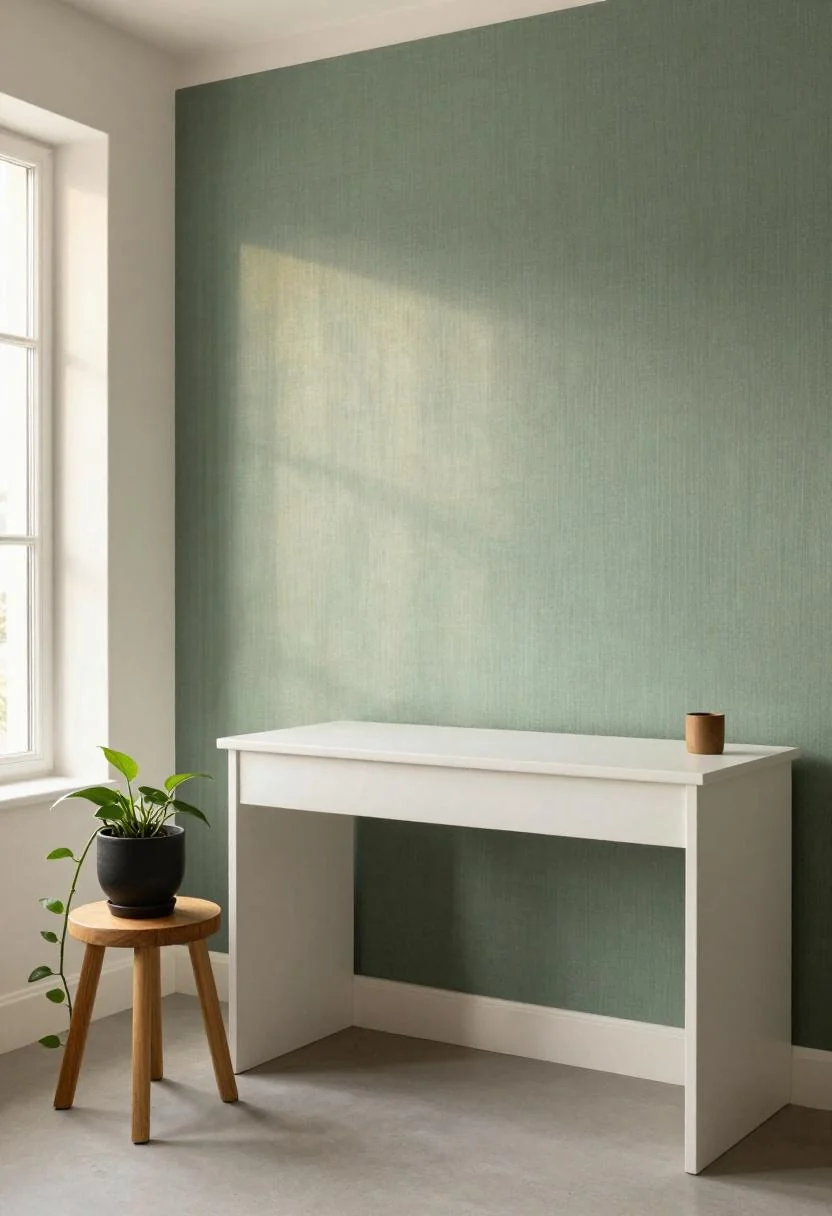
Look 7 — Sage Linen and Trailing Pothos
The pothos trails because it wants to, not because someone arranged it artfully for a photo shoot. Sage linen panel behind it, wooden stool as plant stand — this is the minimal-maximalist negotiation at its best. Living plants are the one thing a maximalist impulse and a minimalist instinct both support. They earn their space by being alive. Shop linen wall panels
For more spring color ideas working across different rooms, this guide to spring decorating covers the same palette logic applied to living spaces.
The Bold Corner: Drama Without Disorder
Some workspaces announce themselves. These do it without shouting.
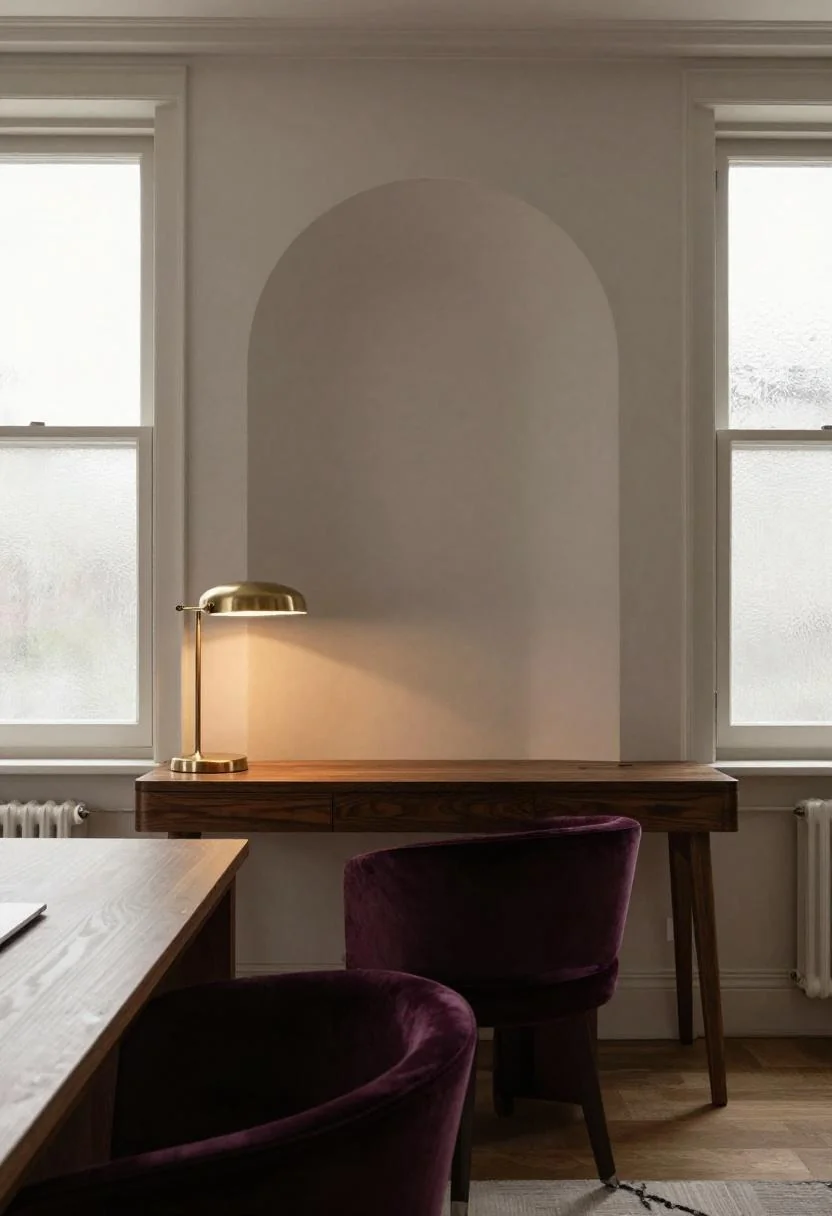
Look 2 — Plum Velvet in a Plaster Arch
The arch is everything. Without it, a plum velvet chair and brass lamp is just furniture. Inside a plaster niche, it becomes a moment — something close to theater without the self-consciousness. Neo Deco is having a sustained, quiet revival, and setups like this explain why: it knows when to stop. The plum is deep enough to anchor the whole corner without needing anything else to justify it.
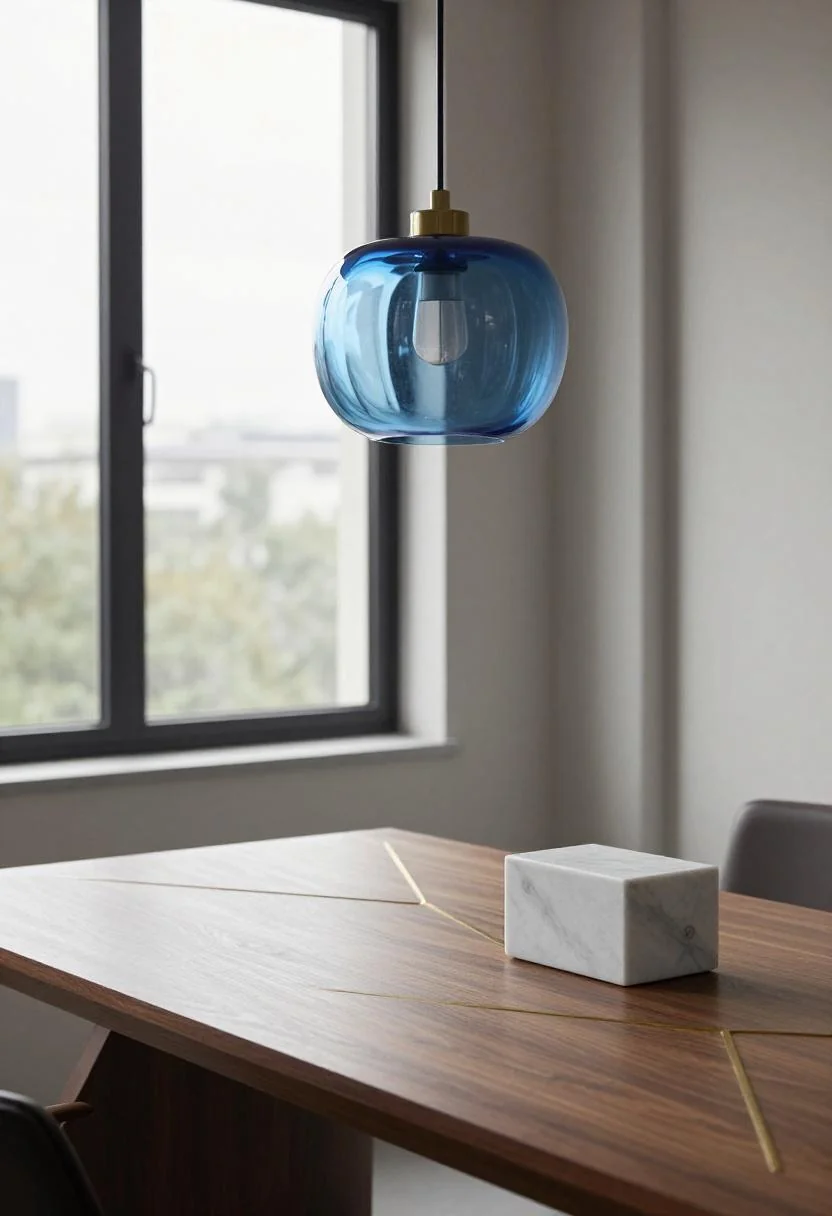
Look 8 — Ebony Desk, Fluted Blue Glass
Brass inlaid into ebony. A cool blue fluted glass pendant casting fractured light across the surface. This is the kind of workspace that makes you feel something before you've opened a single tab. Vogue has been tracking the return of decorative craft in interiors for the past two years — this setup is the argument for why it matters. Quality whispers, and this room is nearly silent.
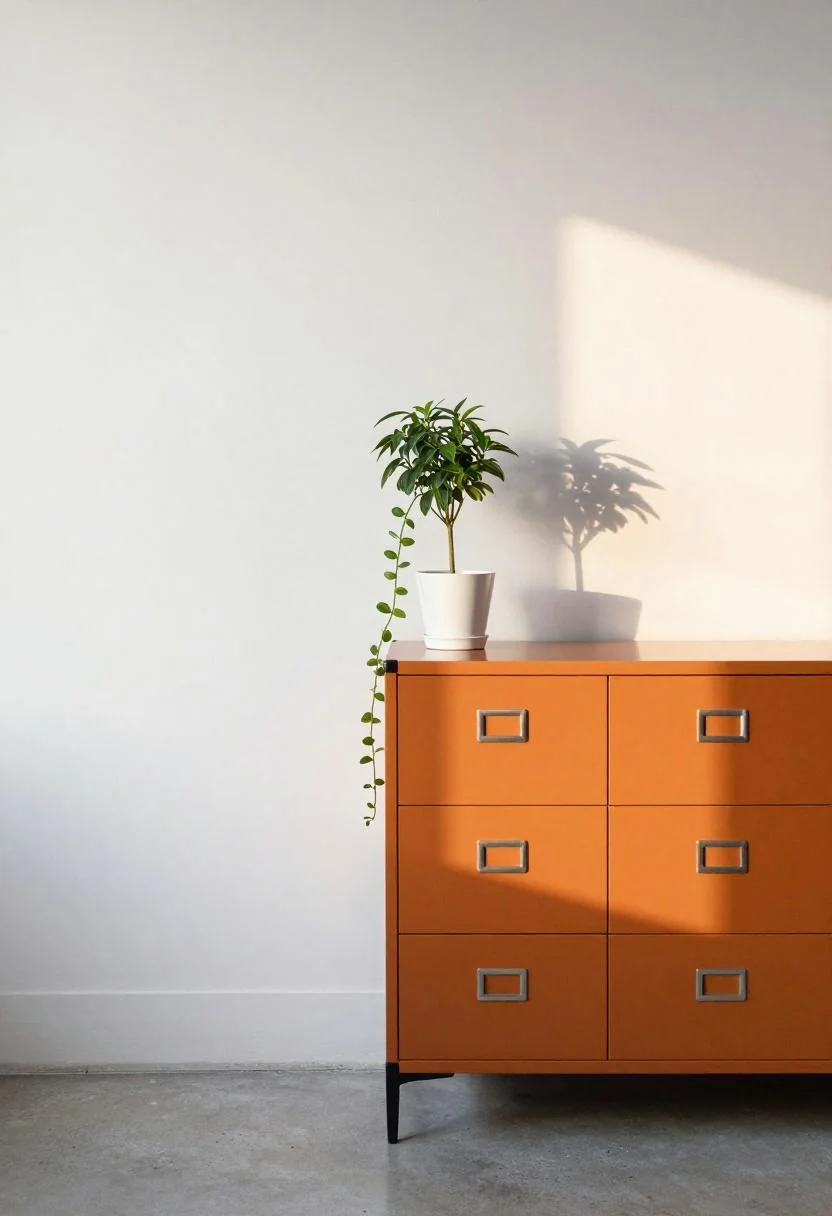
Look 11 — Persimmon Filing Cabinet
A lacquered persimmon filing cabinet shouldn't work this well. And yet. The trailing string-of-pearls draped over the top softens the hard color without apologizing for it. This is a single bold object doing all the work in an otherwise minimal room — which is exactly how you use a statement piece without turning your workspace into a mood board. Shop bold filing cabinets
Texture and Story: Workspaces That Hold Cultural Memory
Not every desk has to look like it shipped from a Scandinavian warehouse. Some of the most focused workspaces are the ones with the most specific character — the rooms that tell you something about the person who built them.
Look 3 — Ebony Desk, Jade Mudcloth
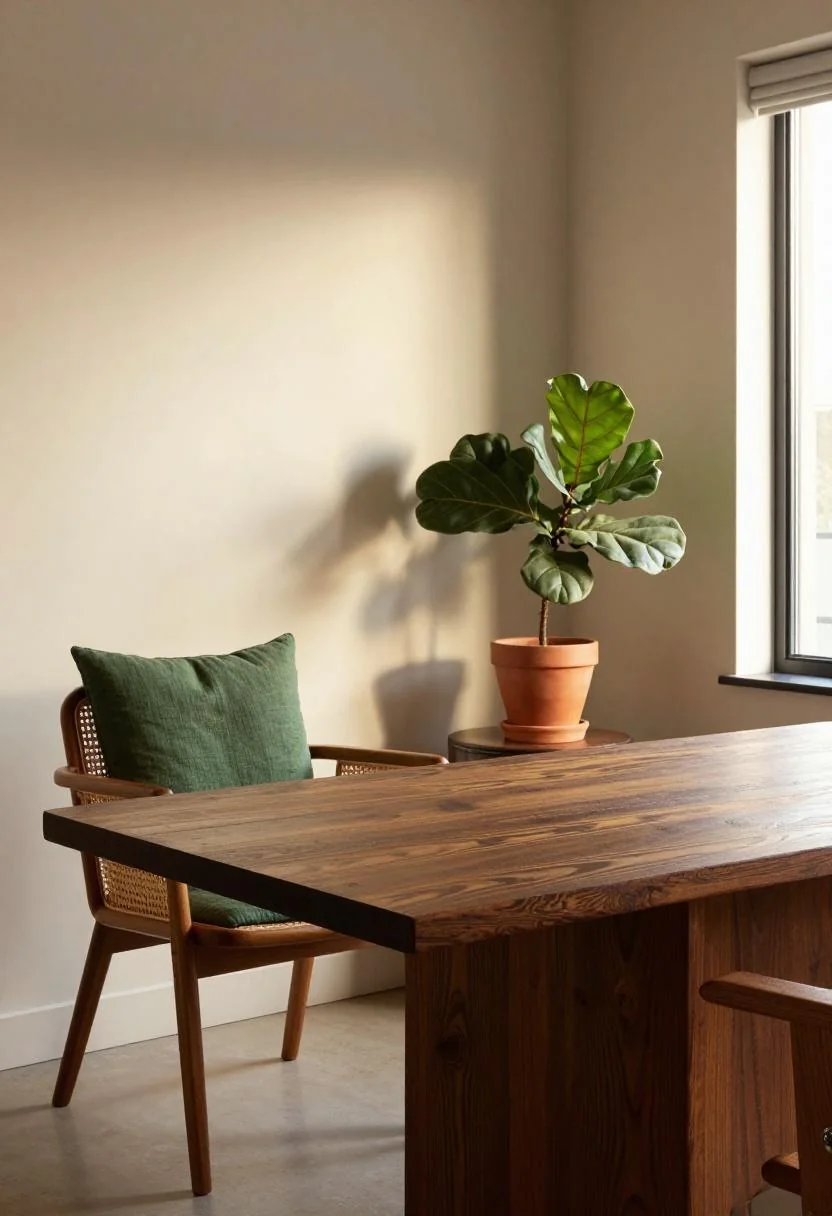
Golden hour light on a carved ebony desk. The jade mudcloth cushion carries a specific kind of weight — textile as history, not decoration. This is what the Afrohemian aesthetic does at its best: it refuses to separate beauty from meaning. The carving in the desk, the handwoven cushion — these are objects that required skill and time. Sitting here to work is a daily reminder that craft is worth something. Shop mudcloth cushions
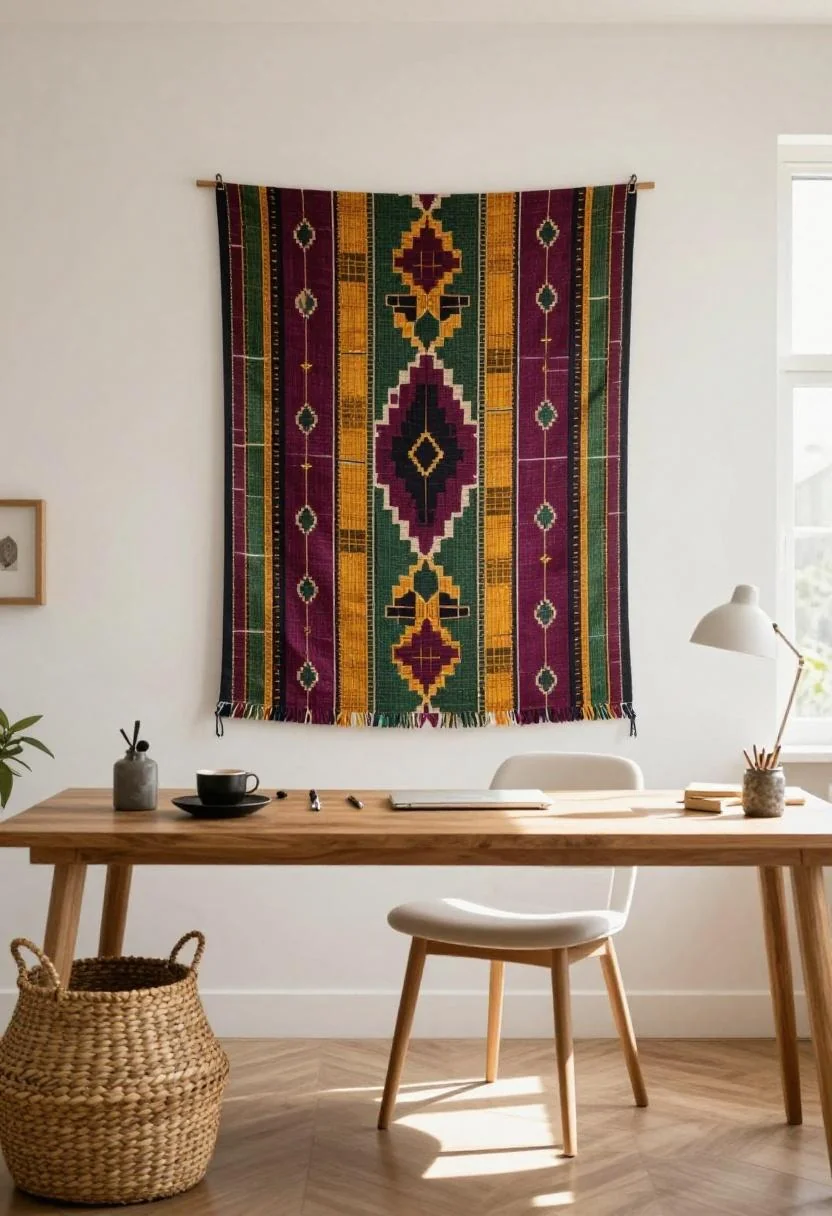
Look 9 — Kente Textile Wall Art, Teak, Seagrass
The kente-inspired textile above the teak desk isn't framed — it doesn't need to be. Its geometry does enough. Seagrass storage baskets below ground the whole arrangement in something natural and unfinished, which is exactly the tension this aesthetic runs on. It's not curated in the gallery sense; it's curated in the personal-collection sense. There's a difference, and this room knows it.
(— I keep returning to these Afrohemian setups because they solve a problem most minimalist advice ignores: how do you keep a space spare without making it anonymous? The answer, consistently, is to let the objects carry culture rather than style.)
Softness and Season: The Spring-Specific Workspace
Spring light is different. It's longer, softer, and it forgives things that winter light exposes. These setups lean into that.
Look 5 — Pine Desk, Persimmon Gingham, Chamomile
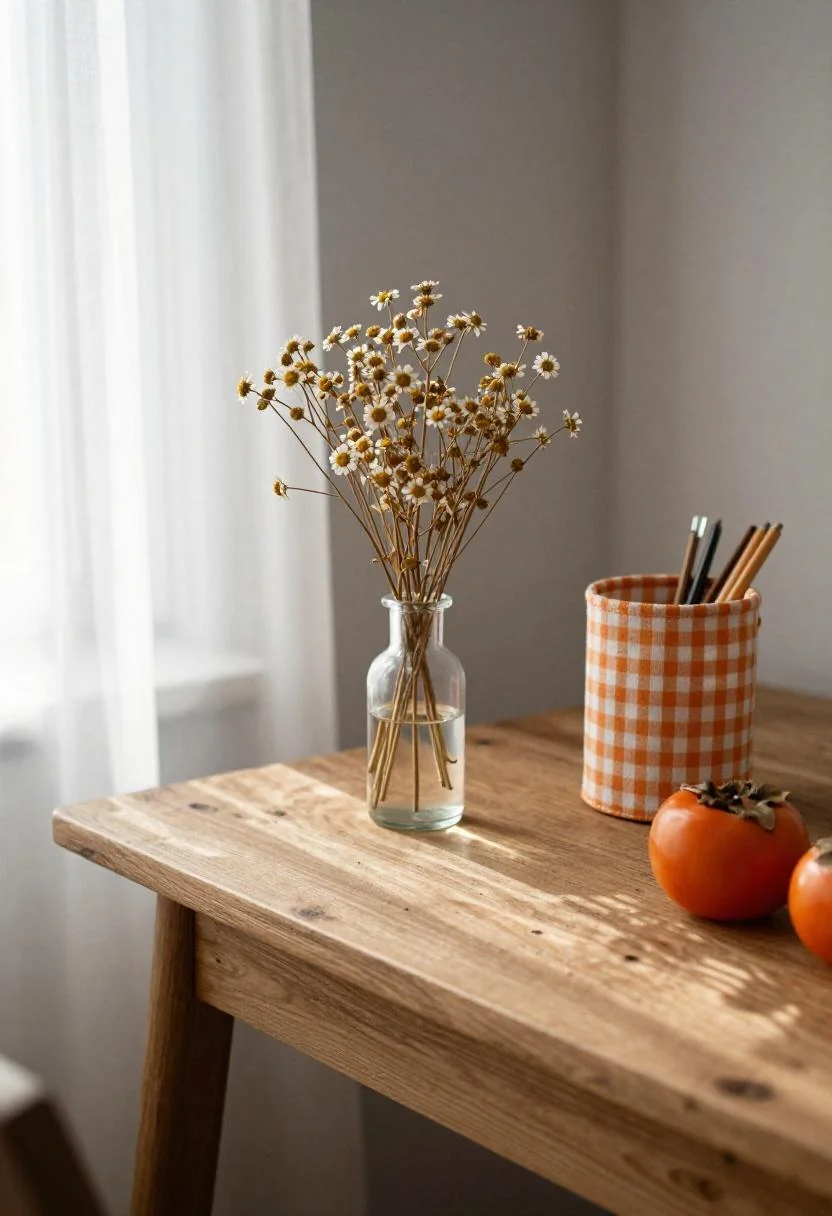
Reclaimed pine. Dried chamomile stems in a small jar. Persimmon gingham as the accent — not a cushion, not a statement, just a textile doing its quiet work in the background. This is cottagecore stripped of its nostalgia trip and left with just the good parts: natural materials, seasonal flowers, a desk that looks like it was found rather than bought. As Harper's Bazaar noted, the cottagecore movement's lasting contribution to interiors isn't the aesthetic — it's the permission to slow down.
Look 10 — Wasabi Wool, Window Nook, Ceramic Bird
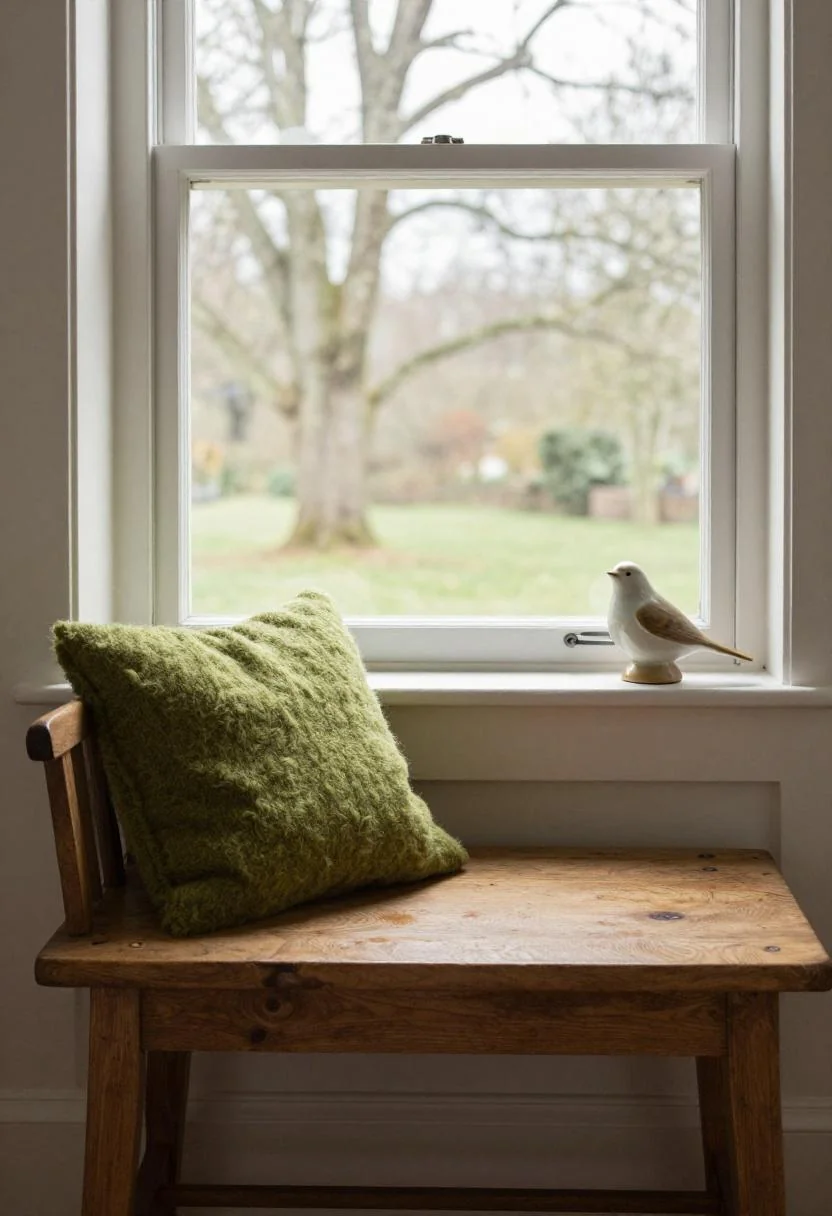
A window nook is a workspace's best version of itself. Soft spring daylight, a wasabi wool throw folded over the chair, a small ceramic bird on the sill — this is the setup that makes you actually want to sit down and write something. Not answer emails. Write something. Shop wool throws
If you're refreshing more than just your office this spring, our spring decorating guide and this look at May color trends both work from the same palette logic — wasabi, sage, terracotta, persimmon — applied across every room.
Closing: What Spring 2026 Is Actually Saying
Strip away the individual looks and what remains is a consistent argument: the best home office doesn't perform productivity — it enables it. The colors this season (terracotta, sage, wasabi, persimmon, plum, cool blue) aren't trends in the disposable sense. They're responses to something real — a collective need for warmth, for texture, for workspaces that feel inhabited rather than staged.
The maximalist impulse, held against the minimalist instinct, produces something neither could achieve alone: a room with a point of view. Not a showroom. Not a Pinterest board. A place where work happens because the environment earns your attention rather than fighting for it.
What would you remove from your current desk if you had to? Start there.
This post contains affiliate links. We may earn a commission at no extra cost to you.
Images in this article were created with AI assistance.


