Spring 2026 is asking a quiet question: what does your bedroom actually say when no one is watching? Not the Instagram version. The real one — the 6 a.m. version, when light comes through and you notice what you've accumulated versus what you've chosen. This season's most interesting bedroom directions share one quality: restraint with conviction. They don't decorate. They edit. Whether the impulse is toward Nordic stillness, earthen warmth, or a single velvet chair that stops you in the doorway, the throughline is the same — less noise, more intention.
As Elle Decor has been tracking for the past two seasons, the dominant shift in bedroom design is away from maximalist layering and toward what they call "considered calm" — spaces that feel finished because nothing superfluous remains. These 14 ideas interpret that shift across different aesthetics, palettes, and budgets. None of them require a renovation. Most require only a decision.
The Architecture of Blue
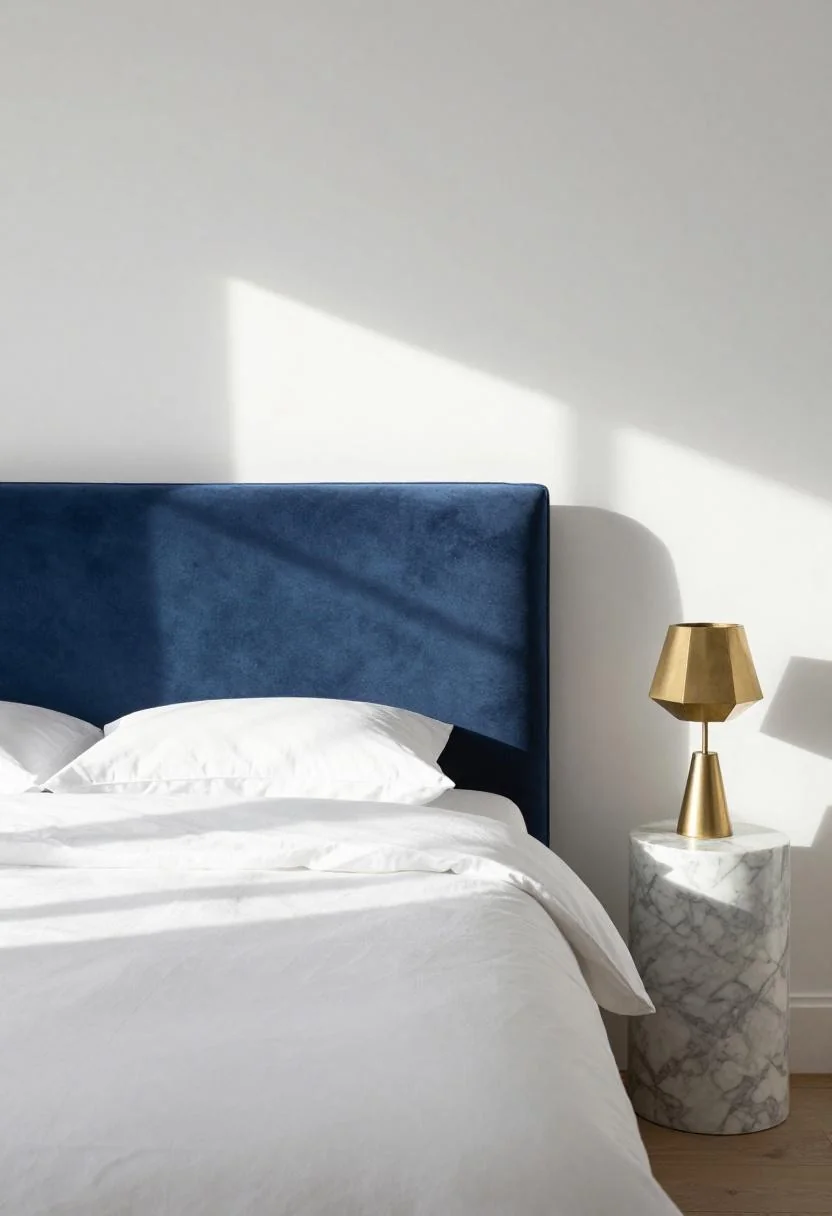
Cool blue velvet against white plaster. Brass that doesn't gleam so much as glow. The Neo Deco headboard in this room works because it functions structurally — it's the wall, effectively, and everything else defers to it. The geometric brass lamp on the marble nightstand echoes the headboard's angles without repeating them exactly, which is the difference between a room that feels designed and one that feels decorated. Blue velvet headboards like this read differently in morning light than evening — cooler and more architectural at dawn, warmer and more enveloping at dusk. That range of feeling is worth paying for.
How to get the look: Anchor the room with one saturated piece — the headboard — and let everything else neutralize. Marble and brass handle the warmth. White walls do the rest.
Plum Noir and the Weight of Craft
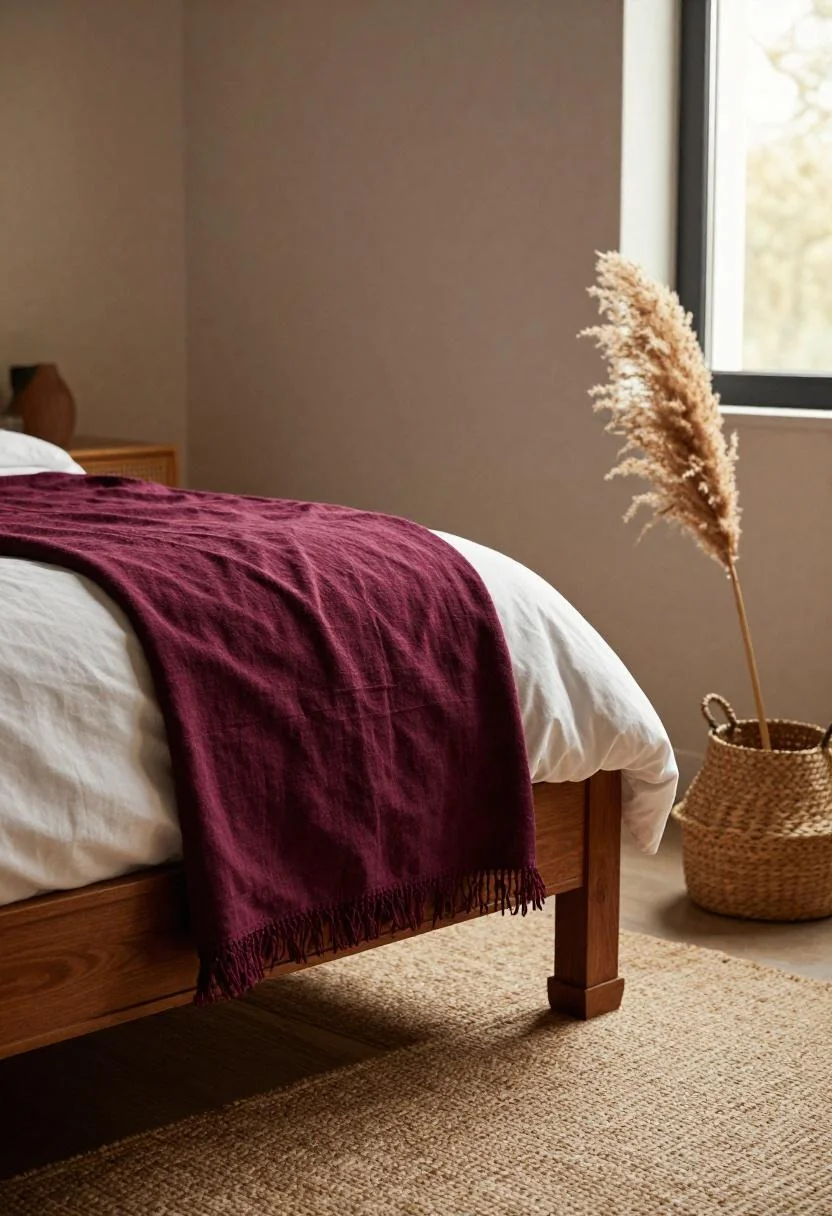
There's a temptation to describe this corner as "layered." Resist it. What's happening here is something more specific — the mudcloth throw in plum noir draped over a carved mahogany frame isn't layering for warmth or texture. It's a deliberate collision of craft traditions, and the richness comes from that tension. The color is almost black in shadow and almost purple in light. You can't manufacture that kind of depth. It exists in the textile itself, in the making of it.
Afrohemian design — African textile heritage blended with free-spirited, bohemian sensibility — is finally getting serious editorial attention. Harper's Bazaar covered the movement's move into high-design spaces last year, noting that the most compelling rooms in this vein avoid the souvenir-shop trap entirely. This bedroom understands that. Nothing here looks collected carelessly. The mahogany frame has age and intention. Strip away the trend label and ask: would this feel right in five years? Yes. Twenty, probably.
Making it your own: You don't need to commit to a full Afrohemian scheme. One mudcloth throw, placed with confidence, does more than a room full of half-measures.
Jade — the Color That Earns Its Keep
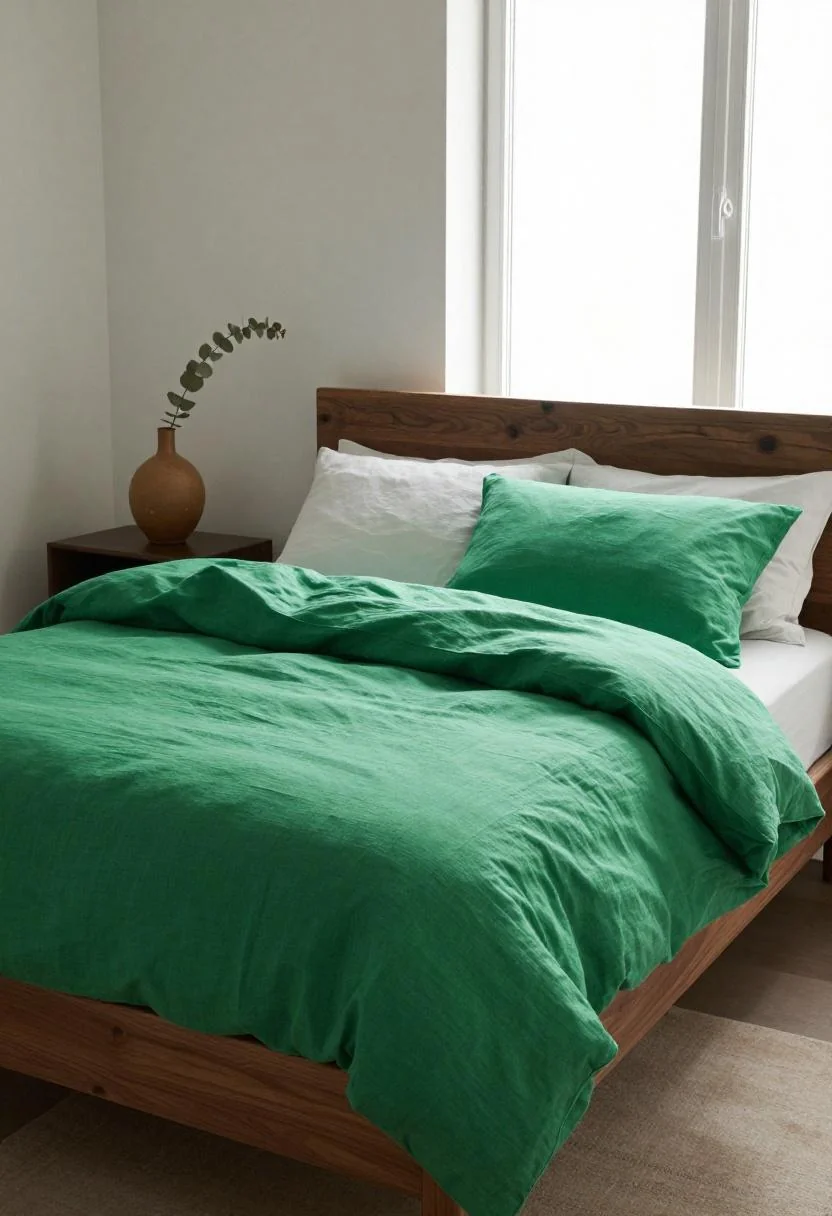
Jade green linen on a walnut platform bed is not a subtle choice. But it's a considered one. Linen in this shade has enough grey in it to avoid looking tropical or trendy — it reads more like a deep lake on a cloudy day than a tropical postcard. The eucalyptus accent alongside it brings the outside in without resorting to a fiddle-leaf fig moment (which, honestly, had its time). Jade linen duvets are increasingly available in the kind of quality you can feel before you see — look for 200-thread-count minimum with visible texture.
The walnut platform bed is the Scandinavian anchor. Low, honest, structural. This is where the Minimalist Curator and the maximalist color instinct find their truce.
The Case for Wasabi
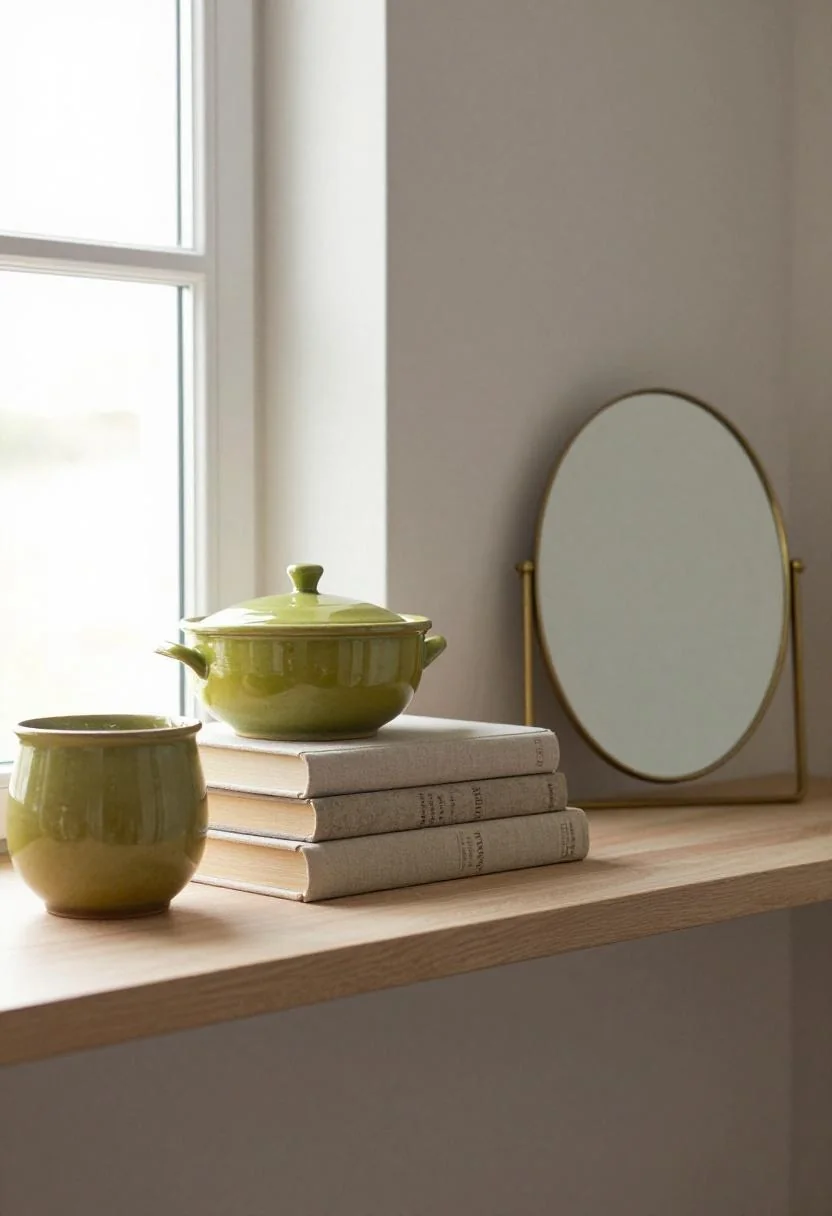
Wasabi as a bedroom color — the yellow-green that sits just past safe. On a shelf, a single glazed ceramic pot in this shade does something a pillow can't: it holds the eye without demanding attention. Around it: linen-bound books (horizontal, not vertical — fewer, better), and a small brass mirror that catches and throws light. The restraint here is the whole point. This isn't maximalist in the Instagram sense. It's maximalist in the original sense — using exactly as much as the space can carry.
One ceramic object in an unexpected color, placed deliberately, is an edit. Ten objects in that color are a mood board. Know the difference.
Persimmon and the Pleasure of Something Old
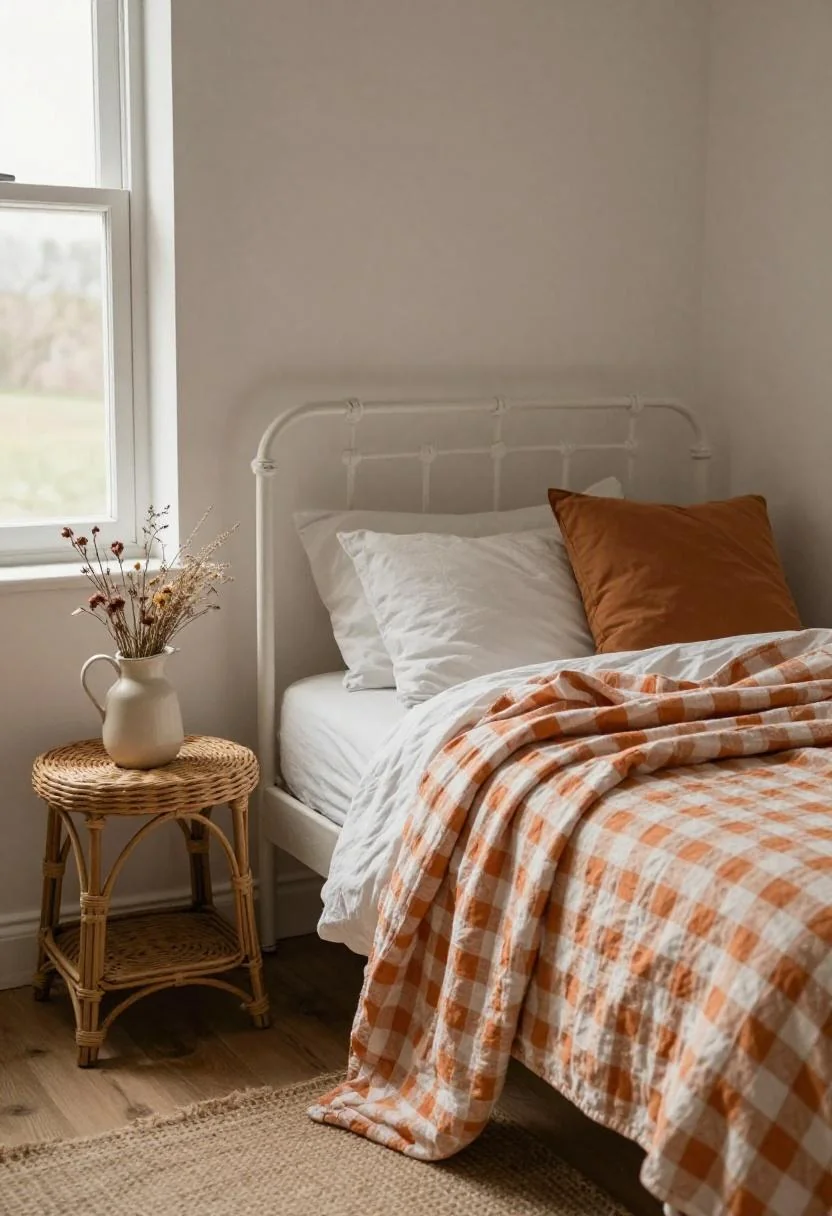
Gingham in persimmon on an iron bed. Wildflowers — actual ones, the kind that don't cost forty dollars at a florist — in a ceramic pitcher on the nightstand. This bedroom is deeply, unironically cottagecore, and it works because it commits. There's no reclaimed-wood-and-steel hedge here, no gesture toward industrial cool to balance it out. It's soft and warm and a little old-fashioned and it knows exactly what it is.
Persimmon reads differently than orange. It's riper. More saturated with summer-into-autumn light. Against the white iron frame, it becomes something almost floral itself. If you're building a room around this palette, keep the walls pale — cream, not bright white — and let the quilt do all the work.
How to get the look: Iron beds are widely available secondhand. The quilt matters more than the frame. Spend there. Persimmon gingham quilts are surprisingly easy to find once you know the color name — search specifically for "persimmon" rather than "orange."
Terracotta Without the Cliché
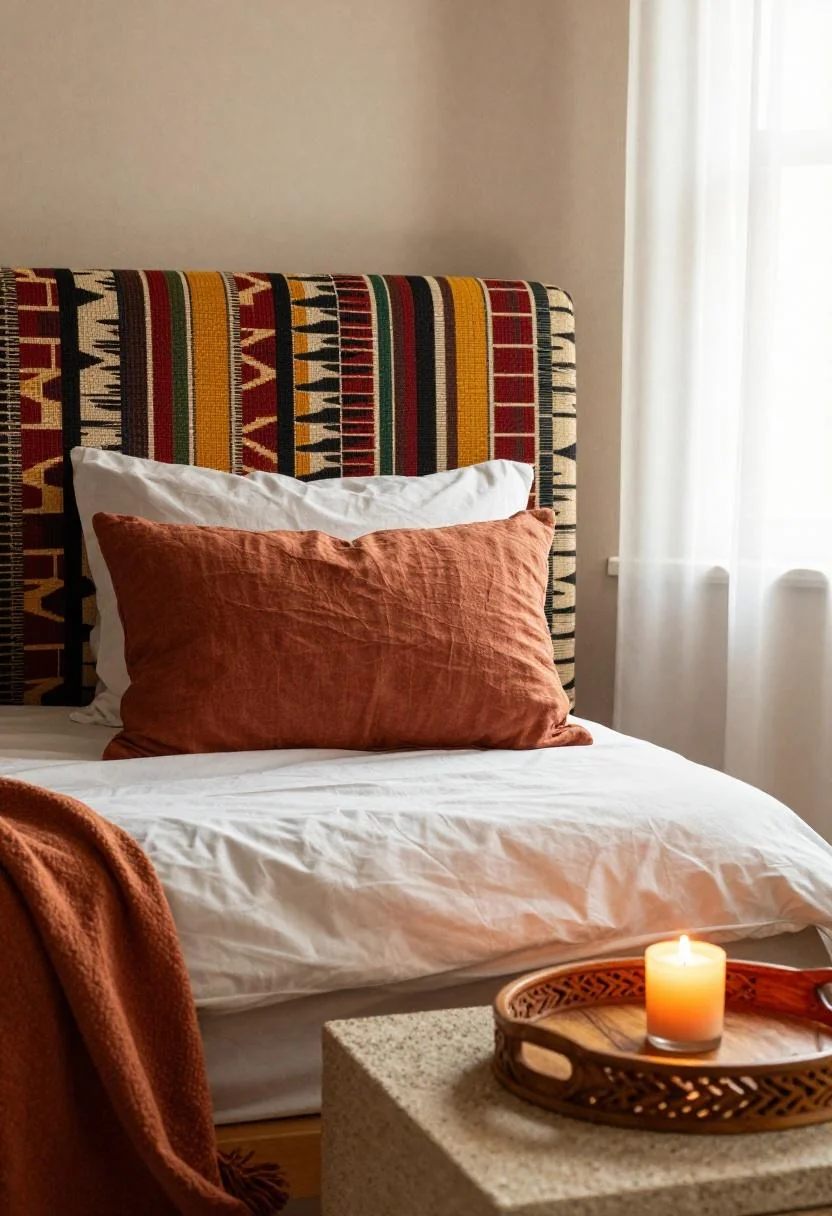
Terracotta has had a long run. Long enough that it's worth asking whether it still means anything — or whether it's just the color people choose when they want to seem intentional without thinking too hard. This room answers the question. The terracotta linen pillow against a kente-stripe woven headboard isn't a trend application. It's a chromatic logic. The warm earth tone of the pillow pulls the gold threads out of the weave; the carved acacia tray on the nightstand extends the material warmth into something structural.
Quality whispers. The kente-stripe headboard — hand-woven, not printed — is that kind of object. You feel the difference immediately, even if you can't articulate why.
Cream Boucle and the Nordic Ideal
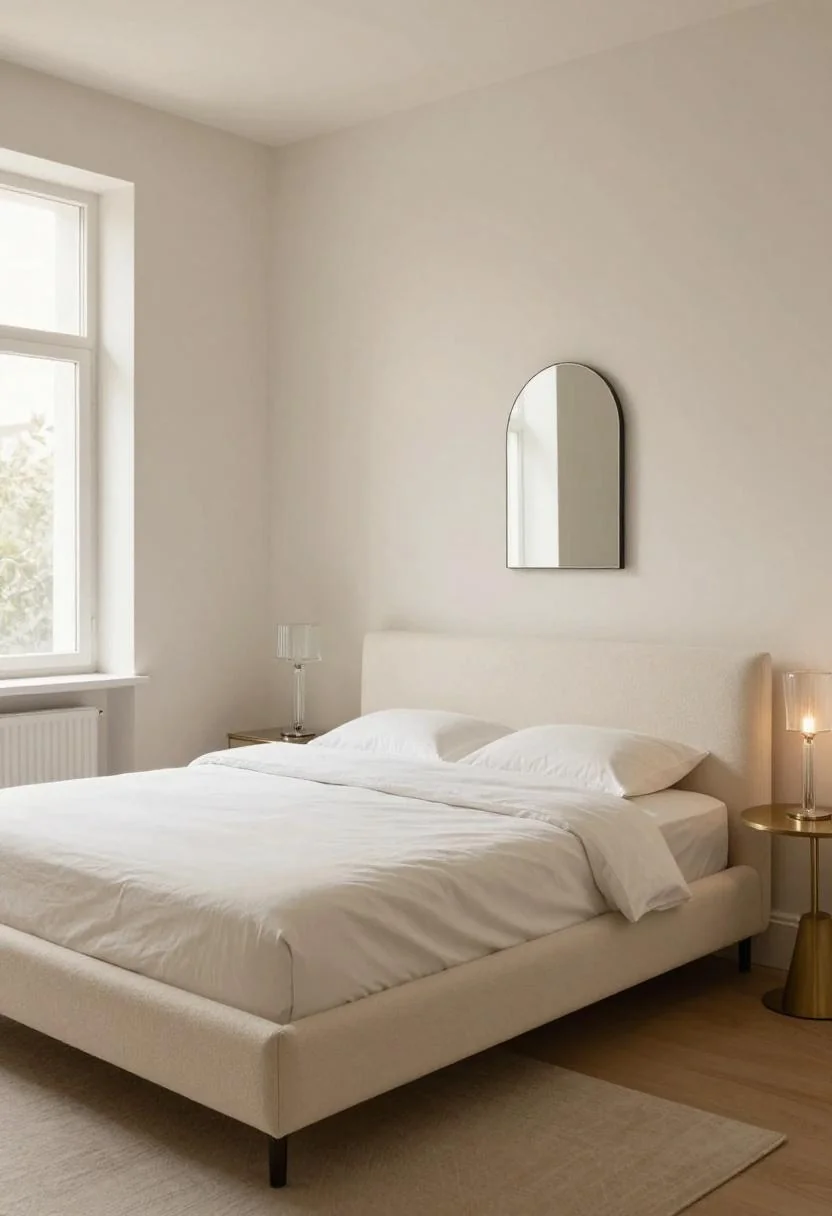
This is the room that Scandinavian design has been building toward for twenty years. Cream boucle on a low bed frame — a fabric that carries warmth without color, texture without noise. Fluted glass lamp (a Neo Deco detail that borrows from the 1930s and modernizes it through transparency). An arched brass-framed mirror that completes the tonal palette without introducing anything new.
Hygge, without the kitsch. That's the hardest version to pull off. The kitsch version — the candles-everywhere, throw-blankets-on-every-surface version — is easy to find and easy to tire of. This room is the other kind: the kind that still feels right at midsummer, when you don't want coziness so much as clarity. Boucle bed frames have moved from boutique to accessible — look for versions with a solid wood base rather than MDF for longevity.
If you're building a spring room and you want it to carry into autumn without a single change, start here. Nothing seasonal about this palette. Nothing that needs to be put away.
The Window Nook as a Room Within a Room
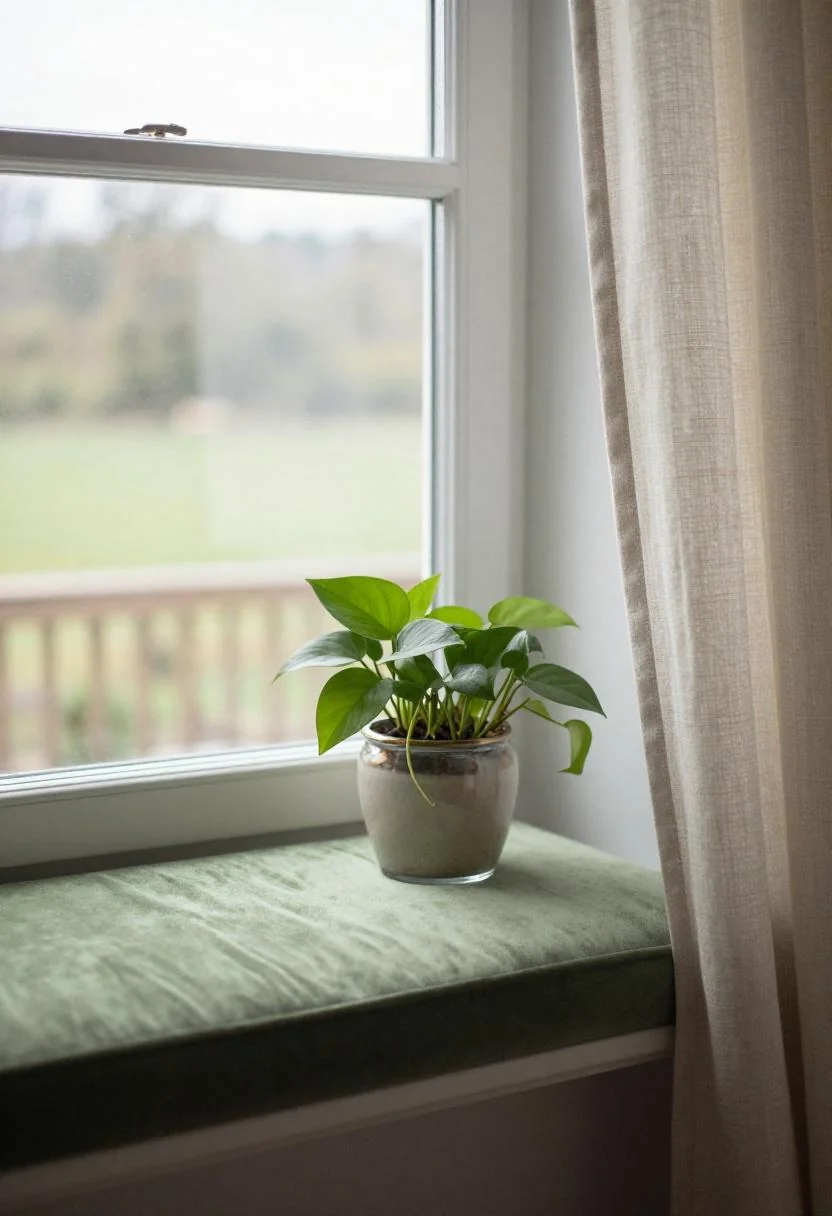
Sage green velvet in a window nook is almost unfair. The combination of diffused daylight and that specific muted green — too cool for spring, too warm for winter, exactly right for both — creates an atmosphere that no amount of overhead lighting can replicate. The trailing pothos in a glazed ceramic pot beside it is the one piece of softness the scene needs. Not a dramatic plant. Not a demanding one. Just something living.
A window nook, if you have one, is the most underused space in most bedrooms. A fitted cushion in the right fabric turns it from an architectural accident into the best seat in the room. Sage green velvet cushions — look for ones with a removable cover so the velvet can be cleaned without drama.
For more ideas on bringing the outside in this season, our guide to spring decorating for 2026 covers this plant-and-palette approach across every room.
Blue Again — But Different
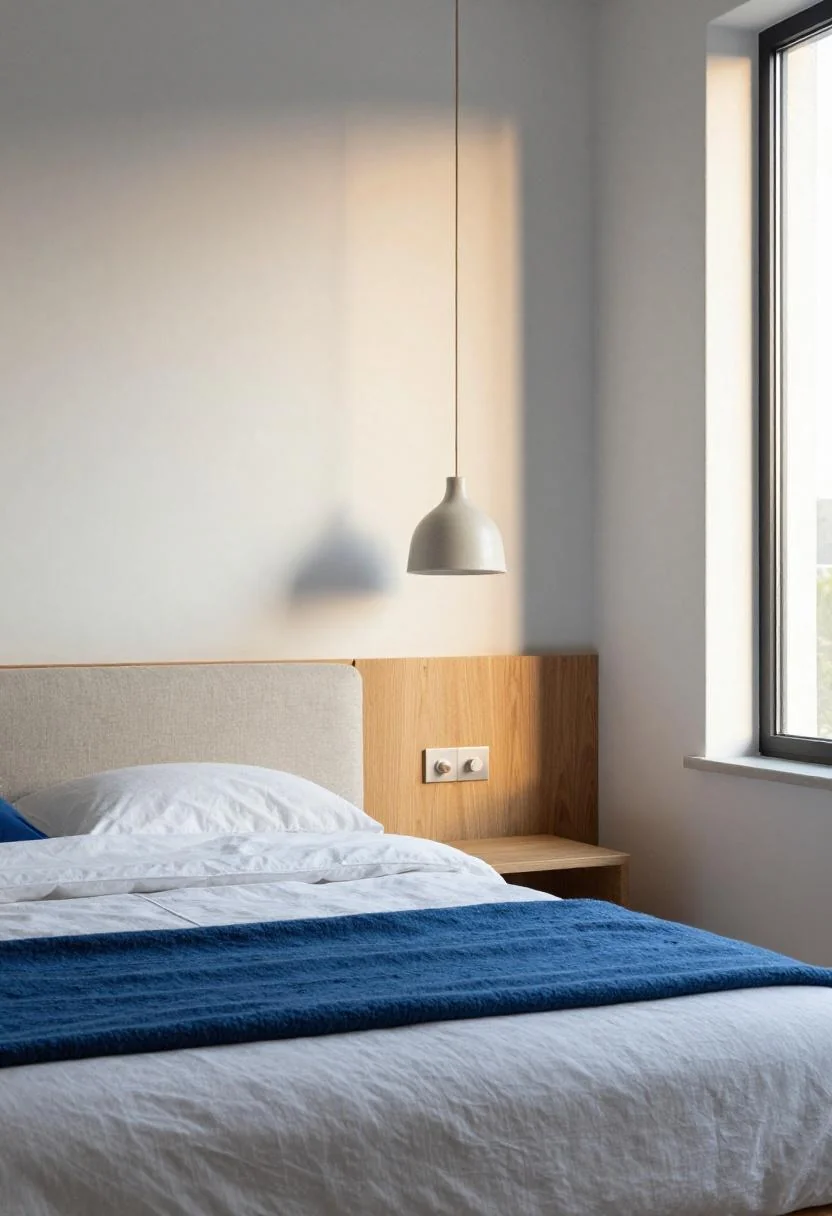
The same cool blue from Look 1, but deployed completely differently. Here it's a wool throw at the foot of an oak platform bed — not the focal point, but the punctuation. The ceramic pendant light above it is unglazed, matte, cloud-shaped in its weight. Together they create a room that feels Nordic without referencing Scandinavia explicitly: pale wood, natural materials, one moment of color placed with intention rather than scattered throughout.
Oak platform beds are the workhorse of this aesthetic. Low, honest, structural. They don't compete with anything else in the room, which means everything else can.
The Nightstand as a Tiny Gallery
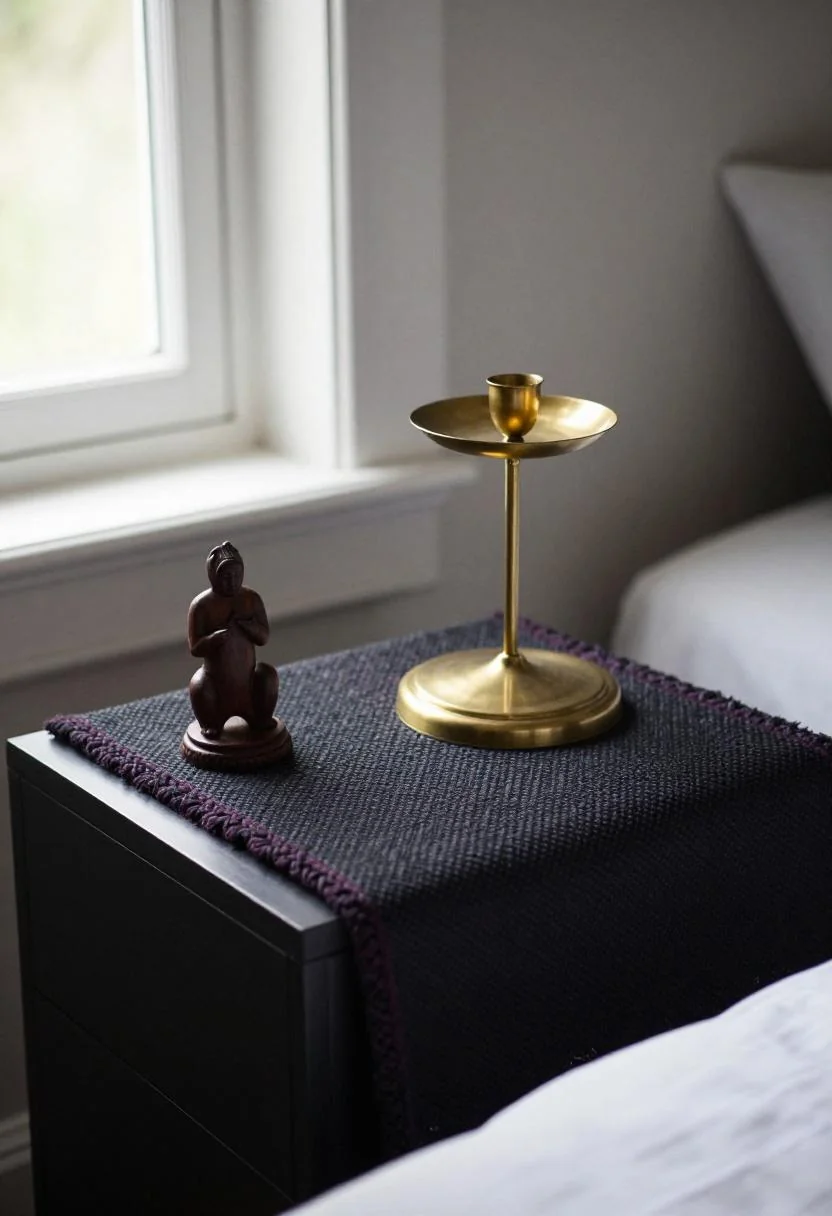
Three objects. A plum noir woven textile runner. A brass candleholder — cylindrical, unornamented. A carved ebony figurine that earns its place by being genuinely beautiful rather than merely decorative. This nightstand is a complete composition. It doesn't need a fourth thing. It especially doesn't need a charging cable snaking through it (manage that elsewhere).
The plum noir runner is the move most people miss. A textile on a hard surface changes its acoustic and visual quality entirely — the nightstand becomes warmer, more deliberate. Less furniture, more still life.
How to get the look: Edit first. Remove everything. Then replace only what you can justify. Three objects is a composition. Five is clutter that hasn't introduced itself yet.
When Maximalist Meets Minimal (and Doesn't Flinch)
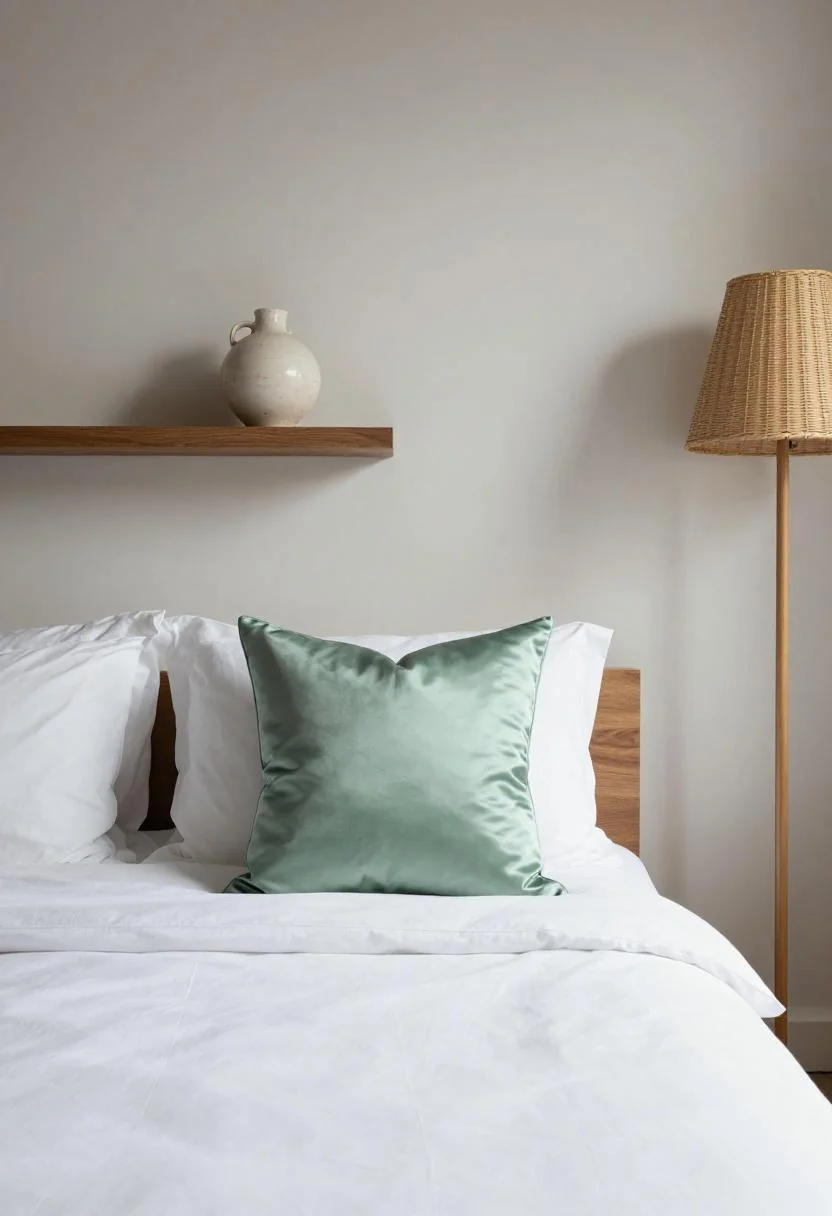
Can a room be both maximalist and minimal? This one suggests yes — but only if you define maximalism as depth of quality rather than quantity of objects. The jade green silk pillow catches light differently at every hour. The rattan floor lamp (tall, slender, unpretentious) casts a warm pool rather than flooding the room. The walnut floating shelf holds three things, not thirty. What makes this maximalist isn't the accumulation — it's the confidence. Every choice is load-bearing.
Rattan floor lamps have become the ambient-lighting solution that replaced the arc lamp — warmer, more textural, less imposing. Look for ones where the shade is a single continuous piece of weaving rather than panels joined together; the light diffusion is far more even.
The Chair That Changes a Room
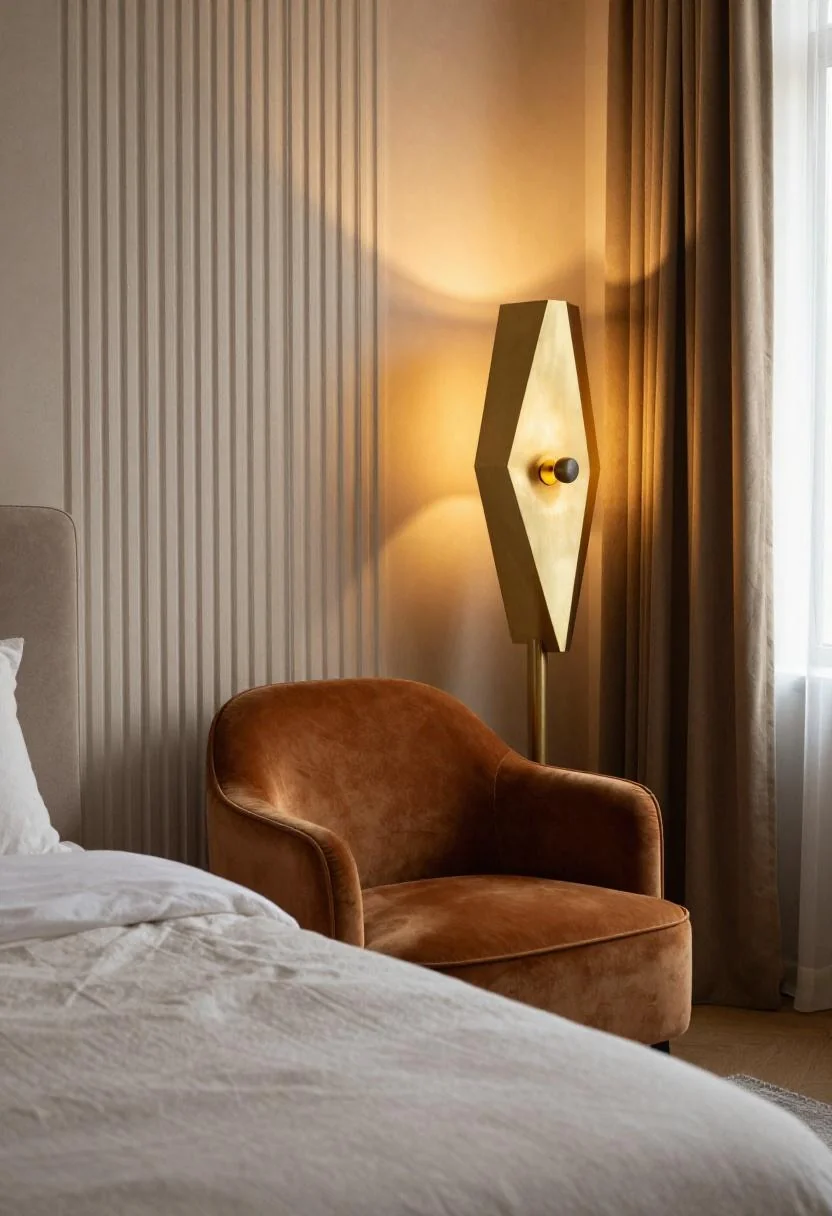
A persimmon velvet accent chair in the corner of a bedroom is either a statement or a deposit for coats and bags — and the difference is entirely about intention. In this room, a brass floor lamp placed precisely beside it, and a fluted plaster wall panel behind it, frame the chair as furniture-as-architecture. It's a room within a room. A reading space that exists before you pick up a book.
The fluted plaster panel is the detail that most designers would skip as unnecessary expense. It isn't unnecessary. It's the thing that transforms the chair from accent piece to destination. Vogue's spring interiors coverage has consistently highlighted architectural wall treatments as the distinguishing factor between rooms that photograph well and rooms that live well. This is the lived version.
Making it your own: If the plaster panel is outside budget, a large-format art print in a plaster-finish frame achieves something similar. The vertical line behind the chair is what matters.
A Dresser That Looks Like It Was Styled, Not Arranged
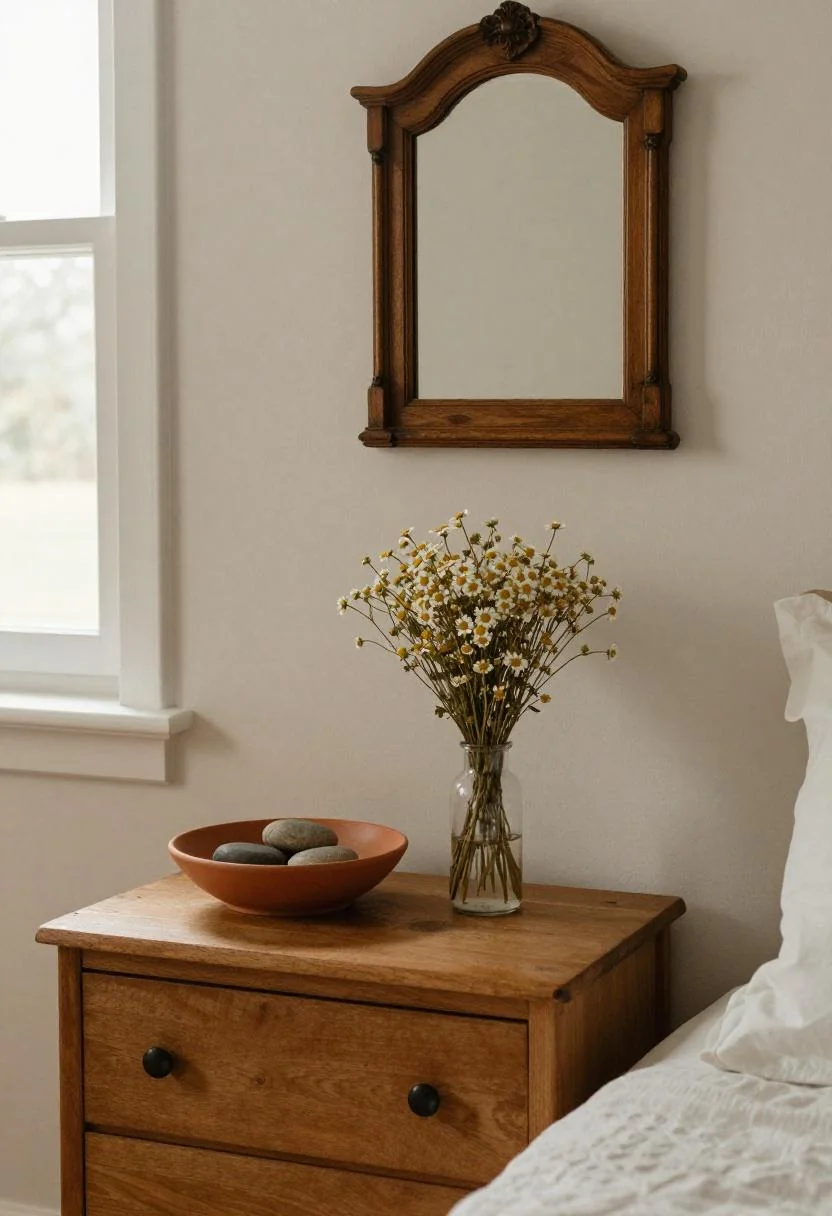
Dried chamomile in a terracotta ceramic bowl. A pine-framed mirror that leans rather than hangs — intentional informality. The dresser surface in this room looks like someone set things down and they happened to be the right things. That's not luck. That's a practiced eye.
Dried botanicals have replaced fresh flowers in many of these spring rooms, not because fresh flowers aren't beautiful but because dried arrangements carry a different kind of time. Chamomile specifically — small yellow buttons, delicate stems — is generous in scale without being dramatic. It fits. Dried chamomile bundles are available year-round and hold their shape for months.
For anyone building out a full cottagecore room scheme, our piece on tiny she shed interiors covers companion ideas for the same soft, natural aesthetic — applicable to any small or tucked-away space.
Cream and Travertine — the Long Game
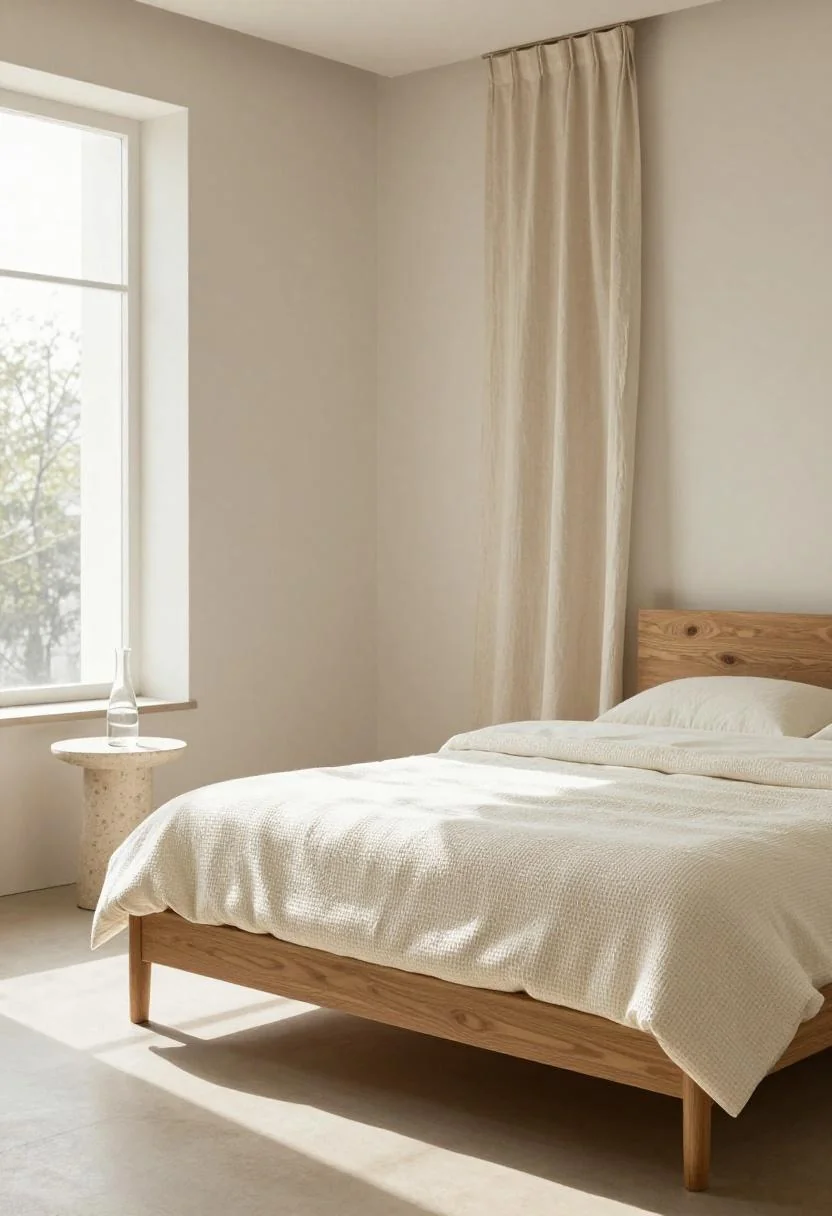
Here is the room that asks nothing of you. Cream waffle-weave duvet on a birch bed frame — pale wood, clean lines, no ornamentation. Travertine side table. Glass carafe with water, nothing else. This is hygge stripped of its sentimentality and left as pure function: warmth through material rather than accumulation.
Travertine as a surface material has moved from bathrooms into bedrooms quietly and correctly. It's warm in the hand, cool to the eye, and ages with such grace that a travertine object looks better at year five than at year one. The glass carafe beside it is almost too simple to notice — which is precisely why it works.
Strip away the trend and ask: would this feel right in ten years? The birch frame might need replacing. Everything else will still be true.
What These 14 Rooms Are Actually Saying
The palette of Spring 2026 bedrooms is richer than you'd expect from an era that claims to love minimalism. Cool blue, plum noir, jade, persimmon, wasabi, terracotta, sage, cream — these aren't neutral choices. But they're made with restraint. Each one appears once, placed with conviction, surrounded by breathing room.
What unites all fourteen of these directions — from the cottagecore window nook to the Neo Deco velvet chair — is a refusal to fill space for its own sake. The Scandinavian influence runs underneath all of it, even the earthier Afrohemian rooms: the idea that an object justifies its presence by what it contributes, not by how much it costs or how much of it there is.
If you're building a spring bedroom this season, start by removing rather than adding. What's left after you take out everything you're keeping only out of habit? That is the room. Then introduce one thing — a throw, a ceramic pot, a velvet pillow in a color you've never tried — and see what the room becomes. You might not need fourteen ideas. You might need one, made well.
For more seasonal inspiration across your home, our May color trends guide covers how these same palettes work across dining rooms, entryways, and living spaces — without the commitment of a full bedroom overhaul.
This post contains affiliate links. We may earn a commission at no extra cost to you.
Images in this article were created with AI assistance.


