The arch is the most load-bearing design decision of your entire wedding aesthetic — and somehow it's the one couples spend the least time on. You'll agonize over napkin folds and cake tiers, then throw up a rented garden trellis and call it a day. This spring, that changes. From blackened brass Neo Deco structures to raw oak branch installations that belong in a gallery, the ceremony arch has finally graduated into proper design territory. Vogue's wedding coverage this season has been tracking the shift toward architectural ceremony structures, and the evidence is everywhere: couples are commissioning arches the way they'd commission furniture. As they should.
For the Stone Patio Setting: Cool Blue Silk Ribbons
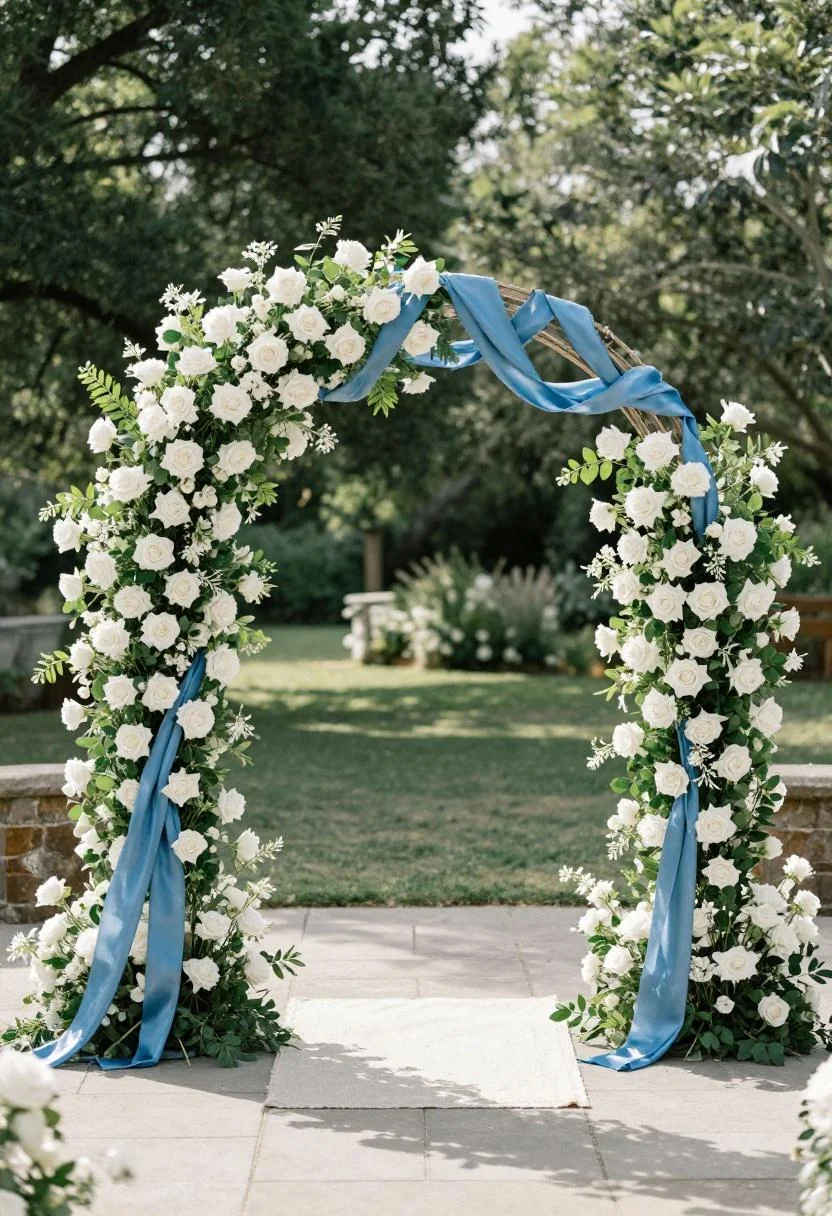
Let's be honest — blue at weddings still makes people nervous. Which is exactly why this works. Cool blue silk ribbons cascading against a backdrop of white garden roses create a ceremony arch that reads more Giorgio Armani than "something blue." The stone patio setting does all the heavy lifting here: the warmth of the pavers grounds what could otherwise tip into cold territory. Keep every other element neutral and let the ribbon color carry the visual weight alone. One strong accent. That's the rule.
Shop cool blue silk ribbon for wedding arches →
Neo Deco After Dark: Blackened Brass and Plum Velvet
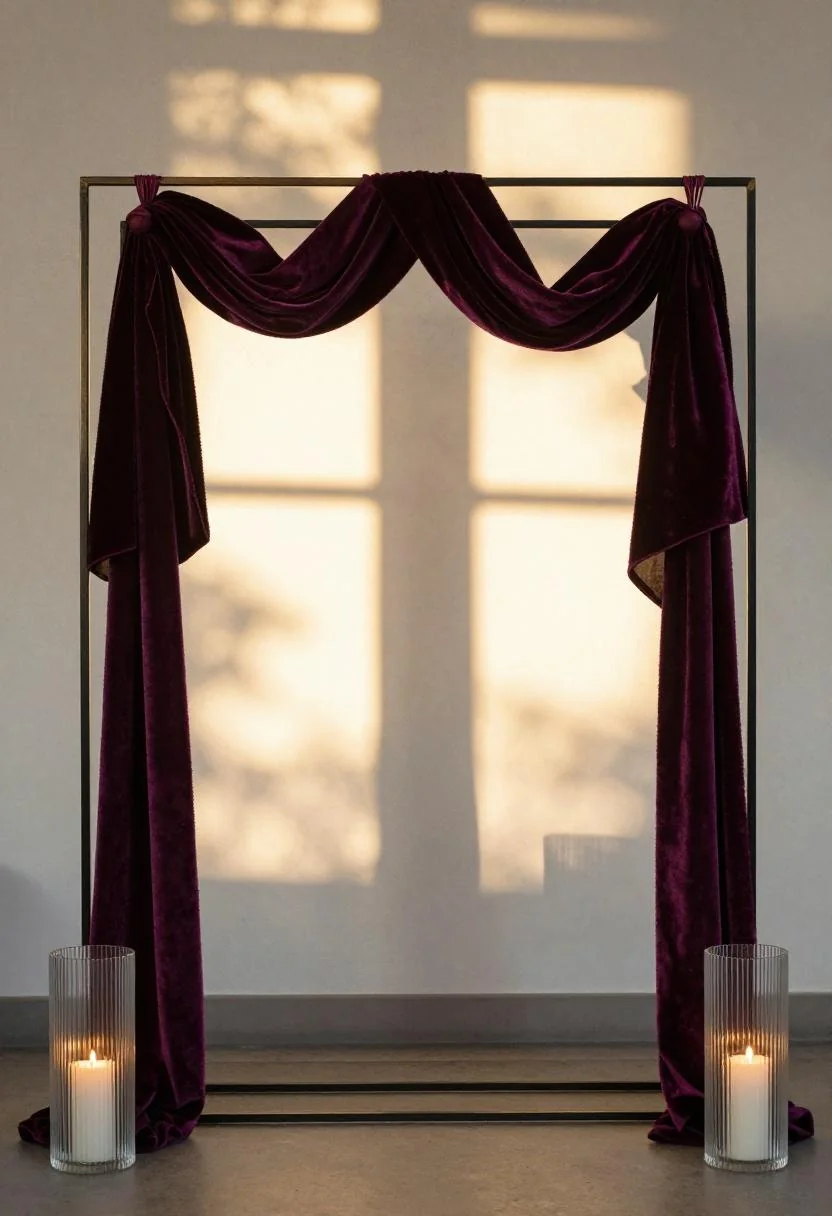
This is the hill I'll die on: the most interesting wedding arch you'll see in 2026 is not made of flowers. This Neo Deco blackened brass structure with plum velvet swags and fluted glass candle pillars references the decorative vocabulary of Eileen Gray and Paul Frankl — architects who understood that luxury lives in material contrast, not maximalism. The velvet against the oxidized metal. The soft candlelight against the hard geometry. Evening ceremonies only. This arch doesn't belong in daylight.
If you're planning a venue with low lighting and want to push the drama further, the fluted glass pillar detail pairs beautifully with the kind of moody florals covered in our bridal shower backdrop guide — some of those panel ideas translate directly to ceremony backdrops.
The Afrohemian Statement: Mahogany, Kente, and Monstera
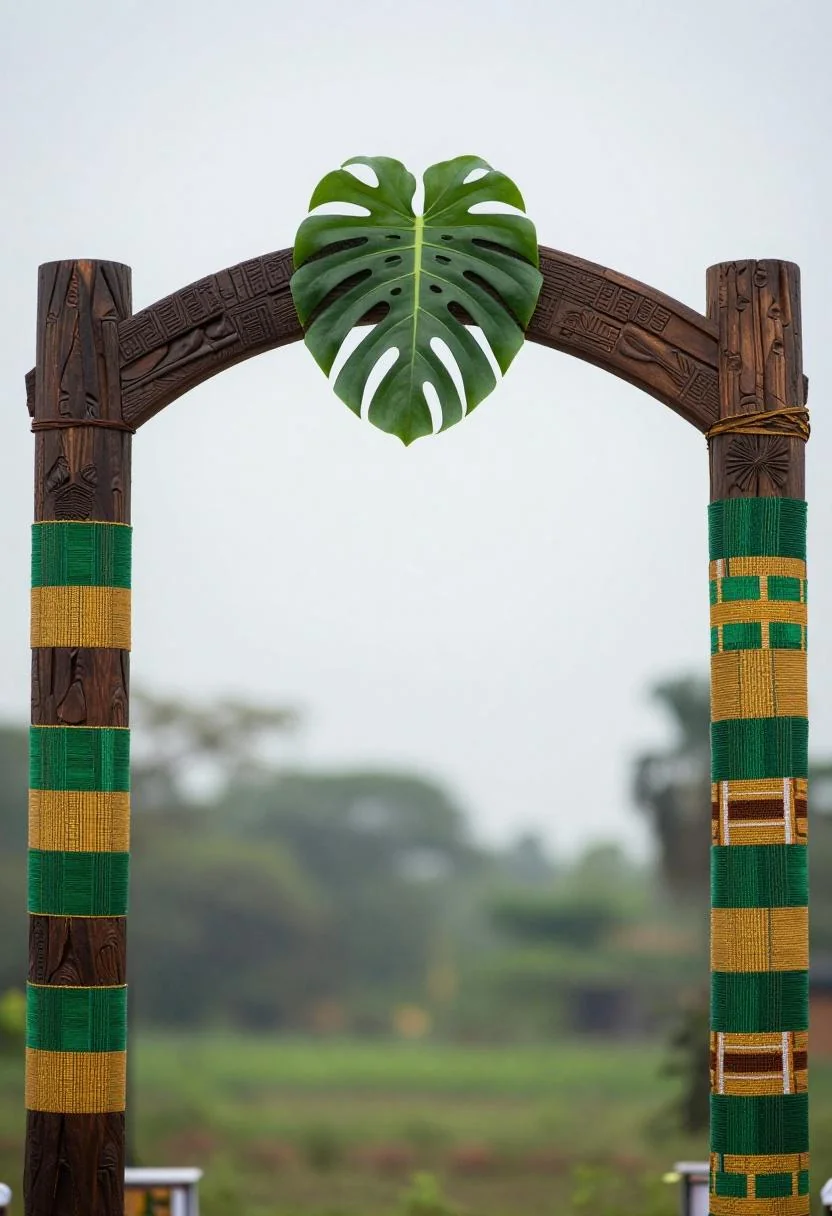
Here's what nobody's telling you about "cultural wedding decor": when it's done with this level of intentionality, it destroys every conventional floral arch in the room. The mahogany frame draped in jade and gold kente textile isn't decor — it's architecture with lineage. The monstera leaf crown at the top adds a lush, tropical weight that keeps the piece from reading as flat or purely symbolic.
Jade is having a serious moment. Not emerald, not forest — jade specifically, that particular cool-toned green that reads simultaneously fresh and ancient. This arch uses it brilliantly against the warm gold of the kente weave. The contrast does what expensive florals usually can't.
Shop kente fabric for wedding arch decoration →
For Outdoor Spaces: The Raw Oak Branch Arch
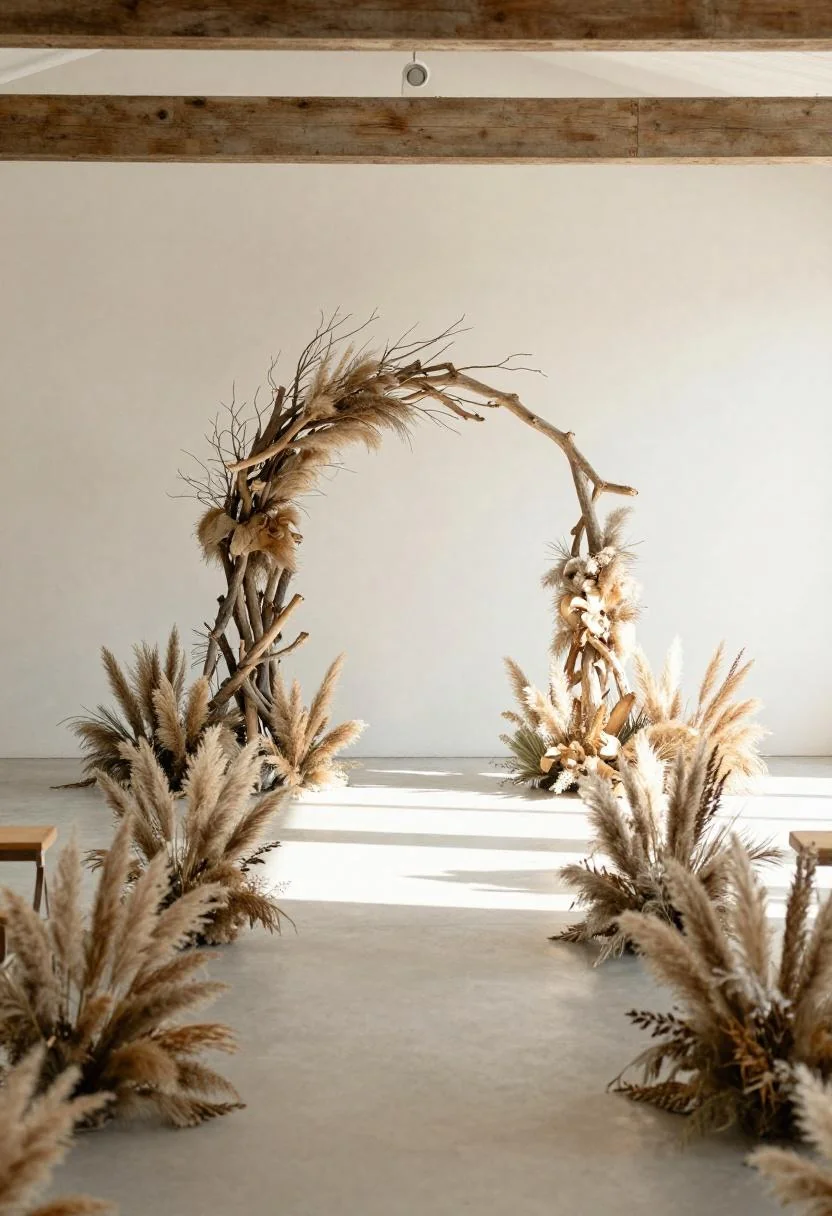
Wasabi. Not sage. Not olive. Wasabi — that specific sharp, almost acidic yellow-green that's been showing up in everything from Bottega Veneta's leather goods to Harper's Bazaar's interior trend forecasts. Here, wasabi-toned pampas grass clusters anchored at the base corners of a raw oak branch arch create a composition that looks completely uncontrived. That's the paradox of organic arch design: the more intentional the material selection, the more effortless the result reads. (I realize I said that while using "effortless" — you know what I mean.)
The raw oak branch is doing serious structural and aesthetic work simultaneously. No shaping, no painting, no gilding. Just the material in its honest state. Mies van der Rohe would approve.
Cottagecore Done Right: Persimmon Ranunculus and Terracotta
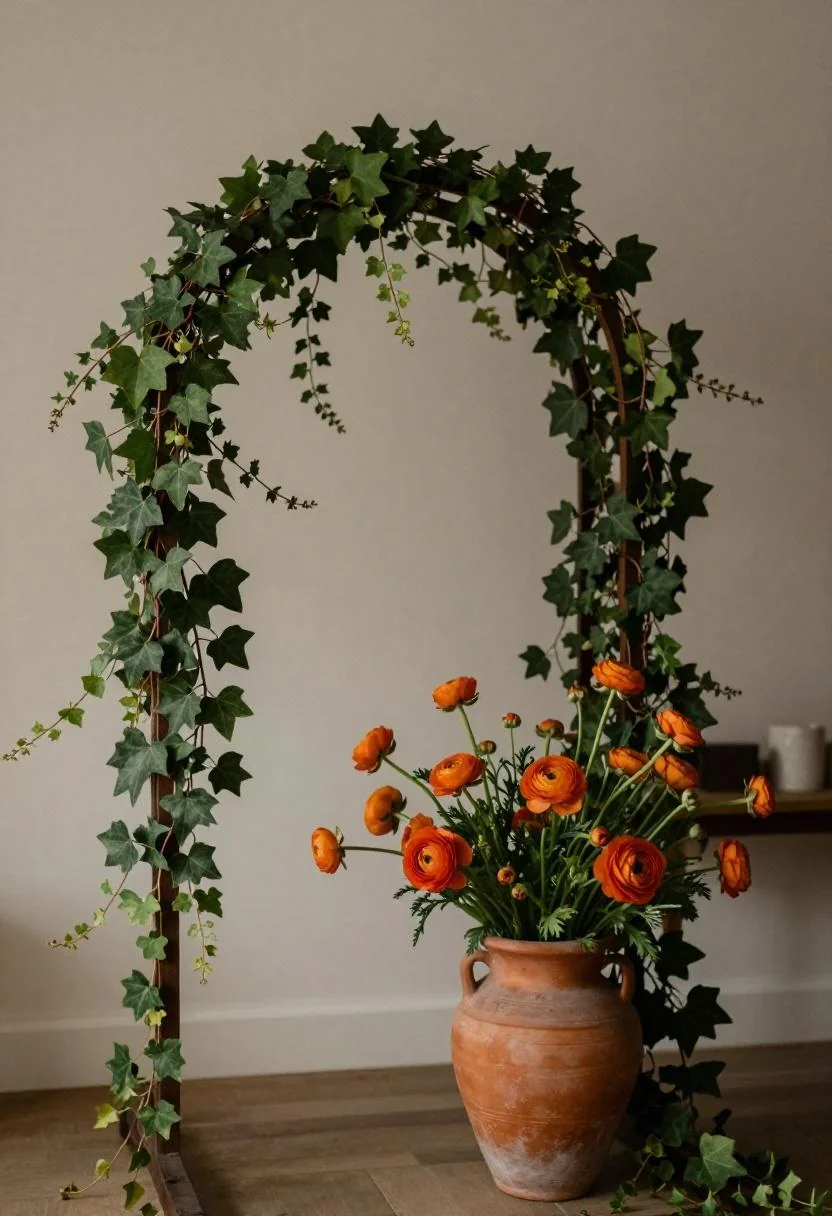
Controversial take: cottagecore wedding aesthetics peaked in 2023 and most of what you're seeing now is a pale imitation. This arch is the exception. Persimmon ranunculus — those layered, almost cabbage-rose-like blooms in a deep reddish-orange — against the warmth of a vintage terracotta vase at the base creates a color story that feels genuinely autumnal in a spring ceremony context. That friction is what makes it interesting.
The arch post itself is simple, almost too simple. Which is the point. The architecture recedes so the color comes forward.
Shop persimmon ranunculus for wedding arches →
The Quiet Luxury Arch: Bleached Willow and Cream Linen
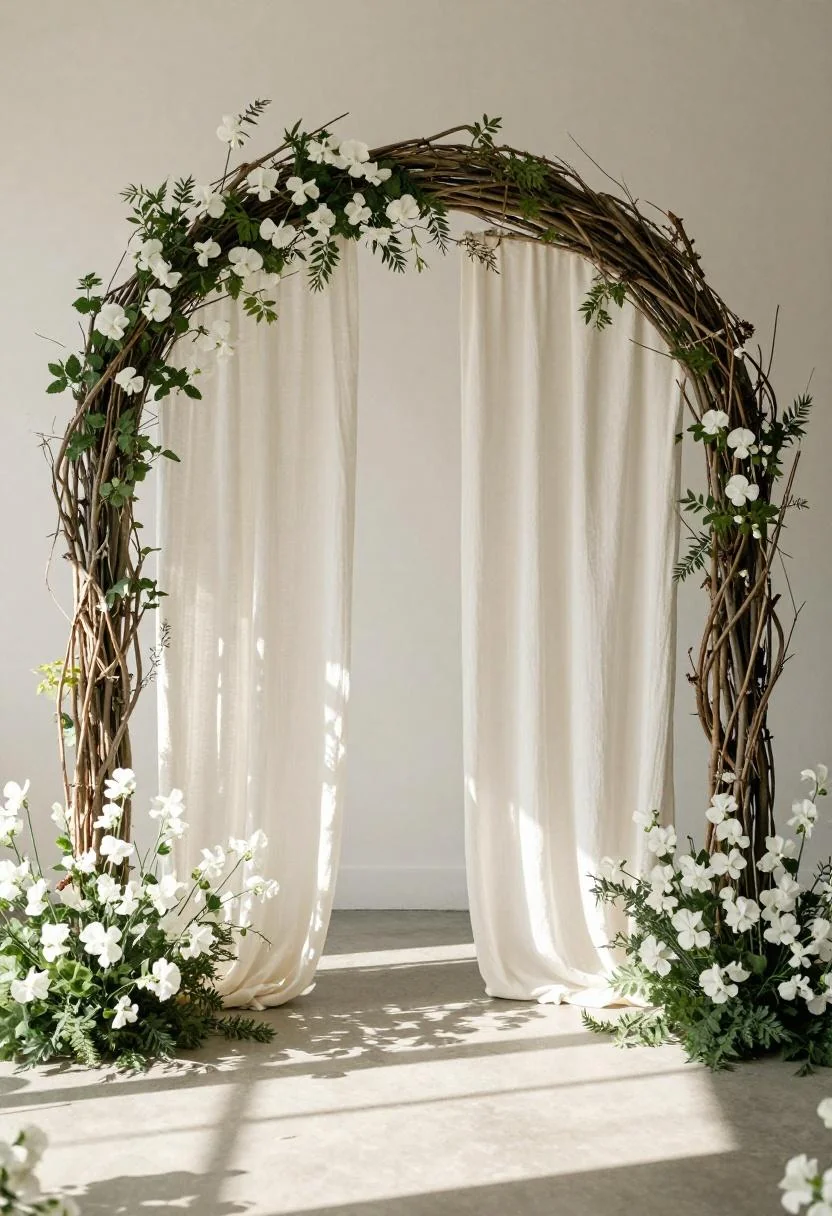
If you want to understand why "quiet luxury" has dominated interior conversation for three years running, look at this arch. Bleached willow — almost white, retaining just enough of its natural grain to stay interesting — hung with cream linen panels that move. The white sweet pea cluster at the crown is the only botanical gesture, and it's the right call. Sweet peas have a peculiar lightness to them, almost translucent petals that catch afternoon light the way heavier blooms simply can't.
This works in rentals, by the way. The willow can be freestanding, the linens clip on, and the whole structure breaks down in under an hour.
Shop cream linen panels for ceremony arches →
Classic With Conviction: Wrought Iron, Eucalyptus, and White Peony
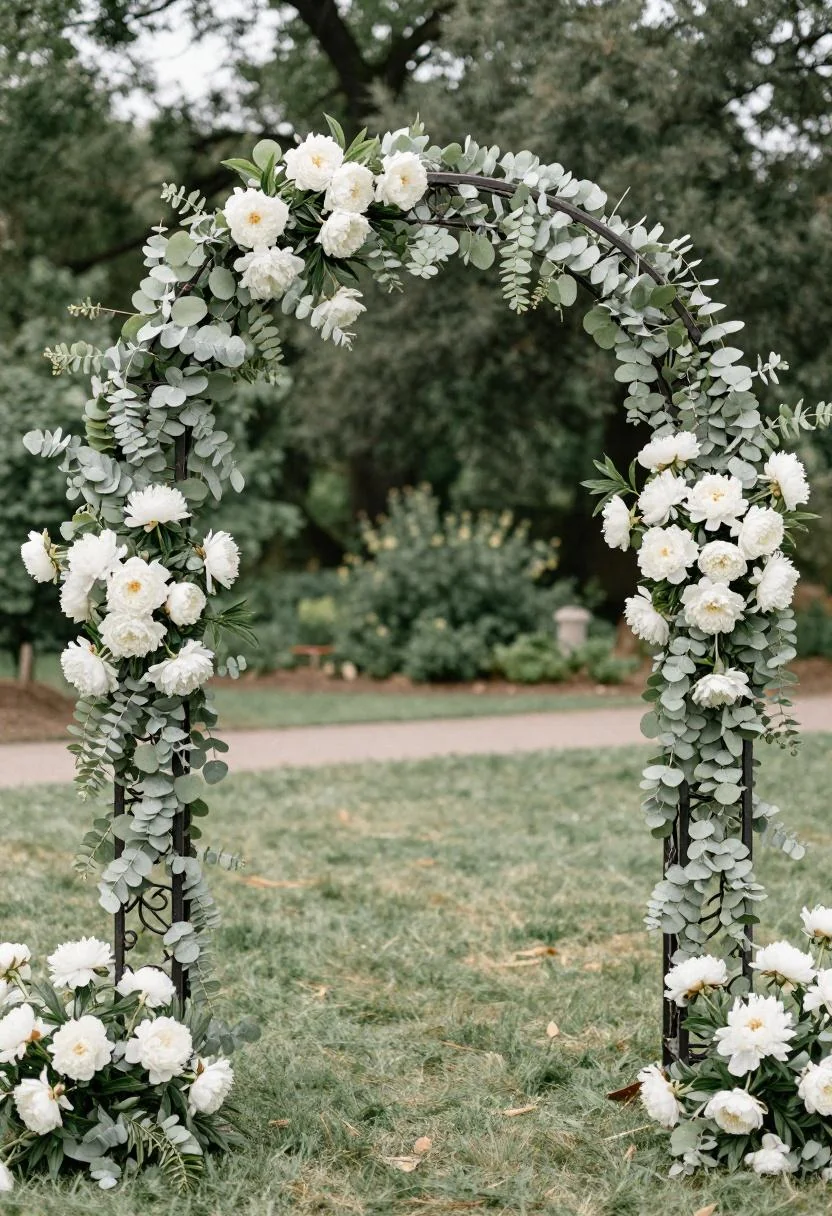
Some ideas survive because they're correct. A wrought iron arch threaded with sage eucalyptus garlands and generous white peony bunches isn't revolutionary — it's authoritative. The iron provides the line, the eucalyptus provides the texture, and the peonies provide the mass. Three elements, three jobs, no redundancy.
What pushes this particular version beyond the expected is the sage tone of the eucalyptus. Not silver-dollar, not blue-tinted — sage eucalyptus, which reads cooler and more muted, giving the white peonies maximum visual contrast to pop against.
Planning an outdoor reception around this? Our backyard wedding reception guide covers coordinating structures like this with the broader venue aesthetic.
Architecture as Ceremony: The White Marble Neo Deco Arch
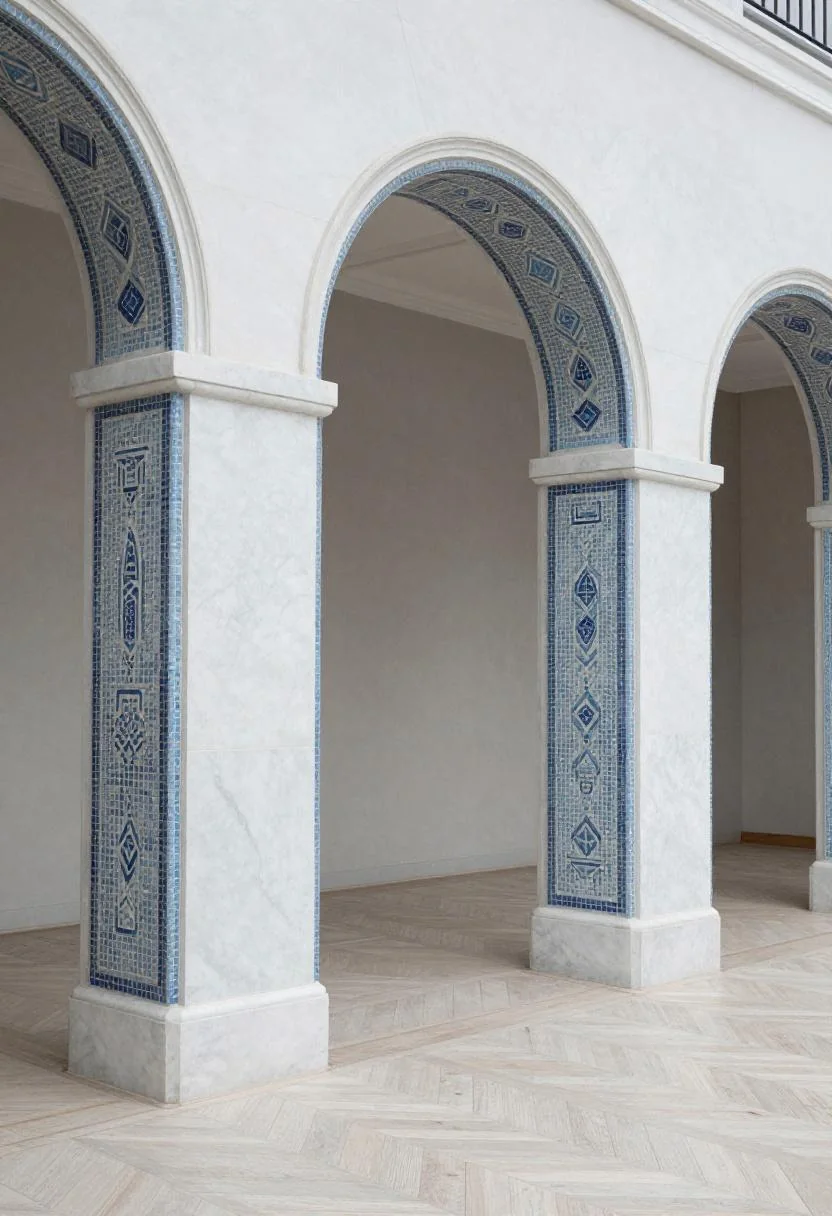
This one stops traffic. A white marble ceremony arch with cool blue geometric mosaic inlay — standing on oak parquet — is less "wedding prop" and more permanent installation. The mosaic inlay references Byzantine tilework through a thoroughly modernist lens, the kind of design-history collision that Elle's design desk has been championing throughout 2026.
The oak parquet flooring underneath is doing significant compositional work here. The warmth of the wood prevents the marble-and-blue palette from reading as cold or clinical.
Rent it if you can find it. Commission it if you can't.
Shop marble-finish ceremony arch structures →
Rattan, Mudcloth, and Dried Botanicals: The Afrohemian Arch Revisited
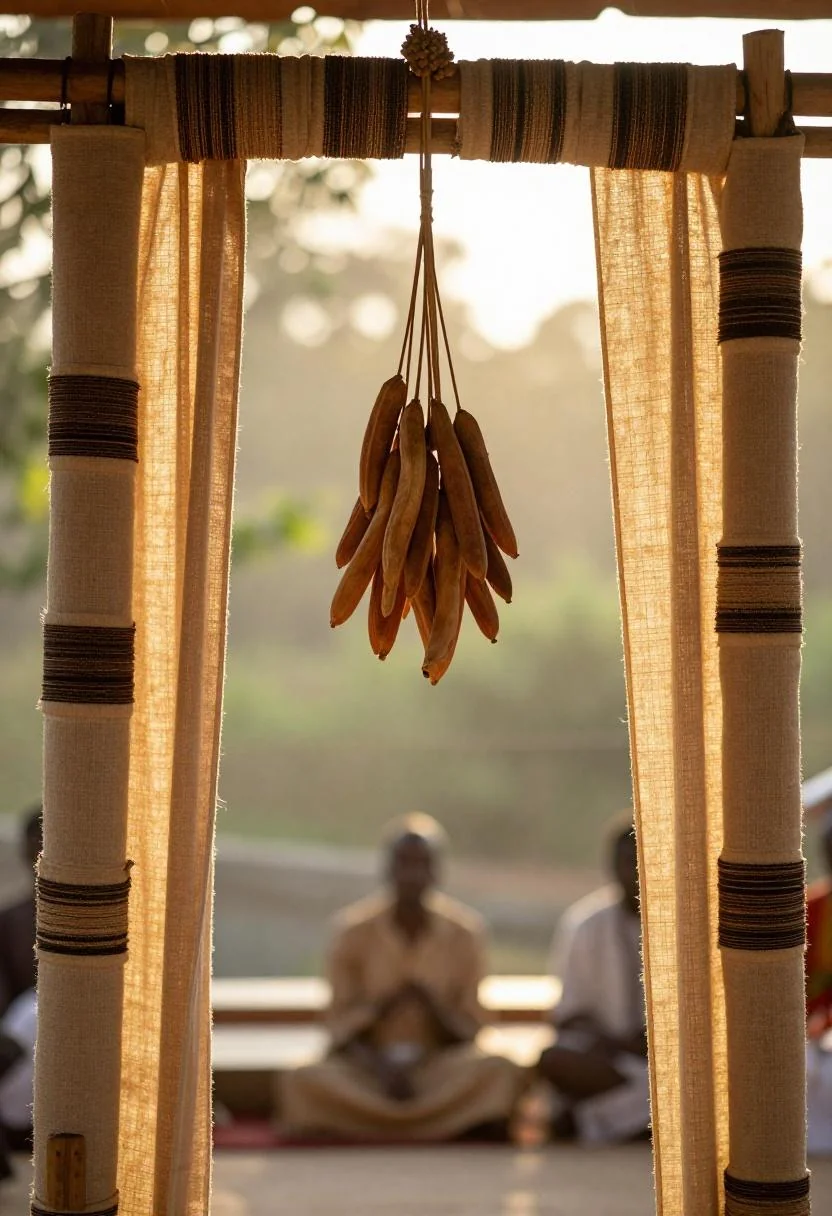
The rattan arch with mudcloth plum noir lashings and a dried baobab seed pod centerpiece is doing something genuinely different from the mahogany-kente arch we covered earlier. Where that one is lush and celebratory, this one is spare. Meditative, almost. The dried baobab seed pod at the center reads as an artifact — a natural object with age and history — rather than just decoration.
Plum noir is a color choice that deserves more credit in wedding design. It's deeper than burgundy, more complex than purple, and it photographs beautifully in both natural and tungsten light. Not many ceremony colors can say the same.
Minimal with Maximum Impact: Polished Brass and One Silk Swag
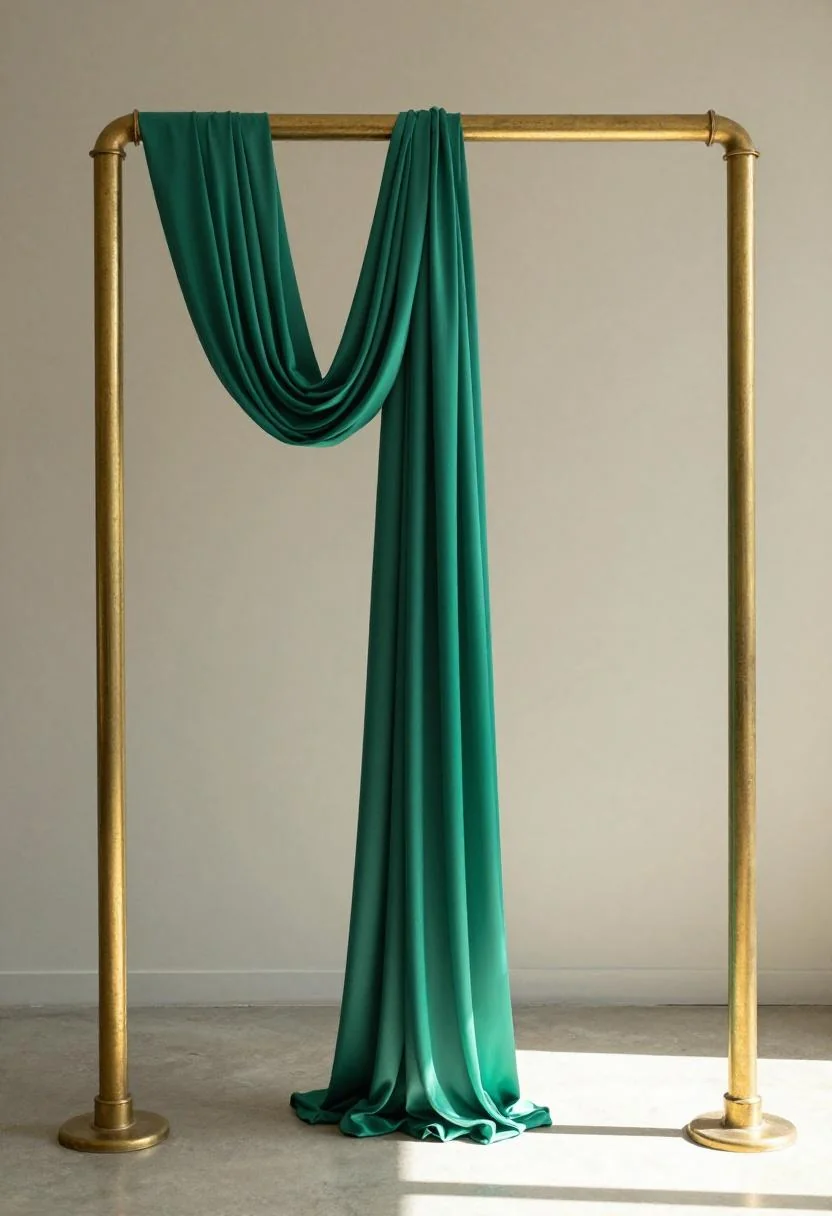
One swag. One. That's all this arch does, and it's more sophisticated than ninety percent of the over-decorated arches that will appear in wedding magazines this spring. A polished brass pipe arch — clean geometry, industrial material made precious — with a single jade green silk charmeuse swag draped at the top. Charmeuse specifically, because the liquid drape of charmeuse does something linen and chiffon cannot.
The restraint here is the point. If you're the kind of person who genuinely appreciates a room with one great piece of furniture rather than a room full of "nice things," this arch is yours.
The Crown Detail That Changes Everything: Wasabi Fennel and Cream Roses
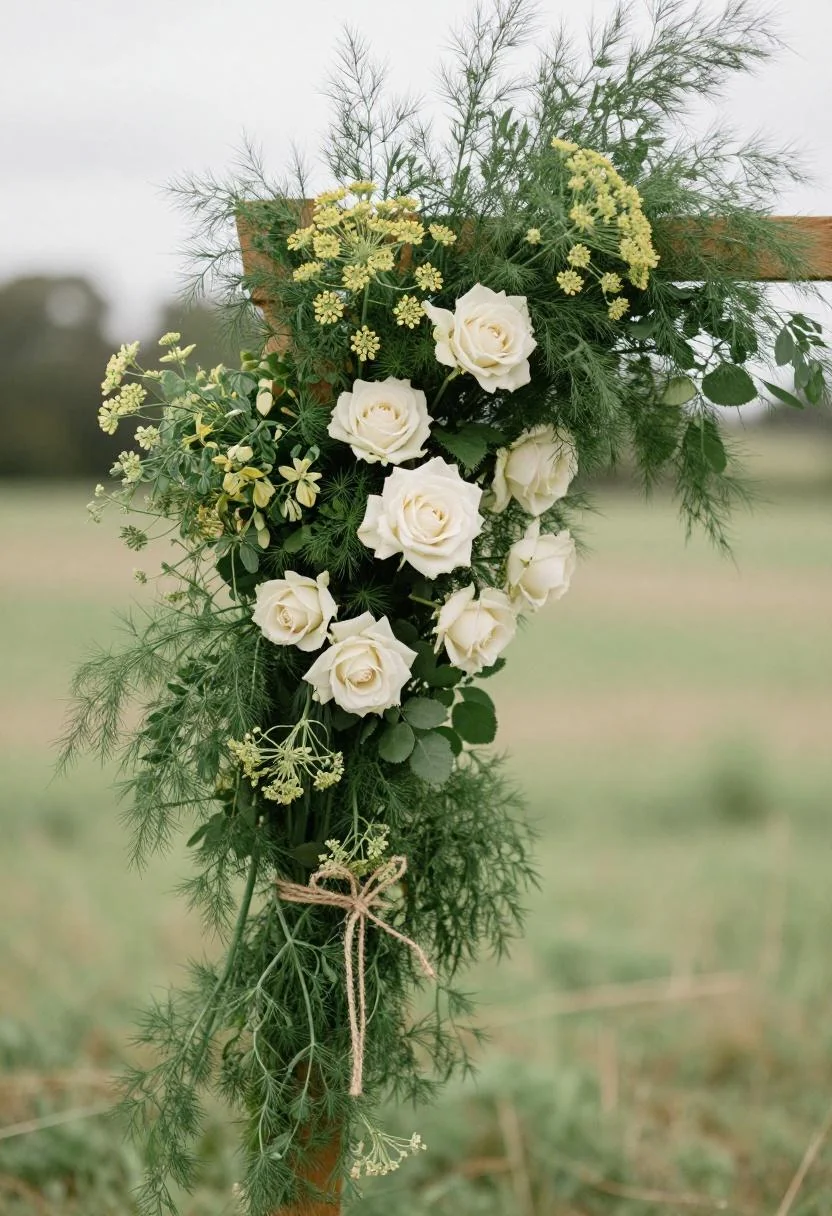
Most arch designers lose the plot at the crown. They heap on the blooms, double up the greenery, and produce something that reads as crowded rather than abundant. This cottagecore crown detail gets it right: wasabi-toned fennel fronds — with their feathery, almost-smoke texture — arranged around cream roses, the whole bundle tied in jute ribbon. The jute is the unexpected decision that makes the arrangement. It adds roughness to something otherwise delicate.
Fennel fronds as a filler green are wildly underused in ceremony design. They move differently than eucalyptus. They smell extraordinary. They're cheaper. This is the information florists don't volunteer.
Shop natural jute ribbon for floral arrangements →
Terracotta and Driftwood: The Mediterranean Edit
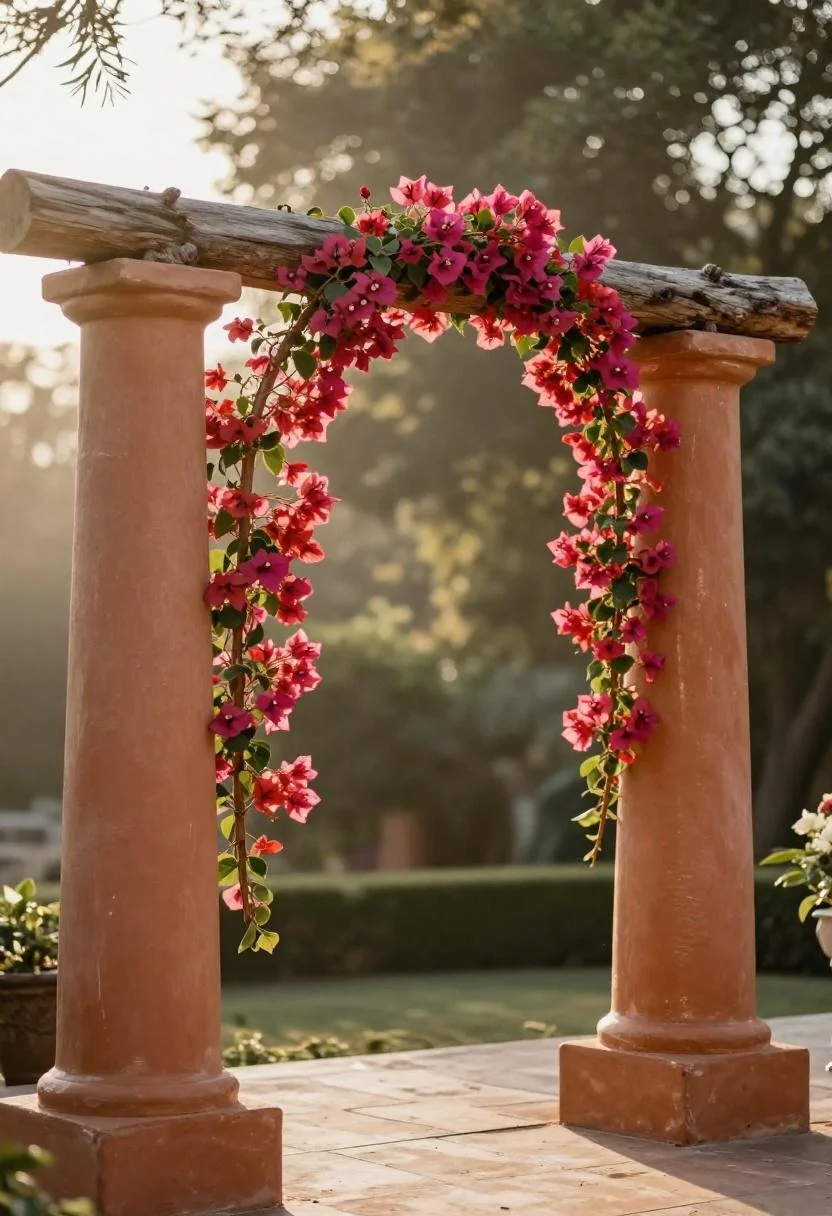
Terracotta ceramic columns with a driftwood crossbeam and trailing bougainvillea. This arch is a lesson in material honesty — every element is exactly what it appears to be, aged and tactile and specific to a place. The bougainvillea's magenta blooms against warm terracotta is a color relationship that has worked since someone first built a courtyard in Andalusia, and it will still work in 200 years.
What makes this contemporary rather than just "Mediterranean" is the driftwood crossbeam. It introduces an organic irregularity that prevents the composition from feeling designed-to-death. The wood's bleached gray against the terracotta's red-orange warmth: chromatic tension that's not trying too hard.
For outdoor ceremony spaces with this kind of material palette, our rustic arbor guide covers structural options that work with heavy floral overhead weight.
The Grand Exit: Fluted Cream Plaster and White Ostrich Feathers
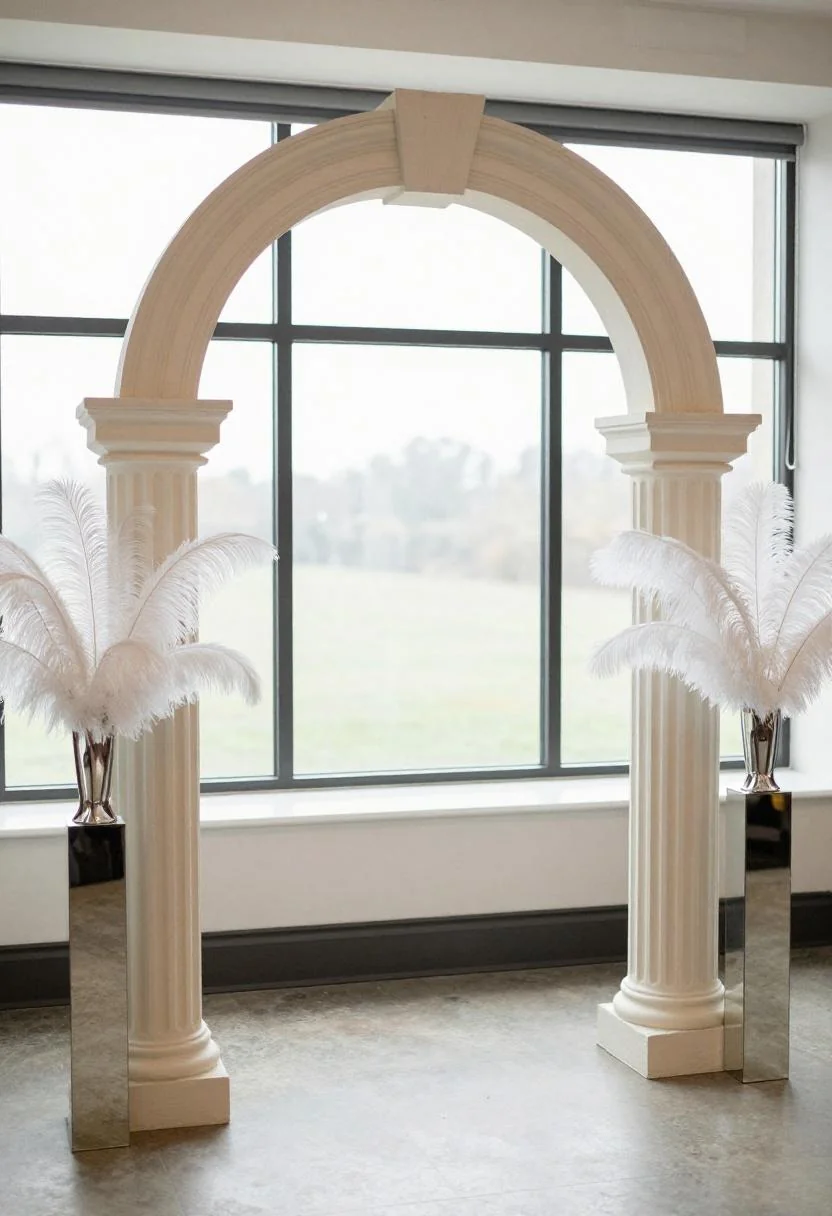
This is where we end, and this is the arch that will make you rethink every other arch on this list. A Neo Deco fluted cream plaster arch — the fluting referencing classical columns through a 1930s lens — with white ostrich feathers standing in mirrored vases at each base. It's audacious. It's theatrical. It's precisely the kind of design choice that separates a truly memorable ceremony space from an expensive one.
Ostrich feathers have the longest pedigree in decorative history — from ancient Egyptian ceremonial use through Art Deco ballrooms to now. Their reappearance in contemporary wedding design isn't nostalgia; it's designers rediscovering that no synthetic material moves the way a feather does. The mirrored vases amplify the candlelight or whatever ambient light you're working with, multiplying the softness in every direction.
And the fluted plaster arch itself? It doesn't need the feathers to be extraordinary. The feathers know that.
Shop white ostrich feathers for wedding ceremony →
What These 13 Arches Are Really Telling You
If you look at the colors dominating this year's ceremony arch design — cool blue, plum noir, jade green, wasabi, persimmon, warm terracotta, cream white — a clear editorial position emerges. We're moving away from the blush-and-greenery default that dominated wedding aesthetics for the better part of a decade. These colors have opinions. Wasabi doesn't apologize for being unexpected. Plum noir doesn't soften itself for a crowd.
The material conversation is equally pointed. Brass and marble. Rattan and mudcloth. Bleached willow and cream linen. Oak branch and pampas. The common thread is texture — real, tactile, photographable texture — over generic rental-white. As Who What Wear's trend desk has noted broadly about 2026 aesthetics: the appetite for material honesty has fully arrived. Wedding design is just catching up.
Which arch is "right" for you? Wrong question. The right question is: which arch reflects a genuine design decision, not a default? For everything else that goes around it — the wildflower cakes, the boutonniere details, the backdrop florals — see our wildflower wedding cake guide and boutonniere ideas roundup, both of which share this editorial position on material specificity over generic "wedding" aesthetics.
Make one strong design decision. Let everything else support it. The arch is that decision.
This post contains affiliate links. We may earn a commission at no extra cost to you.
Images in this article were created with AI assistance.


