15 Shower Tile Ideas That Turn Your Bathroom Into a Retreat (2026)
Your shower is probably the one place in your home where you get five uninterrupted minutes completely alone. Shouldn’t it feel like somewhere worth going? I’ve retiled three bathrooms in the last four years — one full gut renovation, two cosmetic overhauls — and I’ll tell you straight: the single biggest factor in how a finished shower actually feels isn’t the showerhead or the vanity. It’s the tile. Get it right and every other decision becomes easier. Get it wrong and you’ll spend years staring at your mistake every single morning. These 15 ideas are grouped by approach, not just aesthetics, so you can find your direction fast and stop scrolling.
Natural Stone That Does the Work
Stone tiles are the shortcut to a shower that looks expensive even when the budget wasn’t. The trick is knowing which stone to pick — and being honest about how much subfloor prep you’re actually willing to do before you commit. (Spoiler: always more than you think.) Natural stone rewards patience and punishes shortcuts, but when it’s right, there’s nothing that touches it.
Large-Format Travertine with Brass Hardware
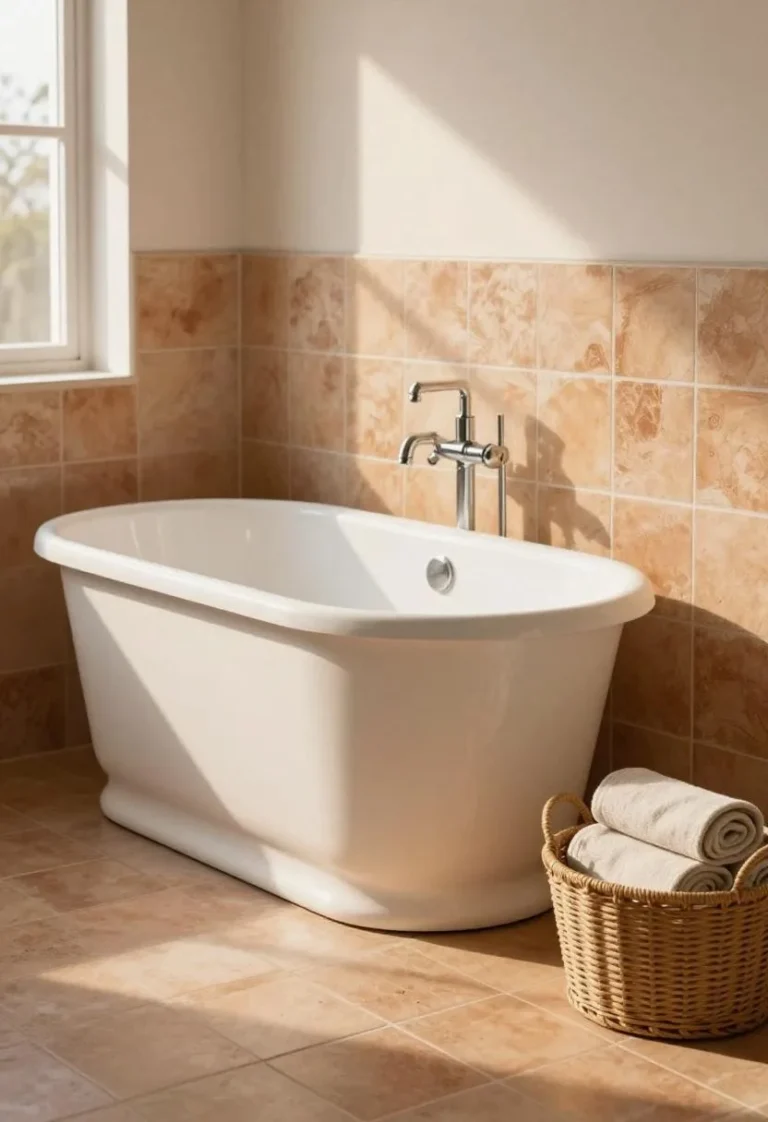
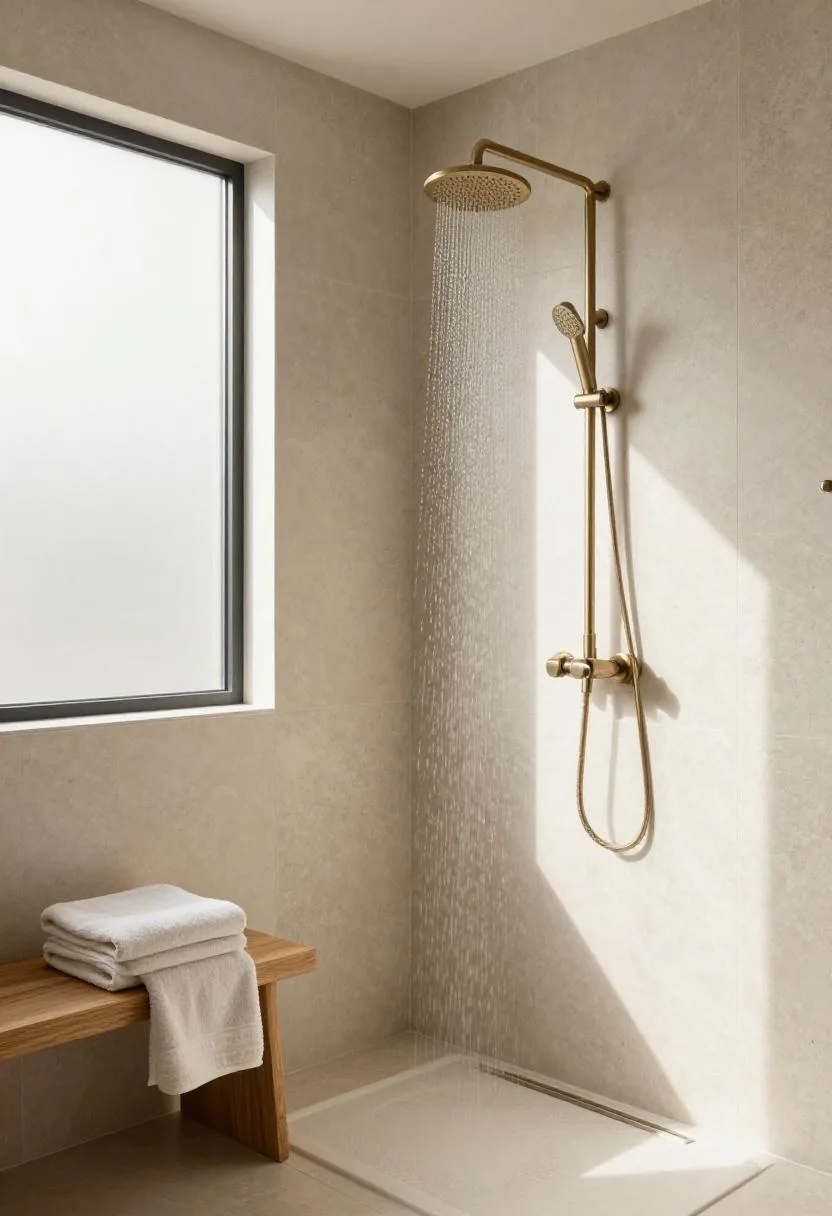
Large travertine slabs — 24×24 or bigger — do something smaller tiles can’t: they make your shower feel twice the size. Fewer grout lines, less visual noise, more of that warm, veined surface your eye can actually rest on. Pair it with a brushed brass rainfall showerhead and you’ve got the kind of shower that looks like a boutique hotel — for a cost that’s actually in reach if you’re doing the installation yourself.
Here’s the trick: travertine is porous and will stain permanently if you skip the sealer. Buy a penetrating stone sealer before you install a single tile, seal everything before grouting, then seal again after. Mark 12-month resealing appointments on your calendar right now. Most people don’t — and then they wonder why their travertine looks dingy after two years.
Bookmatched Calacatta Marble Slab
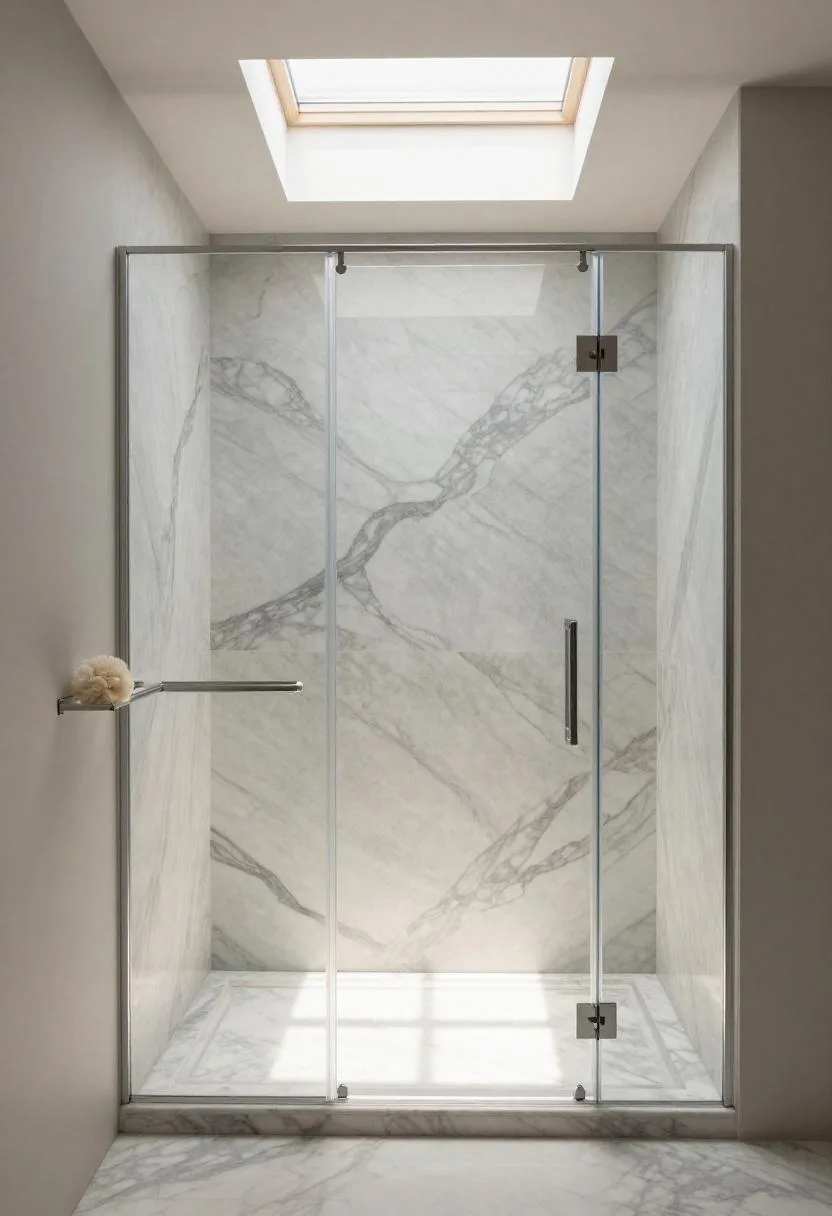
Bookmatching means two mirrored slabs placed side-by-side so the natural veining creates a symmetrical butterfly pattern — it’s the effect you see in high-end hotel showers and it genuinely stops people mid-conversation. Full Calacatta marble slabs are expensive, no argument there. But large-format marble-look porcelain gets you 80% of the visual impact at a fraction of the cost. As Architectural Digest has noted, the porcelain mimics are now so convincing that even professional designers spec them for high-traffic bathrooms.
The polished chrome corner shelf keeps the look light and reflective. Don’t go matte hardware against high-gloss marble — it flattens everything.
Herringbone Slate on the Shower Floor
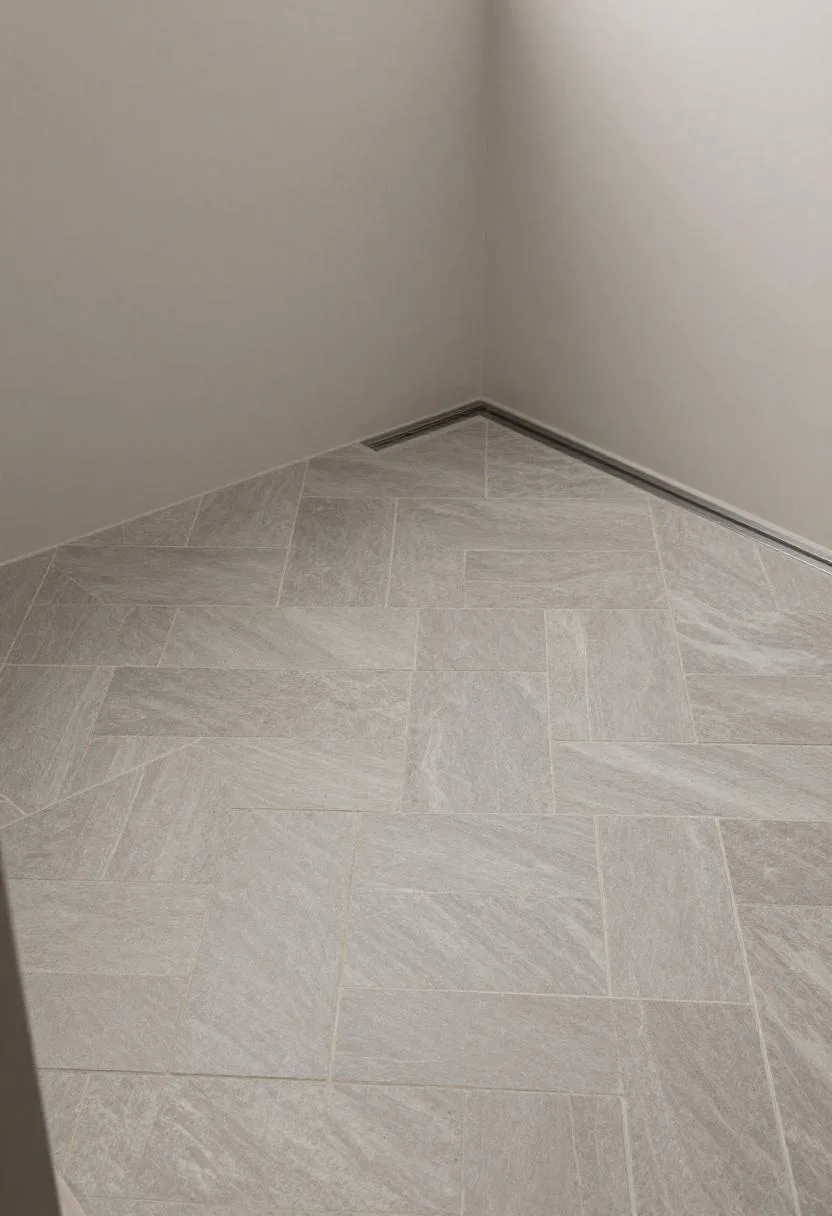
The floor is where most people play it safe. Don’t. Herringbone slate in warm gray has texture that grips underfoot, pattern that draws the eye down, and natural variation that genuinely hides soap residue between weekly cleanings. Pair it with a matte black linear drain — the horizontal slot at the back wall looks intentional and makes cleaning dramatically easier than a center drain. One small change transforms the whole room: swapping a standard chrome drain for matte black costs $60–80 and immediately makes everything look more considered. Pro tip — set your herringbone at a 45-degree angle to the entry for maximum visual impact in even a small footprint.
River Pebble Mosaic Floor
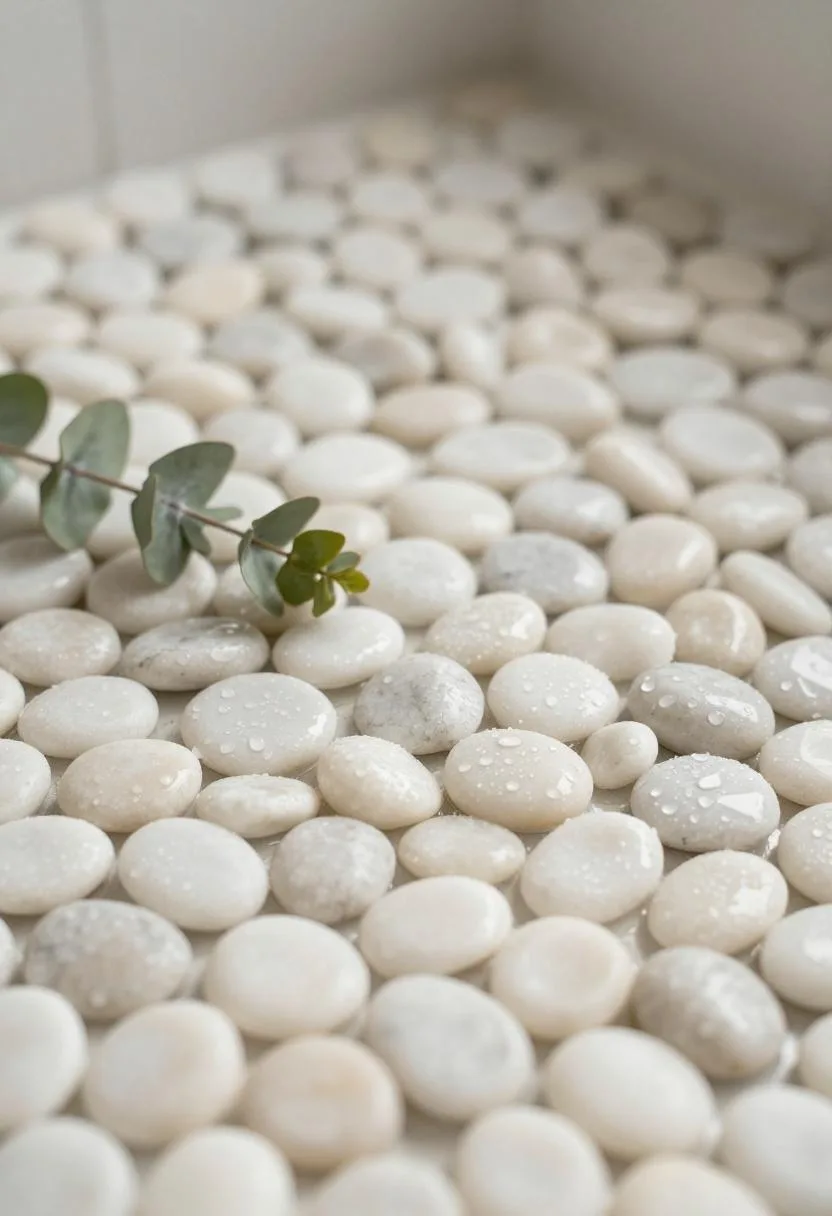
Pebble floors feel incredible underfoot — like a perpetual foot massage every morning. They’re also forgiving on imperfect subfloors and easy enough for a confident DIYer to lay in a weekend. Go off-white or warm cream rather than dark brown pebbles; the lighter colorway stops the shower from feeling like a cave. That eucalyptus sprig hung from the showerhead isn’t just Instagram bait — with steam heat, it releases a mild aromatherapy effect. It genuinely works.
The mistake most beginners make with pebble tile: not using enough thinset. Get those pebbles fully embedded or they’ll pop loose within a year.
The Color Commitment
At some point, you have to decide whether you’re going neutral or going for it. This section is for people who are going for it — and I mean that as a compliment. Bold color in a shower works because the space is small and contained. You’re not painting an entire open-plan living room; you’re committing to four walls of a room you’ll be in for eight minutes at a time. House Beautiful has been tracking the shift toward deep saturated tones in bathrooms since 2024, and honestly, the results speak for themselves. Deep greens, layered teals, forest blues — they turn a functional room into something that feels genuinely restorative.
Deep Forest Green Glazed Brick Ceramic
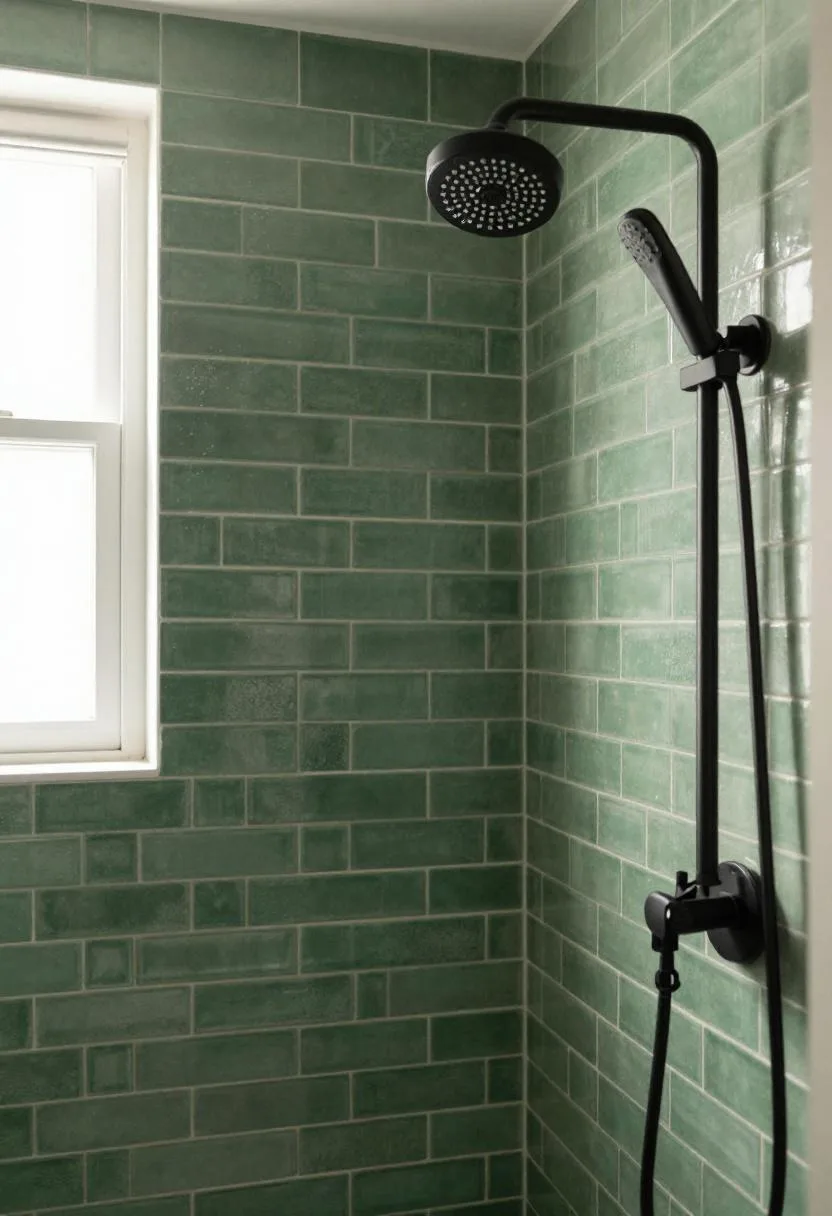
Forest green glazed ceramic in a brick offset pattern is having a serious moment — and it’s not going anywhere. The glaze catches light differently throughout the day. Morning steam softens it; evening artificial light makes it glow. A matte black showerhead against this color is the right call every time. Chrome would fight it; brass would compete with it; matte black just anchors it.
You can pull this off in a weekend for under $400 in tile if you shop the right suppliers. Check your local tile liquidator before going direct-to-retail — green glazed ceramics in particular show up at discount frequently because people order overstock.
Zellige Tile Shower Niche
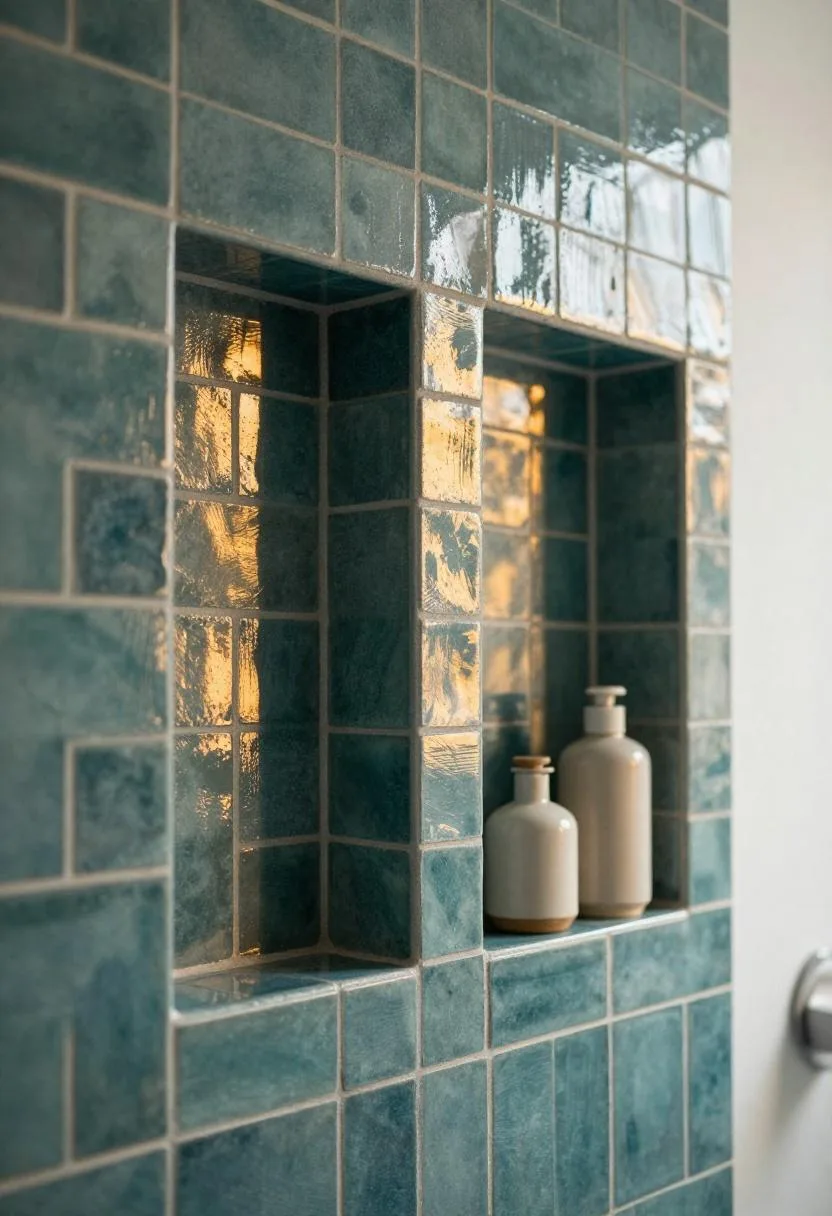
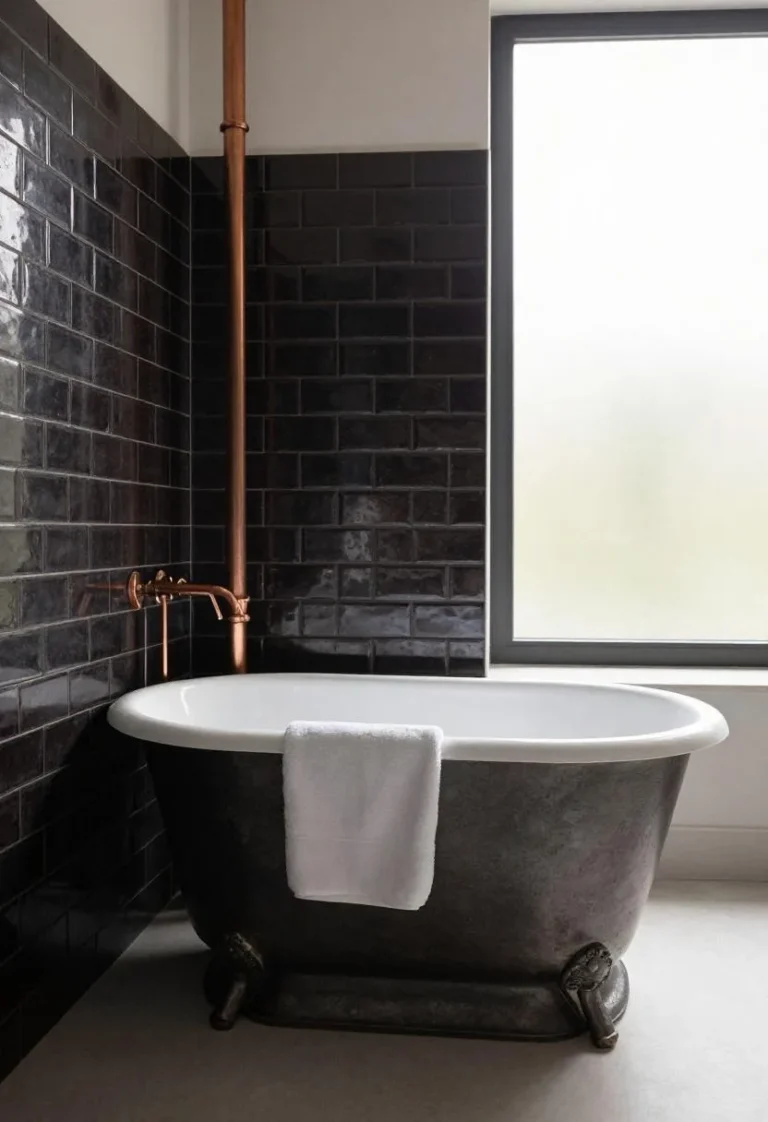
Zellige — the hand-pressed Moroccan clay tile with slightly irregular surfaces and a characteristic shimmer — is the tile that earns the most comments from guests. Every piece is slightly different in thickness and glaze. That’s not a defect. That’s the entire point. In a deep teal, the variation means no two tiles reflect light quite the same way, and the overall wall looks almost like it’s moving. Build your niche into this wall rather than adding a metal shelf — recessed niches take one extra framing step during rough-in, but they’re infinitely cleaner and you’ll thank yourself every day. Teal zellige tile ships readily online now; budget 15–20% extra for cuts and waste since the irregular thickness means more breakage.
Deep Teal Glazed Ceramic with a Teak Bench
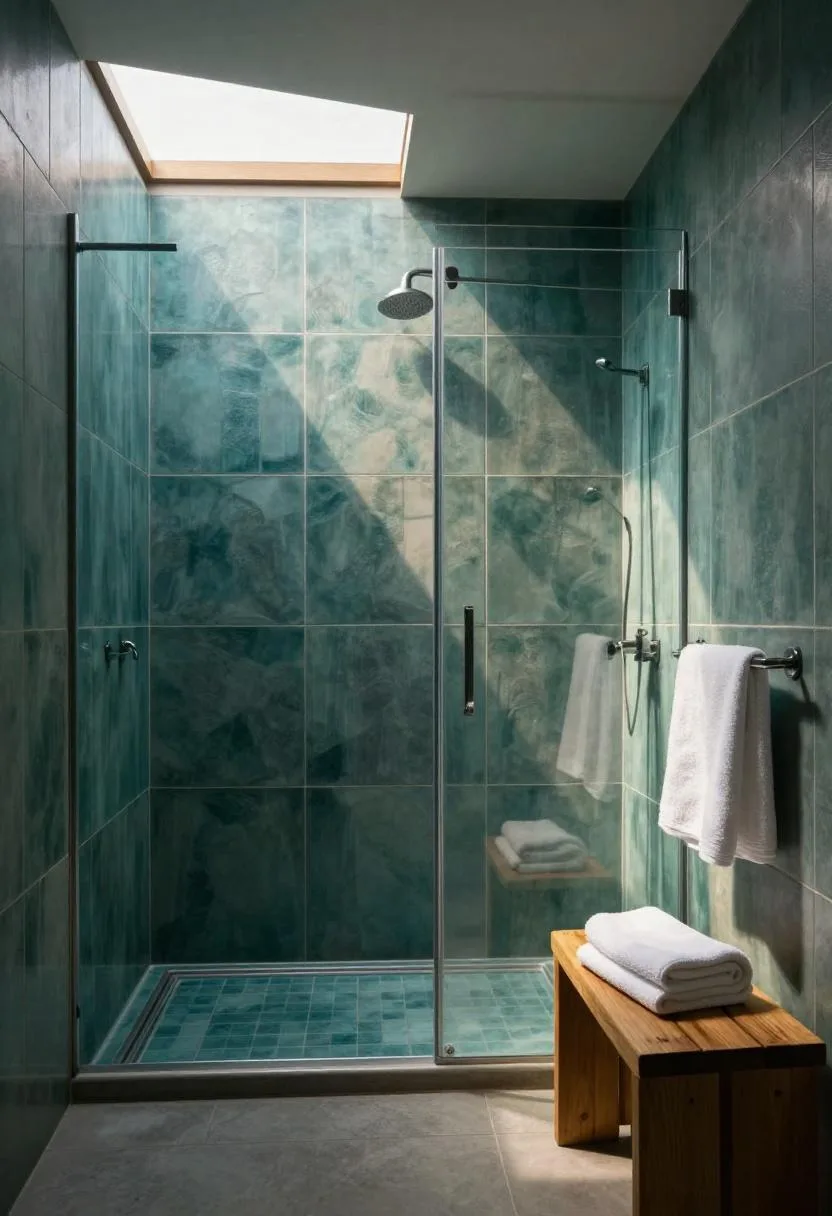
What separates a pretty shower from an actual retreat? A bench. Specifically, a teak bench against a wall of deep teal glazed ceramic. Warm wood against cool-toned tile is a combination that’s almost impossible to get wrong. The teak doesn’t need any finish — it’s naturally water-resistant and will silver slightly over time, which only looks better. A folded white towel on the bench before you step in is a hotel trick anyone can do for free.
Fish-Scale Teal Ceramic
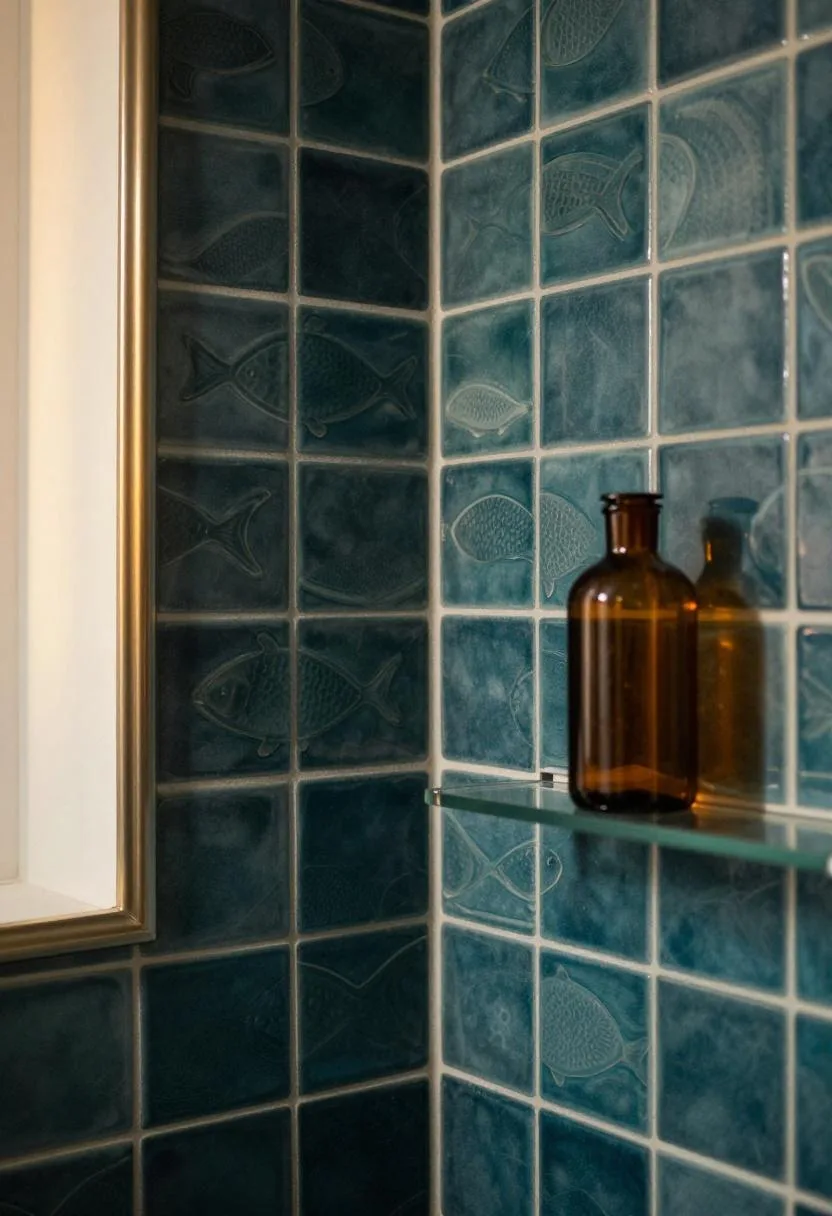
Fish-scale — also called scallop or fan tile — is technically more complex to set than flat subway, but it’s not dramatically harder. The key is using the mesh-backed sheets rather than individual tiles; the math gets done for you. Dark teal with polished nickel trim is a combination that reads as both vintage and contemporary simultaneously, which is rare. That amber glass bottle in the corner isn’t just decorative — it signals a deliberate design choice and costs almost nothing to source from a thrift shop. The pro tip here: use unsanded grout for fish-scale tiles, not sanded. The thin joints need it, and sanded grout will scratch the glaze edges during application.
This is the tile choice that gets the most questions from anyone who sees your bathroom for the first time. That’s worth something.
Subway Tiles — But Make Them Mean Something
Subway tile has been America’s default shower tile for so long that it’s almost invisible. That’s both its weakness and, handled right, its greatest strength. These three interpretations use the familiar format as a starting point and then do something interesting with it.
Classic White Subway with Thick Off-White Grout
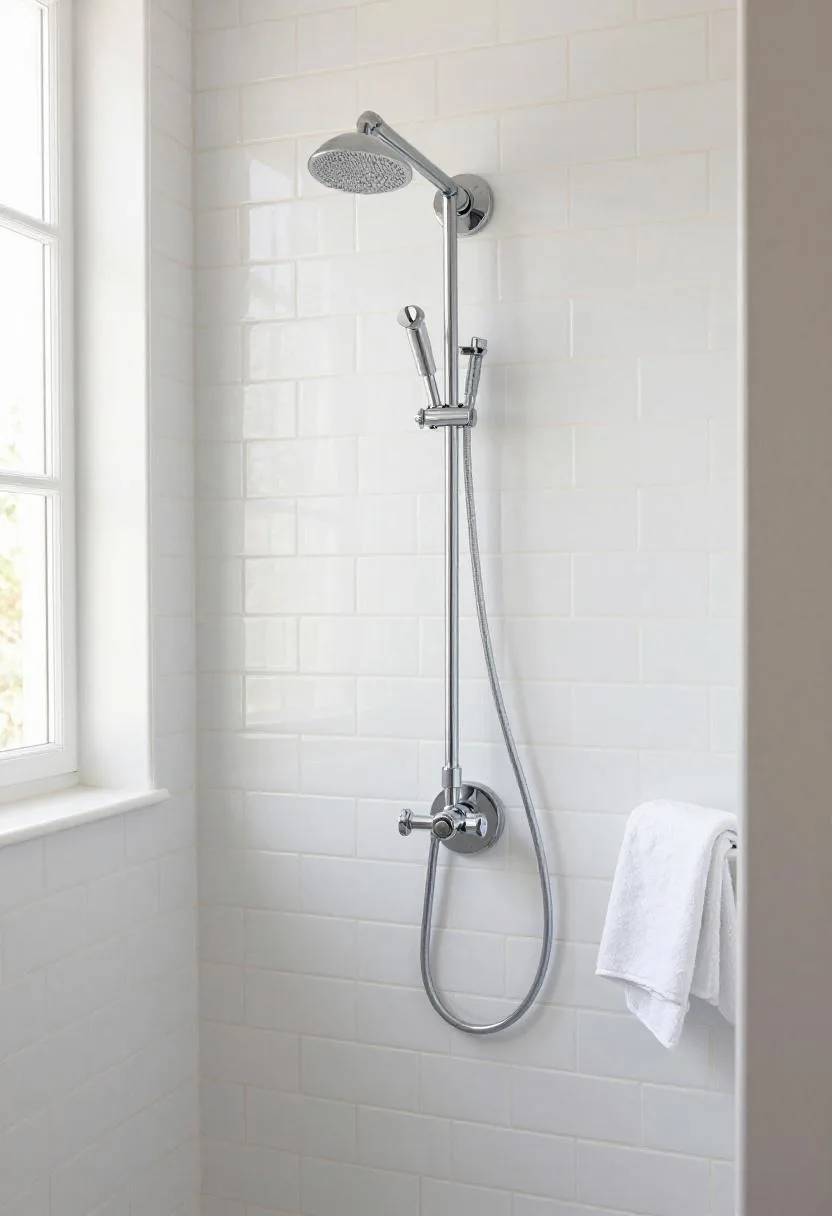
Don’t skip this one just because it looks familiar. The difference here is the grout: fat, creamy off-white joints instead of the pencil-thin white-on-white grout that makes subway tile look sterile. Thick grout lines — around 3/8″ — give the wall a farmhouse weight that feels like it’s been there for decades. Chrome cross handles complete the look; they’re period-appropriate and genuinely satisfying to turn. 3×6 white ceramic subway tile is the least expensive tile in any showroom, which means your entire budget can go toward a quality shower system. That’s not a compromise — it’s good decision-making.
Stack vertically instead of horizontally for a taller-feeling space. It’s a small layout decision with a noticeable effect.
Stacked Teal Ceramic Subway with Charcoal Grout
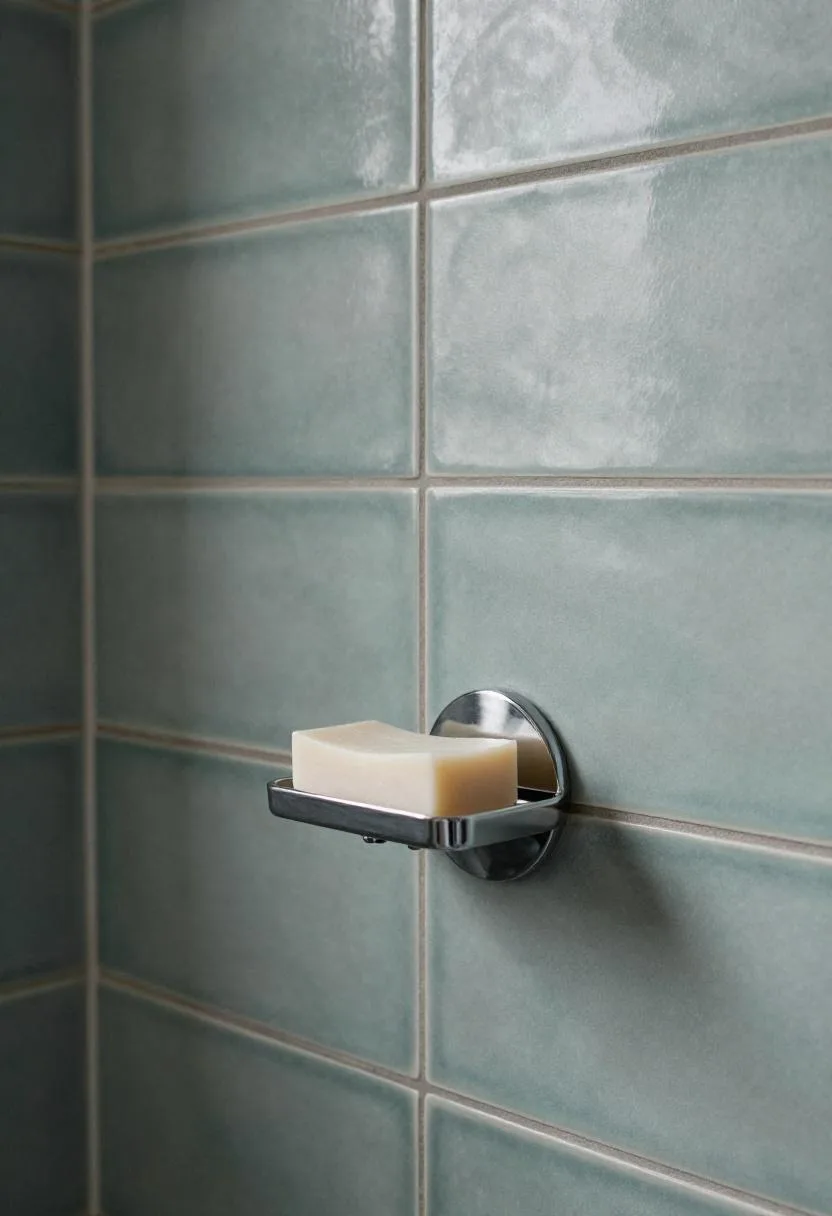
Same tile format, completely different personality. Teal subway stacked vertically — no offset — with charcoal grout is modern without being cold. The charcoal grout does two jobs: it makes the grid pattern bold and intentional, and it hides the slow discoloration that light grout always develops in wet environments. A chrome soap dish is the right accent here. Clean, simple, functional.
Can you do this yourself in a weekend? Yes, if your walls are properly waterproofed and your substrate is solid. Don’t skip the waterproof membrane step — that’s where amateur shower builds fail, and it’s expensive to fix after the fact.
Hexagonal Muted Teal Porcelain
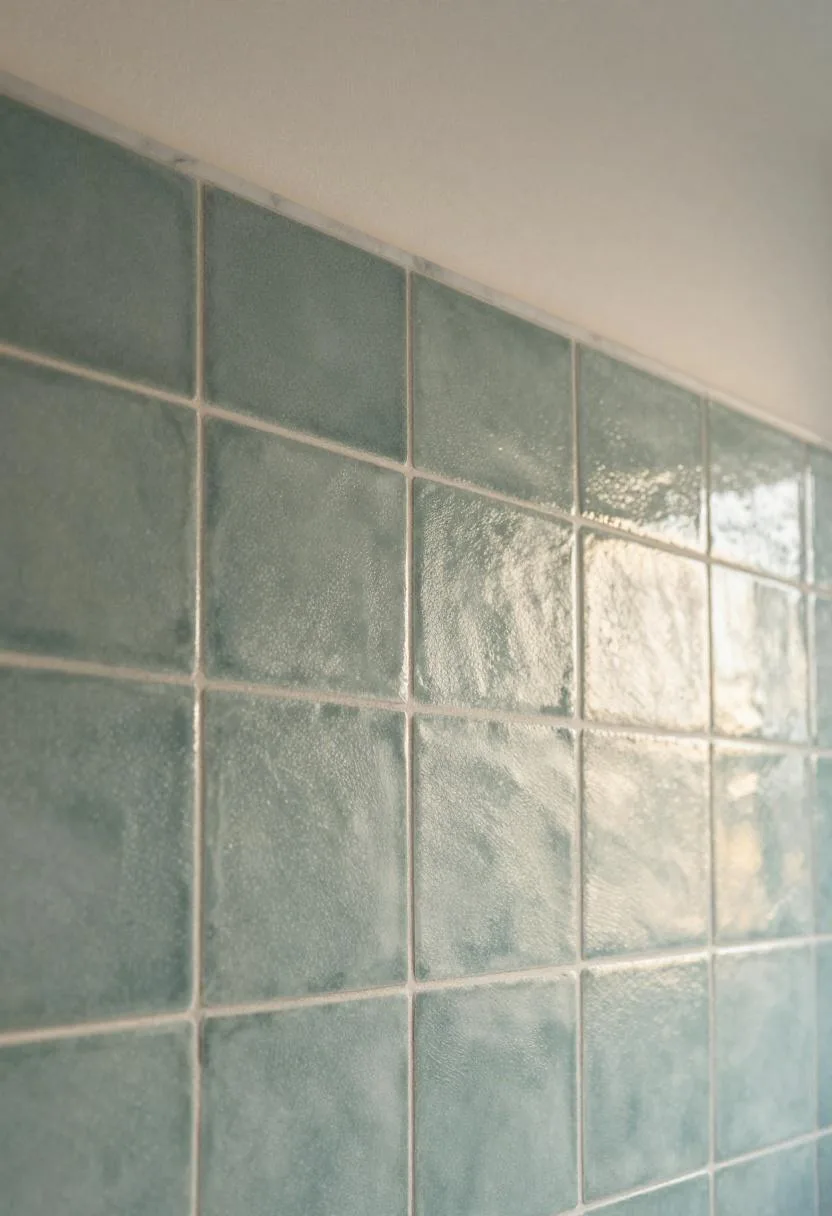
Hexagonal tile is subway tile’s more interesting cousin. The geometry does visual work that flat rectangles can’t — especially in a muted, slightly desaturated teal that sits somewhere between blue and gray depending on the light. The white marble pencil liner trim at the top is a detail that separates a tiled shower from a designed shower. It’s one extra row of tile. It takes maybe 20 additional minutes to install. And it makes everything below it look intentional.
Hexagonal porcelain tile comes on mesh-backed sheets now, which makes installation far more manageable than it used to be. Map your layout on paper first — the geometry requires more planning than rectangular formats.
Texture, Dimension, and the Handmade Touch
What separates a truly memorable shower from a competent one is often something tactile — a surface that rewards being close to it, a tile that doesn’t look like it came off an assembly line. This last group is about that kind of character. Some of these cost more. Some are actually quite affordable. All of them are worth considering if you want a bathroom that feels genuinely personal rather than showroom-composed.
Embossed 3D Concrete Tiles
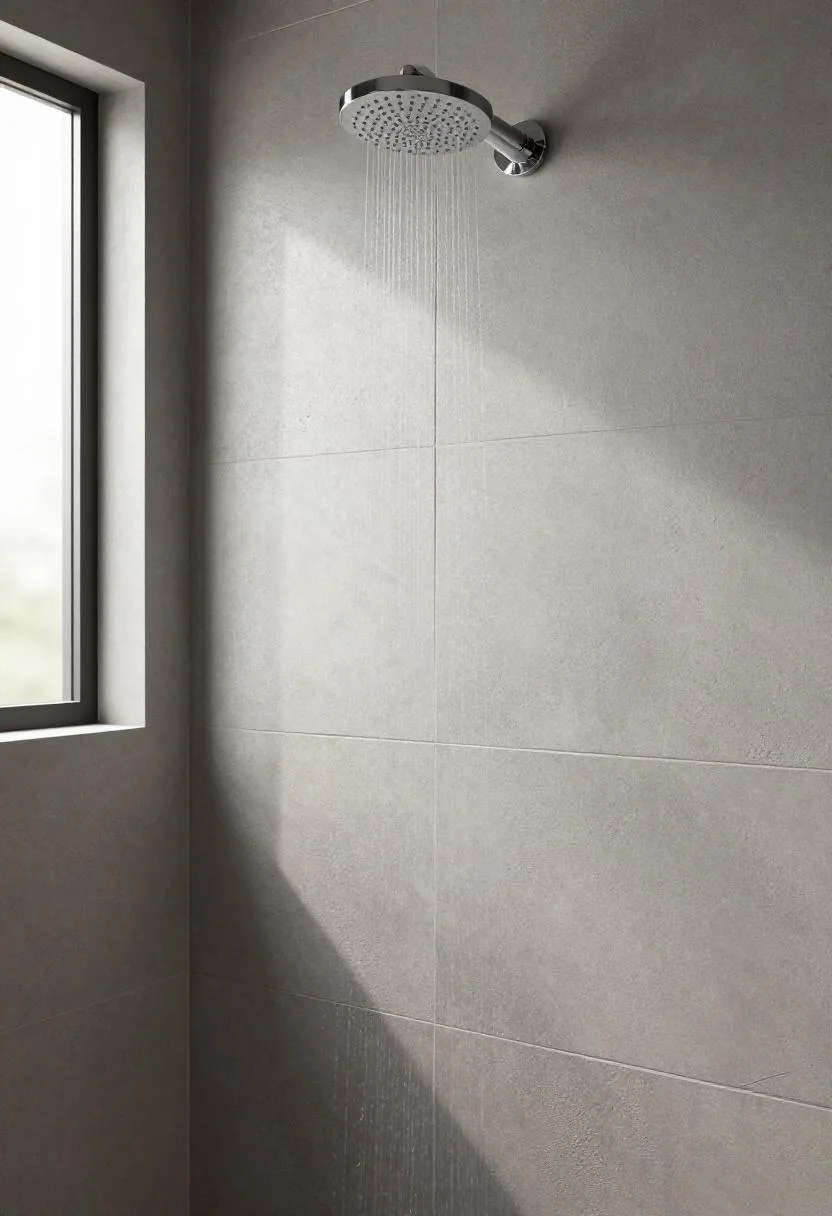
Embossed tiles — raised geometric patterns cast directly into the tile surface — catch light in a way flat tile simply can’t. Warm gray concrete-look versions are particularly versatile: they read as industrial in one light, organic in another. The depth of the pattern creates actual shadow lines at different times of day, so your shower changes character without anything changing at all. 3D textured wall tiles like these have come down significantly in price over the last two years as production scaled up. A chrome rainfall head keeps the hardware from competing with the wall; the tile is the statement here — let it be.
Sandy Handmade Coastal Ceramic
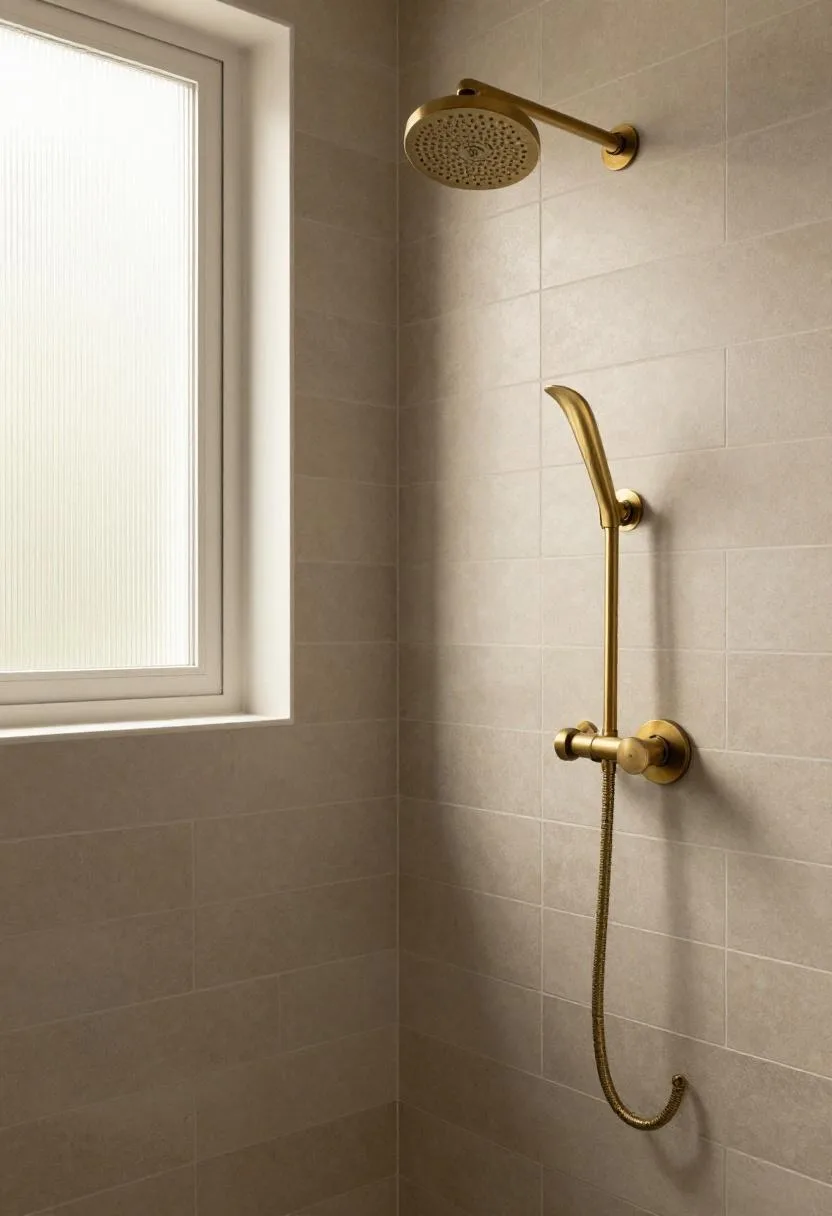
Handmade ceramic tile has edges that aren’t quite straight, surfaces that aren’t quite flat, and glaze that varies slightly from piece to piece. That’s the whole appeal. Sandy warm gray catches the warmth of a brushed brass slide-bar shower system beautifully — the warm undertones in both materials echo each other without being matchy. This combination has a relaxed, coastal quality that doesn’t require any other styling effort. Just the tile and the hardware and a decent towel bar, and the work is done.
Installation note: handmade tile requires back-buttering every single piece in addition to combing your thinset. The irregular backs won’t bond properly otherwise. Budget extra time. It’s worth it.
Terrazzo Shower Floor
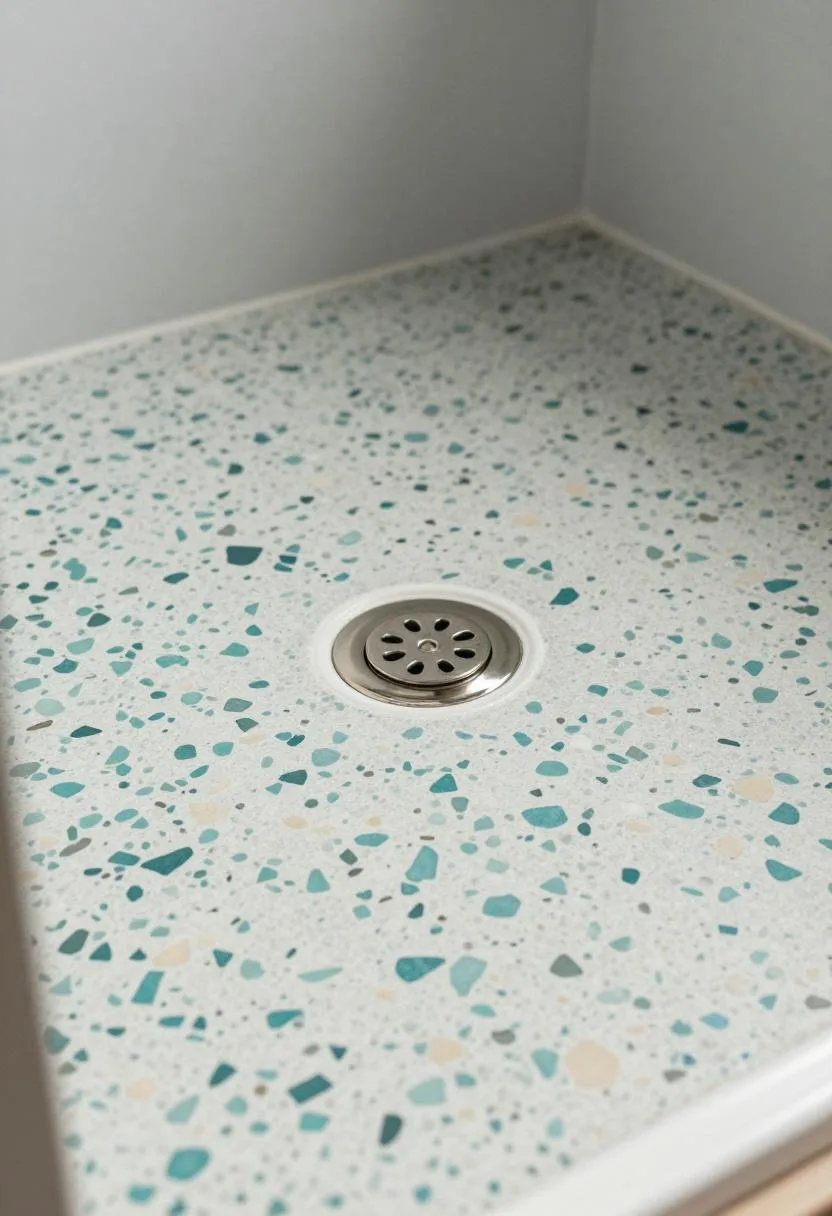
Terrazzo on a shower floor is a decision you’ll never second-guess. The teal and cream combination — aggregate chips suspended in a pale binder — picks up color from whatever’s on the walls without committing to any single palette. A polished nickel drain cover sits cleanly in the surface without disappearing into it. Terrazzo format tiles are now widely available in porcelain, which means you get the look with better slip resistance and zero maintenance concerns about sealing the real thing.
Why does this work so well in showers specifically? Because the floor is wet most of the time, and wet terrazzo has a depth and richness that’s genuinely beautiful rather than just functional.
Minimalist Oversized Light Gray Porcelain
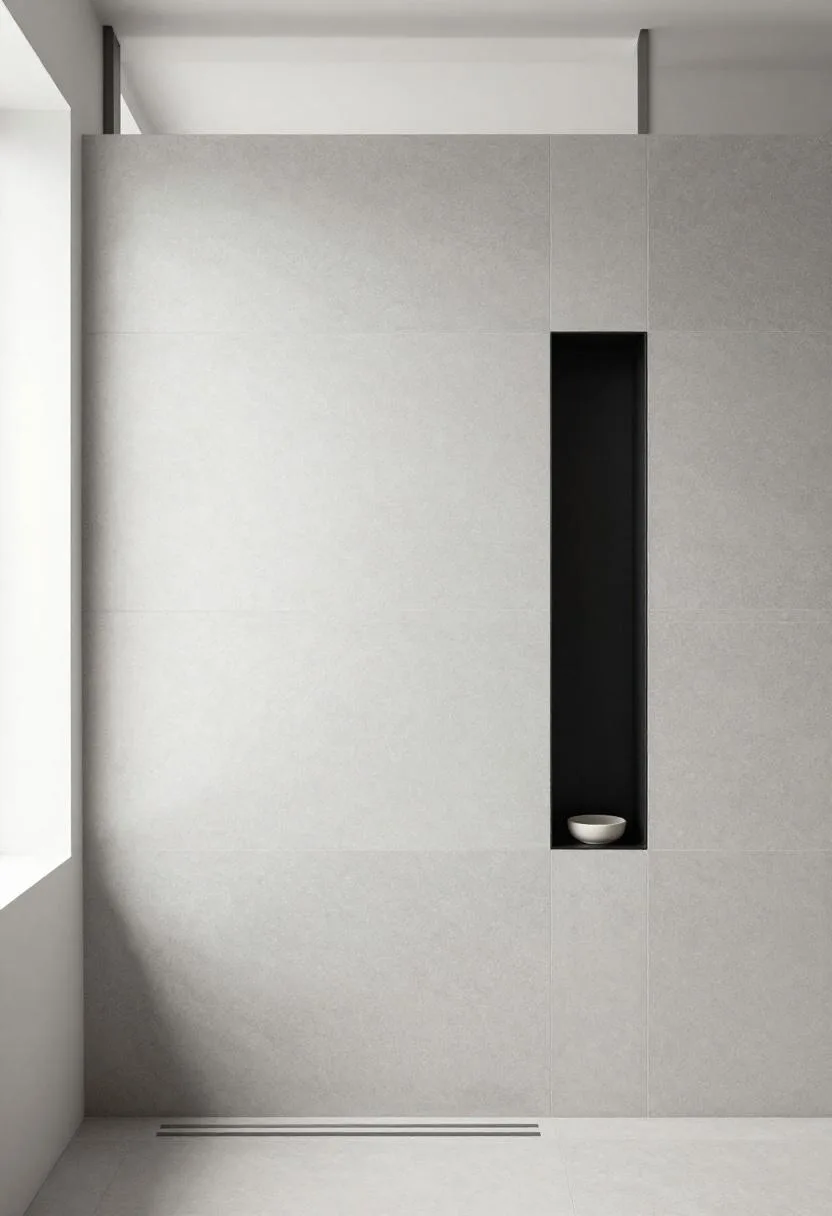
Sometimes the right answer is restraint. Oversized light gray porcelain — 32×32 or larger — with near-invisible grout lines creates a shower that looks impossibly serene. The surface reads almost like a single continuous plane. A matte black recessed niche punches through that calm with exactly enough contrast to make the wall look designed rather than just clean.
This is the hardest tile choice to install as a first-timer, not because the tile is difficult but because large-format porcelain is heavy, unforgiving of an unlevel substrate, and requires a specific large-format trowel and movement joints at corners. If your subfloor isn’t perfect, do the work before you tile. Large-format porcelain will telegraph every imperfection. As Apartment Therapy has covered in their bathroom renovation guides, getting the substrate right is the single investment that separates professional-looking results from amateur ones.
Putting It All Together
Looking across all 15 of these ideas, a few consistent threads emerge. First: hardware color matters as much as tile color. Matte black reads bold and modern. Brushed brass reads warm and organic. Polished chrome reads clean and classic. Pick one metal tone and stick to it throughout the entire shower — mixing metals in a small space creates noise, not personality.
Second: the floor is underrated. Most renovation budgets go to the walls, but the floor is what you physically interact with. Herringbone, pebble, terrazzo — the floors that have texture and pattern make the shower feel more intentional than any wall tile can on its own.
Third — and this is the one that took me an embarrassingly long time to learn — don’t make your tile decision from a 4×4 sample chip. Get the biggest sample you can find, bring it home, and look at it in your actual bathroom light. Morning light and evening light will read completely differently on the same tile. Deep teal might look nearly black in artificial light and luminous in natural light. That’s not a problem; it’s the whole point. But you need to see it in your space before you order 200 square feet of it.
What’s the common thread across all the ideas that really work? Every single one of them rewards being close to the surface. That’s the test. If a tile is just as interesting from across the room as it is from six inches away, it’s probably not that interesting. The best shower tiles — stone with real veining, handmade ceramics with their slight imperfections, zellige with its shimmer — reveal more the closer you get. That’s what turns a functional enclosure into something that genuinely feels like a retreat.