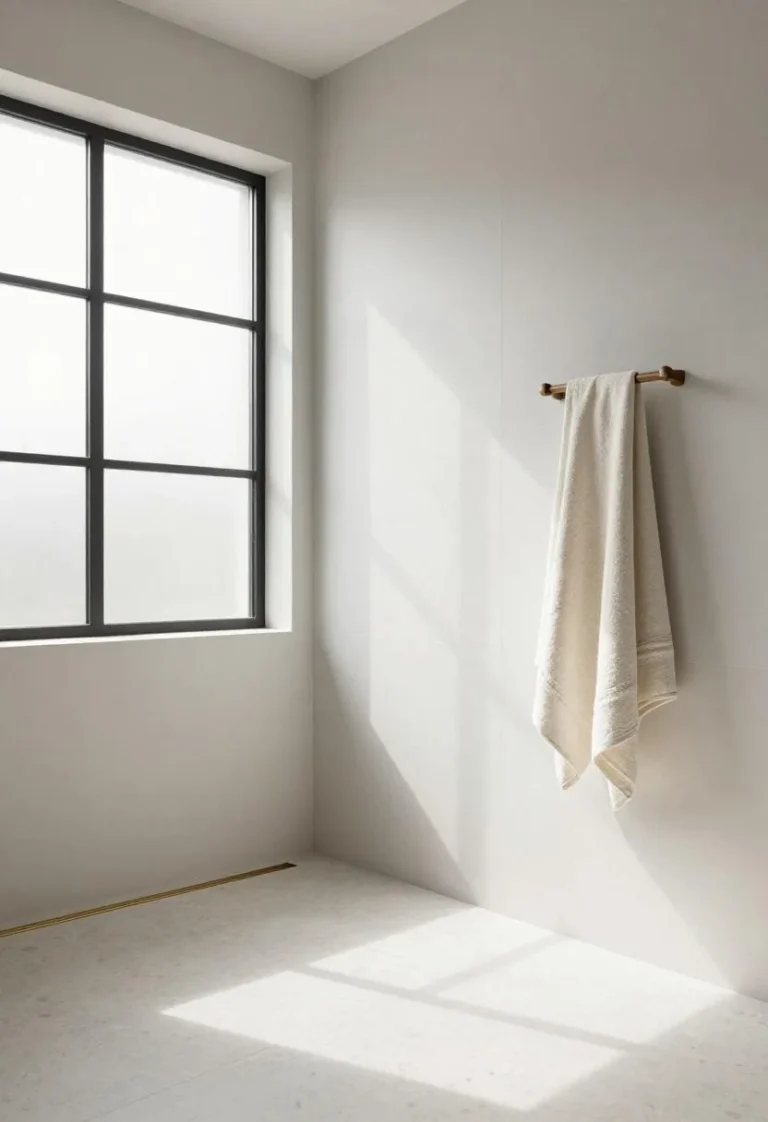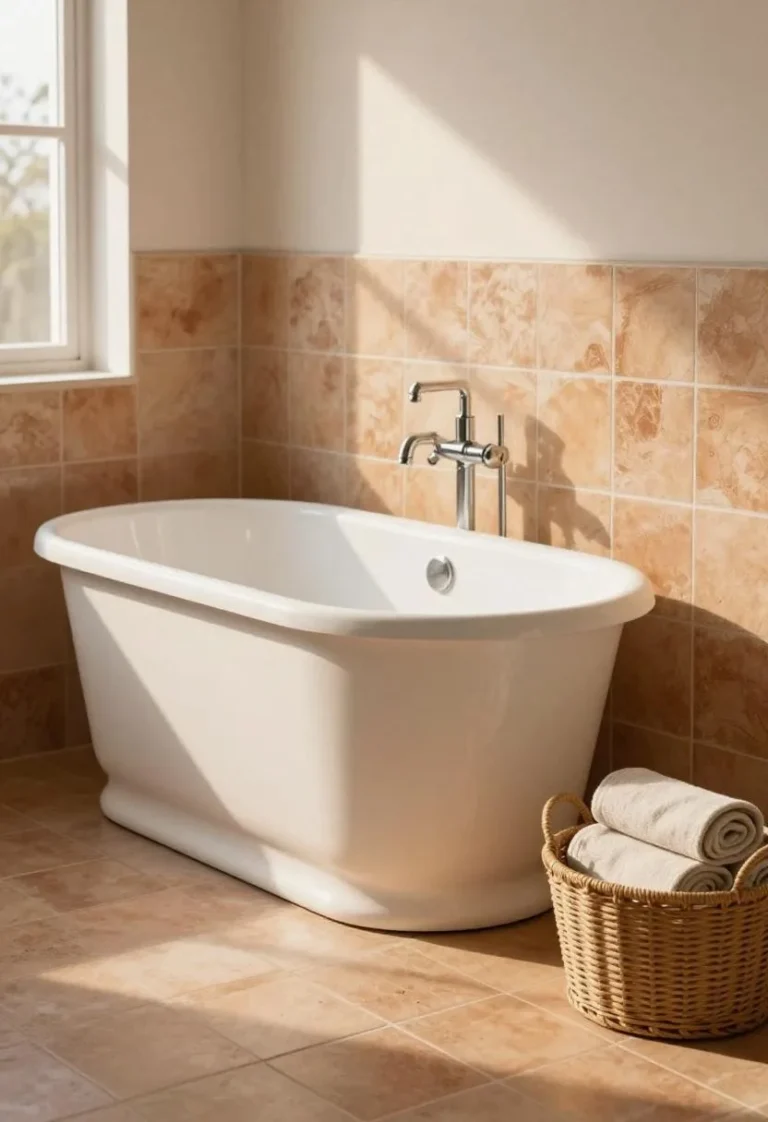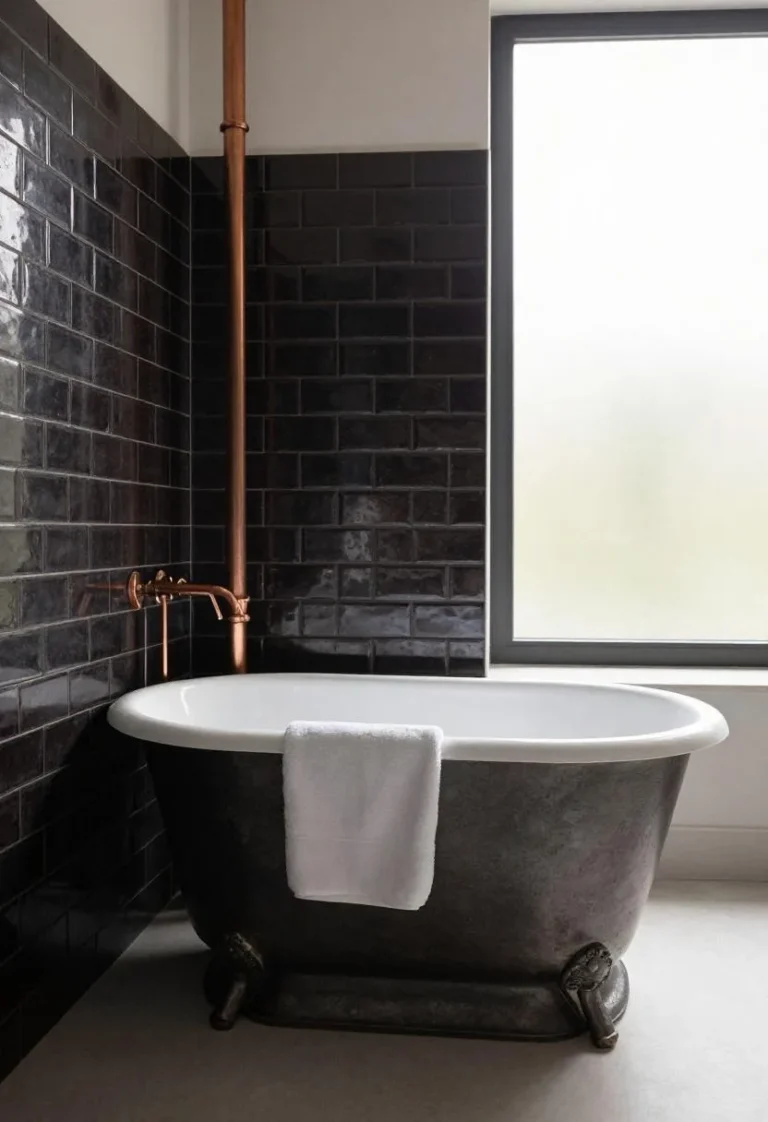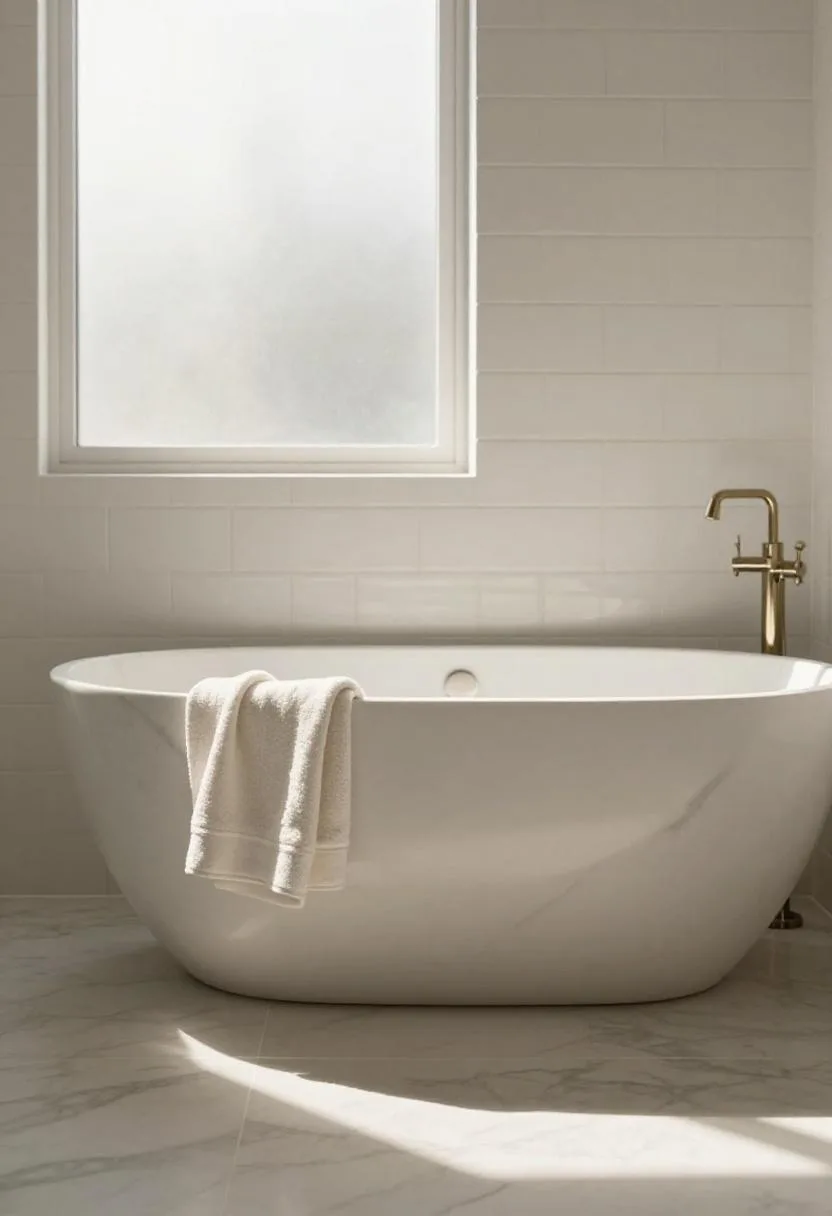
A small bathroom is not a consolation prize. It’s a jewel box — and jewel boxes don’t need to be large to be extraordinary. The right tile. The right light. One material layered against another. Suddenly you’re not standing in 40 square feet of necessity anymore — you’re standing inside a feeling. I’ve spent years obsessing over this particular challenge: how do you make the most compressed room in the house feel like the most indulgent? These 14 ideas are the answer. Some are structural, some are purely sensory, and a few are so simple they’ll make you wonder why you hadn’t tried them sooner.
1. The Freestanding Marble Tub as a Centerpiece Statement
Freestanding marble bathtub with off-white linen towel in soft morning light.
Place a freestanding marble tub against a bare, pale wall and watch the whole room hold its breath. The marble here reads almost cream in morning light — not the cold white of institutional tile, but the warm ivory of an old building in afternoon sun, slightly veined, slightly alive. Drape a single off-white linen towel over one end. That’s the whole design. That restraint is doing more work than a shelf crowded with products ever could.
The irony of the freestanding tub is that it creates space by refusing to be built-in. Your eye travels around it, beneath it, and suddenly the room has breathing room it didn’t technically have before. A marble tub caddy lets you lean into the luxe without cluttering the rim — one candle, one book, that’s it.
2. Floating Walnut Vanity — Warm Wood in a Cool Room
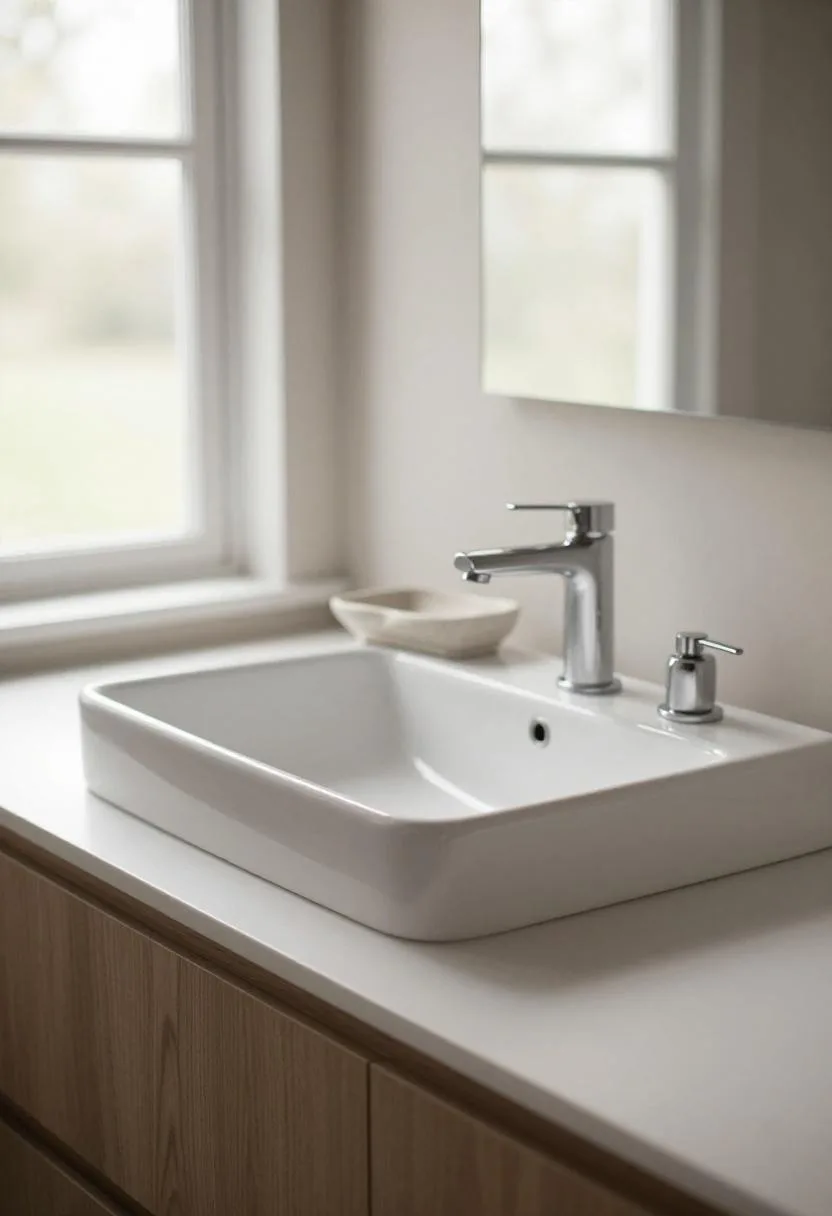
Floating walnut vanity with ceramic soap dish in warm neutral tones.
Run your hand across walnut grain and tell me you don’t feel something shift. That dark warmth — almost edible — against cool ceramic is a pairing that feels simultaneously ancient and very now. Wall-mounted means floor is visible, the room breathes, and you get the psychological spaciousness that floating furniture always delivers. Explore floating walnut vanity options to find the proportions that suit your wall.
Tile is the skin of a bathroom. Get it right — texture, color, scale — and nothing else has to work as hard. These next two ideas are entirely about that sensation.
3. Sage Green Zellige Tiles: The Color That Actually Breathes
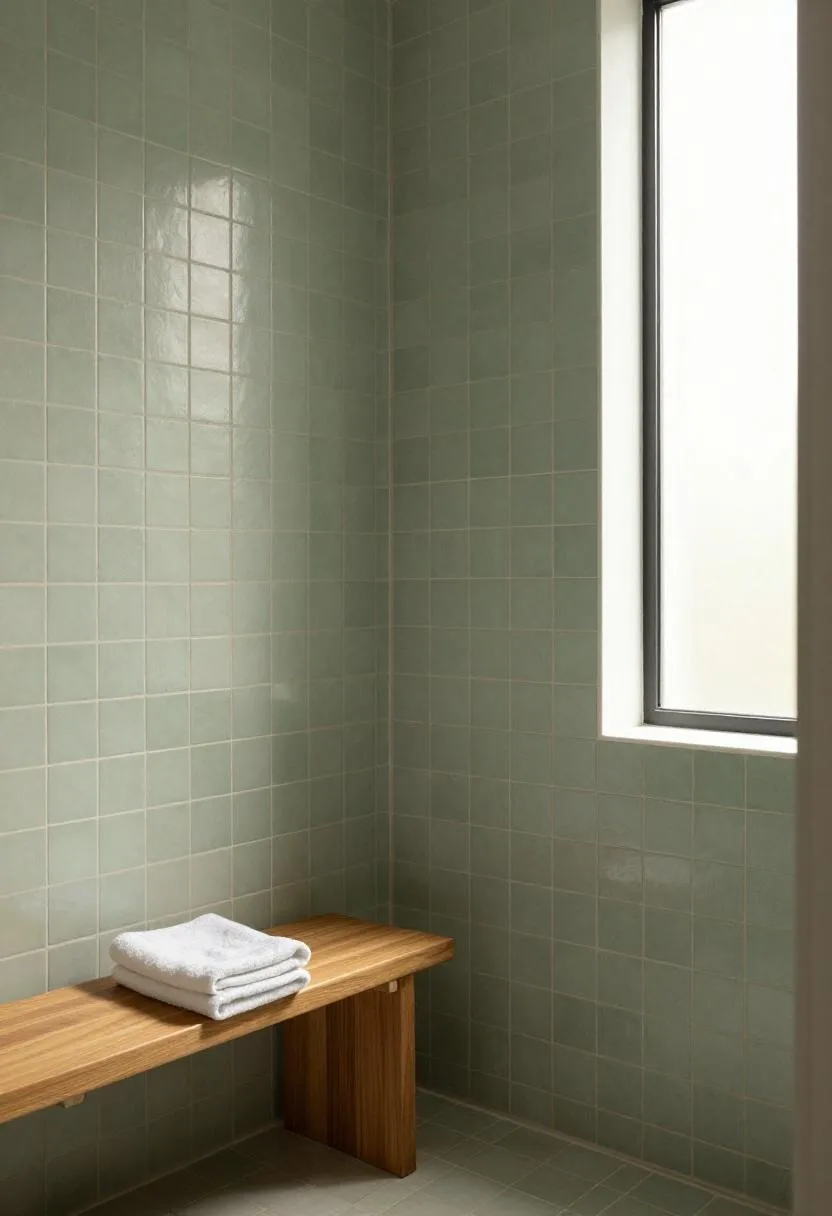
Sage green zellige tile walk-in shower with teak bench in morning light.
This color? Absolute dopamine hit. Sage green zellige is the shade of a morning in the Moroccan countryside before the heat arrives — muted and luminous at the same time, shifting from blue-green to grey depending on where the light falls. Because the tiles are handmade, no two are identical; the wall shimmers rather than sitting flat. Add a teak bench and you’ve built a shower that functions as a destination rather than a utility closet. As Architectural Digest has documented extensively, zellige has moved well past trend status into something more permanent — it’s earning its place as the defining tile of this decade’s spa aesthetic.
A teak shower bench costs less than a single massage and is, I’d argue, just as restorative.
4. The Shower Niche as a Still Life
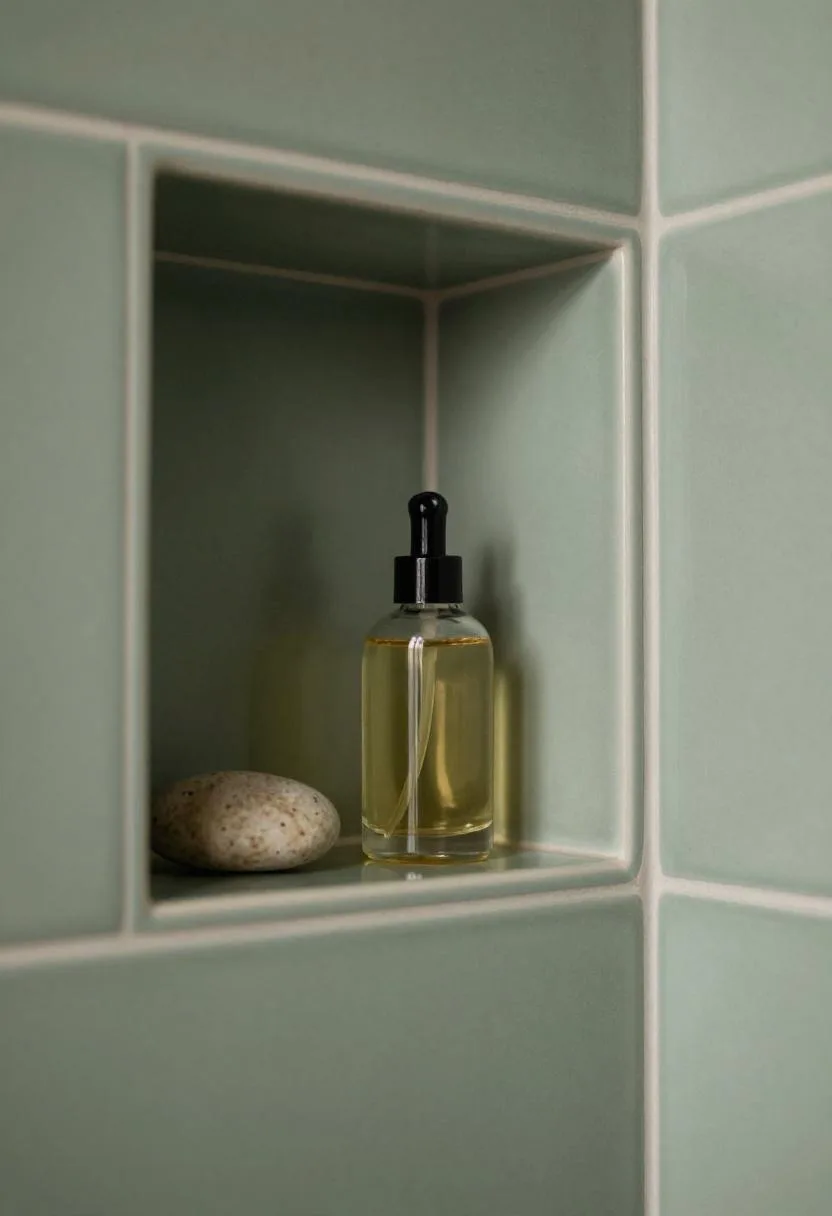
Sage ceramic tile shower niche with glass oil bottle and river stone.
Stop treating your shower niche like a shampoo parking lot. Line it with sage ceramic tile — the same color family as the zellige above but flatter, more graphic — and place exactly three objects: a glass oil bottle, a single river stone, a bar of solid soap. That edited restraint is the whole point. Your shower stops being a storage problem and becomes a composition.
5. Matte Black Hardware: The Punctuation Mark Your Bathroom Needs
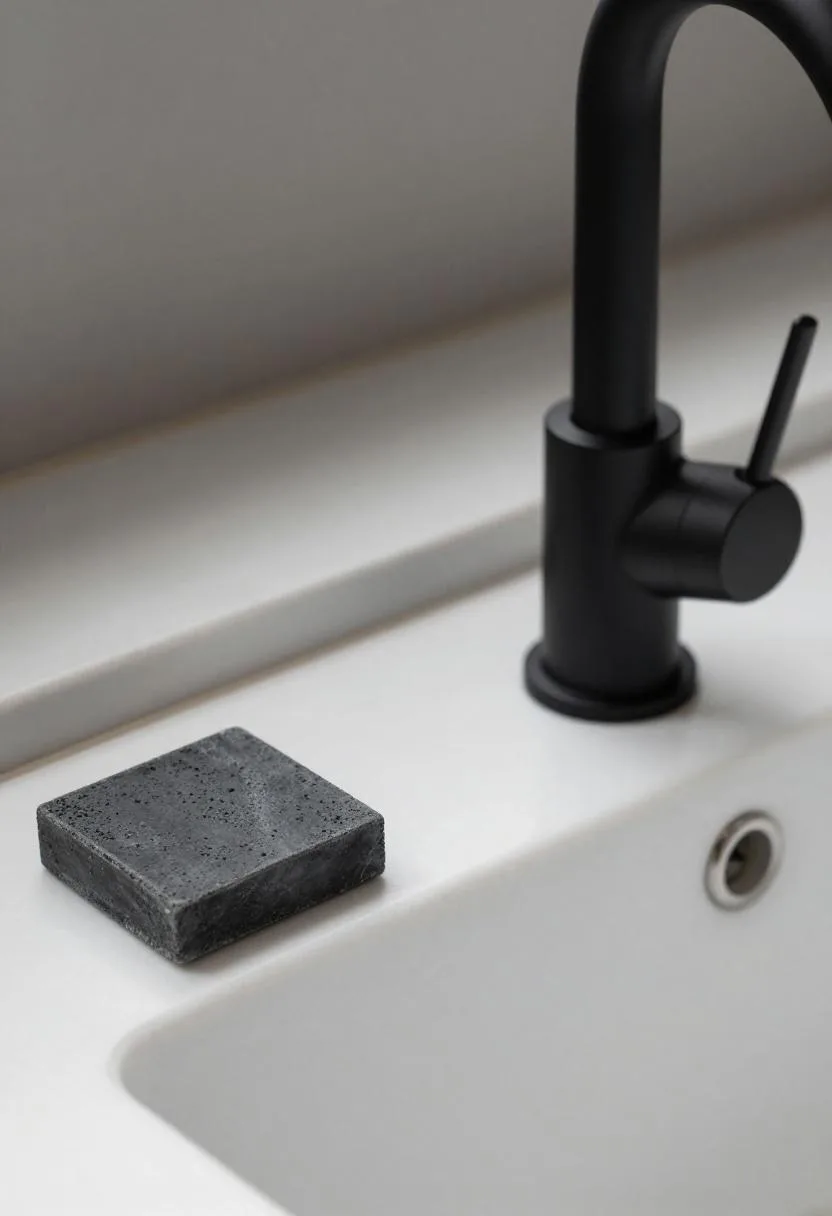
Matte black faucet on marble vessel sink with charcoal concrete soap bar.
Matte against gloss, rough against smooth — that tension is everything. A matte black faucet on a white marble vessel sink is a sentence with perfect grammar: the cool veining of the marble makes the black look intentional rather than heavy, and the charcoal concrete soap bar closes the loop on a color story told in three spare acts. This combination works because it’s not trying to be warm. It’s disciplined. Confident. A room that knows exactly what it is.
6. Pedestal Sink + Rattan Basket: Old School Storage, New School Results
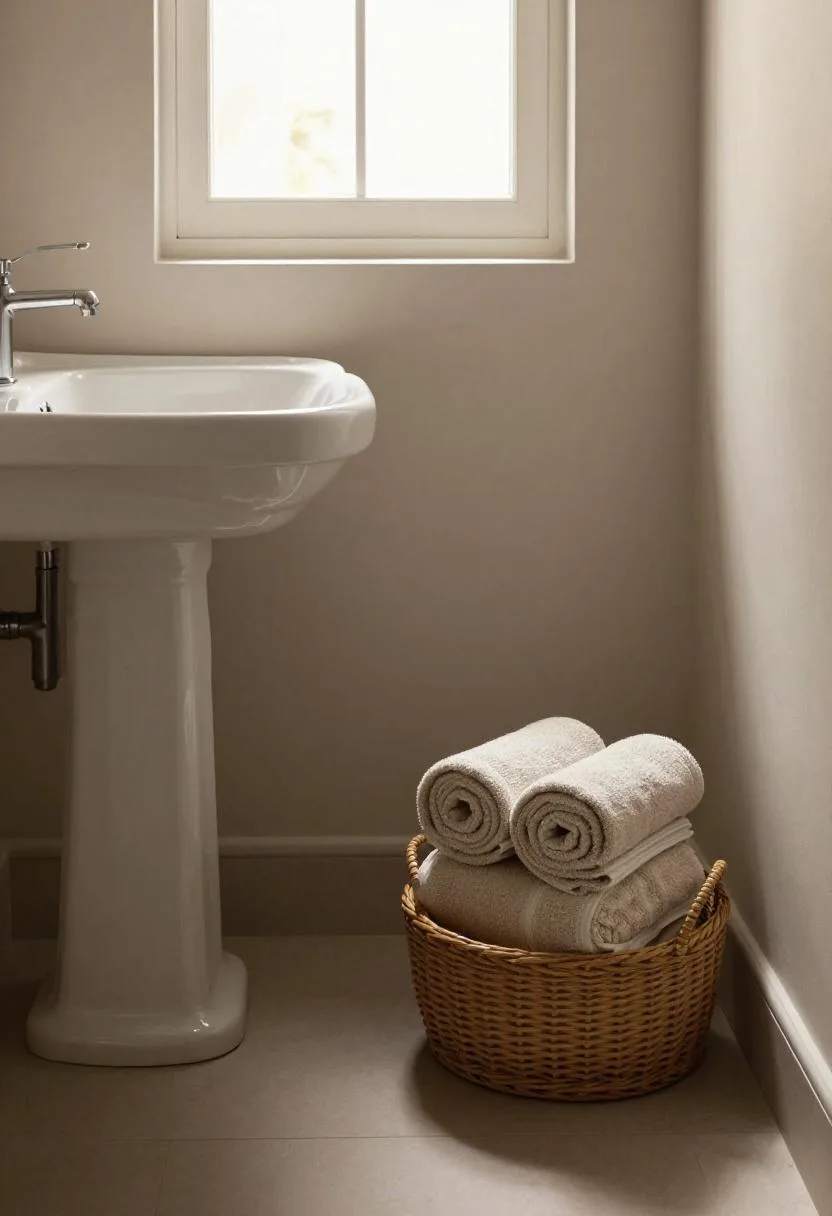
Pedestal sink with rolled cotton towels in a rattan basket in warm afternoon light.
The pedestal sink gives up under-sink storage but returns something better: floor space, visual lightness, and a certain old-world charm no box cabinet can replicate. The solution to the storage loss? A rattan basket loaded with tightly rolled cotton towels placed at the foot of the pedestal. It looks intentional — it is intentional — and the warm texture of natural rattan against cool porcelain is the kind of contrast that costs very little and reads as deeply considered.
Rattan bathroom baskets are one of those small swaps with outsized visual returns. For more ideas on making compact spaces work hard and look beautiful, the powder room makeover guide covers similar territory with real specificity.
7. Travertine: The Material That Ages Into Its Best Self
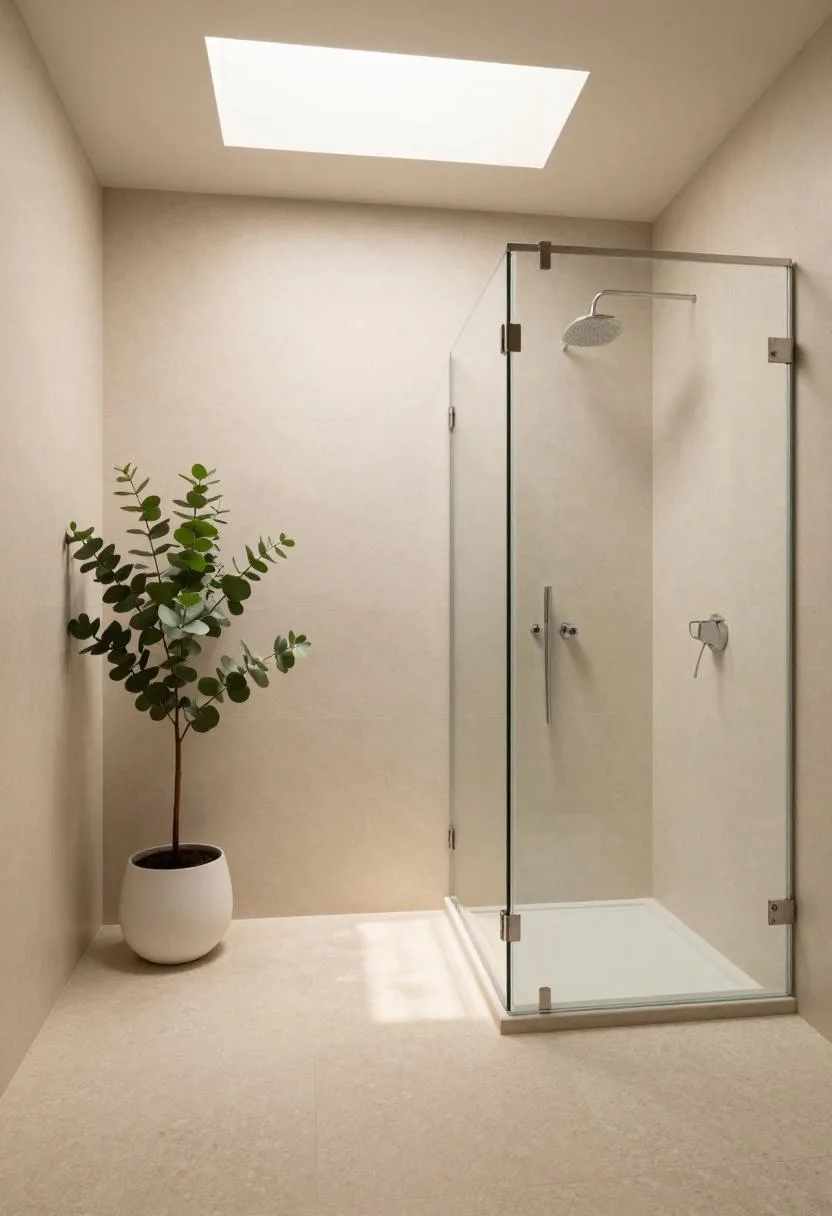
Travertine bathroom with glass shower enclosure and eucalyptus plant in golden light.
Travertine is sediment — literally fossilized water — and it carries that story in every pore and vein. In a small bathroom, travertine walls read warm and organic in a way ceramic tile can’t replicate. The glass enclosure keeps the visual field completely open. The eucalyptus brings a hit of living green. And in golden afternoon light the entire room glows amber-warm, as though lit from within.
Close your eyes and picture this palette in late-afternoon light. That’s what you’re designing toward.
(A note: I’ve heard travertine dismissed as dated, usually by people who’ve only ever encountered the polished-smooth 2000s hotel lobby version. Honed, filled travertine with a matte finish is an entirely different conversation. Don’t let bad precedents talk you out of a beautiful material — earn your opinions by touching it first.)
8. The Clawfoot Tub with Brass: Drama You Can Actually Live With
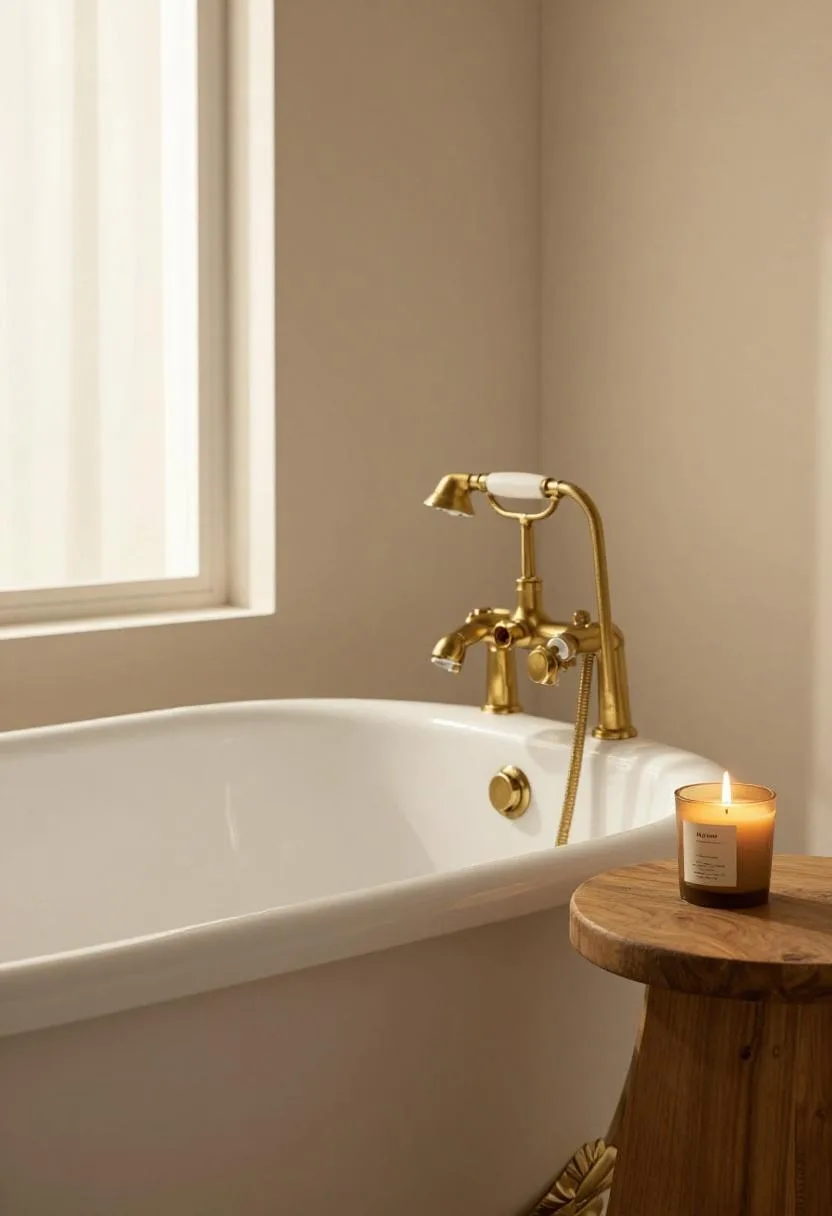
Clawfoot bathtub with brass fixtures and oak side table in warm morning light.
Brass is having a moment that’s lasted about a decade, which means it’s no longer a moment — it’s a position. A clawfoot tub with unlacquered brass fixtures will shift over time: brighter here, darkened at the joints, developing a patina that looks genuinely antique within a few years of real use. Pair it with an oak side table — simple, unfinished, maybe a little rough at the edges — and the room tells a story about someone who chose materials for how they’d live, not how they’d photograph.
It’s all in the layering. The brass warms the white porcelain, the oak grounds the brass, and suddenly a bathroom that’s maybe 65 square feet feels like a Victorian apartment you’d pay rent you can’t afford for. Freestanding brass clawfoot faucets have become far more accessible than they once were — this look is within reach.
9. Charcoal Slate and the Rain Shower: A Storm You Want to Stand In
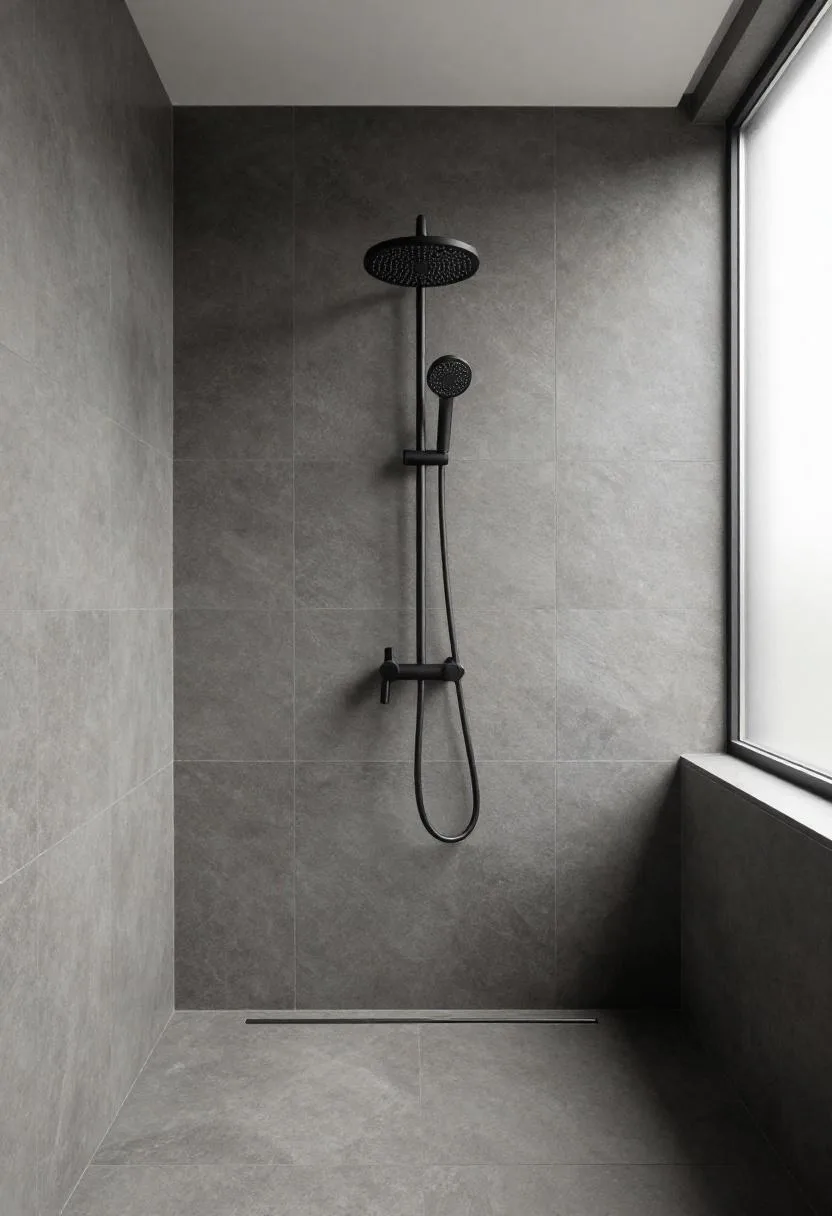
Charcoal slate bathroom with wall-mounted matte black rain showerhead.
Dark bathrooms are not depressing. Dark bathrooms done badly are depressing. Done with intention — charcoal slate tiles, a wall-mounted matte black rain showerhead, no clutter, zero apology — they feel like a private grotto. Like stepping into the earth itself. House Beautiful has covered the dark bathroom aesthetic with the seriousness it deserves; this is no longer an edge-case choice.
Dark done right is its own kind of opulence.
The next two ideas are about the small objects — things that live on shelves, hang on walls, drape over rails. In a small bathroom, these are not afterthoughts. They ARE the design.
10. Recessed Shelving with Terracotta: Built-In Warmth
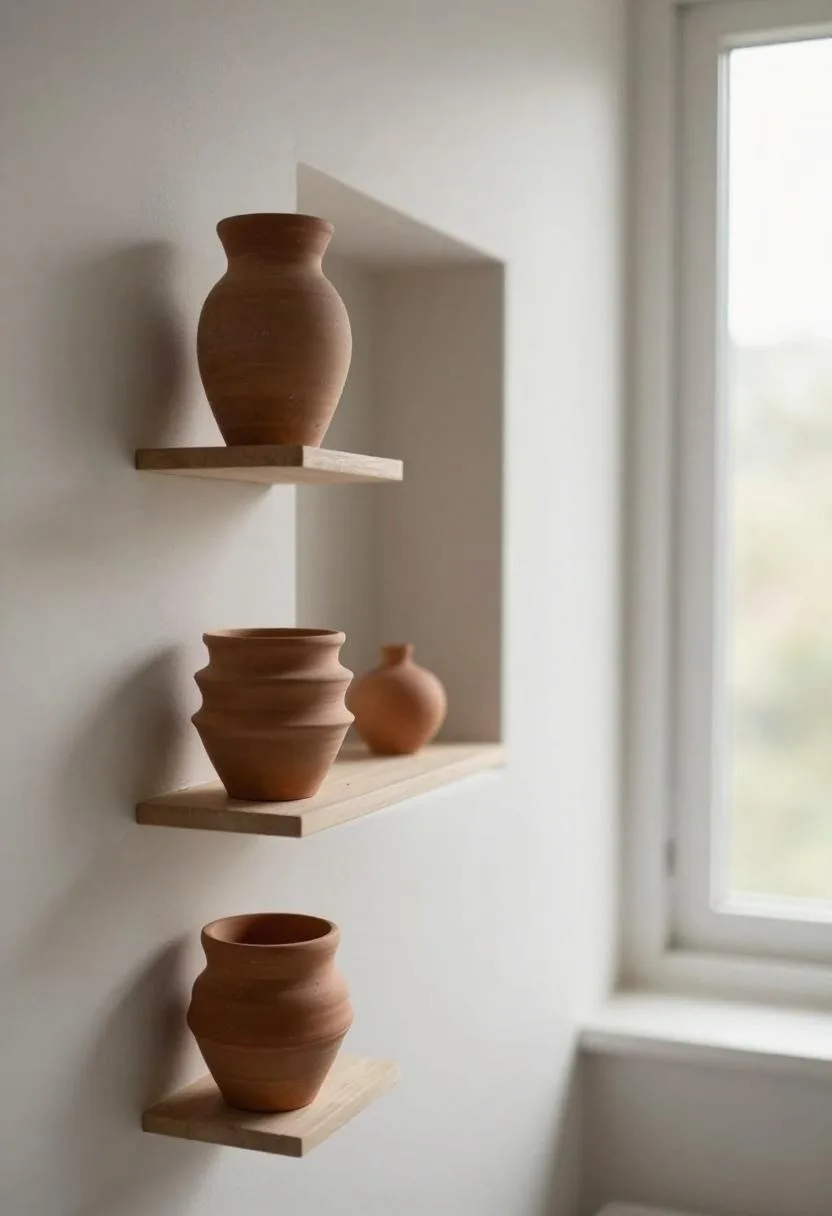
Recessed bathroom shelf with stacked terracotta vessels in warm morning light.
A wall niche costs a weekend and a contractor. What it returns: storage that doesn’t eat floor space, and a display opportunity that can look genuinely sculptural. Stack terracotta vessels at different heights — two or three at most — and that warm burnt-clay color against plaster reads like something from an Italian summer home. The material is ancient and the feeling is immediate. Terracotta bathroom canisters let you try this aesthetic without any construction at all.
11. The Brass Towel Bar: Jewelry for Your Walls
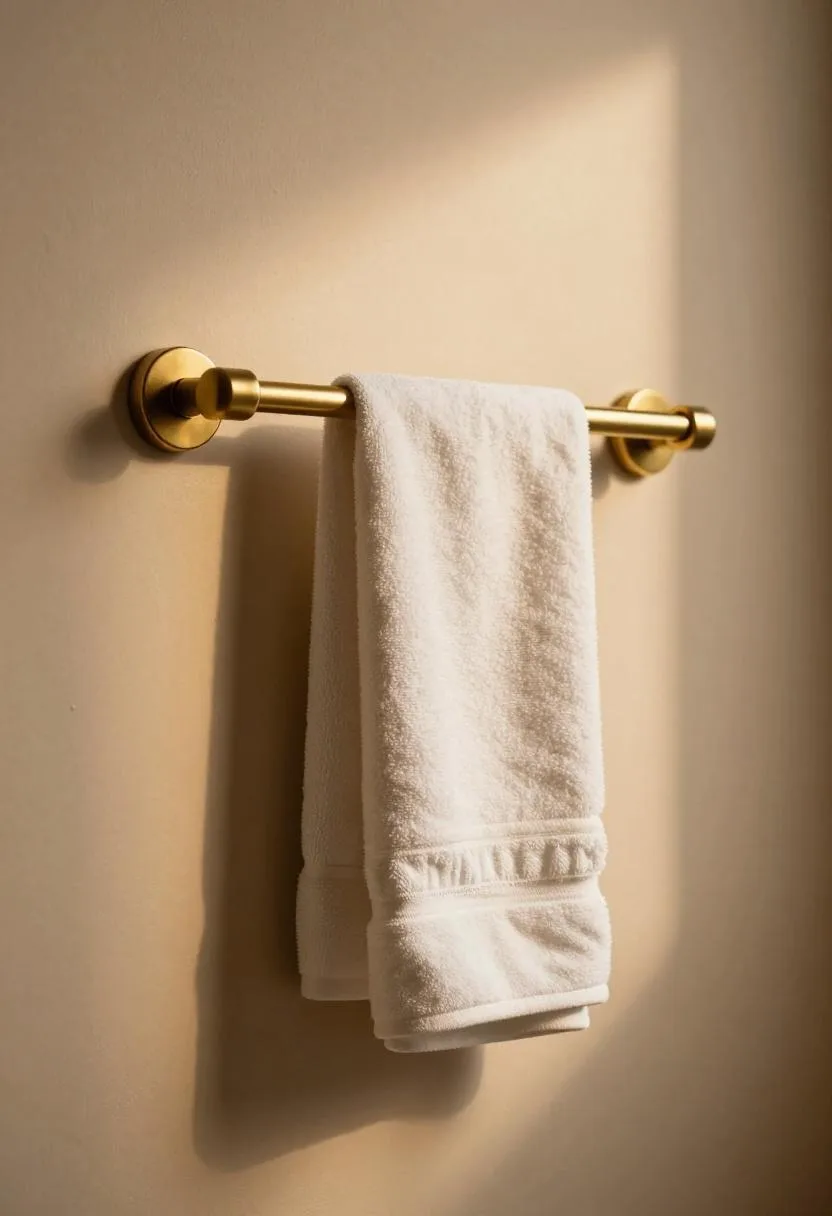
Brass towel bar on sand plaster wall with rolled Turkish cotton towel in golden light.
Sand plaster walls carry something paint can’t replicate — a slight variation in surface depth that catches light differently at every hour of the day. Mount a brass towel bar against this and drape a rolled Turkish cotton towel. That’s a tableau. The towel’s tight honeycomb weave holds its shape with quiet authority, the brass gleams warm against the matte sand, and the whole thing looks like a deliberately art-directed photograph of a boutique hotel — except it’s yours.
Turkish cotton towels are one of the most sensory upgrades possible for under $40. Waffle weave, incidentally, is the most underrated bathroom textile alive right now — it dries fast, holds a roll beautifully, and feels extraordinary against skin.
12. White Oak and Waffle Weave: Quiet Luxury at Full Volume
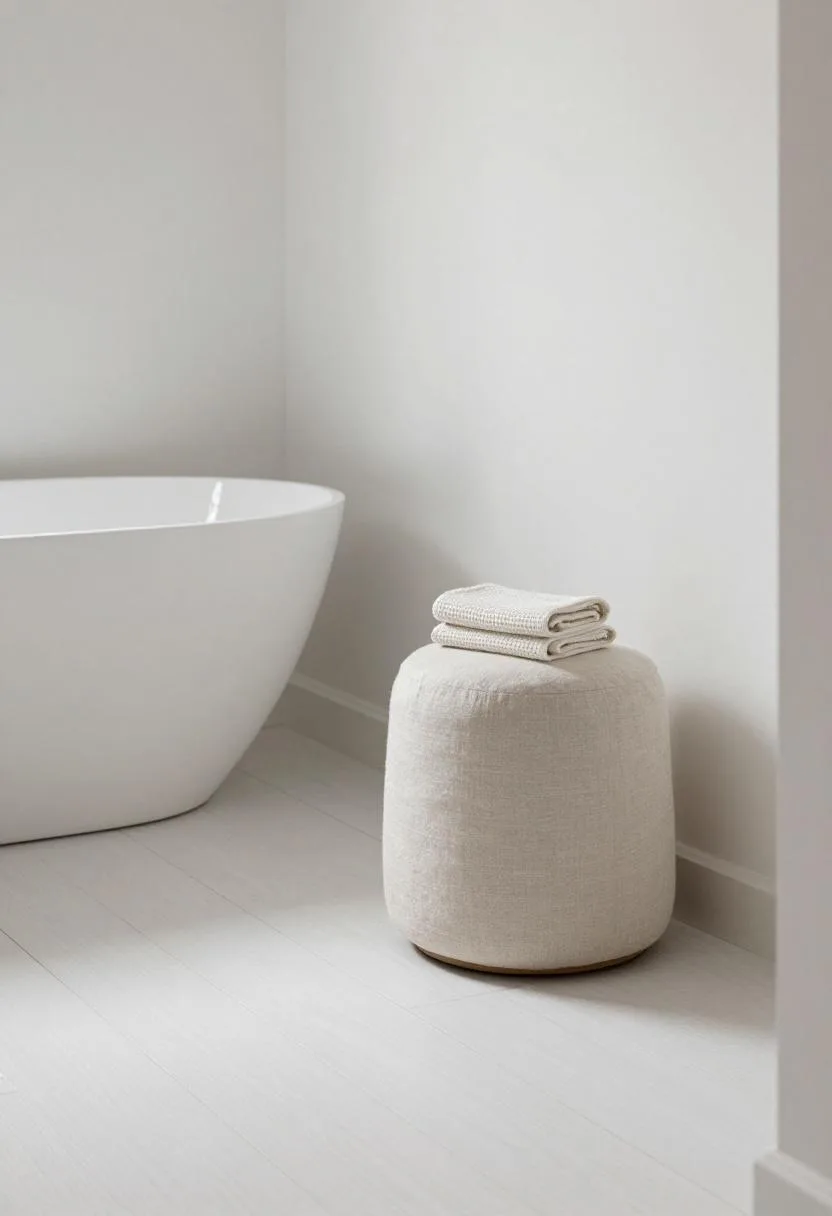
White oak bathroom with linen stool and waffle-weave towel in diffused daylight.
This is the bathroom that doesn’t raise its voice and doesn’t need to. White oak — pale, almost blonde, with a barely-there grain — reads as calm in a way darker woods don’t allow. A linen stool at the right height lets you sit without the room feeling smaller. Diffused daylight makes this palette practically glow. Apartment Therapy calls this aesthetic “quiet luxury” — accurate, though honestly the phrase doesn’t capture it fully. What you’re really building is a room that feels like the inside of a deep exhale.
13. White Lacquer Vanity: The Crisp, Uncompromising Option
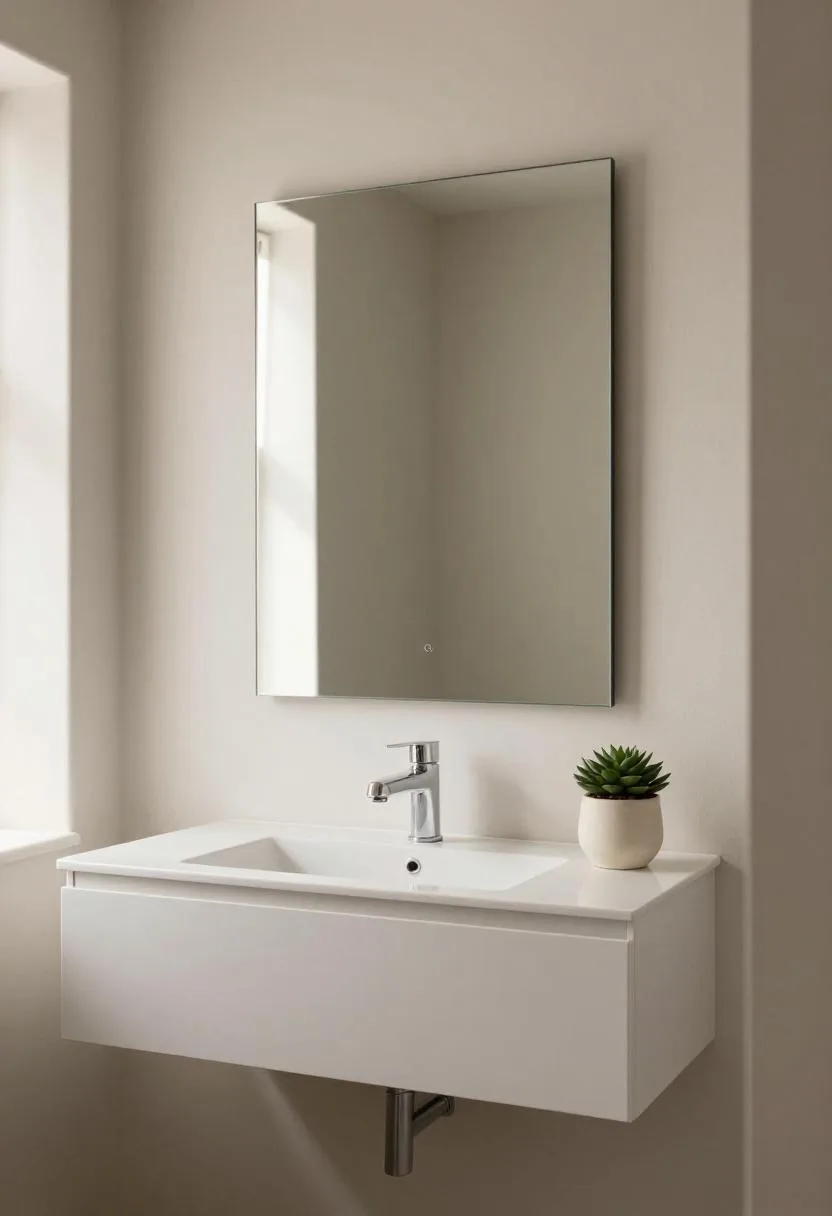
White lacquer floating vanity with rectangular mirror and succulent in morning light.
Not every small bathroom wants warmth and texture. Sometimes you want clean. Sharp. The white lacquer vanity is essentially a mirror surface — it bounces light, it reads as smooth under your fingertips, it refuses to collect visual noise. A single frameless rectangular mirror above. One small succulent on the counter — the one organic note in an otherwise precise room, earning its place exactly because everything around it is so controlled.
If you’re drawn to this kind of restraint across your home, the compact living room ideas guide applies the same principles of edited clarity to your largest room.
14. Does Your Bathroom Have to Be by the Sea to Feel Coastal?
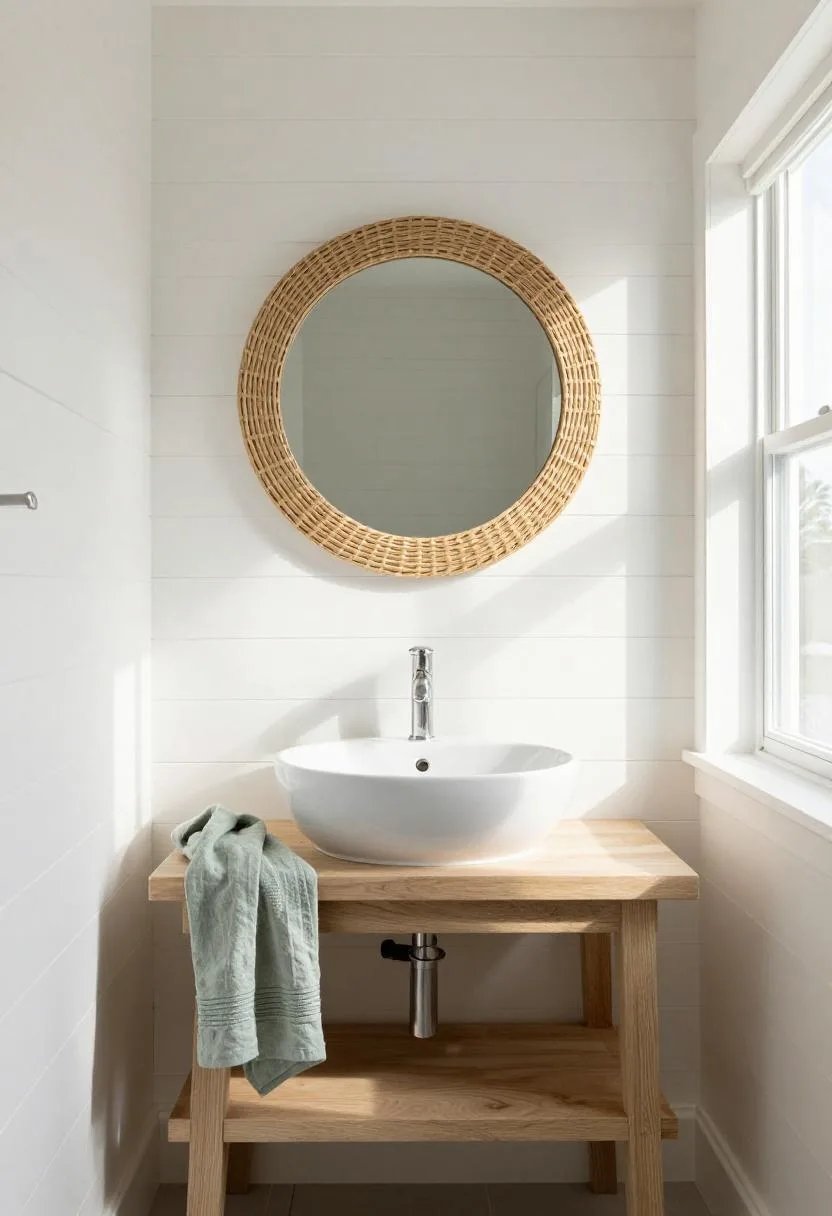
Coastal bathroom with seagrass mirror, porcelain sink, and sage linen towel in morning light.
It doesn’t. A seagrass mirror — round, natural, slightly imperfect in the way only handmade things are — immediately reads coastal before a single piece of blue appears anywhere. White porcelain, clean and grounding, keeps the look honest. The sage linen towel is the color of sea glass found on a grey-morning beach, and it hangs with a casual precision that requires exactly zero maintenance to sustain.
This is the room you design for the version of yourself who wakes up unhurried, soft light streaming in, not yet needing to be anywhere. Seagrass mirrors are an accessible entry point into the whole look — hang one, and the personality of the room shifts immediately. That’s it. That’s the whole move.
What These 14 Ideas Have in Common
Look back across all of these and you’ll notice something: none of them require demolishing walls or adding square footage. Every transformation here is material, sensory, and intentional. Sage green zellige. The warmth of walnut grain. Cool marble. Brass developing character over years of actual use. These aren’t cosmetic gestures — they’re decisions about how you want a room to feel when you step into it at 6am, still half-asleep.
The color palette that keeps surfacing? Warm neutrals layered with natural materials, punctuated by one or two moments of genuine contrast. Sand, linen, oak, terracotta, brass — and then a deliberate note in matte black, sage green, or charcoal slate. It’s a palette built for sensory comfort rather than visual impact, and that distinction matters enormously.
Small bathrooms reward specificity above everything else. Don’t try to do everything at once — pick a material direction, commit to one metal finish, choose three textures and let them carry the room. The spaces here that feel the most luxurious are also the most edited. Less, chosen well, is the entire philosophy.