14 Industrial Bedroom Ideas for a Cozy Loft-Inspired Sleep Space (2026)
Industrial style gets misread. People assume it means cold. Unwelcoming. A loft that feels more like a parking garage than a bedroom. But strip away the caricature and what you’re left with is something more honest than most design movements: raw materials, visible structure, nothing pretending to be what it isn’t. The iron bed frame isn’t hiding behind a fabric skirt. The exposed brick isn’t papering over a mistake. That transparency — that refusal to fuss — is exactly why industrial bedrooms, done with care, feel more restful than rooms dressed to impress.
These 14 ideas aren’t about replicating a Williamsburg loft or chasing an aesthetic that peaked on Instagram three years ago. They’re about understanding why certain combinations of steel, concrete, reclaimed wood, and soft textiles create spaces that feel both edgy and deeply livable. Some lean dark and dramatic. Others take the same industrial bones and soften them almost beyond recognition. All of them work.
The Raw Framework: Iron Beds and Exposed Brick
Start with the bed. In an industrial bedroom, it isn’t just furniture — it’s a structural statement. Iron and steel frames read as part of the architecture, not an addition to it. When the wall behind them is exposed brick, something clicks into place. You’re not decorating a bedroom. You’re acknowledging a building.
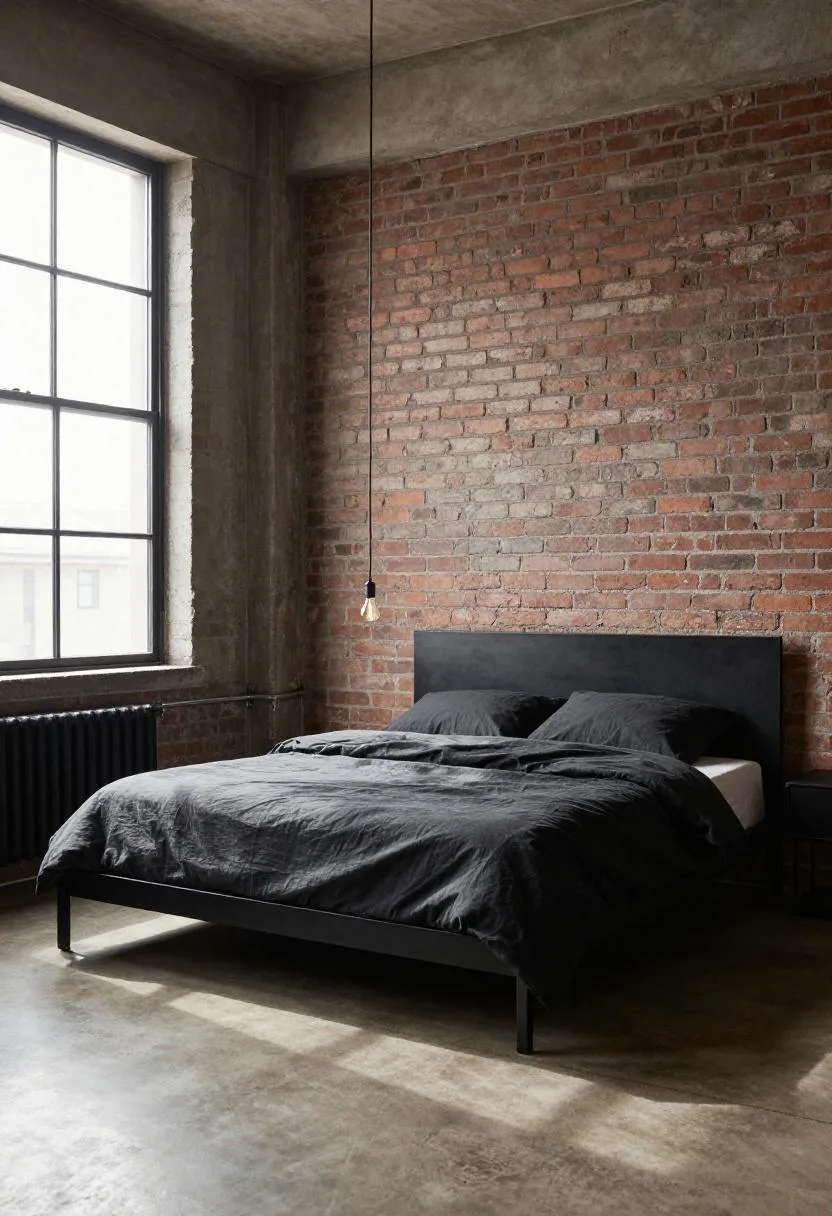
Black Iron Platform Bed with Edison Pendant
The combination here is almost too obvious — and it still works. A black iron platform bed sitting low against raw brick, a single Edison pendant dropping to head height. Morning light does the rest. What makes this particular setup hold up is the restraint: no headboard competing with the brick, no gallery wall crowding it. The wall is the art. The iron frame is the frame. A good black iron bed frame is the only investment you need to make this work — the brick and light handle everything else.
Steel Bed, Herringbone Wool, and a Framed Map
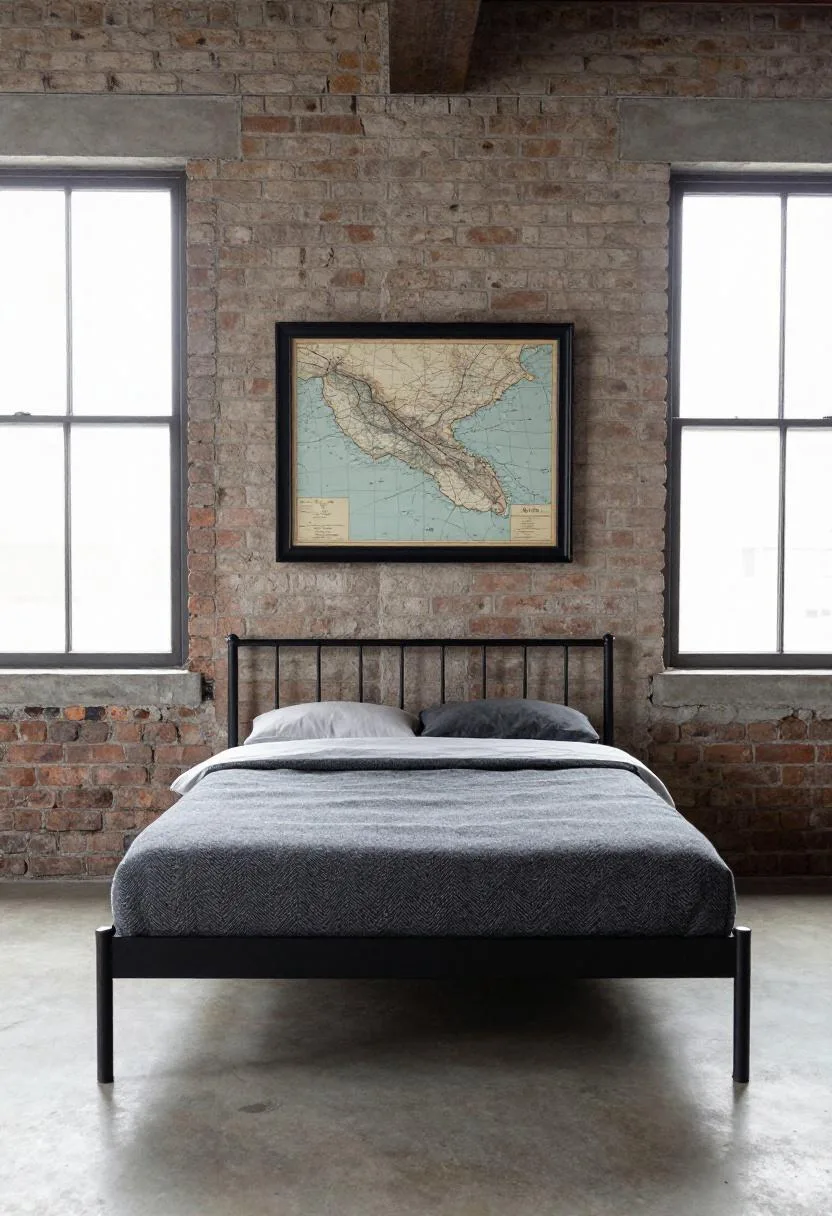
One piece of wall art above the bed — a single framed map, no grid, no arrangement — does more for a room than most people expect. This is why: it tells you something specific about the person who sleeps there. Herringbone wool over the duvet adds the kind of texture that only looks better with age. The black steel frame anchors it all without shouting. Architectural Digest has long argued for editorial restraint in bedroom design, and this room makes the case quietly.
Iron Sconce, Dark Brick, Evening Light
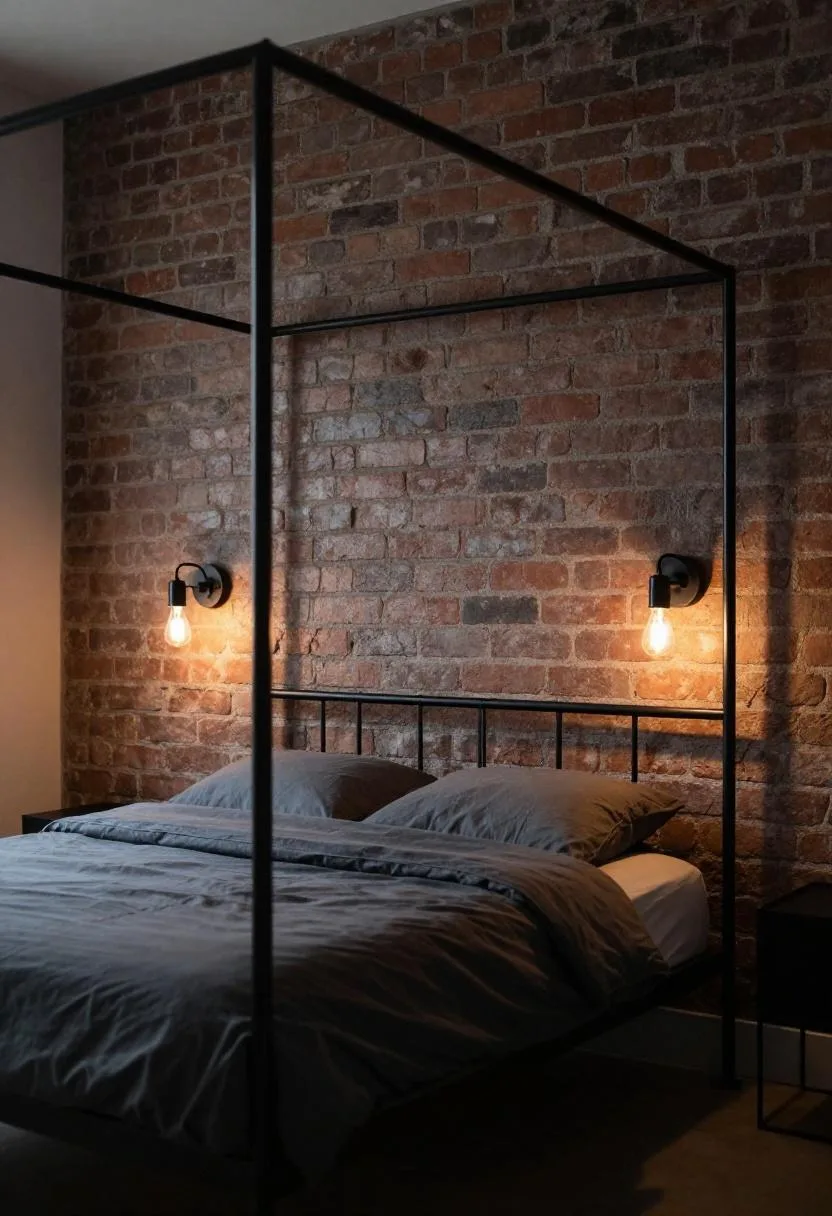
At night, dark brick becomes something else entirely. An iron wall sconce mounted low — not centered, slightly off — throws a pool of warm light that makes the texture come alive. This is a bedroom built for evenings. The steel bed disappears into the shadow; only the lamp and the brick have anything to say. Don’t fight this with bright overhead lighting. Let the room be what it wants to be after dark.
(A note on Edison bulbs: the warm 2200K spectrum isn’t just nostalgia. In a room of dark metal and brick, it’s the difference between a cell and a sanctuary.)
Where Wood Meets Steel
Pure industrial — all concrete and iron — can tip into something that feels more like a film set than a place to sleep. The correction is wood. Specifically, aged wood: reclaimed oak, walnut, pieces with a story. Leather plays the same role. These materials don’t soften the industrial character; they complete it. They introduce the human element that raw industrial spaces quietly need.
Reclaimed Oak Nightstand with Copper Lamp
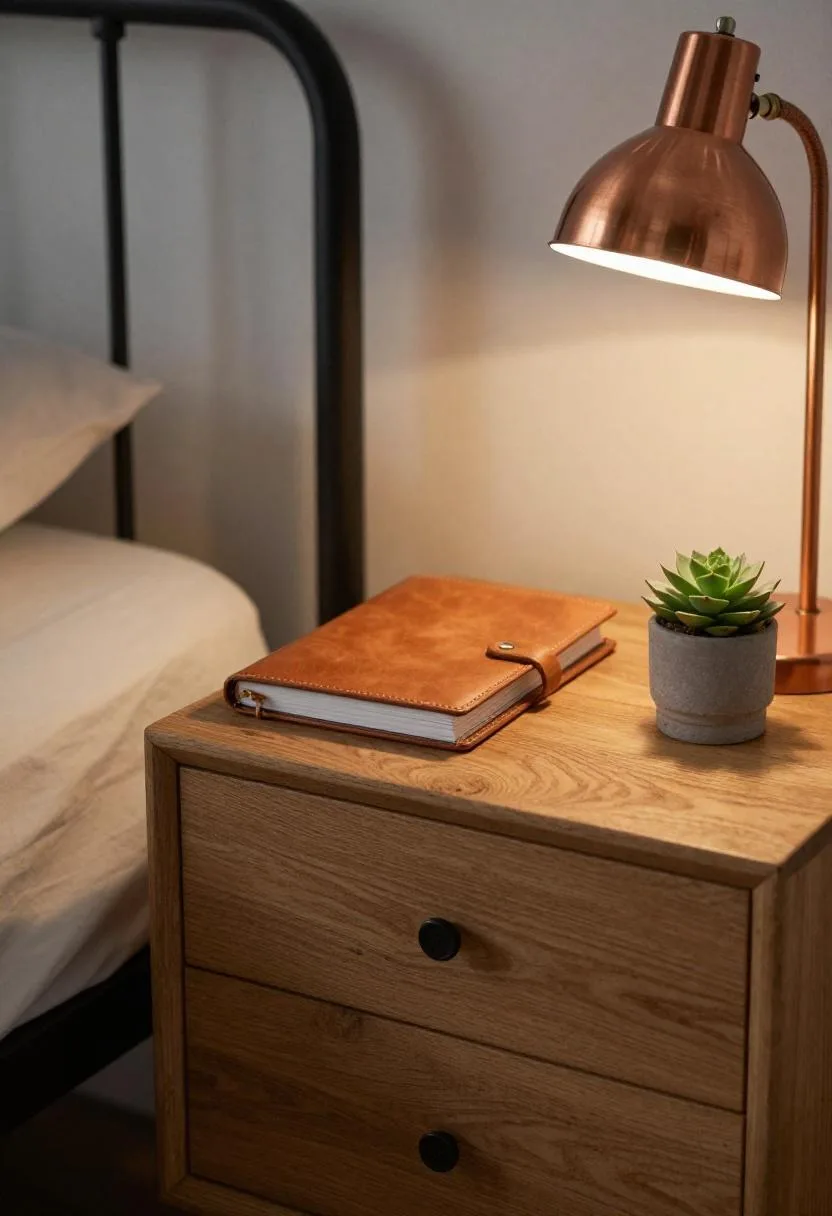
The nightstand is where industrial bedrooms get human. Reclaimed oak — weathered grain, slight irregularity — next to a copper table lamp in afternoon light. A leather journal on the surface. This is the kind of bedside that rewards slow mornings. If you want to style yours with the same considered touch, our guide to nightstand styling goes deep on what to keep and what to cut. Spoiler: less than you think.
A copper bedside lamp earns its place here because copper ages. In five years it’ll look better than it does today, which is the opposite of most home goods.
Concrete Surface, Leather Book, Terracotta Plant
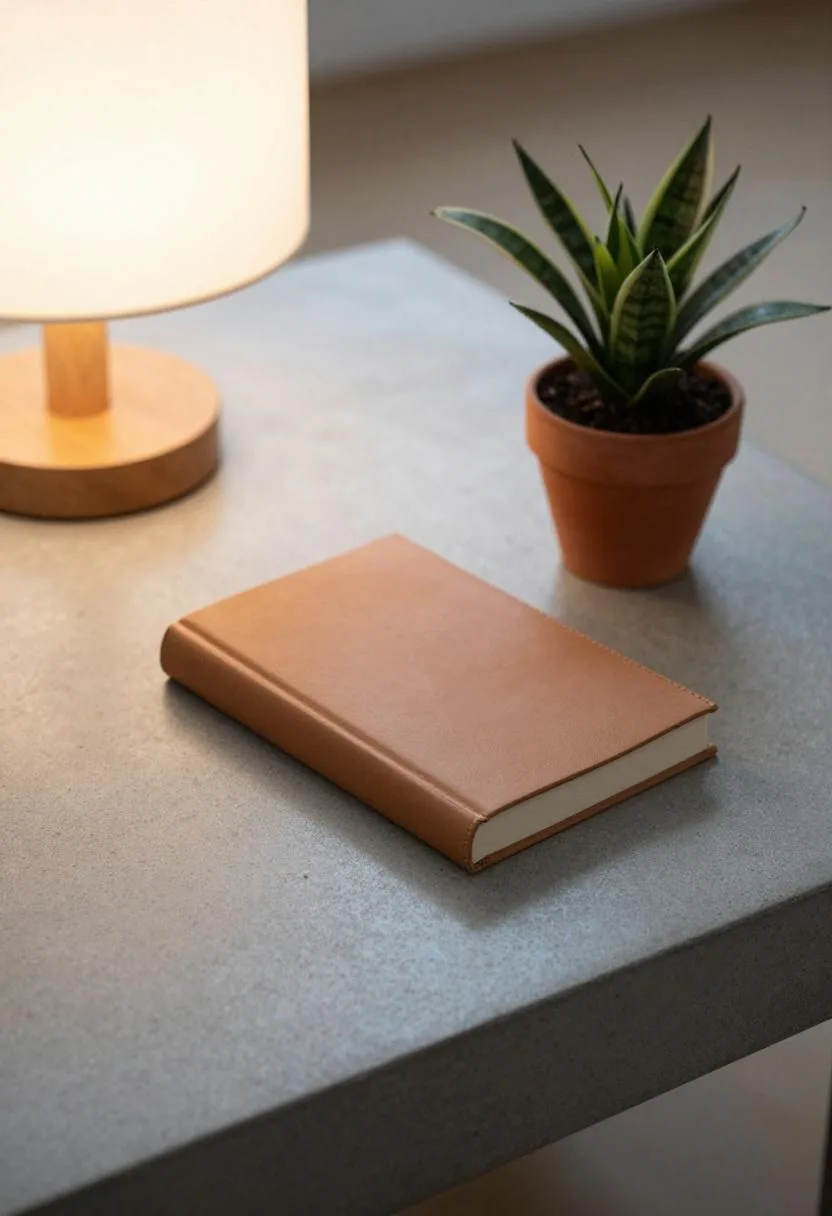
Three objects. That’s it. A concrete shelf or side surface, a leather-covered book lying flat, a terracotta pot with a snake plant catching the lamp. The terracotta against concrete is a pairing that people discover by accident and then can’t unsee. The warm orange-red of fired clay is the exact foil that grey surfaces need. Lamplight makes the whole arrangement feel less like styling and more like living.
Tan Leather Headboard with Oak Dresser
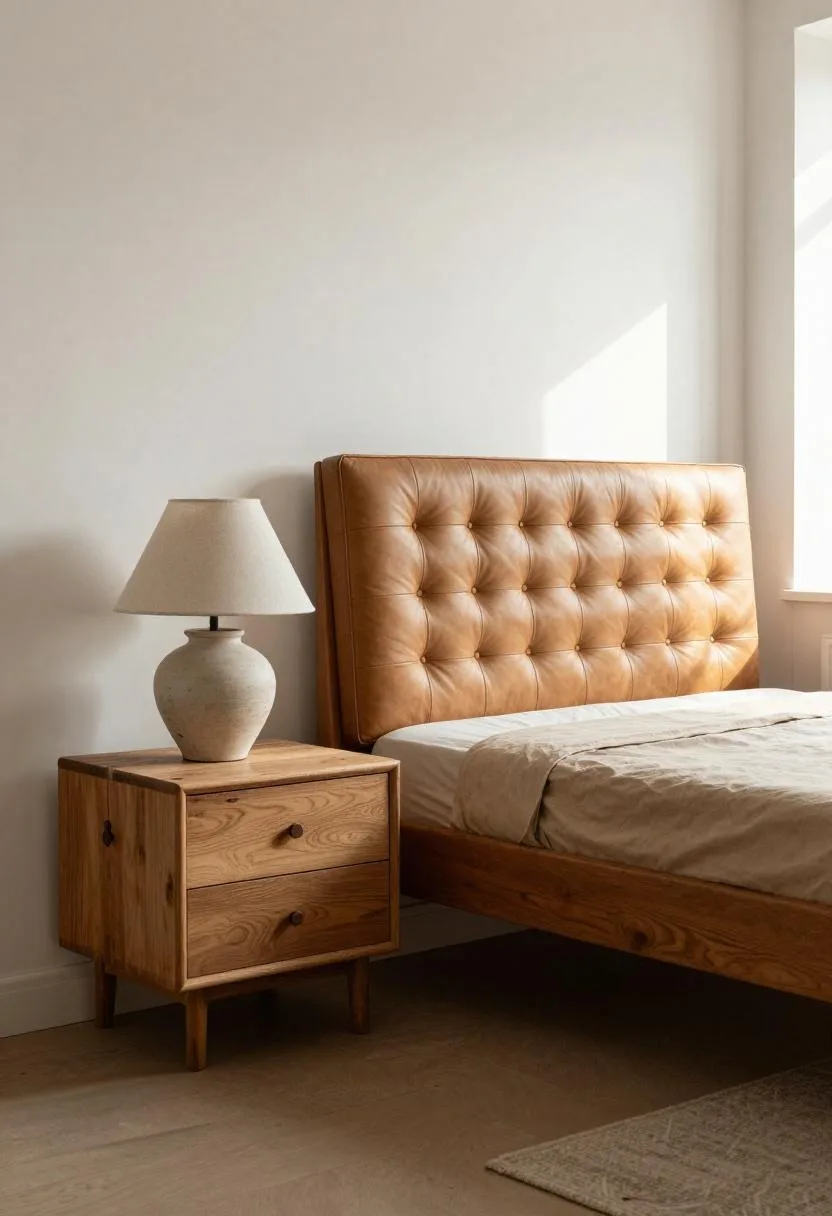
Tan leather doesn’t always read industrial — it can veer preppy fast. The oak dresser and linen lampshade keep it grounded here. This is a softer entry point into the aesthetic: no exposed brick required, no raw concrete. The material honesty of leather and solid oak, in morning light, is industrial in spirit without being literal about it. Strip away the trend and ask: would this room feel right in ten years? Yes. Easily.
Concrete and the Art of Contrast
Concrete in a bedroom is a commitment. It’s not a color or a finish you can swap out. When it works, it works because of what’s placed against it — soft textiles that acknowledge the hardness, warm tones that don’t apologize for being warm.
Steel Pipe Shelf with Wool and Ceramics
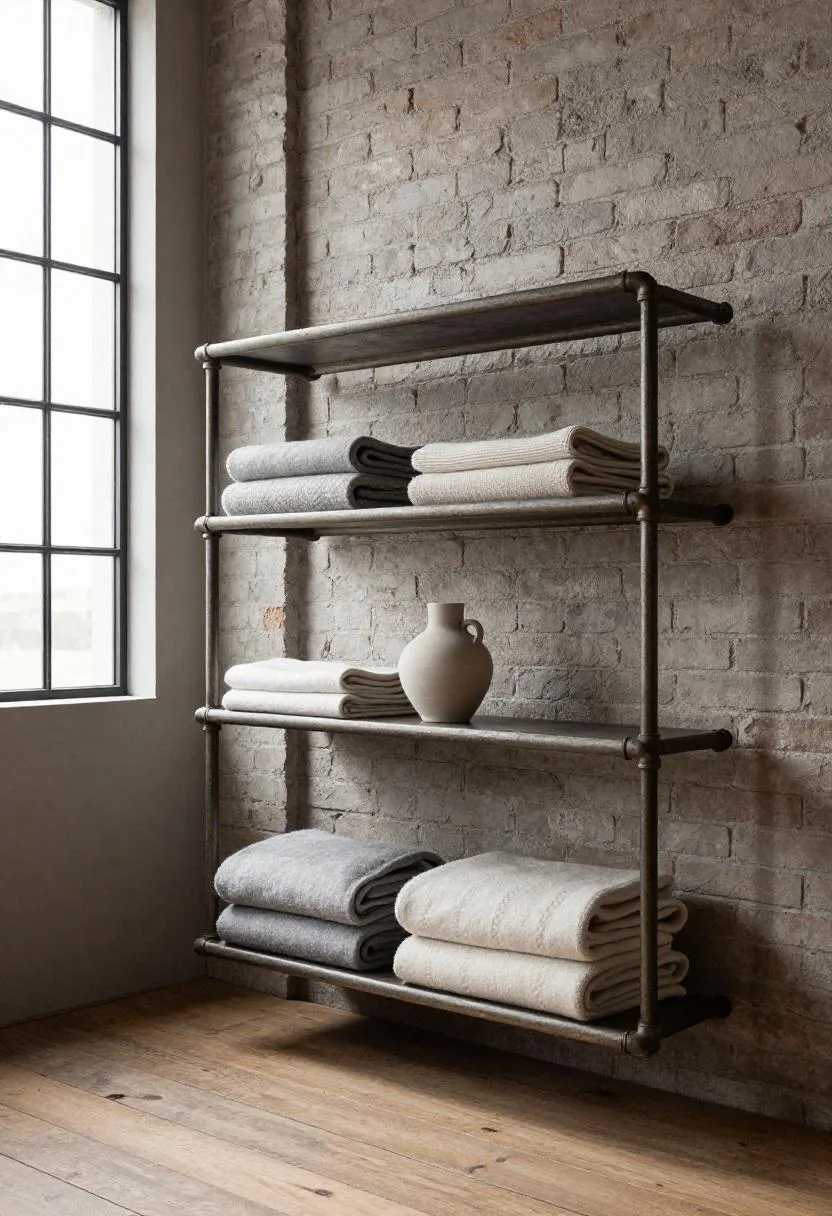
A steel pipe shelf mounted to brick is one of those industrial details that could read as a cliché — and yet, when loaded with folded wool blankets and a single ceramic vase, it stops being a design choice and starts being practical storage with good bones. The wool introduces a tactile softness that the pipe and brick can’t provide. The ceramic vase is the only concession to decoration, and it earns its place by being quiet about it. Steel pipe shelving brackets are widely available and genuinely easy to install — this is a weekend project with a result that looks considered.
Concrete Platform Bed with Cream Linen
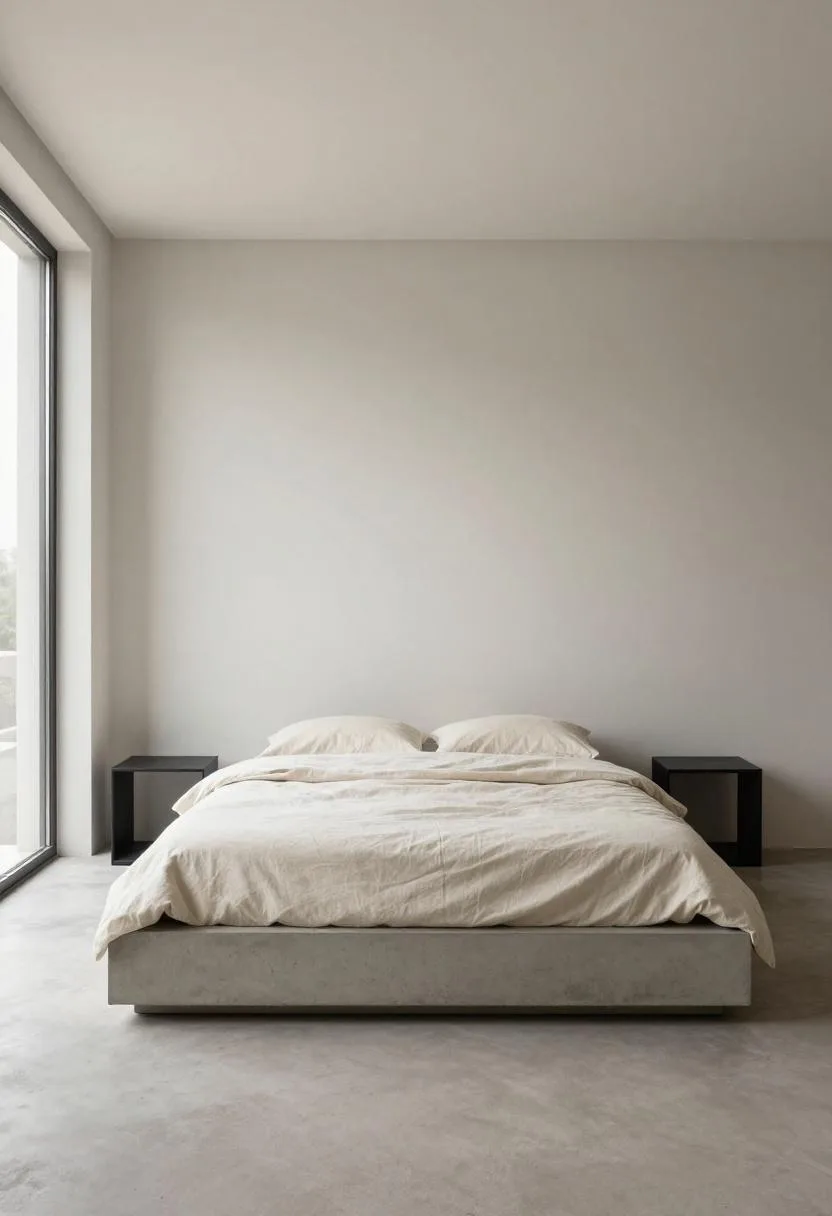
This is a room that requires confidence. A concrete platform bed — low, heavy, unapologetic — with nothing but cream linen and a pair of thin black metal side tables. Diffused daylight flattens the shadows and makes the concrete read almost warm. The linen is the entire softening strategy, and it’s enough. More than enough. What makes this work is what’s not here: no rug breaking up the floor plane, no art competing with the concrete. The restraint here is the whole point.
As Apartment Therapy has documented in apartment tours, concrete bedroom platforms are increasingly common in urban conversions — and the ones that age well are always the ones that resist the urge to add more.
A Case for Dark Color
Why does industrial design default to grey and black? Partly practical — raw materials tend that direction. But there’s also something deliberate in it. Dark color in a bedroom isn’t depressing; it’s cocooning. Navy, charcoal, slate: these colors make a room feel like it has walls. In a loft with twenty-foot ceilings and exposed ductwork, that sense of enclosure is something you have to build.
Charcoal Bed, Slate Blue Throw, Steel Floor Lamp
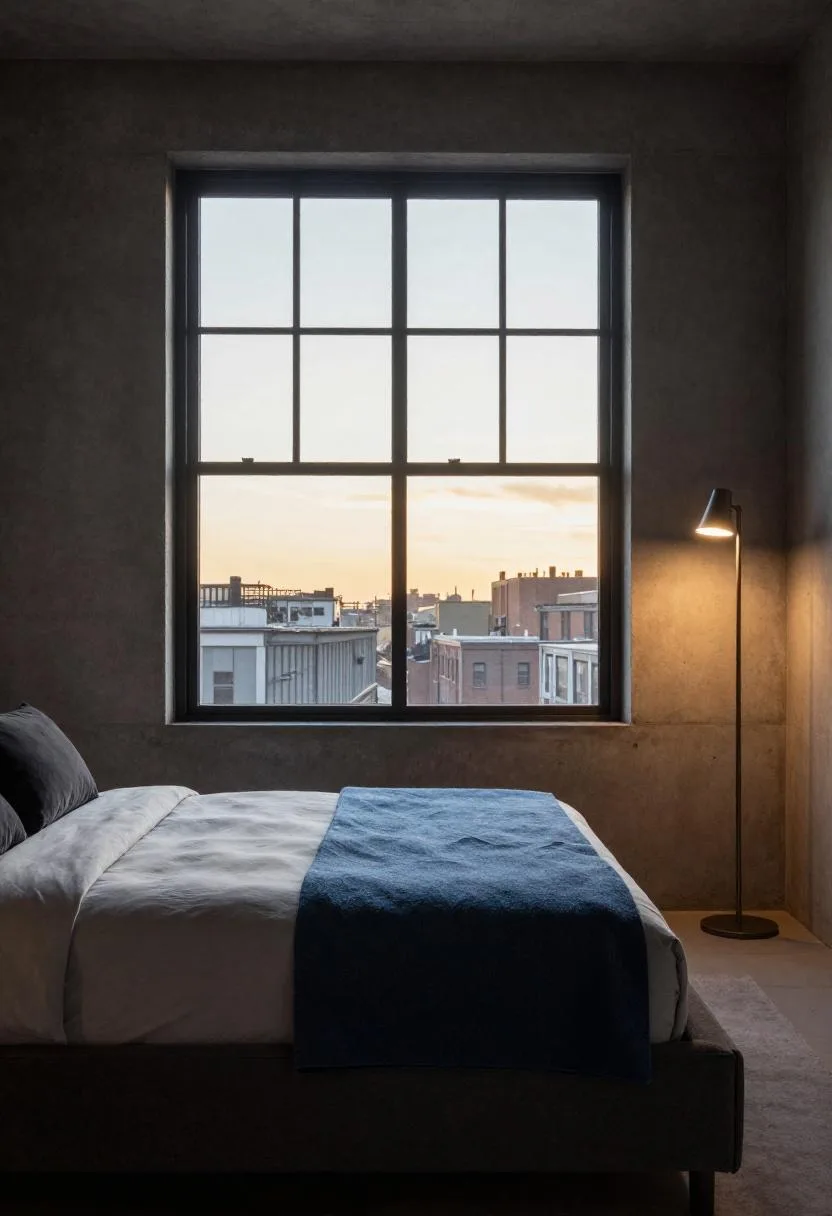
Charcoal upholstery is the industrial bedroom’s version of a neutral. It absorbs light rather than reflecting it, which means at golden hour — when a steel floor lamp takes over — the whole room shifts into something intimate. The slate blue throw is the one move that introduces color, and it’s subtle enough to feel like shadow rather than decoration. A charcoal upholstered bed frame is one of the most versatile pieces you can invest in for this aesthetic — it reads equally at home against brick, concrete, or a simple painted wall.
Navy Linen Under a Steel Grid Window
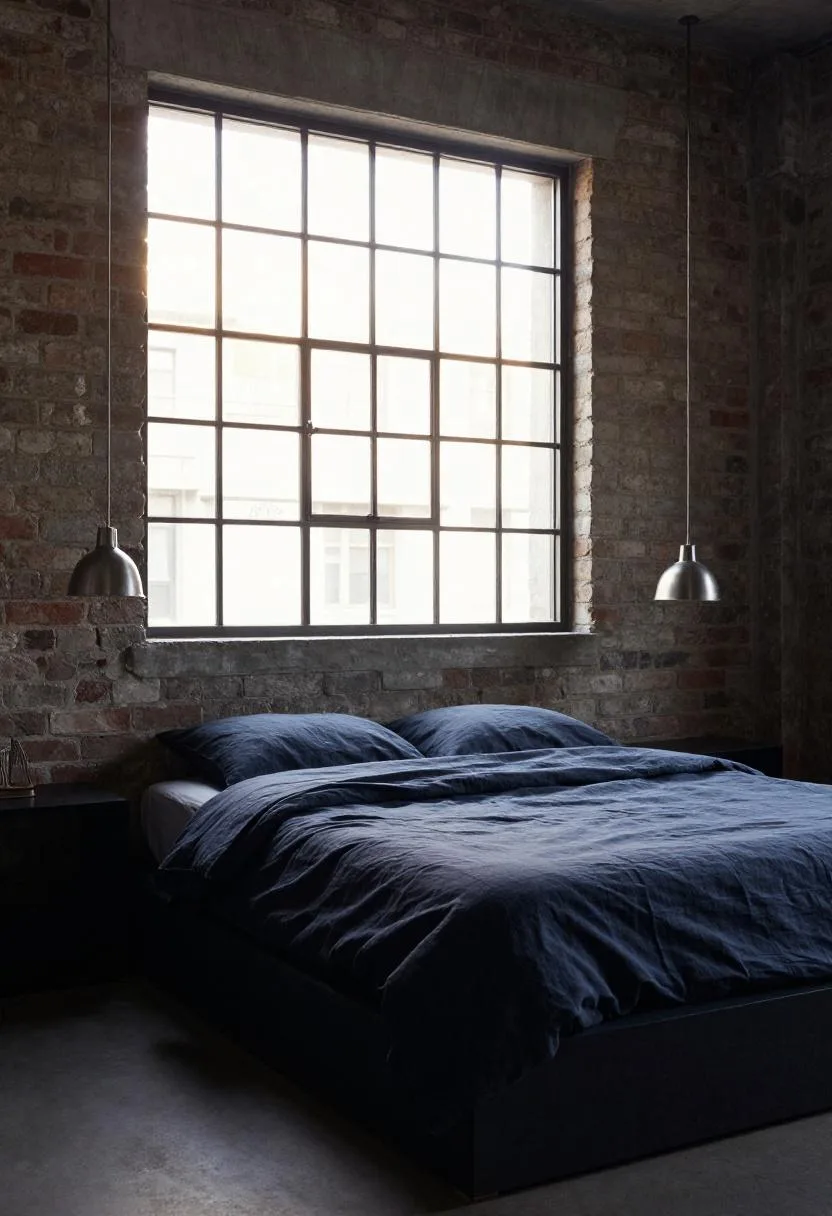
A steel grid window is one of the most coveted features in any loft conversion — and positioning the bed directly beneath it is a decision that either looks intentional or accidental. Here, it’s intentional. Navy linen bedding, deep and saturated, picks up the steel’s blue-grey undertone. Golden-hour light floods through the grid and throws geometric shadows across the bed. You don’t stage this. You arrange it once and the light does the work every evening.
Silver-Gray Linen and Ash Merino Overhead

Seen from above, this bed is a study in tone-on-tone grey: silver linen pillows, ash merino throw, black iron frame providing the only real contrast. It’s a palette that could easily go flat — and yet the different textures keep it alive. Linen has a matte, slightly rough quality. Merino wool is finer, softer, with a slight sheen. Quality linen pillow covers in this grey range are worth the investment specifically because they don’t look polished. They look lived-in immediately.
When Industrial Goes Quiet
Not every industrial bedroom needs to announce itself. Some of the most successful spaces in this category are the ones where the industrial character is almost invisible — present in the bones of the room, in the material choices, but never louder than the person who lives there. This is where the aesthetic crosses into Japandi territory, into Scandinavian loft, into something that has no clean label but feels exactly right.
Walnut Bed, Sand Linen, Brass Lamp: The Japandi-Industrial Case
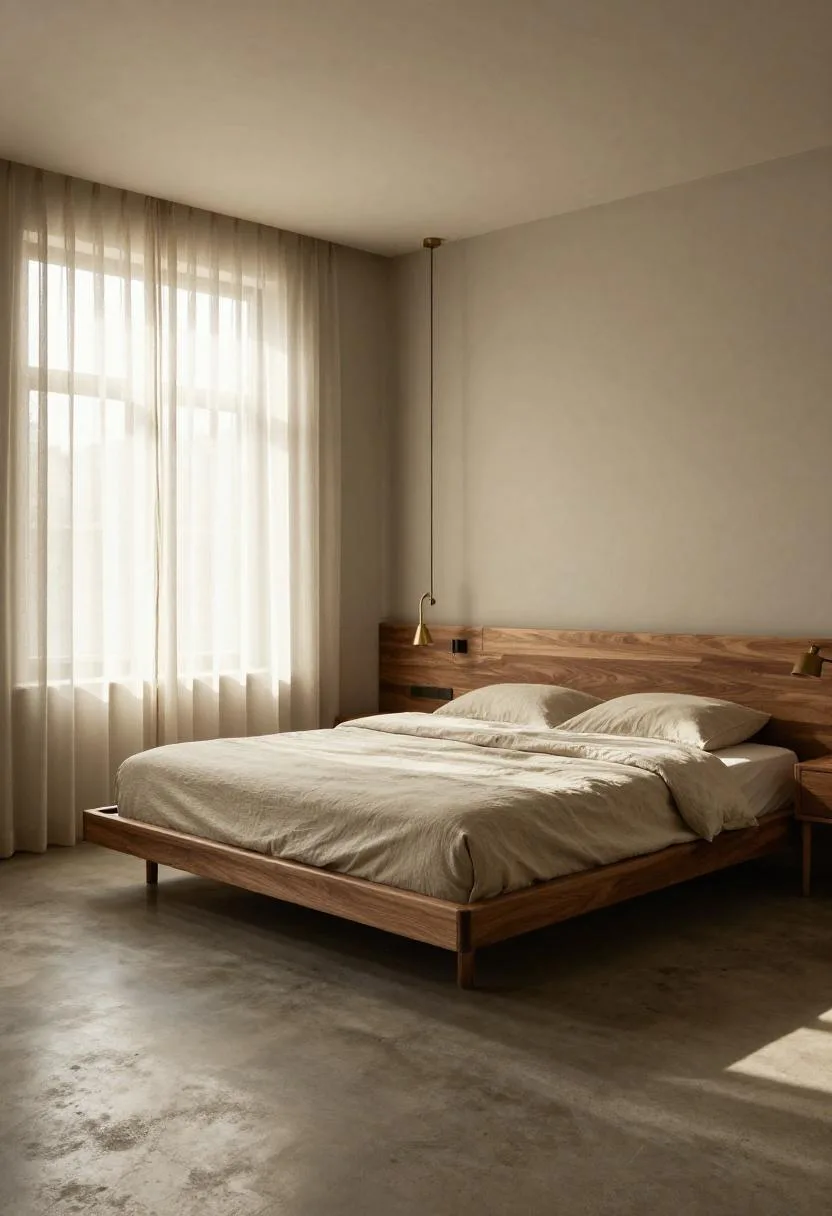
This room exists at the exact intersection of two design philosophies that agree on more than they disagree. Walnut’s deep grain reads as industrial craftsmanship; the sand linen and brass lamp are Japandi through and through. Morning light makes the whole thing feel like a considered pause. If you’re already building out a Japandi-leaning home, the workspace equivalent of this approach is worth exploring — our piece on Japandi home office ideas covers the same restrained material logic for a different room.
A small brass bedside lamp is the right scale for this. Not a statement piece. Just light, directed quietly where you need it.
Cream Boucle and the Texture Question
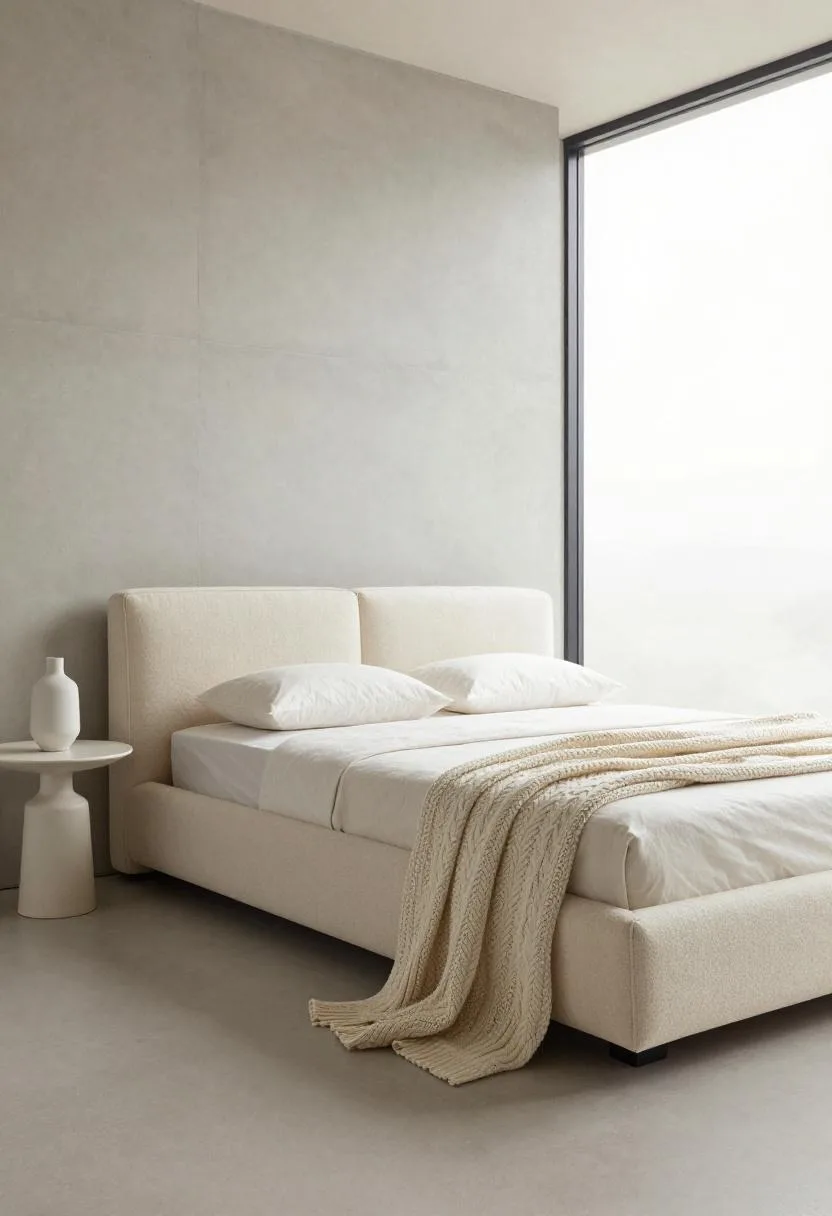
Can boucle exist in an industrial bedroom? This room argues yes. Overcast light removes all drama from the space — which is the point. Cream boucle, ivory throw, a ceramic lamp with no pretense. The industrial character here isn’t in any single object; it’s in the architecture implied around the frame: the high ceilings, the quality of the diffused light, the sense of volume. Quality whispers.
What is boucle doing in a loft bedroom? Working. The looped texture reads as tactile warmth without referencing any specific period or movement. It doesn’t announce a trend. It just feels good.
White Iron Bed and the Scandinavian Loft
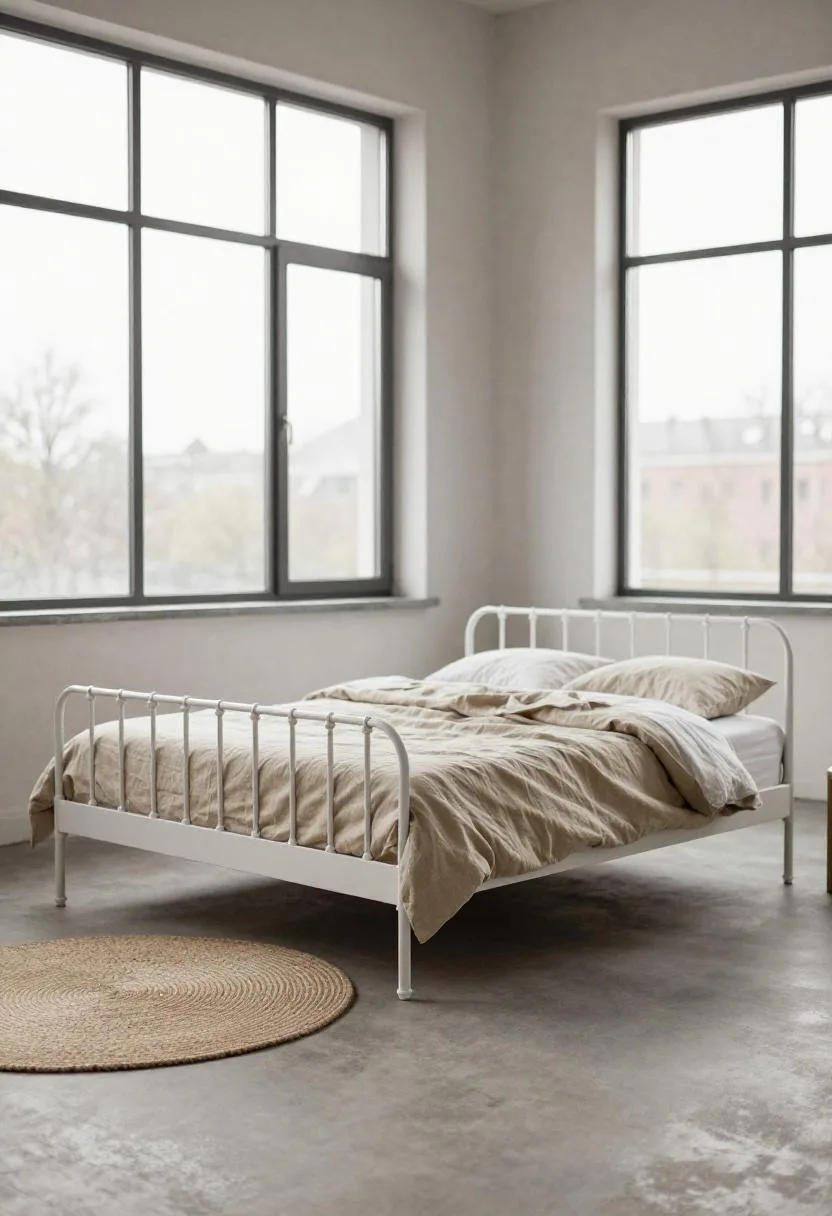
White iron is industrial design in a lighter key. The jute rug adds a layer of natural texture that grounds the whole room without adding visual weight. Sandy linen in northern daylight — that flat, non-directional Scandinavian brightness — looks almost luminous. This is the version of the aesthetic that works in a small apartment with one window. No brick required. As Elle Decor has noted, the most enduring bedroom designs prioritize light management above all else — and this room handles light with something approaching elegance.
What This All Adds Up To
Fourteen rooms. One consistent thread: material honesty. Industrial bedroom design works when every element acknowledges what it’s made of — iron that looks like iron, wood that looks like wood, concrete that makes no apology for its weight. The softness comes from textiles: wool, linen, leather, boucle. The warmth comes from light: Edison, brass, copper, the particular gold of late afternoon.
The color palette across these spaces runs from near-black to cream, with the most interesting rooms sitting in the slate-blue and warm-grey range. These aren’t bold color choices; they’re tonal ones. They work because they support the materials rather than competing with them.
If there’s a single takeaway, it’s this: the industrial bedroom is not a mood board exercise. It’s a material practice. Choose one honest material — an iron frame, a concrete surface, a reclaimed wood nightstand — and build outward from there with restraint. The room will tell you what it needs next. For inspiration on how the same philosophy extends to other spaces in your home, the principles behind compact living room design translate directly to loft bedrooms where volume and proportion demand similar care.
Less noise. More intention. That’s the only design rule this aesthetic actually enforces.